Retail News CRM

Tag: #sport

  • Under Armour raises forecasts amid supply chain snafus

    Under Armour raises forecasts amid supply chain snafus

    Under Armour on Tuesday raised its full-year forecasts, alleviating investor concerns regarding holiday inventory shortages flagged by nearly all its peers and sending its shares up 16 percent.

    Factories in Vietnam, where Under Armour sources about one-third of its products from, have begun reopening after months-long shutdowns that have caused severe distress to many apparel brands.

    Bigger rival Nike Inc has cut its fiscal 2022 sales estimates, expecting delays during the holiday season, while Puma SE advised people to shop early for Christmas.

    “Nearly all factories that Under Armour does business with, including those in Vietnam are open,” finance chief David Bergman said, noting port congestion and container availability at some Asian ports have improved.

    Under Armour still had to cancel some spring/summer 2022 orders to ease pressure on the factories that will take until the year-end to ramp-up to full capacity, it said.

    It also warned of a hit to its revenue in the first half of 2022 before the challenges, including congestion at U.S. ports, start to dissipate.

    However, analysts have said Under Armour, which has deployed pricier air freight to bring in goods, is navigating supply-chain challenges well.

    They also believe the athletic wear boom that is helping Under Armour, Nike and Adidas AG could last at least through next year.

    Under Armour has also been spending more on marketing, pulling out of discounter stores and sharpening its focus on its own stores to elevate its brand image.

    “UA remains one of the few that successfully raised its pricing power, rather than simply enjoyed higher prices on lower industry promotions,” brokerage BMO Capital Markets said.

    The athletic wear maker said it expected 2021 adjusted per-share earnings to reach 74 cents, above Refinitiv IBES estimates of 55 cents, after it posted better-than-expected third-quarter results.

  • Foot Locker promises strong growth for Atmos as takeover completed

    Foot Locker promises strong growth for Atmos as takeover completed

    Foot Locker, the New York-based specialty athletic retailer, today announced that, through certain subsidiaries, it has completed the acquisition of atmos, a digitally-led, premium, global retailer headquartered in Japan, for $360 million, subject to certain customary adjustments.

    Richard Johnson, Chairman and Chief Executive Officer of Foot Locker, said, “We are delighted to officially welcome atmos’s iconic founder, Hidefumi Hommyo, and the entire atmos team to the Foot Locker family. We deeply value atmos’s unique brand, innovative, experiential stores, premium offerings, collaborations, and understanding of sneakerhead culture. atmos expands our global reach in the rapidly growing Asia-Pacific market, establishes a critical entry point in Japan, and allows us to benefit from an immediate scale.

    We are excited about the many opportunities we will collectively be able to capture as a result of this partnership as we continue creating significant long-term value for our shareholders, consumers, vendor partners, and employees.”

    Mr. Hidefumi, CEO, Chief Creative Officer for atmos, said, “Today atmos enters a new era, well-positioned to bring our dynamic and exciting sneakers to more people around the world. atmos was founded with a love of sneakers and a passion for innovation, and with Foot Locker as our partner, we have the opportunity to drive global growth while maintaining what makes us unique.

    We have worked with Foot Locker for years on product collaborations and partnerships, and we are excited about what is ahead as we pursue our shared passion for sneaker culture, streetwear, creativity and self-expression.”

  • Adidas opens Terrex flagship in Shanghai

    Adidas opens Terrex flagship in Shanghai

    On November 21, adidas Terrex opened its new store at APM Mall on Wangfujing Street in Beijing. Brand spokesperson Zhao Youting, senior vice president of sales channel management in Adidas Greater China, Mr. Guillermo del Nogal, senior director of outdoor sports business unit in Adidas Greater China, brand signing athletes Zhang Jingkun and Zhong Qixin, and many outdoor enthusiasts showed up at the opening ceremony of the event.. Interpret the outdoor sports attitude of ” HERE TO CREATE Created by Me” with practical actions, and encourage more outdoor fans to challenge themselves, discover their potential and find better ones in outdoor sports.
    As a mysterious challenger, Adidas Terrex ( Adidas Sharp ) brand signing athletes Zhang Jingkun and Zhong Qixin jointly completed rock climbing and mountain bike relay and performed creative outdoor events on the spot. And together with brand spokesperson Zhao Youting, senior company officials and guests at the scene, they broke the rock wall symbolizing convention and announced the official opening of the new store.
    Mr. Xiao Jiale, senior vice president of sales channel management for Adidas Greater China, said: ” Adidas Terrex has chosen to open a special store in Wangfujing APM, the bustling commercial center in Beijing this time, laying a solid foundation for the strategic layout of the brand in the national market, and hopes to make more consumers enjoy the joy brought by outdoor sports with better products and services in the future.”.
    Adidas Terrerex ( Adidas Insight ) Beijing Wangfujing Store gathers professional outdoor sports products, such as 3in1GTX waterproof eiderdown jacket made of Gore-Tex fabric technology, clima heat technology outdoor eiderdown jacket, as well as a full range of outdoor professional cross-country shoes, outdoor professional hiking shoes, outdoor accessories and other equipment.. In addition, it also has a light outdoor series with both functions and fashion. At Adidas Terrex’s outdoor store on the 4th floor of APM Mall on Wangfujing Street in Beijing, Adidas Trail provides outdoor enthusiasts with all-around professional outdoor products to provide all-around protection and uses cutting-edge outdoor technology to help outdoor enthusiasts to challenge their limits.
    The event also attracted people from various media and outdoor sports to come together. The atmosphere at the event site was full of climaxes, and creative outdoor sports were very impressive. The interactive VR device at the scene takes you to feel the outdoors and attracts a large number of people to stop.
  • Adidas sells Reebok to Authentic Brands

    Adidas sells Reebok to Authentic Brands

    Authentic Brands has cemented its position as a major player in American retail after what one analyst described as a “massive acquisition” – the successful $2.456 billion bid for Reebok.

    Adidas confirmed the sale overnight after six months of negotiations with prospective bidders.

    Neil Saunders, MD of GlobalData, said Authentic Brands has proven its ability to turn around struggling brands like Aéropostale and so it will be confident that it can achieve a similar result with Reebok.

    But he warned the new owner needs to take a different approach to ensure Reebok’s future success.

    “If, under Authentic Brands, Reebok focuses less on competing with Nike and more on developing a credible brand that can be offered via its various stores and other third-party retailers it should be able to build sales. However, the market remains extremely competitive so coming up with a differentiated offer that has clear customer focus and a strong distribution strategy will be key to future success.”

    Reports emerged in May that Authentic had lodged a bid for Reebok. At the time the New York Post said the $1 billion fell far short of the $3.8 billion Adidas paid for Reebok five years ago and the $2.4 billion Adidas was thought to be seeking.

    Adidas CEO Kasper Rorsted said he believed the change in ownership would position the brand well for long-term success.

    “As for Adidas, we will continue to focus our efforts on executing our ‘Own the Game’ strategy that will enable us to grow in an attractive industry, gain market share, and create sustainable value for all of our stakeholders,” he said.

    Adidas acquired Reebok back in 2006. Saunders said the German company originally saw it as a vehicle with which to take on the might of Nike, especially in the US.

    “While Adidas did manage to restore Reebok to profitability it was far less successful in building a brand that was able to steal share and capture the hearts and minds of consumers. Part of the issue was a lack of clarity around what Adidas wanted Reebok to be. As a result, it was neither seen as the go-to brand for sporting professionals nor for those looking for athleisure fashion and style,” said Saunders.

    Adidas’ sale of Reebok for less than it paid for it – and after years of difficulty and disappointment – underlines the degree to which the brand’s equity has been eroded, he said.

    “The decision to sell should not solely be chalked up to the pandemic. Indeed, the footwear and sports apparel market has performed extremely well over the past 18 or so months.

    “However, the market is becoming much more competitive, with Nike and others doubling down on direct-to-consumer sales, brands like Lululemon eating up large slices of growth, and retailers launching a multitude of sporting own labels,” said Saunders.

    Jamie Salter, founder, chairman and CEO of Authentic Brands Group described it as “an honour” to be carrying Reebok’s legacy forward.

    “This is an important milestone for ABG, and we are committed to preserving Reebok’s integrity, innovation, and values – including its presence in bricks and mortar. We look forward to working closely with the Reebok team to build on the brand’s success.”

    The closing of the transaction is subject to customary closing conditions and is expected to occur in the first quarter of next year. Adidas intends to share the majority of the cash proceeds from the sale with its shareholders.

    When Adidas bought Reebok in 2006, the brand came along with the Rockport, CCM Hockey and Greg Norman brands, which were subsequently divested for €400 million (US$470 million at today’s exchange rate).

    In 2016 Reebok initiated a turnaround plan called ‘Muscle Up’ which saw the label significantly improve its growth and profitability prospects, according to Adidas.

    In March of this year, Adidas unveiled its 2025 ‘Own the Game’ strategy designed to significantly increase sales and profitability and build market share. As part of the process of developing that strategy, the company assessed options for Reebok, which in February led the company to opt to divest Reebok, rather than dilute its focus across two brands.
  • Volkswagen Polo GTI Facelift Unveiled

    Volkswagen Polo GTI Facelift Unveiled

    Now before getting into the details of the new Volkswagen GTI facelift, let us tell you how these official pictures of the 2021 model year surfaced online. So we actually don’t know whether it is one of Volkswagen’s marketing strategies, or Ralf Brandstatter – CEO, Volkswagen Passenger Cars got so excited by looking at these official pictures of this new hot hatch, that he couldn’t help sharing them on his linked in profile. Yes! This is how the range-topping 2021 Volkswagen Polo GTI was unveiled, almost two years after the global debut of the line-up.

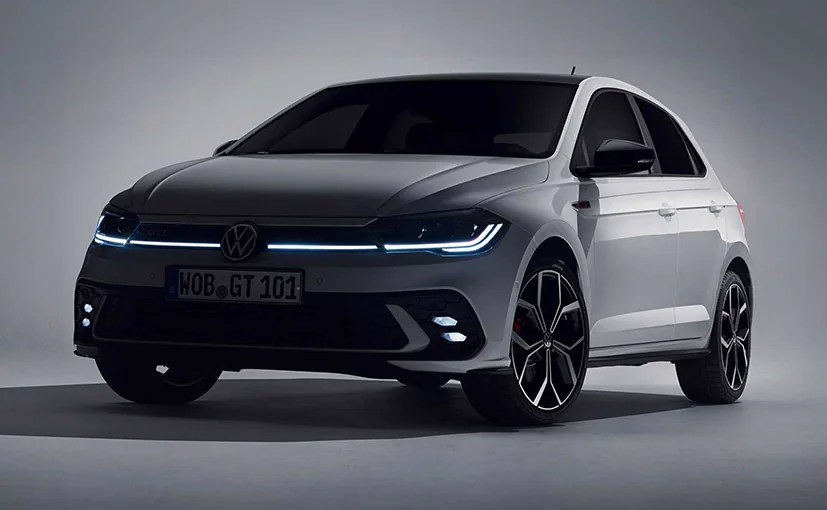
    In terms of design, the new GTI gives you exactly what you expect of a facelift as the changes remain subtle and it’s a predictable evolution if you will. It gets fully redesigned headlights along with the slim DRLs extending to the new grille, just like the Golf GTI. Then, there are wider taillights and the overall design has been spruced up with the usual red accents, dual exhaust tips, and a honeycomb grille. It also sports chunkier two-tone alloy wheels with upgraded brakes featuring red calipers and other sporty elements include contrasting black mirrors and roof.

    On the inside, it gets VW’s Discover Pro and Discover Media systems as optional, and the car also receives Volkswagen’s new ‘digital cockpit’ dashboard setup, as used by the Golf and ID 3. Other elements include a 9.0-inch touchscreen unit, panoramic sunroof, voice control, wireless charging, Beats sound system, and 18-inch alloy wheels. In the safety department, the new Polo gets Volkswagen’s Travel Assist system for the first time, which includes adaptive cruise control, lane assist, side assist and rear traffic alert. Autonomous emergency braking is also standard, as is a driver alert system and automatic post-collision braking.

    The new Polo GTI also comes with three driving modes – Eco, Normal and Sport with the last one tuned for enhanced exhaust note. The Polo GTI also gets a bespoke, performance-oriented chassis tune, lowering the body by 15 mm compared with the standard Polo and adding a large stabilizer on the car’s front axle, rigid coupling rods at the front and stiffer axle-locating mounts at the rear. Now Brandstatter is promising a powerful TSI engine under its hood, but mechanical details are not confirmed yet. We expect it to feature the same 2.0-litre, four-cylinder Turbo TSI motor tuned for optimum performance and it should come with the options of both six-speed manual and DSG transmission. Talking about the India context, the new Volkswagen Polo GTI is based on the sixth-generation Polo and both models are not likely to join VW India’s line-up anytime soon.

  • Puma’s China sales slowly up

    Puma’s China sales slowly up

    After a pandemic-served beatdown last year, Puma has clawed its way to recovery. On February 24, the German sportswear giant reported that sales jumped 9 percent to 1.52 billion euros in the last three months of 2020 — a promising upswing from the 55-percent plummet in its second quarter. Overall, sales were down 1.4 percent to 5.23 billion euros for the financial year.

    This rebound was led by strong performance in the Asia Pacific, which surged 11.8 percent in the fourth quarter to 480.5 million euros, driven by mainland China. But the country alone was not enough to stop the region’s full-year sales from falling 3.2 percent compared to 2019 levels, down to 1.48 billion euros.

    Given the importance of these global markets, Puma doubled down on establishing local relevance, particularly through sports, influencers, and communication platforms. This was not only reflected in the brand’s return to basketball and collaboration with grammy-winning artist J. Cole, but also its increasing partnerships with popular Chinese talents, including actors Yang Yang, Li Xian, and Liu Haoran as well as supermodel Liu Wen.

    The brand further grew its China footprint by leveraging the country’s biggest shopping holiday, Singles’ Day, logging 2.8 million orders and 80 million euros in revenue over the week. And already, Puma is making good on its goal to design more products specific to the market, partnering with Hong Kong-based artist Michael Lau, “The Godfather of Toy Figures,” to ring in the new year.

    That said, all Puma products did well in the fourth quarter, with apparel growing 15.7 percent, accessories up 7.3 percent, and footwear increasing 3.8 percent.

    “We clearly see a running boom in the whole world,” CEO Bjorn Gulden told journalists, adding that orders for 2021 are up almost 30 percent compared to last year, especially for running products.

    This tracks with Puma’s Q3 results, which showed strong demand for performance-related products, especially for individual sports like running or hiking. With the healthy living trend expected to persist after the pandemic, the sporting goods sector is positioned to weather the crisis better than most.

    But Puma isn’t out of the storm just yet. With almost half of its retail stores in Europe still closed and other markets operating under significant restrictions, the apparel maker is bracing for impact in the first half of 2021. However, the brand is also confident that its quick Q4 recovery and strong order book — along with global efforts to combat the virus — will lead to a moderate sales bump later this year.

    “I am convinced that 2021 will be a better year for us than 2020,” Gulden said. Knock on wood.

  • Adidas quits Hong Kong Central as retail stagnation continues

    Adidas quits Hong Kong Central as retail stagnation continues

    Adidas is exiting Hong Kong’s Central prime business district. The German sportswear giant signed a HK$4.34 million a month, or HK$52.1 million a year, lease for the 13,000 sq ft shop at 36 Queen’s Road in 2015. Removal staff were seen dismantling shelves and putting away stock on Wednesday.

    “After a thorough review we have decided to close the Adidas Brand Center on Queen’s Road,” the company said on Wednesday. “We continue to have a strong presence in Hong Kong, with more than 20 Adidas stores and multiple franchise stores.”

    Adidas is potentially following in the footsteps of Gap, Topshop, and Esprit, brands that have either shut shop in Central or exited Hong Kong altogether. International brands that rely heavily on mainland Chinese and other tourists for sales in Hong Kong have found themselves unable to sustain business operations after the city essentially closed its borders early last year to combat and contain its coronavirus outbreak. Visitor arrivals dropped by about 94 percent last year to 3.57 million. Retail sales too fell, by 24.3 percent to HK$326.5 billion.

    “It is not surprising to see major retailers closing down, especially their prime flagship shops,” said Hannah Jeong, head of the valuation and advisory services at Colliers International in Hong Kong. “Despite a 25 percent drop in overall retail shop rents, and some prime street shops facing up to a 50 percent reduction in rents, operations costs including rental expenses are still not yet sustainable, given the large cuts in revenue.”

    Rents on Russell Street in Hong Kong’s prime shopping district Causeway Bay stood at US$2,671 per square foot in 2018. By the second quarter of 2019, it was the world’s most expensive shopping avenue, with rents at US$2,745 per square foot a year on average, according to commercial real estate services firm Cushman & Wakefield. The city’s exorbitant rents coupled with plunging retail sales have made business operations unviable for many retailers.

    Adidas’s lease for the space expired last year and it opted for a short-term deal, which suggests “the brand might leave at any time”, said Thomas Chan, research analyst at property agency Midland IC&I. “According to market news, a local bank may lease the premises for over HK$2 million a month, down almost 54 percent compared with the last lease, if the deal is sealed,” he said.

    The city will see more reasonable shop operations, given the softening of the retail market, said Colliers’ Jeong. “Flagship shops will find it difficult to make a profit. Therefore, we will see more brands looking for smaller shops to maximize the dollar spend per square foot. This does not necessarily mean that retail brands are closing down, or withdrawing from the Hong Kong market. It is rather that shop requirements of retailers are changing.”

    Indeed, Adidas itself rented the shop at 36 Queen’s Road at a rate that was 22.5 percent cheaper than that paid by its previous tenant, US luxury brand Coach, according to the Land Registry.

    The number of foreign brands have expanded in Central of late. Casual clothes brand American Eagle has taken up a 7,000 sq ft space vacated by Gap in LHT Tower just a few steps away from the vacated Adidas shop. In October last year, mid-priced French sporting goods retailer Decathlon rented a 9,300 sq ft shop previously rented by luxury leather goods retailer MCM in Entertainment Building in Central.

    “It is quite common to see retailers come and go across different retail districts in Hong Kong, as they adjust their retail strategies. As retail rents have dropped significantly, by as much as 60 percent from their peak in the third quarter of 2014, international retailers are in fact looking for prime spaces to take advantage of the cheaper rents,” said Lawrence Wan, senior director, advisory and transaction services – retail, at CBRE.

  • How the online sporting industry has influenced fashion retail

    How the online sporting industry has influenced fashion retail

    Sport can simply be recognized as a physical activity that involves competition between individuals or teams. That being said, it doesn’t seem clear where fashion fits into this notion, apart from the sportswear used to play such games. Though, traditionally, sports like football have always carried an aspect of fashion design in order to create sportswear that represents a team and allows them to stand out from their competition, fashion in sport has since come a long way.

    Now, with access to sport in person, on television, and online, such sports have influenced fashion trends and have diversified the fashion retail industry as a result of its accessibility. Sportswear has now become a part of everyday life, whether playing sport or not. That’s why big sports apparel brands like Nike and Adidas dominate the retail industry in China. It’s therefore not surprising that jeans have been exchanged for joggers and boots for trainers. We’ll take a look at this shift in the fashion retail industry below.

    Influencers

    First and foremost, while sport itself has of course influenced the fashion retail market through the exploration of clothing for active people, key figures in society have a lot to answer for this. In our modern society, a lot more people are aware of their health and fitness so are engaging in more physical activities. Naturally, this means a bigger sportswear wardrobe. This shift in wardrobe doesn’t stop there. Now, people are quick to share their sporting apparel across social media to engage with other like-minded fitness people.

    One Asian influencer in particular, Hana Giang Anh, has her very own fitness social media platform and can often be seen sharing her sportswear looks on Instagram. Since Instagram is a visual platform that creates aspiration amongst users, particularly since products can be tagged, those that follow influencers often get on board with fashion trends and can be seen flaunting sportswear themselves. For that reason, online sport has influenced the fashion retail market as it has exposed social media users to the benefits of sportswear.

    Online events and games

    With the online space so widespread, access to online sporting events and games is all the easier. Sites like William Hill offer access to sport via online betting across the world, allowing the sporting market to draw further attention to itself. This has led to the sporting audience has grown and interest in sport has increased: even those that don’t play sports themselves or take a keen interest in a particular sport or team are presented with the opportunity to participate in some way, whether it’s through betting on a game or playing an online sports game.

    Since fashion is a way of displaying your identity, more people are taking to sportswear to show that they belong to the sporting industry. For that reason, since sport has been introduced to the online sphere, it has capably influenced the fashion retail market through the increased accessibility to online users. This has had both a cause and effect – it has caused more people to directly or indirectly get involved with sport, and it has consequently had an effect on their lifestyle choices, including the clothes they choose to wear.

    This goes to show that with the idealization of and accessibility to sport online, more people are aware, not only of its health benefits and entertainment value but of its fashion value too. That’s why more retail brands are creating sportswear that pushes boundaries and makes a statement, all while being fashionable, comfortable, and ideal for physical activity. Hence, the fashion retail market is more sport orientated than ever.

  • Tesla To Set-up Operations In Bengaluru, Registers Indian Subsidiary

    Tesla To Set-up Operations In Bengaluru, Registers Indian Subsidiary

    The wait is nearly over as American electric carmaker Tesla is all set to set-up operations in India and zeroed down on Karnataka, as its preferred state to set-up its headquarters. The electric auto giant has registered its Indian subsidiary under the name ‘Tesla India Motors and Energy Private Ltd’, which was incorporated in Bengaluru on January 8, 2021. The company is expected to commence operations by June this year and the first product to be made available will be the Model 3 sedan, according to reports.

    According to the document filed with the Ministry of Corporate Affairs, Vaibhav Taneja, Venkatrangam Sreeram, and David Jon Feinstein have been named as directors. The company has been registered as a private unlisted company with an authorized capital of ₹ 15,00,000 and a paid-up capital of ₹ 100,000. The document also reiterates Tesla co-founder and CEO, Elon Musk’s tweet last year that said the automaker would enter India “next year for sure.

    India has been on Tesla’s radar since 2016 but plans did not materialize despite a number of speculations. It was also reported recently that state governments including Maharashtra, Andhra Pradesh, Tamil Nadu, and Karnataka had talks with the automaker to set-up operations in their region, while the company is also considering local partnerships. Reportedly, the Karnataka government has already offered a land parcel to Tesla in Tumkur, on the outskirts of Bengaluru, to set-up a manufacturing facility.

  • Foot Locker flagship forced to close for virus outbreak

    Foot Locker flagship forced to close for virus outbreak

    Foot Locker’s Orchard Road flagship has been forced to suspend business due to breaching the Singapore government’s Covid-19 safe management measures.

    The suspension was enforced as the retailer conducted a product launch which drew huge crowds outside the store last Friday despite the advisories on crowd management.

    According to Singapore Tourism Board (STB) and Enterprise Singapore (ESG), the retailer will have to stop trading at the Orchard flagship store until December 14.

    During 10 days of suspension, Foot Locker is banned from holding physical retail activities but may continue to trade online.

    “STB and Enterprise Singapore are also engaging Foot Locker Singapore on the measures it will take for future product launches, including the potential cessation of all such physical launches at Foot Locker locations across Singapore,” the agencies said.

    Opened earlier this year, Foot Locker Orchard Gateway @Emerald is the brand’s largest outlet yet in Singapore.

  • Puma surfaces in third quarter as stores open again

    Puma surfaces in third quarter as stores open again

    Puma says its third-quarter sales rose 13.3 percent on a currency-adjusted basis to US$1.85 billion, leaving year-to-date sales down just 5.1 percent despite the impact of the pandemic.

    “The third quarter developed much better than I expected,” said Bjorn Gulden, Puma’s CEO.

    “Retail stores reopened, sports events resumed, consumer confidence improved and our sales increased week by week. I feel this strong performance confirms the strength of both PUMA as a brand and the sporting goods industry in general.”

    Puma’s gross profit margin decreased to 47 percent, largely due to negative currency impacts and increased promotional activity as the company adjusted to an unusual trading environment. However, operating expenses dropped by 3.3 percent allowing a pre-tax profit of $223 million.

    “Despite a very promotional market environment and currency developments that put pressure on our margins, we were even able to improve our EBIT compared to last year,” said Gulden.

    “This was achieved by continued strong cost control that we initiated in the extremely weak second quarter and through less but more efficient marketing activities.

    “October started well, but the recent development of Covid-19 and the number of infections we are seeing globally make us cautious for the rest of the year. We will continue to maneuver through this pandemic in the short-term without hindering Puma’s mid-term momentum.”

    Sales in Asia/Pacific declined by 1.9 percent, mainly due to slower growth in Greater China and a sales decline in India, Korea and Southeast Asian markets.

    For the first nine months of the year, including the time when lockdowns were in place across much of Asia, sales in the region fell 9.1 percent.

    Global net earnings for the nine months combined were down from $287 million last year to $63.7 million.

  • 3 Stocks Set To Capitalize On The Booming Sports-Betting Industry

    3 Stocks Set To Capitalize On The Booming Sports-Betting Industry

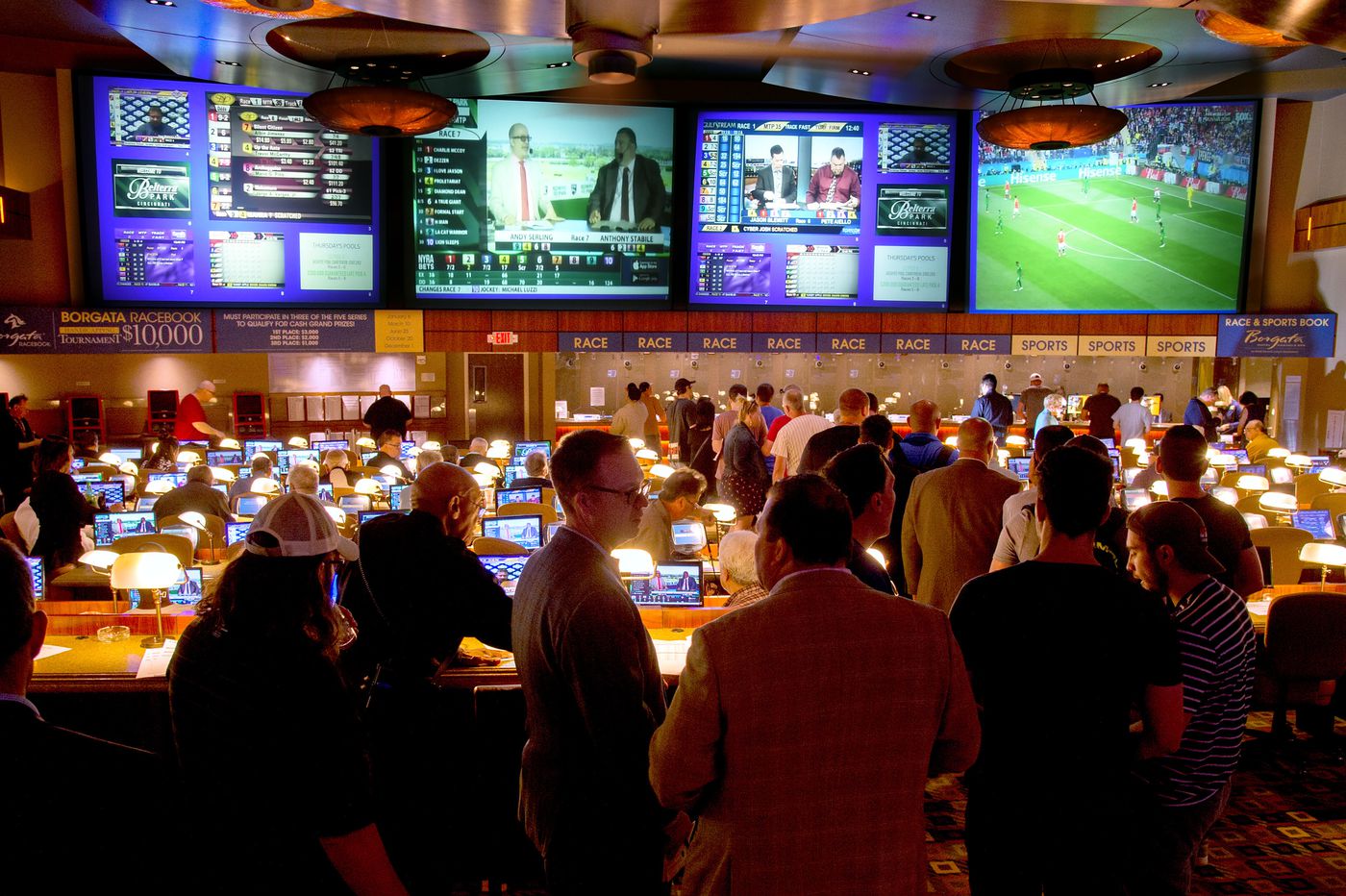
    After a difficult start to the year, the world economy is finally trying to open up. A good example is the online casino bets and gambling stock, which have taken Wall Street by storm in the recent past as the sports economy reopens and the return of live sports. In this article, you’ll discover three stocks that are positioned to take advantage of the booming sports-betting trend. 

    DraftKings

    DraftKings benefited greatly from the stay-at-home measures that lead to an increase in online sports betting and gambling on online platforms like Betway. When it announced recently that they have a partnership deal with ESPN and Michael Jordan had joined its board as a special advisor, their shares bounced. 

    According to reports, activities on the platform have surged by over 400% since going public on April 24. The DraftKings reported mixed earnings for the second quarter on August 14 as most of the major leagues remained on the break due to the global pandemic. They reported revenue of 75 million USD, surpassing the consensus estimates of 66.4 million USD.  

    Penn National Gaming

    Penn National was in the limelight at the beginning of the year when they expanded into sports media and online betting. They acquired a 36% stake in Barstool Sports, a renowned sports media company that operates up to 41 casinos and racetracks in 19 states across the US. As a result, Penn National’s stock jumped 166% since the beginning of the year.

    Reports indicate that Penn is projected to beat earnings and revenue expectations in the second quarter despite a staggering opening of some of its properties and a lack of live sports. In a statement during the release of the company’s earnings on August 6, The President and CEO, Jay Snoden, reiterated that even though visitation had not returned to pre-COVID levels yet, spend per visit had been strong, leading to better revenues than expected. 

    Apart from EPS and revenue, investors will be eager to hear reports on the Barstool Sportsbook app’s success that was launched in mid-September in Pennsylvania. 

    Boyd Gaming 

    Boyd Gaming is a company based in Nevada that operates sportsbooks in most of its casinos. It runs 29 casinos in 10 states and owns 5% in the Fan Duel, which is an online sports betting platform similar to Betway. 

    Reports reveal that the regional casino operator’s shares have recovered impressively after hitting unprecedented lows during the pandemic’s peak in March. While reporting their second-quarter earnings, Boyd CEO Keith Smith revealed that the company is off to a great start since the reopening. He also said that they managed to do better than had been projected. 

    Bottom Line

    With the return of live sports action, the stock markets are expected to respond positively. Even though many people took to online sports betting sites like Betway during the pandemic, live sports’ return gives them more options. Therefore, in the next few months, you should expect to see the boom in the sports betting market to continue.   


  • Decathlon store replaces old Metro at Singapore’s Orchard Rd

    Decathlon store replaces old Metro at Singapore’s Orchard Rd

    Decathlon Singapore is opening a new experience store in Orchard Rd, the brand’s fifth experience store in the city.

    Located at the Centrepoint shopping mall, Decathlon Orchard spans two floors, occupying a 3200sqm area. The store will feature some 5000 products spanning more than 50 sports.

    In the new Decathlon Singapore experience store, customers will be able to test products before purchasing with in-store “innovative solutions”. According to the company, the store will feature several interactive concepts including virtual reality test zones and free sport events

    Based on the photos the brand has shared on their social media channels, the fit-out process is still underway, but the store is scheduled to open on September 12.

    The new Decathlon store location takes up space previously leased to the Metro department store.

  • Pandemic causes steep drop in Asics revenue

    Pandemic causes steep drop in Asics revenue

    Japanese sportswear retailer Asics has posted a steep drop in revenues as a consequence of the coronavirus pandemic.

    The firm has seen a 21.5-per-cent dip in global sales to the equivalent of US$1.4 billion in this year’s second financial quarter, and operating losses of $36.6 million against an $81.2 million profit last year.

    In keeping with a global rise in e-commerce trade heavily influenced by lockdowns and stay-at-home orders internationally, Asics saw an uptick in online sales of 139 percent for its European market – but that was not enough to prevent a fall in gross profits of 20.7 percent to $667 million.

    In its home market sales fell by 24 percent to $444.6 million, while in European sales were down 20.5 percent to $350.9 million.

  • Foot Locker establish presence in Macau

    Foot Locker establish presence in Macau

    Foot Locker has made its Macau debut with two stores opening this month.

    Located in Shoppes at the Parisian Macau, the Foot Locker’s first Macau store features a wide selection of footwear and apparel collections from different global brands, including Nike, Jordan, Adidas and Puma.

    “Opening our first store in Macau marks another milestone in our journey, where we aim to engage and inspire youth culture within the local community,” said Tomas Petersson, GM and VP at Foot Locker Asia.

    According to the company, Foot Locker’s second store in Macau is scheduled to launch later this month in The Shoppes at the Venetian Macau.

    Foot Locker operates 3129 retail stores across 27 markets across North America, Asia, Europe, Australia and New Zealand.