Retail News CRM

Tag: #sport

  • Champion lifting off with sustainable streetwear collection

    Champion lifting off with sustainable streetwear collection

    Athletic apparel brand Champion is to launch a sustainable streetwear collection Re:Bound next month.

    Champion’s Re:Bound Collection will feature a streetwear line made from recycled Reverse Weave fabric, normally discarded during production. According to the company, 45 percent of pre-consumer recycled cotton has been turned into high-quality apparel products for the range.

    The manufacturing process involves three stages: Rescue Waste, Recycle and Rope Dye.

    As part of the launch, Champion invited two Australian influencers and up-cyclers, Philip O’Donahoo and Jaida The Creator, to star in a promotion campaign.

    “Pioneering products is our legacy. Protecting the planet is our long game,” the company said in a statement. “Re:Bound is our first step, and we’re just getting started.”

    The Re:Bound collection is scheduled to launch on August 4.

  • NBA joins branded-mask trend, selling across Asia

    NBA joins branded-mask trend, selling across Asia

    North America’s National Basketball Association (NBA) has launched a face-mask collection online, supporting communities impacted by Covid-19.

    The NBA face masks, produced by NBA licensee Foco and e-commerce partner Fanatics, will feature designs of all 30 NBA teams.

    According to the company, proceeds from the sales of the masks will be contributed to Direct Relief, a humanitarian organization committed to improving the health and lives of people affected by poverty or emergencies.

    The NBA face mask line will be introduced at the league’s e-commerce sites in Europe and 10 countries across Asia-Pacific, including Australia, New Zealand, Japan and Vietnam.

    Face masks are no longer just a medical product. In some countries, wearing a mask was a cultural norm long before the Covid-19 pandemic arrived. Face masks have gone mainstream in the fashion industry as many labels are introducing their own face mask line, including New Balance and Pendleton.

  • Nike sales in China stay strong despite Covid-19 outbreack

    Nike sales in China stay strong despite Covid-19 outbreack

    Nike sales in China surged 11 percent last year, marking the sixth consecutive year of double-digit growth in the market for the US sports brand.

    The growth was achieved despite the impact of Covid-19 with sales of the flagship Nike brand rising by 1 percent on a currency-neutral basis in the fourth quarter.

    Globally, the latest Nike results make for far more sobering reading. With 90 percent of its stores closed across the US, Europe, and much of Asia Pacific for as many as eight weeks during the quarter, sales plunged 38 percent to US$6.3 billion and the company reported a loss of $790 million. Asia-Pacific & Latin America sales fell 39 percent during the period.

    Digital sales, however, rose by 79 percent in the fourth quarter worldwide, to represent about 30 percent of the company’s total revenue, reflecting what the company described as an accelerated connection and engagement with consumers, based on a strengthened digital ecosystem.

    “In a highly dynamic environment, the Nike brand continues to resonate strongly with consumers all over the world as our digital business accelerates in every market,” said John Donahoe, Nike’s president and CEO.

    “We are uniquely positioned to grow, and now is the time to build on Nike’s strengths and distinct capabilities. We are continuing to invest in our biggest opportunities, including a more connected digital marketplace, to extend our leadership and fuel long-term growth.”

    Nike sales in China are recovering quickly with almost every store now reopen across the country. “Retail traffic continues to improve week-over-week with higher conversion rates as compared to the prior year,” the company said in its results announcement.

    “As physical retail re-opens, Nike’s strong digital trends continue, a testament to the strength of our brand and the investments we’ve made to elevate digital consumer experiences,” said Matt Friend, executive VP and CFO.

    Full-year results show Nike sales fell 2 percent year on year on a currency-neutral basis, due to Covid-19 impacting the second half. During the first half, sales were up 11 percent. Net income was $2.5 billion, down 36 percent.

  • Giant Nike Thailand opens flagship store in Bangkok

    Giant Nike Thailand opens flagship store in Bangkok

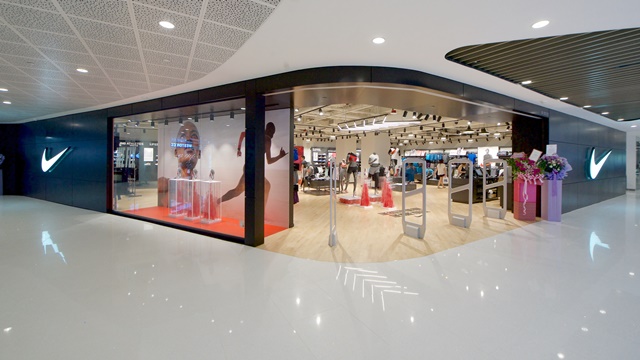
    A giant Nike Thailand flagship store has opened in Bangkok’s Siam Center, with a footprint spanning more than 9000sqft.

    Designed to showcase Nike’s product innovation across multiple categories, the store also offers the brand’s first “Nike By You” in-store customization service in Thailand.

    Operated by Southeast Asian luxury and lifestyle retail specialist Valiram, the new Nike Thailand store offers a blend of physical and digital retail experiences for shoppers

    “Nike Bangkok at Siam Center exists to offer everyone the ability to make sport a daily habit, ensuring they are inspired and committed to staying active,” said director of Nike stores Southeast Asia & India Tarundeep Singh.

    “The top Nike offerings have been carefully curated for this community, and the store has been conceptualized with multiple touchpoints for a fully immersive and seamless Nike experience that is truly personalized and unique.”

    Services such as head-to-toe apparel fitting and footwear trialing are offered at the store to provide consumers with opportunities to deepen their connection with the brand and select products suited to their needs. Shoppers can also book one-on-one sessions with running experts and styling specialists.

    Valiram executive director Ashvin Valiram describes the new Nike Thailand store as a “truly unique and immersive experience that pushes the boundaries of retail, empowering our consumers to engage with Nike products in new ways”.

    “Creating a world-class retail environment is a Valiram hallmark and the opening of Nike Bangkok at Siam Center in partnership with Nike reaffirms that”.

  • Descente forced to shutter stores in South Korea as anti-Japan bias continues

    Descente forced to shutter stores in South Korea as anti-Japan bias continues

    Japanese sportswear label Descente is shuttering 47 kidswear stores in South Korea in the wake of anti-Japanese sentiment combined with the impact of Covid-19 on the territory.

    The Young Athlete outlets, which deal in clothing and accessories for kids, will close their department store and mall locations in August, with stock being redistributed to Descente’s full-range stores.

    The formerly popular Descente brand saw an 89-per-cent dip in operating profits last year to US$7.26 million compared with its 2018 results and a 15-per-cent drop in sales to $496.9 million. The drop was initially prompted by souring diplomatic ties between Japan and Korea, prompting a general boycott of Japanese goods in the territory.

    Further declines in business due to the coronavirus pandemic proved too much for the firm, with the Young Athlete stores deemed unviable to continue trading.

    Similar closures have been seen amongst other Japanese firms trading in the Korean market, including fast-fashion giant Uniqlo, which this month announced it would close physical stores of its diffusion brand GU in the country.

  • Puma explores sustainable technologies with Central St Martins students

    Puma explores sustainable technologies with Central St Martins students

    Puma has partnered with London design school Central St Martins to launch a new collection using sustainable technologies.

    The Puma x CSM Collection uses new dyeing technologies including “Dope Dye”, which is a process using less energy, water, and chemicals than conventional wet processing, and digital printing technology which reduces waste and chemicals.

    With these technologies, Puma is able to reduce water consumption during making the clothing by up to 17.4 percent. These technologies will be rolled out in other sectors of Puma’s product range after being tested in this collection.

    “Reducing waste goes beyond the production cycle, which is why Puma also delved into new ways to make its marketing more sustainable,” the company said in a statement.

    The Puma x CSM collection, which includes footwear, apparel and accessories for both men and women, is available on Puma’s website and in selected stores.

  • Puma focuses on survival and recovery as sales goes down

    Puma focuses on survival and recovery as sales goes down

    Outlining a survival strategy for the coronavirus pandemic, Puma says its global operations are split into three phases: Survive, Recover and Grow Again. The sportswear retailer and manufacturer reported a 1.3-per-cent decrease in first-quarter sales to €1.3 billion, with strong growth during the first 10 weeks undermined by the widening impact of the pandemic. Net earnings fell 61.6 percent to €36.2 million.

    However, in the current quarter, global revenue is running at about 50 percent of normal levels.

    CEO Bjorn Gulden said the year started very well with a great order book, strong sell-through, and record retail numbers. “Then, at the end of January, the Covid-19 virus hit China. Since then we have worked to minimize the damage short-term without hindering the mid-term momentum of Puma.

    “The different markets are at different stages. Asia Pacific with China and South Korea is recovering. Europe is hopefully also moving towards recovery while the Americas, with almost all stores closed, are in the middle of the Survive phase.”

    Describing the first quarter as “difficult,” he believed Puma had done “a decent job”.

    “The second quarter will financially be even worse with more than 50 percent of global sports and sports lifestyle space being closed. We are mitigating the impact on our revenues wherever we can by focusing on e-commerce and the markets that are opening up again. We are working with our factories and other partners in our supply chain to minimize the damage, assure timely deliveries, avoid excess stock as much as possible and to find fair solutions for all of us.”

    Puma has secured a €900 million revolving credit facility to tide it over the crisis and has asked all partners to get additional financing to ensure operations can continue.

    “The goal is to get through this without any Puma employee losing their job. To survive this crisis in cooperation with all our partners such as retailers, suppliers, landlords, financial institutions, authorities, investors, and customers is crucial. We can only get through this together. So far, cooperation with most of them has been great.”

    Puma’s gross profit margin declined by 140 basis points to 47.6 percent, during the first quarter, impacted by negative currency valuation, lower China sales, inventory devaluation, and return provisions.

    The almost complete shutdown of China retail from the last week of January caused the most damage to Puma’s sales and profitability during the quarter.

    “Over the [ensuing] six weeks, the whole business in China, except for e-commerce, basically disappeared,” the company said in a statement. “As China started to recover in mid-March, Covid-19 had started to spread globally and by the end of the month basically 80 percent of Puma’s retail doors, both owned and operated as well as partner stores, we’re closed.”

    A significant challenge for Puma going forward is the inventory levels resulting from the lack of trading. The total inventory value is up 24.5 percent to €1.13 billion.

    However, the company has struck a positive note on its mid-term prospects. Sales in China and South Korea are already improving and the first stores are reopening in some European markets. Offsetting that is the almost full shutdown in the Americas. While e-commerce sales are rising, it is not at a pace that can compensate “in any way” for the declining sales across other channels, the company said.

    While short-term prospects are not bright, the company said it is committed to managing the crisis in the short term “without hindering the midterm momentum”.

    “This year is, and will continue to be, a difficult year, where the goal for Puma is to survive, recover and then emerge stronger with growth again. Different markets will go through these phases at different times and execution, therefore, must be very locally driven,” the company said.

    Puma expects all markets to recover by the year’s end and to return to growth next year.

    “The industry is expected to be in a strong position after the crisis. People have already now started doing more sports wherever it is possible, even under difficult circumstances. There are many indications that health and sports will be even more important than before the crisis.”

  • Asia Most Popular Sports Bookies

    Asia Most Popular Sports Bookies

    Asian gaming companies have always been at the forefront of sports betting for ages. Local and regional sporting events take place all over the world every day. And not everyone previously had access to the results of these games unless they were registered with a sports bookie.

    The digital age has now made streaming of games in real-time possible no matter which parts of the globe you are in. The rise in popularity of online betting is reflected in changing regulations and policies worldwide. This has opened up various new avenues for sports gamblers and sports bookies alike.

    Sports betting is now considered a legitimate activity within various international jurisdictions. And this has led to a rampant increase in the number of new providers entering into this very profitable industry.

    Why Is It Important To Choose The Right Sports Bookies?

    Finding a bookie that offers sports gambling services is quite easy nowadays. The internet is filled with hundreds of virtual platforms that facilitate the wagering of bets on popular international sporting events. Anyone with internet connectivity and a functional bank account is eligible to sign up for these services at any time.

    However, very few of these sports bookies are licensed and verified by the appropriate gaming authorities. Bettors must ensure that they do background research before selecting a legitimate and reliable provider. This is so that their bankroll and future prospects are protected. In order to choose the right provider, you must:

    • Ensure that your sports bookie has multiple and authentic deposit options. Make sure that the games they offer are verified and unbiased.
    • Double-check if they offer a good selection of games and tournaments and leagues to follow that are in alignment with your interests and preferences. Keep in mind that you could choose to pick a sports bookie that focuses on one field of sport or even sign up with a high variance bookie that follows several international and regional sporting fields from around the world.
    • Keep in mind that you will find vastly different betting odds, bonuses, promotions, and withdrawal options across different platforms. So make sure you pick a provider that you can take advantage of and who plays to your strengths.

    Best Sports Bookies In Asia

    With one of the largest populations, it’s no surprise that Asia has the largest sports betting market in the world. It is home to one of the most advanced and diverse online gambling services that are renowned internationally.

    The legality of sports betting in some regions of Asia varies drastically from country to country. Thus, often making online gambling an extremely trendy, easy, and profitable solution for gambling on sports.

    Here’s a list of the most popular Asian Sports Bookies in the market:

    1. Maxbet Sports Bookie

    Maxbet was originally known as IBCBet. They’ve been in the industry long enough to have established themselves as the leading gambling provider in Asia. The platform’s diverse service offerings include a very lucrative sports betting category as well as an online casino that features live games and tables from all around the globe.

    Maxbet prides itself on the smooth integrations of its web and mobile platforms making the website compatible with both ios and android. Maxbet has remained the first choice of sports lovers when it comes to online sports betting due to its 24/7 broadcast of live scores, tables, and odds. All from a variety of international sporting tournaments such as football, motorsports, soccer, tennis, e-sports, horse racing, and so much more. Another advantage of this versatile platform is that it also features coverage on several local and minor leagues as well.

    Maxbet also features an intuitively designed and authentic live casino category on the website. Log on to the platform at any time to avail live card games such as baccarat, blackjack, roulette, and poker. Users can engage with fellow players and community members through the live chat option which enhances the player’s casino experience.

    Daily users of the casino services are even rewarded with loyalty points and free spins on their virtual slots. This is likely to increase a user’s chances of winning cash. If you value a large selection of games and odds along with the freedom to switch between gambling trades according to preference, then Maxbet is your ideal betting solution.


    2. SBOBet Sports Bookie

    SBOBet is one of the most well-known providers for its unique Asian Handicap betting services. SBOBet has been awarded with several accolades over the years for providing exceptional services in the Asian handicap betting market.  In reference to this space, SBOBet also has the absolute lowest margin on bets, making it a suitable option for players on a strict budget.

    In particular, SBOBet has gained popularity for its wide coverage of pre-match and in-play betting odds around the world. Due to popular demand, soccer is now the main attraction and focus of the site. However, the platform also features odds on about 500 other sports events weekly as well. That being said, coverage of events outside of the Asian handicap is somewhat limited compared to the site’s primary offerings. Live-streams and live betting options are mainly optimized for Asian handicaps.

    The soccer betting segment of SBOBet is well-known among Asian bettors for offering very high betting limits. Although high betting limits are perceived to be riskier, it is what makes them an ideal choice for professional bettors. Currently, the maximum bet limit on the site is at £100,000 making it an extremely popular service among high rollers that are chasing those big payouts.

    The SBOBet community comprises experienced individuals that are willing to raise the stakes by betting large values on their predictions. This happens so frequently that SBOBet users invariably end up deciding the change in betting odds across various matches around the world.

    SBOBet has also received recognition for its unparalleled customer support service, available 24/7 through telephone, email, live chat, and even skype. If you are an experienced professional, with conviction in your sports knowledge and a thirst to take your betting skillset to the next level, then SBOBet is the platform for you.


  • Yue Yuen predicts $70 million loss for March quarter

    Yue Yuen predicts $70 million loss for March quarter

    Chinese sports-shoe manufacturer and retail conglomerate Yue Yuen Industrial is predicting a loss of up to US$70 million in the March quarter as a result of the Covid-19 crisis – a big turnaround from a $75 million profit in the same quarter a year earlier.

    In a profit warning filed with the Hong Kong Stock Exchange, chairman Lu Chin Chu said the pandemic significantly impacted the operations of various business segments of the company.

    Yue Yuen makes shoes for a raft of brands, including Geox, Levi’s, Rockport, Carters and Pony. Its subsidiary Pou Sheng operates a network of some 5500 directly operated stores and 3000+ sub-distributor stores, predominantly in Mainland China.

    The company was hit on both fronts: shipment delays of shoes led to manufacturing revenue falling by 9.6 percent year on year to US$1.26 billion and the closure of Pou Sheng’s stores across Mainland China meant retail revenues plunged as well. Pou Sheng recorded a net loss of about RMB167 million (US$23.6 million) for the quarter.

    At Yue Yuen, the decrease in revenue was “mostly due to shipment delays amid lower operating efficiency at some of the group’s manufacturing facilities in China and other countries resulting from the Covid-19 pandemic,” Chu said in a stock-exchange filing.

    “The pandemic delayed work resumption at the group’s factories in China after the Lunar New Year; it also adversely impacted its supply chain, resulting in a shortage of certain raw materials. This also led to additional production capacity adjustments in China and other countries.”

    As of this week, however, almost all of the group’s factories in China and more than 98 percent of stores run by Pou Sheng had resumed operations.

    “However, the spread of Covid-19 to US and Europe had severely dampened global consumer demand for athletic footwear, the chain effect of which is negatively affecting both footwear manufacturers and sports retailers,” said Chu.

    “In addition, government lockdowns and other social-distancing measures being imposed in various Southeast Asian countries to contain the Covid-19 pandemic is expected to further hinder the operating efficiency of the group’s manufacturing facilities in this region. This, together with uncertainty about demand, may result in temporary factory closures and further adjustments to the group’s production capacity.”

    Yue Yuen says the figures it has released are based on a preliminary assessment of accounts, with finalized figures for the quarter will be released on May 14.

  • Nike E-commerce sales soar during coronavirus crisis

    Nike E-commerce sales soar during coronavirus crisis

    Nike online sales soared 36 percent in the February quarter, compensating in part for a slump in sales across Mainland China which was in lockdown for much of January and February due to the coronavirus outbreak.

    The strength of online sales gave the retail giant a buffer from stalling brick-and-mortar sales, but it is not just in China that the effect is obvious.

    In an earnings call, Nike EVP and CFO Andy Campion said online sales in every global market grew in excess of 30 percent for both its core brand and sister brand Converse in the three months to February 28. That fuelled growth in both quarterly sales and earnings greater than the company expected.

    “From a digital capability perspective, the investments we’ve made to-date are now proving to be the foundation for our resilience amid challenges and they will be strengths as we emerge,” said Campion.

    “We are still in the early innings of Nike’s digital transformation, but the capabilities we’ve already been building for the future are proving to be the strongest pillars within our business today.

    “These are times in which strong brands get stronger and we’re confident that Nike will come back stronger than ever.”

    Campion told analysts that following its China experience, the company is now seeing similar trends play out in other markets where government lockdowns are resulting in shopping malls and stores being closed to help stem the spread of the virus. Now, consumers are shopping online instead.

    Nike is responding to the digital uptake by using tools that dynamically model demand, planning, allocation and pricing and using its app and membership program to reach out to consumers and encourage them to be active at home, while in lockdown. Those mediums are also offering products and services specifically targeted to various groups of consumers or individuals.

  • Ferrari To Close Plants In Italy For Two Weeks In Coronavirus Response

    Ferrari To Close Plants In Italy For Two Weeks In Coronavirus Response

    Luxury carmaker Ferrari said on Saturday it closed its two plants until March 27 in a response to the coronavirus outbreak in Italy and an emerging shortage of parts.

    Ferrari adds to a string of Italian manufacturers that have closed plants or slowed production rates in response to the virus emergency, threatening to disrupt Europe’s struggling automotive industry.

    Ferrari said in a statement it had so far ensured production continuity, as it already implemented all the health measures decided by the Italian government at the two sites, located in hometown Maranello and in Modena, in the northern Emilia Romagna region.

    France, Spain on lockdown over coronavirus

    France and Spain will close most shops, restaurants, and entertainment facilities and are encouraging people to stay home as the countries combat the coronavirus epidemic in Europe. The sweeping changes come as U.S. President Trump on Saturday extended

    However, it added the company was “now experiencing the first serious supply chain issues, which no longer allow for continued production”.

    Premium brakes maker Brembo, whose clients include Ferrari, said on Friday it would temporarily close its four Italian plants next week.

    All non-manufacturing activity will continue regularly, through smart working, Ferrari said.

    A source close to the matter said the company will adopt further measures during the closures period, including sanitization of the sites’ areas and added that no contagion cases were recorded among Ferrari’s workers to date.

    Italy agreed a series of measures on Saturday to improve health controls in factories, offices and other workplaces that have been allowed to stay open during the country’s coronavirus lockdown.

    Ferrari’s workers will continue to receive their full salary and will not be requested to use their day-off allowance during the closure period, the source said.

    Chief Executive Louis Camilleri said Ferrari took the decision to close its plants out of respect for its workers, “for their peace of mind and those of their families”.

    Earlier this week carmaker Fiat Chrysler and industrial vehicle maker CNH Industrial said they were temporarily halting operations and slowing production rates at some of their Italian plants to comply with the government’s anti-coronavirus requirements.

    Tyremaker Pirelli said it was cutting production at its Settimo Torinese plant, near Turin, after a worker tested positive for the coronavirus.

    Ferrari said its Formula One team Scuderia Ferrari had also suspended its operational activities.

  • Snap Fitness to open 300 locations in Japan

    Snap Fitness to open 300 locations in Japan

    Snap Fitness plans to open 300 locations in Japan in partnership with local franchisee Global Fitness Japan Co.

    The international franchised gym group will open a flagship location in Tokyo this year, followed by more venues in Osaka and other regions.

    “Snap Fitness has been successfully providing innovative fitness services in a sustainable manner across the world for more than 15 years,” said Kazuki Takenouchi, CEO and GM at Global Fitness Japan.

    “Global Fitness Japan believes Snap Fitness will enhance the wellness of all people’s lives in Japan by providing technology-based, results-driven workouts.”

    With a population of about 126 million, Japan is the 11th most populous country in the world, yet just 3.3 percent of people own a gym membership providing what Snap Fitness’ US-based parent company Lift Brands consider is a significant growth opportunity.

  • How e-sports apparel will help brands differentiating

    How e-sports apparel will help brands differentiating

    The popularity of sports apparel with Millennial and Gen Z consumers makes partnerships with esports teams a likely emerging trend, according to a new report.

    The recent Sportcal analysis, Sponsorship in the Apparel Sector, showed that esports apparel deals tripled last year within the industry, citing significant deals made by Adidas and Nike with a combined value of US$600 million.

    “Esports continues to defy expectations,” said Wiacek Sportcal, head of analysis and consulting at GlobalData’s Sportcal. “With brand sponsorship already a crucial part of the sports revenue, it is perhaps no surprise to see that esports has followed traditional sports in exploring the viability of kit deals.”

    He said that while Nike and Adidas make for natural partners, esports apparel opportunities are appealing beyond the traditional ‘kit suppliers’ with the likes of Louis Vuitton building partnerships in this space.

    “With nearly half the esports audience based in Asia, many brands see esports as a way of reaching this fan base. While Louis Vuitton is already present in China specifically, the ability to partner with esports engages both the younger audience and the countries’ growing middle class.”

    Wiacek concluded that developing technological solutions to engage modern audiences could prove a game-changer for the sector.

  • Puma experiences its best year yet as sales soar globally

    Puma experiences its best year yet as sales soar globally

    Puma’s worldwide sales surged 18.4 percent last year, to €5.502 billion and its pre-tax profit rose 40 percent to €262 million.

    But the positive results were tempered by a warning from CEO Bjorn Gulden about the year ahead given the outbreak of coronavirus in China.

    “After a good start into 2020, February has of course been negatively affected by the outbreak of COVID-19. The business in China is currently heavily impacted due to the restrictions and safety measures implemented by the authorities.”

    He said businesses in other markets, especially in Asia, are suffering from lower numbers of Chinese tourists.

    “Given the current uncertainty around the virus, it is, of course, impossible to forecast its impact on the business. We will do everything we can in the short term to minimize the damage and remain very positive in the long term both for our industry and for Puma,” said Gulden.

    Puma’s year ended with a strong fourth-quarter result, with revenue up by 20.6 percent and pre-tax earnings up by 47 percent.

    “All regions and all product divisions were up by double-digits. This made 2019 the best year in Puma‘s history,” said Gulden. “I am very proud of what the team has achieved and thought this performance shows the global potential of the Puma brand.”

  • Kjus opens Beijing flagship store

    Kjus opens Beijing flagship store

    Luxury sportswear brand Kjus China has opened a flagship store in Beijing, incorporating a VIP lounge with a cafe and highlighting the luxury image of the brand.

    Designed by 5 Star Plus Retail Design, the store features a futuristic, high-tech and luxurious ambiance using cool high-end materials in metal and stone.

    “We used cool, modern, and high-end materials such as metal and stone,” a 5 Star Plus spokesperson explained about the design of the store.

    “Using stone elements in retail fixtures and stone-look flooring helped to create a more luxurious feeling to the store.

    While Kjus stores elsewhere in the world typically use wood, the 5 Star team thought wood would not achieve a futuristic feeling in this location as it is considered something of classic material.

    “However, using wood on a smaller-scale helps to draw a connection to the Switzerland-born brand. We used a wooden background for some of the high-rack equipment, as well as wooden tables, which help to create some warmth in an otherwise cool space.”

    Another important element of the Kjus China store which communicates luxury is to ensure there is enough empty space in the store, without displaying too many SKUs.”

    Special lighting effects and technological advancements are used to explain product features, key products and collections.