Retail News CRM

Tag: Sports

  • The Biggest Sports Brands in the Asian Market

    The Biggest Sports Brands in the Asian Market

    Sports are popular globally. People from all over the world are fans of one sport or the other. However, some sports are more popular in one continent but don’t receive much attention in others. For instance, American Football is more prevalent in North America, while Cricket is very popular in Asia. If you wager on sports events on bet365投注, you will have noticed this trend. Nonetheless, football or soccer seems to be the most popular sport globally, making football brands more popular. 

    This article looks at the biggest sports brands in the Asian market. Let’s dig in!

    Manchester United

    First, it is critical to note that football is the most popular sport in Asia. Therefore, football brands are bigger than other sports brands. That said, Manchester United is the most popular football brand in Asia. 

    The Red Devils are undoubtedly the biggest football brand in Asia. The club enjoys a massive following, especially in East Asia countries like China, South Korea, Malaysia, Indonesia, and Singapore. 

    Their popularity can be attributed to Asian players like Shinji Kagawa and Ji-Sung Park. Moreover, club superstars like Wayne Rooney, David Beckham, and Cristiano Ronaldo have also helped to make the club popular in the Asian market. 

    Barcelona

    Barcelona also enjoys a massive following in the Asian market. The Catalan club is loved thanks to its attractive style of play and star-studded squads globally. Star players like Lionel Messi, Ronaldinho, and Samuel Etoo regularly feature in Pro Evolution Soccer covers. 

    Additionally, Barcelona partners with Konami, the Japan-based developer of PES. The Spanish giants also had a shirt sponsorship deal with Qatar Airways and are now sponsored by Rakuten, a Japanese company. All these factors have helped make Barcelona a big brand in Barcelona. 

    Chelsea

    The Blues enjoy a massive global following, including in Asia. Their rise to the top recently has contributed to the club’s fame in Asia. For instance, the Jose Mourinho era saw the club establish itself as a formidable title contender in England and Europe at large. 

    Besides, their popularity in the Asian region is also because of their shirt sponsorship deal with Samsung, a tech giant from South Korea. Other Asian sponsors Chelsea has worked with include Yokohama Tyres of Japan and Three of Hong Kong. 

    Real Madrid 

    Real Madrid is also a massive brand in Asia. The club enjoys tremendous followership in Japan, China, and the Middle East. Moreover, Madrid also has a long partnership deal with Fly Emirates.

    Even though Madrid has not had many Asian players, it remains one of the most popular in the region. You can attribute the popularity to their unmatched success in the field.   


  • California Fitness slows expansion to improve member retention

    California Fitness slows expansion to improve member retention

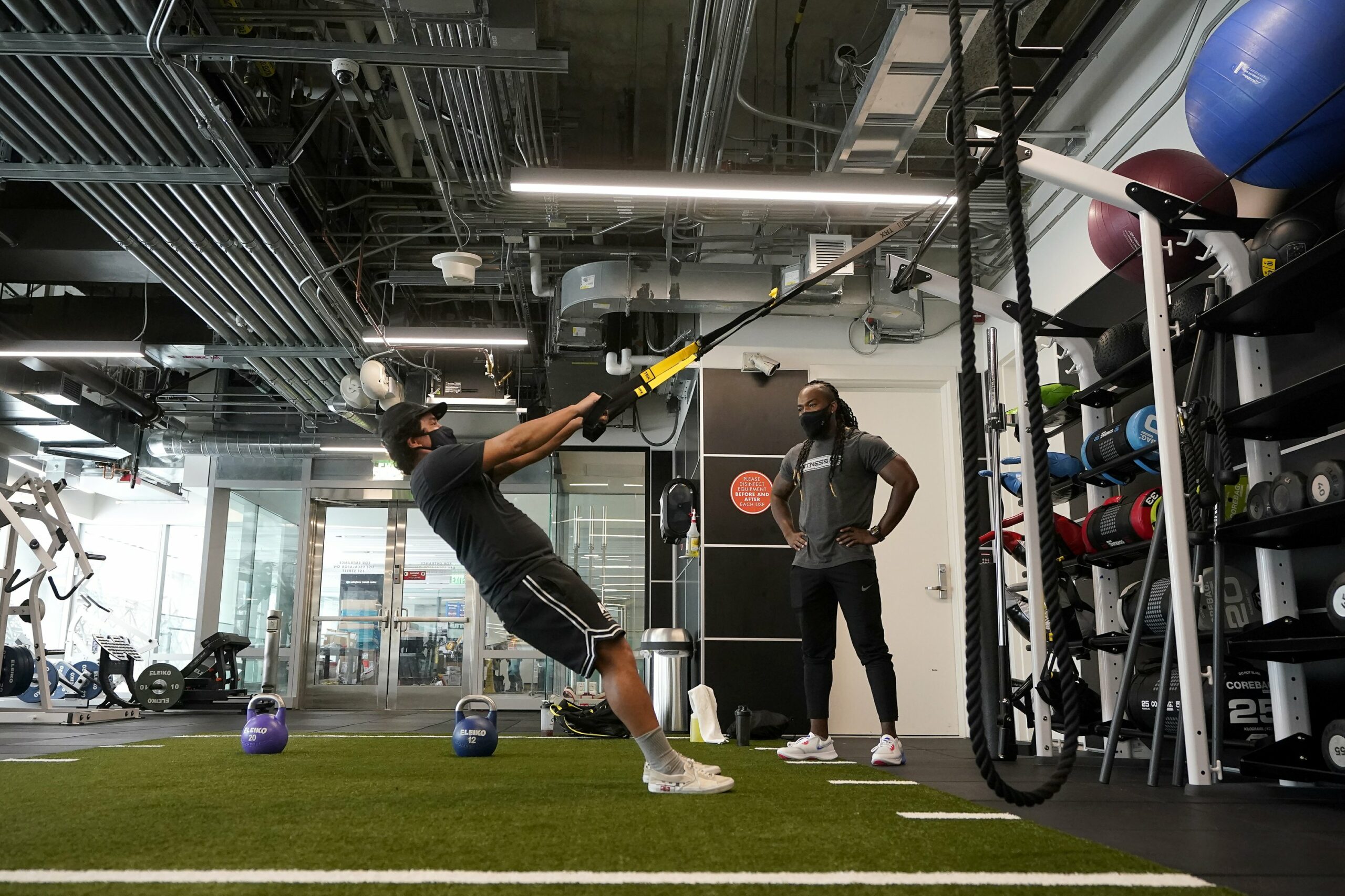
    California Fitness & Yoga, one of the most popular high-end gym chains in Vietnam, is suspending its expansion to focus on retaining members while its competitors’ race to open more facilities.

    “We are not perfect,” said Dane Fort, CEO of FLG Vietnam, which operates California Fitness & Yoga. “We developed and expanded too fast and had to face certain difficulties. That is why we have not opened new clubs in recent years.”

    With 35 facilities, California Fitness & Yoga was the biggest gym chain in Vietnam. However, it has now been overtaken by 25 Fit, which has 41 facilities. Third-ranking Curves only serves female members and has 27 facilities around the country.

    Fort said that anyone with money could build a gym chain with quality similar to that of California Fitness, but what his company is focusing on now is retaining members.

    It costs 10 times more to acquire a new member than to keep a current one. California Fitness, with 250,000 subscribers (including 30,000 daily users), accounts for more than three-quarters of the market in Vietnam.

    According to FLG, its members account for around 72-73% of the market. This is why Fort plans to invest $2 million into upgrading the current clubs to retain members.

    Fort said that staff training is important as new salespeople could make customers have a negative view about the chain during their sales pitch. Fort wants to train his staff more deeply for the next two years to increase their professionalism and consistency.

    Vietnam’s gym market is estimated to reach $3.5 billion by the end of next year, according to a forecast by Ken Research in June 2019.

    But this forecast was made before Covid-19 hit and forced many independent gyms to shut down.

    Gym chains, however, seem to have been expanding in the last two years.

    Fort said that the pandemic has made people take better care of their health and that this is giving the fitness industry new opportunities.

    FLG has been seeing growth compared to pre-pandemic levels in some areas, such as the number of active members, new members and revenues, he said.

    Growth potential in Vietnam remains, he said, adding that the penetration of the health and fitness industry among the middle-class is 14% in Hong Kong, 17% in the U.S. and 23% in Australia, while in Vietnam it is still below 1%.

    By the end of this year, the rate is set to rise to 1.25%, and in the next five years it could reach 5%, Fort said.

    FLG Vietnam has been making moves to assert its market dominance, such as importing new technology from Australia and opening Jetts Fitness, a 24-hour gym chain, which is set to expand to 12 facilities in the next two years from the current two.

  • Nike forecasts downbeat quarterly revenue on lingering China worries

    Nike forecasts downbeat quarterly revenue on lingering China worries

    Nike forecast first-quarter revenue below estimates as it expects to discount more and wrestles with pandemic-related disruptions in China, its most profitable market.

    The company’s shares fell 3% to $107 after the bell.

    Analysts are mixed about Nike’s prospects in China this year even as strict COVID-19 lockdowns have been lifted in several of the country’s major cities, as people cut down on spending and a penchant for home-grown brands such as Li Ning and Anta remains firm.

    “We are taking a cautious approach to Greater China, given uncertainty around additional COVID disruptions,” Nike Chief Financial Officer Matthew Friend said.

    The company expects first-quarter revenue to be flat to slightly up, below estimates of a 5.1% increase, according to Refinitiv IBES data.

    “The guidance was somewhat disappointing,” Morningstar analyst David Swartz said.

    Fashion retailers in China are also stuck with piles of unsold stock as the recent re-opening has also seen a flood of goods being shipped from warehouses to store shelves.

    Nike said its gross margins would be under pressure this year due to higher freight and product costs, and as it discounts more to sell seasonal inventories that arrived late due to supply snarls.

    The company’s inventories rose 23% to $8.4 billion at the end of May as more of its products remain in transit due to supply disruptions.

    Nike also forecast fiscal 2023 revenue to increase in the low double digits percentage range on a currency-neutral basis.

    For the fourth quarter, the company reported revenue of $12.23 billion, beating estimates of $12.06 billion, helped by higher sales in Europe, Middle East and Africa.

    Nike recorded a $150 million charge related to its decision to exit Russia and transition of business models in a few South American countries.

  • Adidas expects to grow China sales this year

    Adidas expects to grow China sales this year

    German sportswear company Adidas said on Thursday it would grow in its key market of China in 2022 even after it was hit by renewed pandemic restrictions and the aftermath of a consumer boycott of Western brands.

    The comments come after Manager Magazin reported Adidas expects sales in China to be down 400 million euros ($455 million) in 2022, without citing its sources.

    Asked about the article, an Adidas spokesperson said: “Our business in China grew in 2021 and our business in China will grow in 2022 as well.”

    Adidas’s third-quarter sales fell 15% in Greater China, although they were up 15% in the first nine months of the year. The company reports full-year 2021 results on March 9.

    Western brands have come under fire in China for saying they would not source cotton from Xinjiang after reports of human rights abuses against Uyghur Muslims in the region. Beijing denies any abuses.

    Adidas said last year it had launched an action plan to try to revive its fortunes in China, long its most important growth market. It has set up a dedicated studio for marketing and is increasing its creation of products just for the Chinese market.

    Manager Magazin said the situation was seen as so critical that Adidas sales chief Roland Auschel had traveled to China in January despite quarantine requirements.

    Rival Nike said in December supply issues and fresh COVID-19 lockdowns led to a 20% fall in revenue in Greater China in its fiscal second quarter.

  • Decathlon names new CEO

    Decathlon names new CEO

    French sports retailer Decathlon named 45-year old Barbara Martin Coppola, a former executive at companies such as IKEA and Google, as its new global chief executive.

    Coppola will replace Michel Aballea, who had held the role since 2015, in mid-March this year, added Decathlon, which competes in France with companies such as Go Sport.

    Decathlon said it was in good financial shape, echoing bullish updates recently given by sportswear companies such as Puma and JD Sports which have performed well despite the COVID-19 pandemic.

    “The current good health of Decathlon and our strong ambitions encourage us to accelerate the transformation of our business model to better assert our position as a world leader in sport,” said Decathlon chairman Fabien Derville.

    “We are convinced that Barbara will be able to lead this transformation while respecting our values,” added Derville.

    According to Decathlon’s website, the company registered sales of 11.4 billion euros ($12.9 billion). The Mulliez family, which also owns the Auchan supermarket chain, owns the majority shareholding in Decathlon.

  • Adidas Japan to launch brand centre in Harajuku

    Adidas Japan to launch brand centre in Harajuku

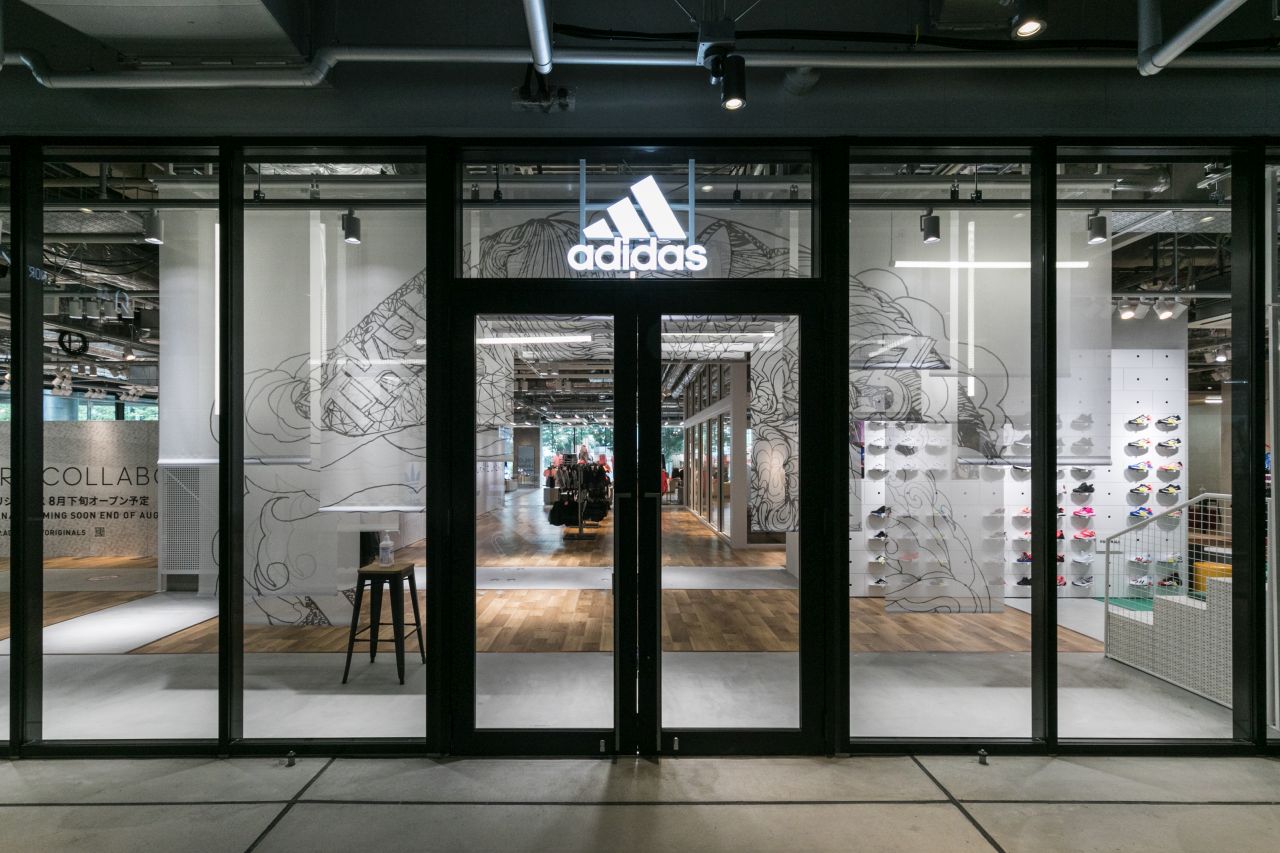
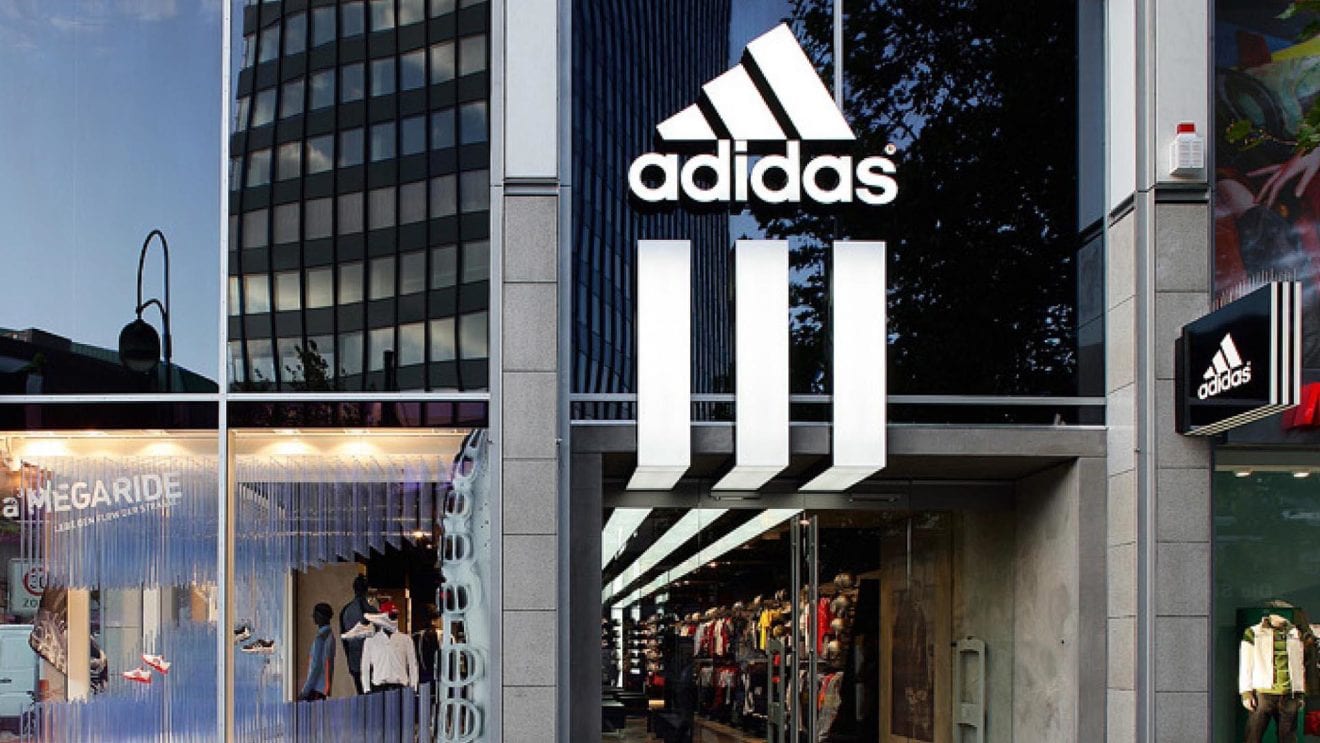
    The largest Adidas store to date on Japanese soil extends over two floors and a surface area of 1,000 square meters. In addition to countless products for a wide range of sporting activities, the new Adidas Brand Center, which is located just a few minutes’ walk from Shibuya Station, also offers an exclusive “Tokyo Collection”. This was designed especially for the new store and is exclusively available here.

    The “Digital Footwear Wall” offers space for up to 45 different shoe models and can be filled with matching campaign images as required. The store was designed in cooperation with a number of Japanese artists, whose works partly also decorate the salesrooms. In addition, characteristic design elements can be found throughout the store, which serves as references to the metropolis of Tokyo.

    On the occasion of the opening of the Brand Center at the end of July, visitors had the opportunity to purchase limited-edition T-shirts created in cooperation with the store’s artists and designers. According to Adidas, the store will continue to be used as a regular venue for events featuring local artists even after the opening-period.

    The Tokyo store also includes a special area dedicated to sustainability, offering Adidas Parley and Primeblue products and communicating information about the sustainability efforts of the Herzogenaurach-based sporting goods manufacturer. In partnership with the non-profit organization Parley, Adidas collects plastic waste before it can be discharged into the sea and uses it to produce high-quality sportswear. “Partnering with Parley on a shared mission to use 100% recycled polyester in our products by 2024, we created Primeblue. A high-performance recycled material made in part with Parley Ocean Plastic,” says the statement on the Adidas website.

  • Thousands strike work after Nike supplier cuts Tet bonus

    Thousands strike work after Nike supplier cuts Tet bonus

    Thousands of workers of Taiwanese-invested footwear maker Pouchen Vietnam, a Nike contract manufacturer, struck work Friday, demanding the same Tet bonus as last year.

    They refused to return to work after finishing their lunch to protest the company’s policy to pay less bonus than last year for the coming Tet (Lunar New Year) festival. Tet, the most important Vietnamese festival, falls in early February this year. The workers stood on national road 1K in front of their factory’s entrance, causing traffic congestion for hours. The strike affected others and all 14,000 workers of the factory in Bien Hoa Town, southern Dong Nai Province, stopped working.

    A mobile police team was dispatched to maintain order in the area. A female worker said that the company had announced Thursday that employees who have worked for it a full year or more will be given Tet bonuses of 1-1.54 months’ salary – around VND5 million ($217) to nearly VND20 million.

    The highest bonus in 2021 was 1.87 months’ salary, and in previous years, 2.2 months. “With this (coefficient), workers’ Tet bonus in 2022 will be lower than before,” she added.

    A Pouchen representative said that in 2021, the company had faced difficulties in production and business. When the fourth wave of Covid-19 broke out, the factory had to stop working from July 12 to Sept. 30, 2021. On Oct. 5, 2021, it resumed production, but at 60 percent capacity.

    Due to the failure to fulfill the production plan, profits fell, so the Tet bonus, the biggest and most anticipated reward for workers, could not be the same as the previous year. The rep also said that under the collective labor agreement, the company would pay Tet bonus to employees based on its business performance.

    Nguyen Thi Nhu Y, head of the Dong Nai Provincial Labor Confederation, said the union was coordinating with authorities to resolve the situation. She noted that Pouchen’s Tet bonus was higher than the local industry average.Nguyen Huu Nguyen, Chairman of the People’s Committee of Bien Hoa, said relevant agencies are trying to negotiate with the board of directors of Pouchen to increase the Tet bonus. “However, employees need to share the company’s difficulties, because Covid-19 has caused businesses to suspend operations for months,” he said.

    Pouchen Vietnam, part of Taiwan’s Pouchen Group, has one more factory in Dong Nai and six others in HCMC and the three southern provinces of Tien Giang, Tay Ninh and Ba Ria – Vung Tau for a total of 130,000 employees. The group is expected to spend more than VND1.2 trillion on Tet bonuses this year.

  • Under Armour raises forecasts amid supply chain snafus

    Under Armour raises forecasts amid supply chain snafus

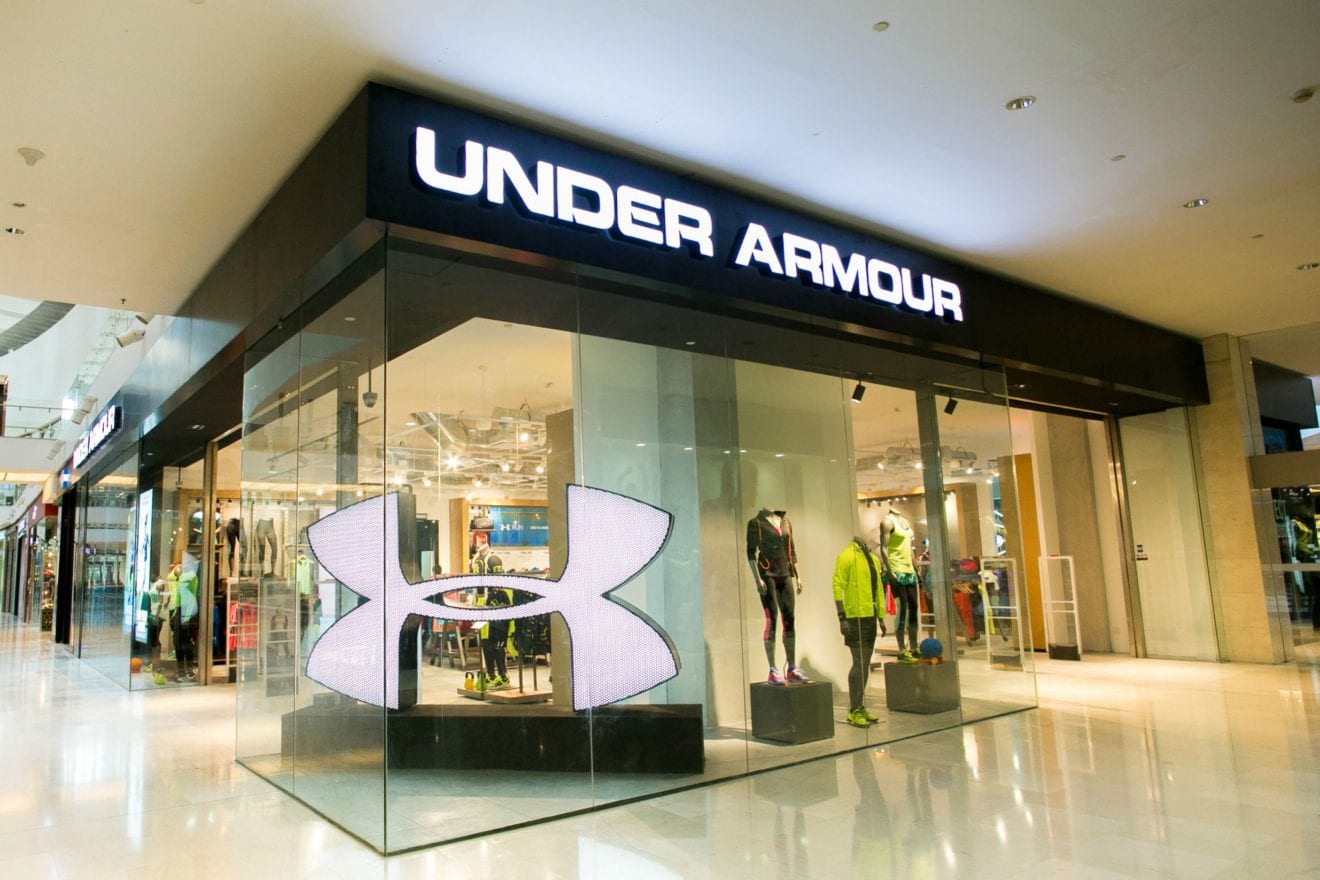
    Under Armour on Tuesday raised its full-year forecasts, alleviating investor concerns regarding holiday inventory shortages flagged by nearly all its peers and sending its shares up 16 percent.

    Factories in Vietnam, where Under Armour sources about one-third of its products from, have begun reopening after months-long shutdowns that have caused severe distress to many apparel brands.

    Bigger rival Nike Inc has cut its fiscal 2022 sales estimates, expecting delays during the holiday season, while Puma SE advised people to shop early for Christmas.

    “Nearly all factories that Under Armour does business with, including those in Vietnam are open,” finance chief David Bergman said, noting port congestion and container availability at some Asian ports have improved.

    Under Armour still had to cancel some spring/summer 2022 orders to ease pressure on the factories that will take until the year-end to ramp-up to full capacity, it said.

    It also warned of a hit to its revenue in the first half of 2022 before the challenges, including congestion at U.S. ports, start to dissipate.

    However, analysts have said Under Armour, which has deployed pricier air freight to bring in goods, is navigating supply-chain challenges well.

    They also believe the athletic wear boom that is helping Under Armour, Nike and Adidas AG could last at least through next year.

    Under Armour has also been spending more on marketing, pulling out of discounter stores and sharpening its focus on its own stores to elevate its brand image.

    “UA remains one of the few that successfully raised its pricing power, rather than simply enjoyed higher prices on lower industry promotions,” brokerage BMO Capital Markets said.

    The athletic wear maker said it expected 2021 adjusted per-share earnings to reach 74 cents, above Refinitiv IBES estimates of 55 cents, after it posted better-than-expected third-quarter results.

  • SES partners Softbank to deliver live sporting events into Japan

    SES partners Softbank to deliver live sporting events into Japan

    Japanese sports fans will be able to enjoy more premium sports content as SoftBank Corp. (SoftBank), a leading telecom carrier in Japan, has partnered with SES for the aggregation and delivery of live sporting events to its corporate customers, such as TV stations and video distribution companies, SES announced.

    Under the new agreement, SES, via its diverse global infrastructure of multi-orbit satellite fleets and fibre network, will aggregate content and deliver it directly to SoftBank. In providing this service, SES will use more than 300 downlink antennas located around the world, including those in its new Stockley Park facility in London, as well as its own fibre network with connections to other major fibre hubs. In addition, SES will establish a new link to SoftBank’s fibre network.

    “Whether viewed on mobile devices or broadcast TV, tennis, football, golf, and other live sports are some of our most popular content that we see a growing demand for,” said Norioki Sekiguchi, Vice President, Global Business Division at SoftBank Corp. “With its diverse global infrastructure and access to a variety of sports content, SES is in a unique position to help us deliver a wide range of sports content in very high quality to our corporate customers in Japan.”

    “We are delighted to join forces with SoftBank, the first provider we are interconnecting and partnering with in Japan, with a common goal to bring engaging content to sports fans across the country,” said Ed Cox, Vice President, Sales North America and Sports & Events at SES. “Providing content feeds solely using fibre networks is great testament to SES’s ability to adapt and leverage our hybrid distribution services in the most effective way possible to meet our partner’s needs.”

  • Adidas sells Reebok to Authentic Brands

    Adidas sells Reebok to Authentic Brands

    Authentic Brands has cemented its position as a major player in American retail after what one analyst described as a “massive acquisition” – the successful $2.456 billion bid for Reebok.

    Adidas confirmed the sale overnight after six months of negotiations with prospective bidders.

    Neil Saunders, MD of GlobalData, said Authentic Brands has proven its ability to turn around struggling brands like Aéropostale and so it will be confident that it can achieve a similar result with Reebok.

    But he warned the new owner needs to take a different approach to ensure Reebok’s future success.

    “If, under Authentic Brands, Reebok focuses less on competing with Nike and more on developing a credible brand that can be offered via its various stores and other third-party retailers it should be able to build sales. However, the market remains extremely competitive so coming up with a differentiated offer that has clear customer focus and a strong distribution strategy will be key to future success.”

    Reports emerged in May that Authentic had lodged a bid for Reebok. At the time the New York Post said the $1 billion fell far short of the $3.8 billion Adidas paid for Reebok five years ago and the $2.4 billion Adidas was thought to be seeking.

    Adidas CEO Kasper Rorsted said he believed the change in ownership would position the brand well for long-term success.

    “As for Adidas, we will continue to focus our efforts on executing our ‘Own the Game’ strategy that will enable us to grow in an attractive industry, gain market share, and create sustainable value for all of our stakeholders,” he said.

    Adidas acquired Reebok back in 2006. Saunders said the German company originally saw it as a vehicle with which to take on the might of Nike, especially in the US.

    “While Adidas did manage to restore Reebok to profitability it was far less successful in building a brand that was able to steal share and capture the hearts and minds of consumers. Part of the issue was a lack of clarity around what Adidas wanted Reebok to be. As a result, it was neither seen as the go-to brand for sporting professionals nor for those looking for athleisure fashion and style,” said Saunders.

    Adidas’ sale of Reebok for less than it paid for it – and after years of difficulty and disappointment – underlines the degree to which the brand’s equity has been eroded, he said.

    “The decision to sell should not solely be chalked up to the pandemic. Indeed, the footwear and sports apparel market has performed extremely well over the past 18 or so months.

    “However, the market is becoming much more competitive, with Nike and others doubling down on direct-to-consumer sales, brands like Lululemon eating up large slices of growth, and retailers launching a multitude of sporting own labels,” said Saunders.

    Jamie Salter, founder, chairman and CEO of Authentic Brands Group described it as “an honour” to be carrying Reebok’s legacy forward.

    “This is an important milestone for ABG, and we are committed to preserving Reebok’s integrity, innovation, and values – including its presence in bricks and mortar. We look forward to working closely with the Reebok team to build on the brand’s success.”

    The closing of the transaction is subject to customary closing conditions and is expected to occur in the first quarter of next year. Adidas intends to share the majority of the cash proceeds from the sale with its shareholders.

    When Adidas bought Reebok in 2006, the brand came along with the Rockport, CCM Hockey and Greg Norman brands, which were subsequently divested for €400 million (US$470 million at today’s exchange rate).

    In 2016 Reebok initiated a turnaround plan called ‘Muscle Up’ which saw the label significantly improve its growth and profitability prospects, according to Adidas.

    In March of this year, Adidas unveiled its 2025 ‘Own the Game’ strategy designed to significantly increase sales and profitability and build market share. As part of the process of developing that strategy, the company assessed options for Reebok, which in February led the company to opt to divest Reebok, rather than dilute its focus across two brands.

  • Puma’s China sales slowly up

    Puma’s China sales slowly up

    After a pandemic-served beatdown last year, Puma has clawed its way to recovery. On February 24, the German sportswear giant reported that sales jumped 9 percent to 1.52 billion euros in the last three months of 2020 — a promising upswing from the 55-percent plummet in its second quarter. Overall, sales were down 1.4 percent to 5.23 billion euros for the financial year.

    This rebound was led by strong performance in the Asia Pacific, which surged 11.8 percent in the fourth quarter to 480.5 million euros, driven by mainland China. But the country alone was not enough to stop the region’s full-year sales from falling 3.2 percent compared to 2019 levels, down to 1.48 billion euros.

    Given the importance of these global markets, Puma doubled down on establishing local relevance, particularly through sports, influencers, and communication platforms. This was not only reflected in the brand’s return to basketball and collaboration with grammy-winning artist J. Cole, but also its increasing partnerships with popular Chinese talents, including actors Yang Yang, Li Xian, and Liu Haoran as well as supermodel Liu Wen.

    The brand further grew its China footprint by leveraging the country’s biggest shopping holiday, Singles’ Day, logging 2.8 million orders and 80 million euros in revenue over the week. And already, Puma is making good on its goal to design more products specific to the market, partnering with Hong Kong-based artist Michael Lau, “The Godfather of Toy Figures,” to ring in the new year.

    That said, all Puma products did well in the fourth quarter, with apparel growing 15.7 percent, accessories up 7.3 percent, and footwear increasing 3.8 percent.

    “We clearly see a running boom in the whole world,” CEO Bjorn Gulden told journalists, adding that orders for 2021 are up almost 30 percent compared to last year, especially for running products.

    This tracks with Puma’s Q3 results, which showed strong demand for performance-related products, especially for individual sports like running or hiking. With the healthy living trend expected to persist after the pandemic, the sporting goods sector is positioned to weather the crisis better than most.

    But Puma isn’t out of the storm just yet. With almost half of its retail stores in Europe still closed and other markets operating under significant restrictions, the apparel maker is bracing for impact in the first half of 2021. However, the brand is also confident that its quick Q4 recovery and strong order book — along with global efforts to combat the virus — will lead to a moderate sales bump later this year.

    “I am convinced that 2021 will be a better year for us than 2020,” Gulden said. Knock on wood.

  • Adidas expects strong rebound, takes Reebok hit

    Adidas expects strong rebound, takes Reebok hit

    German sportswear maker Adidas AG predicted a strong rebound in sales in 2021, particularly in China, the rest of Asia, and Latin America, although its profits will be trimmed by costs associated with divesting the Reebok brand.

    The outlook for 2021 is part of a five-year strategy that Adidas is due to present on Wednesday.

    Fourth-quarter sales rose a currency-neutral 1 percent to €5.55 billion ($6.59 billion), while operating profit slipped slightly to €225 million, ahead of the €5.47 billion and €202 million expected by analysts.

    About half of its stores were closed in Europe in the period, but online sales grew 43 percent.

    Now that more than 95 percent of its stores have reopened after lockdowns, Adidas expects sales growth at a mid-to high-teens rate on a currency-neutral basis in 2021, rising by up to 30 percent in greater China, the rest of Asia, and Latin America.

    Rival Puma said last month it expects the financial impact from lockdowns to last well into the second quarter but believes global growth in running should help to support a strong improvement after that.

    As part of its new strategy, Adidas will manage greater China as a separate market from the rest of Asia, and has integrated Europe, Russia and emerging markets into a new Europe, Middle East and Africa (EMEA) region.

    For EMEA, Adidas expects sales growth in the mid-to high-teens, but only a high-single-digit rate in North America.

    Net income from continuing operating is set to rise to between €1.25 billion and €1.45 billion.

    However, Adidas said it expects a hit of around €250 million to the operating profit level and €200 million to net income due to costs to set up Reebok as a stand-alone company, with a third of that in 2022, but none in 2023.

    Adidas said last month it plans to sell or spin-off the underperforming brand, 15 years after it bought the U.S. fitness label to help compete with arch-rival Nike Inc .

  • Lotus Confirms New Series Of Sports Cars

    Lotus Confirms New Series Of Sports Cars

    A new series of sports cars is confirmed, with prototype production of the Lotus Type 131 to commence this year from the manufacturing facility in Hethel, Norfolk. The new manufacturing investment is part of Lotus’ Vision80 strategy, which will also see the relocation of two Lotus sub-assembly facilities into one efficient central operation in Norwich city to support higher volumes.

    To accompany the Euros 100-million-plus investment into Hethel’s facilities, Lotus will be recruiting some 250 new employees. This is in addition to the 670 to have joined Lotus since September 2017, when shareholders Geely and Etika took ownership of the company.

    Lotus has released an image that hints at the new generation of products that will follow Elise, Exige and Evora, which have entered their final year of production in 2021. A full program of activities is planned to celebrate the current range of three sports cars, starting with the elder, the iconic Lotus Elise.

    The Elise, Exige and Evora have contributed greatly to the Lotus business over the years.

    Phil Popham, CEO, Lotus Cars, said, “This year will be hugely significant for Lotus with new facilities coming on stream, a new sports car entering production and new levels of efficiency and quality that only a new car design and the factory can deliver. Despite the continuing global challenges, Lotus has emerged from 2020 strong and on track in the delivery of our Vision80 business plan.”

    The Elise, Exige and Evora have contributed greatly to the Lotus business over the years, and by the time the last of these models leaves the assembly line, they will have sold a combined circa 55,000 units.

  • NBA signs licensing deal with Decathlon, entering 1200 stores globally

    NBA signs licensing deal with Decathlon, entering 1200 stores globally

    DECATHLON, one of the world’s largest sporting goods retailers, and the National Basketball Association (NBA) today announced a new multiyear merchandising partnership that makes DECATHLON an official licensee of the NBA across Africa, Asia, Europe, the Middle East and Latin America and marks DECATHLON’s first partnership with a North American sports league.

    The partnership will feature a dedicated range of NBA team and league-branded base layers, accessories and footwear* designed by DECATHLON and sold under their basketball brand “TARMAK.” The collection will be sold exclusively in more than 1,200 DECATHLON stores worldwide and online at Decathlon.com. Products will be available for pre-order beginning in March 2021 ahead of the April 2021 launch in stores.

    “Since the creation of TARMAK four years ago, it has been our dream to collaborate with the NBA, the greatest basketball league in the world,” said TARMAK Leader Damien Dezitter. “We have a common objective to develop basketball all over the world, so it’s natural to work together to make this possible.”

    “We are excited to partner with DECATHLON, a leader in sporting goods retail with a global footprint,” said NBA EME Director, Global Partnerships Steve Griffiths. “Through this partnership, NBA fans and basketball players around the world will have access to an exciting and innovative range of merchandise to help them get in the game.”

    Fans can download the official NBA App on iOS and Android for the latest news, updates, scores, stats, schedules and videos and follow the NBA on Instagram at NBAEurope.

  • Asics shutters New York flagship as Covid plagues business

    Asics shutters New York flagship as Covid plagues business

    Japanese sporting goods maker Asics closed down its New York flagship store in December amid the prolonged impact of the COVID-19 pandemic, the company announced on Monday.

    The store opened in December 2017 on Fifth Avenue, selling running shoes and sportswear. Asics’s decision comes as high rent bites the company, on top of uncertainties around when the pandemic will end.

    Due to the store’s closure, the sports brand is taking an extraordinary loss of about 2.3 billion yen ($22 million) for the fiscal year ended December 2020. The loss is already included in the latest earnings forecast.

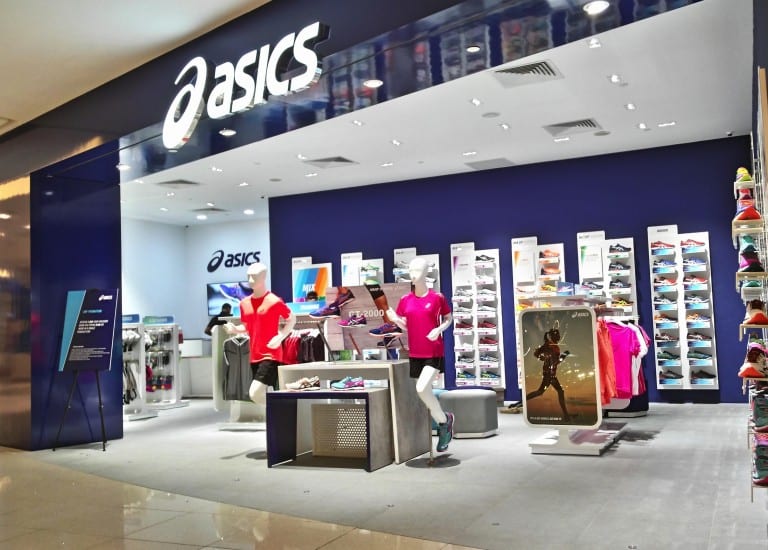
    Asics’ sales in North America declined by 19% between January and September 2020, compared to the same period in 2019. The company is expected to take a net loss of 17 billion yen in fiscal 2020. Sales are forecast to decline by 15% to 320 billion yen.