Retail News CRM

Tag: stocks

  • Vietnam stocks slip as Asian shares subdued

    Vietnam stocks slip as Asian shares subdued

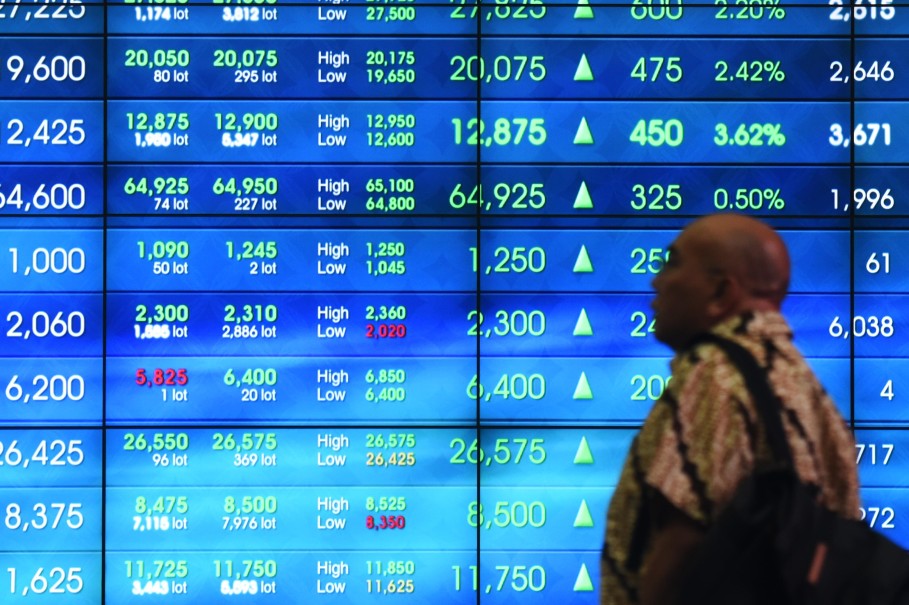
    Vietnam’s benchmark VN-Index fell 0.59% to 1,268.21 points Thursday as other Asian markets were little changed.

    The index closed 7.59 points lower after dropping 8.07 points in the previous session.

    Trading on the Ho Chi Minh Stock Exchange increased by 6% to VND16.59 trillion (US$671 million).

    GVR of Vietnam Rubber Group plunged 2.3%, followed by PLX of fuel distributor Petrolimex, down 2%.

    FPT of IT giant FPT Corporation and MBB of lender MB both fell 1.8%.

    Three blue chips gained, led by VHM of property giant Vinhomes, up 2.9%, and VIC of private conglomerate Vingroup, up 2.4%.

    Foreign investors were net sellers to the tune of VND684 billion, mainly selling FPT and HPG of steelmaker Hoa Phat Group.

    The HNX-Index for stocks on the Hanoi Stock Exchange, home to mid and small caps, fell 0.50%, while the UPCoM-Index for the Unlisted Public Companies Market went down 0.30%.

    Asian shares were subdued on Thursday, with Japanese stocks sliding to their lowest in three weeks as investors sought safety, pushing the yen to a one-month high while U.S. economic worries boosted prospects for the Federal Reserve to cut rates.

    Amid the fragile sentiment, Japan’s benchmark Nikkei slid more than 1% to its lowest in three weeks, while stocks in tech-heavy Taiwan and South Korean stood slightly higher on the day, giving up earlier gains.

    The MSCI’s broadest index of Asia-Pacific shares outside Japan up 0.25%, subdued after having tumbled nearly 3% during a three-day losing streak. The index had risen more than 0.6% but gave up those gains.

  • Stock dives to 5-week low

    Stock dives to 5-week low

    Vietnam’s benchmark VN-Index dropped 0.63 percent to 1034.85 points Tuesday, lowest in five weeks.

    The index closed 6.51 points lower after losing 1.55 points on Monday.

    Trading on the Ho Chi Minh Stock Exchange (HoSE) increased by 3% to VND9.42 trillion ($401.14 milllion).

    The VN-30 basket, comprising the 30 largest capped stocks, saw 27 tickers lose.

    MSN of conglomerate Masan Group fell 2.7%, followed by HDB of HDBank and NVL of property developer Novaland Group, both with a 2.1% drop.

    STB of Ho Chi Minh City-based lender Sacombank lost 2%, and PDR of Phat Dat Real Estate Development closed 1.9% lower.

    Only two blue chips gained. HPG of steelmaker Hoa Phat Group rose 1.9% and VCB of state-owned lender Vietcombank went up 0.5%.

    Foreign investors were net sellers to the tune of VND139.72 billion, mainly selling VIC of private conglomerate Vingroup and STB of Ho Chi Minh City-based lender Sacombank.

    The HNX-Index at the Hanoi Stock Exchange, where mid and small caps list, was down 1.00% while the UPCoM-Index at the Unlisted Public Companies Market was up by 0.12%.

  • Stock market plunges

    Stock market plunges

    Vietnam’s benchmark VN-Index dropped 2.15% to 1,065.84 points Tuesday.

    The index closed 23.45 points lower after gaining 12.14 points on Monday.

    Trading on the Ho Chi Minh Stock Exchange (HoSE) increased by 26.65% to VND12.17 trillion ($515.35 million).

    The VN-30 basket, comprising the 30 largest capped stocks, saw 24 tickers dropped.

    PDR of Phat Dat Real Estate Development hit the floor with a 6.9% fall.

    HPG of steelmaker Hoa Phat Group fell 6.6% and NVL of property developer Novaland Group lost 5.2%.

    GVR of Vietnam Rubber Group went down 5.1% and SSI of leading brokerage SSI Securities Corporation declined by 4.7%.

    Five blue chips bucked the trend.

    TPB of private TPBank went up 1.2% and PLX of fuel distributor Petrolimex gained 0.5%.

    Foreign investors were net buyers to the tune of VND37.26 billion, mainly buying STB of Ho Chi Minh City-based lender Sacombank and CTG of state-owned lender VietinBank.

    The HNX-Index at the Hanoi Stock Exchange, where mid and small caps list, was down 2.08% while the UPCoM-Index at the Unlisted Public Companies Market was down by 0.55%.

  • Most blue chips close in red

    Most blue chips close in red

    Vietnam’s benchmark VN-Index dropped 1.02% to 1023.19 points Wednesday, with two-thirds of blue chips falling.

    The index closed 10.56 points lower after gaining 5.81 points on Tuesday. Trading on the Ho Chi Minh Stock Exchange (HoSE) fell by 6% to VND10.10 trillion ($406.29 million). The VN-30 basket, comprising the 30 largest capped stocks, saw 22 tickers dropped.

    MSN of conglomerate Masan Group plunged 6.4%, followed by MWG of electronics retail chain Mobile World with a 4.2% decline.

    ACB of Asia Commercial Bank dropped 2.9%, and SSI of leading brokerage SSI Securities Corporation fell 2.7%. Other decliners included VNM of dairy giant Vinamilk, GVR of Vietnam Rubber Group and FPT of IT giant FPT Corporation.

    Five blue chips gained, including VIB of Vietnam International Commercial Bank, up 2.7%, and HPG of steelmaker Hoa Phat Group, up 2.3%.

    Foreign investors were net sellers to the tune of VND251.20 billion, mainly selling HPG and KBC of industrial real estate developer Kinh Bac City.

    The HNX-Index at the Hanoi Stock Exchange, where mid and small caps list, was down 0.33% while the UPCoM-Index at the Unlisted Public Companies Market was down by 0.63%.

  • Vietnam stock market becomes world’s worst performer

    Vietnam stock market becomes world’s worst performer

    Vietnam’s stock market was the world’s worst performer this week with an 8.5% decline.

    It was followed by Russia, down 4.8%, and Venezuela, down 1.87%, according to market data provider StockQ.

    Over the last four weeks Vietnam has been the world’s second worst performer behind Russia, with the VN-Index falling by 16.67%.

    The VN30 basket, comprising the 30 largest capped stocks, declined by 18.51% in the period.

    Some of the worst performers were private lenders Techcombank and VPBank and electronics retail chain Mobile World.

    The State Bank of Vietnam raised its policy rates last month to control inflation.

    The dollar has been rising to new peaks against the dong as well as most other currencies amid rising interest rates in the U.S. and geopolitical tensions.

    “Margin call pressure forced investors to sell off recently and the panic among investors has not subsided yet,” Phung Trung Kien, founder of asset management firm Vietnam Holdings said.

    “Cash flow to the market is quite limited these days as most of the important rates such as interbank interest rates have been increasing a lot.”

    Nguyen Anh Duc, head of institutional sales at SSI Securities Corp, said retail investors are “extremely panicky and they are taking flight without regard for which stocks they are selling.”

    But some investment funds, such as Coeli Asset Management SA and Asia Frontier Capital are looking to buy more of Vietnam stocks given the country’s long-term economic prospects.

  • Tumbling stock market makes a dent in company earnings

    Tumbling stock market makes a dent in company earnings

    Investment in securities, a major source of income for many companies during the two years of Covid-19, has become a financial burden this year after markets plunged.

    Da Nang Housing Investment Development reported losses of over VND90 billion ($3.85 million) for the first six months “due to negative market factors,” it said in its earnings report.

    Last year it reported profits of VND130 billion from stock trading.

    The VN-Index has fallen by over 20 percent this year due to geopolitical tensions and rising inflation.

    Mining company Hoa An said its profits dropped by 90 percent year-on-year to VND2 billion in the second quarter following a mark-to-market decline of over VND20 billion in steelmaker Hoa Phat Group’s stocks.

    HPG has been hovering around a 17-month low as steel prices dropped due to declining construction activity and a surge in costs.

    At the end of June Hoa An was holding over 2.5 million HPG shares.

    Construction firm Licogi 14 said it had to mark to market its “financial investment” in the previous quarter.

    It lost over VND346 billion during the quarter though revenues from its main businesses soared by 45 percent to VND88 billion.

    Seafood processor Vinh Hoan Corporation invested VND200 billion in stocks in the second quarter but made mark-to-market losses of nearly VND63 billion.

    Its main business thrived meanwhile with revenues jumping by over 80 percent year-on-year to VND4.22 trillion.

  • Stocks plunge to 11-week low

    Stocks plunge to 11-week low

    Vietnam’s benchmark VN-Index started off the week in the red with a 1.25 percent drop to 1,440.23 points Monday morning, the lowest in 11 weeks.

    The index fell by 17 points as of 11:06 a.m. after ending in the red in four out of the last six sessions.

    The main bourse Ho Chi Minh Stock Exchange (HoSE) saw 361 tickers in the red and 107 in the green.

    Brokerages have forecast earlier that the market would drop in the short term.

    The VN30 basket, comprising the 30 largest capped stocks, saw 15 tickers in the red, with SSI of leading brokerage SSI Securities Corporation falling 4.5 percent to the lowest since August last year.

    VHM of real estate giant Vinhomes dropped 3.4 percent, the lowest in over a year.

    Other losers included CTG of state-owned lender VietinBank, down 3.5 percent, MBB of lender MB, down 2.7 percent, and VIC of biggest private conglomerate Vingroup, down 2.9 percent. Fourteen blue chips bucked the trend, with PNJ of Phu Nhuan Jewelry rising 3.2 percent and FPT of IT giant FPT Corporation gaining 2.2 percent. Both were at new peaks.

    They were followed by SAB of brewer Sabeco, up 2 percent, and TPB of private TPBank, up 1.6 percent.

    Foreign investors are buying the dips with a VND88 billion net purchase, focusing on DPM of Petrovietnam Fertilizer & Chemicals Corporation and NLG of real estate developer Nam Long Investment Corp.

    The HNX-Index for stocks on the Hanoi Stock Exchange, home to mid and small caps, was losing 2.51 percent, while the UPCoM-Index for the Unlisted Public Companies Market was losing 1.5 percent.

  • Vietnam stock market makes bright start after Tet holidays

    Vietnam stock market makes bright start after Tet holidays

    The VN-Index began the new lunar year with a 1.5-percent jump Monday morning, led by aviation and energy stocks. It gained 22 points to 1,503 points at 11.20 as the market reopened after the nine-day Tet break, reaching a near four-week high. It represents a 4.1-percent recovery from the bottom of 1,439 points reached on January 18 as investors booked profit before the holidays.

    Most brokerages expect the index to rise this week since no negative news came out during the holidays. Analysts at ASEAN Securities and BIDV Securities said the VN-Index is set to stay in the 1,500 levels this week. It closed in the green on an opening day on five of the last six years since 2016, only dipping in 2020 when Covid-19 first hit Vietnam.

    The VN30 basket, comprising the 30 largest capped stocks, saw 24 of them gain Monday, led by VJC of budget airline Vietjet, which rose by 6.6 percent as investors expect a recovery by the aviation industry after the government announced plans to revive international tourism by March-end.

    Vietnam Airlines (HVN) gained 7 percent to the ceiling and its highest in over three months.

    Airports Corporation of Vietnam (ACV) rose by 7.4 percent with volumes reaching 321 percent of the average of the last 10 sessions.

    Energy stocks also rose, with PLX of fuel distributor Petrolimex climbing by 6 percent and GAS of state-owned Petrovietnam Gas gaining 6.2 percent. POW of electricity producer Petrovietnam Power Corporation was up 6.5 percent. Companies expected to benefit from rising consumer demand, such as VRE of real estate retail firm Vincom Retail and MSN of conglomerate Masan Group were the other gainers.

    The HNX-Index on the Hanoi Stock Exchange, home to mid-and small-cap companies, was up 1.2 percent, and the UPCoM-Index on the Unlisted Public Companies Market had gained 1 percent at the time of publishing.

  • Netflix fails to reach its growth forecast, stocks suddenly plummet

    Netflix fails to reach its growth forecast, stocks suddenly plummet

    Netflix investors haven’t been happy with the company and its recently announced 2021 final quarter report. Netflix has failed to meet its forecast for subscriber count for the last quarter of 2021, and this has caused its stocks to plummet by a staggering 20%

    It seems that even before the report was released, investors were worried about the fact that the movie-streaming platform isn’t growing as much and as fast as it should. Unfortunately for Netflix, its report of subscriber additions was lower than what was projected by the company itself, and this is having a negative impact on its investors and its own stock.

    Its stock plummeted nearly 20% in response to the report, and this is the lowest the stock had dropped since June of 2020. Now, let’s check the numbers.

    Netflix’s forecast for subscriber additions was that it would report 222.06 million paid subscribers by the end of last year. However, the company reported that it ended the fourth quarter with 221.84 paid subscriber additions… well, the difference here is not major by any means, but it seems to have caused investors to worry.

    The issue that investors are reportedly having with Netflix is its inability to find new ways to keep growing. The company’s own estimate shows that the next quarter will most likely have a low subscriber growth as well, which is not particularly encouraging news.

    According to its new estimate, Netflix expects to add 2.5 million subscribers in the first quarter of this year. This estimation is down from the 4 million that the company achieved during the same period last year.

    However, with all this being said, there are still many people coming to Netflix and paying for the movie streaming service. Netflix experienced revenue growth of 16% year-on-year, and paid memberships rose by 9% from last year. These numbers pretty much mean that Netflix is still growing, although a bit slower, but still, regularly.

    The company noted that although subscriber retention and engagement levels are remaining healthy, the acquisition growth has not yet accelerated to what it was before the pandemic. Additionally, the company added that the slower subscriber growth could be due to factors including the pandemic and macro-economic hardships that several parts of the world are currently undergoing.

    In the report, Netflix did not say much about its recent price hike in the US. Instead of commenting on it, the company pointed to its recent Play Something feature as one example of how it adds additional value for its subscribers. Additionally, the company seems to have also brushed off discussions and investors’ concerns about its rising rivals before the investor call.

    Netflix stated that the added competition could be affecting the company’s growth, but despite the growing competition, it is still continuing to grow in every country and region where new streaming alternatives have launched. The company underlined that the greatest opportunity in entertainment right now is to transition from linear (basically the traditional way to watch TV programs) to streaming. Basically, with under 10% of total TV screen time in the US, which is Netflix’s biggest market, the company has loads of room to grow and improve.

    However, it seems Netflix’s biggest concern is that its growth and signups are slowing down in pace even during a quarter in which it launched two of its most-viewed films, Red Notice and Don’t Look Up. The company will definitely need ways to justify the lack of acceleration in its subscriber growth or find ways to account for it to keep its investors calm.

  • Vietnam stock market 7th biggest gainer globally

    Vietnam stock market 7th biggest gainer globally

    Vietnam’s stock market was the seventh biggest gainer last year at 35.7 percent, outperforming regional peers, as new retail investors rushed to a new asset for profit.

    With the benchmark VN-Index rising 394 points to close the year at 1,498 points, Vietnam listed among the top 10 gaining stock markets in the world with Abu Dhabi, Argentina, and Iceland in the top 3.

    In Asia, Vietnam outperformed major markets like Taiwan (24 percent), Thailand (14 percent), and Indonesia (10 percent).

    Some markets like Malaysia and Hong Kong posted a decline.

    2021 was the third year in a row the VN-Index went up. Growth was 7.6 percent and 14.7 percent in the previous years.

    Growth exceeded forecasts of several brokerages at around 1,300 or 1,400 points.

    Several analysts said with a price-to-earnings ratio of 17.47, the Vietnam market is still “cheaper” than others in the region.

    The main bourse, Ho Chi Minh Stock Exchange (HoSE), closed the year with a market cap of VND5,830 trillion ($256.21 billion).

    Brokerage VNDirect has forecast the VN-Index could reach 1,700 points this year.

  • Phillip Futures to Offer Stockbroking in Malaysia

    Phillip Futures to Offer Stockbroking in Malaysia

    PhillipCapital’s derivatives broking arm in Malaysia has entered into a business sale and purchase agreement with Alliance Investment Bank to purchase its stockbroking business.

    The strategic partnership arrangement will allow Phillip Futures to expand its Futures, Options, and Contract for Difference broking services to include Stocks and Exchange Traded Funds to the Malaysian investors, according to an announcement on Monday.

    The bank will leverage PhillipCapital’s global trading platforms and market access to enhance services to its customers, and both parties will explore collaboration opportunities, the announcement said. The deal is expected to conclude in the first half of 2022, subject to approvals.

    «PhillipCapital global network’s strong focus on Asia puts us in good stead to market Asia to the world. With its strategic importance of Asia, Malaysia has many unique investment opportunities to offer,» Andy Lim, group managing director of PhillipCapital Malaysia, said.

  • HCMC stock exchange to test South Korean system

    HCMC stock exchange to test South Korean system

    Vietnam’s overloaded main bourse, the Ho Chi Minh Stock Exchange, next week will begin testing a new system from South Korea which it plans to use later this year.

    The system would have the capability to handle “many times more” transactions than now, Le Hai Tra, CEO of the exchange, said.

    A temporary system from FPT, which has been tested in recent months to deal with the overload, would serve as a backup, he added.

    HoSE signed a deal for the system in 2012 with the Korea Exchange at a cost of VND600 billion ($26.16 million).

    But since last year South Korean experts could not come to Vietnam due to the Covid-19 pandemic, and so installation was delayed.

    A record number of new investors in recent times has placed an extreme strain on HoSE’s outdated system.

    The bourse increased the trading lot from 10 shares to 100 and instructed brokerages to stop order changes and cancelations to reduce the number of transactions.

  • Stocks, cryptocurrencies the new darlings as other assets remain in deep slump

    Stocks, cryptocurrencies the new darlings as other assets remain in deep slump

    With most traditional asset classes taking a beating from the economic downturn caused by Covid-19, investors are flocking to the stock and cryptocurrency markets.

    At lunchtime on a regular working day, a smartly dressed young woman was sitting in a corner in a downtown HCMC cafeteria, staring at a laptop in front of her. She was going back and forth between charts and messaging apps to check what her broker was sending.

    She was a newbie on the stock market, having begun just two weeks earlier.

    Thanh Dang, 26, a full-time administrative assistant, explained her decision: “These days no one in my office does any work except text or talk to each other about stocks, forex and cryptocurrencies.

    “Most investors I know follow others’ advice and learn things on the fly. Some of them initially made profits and became even keener. So I decided to give it a try and started modestly.”

    Doan Duong, 37, a Hanoi architect, quit the forex derivatives market after making a huge loss but shows no signs of being discouraged. When the stock market surged in 2020 and everyone seemed to make a lot of profits, he decided to jump in.

    When talking about a 20 percent profit he made in four months, he smiles confidently and asks rhetorically, “If you want to get rich then you need to take risks, right?”

    Doan and Thanh are just two of the millions of people who have begun to trade stocks and cryptocurrencies in the past few months.

    According to the Vietnam Securities Depository (VSD), they opened 393,659 securities trading accounts last year, a 20-year high in a market that is less than 21 years old.

    In February, they opened another 57,000 accounts, tripling that of the same period last year.

    The vast majority of domestic accounts, 2.73 million, belongs to individual investors.

    In the last six or seven months, retail investors have been piling into the market, helping it shrug off the effects of a sell-off by foreign investors. In fact, the Vietnamese stock market was one of the five biggest gainers in the world, according to StockQ.org.

    In the first quarter of this year retail investors kept the market up while trading value was consistently at VND18-19 trillion ($778.12-821.3 million) per session.

    German data company Statista said following a recent survey of 1,000-4,000 respondents each in 74 countries that Vietnam ranks second globally in terms of ownership of Bitcoin and other cryptocurrencies.

    Nhan Trong Nguyen, a financial consultant, skims through hundreds of messages daily from stock traders, brokers and cryptocurrency sellers, almost all asking him to represent consultancies or trading platforms for cryptocurrencies, derivatives and binary options.

    His blog on finance and banking has more than 50,000 followers.

    Nhan says: “If you look closely, Vietnamese are consistently in the top three list of most frequent traders at global BitCoin exchanges such as Poloniex and Bittrex.”

    In recent conversations with his followers he learned that Vietnamese are frantically switching from Bitcoin to other newer cryptocurrencies because it has become increasingly challenging to mine.

    PI is the most popular of the alternatives, supposedly mineable on smartphones.

    There are hundreds of groups calling on people on social media and online forums to join Pi mining networks.

    Dominic Scriven, chairman of HCMC asset management company Dragon Capital, explains: “This is a logical choice to cope with the changes in monetary policy worldwide and in Vietnam to protect their money.”

    Since the onset of Covid-19 in early 2020, the State Bank of Vietnam has cut its policy rates four times to keep the economy afloat, driving banks’ deposit interest rates to all-time lows in February 2021 before they recovered slightly this month.

    The real estate and gold markets too are stagnant and are also beset with difficulties.

    A note by the HCM City Real Estate Association said the number of property transactions plummeted between March and August 2020 before making a marginal recovery since September.

    All this meant that since the start of the pandemic only a tiny portion of investments have been flowing into traditional asset classes as investors sought profitable alternatives like stocks and cryptocurrencies.

    Many stocks gained sharply, making newcomers even more impatient and afraid of missing out, further increasing the number of accounts and causing a cycle in the market.

    In the beginning Vietnamese used the likes of Bitcoin, Ethereum, Litecoin, and Ripple to receive money from abroad since it meant no more bank hassles and exorbitant fees. But it is no longer the main reason for investing in them.

    Lawyer Truong Thanh Duc says: “The State Bank of Vietnam has warned that owning, trading and using cryptocurrencies are risky and not protected by the law, but that does not seem to deter investors.”

    A large number of people are investing now in cryptocurrencies because they want to get rich fast despite a sluggish economy.

    This is also true of stock investors, many of whom seem to believe they can somehow predict market movements and make big profits from short-term trading.

    Though it might be too early to hark back to the stock market bubble of 2007-08 the relentless rise in the market is definitely cause for wariness, according to some economists.

    “It is never a good idea to try to guess the market’s movements, and investors should have a long-term view instead,” Nhan warns.

    Cryptocurrencies are not protected by law, and so all trading in them need to be done with great caution and, most preferable, expertise.

    Decisions driven by rumors and greed might see inexperienced investors burn their fingers.

    The enthusiasm retail investors have had for stocks and cryptocurrencies since 2020 continues to draw in more newbies.

    But one piece of good news for those who fear they have missed out on the action is the prediction by Finland’s PYN Elite Fund that the market will continue to grow, with the VN-Index possibly reaching 1,800 points.

    Nevertheless, new entrants need to move their goalpost from “get rich quickly” to increasing the value of their assets over the long term and hedging inflation.

    Another sensible piece of advice from experts is to diversify one’s investment portfolio.

    Nhan says: “The ideal return from shares should be around twice the bond interest rate. Any broker who promises you way more than that could be scamming you.

    “VN30 stocks and companies with an excellent reputation are always a good choice for beginners.”
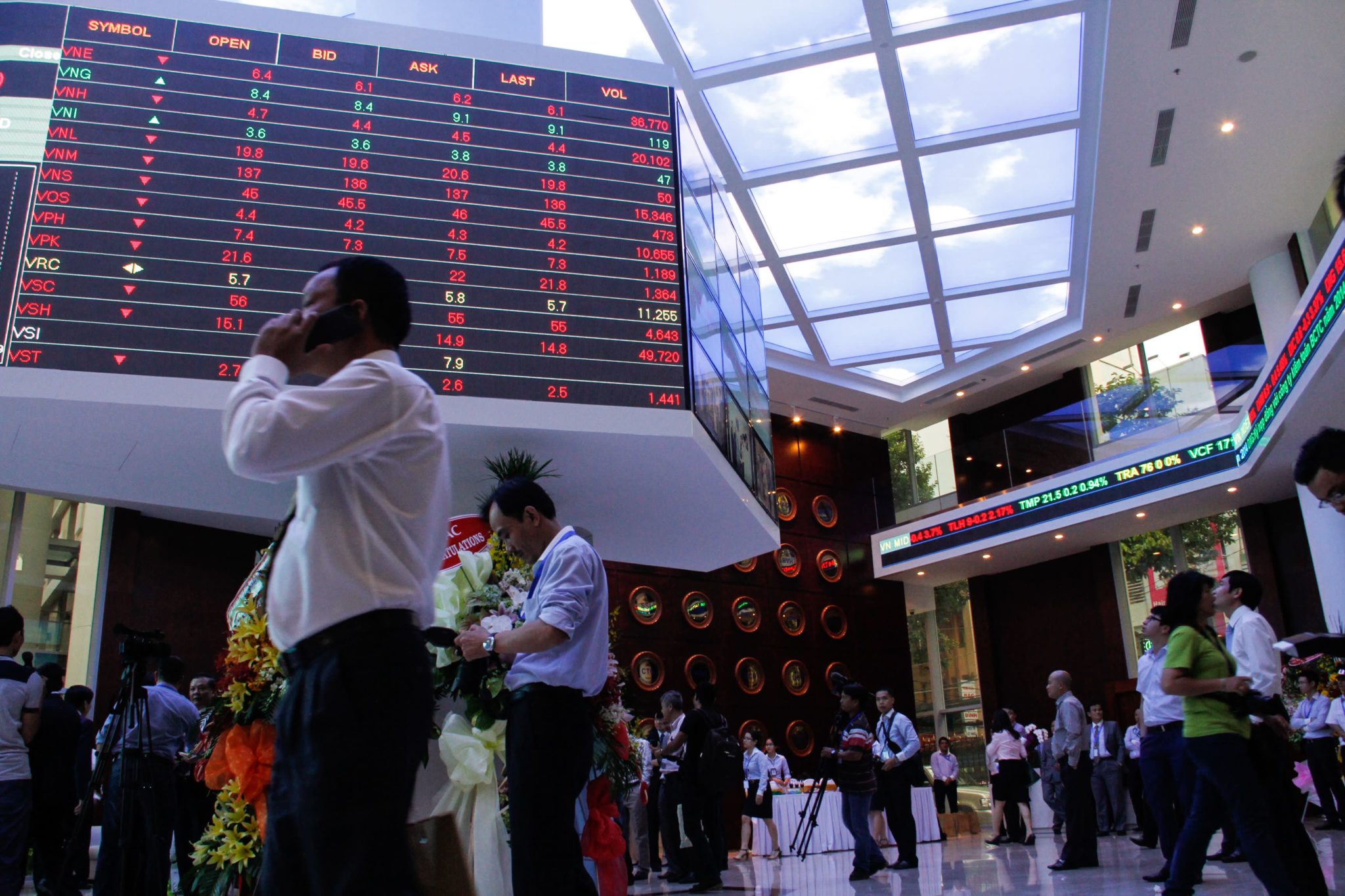
  • Bank Stocks Slide

    Bank Stocks Slide

    The share prices of UBS and Credit Suisse tumbled in line with their European counterparts. Investors fear the coronavirus will spark a wider recession – and banks will bear the brunt.

    Credit Suisse shed more than 13 percent in early trading on Monday, losing more than the wider European banking index, which slid 12 percent. Meanwhile, UBS’ stock fell more than 11 percent.

    The slides illustrate that investors don’t believe a massive, coordinated plan by central banks overnight will be adequate to stave off recession sparked by the coronavirus pandemic. European banks, which have long procrastinated shaping up following the 2008/09 crisis, are especially vulnerable to this.

    Overnight, the U.S. central bank released its big guns with its second cut in two weeks and other policy easing measures. Major U.S. banks including J.P. Morgan said they would suspend share buybacks – a method preferred by banks to return capital to shareholders because it typically boosts stock prices.

    Credit Suisse has previously expected to buy back as much as 1 billion Swiss francs ($1.1 billion) in its own stock by year-end, but this is subject to economic conditions that have now changed dramatically. UBS is in the middle of a 2 billion franc, three-year buyback.

  • Alibaba Files Hong Kong Listing

    Alibaba Files Hong Kong Listing

    Chinese multinational conglomerate holding company Alibaba Group has filed confidentially for an initial public offering in Hong Kong, Bloomberg reported on Thursday, citing people familiar with the matter.

    Previously reported that the group was mulling a secondary listing to diversify funding sources amid escalating U.S.-China tensions over trade and tech, which has accelerated the drive for Chinese technology companies towards more self-reliance on domestic supply chains, technology, and funding.

    The firm had chosen China International Capital (CICC) and Credit Suisse to lead its Hong Kong share sale.

    Alibaba’s 2014 U.S. initial public offering was the world’s largest-ever stock market flotation, raising a record $25 billion. Hong Kong lost out on the listing because its rules back then did not allow for Alibaba’s corporate structure, which gives founding partners control over board appointments, as opposed to shareholders.

    However, Hong Kong Exchanges and Clearing changed its rules last year to allow «innovative companies» from China with listings elsewhere to do a secondary listing in Hong Kong, even if their voting rights structures did not comply with local standards.