Retail News CRM

Tag: stocks

  • Vietnamese stocks slide as lack of information hits large-caps

    Vietnamese stocks slide as lack of information hits large-caps

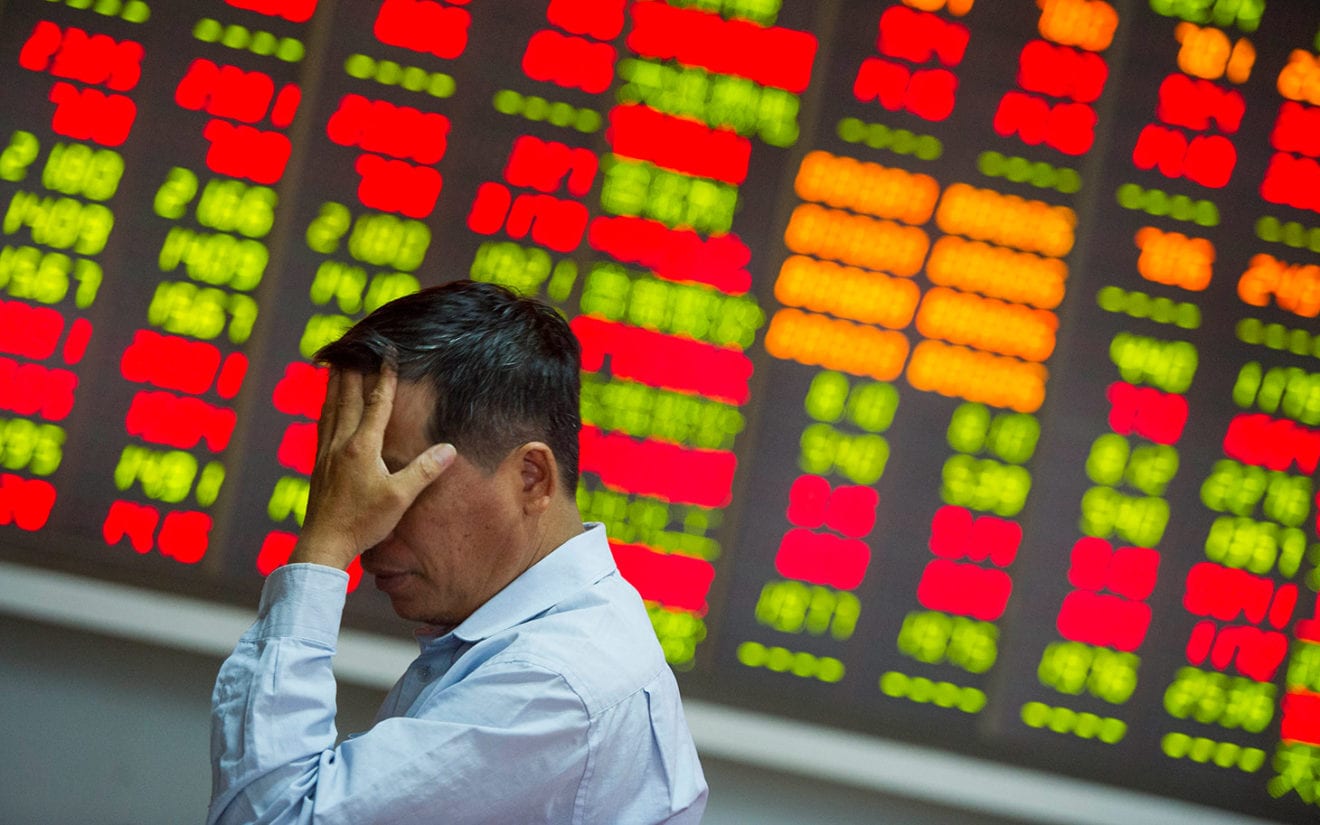
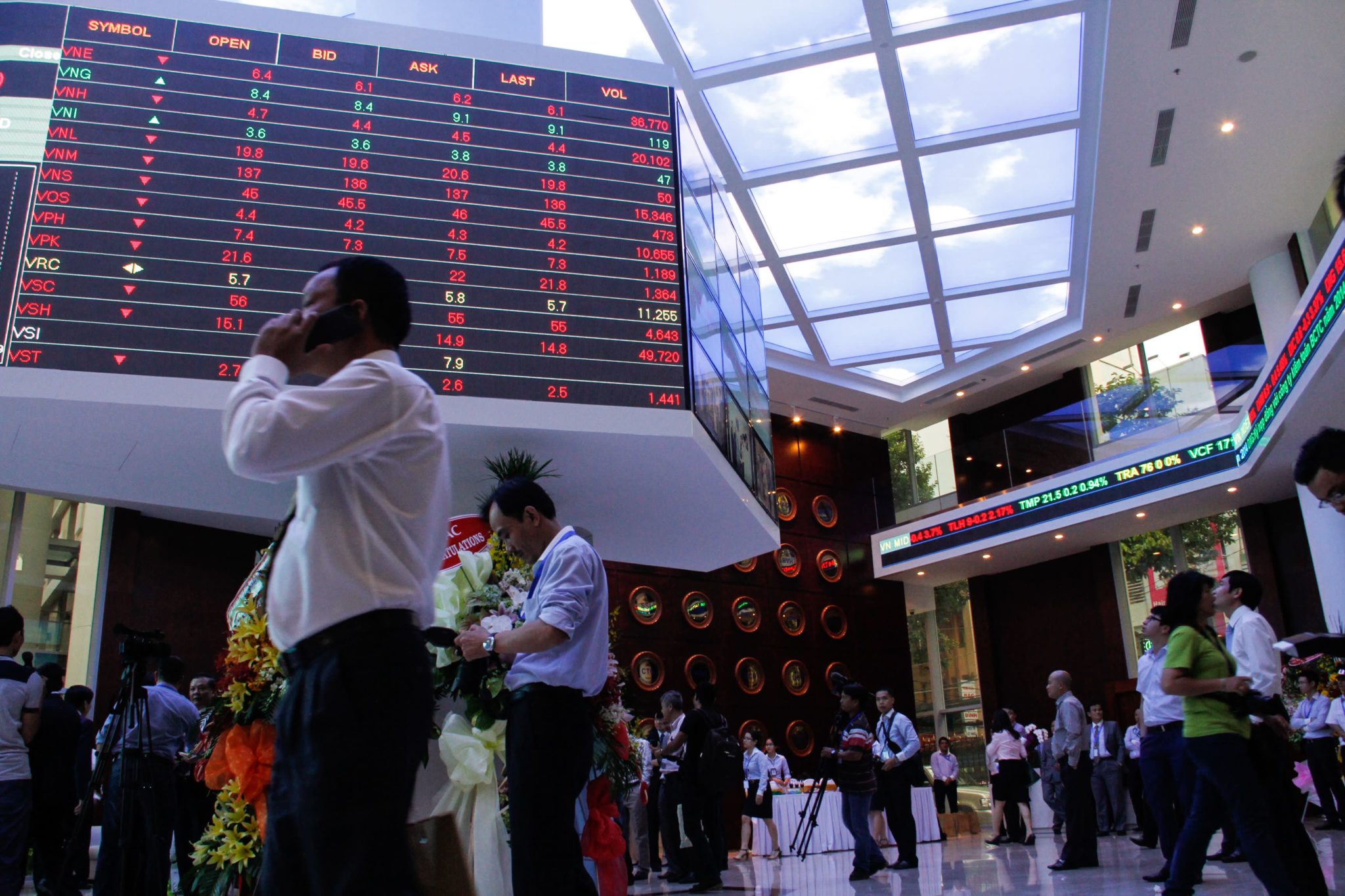
    Vietnamese shares slid yesterday as large-cap companies faced strong selling amidst a lack of supportive information while investors awaited discussions on the amended securities law. The benchmark VN-Index on the Hồ Chí Minh Stock Exchange fell 0.91 per cent to end at 988.48 points.

    The southern market index climbed 0.84 per cent on Monday.

    More than 165 million shares were traded on the southern bourse, worth VNĐ4.24 trillion (US$182 million).

    Market breadth was negative with 207 declining stocks, while 111 stocks advanced and 45 ended flat.

    Fifteen of the 20 sector indices ended Tuesday on a negative note, dragged by real estate, energy and petroleum, rubber and plastics and consumer staples.

    Those sector indices lost between 1.1 per cent and 3.1 per cent, data on vietstock.vn showed.

    The energy and petroleum sector was the worst-performing one on the stock market.

    Petro stocks such as PetroVietnam Gas (GAS) and PetroVietnam Drilling and Well Services (PVD) reversed after oil prices encountered volatility on Tuesday.

    GAS shed 1.9 per cent while PVD slipped 3 per cent.

    Real estate firms also dragged the market down, with the industry index falling 2 per cent.

    Among the worst-performing property developers were Vincom Retail (VRE), Vingroup (VIC) and Hòa Bình Construction Group (HBC).

    According to MB Securities Co (MBS), the VN-Index slid as leading stocks moved in different directions and pressured market sentiment.

    Foreign selling also caused negative movement for the stock market, which ended at a net VNĐ277.4 billion, MBS said in its daily report.

    In addition, gloomy earnings forecasts for 2019 for listed companies weighed on investors’ confidence ahead of the National Assembly Standing Committee meeting on April 10-18, in which the draft on amended Law of Securities will be discussed, MBS noted.

    “The stock market is clearly in its instability stage as large-cap stocks are still heavyweights. It is likely the VN-Index will fall whenever large-cap stocks are hit by strong selling,” Thành Công Securities Co (TCSC) said in a note.

    In addition, listed firms are experiencing a lack of supportive information, making investors unwilling to buy their stocks and reducing market liquidity, TCSC said.

    Therefore, the VN-Index may struggle at the current level of 990 points in the next trading days with focus shifted to companies with positive first quarter earnings, the company said.

    On the Ha Noi Stock Exchange, the HNX-Index slid 1.12 per cent to end at 107.71 points.

    The northern market index climbed nearly 1 per cent in the first trading day of the week.

    Nearly 48 million shares were traded on the northern bourse, worth VNĐ669 billion.
  • Soft Start Predicted For Thai Stock Market

    Soft Start Predicted For Thai Stock Market

    The Thai stock market has moved lower in back-to-back trading days, sliding almost 10 points or 0.6 percent along the way. The Stock Exchange of Thailand remains just beneath the 1,750-point plateau and it’s tipped to open in the red again on Wednesday.

    The global forecast for the Asian markets is murky, with little movement expected ahead of the FOMC interest rate decision later today. The European markets were up and the U.S. bourses were mostly lower – and the Asian markets figure to split the difference.

    The SET finished slightly lower on Tuesday following mixed performances from the financial shares and the energy producers.

    For the day, the index dipped 1.43 points or 0.08 percent to finish at 1,747.99 after trading between 1,745.73 and 1,756.85. Volume was 12.141 billion shares worth 42.321 billion baht. There were 906 decliners and 441 gainers, with 531 stocks finishing unchanged.

    Among the actives, Advanced Info shed 0.25 percent, while Thailand Airport added 0.76 percent, Beauty Community lost 0.85 percent, Bangkok Expressway skidded 1.71 percent, Krung Thai Bank collected 0.50 percent, PTT Exploration and Production fell 0.65 percent, PTT Global Chemical jumped 1.57 percent, Siam Commercial Bank picked up 0.34 percent, Siam Concrete advanced 0.44 percent and PTT, Kasikornbank, Charoen Pokphand Foods, Banpu, Bangkok Bank and Bangkok Medical all were unchanged.

    The lead from Wall Street offers little guidance as stocks opened slightly higher on Tuesday before fading in afternoon trade – although the tech-heavy NASDAQ remained in the green.

    The Dow shed 69.84 points or 0.26 percent to finish at 26,492.21, while the NASDAQ added 14.22 points or 0.18 percent to 8,007.47 and the S&) fell 3.81 points or 0.13 percent to 2,915.56.

    The uncertainty on Wall Street comes as traders look ahead to the Fed’s monetary policy announcement. The Fed is widely expected to raise interest rates by a 25 basis points, although traders will pay attention to the accompanying statement for clues about the outlook for rates.

    Fed Chairman Jerome Powell’s subsequent press conference is also likely to attract attention, with the central bank expected to raise rates by at least once more this year.

    In economic news, the Conference Board noted an unexpected improvement in consumer confidence in September as its index hit an 18-year high.

    Crude oil prices climbed on Tuesday after OPEC declined to increase production after upcoming U.S. sanctions against Iran take hold. U.S. West Texas Intermediate futures for November delivery gained $0.20 or 0.3 percent to $72.28.

  • Vietnam stocks achieve relative calm after turbulent Q2

    Vietnam stocks achieve relative calm after turbulent Q2

    The volatility seems to have ended in the Vietnamese stock market, and it has been rising for several weeks now.

    The 30-day volatility in the benchmark VN-Index at the Ho Chi Minh Stock Exchange (HOSE) has fallen to the lowest level since last November.

    The economic turbulence of the past few months “is over” with the prospect of an escalating trade war encompassing Vietnam becoming more “remote,” said Michel Tosto, head of institutional sales and brokerage at Viet Capital Securities, as saying.

    Inflation is expected to be contained and the currency has become more stable, he added.

    “All this has brought a sense of calm to the market, and investor focus is again on earnings, which look solid for most companies,” he said. “Valuations are much more reasonable now, compared to the mid-March high.”

    The benchmark VN-Index has rebounded over 10 percent from its July low. The gauge had plunged 18.19 percent in the second quarter of this year, making Vietnam the worst-performing market in the world.

    It also marked the worst period for the market since the fourth quarter of 2008, when an economic crisis shook the world, including Vietnam.

    But in the first three months of this year the VN-Index had risen 19.33 percent, the best performance by any market globally. It crossed the 1,200-point mark on April 9.

    Then the fall occurred and has been struggling in the 900s since then.

    In the last trading session of 2017, the stock market had hit a 10-year high, reaching 984.24 points. It had not broken the 800-point barrier since 2008.

    In March, experts said the market was low-risk and investors were high on growth confidence.

    Nguyen The Minh, a senior analyst at Saigon Securities Incorporation, had said then that “the VN-Index could reach 1,050 points in the short-term and 1,300 by the year’s end.”

    RongViet Securities Corporation said the VN-Index will increase by at least 17 percent this year – 67 percent in a best-case scenario – meaning it could end the year somewhere between 1,170 and 1,640.

    On Tuesday, the VN-Index dropped 13.6 points, or 1.37 percent, to around 975.

    Despite its expectations of a short-term market boost, the Bao Viet Securities Company (BVSC) said that it could drop further around 970-975 points.  In such a scenario, BVSC analysts said it would more difficult for the market to bounce back.

  • Vietnam stock market in Free Fall

    Vietnam stock market in Free Fall

    Vietnam’s stock market dropped 2.87 percent to more than 987 points on Monday, the second time this year that it has dropped below the 1,000-point level.

    The benchmark VN-Index on the Ho Chi Minh Stock Exchange (HOSE) fell from 1,000 points for the first time this year on May 23 and did not bounce back to that level until June 4.

    As supply surpassed demand, sellers were pushed to sell their stocks at all costs, leading to falling prices.

    The VN-Index hit 984.24 on the last trading day of 2017, the highest ever since 2007, before reaching 1,000 points early in January.

    Since then, it has stayed at more than 1,000 points until the drop on May 23.

  • ETF Conference to be held in Shanghai

    ETF Conference to be held in Shanghai

    Shanghai Stock Exchange has distributed “Stock Share Option Industry Report” to its securities members. Report noted, in January 2018, Shanghai Exchange 50 ETF, daily deal has reached 1.29 million, with an increase of 13.74%, the highest trading day since the establishment of SH50ETF.

    One of the Private Equity Investors disclosed, with the climb in price of SH50ETF in 2017, funds are coming in from everywhere. Staring at the in-market ETF Share Option. Some of the Quantitative funds has been join in the game to look for a share of the profit.

    With the increase interest from the investors, SH50ETF has progressed itself. By the end of January, there are more than 260 thousand investor accounts. With 2126 new broker accounts. With 84 securities, 23 CTA brokers. ETF in China will be, also soon to be one of the largest in the world.

    CaishiV will be hosting the 2nd Real Estate Equity Investment & REITs, with support from our long-term partners, such as AIMA, CFA, CHFA and CAIA. For the past years, CaishiV have managed to reach out to more than 5000 management positions, company leaders and industry leaders. They provide the industry leading conference management. There will be top investors, firms and fund managers, rounding 400 attendees across the industry.

    In 2018, the event topics will be: The Future of Smart Beta, Thematic ETFs will Play a Big Role in 2018, Bitcoin ETF, Will ESG ETF Do a good job in emerging markets, Gold ETF and Bond ETFW, Quantitative investment in ETF; Equity ETF – How to Actively Manage You, Equity Portfolios, Data Mining + Tech Innovation, AI in ETF, Should We Add Blockchain Inside, What Kind of Strategy will be Most Attractive in Emerging Markets; Cross-border ETF Investment, Profit form Global ETFs…

    To learn more, please go to nextetf.com/index.php/en/index.html. Or contact [email protected].


  • US stocks rally after strong jobs report; Nasdaq ends at record

    US stocks rally after strong jobs report; Nasdaq ends at record

    Wall Street stocks surged Friday, with the Nasdaq ending at a record following a strong US jobs report and the announcement of a summit between the US and North Korea.

    However, uncertainty surrounding US President Trump’s tariffs plans and fears of a trade war kept a lid on gains in other markets, dealers said.

    The agreement by Trump and North Korean leader Kim to hold talks “boosted risk sentiment … encouraging investors to buy into riskier assets such as shares”, noted Fiona Cincotta, senior market analyst at traders City Index.

    The tech-rich Nasdaq Composite Index jumped 1.8% to 7,560.81, besting the prior record in late January by 55 points.

    The gains were similar for both the Dow and S&P 500, with analysts pointing to Labor Department data that showed employers added 313,000 jobs in February, far above analyst expectations.

    The closely-watched monthly US payrolls report also revealed moderating wage growth compared with the January report, mitigating concerns the Federal Reserve will speed its pace of interest rate hikes.

    The report was “a perfect combination for Wall Street,” said Jack Ablin, chief investment officer of Cresset Wealth Advisors.

    “It gives the Fed some room to not have to be too aggressive,” Ablin said. “That’s good for risk takers. Money will stay cheap.”

    Meanwhile, US officials vowed there would be no let-up on pressure on North Korea ahead of the summit on the nuclear program.

    South Korea, where the main stocks index closed up 1.1% Friday, said the two leaders would hold an unprecedented summit by the end of May, raising hopes they can broker an agreement on Pyongyang’s nuclear program that has fueled tensions on the peninsula.

    Hopes that the two could reach some sort of agreement also led to a plunge in the yen, which is considered a go-to safe currency in times of volatility and uncertainty. The dollar jumped to its highest level in a week against the Japanese unit.

    Lingering trade worries

    Analysts said investors were somewhat placated by Trump’s modified approach to tariffs, which exempted Mexico and Canada making them less severe than initially feared.

    However, some observers warned the issue could still blow up down the road and dealers remain on edge on concerns over a possible trade war, which sparked a global sell-off last week.

    The tariffs decision, coupled with the departure of market-friendly White House aide Gary Cohn, raises worries “that the nationalist and protectionist views within the White House will have a stronger influence on policy going forward,” said Oxford Economics in a note.

    “The steel and aluminium tariffs are symptomatic of this underlying drift. Further, the risks of increased trade tensions with major partners like the European Union, China, Canada and Mexico is real.”

    European bourses were mixed, with London rising 0.3% and Paris winning 0.4% and Frankfurt dipping 0.1%.

  • Stocks reverse losses as North Korea tension eases

    Stocks reverse losses as North Korea tension eases

    Stocks reversing steep losses as investors shake off the latest North Korean threat. Plus – after the storm – The CEO of Waste Management, a Houston-based company, tells us how the city and its businesses will recover. And – Gold is on fire – but is too late to hop on this trade? We break down the carts. Plus – the fallout from the Mayweather-McGregor streaming fiasco rolls on – we have the latest. Catch The Final Round at 4 p.m. with Seana Smith and Yahoo Finance markets correspondent Myles Udland.

    Winners and losers

    Stocks in the green today include Movado as the watch designer reported and earnings beat and new stock buyback plan, Immunogen as the drug maker struck a deal to license its leukemia treatment with Jazz Pharmaceuticals, and Rockwell Collins – shares jumping on reports United Technologies is near a deal to buy the aircraft equipment maker.

    Lots of retail in read today starting with Best Buy as the world’s largest electronics retailer said this quarter’s strong earnings won’t be the new normal, J. Jill as the woman’s apparel maker reported guidance that was softer than expected, and Finish Line – shares getting trampled on as the athletic retailer slashed its profit forecast for the current year, claiming sales and margins would be under pressure.

    Buffering … on fight night

    Saturday night’s big fight between Floyd Mayweather and Conor McGregor was the most hyped boxing match in years.  But a HUGE streaming glitch left many fans very upset. Here with more on this is Yahoo Finance’s Dan Roberts.

  • Asia stocks hit 9-1/2-year high, markets await BOJ, ECB meetings

    Asia stocks hit 9-1/2-year high, markets await BOJ, ECB meetings

    Shares scaled near-decade peak on Thursday, bolstered by a surge in global stocks to a record high on strong U.S. corporate earnings.

    Asian shares scaled near-decade peak on Thursday, bolstered by a surge in global stocks to a record high on strong U.S. corporate earnings, while investors awaited the Japanese and European central bank meetings for clues on their policy outlooks.

    MSCI’s broadest index of Asia-Pacific shares outside Japan added 0.15 percent, hovering near its highest level since December 2007.

    Japan’s Nikkei gained 0.1 percent. Australian stocks rose 0.3 percent and South Korea’s KOSPI advanced 0.15 percent.

    The MSCI World index rose for its tenth straight session on Thursday and set a record high for the sixth consecutive day, lifted by all-time closing highs on Wall Street on strong earnings reports.

    “In the U.S., the earnings season seems to be surprising a little bit on the upside,” said Bruce McCain, chief investment strategist at Key Private Bank in Cleveland.

    “What we have seen recently in the economic reports suggests it should be even better overseas… So we have come to the point where things look pretty good in the U.S. and it looks even better in prospect overseas, so what’s not to like about equities,” he said.

    The yen was marginally stronger at 111.83 to the dollar early on Thursday.

    The Bank of Japan ends its two-day policy meeting on Thursday and is expected to paint a brighter picture of the economy but cut its inflation forecasts again. It is set to keep policy unchanged and reinforce that it will lag well behind major global central banks in scaling back its massive stimulus programme.

    The euro was up about 0.1 percent at $1.1528 early on Thursday, after scaling a 14-month high this week following seemingly hawkish comments by European Central Bank President Mario Draghi.

    At Thursday’s meeting, the central bank may drop a reference to its readiness to increase the size or duration of its asset-purchase programme before announcing in the autumn how and when it will start winding down its bond buying.

    “The euro has surged enormously on the back of hopes that the ECB is going to start the process of shutting the door on loose monetary policy,” Naeem Aslam, chief market analyst at ThinkMarkets UK, wrote in a note.

    “The ECB needs to be clear about its forward guidance and it should reinforce that in a subtle manner. Coming out of the gates too aggressively would create shock waves in the market.”

    The dollar index, which tracks the greenback against a basket of trade-weighted peers, was steady at 94.762.

    The Australian dollar revisited Wednesday’s two-year high early on Thursday, still heady from the minutes of the last Reserve Bank of Australia meeting, released Tuesday, which showed the central bank had turned more upbeat on the economic outlook.

    The Canadian dollar was flat on Thursday at C$1.2601 to the dollar. On Wednesday, it touched a 14-month high on record domestic factory sales and higher oil prices.

    Oil prices, which hit a two-week peak on Wednesday on a bigger-than-expected weekly draw in crude and gasoline inventories in the U.S., were marginally lower early on Thursday.

    U.S. crude fell less than 0.1 percent to $47.10 a barrel, after jumping 1.6 percent overnight.

    Gold rose about 0.1 percent to $1,241.06 an ounce on Thursday.

  • Big money flowing into Vietnam stock market

    Big money flowing into Vietnam stock market

    The liquidity has improved considerably with trading value of VND4.5 trillion in each trading session. One month ago, Nguyen Huu, an investor, decided to buy Sacombank shares (STB). “If I make a bank deposit, I would get an interest rate of a maximum 7 percent for six months. Meanwhile, with the investment in STB, I expect profit at 15-20 percent at minimum,” he said.

    Huu bought STB when the share price was at VND9,500 per share. And if he had sold the shares some days later, he would have made a profit of 10 percent.

    According to Nguyen Duc Hung Linh from the Saigon Securities Incorporated (SSI), the cash flow to the stock market mostly comed from big investors who prepare in financial capability and have big targets.

    The VN Index has for the first time in the last nine years has regained the 700 point threshold, while the trading value has reached VND4.5 trillion per daily trading session and foreign investors’ portfolio value has reached the highest peak.

    On May 15 morning, the stock market witnessed a record morning trading session with VND3.1 trillion worth of shares were traded. Investors were excited when seeing 56 shares hitting the ceiling price level.

    On May 16, the trading volume increased to VND3.659 trillion, an increase of 18 percent, the highest trading volume in the history of the Vietnamese market.

    “There is so much money from new sources and new investors who are more hot-headed than old investors,” the representative of a closed-end fund said.

    Nguyen Tri Hieu, a renowned banking expert, at a workshop on the stock market held some days ago, commented that this was good news for Vietnam, but investors have been advised to be cautious.

    “The index has been escalating rapidly. If the trend continues, I think the VN Index would reach the 740 point threshold or even higher,” Hieu said.

    Tong Minh Tuan from VCB Securities commented that the most important thing is that the stock market has more good commodities this year to offer.

    “Foreign funds are very excited and they have taken action. I think the market would be even more busy towards the end of the year,” Tuan said.

    Other analysts also commented that they were optimistic about the market in 2017-2018, because there would be more good shares on the market once the state divests from several profitable companies.

  • AirAsia to list in Hong Kong

    AirAsia to list in Hong Kong

    AirAsia Group is looking at a secondary listing of the airline, AirAsia Bhd, on the Hong Kong Stock Exchange (HKSE) and hopes that it can take place before the middle of this year.

    Towards this end, it is believed that China Merchants Bank, an investment bank from China, is likely to get the job to advise and make the relevant submissions for the dual listing.

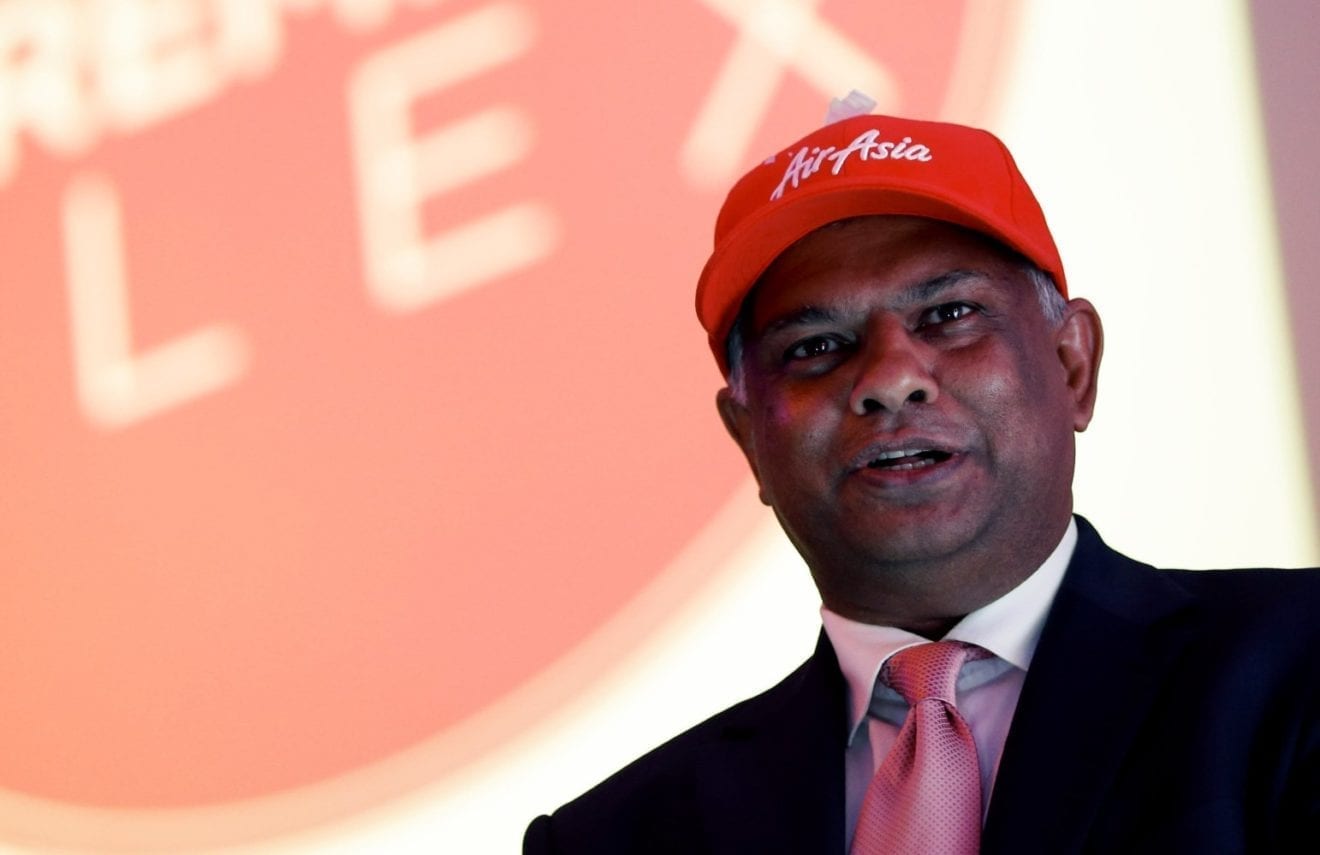
    Tan Sri Tony Fernandes, when contacted, confirmed that there are plans to seek a listing on the HKSE.

    “The plan is to list a portion of AirAsia Bhd shares in our Hong Kong-listed vehicle. This provides us access to new capital if required.

    “We have a large pool of investors in North Asia, while China is a large part of our market. So, we decided on a dual listing in Hong Kong.

    “I am hoping the listing will be in April or May this year … It would be a great day if it can get listed on April 30, as it is also my birthday,” he said.

    Fernandes said that AirAsia was working towards listing a holding company for all its airline operations that span the region.

    “However, Hong Kong (exchange) will presently not be the vehicle used for this purpose,” he said. “I have spent the week meeting the various leaders of Asean and the overall response has been positive (towards setting a holding company).”

    Apart from a dual listing in Hong Kong, AirAsia’s other units, especially in Indonesia and the Philippines, are slated to be listed this year. Thai AirAsia is already listed on the Thailand Stock Exchange.

    “I am confident these units in the Philippines and Indonesia will be listed this year,” Fernandes said.

    The listing in Hong Kong is designed to give AirAsia more depth and flexibility in raising capital if required, while at the same time allowing investors an option to benefit from being invested in the vibrant Hong Kong exchange. It also allows investors to arbitrage their investments.

    “The exact form is not decided yet, as it has to go to the board. But the bankers have been appointed, they will present the details to the board soon and then we will make the announcement,” Fernandes said.

    Dual listings are preferred for companies with cross-border businesses and AirAsia has operations in several countries in Asia, including Japan and India.

    How much AirAsia will fetch in valuations for the dual listing is not clear, but locally, its stock closed 13 sen higher to RM2.51 a share, giving it a market capitalisation of RM6.99bil.

    Last year, the world’s largest glove maker, Top Glove Corp Bhd, made its debut on the Singapore Exchange Securities Trading Ltd (SGX-ST) with a secondary listing, but it did not involve any issuance of new shares.

    Its rationale was to create liquidity and trading activity, enhance investor reach and diversify its investor base, and enable the company to tap into a new platform for potential future fund-raising.

    Others on the SGX-ST include IHH Healthcare Bhd and Malaysia Smelting Corp Bhd, while Media Chinese International Ltd is listed in Hong Kong.

  • Nearly 70 million more shares listed on UpCoM

    Nearly 70 million more shares listed on UpCoM

    Unlisted Public Company Market (UPCoM) welcomed the listing of nearly 70 million shares of five companies on Monday, with share value registered for trading equal to VNĐ693.4 billion (US$31 million).

    The five companies are 36 Corporation (G36), Sài Gòn-Nghệ Tĩnh Bear Joint Stock Company (SB1), Hà Nội Water Manufacturing Joint Stock Company No 3 (NS3), Quảng Ngãi Water Supply Sewerage and Construction Joint Stock Company (QNW) and Bridge Joint Stock Company No 12-Cienco 1 (C12).

    Listings on UPCoM have witnessed a surge recently. On December 20, five companies were also listed on UPCoM, with total share value equal to VNĐ328.6 million.

    The market appeared to be more attractive to investors as many large companies had listed or planned to list on UPCoM, following the regulation that State-owned enterprises which were public companies must register for trading on UPCoM following equitisation, in case they did not meet requirements for listing on the official exchanges.

    UPCoM was founded in 2009 and currently more than 400 firms are listed on the market, with capitalisation value doubling the Hà Nội Stock Exchange.

    However, its trading value was modest at around one fourth of the northern bourse. More than 140 stocks did not see transactions conducted in the past one month, partly due to investors’ hesitancy over transparency.

  • Malaysia’s retail industry may grow by 6% this year

    Malaysia’s retail industry may grow by 6% this year

    Malaysia’s retail industry is expected to grow by 5.9% in the third quarter of this year, boosted by the timing of the Hari Raya holidays, according to Retail Group Malaysia (RGM) in the latest Malaysia Retail Industry Report.

    RGM said the projected growth would also be spurred by the Minimum Wages Order 2016 that was implemented on July 1.

    “For civil servants in Malaysia, the minimum wage increased to RM1,200 per month. This has raised the average purchasing power of the Malaysian working population to some extent,” RGM said.

    It added that the Pokemon Go app launched in Malaysia this month had also attracted more visitors to shopping centres and retail outlets throughout the country.

    “Nevertheless, it is not expected to contribute significantly to retail sales. Food and beverage outlets and grocery stores located near to Pokestops will benefit the most from this craze.”

    Mall operator Sunway Malls, in a recent statement, said Pokemon Go had resulted in a surge in traffic and sales numbers at its shopping centres locally.

    “To date, we have seen traffic increase by an average of 10% for Sunway Pyramid (pic), 8% for Sunway Giza, 6% for Sunway Putra Mall, and 4% for Sunway Carnival Mall,” said Sunway Malls chief operating officer Kevin Tan.

    “It is widely known that malls in general have high traffic during the festive period and school holidays, but the introduction of Pokémon Go has certainly spiked up the footfall for the non-peak season.”

    Meanwhile, RGM said retailers in the fashion and fashion accessories sector expected their business to slow down again, with a positive growth of only 0.2% during the third quarter of this year.

    “Retailers in the pharmacy and personal care sub-sector are expecting to maintain their recovery with a growth of 11.4% during the third quarter of 2016.”

    MIDF Research, in a report earlier this month, said it was optimistic that the launch of the new Perodua Bezza and Proton’s new batch of models, combined with the launching of new smart devices, will boost retail sales in the second half of 2016.

    Moving forward, RGM said the Malaysian retail industry’s fourth-quarter growth rate estimate remained at 5.5%, taking into consideration the growth of 1.3% achieved during the same period a year ago.

    “The projected retail sales growth rate of Malaysia’s retail industry in 2016 by RGM stays at 3.5% or RM99.5bil in values.”

    The Malaysian retail industry reported a lower-than-expected growth rate of 7.5% in the second quarter of this year compared with the same period last year.

  • Indonesia Stock Exchange Opens More ‘Go Public Information Centers”

    Indonesia Stock Exchange Opens More ‘Go Public Information Centers”

    The new information service – Go Public Information Center – will present all necessary information to private firms about the steps and processes required to become a listed company in Indonesia (including information about underwriters). The center was first opened in Indonesia’s capital city of Jakarta (in June 2016), located at the ground-floor of the Indonesia Stock Exchange Building. Over the next couple of years the IDX plans to open information centers in 15 more cities.

    The IDX targets to see 35 companies conduct on IPO on the local bourse in 2016. However, this probably is a too ambitious target. So far this year only eight companies have been added to the IDX.

    Only 529 companies are listed on the Indonesia Stock Exchange (while there may be more than 60 million business units active in Indonesia; mostly small and medium sized enterprises). This figure is much lower compared to listed companies in Thailand (644), Singapore (766) and Malaysia (904). Being Southeast Asia’s largest economy, Indonesia is eager to top this ranking somewhere in the future. Meanwhile, in the advanced Asian nations, the number of listed companies is much higher.

    According to the IDX, costs of an IPO (paid to the bourse, auditors, underwriters, independent appraisers and legal counselors) is approximately 3.16 percent of the total funds raised in the IPO. Those companies that have existed for at least a year and have a minimum of IDR 5 billion (approx. USD $373,340) in net assets can undertake an IPO on the IDX. To make it more attractive to conduct an IPO, companies are offered several tax incentives, including a discount of income tax up to 5 percent.

    Advantages for a company to go public:

    • Generate fresh funds that can be used for business expansion or to pay off debt
    • Raise public awareness of the company/adding a new group of potential customers
    • Increase the company’s market share
    • Lucrative exit strategy for founding individuals
    • Improved management due to mandatory higher degree of financial and corporate transparency to the public

    Disadvantages for a company to go public:

    • Higher costs of complying with regulatory requirements
    • Adjust to a higher degree of financial and corporate transparency
    • “Market pressure” causes companies to focus on short-term instead of long-term growth

  • Hong Kong stocks extend sell-off as banking giant HSBC tumbles to 7-year low

    Hong Kong stocks extend sell-off as banking giant HSBC tumbles to 7-year low

    Hong Kong stocks closed at their lowest level since mid-2012 on Friday, extending steep declines from the previous day in a holiday shortened week, as index heavyweight HSBC tumbled to a seven-year low after the company decided to scrap a pay freeze plan aimed at cutting costs due to staff protests.

    The Hang Seng Index was down 1.2 per cent or 226.22 points at 18,319.58, the lowest close since June 2012. The index fell 3.9 per cent on Thursday after returning from the three-day Lunar New Year break, posting the worst loss to start a Chinese new year since 1994.

    For the week, it was down 5 per cent.

    So far this year, the Hang Seng Index has plunged more than 16 per cent, already more than doubling the annual loss of 7.2 per cent it rang up in 2015.

    The Hang Seng China Enterprises Index, or the H-shares index, settled 2 per cent lower at 7,505.37.

    Sino-British banking giant HSBC Holdings, one of the most-widely held stocks by Hong Kong retail investors, tumbled 2.7 per cent to HK$48.1, the worst level it has seen since April 2009.

    HSBC’s chief executive Stuart Gulliver wrote Thursday in a memo that the company would drop a pay freeze announced recently to cut costs, following feedback from its employees.

    Gulliver said the company would use the cash from the 2016 bonus pool to fund the pay rises, while also expressing his concerns for the bank’s revenue outlook in 2016 due to uncertainty around the global growth outlook and the interest rate environment.

    Among other market movers, Asian life insurer AIA Insurance fell 2.4 per cent to HK$37.25, and Chinese online major Tencent Holdings dropped 1.9 per cent to HK$133.3.

    Ben Kwong Man-bun, executive director and head of research of KGI Asia, said the Hong Kong market lacked clear direction and was taking its cue from hobbled overseas markets.

    “The global equity market is still under selling pressure. It’s because of the fearful sentiment of investors. They prefer to hold cash rather than assets,” Kwong said.

    The broader weakness in regional markets also added to the selling pressure on Hong Kong stocks. Japan’s Nikkei Average finished below 15,000 for the first time in 16 months, down 4.8 per cent at 14,952.6, as the yen, a traditional safe-haven currency, soared against the US dollar.

    On Thursday, global stocks entered a bear market, as the MSCI All-Country World Index, a gauge of global stock markets, had fallen more than 20 per cent from its most recent high in May 2015. US and European equities both took a hard hit, spurred by heavy selling in the banking sector on worries negative interest rates and low economic growth could hurt banks’ earnings.

    Going forward, analysts said stock markets still face a battery of threats ranging from slow growth, interest rate uncertainty, emerging market turmoil and heightened bad loan risks.

    “The global economy is really weak. Even after they did quantitative easing, it seems the central banks have failed to stop the slowdown,” Kwong said.

    However, Macau casino stocks bucked the weak trend, after Wynn Macau reported its operating revenues dropped by a less-than-expected 37 per cent in the fourth quarter of fiscal 2015. Shares of Wynn Macau jumped 3.6 per cent to HK$7.77, rival Galaxy Entertainment climbed 3.1 per cent to HK$23.25, and Sands China advanced 2 per cent to HK$24.75.

    Offshore oil producer CNOOC also recovered 0.4 per cent to HK$7.48 after crude futures bounced back in international markets.

    Chinese stock markets were still closed for the holiday on Friday and will reopen on Monday.

    However, some analysts expressed concerns A-shares may catch up with the global stock rout and fall sharply when they start trading next week.

    “It’s concerning,” said Li Tao, an analyst for Citic Securities. “The external markets were quite volatile during the Chinese new year break, particularly in the US, where stocks continued falling. The depressed state of the global economy may have a negative impact on the A-shares market.”

  • Hong Kong stocks fall in worst start to CNY since 1994

    Hong Kong stocks fall in worst start to CNY since 1994

    Hong Kong stocks fell in their worst start to a lunar new year since 1994 as a global equity rout deepened amid concern over the strength of the world economy.
    The Hang Seng Index slumped 3.9 percent at the close in Hong Kong as markets reopened following a three-day trading closure, during which the MSCI All-Country World Index dropped 2.1 percent. The last time the gauge fell so much on the first day of the lunar new year, investors were worried about the health of former Chinese leader Deng Xiaoping. Lenovo Group Ltd. led declines while energy companies dropped after crude slumped 11 percent during the holidays. Jeweler Chow Sang Sang Holdings International Ltd. slid after riots in the Mong Kok district.

    Hong Kong’s benchmark equity gauge tumbled 12 percent this year through Friday amid concern that capital outflows, a slumping property market and China’s economic slowdown will hurt earnings. Tuesday’s violence in the shopping district of Mong Kok threatens to deter mainland visitors and worsen a drop in retail sales, according to UOB Kay Hian (Hong Kong) Ltd.

    “You can’t avoid a drop because everywhere has come down so much during this time and the same concerns are still there – oil price, global recession,” said Steven Leung, an executive director for institutional sales at UOB Kay Hian. “The image of Hong Kong as a metropolitan city has been hurt quite seriously” by the rioting, he said.

    PetroChina Co. tumbled 5.1 percent, while Cnooc Ltd., China’s largest offshore oil company, dropped 5.3 percent. HSBC Holdings Plc slid 5.4 percent to a six-year low. The Hang Seng China Enterprises Index retreated 4.9 percent, its biggest loss since August. Mainland financial markets remain closed for holidays until Monday. Plunges in crude and concerns over the perceived creditworthiness of European banks has fueled uncertainty over the strength of the world economy this week. Oil fell below USD27 a barrel in New York, compared with $31.72 a barrel at the close on Feb. 4. Kyle Bass, the hedge fund manager who successfully bet against mortgages during the subprime crisis, said China’s banking system may see losses of more than four times those suffered by U.S. banks during the last crisis.

    “The general tone of other markets has been quite soft,” said Tony Hann, who helps oversee about $270 million as head of equities at Blackfriars Asset Management in London. “It’s difficult to be optimistic” about Hong Kong, he said. The Hang Seng Index’s price-to-book ratio fell below one last month for the first time since the Asian financial crisis roiled regional markets and popped a domestic property bubble in 1998. All but one stock on the 50-member gauge are down this year.
    Chow Sang Sang dropped 0.9 percent, while Luk Fook Holdings (International) Ltd., a jeweler that gets more than half its revenue in the city, declined 4.7 percent.

    Police fired warning shots in Mong Kok, the city’s most densely populated area, early Tuesday after an effort by officials to clear illegal food stalls morphed into a riot. The clashes were more violent than anything seen during the “Umbrella Movement” of 2014.

    “This time the situation was quite different from Occupy Central: there was no peace and a lot of people were injured,” UOB Kay Hian’s Leung said. “Overall it shouldn’t have a very big impact but, of course, it will weigh on related sectors like retail, tourism.” Still, weaker global growth may reduce the likelihood of future interest-rate increases in the U.S., which raise borrowing costs in Hong Kong due to a currency peg, Leung said.