Retail News CRM

Tag: Taiwan

  • First step in Taiwan for Ramen Iroha

    First step in Taiwan for Ramen Iroha

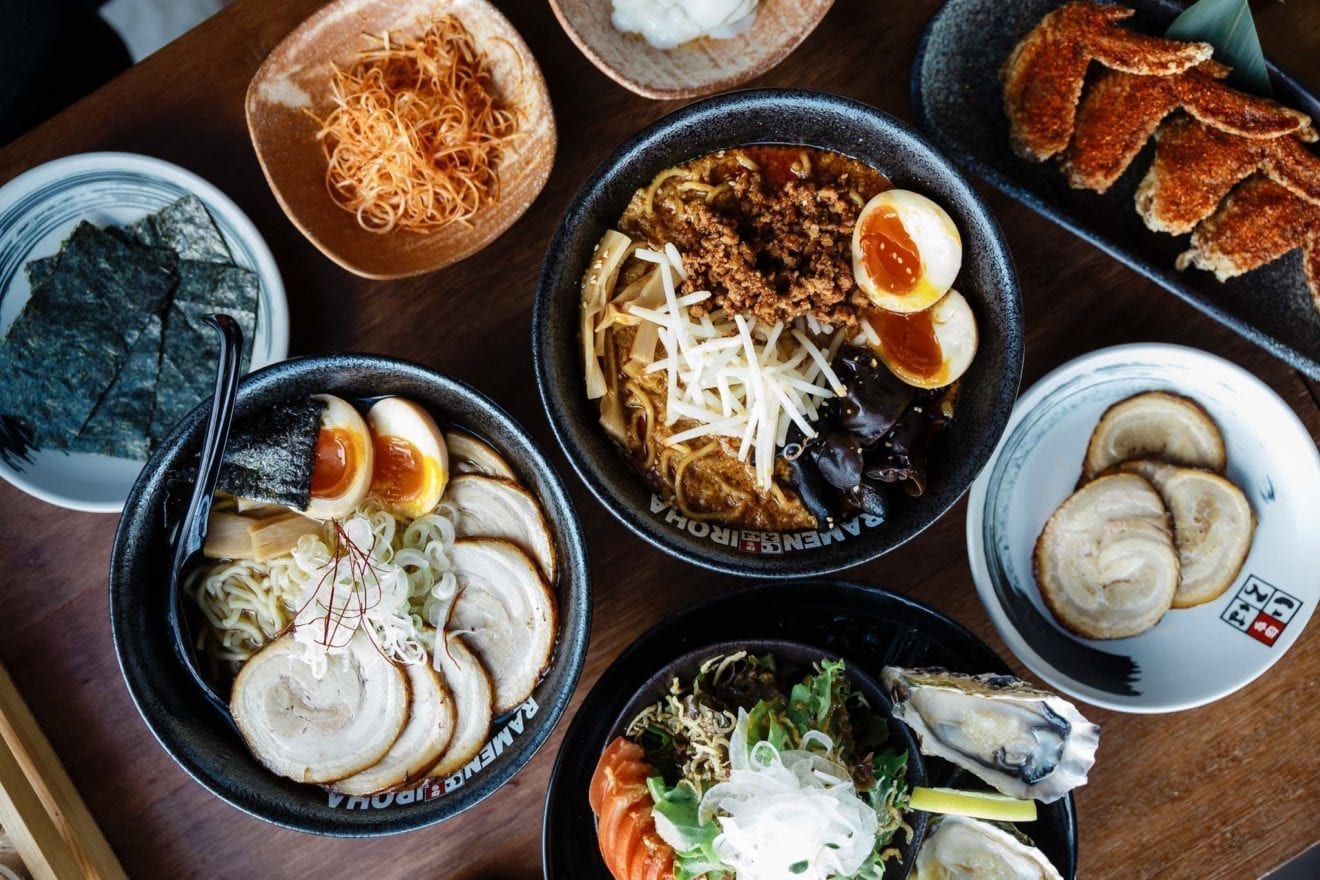
    Japanese restaurant chain Ramen Iroha has opened its first outlet in Taiwan.

    The Ramen Iroha Taiwan restaurant is a joint venture with local partner I-Mei Food which is sourcing ramen ingredients free from additives and chemical residues, and so appeal to health-conscious diners.

    Ramen Iroha, ranked number one in sales for three consecutive years in 2009, 2010 and 2011 at Tokyo Ramen Show, is gradually building a network of restaurants globally, with local partners. It recently opened in Hong Kong’s Causeway Bay.

    Signature dishes include ramen in black soy sauce and ramen with scallion and partially cooked eggs. One of the special features of its noodles is that the ramen is prepared in comparatively mild-flavour.

    The new Taiwan store is located on a street corner near Hsinchu Science Park at No 103 in Ziqiang South Road, Zhubei City, Hsinchu County.

  • Hopes in the shoulder of JuanFu Hong Kong

    Hopes in the shoulder of JuanFu Hong Kong

    China-based crawfish specialty brand JuanFu has opened its first restaurant in Hong Kong with hopes this will help it launch worldwide.

    Founded in Shanghai last year, the brand already has 11 outlets spanning different provinces and cities in China. Its Hong Kong outlet in Sheung Wan, Buddies Crawfish, imports crawfish directly from breeding bases in Hunan, Jiangsu and Greece.

    Buddies Crawfish Hong Kong chairman Wu Hsiao says he hopes to promote the brand globally and expand to overseas markets through the opening of the Hong Kong store.

    “Hong Kong is an international city with a good mix of people from different cultures and backgrounds all over the world. The large number of mainland and international visitors offers a good clientele, which also makes Hong Kong the best place for us to promote our brand globally.”

    He believes that a Hong Kong base will help the brand easily enter the Chinese markets in Singapore, Taiwan, Australia and the US.

    “At the moment there are limited supplies of crawfish in the Hong Kong market, so we hope to fill this gap by offering stable supplies of crawfish to the market in different ways. Further down the track we also plan to open another crawfish-themed restaurant and a crawfish fast-food store in Hong Kong, as well as distribute fresh and chilled crawfish to restaurants and supermarkets.”

    Hong Kong’s F&B scene is thriving, says Invest Hong Kong associate director-general of investment promotion Dr Jimmy Chiang. “I am happy JuanFu chose Hong Kong to set up its first restaurant outside the mainland. I believe the brand will make use of the city’s business advantages to expand overseas.”

    Headquartered in Beijing, JuanFu is owned by Shanghai Wan Li Network and Technology, which specialises in developing its own brands for agriculture products.

  • Zenfone Concept Store launches

    Zenfone Concept Store launches

    Asus has chosen the Philippines to launch its Zenfone Concept Store, in Glorietta 2, Makati City.

    Tech brand Asus has chosen the Philippines to launch its Zenfone Concept Store, in Glorietta 2, Makati City.

    More Zenfone concept stores will follow throughout the Philippines next year.

    “Zenfone has become a game changer in the smartphone landscape in the Philippines since being introduced in August 2014,” says Asus Philippines system group country manager George Su.

    The new store features all the latest smartphone releases from the Taiwanese company as well as accessories.

  • APT nearing 100% 4G take-up

    APT nearing 100% 4G take-up

    Taiwan’s Asia Pacific Telecom (APT) is nearing 100% take-up of 4G services among existing customers, and expects nearly all its subscribers to have migrated to 4G by the end of Q1.

    APT only has around 100,000 3G users left to migrate to 4G, around 6% of the operator’s total subscriber base. The remaining users are expected to upgrade in the next few months.

    In order to encourage migration and boost interest in the operator’s 4G services among new customers, APT has introduced a new line of plans that offer unlimited broadband and free domestic voice calls even to subscribers of Taiwan’s other mobile operators. The plan starts at TW$999 ($31.39).

    APT chairman Lu Fang-ming told the Taipei Times that the operator has reached the subscriber migration target set when the operator launched 4G two years ago.

    As the operator moves to the next phase, it plans to focus on expanding its customer base to improve ARPU.

    APT also recently announced a new home OTT video service to be delivered to Taiwanese customers in collaboration with Netflix, China’s iQiyi, movie distributor Catchplay and Taiwan Mobile’s myVideo, the report adds.

  • Delivery Hero takes control of Foodpanda

    Delivery Hero takes control of Foodpanda

    Control of the Foodpanda business has been sold by parent Rocket Internet, including the remaining Asian operations.

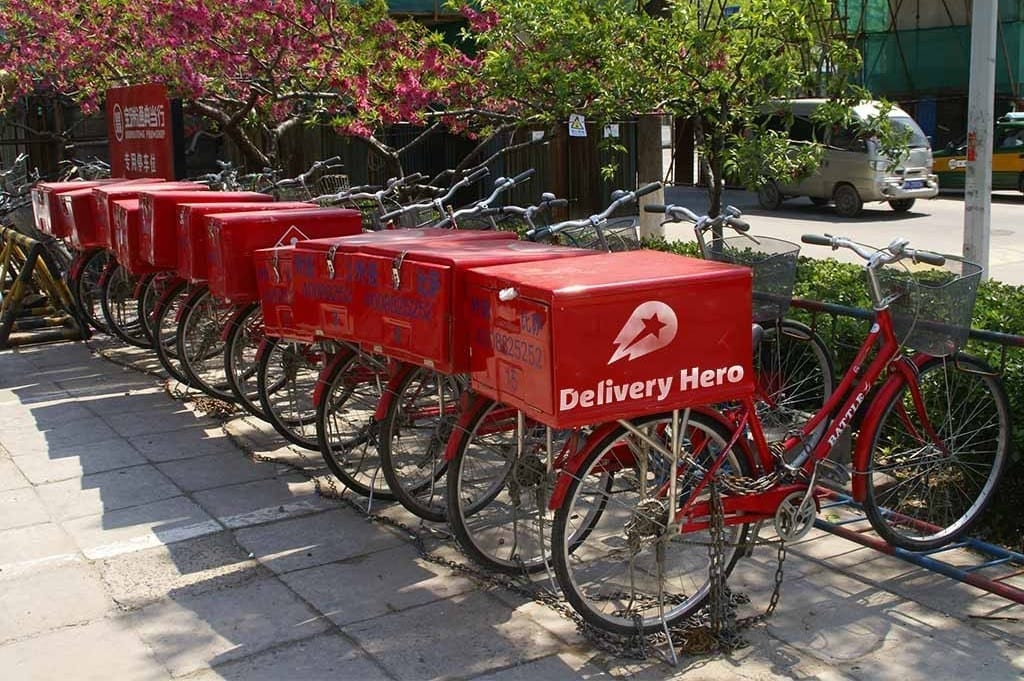
    German-based online food-ordering service Delivery Hero Holding, which is active in 33 countries, has acquired Rocket Internet-backed Emerging Markets Online Food Delivery Holding, parent of the shrinking Foodpanda business.

    Foodpanda, 49 per cent owned by Rocket Internet, has a presence in 22 countries, but shut its Indonesia business in October in the face of growing competition from app-based ride-hailing services that also offer food delivery, such as Go-Jek and Grab Bike. It has also exited Vietnam but remains operational in Singapore, Hong Kong, Thailand, Malaysia, the Philippines and Taiwan.

    In a partial share swap, the deal will see Rocket Internet’s stake in Delivery Hero increase from 30 per cent to 37.7 per cent. The sale will strengthen Delivery Hero’s global leadership position in online food ordering and delivery, with the combined group processing more than 20 million orders a month across 47 countries, says Rocket Internet.

    Bloomberg data shows that both companies together have raised more than $1.5 billion across several funding rounds with investors including Goldman Sachs and Insight Venture Partners.

    “The combination of Foodpanda and Delivery Hero, one of our most important companies, further consolidates key markets,” says Rocket Internet CEO Oliver Samwer. “Delivery Hero is also acquiring new markets.”

  • Mulberry expansion plan in Asia

    Mulberry expansion plan in Asia

    Mulberry Asia, a new joint venture between the British fashion brand and Challice Limited, has announced plans to open four stores in Hong Kong, China and Taiwan and a Chinese language eCommerce site.

    The move was announced along with the company’s half year results which saw sales rise 10 per cent, but the company posting a loss due to investments, mainly in a new collection.

    Mulberry will cease its current distribution agreement with Club 21, although its new partner Challice shares the same ultimate ownership.

    Mulberry Asia will locate its head office in Hong Kong from where it will manage all retail, digital fulfillment and wholesale distribution for the region. Challice will hold a stake of about 40 per cent in the new business.

    The company says it expects to post losses for two years during its establishment phase, moving into profit in year three.

    Mulberry CEO Thierry Andretta said the new venture would progress the group’s international strategy of developing its retail and omnichannel model “in a key luxury market where we see significant growth opportunity”.

    Subject to a number of practical issues, including obtaining Chinese trading licenses, Mulberry Asia is expected to be operational from Spring 2017.

    Analyst said Mulberry Asia was an impressive direction to take.

    “It will allow the brand to better serve its customers in North Asia and provide it with a solid foundation to further grow its business in this region. However, investment in product design and creativeness must continue so that Mulberry stands out in the increasingly difficult and crowded Asian market.”

    Footfall rises

    Meanwhile, while investment to create the new collection has had a negative impact on gross margin, down 2.4 percentage points to 59.1 per cent, it has successfully driven footfall into stores and turned its wholesale business around. Revenue was up 10 per cent in the half year, compared with an 11 per cent decline in the same period last year.

    Strachan says modern totes and bucket bags have improved the desirability of Mulberry’s offer, appealing to a new, younger shopper demanding more on-trend innovative pieces but with the craftsmanship and quality credentials that the brand continues to leverage and showcase.

    “Mulberry has achieved impressive UK like-for-like growth, despite tough 2015/16 comparatives, benefiting from international visitors taking advantage of the weak pound and high demand for British heritage brands. The opening of its new Covent Garden store was fortunate timing to showcase its new collections to this influx of lucrative shoppers,” said Strachan.

    “Conversely, the devaluation of the pound has hit the sales performance in some of its tourism-driven stores in Europe and the US, and has led to higher UK production costs and running costs of overseas subsidiaries.”

  • Worldpay predicts credit-card decline

    Worldpay predicts credit-card decline

    Credit-card use in Singapore is set to fall by 40 per cent in less than five years, according to new research from global payment company Worldpay.

    For its Global Payments Report 2016, Worldpay analysed 30 eCommerce markets including Australia, China, Hong Kong, India, Malaysia, Singapore, South Korea and Taiwan. For Singapore, Worldpay found that although credit cards hold a 60 per cent share of the payments market, this is expected to slide to 36 per cent by 2020.

    This is described as a significant drop by Worldpay Asia Pacific GM for global eCommerce Phil Pomford. “This growing credit-wariness could be symptomatic of a wider political push to help consumers avoid debt.”

    He says the Singapore government’s total debt-servicing ratio (TDSR) rules, implemented in 2013, were designed to ensure monthly debt payments do not exceed 60 per cent of a debtor’s monthly income. “This public focus on the issue of debt helps explain why credit-card use is predicted to fall nearly a quarter in less than five years, while debit-card use is expected to rise.”

    For now, debit cards, cash on delivery and bank transfers each account for 9 per cent of the total payments market in Singapore. But Worldpay’s research indicates that all these non-credit payment options will double or nearly double by 2020.

    Debit-card use is expected to double to become 18 per cent of the total payments market, while cash on delivery and bank transfers will represent 18 and 17 per cent respectively. E-wallet growth is likely to remain relatively flat, growing from 9 to 10 per cent share by 2020.

    Growing topic

    Consumer debt has been a growing topic in Singapore over the past few years, says WorldPay, leading the government to introduce regulations to help borrowers pay down their debts and prevent further debt accumulating.

    Worldpay research indicates the government’s program to increase credit awareness and discourage too much borrowing is still resonating with consumers. They are aware of and concerned about rising household debt, and want easier access to non-credit payment options.

    “Our research strongly suggests Singaporeans will start using a wider range of payment methods in the next five years, possibly influenced by the government’s work to reduce consumer debt and encourage Singaporeans to think more carefully before they shop on credit,” says Pomford.

    “Therefore, online merchants wanting to win the hearts and wallets of shoppers in Singapore must offer a range of traditional and alternative payment methods – from debit cards to cash on delivery and bank transfers – because credit cards alone just aren’t enough.”

    Meanwhile, Singapore’s eCommerce market is set to grow by 11 per cent to US$5.8 billion by 2020.

  • Awards to recognise eCommerce merchants

    As Southeast Asia eCommerce merchants set benchmarks in a booming industry, their efforts are about to be celebrated with the launch of annual awards.

    Based in Kuala Lumpur, online shopping aggregator iPrice Group has launched the iPrice eCommerce Merchant Awards (iEMA) 2016 in partnership with eTail Asia, a service for eCommerce professionals, and Trusted Company, a review platform for eCommerce businesses in emerging markets.

    The first awards ceremony will be held in conjunction with the annual eTail Asia conference at Marina Bay Sands, Singapore, on March 8 next. The inaugural iEMA 2016 will feature country and regional winners in two categories – Most Popular eCommerce Merchant of the Year and Highest-Quality eCommerce Merchant of the Year. Merchants do not have to submit entries as all qualifying merchants are automatically enlisted.

    “Based on studies by Google and Temasek, the Southeast Asian eCommerce market is expected to see exponential growth from US$6 billion to about US$90 billion in 2025,” says iPrice Group CEO David Chmelar.

    “With new players in the eCommerce industry coming up every left, right and centre, it is imperative we highlight excellence in the sector in hopes to further inspire and encourage both existing and upcoming merchants to excel further in Southeast Asia.”

    Consumer choice

    Finalists and winners for the awards will be chosen by consumers via the iEMA 2016 microsite. People can vote only once, with January 31 the deadline.

    Meanwhile, in an effort to also recognise special initiatives by eCommerce merchants that might have escaped attention, a third category has been set up to highlight efforts by businesses that have undertaken projects to support a social or non-profit organisation. This will be judged by a panel of experts from the eCommerce sector with only one overall regional winner being chosen. The judging panel comprises Chmelar, Asia Venture Group CEO/founder Tim Marbach, Worldwide Business Research GM Danny Levy, Trusted Company co-founder/MD Frederick Krass, Google Vietnam head of marketing Anh Nguyen and 500 Startups managing partner Khailee Ng.

    Submissions for this award are being accepted from for both consumers and eCommerce merchants through the iEMA 2016 website.

    Voting is being accepted at the iEMA 2016 microsites for Hong Kong, Indonesia, Malaysia, Philippines, Singapore, Thailand and Vietnam.

    iPrice Group is a Southeast Asian metasearch engine that enables shoppers to find products, compare prices and save. It seamlessly connects them to hundreds of eCommerce merchants in the region.

  • Shopee charts rapid growth

    Shopee charts rapid growth

    Southeast Asian pure-play mCommerce operator Shopee says it has reached US$1.8 billion in annualised GMV just a year after its launch.

    App-based Shopee operates in Singapore, the Philippines, Malaysia, Indonesia, Thailand, Vietnam and and Taiwan.

    The Garena-backed company says it has achieved a month-on-month growth of 43 per cent, with 25 million downloads of its mobile app to date and 65 million product listings.

    “2016 has been great for us,” said CEO Chris Feng. “As we look forward to 2017, we expect to maintain the strong double-digit growth that we’ve experienced in the past year. We will also continue to focus our efforts on optimising the product, improving the end-to-end user experience and in empowering entrepreneurs to expand and grow their online businesses.”

    As part of Shopee’s focus on the customer experience, the company released the Consumer Behaviour Report 2016 that revealed region-wide insights around shopping patterns on the mobile app.

    “These insights have outlined a clear roadmap for consumer engagement – enabling the platform to introduce offerings such as integrated local logistics, Shopee guarantee and social-led features such as the Live Chat and hashtag functions. Shopee has also been bringing together aspiring entrepreneurs over the year, empowering them to be more effective sellers through initiatives such as Shopee University and campus initiatives such as the Shopee X NUS mCommerce Challenge,” the company said in a statement.

    The report highlighted that more than 50% of Shopee’s users access the app daily, with an average engagement period of more than 20 minutes per session. Shopee engages its customers by holding interactive contests and games for customers to win prizes, and also offers innovative social-led features such as the Live Chat and hashtag functions for users to stay ahead of trends.

  • VMware, Taiwan’s III join Broadband Forum

    VMware, Taiwan’s III join Broadband Forum

    VMware, Taiwan’s Institute for Information Industry (III) and the USA’s Methode Electronics have become the latest members of the Broadband Forum.

    The latest additions highlight recent developments within the Broadband Forum to address the constantly changing technological landscape and increase the focus of its work.

    The industry body is also working to collaborate more with open source communities and increase the amount of work it does in the software space.

    VMware, III and Methode Electronics will complement this, with all three companies having backgrounds in virtualization, electronics and R&D.

    The new members are already playing an active part in the Forum, with representatives attending the Forum’s most recent Quarterly Meeting, held in Berlin. Moving forward, they will continue to play a full role in activities and Working Groups.

    III believes its membership will enhance the prosperous development of industries and incubate new industries, as well as promote links between local industries and the rest of the world.

    “Actively participating with an international organization like the Broadband Forum is just the beginning for III,” commented Dr Ko-Yang Wang, director general of the III’s Industry Development Augmentation Division (IDAD).

    “Looking into the future, III fully supports the Forum’s new Broadband 20/20 vision and we are fully confident that its realization will be the next big thing for broadband.”

    The developments in Berlin – including the publication of the landmark Network Enhanced Residential Gateway (NERG) Virtualization Technical Report (TR-317), the first finished project in the Forum’s NFV realm – followed on from the Forum’s Special Meeting in Atlanta, where Service Providers gave their views and visions on how the network needs to develop.

    “We’re delighted to welcome VMware, III and Methode Electronics into the Broadband Forum family,” Broadband Forum CEO Robin Mersh said.

    “Our recent meetings have illustrated our ability to keep up with the rapid pace of change within the industry and work together to create a faster and highly relevant Broadband Forum. Welcoming exciting, progressive new members such as these three companies means that we will continue to be the voice of broadband for the industry.”

  • Taiwan’s SheenHo finds partner for Myanmar

    Taiwan’s SheenHo finds partner for Myanmar

    Taiwanese restaurant chain SheenHo has awarded a master franchise to Myanmar company Creation Strength to open outlets in the frontier market.

    About K1.3 billion (US$995,000) will be invested in opening up to 20 branches over five years, starting in Yangon.

    Chefs from Myanmar will be flown to Taiwan to learn how to prepare the restaurant’s cuisine.
    Meanwhile, Singapore Myanmar Investco (SMI) has partnered with Japanese ramen chain Ippudo to open a branch in Myanmar. SMI has also signed an agreement with Singapore’s Crystal Jade Group to open Chinese restaurants in Myanmar.

  • Moiselle International losses mount

    Moiselle International losses mount

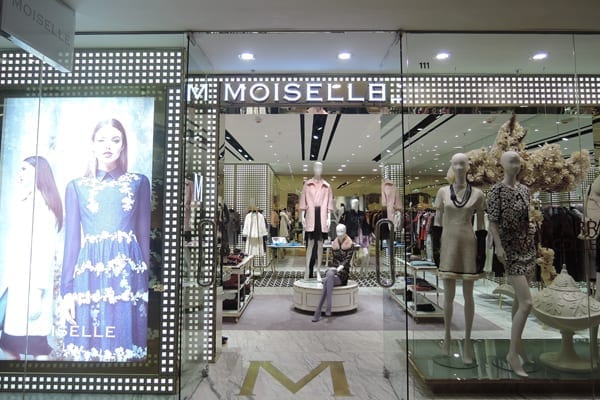
    Fashion group Moiselle International has strengthened its margins but still posted a loss in the last half year.

    While its loss of about HK$35 million (US$4.5 million) was about 10 per cent more than its loss of about HK$32 million for the same period last year, Moiselle International had a healthier gross profit margin of 79 per cent, up from 76 per cent.

    Revenue declined 18 per cent to $132 million, its unaudited interim results to the end of September show.

    Moiselle says it was hit hard by the harsh operating environment as it derived about 55 per cent of its revenue from Hong Kong and 18 per cent from China. Its retail sales in Hong Kong were affected by the fall in the number of mainland tourists as well as exorbitant rents. In China, the economic slowdown dampened the consumer sentiment.

    The remaining 27 per cent of the revenue was made up by sales in Macau, Singapore and Taiwan.

    To cope with the difficult market, the group rationalised its retail network, introduced stringent cost-control measures, continued cost-effective sales and marketing initiatives such as adopting an online-to-offline business model, introduced exclusive services for high-end customers with a VIP club, and introduced products of a wider price range to broaden its customer base and cater for young Hong Kong customers.

    Meanwhile, the group stepped up its multi-brand strategy by launching fashionable loungewear under a new brand, promoted in the group’s two fashion shows in Hong Kong and Beijing.

    Hong Kong sales fell 18 per cent year-on-year to about $72.3 million. The group continued to negotiate for lower rents for shop spaces, opened shops at prime locations with reasonable rents and closed down underperforming outlets.

    Online initiatives

    Sales in China fell by 31 per cent to about $23.4 million. The group closed some shops and relocated others. It also stepped up its initiatives in eCommerce, such as opening an online store under the Moiselle brand at Tmall this month.

    To reinforce its online marketing efforts, the group worked with key opinion leaders on social media such as WeChat and Weibo.

    China’s measures to advocate frugality spilled over into Macau’s retail market. The group continued to run five shops at the Venetian Macao Resort Hotel and opened a store at the Parisian Macao Hotel. It had two concept stores and four other outlets in the city which generated a combined revenue of about $17.97 million, or about 14 per cent of the group’s revenue.

    Taiwan’s 20 retail stores generated about $13.7 million, about 10 per cent of the group’s total revenue. It opened three more outlets and counters during the half-year.

    Operations in Singapore

    In Singapore, sales fell 22 per cent to about $4.14 million. The group has retained seven stores there.

    At the end of September, the group had 84 stores and counters in China (first- and
    second-tier cities), Hong Kong, Macau, Singapore and Taiwan, down from 90 at the end of March.

  • AirAsia starts flying Philippines-Taiwan

    AirAsia starts flying Philippines-Taiwan

    The low-cost carrier’s Philippine subsidiary started flying direct from Manila to Taipei on 21 November, and then on 25 November it commenced flights between Cebu and Taipei.

    “We are aiming to go further across Asia by strengthening AirAsia’s presence in Taiwan. Today heralds… brighter and much closer ties between two countries to improve trade and tourism,” said Philippines AirAsia’s CEO, Dexter Comendador. He added that the new services would cater to “travellers, overseas Filipino workers and Taiwanese tourists”.

    The new Manila-Taipei route will operate daily with late night flights, while the Cebu-Taipei service will run three times a week (Wednesdays, Fridays and Sundays) with early morning departures from the Philippines.

    The AirAsia Group also operates direct flight to Taipei from Kuala Lumpur and Kota Kinabalu.

  • H&M Taiwan opens Ximen flagship

    H&M Taiwan opens Ximen flagship

    H&M Taiwan held a high-profile fashion party to launch its new Ximen flagship store, gathering Taiwanese fashion’s finest.

    Yoga Lin, Nick Chou, Gemma Wu, Nikki Hsieh, Puff Kuo, Jasper Liu, Jian Man Shu and Lien Yu Han were amongst the stars joining this week’s celebration. At the party, Yoga Lin mesmerised the fashion crowd with a surprise performance.

    hm-ximen-flagship-yoga


    hm-ximen-flagship-yoga-lin


    In celebration of unveiling H&M’s Ximen flagship store, singer Yoga Lin walked the red carpet sharply dressed in an exclusive capsule collection by H&M Design Award-winner Hannah Jinkins. Inside H&M’s largest flagship store in Asia, Yoga Lin performed three of his biggest hits, rolling out a night of entertainment, fashion and perfection. The performance was followed by Nick Chou (NickTheReal) appearing as the guest DJ of the night.

    hm-ximen-flagship-dj

    hm-ximen-flagship-nickthereal-chou


    The H&M Ximen flagship store formally opened today, November 25.

    “Ximending is a fashion conscious area of Taipei City, and I am excited to be a celebrating the opening of H&M’s flagship store. Tonight is an unforgettable night; I hope H&M will inspire this area with its up-to-date fashion,” said Yoga Lin.

    hm-ximen-flagship-billie

    hm-ximen-flagship-nikki-hsieh

    “I am a big fan of H&M. The performances were impeccable, and the store looks fantastic. This is surely the fashion event of the year,” said Puff Kuo.

  • Sa Sa profits dive

    Sa Sa profits dive

    Sa Sa profits took a hit of 37.3 per cent for the six months to September 30.

    The Hong Kong-listed beauty products retailer’s interim results show turnover easing by 4 per cent to HK$3.628 billion (US$467.7 million) for the period, with retail sales in Hong Kong/Macau decreasing by 3.6 per cent to HK$2.9032 billion.

    Profit fell from $153 million to $96 million with its gross profit margin dropping from 42.9 to 41.2 per cent.

    During the six months, the group rationalised its retail network from 291 to 283 – six fewer Sasa stores and two fewer single-brand stores/counters.

    While sales fell in Hong Kong/Macau, the number of transactions rose by 0.2 per cent for local customers and 4.4 per cent for Mainland Chinese tourists. The value of each transaction, however, fell by 6.3 and 6.6 per cent respectively.

    Retail sales in Hong Kong continued to be weak, mainly because of average transaction values being lower. The company says the underlying reasons were a change in consumer preferences, a strong Hong Kong dollar and a depreciating yuan. Also, the policy change limiting Shenzhen residents’ multiple-entry permits to one visit a week has had a “significant” impact.

    However, Sa Sa reports an uptick toward positive growth in July as the company adapted with faster product launches, shorter product cycles and cheaper trendy products.

    Korean swing

    As an indication of market change, Sa Sa’s Korean product mix grew from 16.7 per cent of total sales to 23.5 per cent, and the parallel-imported product mix increased from 29.1 to 31.7 per cent. Sales for house brands dropped from 41.5 to 38.5 per cent.

    Overall turnover for Mainland China decreased by 4.3 per cent to $135 million, while same-store sales fell 5.1 per cent. The loss for the period amounted to $13.7 million. Profitability was impacted by the relocation of warehouses.

    Turnover for Singapore at $101.3 million was a drop of 11.1 per cent. As well as weaker sales, management issues impacted performance. While turnover was high, this created difficulties in retaining the knowledge base. However, a restructuring process has drawn on the resources of the relatively strong Malaysian management team.

    Malaysia’s turnover was down 19.1 per cent to $163.4 million, though same-store sales rose 11.2 per cent. Retail sales growth exceeded other markets thanks to the group’s strong retail network and effective marketing campaigns.

    Turnover in Taiwan fell by 23.1 per cent to $98.3 million, with same-store sales tumbling 19.5 per cent because of weak consumer sentiment and ongoing restructuring of the management team.

    Logistics problem

    In eCommerce, Sasa.com turnover reached $193 million, a dip of 0.1 per cent. Sales were affected by the appointment of a new logistics provider in April with the aim of increasing scalability. However, changeover difficulties resulted in a decision to return to the original service provider.

    “Significant numbers of orders had to be cancelled, and further costs were incurred by moving inventory back and forth as well as the running of two warehouses in parallel during the period,” says the company.

    Building on the growth of mobile internet use, the company launched a mobile app and started a collaboration with eCommerce platform Kaola in addition to its partnership with JD.com, Suning.com and T-Mall.

    On the mainland, the dynamics of the cosmetics market are changing with internet retailing growing at a rapid pace, says the company. Because of these challenges, it is continuing to strengthen management and recruit staff.

    “We are also seconding experienced staff from Hong Kong to improve the attractiveness of our product offerings and strengthen inventory management.”