Retail News CRM

Tag: tech

  • Singapore’s 2026 Economy: Navigating Tariffs, Tech, and Transformation Amid Weakening External Demand

    Singapore’s 2026 Economy: Navigating Tariffs, Tech, and Transformation Amid Weakening External Demand

    In 2026, Singapore is slated to encounter a crucial year in which its economic resilience will be put to the test by changing geopolitical scenarios, trade fragmentation, and a moderating technology cycle, according to a recent report by DBS, the nation’s leading bank.

    Projecting Economic Trends

    DBS Group Research predicts a GDP growth of 1.8 percent, which, while proximate to potential, is down from an estimated 4.0 percent in 2025. The city-state will be managing the dual challenges of tariffs and tech, often referred to as the “two Ts” by analysts.

    It is projected that export-dependent sectors will experience a slowdown due to the ongoing impact of increased global tariffs and potential new semiconductor charges that could be imposed by the US. The World Trade Organization anticipates world merchandise trade volume to grow by a mere 0.5 percent in 2026, a sharp decrease from over 2 percent in the previous two years. This suggests a waning external demand.

    Slowing Tech Momentum

    Singapore’s electronics strength, fuelled by AI-related components, has now reached a mature phase, following an 18-month growth period. Global semiconductor sales growth is expected to slow down to 9.9 percent in 2026, from 15.4 percent in 2025. This could potentially curb manufacturing momentum if the AI boom subsides or if proposed US chip tariffs come into effect.

    In contrast, the services economy, particularly finance and insurance, information and communications, and professional services sectors, is anticipated to balance overall performance. Over the past decade, these modern services have demonstrated stronger and more consistent growth compared to manufacturing. This has been facilitated by digitisation, favourable financial conditions, and robust regional investment flows.

    Infrastructure Projects Boosting Growth

    Major infrastructure projects, such as Changi Airport Terminal 5, Tuas Port, and the North-South Corridor, are expected to stimulate the domestic construction sector. This sector is forecasted to generate an annual demand of S$39-46 billion from 2026 to 2029, indicating a structurally stronger outlook than both the post-pandemic recovery and the pre-COVID times.

    Headline and core inflation are predicted to average 1.2 percent and 1.0 percent, respectively, in 2026. This inflation rate is higher than the post-pandemic low in 2025, but still falls within the Monetary Authority of Singapore’s target range. Imported disinflation is diminishing, while domestic costs will modestly increase as productivity trails behind wage growth.

    Climate Policies and Price Pressures

    Changes in green policies, such as a planned 1.8 fold carbon tax increase and a sustainable fuel levy for aviation, are forecasted to drive up utility and travel prices. It is estimated that the carbon tax adjustment could increase electricity tariffs by approximately four percent in 2026. However, inflation of essential services is expected to be controlled by healthcare subsidies and reduced education fees.

    Policy Focus on Economic Blueprint

    With a refreshed political leadership, Singapore is preparing to launch an updated strategy to boost competitiveness and ensure long-term vibrancy. This will include technology adoption, attracting global investments, and strengthening roles in emerging sectors like low-carbon energy and data flows.

    Year of Cautious Confidence

    Singapore’s status as a trusted hub, coupled with government buffers and policy continuity, forms the foundation of what DBS refers to as “measured resilience”. This refers to a type of growth that withstands challenges while also preparing for the next stage of economic transformation.

    Questions & Answers

    What are the “two Ts” that Singapore is expected to navigate in 2026?
    The “two Ts” refer to tariffs and technology. These are the two major challenges that are anticipated to impact Singapore’s economic growth in 2026.

    How is Singapore’s services economy expected to perform in comparison to the manufacturing sector?
    The services economy, particularly sectors like finance and insurance, information and communications, and professional services, is expected to balance overall performance in 2026. These sectors have shown stronger and more stable growth than manufacturing over the past decade.

    What is the predicted impact of green policy changes on Singapore’s economy in 2026?
    Changes in green policies, including a planned increase in carbon tax and a sustainable fuel levy for aviation, are expected to drive up utility and travel prices. However, inflation of essential services should be kept in check due to healthcare subsidies and reduced education fees.

  • Samsung and SKT Forge Ahead with Advanced AI-Driven 6G Tech: A New Era in Hyperconnected Telecommunications

    Samsung and SKT Forge Ahead with Advanced AI-Driven 6G Tech: A New Era in Hyperconnected Telecommunications

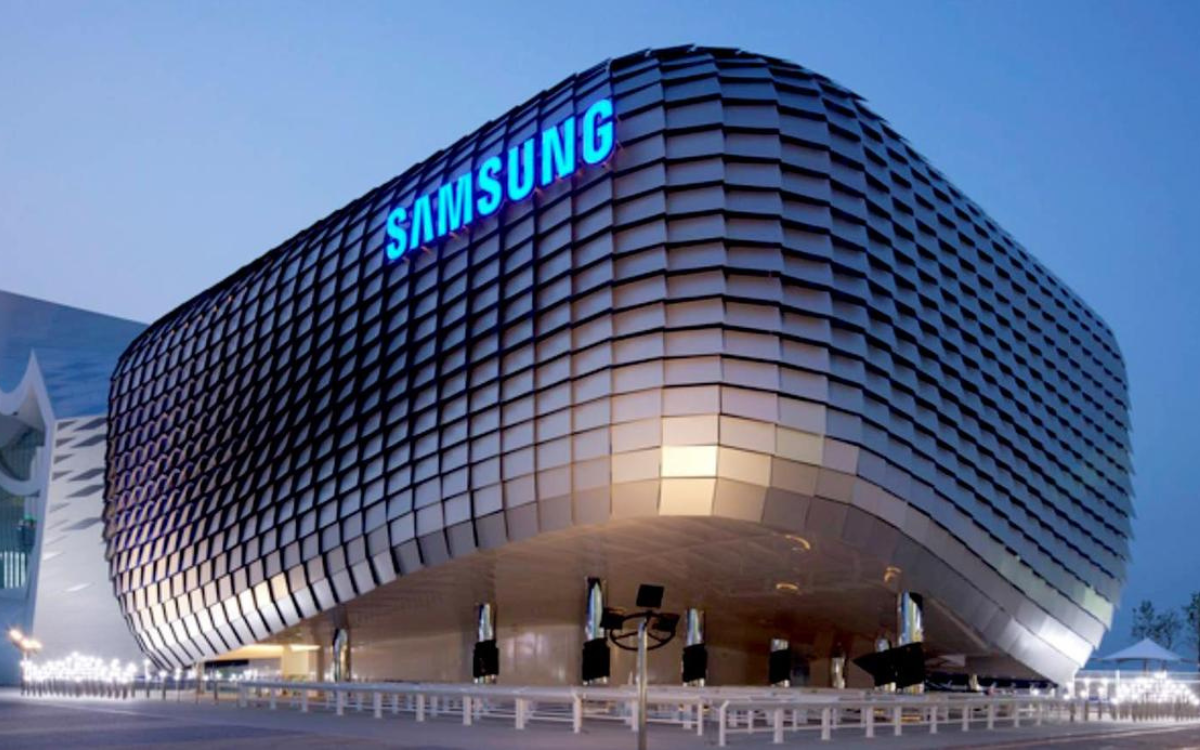
    Samsung Electronics and SK Telecom (SKT) have recently formalized their cooperation by signing a memorandum of understanding (MoU). The partnership will focus on the development of crucial 6G technologies, with a special focus on artificial intelligence-based radio access network (AI-RAN) technology. The primary aim of the collaboration is to develop and test key technologies for the 6G era, including AI-based channel estimation, distributed multiple-input multiple-output (MIMO) transmission, AI-RAN-based schedulers, and core network architectures.

    Leading the Collaboration

    Samsung Research and SKT’s Network Technology Office will be spearheading the collaboration. AI-based channel estimation technology aims to improve network performance by predicting and correcting signal transmission instantaneously. This allows for quick and accurate data delivery in environments where radio waves face obstructions such as buildings or walls.

    Unlike traditional setups, where a single base station handles data processing, distributed MIMO technology enables multiple base stations or antennas to collaborate in the transmission and reception of data. This innovative approach ensures reliable, ultra-high-speed communication in both urban and rural settings.

    Improving Network Quality

    AI-RAN schedulers and AI-based core networks are crucial for data transmission optimization. They efficiently dictate when, where, and how to send data, ensuring efficient resource allocation even when numerous user devices are connected. These technologies are vital for enhancing network quality and facilitating automation in a future hyperconnected society.

    Under the partnership, Samsung Research will be concentrating on the development of AI-RAN technologies, including AI-based channel estimation models, schedulers, and distributed MIMO. Meanwhile, SKT will be responsible for providing data and setting up test infrastructure based on its nationwide network operations. The companies are also making collaborative efforts as members of the AI-RAN Alliance.

    Future Prospects

    JinGuk Jeong, Executive Vice President and Head of Advanced Communications Research Center (ACRC), Samsung Research at Samsung Electronics, has expressed optimism about the joint venture with SKT. He believes that this field-focused collaboration will enable them to verify the efficacy of AI-based wireless technologies in real-world settings and secure key AI-RAN technologies at an early stage.

    Takki Yu, Vice President of SK Telecom Network Technology Office, emphasized that the fusion of AI and wireless communications will be crucial to 6G competitiveness. Through their partnership with Samsung Electronics, they plan to secure world-class AI-RAN-based 6G technologies and lead the global 6G ecosystem.

    Since 2019, when it established the Advanced Communications Research Center (ACRC), Samsung has been proactively pursuing 6G research, publishing the 6G White Paper and 6G Spectrum White Paper, which outline its vision and direction for next-generation communications.

    Questions & Answers

    What is the main focus of the collaboration between Samsung Electronics and SK Telecom?
    The collaboration aims to develop and test key technologies for the 6G era, particularly artificial intelligence-based radio access network (AI-RAN) technology.

    Who will be leading this collaboration?
    Samsung Research and SKT’s Network Technology Office will be spearheading the partnership.

    What role does AI play in the development of 6G technologies?
    Artificial Intelligence is crucial in enhancing network quality, facilitating automation, and ensuring efficient resource allocation in a future hyperconnected society.

  • Key iPhone Air Designer Abidur Chowdhury Exits Apple for AI Startup: An Unexpected Twist in Tech

    Key iPhone Air Designer Abidur Chowdhury Exits Apple for AI Startup: An Unexpected Twist in Tech

    Abidur Chowdhury, one of Apple’s pivotal figures in the design process of the iPhone Air, has recently left the corporation. The move was unexpected, as Chowdhury had just been promoted to a key role within the company, hinting at an extended future collaboration.

    Unexpected Departure from Apple

    Chowdhury’s decision to leave Apple reportedly took the tech giant by surprise. His upward trajectory within the company’s design team suggested a bright future and the potential for an even more significant role in the years to come.

    Chowdhury was instrumental in the development of the iPhone Air, with his departure marking another loss for Apple from its ranks to AI-centric firms.

    Key Contribution to the iPhone Air

    In a break from tradition, Apple selected Chowdhury to introduce the iPhone Air this year, prior to Ternus delving into a more comprehensive presentation. This clear signal of Chowdhury’s prominence during the Apple event underscored the company’s recognition of his value.

    Chowdhury, known for his modesty, has never publicly championed his contributions at Apple. His decision to leave after taking center stage suggests either a lack of confidence in Apple’s direction or the opportunity of a more lucrative offer.

    Preference for AI Over iPhone Air?

    Artificial Intelligence (AI) is currently the most buzzed-about topic in the tech world. Several of Apple’s top employees have recently transitioned to companies with a stronger focus on AI. Considering Apple’s issues with Siri, this trend isn’t surprising.

    However, Chowdhury, to public knowledge, wasn’t involved with Siri. Speculation suggests that he may envision a brighter future in AI than with the iPhone Air, prompting his decision to depart.

    Questions & Answers

    Why did Abidur Chowdhury leave Apple?
    Although Chowdhury has not publicly stated a reason, speculation suggests that he may see a more promising future in AI than with Apple or have received a more attractive offer elsewhere.

    What was Abidur Chowdhury’s role at Apple?
    Chowdhury was a key figure in Apple’s design team and played a significant role in the development of the iPhone Air.

    What impact might Chowdhury’s departure have on Apple?
    Given Chowdhury’s instrumental role in the design and introduction of the iPhone Air, his departure may be a notable loss for Apple. His decision to leave may also potentially influence others within the company to consider opportunities outside Apple.

  • Meta Triumphs in FTC Monopoly Lawsuit: Federal Judge Rules in Favor of Social Media Giant

    Meta Triumphs in FTC Monopoly Lawsuit: Federal Judge Rules in Favor of Social Media Giant

    In a significant legal triumph, technology giant Meta saw a favorable ruling from a federal judge in a lawsuit filed by the Federal Trade Commission (FTC). The lawsuit pertained to Meta’s acquisitions of Instagram in 2012 for $1 billion and WhatsApp in 2014 for $21 billion, comprising cash and Meta (formerly Facebook) stock. The final purchase price for WhatsApp had initially been $19 billion, but a surge in the Meta shares propelled it up to $21 billion.

    Monopoly or Fair Competition?

    The FTC’s contention was that Meta, which changed its brand name from Facebook in 2021, acquired these two prominent social media platforms to eliminate competition. The regulatory body viewed these acquisitions as possible infringements of anti-trust legislation. The seven-week trial witnessed the testimony from Meta’s founder, chairman, and CEO, Mark Zuckerberg, who posited that Meta faces stiff competition from other platforms such as YouTube and TikTok.

    These statements managed to draw the attention of Federal Judge James Boasberg, who in his ruling pointed out that YouTube and TikTok prevent Meta from monopolizing social media. He also highlighted that the dynamics of the social media market have transformed significantly since the FTC’s lawsuit was filed, with AI being the most notable shift. The judge argued that AI-generated content nullifies the FTC’s concerns, concluding that Meta does not hold a monopoly in the relevant market.

    Meta’s Market Share and Competition

    Judge Boasberg’s ruling stated that Meta’s apps only account for a “modest share” of the overall time spent on social media, which includes platforms like Facebook, Instagram, Snapchat, TikTok, and YouTube. The judge noted that this share is on a downward trend, and even excluding YouTube’s share, Meta would not constitute a monopoly. Boasberg’s ruling also acknowledged that TikTok, considered by Meta as its primary competitor, managed to penetrate the market a mere seven years ago and has been dominating the sector ever since.

    Reacting to the decision, Jennifer Newstead, Meta’s Chief Legal Officer, emphasized the beneficial nature of their products for people and businesses, and their embodiment of American innovation and economic growth. She expressed eagerness to continue collaborating with the Administration and to contribute to the country’s investment landscape.

    Instagram Acquisition and Market Valuation

    Meta’s acquisition of Instagram could be regarded as one of the most profitable tech deals in history. Instagram’s current estimated valuation ranges from $441 billion to $538 billion. Initially known for its ephemeral messages, Instagram gained user traction when people began using it to share photos of their meals. Instagram’s popularity soared when it incorporated the ‘Stories’ feature from Snapchat.

    Significance of Instagram and WhatsApp for Meta

    Meta argued during the trial that a forced breakup would have been catastrophic for the company. Instagram generates ad revenue for Meta, while WhatsApp provides business subscribers and enhances Meta’s international reputation. Zuckerberg also admitted that Facebook, the company’s flagship platform, is losing popularity. Meta’s argument that regulators had already approved the Instagram and WhatsApp acquisitions when initially proposed was also a crucial point in their defense.

    The Broader Tech Industry Implications

    This victory has considerable implications not only for Meta but also for the larger tech industry, as U.S. regulators have attempted to dismantle Google. The tech behemoth has been deemed a monopoly in two cases, one concerning the company’s search engine and the other its online advertising business. Other tech firms such as Apple and Amazon are also facing scrutiny from the government.

    Questions & Answers

    Why did the FTC sue Meta over its acquisition of Instagram and WhatsApp?
    The FTC claimed that Meta’s acquisitions of Instagram and WhatsApp were attempts to eliminate competition, which they viewed as a violation of anti-trust laws.

    What was Judge James Boasberg’s ruling on the case?
    Judge Boasberg ruled that Meta did not hold a monopoly in the relevant market. He noted that other platforms, such as YouTube and TikTok, prevent Meta from monopolizing social media.

    What is the significance of this ruling for the larger tech industry?
    This ruling is significant not just for Meta, but for the broader tech industry. With U.S. regulators attempting to dismantle other tech giants like Google, Apple, and Amazon, this victory could set a precedent for upcoming cases.

  • Korea Secures $9 Billion in Cloud and AI Investments from Global Tech Giants at APEC Summit

    Korea Secures $9 Billion in Cloud and AI Investments from Global Tech Giants at APEC Summit

    During the APEC Global Investment Partnership event, which was held in conjunction with the APEC CEO Summit in Gyeongju, an announcement was made that underscores the determination of Seoul to lure high-value investment into the areas of digital infrastructure and advanced manufacturing. This is part of Seoul’s drive to expedite its aspirations in the field of artificial intelligence (AI).

    Investments in South Korean Digital Infrastructure

    Matt Garman, the CEO of Amazon Web Services (AWS), disclosed a plan to invest $5 billion by 2031 in order to expand the company’s cloud data centers and enhance its AI competencies in South Korea. He pointed out that South Korea is swiftly becoming a hub of AI innovation in Asia, and the continuous investments by AWS reveal their faith in South Korea’s technological ecosystem. He also believes that these investments will bolster South Korea’s place in the global AI economy.

    President Lee Jae Myung of South Korea, who met with Garman during the event, expressed his approval of AWS’s investment, deeming it a crucial aspect of Seoul’s AI strategy. His endorsement comes on the heels of AWS’s announcement of their $4 billion AI data center project in Ulsan earlier this year. President Lee is confident that this collaboration with AWS will stimulate Korea’s AI ecosystem and solidify their mutual path to prosperity.

    Investments from Other Multinational Corporations

    Additionally, six other multinational companies, namely Renault, Amkor Technology, Corning, Air Liquide, Siemens Healthineers, and Umicore, also communicated their new investment commitments. Renault Korea is set to transform existing production lines for the manufacture of electric vehicles, designating Korea as one of its five global strategic hubs. Siemens Healthineers has plans to construct a new 9,917-square-meter facility in Pohang for the production of components for cardiovascular ultrasound systems. Amkor Technology is preparing to extend its semiconductor packaging operations, while Umicore has intentions to build a cathode materials plant to cater to Korea’s rapidly expanding battery supply chain.

    As per the Ministry of Trade, Industry, and Energy of Korea, approximately $660 million of the declared amount is to be immediately registered as foreign direct investment.

    Korea’s Leadership in AI Development

    President Lee, during his keynote speech at the APEC CEO Summit, expressed Korea’s intention to propose an AI Initiative at the upcoming APEC leaders’ meeting, advocating for inclusive and cooperative AI development in the Asia-Pacific region. He envisions a future where AI is accessible to all, hopeful that this vision will become the new standard for APEC. This places Korea in a leadership position in the Asia-Pacific region in terms of digital transformation and ethical AI governance.

    The APEC CEO Summit, organized by the Korea Chamber of Commerce and Industry (KCCI), saw a record turnout of 1,700 business and political leaders, the largest in the summit’s 30-year history. The summit boasted the attendance of top executives and heads of state, including U.S. President Donald Trump, NVIDIA CEO, Jensen Huang, and several Asia-Pacific leaders.

    The summit was represented by the chairmen of Korea’s biggest conglomerates, including Samsung, Hyundai, LG, SK Group, and POSCO, reinforcing the country’s pivotal role in shaping the region’s technological future. The summit’s sessions over the three days centered around AI, digital currencies, supply chain resilience, green transition, and economic cooperation.

    Questions & Answers

    What was the primary focus of the APEC Global Investment Partnership event?
    The event was centered around Seoul’s efforts to attract high-value investments in digital infrastructure and advanced manufacturing to accelerate its AI ambitions.

    What is AWS’s planned investment in South Korea?
    AWS announced a plan to invest $5 billion by 2031 to expand its cloud data centers and boost its AI capabilities in South Korea.

    How are other multinational corporations contributing to South Korea’s AI strategy?
    Six multinational corporations have committed to new investments in South Korea. These include Renault’s conversion of production lines to electric vehicle manufacturing, Siemens Healthineers’ construction of a new facility for cardiovascular ultrasound systems, and Amkor Technology’s expansion of semiconductor packaging operations.

  • Srini Kannan Takes Charge As Citi India’s New Head Of Digital And Technology

    Srini Kannan Takes Charge As Citi India’s New Head Of Digital And Technology

    Citi Commercial Bank has announced the appointment of Srini Kannan as the new Head of Digital and Technology in India. The appointment is set to take effect in early December.

    Srini Kannan’s Career and Expertise

    Kannan brings to Citi a wealth of experience in various fields such as equity, debt, mergers and acquisitions (M&A), financing, risk management, and payments. He recently held the post of Head of Innovation Economy and Venture Capital Coverage in India at J.P. Morgan. He also played a key role in the development of J.P. Morgan’s mid-corporate business in South India.

    Prior to these positions, Kannan began his career with Citi in 2002, as a part of the corporate banking team. He now returns to lead the charge in digital and technology.

    Expectations for Kannan at Citi

    Kannan’s addition to the team is expected to significantly boost Citi Commercial Bank’s operations in India, which is one of the bank’s largest markets globally. It is also projected that the bank will expand further in the coming years.

    K Balasubramanian, the CEO of Citi India, and Banking Head of the Indian subcontinent, expressed his optimism about Kannan’s appointment. The bank currently plays a major role in supporting India’s dynamic startup scene, catering to nearly half of the country’s unicorns.

    Questions & Answers

    What is Srini Kannan’s new role at Citi India?

    Srini Kannan has been appointed as the Head of Digital, Technology, Communication, Business & Professional Services and Industrials for Commercial Banking at Citi India.

    What previous positions has Kannan held?

    Kannan has held various positions at J.P. Morgan, most recently as the Head of Innovation Economy and Venture Capital Coverage in India. He began his career with Citi in 2002 as part of the corporate banking team.

    What is the significance of Kannan’s appointment for Citi India?

    Kannan’s appointment is expected to strengthen Citi India’s operations, which is one of the bank’s largest markets globally. His expertise and experience are seen as assets in the bank’s plans for expansion in the coming years.

  • Apple’s Supply Chain At Risk As China Tightens Rare Earth Materials Regulations

    Apple’s Supply Chain At Risk As China Tightens Rare Earth Materials Regulations

    Apple’s CEO, Tim Cook, has expressed serious concerns about the potential implications of a Chinese invasion of Taiwan on the company’s supply chain, particularly for the electronic chips vital to Apple’s devices. This fear has been sparked by recent satellite images showing China’s mock-up of Taipei, including Taiwan’s Presidential Office. In response, Taiwan’s President Lai Ching-te has accelerated the development of an aerial defence shield for Taiwan.

    Apple’s Close Call

    China’s announcement last week regarding stricter regulations on the export of rare earth materials almost led to a significant predicament for Apple. The new regulations would necessitate licensing for end products made from Chinese materials. Considering China produces 90% of the world’s rare earth materials, which are essential for chip production, this could have spelled disaster. These materials are used to enhance chips’ electrical, optical, and magnetic properties and are also critical as a polishing agent in chip manufacturing. Notably, samarium, a material uniquely found in China, is used by the U.S. to build F-35 fighter jets and missiles.

    Amid Beijing’s crackdown on rare earth materials, there were concerns that China could force chip manufacturers like TSMC, Samsung, and SK hynix to obtain a license. This move could have allowed China to gain control over the advanced chips produced by these foundries. In a worst-case scenario, Apple may not have been able to rely on TSMC and Samsung Foundry for the manufacture of the essential chips for the iPhone and other products.

    The Relief

    However, the situation might not be as severe as initially feared. Taiwan has assured that China’s crackdown on rare earth materials does not affect the materials necessary for chip production. According to Taiwan’s Economy Ministry, China’s restrictions apply to metals that are not required by TSMC, Samsung, or SK hynix. Instead, the production of drones and electric vehicles could be impacted by China’s new policy. China justified its stricter stance, expressing concerns about the materials’ use in “military applications” amid an atmosphere of “frequent military conflict.” These new rules are set to come into effect on November 8th.

    Meanwhile, even though most of TSMC’s suppliers get their metals from China, the company has various sources for its rare earth materials. However, the future could see China imposing restrictions on the materials used for the production of advanced chips, affecting not only Apple but also other major TSMC customers like Nvidia, AMD, and Qualcomm.

    US Efforts and Futures Concerns

    As tensions rise, the U.S. has been stepping up efforts to find alternatives to rare earth materials. Domestic mining has been explored, and significant funding has been allocated for finding alternate sources. The Department of War has granted hundreds of millions of dollars to U.S. firms in this pursuit.

    While the current situation is under control, should China choose to escalate matters, it could expand the crackdown on rare earth materials to include metals used by foundries. This potential move underscores how crucial it is to find alternative sources of rare earth materials outside China.

    Questions & Answers

    What are the implications of China’s restrictions on the export of rare earth materials?
    The restrictions could disrupt the manufacturing processes of major tech firms, as these materials are integral to chip production.

    How could China’s crackdown affect Apple’s supply chain?
    China’s crackdown could potentially affect Apple’s ability to source the necessary materials for chip production, directly impacting their product supply.

    What measures are being taken to mitigate the impact of China’s new restrictions?
    The U.S. is actively seeking alternatives to rare earth materials, with efforts focused on domestic mining and finding other sources. The Department of War has also awarded significant funding to U.S. firms to aid in this endeavour.

  • Nvidia’s $100 Billion Investment In Openai: A Game-changer For Ai Development And Market Dynamics

    Nvidia’s $100 Billion Investment In Openai: A Game-changer For Ai Development And Market Dynamics

    On Tuesday, Nvidia’s shares fell by $5.18 or 2.82%, closing the regular trading session at $178.43. The stock retreated, losing more than half of the 4% increase it saw on Monday. This came after the technology company announced its plans to invest up to $100 billion in ChatGPT parent company, OpenAI. The partnership will enable OpenAI to construct data centers powered by 10 gigawatts of “compute capacity” from Nvidia’s AI systems.

    The Advantage of GPUs in AI Systems

    Nvidia’s AI systems run on the company’s GPU (Graphics Processing Unit) chips. The reason GPUs are favored over CPUs (Central Processing Units) in AI systems is due to their proficiency in parallel processing. This means that GPUs can have multiple cores working on the same data simultaneously. On the other hand, a CPU processes data sequentially, handling tasks one at a time.

    Future Developments

    The first phase of this partnership is expected to begin implementation in the latter half of 2026 using the Nvidia Vera Rubin platform. This represents Nvidia’s next iteration of AI and data center platform, set to replace the existing Blackwell architecture. Named after a pioneer in the field of astronomy, the Vera Rubin platform is designed for large rack systems as opposed to single-chip options. The platform’s design allows it to manage and process vast amounts of data concurrently.

    The Excitement Surrounding the Partnership

    Jensen Huang, Nvidia’s founder and CEO, expressed his enthusiasm about the partnership, asserting that Nvidia and OpenAI have been challenging and pushing each other forward for a decade. He believes that this investment and infrastructure partnership marks a significant leap forward by deploying 10 gigawatts to enable the next era of intelligence.

    Echoing Huang’s sentiments, OpenAI cofounder and president Greg Brockman stated that the organization had been closely collaborating with Nvidia since OpenAI’s early days. They have utilized Nvidia’s platform to develop AI systems that hundreds of millions of people use every day. The deployment of ten gigawatts of compute with Nvidia signifies an exciting phase in extending the frontier of AI and scaling its benefits to everyone.

    The AI Landscape

    OpenAI currently boasts over 700 million weekly active users, and its partnership with Nvidia is set to benefit humanity by developing innovative AI solutions. The deal is expected to be finalized in the coming weeks.

    In the tech sector, AI continues to be a prevalent topic, and as a result, Nvidia’s shares have become a new standard for the industry. Nvidia’s market value now stands at $4.34 trillion, surpassing the likes of Apple ($3.78 trillion) and Microsoft ($3.79 trillion).

    Microsoft has invested $13 billion in OpenAI, but instead of acquiring a specific percentage of ownership, Microsoft entered into a profit-sharing agreement, receiving 49% of OpenAI Global, LLC’s profits annually until a certain limit is reached.

    Additionally, Alphabet, the parent company of Google, has also established itself as a leader in AI with a market value of $3.06 trillion. Over the past year, Alphabet’s shares have seen a 55% increase, even outpacing Nvidia’s 47% year-on-year gain.

    Questions & Answers

    Why are GPUs preferred over CPUs in AI systems?
    GPUs excel at parallel processing, which allows multiple cores to work on the same data simultaneously. In contrast, CPUs handle tasks one at a time, processing data sequentially.

    What is the significance of Nvidia’s partnership with OpenAI?
    The partnership marks a significant progression in the field of AI. With Nvidia’s investment, OpenAI can build data centers powered by 10 gigawatts of compute capacity, extending the frontier of intelligence and scaling the benefits of AI to everyone.

    How does the Nvidia-OpenAI deal impact the AI landscape?
    The deal, among others, signifies a change in leadership within the AI industry. It further cements Nvidia’s position as a market leader, with its shares now emerging as the new standard for the sector, surpassing even tech giants such as Apple and Microsoft.

  • Amazon To Inject $233m Into India Operations: Aims For Infrastructure Expansion And Enhanced Delivery Safety

    Amazon To Inject $233m Into India Operations: Aims For Infrastructure Expansion And Enhanced Delivery Safety

    By 2025, Amazon is planning to inject more than 20 billion rupees (equivalent to US$233 million) into its operations in India. This significant investment will be used to enhance and widen the scope of its operational infrastructure, as well as devise innovative technology for its product fulfillment networks and augment delivery safety procedures.

    The Aim of the Investment

    This substantial financial commitment comes in continuation of Amazon’s previous investments aimed at constructing a comprehensive operations network that can cater to all serviceable postal codes within the nation.

    A key player in the Indian e-commerce market, Amazon competes with other heavyweights such as Walmart’s Flipkart and Reliance Retail, owned by billionaire Mukesh Ambani. The corporation had previously announced that by 2030, its total investment in the Indian market would reach $26 billion, however, the specifics regarding this allocation were not disclosed.

    Investment Implementation

    The new funding will be allocated toward the establishment of new sites and modernization of existing facilities across its fulfillment and delivery network to enhance processing speed and capacity.

    In addition to infrastructural developments, Amazon also has plans to incorporate technology that will ensure the safety of its delivery associates. This includes implementing systems that will notify associates of unsafe speeds and enable the equitable distribution of delivery routes.

    Investing in Employee Welfare

    Part of the funding will also be directed toward initiatives designed to improve the health and financial stability of Amazon’s employees. This showcases the company’s commitment to not just expand its market presence, but also to enhance the welfare of its workforce.

    Earlier this year, it was announced that Amazon’s cloud services provider, Amazon Web Services, was earmarked to invest approximately US$8.2 billion in India.

    Questions & Answers

    What is the purpose of Amazon’s planned investment in India?
    The investment is intended to expand and modernize Amazon’s operational infrastructure, develop new technology for its product fulfilment networks, and boost delivery safety.

    How will Amazon’s new investment benefit its delivery associates?
    Amazon plans to implement technology that will alert delivery associates about unsafe speeds and ensure fair distribution of delivery routes, enhancing their safety and work experience.

    What commitment has Amazon made towards the welfare of its employees?
    Amazon has pledged to allocate a portion of its new investment to initiatives aimed at improving the health and financial well-being of its employees in India.

  • Vietnam Airlines Launches New Routes, Connecting Travelers to India’s Thriving Tech Hubs

    Vietnam Airlines Launches New Routes, Connecting Travelers to India’s Thriving Tech Hubs

    National flag carrier Vietnam Airlines is soaring to new heights with the launch of a direct flight route connecting Hanoi to Bengaluru, India’s bustling tech hub. This new service will operate four times weekly, starting May 7, and is designed to accommodate the increasing demand driven by robust trade, tourism, and cooperation between the two nations.

    New Connections on the Horizon

    But that’s not all! On May 7, Vietnam Airlines will also initiate direct flights from Hanoi to Hyderabad, another pivotal tech center in India, with three weekly round-trips utilizing state-of-the-art Airbus A321 aircraft. The inaugural flight, VN983, took off from Hanoi on May 1, successfully transporting over 130 passengers to Bengaluru the same day. VN982, the return flight, departed Bengaluru that evening with over 160 travelers aboard, landing in Hanoi at 5:25 a.m. on May 2. Talk about a long night in the skies!

    Expanding Footprints in India

    With these latest additions, Vietnam Airlines now boasts services to four major Indian cities: New Delhi, Mumbai, Bengaluru, and Hyderabad, totaling six direct routes. This strategic expansion highlights Vietnam Airlines’ commitment to being a key connector between Vietnam and South Asia, as noted by Deputy General Director Dang Anh Tuan.

    India, with its rapidly growing aviation market and a population exceeding 1.4 billion, represents a significant opportunity for airlines like Vietnam Airlines. The increasing affluence of the Indian middle class further strengthens this connection, making travel between nations more accessible than ever. In the past few years, Vietnam Airlines has successfully operated over 3,200 flights and welcomed more than 511,700 passengers from India. Notably, Vietnam attracted over 500,000 Indian visitors in 2024, earning India a spot among its top 10 tourism markets.

    As Vietnam Airlines ventures into these tech-savvy territories, one can’t help but wonder: Are they also preparing for the next wave of IT moguls seeking sunshine and pho?

    Questions & Answers

    What cities are now connected by Vietnam Airlines in India?
    The carrier connects four major cities: New Delhi, Mumbai, Bengaluru, and Hyderabad.

    How often will flights operate on the new routes?
    The Bengaluru route will operate four times a week, while the Hyderabad route will have three weekly round-trips.

    What type of aircraft will be used for these new routes?
    Vietnam Airlines will utilize Airbus A321 aircraft for both newly launched routes.

  • Casetify unveils its first flagship store in Japan

    Casetify unveils its first flagship store in Japan

    Casetify is embarking on a massive retail expansion as it works towards its goal of becoming a $1 billion company.

    Casetify, which is known for its customizable tech accessories like phone and laptop cases, is on track to open 100 stores by 2025. This is a significant step up from Casetify’s existing 28 locations, all of which are located in the Asia-Pacific region. Twenty stores will be in the U.S., with the remaining 80 in other markets.

    At the same time, Casetify is launching a new store concept in Osaka, Japan, this week. Unlike Casetify’s other stores — which are known as Studios, and operate as customization stations — Casetify’s Osaka store will be under its new Flagship banner. The Flagship stores are more focused on the interests and designs of their home countries and cities and include more local artist collaborations and in-person events. The Osaka Flagship store, for instance, features floor-to-ceiling Japanese lanterns and cylindrical shoji screens, under the direction of architect André Fu.

    These developments come at a time of significant growth for Casetify. The company was initially founded in 2011 as a way to turn people’s Instagram photos into phone cases. Since then, the business has expanded into other categories such as laptops, AirPods and Apple Watches, inked collaborations with major properties such as the NBA, “Harry Potter” and “Star Wars” and become popular with celebrities including Kylie Jenner and Gigi Hadid. Casetify has sold more than 15 million phone cases to date, and from 2020 to 2022, it increased its revenue by 140%. While Casetify ended last year with $300 million in revenue, it aims to become a $1 billion company by 2025.

    Part of that effort involves moving more towards omnichannel — a strategy that involves physical retail. While Casetify is a large player in e-commerce, it has added 10 stores since last December. Casetify recently hosted pop-ups in New York City and Santa Clara, California.

    The company sees a lot of value in physical locations, Wesley Ng, co-founder and CEO of Casetify, told Modern Retail. “Our brick-and-mortar program is a huge component of our relationship with consumers — not just how they discover us, but also how they feel about Casetify as a brand,” Ng explained.

    At Casetify Studios, shoppers can custom-produce products on site by picking different designs and color swatches. They can touch and feel products they might only know from social media, and they can bring in their old Casetify products to recycle under the Re/Casetify program.

    Casetify is considering opening more Flagship locations, but likely not within the year, according to Ng. Casetify is planning, however, to grow its Studio footprint in America and Europe and will have more locations by the end of 2023. As far as building 100 stores by 2025, “We are on a good track, but we are not obsessed over a number,” Ng said.

    “It’s more like a horizon we’re constantly walking to,” he explained. “It is okay if it takes a bit longer than that. We focus a lot on profitability per outlet location in order to ensure we keep remaining strong and healthy as a private company. So as long as we are achieving that and growing steadily, I’m satisfied.”

    Any company looking to build more stores around the world needs to be aware of how brick-and-mortar is viewed in different markets, Michael Felice, associate partner at Kearney, told Modern Retail. “You can’t just lift and shift a product,” he said.

    Felice said that Japan, where Casetify is launching its first Flagship store, is unique because its consumers are digitally savvy, but that the country’s businesses rely more on brick-and-mortar than direct-to-consumer. With that in mind, “you need to be offering a different level of service and quality and innovation in your store,” he said. Felice added that consumers in Japan tend to value quality and connection, and that retailers need to cater to those preferences.

    Overall, retailers “need to ensure that you’re matching the levels of service and innovation that are expected to win in the market better,” Felice added. “I think [a good idea is] customizing each market entry. And that may mean curating with local creatives, that may mean changing your levels of service, that likely means changing your packaging.”

    Casetify’s Flagship stores, which vary based on location, can help accomplish these goals. But there’s a bonus in personalizing a business: Attracting highly-coveted young audiences, Barry Thomas, senior global thought leader at Kantar, told Modern Retail. “Localizing stores is so paramount for consumers, especially Gen Z and Millennial consumers,” he said. And the success of those stores are crucial, as Kantar expects 75% of sales to be offline or in stores by 2027.

    When it comes to Gen Z and millennials, “Their preferences, their interactions, their experiences are all customized,” Felice added. “I think the idea of allowing them to express that with local creative into a product is one that we haven’t seen much of and likely [has] an experiential aspect that ties closely to brick-and-mortar.”

  • Vietnamese tech workers high and dry amid layoffs in Silicon Valley

    Vietnamese tech workers high and dry amid layoffs in Silicon Valley

    Hoang Tu said his “American Dream” lasted only six months. He was let go from Google two days before the Lunar New Year.

    “This is the worst Tet (Lunar New Year) of my life,” he said.

    The 27-year-old joined Google’s new project development team in Silicon Valley last year after passing a series of rigorous interviews.

    This Tet, which began on January 22 this year, he took time off work to visit his family in Vietnam.

    On January 20, however, he received a shocking email dismissal letter.

    “Before I was fired, I didn’t hear a word from the management team. I didn’t have time to ask my coworkers what was going on because I was too busy with other things during Tet. I didn’t know what to tell my loved ones about this news,” he lamented.

    Since his H-1B visa, a work visa with a cumulative maximum duration of six years, is set to expire in 60 days, he cut short his vacation and came back to the U.S. to complete the paperwork and get ready to start looking for a new job.

    Similar frustrations were felt by former Meta employee Hong Anh, who was in the U.S. with only a few weeks left on her visa when she was let go by the company.

    She said the Vietnamese engineering community in Silicon Valley isn’t as worried about money as it is about finding work in order to keep visas valid.

    “Getting an H-1B visa is really hard now, especially for recent graduates,” she said, adding that she had recently applied for positions at more than twenty companies but hadn’t heard back from any of them.

    Tech workers from Vietnam face tough competition from their counterparts in China, India, and even within the U.S.’s own IT community.

    Anh, an IT professional with three years of experience, said she would accept lower pay at smaller companies in exchange for a sponsorship that would allow her to remain in the country.

    There are no official numbers yet on how many Vietnamese tech workers were laid off during Silicon Valley’s record downsizing, but experts estimate the figure to be in the thousands.

    Meta software engineer Tai Nguyen revealed that even those such as himself who haven’t been laid off are anxious and making plans for the worst.

    He said that in his more than 15 years living in the U.S., this is the worst job cut he has ever seen.

    Those who are already working in the U.S. on an H-1B visa and whose spouses are able to lawfully remain in the country with the help of the sponsorship program are under even more stress, he added.

    “If the sacked H-1B worker doesn’t find a new job within 60 days, the whole family will have to leave the U.S.,” he said.

    The great downsize

    Mass layoffs have hit the tech industry in Silicon Valley recently.

    Both small businesses and multinational conglomerates like Microsoft, Google, MetaAmazon, etc., have announced job cuts.

    Around 150,000 tech workers in the U.S. may have lost their employment in January. Many engineers and skilled workers who entered the U.S. on H-1B visas are anxious they could lose both their jobs and their visas at the same time.

    From October 2020 through September 2021, United States Citizenship and Immigration Services (USCIS) reported that around 407,000 H-1B applications had been approved. Citizens of Asia submitted the vast majority of applications.

    Some 74.1% were of Indian descent, 12.4% were of Chinese descent, and the rest were citizens of other countries.

    Vietnamese tech workers who have been laid off now have three choices.

    Firstly, they need to start by rapidly securing new employment before their H-1B visas expire. In an effort to streamline the application process, they frequently target small and medium-sized companies. If they are not married to anyone, they can “prolong the American dream” by changing their visa status to that of a tourist and continuing to look for work in the U.S. under the B-2 category.

    Then there’s a second option for recent graduates like Hoang Tu.

    While waiting for an opportunity to present itself, he intends to return to school in order to renew his visa and further his education. He will be able to keep studying for over a year thanks to his savings and the severance pay he will receive from the company after being let go. However, he’ll have to apply and get into school first, which is no easy task, and also takes time.

    The third option is going back to Vietnam to look for jobs at home or elsewhere in Southeast Asia, like Singapore.

    If her visa deadline passes and Hong Anh still hasn’t landed the job she wants, she plans to return to Vietnam to take a break before looking for work again.

  • Tech professionals in Vietnam prefer foreign companies

    Tech professionals in Vietnam prefer foreign companies

    Six takeaways from the most-updated nationwide report reveal what IT professional salaries and expectations in 2022-2023 look like.

    Designed to address and understand the multifaceted IT job market with tons of “rosy myths” about salary and tasks, “Salary & Job Expectation of IT Professionals in Vietnam 2022-2023” builds on a detailed analysis of 1,257 IT workers’ responses across the country.

    With an employee-based orientation, the latest report reveals, including but not limited to, IT professionals’ salaries based on positions and experiences, expectations among employers, and desired improvement areas.

    Information technology (IT) jobs have been in high demand as technology products and services become more integral to our lives. The U.S. Bureau of Labor Statistics (BLS) projects the computer science and IT industry’s employment rate to grow 21% from 2021 to 2031, much faster than the average for all occupations.

    The job market in Vietnam is not an exception, which is witnessing an expansion in the IT field regarding the number of companies and jobs. While there are still unexplored facets in the field, the report titled “Salary & Job Expectation of IT Professionals in Vietnam 2022-2023”, for the first time ever, has been released to reveal in-depth aspects of IT jobs based on 1,257 responses from IT professionals.

    Game, Data, and AI/Machine Learning positions have the highest salary compared to others with the same years of experience.

    According to self-report salaries from IT professionals in different types and years of experience, IT professionals in the field of Data and AI/Machine Learning, who have at least three working years, can earn a monthly salary of VND30,500,000.

    Meanwhile, with the same experience, Front-end Developers and Designers make only VND23,000,000VND and VND28,000,000 per month, respectively. Even professionals with more experience in the job market receive lower salaries or just slightly higher than those in Data and AI/Machine Learning positions.

    Four-year experienced Back-end and Full-stack Developers, for instance, have a median monthly salary of VND30,000,000 and VND29,000,000, correspondingly. Mobile Developers with five experienced years can make VND33,500,000 per month. In contrast, by merely acquiring two years of experience, a Game Developer can receive a monthly salary of VND27,000,000.

    Trendy and specialized programming languages like Python, TypeScript, and Go may guarantee higher pay than other skills. IT professionals mastering these languages have a monthly salary of VND30 million to VND40 million with three to five years of experience. HTML/CSS, conversely, is the lowest-paid skill, with a salary of VND16 million per month.

    With skills in Dart and C# programming languages, it may be more challenging for IT professionals to earn a competitive salary. Their monthly median salary is VND22,500,000, with four-year experience, and VND28,500,000, with five-year experience.

    JavaScript, Bash/Shell, and Ruby languages are worth keeping an eye on if IT professionals want higher earnings, thanks to their essentiality and productivity.

    The Covid-19 pandemic might impact the way employees in all professions think about their working modalities. A total 70.2% of 1,257 IT professionals participating in the research were attracted and cared more about job offers that allowed hybrid working mode. Nevertheless, it was not their top concern when applying for a job.

    The top four topics an IT professional would love to discuss during a job interview include the working style of future leaders, company culture, company/product development potentiality, and new challenges to conquer.

    Interestingly, while salaries do not appear as IT workers’ most prioritized consideration, a large number of them expected to receive at least a 20% salary increase to accept a new job offer.

    Salary is the main deciding factor for IT employees when it comes to reasons for quitting their current job. Unsatisfying salaries and rare/no chances to raise wages are the top two motives leading IT professionals to give up. Two more are no challenges in working tasks and rare/no promotion opportunities. Employees may find no conquering tasks when their assignments are too easy, on a small scale, or already in shape. Factions and politics at the workplace also contribute to employee decisions to resign.

    Regarding an ideal company, IT professionals tend to refer to corporations originating from European countries, America, or Canada. Vietnamese companies come in third place, which is moderately higher than Australian and New Zealand corporates.

    Once again, flexibility to work at home or no timekeeping required plays an important role to make employees stay loyal. Other factors concerning company culture are getting along with colleagues and reasonable workload, particularly, limited overtime tasks.

    A clear vision of prospective growth from the company, leaders and themselves is the most significant preference of IT professionals when considering staying with a company. They would love not only to know their development and promotion potential but also to have leaders who can provide explicit foresight and orientations.

    Most IT professionals want to enhance their technical skills & knowledge for short-term plans, covering 60% of responses, while switching to management skills and positions involve long-term objectives.

    The top two improvement areas that they focus on are English and technological expertise. They are looking forward to learning new programming languages including Python, Go, and TypeScript at 25,3%, 22,4%, and 15%, respectively. If you find those languages familiar, yes, you read it from the second takeaway. It is reasonable to learn skills that bring you more stipend.

    The report has been released for the very first time, conducted and published by ITviec, the leading job site for IT recruitment in Vietnam. The report’s findings aim to provide employers a better understanding of each IT position/type, thus, developing more successful job offers.

    Qualitative information was gathered via in-depth interviews with professionals in typical IT roles. An online survey was employed consisting of multiple short questions and can be completed within 20 minutes. Qualified respondents are ITviec users and from other sources that do not relate to the ITviec platform. The report does not include IT freelancers and people who do not work in IT.

  • A Tech Crackdown Hits Alibaba Profit by Nearly 60%

    A Tech Crackdown Hits Alibaba Profit by Nearly 60%

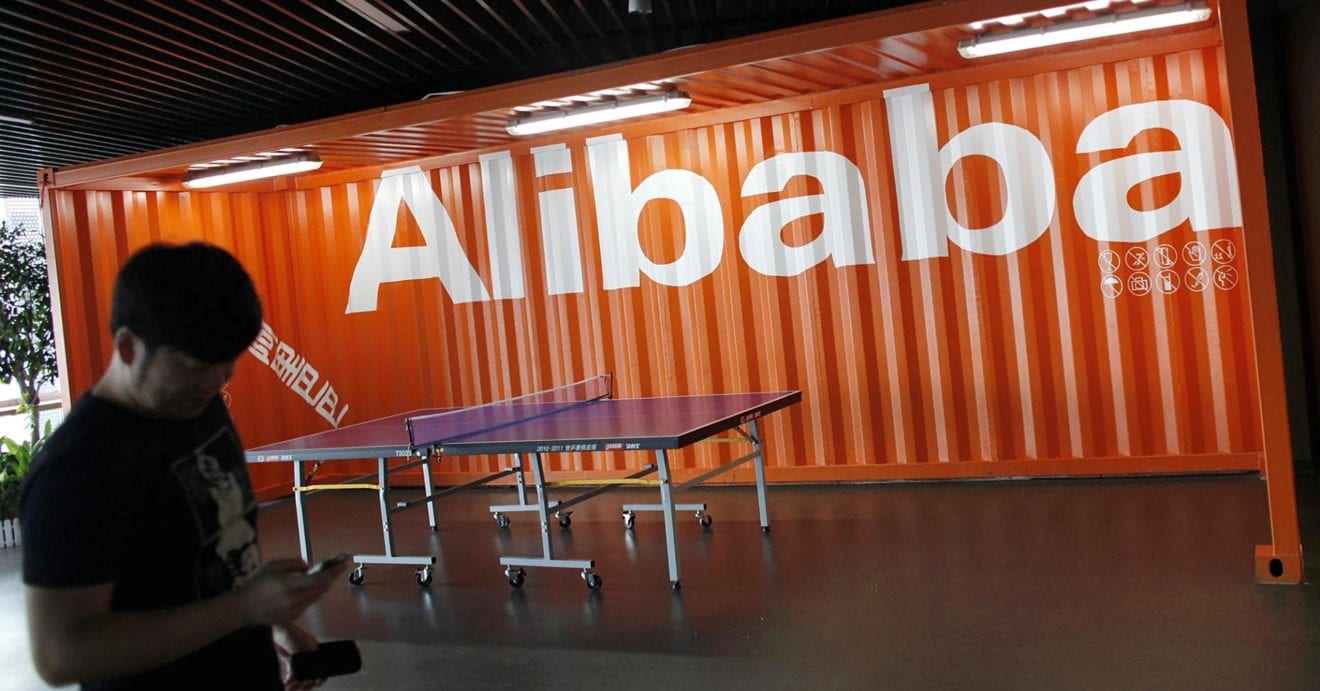
    China’s economy has been battered by the fallout from strict COVID-19 curbs including lockdowns and transport restrictions that have kept consumers home, pushed up unemployment, and tangled supply chains. Alibaba has also had to contend with a wide-ranging regulatory crackdown on alleged anti-competitive practices by China’s tech giants.

    The Hangzhou-based group cited “macro challenges that impacted supply chains and consumer sentiment” as it announced a loss of 16.2 billion yuan ($2.56 billion) for the January-March quarter.

    It warned it would not give forward-looking financial guidance due to Covid risks and uncertainty.

    Alibaba has seen its market value plummet since Beijing launched its sweeping crackdown in 2020 on some of China’s largest home-grown companies.

    The crackdown included a last-minute cancellation of a planned IPO by Alibaba’s financial arm Ant Group, which would have been the world’s largest public offering at the time. The company was also hit with a record $2.75 billion fine for alleged unfair practices last year. But Alibaba Group said that its revenue grew around 9% in the last quarter to 204.1 billion yuan, better than expected in a Bloomberg forecast. The company’s revenues -generated mainly by its core e-commerce operations – were up 19 % for the fiscal year ending March 31. Meanwhile, its full-year profit came to 62 billion yuan ($9.8 billion).

    “Since mid-March 2022, our domestic businesses have been significantly affected by the Covid-19 resurgence in China, particularly in Shanghai,” the company said.  “Considering the risks and uncertainties arising from Covid-19… we believe it is prudent at this time not to give financial guidance as we typically do at the start of the fiscal year,” it added.

    Alibaba’s earnings follow a series of sluggish results by prominent Chinese tech firms, with internet giant Baidu reporting a net loss of 885 million yuan ($140 million) in the first quarter. Baidu’s business has been “negatively impacted” by China’s recent Covid-19 resurgence since mid-March, co-founder Robin Li said in a statement.  Virus-related challenges continue to pressure Baidu’s near-term operations, Li said.

    Tencent reported record low quarterly revenue growth at 135.5 billion yuan ($20.1 billion) in the first quarter, putting year-on-year expansion at nearly zero. China is the last major economy to stick to a strict zero-Covid policy, which is now being tested by the infectious Omicron variant.

  • Ferrari And Qualcomm Team Up For Tech Projects For Road, Racing Cars

    Ferrari And Qualcomm Team Up For Tech Projects For Road, Racing Cars

    Ferrari said on Tuesday it would partner with Qualcomm Technologies to use the San-Diego based group’s premium product, the Snapdragon chipsets, to accelerate the sports carmaker digital transformation. The deal will involve both its road cars and its Formula One racing team and the first common projects, including the so-called digital cockpit, have been already identified, the Italian group said in a statement.

    Ferrari’s new CEO Benedetto Vigna – a technology industry veteran – said in November Ferrari would seek technology partnerships as it moves ahead with transition toward cleaner mobility and in order to pivot technologies that require high investments.

    The Snapdragon logo will make its debut on Ferrari’s F1-75 racing model, which will debut on Feb 17

    “Innovation requires market leaders working together. Thanks to this agreement … we expand our knowledge in digital technologies and web 3.0, areas with great potential for automotive and motorsport,” Vigna said in the statement.

    The Snapdragon logo will make its debut on the F1-75 racing model, the Ferrari single-seater which will be unveiled at the company’s headquarters in Maranello on Feb. 17.