Retail News CRM

Tag: tourism

  • Paris starts to suffer as Chinese tourists disappear

    Paris starts to suffer as Chinese tourists disappear

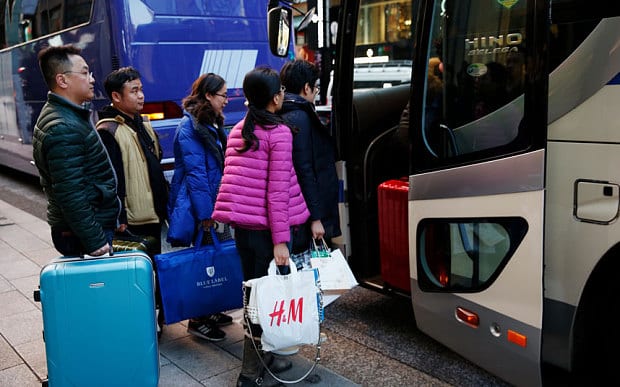
    As the hordes of mainland Chinese tourists who used to descend on the prime shopping districts of Paris have dried up within just a fortnight, luxury brands are beginning to plan staff layoffs and other strategies to reduce costs.

    With the rapid spread of the coronavirus across Mainland China, outbound tour groups have been suspended and airlines all over the world have curtailed or canceled all services to the area. In 2018, about 2.2 million Chinese people visited France. But this week, stores they would normally frequent around Paris were almost empty.

    In just one example of the coronavirus’ impact on the city is the manager of cosmetics store Paris Look, Chomphunut Supraditapron, who told Thomson Reuters she fears for her job since the steady daily stream of Chinese shoppers stopped arriving in her store.

    “We need Chinese customers because it is Chinese customers who buy the most,” she said.

    The world-famous Avenue des Champs-Elysees is home to flagship stores for a variety of luxury European brands, including a giant Louis Vuitton Maison and one of the world’s largest Sephora stores.

    LVMH, which owns Louis Vuitton and Sephora, among other luxury retail brands, has seen its stock price fall 9 percent since January 17 – entirely due to fears over the coronavirus’s impact on retail spending. The company’s Paris flagship reportedly attracts 37 million visitors every year.

    Footfall in Paris Maisons has plummeted since the Chinese stopped coming, although, until recently, some of those brands said they are noticing a compensatory upturn in Mainland China sales. That outcome is now in doubt as many retailers have been forced to close more than half of their Chinese stores as authorities try to restrict the spread of the virus.

    The timing of the virus’ outbreak – on the eve of the busiest trading period of the year for any retailer targeting Chinese – Lunar New Year – has exacerbated the problem.

    Regional Tourism Board data shows Chinese shoppers spend an average of €1024 (US$1136) on a five-night stay in Paris – significantly more than the average of tourists from other countries which is around €640

    “The crisis is deepening and we are witnessing some kind of hysteria,” Didier Kling, the head of the Paris chamber of commerce told Thomson Reuters.


  • New Digi partnership introduces VR experiential tourism using 5G

    New Digi partnership introduces VR experiential tourism using 5G

    Visitors to the launch enjoyed a 360-degree view of Gunung Machinchang, one of the island’s most popular mountains and tourist destinations, using a cable car gondola and a virtual reality (VR) experiential zone.

    A camera that was installed at the Langkawi Skycab middle station enabled the event to be live-streamed from 20 kilometers away.

    The Digi 5G showcase, part of the 5G Demonstration Projects, have been made successful thanks to the tireless efforts of the Malaysian Communications and Multimedia Commission (MCMC) to encourage, develop and organize 5G use cases in a live but controlled environment.

    Digi’s CEO Albern Murty explained that the Langkawi 5G virtual tourism pilot is part of the telco’s objective in creating a 5G ecosystem with the support of its partners.

    “We are excited at the possibilities of 5G bringing next-gen virtual tourism to many other local destinations and connect more people to experiences that matter most to them. In partnership with Malaysia Airports and Panorama, we are pleased to bring a piece of Langkawi’s heritage to tourists from the moment they arrive at the airport,” Murty said.

    Panorama Langkawi acting COO Ir. Abu Hashim Abdul Rahman said, “We believe that 5G has the potential to deliver new and engaging digital activities that can improve tourist experiences and enhance the appeal of Langkawi and Malaysia in the eyes of foreign tourists.”

  • Vietnam aims to free tourist areas of plastic waste

    Vietnam aims to free tourist areas of plastic waste

    Vietnam will cut down 75 percent of its marine plastics and stop generating plastic waste in coastal tourist areas by 2030, the government says.

    Prime Minister Nguyen Xuan Phuc has issued a national action plan on the management of plastic waste in the ocean until 2030, which aims to fulfill the country’s international commitment to resolve the issue of marine plastics.

    According to the plan, by 2030, Vietnam would have reduced the amount of plastic waste being dumped into the ocean and collected 100 percent of lost or discarded fishing equipment. Additionally, 100 percent of coastal tourism service providers would stop using disposable plastic products and non-degradable plastic bags, and 100 percent of marine protected areas would be free of plastic waste.

    The government has asked the Ministry of Natural Resources and Environment to expand its annual monitoring activities and evaluate the current status of marine plastics at river mouths and in 12 island districts every five years.

    To achieve its goals, the government will work to promote and raise public awareness on the issue of plastic waste; change the public’s behavior and treatment of plastic products and marine plastics; collect, sort, store, transport and treat plastic waste generated by activities in coastal areas and on the seas.

    The PM asked the Ministry of Natural Resources and Environment to work with authorities of coastal provinces and municipalities to develop and pilot models for managing, reducing and eventually stopping the use of disposable plastic products and hard-to-degrade plastic bags in coastal areas.

    According to the United Nations Environment Program, Vietnam is the world’s fourth-largest marine plastic polluter after China, Indonesia and the Philippines. It has been estimated that Vietnam dumps an average of 300,000-700,000 tons of plastic waste into the ocean per year, accounting for six percent of the world’s marine plastics.

  • Harvey Nichols suffers as Mainland Chinese tourists ‘disappear’

    Harvey Nichols suffers as Mainland Chinese tourists ‘disappear’

    Declining Mainland Chinese visitors to Hong Kong have put a dent in Dickson Concepts’ sales and profit in the first half of its fiscal year.

    Dickson Concepts, which owns the Harvey Nichols department store network, has reported a 6.6 percent decline in sales to HK$1.713 billion (US$218.8 million), and net profit attributable to shareholders down 10.9 percent to $119 million.

    But it was a tale of two quarters, according to chairman Sir Dickson Poon.

    “The group achieved significant growth in both sales and profit in Hong Kong during the initial few months. However, the retail climate in Hong Kong deteriorated significantly thereafter and Mainland Chinese tourists all but disappeared.”

    The impact of that was partially offset in Taiwan where like-for-like profits increased by 169 percent as a result of margin improvement and cost and inventory control.

    Sir Dickson did not mince words in his shareholder announcement, describing the outlook for Hong Kong retail as “bleak”.

    “The group is extremely pessimistic about the retail climate in Hong Kong. Trading has been adversely affected and sales have been achieved at the expense of margin. Meanwhile, fixed costs remain very high. Additionally, the group does not expect a return of Asian and Mainland Chinese tourists in the foreseeable future. The significantly worse result could be expected in the second half of this financial year. With Hong Kong in recession, the future looks bleak.”

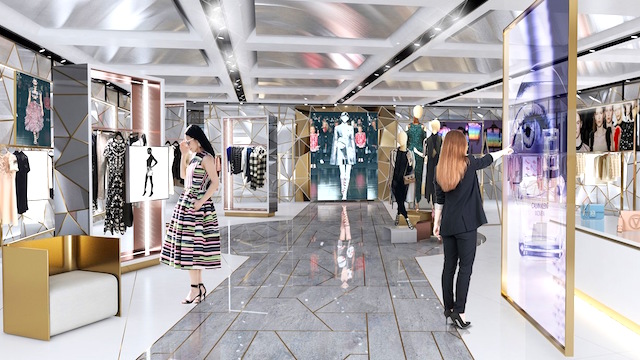
    Dickson Concepts opened the new Harvey Nichols store at Pacific Place on September 19, the first of its new generation stores globally, mixing the company’s online and offline stock seamlessly using interactive displays and digital technology.

    “The new store has been well received since its opening,” said Sir Dickson. “We are confident that the store and the new model will become a long-term success.”

    By combining interactive digital displays alongside traditional physical display units, the store now showcases more than three times the number of products within half the floor space, thereby enabling an increase in sales density with significantly reduced fixed costs, while offering customers “a truly differentiated shopping experience”.

    Despite the gloomy era in Hong Kong, Sir Dickson said the company has net cash of $1.728 billion and a strong balance sheet.

    “The group is in a strong position to cope with Hong Kong’s recession and the very difficult retail climate.”

  • Alipay now available for tourists in China

    Alipay now available for tourists in China

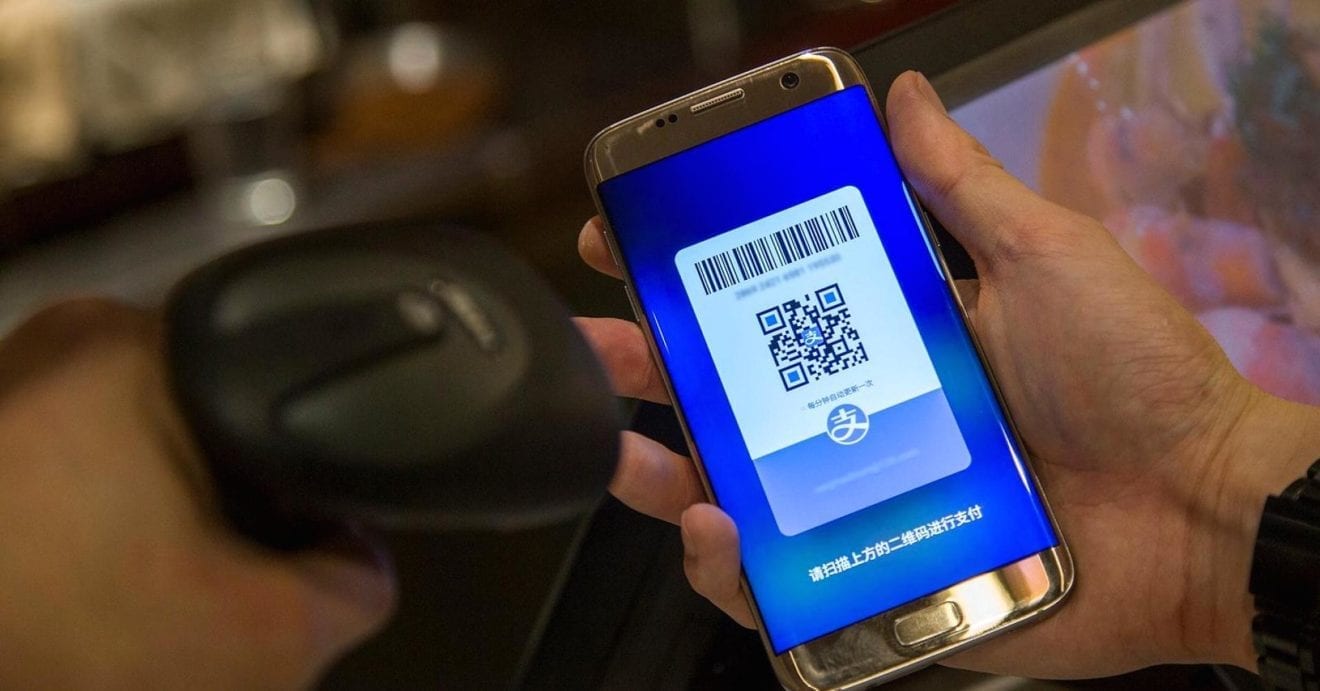
    International travelers can now use mobile payments in China as Alipay has launched a new version of its payment app designed for short-term overseas visitors.

    After installing the Alipay app, international visitors can register with their overseas mobile phone number to access the “Tour Pass” mini-program through which they can use the “Prepaid Card” service provided by the Bank of Shanghai.

    The minimum top-up for each card is CNY100, with balance capped at CNY2000. The card is valid for 90 days, after which any remaining funds will be refunded automatically.

    With the new Alipay service, visitors can pay through QR code or make online purchases through the app.

  • AirAsia playing a big role in travel and tourism

    AirAsia playing a big role in travel and tourism

    Tun Dr Mahathir Mohamad acknowledged AirAsia’s significant contribution to Malaysia’s tourism sector since starting operations in 2001 besides creating numerous milestones along the way and being a trendsetter in air travel.The Prime Minister said the evolution of low-cost carriers in the region has been quite phenomenal and that AirAsia’s role in this was obvious.He is confident that the emergence of new technologies in the aviation industry would further propel AirAsia to improve its standing as one of the world’s leading brands.“I was informed that this is the centre of AirAsia’s operations across the Asia Pacific and congratulate AirAsia for spearheading the budget air travel revolution in this region,” he said, when visiting the AirAsia headquarters known as Red Q or Red Quarters, a stone’s throw from the Terminal Two which it operates.

    Mahathir said his last visit to the LCCT (low-cost carrier terminal) was in 2011 and was proud of the Malaysian success story the airline has become.It not only emerged as the world’s best low-cost carrier for the 11th time at the Skytrap World Airline Awards this year but was also briefed that its headquarters even matched those of Google and Facebook.“Obviously this is not the usual office. There is no partition between the staff and heads. Even the top management don’t have partitions,” he said, adding in jest that he thought it was because AirAsia had no money to install partitions. “It reminded me of a phrase that was meaningful to me at one time, i.e nothing to hide,” he quipped and hoped AirAsia would continue to remain open and transparent.

    He noted that AirAsia sets many firsts in the industry such as being the first to sell flights online when the rest of the industry was still using travel agents, the first in Asia to have a mobile app and engage in social media seriously, the first to implement self-service facilities including check-in kiosks, self-bag tag and self-bag drop machines.“Today it is taking its guest experience one step further by showcasing the possibility of future air travel and digital airports in line with Industry 4.0 that involves enhanced connectivity and automation which leads to the creation of smart autonomous systems fuelled by data and machine learning that are more efficient and less wasteful.”He was confident that AirAsia’s innovations like AVA (Airasia Virtual Allstar, AI-powered Chatbots and Faces (Fast Airport Clearance Experiencei) will help propel the industry into the future and hoped to see all these creative innovations in all airports.

    Mahathir also hoped that the new technologies would help AirAsia to continue to put Malaysia on the map as the nation forges ahead with 4.0.“The potential for growth is tremendous and it comes down to knowledge in applications.”Mahathir said businesses should not only arm themselves with new knowledge but also take risks to apply this new-found knowledge to create new products and services to boost productivity and efficiency.In this, he was glad to note that AirAsia was constantly challenging itself in its quest for continuous improvement and innovation.

    As a word of advice, he said success will always bring higher expectations and place one under more scrutiny.“If not careful and unable to meet and resolve some of the more reasonable expectations and criticisms, it may turn against you.“Its all about managing success and this is what AirAsia should give much consideration,” he said, adding that if it remains focussed and innovative, AirAsia is destined for even greater heights.Earlier at the presentation, guests were briefed on how AirAsia grew from just two planes serving two domestic routes in 2011 to 260 planes and over 390 routes across the Asia-Pacific and US with some 600 million people having travelled on it.It also prides in being one of the largest recruiters of women pilots, now numbering 220.Among those present were Transport Minister Anthony Loke, AirAsia x Chairman Tan Sri Rafidahn Aziz, AirAsia Group Exec Chairman Datuk Kamarudin Meranun and AirAsia Group CEO Tony Fernandes.

  • Thai AirAsia parent Q1 operating profit halves

    Thai AirAsia parent Q1 operating profit halves

    Revenue for the quarter ended 31 March was flat at Bt11.6 billion, but expenses rose 10% to Bt10.5 billion. Net profit fell 50% to Bt497million. The company says that fuel costs rose during the quarter, as did airport and MRO costs. Despite this, the carrier’s CASK was flat compared with a year ago at Bt1.53 due to a 10% increase in ASKs and a longer average stage length.

    RPKs grew 9%, while load factor was flat at 91%. The carrier’s average fare for the first quarter was Bt1554, down 7%.b Cash and cash equivalents were Bt4.1 billion on 31 March, down from Bt5.97 billion a year earlier.

    In its outlook, the carrier notes that international trade frictions could hurt the global economy and affect exchange rates.

    “As the company has revenues and expenses in various different currencies such as passenger fares, repair, and maintenance as well as aircraft rental, the company has adopted the practice of natural hedging by matching cash expenses and revenues in the same currency as practically possible,” it says.

    It believes that global crude prices could fall in the second half of the year, but has hedged 52% of its 2019 fuel conception at cost of $80 per barrel.

    It adds that Thailand’s tourism industry will remain strong in 2019. It plans to add new routes later this year from Bangkok Don Mueang to new Vietnam destinations such as Can Tho and Nha Trang, as well as the addition of a Chiang Mai-Da Nang service.

    It plans two Cambodia services, Bangkok Don Mueang-Sihanoukville, and Phuket-Phnom Penh. In addition, it will add a Bangkok Don Mueang-Ahmedabad service.

    “This diversified strategy tends to minimize the risk of dependence on the major customer base, enhancing the company and Thai AirAsia’s sustainable revenue growth in the future and maintain its leading low-fare airline in Thailand,” it says.“In 2019, Thai AirAsiamaintains a target of 23.15 million passengers, with a solid load factor at 86%, and plans to acquire more energy efficient aircraft during the year to bring its fleet to 63 aircraft.”

  • AirAsia to Launch Flights Between Bangkok and Ahmedabad

    AirAsia to Launch Flights Between Bangkok and Ahmedabad

    AirAsia is to launch flights between Bangkok and Ahmedabad, the capital of Gujarat state and India’s first UNESCO World Heritage City. The airline will operate the route four times per week on Mondays, Wednesdays, Fridays and Sundays, from 31 May 2019.

    AirAsia Thailand CEO, Santisuk Klongchaiya, said, “India is a strategic market that is fast becoming an important contributor of inbound tourists for AirAsia Thailand. To fully leverage on this, we plan to regularly introduce routes connecting the two countries, focusing particularly on India’s burgeoning metros. Thailand’s own worldwide fame for hospitality should attract travellers from Ahmedabad, which is the capital of Gujarat state and India’s fifth most populous city.”

    According to Thailand’s Ministry of Tourism and Sports, Thailand welcomed 1.5 million Indian visitors in 2018, up 12% on the previous year.

    Thai AirAsia has recorded a load factor of up to 87% on its India routes, with passengers travelling between Bangkok and existing destinations in India increasing 7% year-on-year. Indian nationals made up 85% of passengers on those routes.

  • AirAsia apologises for ‘Get off in Thailand’ advert

    AirAsia apologises for ‘Get off in Thailand’ advert

    AirAsia has apologised after its advertising campaign was labelled “harmful” in Australia. The advert containing the phrase “Get off in Thailand” was posted around the city of Brisbane to promote the airline’s direct route to Bangkok. Collective Shout, a grassroots campaign movement against the objectification of women claimed that the advert was promoting sex tourism in Thailand.

    Thailand has over 123,530 sex workers, according to a 2014 UNAids report.

    Melinda Liszewski, a campaigner at Collective Shout spotted the adverts on a Brisbane bus and posted the image to social media.

    She accused the airline of “promoting sex tourism.”

    A spokeswoman for Air Asia told the BBC: “AirAsia takes community feedback extremely seriously and the airline sincerely apologises for any inconvenience caused from recent concerns raised.

    “AirAsia can confirm the advertising campaign has ended and we instructed our media partners to have the advertising removed as soon as possible today from all locations.”

    One of the adverts was spotted at Brisbane Airport. It has confirmed on social media that its removal “is a priority.”

    Brisbane City councillor Kara Cook branded the campaign an “absolute disgrace” and said “it should never have appeared on our city’s streets.”

    She wrote on Twitter: “Council should be responsible & accountable for the ads on their buses.

    “I wrote to the LNP this morning demanding these buses be taken out of circulation. This shouldn’t have happened.”

    In response to the criticism, Brisbane City Council said that the Advertising Standards Board regulates advertising acceptability. It directed complaints to the board.

  • Barclaycard partners with Alipay to help UK merchants increase sales from booming Chinese tourism

    Barclaycard partners with Alipay to help UK merchants increase sales from booming Chinese tourism

    Barclaycard, which processes nearly half of the UK’s credit and debit card transactions, today announced a new agreement with Alipay, the world’s leading payment and lifestyle platform, which will allow retailers to accept Alipay transactions in stores across the UK.

    Building on a successful pilot over the past two years, the new agreement will enable UK retailers to take full advantage of the growing volume and buying power of Chinese visitors. In addition to the UK’s 393,000 Chinese residents and 95,000 Chinese students, tourists from China represent an increasingly important customer segment for retailers. VisitBritain is expecting 483,000 visits from China in 2019, up 43 per cent on 2017, with Chinese visitors expected to spend more than £1 billion this year, up 50 per cent, moving it well into the UK’s top 10 tourism market. The increase in market size is also demonstrated by the fact that the number of Alipay users in the UK has doubled in the last year.

    By accepting Alipay, the world’s most-used app in 2018 outside of social apps according to App Anni, retailers will be able to capitalise on the growing appetite of Chinese tourists to use mobile payments over cash while abroad. According to a 2018 survey conducted by Nielsen, the vast majority (93 per cent) of Chinese tourists said they would likely spend more in a store that accepted mobile payments. In addition, among the merchants surveyed that had adopted Alipay, nearly 60 per cent said that they had clearly seen growth in both foot traffic and revenue[5].

    The new agreement will enable UK retailers to accept in-store Alipay payments without replacing their existing point-of-sale system, allowing them to take advantage of the boom in Chinese tourism without disrupting their existing customer experience[6]. Retailers will also benefit from being at the fingertips of hundreds of millions of highly-engaged Alipay users, who will be able to search for outlets near their location to find out details such as opening hours, directions, and whether there are any discounts available.

    Alipay serves over one billion users worldwide together with local e-wallet partners, and this new agreement offers its Chinese users travelling in the UK the familiar mobile payment and lifestyle experience they enjoy at home, as well as Alipay’s competitive foreign exchange rate.

    Feedback from retailers has been incredibly positive; Barclaycard is already in discussions with around 70 clients interested in becoming early adopters.

    Rob Cameron, CEO, Global Head of Payment Acceptance at Barclaycard, said:

    “Thanks to the significant investments we’ve made in our platform, our clients have access to a growing range of payment types, each of which can help them increase market share by meeting the needs of new customers.

    “Our new agreement with Alipay gives retailers a vital tool to help them seize the revenue opportunity posed by the growth of Chinese visitors to the UK. At the same time, Alipay users will benefit from a more convenient and familiar in-store payments process – enhancing their overall shopping experience.”

    Roland Palmer, Head of Europe, Middle East and Africa at Alipay, said:

    “Alipay is excited to announce that it will be working with Barclaycard to provide visitors from China with the mobile payment experience that they are already familiar with. Through this strategic partnership, Alipay will now be able to offer many more UK merchants the opportunity to connect and engage with a growing number of Chinese visitors. This is another step forwards in our vision to offer Chinese tourists a seamless travel and payment experience when travelling overseas.”

  • Tourism Malaysia Collaborates with ShopBack to Incentivise Travellers to Cuti-Cuti Malaysia

    Tourism Malaysia Collaborates with ShopBack to Incentivise Travellers to Cuti-Cuti Malaysia

    Recognising the growth of online travel bookings in Malaysia, Tourism Malaysia recently confirms its support towards the largest Online Travel Fair organised by ShopBack Malaysia from 11th to 17th March 2019, and applauds the company’s efforts in enticing travellers to go around Malaysia with attractive travel bonus and cashback.

    Dato’ Dr. Ammar Abd Ghapar, Senior Director, Domestic & Events Division, Tourism Malaysia says, “This is the third year that Tourism Malaysia is supporting ShopBack Malaysia’s efforts in promoting domestic travels. In the past two years, it has been rolling out a Chief Travel Officer video series to showcase the immense beauty of our land to the public, and this year we are expanding our support towards ShopBack’s Online Travel Fair, the largest e-travel fair in Malaysia which is held in collaboration with its partner merchants including Agoda, Booking.com, Expedia, Malaysia Airlines, BusOnlineTicket, KLOOK, Traveloka, Trip.com, and many more.”

    “The past ShopBack Online Travel Fair achieved 100% year-on-year growth. This is definitely encouraging and together with the continuous efforts from the public sector as well as private e-commerce players, we are confident in growing the industry performance towards the Visit Malaysia 2020 goal,” Dato’ Dr. Ammar says.

    Alvin Gill, Country General Manager of ShopBack Malaysia, expressed that every year, hundreds of thousands of travellers use ShopBack to make travel bookings with Agoda, Booking.com, Expedia, Malaysia Airlines etc. because it saves them more money. “Through a special partnership with all the online travel sites, travellers can get up to 8% cashback on each travel booking. That means if a hotel room cost RM500, a traveller just needs to open the ShopBack web/app, click to our merchant site to make the booking and he/she will get RM40 cashback from us. The booking price is the same, but you will get cashback in your ShopBack account if you use us.”

    “In conjunction with our first Online Travel Fair in 2019, we are also giving away an extra up to RM25 bonus cashback to all travellers who purchase flight, accommodation, and trip packages to any Malaysia destination via our platforms from 11th to 17th March 2019. We are truly honoured to have Tourism Malaysia’s support for this campaign – together we can empower more people to rediscover the food, art, nature and culture in the country and create fond memories with their family and friends here,” Alvin adds.

    The leading cashback site works with a full range of travel sites that covers airlines, bus, rides, accommodations and tour services to offer cashback on top of discounts provided by merchants. Signing up to ShopBack is free. Over 1 million Malaysians are using ShopBack at the moment, and over RM30 million of cashback has been given to local users since 2015.

  • Where Chinese tourists go for shopping

    Where Chinese tourists go for shopping

    Hong Kong, Tokyo, Seoul and Singapore were among the hottest shopping destinations for Chinese tourists last year, according to Ctrip. In the latest big-data report from the Chinese travel-services provider, Edinburgh, Singapore and San Francisco were also among the top 10. Last year, nearly 150 million overseas trips were made by Chinese tourists, who collectively spent US$120 billion.

    London was the city that saw the highest per-capita spending by Chinese tourists – more than US$4428 – followed by Paris, Macau, Dubai, Okinawa, Kyoto, Osaka, Nagoya, Hong Kong, Singapore and Fukuoka.

    Europe is still a hot destination for Chinese luxury goods buyers because prices there are much lower than the global average, and a tax-refund system also facilitates sales.

    Despite the recovery of the British pound last year, the UK remained a popular destination for Chinese tourists, said Ctrip.

    Experts noted that Chinese consumers would still be a focus of competition between shopping destinations this year, and many retailers internationally have upgraded their shopping facilities to lure Chinese tourists.

  • Malaysia ranks second in SEA for Chinese tourist transactions during CNY

    Malaysia ranks second in SEA for Chinese tourist transactions during CNY

    Malaysia is the second largest market in Southeast Asia for Chinese tourists spending over the Chinese New Year holiday season, as recorded by Alipay, the digital payment and lifestyle platform offered by Ant Financial, an affiliate company of Alibaba Group. The transactions were recorded between Feb 4 and 10 this year. Malaysia saw a 16% increase in average per-capita spend by Chinese tourists this year, with a growth in transaction volume by 71% compared to 2018.

    What’s more, Chinese millennials can no longer claim to be the dominant user group spearheading spending while travelling, as 68% of Chinese tourists born between 1960 and 1979 were found to be the main driving force in outbound tourism and overseas consumption.

    Alipay head of business operation for cross-border business Janice Chen said this year’s findings highlight how mobile payment is taking root in China’s outbound tourism market, and it is excited to see the robust growth in the use of Alipay by overseas tourists from third-and-fourth tier cities and middle-aged vacationers.

    “While providing a better experience for Chinese travellers, Alipay is, at the same time, a huge drawcard for overseas merchants as a platform to help grow their business,” Chen said in a statement.

    This is in accordance to a recent report published by Nielsen and Alipay, called the 2018 Trends for Mobile Payment in Chinese Outbound Tourism.

    Chinese tourists are bringing their cashless lifestyles outside of China, paying for 32% of their overall travel transactions using mobile payment, overtaking their use of cash for the first time ever.

    The survey found that merchants offering Alipay as a payment option has experienced growth in both foot traffic (58%) and revenue (56%).

    Heinemann, a travel-retailer with a store in Kuala Lumpur International Airport 2 (KLIA2) has also reported an increase in sales. Its general manager for retail operations Alexander Maas said since implementing Alipay, it is now able to provide added convenience to its customers from China, and provide them with a familiar shopping experience, ultimately seeing over 20% of all its transactions completed on the Alipay app with Chinese tourists.

    With the increased popularity of Alipay among both young and old Chinese tourists, brick-and-mortar retailers across the region can continue to adopt Alipay as a payment option to further boost profitability moving forward.

  • Hotels in rural Vietnam struggle to recruit staff

    Hotels in rural Vietnam struggle to recruit staff

    Vietnam’s Con Dao Islands businesses are unable to hire staff despite flourishing tourism, with people preferring to work on the mainland. Almost a week after Tet, Vietnam’s longest holiday of the year, resorts and hotels in Con Dao, a 16-island archipelago off the country’s southern coast, are looking to hire hundreds of employees for various positions including managers, waitresses and tour guides.

    The Poulo Condor Resort on the island is looking for 33 new employees for 14 positions, while the Saigon Con Dao Resort and the Six Senses Con Dao Resort are looking for seven new staff each.

    Phuong Ly, head of recruitment at Saigon Con Dao Resort, said that more resorts and hotels are being built on the island but there are few experienced staff available to work in them.

    “The local authority does provide training courses, but not many participate. Most staff are young people, so they jump between jobs very often.”

    Smaller businesses are also looking for people. A café on Pham Van Dong Street is looking for 32 staff, offering bonuses, meals, accommodation, social insurance and annual travel to the mainland.

    Thuy, owner of a local seafood restaurant, said businesses start looking for staff in March when tourists start arriving in large number.

    “But this year, many businesses are already short-staffed so we are already searching for people as the number of tourists has been rising. Last year, a tour guide could earn up to VND30 million ($1,296) a month during peak season.”

    Con Dao is 180 kilometers away from the shores of southern Ba Ria- Vung Tau Province, and accessible by air and boat.

    Industry insiders said that attracting people from mainland to Con Dao to work is a challenging task given the long distance from the shores while most people don’t want lower income jobs like serving in restaurants, driving taxis or guiding tours.

    The high cost of living on the island is another reason that people prefer to work on the mainland, they said.

    Con Dao served as prison islands for political prisoners during the French colonial era, and in later years the Saigon regime imprisoned opponents of the regime in the infamous cells known as the “tiger cages”.

    The old prison buildings are still standing and are open to the public as is a small museum tracing Con Dao’s history.

    Con Dao also boasts pristine natural beauty with forested hills, sandy beaches and extensive coral reefs.

    Last year, Con Dao welcomed over 286,000 tourists, up 17.31 percent from 2017.

  • eat darling eat opens in Hong Kong

    eat darling eat opens in Hong Kong

    This February, foodies in Hong Kong will salivate over scrumptious treats and desserts at eat darling eat, the new Causeway bay eatery that is bringing a playful twist on iconic Chinese desserts to spread love and evoke warm childhood memories.

    The 1,300 ft design-centric space is bold, surreal and out of the ordinary, sharing an array of lip-smacking treats with an eclectic twist. Situated in Fashion Walk, eat darling eat is the latest addition under Ming Fat House. The dessert spot is further enhanced by the interior design, with large playful stickers on the walls, and creative food photographs that make visitors do a double take. At eat darling eat, all delicious culinary creations are all about stimulating the senses, each of them made with utmost care and loving attention.

    eat darling eat’s extensive menu features iconic Hong Kong desserts such as the homemade fluffy Pineapple Buns (HK$38) that are quintessential to the city, filled with pineapple custard. Chinese “tong sui” desserts get a modern reinterpretation with such intriguing combinations such as double-boiled Papaya (HK$68) with snow fungus, candied papaya and mascarpone cheese. Sweet Potato (HK$68), a sweet potato soup playfully pairs with a luscious chocolate cake and taro ice cream; and Red Bean (HK$68), mixed with tangerine peel soup with a scoop of matcha ice cream.

    Other signature creations are home-made icy treats that have a modern flavour. Set to become a favourite is the Double-strength Milk (HK$48), that features two scoops of the milk flavoured ice cream that are infused with Chinese rice wine. Sichuan Pepper (HK$48), with scoops of the ice cream that bring out the spicy taste of Sichuan peppercorns and complemented with the sweetness from candied bacon.

    The icy treat that is sure to be popular amongst the fans is the Chinese Ginger Vinegar (HK$48), creatively topped with crispy pork skin. Inspired by a traditional Cantonese dish that is typically shared by new mothers to celebrate the arrival of a newborn baby, this trail blazing creation promises a spoonful to remember.

    Other delectable desserts include the Lava Cake (HK$78), featuring a decadent Valrhona dark chocolate filled cake with the earthy taste of walnut soup, and Matcha Cake (HK$58), a sweet caramel sponge cake topped with caramelised banana, and finished with scoops of matcha ice cream.

    “At eat darling eat, we strive to bring the element of traditional Hong Kong desserts that not only touch the heart, but also add a modern twist that will create new memories for our customers,” explained Jonathan Bui, owner of eat darling eat.

    The creative talent behind these quirky and tasty desserts is Executive Chef Jason Luk who tucked international experiences under his sleeve having worked in Bangkok, Shanghai and Miami. In Hong Kong he has honed his skilled at The Drawing Room and Zuma Hong Kong and brings a limitless array of culinary ideas at eat darling eat.

    “While living abroad, I learned a lot about desserts in other places, but at the same time I missed eating food from home. Since coming back to Hong Kong, I want to share the recipes from my experiences and present them to foodies in Causeway Way, which is the perfect place to showcase new and exciting trends and styles,” says Jason.

    eat darling eat offers guests a respite from busy Causeway Bay with its whimsical interiors that mirror the eclectic menu. The design draws inspiration from the experimental Post-modern era, incorporating designs, shapes and colours that challenge convention.

    The interior highlights split-level architecture, where the lower level entrance area is an open concept, while the upper space is framed as a theatre featuring fluorescent colours and reflective surfaces. The overall design is bold, surreal and out of the ordinary, emphasizing the creativity of the desserts.

    While eat darling eat offers mainly fun and playful desserts, it also offers savoury dishes for lunch and dinner that can be chosen from the a la carte menu and signature lunch menu alongside an extensive coffee, tea and cocktail menu. eat darling eat invites diners to take a break, slow down, and savour the moment in the midst of the hustle and bustle of Causeway Bay.