Retail News CRM

Tag: video

  • Ericsson launches wearable voice call solution

    Ericsson launches wearable voice call solution

    Ericsson has released a new VoLTE-based core network functionality to allow operators to offer single-number services for multiple wearable SIM-based devices.

    The new solution will allow operators to provide voice services for wearables using the same mobile number as a customer’s smartphone.

    It is designed for the new breed of wearable devices with cellular connectivity that are able to make and receive calls without being tethered to a nearby smartphone.

    The functionality can be added as an upgrade to Ericsson-supplied VoLTE networks with IMS deployed.

    Ericsson said the solution has been verified and pre-integrated with market leading devices, and will be adapted for more device types and brands as they are released. The company is already deploying the technology in more than 10 operator networks.

    “We continue building new useful services for our installed base of VoLTE networks, to enable our customers to launch innovative consumer and enterprise communication services,” Ericsson head of product management for communications services Monica Zethzon said.
    “With the new Multi-SIM for voice calls functionality, we support operators launching new attractive devices, which can also make high-quality operator voice calls anywhere, using the subscriber’s mobile phone number.”

  • Facebook makes new bid for TV viewers with expanded video

    Facebook makes new bid for TV viewers with expanded video

    Facebook had signed deals with news and entertainment creators Vox Media, BuzzFeed, ATTN, Group Nine Media and others to produce shows.

    Facebook on Wednesday made its biggest move to date to compete in the television market by expanding its video offerings with programming ranging from professional women’s basketball to a safari show and a parenting program.

    The redesigned product, called “Watch,” will be available initially to a limited group in the United States on Facebook’s mobile app, website and television apps, the company said.

    The world’s largest social network added a video tab last year, and it has been dropping hints for months that it wanted to become a source of original and well-produced videos, rather than just shows made by users.

    Reuters reported in May that Facebook had signed deals with millennial-focused news and entertainment creators Vox Media, BuzzFeed, ATTN, Group Nine Media and others to produce shows, both scripted and unscripted.

    “We’ve learned that people like the serendipity of discovering videos in News Feed, but they also want a dedicated place they can go to watch videos,” Daniel Danker, Facebook’s product director, said in a statement on Wednesday.

    Chief Executive Mark Zuckerberg said in a Facebook post that Watch would allow users to “chat and connect with people during an episode, and join groups with people who like the same shows afterwards to build community.”

    Facebook said the shows would include videos of the Women’s National Basketball Association, a parenting show from Time Inc and a safari show from National Geographic. Facebook is already broadcasting some Major League Baseball games and that would continue, the company said.

    ATTN said on Wednesday it had two original series coming to Facebook Watch: a health program with actress Jessica Alba and a relationship advice show.

    Eventually, the platform would be open to any show creator as a place to distribute video, Facebook said.

    The company, based in Menlo Park, California, faces a crowded market with not only traditional television networks but newer producers such as Netflix Inc and Alphabet Inc’s YouTube as well as Twitter Inc and Snap Inc .

  • AdColony Ups its Mobile Video Offering

    AdColony Ups its Mobile Video Offering

    AdColony, the largest independent mobile advertising platform, today announced the launch of Aurora™ HD Video, a suite of interactive mobile video creative products that fundamentally changes the way consumers can physically engage with video content. Aurora™ HD Video allows advertisers to immerse consumers into video content in a way never before seen in mobile advertising, delivering branding and engagement goals with TV-like reach.

    Powered by AdColony’s Instant-Play™ technology, the video gives marketers access to powerful graphic capabilities, interactive content that is enhanced with haptic effects and other native mobile capabilities that result in an experience for the viewer that is more immersive than anything else in market.

    “The future of Mobile Video is here, and, it is very different from what anyone has experienced yet,” explained Vikas Gulati, managing director of AdColony for Asia Pacific. “Video ads have always been a one-way street, yet, users want more than that. They want custom graphic effects that provide a life-like experience and content that rewards them for interacting with it.”       

    From creating fully shoppable video experiences, to changing backgrounds, to switching between concurrently-running videos, Aurora™ HD Video allows users a range of ways to interact and  personalise the experience on their screens.

    As one of its first advertisers, AdColony partnered with Disney to launch a mobile campaign for its global blockbuster release: Pirates of the Caribbean: Dead Men Tell No Tales which ran in the U.S. and APAC. 

    The campaign comprises an online treasure hunt that allows users to unlock rewards by engaging with the content in front of them. As a custom trailer for the film played, consumers tapped specific items on the screen, and were rewarded with exclusive video content from the film for everything they found. You can experience the video here.

    Added Gulati: “Mobile is no longer just an extension of TVs or digital videos. Mobile creative requires  crystal clear sound and picture quality, buffer-free video playback in apps, and a variety of post-video experiences to drive consumer actions. We are excited to have Disney as our very first Aurora™ advertiser and look forward to delivering results on brand and performance levels.”

    The Evolution of Instant-Play™ HD

    AdColony has been a leader in mobile video since 2011, when they launched Instant-Play™ HD video, a proprietary technology that ensures crystal clear, buffer-free video playback in apps. AdColony also pioneered the ability to engage with mobile video with their 2013 launch of dynamic end cards that provide the viewer with a variety of immersive, engaging post-video experiences to drive consumer actions. Since bringing these products to market, AdColony has run over 26 billion minutes of mobile video ads, and driven 78 billion impressions. 

    The Aurora™ video suite is powered by the AdColony 3.1 SDK. AdColony’s SDK is currently in more of the top 1,000 apps than anyone outside of Google, and this deep integration with top publishers allows advertisers to access the company’s latest and most innovative technology in the most popular apps in the world.

  • How brands use short videos for marketing in China

    How brands use short videos for marketing in China

    As the luxury industry discusses Snapchat’s marketing possibilities and, more recently, Instagram’s latest filter feature, brands looking toward the China market are facing a completely different short video industry. It’s one that has witnessed rapid development thanks to the popularity of smartphones and upgraded communication networks in China.

    In March this year, Kuaishou, a popular short video app, was on the receiving end of a US$350 million investment from Tencent, and Alibaba put RMB 2 billion toward the transformation of Tudou from a large, formerly popular online video platform to a short video community. Also, Yixia Technology, owner of Miaopai and Xiaokaxiu, both popular short video apps in China, has already spent RMB 2 billion to encourage short video content creators and producers by building several video creation bases and providing professional studios.

    Short videos are perfect for young, tech savvy consumers who take their phone with them everywhere and use it to access social media or to fill in short breaks in the day between other activities.

    But which short video apps are the most popular in China? Who are the viewers of these short videos? How can brands market to them? What should brands take into consideration when launching short video campaigns?

    China’s short video apps

    Similar to short video platforms like Viddy and Instagram, there are numerous short video platforms and apps in China where users can record real-time short videos and share them with friends. As for users, there were 153 million regularly watching China’s short videos in 2016. This is estimated to reach 242 million by 2017, an increase of 58.2 percent.

    CIWEEK, an internet content magazine, released a list of their top 10 short video apps in China in the first half year in 2016 and Kuaishou, Miaopai, and Meipai were the most popular.

    Of these, there are actually two types of short video platform in China:

    1. Comprehensive platforms: professional short video platforms

    These platforms, such as Meipai, Miaopai, and Xiaokaxiu, provide a one-stop user experience. Users can use various shooting tools, effect settings, and formats while filming or editing a video. They also offer a community for users to share their videos with friends. Short videos uploaded on those platforms can also be shared with WeChat friends, WeChat Moments, and Weibo.

    2. Content recommendation: news apps

    These platforms, such as Toutiao, NetEase, Tencent News, and Yidian Zixun, focus on suggesting popular or professional short videos. These platforms were originally news-based and mass communication oriented. They have millions of viewers and short videos recommended on these platforms can get huge amounts of traffic.

    Who are the viewers?
    The main users of China’s short video apps are young. Most of them belong to the post-90s generation. According to a report published in March 2017 by JIGUANG, a big data provider, users ages 16 to 25 make up 39.7 percent of the total, while users aged 26-35 are at 33.3 percent. Meanwhile, over half of the users are female, making them 69.4 percent of the total number of users.

    In terms of regions, 66.9 percent of the total come from third-tier and below third-tier cities in China. The top 3 provinces for viewer numbers are Guangdong, Henan, and Shandong.

    How are brands using short video?
    Short video is becoming a new favorite marketing tool for brands for several reasons. Short videos can be used for various types of promotional materials, such as product reviews, product seeding, promoting brand culture and more. With interesting and meaningful content, short videos can deliver specific brand messages to a target audience while avoiding the annoyance that longer videos may cause. The production cycle of short videos is quick with great flexibility, which works well with brands’ marketing plans and budgets. Through audience interactions with short videos, brands can better understand their preferences, rapidly improve their user experience, and come up with effective marketing plans quickly. Integrated campaigns launched on short video platforms can be creative and diverse.


  • Global spending on consumer video services to hit $314b in 2017

    Global spending on consumer video services to hit $314b in 2017

    Global spending on consumer video media services will total $314 billion in 2017, a 4.2% increase from 2016, according to Gartner.

    Pay-TV services is the largest spending segment and is on pace to represent 90% of the total market, totaling $282 billion in 2017.

    In 2017, emerging Asia/Pacific (20.8%) and Middle East and North Africa (17.4%) are forecast to record the highest growth in end-user spending on consumer video media services.

    Earlier this year, China Mobile began offering its pay-TV service free of charge to its premium subscribers for the first two years of a new contract. “This will lead to an influx of new subscribers in the pay-TV marketplace. However, it will also bolster price competitiveness and put negative pressures on the ARPU of the overall pay-TV market,” said Fernando Elizalde, principal research analyst at Gartner.

    Moreover, internet-delivered linear TV services have already launched in India and the Middle East, and Gartner expects these services will commence across all emerging regions by 2018. “We estimate that, incentivized by lower prices, one million households in emerging regions will enter the pay-TV market through an internet TV service by 2020,” said Elizalde.

    “The dramatic difference in the price of these packages compared with traditional pay-TV packages will also put downward pressure on ARPUs overall.”

    Transactional video on demand (T-VOD) offers consumers the ability to access a wide variety of content, from either managed pay-TV providers or over-the-top (OTT) companies such as Amazon, Google or Apple. “OTT-VOD sources are changing the landscape,” said Derek O’Donnell, senior research analyst at Gartner.

    “OTT-VOD services are the fastest-growing segment in the VOD landscape and eroding pay-TV providers’ share of revenue. OTT-VOD sources began outperforming traditional pay-TV sources in 2016.”

    O’Donnell added that the availability of premium-priced 4K content will increase end-user spending on T-VOD content in mature regions, from $160 million in 2017 to $400 million by 2020. In emerging regions, increased competition in the T-VOD marketplace from unmanaged providers and increased threats of piracy will put negative pressure on T-VOD prices. End-user spending on T-VOD services in emerging markets will decrease gradually each year, starting in 2017, by about $60 million to almost $445 million by 2020.

    Global consumer spending on subscription-based video on demand (S-VOD) services will total $18.7 billion in 2017, an increase of 28% from 2016.

    The average consumer adoption of S-VOD services is 10 percent in 2017, with an average ARPU of $7.41. The highest ARPUs are in Japan ($12.10), Mature Asia Pacific ($10.84) and North America ($9.60).

    “Consumers will not subscribe to more than three services,” said O’Donnell. “This is because of price and content discovery fatigue. Consumers are having to go through each application separately to find content, which can create fatigue.”

    Universal search is the key to driving further penetration, which will allow consumers to search for content across all their S-VOD services. “However, this is a ‘holy grail’ in the industry as providers, such as Netflix and HBO don’t want to cooperate,” added O’Donnell. “Therefore, true universal search is still some years away.”

    “Currently, there is a market for niche subscription video services and established streaming providers. However, as the market matures, we forecast more consolidation around the fewer companies that can innovate and set themselves apart from the juggernauts within the industry,” said O’Donnell.

  • Singapore leads region by online video consumption

    Singapore leads region by online video consumption

    Singaporeans lead the region in online video consumption, spending two hours every day tuning into video content, according to the results from a new YouTube Consumer Insights study conducted by Google Singapore and Kantar TNS.

    The survey of 1,035 Singaporeans aged 16 to 60 found that 78% of Singaporeans are turning to YouTube as their first stop for their daily dose of video. And perhaps not surprisingly, 6 in 10 agree that they visit YouTube for one video and end up looking at others.

    The study also found that Singaporeans are watching videos away from a desktop, with more than half of YouTube watch-time originating from mobile devices. Moreover, more than half are finding more content that they want to watch on YouTube than on TV, according to the study.

    Google pointed to recent research that it conducted with Ipsos that found attention to paid advertising on YouTube is 84% higher than advertising on TV. In addition, 95% of video ads on YouTube are also played with sound on, ensuring brands’ messages reach their audiences as intended.

    There is no question that the popularity of online video is at an all-time high; Google says that the hours of YouTube content uploads from Singapore has doubled compared to the previous year.

    “YouTube is popular with Singaporeans of all ages – who come to YouTube for entertainment, education, shopping and much more. With Singaporeans using YouTube to search for products, businesses looking to grow should use YouTube to tell their story and build their brands,” said Joanna Flint, country director of Google Singapore.

  • How will telcos handle the video “cash cow”?

    How will telcos handle the video “cash cow”?

    Huawei hosted over 500 media and analysts to its 14th annual Analyst Summit, with a variety of executives discussing their roadmaps.

    “Huawei will remain committed to building more connections, enlarging data pipes, and driving digital transformation,” said rotating CEO Eric Xu in an opening keynote.

    Xu said that cloud services are already a basic business model. “Beginning in 2017, Huawei will focus on public cloud services. We will invest heavily in building an open and trusted public cloud platform, which will be the foundation of a Huawei Cloud Family.”

    This cloud-based unit “will include public clouds we develop together with operators, and public clouds that we operate on our own,” said Xu.

    William Xu, executive director and chief strategy marketing officer, said that digital transformation “opens up immense new potential for value-driven growth in traditional industries.” He said that ICT infrastructure is a pillar for economic growth, and that “the cloud in particular is key to unleashing the power of connectivity.”

    He said “Huawei recommends that countries and industries turn their attention to digital transformation as a driver for growth, and pursue greater development and investment opportunities in emerging fields like cloud computing, IoT, and big data.”

    Ryan Ding, executive director and president of products & solutions, said in his keynote that operators in some markets are beginning to monetize video services, with an early winner being high-definition streaming of sports events. Ding pegged video at “70% of [mobile] traffic” in the near future, with 1K (1080p), 2K and 4K options available depending on the operator.

    In a media roundtable interview, Ding offered more granular data on the future of mobile video, describing it as a “new cash cow for mobile operators.”

    “We believe that 2K on smartphones and 4K on TVs is the sweet spot,” he said, noting that “different countries have different situations.”

    Ding described sports as the most popular content worldwide, giving an example of Spanish pubs that draw punters with live 4K broadcasts of football matches. As he described it, the largest TV features traditional match coverage while additional displays show different views of the same match—an experience viewers won’t get at home. He also said Huawei’s X Lab Insights estimates the overall entertainment market opportunity alone at $650 billion worldwide by 2020.

    Ding isn’t bullish on videoconferencing, but sees opportunities in the video surveillance market. There are 1.3 million CCTV cameras in Beijing alone, he said. “Last year in China, operators deployed 40 million IPTV sets,” said Ding. “This number is comparable to the number deployed from 2005-2015.”

    The Huawei president of products & solutions urged operators to migrate legacy systems to the cloud, adding that those in China are better positioned for the move than operators in Europe who are more vested in their legacy systems.

  • ZTE launches Big Video offering for telcos

    ZTE launches Big Video offering for telcos

    ZTE launched a new Big Video Premium OTT solution for operators at last week’s TV Connect 2017.

    The new solution is designed to help operators cut costs and shorten time to market with OTT video offerings, while ensuring end-users have a quality video experience.

    It incorporates technologies including multicast adaptive bit rate, cloud DVR and low latency technologies to provide video segmentation, aggregation and optimization capabilities.

    The solution also supports just-in-time packaging (JITP), which packages and transmits content only upon subscriber request, so only one copy needs to be stored to cut down on storage, as well as and multi-digital rights management technology to reduce investment on terminal DRM licenses.

    Operators will be able to adopt multiple potential business models to maximize profit-earning opportunities.

    ZTE said it has to date deployed a big video ecosystem comprising more than 90 commercial offices with a total system capacity of 80 million and more than 100 CDN commercial offices with a total concurrency throughput over 100Tbps.

  • After Netflix, another foreign video streaming provider connects in Vietnam

    After Netflix, another foreign video streaming provider connects in Vietnam

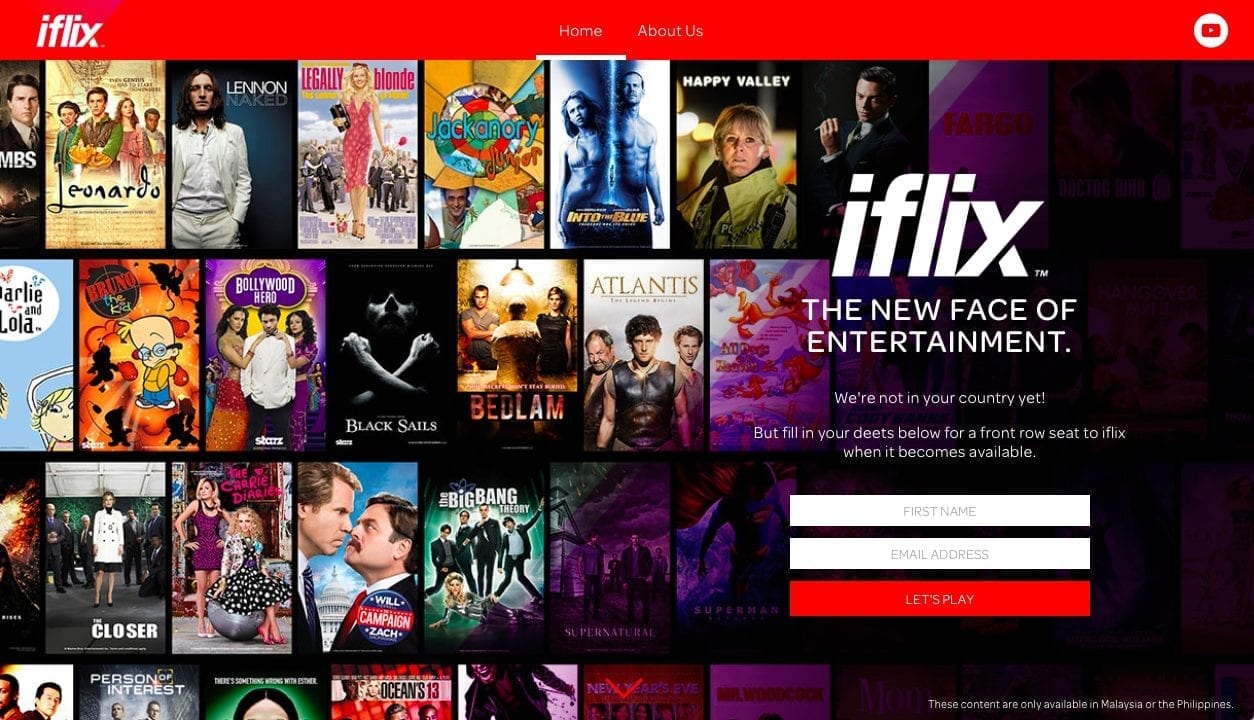
    Foreign companies have long been salivating over the local streaming media market’s potential. Malaysia-based video streaming startup iflix has officially launched in Vietnam with the aim of tapping into the country’s sizable population, the company said on Tuesday at a press conference.

    Vietnam is currently ranked by Internet World Stats at 18th globally in terms of the number of internet users, making it a lucrative proposition in the eyes of foreign streaming platforms.

    The streaming video provider sees Vietnam as a huge market with enormous potential mainly because the country has a growing population and fee-based online streaming services like iflix are still virtually new in this market, citing David L.Goldstein, iflix manager in Asia, as saying.

    Vietnamese consumers have long enjoyed access to free online videos, however, with the arrival of the U.S video streaming giant Netflix a year ago, and now Malaysia’s iflix, this is changing.

    iflix makes its money from charging subscribers a monthly fee of VND59,000 ($2.59) after a 30-day free trial. This is about three times less than subscription fees currently offered by Netflix, and could start a price war between the two.

    Customers in Vietnam can watch iflix on a variety of devices, including desktop computers, tablets, televisions and smart phones.

    The streaming platform also allows its subscribers to select subtitles in English or in Vietnamese, said Country Manager Hoang Tung at the press conference.

    iflix is now available in eight Asian markets, and its catalog includes both Hollywood hits and local content in Malaysian, Chinese and other regional languages. It has secured more than 1 million subscribers since its launch in 2015.

  • Digital video software market to exceed $9b by 2021

    Digital video software market to exceed $9b by 2021

    The video software market is expected to exceed $9 billion in revenue by 2021, according to a new report recently released by IHS Markit.

    The atomization of media distribution and the switch from hardware-based technology solutions to cloud implementations are key drivers for the $3 billion in revenue growth over the next five years, according to the new Video Software, Security, and Analytics Intelligence Service report from IHS Technology.

    “Taken together, these two forces have created a market where value is shifting towards the frontend,” said Cecilia Zhu, analyst at IHS Technology. “A superior user-experience has become fundamental to securing increased consumer spend.”

    Globally, content security accounts for 32% of the digital video software market. While demand for robust security solutions is unlikely to deteriorate,  particularly in the presence of high-value UHD and HDR content,  the segment is effectively saturated.

    North America is the key region for the video software market, and generates roughly $2.9 billion. The region’s value relates primarily to confluence of three factors — the presence of large media companies, their outright scale, and their sheer number.

    The region’s economic dominance should not, however, overshadow the existence of cutting-edge video services in Europe, Asia, and the Middle East, and the technology demand that these services generate.

    Cisco has a 15% share of the video software segment, the largest globally. The company has proven adept at transitioning into the video space, and in using its longstanding presence in core, metro, and access-network infrastructure to cross and upsell video-specific software.

  • SoftBank launches cloud videoconferencing service

    SoftBank launches cloud videoconferencing service

    Japan’s SoftBank  has launched a new cloud-based videoconferencing service using PolyCom’s RealPresence Clariti infrastructure software.

    SoftBank’s new PrimeMeeting service will strengthen the company’s offerings to customers looking for a flexible video collaboration solution that is simple to purchase and implement.

    The service is built on RealPresence Clarity as well as SoftBank’s White Cloud ASPIRE Infrastructure-as-a-Service (IaaS) platform.

    As well as enabling collaboration from anywhere on any device, the service will support integration with Microsoft’s Skype for Business and traditional video conferencing systems.

    “We are happy to announce the launch of our cloud videoconferencing service, PrimeMeeting, provided in collaboration with Polycom. Customers who previously could not use a video conferencing service due to cost, location, or device issues will now be able to easily adopt this service,” SoftBank ICT innovation division director Sadahiro Sato said.

    “By combining Polycom’s strong market share and brand value in the video conferencing market together with our new cloud service, we can enable more flexible and richer communication options to more of our customers.”

  • Viu reaches 4m unique users in 1 year

    Viu reaches 4m unique users in 1 year

    PCCW has announced that its Viu OTT video service has reached 4 million unique users one year after launch.

    Viu is now available in Hong Kong, Singapore, Malaysia, India, Indonesia and the Philippines, offering a range of premium Asian video content.

    Viu’s content library includes Korean content from the top four broadcasters, as well as Japanese, Malaysian, Indonesian, Taiwanese, Hollywood and now Thai content in some markets. The company differentiates with fast local subtitling, and by producing its own entertainment news in collaboration with Korea’s K1 Headlines.

    During the third quarter of 2016, Viu recorded over 218 million views, with users consuming an average of 1.2 hours of content per day or 12 videos per week.

    “As OTT takes root and continues to develop rapidly in Asia, Viu continues to stride forward with the launch of its service in the Philippines, a vibrant market with over 30 million viewers who regularly watch videos online,” PCCW Media Group MD Janice Lee said.

    “We are confident that our Philippine launch will replicate the growth and success we have experienced in the region.”

  • Huawei demos 5G-LTE dual connectivity for 4K VOD

    Huawei demos 5G-LTE dual connectivity for 4K VOD

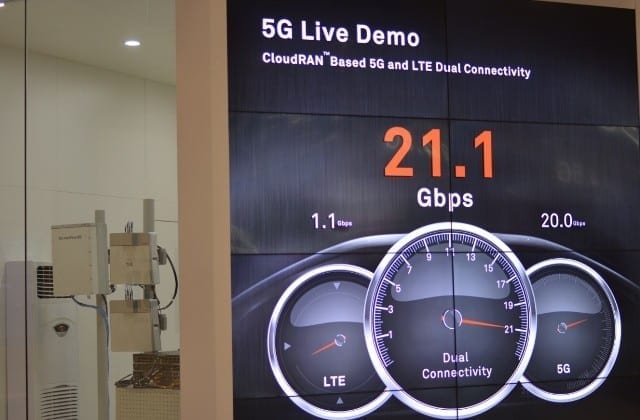
    Huawei has conducted a live demonstration involving 5G and LTE dual connectivity for a 4K video-on-demand service, achieving single user peak throughput of 21.1Gbps.

    At last week’s Global Mobile Broadband Forum, Huawei conducted a demonstration based on its CloudRAN architecture.

    With the development of new high-bandwidth services such as AR/VR and 4K video streaming and cloud-based services, Huawei said 5G new radio technologies will need to be deployed in central hotspots first to deliver the required capacity.

    LTE networks are meanwhile continuing to evolve with the introduction of new technologies including 3D Massive MIMO.

    Combining 5G and 4G networks has the potential to help operators protect their existing investments while improving network capacity, spectrum efficiency and coverage in urban areas.

    “It is of vital importance to guarantee end users with a ubiquitous high data rate experience in densely populated urban city areas with high buildings and complex roadways,” Huawei CMO of wireless network products Dr Yuefeng Zhou said.

    “Recently, 3GPP standardization has made significant progress in 5G and LTE dual connectivity. We expect to strengthen our cooperation with industry partners on 5G innovations based on these real application scenarios.”

  • 3HK to offer a year’s free OTT video subscription

    3HK to offer a year’s free OTT video subscription

    Hutchison Telecommunications Hong Kong Holding’s mobile division 3 Hong Kong is offering a year’s free subscription to its premium subscription TV and VOD service to all new and existing 4G users.

    The mobile version of the myTV SUPER and TVB Premium subscription VOD service will be made available free of charge. A 12-month subscription has a usual price of HK$380 ($49).

    The operator has also launched the TVB Data Pack subscription service, offering 1GB, 3GB or 6GB of data for HK$20, HK$50 or HK$80 respectively.

    HTHKH COO Jennifer Tan said the company has introduced the offer to help usher Hong Kong into the 4.5G era after converging its FDD and TDD networks.
    “Our smooth and stable network, together with abundant bandwidth from our 4.5G network, provides the capacity needed to build an OTT service platform, so we are now ready to carry all kinds of dynamic mobile apps,” she said.

    “myTV SUPER has become one of the most popular OTT offerings following inception earlier this year – and we are delighted to offer 12 months’ service free of charge to all 3 Hong Kong’s 4G users to help celebrate launch of our 4.5G network.”

    Broadcaster TVB has been expanding the reach of its myTV SUPER subscription TV service. Earlier this month, the broadcaser expended its relationship with fixed line operator HKBN to cover the delivery of more myTV SUPER set top boxes for the company’s fixed line customers.

  • TV, video viewing shifts rapidly towards mobility

    TV, video viewing shifts rapidly towards mobility

    Average viewing times on mobile devices has grown by more than 200 hours a year since 2012, driving up overall TV and video viewing by an additional 1.5 hours a week, according to the latest Ericsson ConsumerLab TV & Media Report.

    The surge in mobile viewing is offset with a decline in fixed screen viewing of 2.5 hours a week, however the appetite for TV and video is not waning.

    Weekly share of time spent watching TV and video on mobile devices has grown by 85% (2010-2016). On fixed screens it has gone down by 14% over the same period.

    Also, 40% of consumers globally are “very interested” in a mobile data plan that includes unrestricted video streaming.

    In the US, 20% of mobile viewing is paid-for content using services such as Netflix, Hulu, and Amazon Prime.

    A major issue is low consumer satisfaction when trying to find something to watch, 44% of US consumers say they can’t find anything to watch on linear TV on a daily basis, an increase of 22% compared with last year (36%).

    In contrast, US consumers spend 45% more time choosing what to watch on VOD services than linear TV.

    Paradoxically, 63% of consumers claim that they are very satisfied with content discovery when it comes to their VOD service, while only 51% say the same for linear TV.

    The findings suggest that although the VOD discovery process is more time consuming than with linear broadcast TV, consumers rate it as less frustrating, as it implicitly promises the opportunity to find something they want to watch, when they want to watch it.