Retail News CRM

Tag: video

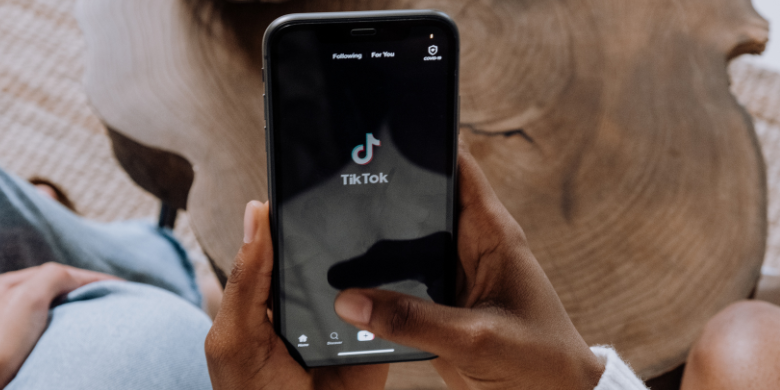
  • The TikTok ban could hurt small businesses that prosper thanks to mobile users

    The TikTok ban could hurt small businesses that prosper thanks to mobile users

    The Bill that would Kill TikTok is signed by the POTUS (President of the United States), so ByteDance, TikTok’s parent company, has only several months before it decides whether to sell or face a ban in the US.

    So far, the smoke signals coming from ByteDance’s yard rule out a possible divestiture. They don’t want anybody else to get a hold of their magical algorithm that gets hundreds of millions of users hooked.

    Reuters reports that a lawsuit filed by a group of TikTok creators has ignited a contentious legal battle against the bill. The law, aimed at addressing national security concerns, has left millions of users and small business owners in distress, fearing the loss of a platform that has become integral to their livelihoods.

    The creators, hailing from diverse backgrounds and professions, argue that TikTok provides them with a unique avenue for self-expression and community building. Represented by Davis Wright Tremaine LLP, they contend that the law infringes upon their First Amendment rights and poses a threat to free speech by attempting to shutter a vital medium of communication.

    In response, the White House has defended the law, asserting that it aligns with constitutional limitations and addresses critical national security concerns. The Justice Department has vowed to defend the legislation in court, emphasizing its importance in safeguarding sensitive data and protecting American interests.

    This legal showdown is not the first time TikTok has faced regulatory challenges. Under the Trump administration, similar attempts to ban the app were met with resistance and legal action. Now, with a new administration in power, the battle rages on, with TikTok and its creators fighting to preserve their presence in the American digital landscape.

    For small business owners like Paul Tran and his wife Lynda, TikTok has been a game-changer. Their skincare brand gained widespread recognition after going viral on the platform, propelling their business to new heights.

    Tran’s sentiments are echoed by many small business owners who have found success on TikTok. The platform’s algorithm-driven approach has leveled the playing field, allowing creators to reach a broader audience and drive sales. With the introduction of TikTok Shop, which enables direct sales within the app, businesses have seen unprecedented growth and opportunity.

    The impact of TikTok extends beyond just business success; it has become a cultural phenomenon, shaping trends and influencing consumer behavior. For creators like Summer Lucille and Felicia Jackson, TikTok has provided a platform to showcase their products and connect with customers in ways that traditional social media platforms could not replicate.

    As the legal battle unfolds, the fate of TikTok hangs in the balance. While concerns about national security are paramount, the implications of a TikTok ban extend far beyond just data protection. For millions of users and small business owners, TikTok represents not just a social media platform, but a lifeline to opportunity and community.
  • Your credit card data and other personal info is at risk if you respond to fake Netflix emails

    Your credit card data and other personal info is at risk if you respond to fake Netflix emails

    One of the reasons why so many victims are separated from their money thanks to online scams is that the scammers do a great job of playing with victims’ emotions. You might have been part of a phishing expedition that uses emails that look as though they came from a well-known company that you might do business with. These emails are fake and try to get you to hand over personal data that can be used to wipe out your online accounts.

    But it takes more than a cleverly designed email that includes the logo of your wireless firm to scam you. The email has to get you to act and tap on a link so it might say something that scares you into taking action immediately. One scam uses a phished email from your bank asking you whether a large purchase made with your credit card is valid. The scammers know it is not a legit request so they phrase the message to ask you to tap on a link if the transaction is not yours.

    The victim, worried about getting ripped off, naturally taps on the link and is sent to a page where she is asked for account info including a PIN or password, social security number, and other personal data. The key to the whole attack is to get the victim so scared about losing an important service or such a large amount of money that instead of using common sense, the victim acts emotionally which typically results in him doing the wrong thing.

    The most recent phishing campaign uses an email which the scammer sends randomly hoping for it to be received by consumers with Netflix accounts. Looking to play with the victim’s emotions, under the Netflix insignia the email reads, “Your Membership has expired!” For those who use Netflix often for their streaming entertainment, this might be upsetting. Underneath the streamer’s iconic “N” logo, the message continues. “Dear customer, your Netflix account has expired.”

    The message continues to say, “But as part of our loyalty program, you can now extend for 90 days for free.” The scammer wants you to press the red button underneath the text that says “Extend for free.” Once the next page is open, you probably are asked to give up some of your personal data.” DO NOT DO IT! Even though the button says “Extend for free,” directly underneath it mentions that your credit card data is required to get the free 90 days.

    One of the ways you can detect a scam is to look for grammatical errors and spelling mistakes. There are no major issues along those lines with the Netflix email. On the other hand, if you’re offered a deal that seems too good to be true, it probably is not a legit offer. And getting three months of Netflix for free is certainly an offer that is too good to be true. Don’t let the disclaimer at the bottom of the email stating that the message is not a scam convince you that it is on the up and up.

    The domain name did not have the Netflix name included at all which is a major red flag. My wife received the email twice and deleted it both times. And that is exactly what you should do too if you receive the email.

    For its part, Netflix says that it will never ask you to share personal information through an email or text including:

    • Credit or debit card numbers
    • Bank account details
    • Netflix passwords

    If you’ve already shared information with the scammer, immediately change the passwords for your financial apps and call the financial firms you deal with ASAP. Also, change your Netflix password as well. If you receive a text or email that is trying to pass itself off as coming from Netflix, take a screenshot of it and send it to Netflix via email at [email protected] and type in the date and time that you received the email.

  • Netflix starts forcing grandfathered subscribers to stop paying Apple

    Netflix starts forcing grandfathered subscribers to stop paying Apple

    In 2018, Netflix stopped accepting payments for new subscriptions through the App Store, forcing new subscribers and those returning after a brief hiatus to pay Netflix through its website. It has been six years since Netflix allowed such subscribers to pay for their service through the App Store. This way, Netflix could avoid paying Apple its 15% to 30% cut on in-app transactions that go through Apple’s in-app payment processing platform.

    Netflix representative Momo Zhao told The Verge that all “members on the basic plan who were using an iTunes method of payment” now must pay Netflix directly for service using a credit card or a debit card. Those who signed up for Netflix before the video streamer stopped allowing users to subscribe through the App Store were able to hold on to a good deal for years and continued to pay each renewal period through Apple.

    Netflix has allowed grandfathered subscribers to continue to pay each month through the App Store, but that is about to change. As one “X” subscriber wrote in a tweet, “Netflix stopped working with Apple Pay and didn’t inform me. Now I’m locked out of my $9.99 a month price I had paid for years and I had to get charged $31 until I get a refund through Apple.”

    If you’re in the same shoes as the person who posted the above tweet, you’ll have to pay $5.50 more a month for the same plan you were paying $9.99 a month for or pay $3 less per month for the privilege of having your streaming interrupted by ads. No matter which plan you choose, you’ll be paying Netflix directly.

    To reiterate, if you are a long-time Netflix subscriber and have been paying through the App Store to maintain your Netflix subscription, be on the lookout for an email from the video streamer that says that if you want to remain a Netflix subscriber, you will have to stop paying your bill through Apple. And you might be paying a little more or a little less each month for Netflix service depending on whether you can live with ads running on the videos you’re watching.

  • Disney unveils unified Disney+ plus Hulu app experience in beta stage

    Disney unveils unified Disney+ plus Hulu app experience in beta stage

    As reported last month as a result of Disney acquiring the remaining stake in Hulu from Comcast, Disney announced an upcoming unified streaming experience that combined Disney Plus with Hulu. This one-app experience has arrived now as Hulu content is now available to be streamed from the Disney Plus app on Android, iOS, and Google TV.

    Upon opening the Disney+ app, subscribers to both services will now see a dedicated Hulu tile. Clicking on it opens a Hulu Hub, granting access to the thousands of movies and series from Hulu’s extensive library, seamlessly integrated within the Disney+ interface. This eliminates the need to switch between apps, offering a more fluid and user-friendly experience.

    While today’s launch marks a major milestone, it’s important to remember this is a beta phase, with the official launch scheduled for March 2024. This limited release allows Disney to gauge user feedback and refine the experience before the full-scale rollout. Additionally, parents have ample time to adjust parental controls and ensure their children only access appropriate content.

    Some may wonder if integrating Hulu’s more adult-oriented content conflicts with Disney+’s family-friendly image. However, Disney assures that ensuring a safe and secure family environment remains a top priority. The two-step launch strategy allows for a smooth transition, providing parents time to adjust settings and create individual profiles for each family member.

    Disney believes that Hulu on Disney+ will enhance subscriber engagement and value. By bringing diverse content under one roof, users can discover new titles they may have missed. Joe Earley, President of Direct-to-Consumer at Disney Entertainment, emphasizes the benefit of the Bundle, highlighting its competitive price point and the vast library of content it unlocks.

    It’s an exciting next step for Direct-to-Consumer, but people must managed expectations about what the experience is going to be – Joe Early, President of DTC, Disney

    As exciting as this unified experience sounds, this may not be your cup of tea. If that’s the case, and you prefer your apps to remain separate, this will still be an option for you. This integration is not meant to replace either platform, thus Hulu + Live TV and Premium add-ons will still be accessible within the dedicated Hulu app.

    Disney encourages users to explore the beta version and discover the value that bundling both services offers, and believes access to Disney’s original content, blockbuster films, and Hulu’s rich library will entice standalone subscribers to upgrade and unlock the full potential of the platforms.

  • YouTube will now show you the number of views and likes a video has in real-time

    YouTube will now show you the number of views and likes a video has in real-time

    Google is changing the “likes” and “views” counters on YouTube to refresh automatically when a video is viewed. Currently, if you’re watching a video on the platform, the number of likes and views won’t change while viewing the clip. But with this update, those two metrics will rise and show a cool animation of a rolling number counter whether the video is being played or is paused. And the animation will be played even if you switch to another app and return to YouTube.

    Android Police came across this new behavior on YouTube. They couldn’t find any reference to it except for a post on Reddit from back in October from user nonotan who wrote, “I’m watching a video, and I keep getting distracted by an animation where the view counter is rolling over to a new number as if it were a physical click counter. I have not seen this behavior before today, and I’d like to disable it.”

    The same Redditor was so bothered by the effect that he added the following line to his filters, which stopped the animation and the count from advancing in real-time: https://www.youtube.com/youtubei/v1/updated_metadata*.

    Others also had similar posts about the feature, such as Reddit user Reyh, who said, “Distracting indeed and IMHO not beneficial at all. I saw it on Tuesday for the first time, using Firefox. The first few times I only noticed some movement at the bottom left of the videos. I wondered if it was in the video itself. Then I observed the area for a while and saw the new counter animation.”

    It seems that this feature is being tested with the help of a minimal number of YouTube users globally. Those who see the feature will notice the number of views and the number of likes rolling up on the screen to a higher number while they are viewing the video. Google calls this progress and for some of you, it may be.

  • Google makes a small change to the Android version of the YouTube app

    Google makes a small change to the Android version of the YouTube app

    Google likes to fool around with YouTube like a person who can’t stop scratching an itch. Unlike changes made to Google Maps that are helpful, some of the changes made to YouTube appear to be done for no real reason. Recently, the web version of the video stream moved from square corners to rounded corners on the thumbnails and the video player, and the feedback from YouTube users was not exactly favorable.

    Now it appears that YouTube is making the same change to videos on the YouTube Android app. The result is a more blinding white light in the background which might lead some users to turn on Dark theme. Open the YouTube app on Android and tap the profile picture in the upper right corner. Next, tap on Settings > General > Appearance. A popup box will ask you to choose from using the device theme, Light theme, or Dark theme. Make your choice.

    Since the rounded corners extend to the video player on the web and not just the thumbnails, we can assume that this will be the case for the Android app as well. Right now, the new look hasn’t been pushed out to many Android devices and it has yet to appear on my Pixel 6 Pro using Android 14 Beta 5.3.

    On the YouTube website, the rounded corners do not appear when you are watching a video in full screen or in Theater mode. But once you return to Default view, they do return. Now we don’t know exactly when Google plans to roll this out more widely to Android users and whether it will follow through by rounding the corners on the iOS YouTube app.

  • WhatsApp HD video support starts rolling out to everyone

    WhatsApp HD video support starts rolling out to everyone

    Meta’s Mark Zuckerberg teased last month the imminent arrival of one of WhatsApp’s most requested features, the ability to share HD videos. Although some Android and iOS users got the feature last month, the global rollout has only just begun.

    Today, WhatsApp officially confirmed that it had started to roll out HD video support on its messaging app. With this addition, WhatsApp users can finally send both photos and videos in high-definition format, although the feature needs some refinement.

    For example, no toggle would allow you to set WhatsApp to send all pictures and videos you want to share in HD format by default. You have to select this option every time you share a media file with one of your contacts, which is a bit annoying, but it’s better than not having the feature at all.

    If you’ve been sharing videos until now, you’ll notice that the resolution has been upgraded from 476 x 848 to 718 x 1280 pixels. Yes, you still can’t share videos in their original resolution, which more often than not is higher than 720p. Still, this is a considerable upgrade over the previous quality, especially since the size of an HD video is almost doubled.

    Meanwhile, WhatsApp is currently testing multi-account support, but we won’t know when it drops until it’s already here. However, if you’re running a beta version of the app, you’re probably already using it on your Android phone.

  • WhatsApp will give you more control over video messages with a small update

    WhatsApp will give you more control over video messages with a small update

    Ever get annoyed when something just doesn’t work quite right? It might be handy, it might have its uses, but there’s still that feeling of having to scoot the chair to crack open the fridge, you know what I mean? Well, sometimes, these irritating quirks come from apps, and it’s a relief when they get fixed, even if it is a minor update. Small updates can make a big difference and it seems like WhatsApp gets that.

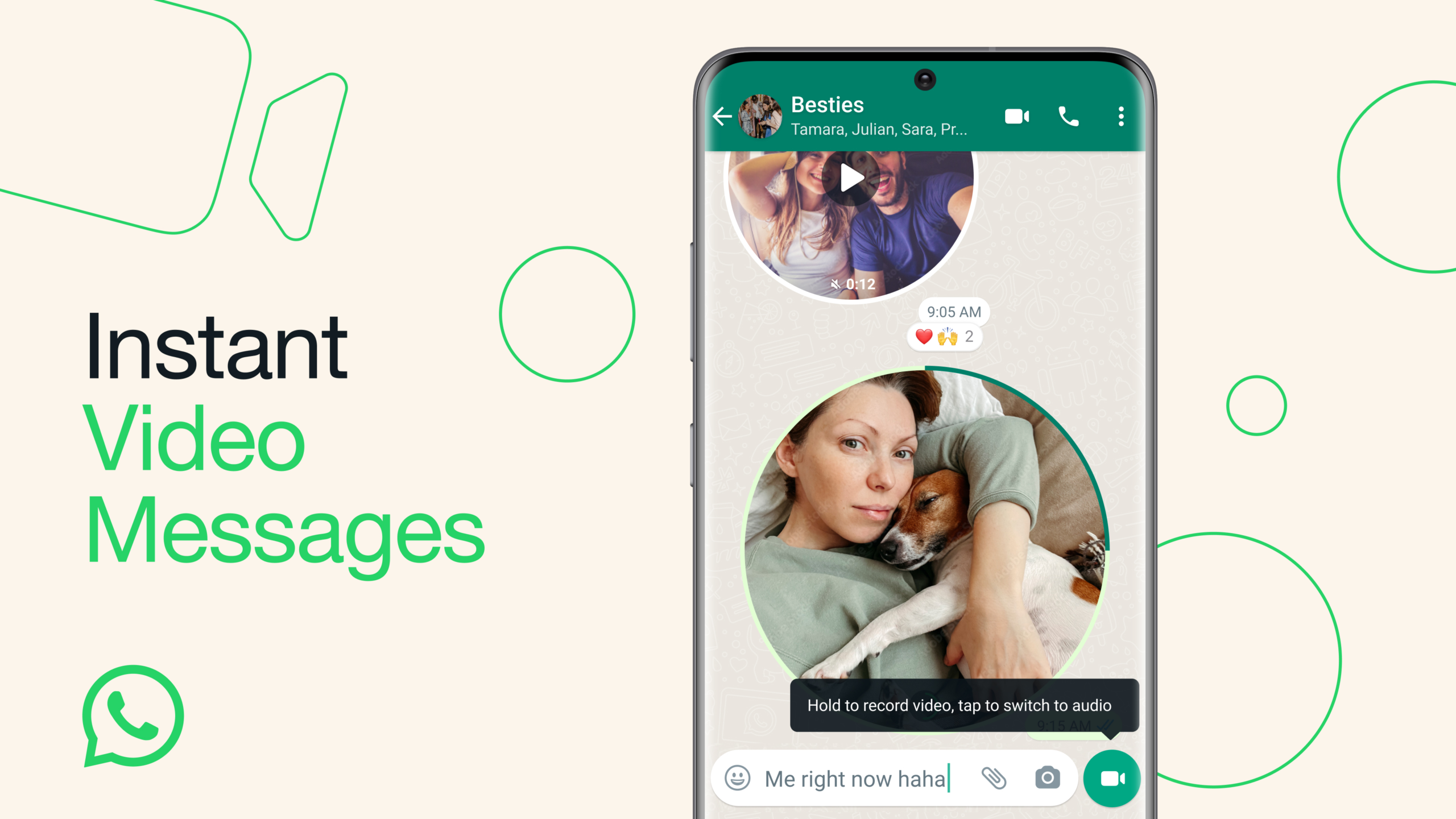
    WhatsApp is introducing additional control options for its instant video messages feature. If you’ve updated to the latest WhatsApp beta for iOS (version 23.18.1.70) or the WhatsApp beta for Android (version 2.23.18.21), you might spot a new setting in the app. This setting allows beta testers to turn off, if they want, instant video messages.

    WhatsApp had already made it possible for its users to record and share video messages through the app’s latest updates in July. Without this new toggle, the feature is active by default, which means you can switch between video messages and voice notes by tapping the voice note button.

    But for some users who prefer not to use video messages, having to select voice messages over video messages every time manually can be quite annoying. So, with this update, users can turn the toggle off, and tapping the voice note button won’t switch to video messages anymore.

    However, it’s important to note that this option won’t block short video messages. You’ll still be able to receive and play them, but you won’t be able to send video messages when this option is turned off.

    It’s worth mentioning that even if you don’t plan to disable video messages, it’s good to check that toggle. Some beta users have reported finding it turned off unexpectedly, even if they’ve sent video messages before.

    The toggle for managing instant video messages is now available to some beta testers who’ve updated their WhatsApp beta for Android via the Google Play Store and WhatsApp beta for iOS through the TestFlight app, and it will reach more people in the next few days.

  • YouTube now gives its creators a way to wipe content violation warnings from their channel

    YouTube now gives its creators a way to wipe content violation warnings from their channel

    In a surprising move this morning, YouTube published a change to the Community Guidelines that govern what content creators can and cannot do on the platform. Under this new rule, creators that —knowingly or unknowingly— violate any of these guidelines will now get a chance to right their wrong and lift the warning from their channel.
    The announcement was made via a video posted to the official YouTube Creators channel and the YouTube Official Blog which included detailed instructions on what to expect and what creators should do in case of a violation warning. Under these revised guidelines, creators who receive a warning for policy violations now have an intriguing option at their disposal — an educational training course.
    Here’s the great part: once the creator successfully completes the course, YouTube will remove the warning from their channel, just as long as they don’t violate the same policy for the next 90 days. It’s like a friendly handshake agreement to play by the rules. However, should the creator fail to follow through, the video in question will be removed and a strike will be applied to the channel.

    If the creator violates the same policy again, but after the 90 period, the video in question will be removed and the creator will be issued another warning. However – and surprisingly – another chance will be given to take another training course and once again wipe the warning from the channel.

    This change represents a significant shift in how YouTube deals with policy violations. In the past, YouTube would move to immediately remove the video in question and apply a lifetime warning to the channel. Now, it’s all about education and second chances.
    It is clear that monetization is a big motive for the policy change. Previously, policy warnings were more general and affected the entire channel, whereas with the new policy, warnings are more specific on what was breached. Giving creators a chance to fix warnings before they become strikes will allow for more content to stay up on YouTube and avoid the 3-strike rule that has been known to get channels terminated from the platform.
  • Netflix continues to add subscribers in the U.S. after cracking down on password sharing

    Netflix continues to add subscribers in the U.S. after cracking down on password sharing

    Once Netflix started its plan to crack down on password-sharing in May, the video streamer started to add new subscribers. A report in BroadbandTV News cited stats from Antenna which revealed that after a 12.9% decline in the number of gross additions to its U.S. subscriber list in April, Netflix saw that figure rise 27.8% in May and an incredible 128.9% in June. July showed a 25.7% drop off in U.S. gross additions.
    Still, the company did manage to add 2.6 million U.S. subscribers in July after signing up 3.5 million in June. Since the beginning of the crackdown in May, Netflix has added 7.5 million U.S. subscribers which seems to indicate that the company has done a good job in convincing password borrowers that they still want to watch the platform’s content even if they have to pay for it with their own money.
    Netflix no longer offers the basic ad-free service in the U.S. which means that besides the ad-supported tier, U.S. Netflix subscribers can choose between Standard and Premium. Priced at $15.49 monthly, Standard includes unlimited ad-free movies, TV shows, and mobile games and can be used by two supported devices at a time. Content is streamed in Full HD and one person who doesn’t live with the subscriber can be added for $7.99 per month.
    The Premium service, which costs $19.99 per month, includes unlimited ad-free movies, TV shows, and mobile games and four supported devices can use the service at a time. Content is streamed in Ultra HD, Netflix spatial audio is included, and six supported devices can download content for offline viewing. Up to two extra members who don’t live with the subscriber can be added for $7.99 per month per subscriber.
    Discussing the elimination of its old Basic package, Netflix wrote, “We’ll be interested to see how this impacts the composition of Netflix subscriptions and sign-ups overall in the coming months.” For the quarter that ended June 30, Netflix doubled projections by adding 5.9 million subscribers worldwide bringing its total globally to 238.3 million.
    Meanwhile, some of the new content on Netflix includes PainKiller, a series about the Sackler family and how it pushed doctors to prescribe its Oxycontin painkiller. The second season of Heartstopper also recently dropped on the platform.
  • Disney hikes pricing of its ad-free streaming services, plans to stop password sharing in 2024

    Disney hikes pricing of its ad-free streaming services, plans to stop password sharing in 2024

    Some big changes are coming to Disney’s streaming services as ad-free Disney+ and Hulu prices are getting hiked. At the same time, Disney says that it wants to start  “actively exploring” how it can better police password sharing just as Netflix is now doing. The company might feel some pressure since the number of global Disney+ subscribers declined for just the second time during the second quarter to 157.8 million, a 4 million decline from the first quarter figure.
    As for ways to combat password sharing, the other day during Disney’s quarterly conference call, CEO Bob Iger said, “We are actively exploring ways to address account sharing and the best options for paying subscribers to share their accounts with friends and family. Later this year, we will begin to update our subscriber agreements with additional terms and our sharing policies. And we will roll out tactics to drive monetization sometime in 2024.”
    Iger added, “We already have the technical capability to monitor much of this, and I’m not gonna give you a specific number except to say it’s significant. We certainly have established this as a real priority, and we actually think that there’s an opportunity here to help us grow our business.”
    If Iger is right about the timing, those Disney+ users viewing the platform thanks to a shared password have at least until the end of this year to continue this behavior.
  • Netflix is making rating shows and movies on mobile much easier

    Netflix is making rating shows and movies on mobile much easier

    Many of us, including myself, often forget to rate a show or movie after watching it. While not necessary, it can help improve your suggestion list. Now, Netflix is simplifying the process for users to rate movies and shows on mobile devices.

    Netflix has updated the rating feature on its mobile app, enabling you to rate a show while still watching it. Instead of returning to a show or movie page to give a thumbs-up or thumbs-down, you can now tap the screen while watching, whether it’s in the middle or at the end. You can click the thumbs buttons at the top and keep watching.

    The new update will probably encourage more users to use the feature, which will help Netflix suggest more personalized recommendations based on users’ watch history and what they have liked or disliked. Or, to put it in a few words, you are helping Netflix’s algorithm understand you better by rating what you are watching.

    The system that suggests new movies and shows on Netflix uses two different data sets to make personalized recommendations for what you might want to watch. The first data comes from what you’ve watched before and the kinds of genres you prefer, while the second is based on your ratings.

    On the mobile app, you can rate using three reaction buttons: a thumbs up, a thumbs down, and a double thumbs up button. The latter was introduced last year to teach Netflix’s algorithm not only which movies or shows you like or don’t like but also which you love.

    Based on which movies and shows received your double thumbs-up reaction, Netflix’s algorithms will better recommend similar ones. With the improved rating feature, now more user-friendly on mobile devices, starting to use it could lead to receiving more accurate and tailored suggestions.

  • YouTube deletes over 3,000 Vietnames videos

    YouTube deletes over 3,000 Vietnames videos

    YouTube has deleted over 3,000 videos about a cartoon character name Wolfoo due to alleged copyright violations even as the Vietnam-based producer Sconnect continues to deny all accusations.

    The videos, which had billions of views, were asked to be removed by U.K. company Entertainment One, which claimed that Wolfoo was based on its creation “Peppa Pig”, Sconnect said in a report to Vietnamese authorities at the end of July.

    Entertainment One reported the videos to YouTube in April, claiming that the scenes used in Wolfoo videos were copied from Peppa Pig.

    The company in July again reported the videos, claiming that the Wolfoo videos were also copying some of the audio and sound effects from Peppa.

    But Sconnect said that in both cases, Entertainment One and YouTube were not able to provide any clear evidence to show that copyright regulations were infringed.

    Sconnect said that the scenes and sounds mentioned are popular in everyday life.

    There is no legal ground for the claims, the studio argued, adding that its requests to YouTube since June have received no response even though the number of removed videos is increasing.

    Wolfoo Family, one of the YouTube channels that provides the videos, has lost around 2.4 billion views due the removed videos since May.

    Sconnect is now asking Vietnamese authorities to convince Google and YouTube to stop accepting copyright claims from Entertainment One.

    YouTube and Entertainment One have not commented on the issue.

    Sconnect, established in 2014, has 19 Wolfoo-related YouTube channels.

    “Wolfoo” is an English-language YouTube preschool animated web series about a young wolf and his anthropomorphic family.

    British preschool TV show “Peppa Pig” features an anthropomorphic piglet and her family. The show first aired in 2004.

    Entertainment One last year had sued Sconnect in Russian and British courts over intellectual property infringement, claiming Wolfoo is a “reworked” version of the Peppa Pig characters.

    Following an independent review, in July Russian experts rejected this claim and the Moscow City Court terminated Entertainment One’s suit against Sconnect.

    Entertainment One then immediately withdrew all claims.

    YouTube said earlier it never acts as an intermediary to resolve conflicts between two parties and only provides tools for users to protect themselves.

  • TikTok launches text posts in an attempt to take on X

    TikTok launches text posts in an attempt to take on X

    Despite the social network bleeding users, Twitter’s owner, Elon Musk, took some questionable decisions over the weekend. After rebranding Twitter’s logo to “X” and promising to bring a bunch of new features that no one asked for, Musk’s is now facing another big problem: the stiff competition.

    Meta’s attempt to take on Twitter hasn’t been entirely successful, as Threads still needs a lot of features to offer a similar users experience. But another contender to take Twitter’s place has just made its first step toward fulfilling its plans.

    TikTok has just announced text posts, a new feature that offers users a Twitter-like experience. This will allow creators to share their stories and other types of content in a different, simpler way. The new feature is available starting today and doesn’t involve too many clicks to make it work.

    When you access the Camera page, you can now choose from three options: photo, video, and text. Tapping on the text option will direct users to the text creation page where they can type out the content of their post. It’s not as fast and smooth as tweeting a message but considering that TikTok is a video-first platform, this will have to do for now.

    In addition to creating posts, TikTok users can also customize their content by including Sound, tagging a location, enabling comments, and allowing Duets. It will enrich the text posts and make them more dynamic beyond what Twitter offers currently.

    For example, TikTok users can add stickers to their text posts, tags and hashtags, as well as background colors and sounds. On top of that, it’s also possible to save drafts and store them with other unpublished posts for later editing or discard them if you’re not content with how they end up.

    It’s a neat new feature that will probably not attract many of Twitter’s users, since Musk’s social platform caters to a different type of audience, but you might as well try in out before the ship sinks to have some alternatives to retreat to.

  • Netflix starts restricting account sharing in more than 100 countries

    Netflix starts restricting account sharing in more than 100 countries

    Netflix had a lot of info to share with investors this week. We’ve already reported that the streaming service decided to axe its Basic plan in the UK and US, but it looks like there’s even more interesting information that Netflix revealed in its recent letter to shareholders.

    After banning account sharing in the United States back in May, Netflix revealed this week plans to expand the ban to more than 100 countries. It appears that the US was just a test field for the company’s new strategy, which proved quite efficient.

    Even with the crackdown on password sharing, Netflix added about 6 million paying subscribers during Q2 2023, which shows that more people are willing to pay extra to be allowed to share their accounts rather than dropping their subscription due to the changes.

    That said, Netflix has taken the decision to restrict account sharing in the rest of the countries where this is still possible. Customers in more than 100 countries now have the option to add an extra member to their account for a certain monthly fee. However, some countries will not get this option because Netflix feels like it dropped the price of the monthly subscription too low already

    If you don’t see the option to add an extra member to your Netflix account in the following days, it means that you’re living in one of the countries that won’t be getting that feature.