Retail News CRM

Tag: Wallet

  • Samsung Wallet rolls out mobile driver’s licenses

    Samsung Wallet rolls out mobile driver’s licenses

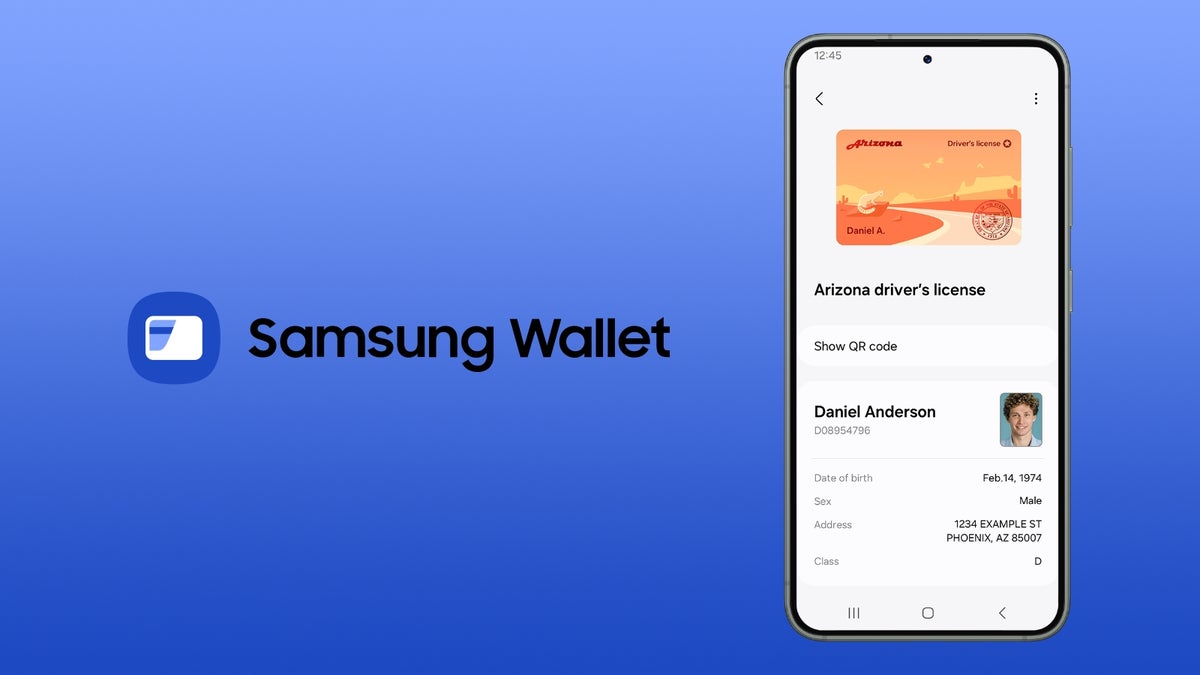
    Samsung Wallet, the app that lets users store and manage their cards, tickets, and coupons on their Samsung Galaxy smartphones, has added a new feature: mobile driver’s licenses and state IDs. The company announced back in October that it will bring this feature to Arizona and Iowa, however, other than “coming later this year,” no specific date was given for when it would exactly go live.

    Now, it looks like the wait is over as the feature is live in Arizona, according to the Arizona Department of Transportation announcement. Samsung Wallet users who are Arizona residents can now store a digital version of their physical cards on their phones and use them at places that accept digital IDs, such as TSA checkpoints at select airports.

    This feature offers more convenience and security for users, as they don’t have to carry their physical cards with them and risk losing or damaging them. The digital IDs are also encrypted and protected by fingerprint or PIN authentication, so only the authorized user can access them.

    To add a mobile driver’s license or state ID to Samsung Wallet, users just need to open the app, go to the Quick access tab, and click on the ‘+’ button. Select ‘Digital IDs’ from there, and click on the ‘Driver’s License/State ID’ option. At that point, users will need to scan the front and back of their ID card and verify their identity with a face scan.

    Samsung says the face scan is only for verification purposes and does not store any biometric data. After submitting the scan, users need to authenticate with their fingerprint or PIN to complete the process.

    This convenience isn’t just limited to air travel, though. Samsung envisions a future where digital IDs can be used for age verification, entering age-restricted establishments, and even renting a car. While Arizona is the first to experience this revolution, Samsung promises to add more states and functionalities in the near future.

  • Google Wallet will soon allow users to digitize their workplace IDs

    Google Wallet will soon allow users to digitize their workplace IDs

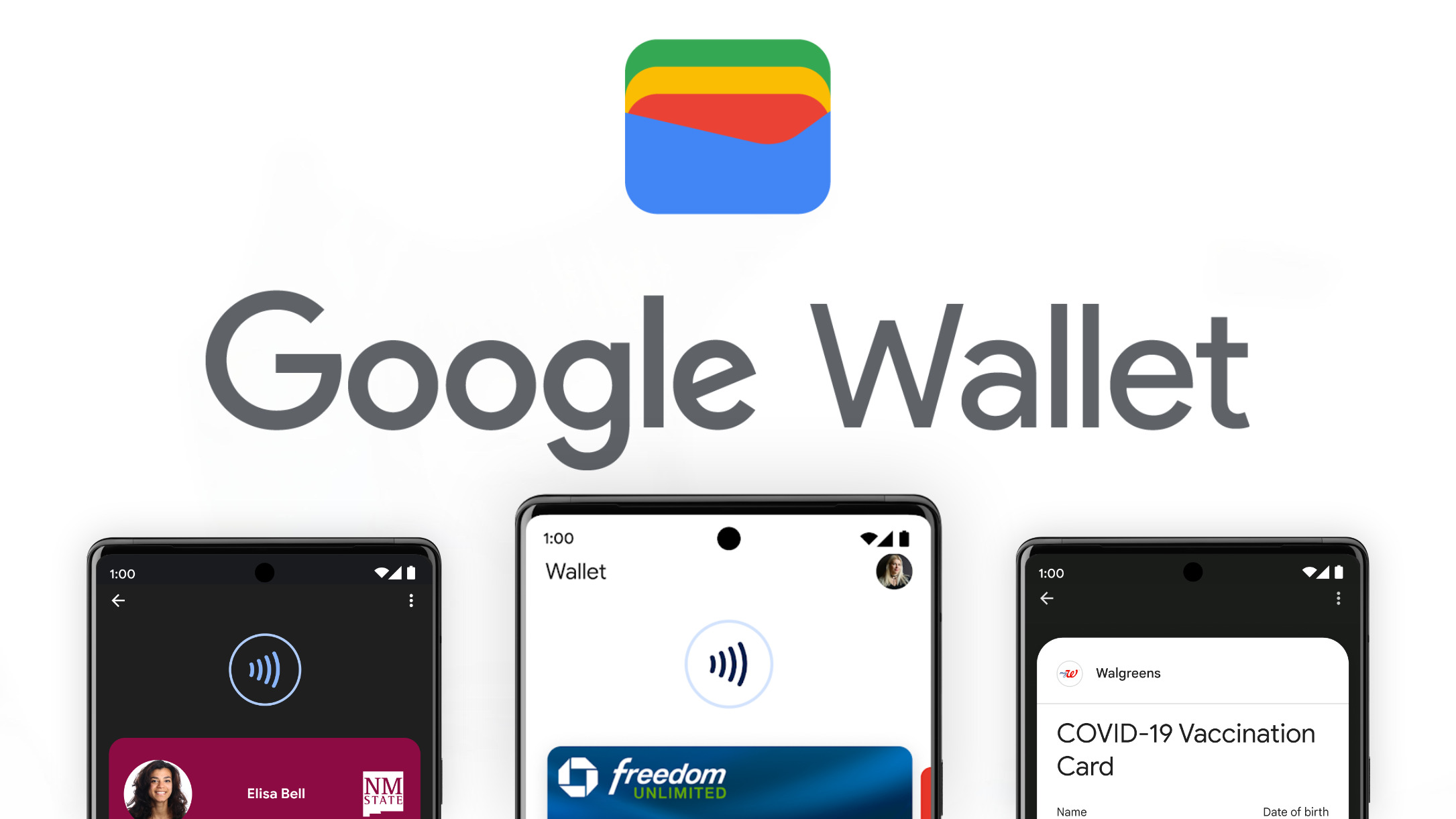
    In June, Google announced a series of new features that would slowly make their way to the Google Wallet app to make it a more comprehensive digital wallet solution. Most of these features have already launched, and one in particular was quietly added in a recent Google Play Services update.

    We are referring to the ability to add your workplace ID cards to the app, effectively eliminating the need to carry a physical ID or lanyard. This means that, unless your workplace insists that physical identification needs to be shown at all times, you may finally be able to leave your ID at home and use your phone to access your workplace facilities.

    As spotted by Android Police, the addition of workplace ID card support is part of a flurry of recent additions to Google Wallet. In the past few months, Google has added support for government-issued IDs in new states, easier tap-to-pay systems for commuters, and support for sharing passes. You can also digitize all the unsupported documents and passes, like library cards and gym memberships.

    This new capability is part of the Google Play Services app update to version 23.44 that began to roll out yesterday, as detailed in the app’s changelog. However, it doesn’t seem to have reached all users yet, not even those using the app’s beta version, which is now at version 23.44.14. Once rolled out, the feature will appear alongside the current options for adding a digital ID, such as a state driver’s license.

    In its June announcement, Google never specified a rollout timeline for the workplace ID card support, except for “later this year.” Hopefully, this means that it should start reaching users soon, making it easier for them to set up digital IDs for reliable use.
  • Google Wallet adds Driver’s License and Digital ID support for more U.S. States

    Google Wallet adds Driver’s License and Digital ID support for more U.S. States

    Back in June, Google announced some forthcoming features for Google Wallet that we are just now seeing roll out. One of these was the ability to add a state ID or Driver’s License to facilitate TSA checkpoint procedures at select airports.
    However, when this feature launched, not all U.S. states were on board with the program. At the time, Maryland became the first state to support it, with the state ID literally becoming the poster child for the rollout, as can be seen in the marketing materials.
    Meanwhile, support for additional states was promised for a later date, with Arizona, Colorado and Georgia listed as the next ones slated to join the Digital ID program. Surprisingly, and without much fanfare, that day has arrived sooner than we thought.
    Google has quietly rolled out support for these three states already, joining Maryland in the Google Wallet app. You can already see these states pop up when attempting to add an ID Card on the app. Considering there hasn’t been a versioned update to the Google Wallet app since October 3rd, we are inclined to think that this is a server-side push.
    The setup process requires a photo scan of the front and back of your physical ID or Driver’s License, followed by a short video verification process. Once setup has been completed, the digital ID will be themed with artwork that represents the issuing state — such as a peach to represent Georgia.
    This update brings Google Wallet’s digital ID compatibility up to par with Apple Wallet, where the ability to have a mobile Driver’s License has been available in some states since last year. Samsung has also announced that this would be coming to Samsung Wallet later this year, and Google previously stated that more functionality will be added to digital IDs in the future, such as the ability to verify online accounts.
  • Google Wallet now rolling out option to digitize physical cards

    Google Wallet now rolling out option to digitize physical cards

    Google Wallet is finally rolling out a previously announced feature that lets you digitize your physical passes, like transit passes, gym memberships cards, parking passes, and library cards. The feature is currently only available on Pixel phones, but will hopefully be rolled out to other Android devices in the future.

    This feature was originally teased by Google back in June, among a list of “coming soon” features for Google Wallet, as a way to save passes from an image. This opened up the possibility of digitizing a number of items you couldn’t before, however, it isn’t to be confused with the ability to digitize ID cards, or the option to use a QR code to pay on phones without NFC that rolled out in some countries.

    It is important to note that this method of adding passes requires a photo of the physical pass (or screenshot), and for it to contain a barcode or QR code. For example, I was able to add my gym membership card, but only because I was able to capture a screenshot of it from the gym’s app and this screenshot contains the QR code I usually scan to gain entrance. You will receive an error explaining the issue if you attempt to add an image that does not contain the aforementioned requirements.

    According to Android Central, this feature is just now rolling out to Pixel devices after getting pushed back to become part of the September 2023 Pixel feature drop. This means it might take a while to reach all Pixel users as so far it has only been spotted on the Pixel 8 series and the Pixel Fold.

    Additionally, there is one more design element that is making its way to Pixels as part of this update. This minor design tweak adds a toggle to enable or disable “Success animations,” which appear after completing a transaction. These fun little animations were themed and, according to some, a time-waster when trying to purchase something quickly. Thankfully, Google now allows us to completely disable them within Google Wallet’s settings.

    The new feature is a convenient way to keep all of your passes in one place and a more secure way to carry your passes. You no longer have to worry about losing physical passes or have to fumble to through different apps in order to use them.

  • Google launches e-wallet service in Vietnam

    Google launches e-wallet service in Vietnam

    Google launched its e-wallets in Vietnam Tuesday, allowing people to use them with Visa credit and debit cards issued by certain banks.

    Google Wallet would allow Android users to add Visa credit and debit cards to their phones for payment, replacing physical cards. Supported banks are ACB, Sacombank, Shinhan Bank, TP Bank, Techcombank (credit card only), Vietcombank and VPBank.

    Mastercard cards would be integrated to the e-wallet in a few more weeks, Google said.

    Users would need to download the Google Wallet app from the Play Store and fill in necessary info.

    “With millions of Vietnamese now using their phones every day to make payments, Google is excited to bring Google Wallet to Vietnam,” a press release quoted Chen Way Siew, Google Wallet Partnerships Lead of Google Asia Pacific, saying,.

    “Google Wallet is easy to use as you don’t need to transfer money into the app. It acts as a digital container that holds digital versions of physical items found in an actual wallet, such as payment cards,” he added.

    An e-Conomy SEA 2022 report by Google said e-payments were getting more popular and would reach a total transaction value of $143 billion in Vietnam in 2025. According to Visa statistics, contactless transactions account for around 37% of all transactions in Vietnam.

  • Vietnamese buy Bitcoin in hope it has bottomed

    Vietnamese buy Bitcoin in hope it has bottomed

    Many investors are buying Bitcoin after the cryptocurrency’s price fell to US$20,000, its lowest level since December 2020. Thanh Binh of HCMC says he turned off notifications on his crypto trading app after buying it at $38,000 and losing over VND40 million ($1,720).

    But he has returned and bought a 10th of a token after prices dropped below $20,000.

    “The market has bottomed out and will recover by the end of this year, and so this is the right time for buying in,” he says hopefully.

    Hai Ly of the southern province of Dong Nai has invested VND70 million in Bitcoin and Ethereum, the two largest tokens by market cap. She wanted to diversify her portfolio and thinks their current prices are reasonable.

    She says Bitcoin operates in four-year cycles, and prices fall sharply at the end of each cycle before scaling new peaks.

    “The current cycle started in January 2019 and ended between May and July this year. Considering other factors, the current crypto slump is not abnormal.”

    Prices will recover and hit a new peak by mid-2023, she says.

    Many investors see an opportunity in the current fall in cryptocurrency prices though the recent sell-offs wiped billions of dollars from the market.

    Search related to Bitcoin has surged to the highest levels in a year according to data from analytical website Google Trends.

    Hope is also fueled by rumors that Binance, the largest cryptocurrency exchange, has quietly bottom fished a large amount of Bitcoin.

    Over 100,000 tokens have been added to the exchange’s cold wallet (physical device that keeps cryptocurrency completely offline), crypto-focused site Coingape has discovered from on-chain data.

    They amount to 0.5 percent of all mined Bitcoin and are worth over $2 billion at current prices. But CEO Changpeng Zhao denies it, saying the increase “means more users deposited in Binance.”

    Money is also coming into crypto-centric investment funds. They have raised over $125 million in the week ended June 6 and $506 million in the year-to-date, asset management company CoinShares reported.

    Short-term Bitcoin funds, mainly used for speculating on the cryptocurrency’s slump, received $1.3 million. Bitcoin is being traded the fastest in a year, Yahoo Finance said.

    But there are risks associated with bottom fishing Bitcoin and other cryptocurrencies, experts warn.

    Le Sy Nguyen, ASEAN regional manager of crypto exchange Bybit, says current prices are not attractive.

    The collapse of cryptocurrency Luna and its paired stablecoin Tether, and recent interest hikes in the U.S. have greatly affected market sentiments, with many investors opting out trading on extreme fear.

    “Anything can happen in this [volatile] period, which poses great risks to investors who try to benefit from bottom fishing in the short term.”

    He says investors should invest for the long term or wait until the market stabilizes. “But no one can be sure whether it has hit bottom.”

    The slump could prolong until the end of this year, he says.

    The founder of a digital assets startup, who does not want to be named, says it is impossible to give advice on whether to buy or not at the “current sensitive time.”

    “It is inappropriate to evaluate digital assets using methods used for stocks, as they do not generate income like companies The number of wallets, users and transactions are key indicators of this market.”

  • E-wallet MoMo buys stake in securities firm

    E-wallet MoMo buys stake in securities firm

    The owner of e-wallet MoMo has purchased more than 4.4 million shares, or a 49 stake, in Hanoi-based CV Securities JSC (CVS). The deal was struck Thursday and Online Mobile Services JSC, or M Service, has received more than 4.4 shares from two shareholders of CVS – its vice chairman Jiang Wen and general director Nguyen Kim Hau – the securities firm said in a statement sent to the State Securities Commission of Vietnam (SCC).

    Established in 2009, CVS was first known as Hong Bang Securities JSC and renamed Hung Thinh Securities in 2015. The company also moved its headquarters from Ho Chi Minh City to Hanoi.

    Its annual revenue was VND4.4 billion ($190,000) and VND4.8 billion in 2020 and 2021 respectively. As of the first quarter of 2022, CVS had recorded a cumulative loss of more than VND80 billion.

    The new deal makes M_Service the second fintech firm to invest in a securities company after Finhay, who bought shares in Vina Securities early this week.

    Both Momo and Finhay are invested in by Thien Viet Securities (TVS). As of March 31, TVS recorded the original cost of investment in M_Service at VND27.8 billion and nearly VND62.5 billion at Finhay.

    Momo had 31 million users and 140,000 payment acceptance points last year. The wallet is now a partner of more than 50 banks, and financial and insurance companies.

    The e-wallet has completed a $200-million Series E funding round funded by a consortium of investors led by Japan’s Mizuho Bank. Investment funds Ward Ferry, Goodwater Capital and Kora Management make up the rest of the consortium.

    A media representative said he could not announce a specific figure, but MoMo’s valuation exceeds $2 billion, making it a startup unicorn.

  • Securing Digital Assets Gets Physical

    Securing Digital Assets Gets Physical

    As bad as losing money in the current market for cryptocurrencies might be, losing them altogether would be even worse.

    By some estimates, some 20 percent of all bitcoin has been lost for various reasons, including theft, forgotten passwords, or wiping out a hard drive, leading to a loss in value of well over $100 billion. What is there to do?

    One way to try to get back lost, stolen, or misplaced digital assets is to hire a firm that specializes in recovering them, although the price can be quite steep. One such company is the father and son team that founded cryptoassetrecovery.com which charges 20 percent of the value of the recovered assets. The duo estimated that around $4.7 billion is lost assets are recoverable. Still, if you have lost, say $10 million in Bitcoin, that might be a small price to pay.

    Going to the Ballet

    So much is written about the digital world, that it might be surprising that one way to help secure cryptocurrencies is with a physical wallet. These do not have a connection to the internet and are referred to as a cold wallet, while a hot wallet is a form of digital storage accessible via a device or computer.

    Ballet is a U.S.-based company that offers a physical wallet having a two-factor cryptographic private key securely concealed on the physical wallet itself, allowing the wallet to function as a bearer asset similar to cash or gold. A companion app, Ballet Crypto, serves as a digital interface for physical Ballet products and provides all the essential functions of a cryptocurrency wallet while allowing private keys to remain securely offline.

    A cold wallet would make more sense for someone planning to hold onto a cryptocurrency for a longer period. The drawback of losing a cold wallet is that you lose access to your investments, and the investor is in the same boat trying to recover assets.

    From Freeports to Fintech

    While the exact origins of freeports are subject to debate, the idea took hold around the time of the Renaissance as a way of attracting trade. Modern versions are often at airports and outside of customs areas. Malca-Amit is one company that has numerous vaulting facilities at several airports globally, including Zurich, where it offers storage for high-value assets including diamonds, gems, jewelry, gold, and other precious metals.

    In addition, it provides services the for luxury goods industry, high-net-worth individuals, and international banks access to a global team of experts in logistics, security, customs houses, and special operations (i.e. security) professionals.

    It also provides courier services for those goods and transportation of artworks. So that Warhol or Picasso you bought in New York and needs to be shipped to your home, Malca-Amit will handle the door-to-door delivery.

    It is now taking its experience in this traditional business of protecting and storing assets by offering physical vault protection to digital assets, in what they call «deep cold» storage either for individual clients or as a custodial service.

    What this means is the private key required to access the digital assets is secured offline, as part of the customer’s physical wallet, which we protect in state-of-the-art facilities. These are the same facilities used to safeguard the assets of investment-grade banks, luxury brands, and digital asset custodians explains Mark Titmarsh, who is head of digital assets at Malca-Amit.

    Titmarsh stresses that if a private key is lost or it is stolen, the thief has control of the assets in the case of theft. By physically storing wallets, customers remain in control of their private keys. This is because the private key is only generated when both private key elements on the physical Ballet wallet are combined, which are protected under seal. Whilst the wallet is in our care the private key elements will never be revealed. It’s pretty simple, we provide the physical infrastructure to keep the wallet and private key elements safe he says, noting that the firm is backing the assets against loss with full liability coverage.

    Casascius Coins

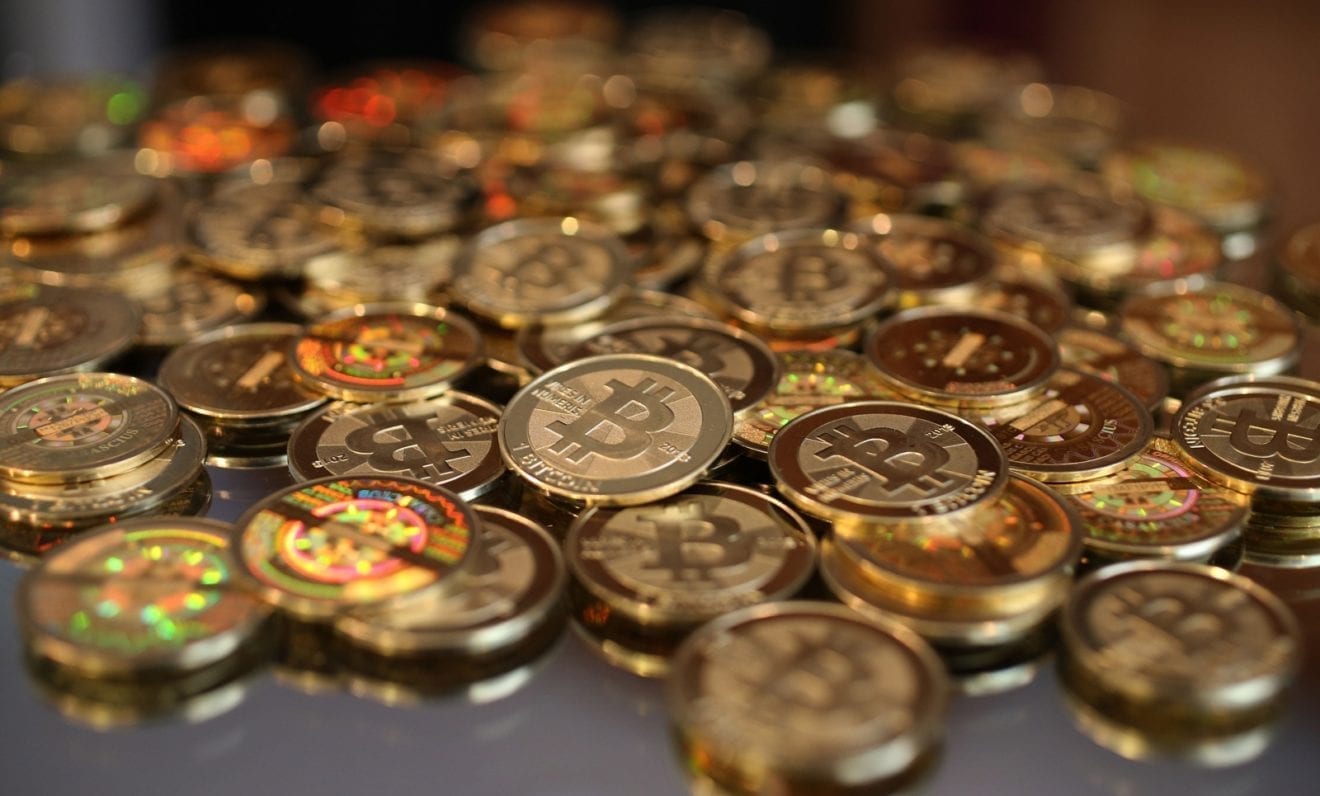
    While digital bitcoin is online on the blockchain, the Casascius coin can only be accessed by the person in possession of the coin’s private key, which is stored under a tamper-proof hologram that allows the owner of the physical coin to claim the associated Bitcoin.

    Holders of Casascius coins, which were introduced in 2011, can also be storied with Malca-Amit and are also covered by the same liability insurance.
  • World Trade Center replaces its access cards with a virtual employee badge in Apple Wallet

    World Trade Center replaces its access cards with a virtual employee badge in Apple Wallet

    Following the integration of ID cards and driver’s licenses into Apple Wallet, it looks that the next thing to find its way into Apple Wallet will be workplace authorization cards.

    Customers and employees who visit the 7 World Trade Center will now be able to use an employee badge stored in their Apple Wallet app to access the building and all of its amenities. This was announced by Silverstein Properties, the company that owns the trade center.

    With their virtual badges, employees and customers will be able to use office buildings, tenant floors, fitness centers, and amenity spaces only by using their iPhone or Apple Watch.

    According to Silverstein Properties, integrating employee badges in Apple Wallet will bring:

    • Seamless Setup: Employees and tenants won’t wait to receive physical authorization cards. Instead, they can add their employee badge directly to their Apple Wallet after an initial setup through Silverstein’s Inspire app. After that, they will have clearance to the areas inside the building.
    • Unlocking doors more easily: After adding the badge to Apple Wallet, users only need to hold their iPhone or Apple Watch near the door’s lock to unlock the door. If Express Mode is enabled, users won’t even need to unlock their devices to use their badge. Also, the feature can be used in Power Reserve mode, so the tenants may access areas even when their iPhones are low on battery.
    • More security and privacy: Because the employee badge is saved on the tenant’s personal devices rather than a cloud server, the authorization to the building is also safeguarded by the privacy and security features built into Apple’s devices. Also, if a tenant loses their iPhone or Apple Watch, they can use the Find My app to locate and block their device.
    • Easier management of the office space: With the use of virtual badges, Silverstein can control who and at what time has clearance to various parts of the building. In its statement, Silverstein gave an example of how one company could lease an office suite on Monday and Tuesday, and then another company could use the same office suite on Wednesday through Friday.

    The new virtual employee badge will be first implemented at the 7 World Trade Center, and after that, the new technology will be expanded to other Silverstein offices in New York, Philadelphia, and Los Angeles.

  • Some Apple employees will be picketing on Christmas Eve

    Some Apple employees will be picketing on Christmas Eve

    A tweet sent by an organized group of Apple employees has announced a walkout for Christmas Eve. The tweet, sent under an account called Apple Together, reads, “Calling all Apple workers and patrons! Tomorrow, December 24th, 2021, Apple workers are staging a walkout/callout to demand better working conditions.

    The group’s members work in retail, corporate, and AppleCare and are banding together in an attempt to bring change to Apple. Another message inside the tweet asks Apple employees and others not to cross the picket line and says, ” We are Apple. We deserve a respectful workplace. We deserve paid sick time. We deserve protection on the frontlines. We deserve proper mental healthcare.”

    At the bottom of the message, the group adds, “Demand that Apple upholds its image with your wallet. Don’t stop in stores. Don’t stop online.” On the AppleTogether website, the organization says, “Apple prides itself on its commitment to diversity, equity, and an environment where everyone can do their best work. But Apple has fallen short of this goal for so many of our current and former teammates, so we made space to share those stories with #AppleToo.”

    Considering that Apple has closed eight stores in the U.S. and Canada since the latest COVID surge, and you might find yourself facing a picket line at some of the locations that are open, you might want to delay that visit you’ve been planning. Sure, you can always shop online but not if you want to back the striking employees.

  • HSBC Rolls Out Digital Wallet for SMEs in Singapore

    HSBC Rolls Out Digital Wallet for SMEs in Singapore

    The bank has launched a digital wallet for businesses in Singapore, which enables them to send, receive and hold cash in multiple currencies.

    HSBC’s Digital Wallet, which aims to significantly reduce the time it takes for SMEs to make business payments, is also being launched in the U.K. and the U.S., with a pipeline of further markets as well as new currencies and enhancements, the bank said in an announcement.

    The multi-currency wallet is integrated into its business banking platform HSBCnet, and removes the need for businesses to use third-party providers for international transactions, HSBC said. For example, businesses in Singapore can pay their Malaysia counterparts directly in ringgit.

    Li Lian Ng, HSBC’s head of business banking, Singapore, said the bank is committed to scaling up its SME banking capabilities in Singapore. The bank previously announced its strategy to scale-up its SME business and increase its share in the market to 15 percent by 2021.

    Since then, it has launched a number of products and initiatives for SMEs, including the online banking platform HSBCnet, Green Loans, the «Pioneer» programme for fast growing businesses, international business banking, and a not-for-profit proposition.

    HSBC said that Singapore’s SMEs are doubling down on their international connectivity and prioritizing resilience in their supply chains, with 87 percent planning to expand their international business, citing a survey conducted among local businesses with annual revenue between S$5 million and S$100 million.

    Drawing on HSBC’s deep digital expertise and wide global network, we are helping SMEs to build resilience and trust within their global supply chains whilst making everyday banking easier, Ng said.

  • Gojek-Grab Rivalry Extends to Digital Payments

    Gojek-Grab Rivalry Extends to Digital Payments

    Gojek has joined rival Grab in backing Indonesian state-backed e-wallet company in its Series B funding round.

    Gojek’s joining as a strategic shareholder will provide LinkAja access to the Gojek ecosystem to support LinkAja’s mission in accelerating financial inclusion in Indonesia, LinkAja CEO Haryati Lawidjaja said in a statement.

    As part of the deal, the ride-hailing giant will add LinkAja as a payment option on its app. The strategic investment builds on Gojek’s ongoing collaboration with the e-wallet, which includes payment for transportation and ticket reservation services.

    Formed from a consortium of state-owned enterprises, LinkAja operates an e-wallet and merchant services business focusing on the middle class, and micro, small, and medium-sized enterprise (MSME) segments in Indonesia.

    About 80 percent of its users are from tier 2 and 3 cities, according to LinkAja.

    According to GlobalData, rising Internet penetration, increasing digitalization and the proliferation of websites have been driving the growth of e-wallets in Indonesia, which further rose during the Covid-19 pandemic as customers have turned to alternative payment tools.

    Investments in state-backed entities can be a strategic move to maintain a healthy relationship with the government machinery. Though both Grab and Gojek managed to garner investment positions in LinkAja, Gojek seems to get some home advantage, Aurojyoti Bose, lead analyst at GlobalData, said about the deal.

    Grab, which competes with Gojek for dominance in the digital payments space in Southeast Asia, announced in November 2020 that it had invested $100 million in LinkAja, with participation from Telkomsel, BRI Ventura Investama and Mandiri Capital.

  • Asia is Ready for a Digital Banking Revolution

    Asia is Ready for a Digital Banking Revolution

    In the next three years, Asia will see more than fifty new digital banks that will completely change the financial services landscape. That’s just the beginning, GFT’s Christopher Ortiz says. The region will also see broader adoption of blockchain technology with new private exchanges, multi-currency e-wallets and digital assets.

    Some of the incumbent banks understand that a technological revolution is inevitable and are working on a digital reshaping of their offering, with broader cloud adoption, end-to-end digitalization of processes and a revamped user experience. What’s interesting is the focus remains predominantly on the retail offering, while the institutional and wealth businesses are trailing behind, weighed by the concept of personalized relationships.

    While this remains true for the current core client base of the top wealth managers, some wealth players are underestimating the impact of the transfer of wealth to the next generation, who despite not being digital natives have already adopted a complete digital lifestyle.

    Some of the most prestigious Swiss private banks understand the impending evolution and have already started a deep transformation of their offering and services with a digital mindset, to smoothly transition to a real personal digital experience. Asian wealth institutions are poised to start this process and revisit the impact of these new services on their current revenue streams.

    This is no longer about providing digital channels; that was the goal of the past ten years. The challenge is to reshape business models and create revenue-generating digital processes and services. It is estimated that cloud migration can help financial institutions reduce 80 percent of their mainframe costs, but this is not a short migration process it could take several years. As such, our recommendation to CIOs is to start embracing the cloud and initiate the migration as soon as possible.

    By 2025, most banking services will be completely digitalized. Multi-currency e-wallets with multiple central bank digital currencies and stable coins will replace physical currency, and the broad tokenization of investment assets and real state will be a reality, while most cross-border transactions will be booked on DLT technology. Financial intermediaries will also have reinvented themselves.

    Banks, as we know them today, are undergoing a fundamental change to become IT platforms with a banking license. However, the overall readiness of current financial services incumbents is under par. With some exceptions, the risk-aversion mindset is likely to prevail, and the lack of a transformational change mindset will stretch the profitability and long-term survival of key incumbents.

    The median age in Asia is around 30 years old, and about 70 percent of the region’s population is underbanked. The scale and challenges are unprecedented.

    In addition, If we look at the amount of unserved retail wealth in Asia, the opportunities are limitless. Yes, Asia will witness a revolution. Now it’s up to the incumbents to jump on the wagon and help drive it.

  • ICE Bitcoin Futures Slated for December Launch

    ICE Bitcoin Futures Slated for December Launch

    Atlanta-based Intercontinental Exchange (ICE) is planning to launch bitcoin futures on December 9 in Singapore, following regulator’s new papers permitting the trading of derivatives tracking certain cryptocurrencies.

    The Bakkt bitcoin cash-settled monthly futures contract, denominated in U.S. dollars, will be settled against data from physically delivered Bakkt bitcoin monthly futures contract. The new contract will be listed on ICE Futures Singapore and cleared by ICE Clear Singapore.

    «Our new cash-settled futures contract will offer investors in Asia and around the world a convenient, capital-efficient way to gain or hedge exposure in bitcoin markets,» said Lucas Schmeddes, president and chief operating officer of ICE Futures and Clear Singapore.

    ICE Futures is the first of four exchanges approved by the Monetary Authority of Singapore to launch regulated futures contracts for payment tokens like bitcoin. This follows a recent MAS consultation paper green lighting crypto-linked derivatives driven in part by observed intuitional demand for a regulated product.

  • E-Money More Popular than Credit Cards in Southeast Asia

    E-Money More Popular than Credit Cards in Southeast Asia

    Five Southeast Asian Countries have attracted non-banks to build regional electronic wallet platforms, with total e-money transactions exceeding 10 billion.

    Indonesia, Malaysia, the Philippines, Singapore and Thailand saw over 10 billion e-money transactions occur in 2018. Singapore led the region, accounting for 34 percent of total e-money transactions, having attracted nonbanks to build regional electronic wallet platforms, according to the inaugural 2019 Southeast Asia E-Money Market Report released by S&P Global Market Intelligence.

    E-wallets aligned with high frequency and scalable use cases like ride-hailing and e-commerce are likely to grow and garner market share across the region. The volume of transactions processed through e-wallets is gaining steam. For example, we estimate that e-wallets’ share of total e-money volumes in Indonesia grew to 36 percent in 2018 from less than 10 percent in 2017, said Sampath Sharma Nariyanuri, CFA, Fintech Analyst at S&P Global Market Intelligence.

    The popularity of e-money products by non-banks for small-value transactions is supporting the rise of ride-hailing and e-commerce companies as financial intermediaries across Southeast Asia, the research firm noted.

    Payments processed through platforms offered by ride-hailing companies Grab and Go-Jek; TrueMoney, a unit of e-commerce and fintech company Ascend Group; and AirPay, the financial services business of e-commerce and gaming company Sea amounted to roughly US$30 billion in aggregate annualized transaction value in 2018, according to the research firm’s estimates.