Retail News CRM

Tag: Wallet

  • Hong Kong’s TNG Wallet partners with 7-Eleven

    Hong Kong’s TNG Wallet partners with 7-Eleven

    Hong Kong digital wallet service TNG Wallet has partnered with convenience chain 7-Eleven to make top-up, payment and cash withdrawal services across more than 900 of the chain’s outlets in the city.

    The latest agreement brings TNG Wallet’s global cash pick-up points up to over 180,000.

    Holding a Stored Value Facilities license issued by the Hong Kong Monetary Authority (HKMA) in August 2016, TNG has not limited its influence and ambitions to Hong Kong.

    Since its founding in 2012, it has built a service infrastructure and network that offers a number of financial services including global remittance, person-to-person (P2P) money transfer, global bill payment, global SIM card airtime top-up, foreign currency exchange and purchase, and cash withdrawal.

    Karen Lam, e-business and service controller for 7-Eleven in Hong Kong and Macau, called the collaboration a ground breaking convergence of retail and Fintech. She believes that this collaboration will upgrade its customers’ in-store experience.

    TNG Wallet allows users to make cash withdrawals of up to HK$500 ($63.90) for each time anytime at any 7-Eleven store in the city. Advanced service such as cash withdrawal is limited to verified SVIP and VIP users.

    Users can register for a SVIP account through a simple face-to-face identity process that takes around 15 minutes, whereas to register for a VIP account, users only need to upload their ID card copy digitally through the TNG Wallet platform.

    TNG’s financial inclusion ambition extends beyond the borders of Hong Kong. To date, verified TNG Wallet users can remit money instantly to anyone in the above countries with or without a bank account, and recipients receive money into their bank account or receive / withdraw cash from over 180,000 cash pick-up points globally.

    “We are accelerating our pace to build a global e-wallet FinTech service network, and paying close attention to different technological and business development opportunities, especially in countries along the ‘One Belt, One Road’ route. On top of laying a solid foundation for TNG’s long-term overseas business expansion, it is also our mission to bring digital financial services to a wider range of people,” Kong added.

  • Cost savings to boost mobile wallet business

    Cost savings to boost mobile wallet business

    In the mobile wallet business, volume business and long-term supplier contracts can deliver cost savings for buyers, according to market research firm Technavio.

    According a new report from the company, cost savings can be achieved through adoption of technology, supplier competition, adoption of negotiation strategies, optimization of procurement practices and bundling of services.

    In terms of technology, the researcher points to adoption of NFC, HCE, BLE and QR codes through the efforts of Apple, Google and Samsung.

    Consumers need to perceive mobile payments as an easy and convenient mode of payment via the integration of the mobile banking and payment experiences.

    Consumers are comfortable making financial transactions using mobile channels developed by trusted financial institutions such as banks. Converging these two into one seamless experience is crucial to bridge the gap and push consumers into making mobile payments online or at POS.

    A fast, simple, and seamless mobile payment process can enhance brand reputation and differentiation in the market. Customers consider personalized user experiences on payment interfaces, fast and efficient check-outs, and multiple payment options (debit/credit cards, internet banking) as important features in mobile wallets. A 2016 market study on mobile commerce predicts about two billion mobile phone/tablet users will make mobile commerce transactions globally in 2017.

    Beyond basic P2P money transfers and bill payment services, Technavio says suppliers are strategically partnering with network operators and banks to provide localized and real-time offerings such as loyalty points, discounts, and ratings and reviews across popular retail, entertainment, and hospitality businesses.

    Technavio says suppliers must offer mobile wallet services that can smoothly process financial transactions and possess fast, secure user interfaces with relevant communication on discounts, loyalty, and re-purchase benefits to meet the requirement of procurement professionals. They must also enhance the safety and security of personal and financial data of the customers with multi-layered mobile technology.

  • Mobile wallet spending set to grow 32% in 2017

    Mobile wallet spending set to grow 32% in 2017

    Global mobile wallet spending is on track to grow nearly 32% in 2017 to reach $1.35 trillion, a new study from Juniper Research predicts.

    Although at the moment transactions are concentrated in China and East Asia, the research firm predicts that brands such as PayPal and Apple wallets which can be used both instore and online means that wallets will increasingly become the default payment mechanism in other markets.

    The study found that mobile spend is currently concentrated in China and East Asia owing to the success of Alipay and WeChat.

    The report claims that PayPal’s choice to use a HCE (Host Card Emulation) NFC solution to enable POS payments is a key disruptive moment in the wallet wars. It also attributes Paypal’s future mobile wallet success to the on-going success of its social payments subsidiary Venmo.

    Research author Dr. Windsor Holden noted that “Network operators remain wedded to offline payments based on an NFC SIM card, at a time when more agile competitors are deploying integrated HCE wallets that also enable online usage.”

  • CIMB launches mobile wallet app for cashless payments

    CIMB launches mobile wallet app for cashless payments

    CIMB Bank Bhd has launched a lifestyle mobile application, CIMB Pay that provides combine secure cashless payments with deals and offers.

    This enables the bank’s seven million customers to experience faster, easier and more secure payments at over 1,800 contactless terminal-enabled merchants nationwide as well as search nearby location-based real-time deals.

    Group consumer banking chief executive officer Samir Gupta said the launch of CIMB Pay further strengthens its suite of digital offering, reaffirming CIMB’s position as a customer-centric bank with cutting-edge technology in the region.

    “We are proud that CIMB Pay is the first mobile wallet app that enables consumers to not only make cashless payments, but also allows them to take advantage of lifestyle deals.

    “Combined with the ability to store cards issued by both Mastercard and Visa, CIMB Pay is the leader among similar apps,” Gupta said in a statement, adding the initiative also supports Bank Negara’s move to go cashless.

    On the app’s security features, Gupta noted that security and privacy are at the core of CIMB Pay and that all card details were tokenised with no information stored on the devices.

    “Users will also be required to authenticate transactions either using the mobile fingerprint or a six digit PIN,” he added.

    In the meantime, Gupta said more functionalities will be added onto CIMB Pay in the first quarter of 2017, including simplified online payment and express checkout solutions powered by Mastercard’s Masterpass.

    With Masterpass, shoppers will be able to use their CIMB Mastercard debit or credit card along with the shipping information saved on the mobile app to complete online transactions.

    Customers can make payments by simply tapping their phone on any contactless terminal based on Near Field Communication technology.

    The app also has an in-built notification system that alerts customers on nearby contactless terminals and flash deals.

    CIMB Pay can be downloaded on Google Play for NFC-enabled smartphones running on Android 4.4 and above.

  • Liquid Pay targets 25,000 retailers in Singapore with QR code mobile payments

    Liquid Pay targets 25,000 retailers in Singapore with QR code mobile payments

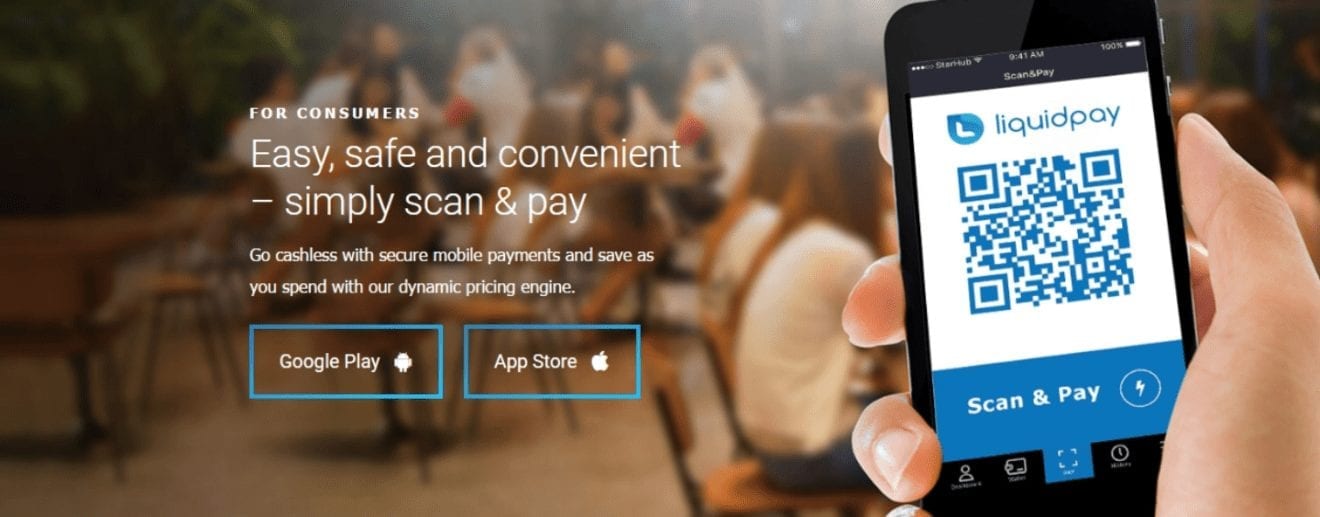
    Some 25,000 retail locations in Singapore are expected to accept a new mobile payment service within the next 12 months. Liquid Pay enables consumers to make payments by scanning a QR code at the point of sale, and compare merchant discounts and rewards from within the mobile app.

    “Liquid Pay has just successfully completed trials at select hawker stalls in Bukit Timah and Tiong Bahru markets, food and beverage (F&B) outlets at One-North/Galaxis and all Spinelli Coffee Company outlets,” Liquid Pay says.

    “Deployment to 30 more hawker centres and multiple F&B chains is expected to complete before the end of the year, with the target of 25,000 acceptance points in Singapore within 12 months.”

    “By adding their credit and debit cards onto the Liquid Pay app, consumers are able to compare the various card discounts and merchant rewards when making payments,” the company adds.

    Offers and rewards

    “To pay for their purchase at checkout, consumers scan the merchant’s individual QR code at the point of sale with Liquid Pay’s QR code reader.

    “Consumers can then view the savings, offers and rewards available with different payment methods, select the most beneficial one for that particular purchase and complete their transaction.

    “Merchants accept payments via QR codes without the need to upgrade equipment or make any costly upfront investment. Merchants and banks can also deepen engagement with customers by extending dynamic, real-time, hyper-personalised promotions and offers.

    “Liquid Pay’s robust architecture also enables banks and merchants to introduce e-cards (prepaid, debit, credit, discount and gift cards) instantaneously, with contextual data analytics for deep consumer insights.”

  • iPay you now: Singapore’s millennials demanding mobile wallets

    iPay you now: Singapore’s millennials demanding mobile wallets

    Millennials demand faster and easier ways to pay. It seemed awkward at first, as J.D Power Director Gordon Shields recalls it, having to pay using his phone at a local supermarket in Singapore. He tells how the checkout assistant confusingly shouted “Apple Pie, Apple Pie” across the store when he handed her his iPhone in an attempt to pay using the mobile app Apple Pay at that time.

    “It makes you wary of trying the payment option again,” he says, although the cashier team finally managed to make it work.

    Launched in just May by Apple and followed in June by Samsung and Android, mobile wallets have now been adopted by one in four Singaporeans but one in three millennials. Shields said that as mobile wallets allow transactions to be made quickly and also for notifications to be registered on the mobile phone, this allows cardholders to have access to their most recent account activities, as well as to receive any alerts or messages from the card issuer on their account.

    “It also helps to improve overall transparency over the account and can work to provide greater control on spending – either for someone who wants to manage their spend on certain categories, or others who may be working towards a certain cashback or rewards spend target,” he says.

    He adds, “In essence, as consumers like to have greater transparency over their accounts and prefer quicker access and control, without going through certain hurdles with OTPs or hard tokens, mobile wallets offer a good solution. However, the barriers to usage are multifold, including acceptance level across merchants, perception of fraud or misuse by cardholders, as well as the simple awkwardness for some users when trying the first time.”

    Contactless payments using mobile phones in Singapore have gained popularity only this year with more than 30,000 retail points in Singapore have enabled payment through apps such as Apple Pay, Samsung Pay, and Android Pay.

    “We expect overall usage to increase, as people move more to having their cards and loyalty programmes on the smartphone rather than in the physical wallet. However, how fast the growth will be still remains unclear,” he explains.

    A certain way to gauge how fast mobile wallet will gain more traction is by looking at how banks in Singapore embrace the innovation. OCBC Bank says it has seen over 35% growth in contactless payments for the past year.

    “It was an easy decision to embrace digital wallets, be it Apple Pay, Samsung Pay or Android Pay, as we want to make this convenient payment method available to as many OCBC customers as possible,” says OCBC lifestyle financing group head Desmond Tan.

    For Usman Khalid, Standard Chartered Singapore’s payments head, mobile wallets dissolve friction from payments.

    “Customers have strongly embraced these platforms as part of their lifestyles, with our customer engagement metrics showing a positive increase. We are also seeing significant growth in customers’ overall contactless spends,” he notes.

    Standard Chartered says it is the only international bank in Singapore to have launched services in three mobile wallets for its clients. As the technology cuts across all three mobile phone operating systems, Khalid said they have seen consumers use mobile wallets for small ticket size “everyday spend” categories such as supermarkets, coffee shops and fast food restaurants.

    Meanwhile, Maybank Singapore Community Financial Services Head Choong Wai Hong notes that their card members have the option to pay using Samsung Pay app. More than the ease of using one, Choong says customers could rely on the added security the technology offers.

    “The mobile wallet is also safe to carry and use. While some consumers may forget to bring their cards or wallets when leaving home, they rarely forget their mobile phones. Hence it provides the added comfort that they have their wallets with them even when they forget to bring their physical cards,” he underscores.

    Wai stresses that one challenge for banks is to get more customers to adopt the new mode of payment.

    “Another challenge is that not all models of mobile handsets support the respective mobile payment apps, so we have seen cases where customers want to embrace this form of digital payment, but their current mobile handsets are not compatible,” he says.

    Out of all the apps, only Android Pay can be used by older NFC-enabled mobile phones. Samsung Pay and Apple Pay support only the latest handsets of their respective brands.

    But for users who had positive experience using mobile wallets, Wai acknowlodges it is likely that there will be high penetration of mobile wallets in the long run.

    “In the short to medium term, what’s more likely is the scenario of consumers using a combination of physical card payment and mobile payment. Furthermore, physical cards are still necessary for payment in other countries where there is no or low mobile payment acceptance,” he says.

    OCBC’s Tan has the same sentiment, adding that financial institutions should speed up their innovation process or risk becoming a laggard in this rapidly-changing world of payments.

    “We are expecting digital wallets to lead the next revolution in the rapidly growing world of payments,” he foresees.

    Some banks have gone so far as creating contactless ATMs. UOB, aside from launching Asia Pacific’s first contactless payment option through its UOB Mighty app, has promised to roll out 60 contactless ATMs around the city-state by January next year. It ambitiously eyes to replace all of its 634 ATMs with NFC-enabled ones by the end of 2018.

    UOB Head for Personal Financial services Dennis Khoo says the bank even worked with partners to introduce contactless mobile payments at all MRT stations in Singapore.

    “This means that UOB cardmembers can now simply top up their EZ-Link cards at any General Ticketing Machine with a tap of their smartphone,” he notes. “It is as important to grow acceptance points in areas that are most relevant to our customers’ lives, from retail and groceries to transit. “

    He, like Shields, believes that it will be millennials who will advance the adoption of mobile wallet technology in Singapore.

    “We have noticed that they are generally early adopters of new innovations such as contactless mobile payments. As they will soon make up the largest demographic of consumers in Singapore, it is natural that they will continue to influence and shape the consumer landscape in Singapore,” he concludes.

  • Telenor launches mobile wallet in Malaysia

    Telenor launches mobile wallet in Malaysia

    Telenor Group has launched a new mobile wallet service in Malaysia targeted at the underbanked segments of the market.

    The service is has been built based on the Malaysian money services business Prabhu, which Telenor acquired in May.

    The service has been rebranded Valyou, Telenor’s mobile wallet brand. While Telenor was forced to shut down its Valyou service in its home market of Norway last year due to lower than expected demand, the service will live on in Malaysia.

    Valyou supports cross-border international mobile remittance including money transfers to seven countries as well as over-the-counter remittance at local retailers. It is open to subscribers from any mobile operator and supports all smartphone types.

    Valyou is currently available as and Android app and will soon be coming to iOS.

    “Malaysia ranges among the regional frontrunners when it comes to digital payments, and we are happy to expand Telenor’s financial services footprint with Valyou,” Telenor SVP and head of financial services Tine Wollebekk said.

    “Our ambition is to explore end to end digital remittance to all relevant corridors, including both Telenor’s own financial services markets – such as Pakistan, Bangladesh or Myanmar – but also to other countries that are important for the local migrant community.”

  • Security is key for mobile wallet adoption in Thailand

    Security is key for mobile wallet adoption in Thailand

    Whether paying with contactless cards or mobile wallets, Thais prioritize security over convenience and are more likely to use contactless payment methods when they know strong security measures are in place, according to a recent study conducted by Visa.

    The Visa Mobile Wallet and Contactless Study found that the majority of Thais (82 percent) believe security is more important than convenience when it comes to mobile and contactless payments.[1] With accelerated growth in financial technology (FinTech), public and private sectors are grappling with ways to increase consumer confidence in electronic payments, particularly when it comes to transactions carried out on mobile devices.

    The average Thai spends around 160 minutes a day on their mobile devices.[2] By the end of 2016, it is estimated that around 20 million people will own smartphones in Thailand, a figure expected to rise to 24.8 million by 2019.[3] Although internet access and mobile device ownership among Thais are on the rise, uptake of mobile financial services has been gradual, partly due to Thai consumers being unaware of advancements in cyber security, and technology. 

    Suripong Tantiyanon, Visa Country Manager, Thailand said: “Based on our study, the more secure the mobile payment experience is, the more willing Thai consumers will be to use it. We’re confident this cautious yet optimistic attitude, coupled with Visa’s multilayered approach to security, will drive the uptake of mobile transactions in Thailand.” 

    The Visa study, independently conducted by YouGov on behalf of Visa, examines Thais’ attitudes towards mobile and contactless payments alongside those of other Southeast Asian markets, namely Singapore and Malaysia. It finds that the three biggest fears in mobile wallet security are hacking of mobile phone (73 percent), theft of mobile phone (65 percent) and getting charged for unintended purchases (63 percent). 

    “Among the respondents, only 39 percent said they would consider using third-party mobile wallets. But within this particular group of potential adopters 74 percent are already aware of how encrypted tokens eliminate the risk of personal data theft,” added Mr. Suripong.

    Visa Token Service (VTS) ensures mobile and contactless payments are secure as well as convenient. VTS replaces cardholder information, such as account numbers and expiration dates, with a unique digital identifier (a “token”) that can be used for payment, via a user’s mobile wallet, without exposing the cardholders’ more sensitive account information.

    Tokenization hides consumers’ confidential account information during digital transactions, making digital payments more secure. According to the study, approximately 55 percent of Thais are familiar with VTS, with awareness highest among those that are also familiar with mobile wallet technology.

    Just under half of Thais (46 percent) believe paying with a mobile device is as safe as with physical cards; a figure likely to increase in the future, as people become more familiar with advancements in Visa’s mobile payment systems. 

    Three in five Thais (61 percent) believe that one day they will no longer need to carry a card or cash and will instead be able to use their mobile wallets for everyday spending.

    “Once Thais become familiar with innovative security measures, such as encrypted tokens, they are much more likely to use mobile and contactless payments more regularly,” said Mr. Suripong.

  • MatchMove adds HCE functionality to Wallet OS

    MatchMove adds HCE functionality to Wallet OS

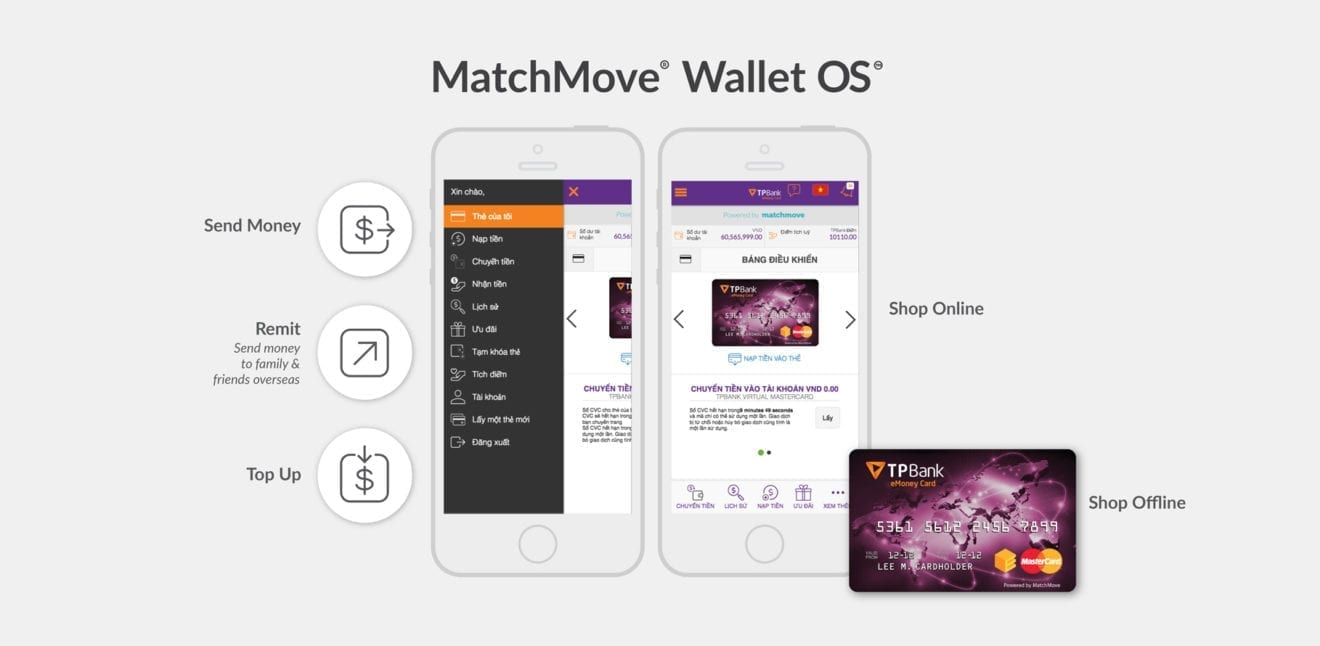
    Mobile wallet company MatchMove has added host card emulation (HCE) functionality to its Wallet operating system, in partnership with US-based contactless technology vendor SimplyTapp.

    The deployment is expected to benefit MatchMove’s existing partners and future customers who wish to offer a contactless payment experience to consumers globally, but do not wish to be tied to a specific payment network.

    MatchMove’s HCE-enabled technology is device agnostic and able to operate on any Android device running version 4.4 and above with NFC capability.

    Starting in Singapore, users with MatchMove-powered virtual cards will soon be able to enjoy a hassle-free tap and pay experience at relevant NFC-enabled in-store terminals, for instance, Mastercard’s Paypass. The Asiawide capability will be available for new enterprise and startup customers by the end of Q4.

    “By leveraging on SimplyTapp’s expertise in HCE and pairing it with our current MatchMove platform, we are enabling our customers who use our OS for a wide range of new services and capabilities, such as using only a virtual card for physical payment, using the virtual wallet for loyalty across multiple merchants and even for instant cross-border remittance,” Matchmove CEO Shailesh Naik said.

    This further differentiates MatchMove from other payment solutions that still require digitising plastic cards on mobile devices.”

  • DMI, Wing launch mobile payments in Cambodia

    DMI, Wing launch mobile payments in Cambodia

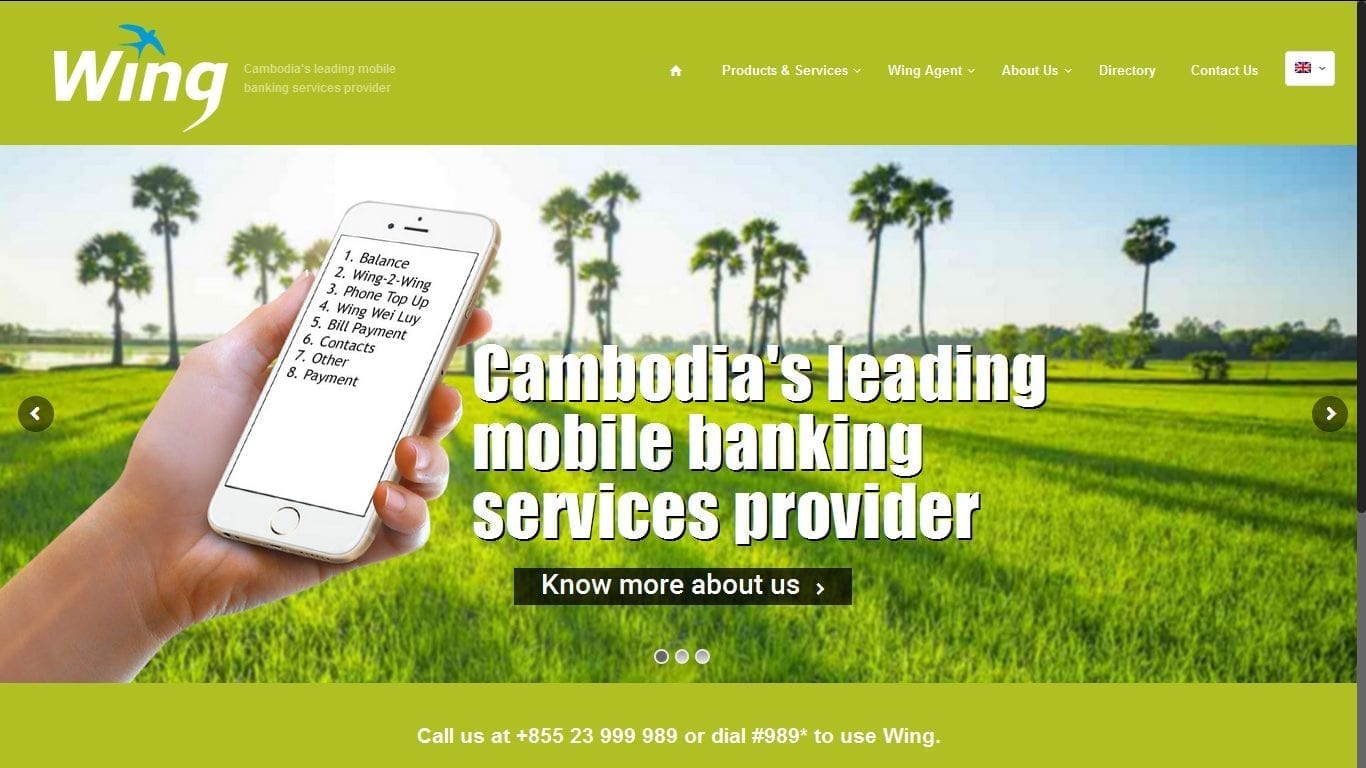
    Enterprise mobility vendor DMI has teamed up with Cambodian mobile banking service provider Wing to offer mobile payment services in the market.

    The companies have developed an app for iOS and Android to allow customers to transfer, deposit and withdraw money via any mobile phone.

    Using the app, customers can pay bills, top up their mobile credit, send money to other users, donate to charity and find the nearest Wing Cash Xpress outlet.

    Cambodia has a significant unbanked population – only around 10% of the population of 15.5 million are in possession of bank cards. The mobile app is designed to address this customer segment.

    The app is available in both English and Khmer and has been designed by DMI to be quick to set up and use.

    “Following the launches of hundreds of mobile solutions all over the world, DMI is very proud to deliver a project in Cambodia for Wing,” DMI International COO Daniel Karlstrom said.

    “DMI is one of the leading technology companies in Cambodia and our collaboration has resulted in a world-class solution that is tailored for the Cambodian market and developed in-country by our Khmer team.”

  • KinerjaPay Establishes Wholly-Owned Subsidiary in Jakarta

    KinerjaPay Establishes Wholly-Owned Subsidiary in Jakarta

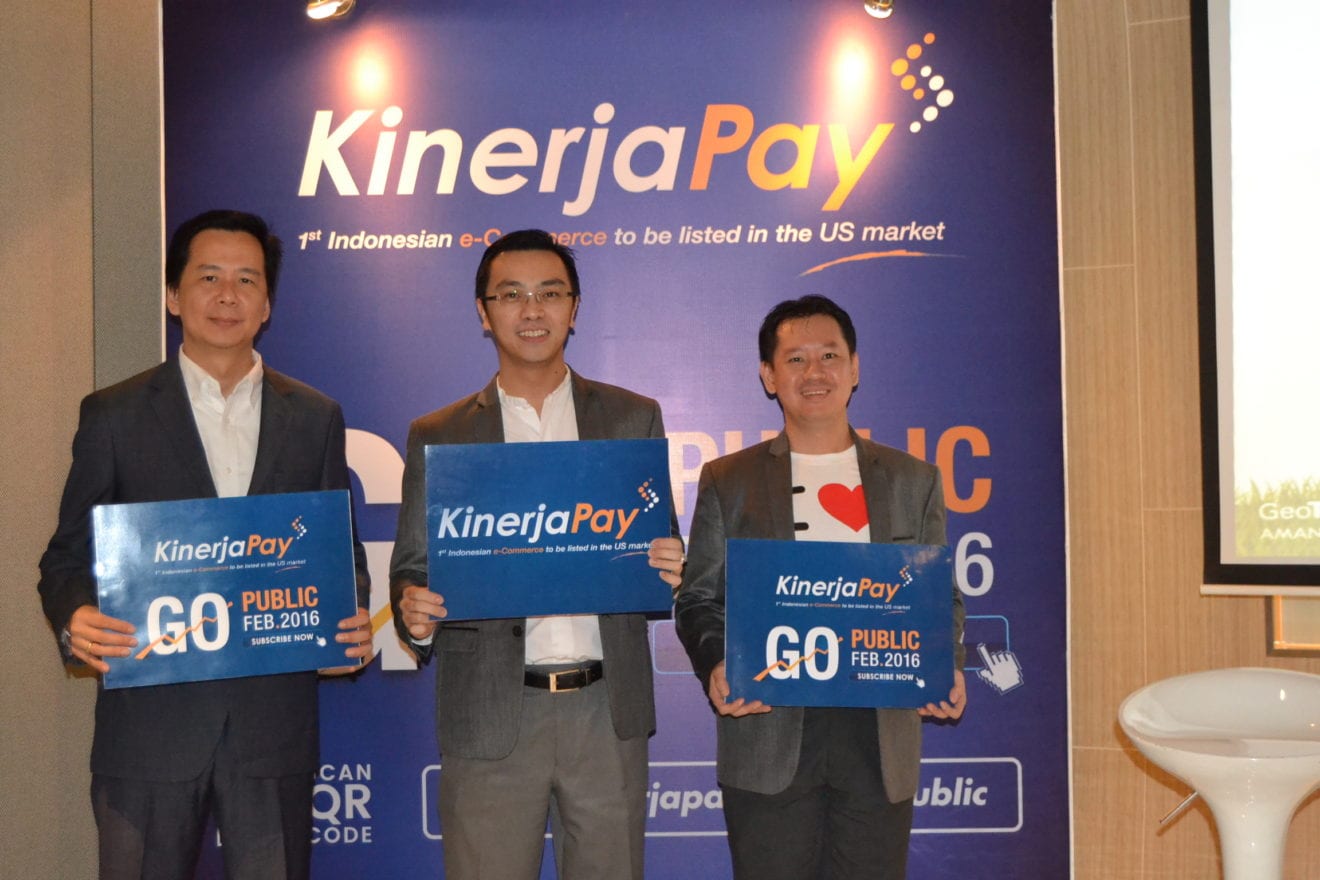
    KinerjaPay, today announced that it established its new wholly-owned subsidiary, PT Kinerja Pay Indonesia, with offices located in Jakarta city, Indonesia. The new Subsidiairy was organized under Indonesian Incorporation Law Article No.34, dated 14 April 2016, and Principal License from Indonesia Investment Coordinating Board (BKPM) No.909/1/IP/PMA/2016 dated 06 April 2016. The Company has also appointed Mr. Deny Rahardjo as Chief Executive Officer (CEO) of PT Kinerja Pay Indonesia.

    Mr. Edwin Ng , Chairman and CEO for KinerjaPay Corp. stated. “We are extremely excited that Mr. Rahardjo accepted his appointment as CEO of our new subsidiary, PT Kinerja Pay. With his extensive experience in Information Technology and Business Management, Mr. Deny Rahardjo is the right person to manage and expand Kinerja Pay’s business operations in Indonesia. With Deny Rahardjo at our helm, we plan to grow our business and become one of the largest mobile payment and eCommerce providers in Indonesia. Since 2015, we have registered more than 35,000 active users with total of 170,000 transactions to date. We fully believe that Mr. Rahardjo, formerly a Microsoft, Polycom, and Telstra Executive in Singapore, will truly revolutionarize eCommerce in Indonesia and enable Kinerja Pay to become the most highly used and popular online payment solution/platform within the next several years, as well as expand its business opportunities throughout the SE Asian marketplace.”

    Mr. Ng further stated that “we chose to establish our initial business operations in Indonesia due to several economic factors, including its population size (est. 260 million according to Worldometers), user demographics, which consists of younger generations, and its ever-growing eCommerce market, which is expected to reach USD $3.8 billion by 2019.”

    With the growing trend of online shopping, Kinerja Pay will offer its users with convenient shopping experience as well as secure payment option. The Company also expects to launch several other applications to complement its mobile eWallet business by entering into other eCommerce verticals such as travel industry, fashion, online games, time-saver application, and many more.

    Notice Regarding Forward-Looking Statements

    This press release may contain forward-looking statements, about KPAY’s expectations, beliefs or intentions regarding, among other things, its product development efforts, business, financial condition, results of operations, strategies or prospects. In addition, from time to time, KPAY or its representatives have made or may make forward-looking statements, orally or in writing. Forward-looking statements can be identified by the use of forward-looking words such as “believe,” “expect,” “intend,” “plan,” “may,” “should” or “anticipate” or their negatives or other variations of these words or other comparable words or by the fact that these statements do not relate strictly to historical or current matters. These forward-looking statements may be included in, but are not limited to, various filings made by KPAY with the U.S. Securities and Exchange Commission, press releases or oral statements made by or with the approval of one of KPAY’s authorized executive officers.

    Forward-looking statements relate to anticipated or expected events, activities, trends or results as of the date they are made. Because forward-looking statements relate to matters that have not yet occurred, these statements are inherently subject to risks and uncertainties that could cause KPAY’s actual results to differ materially from any future results expressed or implied by the forward-looking statements.

    Many factors could cause KPAY ‘s actual activities or results to differ materially from the activities and results anticipated in such forward-looking statements, including, but not limited to, the factors summarized in KPAY ‘s filings with the SEC. In addition, KPAY operates in an industry sector where securities values are highly volatile and may be influenced by economic and other factors beyond its control. KPAY does not undertake any obligation to publicly update these forward-looking statements, whether as a result of new information, future events or otherwise. Please see the risk factors associated with an investment in our securities which are included in our Annual Report on Form 10-K as filed with the U.S. Securities and Exchange Commission on February 11, 2016.

  • Vodafone’s M-Pesa surpasses 25m active users

    Vodafone’s M-Pesa surpasses 25m active users

    Vodafone has announced that its M-Pesa mobile money service now has more than 25 million active customers.

    Across the M-Pesa footprint in Africa, Asia and Europe, active M-Pesa customers increased by 27.1% to 25.4 million for the 12 months ending in March.

    Vodafone offers M-Pesa in 11 countries, having most recently launched in Albania and Ghana. The service debuted in 2007 in Kenya and Tanzania.

    M-Pesa is also available in India, South Africa, Afghanistan, Mozambique, Lethoso, the Democratic Republic of Congo and Romania.

    In India, Vodafone recently launched an M-Pesa smartphone app to allow customers to pay for goods on Ebay, as well as taxi fares and train tickets on India’s national railways.

    Over the past 12 months Vodafone has entered a series of deals with partners to allow for cross-border and cross-service transactions using M-Pesa.

    These include global agreements with the international money transfer hubs TransferTo and MFS, as well as an arrangement to allow direct-money transfer between M-Pesa and users of MTN Mobile Money in seven East African countries.

    “I am delighted and proud that M-Pesa has reached the 25 million active customers milestone,” Vodafone group director of mobile money Michael Joseph said.

    “M-Pesa continues to expand, evolving beyond traditional money transfers to encompass savings and loans, payment of salaries and benefits, settlement of utility bills and school fees and to enable vital health and agricultural solutions.”

  • Mozido Brings NFC Mobile Wallet Services to Indonesia

    Mozido Brings NFC Mobile Wallet Services to Indonesia

    Mozido, a provider of mobile wallets for payment and commerce solutions, today announced it has launched NFC mobile payment and loyalty services for Telkomsel Indonesia, in partnership with Verifone Mobile Money and financial services provider Finnet Indonesia.

    Mozido powers Telkomsel’s NFC-based TWallet application for its 140 million subscribers, enabling them to seamlessly tap and pay with their mobile device at participating merchant locations. Mozido also provides Telkomsel’s merchants with a mobile coupon management system that provides retailers the ability to send their own branded coupons directly to targeted TWallet consumers. Participating merchants span the verticals of fast food, cinema and supermarkets, and include McDonald’s, Wendy’s, Coffee Bean and Tea Leaf, Baskin Robbins, 7 Eleven, Cinema XXI, GraPARI, Alfamart and Indomaret.

    Previously, the mobile money services for the TWallet, which provide consumers with account balance, bill payment, airtime top-up, person-to-person transfers, and transaction history, was a USSD (unstructured supplementary service data) service, disconnected from the wallet. Now, with Mozido’s NFC mobile payments wallet, accountholders are able to use the services seamlessly from their mobile wallet application. Mozido works in partnership with Finnet Indonesia to connect users with Indonesia’s banks nationwide.

    “Indonesia’s 255 million people are ready for mobile solutions that enable payments, financial inclusion, and consumer engagement. Mozido is privileged to quickly expand our presence in this important region by powering TWallet for Telkomsel’s 140 million subscribers,” said Michael Liberty, founder of Mozido. “We look forward to working with Telkomsel to bring unprecedented levels of convenience and consumer engagement through mobile payment and marketing services for consumers and merchants.”

  • Mobile payment race intensifies

    Mobile payment race intensifies

    From smartphone-makers to retail firms, more companies are jumping on the mobile payment bandwagon in a bid to take the initiative for hassle-free digital payments.

    As there is no single dominant player or set of standards yet, the mushrooming mobile payment market is flooded with more than 20 related applications in Korea and may look like a hodgepodge of technologies for some.

    Many industry officials, however, had a positive outlook on the fledgling market, anticipating that the mobile payment systems would further proliferate and one day kill plastic cards.

    “There will be a tenfold increase in the mobile payment services next year, and it is highly likely considering the great growth potential with most websites requiring online payment solutions,” forecast Park So-yeong, chief executive of electronics payment PayGate and chairperson of the Korea Fintech Forum, an organization for the financial technology sector.

    She added that the market needs a set of standards in order to enhance convenience for consumers, and small retailers that may want to adopt the contactless payment technology in the coming years.

    Users try to use mobile payment system Samsung Pay. (Samsung)

    Some said that the growing number of mobile payment apps ironically cause inconvenience due to the lack of standardized technologies, arguing new payment services will come and go until the emergence of strong market leaders.

    “Even Kakao, operator of Korea’s most used mobile messenger, has not been able to rule the mobile payment market,” said an industry source, adding that the firm’s KakaoPay takes up less than 10 percent of payments on Baedal Minjok, the largest food ordering app in Korea.

    Other mobile payment services providers include retail colossuses Shinsegae and Lotte, as also Internet giant Naver and LG Electronics.

    The Korean mobile payment market more than quintupled to 5.7 trillion won ($4.9 billion) in the second quarter this year from 1.1 trillion won in the first quarter of 2013, according to state-run statistics organization Statistics Korea.

    Highly considered as one of the potential market leaders, Samsung is gaining momentum to win the mobile payment race.

    After U.S. tech giant Apple launched contactless mobile payment system Apple Pay last year, Seoul-headquartered Samsung Electronics rolled out its own system in August.

    Despite its somewhat belated start, Samsung Pay has been garnering quite an upbeat response from reviewers and users around the world.

    Accumulative payments crossed the 100 billion won mark with the number of Samsung Pay subscribers exceeding 1 million in two months since its launch in Korea.

    Samsung Pay is often said to have a competitive edge over Apple Pay thanks largely to its better compatibility with the Magnetic Secure Transmission and Near Field Communications technologies.

    Apple Pay allows users to make purchases only with NFC terminals while Samsung Pay is compatible with both magnetic swipe and NFC terminals.

    “Some even say Samsung Pay is the last hope for the Korean tech giant’s mobile business unit, which is being squeezed hard between Apple in the premium handset segment and Chinese upstarts in the low end,” a market official said.

    The tech behemoth is also beefing up partnerships with credit card firms and banks to allow Samsung Pay users to use ATMs with the mobile service.

    Some of the global financial firms include Chase, Visa, American Express and MasterCard.

    Local investment firm BNK Securities anticipated the shipment of Samsung smartphones equipped with Samsung Pay worldwide will reach 22.5 million units — 11.4 million in Asia and 11.1 in North America — next year.

    The increasing popularity of the Samsung payment solution and the expanding mobile payment ecosystem has become a boon for Samsung’s partners and component makers for biometric sensors — used in smartphones to authenticate users.

    Among the beneficiaries are the Korea Information Certificate Authority, which develops user authentication solutions, and Amotech.

    KICA provides fingerprint identification solutions for Samsung Pay and the latter supplies chip modules used for the payment system.

    KICA’s share price doubled to 21,000 won in the two months that Samsung Pay was released, and is now hovering between 12,000 won and 14,000 won.

    It is also expected that Samsung would install its payment solutions in a variety of its products, including smart TVs, mid-range and low-end smartphones, running on the Tizen operating system.

    The Tizen OS has been jointly developed by a group of global tech firms including Intel.

    Fingerprint scanners will be more widely deployed in budget Samsung smartphones to beef up security of the mobile payment app.