Retail News CRM

Category: Living

Retail News Asia is committed to providing both local and global retailers with the latest Living news throughout the Asian market. This on a daily base.

  • Rhapsody looks at kids as a new opportunity

    Rhapsody looks at kids as a new opportunity

    Streaming music service Rhapsody has launched a version for kids that limits their access to only tailored programming and content that parents add. The company said it was adding the service as many of its customers have moved into “a new chapter of their life” and would like to share music with their kids. Other music and video providers have also targeted the kids market. YouTube, for example, launched a service for kids, but the service has been dogged by controversies over advertising and inappropriate content.

    Rhapsody said it had a safe and controlled environment for kids, and has added a parental verification step to make it more difficult for young kids to leave designated areas without supervision. Its playlists are also safe and fun, and designed for kids, it added. The Rhapsody Kids service is available from Thursday on Android devices at no additional cost with a Rhapsody or Napster subscription, with a version of the service for iOS expected soon.

    The kids version is rolling out as a free update to over 3 million Napster and Rhapsody premier subscribers worldwide, Rhapsody said. Rhapsody International, which runs the Rhapsody and Napster services, is facing tough competition from newer entrants in the music streaming market, like Google and Apple.

    The company said in July it had reached 3 million subscribers, up by 50 percent from a year earlier. RealNetworks, which owns 43 percent of Rhapsody, reported in a regulatory filing to the U.S. Securities and Exchange Commission that Rhapsody saw its revenue increase to US$50 million in the quarter ended June 30, up from $42 million in the same quarter last year.

    But losses increased to $12 million in the quarter from $4.7 million in the same quarter in the previous year. Parents can access Rhapsody Kids from the app’s main menu, and add songs from the Rhapsody catalog. The bookmarks are automatically downloaded for offline playback to help parents save on their data plans and phone batteries, Rhapsody said. Kids can also explore a catalog of kid-friendly music and playlists curated by the company’s editorial team.


  • Singapore’s taxi drivers unhappy with Uber, transport minister responds

    Singapore’s taxi drivers unhappy with Uber, transport minister responds

    It seems that taxi drivers in Singapore are fearful of Uber, which threatens their livelihood by using private drivers to pick up passengers.

    While they didn’t riot in the streets or overturn cars (Singapore clamps down hard on unruly behavior), they’ve privately complained to Khaw Boon Wan, the newly minted minister of transport, as he campaigned during the just-concluded general elections.

    All this was revealed in a blog post written by the minister. Khaw says his ministry is taking another look at rules governing such transportation apps.

    “Apparently, UberX signs on drivers to drive private hire cars to provide a booking type of transport service, and these drivers do not need a vocational licence unlike taxi drivers,” he says. “While taxi drivers welcome competition, they demand that the playing field be level. I think our taxi drivers have a point.”

    UberX is just one of Uber’s many services.

    It seems Khaw is taking a cautious and consultative approach, and that’s a good sign. He acknowledges that young people enjoy using services like Uber and Airbnb, and that the government must not resist innovation. He urges that “we must always be fair to players, whether incumbent or insurgents, and strike a balanced approach.”

  • Shiseido creates Global Travel Retail marketing team in Singapore

    Shiseido creates Global Travel Retail marketing team in Singapore

    Japanese beauty products giant Shiseido has created a Global Travel Retail (GTR) marketing team based in Singapore.

    The company said that the new team is aligned with the Group Vision 2020 and reflects the priority role of travel retail in the expansion of its brands globally,

    “Working closely with our travel retail regional teams and as a hub towards our brands’ partners, we aim at further elevating our services and product offering towards an ever more demanding global traveller,” Shiseido said.

    The team is headed by Global Shiseido Travel Retail Marketing Director Elisabeth Jouguelet-Aparicio, who reports to Group Travel Retail President Philippe Lesne.

    Underlining the group’s commitment to the travel retail channel, the team includes a dedicated travel retail exclusives products Manager (Constance Raboulin).

    The company said: “As the Global Travel Retail team, we aspire to be the beacon for brands by infusing their DNA into regional offices. We relentlessly work towards becoming an innovation hub that provide specialised and value-added services. We commit to acting as the bridge between brands and regions.”

  • HKIA experiments with home delivery service

    HKIA experiments with home delivery service

    Hong Kong International Airport (HKIA) is launching a new trial local delivery service for passengers who spend more than HK$1,000 ($129) in its shops at the airport.

    Cissy Chan, Executive Director Commercial, HKIA said Airport Authority HKIA also plans to experiment with trial deliveries to the homes of a few individuals in two other countries as a trial run.

    In a session entitled ‘Future Positive’ at this month’s Trinity Forum 2015 in Hong Kong, she said HKIA is engaged in concentrating on the passenger experience, utilising the four ‘Es’ which she qualified as eating, entertainment, ease and engagement.

    The airport is now on a mission to try and make the environment more exciting after research showed that most people only enter the shops because they are bored.

    As a result – and in addition – the airport is installing interactive amusements in relevant shops to build up interest, while pop up stores will feature more regularly.

    Chan added that the airport is also working on building in entertainment facilities like a virtual golf zone, as well as employing food court ambassadors. These new recruits will find seats for passengers who are already holding trays of food, alongside a service pledge of 15 minutes.

  • Finance plan for Indonesia 7-Eleven

    Finance plan for Indonesia 7-Eleven

    Modern Internasional, the master franchisee for Indonesia 7-Eleven, has partnered with Credit Saison of Japan to create a fund to help finance new franchisees.

    The two companies have created a joint venture called PT Saison Modern Finance (SMF) in Indonesia. MI will take a 30 per cent stake in the business, which will have a paid-up share capital of Rp100 billion.

    The JV will support the expansion of Indonesia 7-Eleven franchise business. In the initial phase of the business, it will provide finance leases at an attractive cost for equipment installed at 7-Eleven stores, particularly for the new sub-franchisees to be secured in the future.

    “MI believes that this will reduce cost of capital for a new store opening and hence enhance the attraction of its 7-Eleven sub-franchising model. The JV also aims to develop payment products such as pre-paid cards for the customers of 7-Eleven by leveraging on CS’ strength as the third largest credit card issuer in Japan,” the companies said in a statement.

    The JV is committed to provide attractive IDR denominated leasing terms.

    “MI expects the JV will contribute positively to the development of the 7-Eleven sub-franchising business as well as improvement in 7-Eleven’s customer relationship management through its prepaid card and loyalty programs.”

    In Japan, CS has a joint venture with 7-Eleven global brand parent Seven & I Holdings for the issuance of Saison Card. The finance company also operates overseas offices in China, Vietnam and Singapore, and is seeking to further expand its business in the rapidly-growing Asian market.

  • Convenience Retail to offload Circle K Guangzhou

    Convenience Retail to offload Circle K Guangzhou

    Convenience Retail Asia, the Hong Kong-listed operator of Circle K convenience stores and Saint Honore Cake Shops in Hong Kong, Macau and Guangdong province, has reported a 36.8 per cent decline in first half year profit.

    While sales increased 5.8 per cent in the half year to HK$2.368 billion, labour and raw material costs increased, reducing its gross margins, and it incurred substantial investment costs in its eCommerce business.

    Along with its results, the company announced it would sell its stake in the loss-making Circle K Guangzhou business to its controlling shareholder and focus on the Circle K business in Hong Kong and Macau. Fung Holdings (1937) Limited will pay CRA HK$104.5 million for its share of the business.

    “The sale of the Circle K Guangzhou will help to create positive momentum for the Group’s financial performance in a difficult retail and economic environment that continues to place pressure on the results of the group,” said Richard Yeung, CRA CEO.

    “This sale, which will also result in a one time gain ($50 million), underlines our focused commitment to delivering long-term growth, profitability and shareholder value.”

    In the half year, turnover for the Circle K business increased 5.7 per cent to HK$1.902 billion, with comparable store sales rising 8.8 per cent in Hong Kong and 2.6 per cent in southern China.

    Turnover for Saint Honore Cake Shops rose 5.5 per cent to HK$498 million, with 4.1 per cent growth in comparable stores sales in Hong Kong. Core operating profit of the group decreased by 34.6 per cent to HK$42 million and net profit declined by 36.8 per cent year on year to HK$31 million.

    During the first half, the group incurred higher expenditure to support intensive marketing campaigns for its e-commerce platform FingerShopping.com, and because of investment in a pilot programme launched in late 2014 with Sinopec Marketing. The pilot program manages 10 petrol stations in addition to Easy Joy convenience stores on behalf of Sinopec Marketing in Guangzhou. Excluding the Projects expenses, core and net operating profit would have decreased, respectively, by 18.5 per cent to HK$57 million and by 16.1 per cent to HK$45 million.

    Gross margin and other income as a percentage of turnover decreased slightly by 0.8 per cent to 36 per cent compared to the same period in 2014, due to rising raw material prices and factory labour costs. Operating expenses as a percentage of turnover increased from 33.9 per cent to 34.2 per cent because of the higher operating costs as well as increased marketing and investment expenditure in projects.

    “Our ability to drive higher comparable store sales despite adverse external conditions is also a reflection of our unwavering commitment to excellent customer service, in-demand products and services, and timely, effective marketing,” Yeung added.

    “We believe these indications of strong brand equity and customer loyalty will be invaluable once the retail sector begins to improve. However, we anticipate that higher costs and declining spending will continue to affect our operations for the remainder of 2015.”

    Yeung said the company’s online consumer platform, FingerShopping.com, continued to make encouraging progress in the first half of the year. Health and beauty is the platform’s most successful anchor category.

    “FingerShopping.com is enjoying increasing customer loyalty and continues to expand its product roster, which includes a number of popular brand names. The group is now testing FingerShopping.com’s delivery services in Guangzhou and has also secured partnerships with leading Hong Kong banks as well as promotional campaigns with major retailers in Hong Kong.”

    CRA says it expects the retail market to remain weak in the foreseeable future and operating costs are likely to remain high.

    “We are trying our best to mitigate the adverse market conditions through our exit from the convenience store business in Guangzhou while continuing to invest in FingerShopping.com, strengthening our operations to retain talent, delivering first-rate customer service and driving cost efficiency,” Yeung concluded.

  • New app aids Chinese tourists in Korea

    New app aids Chinese tourists in Korea

    South Korean location-based coupon application provider YAP Company has launched a new app that provides Chinese tourists with various tourism-related information, including shopping and transportation.

    The app, dubbed Kayo, provides a selection of coupons and other information for 100,000 local shops at popular tourist destinations, including Seoul’s major shopping district of Myeongdong or the southern resort island of Jeju.

    YAP Company said it plans to adopt mobile payment services to Kayo in the near future by joining forces with leading Chinese platforms such as Alipay.

    Other features of Kayo include taxi hiring and online translation services.

    “Based on YAP’s high-tech technology, we plan to allow every Chinese visitor to South Korea to enjoy quality search services, discount information and mobile payment just by downloading Kayo,” a YAP spokesperson said. “The new application will also help local shop owners to attract more tourists.”

    The release of the new app came amid a steady rise in the number of Chinese visitors to South Korea. Last year, 6.12 million Chinese visited South Korea, spending about 14 trillion won (US$11.7 billion).

    The company expects the number of Chinese visitors to reach 10 million by 2018.

    YAP Company also operates an application, dubbed YAP, in South Korea, which allows users to download coupons and discount information related to shops located near the users, including major franchises.

    It stands out from its rivals as it uses what it calls “hybrid beacon” technology, which automatically displays discount information when a user enters registered stores.

  • Korea set to woo back Chinese tourists

    Korea set to woo back Chinese tourists

    South Korea’s retail and tourism industries are preparing a slew of promotional and cultural events to woo back Chinese tourists during a long-haul holiday season, pinning their hopes on making up for a summer slump in the wake of a viral respiratory illness, sources say.

    Since the first outbreak in late May, Middle East Respiratory Syndrome (MERS) made a big dent on domestic spending as foreign tourists canceled their planned trips during the peak summer season, while South Koreans avoided shopping centers and other crowded places in June and July.

    While the viral disease hit the tourism and retail industry hard, Chinese tourists have started to return to the once-empty streets of Myeongdong, one of the capital’s most popular shopping districts, over the past month.

    The number of Chinese travellers has increasingly recovered to the previous year’s level since late August and marked an on-year rise since mid-September, the state-run Korea Tourism Organization (KTO) said.

    About 303,000 tourists with Chinese nationality entered the nation in the first two weeks of September, rising 4.8 per cent compared with the same period a year ago, it said.

    “The number of Chinese travelers has sharply risen this month, and the number is expected to completely recover during the Chinese holiday season,” Han Hwa-joon, who oversees the KTO’s Shanghai branch, said. “The recovery pace is faster than expected.”

    Chinese Thanksgiving falls on September 26-27, and together with the Chinese National Holiday running from October 1-7, the holiday season can be extended up to 12 days.

    As the Chinese holiday season draws near, major shopping centers and duty-free operators are making all-out efforts to draw Chinese tourists to make up for a shortfall in sales amid dormant domestic spending.

    According to the KTO, 164,000 Chinese travelers visited the nation during last year’s autumn holiday season and spent 2.4 million won on average, which amounts to about 400 billion won (US$341.5 million) in total.

    During this year’s Chinese National Holiday, the tourism agency expected some 210,000 Chinese will visit the nation, up 30 per cent from a year ago, considering the pace of growth over the past three years.

    “We will host a variety of events even after the Chinese holiday to make up for the fall in tourists during the peak season from June to August,” said Seo Young-chung, a KTO official in charge of Chinese tourism.

    Lotte Department Store plans to host a variety of promotional events targeting Chinese travelers during the golden weeks, providing discounts on payments made through UnionPay, China’s largest credit card issuer, and Alipay, China’s No. 1 mobile payment application.

    Shinsegae, the nation’s leading department chain, said it will give special discounts to Chinese customers, while Hyundai Department Store also started the regular sale season earlier than usual to attract the deep-pocketed travelers.

    Operators of duty-free shops have also stepped up efforts to bring back Chinese travelers, the largest consumer group, which accounted for about 70 per cent of downtown duty-free spending last year, up from around 15 per cent in 2011.

    Lotte Duty Free, the world’s fourth-largest duty-free operator, held a travel fair in Shanghai on September 9, in which senior company officials reached out to Chinese tourism officials to attract Chinese travelers.

    Hotel Shilla, part of Samsung Group and the world’s No. 6 duty-free operator, also presented various sales promotions and tour packages during the fair along with other Samsung units, with the attendance of senior officials.

    “The Korean tourism industry has mostly recovered after the Mers outbreak came under control, and it will make a full recovery in September,” Hotel Shilla CEO Lee Bu-jin told reporters during her visit to Shanghai.

  • End near for HMV Singapore?

    End near for HMV Singapore?

    In Hong Kong, HMV is enjoying a renaissance. But HMV Singapore appears about to become extinct.

    The last surviving store bearing the brand in the city state will close on September 30 after the company decided not to renew its lease on the Marina Square shopping mall.

    On its website the company says it plans to “re-open a new store in the near future”, but retail commentators aren’t so certain the brand will survive offline.

    The Straits Times newspaper reports the company held discussions with centre management for several months on renewal terms but has now confirmed terms to vacate the premises.

    HMV was once Singapore’s largest music retailer but has become a victim of the digital age and high retail rents which made it uneconomic to continue selling music CDs and movie DVDs.

    HMV Singapore GM Michele Tan told the Straits Times she was not authorised to reveal the location and opening date of the new store.

    The Singapore business is operated by Hong Kong-based AID Partners which is enjoying success reinventing the brand in Hong Kong. New concept stores there include cafes and an expanded product range including a focus on headphones, DJ equipment, apparel and gifts – along with a more curated offer of music and DVDs.

    HMV opened its first store in Singapore in 1997, a 25,000 sqft two-level superstore at The Heeren. That store relocated to a smaller space at 313@Somerset, which was replaced by a Sony store in 2013. At its peak there were at least three stores in the city.

  • ANZ expands retail footprint in China

    ANZ expands retail footprint in China

    The Qingdao branch will cover the entire Shandong Province and will offer products and services for ANZ’s corporate customers.

    Mike Smith, chief executive of ANZ, said that with a significant and growing presence in China and a network across 34 markets in the Asia Pacific, Europe, the Middle East and America, the bank is uniquely placed to support its clients looking to grow in Qingdao and the Shandong Province.

    Mr Smith said Qingdao and Shandong Province have established long-term relationships with Australia, and highlighted “major potential” for further growth in bilateral trade and investment.

    “This includes opportunities in industries such as natural resources and agriculture, and the opportunities created through the China-Australia Free Trade Agreement,” he said.

    “With our new branch, we look forward to enhancing cooperation in the Qingdao and Shandong government, and to continuing to support the development of the local financial industry.”

    Huang Xiaoguang, chief executive of ANZ China and head of greater China, said opening the new branch in Qingdao is another step in continuing to grow the bank’s Chinese footprint.

    “As the only locally incorporated Australian bank in China, we will further enhance our capability to provide comprehensive solutions and services to support local enterprises to go abroad,” he said.

    ANZ announced in July the opening of a new branch in Gurgaon, India, to better service its business customers in the country’s north.

  • Hooters Bangkok’s delightfully tacky launch party

    Hooters Bangkok’s delightfully tacky launch party

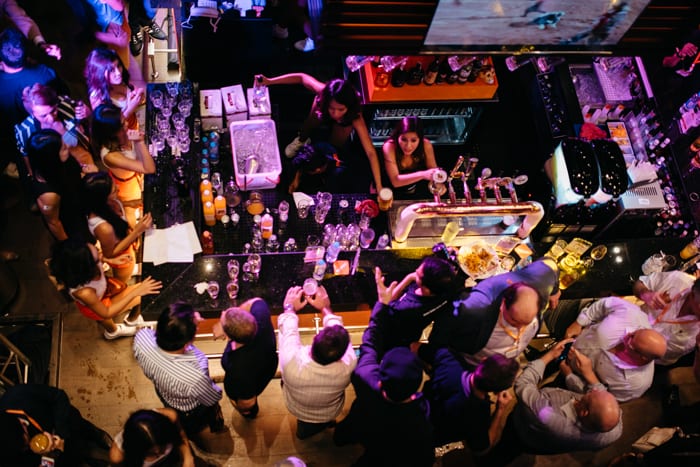
    Hooters, the long-admired American chain restaurant famous for tackiness and large-breasted female servers, opened its first Bangkok branch on Friday night.

    “Damnnnnnnnn. Look at that thang!” was the emotion on most of the (mostly male) guests who showed up at the Four Points by Sheraton hotel to get their first taste of Hooters magic.

    Of courses, they totally lost their cool because of the variations menus and breast portion sizes available.

    The very ambitious Hooters “job fair” was announced in June, and the Bangkok ladies who made the cut reportedly received training by original American Hooters gals on how to strut their stuff and serve fried chicken.

    One of the trainers commented at the party that the Bangkok Hooters girls did a phenomenal job, despite the fact some ladies looked a bit annoyed as they had to squeeze through a packed crowd to serve the food

    Besides local Hooters girls, some Euro models were hired to look hot and tell the guests that they didn’t work there.

    The highlight of the night had to be an adorable cupid-shuffle dance from the waitresses, continuing Hooters’ wonderful tradition of family friendliness.

    dsc_6895

    dsc_6941

    dsc_6799

    dsc_6825

    dsc_6709_0

    dsc_6749

    dsc_6732_0

    dsc_6698-2_0

    dsc_6779

    dsc_6844

    dsc_6820

    dsc_6800

    dsc_6805

    dsc_6753

    dsc_6774

    dsc_6773

    dsc_6893

  • The Philippines-headquartered BDO Unibank Sets up Representative Office at DIFC

    The Philippines-headquartered BDO Unibank Sets up Representative Office at DIFC

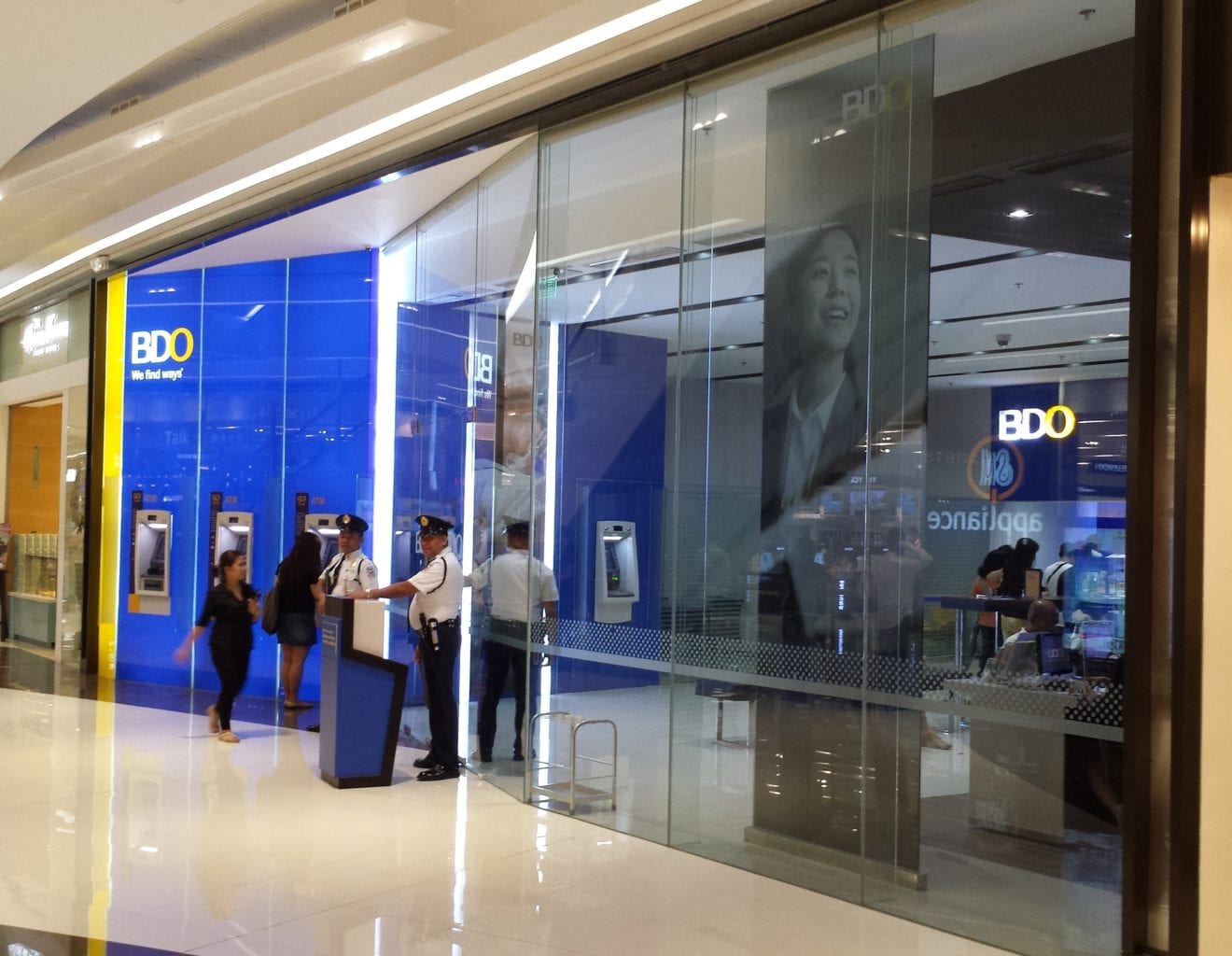
    Dubai International Financial Centre (DIFC), the financial and business gateway between the Middle East, Africa and Asia, today welcomed BDO Unibank – the first Philippine bank to operate in its premises.

    The UAE is home to an estimated 700,000 Filipino expatriates and BDO Unibank’s objectives include supporting them, while facilitating investments and money flow to the Philippines.

    Arif Amiri, Deputy CEO of DIFC Authority , said: “We are pleased to welcome BDO Unibank, a leader in the financial services field from the Philippines. This is a direct outcome of our overall strategy to facilitate integration between the Asian and Middle Eastern companies.”

    “We remain conscious of the diverse demographic constituents of the UAE and are committed to catering to the evolving requirements of each population segment,” Amiri added.

    BDO Unibank, the largest bank in the Philippines, provides a variety of corporate, commercial and retail banking services, including traditional loan and deposit products. This is in addition to treasury, trust banking, investment private banking, cash management, leasing and finance, remittance, insurance, retail cash cards and credit card services.

    Commenting on the decision to set up base in DIFC, Nestor V Tan, President and CEO – BDO Unibank said: “BDO Unibank’s establishment of a representative office in Dubai is driven by its objective to further widen our overseas network to provide support to the Overseas Filipino Workers (OFWs) and residents. This expansion into Dubai will boost our capability to service the needs of our countrymen in the entire Middle East and, hopefully, make the bank a catalyst for the progress of financial inclusion of the expatriates in the Philippines.”

    Committed to concretising its position as one of the world’s top five financial hubs, DIFC announced its 10-year growth strategy in June this year, aiming to maximise symbiosis amongst clients and further expand the Centre’s regulatory and physical infrastructure.

    Asia remains a key strategic focus for DIFC. As part of this priority, the Centre has been proactively engaging with players in the region through roadshows in China and India.

    DIFC aims to grow the financial sector’s share of the UAE economy to 18 per cent of the GDP by 2024, compared to its 12 per cent share in 2013.


  • Eslite Hong Kong adds second store

    Eslite Hong Kong adds second store

    The ranks of English language bookshops in Hong Kong may be dwindling, but someone forgot to tell Taiwanese retailer Eslite.

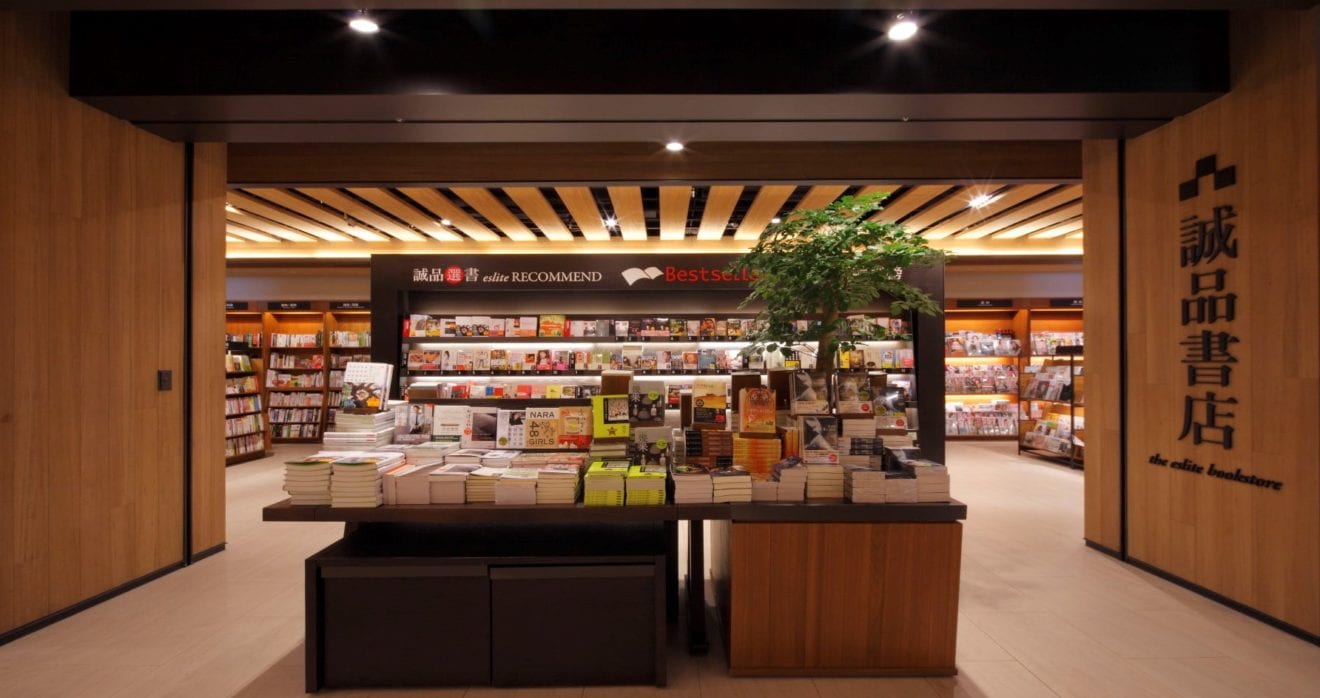
    The second store will be themed ‘Travellers, Taiwan, Diversity and Culture’, spread over two floors of Star City at 3 Salisbury Rd. It will feature more than 25,000 titles in Chinese and English and trade 12 hours a day, from 10am to 10pm.

    The doors will open on October 1 with an official launch planned for October 9.

    Eslite has enjoyed huge success with its Hysan Place store, a multi-storey venue which is as much a place to dwell as to buy books. While it cut back its trading hours from 24-seven to a late night closing, its customer numbers and sales turnover have clearly proven there remains a place for the megastore format. Reports suggest the store sold 706,000 books last year and on average its customers buy three books per visit.

    Smaller rivals like Australian chain Dymocks have closed the doors of at least three stores since 2014 and the iconic design and arts-focused Page One closed its Times Square branch last February after 18 years.

    Eslite, which has 48 stores in Taiwan, has a strategy in overseas markets of building a small number of large format stores with broad selection in major cities. It opened in Causeway Bay in August 2012. Besides books, it sells stationery and gift wares created by Taiwanese artists, and includes a cafe.

  • Silverlake Axis buys retail banking software firm SunGard Ambit for $12m

    Silverlake Axis buys retail banking software firm SunGard Ambit for $12m

    Singapore-listed Silverlake Axis has reached a deal to buy local firm SunGard Ambit (Singapore) Pte. Ltd. (previously known as System Access Limited) for $12 million.

    Silverlake, that provides digital economy solutions and services, told the Singapore exchange that the deal will enable it to expand its suite of software and services as well as deepen and broaden its customer relationships and geographical presence.

    On an immediate basis, the deal is expected to contribute about 15 per cent to the revenue of the enlarged Silverlake Axis Group, the company said.

    The acquisition will also enable it to add over 50 new customers to its current base of over 150 customers, extending its geographical reach to Eastern Europe, Middle East, South Asia while at the same time creating a stronger market leadership in South East Asia, it added.

    The deal will see Silverlake Axis acquire 100 percent of SAS from SunGard Asia Pacific Inc.

    “SAS brings a complementary retail banking portfolio of software and service solutions to the group’s strengths in delivering financial technology innovation to our customers. In particular, the SAS Retail Banking Product Portfolio positions Silverlake Axis for mid-tier customers while offering a broader variety of tiered deployment options from a technology and a pricing perspective. These products can be deployed on open digital platforms thereby making it possible for Silverlake Axis to address the needs of customers from mid-tier to large enterprises,” its regulatory filing said.

    Dr Raymond Kwong, Silverlake Axis chief executive and group managing director, said : “The group is constantly on the lookout for complementary software businesses to expand our suite of business enterprise software solutions. Through this acquisition, the combined and complementary multi-platform core, channels, card and payment solutions will enable us to deepen our customer solution implementation and support capabilities.”


  • Mid-flight theft increases in Asia

    Mid-flight theft increases in Asia

    Mid-flight theft-related offences on board airplanes have become more common in several Asian countries over the past two years, including in Indonesia.

    According to daily newspaper Kompas, the latest incident occurred on a Qatar Airways flight from Doha, Qatar, to Jakarta on Sunday evening, around three hours after the airplane took off.

    When the cabin lights were switched off and most of the passengers were asleep, offenders allegedly opened the overhead compartments, removed several bags and began searching through them back at their seats or in the plane’s main aisle. When the Qatar Airways plane landed, four bags were found to have been moved, allegedly by two different people.

    It was reported by tribunnews.com that four Chinese citizens, who were allegedly members of a theft syndicate, were being questioned by the Soekarno-Hatta International Airport Police on Monday.

    “We are still developing our investigation,” said head of airport police Iptu Waluyo.

    According to aviation analyst Gerry Soejatman, airlines are responsible for handling theft cases that occur during their flights.

    “Regarding the case involving Qatar Airways, it would be better if the police were joined by Qatar Embassy officials during questioning. Then the suspects could be extradited to Qatar to face legal proceedings there,” said Gerry.

    Separately, Qatar Airways corporate communications official Koh Wei Ling said that there was no official statement yet regarding the case.

    “We are still waiting for our head office in Doha to issue the official statement,” said Ling.

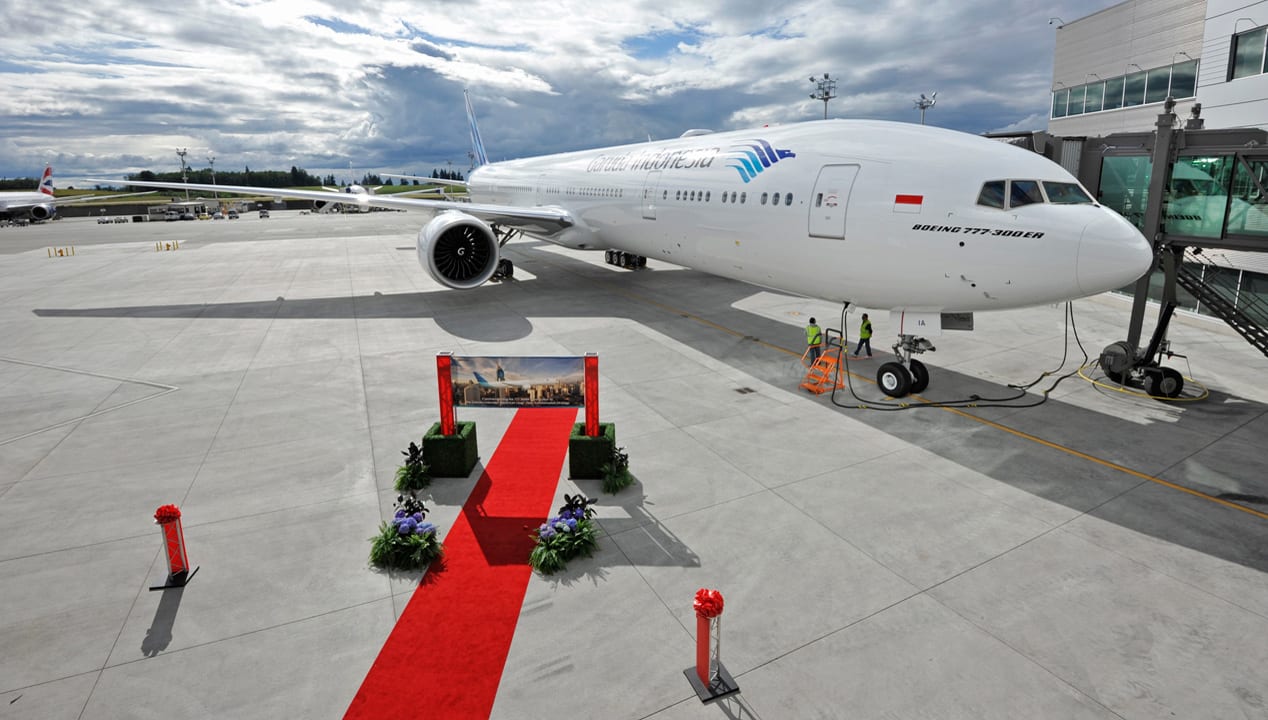
    Meanwhile, national flag carrier Garuda Indonesia has called on passengers to keep their belongings safe.

    “We always tell the crew to be alert when checking on the cabin, especially when passengers are asleep,” said Garuda Indonesia corporate communications vice president Benny S Butarbutar.

    State-owned airport operator Angkasa Pura (AP) II’s president director Budi Karya Sumadi said that theft-related offences on board airplanes were under the airline’s jurisdiction. But airport security are available to support them in bringing the alleged offenders to airport police.

    In a press release on Tuesday, Garuda Indonesia informed that these offenders usually checked-in without any luggage, stayed for only one day in their destination, owned passports and tickets issued outside Indonesia and allegedly were part of a criminal syndicate. The theft itself usually occurred during the night when passengers were asleep or at the lavatory.

    Currently Garuda is cooperating with other airlines through the Association of Asia Pacific Airlines (AAPA) to share information and conduct preventive actions, including conducting passenger profiling, issuing policies for assist air crew to prevent such incidents and providing security officers in destination cities.