Retail News CRM

Category: Logistics

Retail News Asia is committed to providing both local and global retailers with the latest Logistics news throughout the Asian market. This on a daily base.

  • Crown delivers XPO Logistics a competitive advantage in Thailand

    Crown delivers XPO Logistics a competitive advantage in Thailand

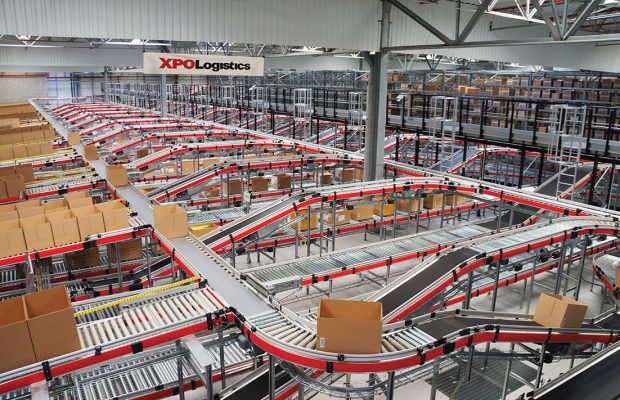
    XPO Logistics is relying on a total product solution from Crown Equipment to manage high work-flow stock movement for a number of prominent global brands at its Thailand operations.

    XPO Logistics, which includes the Bangkok and Rayong branches among its 1,440 global locations, is managing stock on behalf of major brands with the help of a full suite of Crown material handling equipment that includes reach trucks, counterbalance forklifts, power pallet trucks, Wave work assist vehicles and walkie stackers.

    Crown has been supplying XPO Logistics with equipment since 2010 and the company is running a total of 20 lift trucks at its busy Bangkok and Rayong locations.

  • UPS expands China-Europe rail service

    UPS expands China-Europe rail service

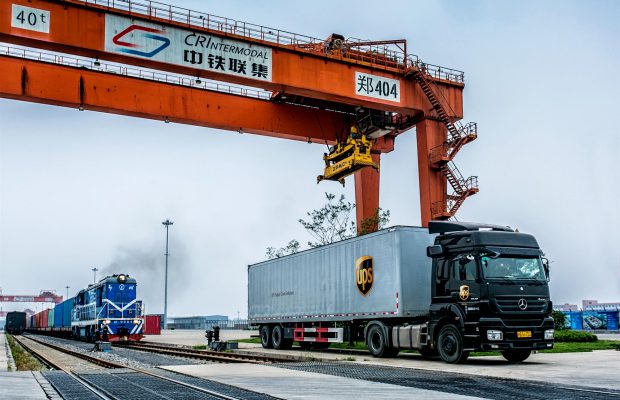
    UPS announced the addition of six stations to its Preferred full and less-than-container load (FCL and LCL) multimodal rail service between Europe and China. The additional stations will give customers moving goods on the world’s largest trade lane more options to reduce supply chain costs and better balance cost/time-in-transit requirements.

    Changsha, Chongqing, Suzhou and Wuhan Stations were added in China to the existing stations of Zhengzhou and Chengdu. In Europe stops in Duisburg, Germany and Warsaw, Poland were added to the existing stops of Lodz, Poland and Hamburg, Germany.

  • Soekarno Hatta Airport to have zone of bonded logistic center

    Soekarno Hatta Airport to have zone of bonded logistic center

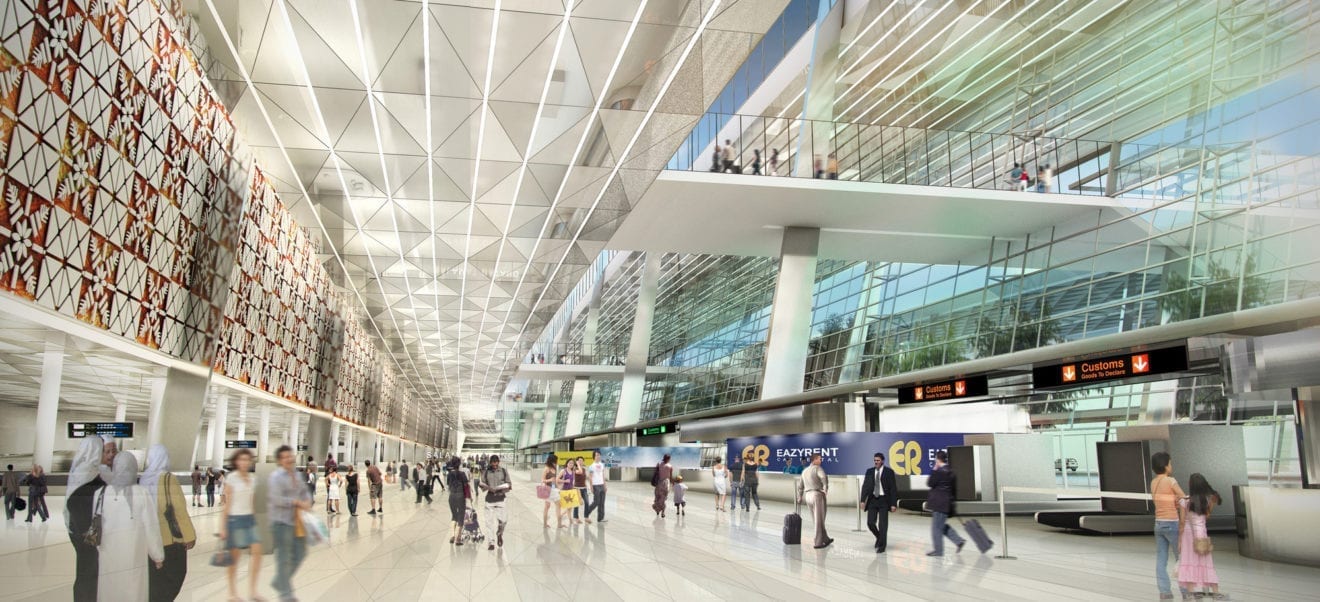
    State-owned airport operator PT Angkasa Pura II through its subsidiary PT Angkasa Pura Kargo is preparing the opening a zone of bonded logistic center (PLB) in the Soekarno Hatta International Airport.

    The bonded logistic center would facilitate cargo transport and improve the countrys competitiveness in global air cargo industry, Angkasa Pura II President Director Muhammad Awaluddin said in a statement here on Saturday.

    Awaluddin said the PLB would have three units in the Jakartas airport including in Warehouse I about 1,500 square meter wide, Warehouse II about 10,000 square meter wide to be built in 2018, and Warehouse III to be built in the Cargo Village in the airport 10,000 square meter wide to be built in 2019.

    He said the most potential market of the bonded logistic center is aircraft spare parts. The spare parts could be piled up in the warehouses of the PLB and clearance could be made there if imported spare parts are to be brought outside.

    “The Soekarno-Hatta International Airport is not far from the Tanjung Priok port that it is right to build the zone of bonded logistic center there,” he said.

    The PLB will also help improve efficiency and save logistic cost for the business players, he said.

    Airlines would benefit from the PLB that provides safe places for their spare parts that could be used any time repairs are needed immediately, he said.

    “The PLB could earn up to Rp2.5 trillion a year from the warehousing service for aircraft spare parts,” he said .

    In building the PLB zone, PT Angkasa Pura II will cooperate with related agencies including the Customs and Excise office, airlines, forwarders, banks , etc.

    Head of the Main Service Office of Customs and Excise of Type C in Soekarno-Hatta Erwin Situmorang expressed support for the opening of PLB in the airport complex by PT. Angkasa Pura II.

    “With the operation of PLB. industries do not have to rely on imports for basic materials they need . They could now rely on PLB,” Erwin said.

    He said PLB would reduce logistic cost and cut the waiting time for industries and open business opportunity in warehousing at the airport complex.

    The airport complex could grow to become a logistic hub in Asia Pacific.

    The opening of PLB is one of the messages of the governments second economic policy package issued early last year, when the president officially commissioned 11 units of PLB.

    Digitalization will also be applied in the operation of the PLB to be opened in the Soekarno-Hatta International Airport through the smartphone application provided by Angkasa Pura Kargo.

  • DHL eCommerce Enables Singapore e-Commerce Retailers to Reach Out to the US Market

    DHL eCommerce Enables Singapore e-Commerce Retailers to Reach Out to the US Market

    DHL eCommerce, a division of the world’s leading logistics company Deutsche Post DHL Group, has launched a new commercial international shipping product facilitating Singapore-based e-tailers, online merchants, manufacturers, and traditional ‘brick and mortar’ retailers to ship their products to consumers in the U.S. using the reliable DHL network in a simple and cost-effective manner.

    Parcel International Direct U.S. is geared towards the burgeoning e-commerce market and seeks to respond to the growing appetite for cross-border e-commerce in the Americas region, allowing businesses to ship products up to 6.5 kg to their customers across the U.S.DHL Logo


    With 71% of retailers and 76% of manufacturers expecting the share of cross-border revenue to grow in the future[1], Parcel International Direct U.S. aims to enable Singaporean retailers to grow their business in the U.S. market with ease.

    The cross-border market is the newest blue chip of the digital retail industry and shows great promise, projected to grow at a rate of 25% annually between 2015 and 2020. This growth will bring the value of the market from USD300 Billion in 2015 to 900 billion in 2020 — almost triple in a matter of half a decade.[2]

    The product offers simple and cost-effective international shipping option with end-to-end tracking and a competitive transit time of 4-6 business days. Through IT integration, the DHL eCommerce Web Portal enables e-tailers to seamlessly integrate their orders into the DHL network by preparing orders for shipping individually or in bulk, track and generate reports all from a single portal. This product follows the company’s launch of Parcel International Direct Australia in October 2016.

    “DHL eCommerce aims to provide best-in-class e-commerce logistics for both merchants and end consumers through high quality, cost-efficient logistics solutions as well as a positive delivery experience. We want to enable local businesses to reach their international consumers with ease and allow them to fully leverage the massive potential that e-commerce brings,” said Sham Alexandra, Managing Director, DHL eCommerce Singapore. “Through Parcel International Direct U.S., we enable retailers in Singapore to expand beyond borders and reach out to the huge consumer market potential in the U.S.”

  • Beumer will be providing information on intralogistics solutions for e-commerce

    Beumer will be providing information on intralogistics solutions for e-commerce

    The Beumer Group will be presenting its high level of expertise in sortation and distribution systems to visitors at ProMAT in Chicago (3 to 6 April). Among other things, this includes tilt-tray and cross-belt sorters, which are distinguished by their high energy efficiency. As an example, these are used to provide sustainable support to mail order companies and service providers.

    At ProMat, the Beumer Group will be providing information on their fully automated high-performance sorting systems such as cross-belt and tilt-tray sorters. Small and large packages, product trays and even products in bags can be sorted quickly and carefully with these systems. They ensure the rapid availability of goods and therefore provide a high level of benefit for the end user. At the same time, these sorting systems require low maintenance, due partly to the non-contact power transmission. In addition, both the cross-belt and the tilt-tray sorter are extremely energy-efficient. The system integrator equips courier, post and parcel services and distribution centers worldwide with these systems.

    The Beumer Group supports its customers from the planning stage right through to commissioning. Users can also secure a competitive advantage and be prepared for future growth in their own mail order company.

  • Giant panda Bao Bao arrives in Chengdu onboard FedEx Boeing 777F

    Giant panda Bao Bao arrives in Chengdu onboard FedEx Boeing 777F

    FedEx Express, a subsidiary of FedEx Corp., has donated the use of its extensive global transportation network to ship a giant panda from the United States to Chengdu, China.

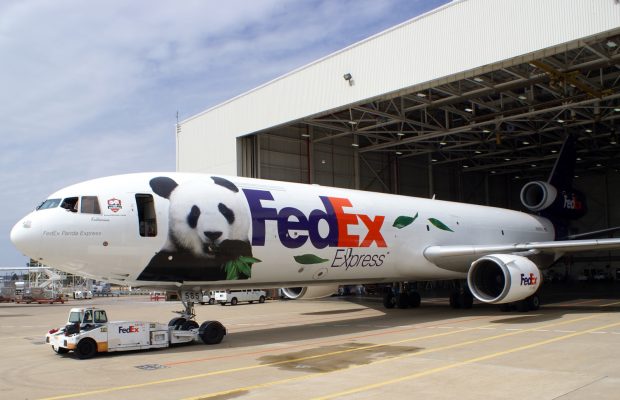
    The giant panda Bao Bao landed at China’s Chengdu Shuangliu Airport on 22 February 2017 at 6:59 pm onboard a custom-decaled FedEx B777 Freighter (B777F)—known as the FedEx Panda Express—from Washington D.C. in the US. Upon arrival, the panda was transported to her new home in Sichuan province, the China Conservation and Research Center for the Giant Panda’s Dujiangyan City Reserve.

    “It’s a great honor for FedEx Express to be able to support this latest mission by donating our expertise and resources, and to be entrusted once again with such a valuable and symbolic shipment,” said Karen Reddington, president, FedEx Express Asia Pacific. “We’ve assisted with giant panda shipments several times in the past and have considerable experience of managing the process, which involves months of planning and cross-disciplinary teamwork. Transporting Bao Bao is also an act of good global citizenship that leverages our unique network and specialized capabilities to help connect the world.”

    Bao Bao, a three-and-a-half-year-old female panda born in August 2013 at the Smithsonian’s National Zoo, is the offspring of Mei Xiang and Tian Tian, both currently living in the US.


    FedEx provided a dedicated aircraft to bring Bao Bao’s brother Tai Shan to China in 2010, and her parents, Mei Xiang and Tian Tian, to the United States in 2000.

  • Biforst Logistics Selects Oracle Cloud Applications to Swiftly Modernize its Retail Operations

    Biforst Logistics Selects Oracle Cloud Applications to Swiftly Modernize its Retail Operations

    Oracle today announced that Biforst Logistics Sdn Bhd, a Malaysian logistics solutions provider, has successfully shifted to Oracle Cloud Applications to enhance its speed-to-market delivery. The entire project was completed in just five weeks from the date of placing the order for service. Biforst selected Oracle Enterprise Resource Planning (ERP) Cloud and Oracle Supply Chain Management (SCM) Cloud to manage the surge in their business, drawing on Oracle Modern Best Practice for Logistics for their transformation to the cloud.

    Biforst Logistics was in need of an improved internal and external IT infrastructure, as well as a need to rapidly scale business operations efficiently via a recent mega-project to procure and fulfill nearly 1,000 stores throughout the country. The implementation of cloud solutions was also critical to curb the increasing internal operational and IT maintenance costs from its older enterprise systems.

    “We received an exciting business opportunity this year to provide our services to one of Malaysia’s leading retailers in the convenience retail sector. This opportunity meant that we needed to quickly scale our internal and external operations, enhance the financial insight into our business, and digitally transform into a modern logistics company, said Karthegesan Bala, COO, Biforst Logistics. “With Oracle ERP Cloud and SCM Cloud solutions, we will lower our IT spend, redirect our resources to more strategic efforts, and streamline our logistics processes, so that we can procure, store, and distribute approximately 2,000 stock keeping units to all the outlets nationwide, and in a much shorter timeframe than before.”

    Oracle ERP Cloud enabled Biforst Logistics to spend more time analyzing financial results and to align its business strategies by automating time-intensive tasks including administrative work, routine transactions, and reporting. Similarly, Oracle SCM Cloud has delivered greater insights and capabilities, along with the visibility and control of its overall transportation network required by Biforst Logistics, to improve and modernise their supply chain, with minimal risk, at a lower cost, and with maximum flexibility.

    “We are delighted to be a part of Biforst Logistics’ journey in modernising their business. They were looking to integrate modern best practices and adopt solutions with embedded analytics to help them meet their business requirements and deliver quick return on investment,” said Jasbir Singh, vice president, ERP/SCM cloud applications of Oracle Asia Pacific. “With guidance from our modern best practice, Oracle’s complete, modern, and proven ERP Cloud and SCM Cloud tools enable Biforst Logistics to leverage  mobile, analytics, and social collaboration capabilities, thus allowing employees to work more efficiently and with the agility to better to meet the needs of their customers.”

    “We are pleased to witness more local companies like Biforst Logistics embrace Oracle Cloud Applications to help grow their business,” said Fitri Abdullah, managing director for Malaysia, Oracle. “We truly appreciate Biforst Logistics’ decision to entrust Oracle to modernise their business and look forward to a continued partnership and success in the year ahead.”

    Oracle delivers the industry’s broadest suite of enterprise-grade Cloud services, including Software as a Service (SaaS), Platform as a Service (PaaS), Infrastructure as a Service (IaaS), and Data as a Service (DaaS).

  • RoRo shipping service to ply Mindanao-Indonesia route

    RoRo shipping service to ply Mindanao-Indonesia route

    The Philippine and Indonesian governments will launch next month a roll-on, roll-off shipping service that will link Davao and General Santos cities to Bitung City in Indonesia, an official of the Mindanao Development Authority (MinDA) said.

    Presidents Rodrigo Duterte of the Philippines and Joko Widodo of Indonesia have been invited to grace the launch in Davao City after the 30th ASEAN Summit in Manila, MinDA Assistant Secretary Romeo Montenegro said.

    He said the DGB shipping will fill a gap in transport connectivity, at least between the Philippines and the rest of the Brunei-Indonesia-Malaysia-Philippines-East Asean Growth Areas and ASEAN itself.

    If pursued, the shipping service will be the first of its kind in the 50-year old ASEAN grouping and will help boost efforts for economic integration.

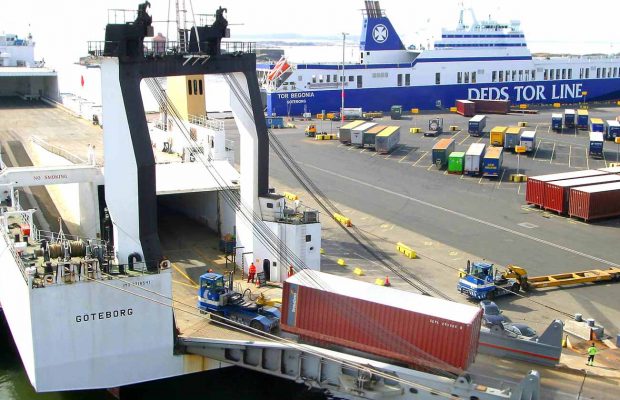
    RoRo carries rolling cargoes and do not require cranes for loading or off-loading as they simply roll on and off the vessel, hence the name. The mode is economical, according to the Asian Development Bank, because it has removed cargo handling costs for labor and equipment, as well as cut the transport time.

    In 2012, the Japan International Cooperation Agency recommended in a study to set up a sea link dedicated to freight services between General Santos City in Mindanao and the Indonesian port of Bitung as the much needed maritime connectivity aimed to revive and strengthen trade between Indonesia and the Philippines.

    The Master Plan of ASEAN Connectivity 2025 cited the need for physical, institutional and people-to-people linkages to help achieve economic, political-security and sociocultural pillars of integration under the ASEAN Economic Community.

    Since its launching in 1994, BIMP EAGA cited improvements made in physical connectivity through improved roads and ports. The BIMP-EAGA Vision 2025 document, however, noted that most of the projects became “stand alone projects” showing benefits at the national level that “fail to clearly demonstrate sub-regional impacts.”

    “Only a few projects have accounted for the need to link the two priority economic corridors of BIMP-EAGA, namely the Western Borneo Economic Corridor (WBEC) and the Greater Sulu and Sulawesi Corridor (GSSC),” the document said.

    For the transport sector strategy of BIMP-EAGA, the goal based on BIMP EAGA Vision 2025 is “interconnected, seamless and safe multi-modal transport.”

    According to the BEV 2025 project list for 2017 to 2025, aside from the DGB route, other sea linkages were also eyed in BIMP-EAGA, such as Bitung-Tahuna-Gensan, Brooke’s Point-Sandakan-Kota Kinabalo, Brooke’s Point-Bataraza-Kudat and Brooke’s Point-Brunei.

    For air linkages, there will be flights for the following routes: Puerto Princesa-Kota Kinabalo, Mulu-Bandar Seri Begawan, Davao-Manado, Pontianak-Bandar Seri Begawan and Balikpapan-Bandar Seri Begawan.

    Poor transport connectivity 

    Poor sub-regional transport connectivity, as identified in the BIMP-EAGA Vision 2025 document, is one of its major challenges.

    It added that uneven economic development has led to different priorities, policies and regulations related to the transport sector.

    Montenegro said there is greater chance to address connectivity from 2017 to 2025 because a total of $23 billion, compared to only $1 billion in the previous decade, has been earmarked for priority infrastructure projects in the area.

    Over half of the amount goes to projects identified in Mindanao because the island needs more infrastructures. Also, a big ticket project, the Mindanao Railway System is in the pipeline.

    The Duterte administration is giving special focus on infrastructure.

    The DGB, Montenegro added, is strategic for the Philippines, not just for Mindanao because it provides a faster and cheaper access for domestic products to be moved in ASEAN and other parts of the world. Notably, Mindanao is physically separated from the other BIMP members.
    Regular flights needed

    Vicente Lao, chairperson of the Mindanao Business Council Philippine representative to the BIMP-EAGA Business Council private sector forum, said the opening of the route will be good for Mindanao and trading with the Indonesian areas in the ASEAN sub-region.

    “The governments should act together to make it happen. The private sector should come in to take advantage,” he told this week.

    Since regular flights between Davao City and Manado in Indonesia have been suspended since 2008, travelers between the two areas have relied only on chartered flights, he added.

    Lao said the service should be made regular to stop the dependency on chartered flights.
    “It is not dependable. It has to be regular trips to make sure it addresses the needs of the businessmen,” he said via telephone.

    He said this means a big cut in transport cost, too. MinDA said it takes three to five weeks to move products from Davao City to Manado.

    With the DGB RoRo route, the travel time will be cut to three days. PortCalls Asia estimated the savings to be around P75,000 (PUS$1,500) per 20-foot equivalent unit.

    Apart from intra-regional trade, the route can also serve as a cheaper alternative for transshipment of goods in Asia, Montenegro said.

    Davao City will use the privately-owned Kudos Port. In General Santos City, the Makar Wharf will be used and in Sulawesi, the Bitung Port, which was recently identified as an international port of entry to Indonesia.

    Enough goods?

    Trade and Industry Assistant Secretary Arturo Boncato Jr. said the revival of regular Davao-Manado flights should follow the opening of the shipping service.

    He said the new shipping link will be crucial in increasing trading in the BIMP EAGA, which is now considered as a building block of ASEAN.

    “Connectivity plays a critical role in trading and the goal of the ASEAN Economic Community,” he added.

    But Boncato, who is the Philippine senior official to the BIMP-EAGA, said while the easier direction is for the route to be used in the transshipment business in Asia, it should really facilitate and improve intra-regional trading in BIMP-EAGA.

    For his part, Bronx Hebrona, who chairs the Committee on ASEAN and BIMP-EAGA of the Regional Development Council in Region 12, asked: “But now when a ship is available, are there enough goods to be transported?”

    He said there is greater push for BIMP EAGA with President Duterte, who he said was instrumental in expediting the preparations for the DGB route opening.

    “It’s possible. But it’s a wait and see situation. We are waiting for concrete terms,” he added.

    Boncato said loading the vessel is already the easier part. The challenge is how to sustain the shipping service.

    Montenegro said a joint meeting is scheduled next week for the Philippine and Indonesian task forces created to prepare for the opening of the route.

    During the Davao General Santos Bitung Business Forum last month, Philippine Transport Undersecretary Fernando Juan Perez described the route as a “gold mine” saying it opens up a lot of opportunities for exporters from both countries.

    Rosan P. Roeslani, chair of the Indonesian Chamber of Commerce and Industry welcomed the proposed opening of the route, as quoted by Jakarta Post on March 15.

    “It is going to be easier to access the Philippine market through the Bitung Port [in North Sulawesi], especially for products and commodities from Indonesia’s eastern regions,” the source added.

    Institutional, governance problems

    According to the MinDA website, the DGB, as one of three pilot areas for the ASEAN RORO Network Initiative, was initially pushed in 2012 by the private sectors in the three cities.

    Policy restrictions in Indonesia like Bitung Port’s status, however, hampered the launch. In 2014, the Indonesian Ministry of Trade officially identified Bitung Port as an international port, allowing entry of food and beverages, electronics and garments.

    Montenegro told the problem has been addressed by greater private and public sector coordination.

    Under the ASEAN Single Aviation Market, BIMP-EAGA is pushing for the revival of air connectivity within its focus areas to increase not only tourism arrivals but also trade activity within and beyond the sub-region.

    Various airlines have previously serviced the route such as Bouraq Airlines (2002), Merpati Nusantara (2005) and Sriwijaya airlines (2006), which have ceased operations due in part to the companies’ financial and operational losses, according to the MinDA website.

    There were on and off availability of chartered flights after the suspension of regular flights.

    Two of the players included Mid Sea Express, an Indonesian air carrier and Wings Air, a subsidiary of the Indonesian carrier’s Lion Air.

    In his April 2016 dissertation titled “Trade Governance Model in the BIMP EAGA,” Soehardi, an Indonesian doctorate student at the University of Southeastern Philippines in Davao City, found that connectivity management in transport infrastructure is an important consideration among traders.

    “The current condition of BIMP EAGA trade governance is marred with institutional and governance problems,” he wrote in his conclusion.

    He added that it created difficulties and cumbersome engagements with small and medium traders in BIMP-EAGA corridors.

    He identified six attributes with “availability of ships/planes as the major indicator.” The others include sufficient cargo ships and airplanes to ferry goods from one country to another and  that a sufficiently equipped port of entry as a good indicator of trade governance.

    No connectivity, no tourists

    Retired government employee Virna Gomez of Davao City said that as a traveler she looks for destinations that do not only have commercial appeal.

    “There are also those who look for historical and cultural purposes. This is the kind that we can see in Indonesia, for example,” she said.

    For her, the idea of connecting Davao and General Santos to Bitung is welcome news, especially for cargo shipping. She said it would open up opportunities for local people to trade in the sub-region. She would also be interested to explore the tourist attractions there. She, however, hoped that a comfortable passenger shipping service should be offered side by side with the cargo ships.

    “It would be an entirely different set of expectations from passengers,” she added.

    But she said the prospects of local tourists like her to go to Indonesia will not depend only on the availability of flights or shipping services.

    “We will be encouraged to travel if there are budget fares available such as the promotional peso-fare package (offered by a Philippine airline), she said.

    She said that for tourists it all redounds to affordability of travel cost and availability of hotels that cater to backpackers.

    “We must also have more of those hotels so that we also draw tourists from Indonesia to our shores,” she added.

    Unlike archipelagic Indonesia, she said, Malaysia seems to be a more attractive destination because you can take a bus or a train in going from one destination to another.

    “But I like to go to Bali and Yogyakarta, given the chance,” she said.

    Gomez, who in 2010 set up a small travel agency to keep herself busy, said she rarely get bookings for travel to Indonesia or Malaysia.

    ’Get acts together’

    Businesswoman Mary Ann Montemayor said this should not be a cause for discouragement.

    She said the nature of BIMP EAGA is really “going slow” and small, not grand, so hard work is needed to push ahead.

    But Montemayor, who sat at the BIMP EAGA Tourism Council from 1998 to 2008, said private and public sectors should get their acts together.

    “By all means, the impasse should be broken. It’s impossible to do trading without connectivity,” she added.

    Any aggressive marketing, she said, could help tourism and trade but it should be backed by physical connectivity.

    Assistance has been extended to micro, small and medium enterprises to help them compete in the ASEAN market. But Montemayor said connectivity will their chances.

    She said the ease of travel due to the Davao-Manado flights enabled business to pick up, although not as fast as expected.

    “When it happened, the flights were already suspended,” she said.

    She argued that it’s not entirely for the lack of attractions but that other destinations just had the edge in the competition.

    “The challenge is how to build up the market and prove to the airlines that it’s worth the risk,” she said in the sidelines of an ASEAN meeting in Davao last month.

    Like home

    Joanna Ruth Paloma, an English teacher at Bukidnon State University, recalled fond memories of her visit Manado in June 2012. She was then a member of a 40-person delegation of the university chorale who performed there for the Philippine Independence Day celebration organized by the Philippine Consulate.

    The group flew with Wings Air, an Indonesian airline serving the route with a 70-seater aircraft.

    Joanna said they traveled to another city and country but felt like she was home. “I felt like we were closely related in culture and language (separated only by the seas).”

    Indonesian food, she added, is familiar although a lot spicier. The style of the houses and buildings was also similar. In 2012, she compared Manado to Cagayan de Oro City. She said Manado folks were hospitable and were fond of Philippine tourists.

    She was saddened that there are no more regular flights serving the route.

    “I hope it will be revived. It’s good to connect with our neighbors. There were differences but there must be more similarities. It’s worth exploring,” she added.
  • Global smart transportation market expected to reach US$237,701 million by 2022

    Global smart transportation market expected to reach US$237,701 million by 2022

    According to a new report published by Allied Market Research, titled, Smart Transportation Market by Solution and Service: Global Opportunity Analysis and Industry Forecast, 2014-2022,” the global smart transportation market was valued at US$63,667 million in 2015, and is expected to reach US$237,701 million by 2022, growing at a CAGR of 18.6 percent from 2016 to 2022. Cloud services segment is anticipated to dominate the market during the forecast period. Europe was the dominant region, accounting for approximately 33 percent share of the smart transportation market revenue in 2015.

    Rise in number of vehicles results in high traffic congestion, leading to the requirement of smart transportation network to ease traffic congestion, enhance the safety, sustainability, and efficiency of transportation network. In addition, most consumers are now demanding smart transportation options that can easily navigate the roads with the least possible scope of congestion. The increasing government support and investments towards development of smart cities provides a major boost to the market. For instance, the Government of India aims to develop 100 smart cities by using smart technology to improve the efficiency of services and meet the residents’ needs. However, the need for high capital investment, owing to the complete restoration of the existing transport system, restrains the market growth.

    “Smart transportation system is a necessity, owing to the rising demand for efficient transportation networks worldwide. These systems have witnessed the highest growth in cloud services segment, due to the advancement in technology and increased demand for storage, access, and management of data remotely. In addition, parking management systems are expected to increase their market share at a notable rate. Asia-Pacific and Brazil possess enormous opportunities for the players operating in the smart transportation systems market.” states Sheetanshu Upadhyay, research analyst at Allied Market Research.

    The solutions segment is divided into hybrid ticketing management system, parking management & guidance system, integrated supervision system, and traffic management system. In 2015, traffic management system accounted for the largest revenue, owing to rapid urbanization and the emerging concept of smart cities and smart traffic. However, the parking management system market is anticipated to witness the highest growth, with a CAGR of 18.8 percent from 2016 to 2022.

    The service segment is further divided into business, professional, and cloud services. In 2015, cloud services generated the largest revenue, owing to rapid increase in demand for cloud services smart transportation system. However, this segment is anticipated to witness the highest growth over the forecast period, with a CAGR of around of 18.8 percent  from 2016 – 2022.

    Europe held the largest market share in 2015, and is anticipated to maintain its dominance throughout the forecast period. This is due to increase in demand for smart transportation and concern of users towards the environment. Additionally, investments in emerging smart cities would create growth opportunities for the smart transportation market in the region.

  • Indonesia’s Bonded Logistic Centers Facilitated to Reduce Logistic Cost

    Indonesia’s Bonded Logistic Centers Facilitated to Reduce Logistic Cost

    The government will provide facility for Bonded Logistic Centers (PLB) to improve efficiency and reduce logistic cost for industry, support provision of basic materials and facilitate exports and basic material imports.

    “The gist is to cut logistic cost,” Trade Minister Enggartiasto Lukita said on the sidelines of commissioning a PLB at the Grahadi State Building here on Wednesday night. In the commissioning ceremony almost midnight, the minister and East Java Governor Soekarwo witnessed the signing of a number of agreements in the trade sector.

    The cooperation agreements were signed between Director of PT Indra Jaya Swastika (IJS) and the Indonesian Textile Association, the Indonesian Footwear Association, the Indonesian Association of Timber and Furniture, on the utilization of PLBs. PLBs are a concrete form of the follow up of the third Economic Policy Package, the Trade Minister said.

    He said currently there are 32 units of PLB located in various areas including Surabaya, Karawang, Cikarang, Cibitung, Purwakarta, Cilegon, Cakung, Bandung, Denpasar, Balikpapan, Aceh , etc. “PLBs support various industrial sectors including oil and gas, mining, textile, chemical, food, cosmetic and automotive sectors,” he said.

    He said in 2016, the country’s trade had a surplus of US$8.8 billion or an increase from US$7.5 billion in 2015. In 2017, the government hopes to post an economic growth of 5.5 percent – 5.8 percent , up from 5.1 percent in 2016 with target at 6.1 percent set for 2018. The minister said he was optimistic the 2017 targets would be reached with a series of breakthroughs in the trade sector.

    Meanwhile, PT Indra Jaya Swastika, a logistic company, said it supports the East Java administration in its program to improve industrial competitiveness. “PLB IJS comes to support various industries mainly shoe making industry, food industry and small and medium industries,” its president director Utami Prasetiawati said.

  • FedEx transports giant panda from United States to China

    FedEx transports giant panda from United States to China

    FedEx Express, a subsidiary of FedEx, will donate its logistical services to transport a giant panda named Bao Bao from the United States to China on 21 February 2017. Working in conjunction with the Smithsonian’s National Zoo, FedEx Express will fly the panda on a direct charter flight non-stop from Washington’s Dulles International Airport to Chengdu, China.

    Bao Bao, a female panda born in August 2013 at the Smithsonian’s National Zoo, is the offspring of Mei Xiang and Tian Tian, both currently living in the U.S.  Bao Bao will be placed in a special crate provided by FedEx and travel onboard a custom-decaled FedEx Express 777 Freighter, known as the “FedEx Panda Express.”

    “The transport of Bao Bao represents the seventh time that FedEx is transporting a giant panda, a national treasure of China,” said Eddy Chan, senior vice president, FedEx China.  “We are honored and proud to serve as the trusted carrier.  Using our extensive global network and strong operations, our professional team will surely deliver Bao Bao to Chengdu, China fast and securely.”

    In addition to donating all the necessary air transportation for Bao Bao, FedEx Express will provide ground and logistical support in Washington, D.C., including a vehicle to deliver the panda from the Smithsonian’s National Zoo to the airport.  FedEx pilots, drivers and operations specialists selected to transport the panda are among the company’s most seasoned team members.

    FedEx Express, the Smithsonian’s National Zoo, and the China organizers will work collaboratively to ensure that all necessary precautions are taken to provide a safe and comfortable flight for Bao Bao.  The Smithsonian’s National Zoo is already preparing the panda for her move to make sure she is comfortable and safe throughout her journey.  Part of the preparations includes acclimating Bao Bao to a travel crate.

    One panda keeper and one veterinarian from the zoo have been granted special flight privileges to accompany Bao Bao onboard the aircraft.  The panda team will continuously monitor Bao Bao during the trip and will travel with a supply of water, bamboo and her favorite treats, including apples, pears and cooked sweet potatoes.

    Upon arrival in Chengdu, Bao Bao will be driven to one of the bases run by the China Conservation and Research Center for the Giant Panda.  A panda keeper from the Smithsonian’s National Zoo will follow and remain with Bao Bao for a short time while she acclimates to her new home.

    Due to security regulations, the departure and arrival events for the panda will be closed to the general public.

  • Newegg to launch in 20 new countries including China

    Newegg to launch in 20 new countries including China

    Newegg have just announced that they will be launching a standalone China Marketplace later this year, which will be the first of a few new Market entries in 2017. They have ambitions to launch in 20 new countries in the course of the next year.

    Newegg are a retailer without physical stores, but alongside their own products they enable third party merchants to list inventory and sell to their customers.

    The 20 new Newegg marketplaces

    The new marketplaces will allow US and European manufacturers and retailers to sell products to consumers in other countries. Existing marketplace sellers will be able to list products on foreign marketplaces through Newegg’s Seller Portal system, which allows sellers to target listings and prices by region.

    Newegg currently allows customers from eight English-speaking countries to shop from Newegg’s US and European marketplace merchants online. The countries Newegg is expanding this year will either have access to purchasing goods from Newegg’s current marketplace or a separate site translated into local languages.

    Newegg in China

    However, Newegg sees its biggest opportunity in China, although this is a tough territory to crack with Alibaba’s marketplaces accounting for about 80% of the Chinese e-retail market. The Newegg Chinese marketplace will incorporate local payment options, including mobile and social payment methods. Newegg also will have a mobile app just for Chinese consumers, as the majority of consumers in the country shop using smartphones.

    Newegg’s competitive advantages for sellers over dominant Chinese marketplaces is their relationship with its existing US and European seller base and the ability to address the challenges of selling into China, such as cross-border fulfillment. Chinese consumers have voracious appetites for genuine US and European branded goods and are sometimes wary of purchasing from Chinese retailers in case the goods are counterfeit.

    Newegg has a Chinese website, Newegg.cn, where Newegg sells merchandise it owns. The new Chinese site will soon list products from marketplace sellers. When it launches it will sell goods from US and European merchants, but it may allow Chinese retailers to sell on the marketplace if the interest is there.

    What’s in it for UK, EU and US retailers?

    China has traditionally been a tough market, not just for familiar marketplaces such as eBay and Amazon, but also for retailers who want to list for example on Alibaba’s TMall. With $100k bonds required, local support, shipping, returns, the language barrier and different customer service and support expectations, the Chinese consumer can be quite demanding in Western terms.

    Newegg will remove many of the traditional obstacles of selling into China – they’re a retailer who already knows the country and partnering with them could become a key entry point to target Chinese consumers. Plus of course this is just one of 20 new territories that Newegg will open up to third party retailers this year.

  • EU expects free trade pact with Vietnam to take effect early 2018

    EU expects free trade pact with Vietnam to take effect early 2018

    The European Union is trying to capitalize on free-trade interest amid gloom over Trump policies.

    The European Union is seeing increased impetus around the world to move forward with Free Trade Agreements (FTA) with the bloc, which will make the most of uncertainty over the outlook for U.S. trade policy, the EU’s trade envoy said late last week.

    The EU was close to finishing or implementing FTAs with Japan, Vietnam and Singapore and was readying to start talks with Australia, New Zealand and Chile – all members of a U.S-inspired Trans-Pacific Partnership (TPP) devastated by Donald Trump’s decision to pull Washington out of the deal on day three of his presidency.

    “Today, there is political opportunity to say that those of us who believe in open markets and good trade, we are willing to do trade agreements,” EU Trade Commissioner Cecilia Malmstrom told in an interview.

    “Whether that (TPP) is dead, or partially dead, it is not for me to judge. But we have seen an increase of willingness to step up trade agreements.”

    One project thrust back on the table is an FTA between the EU and the Association of Southeast Asian Nations (ASEAN) that was abandoned in 2009 due to disparities in wealth and standards between its 10 markets.

    Malmstrom also said it should not be assumed an EU-U.S. trade deal had collapsed, despite indications the Trump administration would pursue a protectionist agenda.

    EU and U.S. officials were negotiating for more than three years on a Transatlantic Trade and Investment Partnership (TTIP) and that could be easily resumed, she said, and should not be impacted by Britain’s looming departure from the EU.

    “We have left in a tidy order, when we stopped negotiating before the change of administration,” she said. “It makes a lot of sense to facilitate trade between the EU and the U.S.”

    She added: “We need to be patient. But while waiting for more clarity from the American administration, there are lots of other partners as well.”

    Malmstrom said ASEAN, a region with combined $2.6 trillion GDP and some of the world’s fastest-growing economies, had become integrated “in an impressive way.”

    EU figures show trade between the EU and ASEAN region was worth $220 billion last year. The EU is its biggest source of investment, according to the EU-ASEAN business council.

    FTAs with Vietnam and Singapore should come into force early next year, Malmstrom said, while negotiations with Indonesia and the Philippines were “at full speed” and discussions had taken place about reviving plans for an FTA with Malaysia.

    Malmstrom said establishing a bloc-to-bloc trade deal would be a challenge, so an FTA with ASEAN might be less comprehensive that others.

    “There’s still a lot of differences between the richest and poorest countries here, so there will have to be different levels and it will not be as ambitious,” she said.

  • NEC updates postal automation system for Hongkong Post

    NEC updates postal automation system for Hongkong Post

    In recent years, Hong Kong has witnessed a rise in the number of postal items addressed in traditional Chinese characters. This has in turn boosted the need for automated sorting and processing of addresses written in traditional Chinese characters in addition to those handwritten or printed in English.

    This new function has been introduced to 15 systems delivered to Hongkong Post by NEC on several occasions since 2008 that are currently in operation at the Central Mail Centre in Kowloon Bay. The introduction of this function enables the automatic sorting and processing of up to 564,000 postal items with addresses written in traditional Chinese characters per hour, thereby contributing to the improvement of Hongkong Post’s operational efficiency.

    NEC has been doing business with Hongkong Post for approximately 30 years since the postal operator’s introduction of a postal automation system in the latter half of the 1980s. The introduction of this function was made possible by the high acclaim NEC has received over the years for its achievements and technological capabilities.

    NEC began developing its postal automation system business in 1961, and has since then delivered systems to postal operators in more than 50 countries around the world. In Japan, domestic postal operators have utilized a function for reading and sorting addresses written in Chinese characters as part of postal automation processing since the 1980s. The introduction of this function by Hongkong Post was made possible by applying the wealth of knowhow NEC has developed in Japan over the years in reading and sorting addresses written in Chinese characters. Moreover, it has resulted in increased efficiency and a reduction in the amount of time needed for processing.

  • Hactl handles Longines Masters competitors for fifth successive year

    Hactl handles Longines Masters competitors for fifth successive year

    Hong Kong Air Cargo Terminals (Hactl) has once again handled 60 horses competing in this year’s Longines Masters of Hong Kong. It is the event’s fifth year, and Hactl has handled the valuable equine competitors in every year of the competition.

    The transportation of the horses from Liege to Hong Kong, and their return journeys after the event, are being coordinated by European Horse Services (EHS), one of the world’s leading equestrian transport specialists. This year’s chosen carrier is Etihad Airways, and forwarding is being performed by DB Schenker.

    The Longines Masters first came to Hong Kong in 2013, and is now recognised as Asia’s largest and most prestigious equestrian event. This year’s Longines Masters of Hong Kong is the culmination of an intercontinental series which began in Los Angeles in September, moving to Paris in December; it is once again taking place at Hong Kong’s AsiaWorld-Expo complex.

    EHS founder and president Filip Vande Cappelle is also vice chairman of the Animal Transportation Association, which held its annual conference in Hong Kong to coincide with the Masters.  Says Filip, “The Longines Masters has become one of the most important events in the global equestrian calendar, attracting the highest-calibre entrants from around the world.”

    “It’s an honour for EHS to have been selected once again as the official transportation partner by EEM, the event organisers. We are also very happy to be working with Hactl again; their facilities, and the attention to detail which their staff bring to the all-important handling process, are second to none.”

    Hong Kong’s top-ranked rider, Jacqueline Lai, accompanied her horses BASTA and DER SENAAT 111, on the inbound flight to Hong Kong. On arrival, she was greeted by Hactl chief executive Mark Whitehead. Jacqueline is a member of The Hong Kong Jockey Club Equestrian Team, and won Hong Kong’s first-ever equestrian medal, in 2010. She is the only Hong Kong resident taking part in this year’s contest.

    Says Mark Whitehead: “It’s great to be involved in this wonderful event again, and it was particularly good to have the opportunity of meeting Hong Kong’s very own competitor. Both Jacqueline and Hactl are enthusiastic supporters of the Longines Masters, which has really put Hong Kong on the equestrian map.”