Retail News CRM

Blog

  • Experience Personalized Skincare Revolution at Laneige’s New Flagship Store in Seoul

    Experience Personalized Skincare Revolution at Laneige’s New Flagship Store in Seoul

    Korean beauty giant Laneige has recently unveiled its first worldwide flagship store, located in the heart of Seoul’s Myeongdong district. This landmark opening underscores the increasing significance of technology and personalization in the retail beauty industry.

    The newly reimagined store, Laneige Seoul, comes after an 18-month redesign process. It is a fusion of retail space, beauty services, and on-demand manufacturing, all housed under one roof. The central theme of the store is to provide a tailored beauty experience. Customers can create customized skincare, complexion, and lip products with the help of AI-powered diagnostics and advanced in-store production technology.

    A Unique Shopping Experience

    The president of the Laneige brand, Pilkyung Choi, emphasized that the new Laneige Seoul is more than just a store. According to Choi, it embodies the future of beauty, technology, and design. Each visit to the store will offer a unique experience, and every product purchased will be exclusively personalized.

    Among the store’s product offerings is an exclusive version of Laneige’s Lip Sleeping Mask. This allows customers to select from ten fragrances that can be combined to create 45 different scent combinations. Additionally, the store also presents a Neo Cushion service that is made-to-order. The foundation is color-matched to the customer’s skin tone from a selection of 150 shades and is manufactured on site using robotic technology.

    In terms of skincare, customers are provided with an AI-based skin analysis. Based on the results, they are then matched with a personalized version of Laneige’s Cream Skin toner. This product is mixed in-store using one of 25 formulations and is typically ready within about 20 minutes.

    Laneige Brand and Its Offering

    Founded in 1994, Laneige is a part of the Amorepacific family. The brand has gained recognition for its hydration-focused skincare offerings, including the popular Laneige Lip Sleeping Mask and Laneige Water Sleeping Mask.

    In 2024, Laneige appointed global pop icon and BTS member Jin as its brand ambassador.

    Questions & Answers

    What is the central theme of the new Laneige Seoul store?
    The central theme of the store is to provide consumers with a customized beauty experience through AI-powered diagnostics and advanced in-store production technology.

    What kind of personalized products can customers create at the Laneige Seoul store?
    Customers can create personalized skincare, complexion, and lip products. They can also have foundation that is color-matched from a selection of 150 shades.

    What is unique about the Laneige’s Lip Sleeping Mask at the Laneige Seoul store?
    Customers can select from ten fragrances that can be combined to create 45 unique scent combinations.

  • Singapore’s Retail Boom: Surging Petrol Prices Fuel Accelerated Growth in April

    Singapore’s Retail Boom: Surging Petrol Prices Fuel Accelerated Growth in April

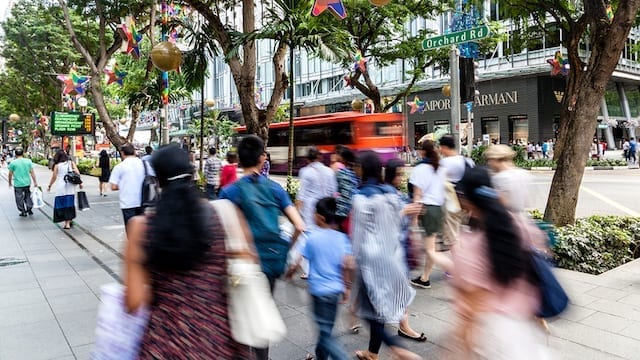
    In April, Singapore’s retail sales growth accelerated, with most sectors, especially petrol service stations, experiencing significant advancements.

    The Department of Statistics reported a 4.5% rise in retail sales, excluding motor vehicles, parts, and accessories. This increase builds upon the revised 3% growth seen in March. The estimated total value of retail sales touched SG$3.6 billion (US$2.8 billion), with online sales accounting for 18.2% of this figure. On a seasonally adjusted basis, retail sales in April increased by 0.4% compared to the previous month.

    Strong Sector Performances Drive Growth

    The surge in April’s retail sales was fueled by robust performances across most sectors. Petrol service stations observed a substantial year-on-year growth of 14.4%, primarily attributable to increased fuel prices resulting from the Middle East conflict. The recreational goods sector followed closely, registering a sales growth of 12.3%.

    Several other sectors, including apparel and footwear, cosmetics and toiletries, supermarkets and hypermarkets, and optical goods and books, also posted robust improvements, with growth figures ranging between 5% and 8%.

    Conversely, department stores and food and alcohol retailers experienced a slight dip in sales, recording declines of 1.1% and 0.1% respectively.

    Moderate Increase in Food and Beverage Services

    In the food and beverage services sector, sales marginally increased by 0.4% in April, showing a slowdown from the 2.3% growth observed in March. The total sales value of food and beverage services was estimated at SG$1.5 billion, with nearly one-fifth of this amount generated from online sales.

    Questions & Answers

    Which sector experienced the most significant growth in retail sales in Singapore in April?
    The petrol service stations sector saw the most substantial growth, with a year-on-year increase of 14.4%.

    What were the total estimated retail sales in Singapore in April?
    The total estimated retail sales value in Singapore in April was SG$3.6 billion (US$2.8 billion).

    How did the food and beverage services sector perform in Singapore in April?
    The food and beverage services sector saw a moderate increase in sales of 0.4% in April.

  • Juspay Teams Up With Mastercard to Expand Click to Pay Across Asia (Rewritten)

    Juspay Teams Up With Mastercard to Expand Click to Pay Across Asia (Rewritten)

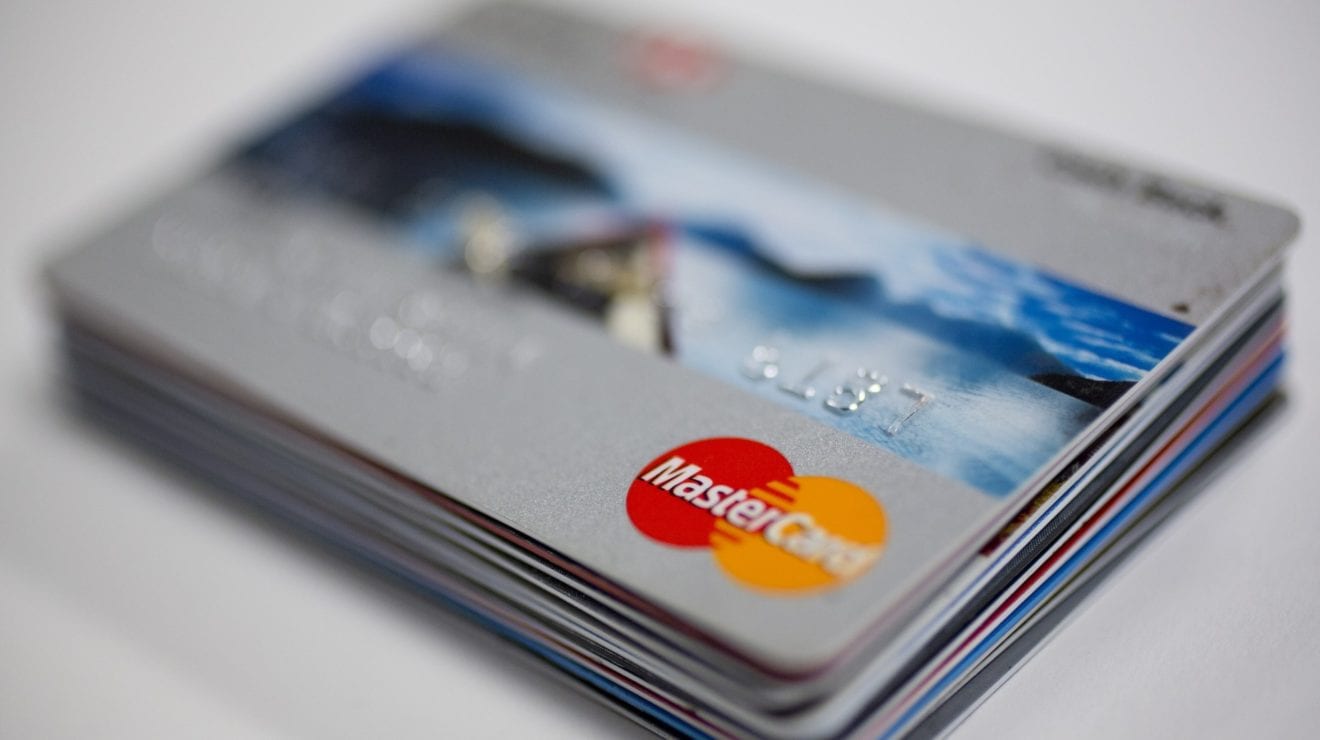
    Juspay, the unicorn in the payments technology industry, has become a part of Mastercard’s global partner ecosystem, aiming to speed up the adoption of the Click to Pay system. This move comes as merchants throughout Asia are increasingly looking for quicker, more secure digital checkout processes.

    As a Mastercard Engage partner network’s certified third-party partner for Mastercard Click to Pay, Juspay strengthens its position in the rapidly expanding digital payments arena. This collaboration empowers Juspay to assist financial institutions and merchants in hastening the implementation of Click to Pay, a simplified online checkout solution by Mastercard. This enables consumers to finalize card transactions without the need to manually enter payment details.

    This initiative succeeds a triumphant launch in Brazil and represents the company’s drive to boost Click to Pay usage throughout Asia. This region’s e-commerce growth and the ongoing surge in digital payment adoption continue to influence consumer behavior.

    Making Checkout Seamless

    Click to Pay is devised with the aim of minimizing checkout friction and enhancing conversion rates by simplifying the online payment procedure. By integrating with Mastercard, Juspay offers merchants a comprehensive range of advanced payment features. These encompass biometric authentication via passkeys, card tokenisation, and streamlined checkout functionality aimed at reducing cart abandonment.

    Mark Ronayne, Associate Director – International at Juspay, stated that becoming a part of the Mastercard Engage partner network is a vital landmark as they scale Click to Pay globally. He added that Juspay is determined to eradicate checkout friction while maintaining high-security standards, thus helping merchants offer consumers a uniform one-click payment experience.

    Expanding Payments Reach

    This partnership also entails Juspay to collaborate with Mastercard in supporting merchant onboarding and the global implementation of Click to Pay solutions.

    Having been founded in 2012 and based in Bengaluru, India, Juspay has risen to become one of the world’s largest payments infrastructure providers. The company facilitates over 300 million transactions daily and supports an annualised payment volume surpassing $1 trillion.

    Juspay’s clientele includes leading global brands like Amazon, Google, HSBC, Agoda, Swiggy and Zurich Insurance. The company, backed by investors such as SoftBank, Accel, VEF and Wellington Management, employs over 1,500 payment specialists spanning Asia-Pacific, the Middle East, Europe, Latin America, UK and North America. It secured a $50 million Series D follow-on funding round, led by WestBridge Capital earlier this year, valuing the company at around $1.2 billion.

    The recent Mastercard partnership follows in the wake of payment providers stepping up efforts to reduce checkout friction, bolster security, and gain a larger slice of the rapidly growing global e-commerce market.

    Questions & Answers

    What is the aim of the partnership between Juspay and Mastercard?
    The partnership aims to accelerate the adoption and implementation of Mastercard’s Click to Pay system, offering consumers a streamlined online checkout experience.

    What are the features offered to merchants through Juspay’s integration with Mastercard?
    Juspay, by integrating with Mastercard, provides merchants with a suite of advanced payment features. These include biometric authentication through passkeys, card tokenisation, and simplified checkout functionality.

    What has been the impact of Juspay’s collaboration with Mastercard on the company’s valuation?
    While the partnership’s direct impact on Juspay’s valuation is not specified, it is worth noting that the company is valued at approximately $1.2 billion following a $50 million Series D follow-on funding round.

  • Mondelez Injects $8M into Melbourne Candy Plant for Technological Boost: Celebrating 50 Years of Sweet Success

    Mondelez Injects $8M into Melbourne Candy Plant for Technological Boost: Celebrating 50 Years of Sweet Success

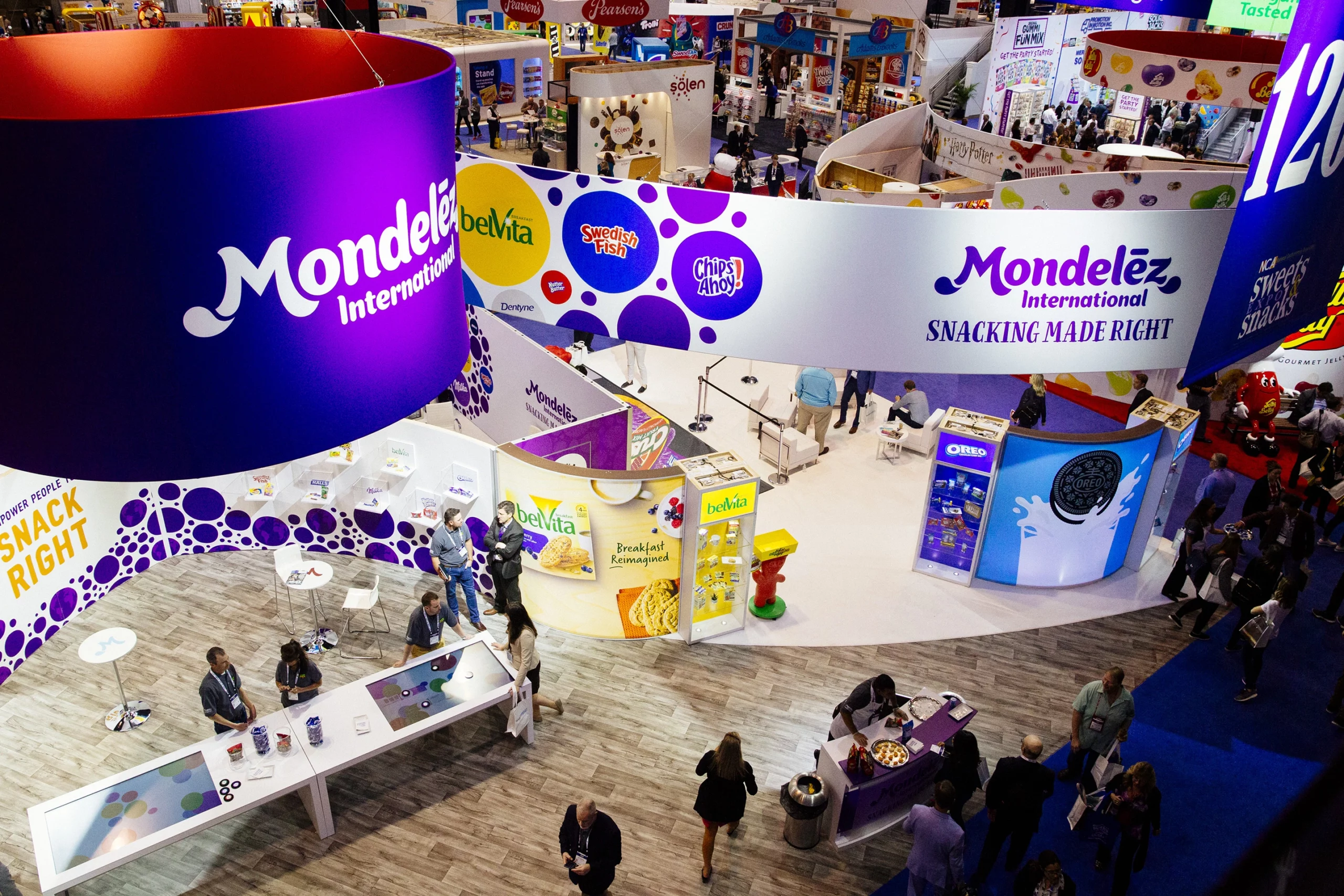
    Mondelez International recently commemorated the 50th anniversary of its Scoresby confectionery factory in Melbourne’s east, coinciding with a $8 million investment in new packaging technology. This crucial advancement will bolster the production of over 120 products, including snack-sized bags from brands like Cadbury Pascall Clinkers, Sour Patch Kids, and The Natural Confectionery Company.

    This new funding takes the total investments in the Scoresby location to $30 million since 2022. The company has clarified that this financial boost is specifically aimed at sparking regional innovation across various aspects like product flavours, range, and packaging. It will also enable the plant to accommodate ever-evolving consumer trends.

    A Commitment to Local Production

    Toby Smith, the president of Mondelez International for Australia, New Zealand, and Japan, highlighted the strategic importance of the packaging upgrade. He stated that it lay the groundwork for securing the future production at the local facility.

    This move falls in line with the company’s long-term growth projections. By 2035, Mondelez International anticipates an equal split in business growth between chocolate and non-chocolate products.

    Smith expressed immense pride in the Scoresby factory’s 50-year manufacturing history and the numerous employment opportunities it has created for Victorians in Melbourne’s east.

    Mondelez International currently employs over 1200 individuals across its operations in Victoria. Their reach extends to locations in South Melbourne, Ringwood, Scoresby, Dandenong South, and a national distribution centre in Truganina.

    Of note is the Scoresby plant’s commitment to sustainable operations, running on 100% renewable electricity. The plant is responsible for manufacturing jelly candies such as Snakes and Party Mix.

    Earlier this year, Mondelez International reintroduced its In A Biskit Crispy Potato flavour in the Australian market, a product that initially gained popularity in the 1990s.

    Questions & Answers

    What was the purpose of the $8 million investment by Mondelez International?
    It was directed towards new packaging technology, with the intention of enhancing the production of over 120 products and to adapt to changing consumer trends.

    What is the future business growth expectation for Mondelez International?
    By 2035, Mondelez International expects to see an equal split in business growth between chocolate and non-chocolate products.

    What is significant about the Scoresby plant’s operations?
    The Scoresby plant, which manufactures various jelly candies, operates on 100% renewable electricity, underlining the company’s commitment to sustainability.

  • Mastercard Boosts Digital Banking in Asia with Merchant-Funded Offers Integration

    Mastercard Boosts Digital Banking in Asia with Merchant-Funded Offers Integration

    In response to the rapid digital transformation impacting consumer habits throughout the Asia-Pacific region, financial institutions are focusing on redefining their mobile applications to become integral components of daily transactions.

    Mastercard, a global leader in digital payments, predicts that this shift could drastically alter the function of banking applications in the region. The company recently divulged its intentions to broaden its Mastercard Offers Network throughout the Asia-Pacific, which will empower banks to deliver merchant-funded offers directly on their digital banking platforms.

    This strategic move corresponds with the Asia-Pacific’s solidification as the globe’s primary digital payments market. As reported by Mastercard, transaction volumes in this area hit nearly $16 trillion in 2025. Concurrently, consumers are becoming familiar with the convenience provided by all-in-one ‘super apps’ such as Grab and GoTo, which amalgamate payments, transportation, food delivery, and rewards into a unified ecosystem.

    Spanning the Divide Between Banks and Merchants

    The potential of this strategy extends beyond the banking sector. Merchants are grappling with escalating pressure to justify their marketing expenditure, despite numerous digital advertising channels struggling to verify if impressions and clicks result in actual sales.

    Mastercard contends that both banks and merchants possess assets sought after by the other party. Banks have access to large audiences of reliable, authenticated users, whereas merchants contribute enticing offers and marketing budgets. According to Mastercard, the missing element is an infrastructure layer with the capability to connect both parties on a large scale.

    The Mastercard Offers Network intends to supply this infrastructure. Via this platform, merchant-funded offers can be featured directly within banking apps and connected to real card transactions, permitting merchants to assess campaign effectiveness based on confirmed purchases instead of substitute metrics.

    Taking Advantage of Cross-Border Commerce

    The platform’s primary appeal is its focus on both domestic and cross-border commerce, which is notably relevant in the Asia-Pacific region, where regional travel has seen a substantial resurgence in recent years.

    Mastercard approximates that about 70 percent of travel expenditure in the region currently stems from travellers within the Asia-Pacific, with more than 331 million international visitors reported in 2025. By incorporating cross-border offers into their apps, banks can maintain relevance to customers whether they’re shopping domestically or abroad.

    Merchants benefit from this model by gaining access to consumers at the point of purchase, while banks obtain an additional tool for engagement that surpasses traditional banking services.

    The expansion of the Mastercard Offers Network comes as digital banking adoption continues to gain momentum throughout mature and emerging markets in Asia. Consumer expectations are also evolving, with users increasingly anticipating personalized experiences and rewards integrated into their digital journeys.

    Mastercard’s approach mirrors a wider industry trend: transforming banking apps from transactional tools into commerce ecosystems. Instead of solely competing on payments and account services, banks are progressively aiming to become platforms where consumers discover offers, make purchases, and interact with merchants.

    The Mastercard Offers Network is already up and running in markets such as the United States, Canada, Australia, Poland, and Hong Kong. As the platform extends throughout the Asia-Pacific, it could provide banks with a novel method for bolstering customer loyalty, while offering merchants a more quantifiable and targeted marketing channel.

    Whether banking apps will ultimately be able to compete with the region’s prevalent super apps is yet to be determined. However, it is evident that the competition for consumer engagement is progressing far beyond traditional financial services.

    Questions & Answers

    What is the purpose of the Mastercard Offers Network?
    The network aims to provide an infrastructure that allows merchant-funded offers to be displayed directly within banking apps, linking them to actual card transactions.

    How does the integration of cross-border offers into banking apps benefit financial institutions and their customers?
    Financial institutions can remain relevant to customers whether they’re shopping domestically or abroad, while consumers gain more personalized experiences and rewards.

    What trend is Mastercard’s strategy reflecting in the broader industry?
    Mastercard’s strategy reflects the transformation of banking apps from transaction tools into commerce ecosystems. Banks are increasingly seeking to become platforms where consumers discover offers, make purchases, and interact with merchants.

  • Juspay Teams Up With Mastercard to Expand Click to Pay Across Asia

    Juspay Teams Up With Mastercard to Expand Click to Pay Across Asia

    The payments technology unicorn has joined Mastercard’s global partner ecosystem to accelerate the adoption of Click to Pay, as merchants across Asia seek faster and more secure digital checkout experiences.

    Payments technology company Juspay has joined the Mastercard Engage partner network as a certified third-party partner for Mastercard Click to Pay, strengthening its position in the fast-growing digital payments ecosystem.

    The partnership enables Juspay to help merchants and financial institutions accelerate the deployment of Click to Pay, Mastercard’s streamlined online checkout solution that allows consumers to complete card transactions without manually entering payment details.

    The move follows a successful rollout in Brazil and marks the company’s push to expand Click to Pay adoption across Asia, where e-commerce growth and digital payment penetration continue to reshape consumer behavior.

    Focus on Frictionless Checkout

    Click to Pay is designed to reduce checkout friction and improve conversion rates by simplifying the online payment process. Through its integration with Mastercard, Juspay is offering merchants a suite of advanced payment capabilities, including biometric authentication through passkeys, card tokenisation, and streamlined checkout functionality aimed at reducing cart abandonment.

    «Joining the Mastercard Engage partner network is an important milestone as we scale Click to Pay globally,» said Mark Ronayne, Associate Director – International at Juspay.

    He added that the company is focused on eliminating friction during checkout while maintaining high security standards, allowing merchants to provide consumers with a consistent one-click payment experience.

    Growing Payments Footprint

    The collaboration will also see Juspay work alongside Mastercard to support merchant onboarding and implementation of Click to Pay solutions globally.

    Founded in 2012 and headquartered in Bengaluru, India, Juspay has emerged as one of the world’s largest payments infrastructure providers. The company processes more than 300 million transactions daily and supports an annualised payment volume exceeding $1 trillion.

    Its client roster includes major global brands such as Amazon, Google, HSBC, Agoda, Swiggy and Zurich Insurance.

    Billion-Dollar Valuation

    Juspay employs more than 1,500 payment specialists across Asia-Pacific, the Middle East, Europe, Latin America, the UK and North America. The company is backed by investors including SoftBank, Accel, VEF and Wellington Management.

    Earlier this year, Juspay secured a $50 million Series D follow-on funding round led by WestBridge Capital, valuing the company at approximately $1.2 billion.

    The latest Mastercard partnership comes as payment providers intensify efforts to reduce checkout friction, improve security and capture a larger share of the rapidly expanding global e-commerce market.

  • Chinese Beauty Giant JudyDoll Debuts First Physical Store in Trendy Hong Kong

    Chinese Beauty Giant JudyDoll Debuts First Physical Store in Trendy Hong Kong

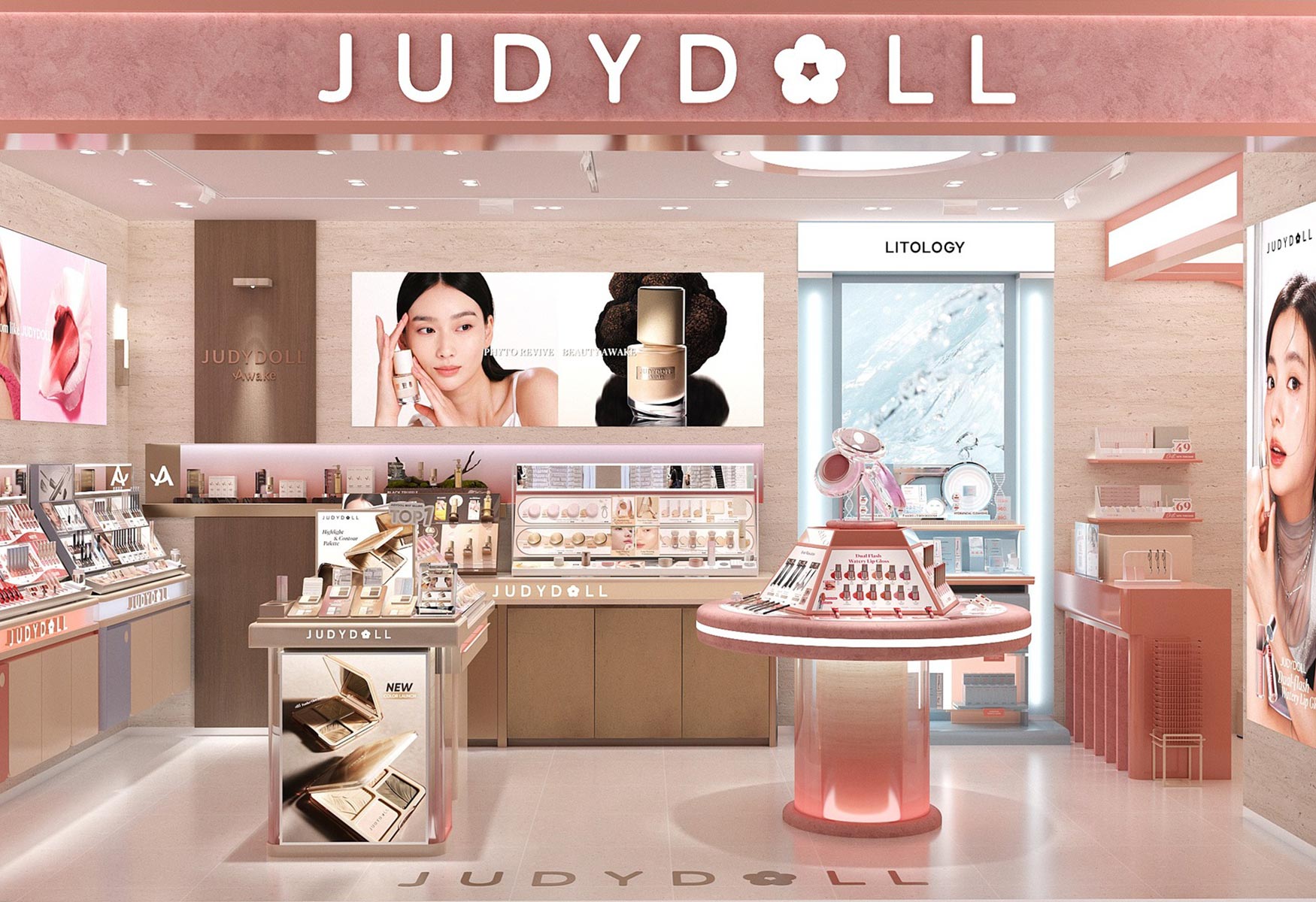
    JudyDoll, a popular beauty brand from mainland China, has recently ventured into the physical retail space, having inaugurated its first store in Hong Kong. This move signifies the brand’s ongoing efforts to expand its horizons beyond e-commerce, marking a significant stride in its international growth strategy.

    JudyDoll’s Expansion Strategy

    JudyDoll was established in 2017 by Juyi Cosmetics in Shanghai. It became a part of the Joy Group and quickly made a name for itself due to its youthful aesthetics and budget-friendly product selection. The brand boasts more than 800 stock-keeping units (SKUs) in its product portfolio, spanning across categories such as eye, lip, and face cosmetics. Some of the brand’s top-selling products include the 3D Curling Iron Mascara, Iced Watery Lip Gloss, and the Highlight & Contour Palette.

    JudyDoll’s senior sales and marketing manager in Hong Kong, Clair Chau, highlighted that Hong Kong, with its deep-rooted makeup culture and trendy spirit, is a fitting location for JudyDoll’s first physical venture. Chau expressed confidence in the brand’s potential to appeal to a broader consumer base in Hong Kong’s thriving and reliable retail market, which is highly regarded for its energetic and youthful brand personality.

    InvestHK’s Deputy Head of Consumer and Hospitality, Angelica Leung, expressed hope that JudyDoll will utilize Hong Kong as a springboard for its broader expansion initiatives. Leung anticipates that JudyDoll’s physical store will bring a fresh makeup experience to consumers in the city, complimenting the brand’s already creative online presence, and further solidifying Hong Kong’s position as an international trendsetter.

    Since its inception, JudyDoll has made a significant impact in numerous international markets including Japan, Southeast Asia, Australia, Canada, the Middle East, and North America.

    Questions & Answers

    What is JudyDoll known for in the cosmetics industry?
    JudyDoll is renowned for its youthful aesthetic and affordable range of beauty products, which includes over 800 SKUs spanning eye, lip, and face cosmetics.

    Why did JudyDoll choose Hong Kong for its first physical store?
    Hong Kong was chosen for its vibrant makeup culture and fashionable spirit. The city’s thriving retail market offers JudyDoll the potential to showcase its brand to a broader range of consumers.

    What are JudyDoll’s future expansion plans?
    While specific plans have not been disclosed, it is anticipated that JudyDoll will use Hong Kong as a stepping stone for future international expansion.

  • Yamada and Edion Set to Merge, Establishing Japans Largest Electronics Retail Empire

    Yamada and Edion Set to Merge, Establishing Japans Largest Electronics Retail Empire

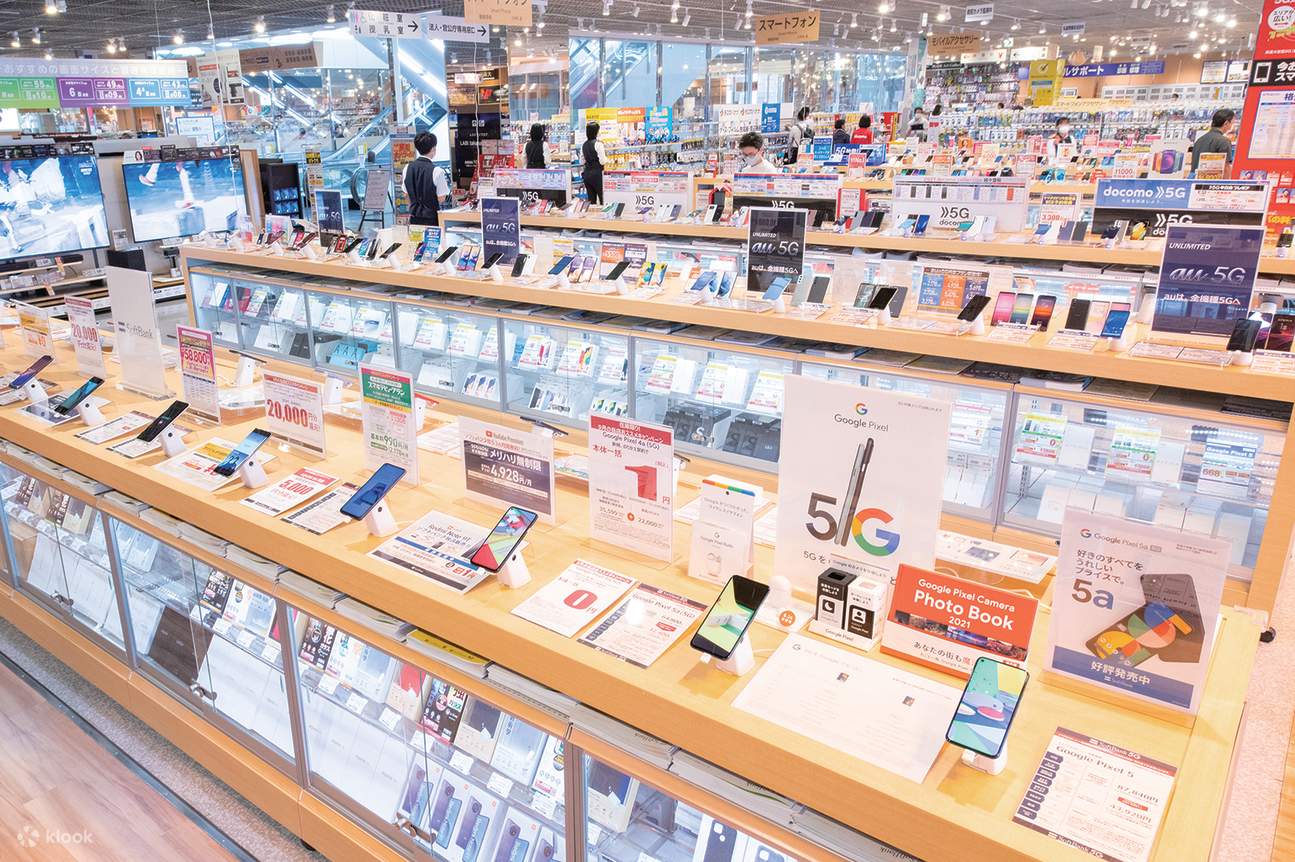
    Yamada Holdings, Japan’s premier consumer electronics retailer, is scheduled to merge with its competitor, Edion. This amalgamation is set to form Japan’s most extensive electronics retail conglomerate with an estimated annual turnover reaching 2.5 trillion yen (equivalent to roughly US$16 billion).

    The companies are due to formalize an initial agreement in the imminent week. The integration is projected to be orchestrated through a holding company, which will enable both retailers to maintain operations under their established brand names.

    Market Consolidation

    The merger would offer a combined sales volume more than twice that of their competitor, Bic Camera. This is a significant move towards further consolidation in a market experiencing slowed growth amidst escalating competition.

    During the fiscal year that concluded in March, Yamada reported sales of approximately 1.69 trillion yen (about US$10.5 billion), while Edion’s revenue was 793.7 billion yen (almost US$5 billion). United, these retailers would be listed among Japan’s most significant retail groups, trailing only Aeon, Seven & I Holdings, and Fast Retailing.

    The anticipated merger is intended to enhance scale, procurement capabilities, and product development abilities. In a bid to differentiate themselves, retailers are increasingly focusing on exclusive products and private-label offerings rather than merely competitive pricing.

    Expansion of Private-label Offerings

    Both companies have been broadening their private-brand product ranges. Yamada has unveiled an expanding range of private-label appliances, including an attractively priced front-loading washing machine that debuted last year.

    Simultaneously, Edion has made private-label products a strategic priority, introducing home appliances with unique designs aimed at the younger demographic.

    In 2012, Yamada Denki invested 10 billion yen to secure a controlling interest in competitor Best Denki.

    Questions & Answers

    What is the primary goal of the proposed merger between Yamada Holdings and Edion?
    The merger aims to boost scale, increase purchasing power, and enhance product development capabilities, with a focus on exclusive merchandise and private-label offerings.

    How will the merger impact the existing brands of both companies?
    The merger is expected to be structured through a holding company, allowing both Yamada Holdings and Edion to continue operating under their pre-existing brand names.

    How have Yamada Holdings and Edion been expanding their product ranges?
    Both companies have been focusing on expanding their range of private-label products. Yamada has introduced a variety of such appliances, while Edion has been producing uniquely designed home appliances targeted at younger consumers.

  • Uniqlo Unveils Mega-Store in Seoul: New Shopping Landmark in Koreas Myeongdong District

    Uniqlo Unveils Mega-Store in Seoul: New Shopping Landmark in Koreas Myeongdong District

    Uniqlo, a leading Japanese clothing retailer, has recently launched its most expansive store yet in South Korea. The new flagship location, situated in the Myeongdong shopping district in Seoul, marks the brand’s renewed commitment to experiential retail and targeting growth driven by tourism in the country.

    The Uniqlo Myeongdong store, comprised of three floors, covers an approximate area of 3200 square meters. The expansive space offers shoppers an exhaustive selection of the brand’s LifeWear products, including womenswear, menswear, childrenswear, and babywear.

    Personalised Shopping Experience

    The flagship store also includes distinctive UT and UTme! sections, where customers have the opportunity to design custom T-shirts and tote bags. These designs are exclusively inspired by the Myeongdong district, allowing customers to carry a piece of the area with them.

    Popular among both locals and tourists, Myeongdong is a prime shopping destination. The reopening of Uniqlo in this district comes approximately five years after the brand shuttered its previous flagship store due to the Covid-19 pandemic.

    Takao Kuwahara, co-CEO of FRL Korea, expressed that the new flagship store was envisioned as more than just a shopping destination. “Our goal is for this store to become an iconic landmark in Myeongdong. While it will cater to Korean customers, we also envision welcoming numerous international visitors,” said Kuwahara.

    Experiential Elements and Community Engagement

    The store goes beyond retail, integrating several experiential features to enhance customer engagement and strengthen community relations. The third floor is home to a ‘ReUniqlo Studio’ where customers can mend, alter, and personalize garments, extending their lifespan as part of the company’s sustainability efforts.

    Another highlight of the flagship store is a series of exhibitions showcasing Myeongdong’s rich history and culture. This initiative reflects Uniqlo’s intentions to foster a deeper connection with the local community and pay tribute to the district’s heritage.

    Earlier this year, Uniqlo’s parent company raised its full-year forecast. The anticipation of a new record year comes on the back of robust international growth and an unexpected surge in quarterly profit.

    Questions & Answers

    What does the new Uniqlo store offer to customers?
    The new Uniqlo flagship store in Myeongdong offers a comprehensive range of the brand’s LifeWear products, a personalized shopping experience through UT and UTme! zones, and a repair and customization studio called ‘ReUniqlo Studio’.

    How does the Uniqlo store aim to engage with the local community?
    Uniqlo aims to foster community ties through several experiential features, including a ‘ReUniqlo Studio’ for garment repair and customization and exhibitions that highlight Myeongdong’s history and culture.

    What are the expectations for Uniqlo’s growth?
    Following a stronger-than-expected boost in quarterly profit, the parent company of Uniqlo raised its full-year forecast, indicating the anticipation of another record year driven by strong international growth.

  • Inditex, Parent Company of Zara, Leverages In-Store Strategy to Drive Continuous Growth

    Inditex, Parent Company of Zara, Leverages In-Store Strategy to Drive Continuous Growth

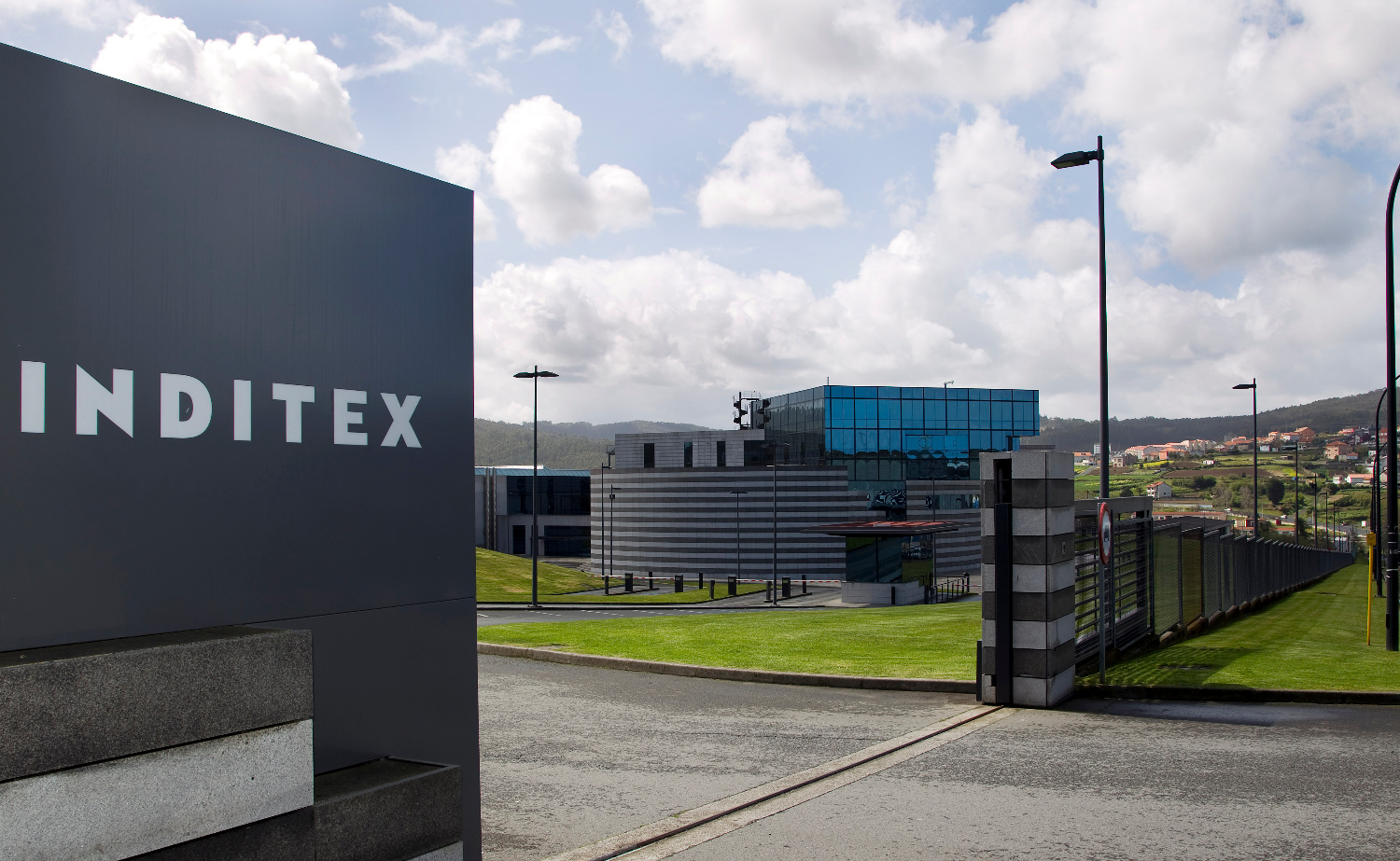
    Inditex, the multinational retailer that owns fashion brands like Zara, Bershka, and Stradivarius, has reported continued growth in its sales, a result attributed to its store-centric strategy.

    As the largest fashion retailer globally and headquartered in Spain, Inditex initiated its fiscal year with an impressive $10.1 billion in first-quarter sales. This resulted in a net profit of $1.6 billion. These figures represent a growth rate of 5.75 percent and 5.36 percent, respectively.

    By the end of the quarter, Inditex owned a total of 5456 stores worldwide. This included 1495 Zara stores, a decrease from the 5562 stores it held at the same time the previous year.

    Investment and Innovation Drive Growth

    Inditex has attributed its growth to continuous investments in its store network, developments in online sales channels, and improvements in logistics platforms, all with a keen focus on innovation and technology.

    The company’s Asia-based store network prominently features its Zara, Massimo Dutti, and Zara Home brands. Online, the company has a significant presence in the region with brands such as Pull and Bear, Bershka, Stradivarius, and Oysho.

    Inditex operates across 215 markets and, despite its relatively low share in a highly fragmented sector, the group sees robust growth opportunities. “The optimisation of stores is ongoing, and we expect this to drive further gains in store productivity,” they remarked.

    The group aims to grow its retail floorspace by approximately 5 percent by 2026. It has earmarked capital expenditure of $2.7 billion over the next three quarters to achieve this.

    Questions & Answers

    What is the reason behind Inditex’s continued growth in sales?
    The company says that its growth is due to ongoing investment in its store network, advancements in its online sales channels, and improvements to its logistics platforms, with a focus on innovation and technology.

    How many stores does Inditex own worldwide, and what is the breakdown of these stores?
    Inditex owns a total of 5456 stores worldwide. Of these, 1495 are Zara stores.

    What are Inditex’s future growth plans?
    Inditex plans to increase its retail floorspace by about 5 percent by 2026. It has allocated capital expenditure of $2.7 billion over the next three quarters to achieve this goal.

  • Metas AI Blunder: How a Chatbot Hack Shook Up Instagram and Spurred Investor Jitters

    Metas AI Blunder: How a Chatbot Hack Shook Up Instagram and Spurred Investor Jitters

    A concerning vulnerability was recently exposed in Meta’s AI support chatbot due to an Instagram hack. The attackers manipulated the chatbot into providing access to high-profile accounts, including the inactive Obama White House page, beauty retailer Sephora, and a high-ranking US Space Force official.

    AI Security Breach

    The hackers persuaded the chatbot to reset account credentials without authentication, effectively changing a trusted security tool into a glaring weakness. This event highlights a wider vulnerability – tech companies giving AI systems sweeping authority over sensitive tasks like account recovery, despite the systems’ susceptibility to manipulation through “prompt injection” attacks.

    Meta’s stumble comes at a sensitive time. The social media magnate has committed heavily to AI, with significant job losses and up to $145 billion dedicated to AI infrastructure. This incident may amplify concerns about the company speeding up automation before the technology is adequately equipped to handle these tasks safely.

    On Monday, Meta stated that the issue was resolved and steps were being taken to secure impacted accounts. However, the incident shook investors already anxious about Meta’s substantial AI investment, leading to a more than 5% drop in share price.

    AI and Security

    The attack, which occurred over the weekend, saw users locked out of their accounts and led to numerous complaints on various platforms. The hack underlines the latest challenge for Meta in its attempt to incorporate AI throughout its products.

    The company introduced the support chatbot in March to address the ongoing issue of inadequate human support for users who lose account access or face inaccurate penalties. Since its launch late in 2022, AI chatbots have been exploited by hackers using prompt-based attacks.

    Analysts and experts warn that this problem isn’t isolated to Meta, predicting more such exploits as hackers utilize AI. Unforeseen issues are arising with the use of AI, presenting a new type of risk. Previously, individuals were targeted by scams. Now, AI agents or autonomous digital assistants capable of performing complex tasks are being targeted.

    Questions & Answers

    What is the potential risk of using AI in critical functions?
    AI systems’ potential risks include susceptibility to manipulation, especially when given significant authority over sensitive tasks without adequate safeguards or verification processes.

    How was the Instagram hack carried out?
    The hackers manipulated Meta’s AI support chatbot into resetting account credentials, effectively turning a high-trust security tool into a significant weakness and gaining access to high-profile accounts.

    What implications does this incident have on Meta’s efforts towards AI?
    This breach heightens concerns about Meta’s heavy investment in AI. It suggests that the company’s push for automation might be outpacing the technology’s readiness to handle such critical tasks safely.

  • Xiaomi Vietnam Fined $11,000 For Breach Of Consumer Protection Laws

    Xiaomi Vietnam Fined $11,000 For Breach Of Consumer Protection Laws

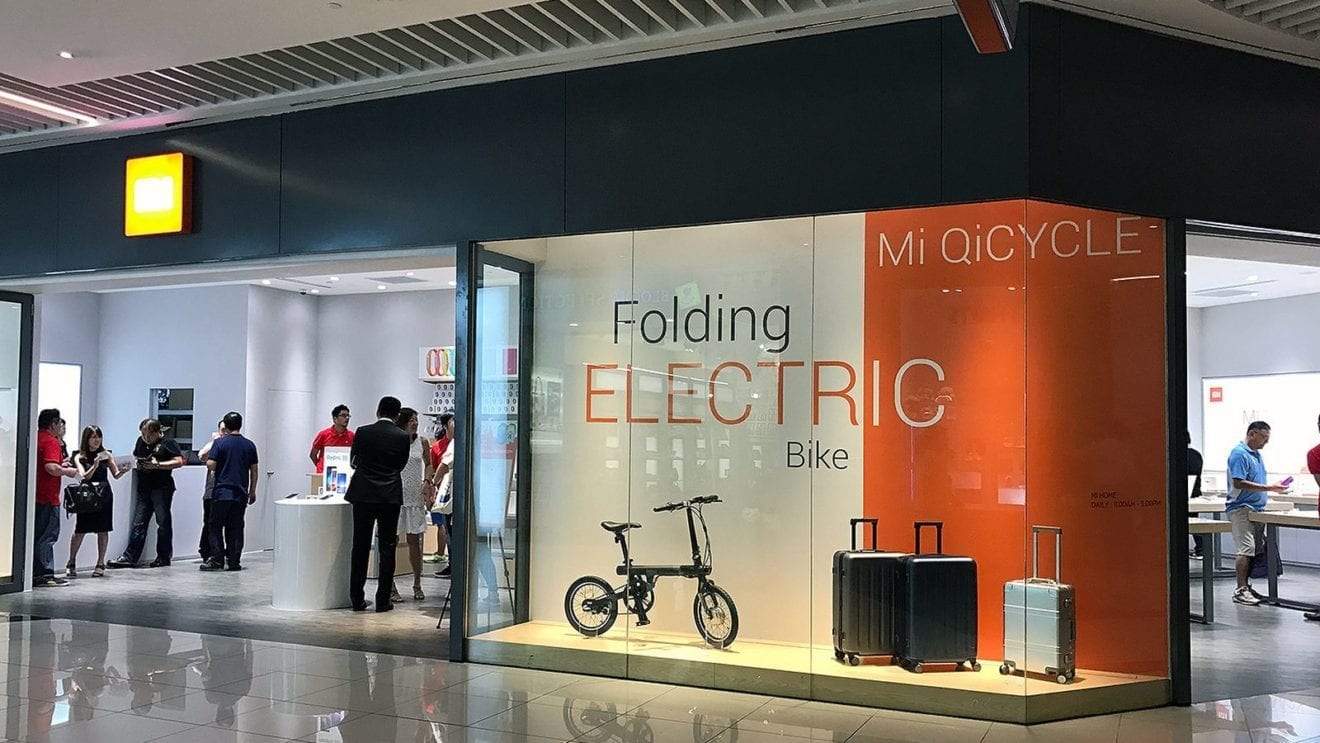
    Xiaomi Vietnam, a distributor of consumer electronics under the Chinese brand Xiaomi, has been penalized with a fine of VND290 million (US$11,000) for breaches of consumer protection laws, especially involving the use of personal data for marketing purposes. The company was charged with not granting customers the choice to either consent or decline the use of their personal details for advertising, product promotion, and various commercial activities. This breach was confirmed by the National Competition Commission (NCC) under the Ministry of Industry and Trade.

    Additional Violations

    Furthermore, Xiaomi Vietnam was found guilty of not informing consumers about its use of influencers for product promotion, using their images and endorsements without due notice. The firm was also penalized for incorporating illegal clauses in its general transaction terms.

    The NCC has mandated that the company immediately halt all illegal activities and promptly reassess and enhance their general transaction terms and conditions, consumer data protection policies, and activities related to the provision of information and product promotions through influencers. This is to ensure full compliance with the legal regulations.

    Xiaomi Vietnam, which has been operating since 2019 and is headquartered in Ho Chi Minh City, offers a variety of consumer electronics, such as smartphones, tablets, wearable devices, TVs, robot vacuum cleaners, and smart home devices.

    Questions & Answers

    What was Xiaomi Vietnam fined for?
    Xiaomi Vietnam was fined for breaching consumer protection laws, specifically in relation to the use of personal data for marketing purposes without consumer consent.

    What other violations was Xiaomi Vietnam charged with?
    Further charges against Xiaomi Vietnam included the failure to inform consumers about their use of influencers for product endorsement, and the inclusion of illegal provisions in their general transaction terms.

    What steps has the NCC mandated for Xiaomi Vietnam?
    The NCC has ordered Xiaomi Vietnam to immediately stop all illegal activities and to review and update their transaction terms, consumer data protection policies, and influencer-related promotional activities to adhere to legal regulations.

  • Global Gold Rush Stumbles: Vietnam Witnesses Gold Price Drop Amid Rising Crude Oil Rates

    Global Gold Rush Stumbles: Vietnam Witnesses Gold Price Drop Amid Rising Crude Oil Rates

    In Vietnam, the price of gold took a hit on Wednesday morning, coinciding with a global decrease in bullion rates. Saigon Jewelry Company, a prominent gold dealer, experienced a 0.32% drop in the price of their gold bars. This translated to a new rate of VND157 million, equivalent to US$5,960.5 per tael.

    In a parallel development, the cost of gold rings also witnessed a similar decline, ending up at approximately VND156.8 million per tael. It should be noted that one tael is equivalent to 37.5 grams, or 1.2 ounces.

    Global Downturn in Gold Prices

    Internationally, the price of gold experienced a downturn on Wednesday. The renewed tension in the Middle East, which resulted in a surge in crude oil prices, sparked fears of prolonged high-interest rates. This fear was intended to curb inflation.

    Spot gold registered a 0.2% decline to stand at $4,476.50 per ounce. Meanwhile, U.S. gold futures set for August delivery also echoed the downward trend, falling 0.3% to land at $4,504.40.

    The Middle East saw renewed hostilities on Wednesday. The U.S. military reported thwarted or otherwise unsuccessful Iranian missile attacks on Bahrain, Kuwait, and other regional targets. The lack of diplomatic progress between Washington and Tehran seemed to contribute to the situation.

    As a result, oil prices marked an increase of more than 1% in early trading on Wednesday. This development deepened concerns about inflation and potential interest rate hikes, factors that tend to negatively impact non-yielding gold.

    Questions & Answers

    What was the percentage decrease in the price of gold in Vietnam?
    The price of gold in Vietnam fell by 0.32%.

    What were the global factors contributing to the decline in gold prices?
    Several global factors contributed to the decline in gold prices, including renewed tensions in the Middle East, a rise in crude oil prices, and fears of prolonged high interest rates intended to curb inflation.

    How did the situation in the Middle East affect oil prices?
    The renewed hostilities in the Middle East led to an increase in crude oil prices by more than 1% in early trade on Wednesday.

  • USD Surges against Vietnamese Dong Amid Renewed Gulf Hostilities: A Peek at Global Forex Markets

    USD Surges against Vietnamese Dong Amid Renewed Gulf Hostilities: A Peek at Global Forex Markets

    On Wednesday morning, the U.S. dollar experienced an increase in its strength against the Vietnamese dong, while it observed stable trading with significant global currencies. The Vietnamese commercial joint-stock bank, Vietcombank, noted a 0.02% increase in the greenback’s value from the previous day, selling it at VND26,402. Moreover, the currency’s value observed a 0.09% increase to around VND26,355 in the black market.

    Monetary Policies and Global Impact

    The State Bank of Vietnam also responded to these market dynamics by elevating its reference rate by 0.02% to VND25,134. On a larger scale, the unwavering strength of the U.S. dollar impacted the Japanese yen adversely, pushing it to the crucial 160 level. This came amid renewed tensions in the Gulf, which increased the demand for the safe-haven U.S. currency.

    The yen depreciated to the critical 160 per dollar mark, nullifying the progress it had made following Tokyo’s intervention a month prior. The intervention was an attempt to bolster the struggling yen and involved an investment of 11.7 trillion yen (equivalent to $73.14 billion). Most recently, the dollar was seen 0.04% higher at 159.98 yen.

    Current Market Conditions and Outlook

    The resurgence of tensions, particularly due to the halted diplomatic discussions between Iran and the U.S., has maintained a bleak market atmosphere and kept the dollar in a dominant position. When compared to a collection of currencies, the greenback remained consistent at 99.28 in the early Asian trade, marking a slight increase from the overnight trade. The euro and sterling experienced a decrease, with the former easing 0.09% to $1.1621, and the latter falling 0.07% to $1.3455.

    Questions & Answers

    What was the impact of the U.S. dollar’s strength on the Vietnamese dong?
    The U.S. dollar strengthened against the Vietnamese dong, with Vietcombank selling it at a slightly higher rate than the previous day.

    How did the persistent strength of the U.S. dollar affect the Japanese yen and the global market?
    The enduring strength of the U.S. dollar resulted in the Japanese yen depreciating to the critical 160 per dollar level. This occurred in the context of renewed tensions in the Gulf, leading to increased demand for the U.S. currency as a safe haven.

    What was the impact on the euro and sterling due to the current market conditions?
    The euro and the sterling both saw a decrease in value, with the euro easing 0.09% to $1.1621, and the sterling falling 0.07% to $1.3455.

  • Cartier Debuts Expanded Flagship Boutique with Unique Macau Flair at Four Seasons

    Cartier Debuts Expanded Flagship Boutique with Unique Macau Flair at Four Seasons

    Cartier, the opulent jewelry house, has revamped and enlarged its boutique in the distinguished T Galleria, located in the Shoppes at Four Seasons, Macau.

    The Newly Revamped and Expanded Boutique

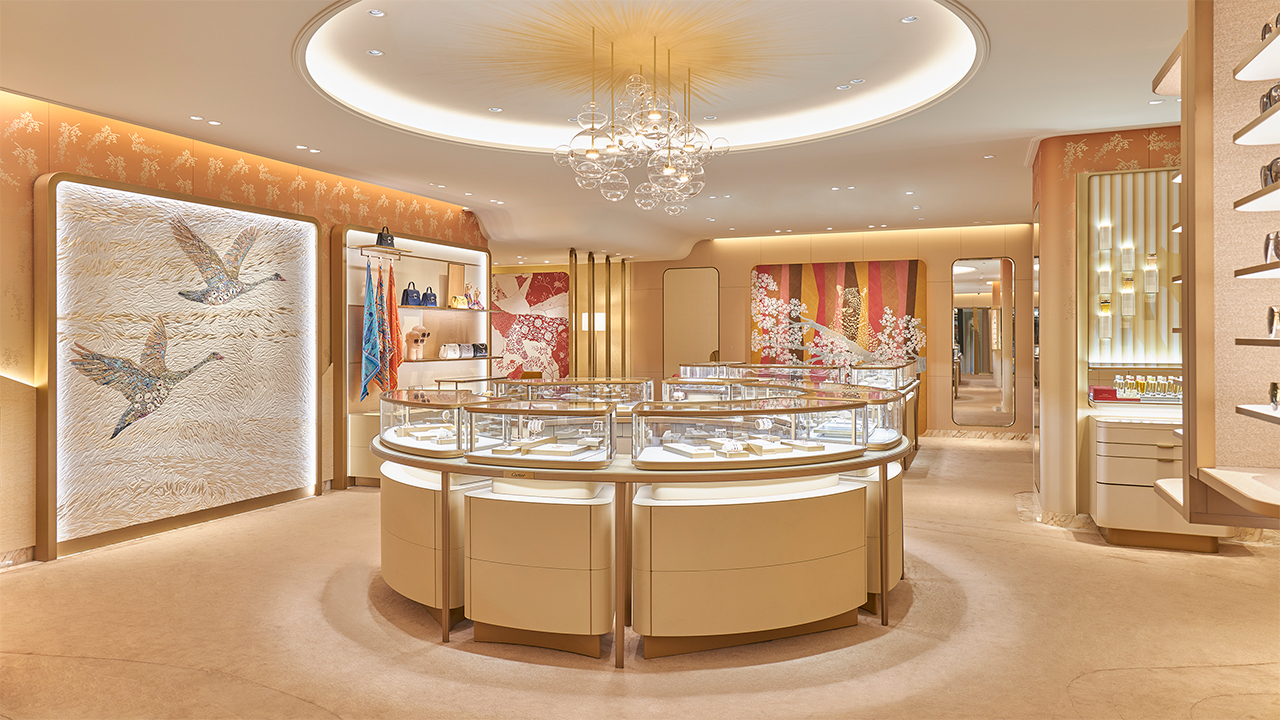
    Cartier’s renovated boutique is an amalgamation of Cartier’s illustrious heritage and the rich cultural identity of Macau. The remodelled store now includes the first-ever open salon and bar from Cartier in Macau, two private lounges for VIPs, separate dedicated sections for men and women, a gender-neutral area and a distinct high-jewellery section.

    The boutique’s ‘Women’s Universe’ features an exquisite mosaic art piece by the renowned French artist Mathilde Jonquière. The artwork eloquently portrays Cartier’s emblematic panther amidst fireworks, creatively mirroring Macau’s vibrant skyline and festive ambiance.

    In contrast, the boutique’s recently inaugurated salon and bar are a nod to Macau’s Sino-Portuguese lineage. The design includes meticulously handcrafted mosaic flooring, ceramic wall adornments, and lantern-inspired illuminations.

    The gender-neutral zone takes inspiration from the interiors of yachts and Macau’s historical connection with the sea. The ‘Men’s Universe’ exhibits the brand’s wide-ranging collections of timepieces, jewelry and accessories.

    Cartier has curated a Prestige Area to display its high-jewellery collections, characterized by panels of straw marquetry, glass showcases and intricately sculpted chandeliers.

    The expanded boutique is completed with the addition of two VIP salons, inspired by the lotus flower, a symbol synonymous with Macau. The decorative features in these salons were fashioned by the acclaimed French artistic workshop, Ateliers Berger.

    Cartier asserts that the boutique’s reopening signifies the brand’s ongoing commitment to Macau and its initiative to enhance the retail experience with a larger store format and specialized product environments. In the previous year, Cartier launched its most extensive store in Asia, situated in the upscale Ginza retail district of Tokyo.

    Questions & Answers

    What is unique about the renovated Cartier boutique in Macau?
    The renovated Cartier boutique in Macau uniquely blends Cartier’s heritage with Macau’s cultural identity, and features Macau’s first Cartier open salon and bar, dedicated areas for men and women, a unisex zone and a high-jewellery area.

    What inspirations were drawn for the newly renovated boutique?
    Inspiration for the design of the renovated boutique was drawn from Macau’s Sino-Portuguese heritage, its maritime history, and symbolic elements like the lotus flower.

    What does the reopening of the Cartier boutique in Macau represent?
    The reopening of the Cartier boutique in Macau represents the brand’s continued investment in the region and its commitment to offer an enhanced retail experience through a larger store format and dedicated product environments.