Tag: Australia

  • Online Merchants Face Rising Fraud Rates as AI Tools Lower Attack Costs

    Online Merchants Face Rising Fraud Rates as AI Tools Lower Attack Costs

    Retailers face rising fraud losses as bad actors deploy low-cost artificial intelligence tools at scale, according to global payment processor Worldpay. A survey of 1,466 payment specialists across major markets including Australia shows fraud as a percentage of merchant revenue is climbing.

    The shift leaves digital store operators fighting automated attacks at checkout while trying to prevent unnecessary transaction rejections that destroy legitimate sales. Traditional card-not-present theft remains common, but pressure is shifting rapidly towards bot-driven credential stuffing, account takeovers, and refund abuse.

    The Cost of False Declines

    Rejecting good customer transactions out of caution carries a steep penalty. When checkout software incorrectly blocks a legitimate shopper, merchants lose both the immediate basket and the customer acquisition cost spent bringing that buyer through the sales funnel.

    Colin Baines, vice president of commercial and country manager at Worldpay, said false declines act as a silent drag on merchant margins. Using risk-based authentication backed by device intelligence and behavioral analytics allows retailers to challenge suspicious orders without adding friction to trusted buyers.

    Optimizing payment routing improves conversion. Implementing network tokenization, managing card credentials across their lifecycle, and configuring soft-decline retry schedules give merchants measurable lifts in completed orders across domestic card networks.

    Cross-Border Payment Routing

    Cross-border expansion introduces friction when checkouts fail to support local acquiring banks or domestic payment preferences. Presenting buyers with unfamiliar currencies, foreign checkout flows, or rigid 3D Secure rules increases cart abandonment.

    For retailers trading across Asia-Pacific markets, pairing stored network tokens with domestic acquiring infrastructure lifts card acceptance rates and cuts interchange processing expenses. Baines said store operators must treat payment routing and compliance as active components of their commercial strategy rather than administrative checkout settings.


  • Parent Hax Secures Coles Distribution for Rinse-Free Washcloth

    Parent Hax Secures Coles Distribution for Rinse-Free Washcloth

    Melbourne startup Parent Hax has secured national retail distribution with supermarket chain Coles for Top N Tail, its rinse-free washcloth priced at $15 for a 20-pack.

    The listing gives the young Australian brand immediate nationwide physical reach across one of the country’s two dominant grocery networks.

    Plant-based formulation targeting bath alternatives

    Top N Tail is formulated with plant-based cleansers, glycerin, aloe and chamomile. Unlike standard baby wipes designed for spot cleaning, the cloth is self-foaming and built for full-body cleansing without requiring water rinsing afterwards.

    Parent Hax engineered the item to bridge the gap between quick wet wipes and full tub baths, targeting parents seeking faster hygiene routines. The product cleans deeply enough to replace an evening wash while cutting down bath preparation and cleanup time.

    Supermarket baby care competition

    Supermarket baby aisles across Australia have traditionally belonged to multinational incumbents selling standard wet wipes and liquid soaps. Coles and rival Woolworths have steadily allocated shelf space to local independent brands offering premium or plant-derived formulations that command higher retail price points.

    Parent Hax enters this category at a per-unit premium compared to conventional baby wipes, betting that convenience and reduced water use justify the $15 shelf price. Initial sales performance across Coles stores will determine whether the startup can expand the range into additional personal care formats.

  • Oz Hair and Beauty Discloses Customer Data Breach Across Order Platform

    Oz Hair and Beauty Discloses Customer Data Breach Across Order Platform

    Oz Hair and Beauty has suffered a cyber incident on its online purchasing platform. The breach exposed the personal details and transaction histories of customers who placed orders before August.

    An unauthorised third party gained brief access to data managed through an external service provider. The Australian e-commerce merchant disclosed the incident to shoppers in a direct notification.

    Exposed records include full names, email addresses, mobile numbers, and purchase details showing total spend, currency, city, state, and postcode. Attackers did not obtain passwords, credit card numbers, payment details, or street addresses, the company stated.

    Third-Party Platform Compromise

    External technical specialists launched an investigation immediately after staff detected the intrusion. Early findings point to data held by a contractor rather than a direct breach of internal systems.

    Oz Hair and Beauty has not disclosed the total number of affected customer accounts. It reported the incident to the Australian Cyber Security Centre and the Office of the Australian Information Commissioner while notifying affected buyers.

    Earlier this month, a separate cyber attack hit furniture retailer Nick Scali and forced core IT infrastructure offline across its regional business. Australian consumer brands face tightening scrutiny over vendor data storage as regulators press merchants to shorten retention schedules.

    Security Audit Underway

    The beauty retailer is now overhauling its data protection controls and third-party storage policies to prevent repeat exposures across its digital channels.

    Technical investigators are still determining the full timeline of the intrusion. The retailer has yet to submit its final incident report to federal privacy regulators.

  • Endeavour Group Earnings Fall 8.7% as Retail Price Cuts Hit Margins

    Endeavour Group Earnings Fall 8.7% as Retail Price Cuts Hit Margins

    Australia’s Endeavour Group posted an 8.7 per cent drop in underlying earnings to $845 million after aggressive price discounting across its retail bottle shop network squeezed operating margins.

    Total sales edged up 1.3 per cent to $12.2 billion, demonstrating that sharper shelf pricing succeeded in defending retail volumes even as profit yields contracted.

    Trading profit for volume

    The liquor and hospitality operator chose to sacrifice margins to protect foot traffic at Dan Murphy’s and BWS stores. Discretionary spending among Australian shoppers remained constrained, prompting the group to sharpen shelf pricing on core beverage lines.

    “Sales momentum in retail is building with customers responding positively to our renewed focus on value and price leadership,” said managing director and chief executive Jayne Hrdlicka.

    Supermarket rivals intensify price war

    Major grocery and liquor merchants across Australasia face identical margin pressure as household budgets tighten. Competing retail conglomerates have poured cash into promotional programs and private-label alternatives to stop shoppers from migrating to discount banners, accepting compressed margins to defend market share.

    Investors now await trading updates across the peak spring and summer beverage calendar to see whether customer volume gains can outpace sustained promotional costs.

  • Kogan Group Gross Sales Pass $1 Billion as Core E-Commerce Offsets Mighty Ape Loss

    Kogan Group Gross Sales Pass $1 Billion as Core E-Commerce Offsets Mighty Ape Loss

    Kogan Group lifted annual gross sales past $1 billion in the year ended June 30, driven by double-digit expansion across its core Australian e-commerce platform.

    Group revenue rose 5 per cent to $510 million, while statutory net profit after tax reached $11.2 million. The result masked a sharp divergence between the company’s flagship Australian portal and its struggling New Zealand subsidiary.

    The main Kogan.com business expanded gross sales and revenue by 16 per cent during the period, delivering $16.3 million in net profit. Management credited internal automation and AI-driven processes with lowering operational expenses, freeing cash to reinvest in customer marketing while defending profit margins.

    Restructuring the New Zealand Arm

    Mighty Ape remained a drag on bottom-line earnings, posting a $5.1 million net loss. Gross sales at the Auckland-headquartered online retailer fell 14 per cent, while annual revenue dropped 30 per cent as the group dismantled unprofitable operations.

    To stem the losses, management halved inventory from $21 million to $10 million and shuttered its Christchurch fulfillment center. Those reductions lowered quarterly fixed operating costs from $4.9 million to $3.4 million, pushing Mighty Ape into positive adjusted EBITDA in the fourth quarter.

    Higher-margin digital services cushioned the hardware contraction. Paid subscriptions via Primate, marketplace commissions, and the Mighty Mobile telecommunications service all expanded their share of the subsidiary’s total top line.

    Marketplace Shift Across Australasia

    The split performance mirrors a broader transformation across Australasian e-commerce, where pure-play retailers have moved away from holding heavy direct inventory to rely on third-party marketplace commissions and automated logistics. RetailNews Asia has tracked similar inventory purges at competing digital platforms seeking to protect gross margins against stubborn freight and handling costs.

    Group management confirmed it will maintain strict capital discipline across both divisions entering fiscal 2027, with full-year performance hinging on whether Mighty Ape can convert its fourth-quarter operating stability into sustained annual profit.

  • BioCheese Launches Protein-Fortified Vegan Cheddar at Coles for $9

    BioCheese Launches Protein-Fortified Vegan Cheddar at Coles for $9

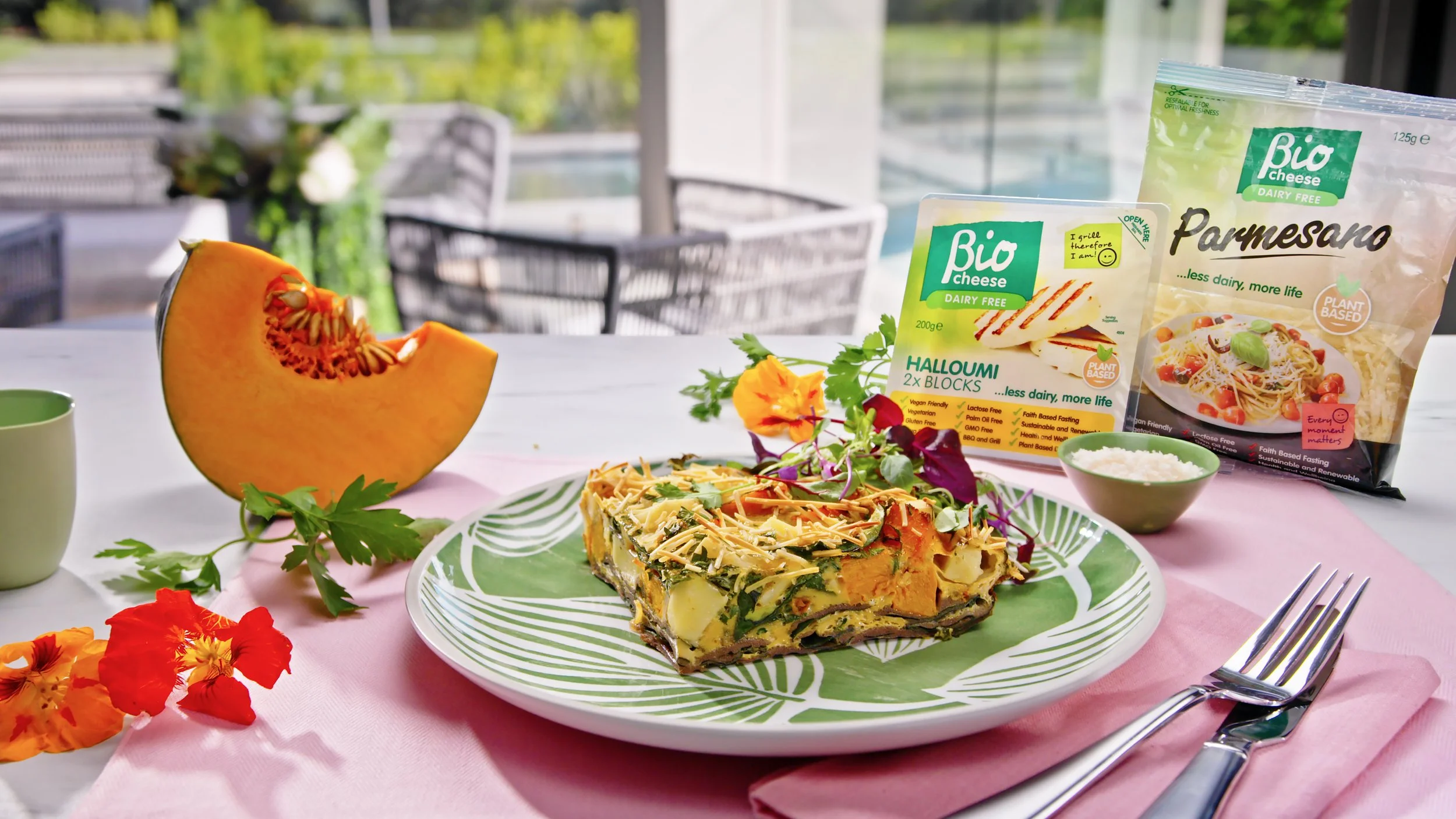
    BioCheese has launched a protein-fortified plant-based cheddar shred across Australian supermarket chain Coles, priced at $9 for a 200-gram pack.

    The product delivers 10 grams of protein per 100 grams, making it the first added-protein dairy-free cheese stocked in Australian grocery aisles.

    Pea Protein and Melting Performance

    Formulated with pea protein, the shredded cheese is built specifically for hot and cold culinary applications. The brand designed the shred to melt in toasties and baked dishes while holding texture in tacos and salads.

    Each unit ships in a resealable 200-gram pouch intended for standard refrigerated dairy and plant-based sections across Coles supermarkets nationally.

    Protein Claims in Plant Dairy

    Plant-based cheese alternatives have historically faced pushback from shoppers over low nutritional value compared to traditional dairy cheddar. While standard dairy cheese provides around 25 grams of protein per 100 grams, standard coconut oil and starch-based alternatives often register near zero.

    By adding 10 grams of functional plant protein, BioCheese is testing whether enhanced nutritional metrics can defend premium shelf space as price-conscious shoppers scrutinise grocery spending across the Asia-Pacific region.

    Distribution is now live across Coles stores, with retail buyers watching whether the $9 price point can sustain regular basket repeat rates against traditional dairy blocks.

  • Noumi Revenue Climbs 8.8 Percent to $648.4 Million on Dairy Demand

    Noumi Revenue Climbs 8.8 Percent to $648.4 Million on Dairy Demand

    Noumi grew full-year revenue 8.8 per cent to $648.4 million for the twelve months ended June 30, led by gains in its dairy and nutritionals division.

    Adjusted operating earnings before interest, tax, depreciation and amortisation rose 7.6 per cent to $61.8 million, up from the prior corresponding period.

    Earnings improve despite shipping drag

    The Sydney-listed maker of MilkLab absorbed an estimated $2 million hit to second-half operating EBITDA caused by trade disruptions linked to conflict in the Middle East. Statutory net loss after tax narrowed 55.2 per cent to $67.2 million as legacy liabilities and exceptional costs receded.

    Operational gains came largely from higher processing volumes across dairy and plant-based beverage lines. Factory throughput remained steady across packaging facilities, offsetting higher ingredient costs with targeted wholesale price adjustments in key commercial accounts.

    Regional cafe demand supports volume

    Plant-based beverage suppliers across Asia-Pacific have faced stiff competition from local co-packers and expanding oat milk capacity. Noumi has leaned on barista-grade distribution across Southeast Asian coffee chains to protect margins that grocery private-label contracts often erode.

    Investors are tracking Noumi’s upcoming annual general meeting for detailed export segment breakdowns and full-year capital expenditure plans.

  • Adore Beauty Hits Record Sales of $207 Million as Store Costs Cut Profit

    Adore Beauty Hits Record Sales of $207 Million as Store Costs Cut Profit

    Adore Beauty lifted full-year revenue 4.3 per cent to a record $207.3 million for the 12 months ended June 30, but heavy physical expansion cut underlying earnings by more than half.

    Underlying EBITDA fell to $3.8 million from $8.1 million a year earlier. Physical stores contributed $18.6 million to total revenue, while gross margin declined 52 basis points to 34.8 per cent.

    The Cost of Opening 13 Stores

    The Australian retailer added 13 locations during the financial year, comprising 11 Adore Beauty outlets and two Ikou shops. That took its national footprint to 20 doors after years of operating as a pure-play digital platform. New customer numbers climbed 14 per cent over the period.

    Alongside lease and fitout costs for an immature store network, the company funded a new national distribution centre, an enterprise resource planning software overhaul, and broader technology upgrades. Weak consumer sentiment in the fourth quarter added further pressure on margins.

    Adore Beauty expects store drag to ease as locations mature over an 18 to 24 month cycle. Pure-play e-commerce operators across the Asia-Pacific region have faced similar margin friction when transitioning into physical storefronts, trading immediate cash flow against long-term customer acquisition.

    Targets for the New Fiscal Year

    Chief executive Sacha Laing said the group has completed its core infrastructure overhaul on budget and on schedule, positioning the business for operational use.

    “The foundations to support our scaling omnichannel operations are now in place,” Laing said.

    Management has set an underlying EBITDA target of $9 million to $13 million for FY27, predicated on top-line revenue expanding by at least 10 per cent.

  • Australia CBD Retail Vacancy Rises to 10.8% on Melbourne Supply Wave

    Australia CBD Retail Vacancy Rises to 10.8% on Melbourne Supply Wave

    Australia’s central business district retail vacancy rate rose 40 basis points to 10.8 per cent in the first half of 2026 as fresh retail completions in Melbourne added new space.

    A survey of 5,669 retail tenancies across five state capitals by real estate services firm CBRE showed that shop vacancies declined in four of the five cities, leaving Melbourne as the lone driver of the national increase. Melbourne’s CBD vacancy rate climbed 160 basis points to 8.1 per cent following the launch of two retail centres. Sydney held the tightest retail core in the country, with vacancy standing at 5.3 per cent.

    State Capital Breakdown

    Adelaide posted the sharpest improvement among metropolitan centres, where retail vacancy dropped 130 basis points to 10.4 per cent. Brisbane recorded an 80-basis-point decline to 16.7 per cent, while Perth edged down 10 basis points to 18.5 per cent.

    Physical retail space in Australian city centres remains structurally tight over the long term. CBD retail stock accounted for just 4.2 per cent of total new retail supply built across the country over the past decade, limiting the risk of prolonged oversupply even as consumer budgets tighten.

    Luxury and Experiential Demand

    Foot traffic gains from returning office workers, inbound tourists, and major events have kept cash registers moving in primary shopping strips. Luxury brands and premium apparel retailers continue to take prime floor space in Sydney and Melbourne, competing directly against dining and wellness concepts that landlords rely on to anchor footfall.

    For retail property operators across the Asia-Pacific region, Australia’s low single-digit prime core vacancies mirror similar supply squeezes in Tokyo and Singapore. Landlords in secondary locations, however, face longer leasing cycles as retail groups focus their capital expenditure almost exclusively on high-traffic street corners and flagship malls.

    Leasing agents now turn their attention to absorption rates in Melbourne’s two newest downtown complexes over the second half of 2026, which will determine whether the city’s vacancy rate stabilizes before next year’s development pipeline delivers.

  • KPMG Australia Cuts Almost 400 Jobs as Consulting Revenue Plunges 17 per Cent

    KPMG Australia Cuts Almost 400 Jobs as Consulting Revenue Plunges 17 per Cent

    KPMG Australia is eliminating 387 jobs across its consulting and business operations following steep declines in advisory demand and an ethics scandal. The reduction removes 360 employees and 27 partners, representing roughly 5 per cent of the firm’s national headcount.

    Annual revenue at the partnership fell 1 per cent in the twelve months through June, dragged down by a 17 per cent drop in consulting income. The retrenchments reflect both broader corporate spending pullbacks and internal turmoil surrounding allegations that staff misused confidential client information to win commercial contracts.

    Advisory Slowdown and Restructuring

    The firm confirmed on August 24 that it reviewed workforce requirements against persistent economic weakness and the fallout from conduct and whistleblower investigations. Management plans to consolidate several operational units to align local practices with KPMG’s global advisory structure.

    Demand for corporate advisory across Australia has cooled sharply over the past year as private enterprises and government departments curb discretionary spending. For major accounting partnerships, that pullback has exposed high overhead costs built during the post-pandemic consulting boom.

    Tighter Oversight for Big Four Firms

    Corporate clients across the region have tightened governance audits on external advisors following repeated conduct disclosures across the sector. Macquarie Group recently sought formal guarantees from KPMG that confidential banking data had not been compromised during tender processes.

    Canberra is drafting legislation to expand statutory oversight across the consulting sector, introducing steeper fines and enhanced investigatory powers. Australian lawmakers will review the proposed regulatory framework in upcoming parliamentary sessions.

  • Japan’s JDC Corp Backs Centuria’s $320 Million Sydney Office Acquisition

    Japan’s JDC Corp Backs Centuria’s $320 Million Sydney Office Acquisition

    JDC Corporation, a Tokyo-based construction and engineering group, has been named as one of three Japanese entities supporting Centuria Capital Group’s recent acquisition. Centuria purchased a 50 percent share in a prominent central Sydney office complex from Canada’s Brookfield for A$454 million, equivalent to $320.4 million.

    This investment highlights a continued trend of Japanese capital flowing into major Australian commercial property assets. Such cross-border deals are becoming more common across the Asia Pacific region, as investors seek stable returns and diversification in developed markets.

    Japanese Capital Fuels Sydney Deal

    The transaction, which completed recently, sees JDC Corporation join two other Japanese financial institutions in backing Centuria. While specific details of JDC’s contribution were not disclosed, its involvement signifies a strategic move by the company into the Australian real estate market. The Sydney office complex represents a significant asset, and its partial acquisition by Centuria with Japanese backing underscores the growing international interest in Australia’s commercial property sector.

    This type of investment is often driven by a combination of factors, including attractive yields compared to domestic markets, a strong legal framework, and the potential for capital growth. For Japanese firms, Australia offers a stable economic environment and a transparent real estate market, making it an appealing destination for outward investment.

    Implications for APAC Real Estate

    The involvement of JDC Corporation in a major Sydney office deal signals how Asian companies are increasingly deploying capital across the region’s diverse real estate markets. While the primary focus of JDC is construction and engineering, its financial backing for a significant property acquisition points to broader investment strategies. This move reflects a wider pattern observed by RetailNews Asia, where Asian investors, including developers, funds, and corporate entities, are actively acquiring commercial assets from retail spaces to logistics hubs across the region, from Singapore to Melbourne.

    These investments influence market dynamics by introducing new capital and sometimes new development approaches, impacting property values and competitive landscapes for all players, including retailers seeking prime locations and consumer brands looking for office or warehouse facilities. Such cross-border financial backing often precedes or runs in parallel with other Asian firms expanding their operational footprints in these markets.

  • Australian Bakery Director Fined for Obstructing Inspectors, Targeting Visa Holders

    Australian Bakery Director Fined for Obstructing Inspectors, Targeting Visa Holders

    Legal proceedings have been initiated against Sinamon Pty Ltd, an Australian bakery chain, and two of its directors, including co-director Hui, by the Fair Work Ombudsman (FWO). The allegations include obstructing fair work inspectors and breaching Australian workplace laws, with a specific focus on the treatment of visa-holder employees.

    The FWO has accused Hui of physically preventing an inspector from accessing a back office during an unannounced inspection in October 2022. This incident occurred during an investigation that began after a Japanese visa holder sought assistance regarding their employment at Sinamon’s Victoria Park and Mount Lawley outlets.

    Allegations Include Obstruction and Misrepresentation

    Sinamon, which operates stores in Victoria Park, Mount Lawley, and Fremantle, and previously at Curtin University, is also alleged to have failed to comply with a Notice to Produce, as well as breaching record-keeping and payslip requirements. Former director Ahmed El Sayed Imam is separately accused of misrepresenting workplace rights to another visa holder, who was employed at the Curtin University outlet for less than a week in 2023. Imam allegedly told this worker that wages could be deducted to cover damages after their departure.

    Sinamon allegedly failed to comply with a Compliance Notice issued in August 2024. This notice followed the FWO’s belief that the company had underpaid two visa holders under the Fast Food Industry Award 2020 and Restaurant Industry Award 2020, with Hui and Imam allegedly involved in these breaches.

    FWO Prioritises Visa-Holder Protection

    Fair Work Ombudsman Anna Booth stated that intentionally obstructing inspectors is unacceptable conduct. She highlighted the FWO’s priorities: protecting visa-holder workers and improving compliance within the fast food, restaurant, and cafe sectors. The FWO is seeking significant penalties, up to A$93,900 per breach against Sinamon, and A$18,780 per breach against Hui and Imam. They also seek an order for the company to comply with the Compliance Notice and rectify outstanding entitlements, superannuation, and interest.

    A directions hearing is scheduled for September 4 in the Federal Circuit and Family Court in Perth. Hui and Imam have a history of previous penalties, having been fined over A$135,000 in three prior legal actions under Western Australian employment laws. The FWO has filed 171 proceedings involving employers of visa-holder workers in the eight financial years leading up to June last year, securing A$39 million in penalties from these cases.

  • Australian Retail Media Growth Needs Surgical Approach, Not Broad Strokes

    Australian Retail Media Growth Needs Surgical Approach, Not Broad Strokes

    Australian retailers and brands are being urged to adopt a more precise, data-driven approach to retail media, moving away from traditional broad-stroke advertising. Experts from Omnicom and Flywheel Australia highlight that significant growth in the Australian market is often missed by conventional spending, which fails to identify specific products, shopper segments, and critical moments that drive compounding sales.

    According to Mohammad Heidari Far, Managing Director of Flywheel Australia, the unit of precision required for effective retail media is much smaller than most current strategies allow. He emphasizes that treating diverse shopper groups, such as grocery, marketplace, and quick commerce customers, as a single audience is a misstep. Instead, surgical growth begins with identifying the initial product a customer buys, as this ‘point of market entry’ can predict their long-term value (CLTV) to the brand portfolio.

    Targeting Hidden Growth Pockets

    This refined approach relies on connecting product-level purchase data directly to a customer’s identity, transforming targeting from probabilistic guesswork into a near-deterministic process. An example cited involves a consumer health group with two related brands. Cross-purchase analysis revealed that 24 per cent of new-to-brand customers for the first brand bought a product from the second brand within three months, often on a different day, showing a sequential path that a single-brand view would not typically detect.

    Such insights allow brands to deliberately engineer customer journeys rather than leaving them to chance. Other insights reveal that shoppers who convert more than a day after seeing an advertisement tend to have larger basket sizes, indicating that plans solely focused on same-day returns may undervalue their most valuable customers.

    using Data and Automation

    In Australia, precision data access varies significantly. While Amazon offers self-service access to product and customer signals, similar insights from other major retailers typically require collaboration with their internal media teams, introducing potential delays and interpretation layers. Far suggests that brands should utilize mature environments like Amazon to develop frameworks and ‘muscle memory’ for precise targeting, preparing them to exploit similar capabilities as other retail media networks in the region evolve.

    Managing thousands of micro-segments manually would be overwhelming, so automation is key. Flywheel Commerce Cloud provides a standardized layer that handles repeatable decisions, freeing human teams to focus on critical judgement calls, such as identifying key ‘front door’ products or strategic cross-brand paths to fund. This blend of automation and human insight proved effective for the consumer health brand, which re-sequenced its plan around these signals for a major sales event. By retargeting first-brand buyers with the second brand at opportune moments and applying negative targeting at pharmacy retailers to ensure incremental sales, the brand saw new-to-brand sales rise by 47 per cent and return on ad spend more than doubled year-on-year. This precision also led to a fall in cost per click during peak trading due to hour-by-hour bidding adjustments.

    The Australian retail market is highly concentrated, with five major retailers commanding roughly a third of all sales. In this environment, brands that can surgically identify and pursue growth opportunities will gain a competitive edge over those with broader, less targeted spending. The focus shifts from simply measuring sales volume to understanding customer entry points that can build sustained growth over several years.

    Retailers across the Asia-Pacific region, many of whom are developing their own retail media networks, could benefit from similar data-driven strategies. As e-commerce penetration and digital advertising grow across markets like Southeast Asia and India, the ability to turn broad customer data into actionable, surgical campaigns will be a crucial differentiator for brands seeking to optimize their marketing spend and deepen customer relationships.

  • Asian EV Sales Surge Amidst Global Oil Price Hike and Policy Shifts

    Asian EV Sales Surge Amidst Global Oil Price Hike and Policy Shifts

    Electric vehicle (EV) sales are seeing a significant boost globally, with a record 29 percent of all new cars sold worldwide this year expected to be electric, including battery-powered models and plug-in hybrids. This marks a sharp increase from just 4 percent in 2020. The surge is largely attributed to spiking oil and gasoline prices, exacerbated by the U.S. Conflict with Iran and the closure of the Strait of Hormuz, which began in February 2026. Brent crude prices have climbed over 25 percent since the conflict started.

    While traditional internal combustion engine cars face a steady decline, with sales projected to hit their lowest level since the early 2000s this year, the shift towards EVs presents both opportunities and challenges across various markets, including Asia-Pacific. Analysts suggest that while short-term factors like oil prices play a role, the long-term economic benefits of EVs, such as falling battery costs and lower operational expenses, will continue to drive adoption.

    Asia-Pacific Markets See Accelerated Adoption

    Several Asia-Pacific nations are at the forefront of this EV acceleration. South Korea, Australia, and New Zealand have nearly doubled their EV share of total new car sales since the conflict in Iran began. Laos is experiencing a dramatic increase in battery-powered vehicle imports from China, while Indonesia, Malaysia, and Taiwan are also recording notable gains in EV market share between 2025 and 2026.

    Other Asian markets, including India, Singapore, and Thailand, have also witnessed a substantial rise in EV sales since the Iran war started. Singapore, for instance, saw its EV market share jump from 31 percent in July 2024 to 65 percent in July 2026. This rapid growth indicates a clear consumer response to fuel price volatility and a growing preference for electric alternatives.

    China’s Pivotal Role and Policy Impacts

    Despite China accounting for roughly half of global EV sales, its domestic purchases fell this year due to a weakening economy and reduced government subsidies. Nonetheless, China remains a dominant force in the global EV supply chain, with Chinese companies exporting approximately 2.4 million electric vehicles in the first half of this year, nearly matching their total 2025 exports. These low-cost Chinese EVs are increasingly welcomed in markets such as Argentina, Australia, Indonesia, New Zealand, and South Africa, where they constitute over 80 percent of electric car sales.

    Several Asian governments have introduced new policies to encourage EV adoption. Cambodia and Kenya have temporarily slashed tariffs on imported electric vehicles, while Laos went a step further by barring imports of gasoline-powered cars for the remainder of 2026 and cutting taxes on EVs, leading to a significant influx of Chinese models. These policy shifts demonstrate a concerted effort by regional governments to curb reliance on expensive oil imports and accelerate the transition to electric mobility. Retailers and distributors across the Asia-Pacific region are closely watching these developments, adapting their inventory and sales strategies to meet evolving consumer demand and capitalize on the growing EV market.

  • Australian Luxury Eyewear Brand Valley Eyewear Collapses, Assets Ordered for Urgent Sale

    Australian Luxury Eyewear Brand Valley Eyewear Collapses, Assets Ordered for Urgent Sale

    Valley Eyewear, an Australian luxury sunglasses brand based in Gold Coast, has been placed into liquidation following a Federal Court order. The court has appointed Worrells’ James Robba and Jason Bettles as liquidators, instructing them to proceed with an urgent sale of the business and its assets.

    These assets include approximately $600,000 worth of stock, optical equipment, intellectual property, customer databases, and digital and social media holdings. The company is permitted to continue trading until August 24, which has been set as the deadline for expressions of interest from potential buyers.

    Court Order Follows Internal Dispute

    Founded in 2011 by Michael Crawley, Tenielle Crawley, and Matthew Grippo, Valley Eyewear achieved significant international reach, selling in over 20 countries and maintaining more than 100 Australian stockists, alongside numerous overseas retail points. The brand gained recognition through endorsements by celebrities such as Chris Hemsworth and Margot Robbie.

    The collapse also impacts House of Valley, a related entity established to operate Valley Eyewear’s Burleigh Heads store and optometrist, which opened in 2024. The liquidation decision comes after a court battle between the company’s founders, with the Crawleys filing an order against the companies and Grippo. Financial records reportedly indicate that Valley Eyewear had outstanding debts to various suppliers, banks, utilities, and email service providers.

    Liquidators Seek Buyer For Remaining Assets

    The liquidators will provide further details to creditors, employees, and other stakeholders as their investigation progresses. The urgent sale aims to salvage value from the business, which had built a strong reputation in the eyewear market since its inception.