Retail News CRM

Tag: Australia

  • Australia to Shake Up Digital Payment Regulations

    Australia to Shake Up Digital Payment Regulations

    Australian authorities will revamp the regulatory landscape for digital payments, broadening its remit on online transaction providers, cryptocurrency exchanges, and the possible creation of a central bank digital currency.

    On crypto exchanges, Australia will begin consultation early next year on establishing a licensing framework and regulations for businesses the hold crypto assets on behalf of consumers.

    It will also consult on the feasibility of a central bank digital currency with advice provided by the end of 2022.

    Online transaction providers and buy-now-pay-later providers will also effectively see the end of unregulated business as Australia will also broaden its payment laws to cover such payment players.

    If we do not reform the current framework, it will be Silicon Valley that determines the future of our payment system, according to a report citing notes by Australian treasurer Josh Frydenberg.

    Australia must retain its sovereignty over our payment system.

  • Coles Plus adds extra benefits

    Coles Plus adds extra benefits

    Coles customers can now earn double Flybuys points on eligible products1every time they shop in Coles Supermarkets and Coles online, thanks to subscription-based service Coles Plus.

    Since launching in February, Coles Plus member numbers have grown rapidly and now Coles is offering members unlimited free delivery2, including free Same Day Delivery at select stores3, for all orders of $50 or more – down from the previous minimum of $100.

    The new offer means customers will be able to save up to $11 per home delivery in the lead up to Christmas.

    For just $19 a month, Coles Plus members also have exclusive access to a number of benefits including a Priority Customer Care line and unlimited use of Click&Collect Rapid, which allows Coles online customers to order and pick up their groceries in less than 90 minutes – a service priced at $5 per order for non-members.

    Coles General Manager Online Commercials Karen Donaldson said Coles was listening to customer feedback and responding to changing customer needs to tailor the benefits offered to Coles Plus members.

    “In the past year we’ve seen more customers adopting a hybrid approach by shopping both in-store and online, so it’s important we expand our subscription program to reward those customers in a meaningful way,” she said.

    “We continue to see significant growth in demand for online grocery shopping and we are investing in customer experience and capacity, which is having a positive impact on customer satisfaction.

    We recently launched our shoppable Coles App enabling customers to order through the app, view the catalog, or build their shopping list and then use it to map out their trip to the supermarket aisle-by-aisle.

    “By rewarding the loyalty of our digitally-engaged customers both in-store and online, it ensures Coles continues to lead anytime, anywhere, anyhow shopping.”

  • Singapore’s Sustenance meal-replacement shakes entering Australia

    Singapore’s Sustenance meal-replacement shakes entering Australia

    Gautam Param and Leon Chen started meal replacement company Sustenance to solve this key issue that most of us are facing – “I wanted a simple way to eat healthy without putting my diet at the center of my life. I didn’t like other options in the market, they had lots of artificial junk and were too far away from nature to be considered an actual meal.”

    Noting this gap in the market, the duo wanted to offer people minimally processed products that use real food ingredients from premium suppliers. Their products contain plenty of protein and fiber and minimal bad stuff like saturated fat and artificial junk.

    “The idea behind Sustenance is simple — we want to make it simple and painless for people to eat healthily. We want to empower people to lead healthy, disease-free lives without having to put diets at the center of their lives,” said Gautam.

    Gautam added that Sustenance is suitable for time-starved people like busy workers who prefer quick, yet healthy meals. There are also some who turn to Sustenance to incorporate it as part of their diet to lose weight.

    The winning factor of Sustenance over a conventional meal is its convenience. If you are short on time, can’t find affordable options or healthy food around you, then Sustenance’s meal shakes make a good alternative to unhealthy food.

    “Science has established that consistently eating healthy is a behavioral problem, not a knowledge problem. People know what eating healthy means, but they struggle with doing it consistently in the long run because of the hassle.”

    “Nobody wants to spend their lunch break queuing (up for food), spend a bomb eating grain bowls every day, or spend an hour cooking and cleaning up during weekdays. If we can reduce the friction to eating healthier, many people would eat healthier more consistently.”

    This is the unique proposition of meal replacements – they serve as a “backup option” that is readily available anytime, anywhere.

    Most of their customers started out as non-believers who never tried any meal replacements before. However, after buying and trying their products, they instantly became converts.

    “These people who were initially on the fence end up being regular customers and making many repeat purchases. They would then recommend it to their family and friends — this is our main source of growth.”

    Its pool of customers has grown to several thousand over the past 12 months, and its products are rated 4.9 out of 5.0 stars across hundreds of reviews on Google and Facebook. Many of these reviews talk about the unexpected deliciousness of the shakes despite their green appearance, and how filling they are.

    The company has grown by more than six times in 2020 and started selling in Hong Kong and Australia in March 2021. They plan on entering two more markets by the end of 2021.

  • AuMake and Miniso to launch dual-branded stores in Sydney

    AuMake and Miniso to launch dual-branded stores in Sydney

    The specialist retailer in Australia and New Zealand, Aumake Limited shared on Thursday that it has entered into a distribution agreement with a Japanese-inspired lifestyle product retailer MINISO Master Franchisee Pty Ltd (MINIS0).

    As per the agreement, MINISO will provide operational support and products to three of Aumake’s physical stores initially, strategically picked for their high foot traffic locations and traction with Asian customers.

    The key terms of the distribution agreement include:

    • Initial physical stores are located in Chinatown, World Square CBD and Burwood in Sydney, NSW.
    • Physical stores to be dual-branded as Aumake and MINISO.
    • MINISO will pay Aumake a percentage of sales (GST incl.) in exchange for using Aumake’s premises to sell the products.

    Aumake’s deal with MINISO creates a significant revenue opportunity and subsequent reduction in overhead costs due to increased physical foot traffic, especially when the restrictions on international borders are likely to be eased for Asian tourists and international students in the coming weeks.

    In addition, the cooperation between the two companies will also provide Aumake with an opportunity to introduce and expand new skincare and cosmetic brands.

    Meanwhile, the stock AUK was spotted trading 10% higher at AU$0.016 per share at 2:00 PM AEDT.

  • Vinomofo bets on in-person events with latest acquisition

    Vinomofo bets on in-person events with latest acquisition

    Vinomofo has purchased Melbourne-based events company Revel in an effort to better ingrain itself in the events industry – betting that as life in Australia continues to move toward normality, more Australians will want to get out and attend in-person events.

    Vinomofo chief executive Paul Edginton said the deal will give the online wine firm’s customers ‘special access’ to events and offers.

    “As our customer base grows year-on-year, we are seeing demand for a more extensive offering, with tactile, engaging, fun experiences at the top of the must-have list,” Edginton said.

    “Today’s news to acquire Revel further builds our capabilities to continue meeting the growing needs of our customers who love wine, food and the adventure of experiencing it all.”

    And, Edginton hinted that more projects outside of Vinomofo’s core wine business are well underway and will be launched in 2022.

    “The time was right for us to look at new opportunities to add more diverse offers for our tribe. The Revel acquisition allows us to do this,” Edginton said.

    Revel handles a number of events in the food industry already, namely: Pinot Palooza, Game of Rhones, Mould: A Cheese Festival, and Gauchito Gil’s Malbec Day.

  • PepsiCo names new CEO for Australia/New Zealand

    PepsiCo names new CEO for Australia/New Zealand

    PepsiCo has announced the appointment of Kyle Faulconer as the new CEO of Australia and New Zealand, effective January 2022.

    Faulconer will replace outgoing CEO, Danny Celoni, who was recently appointed to the Asahi Beverages Oceania Executive Leadership Team as the new CEO of Carlton & United Breweries, effective February 2022.

    To take up the new position, Faulconer will relocate to Sydney from the US, where he is currently Vice President and General Manager at PepsiCo’s Frito-Lay snacks business.

    He has had a 14-year tenure at PepsiCo and is a passionate advocate for consumer-centric innovation. Most recently he was responsible for leading the strategic agenda for Walmart, one of PepsiCo’s largest global customers.

    Wern-Yuen Tan, CEO, PepsiCo APAC, says that Faulconer’s strong market experience and people-first approach will be a great asset to the Australia and New Zealand team.

    “We are delighted to welcome Kyle to ANZ and know he will lead the team to new heights,” said Tan.

    In his new role, Faulconer will work to strengthen operations and drive innovation and growth across PepsiCo’s portfolio of drinks and snacks.

    He said: “I’m thrilled to join the world-class team and help the PepsiCo business continue to grow across Australia and New Zealand. I look forward to creating new opportunities to accelerate our positive, purpose-led impact for our partners, customers ad consumers.”

  • Court Finds Mazda Australia Misled Customers On Refunds For Faulty Vehicles

    Court Finds Mazda Australia Misled Customers On Refunds For Faulty Vehicles

    An Australian federal court has found that the local unit of Japanese automaker Mazda Motor Corp misled customers over their rights, the country’s competition regulator said on Tuesday.

    The Australian Competition and Consumer Commission started court proceedings against Mazda in October 2019 in a case involving seven different Mazda vehicles and 10 customers.

    It said the court found that Mazda made 49 separate false or misleading representations to nine consumers, who sought refund or replacement after facing serious and recurring faults with their vehicles within a year or two of purchase.

    Mazda either ignored or rejected the claims of the customers and told them that the only available remedy was another repair, the ACCC said.

    “Mazda’s conduct towards these consumers was not just appalling customer service as noted by the judge, it was a serious breach of the law,” ACCC Chair Rod Sims said in a statement.

    Mazda Australia said it was carefully considering the federal court finding, but declined to comment further.

    The court, however, dismissed the regulator’s allegations that Mazda engaged in “unconscionable conduct” in its dealings with these customers. It will decide on penalties and other orders sought by the ACCC at a later date.

  • Watchdog Greenlights NAB’s Citi Acquisition in Australia

    Watchdog Greenlights NAB’s Citi Acquisition in Australia

    The acquisition «would not substantially lessen competition,» the Australian Competition and Consumer Commission (ACCC) said on Thursday.

    The competition watchdog in Australia will not oppose the proposed acquisition of Citigroup Australia’s consumer business by National Australia Bank.

    Its review focused on competition in the supply of credit cards, as Citi is a substantial provider of credit cards and credit card services. ACCC also focused on was the provision of «white label» credit card services, as following the acquisition, NAB will be the dominant white label credit card supplier to a number of commercial partners, and will compete with those partners in the consumer-facing credit card market.

    Evidence showed that the proposed acquisition was unlikely to raise competition concerns in any other areas of overlap, given Citi’s minimal market share in these markets, ACCC said in a statement.

    NAB, Australia’s second-biggest bank, said in August it would buy Citigroup Australia in a deal valued at around A$1.2 billion ($880 million).

    The U.S. bank is preparing to exit the region in the face of strong challenges to the old credit card business model from buy-now, pay-later companies.

  • Australian Regulator Warns of Lacking Crypto Protection

    Australian Regulator Warns of Lacking Crypto Protection

    The Australian Securities and Investments Commission cautioned investors about cryptocurrency risks, noting that they are «on their own» for the time being as efforts are underway to develop regulations.

    Consumers should approach investing in crypto with great caution, said ASIC chair Joe Longo at the recent Australian Financial Review Conference.

    At present many crypto-assets are probably not ‘financial products for the most part, for now at least, investors are on their own.

    Not unlike markets elsewhere, demand for crypto-assets and related services is on the rise in the country with big four lender Commonwealth Bank of Australia recently becoming the first in the sector to roll out a retail offering that will cover 10 cryptocurrencies by 2022.

    Crypto is on our doorstep, here and now, and being driven by extraordinary consumer and investor demand. The implications for consumers are potentially huge, Longo added.

    ASIC does not strive to eliminate risk. But, nor should we ignore it.

  • Japanese beer brand Yebisu launches in Australia

    Japanese beer brand Yebisu launches in Australia

    Premium Japanese beer label Yebisu Premium Beer has been launched in Australia, through Coopers Brewery.

    Coopers will be the exclusive distributor of Yebisu under its partnership with Sapporo. The beer is now available in packs of four 350ml cans from First Choice Liquor stores and selected Liquorland and Vintage Cellars outlets nationally. It will join the shelves of independent retailers and on-premise locations from early next month.

    Founded in Tokyo in 1890, Yebisu (which is pronounced ‘Ebis’ in English), has drawn the praise of beer drinkers both domestically and internationally, with awards including the gold prize at the Paris Expo in 1900. It is brewed exclusively in Japan.

    Yebisu brand manager with Coopers Brewery, Chris Levey, said Japanese beer is proving popular with Australian consumers.

    Sapporo Premium Beer achieved double-digit volume growth in the year to August.

    “Yebisu is a symbol of Japan’s unwavering commitment to quality and craft, meeting the intersection of Australian drinkers’ desire for exploration and discovery and their attraction to true originals and authenticity,” he said.

    “We expect the introduction of Yebisu will drive further interest in the Japanese beer segment, appealing to a broad range of discerning beer drinkers seeking discovery, quality and authenticity, and a richer, more rewarding flavor experience.”

  • Treasury Wines shuffles US wines with acquisition of Frank Family Vineyards

    Treasury Wines shuffles US wines with acquisition of Frank Family Vineyards

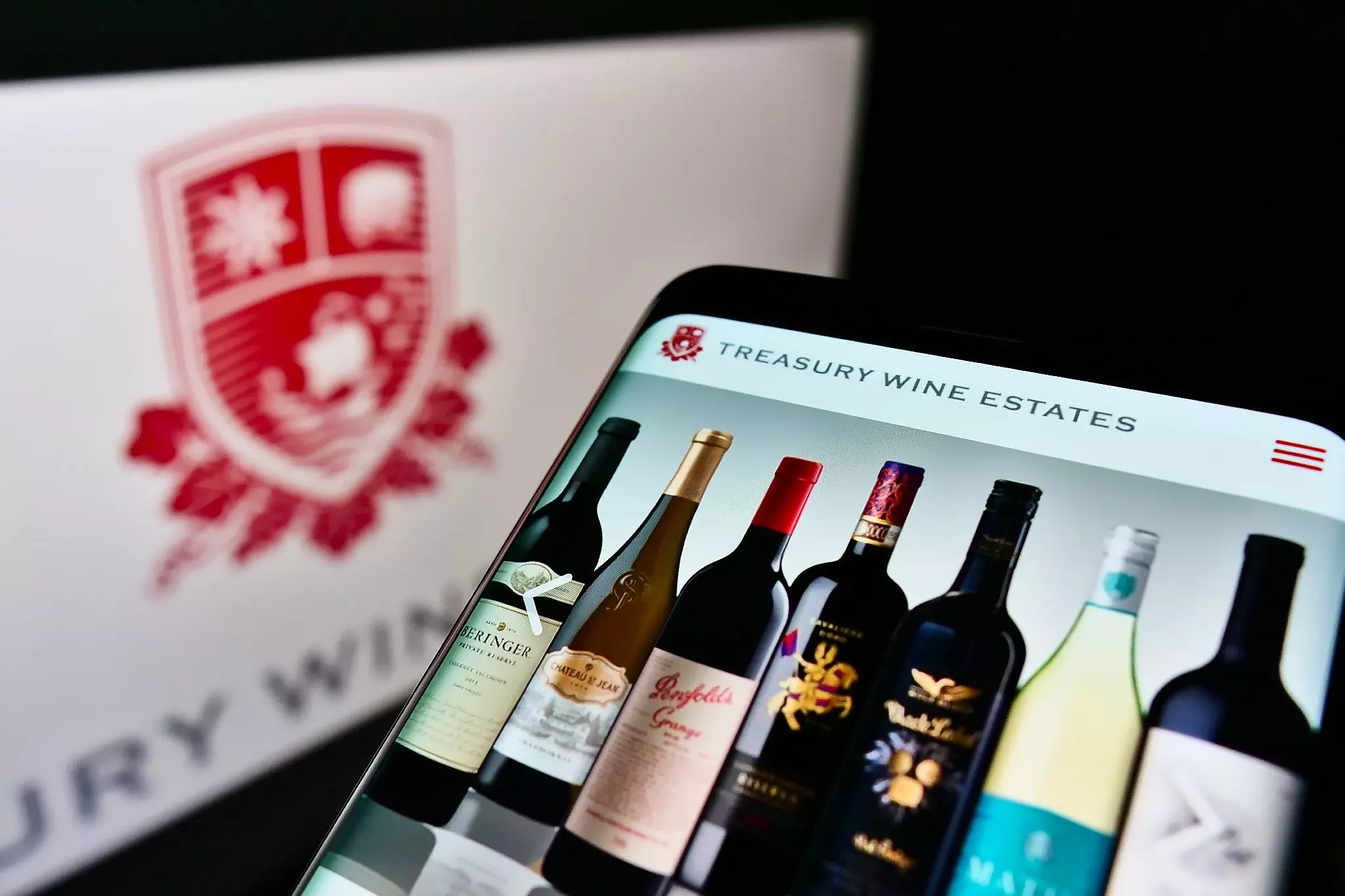
    Australian vintner, Treasury Wine Estates Ltd. said it will buy U.S. luxury winemaker Frank Family Vineyards for $315 million, saying the deal offered a rare opportunity to bolster its high-end wine portfolio.

    Treasury said Napa Valley, California-based Frank Family Vineyards is highly complementary to its Americas business and fills a key portfolio gap for luxury chardonnay. Treasury said it is well placed to grow the business given its leading luxury sales credentials, national distribution network and California asset base.

    “This is a compelling strategic and financial investment, comfortably meeting our investment criteria and one we expect will deliver attractive growth and financial returns for TWE’s shareholders over the long-term,” Treasury Chief Executive Tim Ford said.

    Analysts have expected Treasury to make acquisitions as winemakers focus more on the lucrative higher-end parts of the market. Treasury has been selling off some of its downmarket U.S. brands and assets and it said Thursday that process was largely complete, with total net cash proceeds of about 300 million Australian dollars (US$218 million).

    It said it is using those proceeds to help pay for Frank Family Vineyards. Treasury added that Frank Family Vineyards has a long-term track record of delivering strong revenue and earnings growth, as well as earnings margins in the range of 35%-40%.

    The acquisition is expected to be completed in December.

  • Australia To Speed Up Rollout Of Electric Car Charging Stations

    Australia To Speed Up Rollout Of Electric Car Charging Stations

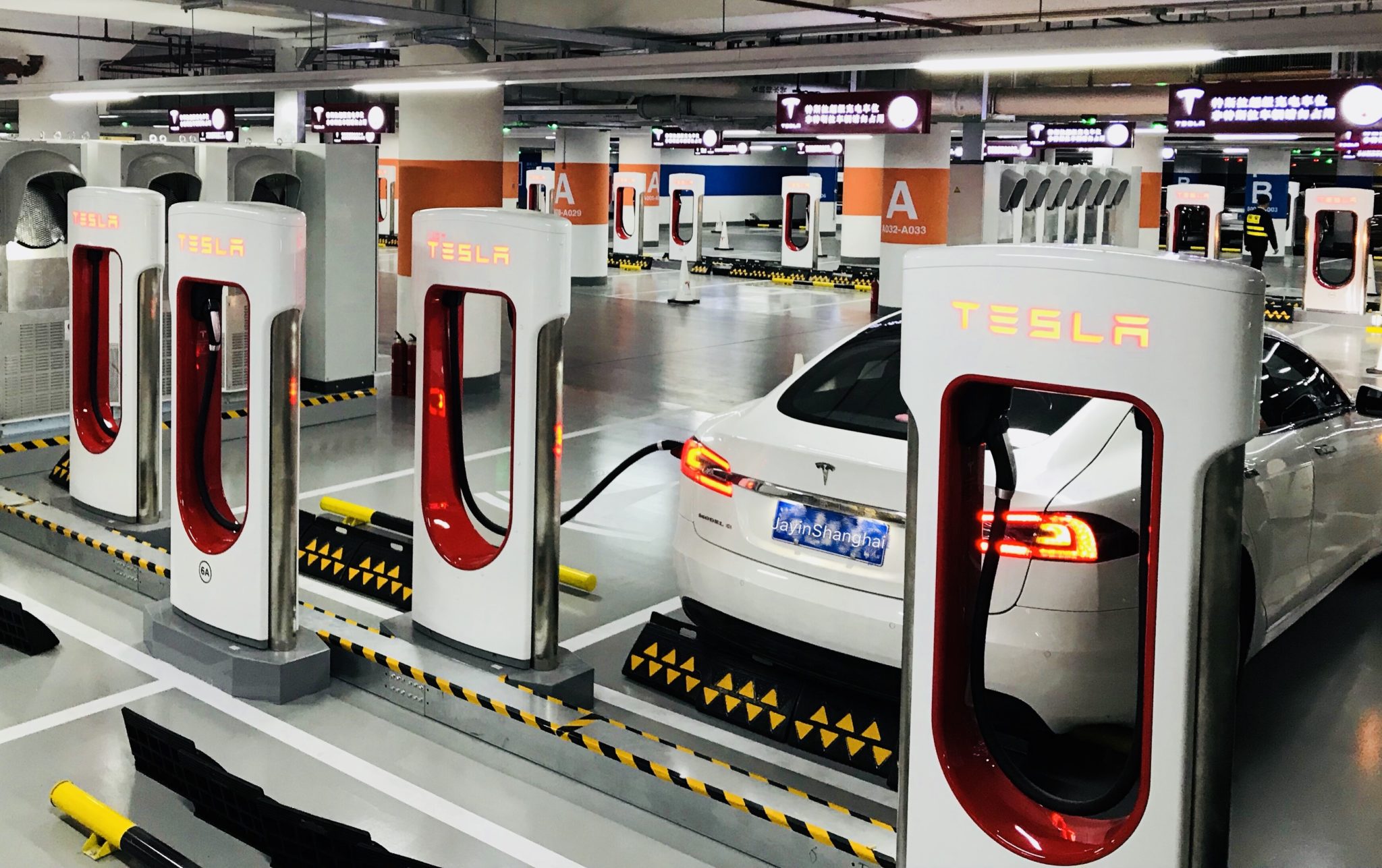
    The Australian government on Tuesday pledged A$178 million ($132 million) to ramp up the rollout of hydrogen refuelling and charging stations for electric vehicles but did not offer EV rebates or set targets to phase out petrol cars. Prime Minister Scott Morrison said the beefed up Future Fuels Fund provides “an Australian way” to lower transport emissions, reiterating a slogan he introduced recently to describe the country’s middle ground on climate change policy. “We will not be forcing Australians out of the car they want to drive or penalizing those who can least afford it through bans or taxes,” Morrison said in a statement. “Instead, the strategy will work to drive down the cost of low and zero-emission vehicles.”

    The additional investment, which adds to an existing A$72 million commitment and will be spent by the end of June 2025, will also aid purchases of electric cars and buses for government and business fleets. Industry groups and green activists, however, said rebates and tax breaks were necessary to encourage the purchase of cleaner cars in a country where transport is the third-largest source of carbon emissions. “The federal government purports to support choice for Australian motorists, but in fact its strategy stifles choice by making it very challenging for Australia to attract a wide selection of battery electric vehicles to the market,” Clean Energy Council Chief Executive Kane Thornton said.

    The federal funding is only slightly more than a separate commitment by New South Wales, the country’s most populous state, to spend A$171 million on EV chargers over the next four years. Victoria, the second-most populous state, is planning to spend A$29 million on charging infrastructure in regional areas and replacing government cars by 2023. The federal government said its plan should lower carbon emissions by more than 8 million tonnes by 2035, based on its own projection that battery-electric and plug-in hybrid electric vehicles will make up 30% of annual new car and light truck sales by 2030.

    Morrison in 2019 slammed a proposal by the opposition Labor Party to target half of all new car sales to be electric by 2030, saying the policy would “end the weekend” for Australians who want to tow their trailers and boats to go camping. However, a recent survey by The Australia Institute thinktank found 64% of Australians favored requiring all new car sales in the country to be zero-emission vehicles by 2035 and 71% supported government subsidies for electric cars. Battery electric and plug-in hybrid vehicle sales in Australia hit a record 8,688 in the first half of 2021, but made up just 1.6% of total light-vehicle sales. In Norway, the global leader in EV uptake, battery electric vehicle sales made up nearly 80% of new car sales in September.

    The Future Fuels Fund will focus on extending coverage of fast-charging stations to regional areas, investing with private firms in 1,000 public charging stations, and in charging infrastructure at businesses and households. Australia has about 3,000 public chargers installed across the country, according to the Electric Vehicle Council. By comparison, California alone has over 73,000 public and shared chargers. The Electric Vehicle Council said the national plan should have at least included fuel efficiency standards.

    “If Australia continues to be one of the only developed nations without fuel efficiency standards then we will continue to be a dumping ground for the world’s dirtiest vehicles,” council Chief Executive Behyad Jafari said in a statement. The transport infrastructure funding was announced just weeks after Morrison adopted a net-zero carbon emissions target by 2050 in the face of international criticism that the major coal and gas producer was not doing enough to address climate change.

  • Melbourne retail to reopen last Friday

    Melbourne retail to reopen last Friday

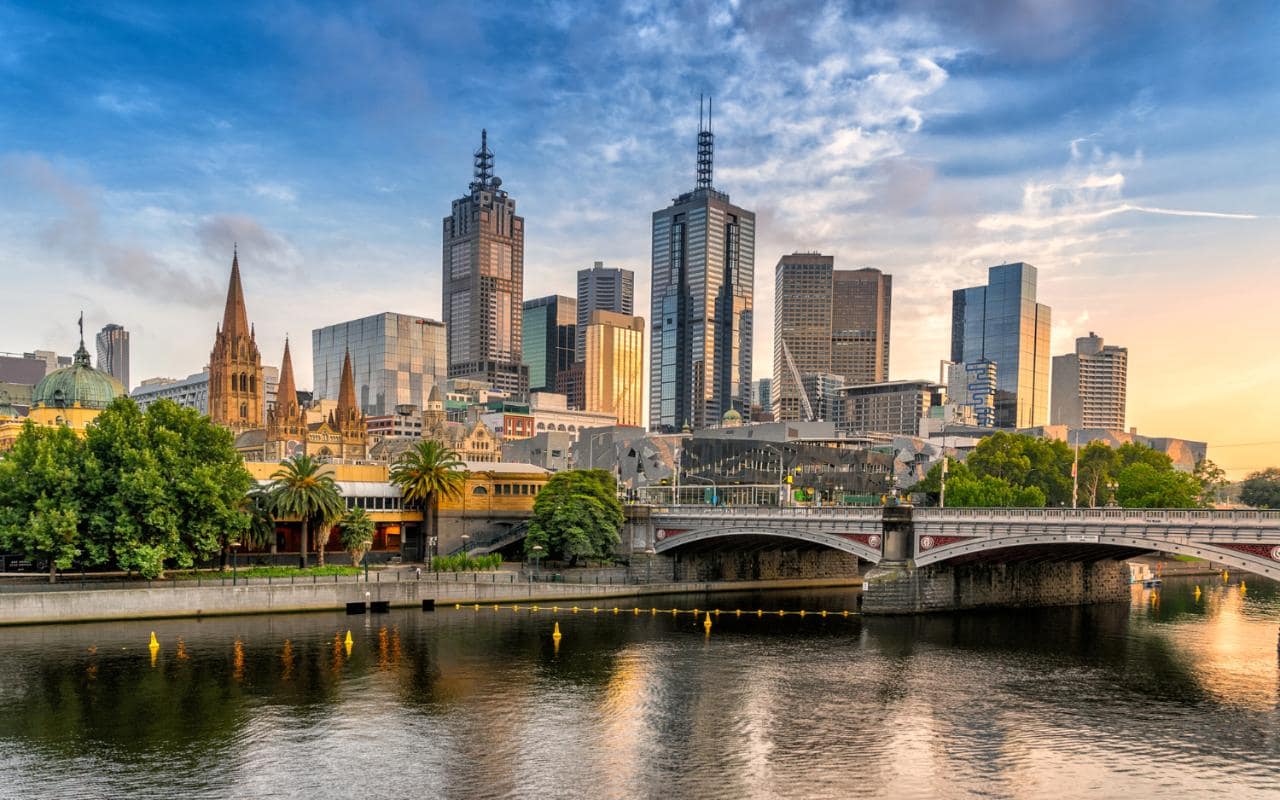
    It’s been a grueling 20 months for many Victorians who have gone in and out of lockdown, but on Friday the state is set to welcome a raft of new freedoms — and will potentially say goodbye to some COVID-19 restrictions once and for all.

    As the state reaches its 80 percent double-dose vaccination milestone, regional Victoria and metropolitan Melbourne will follow the same rules, while gyms, retailers and entertainment venues will reopen to the fully vaccinated.

    Leanne Walsh, an instructor and co-owner of a small martial arts school in Craigieburn to Melbourne’s north, said she was excited to welcome students again.

    “We’re just looking forward to opening up when we can,” Ms Walsh said.

    “During the lockdown, we lose contact with our students and obviously then have to rebuild our student base.”

    Her center has been closed for most of the year, but she said it has been “coping very well” thanks to business grants provided by the state government during the pandemic.

    But Ms Walsh said questions remained around the reopening of her business and said it would be a challenging journey to “COVID normal” as her martial arts school negotiated new policies like the vaccine mandate.

    “I don’t know that we can open on Friday, as I need to clarify if the students need to be double-vaccinated,” she said.

    “It’s really just the vaccinations that are a little unclear as we don’t fall into the mainstream gym or community sport.”

    The Victorian government has said it will move into a “vaccinated economy” once 90 percent of people over the age of 16 receive their two doses, with only fully vaccinated people allowed to go to gyms, retail stores, theatres, and other venues.

    At that 90 percent milestone, expected on November 24, caps and density restrictions will also be scrapped and masks w

  • Telstra partners Australian government to buy Digicel Pacific

    Telstra partners Australian government to buy Digicel Pacific

    Telecommunications giant Telstra announced on Monday that it has partnered with the Australian government to buy Digicel Pacific for $1.6 billion.

    This is widely viewed as a political move to curtail China’s influence in the region, following interest shown by China’s biggest telecommunications operator to buy over Digicel Pacific.

    The biggest mobile operator in the South Pacific region, Digicel Pacific has 1,700 employees and around 2.5 million subscribers from retail customers through to large enterprises. Digicel Pacific has operations in Papua New Guinea, Fiji, Samoa, Tahiti, and Vanuata – important markets in Papua New Guinea.

    In a press release, Telstra stated that the Australian government will contribute $1.33 billion, while Telstra will contribute $270 million in equity. Telstra will own 100% of the ordinary equity and receive strategic risk management support from the government.

    This move is also aligned to Telstra operations in Papua New Guinea, where Telstra has been a licensed operator since 2012 and one of the biggest providers of voice and data services connecting the South Pacific to the rest of the world.

  • ​​Eco-startup Zero Co crashes crowdfunding servers as shares go on sale

    ​​Eco-startup Zero Co crashes crowdfunding servers as shares go on sale

    Eco-startup ZeroCo broke Australia’s record with the largest crowdfunding in Australia’s history, raising $ 5 million in the recorded time of 6 hours.

    Unprecedented heavy traffic – 2500 out of 3082 investors are pre-registered Crowdsourcing funding platform Birchal. Five minutes after the raise, Zero Co successfully raised $ 1 million, the fastest raise in the country. In less than 50 minutes, the emerging startup was the fastest in Australia, raising $ 3 million.

    Mike Smith, the founder of Zero, said:

    “We want to grow this business by expanding our product range, expanding our business, launching globally and eliminating disposable plastics from all kitchens, laundry, and bathrooms. I am. “

    Prior to the Crown Funding campaign, the company also secured a $ 6 million investment from global investment firm SquarePeg.