Retail News CRM

Tag: automotive

  • Nissan Korea fined 900 million won for inflating mileage figures

    Nissan Korea fined 900 million won for inflating mileage figures

    Korea’s antitrust watchdog said Wednesday that it has fined Nissan Korea 900 million won ($802,100) for inflating gas mileage figures for its Infiniti Q50 2.2d sedans. The Japanese car’s fuel efficiency reaches 14.6 kilometers per liter (34.3 miles per gallon), but the local unit of the Japanese carmaker overstated the fuel efficiency as 15.1 kilometers per liter in its stickers, catalogues and magazines between February and November 2014, according to the Fair Trade Commission.

    Nissan Korea sold 2,040 Infiniti Q50 2.2d sedans valued at 68.68 billion won during the cited period.

    “There are concerns that Nissan Korea’s advertising could hurt fair trade by distorting consumers’ reasonable choice, considering that fuel efficiency is a priority factor when they buy vehicles,” the commission said.

    Repeated calls to Nissan Korea seeking comment went unanswered.

  • Imports of commercial vehicles fell last month in Korea

    Imports of commercial vehicles fell last month in Korea

    Sales of imported commercial vehicles plunged 38 percent last month from a year earlier amid slower economic growth, a local automobile association said Tuesday. The number of newly-registered imported commercial vehicles fell to 283 units in December from 390 a year ago, the Korea Automobile Importers and Distributors Association (KAIDA) said in a statement.

    “The construction industry faces a slowdown as the government pushes for regeneration projects in residential areas instead of building new apartments or homes. This is driving down demand for commercial vehicles,” a spokeswoman for Volvo Trucks Korea said.

    Imported commercial vehicles are widely viewed as being more upmarket than domestically produced rivals and offer more choices for users.

    For the whole of 2018, the number of imported commercial vehicles sold in Korea declined 1.6 percent to 4,394 units from 4,464 a year earlier, the statement said.

    Major imported commercial vehicle brands are MAN, Mercedes-Benz, Volvo Trucks, Scania and Iveco.

    There are three kinds of trucks. Two of them are regarded as commercial vehicles, but the third, referred to as a dump truck, is classified as construction equipment.

    KAIDA began to compile sales data for imported commercial vehicles in January 2017.

  • Singapore’s Grab begins using Hyundai Motor’s Kona

    Singapore’s Grab begins using Hyundai Motor’s Kona

    Hyundai Motor, Korea’s largest carmaker by sales, said Wednesday that Singapore-based Grab began using its Kona Electric for its ride-hailing service this month. In November, Hyundai Motor and its affiliate Kia Motors jointly invested $250 million in the Southeast Asian company for a business partnership in ride-hailing service markets, the carmaker said in a statement.

    “The company is aiming to enter electric car markets in Southeast Asia through the partnership with Grab and gain a share of those markets,” the statement said.

    Grab has initially purchased 20 Kona electric vehicles (EVs) from Hyundai for its service and plans to increase the number to 200 by the end of this year, Hyundai said.

    The Kona EV can travel up to 400 kilometers (248.5 miles) per charge. The driver can charge the all-electric car to around 80 percent full in about 30 minutes, it said.

    In partnership with Grab, Singapore Power has granted Kona EV drivers a 30 percent discount when powering the emission-free car at charging stations, the statement said.

    This week, the Kona EV grabbed a coveted North American Car, Utility and Truck of the Year award at the Detroit auto show.

  • Toyota fined W817 million for false advertising

    Toyota fined W817 million for false advertising

    Korea’s antitrust watchdog said Tuesday that it has fined Toyota Motor Korea 817 million won ($729,000) for deceptive advertising of its RAV4 sport utility vehicle (SUV). Toyota Motor Korea advertised that its RAV4 obtained a top safety pick in five test categories, including the driver’s side small overlap front and roof strength, from the U.S. Insurance Institute for Highway Safety (IIHS) in 2015.

    In 2016, the RAV4 earned the Top Safety Pick Plus rating from the independent nonprofit organization that aims to reduce deaths, injuries and property damage from motor vehicle crashes, according to the Fair Trade Commission.

    The commission said that RAV4 models sold in the United States in 2015 and 2016 were equipped with a bracket, or shock absorber, that allowed it to get the top rating.

    The same SUV model sold in Korea during the same period was not equipped with the bracket, but Toyota Motor Korea advertised the RAV4’s earning the Top Safety Pick rating from the IIHS.

    “Toyota Motor Korea concealed and omitted that there was a difference between RAV4 models sold in the United States and Korea,” the commission said.

    It said the advertisement could mislead Korean consumers into believing that RAV4 models sold in Korea had all the safety features covered by the Top Safety Pick rating.

    Toyota Motor Korea said it cannot give an immediate comment on the issue and that it is reviewing the commission’s decision.

    Toyota is the second foreign automaker to be fined this year. BMW Korea was fined 14.5 billion won last week for manipulating documents on emissions.

  • VinFast announces seven new car models

    VinFast announces seven new car models

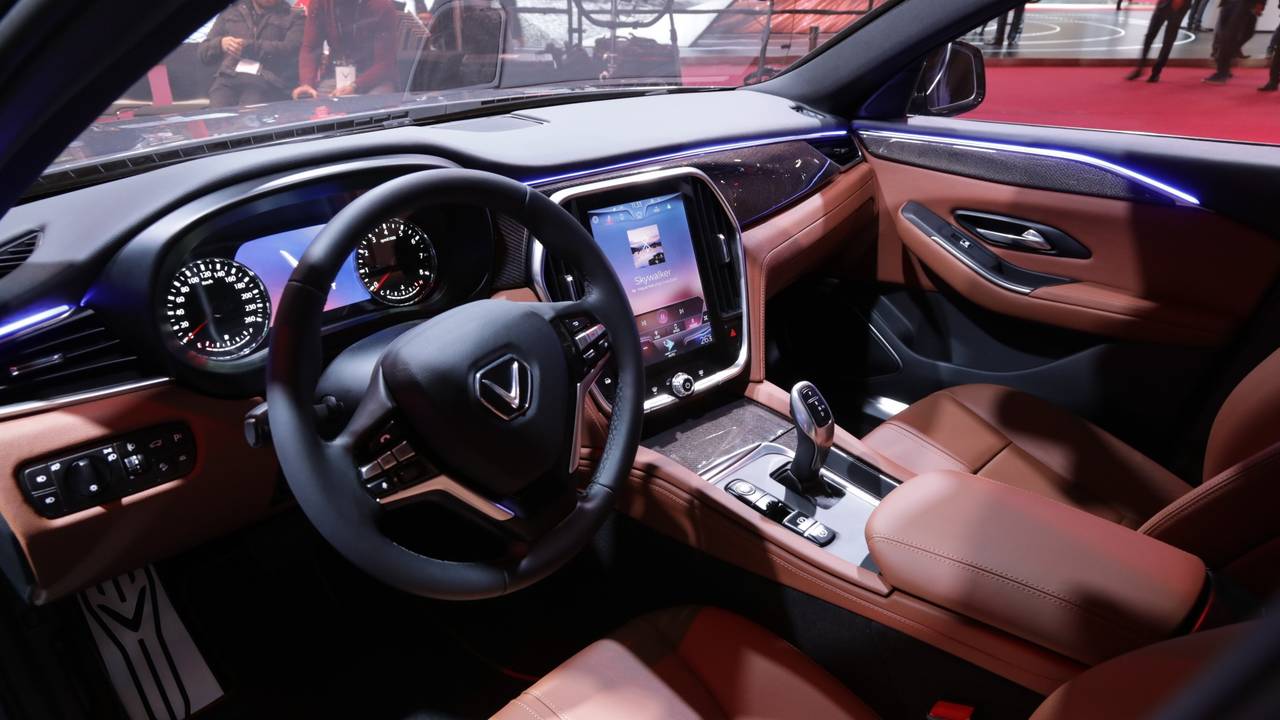
    VinFast, Vietnam’s first fully-fledged car manufacturer, plans to launch seven new ‘premium’ models. Following the first line of Lux (short for Luxury) automobiles aimed at the high-end segment, VinFast, a unit of Vietnam’s largest private conglomerate, Vingroup, has announced it will launch a Pre (short for Premium) car line with the aim of tapping a larger customer base.

    The company has opened a polling page for customers to vote on the seven most popular models out of a potential 35.

    The seven Pre models will include a hatchback and a CUV (crossover SUV) for the A and B segments; one Sedan and CUV for the C segment; and 1 Sedan, 1 SUV and 1 family car for the D segment.

    VinFast will continue to work closely with the famous Italian studios, Ital Design, Torino Design, and Pininfarina on designing the new models.

    VinFast showed off its first two car models, a sedan and an SUV, at the Paris Motor Show in France last October just a year after its incorporation, grabbing the attention of the local and international media.

    VinFast’s first production models built under its own badge hit the streets in August 2019.

    According to the Vietnam Automobile Manufacturers’ Association, total car sales in the country topped 288,000 units in 2018, up 5.9 percent from around 272,000 units in 2017.

  • BMW Group Malaysia achieves another record year of sales

    BMW Group Malaysia achieves another record year of sales

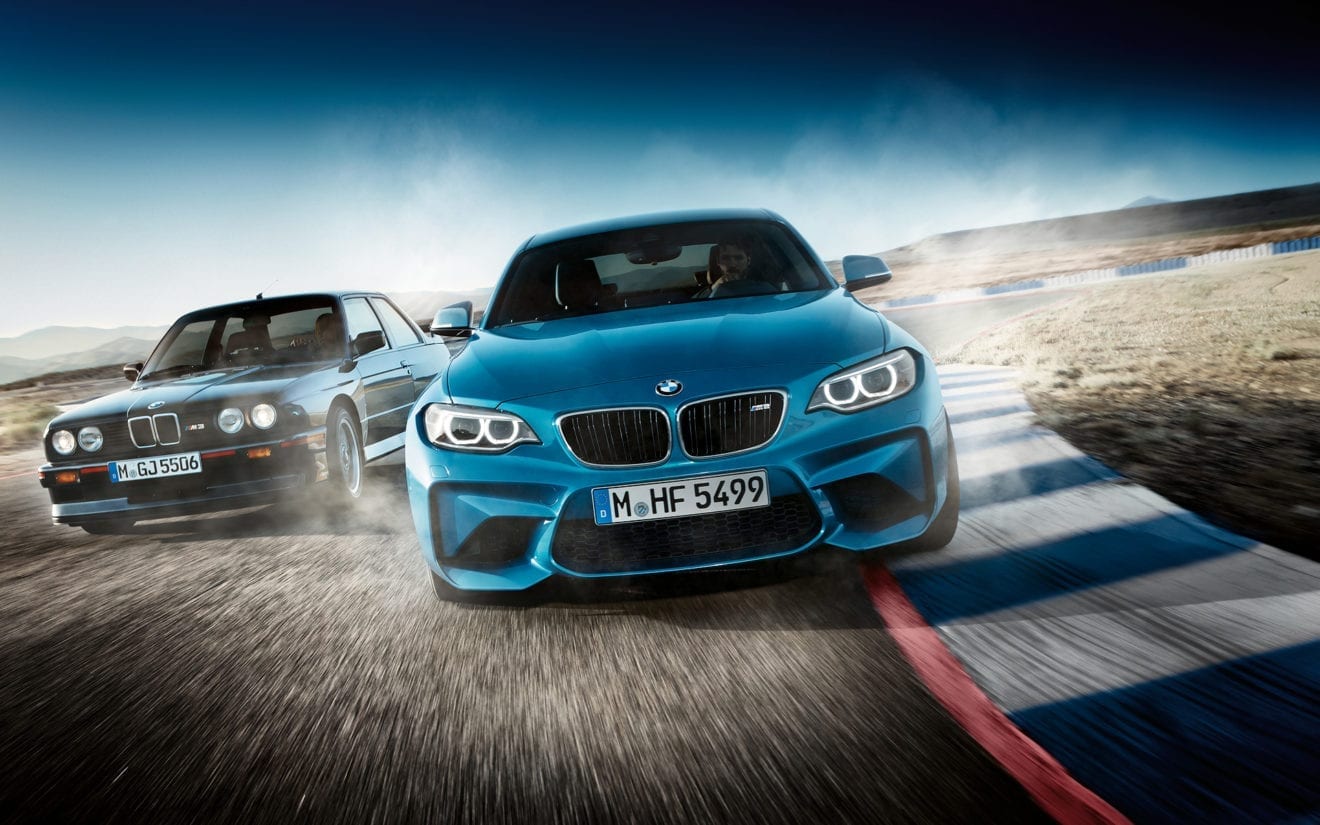
    BMW Group Malaysia delivered a total of 14,338 units of BMW, MINI and BMW Motorrad vehicles last year, marking its eighth consecutive year of record sales. The total number of vehicles delivered last year was 13% higher than 12,681 units delivered in 2017. The group said in a statement that the strong performance in Malaysia reflects the group’s business performance worldwide last year, where a total of 2.65 million BMW, MINI and BMW Motorrad vehicles were delivered.

    Globally, the BMW brand delivered a total of 2.12 million (+1.8%) vehicles, while MINI saw 361,531 new owners. BMW Motorrad also achieved record deliveries with 165,566 new owners, an increase of 0.9% compared to 2017.

    “In 2018, BMW Group Malaysia achieved numerous milestones which contributed to the success we celebrate today. Over the course of the year, we introduced 12 new models across the BMW and MINI brands – of which four were electrified vehicles. We also unveiled two new concept vehicles for the first time ever not only in Malaysia, but in Southeast Asia,” said BMW Group Malaysia managing director Harald Hoelzl.

    Hoelzl said the group also grew its infrastructure for electromobility in Malaysia by introducing new BMW i Charging Facilities in four different states to facilitate its vision for future mobility in Malaysia.

    In 2018, the BMW brand saw 12,008 new owners in Malaysia, 13% higher than 10,618 new owners in 2017 while MINI recorded a double-digit growth of over 18%, delivering 1,200 vehicles last year compared with 1,011 units previously.

    BMW Motorrad saw 1,130 new owners in 2018, which recorded a growth of over 7% compared to 1,052 in 2017.

    BMW Group Malaysia also recorded its best performance for its electrified vehicles in 2018. Of the total cars delivered, 57% comprised of electrified BMW and MINI (7,532).

    Meanwhile, BMW Group Financial Services Malaysia achieved a strong business portfolio with over 6,100 contracts signed in 2018. It successfully financed every four out of 10 BMW and MINI vehicles delivered last year as well as every six out of 10 BMW Motorrad vehicles last year.

    “2019 will be another exciting year for the BMW Group in Malaysia with a strong portfolio of products to be introduced here, mirroring the biggest model offensive for the company worldwide,” said Hoelzl.

  • Frost & Sullivan calls for strong incentive policy for electric vehicles in Malaysia

    Frost & Sullivan calls for strong incentive policy for electric vehicles in Malaysia

    Frost & Sullivan which is “mildly positive” on growth of total industry volume (TIV) for vehicles in 2019, said a strong incentive policy is required for electric vehicles (EVs) to take off in Malaysia. “Currently what we are waiting for is if the (NAP) National Automotive Policy mentions anything about EV. Unless there is a strong policy coming up focused on EV, otherwise we will not see any major uptake in EV sales in Malaysia,” said associate partner and senior vice president of mobility at Frost & Sullivan, Vivek Vaidya.

    He said the uptake for EV will also depend on factors such as incentives for manufacturers, forward distributors and customers coupled with the development of infrastructure for charging stations. Vivek added that there is a possibility of the new national car being an EV given leads of it being low energy and technology neutral.

    A survey carried out by Frost & Sullivan found that 30% of its respondents were willing to consider EVs even though such vehicles are yet to make a presence in Malaysia, signaling a latent demand for EVs.

    On the overall automotive market, Vivek expects Malaysia to registers vehicle sales of 609,700 units in 2019, 1.4% growth against 601,300 units in 2018, driven by growth in domestic consumption, private investments and new model launches.

    The passenger vehicle segment is expected to perform better than the commercial vehicle segment, which is likely to be impacted by low public spending.

    The passenger vehicle volume is projected to grow to 544,121 units in 2019 from 536,371 units in 2018, while the commercial vehicle volume is estimated to rise to 65,579 units from 64,929 units.

    Worth noting is that demand for vehicles went up by 4.2% during the tax holiday period last year.

    “Usually after a tax break period, the volume shrinks in the subsequent quarter but in 2018, strong consumer sentiment ensured Q4 volume matched last year figures to end the year on a positive note,” Vivek said.

  • Proton aims to double exports in 2019

    Proton aims to double exports in 2019

    Proton Holdings Bhd aims to double the export of its cars to at least 3,000 units this year from 1,388 units in 2018. “In 2017, we exported 248 units. This year we want to export more,” its CEO Li Chunrong said. With the support from the Malaysian government, he said, the group could export up to 4,000 to 5,000 units this year. Asked on the group’s plans to enter the Pakistani and the Middle Eastern markets, Li responded by saying that Asean will remain as the group’s focus for its export business, but it does not intend to abandon other markets.

    “We don’t want to forget the other markets (as well). We are trying our best to enter other markets,” he added.

    On response to the Proton X70 that was officially launched on Dec 12, 2018, the group said bookings for the sports utility vehicle have exceeded 15,000 units, with over 2,000 units delivered so far.

    Earlier, Proton deputy CEO Datuk Radzaif Mohamed said the group expects to bring an initial investment of RM47 million into the country through the second set of collaboration agreements between its vendors and their overseas counterparts.

    On Oct 10, 2018, Proton hosted its first signing ceremony where eight colla-boration agreements were signed and they are expected to help bring in an initial investment of RM170 million into the country.

    Radzaif said the collaborative agreements will range from technical tie-ups and joint ventures to 100% foreign direct investments with foreign vendors investing into the Malaysian economy.

    Aside from the investments in facilities and technology, he said, the collaborations are also expected to create about 450 new jobs in the automotive industry that range from assembly to design engineering.

    Additionally, these vendors will supply parts to Proton’s manufacturing facility in Tanjung Malim, which is undergoing expansion at a cost of RM1.2 billion.

    Meanwhile, Deputy International Trade and Industry Minister Ong Kian Ming, who witnessed the signing ceremony, said the government is targeting RM15 billion from exports of local automotive components and spare parts by 2020.

    Malaysian Automotive, Robotics and IoT Malaysia (MARii) CEO Datuk Madani Sahari shared that the value of exports for automotive components and parts could have easily touched the RM12 billion mark by end of December 2018.

  • Jaguar’s first electric car roars into Korea

    Jaguar’s first electric car roars into Korea

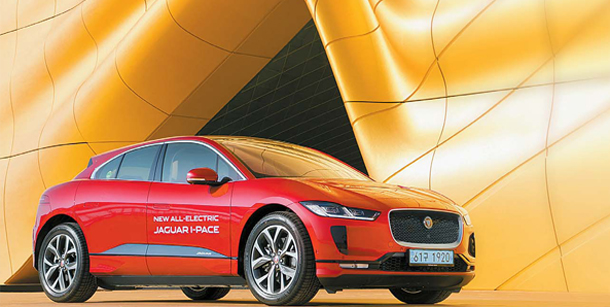
    Luxury carmaker Jaguar introduced the I-Pace, its first electric vehicle (EV), to the Korean market Monday at the Paradise City hotel in Incheon, joining a growing number of EV automakers in the country. The luxury brand’s all-electric sport-utility vehicle (SUV) sports an electric powertrain that produces up to 400 horsepower and a 333-kilometer (207-mile) driving range.

    “The I-Pace is a high-performance electric car that has battery and electric motor technology developed from our experience in electric motor sports Formula E,” said Baek Jung-hyun, CEO of Jaguar Land Rover Korea. “Jaguar will lead the future of premium electric cars through the I-Pace.”

    The vehicle, originally unveiled in the global market early last year, was delayed for launch in Korea due to the certification process, according to Jaguar Land Rover Korea.

    The automaker has prepared charging infrastructure for the product’s launch, installing 52 charging stations in 26 of its showrooms. The company has also installed 52 chargers and 26 fast-charging stations in its service centers.

    The fast-charging stations can charge vehicles to up to 80 percent in just 40 minutes.

    For maintenance, the carmaker promised to establish 10 new service centers so that there will be a total of 37 by the end of this year.

    Jaguar Land Rover Korea is also promising an eight-year or 160,000-kilometer warranty for its battery system and will install home-charging systems for free for those customers who receive their vehicles by March 31 this year.

    The luxury brand’s all-electric car enters the budding local EV market that has seen rapid growth over recent years.

    A total of 21,375 EVs were sold between January and September last year, up from 13,826 sold in 2017. The Ministry of Environment plans to have 350,000 EVs and 10,000 fast-charging stations in the country by 2022.

    Jaguar’s newest offering joins the short list of electric SUVs in Korea, which include Tesla’s Model X and Hyundai Motor’s subcompact SUV Kona EV, both released last year in the local market.

    The I-Pace will be sold from Jan. 23 with a starting price of 110.4 million won ($98,300) that climbs to 128 million won for its highest trim, the EV400 First Edition.

  • Hyundai Motor now ready for big races

    Hyundai Motor now ready for big races

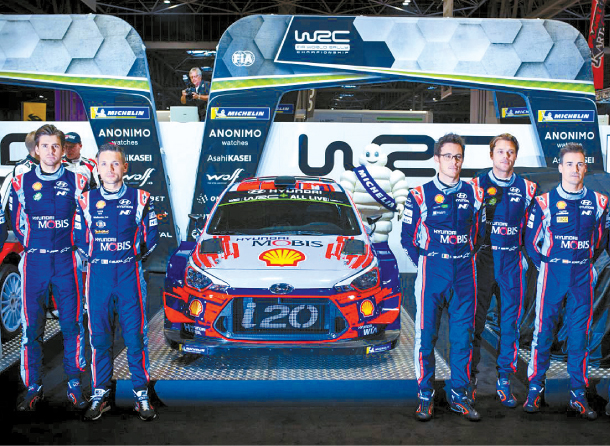
    Hyundai Motor finalized its driver lineup for this year’s major motorsport competitions, the company said Monday.  The automaker said its target this year is to win championship titles at the World Rally Championship (WRC) and the World Touring Car Cup (WTCR). In WRC events, the carmaker participates with its own team. In WTCR events, it supplies its cars to professional racing teams.

    For the WRC, the company said last year’s vice champions Thierry Neuville and Nicolas Gilsoul – a team of driver and co-driver – will be joined by Norwegian crew Andreas Mikkelsen and Anders Jaeger in all events. This year’s WRC has a total of 14 rounds. A composite score in those events will decide the winner.

    Dani Sordo and Carlos del Barrio will take part in eight events starting at Rally Mexico.

    Nine-time WRC champions Sebastien Loeb and co-driver Daniel Elena, who joined the Hyundai team from last month on a two-year contract, will take part in six rounds.

    “I am pleased to be joining such a great lineup of crews,” Loeb said. “It is clear to me that the car was a competitive package in 2018, which enabled the team to fight for the championship titles right to the very end.”

    Hyundai Motor’s team – named Hyundai Shell Mobis – came in second at last year’s WRC using an i20 coupe WRC vehicle.

    The automaker also announced four drivers who will participate at this year’s WTCR event with Hyundai’s i30 N TCR racing car. The carmaker races in the Customer Motorsports category with competitors that include Audi, Volkswagen and Ford.

    Hyundai’s customer team consists of four drivers, each driving on their own. Last year’s champion Gabriele Tarquini and fourth place driver Norbert Michelisz are driving Hyundai cars once again. Augusto Farfus and Nick Catsburg are newcomers.

    Hyundai Motor has been active in motorsport events as it has a positive influence on European sales thanks to a huge popularity of motorsports with European customers. In the long run, the carmaker hopes to upgrade its image from a value-for-money carmaker to a company known for high-performance cars.

  • Hyundai Motor sells more than 10 million cars in China

    Hyundai Motor sells more than 10 million cars in China

    Hyundai Motor, Korea’s largest carmaker, said Sunday that accumulated sales of its vehicles in China surpassed the 10 million unit mark in 2018. The milestone was reached 16 years after the company entered the key neighboring country, which has since become the largest market for new cars in the world.

    Hyundai first sold the midsize Moinca, a localized version of the Sonata, in the first year, which was followed by the Elantra. By 2008, it had increased its lineup to six, with sales exceeding 1 million units. In 2013, the carmaker said it sold 1 million vehicles in the world’s most populous country, with some 5 million cars being sold overall. Up until 2016, annual car sales exceeded the 1 million mark, although this plunged 31.3 percent on year to 785,000 units in 2017, amid a diplomatic dispute over the deployment of a U.S. missile defense system in Korea.

    For 2018, the carmaker said Hyundai sales edged up 0.6 percent from a year earlier to a little over 790,000, with numbers for this year not looking too promising.

  • Hyundai Motor introduces Kona Iron Man edition

    Hyundai Motor introduces Kona Iron Man edition

    Hyundai Motor said Friday that it will begin sales of its limited Kona Iron Man Edition in the Korean market from Jan. 23. The superhero edition of the SUV was developed over two years with Marvel and is the first production car to feature Marvel characters. The vehicle includes headlamps similar to the Iron Man helmet’s visor, a Marvel logo on its hood and design features from the superhero’s suit.

    According to the carmaker, the new limited edition comes in matte metallic grey, inspired by Iron Man’s original suit featured in a 1963 Marvel Comics series.

    The edition sports a 1.6-liter turbocharged engine and a seven-speed dual-clutch transmission.

    Of the total 7,000 Iron Man edition Kona’s to be sold globally, 1,700 of the units are in Korea.

    For local buyers, the limited-edition model will cost 29.45 million won ($26,420).

  • BMW adding Tmall genie to connected-cars in China

    BMW adding Tmall genie to connected-cars in China

    Alibaba Group’s smart assistant, Tmall Genie, will launch in select vehicles from the BMW Group in China by the end of the year, the two companies announced at CES in Las Vegas. Tmall Genie, a product made by Alibaba’s artificial-intelligence research division, A.I. Labs, will be fully integrated in BMW vehicles, offering drivers a number of in-car entertainment and shopping options while on the road, the companies said.

    As Chinese consumers have come to expect a seamless, digital experience both at home and at brick-and-mortar retail spaces, they should expect the same experience in their car, said Dieter May, senior vice president of Digital Services and Products at BMW Group.

    “With the integration of Alibaba’s Tmall Genie in BMW vehicles in China we are adding a digital ecosystem, which will open up new possibilities that customers can access quickly and safely from the car,” May said. “This development sees BMW reaching a new milestone in China in terms of intelligent connectivity between the customer’s vehicle and their digital touchpoints.”
    The global connected-car market is expected to grow 270% by 2022, with more than 125 million connected passenger cars to be shipped between 2018 and 2022, according to a report from market research firm Counterpoint Insights. The report, released last year, pointed to the technology’s rapid uptake in China as one of the key drivers.

    Monday’s announcement follows the integration last year of “BMW Connected,” the German automaker’s connected-car app, with Tmall Genie. Consumers with Tmall Genie in their home could perform functions such as double checking to make sure the doors and windows of their BMW were open or closed. Now, they will be able to operate vehicle functions through the in-car Tmall Genie.

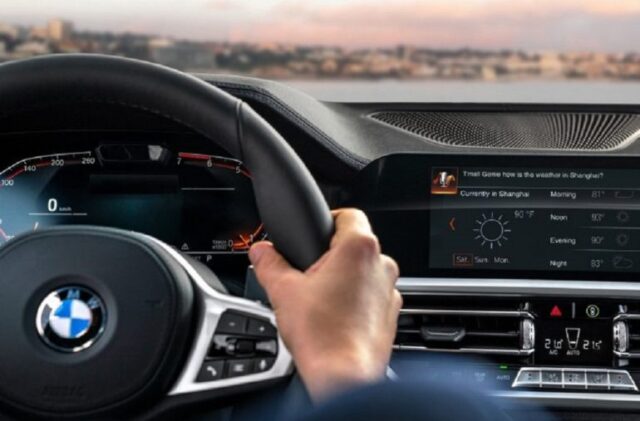
    Drivers can also use Tmall Genie to place online orders, view cinema listings, listen to their favorite playlist or check the weather at their destination, as well as access information from Tmall Genie via audio output or in text and image form on the BMW Display Screen. And they can use Tmall Genie to call up appointments saved in BMW Connected.

    “We launched the ‘AI+Car’ solution last year to provide a more-intelligent and connected experience for Chinese car users through Tmall Genie’s AI-powered voice interaction and service capabilities for cars,” said Alibaba Group Vice President Miffy Chen, who serves as general manager of Alibaba A.I. Labs.

    “Among our collaboration with premium automakers, we are very glad that BMW will be the first premium auto brand to bring selected car models that fully integrate Tmall Genie to the China market,” she said.

    The deal with BMW Group is just the latest involving Tmall Genie’s integration with automobiles. In September, A.I. Labs said it would integrate Tmall Genie into some vehicles made by Gothenburg, Sweden-based Volvo Cars, giving drivers the ability to monitor and control their smart home devices from their cars. Tmall Genie is also compatible with Volvo’s connected-car app, as well as those of Germany’s Daimler and Audi.

    Elsewhere in the autos sector, Alibaba Cloud in September said it would collaborate with German engineering and electronics company Robert Bosch GmbH on a self-parking feature in select sites in China that is powered by cloud software. At the same time, Alibaba also unveiled the latest model of its internet car in partnership with U.S. automaker Ford, which was part of a tie-up signed by the two companies in 2018. Ford Kuga SUV customers now can order a 10.4-inch center screen and software powered by Alibaba-designed operating system AliOS.
  • BMW Korea fined $13M over emissions

    BMW Korea fined $13M over emissions

    A Seoul court fined BMW Korea 14.5 billion won ($12.9 million) for manipulating documents on emissions to sell some 29,000 vehicles in Korea. The Seoul Central District Court announced Thursday that the local unit of BMW is guilty of violating customs law. The automaker was found guilty of forging emissions test papers from 2011 to obtain certification from the National Institute of Environmental Research under the Environment Ministry that its cars meet local emissions standards. Roughly 29,000 cars were certified this way, according to the court.

    “The automaker has undermined government efforts to improve air quality in Korea,” the court said in a statement. “This also damaged local customers’ trust in BMW.”

    The court also added that BMW Korea took substantial profits over the years due to the manipulation, showing no effort to abide by local laws.

    “The reason for making [carmakers go through] a stringent certification process is because car emissions have substantial impact on air quality,” the court said.

    The Seoul court also found six former and current executives of the automaker involved in the case guilty. Three executives were sentenced to eight to 10 months in jail, with three others given a four to six month suspended sentence with probation.

    On Thursday’s ruling, BMW Korea said in its official statement that the company “will respond following an appropriate legal process after thoroughly reviewing the case,” adding that it cannot give a “detailed answer yet.”

    Last month, the Korean unit of rival German automaker Mercedes-Benz was also found guilty of violating the emissions certification process. The court gave Mercedes a 2.81 billion won fine and handed down an eight-month jail sentence to the executive in charge of emissions certifications. The carmaker was charged for failing to get new certifications after changing some emissions-related parts. Mercedes said it will appeal the ruling.

    In its official statement last month, Mercedes said it was an administrative mistake, adding that it was unintentional.

  • Hyundai Mobis shows off futuristic concept self-driving car

    Hyundai Mobis shows off futuristic concept self-driving car

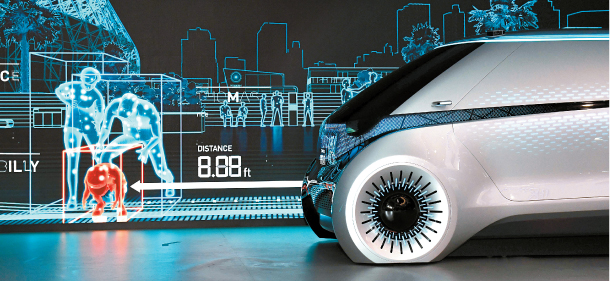
    Hyundai Mobis introduced its concept autonomous car equipped with 26 sensors and a special lighting system that enables cars to communicate with pedestrians at the Consumer Electronics Show (CES) in Las Vegas on Tuesday.

    The auto parts maker said it is the first time it has unveiled a concept car with at least Level 4 self-driving capability, which means cars can drive themselves without being actively monitored by the driver.

    The car comes with a modular self-driving kit comprised of various sensors – which function as eyes for the car – on the roof as well as lamps that can send messages to nearby pedestrians or cars. Mobis calls all of the technologies and parts used on the autonomous vehicle M.Vision.

    The kit on the roof – comprised of four lidar sensors, or laser-based radar, and five multifunctional camera sensors – are key strengths of M.Vision, according to Mobis.

    The modular kit can simply be mounted on the roof, so it can easily be used on different vehicles. The Korean company said it is best to put sensors on the car’s roof, considering that sensors can better detect the surrounding environment when they are placed higher above the car. To complement the kit on the roof, Mobis also installed five radar sensors and 12 ultrasonic sensors on the car’s lower body.

    The Korean company is on its way to make all sensors used in the kit with its own technology by 2020.

    The so-called communication lighting technology is a new innovation that Mobis thinks will greatly reduce fatal accidents involving autonomous cars and pedestrians.

    The company said it will use lighting to indicate to pedestrians and other drivers when the car is driving in self-drive mode. Autonomous cars will be able to detect a pedestrian from more than 450 feet away. Once someone is detected, car headlamps will project a red warning symbol to warn people it’s not safe to move around the vehicle.

    “Light has been used as a conduit for communication among vehicles and pedestrians for almost as long as the automobile has existed, so we are excited to lead the evolution of this technology to save lives and offer peace of mind to all that use the road,” said Mirco Goetz, director of lamp engineering at Hyundai Mobis.

    “Our primary focus on the safe progression to future mobility will enable our industry to continue the advancement of autonomous vehicle technology while helping to keep pedestrians and drivers out of harm’s way.”