Tag: Conlumino

  • Apple China sales slide further

    Apple China sales slide further

    Apple China sales have fallen for the fourth consecutive quarter, but the tech giant is putting on a brave face, buoyed by rising global revenue.

    Apple sold 78.29 million iPhones in the quarter ended December 31, up from 74.78 million last year, marking the first quarterly growth in iPhone sales in 12 months. It was as many as 2 million handsets more than analysts were predicting.

    But revenue in Greater China fell 11.6 per cent to US$16.23 billion as the iPhone came under heavy pressure from a raft of locally produced Android-based handsets with similar or higher specification and half the price.

    Apple executives put a positive spin on the China problem. “We were encouraged by our performance in China because it was clearly an improvement over the last couple of quarters,” CFO Luca Maestri said in a conference call. “In Mainland China in particular, our revenue was flat and actually grew in constant currency terms.”

    Neil Saunders, MD of GlobalData Retail, (formerly Conlumino), said both the new model iPhones and MacBook Pros helped deliver global growth for Apple: iPhone sales rose by 5 per cent in terms of units and revenues, and Mac sales were up by 7 per cent in revenue, and by 1 per cent in units.

    “In our view, the new MacBook Pros have a niche appeal, but the much higher price points helped to inflate sales. That said, given there is a more limited market for this fairly expensive kit, we question how much of a contribution to growth the new laptops will make over the remainder of this fiscal year.”

    Saunders said the first quarter results were a fairly positive note for the company, “finally pulling out of the tailspin of lower sales which have dogged it over the past year”.

    “However, the revenue uplifts have come off the back of fairly soft prior year comparatives, especially so in the North American market. Even so, the performance will come as a relief to Apple.”

    Services key to future

    Apple CEO Tim Cook said he expects revenue from services – which include the App Store, Apple Pay and iCloud – to double in the next four years after an 18 per cent improvement to to US$7.17 billion in the last quarter. Pokemon Go and subscription revenues had driven the growth.

    Saunders notes that in monetary terms services is now bigger than iPad sales and is almost as big as Mac sales.

    “Encouragingly, the division is nowhere near as mature as other parts of Apple’s business and we believe there is significant scope for future growth as Apple rolls out more content and services.”

    Despite these positives, Apple’s results do not provide the company with a completely clean bill of health, according to Saunders.

    “The iPad business, which was once a key driver of growth, is now firmly in decline with sales down 22 per cent over the prior year. And despite both product and operating system updates, sales of the Apple Watch continue to be anemic and it is clear that this product line is unlikely to be a significant winner.

    “The other major negative comes from the profit line where net income fell by 2.6 per cent. Admittedly this is much better than the circa-20 per cent declines that Apple has posted across the past three quarters. However, it underlines the fact that the top line is not moving ahead by enough to keep pace with the increased investment costs in store refreshes, product development, and research. Given that Apple remains extremely profitable, this is not a huge problem – but it does indicate that the days of heady bottom line growth are over, at least for this fiscal year.”
  • Yum China has ‘huge potential’

    Yum China has ‘huge potential’

    Yum China is set to exploit “huge potential” after its spin-off from its US parent, says Neil Saunders, CEO of Conlumino.

    Commenting on the parent company’s latest results, the US-based retail commentator said  while the China division once again delivered “an anemic performance” with total system sales declining by 3 per cent over the prior year, the best is yet to come.

    Revenue at both Pizza Hut and KFC fell on a same-restaurant basis.

    “This means that in the year to date, in real terms the China operation has posted no real sales growth. Fortunately, changes to value-added tax in the country allowed Yum! to ease up operating profits across the quarter,” said Saunders.

    “The position of China as a business which has huge potential once it gets through the current patch of slow growth, largely justifies its imminent spin-off into a completely separate operation. The divorce from the rest of the Yum! operation will allow both sides to focus more on their respective priorities and opportunities.”

    He said the overall global result for Yum! Brands suggest the company is making good headway in an increasingly challenging market.

    “However, the reality is far more mixed – mostly because Yum!’s growth figures are flattered by the fact the company strips out exchange rate fluctuations. When these are put back in, total revenue experienced a shrink of 3 per cent over the prior year – a far less impressive outcome.

    “In terms of the core business, the main focus needs to be Pizza Hut which has become something of a problem child for Yum! Over the quarter system sales shrank by 2 per cent in real terms, underpinned by a 1 per cent decline in same-restaurant sales. While there are some markets in which the brand is performing well, these continues to be overshadowed by the US which accounts for the majority of Pizza Hut’s revenue.”

    Saunders said that while admittedly the overall casual dining market, in which Pizza Hut loosely falls, saw customer traffic and spend decline over the third quarter.

    “However, our data also show that Pizza Hut is losing customer share to delivery services like Papa John’s and Domino’s. A defection to cheaper fast-food alternatives, especially among younger families, has also been unhelpful. This is an uncomfortable position and underlines the fact that Pizza Hut still has much work to do in terms of reinvigorating its brand.”

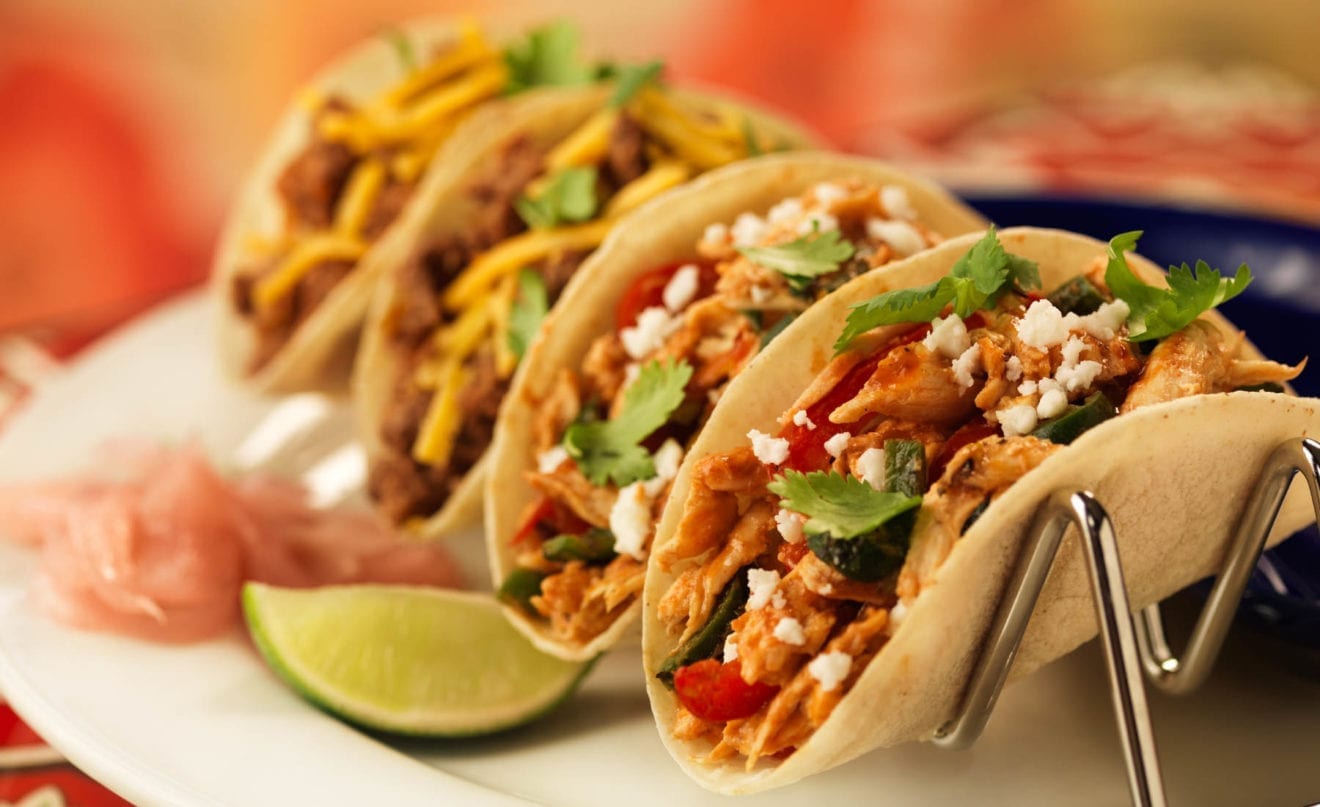
    Taco Bell, meanwhile, had a better quarter with a 5 per cent system-sales growth and 3 per cent same-restaurant growth.

    “While Taco Bell has benefitted from challenges at Chipotle, in our view most of the success is down to a change in marketing which is now more relevant to the younger millennial audience. Menu simplification and focus on popular lines has also helped to drive growth. We think these steps should be seen as part of a longer term upswing in the brand’s fortune.”

    Saunders said that while KFC had a much better quarter than the previous one, especially in the US, Conlumino still harbors concerns about the brand’s longer term growth prospects as younger upstarts like Chick-Fil-A or Popeyes Louisiana Kitchen continue to gain traction.

    “As such, we see KFC’s latest upswing as part of a more turbulent longer term picture.”

  • Kate Spade figures reveal slowing growth

    Kate Spade figures reveal slowing growth

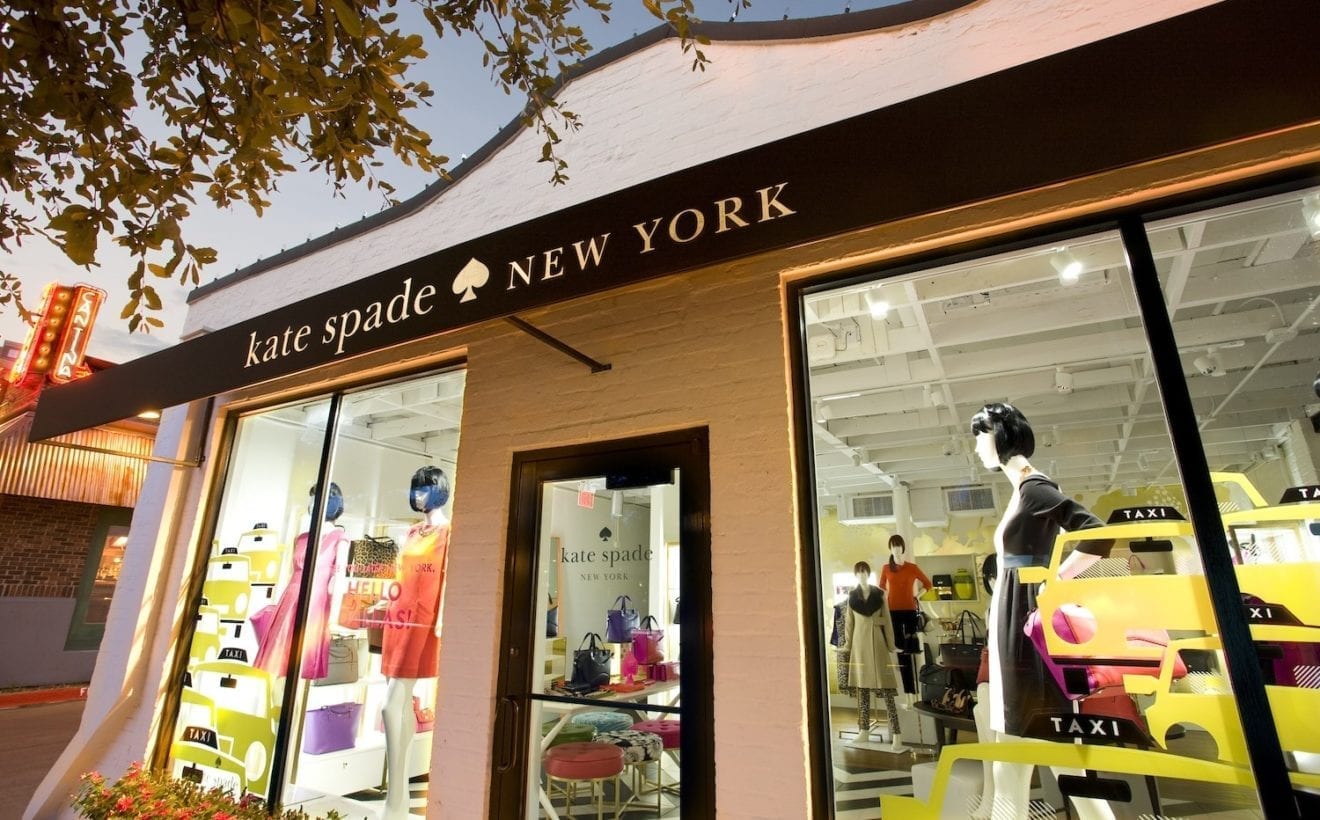
    While the latest Kate Spade figures are respectable, there is a clear slowdown in the pace of growth compared to last quarter.

    This is most noticeable in the direct-to-consumer segment, where comparable revenue rose by a fairly meagre 4 per cent, compared to the 19 per cent uplift posted during the first quarter. Although it is not unreasonable to expect growth to moderate from its heady pace, the expectation of Kate Spade’s management team was that this would not happen quite so soon.

    It is notable that the slowdown is mostly confined to North America, with international sales growth advancing steadily from last quarter’s 3.2 per cent growth rate. Kate Spade has suggested that much of this is tourist related with reduced international visitor footfall at key stores in New York, and lower spending from those that do visit thanks to the strong dollar.

    There is some truth in this, but it does not completely explain away the very slim growth rate in the direct segment – which is now running at just 1 per cent on a comparable basis once eCommerce has been excluded.

    There are three other factors at play which negatively affected growth.

    The first of these is the comeback of competitors like Coach, which thanks to brand repositioning and lower discounting are now attracting more customers. While there is only a partial overlap between Coach and Kate Spade, Conlumino customer data suggests that shopper sharing between the two brands has increased over recent months.

    The second factor is an increase in consumer uncertainty, especially among younger female shoppers. Such softness in Kate Spade’s target market likely reduced both the volume and value of purchasing over the period. This had a slight knock-on effect in terms of discounting which affected margins over the quarter.

    Thirdly, although Kate Spade’s marketing is still achieving cut through with campaigns like Miss Adventure, the impact seemed to weaken over the summer. This likely had a negative impact in terms of visiting and purchasing.

    Given that all of these trends are things that will not suddenly disappear, the danger for Kate Spade is that it is now entering a period of weaker sales growth: something it has reflected in its guidance. That said, slower sales uplifts are not necessarily indicative of a group in trouble. Indeed, Kate Spade will still grow and will do so at a pace that is above overall market growth. It will also continue to deliver healthy profits, which at net income level are running at $38 million in the year to date, compared to a loss of $47 million over the same period last year.

    Kate Spade is still a company moving forward – even if it now does so with slightly less momentum.

    • Neil Saunders is, CEO of retail analyst Conlumino.
  • Yum! China fortunes rebound

    Yum! China fortunes rebound

    Yum! China has showed progress with a system wide sales increase of 3 per cent in the latest quarter – or 7 per cent on a constant currency basis.

    Same restaurant sales are now in positive growth, although by a fairly meagre 2 per cent given the 16 per cent decline in the same quarter last year. Nevertheless, the strong pace of 743 new restaurant openings, combined with some good productivity gains, helped to swell operating profit by 200 per cent.

    Given the big differential in growth prospects and the fact that China faces a very different set of problems and opportunities, it is hardly surprising that Yum! is looking to split its business into two separate companies. This is a sensible step that will allow Yum! and Yum! China to focus on their respective priorities. However, without the boost to growth provided by China, the legacy business will need to work much harder to reestablish its relevance if it is to grow in a much more competitive market.

    Globally, Yum! produced a set of results that exactly mirrors those of last quarter.

    KFC has ended its fiscal year with a fairly solid set of numbers. That said, the growth figures are expressed on a constant currency basis and so exclude the negative impact of the strong US dollar. When this is factored in the outcome is a little less rosy with total revenue for the quarter falling by 1.2 per cent over the prior year.

    Behind the numbers, both KFC and Pizza Hut continue to struggle with system wide sales, including the impact of exchange rates, falling by 5 per cent and 2 per cent respectively. Fortunately this has been somewhat offset by the rebuilding of restaurant margins, but not by sufficient enough a degree to prevent profits at KFC dipping and profits at Pizza Hut virtually flatlining. Across the quarter, these two traditional engines of growth simply failed to propel the company forward.

    One of the key issues for both brands is the relatively slim growth within the US, which in the case of KFC is the division’s single largest market, and in the case of Pizza Hut accounts for the majority of the division’s sales. In our view both suffer from the challenge of maturity and, while they remain popular, the rather tired nature of the brands and a lack of meaningful menu innovation means they struggle to compete against rivals like Chick-Fil-A which are seen as more interesting by consumers. In many ways, both brands need to take a leaf out of the McDonald’s playbook in terms of reinventing themselves to become more relevant to diners.

    In contrast the Taco Bell division saw a strong rise in sales on at both total and same restaurant level. Restaurant margins also increased thanks to some favorable cost changes for commodities. While the combination of these things should have resulted in a good uplift in operating profit, a number of one-off costs – which included investment spending, legal fees, and the creation of a scholarship program – put pay to that. For the quarter Taco Bell operating profit declined by 7 per cent.

  • Alibaba Group conquers China slowdown

    Alibaba Group conquers China slowdown

    Going into this quarter the main concern for Alibaba was that a slowdown in Chinese economic growth would damage its performance.

    Fortunately, this has not materialised with very solid uplifts in its Chinese retail marketplace proposition underpinning a respectable 32 per cent rise in overall revenues.

    Some of this uplift was undoubtedly aided by the company’s very strong performance over the Singles Day shopping festival in November. During this time, it attracted over 115 million visitors to its marketplaces and processed some 467 million orders across all of its platforms during a 24-hour period. The fact that its systems and infrastructure coped well with this volume, which is around 10 times more than the usual daily average, is a testament to Alibaba’s technological prowess, especially in areas like cloud computing.

    This focus on technology is also helping Alibaba to understand the habits and preferences of Chinese consumers as they browse and navigate the group’s various sites, news feeds, and entertainment options. This understanding puts Alibaba in a prime position when it comes to helping Western brands expand into China. In many ways Alibaba and its marketplaces are the ideal conduit through which foreign retailers can target and reach appropriate audiences. In our view this remains one of the main sources of commercial advantage for the company.

    Despite its success at home, Alibaba has struggled to gain traction in already established markets like the US. While this was once a stated ambition, and perhaps remains a long term goal, it is clearly not the main agenda for the year ahead. Indeed, over the latest quarter the proportion of revenue from international operations shrunk by 1 percentage point and the growth rate of 17 per cent, while respectable, was well below that of the Chinese operation.

    As much as this will no doubt come as a relief to many Western retailers, it is the right decision. Despite its dominance in the country, Alibaba’s growth potential in China remains enormous – especially as it expands operations into more rural areas. As such, chasing lower margin, profit eroding international gains for the sake of vanity makes little sense.

    That noted, over the longer term Alibaba would like to become more international. The route it will take, however, is likely to be one of investing in, and partnering with, local players in order to grow its share and presence. The company clearly has the financial muscle to undertake such corporate activity and we expect to see more of this in 2016 and the years beyond.

  • Burberry Hong Kong downsizes flagship

    Burberry Hong Kong downsizes flagship

    Burberry Hong Kong is giving up a whole floor of its Pacific Place flagship as part of a range of initiatives to respond to the declining luxury market in the territory.

    Burberry CFO Carol Fairweather said in a conference call the company had reached an agreement with landlord Swire to give up the second floor part of the flagship, saying it “will enable us to drive increased sales per square foot and profitability in that store”.

    The luxury brand has 17 stores in Hong Kong, all impacted by the declining number of big spending Mainland China tourists shopping in the territory this year. Fairweather said rents had been renegotiated in a number of those stores but stressed all of them were profitable.

    “We are committed to being in Hong Kong,” Fairweather said, adding that sales have improved in recent months.

    The news coincides with the company’s release of its profit for the first half year, which beat analysts forecasts.

    Adjusted combined retail/wholesale profit was up five per cent on a same stores basis, with a planned decrease in licensing profit from Japan resulting in adjusted profit before tax of £153 million, up three per cent underlying from last year.

    “In the context of flat revenues, this result is better than expected,” commented Anusha Couttigane, senior consultant at Conlumino.

    She says Burberry is fully aware of its heavy reliance on interest from the Chinese consumer. The economic slowdown and the impact on Chinese demand is now cited as Burberry’s biggest risk.

    “In the light of these challenges, it is clear that, while Burberry continues to invest in elements that are essential for growth, it also has to make significant savings and it will take a combination of drastic measures to do so. On the one hand, this means aligning its brands under one label and its manufacturing staff under one roof. On the other, it means stripping back the privileges of a generous travel and expenses account.”

    Those cost savings are expected to deliver some £20 million to the business’ bottom line over the next 12 months.

  • Groupon woes continue

    Groupon woes continue

    Groupon – which has exited three Asian markets this year – continues to struggle globally with ts flawed discounting model.

    Operating on wafer thin margins in the first place, the company has taken a severe hit from currency exchange fluctuations in the third quarter.

    Globally, gross billings grew by six per cent when the exchange rate impact is excluded; similarly, global revenue increased by a more positive seven per cent on a constant currency basis.

    But after taking into effect the strengthened value of the US dollar against foreign currencies this year, Groupon saw its net losses grow by some $6.4 million to $27.6 million.

    As reported by Inside Retail Asia in September, the listed US eCommerce business has closed its doors in Thailand, the Philippines and Taiwan. Outside Asia it has already exited Greece and Turkey and will now close operations in Panama, Morocco, Puerto Rico and Uruguay.

    Neil Saunders, CEO of Conlumino, says the impact of currency fluctuations is worsened by the fact that the company operates off relatively low margins, especially outside of its North American heartland, and as such does not have much of a buffer against their deleterious effect.

    “The margin position is partly down to the multiple systems that Groupon operates across the globe which increase complexity and do not allow for economies of scale. While this is something the company has been remedying by moving to a common platform, we believe that the benefits have, so far, been fairly modest.”

    Saunders says margins are also held back by a further issue, arising from Groupon’s revenue mix.

    “At present, the company divides itself into three main segments: Local, Goods, and Travel. Local is concerned with deals from service providers like restaurants, events and activities. Goods is focused on consumer products like jewellery, electronics and apparel. And Travel is about holiday, flight and accommodation deals.

    “Recent growth in the more mature Local part of Groupon’s business has slowed considerably. Indeed, in Q3 growth was just under eight per cent. Comparatively, Travel and Goods have both seen strong growth, up 20 per cent and 18 per cent, respectively. This rebalancing of the revenue mix has diluted margins, mainly because Goods are far less profitable for the firm.”

    Saunders says gross profit as a percentage of gross billings for Goods is 13 per cent compared to 30 per cent in Local and 18 per cent in Travel.

    “To be fair, the margin performance of Goods has improved over the past year – but not by much. Over future quarters, we see the prospects for margin gains to be slight given that Groupon has to work harder on Goods deals in a market that remains very promotional.”

    Saunders believes there is little comfort ahead for Groupon in the fourth quarter.

    “Groupon is forecasting that revenues will come in at $865 million, at best. This is quite some way below the $883 million generated last year.

    “In our view, such anemic numbers do not paint a rosy picture for future profits. They also bode badly for the start of the new fiscal year – an issue the new CEO, Rich Williams, who is replacing Eric Lefkofsky who’s stepping into the role of chairman, will have to deal with,” Saunders concluded.

  • Ralph Lauren profits tumble

    Ralph Lauren profits tumble

    US fashion label Ralph Lauren’s operating profit has tumbled almost 39 per cent year to date as it continues to restructure its operations.

    The latest quarterly numbers just released show a solid sequential improvement on the prior quarter, with the strength of the US dollar responsible for most of the headline deterioration. When reported on a constant currency basis, net revenues look more respectable, rising four per cent over the prior year.

    “Despite the fall in profits, Ralph Lauren has taken steps to help ease up its bottom line over the medium term,” comments Håkon Helgesen, retail analyst at Conlumino.

    “These include the global reorganisation into a centralised structure run by six global brand groups which, by the end of 2017, should yield an annual $100 million in terms of efficiency savings. This measure has, however, come with short term costs attached – $38 million of which were recognised during this quarter, and more of which will filter through into subsequent quarters.

    “Despite the squeeze this exerts on profits, we believe that Ralph Lauren is to be applauded for taking the long term view.”

    The global launch of Polo Sport was completed during the quarter and initial indications suggest it has been well received.

    “In our view this activewear brand gives Ralph Lauren a much more significant presence in a lucrative – and rapidly growing – part of the apparel market and will be a solid contributor to future growth,” said Helgesen.

    Geographically, although international growth was deflated by the unfavorable exchange rate, it remains in double digits when expressed in local currency terms.

    “The same cannot be said of Ralph Lauren’s home market where the company struggled to generate sales momentum. Stores in big city locations – which make up about half of the total fleet – have the legitimate excuse of reduced tourist spend, again related to the relative strength of the dollar. This has inevitably acted as a drag on growth.”

    Helgesen says despite sluggish growth and a more promotional retail environment, Ralph Lauren continues to be conservative about discounting.

    “Although this has likely cost it some sales in the US, it has helped to protect margins and, ultimately, brand equity. Again, this is an example of Ralph Lauren being confident enough to take the long term view.”

    Responsibility for the day-to-day running of the company will now fall to Stefan Larsson, who takes over as CEO from its founder Ralph Lauren this month.

    “While some have questioned Larsson’s background – he previously worked at the distinctly mass-market retailers Old Navy and H&M – this is, in our view, to ignore the skills he brings to the table. While these may not have been honed in a luxury brand environment, the operating disciplines of both fashion businesses are points of learning for Ralph Lauren as it continues its quest for efficiency.

    “In any case, Ralph Lauren – and his design prowess – will still be on hand as he takes up his new role of chairman and chief creative officer,” concluded Helgesen.

  • Michael Kors Japan sales soar

    Michael Kors Japan sales soar

    Michael Kors Japan sales continue to soar as rising US fashion player expands its global success.

    Revenue in Japan for the last quarter rose 60.7 per cent on a constant currency basis.

    While that figure was carved back to 36.1 per cent after the exchange rate was taken into account, it shows stellar growth in the Asian nation, which is now Michael Kors’ second largest market behind the US.

    Globally, although still in positive territory, sales growth at Michael Kors continues to slow. Total revenue was up by 6.9 per cent during the quarter, a sequential worsening of the 7.3 per cent growth posted during the first quarter, and a long way down on the double digit increases recorded across the prior fiscal year.

    But while some of this is due to currency fluctuations, according to Conlumino CEO Neil Saunders, this does not explain away all of the decline.

    “Of particular concern are the same store sales numbers which were down by a sharp 8.5 per cent over the same period last year. While this represents a slight improvement on the 9.5 per cent dip recorded last quarter, it is still a dismal outcome and one which has diminished productivity and profitability. At total level retail sales remained in positive territory, saved only by the addition of some 116 new stores over the past year,” he said.

    “All that said, while Michael Kors is now feeling some pressure on the bottom line, with net income falling by 6.8 per cent over last year, it remains in a much better financial position than a number of its luxury rivals. Indeed, its return on invested capital is over 10 percentage points higher than Coach and some 20 percentage points higher than Ralph Lauren,” noted Saunders.

    “Margins, while having weakened due to both exchange rates and discounting, remain comparatively robust. As such, Michael Kors’ capacity to weather the slowdown in demand for its products is, in our view, reasonable.”

    But demonstrating it is capable of dealing with slowing demand does not mean Michael Kors wants to be in such a position, said Saunders.

    “One of the current issues for the company is that its brand simply does not have the cachet that it once did and is, to some extent, suffering from over-exposure. Nowhere is this truer than in the North American market where the proliferation of the brand over recent years has diluted its value.

    “Steps have been taken to remedy this, including lessening the reliance on traditional products like handbags by introducing more contemporary accessories like oversized wallets and cross body satchels. However, while these are helpful additions which balance out the range, they do not necessarily address the problem of ubiquity that the brand faces.”

    While Michael Kors can look to overseas for growth, as it is successfully demonstrating in Japan, the problem is that with unfavorable exchange rates this translates into a less helpful boost than it once did.

    “Europe is a case in point: here sales on a local currency basis rose by a fairly good 20.6 per cent. However, when exchange rates are factored in this growth is reduced to a paltry 2.3 per cent.

    “Given these dynamics, it is difficult to see how Michael Kors can return to strong growth in the near future,” concluded Saunders.

  • Gloss coming off Starbucks Asia growth

    Gloss coming off Starbucks Asia growth

    Global coffee giant Starbucks has finished its financial year on a high, reporting a 17 per cent increase in annual revenue to a record US$19.2 billion.

    But is the Starbucks Asia Pacific business underperforming?

    Neil Saunders, CEO of Conlumino, believes so. He says the company’s last quarter figures were boosted by the acquisition of the balance of its Japan joint venture from partner Sazaby League. Globally it finished the quarter with 1666 more cafes than in the previous year, an impressive figure in itself.

    “For a company of Starbucks size and scale, such results are exceptional and a testament to the company’s innovative attitude, as well as the continued relevance of coffee across many geographies,” says Saunders.

    “While the overall numbers are strong, there is an interesting trend in the detail: namely that although Starbucks performed well across many geographies – including in the more mature core Americas territory – performance in Asia Pacific was surprisingly muted.”

    Saunders says while total revenue held up well, rising 110 over last year, this is mainly because of the Japanese acquisition.

    The opening of 767 new stores in Asia-Pacific (which is essentially Asia given Starbucks has only 25 cafes in Australia and 26 in New Zealand, both run by franchise partners) certainly helped.

    “However, on an underlying basis, same store sales only rose by six per cent – a slightly disappointing outcome, and one that is partly attributable to the general slowdown in China,” says Saunders.

    “If the emerging markets proved to be soft, the same cannot be said of the Americas where comparable sales rose by eight per cent. Here some of the menu changes, including the continued growth of the food offer, have helped to push up average ticket within existing stores. However, in our view the various digital initiatives Starbucks has been developing and pursuing have also paid dividends. Its popular digital app is already widely used for payment, and locks in loyalty both by saving customers time at the register and by making Starbucks a destination by virtue of the fact that the card is preloaded with cash. It is also notable that the average ticket from customers using the mobile app for payment tend to be higher. Naturally, some of this is because Starbucks enthusiasts and most loyal customers are more likely to have the app. However, we also believe that the rewards and advertising, which the app supports, help to stimulate add-on sales.”

    Saunders says Starbucks’ plan to drive evening sales through offering alcoholic beverages and an enhanced food menu in US and UK stores is also encouraging.

    “These improvements should be in a quarter of US stores by the end of 2019. In our view, they’re another example of why Starbucks outperforms: it evolves and innovates its in a way that’s relevant to customers.”

    Next year, Starbucks says it plans to open about 900 new stores in Asia-Pacific, two thirds of them licensed. And it says it expects it earnings in the region to be flat or even down.

  • Tupperware finds favour in China

    Tupperware finds favour in China

    Not long ago, Tupperware seemed to be a brand with a limited future.

    Tupperware’s background is selling products at relatively high prices through direct selling, or the party plan concept, rather than retail stores, a system dating back to the 1970s. In recent times it has come under pressure from mass-produced containers, usually manufactured in Asia, and marketed in retail stores at low price points.

    Neil Saunders, CEO of Conlumino, analysing the company’s last quarter financial results, says with another sequential improvement in its sales number, “Tupperware continues to show signs of progress”.

    Away from the established western markets – namely in North America and Europe –  emerging regions continue to be the mainstay of growth with sales up by 11 per cent on a local currency basis.

    “Within this group China (up 18 per cent), Indonesia (up 12 per cent), Middle East and North Africa (up 97 per cent), and South Africa (up 52 per cent) all posted strong performances.

    “Across most of these geographies, Tupperware continues to benefit from the growing number of middle class consumers and increased interest in home products.

    “That said, across most emerging markets sales are dominated by relatively simple food preservation products which are sold via catalogues,” observes Saunders.

    “Tupperware has identified this as an opportunity for growth. One of its ongoing initiatives is to increase the support and training of representatives in these regions so that more sales are made via parties and demonstrations – both of which are proven to result in the sale of higher priced products and in higher average order values. This, in our view, should help these regions to continue delivering even as they become more mature.”

    Tupperware’s total sales actually fell 11 per cent in the latest quarter. However that was purely the effect of exchange rate losses, with sales up seven per cent when measured in local currencies – up from four per cent a quarter earlier.

    Saunders says Tupperware’s development of Experience Centres are a positive move. These centres, which launched in Canada earlier this year and are now being introduced to the US, are physical locations in which the Tupperware sales force can be trained and where consumers can visit for demonstrations of products in a professional environment.

    “The aim behind the centers is both to increase brand exposure and to ensure a strong local presence in key markets in an era when many transactions are becoming remote and disintermediated. Initial results are encouraging.”

    Saunders says it is to Tupperware’s credit that it has recognised, that the way consumers buy and behave is changing.

    “However, rather than shifting its entire business model – which would mean the risk of moving away from relationship based selling – Tupperware is updating existing practices and procedures. This, in our view, is a sensible strategy.”

  • Can American Apparel be saved?

    Can American Apparel be saved?

    American Apparel, the controversial teenage-oriented fashion brand founded in 1989, has been placed in Chapter 11 bankruptcy protection.

    The company says it intends to pay its suppliers in full under normal terms for goods and services provided.

    The move comes a year after the company ejected its founder Dov Chaney, currently embroiled in a legal battle with the business. Chaney has a string of sexual harassment charges and controversies surrounding his leadership of the business, which was also criticised in the past for its sexualisation of models and risque clothing.

    Neil Saunders, CEO of Conlumino, said a “triumvirate of rapidly falling sales, a balance sheet laden with debt, and several ongoing management crises has finally proven too much” for the iconic retailer.

    “Bankruptcy protection is, in our view, the only viable option for American Apparel which is crippled by $311 million of debt and subject to a number of corporate lawsuits, including those brought by Charney.”

    If granted by the federal court, Chapter 11 will allow the company to reduce its debt to $120 million under a debt-for-equity conversion; consequent interest payments would be reduced by some $24 million a year, giving the company much needed breathing space. However, most importantly, protection would temporarily forestall any pending lawsuits, which will allow management to focus on its turnaround program rather than fighting legal battles.

    “Arguably, the big loser will be founder Dov Charney, who will not only see his legal proceedings delayed but will also find, along with other shareholders, his holding in the company (currently worth some $8.2 million) wiped out,” says Saunders.

    In our view, while Chapter 11 gives American Apparel some space to sort out its various issues it is not, in and of itself, a solution to the retailer’s woes. Paula Schneider, the current CEO, and her team – many of whom look likely to stay on through the process – must proactively use the opportunity of Chapter 11 to reinvent and reestablish the company,” he said.

    “While the turnaround will be tough, we do have confidence that Ms Schneider understands the issues and has a plan of action. Indeed, at the last set of quarterly results she clearly outlined a number of initiatives – including streamlining costs, new fall collections, and the strengthening of the leadership team – in order to help revive sales and profits. We are also encouraged by the more favorable trading numbers coming from a number of American Apparel’s teen competitors: the trading backdrop is now more favorable than it once was.”

    But Saunders cautioned that “ big questions remain” around both brand and product.

    “On the former, it is still not clear what American Apparel is trying to change to. We know that the company is looking to be more ethical in its marketing, relying far less on the sexual overtones it has used in the past. However, as welcome as this may be, it does mean that a fresh viewpoint is needed in order to give the company a clear and cohesive brand image.

    “The search for a point of view and a handwriting for its ranges is also a crucial one, and is something that American Apparel needs to sort out as quickly as possible. This is especially so with competition intensifying, with the expansion of players like Forever 21, H&M and now, albeit on a smaller scale, Primark.

    “Without a distinct identity, we fear American Apparel will simply remain lost in the murkiness of the teen apparel market,” said Saunders

    “Chapter 11 buys only time. Whether the company and its management use that time to solve the deep seated issues remain to be seen.”