Retail News CRM

Tag: Digital

  • Digital marketing trends for China in 2022

    Digital marketing trends for China in 2022

    Digital marketing trends are always evolving in China and without the set features of global platforms like Google and Facebook, Chinese digital companies are often leading the rollout of promotional and ecommerce features on their platforms. Therefore, it is very important to stay on top of  these trends to leverage the most value out of every marketing dollar.

    Live streaming shopping format

    Livestreaming is one channel that has become extremely popular in China. In 2020 alone, $1.2T of sales were generated through livestreaming with $151B generated on Singles’ Day which is a big shopping day in China. Platforms from Alibaba and Tencent are pushing this medium and social media applications like Douyin have also added very successful livestreaming options with integrated online stores. KOL marketing in China has become part of the strategy for major brands and you will find celebrities and even diplomats using the medium to get information out and sell for brands, report Ashley Dudarenok from Alarice International, a digital marketing agency specialised on the Chinese market.

    Rise of Bilibili

    Another interesting development in the social media space has been the rise of Bilibili as a force to contend with. Originally started as a community for those interested in anime and videogame culture, the site has grown to 171 millions monthly users. Bilibili offers brands the chance to target younger demographics directly and keep track of the trends popular among the young in China. 70% of users on the platform are below the age of 24 and this allows brands to push out very relevant content. Collaborations with KOLs and content creators on this platform will also reap huge benefits.

    WeChat mini programs

    WeChat mini programs allow brands to create a customized interactive experience for their followers. The number of people using WeChat mini programs has risen by 11% to 829 millions monthly users from 2019 to 2020 and continues to grow. The huge variety of applications that can be created on the platform can range from the useful, like productivity apps to the inspirational, like stories told through games. Leveraging this open form tool will be integral to marketing strategies as we move forward.

    Existing brands’ goals

    Brands should also examine case studies of other companies that have made successful forays into China. Some of the trends that these brands are focused on include:

    Brands want to create private traffic

    Over the last few years of international brand penetration competing with domestic companies, advertising and therefore, acquisition costs in China have skyrocketed. On Tmall, the customer acquisition cost more than doubled from 207RMB to 536 RMB from 2018 to 2019. So, brands have started to work out strategies to reduce reliance on traffic from external platforms like WeChat and ecommerce platforms. This means creating owned properties like blogs and email lists where customers can be contacted directly instead of having to rely on traffic from external sources.

    Brands want to reach lower-tier cities and young consumers

    Another area of growth has been targeting demographics where there is still market share to be won. Lower-tier cities have increasing mobile network penetration and spending power which makes them very attractive. This is a strategy being used by Pinduoduo, an emerging ecommerce platform looking to compete with Alibaba and Tencent. Using a combination of low prices and social features, the company has seen the most growth year on year compared to Alibaba and Tencent. Targeting younger consumers has also been on the agenda for many brands and platforms like Bilibili allow for this.

    Conclusion

    Having an appreciation that consumer expectations and buying culture in China can be very different from other countries is very important to success.

  • Accelerating Digital Upgrades in the Public Sector

    Accelerating Digital Upgrades in the Public Sector

    Huawei has been working with governments across the globe to help them build a national digital foundation based on “one cloud” and “one network”; to promote the construction of national digital infrastructure; to further open key opportunities in various markets such as government, healthcare, education, and emergency response; and to accelerate the digital upgrade of the public sector.

    Huawei leverages its wide-ranging ICT capabilities of cloud-network synergy to deliver basic computing support and high-speed network services for inclusive digital services and converged public governance.

    In an interview with Huawei’s Global Public Sector team, they delved into the latest developments and business scope of Huawei’s Global Public Sector and shared their future strategic direction and vision of promoting the upgrade of national digital infrastructure.

    “One cloud means we are focusing on providing cloud services and cloud infrastructure to the various segments of public sector. We are building government cloud, education cloud, and cloud for all these segments, as well as network, which is also very important. We are building the government’s national backbone. We provide networking for schools, hospitals and various scenarios. And at the same time, we are looking for ecosystem partners across the globe to provide end-to-end solutions for global government and public sector,” said Simon Zou, Huawei’s vice president for global public sector.

    Huawei’s one cloud, one network strategy has so far covered more than 700 cities in more than 100 countries across the globe. Among the major successful projects that serve as a good example is their partnership with the government of Thailand. Huawei sees Thailand as a promising digital hub in Southeast Asia for its policies as well as its constant support of the digital economy.

    Among Huawei’s remarkable projects in Thailand is at Srinakharinwirot University (SWU), which is seen as a global demo site for smart education. This also sets a new standard for the digital transformation of universities and colleges across the globe. Huawei’s Intelligent Multi-Service Network Solution for Higher Education now serves as a complete response to the complex network requirements of SWU by offering campus-wide network connectivity, multi-network convergence and high-speed interconnection. “We provide the connection to millions [of] students across the world so they can have the internet access to the content they should enjoy. By doing this, we provide the students the equal rights to education,” Zou added.

    Aside from education, Huawei has also helped Thailand streamline its government operations by deploying its cloud technology in the country’s Government Data Center and Cloud (GDCC) project to support cloud adoption and transition in government.

    Key Challenges in Different Public Sectors Worldwide

    While Thailand has proven to be at the forefront of digital transformation in the region, not all its regional neighbors are on the same track.

    However, since the pandemic, many governments have updated their digital agendas. Koh Hong Eng, global chief public services industry scientist of Huawei, said, “We’ve been working with many governments around the world on digital transformation, and we could tell very clearly that COVID has actually accelerated their digital agenda. Most governments have realized that digital agenda is no longer an option, it’s mandatory for the survival of a country, not just competitiveness.”

    Koh, however, pointed out that no two governments are the same, especially for a big country. He has identified three key challenges that different governments are facing. First, many countries still lack the basics of connectivity and computing capabilities.

    Koh explained, “Digital transformation should be for the people, but without data, you cannot have digital transformation. And data is the new crude oil…so digital transformation needs to create values from the raw data. And without the pipe, you cannot have the oil. That pipe is always neglected, and that is challenge number one in many countries.”

    The next challenge is that many governments today have existing ICT infrastructures that are mostly silos. Koh stressed that having a single point of service is important. “No government can have a super department or super ministry, having a person as a teacher, a doctor [or] even police at the same time. That’s impossible. So, in any government – whether national level or city level – you need different professionals to provide different services. So, as a result, we tend to build silos infrastructure, and this is not people-centric…Digital transformation to me [is]you start with computerization, then go with digitalization and digital transformation; you should be people-centric. You want to provide people-centric services, whether to the citizens, to the businessmen [or] to the foreigner.”

    And another challenge that many countries still face is literacy and talent. Koh offered these as among the highlights in the digital transformation agendas of many countries, specifically in Thailand’s digital vision.

    Building a Robust Digital Infrastructure

    Vision and leadership, governance and structure, and a good local technology ecosystem — these are the key factors for a successful digital transformation according to Koh.

    He said that the digital agenda of a country covers three areas, namely: digital government, the most important, followed by digital economy and digital society.

    Koh said that for a digital economy to be viable, there needs to be trust. This means everyone – including citizens, businessmen and foreigners – must trust the government when they use the products or services of digital transformation.

    Koh cited Singapore as an example: “We built data centers around the world to run Huawei Cloud. We have five availability zones in Singapore to support Huawei Cloud. We have many Huawei Cloud customers outside Singapore. It means these customers trust Singapore when they use Huawei Cloud based in Singapore. This is why digital agenda must be backed by a strong government, strong governance that people can trust.”

    Furthermore, Huawei suggests the need for three types of cloud depending on the security, sovereignty and privacy of a government’s services and data. And Huawei has the technologies and services to support these three types.

    Koh names the first type as the public services cloud, where all e-government services can be accessed via the Internet. Second is the administration cloud, which is a platform for different ministries and departments to share information so as to offer people-centric services. Some of the customer details and citizen details will be there too. The third type of cloud is the security cloud, which is for very sensitive and very private data such as health records, criminal records and even the annual treasury budget.

    Meanwhile, from the supply perspective, Koh sees the public services cloud being offered by a private company, including Huawei or its partner, so long as it has its data center within the country’s jurisdiction. The administration cloud will likely be undertaken by the ministry that has the overall responsibility for ICT, he said. And finally, for the security cloud, it would be with the respective ministry that is in charge of a particular service, such as the Ministry of Health for health records.

    Since Huawei is creating the core driving force for a country’s digital transformation, it also offers its one-stop full-stack data center. Zou explained, “To construct a data center, first you need to understand the customer requirements; secondly, you need to have a precise engineering on location selection; thirdly, you need to design the data center. And you need to have a full capability to make the data center construction starting from level zero, which is the basic infrastructure – electricity, power supply – to make the data center more efficient. And you need the level one devices which is the data center facility devices like the modular data center to ensure the data center will be running. Then level two devices, which are the computing nodes, and the storage nodes. We are very proud that Huawei offers this full stack of capabilities.”

    And amid the continuing move by many countries to digital transformation, Huawei is committed to becoming a key contributor to their digital economy, particularly in the Asia-Pacific region.

  • DTS launches platform for Vietnamese technology startups

    DTS launches platform for Vietnamese technology startups

    DTS Digital Transformation Alliance has supported dozens of startups in technology, and is accompanying thousands of businesses through their digital transformation and journey into the Metaverse.

    In the global context of Industry 4.0, digital transformation is the biggest opportunity and challenge for businesses. To carry out digital transformation and develop successful technology schemes, Vietnamese startups and businesses are facing many barriers in terms of mechanisms, policies, financial conditions, and human resources. In this context, DTS is implementing many activities to support SMEs, creating huge thrust to accelerate digital transformation and blockchain technology in Vietnam.

    A launchpad for blockchain technology startups

    DTS has created a series of communication channels to provide accurate and educational information on blockchain technology. Since the establishment of the Blockchain Alliance for Sustainability (BAS) in 2021, up to now, DTS has been the main organizer and partner of the Blockchain Talk show, the Blockchain news column on VnExpress.

    DTS supports nearly 20 startup projects in the blockchain field and connects to nearly 50 investment funds and KOLs (who have many voices, knowledge, and experience in the blockchain field). Currently, DTS can support technology startups in many forms, from providing legal and financial advice, and project development orientation to supporting communication and developing projects to the public, including the international community,

    “There are many startup projects in the blockchain field today, but to succeed in the international market, the project needs to combine many factors: ideas, capital, technology, people, marketing, and communication strategies. With DTS’s current network of domestic and foreign experts and partners, we can complement what you lack in your projects,” said Truong Gia Bao, chairman of DTS.

    DTS – The new ecosystem for projects

    Currently, DTS is working with strategic partners like Vietnam Financial Consultants Association, Ho Chi Minh City Industrial Park Business Association, Trade and Investment Promotion Center of Ho Chi Minh City, and Business Development and Support Center. DTS directly accompanies many businesses in the process of digital transformation and application of new technology solutions.

    DTS solves the problem of leverage and connecting the strengths of partners and member companies to exploit each other’s opportunities and strengths. In line with the business philosophy, DTS aims to work with members and the business community to build a digital transformation ecosystem to serve each unit’s business activities, that is also the business philosophy of DTS.

    In addition, DTS is working with partners and global experts to develop an ecosystem equipping projects and startups with knowledge and experience in organizing and managing projects based on Blockchain technology applications. Entering the digital era – Metaverse requires not only creativity, but also a modern technology application management system, a marketing team that understands the global community and language, along with a technical team with both passion and technical expertise.

    “DTS wishes to become a companion of technology startups and Vietnamese businesses, a bridge between domestic units and investment funds. We provide financial consulting services and optimal operational solutions according to the business model of each unit. DTS is committed to accompanying, advising, and supporting young people to step into the Metaverse by world standards to confidently succeed,” the DTS chairman stated.

  • How the Philippines Is Heading Towards a Digital Future

    How the Philippines Is Heading Towards a Digital Future

    In the next three years, 5G connections across the globe will reach 400 million, according to a recent study by the Global Systems of Mobile Communications Association (GSMA).

    Its Mobile Economy Asia Pacific 2022 report suggests that 148 million of these connections will include the Asia Pacific, with 333 million new mobile internet users in the region.

    While among the countries that are still lagging behind its regional neighbors in terms of fast internet connectivity, the Philippines is now gearing up for large-scale projects supporting what its new leader envisions to be a Digital Philippines.

    Most recent data provided by GSMA indicates that the Philippines has been advancing on 5G technology compared to its regional neighbors. Using Speedtest Intelligence data, Singapore stood ahead of its regional neighbors on median 5G upload speeds, recording 246.01 in the first quarter of this year, while the Philippines logged a median download speed of 163.51 Mbps. It also showed that LTE performance in the country has improved, from 11.15 Mbps in the first quarter of 2021 to 15.53 Mbps in the same period of 2022.

    Despite the improvements in internet connectivity, the country still sees some crucial challenges, including the growing digital divide among Filipinos.

    In light of the recent political transition in the country, how does it plan to bridge this gap as it moves forward towards a more innovative future?

    President’s Goal to Digitalize the Philippines, Bridge Digital Divide

    During his first State of the Nation Address, Philippine President Ferdinand Marcos Jr. stressed his goal to digitalize the country including government processes, as well as to enable universal connectivity. These are part of his plans to boost the development of the digital economy as a way to stimulate economic recovery from the pandemic.

    Latest data from Statista.com shows that, as of February this year, the Philippines has 79.6 million internet users, a 72.7% internet users penetration.

    The President stated in his speech, “As the world moves into rapid digitalization, the digital divide will be more pronounced. The depth and breadth at which these technologies will be transformative in our lives is fully expected.”

    He said that he sought the help of the country’s ICT chief to deploy digital connectivity across various islands in the country.

    In response, DICT Secretary Ivan John Uy told a local news agency that areas underserved by telecoms companies will be covered by a satellite-based internet to be provided by SpaceX’s Starlink, with availability expected by the end of this year.

    President Marcos further noted, “All relevant modes of digital transport should be utilized. These may be through a combination of terrestrial or submarine fiber optics, wireless, and even satellite technology.”

    Marcos added that they will address connectivity challenges by implementing two of the government’s priority measures, including the common tower plan that will allow telecom and internet service providers to share towers. And another is the National Broadband Plan that aims to fast-track the development of the Philippines’ network infrastructure.

    He said that the Philippines cannot just “stand idly by” amid the scale and speed at which all these technological changes are happening across the globe.

    Local Telecom and ICT Operators Pledge To Support Government’s Plans

    President Marcos’ plans were welcomed by major telecom operators and those from the information and communications technology (ICT) sector, who have expressed their support and commitment to the new administration’s goal to have a more innovative and technologically advanced economy.

    Among them is the PLDT Group, who expressed their willingness to cooperate with the President’s roadmap towards economic growth. In a statement, PLDT and Smart President and CEO Alfredo S. Panlilio said, “We support the government’s thrust to connect our countrymen and make sure that no Filipino is left behind as the world becomes more digital.”

    He added, “We are also prepared to assist in the government’s digitalization efforts, empowering its vision of an agile bureaucracy that is responsive to the needs of the public.”

    With President Marcos’ aim to employ digital solutions in order to streamline public services across government agencies nationwide, PLDT Group also said that it has continued to broaden the reach and capacity of its fiber infrastructure, which now allows its fiber-to-the-home services to be extended to upland areas in the country.

    It also continues to invest in its network, with 518.5 billion pesos spent in the last decade up to 2021.  Network-related projects accounted for the bulk of the 89 billion pesos spent for 2021. Capex guidance for this year is 85 billion pesos.

    Meanwhile, PLDT Group’s major industry competitor, Globe Telecoms, has also echoed the same response to the new Philippine leader’s call for a digital economy.

    The company affirmed its support of the government’s goal to digitalize government processes and deliver universal connectivity nationwide.

    Globe’s President and CEO, Ernest Cu said, “The administration can count on the universe of Globe’s digital solutions– from new technologies our core telco business offers to our portfolio companies in fintech healthtech, edutech and more– to provide innovative services to make its digitalization and connectivity goals a reality.”

    The CEO and Co-Founder of Converge ICT Solutions also pledged support to the government’s plans for universal connectivity. Dennis Uy said in his statement, “We’re pleased that the new administration is prioritizing universal connectivity, especially at this critical time when digitalization is at the heart of everything that we do. Converge is supportive of this initiative, as we push for digital democracy in the Philippines.”

    Converge boasts its nationwide rollout of fiber network, which has now reached 12 million homes as of the first four months of this year. As of March, 645,000 fiber ports were installed in the country.

  • The Best Digitalized Swiss Private Banks

    The Best Digitalized Swiss Private Banks

    There is a large gap between private banking and your average smartphone app, according to a new study. But a small avant-garde makes headway.

    Swiss traditional private banking pure-play Julius Baer seems to be the grand citadel of Insta-bankers. That is the surprising conclusion of a study by consultancy Columbus Consulting.

    It ranked 27 of the larger Swiss private banks based on how they did in both digitalization and client experience.

    According to Columbus, Julius Baer is the most digitalized private bank in the country. «It made the top in 2022 based on a strong showing in social networking and good results for its website and digital marketing», the team around partner Rémi Chadel indicated.

    The bank showed a sharp increase in YouTube subscribers, good engagement on Instagram, and had the second-largest Linkedin community among Swiss private banks surveyed.

    But the experts also maintain the bank lags others when it comes to a mobile smartphone app.

    In any case, it was enough to bunt local investment house Vontobel out of first place. They didn’t make the grade as a result of a «weak social networking performance», the study says. And that is exactly where Julius Baer scored highly. Lombard Odier, which came in third place, managed to outdo the others in social media and in digital marketing. But the Geneva-based private bank did not do as well when it came to its website and mobile apps.

    Pictet came in fourth, as it tested best for client experience based on a sample test. Others in the top ten include Union Bancaire Privée, EFG, Banque Cantonale Vaudoise (BCV) unit Piguet Galland (which jumped up five places), Zurich-based private bank Bergos, J. Safra Sarasin and Banque Edmond de Rothschild.

    Even though the rankings did not change that much last year, investments still rose substantially. According to the study’s authors, spending on digital marketing alone was up 15 percent at 2.9 million francs while their websites drew 31 percent more views than they did in 2020.

    In total, the institutes get about 525,000 visits a month on their diverse channels. That means that the digitalization drive prompted by the pandemic shows little signs of ebbing.

    But activity levels are uneven. The three leading banks in the ranking make up 85 percent of all internet consumption of all the 27 banks reviewed. About 30 percent of those surveyed did not offer a mobile app. That is not much of a change from a year earlier, the authors maintain, somewhat laconically. But that nonchalance could turn on them quickly given the current pace of progress and change.

    The private banks are also dwarfed when it comes to digitalization by the retail banks. Swiss postal unit Postfinance, which emphasizes TikTok, has 14 times as much traffic as all the 27 private banks do together.

    Some have been trying to catch up by experimenting. Apparently, Linkedin has become a preferred meeting site for new, highly affluent clients. It is also the leading social outlet for private bankers, with the highest overall engagement at 78 percent, and 72 percent of bankers being subscribers.

    Some institutes have made it a habit to communicate digitally, much as they did during the pandemic. Private banks have also been invested heavily in digitalizing their client relationships and integrating that with their needs and demands.

    That means that some of the institutes are starting to understand what they want through data. Digital marketing has become a new tool in the advisory arsenal and the Columbus consultants are certain it will help them introduce new services in future.

  • UBS Appears to be Mapping out a Digital Roadmap

    UBS Appears to be Mapping out a Digital Roadmap

    Many banks are making digital products an essential part of their offerings. It looks like UBS is joining the fray. UBS, Switzerland’s largest bank as registered several new brand names in the Swiss trademark register.

    Among the new brands are UBS Key4 banking, UBS Key4 wealth, and UBS Key4 business, which have been registered and are now legally protected product names of the bank.

    To date, however, Key4 is only the name of the online portal by which UBS has been selling its own and third-party mortgage loans since 2020. According to the report, the registrations of the new trademarks could indicate UBS is in the process of building additional brands for a future digital business.

    UBS rival Credit Suisse launched a digital product in 2020 and trades under the name CSX.

  • Samsung adds new models to its Digital Car Key support list, but not all work with UWB

    Samsung adds new models to its Digital Car Key support list, but not all work with UWB

    A few weeks after Apple, the Samsung Digital Car Key initiative announced support for a number of new BMW, Kia, and Genesis models, reports TizenHelp. These include the Genesis GV60, Genesis G90, BMW 1-8 Series, BMW Z4, BMW X5-X7, BMW iX3, BMW iX, BMW i4, and the Kia Niro.

    While the luxury Genesis models will support both NFC and UWB connectivity, the rest only offer NFC support meaning that you will have to hold your Galaxy closer to the car in order to unlock it.
    The feature is available on its home turf for now, but hopefully, Samsung will roll it out for the new car models globally soon, or you can use the digital car key support built into Android 12.
    For now, Samsung’s Digital Car Key option is available only on the Galaxy S22 and S21 series, the oldie Note 20 Ultra, and on Samsung’s foldable phones like the Z Fold 3 and the Z Flip 3. Besides Samsung, Google’s Pixel 6 series are also supporting digital car keys and Google even baked BMW support in Android 12 on a system level.
  • More Central Banks Mulling Digital Currencies

    More Central Banks Mulling Digital Currencies

    Many central banks have or plan to launch digital central bank money. A PwC study looks at the winners and losers.

    A study from PwC released Monday analyzing central banks’ level of maturity and development of their digital currencies (CBDCs), shows that Nigeria’s eNaira scores high in retail models, with Thailand the frontrunner among wholesale customers.

    According to PwC’s Global CBDC Index report, over 80 percent of central banks have issued CBDCs or are in the process of doing so.

    This year’s PwC report looks at two separate models, retail and wholesale, ranking CBDCs on a scale of 100.

    Thailand came out atop the wholesale rankings, followed by Hong Kong and Singapore. Switzerland jumped up two spots from 12th to move into the top 10 globally and to second place in Europe.

    The Swiss National Bank (SNB) completed Phase II of the CBDC’s Helvetia project in January 2022. Together with five commercial banks, the SNB examined the settlement of interbank, monetary policy, and cross-border transactions on SIX Digital Exchange’s (SDX) test systems, the Swiss real-time gross settlement system SIX Interbank Clearing (SIC), and the core banking systems.

    Retail CBDCs reached a higher level of maturity than their wholesale counterparts, according to PwC, with the Nigerian eNaira receiving a score of 95, making it the most developed in the retail category.

    Also notable in the retail category was the Bahamas, which became the first country ever to introduce a digital central bank currency – the Sand Dollar. Jamaica’s Jam-Dex is scheduled to launch later this year. Thailand and Hong Kong top the large customer category for their joint mBridge project for cross-border payments.

    PwC found that stablecoins, which are private virtual digital currencies that peg their market value to an external reference, have become an integral part of the crypto ecosystem. It is impossible for any crypto fund or institution to be active in the crypto world without using stablecoins, the report said.

  • Sberbank Approved to Issue Digital Assets

    Sberbank Approved to Issue Digital Assets

    Russia’s largest bank has been approved by the Bank of Russia to issue digital financial assets on its platform starting a month from now.

    Sberbank received regulatory approval to start issuing digital financial assets (DFAs), Russia’s largest bank announced in a statement Thursday. It has been included in the list of information system operators issuing digital financial assets (DFAs) on March 17, 2022, which means it has been approved by the Bank of Russia.

    Companies will be able to issue DFAs using Sberbank’s proprietary platform, proving cash requirements which will, in turn, enable them to attract market investments. Moreover, they can also acquire DFAs on the Sber system where they can invest funds lying idle to generate income.

    Companies will be able to make their first transaction on our blockchain platform one month from now. We are just starting our work with digital assets, realizing that further development requires adaptation of the current regulatory framework. To do that, we are ready to work closely with the regulator and executive bodies, Sergey Popov, direction of Sberbank’s Transaction Business Division, said.

    Sberbank’s license to issue DFA’s comes two month’s after Russia’s central bank warned of the risks of crypto-assets.

    The Bank of Russia issued a consultation paper in January warning that wider adoption of cryptocurrencies creates significant risks for the Russian financial market. As there are no restrictions in place, a further increase in Russians’ cryptocurrency investments and an extensive involvement of banks and other financial institutions in the cryptocurrency market might exacerbate risks inherent in this activity and pose systemic threats.

    The same day as Sberbank’s announcement, European Supervisory Authorities (ESAs comprising EBA, ESMA and EIOPA) issued a warning to consumers that crypto assets are highly risky and speculative.

    With growing consumer interest in crypto-assets, the ESAs warned that most assets are neither suitable for retail consumers as investments nor as means of payment or exchange, warning they could lose all their invested money.

    The ESAs also warned of the dangers of misleading advertisements, particularly on social media and from influencers and, that «should investments fail, there is little recourse available through existing EU financial services rules.

    Commenting on the situation in Ukraine, the ESAs said they welcome the clarification by the Council of the European Union of the scope of the restrictive measures against Russian and Belarusian entities and individuals as regards crypto-assets.

    In 2020, the Swiss subsidiary of Sberbank entered into a partnership with Geneva-based start-up Komogo, a blockchain trade finance platform.

    But earlier this month, the Swiss Bankers Association excluded both Sberbank and Gazprombank from its organization, saying Swiss banks maintain strict compliance with all applicable regulations and measures, including sanctions imposed by Swiss, international and supranational bodies. Integrity and reputation are important key factors for the financial center.

    Both Ukraine and Russia are among the top 20 countries adopting crypto according to the Chainalysis Global Crypto Adoption Index for 2021, coming in at 4th and 18th, respectively. The year before, they occupied the first two spots, although the methodology for 2021 contained one less metric than the year before, with the number of on-chain deposits dropped from the study.

  • StarHub and Chubb partner to safeguard customers against online risks

    StarHub and Chubb partner to safeguard customers against online risks

    Digital service provider to help customers mitigate the impact of online risks, StarHub and Chubb Insurance Singapore Limited (Chubb) have introduced CyberCover, a cyber protection policy designed to provide financial support for StarHub mobile and broadband customers affected by cyber-bullying, identity theft, unauthorized transactions, and undelivered or discrepancies in online purchases.

    With CyberCover, cyber protection, traditionally offered to only enterprises, has now become accessible and affordable for all consumers, providing individuals and families with financial support in the event of cyber threats.

    “Boldly embarking on DARE+ to be the digital service provider with the most enriching experiences for our customers, we are taking a leap towards offering much-needed services that complement our mobile and broadband subscriptions as well as our best-in-class network,” said Johan Buse, chief, consumer business group, StarHub. “Cybercrimes are on the rise, and as the cases strike closer to home, we want to give our customers peace of mind, knowing that StarHub will be there to help them get back on their feet during difficult times. Following the recent launch of our CyberSecure Business Solution to safeguard enterprises, we are now pleased to work with Chubb to extend a safety net to our customers, empowering them to do more of what they love without feeling threatened by dangers online.”

    Chubb’s country president for Singapore, Kevin Bogardus said, “The COVID-19 pandemic has prompted an increase in digital consumption – users are spending more time on social media platforms and consumers are engaging more in digital payments. As digital footprint goes up, so does the likelihood of cyber risk exposure. We are very excited about our partnership with StarHub to offer CyberCover. It is through this personal protection solution that we want to provide StarHub’s customers and their family members with practical support in the face of cybercrimes.“

  • Technical Standards To Simplify Digital Payments

    Technical Standards To Simplify Digital Payments

    The Swiss Bitcoin Association recommends the first technical standards for simplified payment verification (SPV) using digital currencies, eliminating the need to download entire the blockchain for transactions.

    Switzerland’s Bitcoin SV Technical Standards Committee today recommended its first digital currency standard for simplified payment verification (SPV), enabling transactions to occur without having to download the entire blockchain.

    This standardized format is now in use across three prominent ecosystem applications, the Bitcoin SV node software, Merchant API (mAPI), ElectrumSV and ElectrumX.

    The first BSV technical standard progressing to the recommended stage – the final stage for technical standards – represents a significant achievement for the Bitcoin SV Technical Standards Committee, says Technical Committee Chair Steve Shadders.

    The Swiss government today adopted a report on the digitalization of the financial markets, identifying opportunities and risks and laying out action points for the coming years.

  • Amid pandemic, e-commerce reigns supreme

    Amid pandemic, e-commerce reigns supreme

    With Covid-19 forcing people to stay at home and spend time online, e-commerce has been thriving.

    When Tet, the Lunar New Year, was a month and a half away e-commerce platforms had already achieved a strong increase in revenues during their December-12 promotion program. Lazada said sales doubled from the same period in 2020, while the number of sellers was up by 2.5 times. Shopee also reported a strong rise in sales during the event, with most of the orders being for skincare products and house decorative items.

    But Dec. 12 was not the only occasion when e-commerce sites recorded such strong sales: In 2021 they also had major promotions for Oct. 10, Nov. 11, Black Friday, and Cyber Friday.

    Tiki saw sales soar nine times from normal days on Nov. 11.

    According to the ‘e-Conomy Southeast Asia’ report released last November by Google, Temasek and Bain & Co., Vietnam’s Internet economy is expected to grow by 31 percent to $21 billion in 2022.

    Tran Tuan Anh, executive director of Shopee Vietnam, said, “the digital transformation process has been shortened thanks to the pandemic.”

    The report said eight million new digital consumers had been added between the start of the pandemic and the first half of this year, 55 percent of them living in non-metropolitan areas.

    “Stickiness of adoption remains high as digital consumption has become a way of life,” it said, pointing out that 97 percent of new consumers are still using online services and 99 percent said they intend to continue using them in future.

    Some 30 percent of digital sellers believe they cannot make it through the pandemic without digital platforms.

    Lazada Vietnam CEO James Dong said at an event held recently that the pandemic has stimulated millions of new customers to experience online shopping for the first time.

    “E-commerce has really transformed from a side channel to a core part of the growth strategy of brands and sellers”.

    Because of the pandemic, e-commerce sites started to sell food and groceries during the social distancing period.

    According to a study by Malaysia’s iPrice Group last September, online groceries are the only category to achieve steady and consistent growth since the beginning of the pandemic.

    Google searches related to online grocery stores increased by 223 percent in the second quarter of 2021 and 11 times in July compared to May, when stringent social distancing restrictions were in place in some provinces and cities.

    What next?

    iPrice points out three trends in its forecast for Vietnam’s e-commerce market this year.

    The first is the personalization of the shopper experience, with consumers needing e-commerce businesses to help them find the products they need, offer coupons and streamline the supply chain to shorten delivery times and ensure product quality.

    The ‘Personalization Pulse Check’ report in 2018 by Accenture Interactive, an Irish multinational professional services company, had found that 91 percent of consumers were more likely to shop with brands that recognize, remember and provide them with relevant offers and recommendations.

    The second trend is the rise of cashless payments.

    For the first time in 2021 cash payments saw the risk of being dethroned as the most common method of payment in Vietnam after decreasing to only 42 percent of payments from 60 percent in 2020, the ‘Southeast Asia, the Home for Digital Transformation’ report by Facebook and U.S. consulting firm Bain & Company said in November.

    The final trend is that of environment-friendly consumption.

    Consumers have become aware that the products they use not only need to be of good quality but also safe for health and do not leave negative impacts on the environment.

    The report by Facebook and Bain said environmental, social and governance (ESG) factors now count as among the top reasons for consumers to switch brands in Southeast Asia.

    “People are willing to pay more for a product that is sustainably and responsibly sourced, although some product categories are more sensitive to ESG factors than others,” it said.

    According to iPrice, it is hard to predict if sustainability and eco-friendliness will become the main trend in 2022, but it certainly has importance in e-commerce in the future.

  • SLA Digital partners with Unitel on direct carrier billing in Mongolia

    SLA Digital partners with Unitel on direct carrier billing in Mongolia

    SLA Digital has announced a new partnership with Unitel Group, a Mongolian telecommunications company, with Unitel naming SLA Digital as their managed service provider for carrier billing.

    As part of the relationship, SLA Digital will also be able to offer digital content providers access to Unitel’s other payment options including IPTV payments, Toki E-Wallet and payments made via U-Point, their points-based loyalty program.

    Kevin Drayne, CEO at SLA Digital commented: “We are delighted to be working with Unitel to enable seamless and secure payment experiences for their customers through carrier billing. We see this relationship as a real opportunity to bring more to Unitel and their customers, by offering a vast range of digital content and entertainment with new convenient ways to pay.”

    The partnership means Unitel will be able to effortlessly introduce new digital content to customers from SLA Digital’s expanding client portfolio. Likewise, digital content providers can connect to Unitel’s mobile subscribers, and expand into this region, through a simple integration process.

    Kevin continued: “Our direct connection with Unitel Mongolia will allow our existing and new digital content partners to easily connect to the mobile operator and make the most of all the payment options available. We hope that more content and more ways to pay will lead to greater choice and satisfaction for Unitel customers.”

  • Singapore and Philippines Step Up Digital Payment Cooperation

    Singapore and Philippines Step Up Digital Payment Cooperation

    The regional neighbors aim to boost cross-border collaborations that will strengthen Asean regional payments and provide financial inclusivity to Overseas Filipino Workers (OFWs) and micro-small-to-medium-sized enterprises (MSMEs).

    The central banks of Singapore and the Philippines have signed an agreement at the World Fintech Festival Philippines to boost payments cooperation, which includes the linkage of the two countries’ QR and real-time payment systems.

    The agreement expands on the Fintech Innovation Function Cooperation Agreement, which was signed between the two countries in 2017. According to the announcement, the 2021 agreement will make cross-border payments cheaper, more inclusive, and more transparent and drive financial inclusion, particularly underserved Filipinos.

    MAS managing director Ravi Menon called the agreement a concrete step towards the vision of an ASEAN network of interconnected real-time payment systems.

  • PPRO Grows in Indonesia

    PPRO Grows in Indonesia

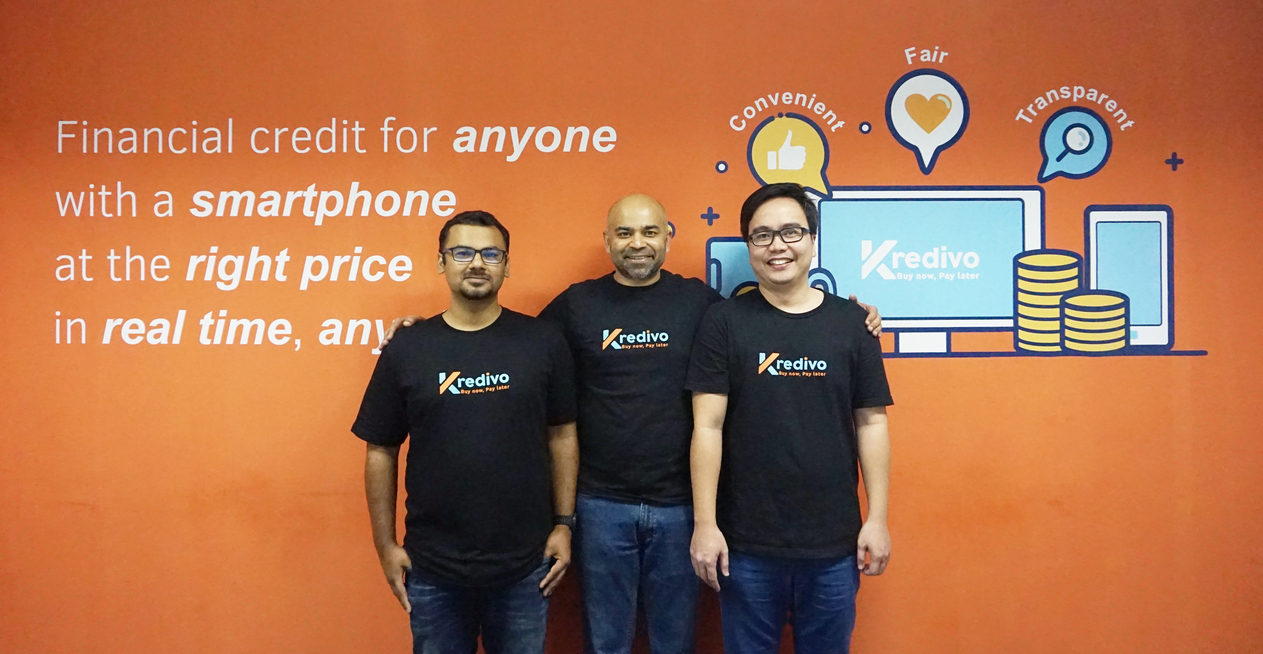
    The payments infrastructure provider has announced the integration of Indonesian «buy now pay later» (BNPL) pioneer Kredivo to its platform.

    PPRO is partnering Kredivo – one of Indonesia’s largest and fastest-growing digital credit platforms – to allow more merchants to reach a large pool of underbanked or unbanked Indonesians.

    The integration is a cooperation between PPRO, Kredivo, and DOKU, a leading payment technology company, and enables PPRO to offer the increasingly popular BNPL payment option, as well as split payment and flexible instant credit offerings via Kredico.

    Indonesia continues to be recognized as the world’s hottest battleground for digital payments. The addition of Kredivo to our platform is a milestone in our Indonesia expansion, Kelvin Phua, PPRO head of global market development, said.

    Kredivo currently has more than 4 million users in Indonesia, representing over 50 percent of the local BNPL market.

    The news follows the recent announcement of the integration of two of the most popular payment methods in Indonesia, Jenius Pay and LinkAja, to the PPRO platform. Other payment methods on PPRO’s wider global network include Alipay, WeChat Pay, GrabPay, Bancontact, iDEAL, BLIK, and Boleto Bancário. PPRO raised $180 million earlier this year, taking the firm’s total value to over $1 billion.

    Kredivo has also been expanding of late – it inked a partnership with Standard Chartered in October to offer BNPL loans to the mass market segment via digital channels. The company also launched in Vietnam in August through a joint venture. FinAccel, Kredivo’s parent company also announced plans to go public via a $2.5 billion SPAC merger. The firm had raised US$90 million in 2019 during a Series C funding round to double down on its Southeast Asian expansion plans.