Retail News CRM

Tag: E-Commerce

  • Cart Abandonment: Reducing Friction at the Point of Conversion

    Cart Abandonment: Reducing Friction at the Point of Conversion

    In the fast-paced world of ecommerce, cart abandonment has become a significant challenge for retailers. With the rise of omnichannel fulfillment and the increasing demand for fast and convenient delivery options, the complexity of the fulfillment process has escalated. As consumers’ expectations continue to soar, the importance of delivery and pickup experiences has transitioned from afterthoughts to critical factors influencing buying decisions.

    Shoppers now expect immediate access to delivery and pickup options while browsing for products, making collection convenience as crucial as other product attributes. Unfortunately, traditional order management and ecommerce systems were not designed to handle the intricacies of omnichannel fulfillment across multiple locations. Relying on dependable yet slow relational databases, retailers are limited to offering generic fulfillment timeframes, which lack accurate information during the checkout process.

    This unfortunate reality leads to poor customer experiences, resulting in approximately 7 out of every 10 online shoppers abandoning their cart. To address this pressing problem, retailers must reevaluate their fulfillment strategies and invest in technologies capable of providing real-time, accurate information. There are three key areas retailers should focus efforts to reduce friction at the point of conversion and start making successful transitions.

    Establish a unified basket

    The biggest point of friction in today’s retail customer experience is due to the loss of context when transiting between the physical and the digital. A unified cart or basket is a foundational capability that bridges this gap, providing critical connectivity across channels. Shoppers don’t see “channels” the way retailers do – they simply shop. Therefore, retailers are increasingly under pressure to ensure seamless continuity, particularly during transitions between carts and wish lists, alleviating customers from the burden of starting afresh. For brands, embracing a digital first ethos doesn’t mean giving up on physical retail, but amplifying the two, fusing them together seamlessly.

    Manhattan Associates’ 2023 Unified Benchmark for Speciality Retail report found that retailers making the most progress in minimising cart abandonment through connecting in-store and online experiences are offering increased visibility of the following in their cart view:

    1. Inventory visibility: Visibility of real-time available stock across all channels, providing product status by store. If a particular item is unavailable, customers can opt for alternative options or be notified when it becomes available again.
    2. Available promo codes: Automatically applying available promotional codes to the cart view or ensuring applicable promotions visible for shoppers to easily ‘opt in’ when viewing their cart.
    3. Integration with loyalty programs: Displaying the customer’s loyalty points and rewards within the cart provides them with the easily accessible option to redeem rewards directly at the cart stage.

    The report also found that while the majority of retailers are offering basic capabilities such as inventory visibility on a product detail page (PDP), many are yet to extend this offering to across the board, lacking visibility across the entire shopping journey.

    Add value with flexibility

    A truly frictionless shopping experience is not just about the convenience of prefilling a customer’s payment details for future transactions, but it’s also about providing customers with a variety of payment options. More often than not, customers have a preferred payment method. By offering a wide range of payment types, both online and in store, retailers are providing that extra bit of flexibility, making a consumer’s purchase decision easier. This process should be simple and convenient for shoppers to pay however they prefer, including through gift cards, loyalty points, store credit, mobile wallets, pay-later apps, store credit cards, and any combination therein. The report also revealed that 40% of shoppers prefer payment flexibility, including the ability to use a combination of modes to make a purchase.

    However, offering additional payment options has the potential to make things more complicated, therefore it’s important that retailers have the right technology in place to support a seamless checkout experience. Shoppers look for fast and convenient checkout options, with a majority of cart abandonment occurring due to less-than-ideal shopper experiences at checkout, like a multi-step process. If shoppers can quickly and easily buy what they need, when they need it, and do so using their preferred payment method, not only are they more likely to complete the purchase, but they’re more likely to keep coming back.

    Offer fast, accurate delivery promises

    If retailers can assist shoppers with important ordering and delivery-related information across the shopping journey, they increase their probability of conversion. What is the earliest I could get this item, and how? Can I order an item for in-store pick-up and another for delivery as part of the same order? Leading retailers offer shoppers a comprehensive set of delivery and pick-up options, focusing not just on speed but on flexibility to fit busy lifestyles, with 77% of shoppers reporting they prefer to have options when selecting their delivery method. They accommodate ordering complexity without compromising checkout convenience, allowing shoppers to select different delivery options for products within the same order.

    While only 15% of retailers provide the option to change fulfillment method post order confirmation, Sephora is one retailer who is enabling shoppers to get Buy Online, Pick Up in Store (BOPIS) purchases shipped home in case they are unable to pick it up from the store. With 45% of shoppers prepared to abandon a cart if they’re unhappy with the delivery methods on offer, it’s crucial for retailers to ensure the product pick-up or delivery experience is as good as their shopping journey.

    Deliver exceptional experiences

    While consumer expectations of purchasing and delivery expand, customer service and experience are arguably the most important elements to get right. Retailers must invest in technologies capable of providing real-time, accurate information to offer a seamless and efficient fulfillment process. By embracing innovation and prioritising customer-centric approaches, retailers can position themselves for long-term success in this rapidly evolving industry.

    For more information on how your retail business can reduce instances of cart abandonment, please visit: www.manh.com/en-sg

    Written by Richard Wright, Managing Director, SEA, at Manhattan Associates

  • Online platforms pay $166M in tax in Vietnam

    Online platforms pay $166M in tax in Vietnam

    Vietnam collected VND3.94 trillion (US$166.5 million) in taxes from 57 foreign online platforms including Google, Apple, Facebook, Netflix, and TikTok in the first half of this year.

    Of the sum, VND3.4 trillion was paid directly via the portal of the General Department of Taxation (GDT), which was established last March to make it easier for cross-border giants to pay their taxes in Vietnam.

    Their representatives in Vietnam paid the remaining sum.

    The GDT also said that tax revenue from e-commerce platforms in the first five months of this year reached VND246 billion, equal to 34% of 2022’s revenue.

    It said the tax revenue collected from e-commerce providers in 2022 and 2021 was VND716 billion and VND261 billion, respectively.

    The tax authority has recorded data from over 330 e-commerce platforms through the e-commerce portal operating since the end of last year.

    Particularly in the first quarter of this year, 64,300 individuals and 22,840 organizations traded on those platforms with 9 billion transactions registering a total value of VND11.5 trillion.

    The GDT said it is working on setting up rules on exploiting information from e-commerce platforms’ databases to manage taxes more effectively.

    This agency is checking and comparing information of several taxpayers who are e-commerce platform owners, payment intermediaries, partners of foreign companies in Vietnam, and foreign suppliers that do not have a fixed business establishment in Vietnam.

    So far, it has inspected 15 enterprises and handled, fined, or collected tax arrears of VND129 billion, reducing tax loss by VND986 billion and reducing VAT deduction by VND114 billion.

  • Coupang launches luxury beauty shopping service Rocket Luxury

    Coupang launches luxury beauty shopping service Rocket Luxury

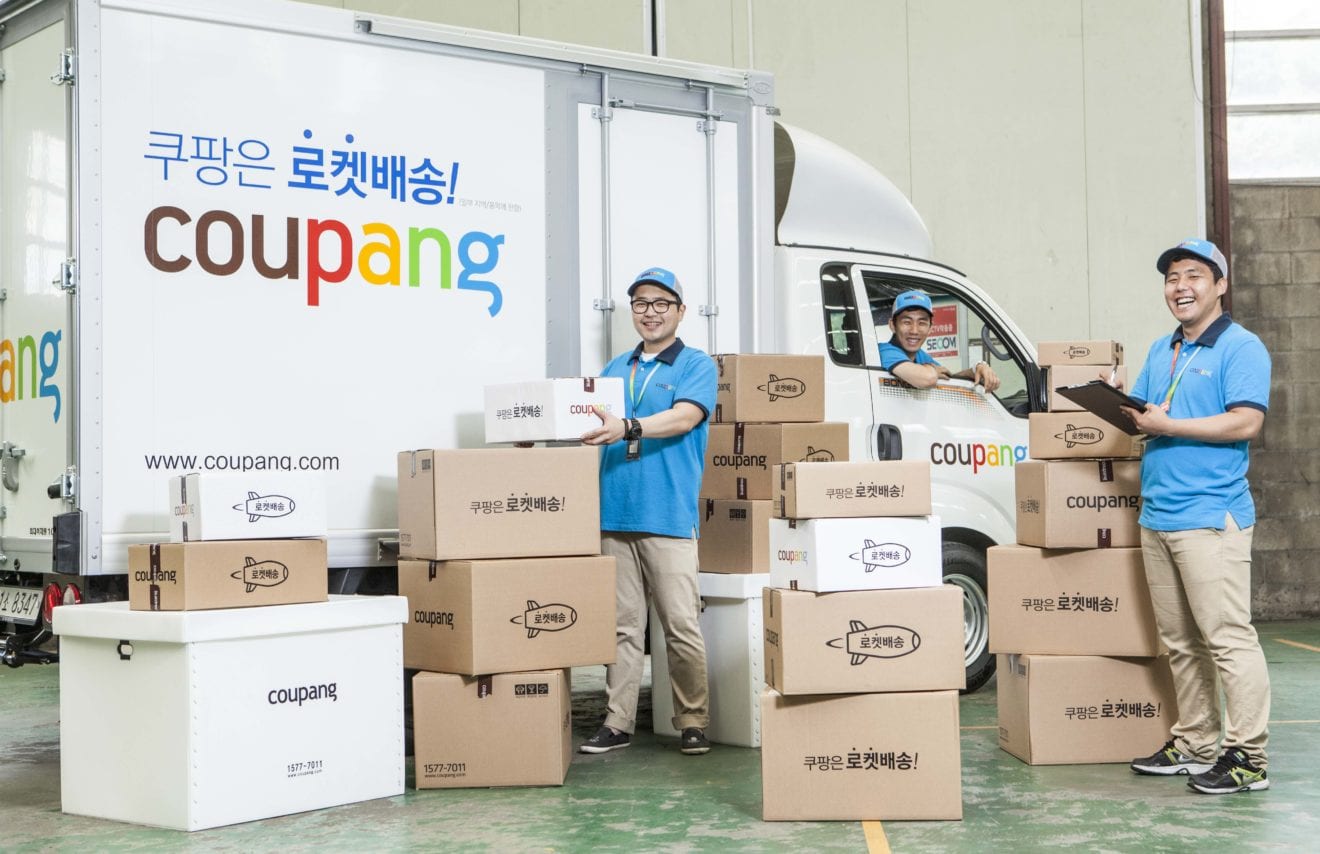
    South Korea’s top e-commerce retailer Coupang said Monday it has launched a new service allowing customers to buy luxury beauty brands’ products at its platform.

    At Rocket Luxury, customers will be able to purchase products of 16 high-end beauty brands from home and abroad, including Estee Lauder, MAC, Bobby Brown, and Hera, directly bought by Coupang.

    The products will be delivered through the “rocket delivery” service, which offers delivery service within 24 hours upon order.

    For members of Coupang’s paid subscription service, Wow, the company will provide free delivery and free return service.

    “Customers who use luxury beauty brands will be able to buy at Rocket Luxury with trust as it only provides genuine products certified by Coupang,” Lee Byeong-hee, the head of Coupang’s retail division, said.

  • Daniel Zhang steps down from top Alibaba Group

    Daniel Zhang steps down from top Alibaba Group

    Alibaba Group has appointed Joseph C Tsai and Eddie Yongming Wu as the company’s new chairman and CEO respectively, marking the group’s one of the most significant organisational changes.

    The appointments will take effect on September 10. Tsai and Wu will succeed Daniel Zhang, who will continue to lead Alibaba Cloud Intelligence Group as chairman and CEO.

    “This is the right time for me to make a transition, given the importance of Alibaba Cloud Intelligence Group as it progresses towards a full spin-off,” said Daniel Zhang, chairman and CEO of Alibaba Group. “The emergence of generative AI has also opened up exciting new opportunities that Alibaba Cloud Intelligence Group is well-positioned to capture.”

    “Daniel has made exceptional contributions to the development of Alibaba Group since joining the company in 2007,” said Tsai, executive vice chairman of Alibaba Group. “He demonstrated extraordinary leadership in navigating unprecedented uncertainties affecting our business over the past few years.”

    Alibaba Group’s newly appointed CEO Yongming Wu, one of the group’s co-founders aside from Jack Ma and Tsai, will continue to concurrently serve as chairman of Taobao and Tmall Group. Wu was the technology director of Alibaba at the company’s inception in 1999. He founded Vision Plus Capital, a venture capital firm focused on investing in advanced technologies, enterprise services and digital healthcare in 2015.

    “Eddie was instrumental in architecting our technology platforms and guiding our strategic direction,” Tsai said. “He led the creation of our proprietary monetization platform on Taobao and Tmall, and drove the launch of the Mobile Taobao App to propel our company to the mobile-first era.”

    The group said last Thursday it is shifting its focus to building local businesses and online platforms outside of China with Europe as the top priority.

  • Walmart refuses to admit it might be better off accepting Apple Pay

    Walmart refuses to admit it might be better off accepting Apple Pay

    If you use Apple Pay or Google Pay when you checkout at the supermarket. the pharmacy, or other retail stores, you see how convenient the whole thing is even if you have to use your fingerprint or face to verify your identity. Apple and Google take such a small slice of your purchase that the big money is made on volume. For example, Apple is believed to earn .15% (not 15% but .15%) of the value of a transaction paid for with Apple Pay. So a $10 purchase gives a penny and a half to Apple while a $100 purchase puts 15 cents in its pocket.
    When you think about how many times a day an iPhone is whipped out to cover a purchase, you can see that even while getting crumbs from your transaction cake, it adds up to plenty of money for the company over a single 24-hour day. Apple would probably be collecting more money from Apple Pay if the nation’s largest retailer was onboard. Yes, that’s right. You cannot use Apple Pay at Walmart.
    Considering that every day the discount retailer brings in almost $1.6 billion in revenue, certainly a small percentage of that money would have ended up in Apple’s coffers thanks to Apple Pay. Walmart does have its own Walmart Pay system that works with QR codes. We first told you about Walmart Pay when the retailer was expanding it back in 2016 and it just has not caught on the way Walmart thought it would.
    Walmart’s former Senior VP Daniel Eckert told Bloomberg in 2017 that Walmart Pay would soon surpass Apple Pay in the number of shoppers who use the service in eligible stores. At the time, Eckert said, “If daily enrollments don’t slow down, I think that’s pretty well in the cards shortly. I would have to imagine we are getting pretty close.” Those words go right up there with former Microsoft CEO Steve Ballmer’s initial response to the iPhone when he said about Windows Mobile, “I like our strategy. I like it a lot…right now we’re selling millions and millions and millions of phones a year. Apple is selling zero phones a year.”
    Looking at Walmart, it’s hard to believe that giving up .15% of the value of a transaction is going to do damage to the company’s profit margin dramatically. And it could more than make up the difference by getting back some of the business that has gone to Target and other retailers that support Apple Pay. Perhaps the company is too invested in Walmart Pay to admit it has made a mistake.
    With that in mind, kudos to Kroger for realizing that not allowing the use of Apple Pay at the cash register was not a good strategy. Now we’ll see whether Walmart can make its own admission. We should also point out that Walmart does not accept Google Pay or any other mobile or digital wallet.
  • Amazon launches program to identify and track counterfeiters

    Amazon launches program to identify and track counterfeiters

    The company announced that Amazon launched its Anti-Counterfeiting Exchange (ACX), an initiative to help retail stores label and track marketplace counterfeits as part of the e-commerce giant’s efforts to crack down on organized crime on its platform on Thursday.

    Online marketplaces in the United States, including Amazon face hurdles in keeping counterfeiters off their platforms and fake merchandise from entering their warehouses. The new program mimics data exchange programs by the credit card industry to find scammers and identify their tactics.

    Stores and Amazon marketplace sellers can anonymously contribute information and records flagging counterfeiters to a third-party database or use the database to avoid doing business with the bad actors.

    “We think it is critical to share information about confirmed counterfeiters to help the entire industry stop these criminals earlier,” Dharmesh Mehta, Amazon’s vice president of selling partner services, said in a statement.

    The Seattle-based retail giant piloted the anti-counterfeiting initiative in 2021 with an undisclosed number of apparel, home goods and cosmetics stores, where counterfeiting is most common.

    As part of other anti-counterfeiting efforts, Amazon is also working with the U.S. Customs and Border Protection on a data pilot that helps the company identify and target low-value e-commerce shipments that may be counterfeit goods or break other regulations.

  • Amazon launches program to identify and track counterfeiters

    Amazon launches program to identify and track counterfeiters

    The company announced that Amazon launched its Anti-Counterfeiting Exchange (ACX), an initiative to help retail stores label and track marketplace counterfeits as part of the e-commerce giant’s efforts to crack down on organized crime on its platform on Thursday.

    Online marketplaces in the United States including Amazon face hurdles in keeping counterfeiters off their platforms and fake merchandise from entering their warehouses. The new program mimics data exchange programs by the credit card industry to find scammers and identify their tactics.

    Stores and Amazon marketplace sellers can anonymously contribute information and records flagging counterfeiters to a third-party database or use the database to avoid doing business with the bad actors.

    “We think it is critical to share information about confirmed counterfeiters to help the entire industry stop these criminals earlier,” Dharmesh Mehta, Amazon’s vice president of selling partner services, said in a statement.

    The Seattle-based retail giant piloted the anti-counterfeiting initiative in 2021 with an undisclosed number of apparel, home goods and cosmetics stores, where counterfeiting is most common.

    As part of other anti-counterfeiting efforts, Amazon is also working with the U.S. Customs and Border Protection on a data pilot that helps the company identify and target low-value e-commerce shipments that may be counterfeit goods or break other regulations.

  • Buy2Sell Vietnam opens two new showrooms in Hanoi, HCMC

    Buy2Sell Vietnam opens two new showrooms in Hanoi, HCMC

    Buy2Sell Vietnam established two new showrooms in Vincom Mega Mall in Hanoi and SC Vivo City in Ho Chi Minh City last month.

    The Hanoi showroom is on the 1st floor of Vincom Mega Mall Times City and the HCMC showroom on the 3rd floor of SC VivoCity.

    Buy2Sell Vietnam plans to expand its new showroom chain to more than 100 stores in shopping centers in Southeast Asia during 2024-2030.

    Thousands of cosmetics, F&B, houseware, and appliances products… are exclusively distributed and displayed at these stores.

    All products are directly imported from over 60 countries, including the U.K., France, the U.S., Italy, Switzerland, Australia, Korea, and Japan.

    Vang Online is a high-end imported beverage distribution brand under Buy2Sell, specializing in wine and spirits, introducing numerous international premium beverage brands to the Vietnam market.

    In Vietnam, Buy2Sell is renowned as one of the first B2B e-commerce platforms focused on distributing imported goods since 2015, especially from brands yet to enter the market.

    Besides Vincom Mega Mall and SC ViVo City, Buy2Sell has invested in establishing its store chains at other top-tier shopping centers, including Lotte Mart (part of Lotte Korea Group).

    Buy2Sell has also invested in its online e-commerce platform, playing its role as a bridge for international brands to access the Vietnamese market more easily.

    Vincom Mega Mall Times City covers more than 230,000 m2 of various spaces including retail, food courts, supermarket and other entertainment venues, which is developed by Vingroup.

    SC VivoCity covering an area of around 62,000 m2 is developed by Mapletree, a major real estate investment, development, and fund management company in Asia.

  • Etsy, other e-commerce companies feel squeeze of SVB collapse

    Etsy, other e-commerce companies feel squeeze of SVB collapse

    Etsy on Monday resumed payments to merchants with Silicon Valley Bank accounts after the e-commerce platform paused their payouts over the weekend following the U.S. government shutdown of the bank last week.

    Approximately 0.5% of Etsy’s active sellers -or around 2,700 merchants- had their payments delayed on Friday related to SVB’s collapse, according to Etsy.

    “We are working to pay these sellers today, and we’ve already started processing payments via another payment partner this morning,” an Etsy spokesperson told Reuters on Monday.

    The payments Etsy sellers received is unrelated to the Federal Reserve’s Sunday announcement, which ensured that SVB’s customers would have access to their funds on Monday.

    Shopify SHOP.TO, which provides websites and apps to stores, also halted payments to online sellers with Silicon Valley Bank accounts, telling merchants they must switch accounts to receive funds, according to the company’s website.

    Etsy and Shopify each work with 5.4 million and 1.75 million online merchants respectively worldwide, mostly small-to-medium size businesses.

    Some Etsy sellers decided to put their stores on vacation mode, pausing customer purchases in an effort to minimize their financial losses while others say they have received their payments on schedule.

    Moshe Steinberg, 31, said that he received a payment from Etsy on Monday morning, but is still waiting for it to clear with his bank.

    “It was a nail biting situation until I checked my bank account this morning,” the 3D-printed seller from Central Ohio said, adding that Etsy is currently his only source of income.

    Etsy merchant Elizabeth Thompson, 57, said she has received little guidance from the company on what transpired.

    “I just don’t understand why they can’t be a little more transparent about what’s going on. It’s not like it’s their fault,” she added.

    Etsy said it communicated with any seller who was impacted on Friday directly via email and posted an update in their forums on Saturday.

  • E-commerce leverage in-app games to drive consumer spending

    E-commerce leverage in-app games to drive consumer spending

    Three in 10 people visited e-commerce platforms even if they had nothing to buy.

    Digital commerce platforms like Shopee used in-app games to allow users to win coins that increase their time on the app, which will ultimately raise consumer spending, a recent Euromonitor International study said.

    The study showed that 33% of consumers liked to look in stores even if they had nothing to purchase whilst more than half of consumers said they played mobile video games weekly.

    “Gamifying commerce experiences can improve loyalty schemes and enrich long-term engagement,” said Euromonitor.

    Aside from gaming programs, Gucci is also tapping metaverse to connect with the younger audience.

  • Alibaba tests ChatGPT-style tool as AI buzz intensifies

    Alibaba tests ChatGPT-style tool as AI buzz intensifies

    Alibaba Group on Wednesday said it is developing a ChatGPT-style tool that is currently in internal testing, joining a race by tech companies globally to show they are up to speed on generative artificial intelligence (AI) developments.

    The Chinese e-commerce group’s statement came after the 21st Century Herald newspaper reported that Alibaba is developing a ChatGPT-like dialogue robot which is currently open to employees for testing.

    When asked about the newspaper report, which also said that Alibaba might combine the technology with the group’s communication app DingTalk, Alibaba declined to comment.

    The company said it had been focused on large language models and generative AI for a number of years. Large language models are natural language processing systems which are trained on massive volumes of text, and are capable of answering and comprehending questions as well as generating new text.

    Alibaba’s US-listed shares rose 3.2 per cent premarket after the news.

    Shares in a number of other Chinese AI technology companies have soared in the past few days due to investor excitement over Open.Ai’s ChatGPT, which can generate articles, essays and jokes in response to prompts and has been rated the fastest-growing consumer app in history.

    Shares in Chinese search engine giant Baidu jumped by 15 per cent on Tuesday after it said it planned to complete testing of its “Ernie bot” in March. Google owner Alphabet Inc is also planning its own chatbot service and said it will use more artificial intelligence for its search engine.

    Microsoft, which owns Open.AI, plans to tie ChatGPT in with its search engine Bing.

    On Wednesday, another Chinese tech group JD.com said it was looking to integrate some methods and technology similar to ChatGPT’s into some of its products, such as its e-commerce platform’s customer service.

    A source familiar with NetEase told Reuters that the Chinese gaming company plans to deploy similar large language models technology to serve its education business.

  • JD Sports to quit South Korean after five years

    JD Sports to quit South Korean after five years

    UK activewear label JD Sports is set to withdraw from South Korea after five years of operation, according to Edaily.

    The retailer was reported to have experienced a deepening deficit since the Covid-19 pandemic, which led to the decision. The source said JD Sports Korea had notified all employees of the exit plan.

    JD Sports entered South Korea in 2017 through a joint venture deal with South Korean footwear company Shoemarker. The first JD Sports store was opened in April 2018. Currently, the company operates 14 directly managed stores nationwide, including at Lotte World Tower in Jamsil, Seoul and Starfield Goyang.

    Meanwhile, the UK retailer has recently been the target of a cyber attack that resulted in unauthorised access to a system containing customer data relating to online orders between November 2018 and October 2020. The affected JD Sports group brands are JD, Size?, Millets, Blacks, Scotts and MilletSport.

    Earlier this year, British retailer Frasers Group bought shares in JD Sports for about US$57.7 million, as the Mike Ashley-owned company continues its drive into a more premium market.

  • Amazon taxes 10 million products in Vietnam

    Amazon taxes 10 million products in Vietnam

    Vietnamese vendors have sold nearly 10 million products on Amazon this year, totaling an export value over 45% more than 2021, according to a report by the American e-commerce giant.

    During the pandemic, there were “thousands” of Vietnamese vendors on Amazon, and their top-selling products were in the categories of kitchen ware, home appliances, garment and textile and healthcare.

    Several Vietnamese brands such as AnEco (maker of compostable garbage bags), Lafooco (cashew exporter), Sunhouse (home appliances manufacturer) and HMG (3D card manufacturer) have been hailed by Amazon for succeeding in their e-commerce initiatives and creating jobs for locals.

    Nguyen Le Thang Long, deputy director of An Phat, which makes AnEco products, said that sales through Amazon have surged nearly five times from 2021.

    Phung Minh Thuy, founder of HMG, said that her company receives hundreds of orders through Amazon each day.

    Vietnam ranks fifth among the top 10 markets globally in terms of e-commerce and retail sales growth at 19%, behind the Philippines, India, Indonesia and Brazil, according to market research firm eMarketer.

    Vietnam’s e-commerce exports revenue is set to rise 20% annually between 2021 and 2026, according to consultancy firm AlphaBeta.

    With a strong national policy to support exports, abundant production capacity, and rapid development of e-commerce, Vietnam is at a golden stage for online exports to take off, said Gijae Seong, managing director of Amazon Global Selling Vietnam.

  • Vietnamese firm sues Amazon for $280M

    Vietnamese firm sues Amazon for $280M

    Vietnamese company Gilimex Inc. is suing e-commerce giant Amazon for $280 million for allegedly cutting back on orders, leaving it with an excess inventory.

    Gilimex, a manufacturer of textile and other products based in Ho Chi Minh City, said in a filling in a New York state court on Monday that it has been partnering with Amazon from 2014 to 2022 and has invested tens of millions of dollars in manufacturing facilities to build the steel-and-cloth storage pods used to organize inventory in Amazon warehouses.

    Gilimex said the partnership was built on “trust,” with Gilimex relying on the accuracy of Amazon forecasts to make adequate investments to meet demand, including procuring materials and arranging factory capacity and manpower to meet the American company’s needs.

    But beginning in April, Amazon “immediately changed and reduced the projected demand” for the remainder of 2022 and 2023 to a small fraction of previous forecasts, according to the lawsuit.

    “Thus, while Amazon enjoyed unprecedented increases in revenue during the pandemic due in large part to the explosion of online ordering by consumers from the safety and comfort of their homes,” said the legal complaint, “Gilimex management and laborers literally risked their lives on a daily basis to make such record growth a reality.”

    The Vietnamese company said it employs 7,000 employees in multiple factories to produce more than 1 million warehouse storage units annually, adding that production for Amazon increased 20-fold during the eight-year relationship.

    Gilimex was established in 1982. Its main products include fabric storage organization, home textiles, laundry baskets, duffel bags, backpacks, and outdoor textile products.

    Around 85% of Gilimex’s export revenue has come from Amazon, which ordered $146.6 million worth of products from the company last year, according to Mirae Asset Vietnam Research.

    Gilimex earned a record revenue of VND4 trillion ($170.03 million) last year, up nearly 16% from 2020.

  • E-commerce giant Carousell lays off 110 staff

    E-commerce giant Carousell lays off 110 staff

    Carousell, a Singaporean consumer-to-consumer (C2C) service platform operating across Southeast Asia, is letting go of about 110 employees, or 10% of its total headcount, to reduce costs amid a challenging market condition for the tech industry. 

    The announcement came from the company’s blog on Thursday, posted by co-founder and CEO of Carousell Siu Rui Quek, saying, “I take responsibility for the decisions that have led us here. Parting with teammates, whom we are grateful to for joining us on this mission, is a very difficult decision.” 

    Carousell did not specify which business units or regional offices would be affected by the layoffs. The Singapore-headquartered company operates in Malaysia, Indonesia, the Philippines, Cambodia, Taiwan, Hong Kong, Macau, Australia, New Zealand, and Canada. 

    In the statement, the company’s leaders had discussed finding ways, including moving to an inexpensive rental office and slashing co-founders and executives’ salaries voluntarily to save budgets without cutting staff. But that was “far from enough,” it said.  

    Quek also explained in the blog post that he “was too optimistic” about the recovery from the COVID pandemic and even doubled down on recruitment and investment for its business. “The reality is that we were quick to grow our expenses and hire, but the returns took longer than expected,” Quek wrote. “It is important to act swiftly, course correct, and right-size our investment levels to better align with this new reality.” 

    The affected workers will receive at least three months’ salary and be able to extend their medical benefits and insurance coverage through June next year. According to the statement, the company will also pay out all remaining time off balances and offer career counseling and job search support, letting those laid-off workers keep their office laptop and LinkedIn Learning membership until June 2023. 

    Founded in 2012, Carousell, backed by Sequoia Capital India, Naver, 500 Global and Rakuten Capital, has raised a total of $372.6 million since its inception.