Retail News CRM

Tag: E-Commerce

  • Disputes keep pace with e-commerce growth

    Disputes keep pace with e-commerce growth

    As Vietnam’s digital economy grows, so does the incidence of disputes between online sellers and buyers. The e-commerce market grew by 16 percent to $14 billion in 2020 and is expected to be worth $52 billion by 2025, according to a report by Google. The number of disputes is also growing rapidly, with 24.4 percent of sellers embroiled in disputes last year,a survey by the Central Institute for Economic Management (CIEM) found.

    The Vietnam E-Commerce and Digital Economy Agency said it handled over 250 cases of e-commerce violations last year like unregistered websites, selling low-quality products, and assuming false business identities to cheat consumers.

    Besides, e-commerce platforms took down over 17,400 online stores and 34,600 products in the first five months of 2020, according to the agency.

    Nguyen Anh Duong, head of the general research department at CIEM, said though e-commerce platforms have procedures for receiving customer complaints and settling disputes, they can only handle sellers’ violations by closing the stores and cannot to make them compensate customers they cheated.

    Experts said the demand for an online dispute resolution (ODR) system in e-commerce is growing since many enterprises and individuals do business online.

    But Vietnam lacks a clear legal framework for the ODR, and experts said it is needed immediately so that an ODR system could be deployed.

  • Online supermarket concept Supie to launch in Auckland

    Online supermarket concept Supie to launch in Auckland

    Online supermarket Supie is set to open its virtual doors in Auckland next month, aiming to change the way Kiwis shop for groceries.

    The membership-based supermarket will house more than 2500 products sourced from local growers and food producers. Supie also offers sustainable delivery where all packaging is recyclable or reusable. The brand implements zero-waste ordering methods which ensure its customers receive the freshest produce.

    “The majority of the time, when you order your product is still in the ground,” the company says on its website.

    Founded by Sarah Balle, Supie is expected to compete directly with traditional supermarkets, providing a smart and more accessible solution for Kiwis during the post-Covid era.

    “We’re a small team of passionate Kiwis with big ambitions to make a true impact,” said Saral Balle. “We believe food is the most powerful force for change.”

  • Alibaba fined US$2.75bn for anti-monopoly violations by Chinese regulators

    Alibaba fined US$2.75bn for anti-monopoly violations by Chinese regulators

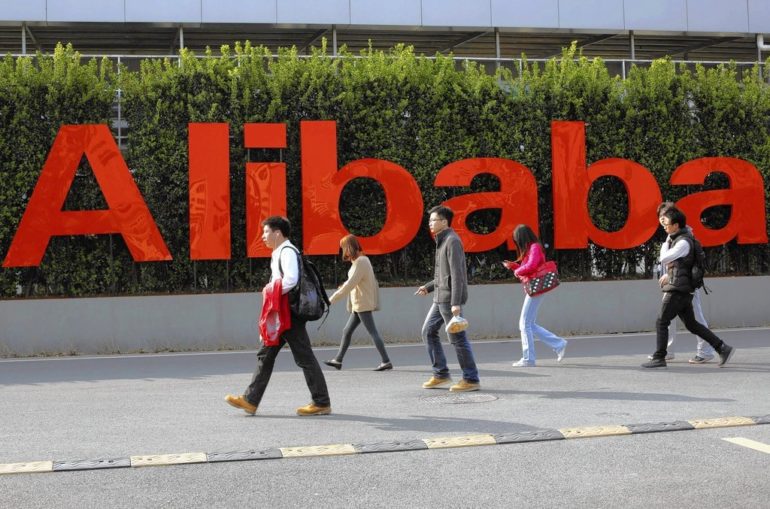
    Chinese regulators have fined Alibaba 18 billion yuan ($2.75 billion) – around 4 percent of its revenues in 2019 – for violating anti-monopoly rules and abusing its dominant market position.

    The State Administration for Market Regulation (SAMR) said that after an investigation launched in December, it had determined that Alibaba Group had been “abusing market dominance” since 2015 by preventing its merchants from using other online e-commerce platforms.

    It said the practice violates China’s anti-monopoly law by hindering the free circulation of goods and infringing on the business interests of merchants.

    The SAMR ordered Alibaba to make “thorough rectifications” to strengthen internal compliance and protect consumer rights.

    The company said in a statement posted on its official Weibo account that it “accepted” the decision and would resolutely implement SAMR’s rulings. It said it would also work to improve corporate compliance.

    The practice of preventing merchants from listing on rival platforms is a long-standing one. The market regulator spelled out in rules issued on February that it was illegal.

    Alibaba has also been under heavy scrutiny since its founder Jack Ma criticized China’s regulatory system in October.

    Ant Group, Alibaba’s fintech arm, also saw its $37 billion listing plans dramatically suspended by authorities in November.

  • FJ Benjamin and Lazada Singapore Sign MOU for Strategic Partnership to Boost Online-Offline Sales

    FJ Benjamin and Lazada Singapore Sign MOU for Strategic Partnership to Boost Online-Offline Sales

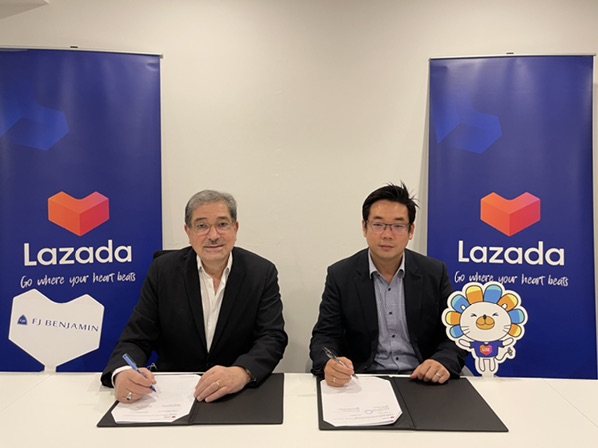
    FJ Benjamin Holdings (FJB) and leading eCommerce platform, Lazada Singapore, today signed a Memorandum of Understanding (MOU) to forge a strategic partnership that aims to deliver the ultimate retail experience to customers across all channels and devices.

    The proposed partnership will tap Lazada’s technical and online capabilities, and eCommerce platform management expertise, and leverage FJB’s experience in fashion brand management and physical store operation, to boost the eCommerce performance of FJB’s stable of brands in Singapore, Malaysia and Indonesia, as well as to expand and incubate new FJB brands to eventually integrate brick-and-mortar and virtual stores.

    FJB will also discuss with brand principals opportunities for eCommerce in markets Lazada has a presence but where FJB does not, such as Vietnam, Thailand and the Philippines. Powered by Alibaba’s advanced eCommerce tools and systems, Lazada will develop new tailor-made solutions to deliver a truly omnichannel customer experience in managing the full online ecosystem of FJB brands across the markets.

    Group CEO Nash Benjamin said: “FJ Benjamin has been strategising and planning our omnichannel business model for some time now and this partnership with Lazada is intended to get us to where we want to be much faster and in a more cost-efficient manner. This will combine our respective capabilities to strengthen customer experience across brick and mortar and virtual channels.”

    Besides operating principal branded sites, it is also intended to host certain brands on LazMall as well as other regional sites, subject to principal approvals.

    “We are thrilled to be part of this new chapter with FJ Benjamin and value their trust in us,” said James Chang, CEO of Lazada Singapore. “Lifestyle, fashion and beauty are important pillars in our eCommerce plans and shoppers can now look forward to seeing more well-known brands and labels on our platform, for an integrated shopping experience. In the last year, Lazada has supported many businesses that adopted a multichannel approach to set up stores online and we know that our expertise in the eCommerce space will benefit and contribute to the success of a renowned brand like FJ Benjamin, and look forward to seeing positive results with them.”

    While some of the brands managed by FJB, including La Senza, Pretty Ballerinas and Petunia Pickle Bottom, are currently available on Lazada’s premiere shopping platform, LazMall, this is the first time both parties –  one, a traditional brick-and-mortar operator, and the other, the region’s leading eCommerce player – have come together to envision and execute a truly omnichannel model under which customers can control the buying process and enjoy a seamless shopping experience across multiple channels – brick-and-mortar, desktop, and mobile.

    Since the pandemic lockdowns last year forced FJB stores in Southeast Asia to shutter, the Group had secured principals’ approvals to pivot to eCommerce. It has ramped up its online presence from one brand, the cult British fashion label Superdry, to almost all its brands including Guess, La Senza, Casio, Rebecca Minkoff, Pretty Ballerinas, Airfree and Dr Barbara Sturm.

    The MOU states that  “the parties agree both physical stores and online stores are part of the retail ecosystem. With Lazada’s technical and online abilities and FJB’s experience in fashion and lifestyle brand management and physical store operations, this brings together a strong strategic partnership which leverages each other’s expertise to deliver an ultimate consumer experience.”

    Under the terms of the MOU, both FJB and Lazada will, within 90 days, work on a detailed action plan and a definitive agreement to move the partnership forward.

    Mr Benjamin said FJB will continue to take charge of all aspects of product assortment, brand management, pricing, promotions as well as key parts of logistics such as inventory and supply chain. The parties will jointly undertake online marketing and campaign strategies while Lazada will operate the online stores.

  • Indian officials to examine Amazon after Reuters probe

    Indian officials to examine Amazon after Reuters probe

    India’s federal financial crime-fighting agency will examine findings in a Reuters report, which revealed that Amazon.com Inc has for years given preferential treatment to a small group of sellers on its India platform and used them to circumvent the country’s foreign investment rules, a senior agency source told Reuters on Thursday.

    It provided an inside look at the cat-and-mouse game Amazon has played with India’s government, adjusting its corporate structures each time the government imposed new restrictions aimed at protecting small traders.

    On Thursday, a senior Enforcement Directorate source told Reuters that “we will be examining findings” of the story. The subject matter “is not entirely new for us,” said the source, without elaborating. The source asked not to be identified.

    Amazon didn’t immediately respond to a request for comment.

    Amazon is already under investigation by India’s Enforcement Directorate for possible violation of foreign investment rules. Such probes typically take years in India, and in most cases, details aren’t made public. In the Reuters report published Wednesday, Amazon said it was confident of its compliance when asked about the agency’s probe.

    In tweets issued on Wednesday, Amazon criticized the Reuters report as “unsubstantiated, incomplete, factually incorrect,” without going into specifics. “In last several years, there have been (a) number of changes in regulations; Amazon has on each occasion taken rapid action to ensure compliance,” the company said.

    In an e-mail to employees on Thursday, Amazon’s India head Amit Agarwal addressed the Reuters story, saying he understood “such instances can be distracting.”

    The company was on “the threshold of creating a legacy,” he wrote in the e-mail, which was reviewed by Reuters. “It will require significant innovation, it will push our abilities, we will be misunderstood, but it will be fulfilling.”

    Indian retailers, who are a crucial part of Prime Minister Narendra Modi’s support base, have long alleged that e-commerce giants like Amazon and Walmart’s Flipkart flout federal regulations and that their business practices hurt small traders. The companies deny the allegations.

    The documents reviewed by Reuters revealed that Amazon helped a small number of sellers prosper on its India platform, giving them discounted fees and helping one cut special deals with big tech manufacturers such as Apple Inc. The company has also exercised significant control over the inventory of some of the biggest sellers on Amazon.in, the documents show, even though it says publicly that all sellers operate independently on its platform.

    Government rules announced in 2016 required that an e-commerce platform should “not exercise ownership” over sellers’ inventory.

    Gopal Krishna Agarwal, a national spokesman for Modi’s ruling party, said the findings in the Reuters story were “serious” and that “any predatory policy, deep discounting … will not be tolerated by the government. The party will take a stand on that.”

    Small businesses are “very important” for the party, he said. “Their concerns will be taken care of.”

    In a written response to the Reuters report published on Wednesday, Amazon said it “does not give preferential treatment to any seller on its marketplace,” and that it “treats all sellers in a fair, transparent, and non-discriminatory manner.”

    A leading group of Indian retailers urged the government to ban the local operations of Amazon and said it was considering taking legal action, after the Reuters story was published.

    The Confederation of All India Traders, which says it represents 80 million retail stores, said “the shocking revelations” are “sufficient enough to immediately ban operations of Amazon in India.”

    Amazon did not respond to a request for comment on the trader group’s statement.

  • Amazon’s Vietnamese partner reports surge in profit

    Amazon’s Vietnamese partner reports surge in profit

    Textile company Gilimex said its net profits almost doubled in 2020 thanks to a number of high-value contracts with international retailers.

    It reported record revenues of VND3.45 trillion ($150 million), up 36 percent from 2019, and net profits of VND308 billion for the year.

    Gilimex’s main products are handbags and backpacks.

    It tied up with Amazon, the world’s largest online retailer, in 2016 and seen average revenues grow at 20 percent a year since then.

    Its other large foreign partner is Swedish furniture retail giant IKEA with whom it has eight long-term contracts worth $16.2 million.

    The firm also develops new products for Dutch baby products maker Bugaboo and Puma, the German multinational that manufactures athletic and casual footwear, apparel and accessories.

  • E-commerce market grows in Vietnam

    E-commerce market grows in Vietnam

    Vietnam’s e-commerce market expanded by 18 percent last year to $11.8 billion, the only country in Southeast Asia to record double-digit growth amid the Covid-19 pandemic.

    Besides, payment services were strengthened and the largest companies in the manufacturing sector incorporated e-commerce into their long-term strategies, according to a recent report by the Vietnam e-Commerce and Digital Economy Agency.

    The country’s Online Friday e-commerce event in early December last year saw the number of transactions rise by 267 percent from the previous year to 3.7 million, it said.

    However, though the number of transactions rose last year, revenues fell because most Covid-19 related items were of low value and people’s incomes were hit, it said.

    A report last month by market research company GlobalData’s E-Commerce Analytics said Vietnam’s e-commerce is set to see compounded annual growth of 18.8 percent between 2020 and 2024 to reach $26.1 billion.

  • E-commerce market grows

    E-commerce market grows

    Vietnam’s e-commerce market expanded by 18 percent last year to $11.8 billion, the only country in Southeast Asia to record double-digit growth amid the Covid-19 pandemic.

    Besides, payment services were strengthened and the largest companies in the manufacturing sector incorporated e-commerce into their long-term strategies, according to a recent report by the Vietnam e-Commerce and Digital Economy Agency.

    The country’s Online Friday e-commerce event in early December last year saw the number of transactions rise by 267 percent from the previous year to 3.7 million, it said.

    However, though the number of transactions rose last year, revenues fell because most Covid-19 related items were of low value and people’s incomes were hit, it said.

    A report last month by market research company GlobalData’s E-Commerce Analytics said Vietnam’s e-commerce is set to see compounded annual growth of 18.8 percent between 2020 and 2024 to reach $26.1 billion.

  • South Korean online platforms face scrutiny over unfair business practices

    South Korean online platforms face scrutiny over unfair business practices

    South Korea has launched an antitrust investigation into Google over its plans to enforce commission fees for in-app purchases made through its mobile application store, a top official said Thursday.

    The U.S. tech giant has come under intense scrutiny from South Korean regulators after it updated its global policy late last month to make all apps on its Play store use its proprietary billing system.

    Under the new policy set to take effect in October next year, Google will take a 30 percent commission on all digital purchases by consumers.

    South Korean app developers have >voiced strong opposition against the move, arguing that it could be in violation of local fair trade and telecommunications laws.

    Joh Sung-wook, chairperson of the Korea Fair Trade Commission (KFTC), told lawmakers during a parliamentary audit that Google’s plan is currently being reviewed.

    “I believe that competition isn’t working properly in this industry,” she said. “In order to restore competition, we are currently investigating for anti-competitive actions.”

    Google holds a tight grip over local app store sales, with a 63.4 percent share of the total last year at 6 trillion won (US$5 billion), according to the Korea Mobile Internet Business Association.

    Han Sang-hyuk, head of the Korea Communications Commission, echoed Joh’s concerns, and called for inter-agency cooperation over the issue.

    “We need to monitor the response from other countries and also create a structure for cooperation between local agencies,” Han told lawmakers in a separate audit.

    The country’s telecommunications regulator is conducting a separate investigation into Google over its in-app payment policy.

    Google has argued that it is committed to an open system by offering other app stores on its Android platform and that it will comply with local laws.

    In response to growing frustration, Google has established a support fund worth $100 million for local app developers and users.

    On Wednesday, ICT Minister Choi Ki-young brushed off the fund, telling lawmakers that it is not enough in the long run.

    Choi said the ICT ministry will wrap up its review of fees imposed by online platform operators, primarily directed at Google, by the end of this month.

    Amid growing scrutiny over Google’s app store fees, local rival One Store, under the country’s top mobile carrier SK Telecom Co., said it would exempt in-app payment fees by 50 percent for app developers with monthly transactions of less than 5 million won until the end of next year.

    One Store already undercuts Google’s Play store, taking up to 20 percent in commission for in-app purchases.

  • E-payment startup Gpay bags funding from South Korean investor

    E-payment startup Gpay bags funding from South Korean investor

    Vietnamese e-wallet provider Gpay has received an undisclosed amount in Series A funding from South Korean listed bank KB Financial Group.

    The Series A round values the digital payment business at VND425 billion ($18.46 million), and the fresh funds will be used to expand its team and user base, as also upgrade its technology, Gpay said in a statement.

    G-Group Technology Corporation, Gpay’s parent, has also joined hands with KB Financial to launch a VND300 billion fintech joint venture, called KB Fina, which will provide financial services to unbanked or underbanked consumers, Gpay said.

    G-Group general director Phung Anh Tu said they expect the fintech platform, which incorporates financial and investment advisory products already provided by KB Financial Group in its home country, to come online in the second quarter this year.

    Established in 2018, Gpay obtained its e-payment license in April 2020. However, it faces fierce competition in the Vietnamese digital payment market, where there are currently 39 other licensed e-wallet service providers.

    Gpay said it will not be “burning cash” to fight for a higher market share, but will serve G-Group’s 30 million users currently using various services on its digital ecosystem, which includes peer-to-peer lending firm Tima, digital media firm Beat.vn, and social networking app Gapo.

    Last week, Momo, another payments app in Vietnam, raised an undisclosed amount in Series D financing from U.S.-based investment funds Warburg Princus and Goodwater Capital.

  • Jack Ma resurfaces in online meeting after three-month absence

    Jack Ma resurfaces in online meeting after three-month absence

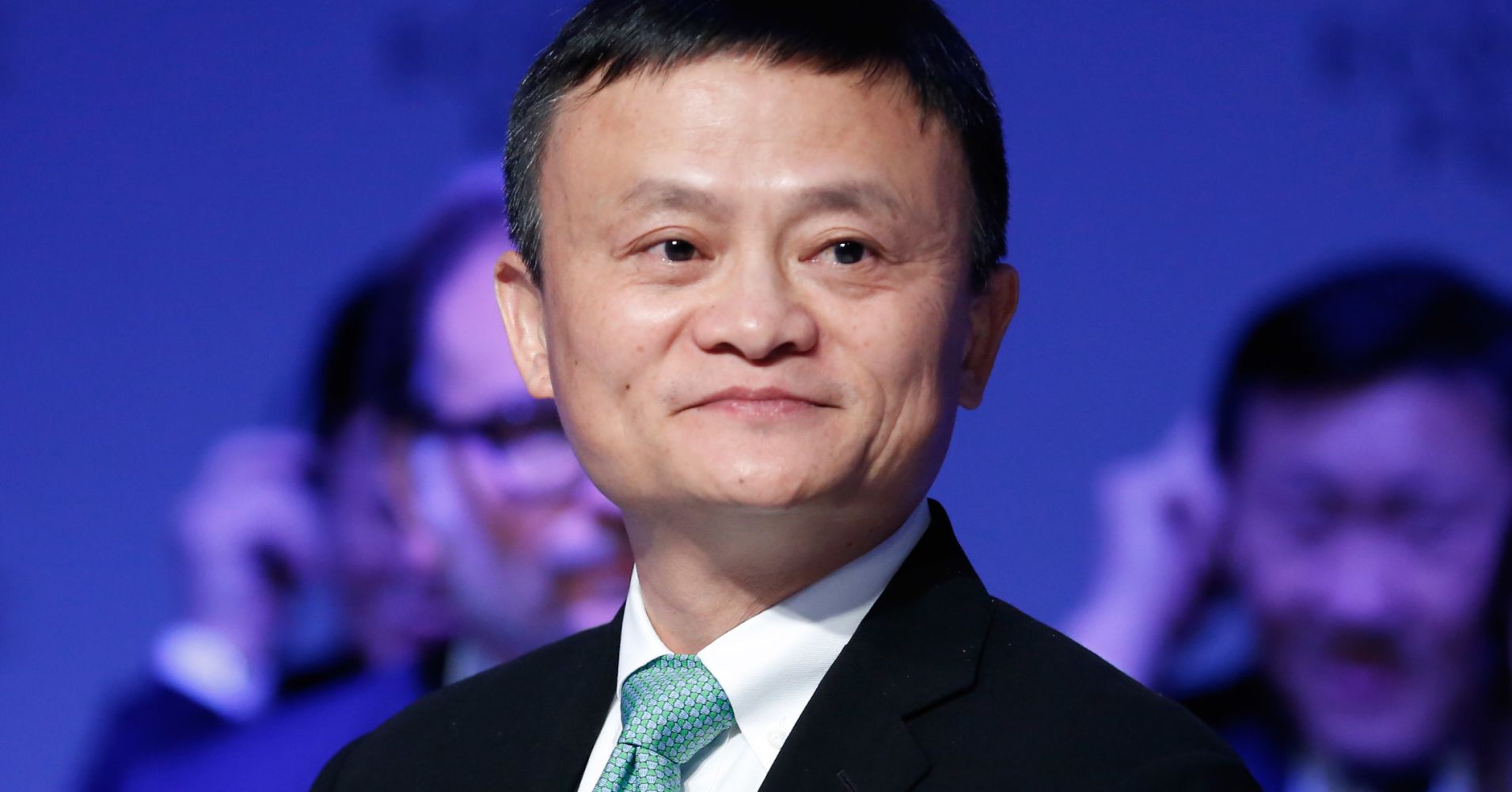
    Alibaba Group founder Jack Ma met 100 rural teachers in China via a live video meeting on Wednesday morning, in the businessman’s first appearance since October.

    Social media speculation over the whereabouts of China’s highest-profile entrepreneur swirled this month after news reports that he missed the final episode of a TV show featuring him as a judge, amid a regulatory clampdown by Beijing on his sprawling business empire.

    Ma had not appeared in public since a late-October forum in Shanghai, where he blasted China’s regulatory system in a speech that set him on a collision course with officials, leading to the suspension of a $37-billion IPO of Alibaba’s financial affiliate Ant Group.

    Tianmu News, a news portal under Zhejiang Online, which is backed by the provincial Zhejiang government, first reported that Ma had met with the teachers via a live video conference on Wednesday.

    The Jack Ma Foundation said that Ma participated in the online ceremony of the annual Rural Teacher Initiative event on Wednesday. Alibaba Group also confirmed that Jack Ma attended the online event.

    In the 50-second video, Ma, dressed in a navy pullover, spoke directly to the camera from a room with grey marble walls and a striped carpet. It was not clear from the video or the Tianmu News article where he was speaking from.

    He addressed teachers receiving the Jack Ma Rural Teachers Award, who in previous years would have attended a ceremony organized by the Jack Ma Foundation in the Chinese seaside city of Sanya.

    “We cannot meet in Sanya due to the epidemic,” he said in the speech, which did not discuss his whereabouts. “When the epidemic is over, we must find time to make up for everyone’s trip to Sanya, and then we will meet again!”

  • Jack Ma went missing?

    Jack Ma went missing?

    Once the poster boy for a new generation of multi-billionaire Chinese business and tech leaders, Alibaba founder Jack Ma’s fortunes have taken a serious dip in the last three months. Since a controversial speech in China in October 2020, where he lamented the country’s financial regulatory system and called for it to be reformed, the billionaire has been facing a series of actions from the Chinese authorities.

    He has faced a number of business setbacks since, including a block on his plans for a stellar listing on the stock market, actions which have in turn left the market wary of his firms.

    And he has now not been seen in public for more than two months – highlighted by his mysterious withdrawal from a scheduled appearance on his own reality TV show.

    Who is Jack Ma?

    Born in Hangzhou in eastern China, the 56-year-old came from a poor family and was once an English teacher. He bought his first computer aged 33, and in the last two decades rose to become a shining star of China’s booming economy through the success of his e-commerce giant Alibaba.

    Ma stepped down as chairman of Alibaba in 2019, but has remained in the public eye through media appearances and philanthropic work. During the Covid-19 pandemic he has donated masks and ventilators to the US – an effort that drew praise from several US politicians – and he is the face of a talent show to support young entrepreneurs.

    Where is Jack Ma?

    Ma’s removal from the good books of the Chinese authorities appears to have been even quicker than his rise to fame and fortune. The billionaire, who is known to speak freely, at a summit in October 2020 came down heavily on China’s financial regulators.

    He called for reforms in the financial system, speaking to an audience that included many officials of the regulatory organisations he was criticising.

    The response was swift. In November, a planned IPO of Ma’s Ant Group was suspended by the Chinese authorities and later, in December, the buyback plan of shares worth billions of pounds also failed to excite the investors. The authorities also opened an investigation against his firms.

    After years as the outgoing face of his companies – Ma once danced in front of tens of thousands of his company’s employees dressed in an outfit inspired by Michael Jackson – he is now conspicuously absent from the stage, without a public appearance in weeks or even a tweet in three months.

    Jack Ma net worth

    Jack Ma has various business interests. Apart from being the founder of Alibaba, he also has a stake in the online payment service Ant Group.

    It’s a dramatic change for a man who once taught English for $15 (£11) a month. He says he was rejected for 30 other jobs – including one serving at KFC – before he founded his own company.

    At one point Ma became Asia’s richest person – though he was later supplanted by another Chinese businessman.

    According to Bloomberg’s Billionaires Index, his net worth is about $50.6bn (£37bn), making him the 25th richest person in the world.

    Jack Ma and Alibaba

    Ma has said he drew the inspiration to start Alibaba from a trip to the US in 1995.  Subsequently, in 1999, Ma along with 18 people including many of his friends founded Alibaba Group from an apartment in Hangzhou, where they pooled in $60,000 (£44,000) for the venture.

    The group struggled early on and by 2002 they only had enough cash coming in to support 18 months of operation. But then came a timely intervention to connect two big markets – the US and China – ensuring that American buyers could get easier access to Chinese manufacturers, and slowly steadying the business.

    Over the years, the group became increasingly profitable and Ma and Alibaba became a force to reckon with. Ma started featuring on the covers of international business magazines – something uncommon for Chinese businessmen at that time.

    As a result, the reach of the Alibaba group, which was once rejected by funders, is now spread over 190 countries. It has become a leading platform for wholesale trade connecting millions of buyers and suppliers. It now has an estimated market cap of about $648.3bn (£474bn).

    With an estimated 100,000 employees, Alibaba now has interests in e-commerce, cloud computing, cashless payment and even movies.

    Ma stepped down from his role as chairman in 2019 and reports suggested he would focus his time and efforts on his philanthropic work.

    But as with many firms, the founder’s shadow looms large over Alibaba’s fortunes – something that the October 2020 controversy has shown. He remains an influential member of the Alibaba Partnership, for instance – a group of 36 members who can influence the nomination of the company’s board of directors.

    The company state’s that its vision is to be in operation for at least 102 years – but if the current trajectory of the crackdown on Ma continues, the dream may end much more abruptly than that.


  • Delhi High Court rejects Amazon challenge to $3.4 billion Reliance deal

    Delhi High Court rejects Amazon challenge to $3.4 billion Reliance deal

    The Delhi High Court on Monday refused to restrain Jeff Bezos-led Amazon from interfering in Kishore Biyani-headed Future Retail’s $3.4 billion deal with Mukesh Ambani-owned Reliance Retail by writing to statutory authorities.

    The order was pronounced by a Single Judge Bench of Justice Mukta Gupta in the suit by Future Retail Ltd after an Emergency Arbitrator of the Singapore International Arbitration Centre (SIAC) restrained Future Group from taking any steps in furtherance of the transaction with Reliance Retail, according to the information available on law platform Bar & Bench.

    “However, the court passed a neutral observation that the balance of convenience lay both in favor of FRL and Amazon and also observed that the statutory authorities were free to form their own opinion as per law,” said Salman Waris, managing partner at technology law firm TechLegis Advocates and Solicitors, after doing an analysis of the development. “The Court opined that it was ‘a matter of trial’ to determine whether Amazon’s case outweighed FRL’s claim and for now, it was for the statutory authorities (or) regulators to come to their own right conclusion.”

    In August, retail conglomerate Future Group struck a $3.4 billion asset sale deal with Reliance Industries Ltd (RIL). Amazon then sent a legal notice to Future, alleging the retailer’s deal breached an agreement with the American e-commerce giant. This was because last year, Amazon had bought a 49 percent stake in one of Future’s unlisted firms Future Coupons Pvt Ltd (FCPL) for Rs 1,430 crore. As per the conditions of the deal the disputes was arbitrated under SIAC rules and Amazon won a favorable ruling. Future Retail then approached the Delhi High Court seeking relief against the arbitration order passed by the SIAC with regard to its deal with Reliance.

    The Delhi High Court, prima facie, found that the suit filed by Future Retail was maintainable, the Emergency Award was valid, and that Future Retail’s resolution approving the transaction with Reliance was also valid, according to Bar & Bench.

    Waris of TechLegis said for Amazon, the court held that the ‘control’ as per the conflation of 3 agreements is not permitted under FEMA (Foreign Exchange Management Act) FDI (Foreign direct investment) rules, without the government’s approval. Thus, prima facie Amazon’s plea is void. However, Waris said the breach of the agreement by FRL would make a strong case for Amazon since it owns a stake in Future Coupons Pvt Ltd, which is, in turn, has a 9.82 percent shareholder in FRL.

    Without challenging the Emergency Award before the High Court, FRL had prayed Amazon be prevented from writing to statutory authorities such as the Securities and Exchange Board of India (Sebi) in an attempt to stall the deal, according to Bar & Bench.

    Also, FRL had asserted that the Emergency Award was of no consequence as it was not enforceable in the Indian regime.

    Earlier Future Retail’s representative had told the arbitration panel that if the deal with Reliance Retail fails, then the company would go into liquidation. The closure of the company would lead to over 29,000 job losses. Also, the company lost Rs 7,000 crore in revenue in the first three to four months of the pandemic phase.

    “(As) For Future, FRL does not want Amazon to interfere in the $3.4 Billion asset sale deal,” said Waris. “Moreover, it also contended that being an investor in Future Coupons Pvt Ltd and not FRL, Amazon had no say in a transaction between FRL and Reliance.”

    Waris said Reliance supported FRL’s case before the High Court, arguing that Amazon was “playing mischief” by stalling the deal that would save FRL from going under. “The said deal would get the benefit of economies of scale as Reliance Retail is India’s largest, most profitable retail business and is the fastest-growing retailer in the world thus far,” said Waris.

    Last month the court witnessed a lot of drama in this case. Future Retail which was represented by senior advocate Harish Salve likened Amazon to the “East India Company’” and told the court that its interference in the Future-Reliance deal would result in thousands of job losses and make FRL bankrupt. Amazon, represented by senior advocate Gopal Subramanium, told the court that it has invested $6.5 billion all over India and created 900,000 jobs. He had said some comments were made which were misplaced and said that the rhetoric should be kept aside on Amazon being called “East India Company.”

    Meanwhile, in November, the Competition Commission of India (CCI) cleared Reliance Industries’ (RIL) bid to buy Future group’s retail, wholesale and logistics assets even as Amazon had sought to block the transaction, alleging contractual violations by Future.

  • Lawmakers from 34 countries back ‘Make Amazon Pay’ campaign

    Lawmakers from 34 countries back ‘Make Amazon Pay’ campaign

    More than 400 lawmakers from 34 countries have signed a letter to Amazon.com Inc boss Jeff Bezos backing a campaign that claims the tech giant has “dodged and dismissed … debts to workers, societies, and the planet,” organizers said.

    The “Make Amazon Pay” campaign was launched on Nov. 27 – the annual Black Friday shopping bonanza – by a coalition of over 50 organizations, with demands including improvements to working conditions and full tax transparency.

    The letter’s signatories include U.S. Congresswoman Ilhan Omar and Rashida Tlaib, former UK Labour Party leader Jeremy Corbyn and Vice President of the European Parliament Heidi Hautala, co-convenors Progressive International and UNI Global Union said.

    “We urge you to act decisively to change your policies and priorities to do right by your workers, their communities, and our planet,” the letter said.

    “We stand ready to act in our respective legislatures to support the movement that is growing around the world to Make Amazon Pay.”

    Amazon, the world’s biggest retailer, has faced criticism for its tax practices before, including in the UK and the EU. It says its profits remain low given retail is a highly competitive, low margin business and it invests heavily.

    It said on Thursday that while it accepted scrutiny from policymakers, many of the matters raised in the letter stemmed from misleading assertions.

    “Amazon has a strong track record of supporting our employees, our customers, and our communities, including providing safe working conditions, competitive wages and great benefits,” it said, adding it was “paying billions of dollars in taxes globally.” The company has also pledged to be net carbon neutral by 2040.

    Amazon grew rapidly during the pandemic, with sales soaring as restrictions to prevent the spread of the coronavirus closed bricks-and-mortar shops and sent consumers online.

    Governments worldwide are considering tougher rules for big tech to assuage worries about competition.

    The European Union, for example, last month charged Amazon with damaging retail competition, alleging it used its size, power and data to gain an unfair advantage over smaller merchants that sell on its online platform.

    Amazon disagreed with the EU assertions, saying it represented less than 1% of the global retail market and there were larger retailers in every country in which it operated.

  • Pinduoduo sales beat expectations

    Pinduoduo sales beat expectations

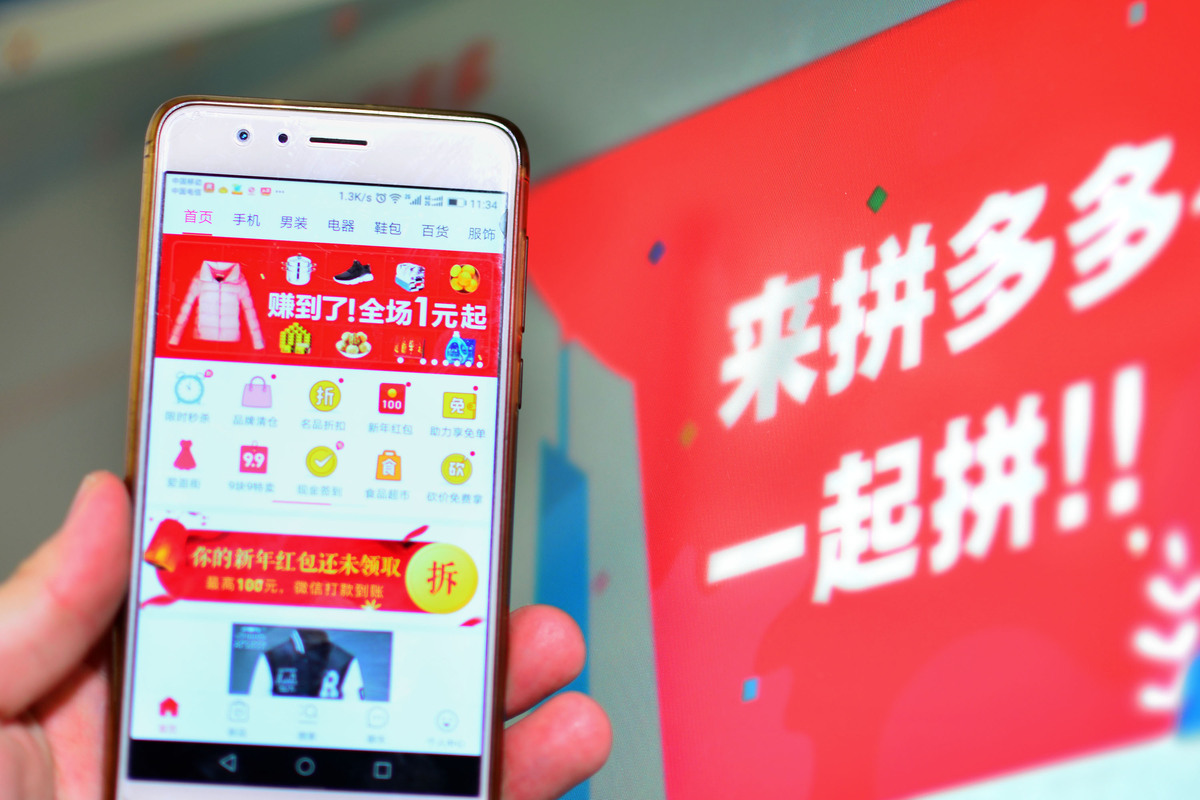
    Pinduoduo, China’s largest e-commerce platform for agricultural products, has expanded its online grocery ordering service to most provinces since introducing it in the cities of Wuhan and Nanchang in August.

    Duo Duo Maicai, as the grocery feature is called, was introduced in response to the surging demand for buying groceries online following the onset of Covid-19 in the first quarter. The pandemic-related lockdowns forced many households to seek alternative ways to buy their food and essential supplies as brick-and-mortar shops were closed and movements severely restricted.

    But even after the coronavirus was brought under control and restrictions were lifted, a survey by GlobalData found that 56% of Chinese consumers were buying food and groceries online more frequently than before the lockdowns.

    By 2025, nearly half of China’s grocery shopping is expected to take place online, up from 20% currently, according to Goldman Sachs. The online grocery market is projected to reach 7 trillion yuan in five years, the bank said.

    “We are seeing sustained consumer behavior post-pandemic and expect a further shifting from wet markets to structured retail, together with multiple models and build-out of cold-chain logistics to drive ongoing online share gains in” the fresh and FMCG categories, Goldman Sachs said in a report.

    The boom in online grocery shopping in China is a marked change for a society where going to the local market is woven into the fabric of daily life for many households. But with an increasingly fast pace of life, especially in the bigger cities, more and more consumers are availing themselves of the option to buy their groceries online and picking them up the following day.

    Sensing a seismic shift in consumer preference, internet companies have poured resources into catering to this growing need. Other companies that have gone into the online grocery business include Alibaba, Meituan and Didi, the ride-hailing giant.

    “We believe that grocery shopping in China is undergoing similar structural changes in consumer behavior that we saw in other sectors a few years ago,” Chen Lei, Chief Executive Officer of Pinduoduo, said in the company’s post-results conference call on Thursday. “The presumption that most consumers still prefer to go to the wet markets or supermarkets for their daily essentials has been challenged over the past few months.”

    Pinduoduo reported its first quarterly profit since its IPO in 2018. The company has garnered 731.3 million active buyers in the space of five years, an unprecedented feat for an e-commerce company.

    With Duo Duo Maicai, consumers can place their orders before 11 pm each day and pick up their agriculture products the next day from 4 pm onwards at designated pick-up points. Duo Duo Maicai is available as a mini-program and on the main Pinduoduo app.

    This trend of “planned consumption” is driving a surge in agricultural sales, which are estimated to double this year to at least 250 billion yuan in GMV on Pinduoduo. The company said earlier this year that GMV from agriculture could surpass 1 trillion yuan in five years.

    Logistics

    To ensure that supply can keep up with this increased online demand requires a sophisticated supply chain. China’s agricultural supply chain is characterized by small farms, multiple distribution layers, and wastage at various stages. As a result, distribution costs for agricultural products typically account for 40% of the total cost (60% for fresh produce), compared with about 10% in developed economies.

    To improve the supply chain efficiency, Pinduoduo has invested in optimizing key areas including logistics, warehousing and delivery. The company has developed a nationwide and regional agricultural logistics system to cater to the different needs of consumers.

    In the fast-changing consumer and e-commerce industries in China, companies must stay nimble and cater to their users to survive.

    Comparing the shift in grocery shopping habits to the apparel industry five to seven years ago, Chen said: “No one could have imagined then that a significant number of consumers would use online shopping to choose, try out, and return clothes.”

    “But that’s exactly what we are seeing today.”