Tag: fast

  • Uniqlo Owner Fast Retailing Reports Stellar 45.7% Profit Boost Amidst Global Challenges

    Uniqlo Owner Fast Retailing Reports Stellar 45.7% Profit Boost Amidst Global Challenges

    Fast Retailing, the Japanese firm that owns the popular clothing brand Uniqlo, reported a 45.7% quarterly profit surge, despite facing challenges from the Iran war’s impact on supply chains and logistics. Achieving this milestone puts the company on track for its fifth consecutive year of record earnings.

    Over the three months through May, Fast Retailing’s operating profit reached 213.79 billion yen (US$1.32 billion), a substantial increase compared to 146.74 billion yen during the same period in the previous year. This figure significantly surpassed the average estimate of seven analysts, which stood at 177.73 billion yen. As a result of this positive performance, Fast Retailing raised its full-year operating profit forecast from 700 billion yen to 730 billion yen.

    Uniqlo’s Global Appeal and Challenges

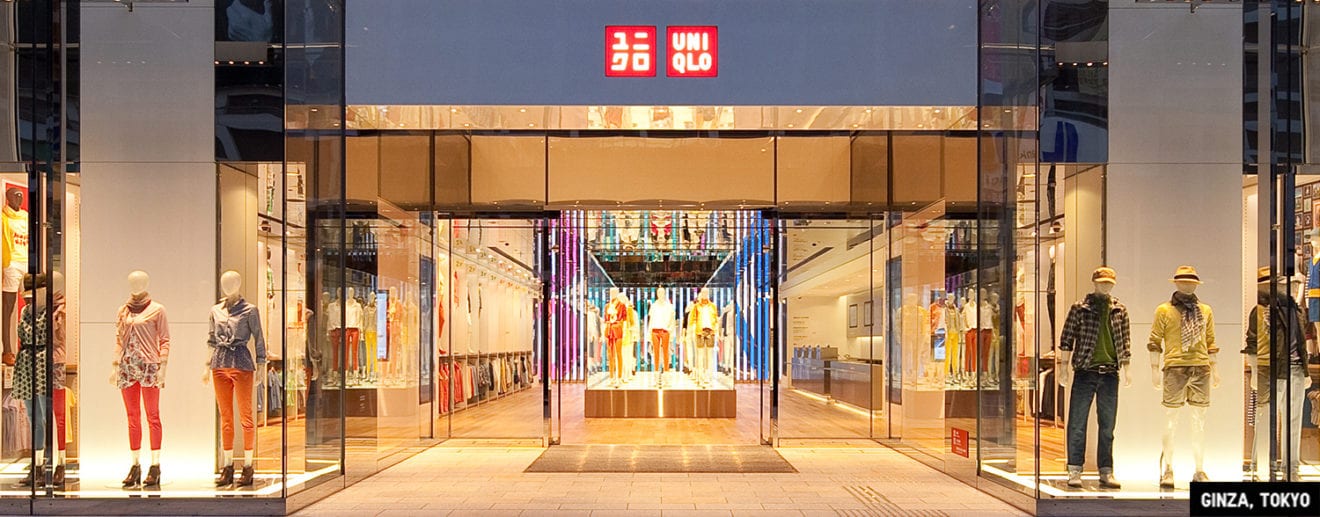
    Fast Retailing’s success is a key indicator of consumer spending trends in Japan and mainland China, with nearly 900 stores in these regions. Starting as a single store in Hiroshima, western Japan, in 1984, the company now operates more than 2,500 Uniqlo stores worldwide, with its products primarily manufactured in Asian hubs.

    In recent times, the brand has seen rapid expansion in Europe and North America as it seeks growth beyond China, its largest overseas market. However, this expansion has come with challenges. In Japan, sales have been bolstered by a tourism boom and a weak yen, but growth in China has slowed, leading to store closures and restructuring.

    The ongoing Middle East conflict and changing weather patterns have also posed challenges for Fast Retailing, along with other global fashion retailers. Supply and logistic disruptions, as well as weather impact on clothing demand, have become significant concerns.

    Fast Retailing’s CFO, Takeshi Okazaki, highlighted these issues earlier this year, indicating that the Iran war had complicated air freight from production bases in Southeast Asia, and that sustained oil price increases could affect the costs of synthetic fibers.

    Questions & Answers

    What was Fast Retailing’s operating profit for the three months through May?
    The company’s operating profit was 213.79 billion yen (US$1.32 billion) during this period.

    How has Fast Retailing’s expansion into Europe and North America impacted the company?
    While the expansion has opened up new markets for Fast Retailing, it has also presented challenges such as coping with the effects of the Middle East conflict on supplies and logistics, and adapting to changing weather patterns impacting clothing demand.

    What factors have affected Uniqlo’s growth in China?
    The growth of Uniqlo in China has been affected by weak consumer sentiment, which led to store closures and restructuring.

  • Alibaba’s Revenue Surges, Thanks to Fast Delivery and AI Investments: Outpaces Quarterly Estimates

    Alibaba’s Revenue Surges, Thanks to Fast Delivery and AI Investments: Outpaces Quarterly Estimates

    In Tuesday’s quarterly report, Alibaba, the Chinese e-commerce behemoth, exceeded analysts’ revenue predictions. This success was primarily attributed to the company’s significant investments in one-hour delivery services, which attracted more users to its shopping applications. Additionally, the company’s cloud division demonstrated remarkable growth.

    Share Performance and Revenue

    Following the announcement, the company’s US-listed shares increased by 2% in initial trading. Alibaba reported a second-quarter revenue of 247.80 billion yuan (approximately US$35 billion). This figure surpassed the anticipated revenue of 242.65 billion yuan. However, the adjusted profit of 4.36 yuan per American Depository Share fell short of an estimated 5.49 yuan.

    Fierce Competition in the Quick Commerce Sector

    Alibaba’s performance comes amidst an expensive competition in China’s ‘instant retail’ or ‘quick commerce’ sector. Here, major corporations are investing billions in expedited delivery services to secure a larger market share. Simultaneously, Alibaba has been making significant investments in artificial intelligence (AI), positioning itself as a frontrunner in the industry within China.

    Investment in AI

    The company announced in February plans to allocate 380 billion yuan over three years to AI and cloud investments. However, CEO Eddie Wu hinted at potential additional investments to address supply chain challenges while meeting customer demand. Indicating the company’s aggressive stance on AI investment, Wu suggested that the planned investment may be insufficient given the scale of customer demand.

    Profit Impacts

    Despite the investments causing a 53% reduction in net profit to 20.61 billion yuan, this figure still surpassed analysts’ predictions. These investments, particularly in AI, are anticipated to establish long-term competitive advantages, notwithstanding the immediate pressure on profit margins.

    Instant Retail Sector

    In the instant retail sector, aggressive discounting and subsidies from Alibaba and its competitors have led to concerns over margins and substantial cash expenditure. However, with its diversified business model and significant resources, Alibaba is less vulnerable than its rivals. The company projects that the instant retail sector could add 1 trillion yuan in yearly gross merchandise value over the next three years. Notably, Alibaba’s instant retail business has significantly improved unit economics recently, with cost per order decreasing by half since summer.

    Singles’ Day Subsidies

    The Singles’ Day sales period, stretching from early October to November 11, witnessed considerable subsidies and discounting by retailers to stimulate demand. Sales across major platforms during this period escalated to 1.70 trillion yuan, an increase from 1.44 trillion yuan the previous year.

    Expansion into Consumer AI

    Alibaba has also recently intensified efforts to penetrate the consumer AI market, a sector where it has been comparably less active due to its greater emphasis on enterprise clients. Despite launching a free app, which gained 10 million downloads within its first week, it remains behind the market leader, ByteDance’s Doubao, which boasts 150 million users. Consequently, an ongoing price war in China’s domestic AI market, triggered by competitors focusing on affordable computing and app development, has forced Alibaba to reduce prices.

    Questions & Answers

    What led to Alibaba exceeding analysts’ revenue expectations?
    Alibaba’s investments in one-hour delivery services attracted more users to its shopping apps, leading to increased revenue.

    What challenges is Alibaba facing in the quick commerce sector?
    The sector is highly competitive, with corporations investing billions in expedited delivery services to secure a larger market share.

    How is Alibaba responding to competition in the consumer AI market?
    Alibaba has intensified efforts to penetrate the consumer AI market and launched a free app that gained 10 million downloads within its first week. It has also reduced its prices to remain competitive.

  • Apple’s Mac Sales Double, Yet Lenovo Leads: Future Market Growth Hinges On Ai-enabled Pcs

    Apple’s Mac Sales Double, Yet Lenovo Leads: Future Market Growth Hinges On Ai-enabled Pcs

    The American multinational technology company, Apple, is experiencing a significant surge in iPhone sales. However, what’s particularly noteworthy is the increasing popularity of their laptops. Indeed, in the third quarter of the year, sales of Macs have doubled, outpacing the growth rate of the overall PC market. Despite such impressive strides, Apple is yet to lead in either volume or growth in this market.

    The PC Market Leaders

    Although Apple’s growth rate surpasses that of the overall PC market, it still trails Lenovo in sales growth. According to a recent study, Apple saw a 14.9% increase in shipments during the third quarter of 2025. In contrast, Lenovo, the global leader in PC manufacturing, experienced a growth rate of 17.4%, while the overall market saw an increase of 8.1%.

    Apple currently ranks fourth in terms of global PC manufacturing, while Lenovo maintains its leading position. The third-ranked Dell is the only major brand to experience a slight decline, with a 0.9% drop in growth. On the other hand, the second-largest PC manufacturer, HP, grew by 10%. ASUS saw a 14% rise in growth, securing its position as the fifth in overall shipments.

    The Role of AI in the PC Market

    The study suggests that the overall growth of PC shipments has primarily been influenced by two factors. The first is the imminent retirement of Windows 10, and the second, adjustments made in inventory due to tariffs imposed in the US. However, looking ahead, the study anticipates that the future growth of the market will be driven by the AI PC boom.

    This new wave of AI-enabled PCs is expected to begin influencing growth from next year, and fully come into effect after 2026. It is projected that this “real AI PC boom” could propel the entire PC market to unprecedented heights.

    The Importance of Quality Products

    Apple’s recent success with the iPhone 17, as well as Samsung’s success with the Galaxy Z Fold 7, underlines the role that high-quality products play in driving sales. Apple’s Mac lineup has remained robust for several years, which explains the strong sales performance of their computers. While Lenovo’s broader range of products has helped them maintain their leading position, it does not appear that Apple is necessarily aiming to compete for this title.

    Questions & Answers

    Which company leads the PC market in terms of sales growth?
    Lenovo currently leads the PC market in sales growth, with a rise of 17.4% in the third quarter of 2025.

    What are the two main factors driving the overall growth of PC shipments?
    The overall growth of PC shipments is primarily driven by the imminent retirement of Windows 10 and the adjustments made in inventory due to tariffs imposed in the US.

    What will be the major driver of growth in the PC market in the future?
    The major driver of growth in the PC market in the future is expected to be the boom of AI-enabled PCs. This is predicted to start influencing growth from next year and fully come into effect after 2026.

  • Fast Retailing cuts earnings forecast on Hong Kong

    Fast Retailing cuts earnings forecast on Hong Kong

    Fast Retailing, the parent of the Japanese fast-fashion retailer Uniqlo, has reduced forecasts for its full-year operating profit by 11 percent.

    The Japanese company says its business has been adversely affected by protests in Hong Kong and a trade war between Japan and South Korea that resulted in a boycott of Japanese products in a territory that contains the most Uniqlo outlets in a single territory after China.

    “Korea is a very important segment for us, and it’s not clear how long this situation will continue,” said Fast Retailing CFO Takeshi Okazaki.

    Fast Retailing has reported consistently increasing earnings since 2016 – until now. In the current financial year’s first quarter, sales dropped by 3.6 percent, while its international operating profit fell 28 percent.

  • Singapore makes cashless payments push

    Singapore makes cashless payments push

    In 2014 Singapore was one of the first countries in the world to build a 27/7, real-time interbank fund transfer system, called Fast.

    However, cash in circulation is 8.8% of GDP, compared to 4.4% in Australia and 2.12% in Sweden. Nearly 13 cheques per person were written in the country in 2014, compared to seven in Australia and effectively none in Sweden.

    According to research from the Monetary Authority of Singapore and KPMG, the social costs of this heavy reliance on cash and cheques is around 0.5% of GDP, or S$2 billion a year.

    In a speech, MAS managing director Ravi Menon says that the fact that Singapore is so far behind these other countries shows that the Fast infrastructure is “grossly under-utilised”.

    One of the key reasons for this is that people do not know the bank account numbers of people that they want to send money to. Therefore, MAS and the country’s banks are developing a Central Addressing Scheme (CAS) that will allow payments to be made through Fast using only a recipient’s mobile number, or NRIC number, or Unique Entity Number.

    “If all goes well, by this time next year, we will no longer need to remember bank account numbers for a majority of our electronic fund transfers,” says Menon.

    In his speech, the MAS MD also says that cost is holding back the take up of Fast among small businesses. Some banks charge up to S$10 to transfer funds through the system while cheque payments are free.

    Menon also bemoaned Singapore’s complicated point-of-sale situation, which sees many stores cluttering up counters with multiple terminals to accept different cards.

    To tackle this, the country is pushing ahead with a unified POS terminal that can read all kinds of cards at retail and hospitality outlets. About 1000 of them have been deployed at convenience stores such as 7-Eleven, with more to follow.

    Meanwhile, Singapore’s Land Transport Authority is teaming up with MasterCard for a pilot that will see participants pay for their train and bus journeys by tapping their contactless credit and debit cards.

    On MAS’s own role, Menon says that the central bank will streamline and strengthen the payments regulatory framework to create a single and modular regime that will be applied on an activity basis, rather than specific payment systems.

    KPMG’s report also recommends strengthening the governance model and creating a national payments council that fosters innovation, competition and collaboration, coordinating key initiatives, such as promoting interoperability and adopting common standards.

  • Overseas grocers wrestle in fast-moving China retail market

    From quick meals to smartphones, from luxurious items to groceries, the best way China outlets — and what mainland consumers need to purchase — is altering quickly. The modifications are leaving overseas grocery store and hypermarket chains struggling to maintain up by revamping retailer codecs and promoting extra groceries on-line, retail analysts say.

    On Wednesday Walmart introduced a plan to show spherical its declining gross sales in China by boosting retailer numbers by greater than 25 per cent, renovating present outlets and introducing a brand new on-line buying app.

    The U.S. chain has been hit by meals security scandals in China, together with quickly intensifying competitors from different massive hypermarket chains and from new on-line grocers.

    However Walmart is way from the one overseas grocer that has struggled in China in recent times: Tesco, the U.Okay. chain, did not make it alone on the mainland regardless of an formidable program of constructing so-called “way of life malls” in China, anchored by a Tesco retailer.

    From quick meals to smartphones, from luxurious items to groceries, the best way China outlets — and what mainland consumers need to purchase — is altering quickly. The modifications are leaving overseas grocery store and hypermarket chains struggling to maintain up by revamping retailer codecs and promoting extra groceries on-line, retail analysts say.

    On Wednesday Walmart introduced a plan to show spherical its declining gross sales in China by boosting retailer numbers by greater than 25 per cent, renovating present outlets and introducing a brand new on-line buying app.

    The U.S. chain has been hit by meals security scandals in China, together with quickly intensifying competitors from different huge hypermarket chains and from new on-line grocers.

    However Walmart is way from the one overseas grocer that has struggled in China in recent times: Tesco, the U.Okay. chain, did not make it alone on the mainland regardless of an formidable program of constructing so-called “way of life malls” in China, anchored by a Tesco retailer.

    That gamble failed, largely as a result of Tesco didn’t have the experience to compete as a property developer within the troublesome mainland property market, retail analysts say. Tesco was pressured right into a three way partnership with one of many mainland’s main retailers, China Assets Enterprise.

    However turning spherical Tesco’s mainland enterprise has not proved straightforward for CRE both, and the corporate final week bought its loss-making non-beer (together with grocery) companies to its dad or mum, China Assets Holdings.

    The sector’s woes are usually not restricted to overseas manufacturers both. A brand new report by OC&C technique consultants finds that “almost all the most important gamers amongst China’s big-box grocers … have skilled near-consistent unfavourable progress since 2010.” Progress throughout that interval has come virtually totally from new retailer openings, OC&C stated.

    Competitors from on-line grocers is likely one of the largest threats to brick and mortar gross sales at chains akin to Walmart, Carrefour and Auchan’s SunArt Retail, retail analysts say. Shopper tastes in China change extra quickly than in lots of established markets, and up to now yr or two, on-line grocery gross sales have exploded.

    OC&C says on-line gross sales rose almost 50 per cent in 2014, yr on yr, in contrast with a paltry 6.7 per cent for hypermarkets and grocery store gross sales (together with new retailer openings). Many shoppers are shifting their shopping for to comfort shops too, retail analyst say, prompting grocers together with Walmart and Carrefour to attempt new, smaller codecs for his or her shops in massive cities.

    “In China, older individuals do not have a variety of leisure so purchasing (even in grocery shops) is leisure for them, however our youthful era has grown up with a pc at their aspect and they also want to entertain themselves by travelling, not purchasing in bodily shops,” says Huang Aizhu, head of Tmall’s meals enterprise. The enterprise, a part of the Alibaba group, is rising yearly within the “triple digits”, she says.

    “The mixture of on-line and offline is the best way of the longer term,” she provides. Gross sales of recent meals like fruit, greens and seafood — historically the protect of brick and mortar shops or conventional moist markets — are rising quicker on-line than different grocery gadgets, Ms Huang says.

    Walmart already has one of many strongest e-commerce presences in China, via its 51 per cent stake in Yihaodian, the favored on-line grocer.

    Tesco is experimenting with on-line grocery purchasing in Shanghai, and its digital expertise have been one of many parts that attracted CRE to the three way partnership with the retailer. Nevertheless, in the meanwhile, the emphasis is on integrating Tesco and CRE’s retail companies in China, in accordance with individuals accustomed to the state of affairs.

    Doug McMillon, Walmart international chief government, informed a press convention in Beijing on Wednesday that the corporate plans to increase each on-line and offline. “We need to assist clients store in a approach that’s most handy for them. For some comfort is purchasing on-line and having merchandise delivered to their houses, for others it’s purchasing on-line and choosing up at a retailer and for others it is the expertise of being in a retailer, seeing and dealing with merchandise that they purchase … new methods are being invented each week.”

    “Shopper spending energy in China is rising at about 10 per cent per yr and tastes are altering quickly. Maintaining with that for retailers is hard, and there’s more and more competitors with one another. A number of chains are having to shut present shops and reopen and redevelop new codecs,” says Matthew Crabbe, China retail analyst at Mintel.

    Fixing the chilly chain logistics drawback is vital for on-line meals retailers, he says. JD.com, a pacesetter mainland ecommerce firm, has struck a deal to distribute recent, chilled and frozen merchandise by way of comfort shops that both maintain them for buyer assortment or ship to their houses.

    “They’re leapfrogging the large chains, which should reply in variety to compete,” he provides, noting that Walmart and Tesco have been “creating their shops to be extra like supply depots”.