
Tag: forecasts

  • Vietnam’s Economy Soars: Standard Chartered Forecasts 7.5% GDP Growth in 2025 Amid Robust Trade and FDI Inflow

    Vietnam’s Economy Soars: Standard Chartered Forecasts 7.5% GDP Growth in 2025 Amid Robust Trade and FDI Inflow

    Standard Chartered Bank has revised its economic growth forecast for Vietnam this year from an initial prediction of 6.1% to a more promising 7.5%. In its most recent macroeconomic report, Standard Chartered also adjusted its growth prospect for the country for 2026, from 6.2% to a promising 7.2%.

    Increasing Role in the Global Supply Chain

    A key factor highlighted by Standard Chartered Bank was Vietnam’s expanding role in the global supply chain. This elevation is largely fueled by the country’s robust trading performance and deepening integration into international commerce through various free trade agreements. In September, Vietnam’s exports reached a staggering US$42.7 billion, a 24.7% increase compared to the previous year. This impressive growth was spearheaded by key sectors such as electronics and computers (up 66.2%), telephones (17.5%), and machinery (11.6%).

    Simultaneously, imports saw a 24.9% increase to $39.8 billion, with electronics and computer supplies (up 43.6%) and machinery (up 33.6%) leading the charge. These numbers indicate a consistent expansion in production and industrial capacity in Vietnam.

    Resilient External Position and Economic Recovery

    Standard Chartered Bank highlighted Vietnam’s resilient external position, bolstered by solid trade and a stable foreign exchange outlook. After previously being depleted due to the strengthening of the U.S. dollar, it is anticipated that the country’s FX reserves will be rebuilt. This reflects an improved macroeconomic stability and a healthy trade performance.

    As another positive economic indicator, the growth of domestic credit has also sped up, suggesting a continued economic recovery without requiring policy rate cuts. Current credit growth surpasses 15% year on year, which indicates growing business confidence and a higher demand for finance. The bank also pointed out that lending growth continues to be robust, supported by favourable liquidity conditions and government initiatives to stimulate growth.

    Foreign Direct Investment as Key Growth Driver

    Foreign direct investment (FDI) remains a significant contributor to growth. In the first nine months of 2025, the amount of disbursed FDI increased by 8.5% year on year, amounting to $18.8 billion, while registered FDI surged by 15.2% to $28.5 billion.

    Looking ahead, Standard Chartered economists predict the refinancing rate to remain at 4.5% for the remainder of this year and 2026, with favourable conditions encouraging investment and expansion. Tim Leelahaphan, senior economist for Vietnam and Thailand at Standard Chartered, praised Vietnam’s resilience and adaptability, which have been demonstrated through its strong FDI inflows and robust export growth. These factors have reinforced its strategic role in the diversification of the global supply chain and suggest an optimistic outlook for continued economic expansion.

    The bank also maintained its forecast for the USD/VND exchange rate at VND26,300 for this year and VND26,750 for 2026, while lowering inflation projections to 3.4% for 2025 and 3.7% for next year. These updated figures were based on stronger-than-expected growth momentum and easing price pressures.

    Questions & Answers

    What is the revised economic growth forecast for Vietnam in 2026?
    Standard Chartered Bank has revised the economic growth forecast for Vietnam in 2026 from 6.2% to 7.2%.

    What factors have led to the growth of Vietnam’s role in the global supply chain?
    The growth of Vietnam’s role in the global supply chain is primarily due to its strong trading performance and its deepening integration into international commerce through several free trade agreements.

    How is the Foreign Direct Investment (FDI) contributing to Vietnam’s economy?
    FDI is a significant contributor to Vietnam’s economy. In the first nine months of 2025, discharged FDI increased by 8.5% year on year, reaching $18.8 billion whereas registered FDI surged by 15.2% to $28.5 billion. This robust FDI inflow is a testament to Vietnam’s resilience and adaptability, indicating a positive outlook for continued economic expansion.

  • Pinduoduo Surpasses Revenue Expectations But Faces Profit Decline Amid Aggressive Market Competition

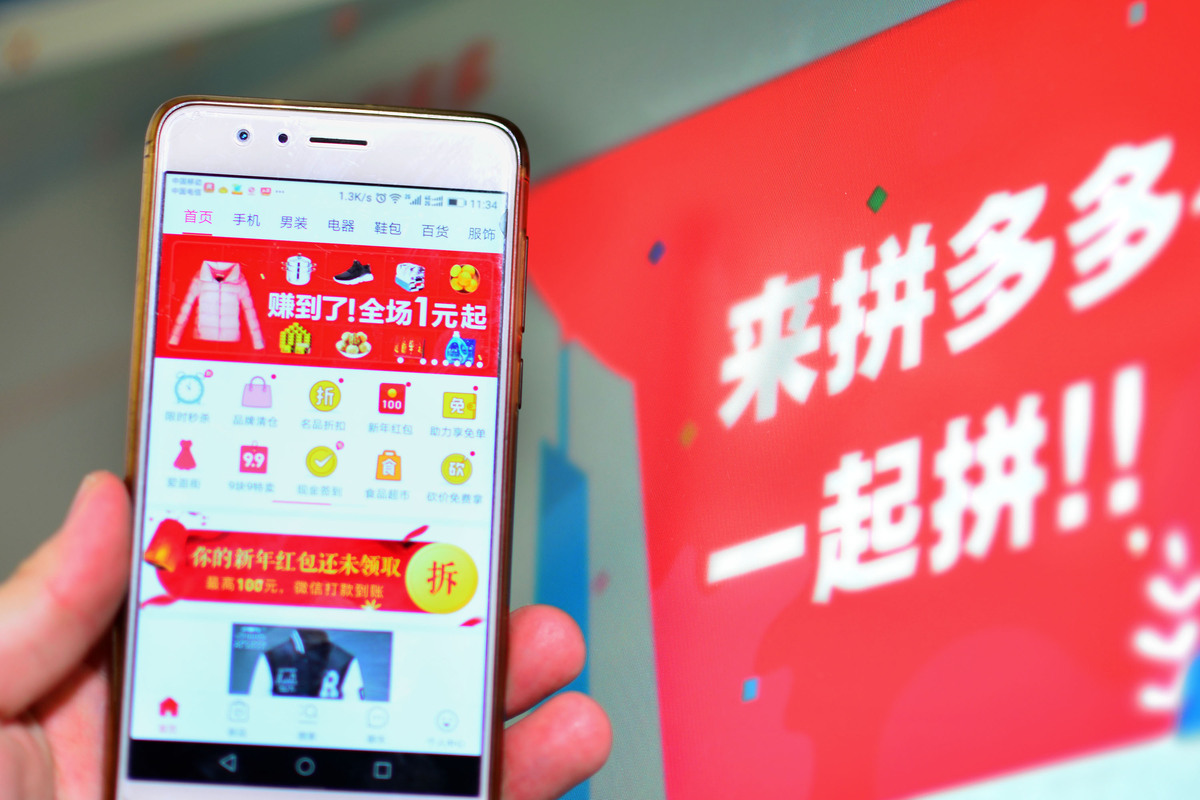
    Pinduoduo Surpasses Revenue Expectations But Faces Profit Decline Amid Aggressive Market Competition

    Pinduoduo (PDD Holdings), a prominent e-commerce firm operating economical platforms in China and internationally, surpassed quarterly revenue expectations. However, its net income plummeted as a result of investments made to compete in an increasingly aggressive market.

    Share Performance and Economic Climate

    Shares of PDD Holdings, listed in the US, rose by 1%, with an 11% surge in premarket trading. This was spurred by the company executives’ remarks about escalated investments leading to fluctuations in its short-term financial performance. Concurrently, the Chinese government is implementing strategies to stimulate domestic consumer spending, aiming to rejuvenate a sluggish economy grappling with multiple challenges. These include a languid property sector and ongoing international trade issues resulting from US policies.

    In an effort to invigorate demand, e-commerce giants such as Pinduoduo, JD.com, and Alibaba have turned to deep discounts and promotional offers, inadvertently triggering a price war. Alongside the obligation to maintain low prices in China, PDD’s profit margins have recently suffered due to a multibillion-dollar investment in merchant support programs and elevated costs related to international shipping driven by US tariffs.

    Increased Spending and Intensified Competition

    PDD’s second-quarter earnings revealed an upsurge in spending on various fronts, from server costs to sales and marketing expenditures. This is part of the firm’s strategy to enhance its ecosystem for both merchants and consumers. Jiazhen Zhao, co-CEO of PDD, noted that the recent spike in industry competition has decelerated their revenue growth and substantially reduced operating profit.

    The company expects profit levels from this quarter to be unsustainable, anticipating irregularities in future quarters’ profits. To ameliorate these pressures, PDD’s international platform, Temu, has been promoting products situated in US warehouses and is striving to engage more local sellers. However, it continues to face stiff competition from Amazon, which leverages its extensive scale to secure advantageous pricing from suppliers.

    Changing Business Model and Consumer Perception

    In response to these challenges, Temu is transitioning to a “fully-managed” model, allowing it to exercise greater control over product selection, pricing, and logistics. The platform aims to utilize its substantial supply-chain network to maintain competitive prices. However, a recent survey by an online marketing firm revealed that 30% of American shoppers have noticed price increases on Temu.

    Despite these obstacles, PDD’s revenue experienced a 7% increase, reaching 103.98 billion yuan ($14.53 billion) for the quarter ending in June, surpassing analysts’ predictions. Meanwhile, its operating profit dropped by 21%. Adjusted earnings per American depository share stood at 22.07 yuan, exceeding the projected 15.74 yuan.

    Questions & Answers

    How did PDD’s shares perform recently?
    PDD’s US-listed shares witnessed a 1% increase, driven by an 11% surge in premarket trading triggered by company executives’ comments on future investments.

    What impacts did increased spending have on PDD’s second-quarter earnings?
    PDD’s second-quarter earnings showcased a rise in expenditures across various areas, leading to a slowdown in revenue growth and a significant reduction in operating profit.

    How is PDD’s international platform, Temu, responding to market pressures?
    Temu is transitioning to a “fully-managed” model to exert more control over product selection, pricing, and logistics. The platform aims to use its large supply-chain network to keep prices low, despite facing competition from global e-commerce giant Amazon.

  • Grab Holdings Surpasses Wall Street Expectations With Multi-service Superapp Strategy Amid Global Economic Uncertainties

    Grab Holdings Surpasses Wall Street Expectations With Multi-service Superapp Strategy Amid Global Economic Uncertainties

    Grab Holdings, a Singapore-based tech company, surpassed Wall Street’s revenue expectations in Q2, with a surge in consumption across its ride-hailing and food delivery services, seemingly unaffected by global economic uncertainties.

    Superapp Drive Pays Off

    The company’s robust growth can be attributed to its strategic efforts to transform its platform into a multi-functional, superapp. This expansive integration of various digital services, including ride-hailing, food, and grocery delivery, continues to entice a growing number of users, who are increasingly investing in the offered subscription plans.

    Despite the unease in global economic stability induced by ongoing US trade negotiations, resulting in worries over tariffs and heightened costs, particularly in Southeast Asia, the Singaporean economy remains robust. In Q2, it witnessed a growth rate of 4.3%, successfully averting a technical recession.

    According to Peter Oey, Grab’s CFO, the company’s growth strategy focuses on affordability, which not only encourages growth but also serves as a protective shield against global macroeconomic factors. In a bid to attract price-conscious consumers, the company has been simultaneously working on expanding its driver base to keep up with the rising user demand.

    Financial Performance

    Grab reported an impressive revenue of US$819 million for Q2, surpassing analyst predictions of $811.3 million. The company attributed a significant portion of this success to its robust performance in Indonesia. Previously identified as a market with potential for deeper penetration, the company is now striving to capitalize on the country’s vast population and expand its market share.

    According to Oey, Indonesia has proved to be a profitable market for the company, prompting increased investment efforts in the region.

    Market Consolidation

    The online service market in Southeast Asia is witnessing a phase of consolidation, with larger entities acquiring smaller firms to diversify their service offerings. Though rumors of Grab’s potential acquisition of smaller Indonesian competitor GoTo were circulating earlier this year, Oey confirmed that no such discussions are underway.

    The company’s Q2 financials indicate a remarkable turnaround, with a profit of $20 million, in stark contrast to a $68 million loss in the same period the previous year.

    Questions & Answers

    How has Grab Holdings managed to exceed Wall Street’s revenue expectations in Q2?
    Grab Holdings has successfully surpassed revenue projections by transforming its platform into a superapp, integrating various digital services and appealing to a growing number of users.

    How is the company responding to global economic uncertainties?
    Grab Holdings is focusing on affordability as a protective shield against global macroeconomic factors. It is also endeavoring to keep up with increasing user demand by expanding its driver base.

    What is Grab Holdings’ strategy for the Indonesian market?
    Considering the robust performance and profitability in Indonesia, Grab Holdings is aiming to capitalize on the country’s vast population and increase its market share by investing more in the region.