Retail News CRM

Tag: fuel

  • Gasoline Prices See End to Nine-Week Rally: What It Means for Consumers

    Gasoline Prices See End to Nine-Week Rally: What It Means for Consumers

    Gasoline prices in Vietnam took a notable dip on Thursday afternoon, marking the end of a nine-week upward trajectory.

    The widely used fuel RON95 saw a slight decrease of 0.15%, settling at VND20,400 (approximately US$0.77) per liter. Similarly, biofuel E5 RON92 experienced a bigger drop of 0.50%, now priced at VND19,750. While diesel fueled a higher climb, rising by 0.92% to VND18,640.

    This adjustment reflects the recent volatility in the global oil market, influenced by a mix of geopolitical events and economic shifts. Notably, tensions escalated in the Middle East following Israel’s actions targeting Hamas leadership on Qatari territory. At the same time, OPEC+ has ramped up oil production for October, and fluctuations in the value of the US dollar have further complicated the landscape, as highlighted by the Ministry of Industry and Trade.

    In terms of global benchmarks, RON95 dropped by 0.2% to $81.5 per barrel, while diesel ticked up by 1.14%, now valued at $87.64. It’s a bit like watching a tightrope walker; one misstep can send prices plummeting or soaring.

    Questions & Answers

    What trends influenced the recent decline in gasoline prices in Vietnam?
    The decline was largely shaped by geopolitical tensions in the Middle East, OPEC+ increasing oil production, and fluctuations in the value of the US dollar.

    How much did RON95 and biofuel E5 RON92 prices change?
    RON95 fell by 0.15% to VND20,400, while E5 RON92 dropped by 0.50% to VND19,750.

    What impact do global oil prices have on local markets?
    Global oil prices significantly impact local markets, as fluctuations can directly translate into changes in consumer fuel prices, shaping both economic conditions and consumer behavior in the region.

  • Vietnam’s Gasoline Prices Surge to Two-Month High – What It Means for Consumers

    Vietnam’s Gasoline Prices Surge to Two-Month High – What It Means for Consumers

    On Thursday afternoon, gasoline prices in Vietnam soared to their highest levels since July 1, driven by a surge in global market rates.The widely used fuel RON95 saw a significant increase of 1.34%, now priced at VND20,360, while the biofuel E5 RON92 jumped 1.59% to VND19,770. Diesel fuel also experienced a notable rise, climbing 2.51% to VND18,350.

    Market Forces Behind the Trend

    Recent fluctuations in the global oil market have been influenced by various factors, including the U.S. imposing higher tariffs on imports from India and escalating tensions between Ukraine and Russia, particularly concerning conflicts over energy resources, as outlined by the Ministry of Industry and Trade. In the international arena, RON95 reached $81.3 per barrel, marking a 1.6% increase, while diesel saw a 2.9% rise to $85.9 per barrel. It’s almost as if global oil supply and geopolitical strife are engaged in a dramatic tango, each step affecting consumers back home.

    Questions & Answers

    How have Vietnam’s gasoline prices changed recently?
    Gasoline prices in Vietnam have recently risen to their highest levels since July 1, with RON95 increasing by 1.34% and biofuel E5 RON92 by 1.59%.

    What external factors are driving these price hikes?
    The increases are influenced by the U.S. increasing tariffs on imports from India, and escalating conflict between Ukraine and Russia impacting their energy infrastructure.

    What do current international oil prices look like?
    As of the latest reports, RON95 has reached $81.3 per barrel, while diesel prices have risen to $85.9 per barrel, indicating a broader trend of escalating costs on the global stage.

  • Gasoline Prices Hit Seven-Week Peak: What This Means for Drivers and the Retail Market

    Gasoline Prices Hit Seven-Week Peak: What This Means for Drivers and the Retail Market

    Gasoline prices in Vietnam surged to levels not seen since early July, casting a spotlight on the country’s evolving fuel market. As of Thursday afternoon, the price of the popular RON95 fuel increased by 1.06%, reaching VND20,090. Meanwhile, biofuel E5 RON92 also saw a rise of 0.57%, priced at VND19,460. In contrast, diesel experienced a slight decline, falling by 0.94% to VND17,900.

    The recent fluctuation in global oil prices was driven by several factors, including a sharper-than-expected drop in U.S. crude oil inventories, coupled with discussions between U.S. President Joe Biden and Ukrainian President Volodymyr Zelensky regarding a potential roadmap to resolve the ongoing conflict in Ukraine. These conversations come at a time when the oil market is grappling with tightening supply and geopolitical tensions.

    In the global arena, RON95 saw a decrease of 1.2%, settling at $80.1 per barrel, while diesel recorded a drop of 1.3%, now priced at $83.6 per barrel. It seems fuel prices are keeping everyone on their toes, reminiscent of a careful tightrope act where a single misstep can send consumers and businesses alike into a tailspin.

    Questions & Answers

    How much have gasoline prices increased in Vietnam recently?
    Gasoline prices have risen by 1.06%, bringing RON95 to VND20,090, marking the highest level since early July.

    What factors are influencing the global oil market?
    The global oil market has been affected by a significant drop in U.S. crude oil inventories and ongoing discussions about resolving the conflict in Ukraine.

    What are the current prices of diesel and biofuel in Vietnam?
    Biofuel E5 RON92 is priced at VND19,460 after a 0.57% increase, while diesel has decreased to VND17,900.

  • Australian Food Industry Shows Resilience With Robust Growth Amid Global Challenges

    Australian Food Industry Shows Resilience With Robust Growth Amid Global Challenges

    The food and grocery manufacturing industry in Australia has demonstrated robust growth, further solidifying its significance as the country’s biggest manufacturing sector and a crucial provider of regional employment opportunities.

    The Australian Food and Grocery Council’s (AFGC) State of the Industry 2023-24 report reveals that the sector’s turnover has experienced a 5.3 per cent growth, equating to a total of $173 billion.

    Employment and Exports

    Employment in the industry has also seen an increase of 4.4 per cent, resulting in almost 300,000 people now being employed in the sector, with over a third of these individuals located in regional Australia.

    Exports within the industry recorded a 5.2 per cent growth, while imports declined by 3.3 per cent. Interestingly, the US has surpassed China as the leading export market for Australia.

    Colm Maguire, CEO of AFGC, expressed his optimism for the sector’s future, emphasizing its “enormous potential”. He highlighted the need for policy and strategic backing as key for continued growth.

    Maguire added, “With the proper policy framework and strategic support, the food and grocery manufacturing sector can further enhance Australia’s economy – fostering regional employment, reinforcing Australia’s standing as a strong manufacturing nation, and securing our food and grocery supply amidst an increasingly complicated global landscape.”

    Challenges and Future Perspectives

    Despite the encouraging figures, the report also drew attention to certain challenges faced by the sector. These include an 11 per cent decline in capital investment, which currently stands at $3.8 billion, and ongoing cost pressures.

    As the Albanese Government progresses with its “Future Made in Australia” agenda, the AFGC argues that the food and grocery manufacturing industry is in a strong position to take the lead. This is reflected in their proposed seven productivity pillars, which concentrate on reducing bureaucracy, building resilient supply chains, and ensuring access to affordable, reliable energy.

    Questions & Answers

    What growth has the Australian food and grocery manufacturing industry seen recently?
    The industry has seen a 5.3 per cent increase in turnover, equating to $173 billion. Employment in the sector has risen by 4.4 per cent, with nearly 300,000 people now employed.

    Who is now Australia’s top export market?
    The US has now overtaken China as Australia’s top export market.

    What challenges does the Australian food and grocery manufacturing industry face?
    The industry faces challenges such as an 11 per cent decrease in capital investment and ongoing cost pressures.

  • Gasoline Prices Dip Slightly After Two-Week Climb: What It Means for Consumers

    Gasoline Prices Dip Slightly After Two-Week Climb: What It Means for Consumers

    Gasoline prices in Vietnam saw a slight decline Thursday afternoon, marking a change in trend after two weeks of increases, while diesel reached its lowest point in two months. The popular RON95 fuel has dipped by 0.95%, now priced at VND19,880. The decline offers a bit of relief to consumers who have weathered back-to-back price hikes.

    In a similar vein, biofuel E5 RON92 experienced a 1.28% drop, settling at VND19,350. Meanwhile, diesel prices have plunged by 3.88%, hitting VND18,070—the lowest price since June 12.

    This recent shift in the global fuel market has been influenced by a number of factors, including the U.S. decision to postpone higher retaliatory tariffs on China and OPEC+’s agreement to boost oil production in September, as noted by the Ministry of Industry and Trade.

    On the international stage, RON95 has seen a 1.3% decrease, priced at $79.1 per barrel, while diesel has dropped a striking 4.67% to $84.7.

    Questions & Answers

    What are the current prices of gasoline and diesel in Vietnam?
    As of now, RON95 is priced at VND19,880, biofuel E5 RON92 at VND19,350, and diesel at VND18,070, the latter reaching its lowest level in two months.

    What factors contributed to the recent decrease in fuel prices?
    The decline in prices has been influenced by the U.S. postponing higher tariffs on Chinese imports and OPEC+ deciding to increase oil production in the upcoming month.

    How do these changes in fuel prices affect consumers?
    The modest drop in fuel prices offers a welcome respite for consumers who have faced rising costs, potentially leading to a more favorable consumer sentiment amidst fluctuating market conditions.

  • Coupang Surpasses $8 Billion Mark: Record Revenue And Profit Turnaround Amid Taiwan Expansion

    Coupang Surpasses $8 Billion Mark: Record Revenue And Profit Turnaround Amid Taiwan Expansion

    South Korean retail behemoth Coupang has experienced substantial growth this year, boasting a record revenue of $8.52 billion in Q2, a rise of 19% year-over-year with an FX-neutral basis. This marks the first time the company has surpassed the $8 billion mark.

    Additionally, Coupang achieved a net profit of $31 million, a significant turnaround from last year’s Q2 deficit of $105 million. The company’s adjusted EBITDA hit $428 million.

    Core Strengths

    Coupang’s primary source of income comes from its Product Commerce sector, which encompasses Rocket Delivery, Rocket Fresh, Rocket Growth, and the marketplace. The adjusted EBITDA for this segment climbed to $663 million, and margins reached an unprecedented 9%.

    Most of the revenue growth in Q2 came from existing customers. According to Bom Kim, Coupang’s founder and CEO, even the oldest customer cohorts demonstrated robust spending increases in the double digits.

    Kim stated, “As we expand our selection to match customer preferences, they’re also purchasing across a broader number of categories.”

    The Rocket Delivery model, previously criticized for its extravagant spending and capital intensity, is now viewed as a competitive advantage. Same-day and dawn delivery volumes soared over 40% year-over-year, primarily due to the addition of over half a million new Rocket SKUs in Q2.

    Taiwan’s Progress

    Coupang’s Developing Offerings segment, which encompasses Taiwan Rocket Delivery, Coupang Eats, Coupang Play, and Farfetch, posted a revenue of $1.19 billion, an increase of 33% year-over-year. Although this unit is still not profitable, with an adjusted EBITDA loss of $235 million, a majority of this loss can be attributed to increased investment in Taiwan.

    Coupang’s CFO, Gaurav Anand, noted that Taiwan is the main reason behind a revised full-year EBITDA loss prediction for the segment, estimated to be between $900 million and $950 million.

    Coupang launched its Wow membership program in Taiwan in March, targeting a population of 23 million and a retail sector valued at $152.7 billion. Since entering the market in 2022, the company has invested approximately $355 million in expanding its logistics infrastructure and product selection.

    This investment appears to be producing early results, with Taiwan’s revenue surging 54% quarter-over-quarter and recording triple-digit growth year-over-year. These improvements are not only due to customer acquisition but also improved customer retention and spending.

    Kim commented, “Our Taiwan offering is growing faster and stronger than even the most optimistic forecasts we set at the beginning of the year.” He added that they see a similar growth trajectory in Taiwan as they did in the early years of scaling their retail offering in Korea.

    Despite initial concerns, Coupang’s aggressive investment indicates growing belief that Taiwan could become a second profitable market in the long term.

    While Taiwan’s progress overshadows other areas, Coupang’s other businesses continue to develop. Food delivery service Coupang Eats showed continuous double-digit growth, benefiting from the company’s established logistics infrastructure.

    Additionally, Coupang Play, its streaming platform, has added new features like a Sports Pass, providing access to premium sports leagues ranging from the Premier League to Nascar.

    Although these businesses are not yet profitable, they help to retain users within the Coupang ecosystem.

    Looking forward, Coupang faces significant challenges. The South Korean retail sector has been declining for 13 consecutive quarters – the longest recorded downturn. With limited room for further growth at home, the company’s future hinges on maximizing each customer’s value or finding new customers abroad. Taiwan is off to a strong start, but expanding it into a second growth engine may prove challenging, and the level of investment required could test investor patience if results don’t keep up the pace.

    Questions & Answers

    What contributed to the growth of Coupang’s Q2 revenue?
    Existing customers contributed to most of the growth, with spending increases across all cohorts. Additionally, the company expanded its product selection, leading to customers buying across a wider range of categories.

    What is the role of Taiwan in Coupang’s financial strategy?
    Taiwan is a significant focus for Coupang’s investment, aimed at expanding its market beyond South Korea. The company’s aggressive investment in Taiwan indicates a growing belief that it could become a second profitable market in the long term.

    What challenges does Coupang face moving forward?
    Coupang is challenged by the continuous decline in the South Korean retail sector. With limited potential for domestic growth, the company’s future success increasingly relies on maximizing value from each customer and expanding its customer base abroad. Additionally, the level of investment required in markets like Taiwan could test investor patience if results don’t match the pace of investment.
  • Malaysia Cuts RON95 Fuel Price to 47 Cents Per Liter—A Boost for Cost of Living Relief!

    Malaysia Cuts RON95 Fuel Price to 47 Cents Per Liter—A Boost for Cost of Living Relief!

    In a significant announcement, Prime Minister Anwar Ibrahim revealed that the rationalization of the RON95 fuel subsidy will lead to lower fuel prices for Malaysians. This change, which has been eagerly anticipated, is set to roll out by the end of September, according to reports from the New Straits Times.

    As both Prime Minister and Finance Minister, Anwar confirmed that the subsidy will not extend to foreigners, who will instead pay market rates. The initiative is designed to aid approximately 18 million motorists across the nation, including young drivers starting at age 16 and those navigating the gig economy.

    Currently, Malaysian drivers benefit from a fixed rate of RM2.05 per liter for RON95, a cost kept low through government subsidies aimed at supporting lower-income households. Anwar emphasized the financial weight of these subsidies, stating, “In 2023 and 2024 alone, subsidies for RON95 were estimated to cost nearly RM20 billion annually.” He contrasted the situation, noting that even amid a decline in global oil prices, the unsubsidized price sits around RM2.50 per liter — a stark increase from what locals currently pay.

    The upcoming price adjustment is part of a broader strategy to mitigate the cost-of-living challenges faced by many. This initiative coincides with an expanded sales and service tax implemented on July 1, as highlighted by Bloomberg. A key feature of this package is a one-off cash handout of RM100, which is expected to begin distribution on August 31.

    There has been concern surrounding the subsidy plan, initially slated for mid-2025, particularly regarding its potential to spark inflation alongside the recent tax changes. However, Anwar sought to quell these worries on Wednesday, reassuring the public that the plan is tailored to assist average Malaysians while curbing potential misuse of the subsidies by wealthier individuals.

    “What’s certain is that just like the approach of targeted electricity subsidies, the government gives its assurance that ordinary citizens won’t be affected,” he maintained, as reported by The Star. This assurance should come as a breath of fresh air — like finding a cold drink on a hot day — to those concerned about rising living costs.

    Questions & Answers

    What prompted the fuel subsidy changes in Malaysia?
    The changes are part of a broader strategy to alleviate cost-of-living pressures for Malaysians while eliminating subsidies for wealthier individuals.

    How many people will benefit from the RON95 subsidy?
    Approximately 18 million Malaysians, including young drivers and gig economy workers, will benefit from the revised subsidy structure.

    When will the changes to fuel prices take effect?
    The rationalization of the subsidy is expected to take effect by the end of September, with further details to be announced soon.

  • Eg Group Eyes Billion-dollar Divestment Of Australian Service Station Network

    Eg Group Eyes Billion-dollar Divestment Of Australian Service Station Network

    EG Group Plans to Divest Australian Service Station Network

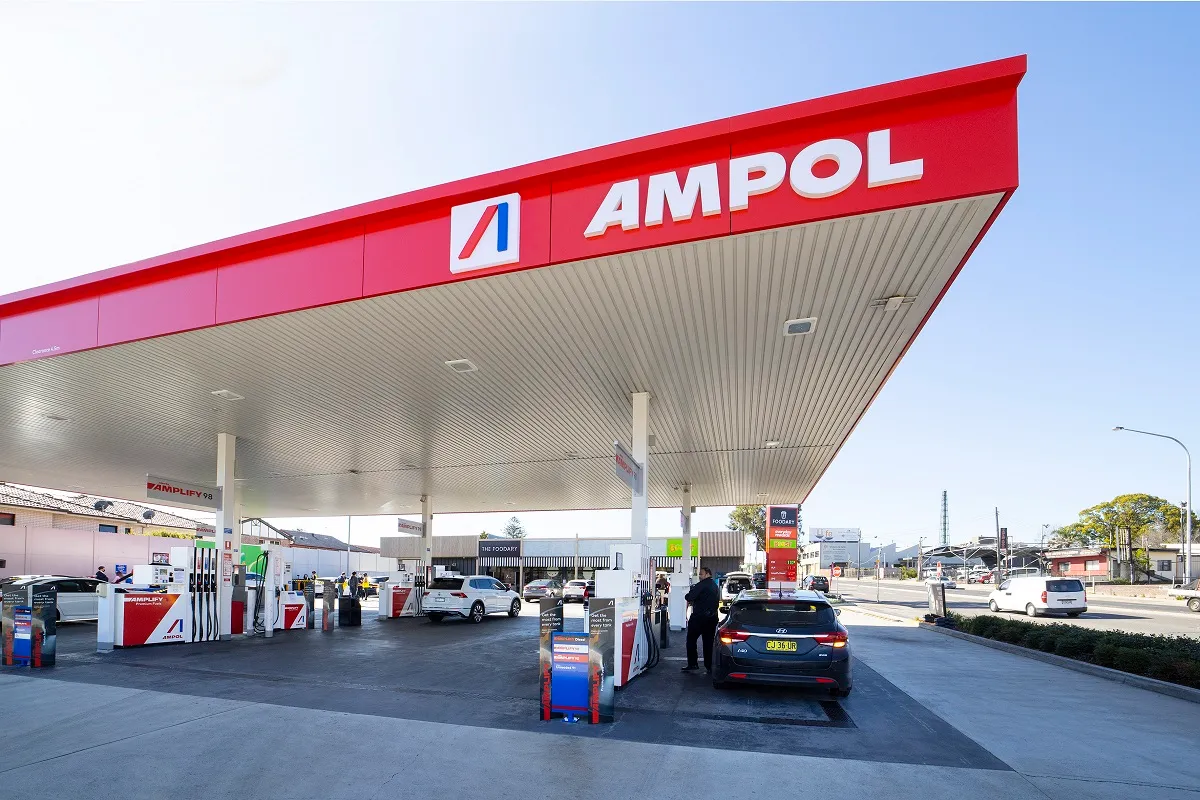
    UK-based EG Group is planning to divest its EG Ampol service station network in Australia. Ampol, EG Group’s wholesale supplier, is considered the most likely purchaser.

    EG Group acquired 540 fuel convenience sites from Woolworths in April 2019 for $1.73 billion. The company is now reportedly looking to sell its Australian division to mitigate losses and withdraw from the marketplace.

    Insiders report that EG Group and its advisors are in confidential discussions with prospective buyers regarding a sale valued at over $1 billion.

    Ampol as the Probable Buyer

    Ampol, EG Group’s wholesale supplier, has surfaced as the possible buyer, given that the service station chain bears its name. Ampol has been delivering fuel to the business under a long-standing commercial agreement dating back to the time when Woolworths was the proprietor.

    Over the years, Ampol has made several acquisitions, including Milemaker in Melbourne, Gull NZ, SeaOil and Z-Energy in New Zealand.

    EG Ampol’s Performance

    As of the end of the previous year, EG Ampol had 517 locations. Its annual sales had fallen 6.4% to $4.24 billion.

    EG Group has shut down marginally profitable or loss-making sites. The retail fuel volumes industry-wide have also witnessed a decline as more drivers shift towards hybrid or electric vehicles.

    Another significant player in the sector is Viva Energy, which acquired fuel and convenience store chain operator OTR Group for $1.22 billion last year.

    Questions & Answers

    What is EG Group planning for its EG Ampol service station network?
    EG Group is reported to be planning to sell its EG Ampol service station network in Australia.

    Who is the most likely purchaser of this network?
    Ampol, EG Group’s wholesale supplier, is considered the most likely purchaser of the network.

    What has been the impact on the retail fuel volumes industry-wide?
    The retail fuel volumes have declined across the industry as more motorists shift towards hybrid or electric vehicles.

  • Fuel Prices Drop as Value-Added Tax Reduction Sparks Savings for Consumers!

    Fuel Prices Drop as Value-Added Tax Reduction Sparks Savings for Consumers!

    Retail fuel prices have seen a reduction as a result of a newly implemented National Assembly resolution on value-added tax.

    Starting Tuesday, the maximum retail price of biofuel E5 RON92 is now set at VND20,530 (approximately US$0.79) per liter, marking a 1.82% decrease from the previous day. It’s a welcome change for consumers now primarily relying on their fuel budgets for summer road trips.

    The price of RON95 fuel has also been adjusted, now capped at VND21,116, reflecting the same reduction of 1.82%. Meanwhile, diesel will be selling for no more than VND19,349 per liter, down 1.95%. The price of mazut has been decreased by 1.82%, bringing it to VND16,955 per kilogram.

    Questions & Answers

    What prompted the recent reduction in fuel prices?
    The reduction is a direct result of a newly enacted National Assembly resolution that lowered value-added tax.

    How much have prices decreased for different types of fuel?
    The maximum retail price for E5 RON92 biofuel dropped by 1.82%, while RON95 remained at the same percentage decrease. Diesel saw a 1.95% reduction, and mazut also decreased by 1.82%.

    When did the new fuel prices take effect?
    The new retail fuel prices took effect on Tuesday following the announcement from the National Assembly.

  • Malaysia to Trim Fuel Subsidies as Prices Remain Southeast Asia’s Most Affordable

    Malaysia to Trim Fuel Subsidies as Prices Remain Southeast Asia’s Most Affordable

    Malaysia is taking a significant step toward fuel subsidy rationalization, with the government aiming to optimize resources for the benefit of lower-income groups. Prime Minister Anwar Ibrahim affirmed this decision on Monday, clarifying that it is designed to protect the majority of Malaysians while targeting affluent individuals and foreigners who account for a striking 40% of total subsidy usage.

    Subsidy Cuts Target Affluent Consumers

    With current fuel prices at an astonishingly low 2.05 ringgit (approximately 50 US cents) per liter for RON95 gasoline, Malaysia boasts some of the most affordable fuel in Southeast Asia—thanks to longstanding government support. However, concerns are bubbling up as the public fears that upcoming subsidy cuts, potentially coming as early as July, could ignite inflation, particularly in a nation where the number of vehicles rivals its population.

    Tax Expansion and Economic Pressure

    This fuel subsidy shift coincides with the government’s plan to widen the Sales and Service Tax (SST) starting July 1, which is expected to strain household budgets further. A new 5% to 10% sales tax will apply to non-essential items like king crab and luxury racing bikes, although essential goods will remain tax-exempt. The SST’s expansion into more sectors, from rentals to private healthcare, has raised alarms among retailers, who are already grappling with rising operating costs.

    Stan Singh, a council member of the Malaysia Retail Chain Association, expressed the challenge faced by businesses: “We can no longer absorb these increasing costs. Eventually, consumers will feel the pinch.” Coupled with a rising minimum wage and new contract-related charges, the pressure to pass costs onto consumers seems inevitable.

    Inflation Forecast and Economic Indicators

    While the economic landscape appears rocky, economists suggest that the broader scope of the SST might not heavily impact average consumers. Analysts from CGS International Research predict a temporary price increase, with inflation expected to rise to 2.2% year-on-year in July before peaking at about 2.4% in September. Despite these projections, the research firm has maintained its full-year Consumer Price Index (CPI) forecast at 2%, attributing stability to subdued global commodity prices, especially oil and palm oil.

    Over time, blanket fuel subsidies have aided Malaysians in managing the cost of living. Still, they have also resulted in overconsumption and smuggling, often favoring wealthier groups. Dr. Mohamad Idham Md Razak, a coordinator at Universiti Teknologi Mara’s Malaysian Academy of SME and Entrepreneurship Development, advocates for this targeted subsidy approach. He believes it improves fiscal efficiency and ensures that those most affected by rising prices receive the necessary support, confusing the issue of cross-border arbitrage.

    In a nutshell, it’s a bold move as Malaysia navigates the fine line between supporting its citizens and managing fiscal responsibility. Let’s just hope the country’s wallet doesn’t feel too light along the way!

    Questions & Answers

    What is the main goal of the fuel subsidy rationalization in Malaysia? The primary goal is to ensure that government resources are targeted toward benefiting lower-income groups while reducing the burden of subsidies on the nation’s budget.

    When are the upcoming subsidy cuts expected to take effect? The cuts may come as early as July, coinciding with the expansion of the Sales and Service Tax (SST).

    How will the expanded SST impact consumers? While the SST aims to generate additional revenue, it may lead to price increases for non-essential items, though essential goods will remain tax-exempt, helping to mitigate the impact on average consumers.

  • Gasoline Prices Hit 10-Week High: What It Means for Consumers and Retailers

    Gasoline Prices Hit 10-Week High: What It Means for Consumers and Retailers

    In a notable shift for consumers, gasoline prices in Vietnam surged to their highest level since early April. This change, marked by a notable uptick in fuel costs, came into effect Thursday afternoon, leaving many to watch their wallets a bit more closely.

    Rising Costs at the Pump

    The widely used RON95 fuel experienced a 1.37% increase, reaching VND19,960 (approximately US$0.77), while the biofuel variant, E5 RON92, rose by 1.04% to VND19,460. Additionally, diesel prices climbed by 1.61%, settling at VND17,700.

    Global Factors at Play

    This latest price spike is attributed to a combination of global dynamics. Regulatory authorities have pointed to a variety of influences impacting the fuel market. Key factors include heightened tensions between the U.S. and Iran regarding nuclear negotiations, a reduction in U.S. crude oil reserves, fluctuations in U.S. tax policies affecting trading partners, and the continuing military conflict in Ukraine. As a result, market prices have seen significant shifts, with RON95 reporting a climb to $79.7 per barrel, while diesel saw an increase to $81.51, marking a substantial impact on the overall cost landscape for consumers and businesses alike.

    As we navigate these changes, one has to wonder: will we ever see a dip in prices again, or are we destined for a rollercoaster ride at the pump?

    Questions & Answers

    What are the new prices for RON95 and E5 RON92 fuels? RON95 is now priced at VND19,960, while E5 RON92 costs VND19,460.

    What global events are influencing these price changes? Factors include rising tensions between the U.S. and Iran, falling U.S. crude oil inventories, and ongoing conflicts in Ukraine.

    How much has diesel fuel increased in price? Diesel saw an increase of 1.61%, bringing its cost to VND17,700.

  • Gas Prices Plummet: What the Dip Means for Your Wallet and the Economy

    Gas Prices Plummet: What the Dip Means for Your Wallet and the Economy

    Vietnam’s gasoline prices experienced a slight dip on Thursday morning, striking a chord of relief for motorists across the nation. In an environment often marked by volatility, this latest trend brings a momentary sigh of ease.

    Fuel Price Movements

    The price for the popular RON95 fuel fell by 0.31%, now standing at VND19,530 (approximately US$0.75) per liter. Similarly, the biofuel E5 RON92 mirrored this drop, decreasing by 0.31% to VND19,120. On a contrasting note, diesel saw an uptick of 1.05%, reaching VND17,400.

    Global Market Influences

    The global fuel market has been rocked over the past week by a medley of influences. Heightened tensions in the Middle East, increasing U.S. crude oil inventories, and an ongoing stalemate in the conflict between Russia and Ukraine have all contributed to the tumult. These factors have resulted in a mixed bag for global fuel prices, where the average price for a barrel of RON95 gasoline dipped 0.4% to $76.7. Meanwhile, diesel prices experienced a rise of 1.3%, reaching $80.15 per barrel.

    For consumers, fluctuations in fuel prices often feel akin to riding a rollercoaster—stomach-churning, yet exhilarating.

    Questions & Answers

    What are the current prices for RON95 and E5 RON92 in Vietnam?
    Currently, RON95 is priced at VND19,530 per liter, while E5 RON92 stands at VND19,120.

    How have global factors affected fuel prices recently?
    Recent months have seen tensions in the Middle East and rising U.S. crude oil inventories influencing global fuel prices, resulting in mixed fluctuations.

    Is diesel also seeing significant price changes?
    Yes, diesel prices have increased by 1.05%, now priced at VND17,400 per liter.

  • Gasoline Prices Rise, Impacting Drivers Across the Nation

    Gasoline Prices Rise, Impacting Drivers Across the Nation

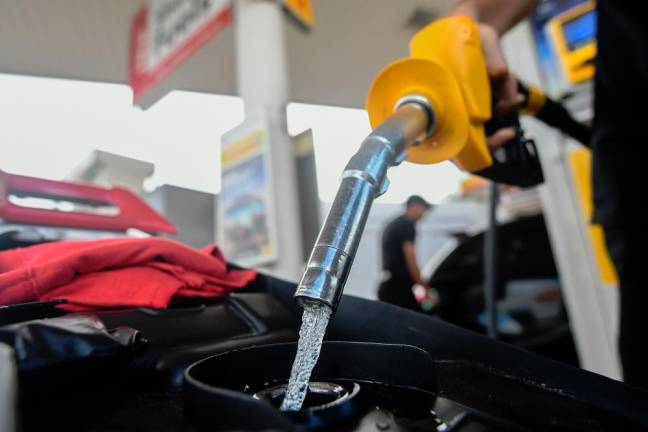
    An employee fills up a vehicle at a fuel station in Ho Chi Minh City, illustrating Vietnam’s evolving fuel landscape. Gasoline and diesel prices saw a modest uptick in Vietnam on Thursday afternoon, following a decline the previous week. This change reflects the dynamic nature of the global fuel market.

    Price Movements

    The widely-used RON95 fuel rose by 2.19%, now priced at VND19,590 (approximately US$0.76) per liter. Meanwhile, the biofuel E5 RON92 also saw an increase of 2.18%, bringing it to VND19,180. Diesel prices surged by 2.5% to reach VND17,220.

    These fluctuations in Vietnam’s fuel prices are tied to a plethora of global factors. Over the past week, a temporary agreement between the U.S. and China aimed at reducing import tariffs has influenced market dynamics. Coupled with increasing tensions in the Middle East, a boost in oil production from OPEC+, and the continuing ramifications of the Russia-Ukraine conflict, the landscape remains anything but stable.

    In the international arena, RON95 climbed to $77 per barrel, while diesel prices also saw a bump, increasing 3% to reach $79.11 per barrel. The interplay of these variables leaves many wondering how prices will continue to evolve.

    As pocketbooks get squeezed globally, it’s clear that even the most routine gas station visit can become a rollercoaster ride of price fluctuations.

    Questions & Answers

    What prompted the recent rise in gasoline and diesel prices in Vietnam?
    The increase is linked to global factors such as tariff agreements between the U.S. and China, tensions in the Middle East, OPEC+ production adjustments, and the ongoing Russia-Ukraine conflict.

    How much have gasoline prices increased recently?
    RON95 prices rose by 2.19% to VND19,590 per liter, while diesel saw a 2.5% increase, now priced at VND17,220.

    What are the current prices on the global market for RON95 and diesel?
    RON95 is currently priced at $77 per barrel, whereas diesel has reached $79.11 per barrel.

  • Gas Prices Climb from 5-Year Low, Impacting Retail Sales

    Gas Prices Climb from 5-Year Low, Impacting Retail Sales

    Gasoline Prices in Vietnam See Modest Recovery After Five-Year Low

    Vietnam’s gasoline prices have marked a slight upward shift, coming off their lowest levels in five years. This change comes as various factors in the global oil market begin to stabilize and reshape consumer trends in fuel purchasing.

    Price Surge for Popular Fuels

    On Thursday afternoon, the fuel landscape in Vietnam experienced an increase:

    • RON95: Up by 4.14%, now priced at VND19,630 per liter.
    • Biofuel E5 RON92: Rose 4% to VND19,230 per liter.
    • Diesel: Increased by 2.88%, reaching VND17,520 per liter.

    These price adjustments reflect surging consumer demand and market corrections following the previous lows.

    Factors Driving the Increase

    The recent fluctuations in gasoline prices can be attributed to multiple catalysts within the global oil market. Key influences include:

    • A recent report from the U.S. Energy Information Administration indicating a rise in U.S. crude oil inventories.
    • Policy changes from the Trump administration affecting goods taxes from trading partners.
    • Anticipated increases in OPEC+ oil production shortly.

    The global benchmark prices have also seen upward movement, with RON95 surging to $77.3 per barrel, up by 5%, while diesel increased by 3% to $80.90 per barrel.

    Impact on the Retail Sector and Consumers

    The recovery in gasoline prices could have significant implications for retail, particularly in sectors relying heavily on transportation and logistics. As fuel prices stabilize, consumers might see a gradual adjustment in product pricing, influencing overall spending behaviors.

    Questions & Answers

    1. What led to the recent increase in gasoline prices in Vietnam? The increase is primarily due to a rise in global oil prices influenced by U.S. crude inventory changes and adjustments in OPEC+ production.
    2. How much have prices changed for popular fuel types in Vietnam? RON95 rose 4.14% to VND19,630, Biofuel E5 RON92 increased 4% to VND19,230, and diesel saw a 2.88% increase to VND17,520.
    3. What might be the impact of rising gasoline prices on consumers and the retail sector Rising gasoline prices could lead to higher transportation costs, potentially resulting in increased prices for consumer goods and altering spending patterns in the retail sector.
  • Fuel prices plunge to 4-year low

    Fuel prices plunge to 4-year low

    Vietnam gasoline price plummeted to its lowest in four years Thursday afternoon.

    The popular fuel RON95 fell 8.2% to VND19,200 (US$0.74) per liter, the lowest rate since May 2021.

    Biofuel E5 RON92 declined by 7.3% to VND18,880.

    Diesel dropped 6.7% to VND17,240.

    Regulators said that the global oil market over the past seven days has been influenced by several factors, including a rise in the U.S.’ crude oil inventories and its announcement of a 10% tariff on all imports.

    These factors pushed fuel prices down, with RON95 decreasing by 11.2% to $75.3 per barrel. Diesel went down by roughly 9% to $79.5.