Retail News CRM

Tag: grab

  • Indonesia to Start Implementing Stricter Regulation for Ride-Hailing Services in February

    Indonesia’s Transportation Minister Budi Karya Sumadi confirmed on Thursday (25/01) the government will start implementing its newly-revised regulation for app-based ride-hailing services in February.

    The new ministerial regulation for services like Uber and Grab was set in October last year. It has been trialled in some major cities including Jakarta, Bandung (West Java), Semarang (Central Java), Surabaya (East Java) and Medan (North Sumatra).

    The new regulation will impose operational area limits for app-based taxis and require their drivers to obtain a public transportation driver’s license. Each driver will also have to join up with a company or a co-operative with at least five members.

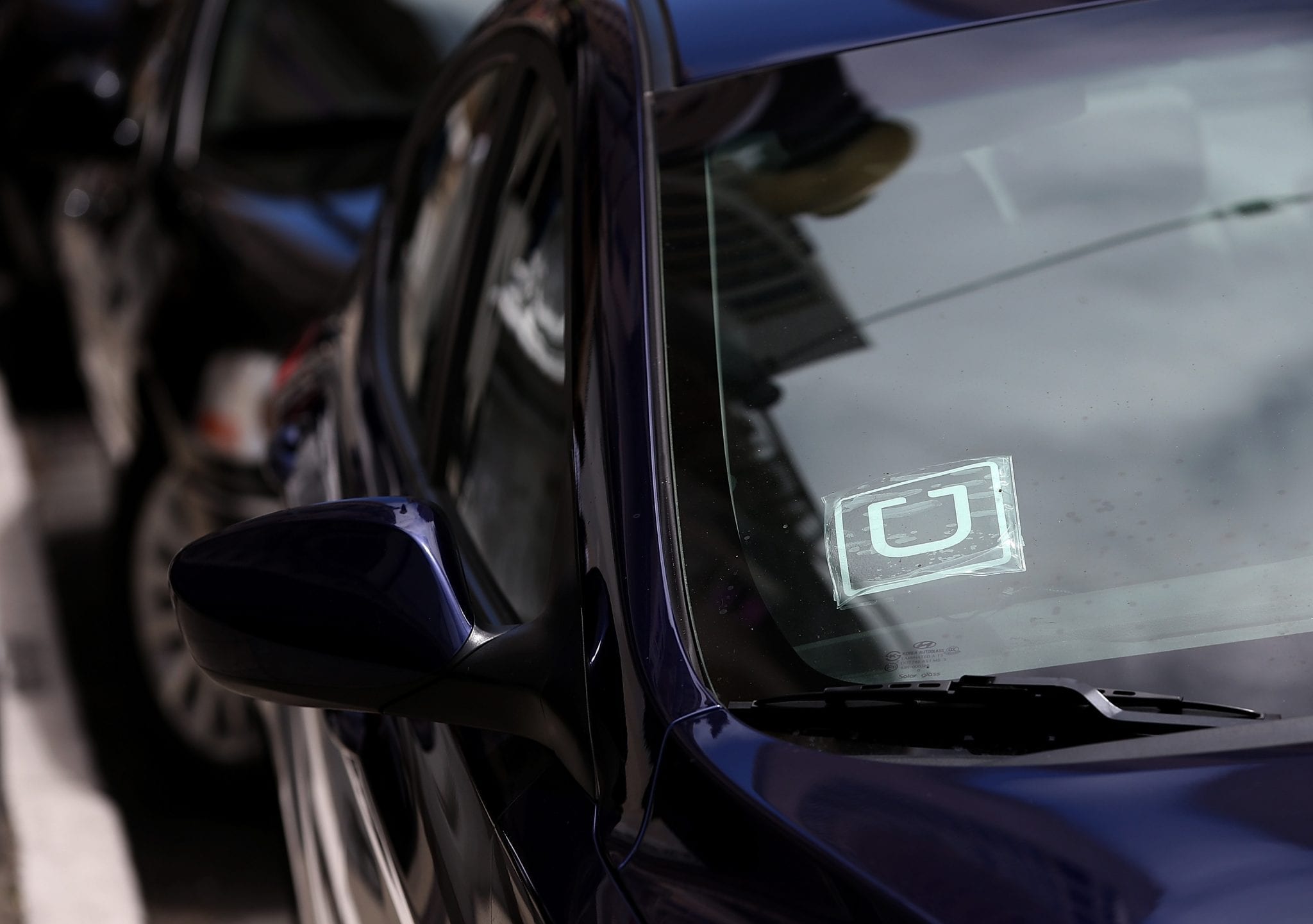
    Cars used by app-based taxis will have to undergo regular test to keep their certificate of roadworthiness, or KIR, and each car should have a sticker saying it is being used as a ride-hailing cab.

    “In England, Uber cars have that kind of sticker, that’s easily seen on the street,” Budi told reporters at Kuningan City Mall in Jakarta on Thursday (25/01).

    “The ultimate goal for this regulation is to provide better safety for passengers,” he said.

    Many online taxi drivers have been complaining about the new regulation since it was first introduced in October.

    According to them, the hardest requirement to meet in the new regulation is re-registering the car as a public transportation vehicle and doing the KIR test regularly.

    “The regulation has to be fair,” Budi said. “It’s for everyone’s benefit. But public safety is our top concern. The regular KIR test, for example, is to make sure the cars are in tip-top shape,” Budi said.

    Last Monday, hundreds of online taxi drivers marched to the Transportation Ministry headquarters in Jakarta.

    The drivers promised a bigger street protest next Monday, Jan. 9, in front of the presidential palace.

    The government has also said it will impose tiered sanctions for drivers who disobey the rules, from suspending their license, fines of up to Rp 500,000 ($37) to a two-month jail sentence.
  • FairPrice and Grab to launch new subscription service

    FairPrice and Grab to launch new subscription service

    A subscription service is being planned by supermarket chain NTUC FairPrice and on-demand transportation/mobile payments platform Grab.

    They have signed a memorandum of understanding to embark on a joint initiative to complement the online-to-offline lifestyle of consumers by offering better value, convenience and access to goods and services.

    “Our strategic partnership with Grab signifies our ongoing efforts to cater to the evolving needs of the community,” says NTUC FairPrice CEO Seah Kian Peng.

    Grab Singapore group CEO/co-founder Anthony Tan says the partnership will offer its customers extra discounts and perks from FairPrice. “With both supermarket and transport services as part of this initiative, we are thrilled to provide greater cost savings and convenience.”

    A survey of more than 1000 customers between 20 and 40 years old has shown that 95 per cent are likely to subscribe to such services, while 56 per cent of respondents indicated they are not subscribed to a service. Groceries (69 per cent) and transport (54 per cent) also top the list of services they want from a subscription service.

    Consumers opting for the Grab/FairPrice subscription service will be offered exclusive savings, rebates and access to services on groceries and transport. It is targeted for launch this first quarter.

  • Vietnam to tighten tax control as it legalizes Grab, Uber after 2-year trial

    Vietnam to tighten tax control as it legalizes Grab, Uber after 2-year trial

    Ride-hailing apps Grab and Uber are to be officially authorized in Vietnam after completing trial runs, but the government has pledged to impose the stricter controls it currently imposes on local transport firms.

    The phone-based transport services have created healthy competition but they need to be regulated, the Ministry of Transport said.

    Director of the ministry’s transport department, Tran Bao Ngoc, said that ride-hailing services will have to register their businesses with investment authorities and the transport ministry and the tax authorities.

    “Tax agencies will keep track of fares so management can be more transparent,” said Ngoc.

    Ho Chi Minh City’s Tax Department is looking to collect more than VND53 billion ($2.34 million) in suspected back taxes from Uber by January 10. The department has asked five commercial banks to help retrieve the money.

    Uber Vietnam, a subsidiary of Uber International Services Holding B.V. based in the Netherlands, filed a lawsuit last month, saying that it is not subject to taxes according to Vietnam’s agreement on double taxation avoidance with the Netherlands.

    But the city court dismissed the lawsuit earlier this week, saying Uber Vietnam does not have the legal status for such action.

    Grab and Uber arrived in 2014 and operate both car and motorbike taxi services. The two services have been running on a trial basis since early 2016, but have been caught up in a war with traditional taxi drivers.

    Many taxi firms have accused Grab and Uber of “unfair competition” that has hindered their businesses and caused thousands of drivers to quit.

    Last September, Hanoi Taxi Association said Uber and Grab had been transferring around $150 million overseas every year to evade taxes. Grab denied the accusation.

  • GrabPay set to launch in Philippines

    GrabPay set to launch in Philippines

    Singapore-based taxi-booking company Grab plans to launch its digital payments platform GrabPay in the Philippines within the next six months.

    It is holding discussions with the central bank about acquiring an e-licence.

    Grab Philippines public affairs manager Leo Emmanuel Gonzales said it plans to roll out GrabPay as a digital payment app for retail purchases. The company currently offers mobile payment services via its top-up service GrabPay Credits and its rewards system GrabRewards.

    It launched GrabPay’s store and restaurant payments feature in Singapore last month after rolling out peer-to-peer fund-transfer services in August.

    Grab claims 63 million users across Southeast Asia.

  • Vietnam’s top taxi firm wheels out motorbike service in the race against online taxi

    Vietnam’s top taxi firm wheels out motorbike service in the race against online taxi

    Major Vietnamese taxi company Mai Linh on Monday launched its own motorbike hailing app in its latest attempt to claw back customers from Uber and Grab, the ride-hailing firms from the U.S. and Malaysia that have been outshining local cab firms.

    The app, Taxi Mai Linh, is now available in Ho Chi Minh City, Hanoi and Da Nang, and has around 5,500 drivers.

    Ho Huy, Mai Linh’s chairman, said what makes his company’s new service different from Uber and Grab is that the fare is kept constant at VND11,000 (48 cents) for the first two kilometers and then drops to VND3,800 per kilometer from the third kilometer onwards.

    Uber and Grab charge their passengers similar rates but raise fares during rush hours and bad weather.

    He also said the company will run a campaign to encourage traditional xe om drivers to join its team in an effort to avoid fights between them and tech-savvy drivers, something that both Grab and Uber have experienced.

    So far, the strategy seems to be working, and many Uber and Grab drivers have shown up at Mai Linh’s door to switch sides.

    “I applied because I heard Mai Linh is offering a better deal for its drivers,” said Cuong, who has worked as a GrabBike driver for over a year.

    “My income has fallen because Grab now deducts up to 20 percent of the fares that drivers receive from passengers instead of 15 percent as before, and more and more people are working as GrabBike drivers, which means more competition,” he said.

    Uber takes a cut of 25 percent from its drivers.

    Mai Linh’s drivers will not have to hand over any of their earnings for the first two months, after which time the company will take a 15 percent share.

    Mai Linh reported that it lost 6,000 employees in the first half of this year, or 20 percent of its total drivers.

    Its business results did not read much better during the same period, with revenue falling more than 5 percent on-year to VND1.72 trillion ($75.8 million).

    In all, Mai Linh suffered a loss of VND47.5 billion from its taxi business, twice as much as last year, the company said.

    Its rival Vinasun, the biggest taxi firm in Vietnam, lost 10,000 employees in the first nine month, and its  revenue in that period only reached 58 percent of the company’s annual target.

    They have both pointed the finger at Uber and Grab, saying the two foreign firms enjoy preferential policies as they are classed as transport software providers which, unlike traditional taxis, are not accountable for passenger and traffic safety.

    In its latest attempt to battle Uber and Grab, Vinasun has rolled out a hailing servicevia Facebook Messenger.

  • Hawkr opens a new branch in Pacific Place

    Hawkr opens a new branch in Pacific Place

    Following its launch in Quarry Bay three months ago, “grab-and-go” eatery Hawkr has expanded to Pacific Place

    Hawkr springs from a partnership between Myanmar-based lifestyle concept Pun+Projects founder and restaurateur Ivan Pun and private-equity professional Jake Astor. Pop-up dining chef Mina Park is in charge of the menu which offers original recipes and fresh ingredients without MSG, artificial flavours or preservatives. It was inspired by Southeast Asian fare from such food destinations as Indonesia, Malaysia, Myanmar, Singapore, Thailand and Vietnam.

    The second store has an expanded menu including Burmese tealeaf, Isaan beef and Song Que salmon salads, Mamak Mee noodles and roasted pork noodle with coriander pesto,plus tealeaf eggs. Hawkr’s bespoke coffee blend is again a feature, with a resident barista.

    Like the Quarry Bay flagship, Hawkr at Pacific Place continues a design theme of neon green signs against a rattan background, and colourful wall pattern inspired by the ikats of Burma and Thailand.

    Staff aprons are hand-dyed in indigo from the Isaan region of Thailand.

    All menu items are half price after 7pm every day, and the team also plans to work with local charities to ensure any leftover food goes to those in need. Catering menus are also available for corporate events, luncheons and parties.

  • Grab, Uber benefit from ‘unfair competition

    Grab, Uber benefit from ‘unfair competition

    Vietnam’s top taxi firms have for months been blaming Uber, Grab for their losses. The two most popular app-based ride-hailing services in Vietnam, Uber and Grab, hold an unfair advantage over local taxi firms, according to reports by the trade and transport ministries.

    “App-based ride-hailing services are not regulated by the same laws as transport providers like local cab firms and motorbike taxis,” said the trade ministry in its report.

    “These app-based services should be regulated the same as transport providers,” the ministry said.

    Both ministries are in favor of a change to the legal framework to guarantee fair competition.

    Uber and Grab currently operate in Vietnam as part of a pilot scheme that also allows for 10 or more app-based ride-hailing services, including the apps launched by Vinasun and Mai Linh. They are treated as providers of transport software which, unlike traditional taxis, excludes them from being accountable for passenger and traffic safety.

    Responding to a proposal in September from the Hanoi Taxi Association, the transport ministry said a complete halt to their operations was unlikely, but the government should hold fast on new approvals for app-based taxis.

    Authorities fear the fast-growing number of app-based taxis will contribute to Hanoi and Ho Chi Minh City’s traffic problems. There are now already over 50,000 Uber and Grab vehicles registered in the two cities.

    In Vietnam, local cab firms like Mai Linh and Vinasun have to pay VAT of 10 percent and corporate income tax of 20 percent, while Grab and Uber only have to pay 3 percent and 2 percent.

    But this July, the tax department found that most local cab firms in Ho Chi Minh City only paid 0.01 to 0.06 percent corporate income tax, while some like Mai Linh Taxi paid less than 3 percent value added tax. The finance ministry subsequently asked the tax department to review these cases for possible tax fraud,

    Meanwhile in September, Ho Chi Minh City’s tax department demanded Uber Vietnam pay over VND10.5 billion ($460,000) in tax arrears.

    “We look forward to new regulations that ensure fair, relevant competition among transport providers,” a Grab Vietnam representative told last month, in response to recent allegations of local cab firms regarding unfair competition.

    Both Uber and Grab have repeatedly told local media they are not violating any laws.

    Vinasun, the biggest taxi firm in Vietnam, has lost 10,000 employees so far this year, and its nine-month revenue only reached 58 percent of the company’s annual target. Rival firm Mai Linh also has lost 6,000 employees this year, 20 percent of its total drivers.

  • SIA, Grab integrate mobile apps

    SIA, Grab integrate mobile apps

    Singapore Airlines (SIA) and Grab have integrated their respective mobile apps to offer enhanced convenience to travelers.

    The partnership will benefit customers who are travelling to the airport in six countries across Southeast Asia – Indonesia, Malaysia, the Philippines, Singapore, Thailand and Vietnam.

    SIA customers can now book Grab rides through the SingaporeAir mobile app. Customers using the app will see an option to book a Grab ride to the airport seven days before their scheduled flight.

    Selecting this option will direct customers to the Grab app, where they can choose to order a Grab ride to the airport on-demand or in advance. The airport will be automatically listed as the destination, so the user simply fills in the pick-up point and desired time.

    The first 5,000 customers will receive GrabPay Credits worth S$10 ($7.38) in their Grab account for bookings made through the SingaporeAir mobile app for Grab rides in Singapore.

    “We are constantly seeking to enhance our SingaporeAir mobile app and KrisFlyer program to ensure that we provide more benefits to our customers,” said Campbell Wilson, SIA SVP for sales and marketing.

    Jason Thompson, head of GrabPay, said that with GrabRewards, a dollar spent on Grab is more valuable than a dollar spent in cash. “By integrating Grab’s and SIA’s loyalty programs, customers can look forward to using their points when they plan for their next holiday.”

  • Grab, Singapore Airlines announce reward points conversion

    Grab, Singapore Airlines announce reward points conversion

    RAB and Singapore Airlines (SIA), in a joint announcement said members of Grab’s GrabRewards programme will be able to convert their GrabRewards points into SIA Krisflyer miles in the near future.

    The announcement was coupled with the launch of a joint booking scheme between the companies.

    Starting Oct 3, passengers can now book rides to airports in six countries on Grab through SIA’s mobile app.

    The service allows passengers to book their Grab trips to airports in Indonesia, Malaysia, the Philippines, Singapore, Thailand and Vietnam, up to seven days before their flight.

    Passengers who open the SingaporeAir mobile app will be directed to the Grab app, with the airport filled in automatically as the destination.

    “We are thrilled to bring more convenience to our customers on the ground and in the air through our new partnership with Grab, while also offering KrisFlyer and GrabRewards members the opportunity to convert points to miles and redeem them for award flights or flight upgrades,” said Campbell Wilson, SIA senior vice-president of sales and marketing.

  • HAWKR launches healthy ‘grab-and-go’ in heart of Quarray Bay

    HAWKR launches healthy ‘grab-and-go’ in heart of Quarray Bay

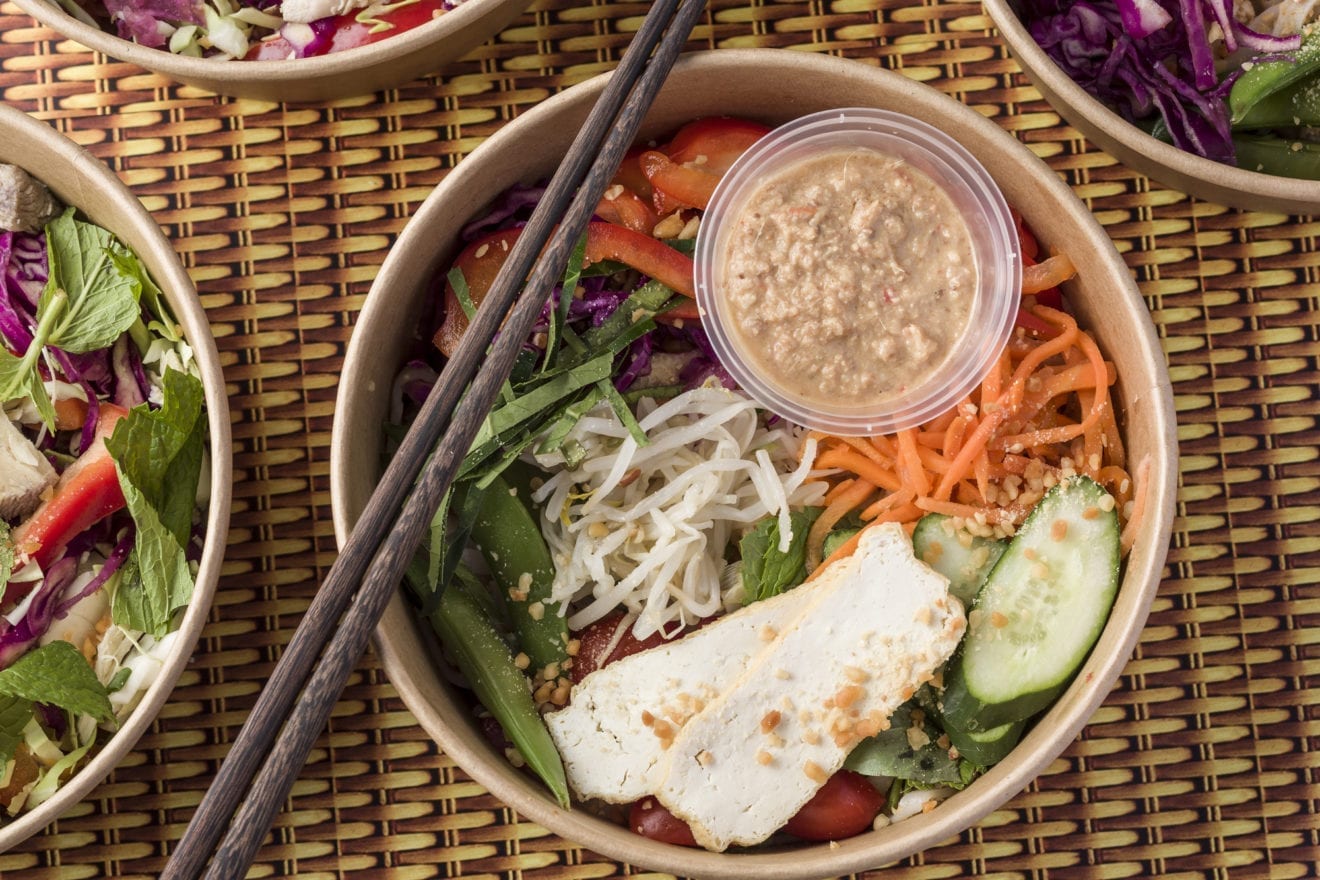
    Using the freshest ingredients and authentic flavours, HAWKR has reconceived Southeast Asian favourites for grab-and-go eating. Curries, soup noodle pots, Vietnamese and Thai baguettes and wraps, healthy breakfasts, bespoke HAWKR juices and tailored, house-blend coffees are on the menu at HAWKR’s new outlet in Quarry Bay.

    Inspired by the hawker food centres of Southeast Asia, serving a variety of regional dishes, HAWKR is newly opened on the ground floor of 36 Hoi Kwong Street, on the corner of Tong Chong Street and opposite the commercial complex of Taikoo Place.

    The contemporary grab-and-go takes on the region’s vibrant food culture from Singapore and Malaysia to Vietnam, Myanmar, Thailand and Indonesia, and brings an innovative and much needed takeaway concept to Hong Kong’s culinary scene.

    In partnership with the founder of Myanmar based lifestyle concept Pun+Projects and restaurateur, Ivan Pun, and consumer private equity professional Jake Astor, pop-up dining and private kitchen chef Mina Park’s nutritious, fresh take on Southeast Asian street food is appealing to time-pressed young professionals and office workers amid the commercial mini-metropolis of Taikoo Place.

    Each dish has been conceived by Mina using the freshest ingredients and HAWKR’s own recipes. No MSG, artificial flavours or preservatives are used in any of the menu items.

    The day-long menu starts with light breakfasts including healthy superfood sabja and chia seed puddings, with fresh fruit, yoghurts and pastries.

    HAWKR is also standing out from the ‘grab-and-go’ crowd by developing its own bespoke coffee blends using only the highest quality beans. Each blend, developed by their resident barista, has an Indonesian coffee base, as well as a mixture of other beans, including Ethiopian and Brazilian.

    HAWKR’s beans are roasted to order by local artisan roaster, Happy Bean Roastery.

    HAWKR avoids MSG and artificial flavouring, and strives to use only ingredients that “we would feel comfortable eating ourselves every day,” said Mina Park.

    “We have worked hard to create dishes that highlight the flavours of Southeast Asia and incorporate the gorgeous herbs and spices that I love.”

  • Transport ministry reconsiders ride-sharing service ban

    Transport ministry reconsiders ride-sharing service ban

    The Ministry of Transport has sought opinions from ministries, localities and transportation associations on its recently imposed ban on app-based taxi ride-sharing service.

    The ministry recently sent a document to the ministries of police, justice, finance, industry and trade, information and communications; authorities of Hanoi, HCM City, Danang, Quang Ninh and Khanh Hoa and the Vietnam auto transport association and Hanoi and HCM City taxi associations.

    In the document, the Ministry of Transport admitted that earlier the ministry requested Grab to stop its ride-sharing service called GrabShare. However, now, the ministry needed to gather the opinion after receiving Grab’s reports on advantages of the GrabShare. Grab has asked for the ministry’s permission for the firm to continue the service.

    The Ministry of Transport noted that the ministry wants to get the opinion about Grab’s proposal and also needs recommendations about fines for the violation in this service.

    Both Grab and Uber launched GrabShare and UberPool respectively in May this year. The services allow drivers to add additional passengers to their journey in addition to the person who makes the original booking. The service can help save customers around 30% compared to the original booking.

    But traditional taxi companies strongly oppose the service, saying that it is illegal and unfair competition.

    In June this year, the Ministry of Transport requested the ban on the ride-sharing service, explaining that under the ministry’s Circular 63, transport firms are only permitted to sign one contract per trip. If a GrabCar driver carries two passengers that agree to share their ride with each other, it means they are fulfilling two separate contracts, and therefore in breach of regulations, the ministry explained.

    The ministry spuriously claimed that sharing a car with a stranger may result in possible risks for passengers, although such practices are very common among traditional taxi companies at airports.

  • Grab and Uber choking out traditional competition

    Grab and Uber choking out traditional competition

    Vietnamese taxi company Vinasun has seen a decrease in revenue and employees in the first half of this year, claiming it due to the unfair competition in terms of price posed by Grab and Uber.

    Traditional taxi companies, especially Vinasun and Mai Linh Group, are losing the fierce competition with Grab and Uber due to the dizzying rise in the number of Grab and Uber cabs.

    According to newswire Vneconomy, in recent years, the number of Uber and Grab taxis has exceeded the figure of Ho Chi Minh City’s taxi planning. Notably, Uber and Grab’s fleet has reached a total of 21,000, while Ho Chi Minh City’s taxi demand is 11,000-12,000 only.

    The oversupply of cabs has not only contributed to traffic jams and losses in tax revenue, but also created difficulties for traditional taxi companies.

    Now Uber and Grab are battling for dominance, while competing with traditional taxi brands at the same time.

    In general, UberX fares range about VND7,000-8,000 per kilometre, while GrabTaxi charges VND9,000-11,000 per kilometre. In spite of this difference in fares, both Uber and GrabTaxi have their own tactics to seize passengers.

    Mai Linh Group and Vinasun lament competition

    Vietnamese taxi company Vinasun has reported an decrease in revenue and employees in the first half of this year.

    According to newswire Vnexpress, in the second quarter of this year, Vinasun’s net revenue reached VND810 billion ($35.75 million) only, a record low since 2014. Besides, the after-tax profit in the second quarter fell 50 per cent on-year to VND16 billion ($706,299). The cumulative figure of the first six months was VND1.9 trillion ($706.29 million), signifying a decrease of 15 per cent on-year.

    Within the first six months of this year, the number of Vinasun’s employees decreased by approximately 8,000 people, to 9,179.

    According to a Vinasun representative, the company’s business results may remain gloomy until the end of this year.

    Regarding Mai Linh Group, according to its 2016 financial report, the company’s revenue was VND3.73 trillion ($164.65 million), equalling an increase of 32.3 per cent on-year. However, its pre-tax profit was VND61.12 billion ($2.74 million), a sharp 62 per cent fall due to increasing financial and management expenditures.

    Besides, Mai Linh claimed that the dizzying growth of the fleets of Grab and Uber makes it increasingly difficult for the company to perform.

    Traditional taxi companies persist

    In early June, Ta Long Hy, deputy general director of Vinasun, said the company would keep pressing litigation against Grab and Uber for unfair competition, a campaign that has recruited many other Vietnamese taxi companies from Hanoi and Ho Chi Minh City.

    Hy said that the company is gathering evidence. Besides, Vinasun would also propose that the government review its price management policies.

    Vinasun is not alone in its claim of unfair competition against Uber.

    In December 2016, as reported by indiatimes.com, the Indian equivalents of Uber, Ola and Meru, have separately urged government agencies to formulate policies which would undercut the ability of US-based Uber to offer steep discounts to passengers and generous incentives to drivers.

    On April 7, as reported by the Guardian, in a ruling that is subject to appeal, a court in Rome upheld a complaint filed by taxi unions and banned Uber because it contributes to unfair competition.

    The court gave Uber ten days to terminate the use of its various phone applications on Italian territory, along with promotion and advertising activities. However, the ban was suspended about a week after it was implemented as the company appealed. On May 26, the ban was officially lifted.

  • Indonesia sets tariff ranges for online car-hailing services

    Indonesia sets tariff ranges for online car-hailing services

    Indonesia set minimum and maximum tariffs for online car-hailing services in a bid to ensure comparable pricing with conventional transport providers and address complaints of undercutting, sending shares of the nation’s top two taxi firms soaring.

    Ride-hailing services such as US group Uber Technologies Inc, Southeast Asia’s Grab and Indonesia’s GO-JEK have heavily subsidised their drivers in Indonesia in order to gain market share in the country of 250 million people, analysts say.

    The transport ministry said in a statement on Sunday that it had set a tariff range for online car-hailing services of 3,500-6,000 rupiah (S$0.35-S$0.62) per kilometre for the islands of Java, Bali and Sumatra.

    For Kalimantan, Sulawesi, Nusa Tenggara, Maluku and Papua, the range is 3,700-6,500 rupiah per kilometre.

    The regulation kicked in on July 1 and will be evaluated in the next six months, the ministry said. “There has to be a balance between conventional and online transport, so that has to be regulated,” Pudji Hartanto Iskandar, director-general of land transport at the ministry, told by phone.

    The news sent shares of Indonesia’s two biggest taxi operators, PT Blue Bird Tbk and PT Express Transindo Utama Tbk, surging on Monday.

    By 0340 GMT, Blue Bird shares jumped as much as 10.7 per cent, while Express gained as much as 4.3 per cent. The broader Jakarta stock exchange was 0.7 per cent higher.

    Drivers of Blue Bird and Express have called for a ban on ride-hailing services, claiming they were subject to less stringent requirements than conventional taxis.

    Uber said in an emailed statement it had yet to receive a copy of Indonesia’s regulations. “However, we remain committed to working with the government to find a path forward that accommodates the interests of riders and driver partners and supports innovation, competition and customer choice,” Uber said.

    Grab said it is ready to cooperate with the transport ministry and to comply with regulations. “After receiving direction from the government, we will review the policy and make the necessary adjustments to ensure that our driver-partners will still earn the best incomes when using the Grab platform,” it said in an email.

    GO-JEK did not provide an immediate comment. Blue Bird and Express did not immediately respond to requests for comment.

  • Vietnam bans new carpooling services from Uber, Grab

    Vietnam bans new carpooling services from Uber, Grab

    The authorities say sharing a car with a stranger comes with risks that passengers should not ignore. It’s yet another bumpy ride for popular ride-hailing services Uber and Grab.

    Their new carpool versions in Vietnam, UberPOOL and GrabShare, have been blocked by the Ministry of Transport, not long after their summer launch.

    Low-cost services that allow drivers to pick up an extra person along the way will create risks for the passenger, the ministry said in a new statement. stopping short of mentioning any such incidents.

    The ban is to protect Vietnamese passengers from what could happen, it said.

    If Uber and Grab disobey the rule, they will be fined VND4-6 million ($175-260) per ride.

    Last month, U.S.-based Uber and Malaysia-based Grab rolled out their carpooling services in Vietnam, promising to help passengers save 30 percent of payments by splitting the costs.

    Uber and Grab entered Vietnam in 2014. Since then, the two have repeatedly made headlines for regulatory issues.

    Exisiting service providers have not been happy. Vinasun and Mai Linh, the two major taxi companies in Vietnam, blame their business difficulties on Uber and Grab, saying the competition has been “unfair” because the foreign firms are not subjected to strict tax rules.

  • Hanoi attempts to manage app-car services like taxis

    Hanoi attempts to manage app-car services like taxis

    Hanoi will manage the operation of app-based taxi service, including Uber and Grab, in a way similar to traditional taxis to guarantee a fair business environment.

    The move followed Hanoi, HCM City and Danang taxi associations petitioning the Ministry of Transport to call for a more equal business environment for taxi services.

    Hanoi People’s Committee have completed a plan on restricting the number of private vehicles for the 2017-2020 period and a vision until 2030 which is expected to be discussed and passed by the municipal people’s council at the meeting of early next month.

    According to the plan, the city will apply more strict management regulations on cars of below nine seats which operate under app-based taxi service in terms of vehicle number, quality and operational scope.

    App-based taxis will be managed in a way similar to traditional firms to ensure equal competition.

    The city’s transport department will check the specific number of Uber and Grab and if the figure exceeds the regulated level, the firms will have to stop operations.

    Uber and Grab taxis are also required to have logo, badge or their own paint colour. Signposts banning Uber, Grab maybe be put up on Hanoi streets.

    The associations called authorities to set the same rules for Uber and Grab.

    According to Do Quoc Binh, Chairman of Hanoi Taxi Association, over the past month, almost of 90 taxi firms in the city urged the association to seek the municipal trade union federation’s approval for their drivers to march through local streets in opposition to Uber and Grab.