Retail News CRM

Tag: grab

  • Taxi firms release apps to compete with Uber and Grab

    Taxi firms release apps to compete with Uber and Grab

    The firms have complained about supposed unfair competition with Uber and Grab. Vinasun said the average wage for drivers had dropped and many drivers had already quit.

    The firms demanded authorities apply measures to ensure fairer competition such as forcing Uber and Grab drivers to use taxi badges.

    Meanwhile, some firms have started to upgrade their technology to attract customers such as Thanh Cong in Hanoi that released a mobile app similar to Uber and Grab. Thanh Cong also allows customers to call for taxis from Facebook.

    They announced a fleet of cars without taxi badges like Uber to carry customers on routes that ban taxis. Thanh Cong said the management charge their drivers need to pay was only half of what Uber and Grab were collecting.

    Other taxi firms have also employed measures to compete in the growing market. Mai Linh, Vinasun and Taxi Group also released apps with similar purposes and functions. SAPA Thale Holding then released their own Uber-like app called APPP Passengers.

    The Ho Chi Minh City Taxi Association previously claimed that traditional taxi firms were being threatened as more personal cars were now in use by Uber and Grab than traditional taxi fleets. It asked the government to reconsider the open policy towards app-based taxi firms.

    “More worryingly, taxi firms have to bear various kinds of taxes including the VAT and corporate income tax. But the Grab and Uber’s taxes are only 4-5% of the traditional firms’,” the association claimed in a written document.

    Ha Huy Quang, deputy director of Hanoi Department of Transport accused Uber and Grab of not following the traffic planning and being opaque in tax duties.

  • Uber, Grab conquer airport taxi market

    Uber, Grab conquer airport taxi market

    Uber launched a service package at the flat price of VND150,000 to carry passengers from any location in the inner city of Hanoi. In HCM City, Grab sometimes has a promotional fee of VND20,000 for trips to the airport.

    “You will have to pay VND130,000 for every trip to the airport with traditional taxi service, while it’ll take you VND70,000 to go with Grab, and sometimes the fee is just VND20,000 when Grab runs sale promotion campaign,” Tin, a passenger said.

    Uber, Grab cars flood airports

    Quang Huy in Cau Giay district, Hanoi said the service fee of VND150,000 set by Uber is ‘very reasonable’ which is much lower than the fee of VND200,000-250,000 he has to pay to traditional taxis.

    “I wonder if Uber gives any support to taxi drivers, so they can charge so little. However, as a customer, I really like this. And Uber’s services are acceptable,” he said.

    However, some passengers complained that it is difficult to catch Uber taxis. Uber drivers tend to refuse to serve passengers, saying that the VND150,000 service fee set by Uber is too low, which cannot bring profit to them.

    Hieu, a driver, said with the fee, drivers pocket VND40,000-50,000 for every trip to the airport after paying for fuel and other expenses. He would rather serve passengers within the city to get more profit.Uber drivers confirmed that they won’t serve passengers at the service fees set by Uber.

    Reporters also tried to hail Uber taxis and all drivers refused to serve when asked to go to Noi Bai Airport.

    Airport taxi firms complain about income 

    Traditional taxi drivers complained that their income has become unstable, though it is now the high season: children are finishing their academic year and people are beginning to travel.

    Quang Truong from Bac Ninh province, an airport taxi driver, said the appearance of Uber and Grab has badly affected his job. He could serve 10 trips a day on the Hanoi – Noi Bai route, but the number has been cut by half.

    However, Truong doesn’t think Uber and Grab drivers have better income.

    “More taxis in the market means higher competition and lower income,” he said.

  • Ride-hailing firm Grab says likely to raise funds in near future

    Ride-hailing firm Grab says likely to raise funds in near future

    In five years, Grab’s network has grown from 40 drivers in one country to over 930,000 across 55 cities in seven countries including Vietnam.

    Ride-hailing firm Grab, Uber Technologies Inc’s largest rival in Southeast Asia, is likely to embark on a round of fundraising as it works to develop new offerings such as financial services, its chief executive told us on Tuesday.

    “I can’t specifically give a time line but I can imagine somewhere in the near future, there probably could be more money coming in. That’s probably quite likely,” Anthony Tan, group chief executive officer and co-founder of Grab, said in an interview after an event to mark the firm’s fifth anniversary.

    In five years, Grab’s network has grown from 40 drivers in one country to over 930,000 across 55 cities in seven countries including Singapore, Indonesia, Vietnam and the Philippines.

    The Singapore-based startup raised $750 million in a funding round in September, which sources said valued the firm at over $3 billion.

    Grab’s current investors include Chinese peer Didi Chuxing, China Investment Corp, Japan’s SoftBank Group Corp and Vertex Ventures Holdings – a subsidiary of Singapore state investor Temasek Holdings (Pte) Ltd.

    Tan also said Grab is spending less on incentives per transaction even as competition with Uber increased after the U.S. firm exited the Chinese market last year.

  • Vietnamese developers reveal latest ride-hailing app

    Vietnamese developers reveal latest ride-hailing app

    The new app will work along the same lines as Uber and Grab, but with better understanding of local travel habits, developers said. A locally developed ride-hailing app was unveiled on Friday in Vietnam, giving travelers yet another option in the rapidly expanding market.

    APPP, developed by Vietnam’s University of Transport Technology with funding from German-based investment company Sapa Thale, will work similarly to Uber and Grab but with a better understanding of local travel habits, its developers said.

    Uber and Grab are both popular services in Vietnam and considered major rivals to traditional taxi companies, which have reported losses due to the competition.

    While the other apps estimate the fare of each trip in advance, APPP allows the customer to negotiate the fare with eight drivers before booking, the developers said at the launch.

    The investor expects a door-opening fare of between VND8,000-8,500 ($0.35-0.38) and for fees to range from VND6,000-6,300 per kilometer.

    Sapa Thale said it has submitted an application to license the service with the transport ministry. No timeframe for a commercial launch has been revealed.

  • Vietnam’s biggest taxi firms blame Uber, Grab for losing business

    Vietnam’s biggest taxi firms blame Uber, Grab for losing business

    The traditional taxi companies describe the competition as ‘harsh’ and ‘unfair’. Vietnam’s major taxi company Mai Linh has reported the worst business in five years while another big player Vinasun projected a 50-percent drop in profit this year, and the two blamed competition with ride-hailing apps.

    Despite arriving late in Vietnam’s taxi market, Uber and Grab have been winning significant footholds for their fare transparency, quality of service and fashionable technology.

    The unlisted Ho Chi Minh City-based Mai Linh said its transport business lost nearly VND84 billion ($3.7 million) last year, after making a profit of VND325 million in 2015.

    The company’s net profit last year, plunged nearly 70 percent in the same period to VND43 billion, the firm’s financial report showed.

    Ho Huy, chairman of the company’s management board, said Uber and Grab were key reasons to have made 2016 a difficult year for Mai Linh and other traditional taxi firms.

    He said the market has seen “harsh competition”, with unfair taxation. Uber, for example, was paying a 3-percent value added tax, while taxi firms said they have to pay a 10-percent VAT and 20 percent corporate income tax. Uber now keeps 20 percent revenue of a ride and sends 80 percent to the driver.

    Huy also blamed Uber and Grab for worsening traffic in Ho Chi Minh City by adding 25,000 cars to the streets in recent years.

    Vinasun, also based in Ho Chi Minh City, said competition with ride-hailing apps has made it lower the profit target for 2017, the third cut in a row.

    Vinasun’s gross profit is now projected at VND205 billion, down 48 percent from 2016, based on the company’s plan to be submitted to the shareholder meeting scheduled late this month.

    But the blaming has received little support from the public, as many people said they were unhappy with poor and unreliable services provided by taxi firms, such as drivers refusing to serve short distance or failing to show up regardless of clients’ booking.

  • Grab Indonesia buys e-commerce startup Kudo

    Grab Indonesia buys e-commerce startup Kudo

    Ride-hailing firm Grab Indonesia has acquired e-commerce startup Kudo for an undisclosed amount, striking its first deal since pledging to invest US$700 million in its largest market.

    Kudo helps consumers without bank accounts to shop online by connecting them with online merchants and other service providers across 500 cities and towns.

    Based in Singapore, Grab says it plans to accelerate the expansion of Kudo’s network while bringing more riders and drivers on to its own platform. The two companies also plan to explore new financial products such as consumer loans and insurance.

    Former payment-processing company Euronet Worldwide executive Jason Thompson has been hired by Grab to head GrabPay. This digital wallet for riders was introduced last year.

    Grab’s Indonesian investment promise entails building its digital payments network over the next four years in a bid to win over the 260 million people in its largest market. The company’s car- and motorcycle-hailing businesses grew more than 600 per cent in Indonesia last year.

    Valued at more than US$3 billion, Grab intends to set aside as much as US$100 million to bankroll early-stage domestic startups in mobile and financial services. It has started establishing research centres in Bangalore, Ho Chi Minh City and Jakarta to complement engineering offices in Beijing, Seattle and Singapore.

  • Kudo to Grab in battle for Indonesian market

    Kudo to Grab in battle for Indonesian market

    South-east Asia’s largest ride-hailing company Grab has bought Indonesian online payment start-up, Kudo, as the company kicks off a battle with rivals Uber and Go-Jek for market share with the first investment of a US$700 million (S$978 million) pledge in its largest market over the next four years.

    Grab did not disclose the value of the deal announced yesterday, but Reuters put the figure at over US$100 million.

    In a statement, Grab said the acquisition “solidifies (its) leadership in digital payments” with Kudo’s team and platform being integrated with its online mobile payment service, GrabPay.

    Founded in 2014, Kudo allows less tech-savvy consumers and those without bank accounts to shop online and pay for bills such as utilities and phone credits through its network of “agents”, who help to make those payments to merchants and suppliers on their behalf.

    It currently has 400,000 “agents” in 500 towns and cities across Indonesia.

    Combining Kudo’s presence in smaller cities and rural areas through these agents, GrabPay’s customer base will provide “millions of people across Indonesia with increased access to convenient cashless payments and new income opportunities, while also unlocking compelling new ways to boost online spending”, Grab’s president Ming Maa said.

    Grab said it plans to support and accelerate the expansion of Kudo’s network of agents while leveraging on its reach to bring in more riders, drivers and GrabPay users onto the Grab platform.

    Kudo also plans to explore opportunities to grow its financial services offering, including insurance and consumer loans. Its chief executive, Mr Albert Lucius, a former analyst at Goldman Sachs and product engineer at Apple, said in the same statement that the acquisition “creates immediate synergies with our existing business”.

    “We are excited to work together to bring the ease and convenience of cashless payments to more Indonesians than ever before,” he added.

    SPH Media Fund, the corporate venture capital arm of Singapore Press Holdings, was among the investors who sold their stake in Kudo. SPH Media Fund first invested in the Indonesia-based e-commerce platform in April 2015 and participated in another funding round in December 2015.

    Singapore-based Grab offers car and motorcycle ride-hailing services in South-east Asian countries such as Singapore, Indonesia, the Philippines, Malaysia, Thailand and Vietnam. Go-Jek is a market leader in motorbike taxi services in Indonesia. Uber remains a small player, introducing motorcycle-taxi services only in April last year.

    Transport analysts in Jakarta told The Straits Times the acquisition illustrates how ride-hailing providers were extending their businesses beyond transportation.

    The rivalry has been particularly intense between Go-Jek and Grab.

    Since its launch in 2015, Go-Jek has been setting itself apart from its two other rivals by diversifying into various services, allowing its customers to buy food and groceries, hire beauticians and masseusses, and book cleaners.

    Mr Yoga Adiwinarto, a director at the Institute of Transportation and Development Policy, said: “Grab doesn’t want to lose out. But since building an e-payment system takes time, the easiest way is to buy a company that has already established itself in this area.”

    “After this, I’m sure there will be huge innovations and Grab will expand into service sectors such as mini-markets and the selling of train tickets and flights too,” he added.

    Dr Ellen Tangkudung, lecturer at the University of Indonesia, noted that customers would only stand to gain from the competition.

  • SM Supermalls teams with Grab

    SM Supermalls teams with Grab

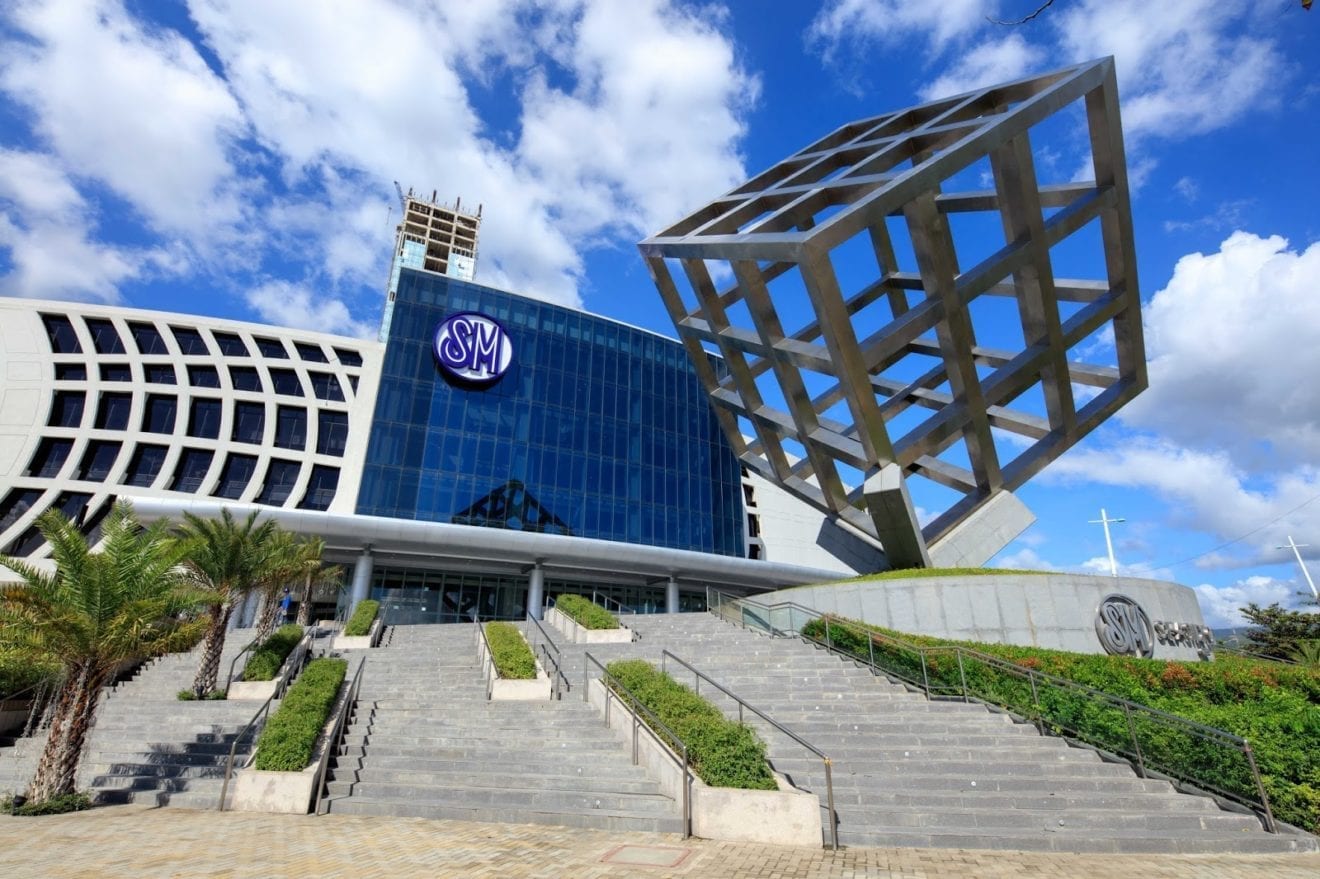
    SM Supermalls has partnered with ride-hailing and multi-service mobile platform Grab in a special promotion.

    Grab

    The companies will offer 10,000 Grab coupons in Metro Manila and such key cities as Bacolod, Cebu, Davao and Iloilo. New users are offered free rides while existing Grab customers receive half-price rides.

    “Our collaboration with Grab marks not just a beginning of a bigger, long-term partnership, but also gives a glimpse of what our customers can expect in the coming months,” says SM Supermalls senior VP for marketing Jonjon San Agustin.

    Grab booths are available at 20 SM Supermalls nationwide, and the coupons are part of a campaign to reward shoppers. The SM Supermalls mobile app is free on Android and iPhone.

  • GoToMalls.com expands to Indonesia

    GoToMalls.com expands to Indonesia

    Singapore-based company DominoPos has launched its proximity marketing and digital media platform GoToMalls.com in Indonesia.

    Offering a geo-located, profile-based smart directory of malls and stores in Indonesia, the website aims to revive offline transactions, “bringing the community’s spirit back to the malls through digital media support”.

    CEO Bruno Zysman says the platform helps offline retail brands publish their own call-to-action campaigns, and promote products or services on a digital platform to their target audience. It lists up to 375 malls and shopping complexes, along with 19,000 stores.

    To ease its entry into the Indonesian market, the site has partnered with telecommunications company PT Indosat, also known as Indosat Ooredoo, and ride-hailing app Grab.

    GoToMalls launched in Singapore in February and plans to expand further internationally.

  • Grab launches carpool services & GrabShare in Indonesia

    Grab launches carpool services & GrabShare in Indonesia

    GRAB on March 13 launched GrabShare in Indonesia, making it the fourth Asean country to offer the service after Singapore, Malaysia, and the Philippines. It was launched in the three countries in December 2016.

    GrabShare will pair two different passenger orders with similar routes in a single trip. This feature allows for a maximum two stops and each passenger may only bring one person with them. There will then be four people in one car and drivers will wait up to three minutes for each passenger at pick-up points.

    “We seek the chance to optimise the use of cars to address Indonesia’s heavy traffic congestion. After it was launched in Singapore, Malaysia, and the Philippines, GrabShare has been effective in attracting more new riders to the Grab platform. We tailored GrabShare to suit drivers and passengers’ needs and made it a seamless and responsive experiences,” says Grab Indonesia managing director Ridzki Kramadibrata.

    Conceptualised, designed and engineered across Grab’s three research and development centres in Singapore, Seattle and Beijing, GrabShare’s matching algorithm ensures that passengers get to their destinations in the shortest possible time.

    The algorithm calculates and determines a match by factoring in the closest available drivers, travel time, overlap of trip routes, detour distance and current traffic conditions before intuitively sequencing pick-ups and drop-offs.

    “Commuters in Jakarta indicated that they are open to carpooling as it offers a more pocket-friendly fare and enables them to socialise with new friends. Drivers had the same feedback and wanted the option of taking short breaks between trips,” adds Ridzki.

    This launch in Indonesia will impact Grab users and drivers. For drivers, GrabShare has the potential to double their income since they will earn the fare for two trips at one go as well as saving on costs and time.

    For passengers, GrabShare will be priced up to 50% cheaper than GrabCar Economy fares and users can bring a friend on the rides at no additional cost, as long as both share the same pick-up and drop-off locations. Grab also provides insurance for drivers and users.

    Local market strategy

    Every city’s traffic conditions and transportation patterns are different. Grab came up with a strategy where all their features have to provide specific solutions for particular cities.

    “At Grab, we embrace and implement a hyperlocal approach to every single aspect of our business. We value the genuine meaning behind local Indonesian words therefore the name of our service, GrabShare, comes from careful consideration as the word ‘share’ holds a deep cultural meaning for Indonesians.

    “Indonesians are known to be very sociable and friendly with smiley greetings and mutual assistance as part of their core values and identity, as well as common etiquette. Through this campaign, we want to rejuvenate this cultural value and evoke the simple joy of sharing stories as well as rides with others,” explains Grab Indonesia marketing director Mediko Azwar.

    GrabShare is currently available in Jakarta, Bogor, Depok, Tangerang and Bekasi.

  • Thai Transport Authority Fines Uber, Grab Drivers

    Thai Transport Authority Fines Uber, Grab Drivers

    When U.S.-based Uber launched in Thailand in 2014, the Department of Land Transport said the company’s drivers were not properly registered or insured, and its payment system did not meet regulations. However, authorities did little to stop the service since it was so popular with tourists and locals.

    But the government is clamping down on the service now, with 23 Uber drivers fined in Bangkok this week alone. Grab drivers have also been fined, though not as many, with drivers caught working for one of apps now having their licenses suspended for up to six months and fined 2,000 baht ($57).

    Authorities are targeting Uber and GrabCar specifically because they are the only two services in Thailand where private car owners can use their own cars to pick up passengers. Uber has a site set up so drivers can sign up and start earning money through the app.

    The Department of Land Transport’s Deputy Director-General Nanthapong Cherdchu said the agency would ask the military government to use an emergency measure to shut down the apps if drivers don’t comply. Many taxi drivers in the country — angry over losing business to the two apps — have even launched their own investigations in an effort to turn Uber and Grab drivers over to the authorities. Uber, however, is hoping they can work with the government and convince them that these ride-hailing services are beneficial to the country.

    “Uber remains committed to creating reliable transportation for everyone,” Uber spokeswoman Amy Kunrojpanya said.

  • Uber & Grab hit roadblock in Da Nang

    Uber & Grab hit roadblock in Da Nang

    In a proposal submitted to the Da Nang Department of Information and Communications, the local Traffic Safety Committee wrote that the unauthorized operations of Uber and Grab could worsen traffic in the city.

    The committee asked the department to have internet providers block access to Uber and Grab apps and also asked police to investigate and punish any individual or organization found to be offering transport services illegally in the city.

    Department Director Mr. Nguyen Quang Thanh confirmed with local media on March 4 that the proposal is under consideration but more time is needed for study before advising the city’s government on a final decision.

    The latest move comes after Da Nang, on November 25, declined to run a pilot car hailing project by Grab. In a statement sent to the Ministry of Transport, Da Nang said Grab’s presence in the city would cause a sharp rise in the number of private cars and taxis, worsening congestion.

    The ministry had earlier that month asked Da Nang, Hanoi, Ho Chi Minh City, the northern province of Quang Ninh and the central province of Khanh Hoa to allow Grab to launch trial operations.

    Mr. Nguyen Tuan Anh, General Manager of Grab Vietnam, told local media the company hopes to meet with Da Nang officials to find a solution to the city’s concerns.

    Meanwhile, a representative from Uber said the company has not received any notice from Da Nang authorities and is actually focusing on Hanoi and Ho Chi Minh City and does not have plans to expand to Da Nang just yet.

    The arrival of Singaporean transport app Uber and the Malaysian-based Grab over the last two years has put traditional taxi drivers, generally made up of men with few resources, under threat.

    Accustomed to negotiating the price with passengers before hitting the road, many motorcycle taxi drivers are unable to compete with the rates offered by these apps or with the convenience of booking the service and knowing the price in advance.

    Although Grab and Uber have recruited thousands of existing taxi drivers for their fleets, many refuse to join because of an unfamiliarity with new technology or simply because they refuse to give a percentage of their income to the companies.

    Last month, Uber had its application to operate on a trial basis rejected for a second time.

    The company applied for a license after local regulators outlawed its smartphone app-based services in November 2015, due mainly to its failure to establish an independent legal entity in Vietnam.

    Market regulators declared that the company behind the ride-sharing service that controls Uber in Vietnam should be held responsible for the app rather than its Vietnamese business unit, which is yet to be recognized as a legal entity by local authorities.

    Transport authorities have also asked Uber Vietnam to make changes to its app by registering itself as licensed ride service provider, apart from existing services such as “consulting and management” and “market research and public opinion polling”.

    GrabTaxi is the only foreign-run transport service allowed to operate in five cities in Vietnam using registered private vehicles between 2016 and 2018.

    Uber, however, has been singled out for providing ride-hailing services without legal permission.

  • Hanoi plans to put taxi-style roof signs on Uber, Grab cars

    Hanoi plans to put taxi-style roof signs on Uber, Grab cars

    Officials in the city are tightening rules on transport services. Popular ride-hailing services Uber and Grab may soon be asked to put signs on their cars as officials in Hanoi are tightening rules on transport companies.

    Officials said some private cars offering transport services are operating without signs or badges.

    Grab, a Malaysia-based company, is the only foreign-run transport service allowed to operate in five cities across Vietnam using registered private vehicles between 2016 and 2018.

    Uber, however, has been singled out for providing ride-hailing services without permission.

    The company has recently had its application to operate on a trial basis rejected for a second time in Vietnam, according to local transport authorities.

    It applied for a license after local regulators outlawed Uber’s smartphone app-based services in November 2015, due mainly to its failure to establish an independent legal entity in Vietnam.

  • Hanoi plans to impose taxi badges on Uber and Grab cars

    Hanoi plans to impose taxi badges on Uber and Grab cars

    The competition between traditional taxis and app-based taxis like Uber and Grab has continued unabated.

    Conventional taxi companies have said they had to meet numerous requirements and pay various taxes and fees which Uber and Grab taxis aren’t required to and that this was unfair.

    In Document 399, the Hanoi’s Department of Transportation said they had gathered opinions from the public and related agencies about the regulations over the operation of vehicles in the city.

    They proposed that all cars for hire with less than nine seats, including Uber and Grab taxi, must have the required badges and follow all regulations that are currently applied to taxis.

    The department said they hoped to get more views before stopping to receive opinions from February 20 to report to the city people’s committee.

    The Ministry of Transport has declined to approve a proposal from Uber Vietnam Company to pilot an IT upgrade for its services because of a lack of authorisation and validation from its parent firm.

    The ministry said it had inspected and dealt with various cars using the Uber app.

    According to the ministry, Uber is registered as the developer so it is not authorised to work as a taxi company.

    The ministry has asked Uber Vietnam to stop working with car owners and the ‘illegal’ operation in Vietnam until it completes all required procedures.

  • Grab rides up Indonesia with $700M investment

    Grab rides up Indonesia with $700M investment

    Grab has announced plans to invest US$700 million in Indonesia over the next four years, as part of efforts to increase its footprint in a market where it has seen growth.

    The Southeast Asian ride-sharing operator said Thursday the new investment would support the Indonesian government’s ambition of becoming the region’s largest digital economy by 2020. It would include plans to set up a research and development (R&D) facility in the capital city of Jakarta, focused on developing technology innovations for the local market.

     Latest news on Asia

    A US$100 million funding initiative also would be introduced to support startups and entrepreneurs keen on driving “financial inclusion” in smaller communities.

    Grab added that its investment followed “a strong year of growth” in the country, with its GrabCar and GrabBike businesses each clocking more than 600 percent growth in 2016. Its range of ride-sharing services were available in several Indonesian cities, including Bali, Bandung, Medan, and Surabaya.

    According to Grab, one in three of its customers in the country used more than one of its services. It said its drivers earned 40 to 70 percent more per hour than the average transport or delivery driver in Indonesia, where it helped generate more than US$260 million in income for its driver partners.

    Indonesia’s Minister of Communication and IT Rudiantara said: “We want all Indonesians to benefit from IT to improve their lives, develop new skills, and build the next wave of global leaders in technology. Grab’s investment to train and hire more ICT professionals and mentor young entrepreneurs will accelerate the growth of Indonesia’s digital economy. This kind of app has to be positioned as a tool to spur and empower people and the economy.”

    Coordinating Minister for Maritime Affairs Luhut Binsar Pandjaitan added that Indonesia’s growth would require the continued development of its infrastructure, including its public transport network. Stressing the role of technology, he said services that tapped data analytics would better enhance the efficiency and reliability of the national transportation infrastructure.

    According to Grab, the R&D facility in Jakarta would hire 150 engineers over the next two years and focus on developing localised services, including algorithms to support new road regulations as well as a bike-pooling service for nearly 1.4 million commuters in the city. Engineers also would be offered training in Grab’s other R&D centres in Singapore, Beijing, and Seattle.

    By pumping up to US$100 million into the investment fund, Grab said it hoped to nurture Indonesian startups and technopreneurs focused on mobile and financial services, with the aim to better serve smaller cities and communities that had yet to experience the digital economy.

    The ride-sharing operator also would be looking to launch mobile services to bolster access to mobile payments across Indonesia, expanding its own mobile payment services through GrabPay Credits.

    This would further build on its announcement last July to extend its partnership with Indonesian consumer services company, Lippo Group, and enable the payment of retail goods and services its mobile app. With more than 50 million customers between the two companies, the new e-payment platform would allow these consumers to tap their mobile phones or the Grab mobile app to pay for goods and services under Lippo’s retail network, which included department stores, hypermarts, cinemas, coffee shops, and e-commerce portals. Nobu Bank also was participating in this initiative.

    Grab currently operated a network of more than 630,000 drivers across the Southeast Asian region.