Tag: hospital

  • Doctors concerned as patients bet their life on TikTok ‘clinic’

    Doctors concerned as patients bet their life on TikTok ‘clinic’

    Two weeks after taking an online “liver cancer cure,” a 37-year-old man was brought back to hospital in a near-terminal state.

    Diagnosed with liver cancer in early 2025, the patient’s doctor had recommended medical treatment combined with palliative care, given the poor prognosis. However, his family declined the advice and opted instead for a treatment advertised on social media.

    The advertisement, on TikTok, promised “a medicine that can destroy tumors and prolong life” at a cost of several tens of millions of dong. Two weeks into this “treatment,” the man was hospitalized with severe liver failure, and all efforts to save him failed.

    “This is an unfortunate case because you bet your health on unverified medical advertisements, and then the disease progresses severely, with no treatment options left,” Dr. Ngo Van Ty of the Hanoi Medical University Hospital’s oncology center says.

    “I was truly heartbroken at seeing the sorrow of the patient’s relatives. But this is an inevitable outcome when the patient turns himself into a victim of baseless promises.”

    According to doctors, this is not an isolated incident. They have seen numerous other cancer patients return to the hospital, often when it is too late, after falling prey to misleading medical claims on social media.

    In one case, a 40-year-old woman with breast cancer stopped her prescribed treatment and followed a regimen she discovered online, drinking papaya leaf juice and asparagus juice to “naturally reduce tumors.”

    Two months later, when her tumor ruptured and the pain became unbearable, she returned to the hospital. But at that stage all doctors could do was provide palliative care, helping her endure her final days with less pain.

    A 47-year-old man with late-stage stomach cancer refused chemotherapy recommended by doctors at K Hospital. Instead, he turned to an online-promoted alkaline water therapy, hoping it would improve his resistance, detoxify his body and shrink his tumor.

    Within three weeks he deteriorated badly and died.

    Dr. Ha Hai Nam, deputy head of the department of abdominal surgery 1, K Hospital, says: “This is the patient’s choice and faith. It is very difficult to convince them if they don’t trust their doctor from the beginning.”

    Cancer is a growing health challenge in Vietnam, with more than 300,000 people currently living with the disease.

    The number of cases has been increasing steadily: There were 182,000 in 2020 with 122,690 of the patients dying.

    The three most common cancers—lung, liver and stomach—have among the highest mortality rates.

    On being diagnosed with cancer, many patients or their families turn to “miracle” treatments they find online, fueled by a combination of fear, despair and misinformation.

    Concerns about chemotherapy’s side effects, fears of tumors spreading during surgery and blind trust in unscientific claims often lead patients away from evidence-based medical care.

    There is no credible medical research supporting the idea that herbal remedies, macrobiotic diets or alkaline foods can cure cancer, doctors say.

    Yet social media, particularly TikTok, has become a fertile ground for unlicensed practitioners to exploit patients’ vulnerabilities.

    In short videos, these “online quacks” often wear white coats to appear credible as they promote unproven methods like fasting or consuming blood-alkalinizing foods to dissolve tumors.

    These videos often get thousands of views and shares, enticing patients to abandon standard treatments in favor of sham remedies that jeopardize their lives.

    While there are no official statistics on how many patients have fallen victim to TikTok-promoted “cures,” cancer hospitals report a troubling rise in their incidence.

    “Most patients only come back to doctors for help when they are past the treatment stage, at the cost of their lives,” Ty says.

    Medical professionals point out that modern medicine offers hope for millions of cancer patients worldwide.

    Data from the U.S. National Cancer Institute shows cancer mortality rates have decreased by nearly 30% since 1991 thanks to advancements in treatment and early screening.

    In Vietnam, early detection and proper treatment have led to cure rates exceeding 90% for thyroid, breast, prostate, and colon cancers.

    “Cancer detected early can be completely cured,” Ty stresses.

    He urges patients to remain clear-headed, trust their doctors and adhere to established treatment protocols.

    Families should remain calm and consult with medical professionals to ensure their loved ones receive the best care available, he adds.

  • Singapore company to buy out Vietnam’s FV Hospital

    Singapore company to buy out Vietnam’s FV Hospital

    Singapore-based Thomson Medical Group has agreed to buy FV Hospital in Ho Chi Minh City for US$381.4 million in what will be Vietnam’s biggest ever healthcare industry deal.

    The company, which has operations in Singapore and Malaysia, said in a press release Wednesday that it would acquire 100% of Far East Medical Vietnam Ltd, which owns the hospital.

    “The acquisition of FV Hospital deepens our commitment to the Southeast Asian healthcare sector, expanding our group’s presence across three of the region’s most important geographies in healthcare,” Kiat Lim, TMG’s executive vice chairman, said.

    FV Hospital provides the group with a strategic foothold in Vietnam and a gateway to future investments in the fast-growing market, he added.

    FV was founded by Dr Jean-Marcel Guillon in 2003 with a group of French physicians.

    Located in District 7, it has evolved into a full-service, one-stop provider of healthcare, including for people from Cambodia.

    It offers over 30 specialties and has over 1,600 staff, who include more than 200 Vietnamese and expatriate doctors.

    It also operates the FV Saigon Clinic in District 1.

    TMG said that the accelerating healthcare demand in Vietnam is fueled by a rising middle class, an aging population and growing expatriate numbers.

    It also sees Vietnam as a potential medical tourism destination, thanks to solid demand from neighboring countries like Cambodia, Laos and Myanmar.

    Thomson Medical Group was established in 1979 and is one of the largest private providers of healthcare services for women and children in Singapore.

  • Mannings opens pharmacies for public hospital medication collection

    Mannings opens pharmacies for public hospital medication collection

    Health-and-beauty retailer Mannings has partnered with seven Hong Kong public hospitals to allow local residents to collect their prescribed medicines at its in-store pharmacies in a significant pivot from their usual role.

    The company says the move is part of its broader Covid-19 initiative to provide peace of mind for its consumers by helping reduce the risk of infection from hospital visits.

    Once patients have their application and prescription confirmed at a specialist out-patient clinic, the consumer can visit a registered pharmacist at a designated Mannings store to request collection.

    Mannings will charge HK$50 for medication collection and provide a consultation to review the patient’s medication history before assigning appointed personnel to collect the medicine from the public hospital to deliver back to the store.

    The seven hospitals are Pamela Youde Nethersole Eastern Hospital, Queen Mary Hospital, United Christian Hospital, Princess Margaret Hospital, Queen Elizabeth Hospital, Prince of Wales Hospital and Tuen Mun Hospital.

    The Mannings service is available only to patients at Specialist Out-Patient Clinics and for their regular medicine only. Refrigerated drugs or other medicines that require special handling are excluded.

  • EESL Partners With Apollo Hospitals To Install Public Charging Stations

    EESL Partners With Apollo Hospitals To Install Public Charging Stations

    Energy Efficiency Services Limited (EESL), a joint venture of PSUs under the Ministry of Power has announced its first partnership with the private sector. The world’s largest public energy services company (ESCO) has signed a 10-year Memorandum of Understanding (MoU) with Apollo Hospitals to install public charging stations across its hospitals in India. The aim is to boost e-mobility across the country and the tie-up will help set-up the charging infrastructure for electric vehicles. Under the MoU, EESL will make the entire upfront investment on specified services and deploy the manpower required for the operation and maintenance of the public charging infrastructure. Meanwhile, Apollo Hospitals will provide the requisite space and power connections for the charging network to EESL.

    Commenting on the announcement, Venkatesh Dwivedi, Director – Projects, EESL said, “Developing a strong supporting infrastructure is vital to build consumer confidence in electric vehicles. Our MoU with Apollo Hospitals reinforces the role of the private sector in achieving the goal of National Electric Mobility Programme. Electric mobility is vital to reducing airborne emissions and enhancing air quality, a cause the healthcare sector can resonate with. We look forward to more such multi-sectoral partnerships to accelerate the adoption of EVs across the country.”

    The move is part of the government’s National Electric Mobility Programme. EESL has commissioned 300 AC and 170 DC chargers across India and has established 55 public operational charging points in Delhi-NCR. The company has also partnered with Urban Local bodies in Hyderabad, Noida, Ahmedabad, Jaipur, Chennai, among other locations, to further penetrate the charging infrastructure.

    EESL procures the electric vehicles and chargers in bulk, which allows the company to source them at significantly discounted rates, lower than the actual market value. This allows the company to carry out operations at competitive project costs, which it says has helped the firm establish a sustainable business model that is affordable for the end consumer.

    With the government aggressive towards the adoption of electric vehicles in India, the charging infrastructure that remains nascent at present has always been a concern. Initiatives like these though will certainly help create enough charging locations to support electric mobility that is just gaining traction in the country.

  • Three hospitals to offer cheaper infant formula

    Three hospitals to offer cheaper infant formula

    Parents may soon find it cheaper to feed their newborn babies with a move by three public hospitals in Singapore to switch to cheaper milk powder. Those who feed their babies with infant formula could find their costs halved when the hospitals offer cheaper ready-to-feed (RTF) brands to infants in hospital from July 1.

    As most parents prefer to stick with the formula their infants had been fed while in hospital, this makes it easier for them to continue with the cheaper brands after their babies leave the hospital.

    The two brands to be offered by the hospitals are Nestle’s Lactogen and Danone’s Dulac. The companies clinched a tender against 10 others to supply the hospitals with RTF formula for a year from July 1, 2018, until the end of June 2019.

    The hospitals that will bulk-buy these brands are Singapore General Hospital (SGH), National University Hospital and KK Women’s and Children’s Hospital.

    The retail prices for Lactogen and Dulac are $2.20 and $2.50 per 100g respectively, much cheaper than the six brands now used at SGH, which cost between $5 and $7.50 per 100g.

    As a result of the bulk procurement, parents would pay between $17.30 and $20.90 per kg of formula if they choose to continue with the same brands after the hospital stay, said the Health Ministry. The prices would be maintained for the duration of the contract.

    The hospitals’ move was announced yesterday by Senior Minister of State for Health Amy Khor. It comes after a furore earlier this year over the high cost of infant formula, with prices of most brands more than doubling over the past decade.

    Under the tender agreement, the retail price of the two brands would not be raised during the year specified in the tender.

    Speaking on the sidelines of a tour of SGH’s maternity and labour wards, Dr Khor said there will be significant savings for parents who need to turn to infant formula.

    Breast milk still best

    She said all infant formulas sold here provide the necessary nutrition for babies. The two that won the tender are not necessarily the cheapest, she said, as one criterion is their ability to provide RTF formula for hospital use.

    Even with cheaper formula, Dr Khor stressed that breastfeeding remains the best option for both mother and baby.

    The proportion of mothers who exclusively breastfed at the time of discharge from the three public hospitals has risen from 76 per cent in 2013 to 86 per cent today, she noted. This was largely due to greater awareness of the benefits of breastfeeding, she added.

    Associate Professor Daisy Chan, a neonatologist at SGH, said breastfeeding lowers the mother’s risk of getting breast and ovarian cancers and helps her return to her previous weight faster.

    For babies, it is the “optimal nutrition, (and ) reduces their risk of getting infections, helps them bond with their mother and is free”, she said. Prof Chan said studies also show that babies who are breastfed have slightly higher intelligence.

    But she noted that some infants do require formula, either because their mothers are not able to breastfeed or are not producing enough milk for the baby.

    SGH uses six RTF brands, which are offered on rotation to babies who need them. It charges parents a standard $1 per feed.

    Ms Nabilla Hashim, 29, whose first child, a girl, was born at SGH on Wednesday, plans to breastfeed her daughter for the first two years.

    But the bank receptionist said she may need to supplement breast milk with formula in future.

    Civil servant Teo Ee Hong, 39, who was at SGH with his wife, Ms Chin Siew Mei, 34, who is expecting their fourth child, said his children took different brands of formula, depending on what they had been given in hospital, until age three or four. He said he was not too bothered by the prices.

  • Smart hospitals to boost cloud spending

    Smart hospitals to boost cloud spending

    Frost & Sullivan predicts that by 2025, 10% of hospitals globally will have completed or be in various stages of implementing smart hospital initiatives.

    The research firm projects significant market growth and billions of dollars in revenues for four key segments, including pharmacy automation, mobile asset tracking, data analytics, and cloud computing.

    Frost forecasts the market opportunity to reach about $11 billion with the data analytics market for smart hospitals reaching revenues of $5.9 billion in 2018. The cloud computing market is expected to hit revenues of $5.1 billion.

    There is currently ambiguity around the term “smart”. Transformational Health Industry Analyst Siddharth Shah says a true smart hospital acknowledges digitization as only the first step, and focuses on three major areas – operational efficiency, clinical excellence, and patient-centricity – with technological advances leveraged for these three areas to derive smart insights.

    “Not every hospital needs to become smart in a single step. Instead, the approach they need to take is to implement smart solutions, one by one, and then allow newer solutions to integrate with existing ones in the journey toward becoming smart,” said Shah.

    “This allows hospitals to implement solutions with limited financial investments, reap rewards and ROI, and then implement the next solution.”

    As for companies, some of the most advanced solution sets are being developed by GE Healthcare for patient flow, including its “Command Center” solution for the Johns Hopkins Hospital. Also noteworthy is the ThoughtWire Ambiant platform, which has customized features, such as the Code Blue events reduction solution developed for Hamilton Health Sciences in Canada.

    IBM is developing and now marketing the “SmartRoom” concept along with the University of Pittsburgh Medical Center. Omnicell has developed pharmacy automation solutions in use by thousands of hospitals and health systems around the world.

    In terms of regional readiness for the adoption of the smart hospital concept, North America leads, followed by Europe and Asia Pacific regarding technological sophistication, regulatory landscape, spending power, and end-user readiness.

    However, the hotspots for current smart hospitals are concentrated in the Asia Pacific region, including Dubai, South Korea, Singapore and Australia, some of which cater to the medical tourism industry as well. Canada and Finland are also hotspots.

    “The two largest challenges obstructing hospitals from achieving the smart hospital vision are interoperability and cybersecurity. To truly achieve a ‘smart’ status by deriving intelligent insights, various devices, systems and networks in the hospital must ‘talk’ to one another in ways that are coherent and complete for a holistic analysis,” observed Shah.

    “Digitization brings in additional vulnerabilities in a hospital for hackers to target, making cybersecurity a challenge.”

  • “Flying eye hospital” Orbis makes stop in Singapore

    “Flying eye hospital” Orbis makes stop in Singapore

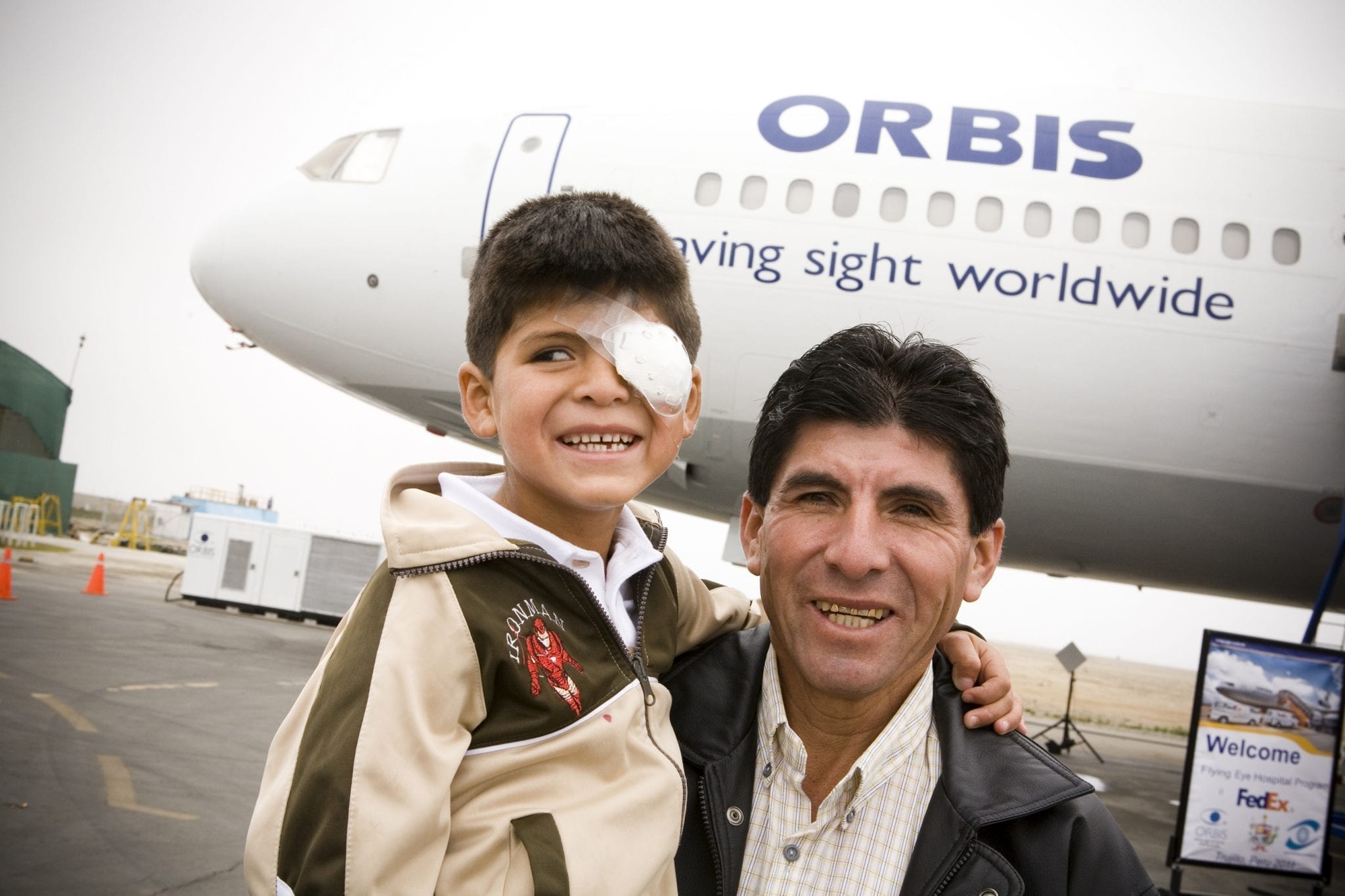
    A plane arrived this week at Paya Lebar Airbase. But it is no ordinary aircraft. The Orbis plane, also known as the world’s only “flying eye hospital”, made its stop in Singapore this week to raise awareness about blindness.

    Orbis, an international non-profit organisation, is primarily a teaching hospital which trains medical professionals from developing nations in eye care. It has so far travelled to 92 countries, providing hands-on training to medical professionals and better access to quality eye care, among other areas.

    It also conducts operations for patients on board the aircraft while medical professionals watch and learn in an adjacent classroom through a live feed.

    Orbis’ visit to Singapore marks the first time that its latest plane model- a third generation MD-10 plane- has landed in the Republic after hundreds of aircraft experts retrofitted it. The whole effort took six years.

    The aircraft, which was open to the media on Friday, boasts a 46-seat classroom, an operating room as well as a patient care and laser treatment room, among other features.

    Apart from having a longer flight range of 6,000 nautical miles which will enable it to fly longer distances, the plane’s live broadcast capabilities will also better train doctors and nurses with live footage in 3D.

    According to the World Health Organisation, 285 million people in the word are visually impaired. Yet, about 80 per cent of these cases are preventable.

    Orbis has, in the last five years, trained over 115,000 doctors and other medical professionals. Over 340,000 eye surgeries have been performed for patients during that same period.

    “The Flying Eye Hospital plays a vital role in Orbis’ mission to bring the world together to fight blindness,” said Mr Paul Forrest, Chief Development Officer of Orbis International.

    “Our launch of this new third-generation Flying Eye Hospital not only marks a new chapter in our shared sight-saving journey, but also brings us a significant step closer to our dream of eliminating avoidable blindness forever.”

    Apart from helping to retrofit the plane, FedEx also announced in June this year that it was renewing its five-year US$5.375 million (S$7.66 million) commitment to Orbis. That includes providing aircraft services and sponsoring fellowships for ophthalmologists to study in leading global eye institutes.

  • Foreign Investors Eye Hospital Business in Indonesia

    Foreign Investors Eye Hospital Business in Indonesia

    Foreign investors have expressed interest in healthcare business investments in Indonesia. Singapore-based Global Growth Markets (GGM) consultant said that India-based hospital group Apollo Hospitals is currently considering to build a telemedicine center and a hospital in Indonesia. In addition, Malaysia-based IIH Healthcare recently announced that they would tap into the Indonesian market as a part of its expansion plan.

    GGM consultant Pet Read revealed that Indonesia’s healthcare industry showed the highest growth after China and India. The number of privately owned hospitals in Indonesia grew by 50 percent per year over the last few years.

    “Currently, the number of hospitals in Indonesia, including government-owned hospitals, is around 1,300,” Mr. Read said in a press release on Thursday, November 3, 2016.

    Other foreign companies interested in developing hospitals in Indonesia included Columbia Asia Health Services Group. The company, based in Kuala Lumpur, has planned to open three hospitals in Semarang.

  • Pertamina to Build Hospital in Saudi Arabia

    Pertamina to Build Hospital in Saudi Arabia

    PT Pertamina through its subsidiary PT Pertamedika that manages Pertamina Central Hospital (RSPP) will soon build a hospital in Saudi Arabia.

    Energy and Mineral Resource Minister Sudirman Said, after the signing of Cilacap factory development contract with Saudi Aramco in Jakarta on Monday, May 23, 2016, said that the state-owned oil company has made a commitment to build a hospital in Saudi Arabia.

    “Indonesia has made a commitment to build an Indonesian hospital in Saudi Arabia,” said Sudirman.

    Sudirman, who facilitates connecting Indonesia and Saudi Arabia investments, admitted that he had partnered with Saudi Arabia’s Health Minister.

    “The plan has now progressed to the signing phase between Indonesia’s Health Minister and Saudi Arabia’s Health Minister,” Sudirman said.

    According to Sudirman, an Indonesian hospital is needed in order to serve Indonesian hajj pilgrims and accommodate the needs of Indonesian workers in Saudi Arabia.

    A day before, Saudi Arabian Prince Alwaleed Bin Talal Bin Abdulaziz Alsaud offered Indonesia a chance to open a hospital in Saudi Arabia during a meeting with President Jokowi.  The Saudi government has already allocated a land for the development.

    Saudi Arabia has also committed to expanding its investment, specifically in the tourism sector and Indonesian financial portfolio.