Retail News CRM

Tag: india

  • Indian fashion chain W expands into footwear

    Indian fashion chain W expands into footwear

    Indian women’s fashion chain W is expanding its business into footwear.

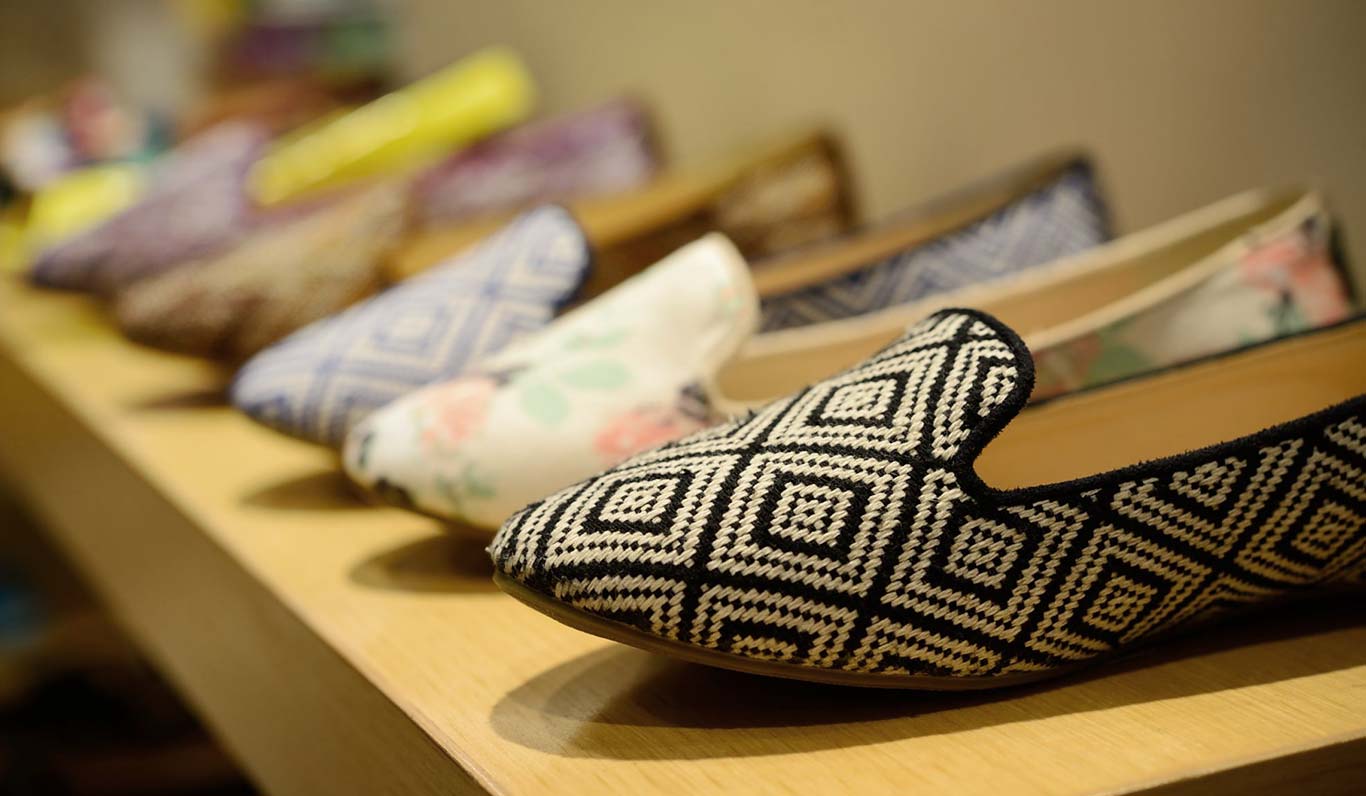
    The firm is preparing to retail shoes in more than 80 W stores across the country, as well as online, offering a collection of various styles of heels and flats. The collection presents classic Western designs with Indian flourishes.

    “At W, we have always strived to give the modern Indian woman a complete wardrobe solution,” said TCNS Clothing MD Anant Daga. “True to our brand promise, we are launching Footapparel, which is an amalgamation of fashion and functionality.

    “Looking at the footwear options available to our customers, we believe finding that one perfect pair which coordinates best, is fashion-forward yet keeps you comfortable throughout the day is a real challenge. This is the space we are addressing with our range of fusion footwear which is both fashionable and comfortable.

    The brand’s shoe designs feature craftwork such as embroidery, braiding, hand weaving, pleating, laser cutwork, quilting, and raffia weaving, amongst others.
  • Apple reverses bulk-order ban and updates on opening plans

    Apple reverses bulk-order ban and updates on opening plans

    US tech giant Apple has reversed restrictions on buying multiple iPhones from its online store imposed last week.

    The restrictions placed a ban on purchasing more than two devices of the same model in multiple international territories, including Mainland China, Hong Kong, Taiwan, and Singapore. That restriction has now been lifted on the purchase of iPhones, although some iPads and Macbooks are still subject to limits.

    A 9to5Mac report conjectured that the ban may have been lifted quickly due to a supply-chain problem caused by the coronavirus epidemic being resolved since, or otherwise that iPhone sales dropped more sharply than the company anticipated.

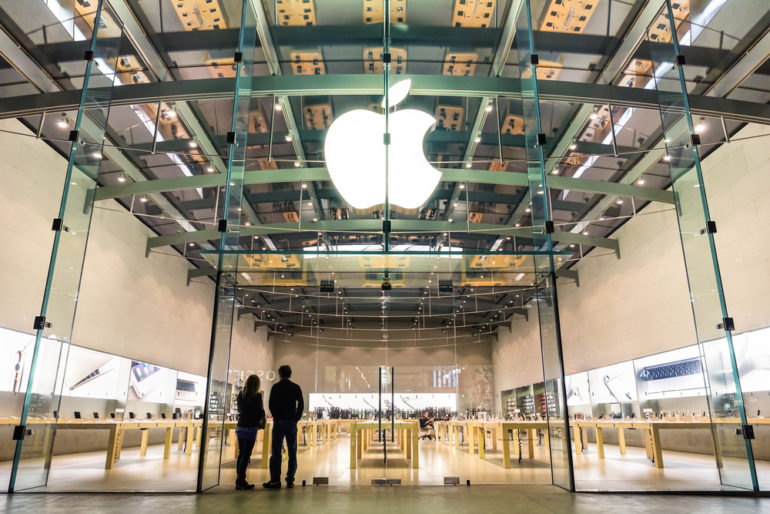
    International Apple store locations remain shuttered during the pandemic in all areas except China. Some stores may be reopened on a staggered basis next month, according to reporting by Bloomberg.

    “At this time, we anticipate some stores may be able to open in the first half of April depending on the conditions in their community,” said the firm’s senior VP of people and retail Deirdre O’Brien.

    “We will provide updates for each store as soon as specific dates are established.”

    Apple was one of the first retailers to shutter stores in the early days of the outbreak.

  • Reliance Retail buys Indian department-store chain

    Reliance Retail buys Indian department-store chain

    Reliance Retail Ventures Limited has bought Indian retailer Shri Kannan Departmental Store for US$20 million.

    “The investment will further strengthen the group’s retail operations and presence in the state of Tamil Nadu and will further enable retail and new commerce initiatives,” said a spokesperson for Reliance.

    With this acquisition, Reliance Retail has started a “new commerce” plan which links producers, traders, small merchants and customers through digital innovation.

    Incorporated in 1999, Shri Kannan Departmental Store operates 29 stores across Coimbatore and nearby areas with a retail area of more than 600,000sqft.

    Reliance Retail is India’s largest retail conglomerate, with more than 4000 stores covering multiple categories. It is a subsidiary of Reliance Industries.

  • BMW India Shuts Down Chennai Plant

    BMW India Shuts Down Chennai Plant

    BMW Group India has announced a number of measures to restrict employee movement during the novel coronavirus pandemic that’s swept the globe. The automaker has announced that it will be closing the Chennai-based manufacturing facility with immediate effect until March 31, 2020, while employees at The National Sales Company and BMW India Financial Services will work from home during this period. Meanwhile, essential services including security, facility management and healthcare will continue to operate. Furthermore, the German auto giant said that it will keep all its showrooms pan India closed during this period, while aftersales and breakdown services will remain functional albeit with limitations.

    A statement from the BMW Group read, “For the well-being of employees in the midst of the COVID-19 pandemic, work from home has been implemented across BMW Group offices in India with immediate effect. Business continuity is to be ensured across all functions while adhering to all government directives and necessary safety measures. Across the BMW, MINI and BMW Motorrad dealerships in India, staff will work from home to offer services to customers. Aftersales and breakdown services staff will operate as per the local government directives and will be functional with limitations. All showrooms are presently closed and will reopen as per local government advisory.”

    Almost all major automakers including Tata Motors, Mahindra, Maruti Suzuki, FCA India and more have announced plant closures amidst the outbreak. In the luxury space as well, Volvo India had already announced that it has asked its employees to work from home, while Audi India has also shut operations with the closure of the Skoda Auto-Volkswagen facilities across India, while Mercedes-Benz too has closed the Chakan facility, near Pune. The auto industry is estimated to bear a loss of ₹ 15,000 crore every day during this phase, which further adds to the sector’s woes since the past year.

  • Malls in India seek government aid during shutdown

    Malls in India seek government aid during shutdown

    Malls in India affected by the coronavirus outbreak are seeking a bailout from the government to compensate for losses incurred during a mandatory shut down period through to March 31.

    The decision has affected both retailers and developers in the various states that have implemented the ban on trading during the affected period in a bid to slow the spread of the virus.

    “A shut down like this effectively means that there are all kinds of expenses to be borne by everybody; malls may not get rent and would not be able to service loans they have taken for creation of the mall, capital expenditure, etc,” said Retailers Association of India CEO Kumar Rajagopalan in a report. “It’s all going to be a big loss. The government needs to look into this and support these entities to save lakhs of jobs”.

    A representative body for malls in India is seeking a lending window, a moratorium on loan repayments or to allow banks to reschedule debt, as well as a potential waiver of property tax and electricity charges.

    Industry experts have expressed skepticism that footfalls will return to normal within the next few months no matter how brief the shutdown period may be, which is likely to impact rental negotiations for retailers, as well as the deferment of new mall openings.

    Observers of the situation have commented that any five-day halt to business will erase the month’s profits for retailers.

    “Mall operators stand to lose 20 to 25 percent of their annual revenue assuming that a rent-free period is given to retailers,” read an ICICI Securities report. “In our view, the most likely scenario is that mall operators and retailers may share the losses given that malls have now become a relationship-based business with the same retailer having presence across malls.”

  • India’s Flipkart applies for food-retailing licence

    India’s Flipkart applies for food-retailing licence

    Indian e-commerce platform Flipkart has filed for approval from regulatory authorities to conduct food retail in the territory.

    According to a Times of India report, The Walmart-owned business has made the application with the Department for Promotion of Industry and Internal Trade with the expectation of a decision within three months.

    The firm registered an online grocery business in October last year under the brand name Flipkart FarmerMart. According to reported figures, the firm will make an investment of ₹2,500 crore (US$338,000) in the venture.

    Initial plans will see the firm delivering customer purchases via local “kirana” stores partnering with the Flipkart business.

    The firm will “focus on deep agri-supply chain investment, especially at the farm gate level and will encourage demand-driven sowing, which will help farmers produce right fruits and vegetables and get paid as per market price”.

    Flipkart competitor Amazon has held a food retail license in India since 2017.

  • Indian retailers boycott Samsung products

    Indian retailers boycott Samsung products

    Indian retailers are staging a three-day nationwide boycott on selling Samsung mobile devices in response to the firm’s exclusive discounting deals with e-commerce operators.

    The All India Mobile Retailers Association (AIMRA) has arranged the Samsung boycott at brick-and-mortar outlets following several rounds of unanswered communications with Samsung country heads extending back over the past five years.

    “We will be showing our protest through digital posts, covering Samsung branding with a black cloth in our stores, and not doing business with Samsung distributors for three days,” said AIMRA president Arvinder Khurana, adding that Samsung representatives had neither met with leaders of their organization nor responded to emails.

    The association has been working to end deep discounting and cashback offers for e-commerce mobile retailers and has drawn guarantees of fair pricing across channels from Vivo, Oppo and Realme.

    Samsung is “adamant and underestimating the power of offline,” said Khurrana. “They are the only brand with M Series exclusive tie-up and now to grab our customers they have also tied up for a cashback offer through Amazon Pay … Such activities have caused great damage to us but the brand does not seem to be interested in working with offline traders.”

    Industry commentators have noted that the move will heavily impact Samsung’s revenues and shake consumer confidence in the brand.

  • H&M looking to open stores in smaller cities in India

    H&M looking to open stores in smaller cities in India

    H&M in India is planning a broad expansion beyond tier I cities into smaller population centers.

    The move is in response to a burgeoning demand for its apparel items in tier II and II cities within the territory and continues the brand’s rapid growth in the Indian market, where it has recently partnered with local e-commerce platforms to strengthen its digital footprint.

    “What is clearly evident from our online platform is we see a great demand in tier II and III cities,” said H&M India country manager Janne Einola. “Tier II cities have been working very well for us… We have been testing in tier III cities like Coimbatore and Jalandhar. And these cities have been promising. This is the reason why I feel confident that we can grow in India. We will open quite a lot in Tier II cities and some of them in Tier 1.”

    H&M in India achieved a 43-per-cent sales growth last financial year despite a significantly slower growth rate during the period. Around half of its current locations within India are in tier II cities, and the firm reportedly takes a far greater proportion of online sales within India than the global average of 24 percent.

    H&M in India is planning to launch its first Indian ethnic wear collection next month in partnership with designer Sabyasachi Mukherjee.

  • India is now H&M’s fastest-growing market

    India is now H&M’s fastest-growing market

    Fast-fashion retail giant H&M has labeled India its fastest-growing emerging market.

    The firm is now targeting ₹2,000 crores (US$280,000) in turnover from the territory, a goal it is likely to achieve by the end of this year despite signs of reduced domestic consumption.

    H&M’s growth in the region has benefitted from both online and offline efforts, along with its collaborations with local partners and the affordability of the brand. It operates 47 outlets in the country, compared to 22 run by rival firm Zara, with financial figures suggesting it may have a leading edge in terms of sales.

    According to a report in the Business Standard, H&M India country head Janne Einola has indicated H&M will target tier-II and -III markets for future store locations. It is expected to launch up to 10 new Indian stores this year, as well as diversify its product range into different sectors such as home furnishings and beauty, as well as traditional Indian clothing.

  • Apple promised first Apple India store next year

    Apple promised first Apple India store next year

    Apple CEO Tim Cook says the first Apple India store is on track to open next year.

    Cook made the announcement in response to a question at the firm’s annual shareholder meeting. The company’s plans for the region have been anticipated for some time, following the relaxation of government regulations affecting foreign retailers, easing the requirements of local sourcing and scrapping a law making it mandatory for brands to open physical stores before launching online.

    Apple has already taken steps to manufacture products in India, partnering with Taiwanese company Wistron to make the iPhone 6S and 7 models there.

    In May last year, the company said it was shortlisting sites for the first Apple India store in the commercial hub of Mumbai.

    “India is a very important market in the long term,” said Apple CEO Tim Cook in a statement earlier last year. “It’s a challenging market in the short term, but we’re learning a lot. We plan on going in there with sort of all of our might.”

    Rushabh Doshi, an analyst at global research firm Canalys said last year that having its own flagship stores might be just what Apple needs to reinforce its premium image.

    “A store just before the next launch will be the perfect timing for Apple to restart its Indian growth story.”

  • India became H&M’s fastest-growing market

    India became H&M’s fastest-growing market

    Fast-fashion retail giant H&M has labeled India as its fastest-growing emerging market.

    The firm is now targeting ₹2,000 crore (US$280,000) in turnover from the territory, a goal it is likely to achieve by the end of this year despite signs of reduced domestic consumption.

    H&M’s growth in the region has benefitted from both online and offline efforts, along with its collaborations with local partners and the affordability of the brand. It operates 47 outlets in the country, compared to 22 run by rival firm Zara, with financial figures suggesting it may have a leading edge in terms of sales.

    According to a report in the Business Standard, H&M India country head Janne Einola has indicated H&M will target tier-II and -III markets for future store locations. It is expected to launch up to 10 new Indian stores this year, as well as diversify its product range into different sectors such as home furnishings and beauty, as well as traditional Indian clothing.

  • Mercedes-Benz India Kick Starts Bookings For The A-Class Limousine

    Mercedes-Benz India Kick Starts Bookings For The A-Class Limousine

    Mercedes-Benz India will soon launch the A-Class Limousine and the company has already kick-started bookings in the country. A part on the new-generation A-Class range, the new sedan version is positioned below the Mercedes-Benz CLA, is currently the most affordable three-pointed star sedan globally. The A-Class Limousine will be available in 3 variants. There’ll be petrol, diesel and an AMG variant on offer. The booking amount for the car has been set at ₹ 2 lakh

    The front sees sharp-looking LED headlamps with eyebrow-like LED daytime running lamps. The Mercedes-Benz A-Class also comes with a set of sporty twin-5-spoke alloy wheels (in sizes 16 to 19 inches), new sleeker ORVMs with integrated LED turn signal lights, a bold waistline, blackened B-pillar, and a sloping roofline. The four-door notchback has the wheelbase of the hatchback (2729 millimeters) as well as the proportions of a compact saloon with short overhangs at the front and rear.

    The A-Class sedan’s cabin is largely identical to its hatchback counterpart with a well-equipped dashboard larger fully-digital instrument cluster paired with a fully-digital infotainment system. The dashboard also features the signature rotor-like chrome air-con vents, a multi-functional new steering wheel, and a smart-looking center console in piano black finish.

    The car will also get the MBUX multimedia system – Mercedes-Benz User Experience – with artificial intelligence, which made its debut in India with the new-gen GLE, which is also here on display. The system comes with features like – Apple CarPlay and Android Auto along with wireless charging areas for your smartphone. Powertrain wise, the A-Class will come with a pair of 2.0-liter petrol and diesel engine and both are BS6 compliant.

  • Metro Cash & Carry India plans more stores

    Metro Cash & Carry India plans more stores

    European wholesale group Metro Cash & Carry will launch five new locations in India by the end of the year.

    The firm is also building its supply partnerships with local small-scale “kirana” stores, and has already secured 2000 partners in Bengaluru, Hyderabad, and Delhi. It has provided these small businesses with specialized point-of-sale devices outfitted with an app to help owners order items from Metro online, as well as generate daily sales and profit reports and track sales data.

    “We believe in helping kiranas in increasing their sell-out,” said Metro Cash & Carry India MD and CEO Arvind Mediratta to ETtech, “not just sell to them because if their sell-out improves, and if they think Metro can help increase their sell-out, we automatically become their preferred supplier.

    “The whole idea is how to make a kirana store smarter in terms of usage of technology, by running business more efficiently, targeting more customers using data analytics, drive more customer traffic and make it more successful and profitable.”

    Metro’s devices allow the kirana stores to trade using e-payment services. The firm is also offering loans for remodelling costs to help modernise these outlets.

    The firm’s five new cash & carry stores will be established in Karnataka, Andhra Pradesh and Telangana. It currently operates 27 such outlets in 17 cities within the territory.

  • Aditya Birla plans to open 500 stores this year

    Aditya Birla plans to open 500 stores this year

    India’s Aditya Birla Fashion and Retail is set to launch more than 500 stores by the end of the year.

    According to reporting in The Economic Times, the firm, which owns the Pantaloons fast-fashion brand, is counting on shifting buyer interest towards its branded clothing despite economic indicators of a lull in consumer spending – and its plans represent three times the company’s normal growth rate. Aditya Birla’s strategy seeks to invigorate spending while speeding up the expansion of exclusive brand outlets, including conversion of some large wholesalers into exclusive brand outlets.

    “The general consumption habits are changing, especially in a digitally connected network, when you are seeing a desire for brands and aspiration for better quality products,” said Aditya Birla MD Ashish Dikshit.

    “There is a very large movement to buy brands and the opportunity in a country like India will keep emerging from new markets.”

    The firm also currently plans to release a line of mass-market traditional ethnic wear, which represents an estimated 30 percent of the overall apparel market in India.

  • Indian Apple reseller Aptronix expands footprint

    Indian Apple reseller Aptronix expands footprint

    Indian Apple reseller Aptronix has launched six new stores in Tamil Nadu and Kerala.

    The firm has opened four locations in Chennai and one each in Coimbatore and Kochi.

    “With these six stores across Chennai,” said company founder Sutinder Singh, “Aptronix will be the largest partner of Apple in Chennai and India. As the largest premium reseller partner of Apple, we are committed to our growth plans and are steadily expanding our path across cities.”

    “We provide easy access for our customers by catering to their diverse Apple product requirements,” said Aptronix director Meghna Singh.

    “Our premium centres will strengthen and boost retail and service networks across the country.”