Retail News CRM

Tag: Innovation

  • Digital innovation driving change in beauty-care retailing

    Digital innovation driving change in beauty-care retailing

    During the recent Singles’ Day sales, more than 1 million orders were placed and processed through voice command via Alibaba’s Tmall Genie.

    What do such observations mean for beauty-care retailing? Besides increasing digital savviness, the adoption of voice command is one of many examples of how the line between the offline and online experience is almost seamless. In the case of beauty-care products for example, we know that the success of the product is dependent on the user’s offline experience and how they share that experience online. As such, it is even more important for retailers to keep up with changing consumer buying preferences and apply new ways of retailing across offline and online platforms. This means giving our consumers the options to buy products online, in-store, or even via voice command on e-commerce channels.

    When we speak about user experience, there is an element of exploration and discovery. The online space levels the playing field and is fast becoming a platform where new brands and products can suddenly skyrocket into prominence as the next best thing in beauty care. Digital innovation is also influencing the way retailers interact with consumers. For example, the concept of the “capsule wardrobe” has influenced the way consumers select their clothes, by choosing quality over fast fashion. In beauty care, we see concepts like “bare-faced”, “self-love”, and Schwarzkopf’s “blonde me” resonating with consumers.

    It is important to share content which is relevant to consumers and to establish close and trusted collaboration with influencers who provide authentic endorsements. Digital innovation is about technological disruption. It is also about leveraging data to steer our growth strategy.

    The future of beauty care retail

    We are already seeing some indications of how the future of beauty-care retailing will look. Today, consumers can check out the products in-store, make online purchases and have the products delivered to their homes.

    Some retailers have begun to use artificial intelligence to cope with the abundance of data, assist with efficient last-mile delivery and cater to product customisation. At Henkel, we have experienced some success using live broadcast for our homecare products in Asia Pacific to raise product awareness and boost sales. Many brands, including our own beauty-care brands like Beology, GlissKur, Schauma Nature Moments, Freshlight and Got2b are available on different channels, such as chain stores, online platforms and specialised online stores.

    We have also developed strategic partnerships with local e-commerce start-up Synagie, for example, which owns the Beautiful.me platform. Synagie manages the go-to-market strategy of Henkel across the entire value chain – from logistics and warehousing to customer management and brand advertising. Through this partnership, we aim to expand our footprint across Southeast Asia, reaching out to 700 million consumers across various touchpoints. We are also working closely with key retailers such as Watsons, Dairy Farm International Holdings and Lazada.
  • Three innovations Asian retailers are prioritising for next year

    Three innovations Asian retailers are prioritising for next year

    New innovative approaches are required for retailers to continue to meet the lofty expectations of today’s connected consumers. Inside Retail’s Top 50 innovative retail leaders ranking is testament to the progress that is being made in Hong Kong. But what does the picture look like for retailers elsewhere in Asia?

    Tofugear has just published its annual Asia Digital Transformation Report, in which 150 Asian retail leaders and executives across the region were surveyed on their innovation plans and motivations. In particular, retailers were asked which customer-facing technologies they were prioritising for next year.

    The good news for shoppers in Asia is that retailers are focusing on innovations that will help enhance the customer experience and offer increased convenience. While technologies such as drone deliveries and in-store robots might generate bigger headlines, these are not (yet) very scalable and their impact on the overall experience is limited.

    So what then are the top three investment priorities for retailers operating in Asia?

    1. Scan-and-go technology using mobile apps

    Gone are the days of using scanning guns in grocery stores. When it comes to scan-and-go technology, retailers are now looking to leverage the device that most people carry around in their pockets: their mobile phone.

    Through mobile native apps, shoppers are able to scan products on their phones as they go around a store. It is clearly a more economical alternative than investing in unmanned store technology and also does not alienate consumers that still value being served by a human.

    These days, scan-and-go does not need to be restricted to supermarkets – it can be relevant in sectors such as fashion as well. Research from Tofugear has shown that the next generation of consumers have a ‘do it yourself’ mindset and are actively seeking out retailers that allow them to take control of the shopping experience.

    2. Same-day deliveries

    In the age of having takeaway food delivered within 30 minutes through apps like Food Panda and Deliveroo, the fulfillment speeds offered by many retailers are not cutting it anymore. Indeed, research by Tofugear has found that slow shipping is a major frustration for a third of Asian consumers.

    It is therefore perhaps not surprising that same-day deliveries are now such a pressing issue for retailers. However, this might be a bigger priority in some markets than others.

    Hong Kong is arguably behind the curve when it comes to fulfillment speeds. Meanwhile, countries like Japan are already accustomed to high demand for same-day deliveries, prompting Amazon to recently set up its own network of Uber-like delivery drivers there to support its ‘Prime Now’ offer.

    3. In-store shoppable screens 

    Being ‘omnichannel’ is about so much more than opening a click-and-collect area in your store. It means empowering shoppers to get their hands on products through any way they desire. Without of stock items being one of the biggest pain points when shopping in stores, it seems a no brainer to launch in-store shoppable screens that allow customers to order from other stores or from the online channel for home delivery.

    To launch these screens, retailers need to be fairly advanced in their digital transformation journeys. They need to have real-time insight into their stock positions across all channels, which then allows each store to effectively become an order and fulfillment hub.

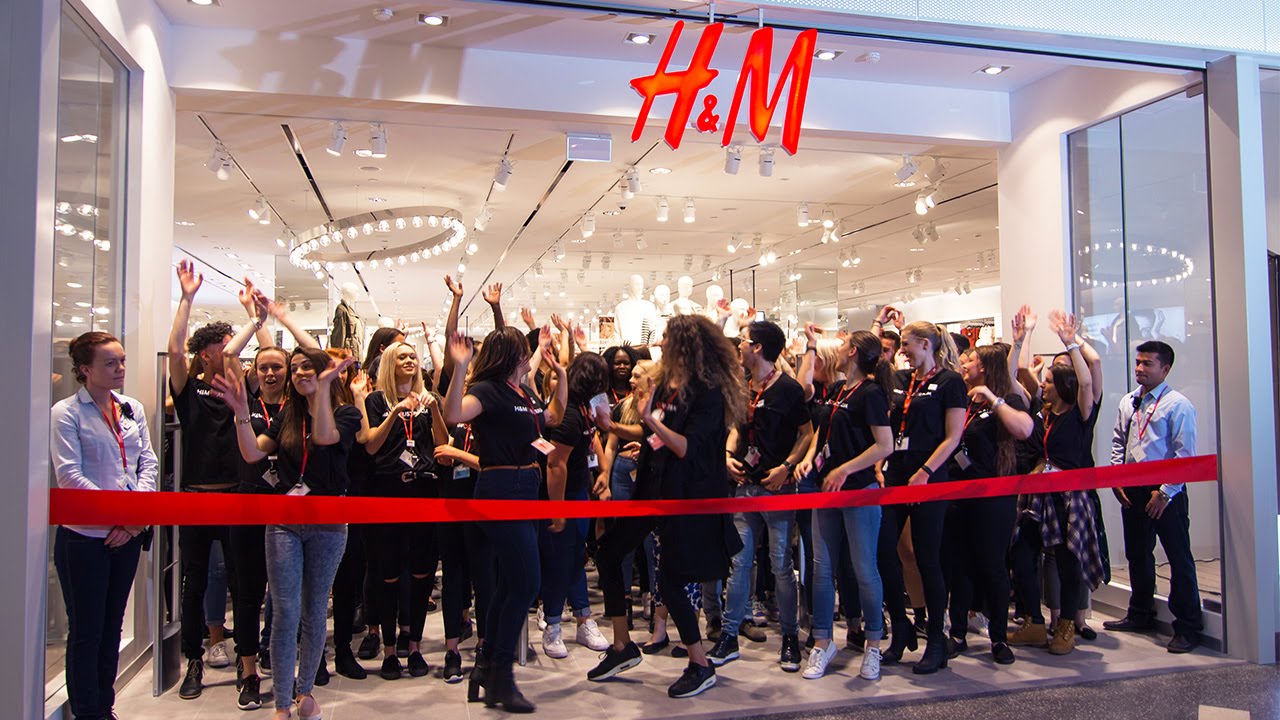
  • H&M Foundation opens Global Change Award for innovation

    H&M Foundation opens Global Change Award for innovation

    Non-profit H&M Foundation has opened the fifth round of its innovation challenge Global Change Award.

    The award is an attempt to move the needle in a space where global consumption of textiles and shoes are on track to increase by 65 percent on 2015 levels by 2030. Organizers believe that creativity and innovation can flip the numbers in the planet’s favor and help enable great transformations in the fashion industry.

    The Global Change Award was initiated in 2015 by the H&M Foundation in collaboration with Accenture and KTH Royal Institute of Technology. It has received more than 14,000 entries from 182 countries. Named the Nobel Prize of fashion, it aims to reduce fashion’s impact on the planet and our living conditions by helping groundbreaking ideas move from tissue-sketch to market.

    Several of the previous winners have on-going co-operations and pilot projects with the industry, and some are already on the market.

    “In its fifth year, the Global Change Award has proven a great gateway for innovators to enter the fashion industry and transform it from the inside,” said H&M Foundation board member and H & M Hennes & Mauritz AB CEO Karl-Johan Persson.

    “We’ve seen previous winners move from sketching table to market – but more importantly, inspiring a new generation of creatives, scientists and entrepreneurs to reduce the planetary impact of the fashion industry through innovation. The next big idea that will change the game can come from anyone anywhere. So, if you have an idea you believe in this is the place to go.”

    Perhaps more important than the €1 million grant, the five winners will embark on a one-year Innovation Accelerator Program taking them to Stockholm, New York, and Hong Kong. In the accelerator, H&M Foundation, Accenture and the KTH Royal Institute of Technology support the winners in taking their ideas to the next level, with guidance on how to scale up quickly and maximize their impact on the industry.

    “This year, we are especially looking for innovations that make it easier for us as consumers to act more sustainably, ideas that use technology and data that make the fashion industry smarter and solutions that facilitate design with a circular intention,” said H&M Foundation innovation lead Erik Bang.

    To win, the innovation should have the potential to make fashion circular and to scale. Other criteria are a novelty, that the idea is economically sustainable, and that the innovation team is committed to making a difference. H&M Foundation initiated the challenge to find innovations that allow major change for the entire industry, and the winner can collaborate with whoever they want. Neither the non-profit H&M Foundation nor H&M Group takes any equity or intellectual property rights in the innovations.

    Submission deadline is October 16, and the five winners are crowned at the Grand Award Ceremony in Stockholm City Hall in April 2020.

    The H&M Foundation was set up by Persson and his family as an independent organization. While it bears the H&M name it is not part of H&M.

  • Procter & Gamble Starts S$12m Innovation Hub in Singapore

    Procter & Gamble Starts S$12m Innovation Hub in Singapore

    Procter & Gamble Singapore has announced a S$12 million innovation investment to create the next billion-dollar corporate concept for Singapore. GrowthWorks was announced on the 5th anniversary of P&G’s Singapore Innovation Center (SgIC). The intrapreneurship hub will focus on new brands, new technologies and new business models. Working in cooperation with P&G Singapore’s $250 million R&D division, P&G hopes that the next big idea in international business will crop up in Singapore.

    Procter & Gamble is a consumer goods company. Their famous brands like Max Factor, Old Spice and Gillette make them sought after by investors, as these brands have reach well outside the US market. Investing in Procter & Gamble takes investors into multi-national economies: the P&G stock was trading at US$108 on the eToro site on May 17, and their expansion into international markets like Singapore has much to do with this. Do we anticipate this news to precipitate further P&G stock price growth?

    Why Singapore?

    So why is American company Procter & Gamble putting so much emphasis on geographically tiny Singapore? For more than a decade, Singapore has topped the World Bank’s list of easiest countries in which to do business. Whether it is starting a business, paying taxes, receiving construction permits, or enforcing contracts, Singapore is generally faster, cheaper, and more efficient than anywhere else.

    According to the World Bank, it takes only 150 days, on average, to resolve a commercial dispute in Singapore. In the United States (7th place on the World Bank’s list), this would take 420 days. In Myanmar (167th place), a similar conflict would drag on for at least three years.

    P&G correctly identifies Singapore as the most fertile ground for new businesses to flourish. If P&G can convince their “intrapreneurs” to innovate on the scale they desire, GrowthWorks really could bring the next international billion-dollar business idea into fruition via Singapore.

    What Will the New GrowthWorks Innovation Center Bring to the Table?

    GrowthWorks won’t be concerned with the full product pipeline like the SgIC. Instead, GrowthWorks is focusing on “home run” ideas, concepts that can be developed elsewhere into innovative products or businesses, without burdening the GrowthWorks team with the difficulties of taking the concepts all the way through the multi-year development cycle.

    GrowthWorks puts an emphasis on “intrapreneurship” – a word referring to employees who act with all the inspiration and drive of entrepreneurs, but for Procter & Gamble, not their own private interests. S$8 million of the initial S$12 million P&G investment will go directly to the intrapreneurs, who will use their funding to conduct lean experiments for early concept development. They will work with relevant Singaporean companies and agencies to establish feasibility and other early conceptual design, with the aim of creating business ideas that are tailor made for the Singaporean marketplace. P&G hopes to see a minimum of S$3 billion-dollar ideas grow out of GrowthWorks.

    GrowthWorks represents one of the first dedicated corporate attempts to incubate new major businesses specifically for the Singaporean market, and it’s P&G’s most significant R&D investment outside of the United States.

    In the big scheme of things, S$12 million isn’t very much money for a multinational to invest in innovation. From our perspective, P&G is simply testing the waters in Singapore, seeing if the small nation can serve as a meaningful strategic outpost for expansion in the wider region.

    If the investment brings returns, P&G will have greater expansion opportunities in Asia than in the US, where it faces relative market saturation. Asia numbers its consumers in the billions, while America numbers them in the tens of millions. America may be the larger and more stable economy, but we can see the value of this strategic play in Singapore.


  • Habitat by Honestbee Flies High with global Retail Innovation

    Habitat by Honestbee Flies High with global Retail Innovation

    Habitat by Honestbee has been voted one of the must-see retail innovations in the world this year. The concept was listed among the top 16 stores to visit in the world by IGD, and Google reports it among the top 10 trending searches in Singapore last year.

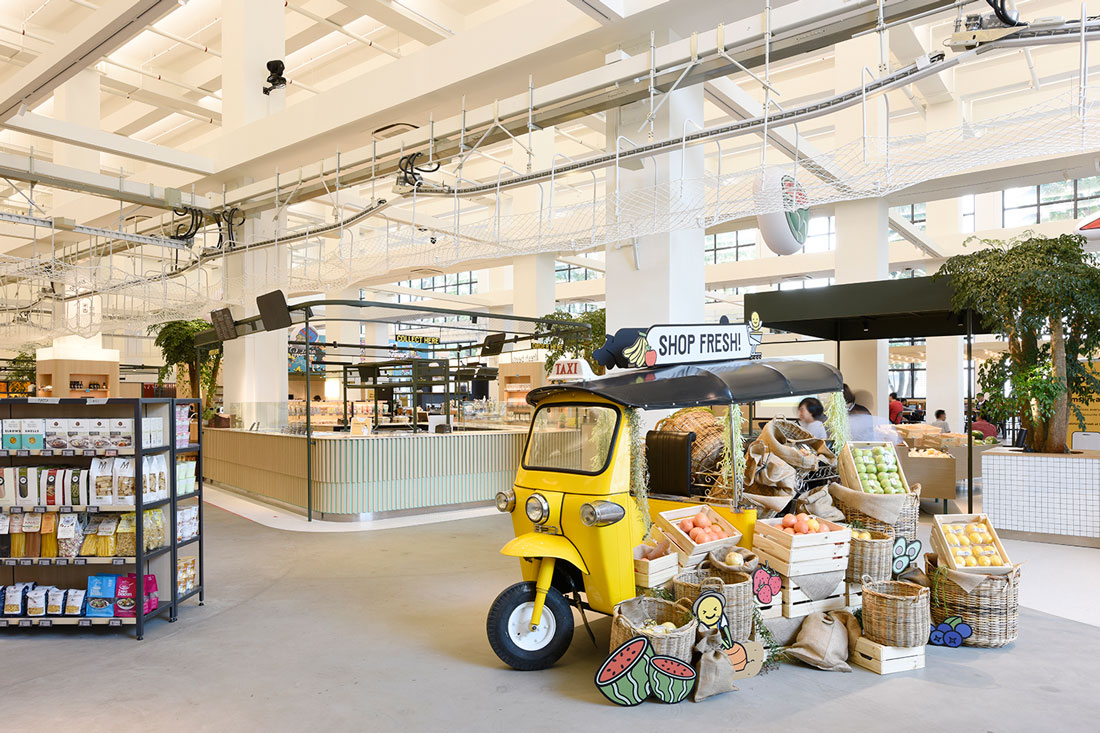
    The 60,000sqft flagship store opened last October, offering more than 20,000 essential and unique food and grocery products.

    The store is billed as the world’s first tech-enabled food-and-grocery concept which uses technology to provide a seamless shopping experience with human interaction.

    According to Honestbee, customers are spending an average of two hours at the store – considerably more time than people spend in a single visit to any other supermarket in Singapore.

    Close to 500,000 people spanning all age groups have visited the store, despite its remote location. The two largest demographic groups of customers fall between the ages of 26 – 35 years old (41 per cent) and 36 – 45 (28 per cent). Two in three customers are family groups who visit the store, attracted by the mix of grocery and dining and its friendly neighbourhood feel.

    “We are pleased to have had such a resounding success since the launch, not just with customers, but also with the business community in retail, property, grocery and F&B,” said Pauline Png, Habitat by Honestbee MD.

    “Strong sales growth pushes us to continue delivering a memorable experience for customers to visit, try new products and return. This tactility that Habitat by Honestbee provides ignites a curiosity for our products, which are also available online.”

    Future growth plans

    Png says Honestbee will soon be providing an option to combine food carts on the app, enabling orders from multiple F&B concepts at the store on one receipt.

    More engaging product information and content will be added in time, along with personalised recommendations.

    “The launch of Habitat by Honestbee has allowed us to elevate our business into an omnichannel platform and work with partners like no other online player can,” said Joel Sng, CEO and founder of Honestbee.

    “Habitat by Honestbee has built on our brand’s promise and expertise in using data to optimise the customer experience.”

    Sng says the company is confident it can expand the concept into other markets.

    “In the second quarter of the year, we will be extending our food-retail leadership in Asia by launching a scalable, multi-concept kitchen and convenience store powered by data.”

    Honestbee started in early 2015 as an online concierge and food-delivery service.

  • Vietnam, Ericsson open IoT Innovation Hub

    Vietnam, Ericsson open IoT Innovation Hub

    The Vietnamese government has launched the first IoT Innovation Hub in the nation, in collaboration with Ericsson.

    The new center aims to provide a platform for IoT research and development, as well as commercial startups and IoT-related education.

    It will allow mobile operators, businesses, students, researchers and startups to develop and test IoT applications, and support the commercialization of IoT-based products.

    At an opening ceremony for the new Innovation hub, Vietnam’s Ministry of Science and Technology signed collaboration agreements with state-owned operators Viettel and VNPT, as well as a number of local universities, to support the operation and development of the center.

    Also at the event, Ericsson president of Vietnam, Myanmar Cambodia and Laos Denis Brunetti said the establishment of the center will help promote collaboration with Vietnam and Sweden in building initial platforms for innovation activities in Vietnam.

  • Shiseido and Alibaba Collaborating to Please Chinese Customers

    Shiseido and Alibaba Collaborating to Please Chinese Customers

    Japanese cosmetics giant Shiseido on Sunday become the world’s first multinational cosmetic company to open a dedicated office in Hangzhou to work with Alibaba Group and co-create products specifically tailored for Chinese consumers.

    The Shiseido and Alibaba office, within walking distance of the Alibaba Xixi headquarters, will house a team of around 20 Shiseido employees by next year. The purpose is to tighten collaboration with Tmall, Alibaba’s B2C marketplace and better position Shiseido in China, said the makeup company’s China region CEO Kentaro Fujiwara.

    “China is Shiseido’s biggest and most-important market [outside of Japan]. By combining Alibaba’s strengths in digitisation and consumer engagement with Shiseido’s world-class standards in research and development, we can create products that can precisely capture the appetite of the Chinese consumer,” he said. “I hope this unprecedented collaboration will pave the way for further innovations for the entire [Shiseido] group.”

    According to Shiseido, its China business saw the fastest acceleration in 2018 with sales growth of 32.3 per cent year-on-year to RMB 11.6 billion (US$1.73 billion). China accounted for 17.4 per cent of Shiseido’s total net sales last year, making it the profitable country market, following its home market Japan. Shiseido said it expects e-commerce to generate 40 per cent of its China sales by next year.

    “Without a doubt, whether it be e-commerce or digital innovation, Alibaba is the leader. Alibaba is one of the most important strategic partners for Shiseido China as well as for the entire group,” said Fujiwara.

    Mike Hu, president of Tmall’s fast-moving consumer goods division, said Shiseido’s leadership position in the industry and its quick adaptation to digital transformation is a common value shared by Alibaba.

    “Our primary mission is to enable others, and we are always eager to work with the world’s leading companies to help them bring their best products into the China market in the most effective and efficient way. This definitely includes Shiseido, a reputable brand that is synonymous with high standard and high quality,” he added.

    “The opening of the Shiseido and Alibaba office represents an important and historical milestone of our long-term collaboration,” Hu said.

    One of Shiseido’s cosmetics brands, Za, opened a Tmall flagship store in September 2011. Since then, 12 flagship shops and 15 major brands also launched on the platform. Fujiwara said there is a plan to bring Shiseido’s mother-and-baby product brand into China later this year via Tmall.

  • Huawei profit grows 25.1% Last Year

    Huawei profit grows 25.1% Last Year

    Huawei has reported a solid 25.1% increase in net profit for 2018 despite the continuing political challenges the vendor has been facing in the US and other markets.

    The Chinese vendor reported a net profit for the year of 59.3 billion yuan ($8.83 billion), on the back of a 19.5% increase in revenue to 721.2 billion yuan.

    Sales in the vendors’ core carrier business declined slightly to 294 billion yuan, but consumer business revenue surged 45.1% from 2017 to reach 348.9 billion yuan as Huawei carved out a higher share of the global smartphone market.

    Enterprise revenue also grew 23.8% to 74.4 billion yuan, due to demand for the company’s cloud, big data, AI and IoT solutions.

    Commenting on the results, Huawei rotating chairman Guo Ping appeared confident that the company can weather the impact of decisions by regulators in markets including the US, Australia and New Zealand  to restrict the vendor from providing equipment to segments of their respective markets over national security concerns.

    “Through heavy, consistent investment in 5G innovation, alongside large-scale commercial deployment, Huawei is committed to building the world’s best network connections,” he said.

    “Throughout this process, Huawei will continue to strictly comply with all relevant standards to build secure, trustworthy, and high-quality products. As we work towards this goal, we have been explicitly clear: Cyber security and user privacy protection are at the absolute top of our agenda.”

    He added that the company is “confident that the companies that choose to work with Huawei will be the most competitive in the 5G era, and countries that choose to work with Huawei will gain an advantage for the next wave of growth in the digital economy.”

  • Razer launches country HQ in Malaysia, looks to groom next gen tech talent

    Razer launches country HQ in Malaysia, looks to groom next gen tech talent

    Shortly after it announced the construction of a new Southeast Asia headquarters, Razer has unveiled its new country headquarters in Malaysia which will house over 280 employees. The investment strengthens Malaysia as Razer’s regional center of fintech innovation, e-sports excellence and talent development.

    Razer aims to position itself as a fintech leader in Malaysia, with one of its initiatives being a partnership with property development company UOA Group to digitise and integrate its carpark payment system into the Razer Pay app. Upon completion, carpark users can settle their parking fees using the Razer Pay app without waiting in queues. It is also working with merchants in Bangsar South to accept Razer Pay

    As part of its e-sports initiatives, Razer will share its expertise in the field with the Malaysian gaming community. This includes coordinating with industry partners to drive gaming events in the country, bringing the gaming community together and looking to support Team Malaysia for esports at SEA Games 2019.

    Razer will also work with the government and industry partners to develop the next generation of tech talent in Malaysia. It will collaborate with institutes of higher learning, provide training and mentorship programs and offer exchange programs across the regional Razer offices.

    The world now demands a high level of innovative thinking and entrepreneurial mindsets, and Razer will help nurture the future technology leaders of Malaysia.

    “Razer will be investing in Malaysia as a hub for our fintech efforts in Southeast Asia,” says Min-Liang Tan, co-founder and CEO of Razer. “It is the first country in the world to be ready for Razer Pay, and we see the Razer Malaysia office as a natural springboard for our fintech efforts in the region.”

    Last year, Razer launched its e-wallet app for youth and Millennials in Malaysia and claimed to have signed up 500,000 users in less than a week. This month, Razer Pay has been expanded with major new features such as in-app coupons, instant messaging, and an enhanced e-wallet experience.

    Razer has collaborated with Malaysia’s household brands to bring exciting offers to consumers. 7-Eleven is offering RM5 coupons and Kenny Rogers Roasters will offer RM10 coupons to Razer Pay users. U Mobile will also organize weekly contests with prizes such as the Razer Phone 2. Merchants operating in Bangsar South will also start accepting Razer Pay. These merchants will also begin to offer rewards programs enabled by Razer Pay, such as coupons and flash sales to help customers save time and money.

  • Vietnam to establish National Innovation Centre

    Vietnam to establish National Innovation Centre

    The Vietnamese government will tomorrow formally launch a project to establish a National Innovation Centre in Hanoi to help lay the groundwork for Vietnam to capitalize on the Industry 4.0 era.

    The project is set to break ground later this year and could be ready for operation by next year. It will be developed over a three year period.

    The NIC aims to lure 40 large technology companies, as well as 150 startups and SMEs and 15 venture investment funds, the Ministry of Information and Communication announced.

    It will initially focus on priority areas including network security, digital content and smart manufacturing and smart city technologies.

    The draft plan for the project stipulates the construction on a 23 hectare area of Hoa Lac Hi-Tech park, and calls for total investment of 1.9 trillion dong ($81.7 million). The project forms part of the

    The NIC is a part of the Ministry of Planning and Investment’s Vietnam Innovation Network initiative, and if the project is successful, the government plans to establish more such centers across Vietnam.

  • Convenience drives Chinese smart-home market

    Convenience drives Chinese smart-home market

    New research from market intelligence agency Mintel has suggested that convenience will drive the future of the Chinese smart-home market. However, affordability is the biggest barrier to purchasing, in an environment where today’s Chinese consumers are growing increasingly familiar with smart home devices. According to Mintel, as many as 68 per cent of urban Chinese consumers who have purchased or are interested in smart-home devices say that convenience is a primary reason for their interest. Meanwhile, 60 per cent attribute their interest in smart-home devices to trying new technology and half because smart home devices make them feel more relaxed at home.

    “Chinese consumers are now increasingly knowledgeable about how smart-home appliances can help to simplify daily lives,” said Mintel China research analyst Kaye Huang. “Convenience as well as an interest in trying new technology are big reasons for Chinese consumers to purchase smart-home devices. Parents are showing more interest in smart-home devices than those without children; which is likely to be attributed to how the devices can help parents save time and effort. On the flip side, price, more so than privacy, is what is keeping Chinese consumers from purchasing these devices. This indicates that companies in the smart-home market need to put more effort into communicating why these products are value for money.”

    Meanwhile, Mintel research reveals that automatic adjustment to environmental changes is a big opportunity for players in the smart home devices market; more than half of urban Chinese consumers think that this function is a necessity.

    “What will stand out in the smart-home market is the ‘automatic adjustment of parameters’ which enables smart-home devices to automatically respond to environmental changes, such as temperature and humidity. Today’s Chinese consumers have higher expectations on their living conditions and automation is an important part of making the living environment ‘smarter’,” said Huang.

    “Voice control has been a popular area of development in recent years especially since the industry believes that it could be the next generation of user interaction,” continued Huang. “Yet, our research finds that voice control, while widely-known, is a less-used smart home function. While playing music and asking for general information are two main functions that Chinese consumers are using for voice control, in reality this only counts for a handful of consumers, suggesting consumers’ habit of using voice control is far from being firmly established. In the future, brands can look at rolling out strategies and initiatives to instil the habit of using voice control among consumers in China.”

  • LG skips foldables, opts for two screens instead

    LG skips foldables, opts for two screens instead

    LG Electronics launched the V50 ThinQ on the eve of the MWC 2019 in Barcelona on Sunday, presenting its vision of how the much-hyped 5G network can take a mobile device’s multimedia experience to the next level. The V50 ThinQ is the tech giant’s first 5G smartphone, a direct competitor to Samsung Electronics’ Galaxy Fold and Huawei’s Mate X, both of which are equipped with foldable screens.

    Rather than a foldable screen, LG Electronics has opted for a secondary detachable 6.2-inch screen, slightly smaller than the main 6.4-inch screen.

    When the second screen is attached, users can activate multiple apps at the same time. The screen on the left, for example, can have the YouTube app playing a video, while the second screen on the right can be simultaneously used for chatting to friends.

    Held horizontally, the top screen could be displaying a smartphone game, while the screen on the bottom could be used for a virtual joystick to make the game experience more immersive.

    “We believe in multimedia,” said Kim In-kyung, a senior vice president at LG Electronics in charge of 5G and network technology at the unpack event on Sunday in Barcelona.

    “Creating content and broadcasting live are most relevant to our 5G products today.”

    To help the hardware endure the increased data processing derived from 5G connectivity, its CPU, developed by Qualcomm, has been upgraded to the latest Snapdragon 855 and the battery capacity has been increased by 20 percent compared to the predecessor V40.

    LG Electronics also unveiled the G8 ThinQ on Sunday, which is dedicated to the existing 4G network.

    The G8 ThinQ, however, has been upgraded with what’s called “Time of Flight” sensors in the front camera, which are able to read palm veins in a 3-D image. The “Time of Flight” sensors are developed in partnership with German tech firm Infineon.

    Placing the palm in front of the front camera will unlock the phone, while moving the fingers in specific ways will give various orders to the G8 ThinQ such as taking screenshots, activating music apps and controlling the volume.

    Such functions will come in handy when users’ hands are too busy to actually touch the smartphone screen, such as when cooking or driving, according to the electronics company.

    “Installing vein recognition in a mobile device is [a] first,” said David Montanya, a product evangelist from LG Electronics’ mobile communications team at the unpack event. “It [allows the users] to make more intuitive interaction[s] with the smartphone. It anticipates your moves and intentions and reacts accordingly.”

    Montanya also added that palm veins are a safer way to protect the phone compared to other biometric methods such as fingerprints.

    “The probability of two people having the same vein structure is less than one in a billion,” he said.

    While an innovative feature is always a selling point for mobile devices, an experimental one that doesn’t yet work properly is not a good sign.

    The new palm-reading feature required intensive training in order to get the hang of the specific hand gestures needed to activate the sensors.

    A specific timeline for the two new phones’ launch in Korea hasn’t been revealed.

  • Coca-Cola India launches grape based sparkling drink Colour

    Coca-Cola India launches grape based sparkling drink Colour

    Beverages major Coca-Cola India on Friday expanded its Minute Maid product range by launching a grape fruit based sparkling drink branded as Colour, said a top company official. People in Tamil Nadu towns and villages used to call soft drink ‘Colour’. Coca-Cola India has branded its new grape juice sparkler as ‘Colour’ to resonate with the local lingo.

    He also said the company would launch a new product in Andhra Pradesh that would be branded under a similar philosophy.

    “The new grape juice based Colour is launched here and will be focused on Tamilian population within India. The product is part of our strategy of expanding our fruit based beverages,” T.Krishnakumar, President, Coca-Cola India and South West Asia said.

    He said the company apart from focusing on its core products – carbonated drinks – also concentrates on launching products preferred in regional markets and also on expanding the ‘fruit circular economy’ – launching fruit based drinks made with domestically grown fruits.

    “The black grapes for the drink are sourced from grape farmers in South India,” Krishnakumar said.

    He did not agree that the new brand ‘Colour’ under the broader Minute Maid brand would reduce the latter’s brand equity. Minute Maid brand is known as a fruit based beverage brand.

    “We are expanding the products under the Minute Maid brand. The new product has 12 per cent grape juice content,” Krishnakumar said.

    According to Srideep Kesavan, Director-Juices, Coca-Cola India and South West Asia, research showed that grape juice was a fast moving product at fruit juice stalls in Tamil Nadu.

    Queried about cutting down on the sugar content in the company’s beverages, Krishnakumar said it will come down soon and a start has been made with the grape sparkler Colour with 9.5 grams of sugar.

    On the value of fruit pulp/products that Coca-Cola India would source under its ‘fruit circular economy’ he said the company had committed that a sum of Rs 5,000 crore would be spent on that head by 2023 and the company is in line with that commitment.

  • WeWork to hold big pitch contest

    WeWork to hold big pitch contest

    WeWork in Korea will hold the Creator Awards, a regional pitch competition, in partnership with the Seoul city government next February. It is the first time the global office-sharing company is hosting the competition with a city government. Seoul is expected to help in the event’s promotion.

    On Wednesday, WeWork announced the date and location for the Seoul Creator Awards, saying it will be held Feb. 28 at Dongdaemun Design Plaza, eastern Seoul.

    The award categories are performing arts, non-profit and business venture. Both WeWork and non-WeWork members can apply to participate in the competition, with a Jan. 10 deadline for submissions.

    In the performing arts and nonprofit categories, winners will be awarded up to $72,000. The entrepreneur award will top out at $360,000.

    ”We are all looking forward to be blown away by the innovative ideas and projects of enthusiastic creators at the Seoul Creator Awards that will make a real difference in the world,” said Matthew Shampine, general manager of WeWork in Korea.

    WeWork opened seven new locations in Korea this year and now has 11 buildings in the country. As of this month, it is an office provider to 1,500 companies in Korea. WeWork’s local team is growing rapidly, rising from 30 employees at the beginning of the year to around 160 today.

    “In 2019, we will continue to open new locations, such as WeWork Seomyeon [in Busan] and WeWork Hongdae, accelerating our expansion into new areas across Korea,” Shampine added.

  • Hyundai opens center for innovation in Israel

    Hyundai opens center for innovation in Israel

    Hyundai Motor opened an innovation center in Tel Aviv and invested in an Israeli artificial intelligence start-up through the center, the automaker said Tuesday. Hyundai Cradle Tel Aviv is the third such initiative established by the Korean carmaker’s investment arm, the others in Korea and Silicon Valley. The Israel-based center, which officially started operations at the end of last month, is dedicated to finding start-ups with expertise in artificial intelligence and computer vision.

    The Tel Aviv center said Tuesday it invested in allegro.ai, a start-up specializing in deep learning-based computer vision. The automaker said the partnership will improve the quality of Hyundai’s products and speed up its deployment of AI technology.

    “Deep learning-based computer vision is one of the core technologies that can be applied to autonomous driving, to navigate roads and make quick decisions in real time,” said Ruby Chen, head of investment at Hyundai Cradle Tel Aviv. “allegro.ai is clearly an innovation leader in that field.”

    The technologies produced by the Israeli start-up make it easy for companies developing autonomous vehicles and drones to manage and control their data sets safely, said Nir Bar-lev CEO and co-founder of allegro.ai in a statement Tuesday.

    Korea’s largest automaker is planning to establish two more centers, in Berlin and Beijing.

    Selecting China as one of its global bases is a strategic move, as the automaker is seeking ways to expand in the world’s most populous consumer market. Hyundai is considering launching its N brand cars in China.

    On Tuesday, Thomas Schemera, head of the product planning and strategy division at Hyundai Motor, said the company is mulling which of its high-performance branded cars to introduce to the Chinese market during the first China International Import Expo, being held at the National Convention and Exhibition Center in Shanghai.

    Hyundai introduced its fuel-cell vehicle NEXO at the expo with an aim to bolster its presence in the growing eco-friendly car market in China.

    The expo is being held for the first time by the Chinese government to help foreign companies introduce their products and find opportunities for business cooperation.