Retail News CRM

Tag: International

  • Stradivarius mid-air pop-up a world-first

    Stradivarius mid-air pop-up a world-first

    A Stradivarius mid-air pop-up store on a flight between Barcelona and Split is believed to be a world-first.

    Cabin crew on a flight from Barcelona to Split gave passengers mobile phones that came with an app, designed specifically for the event, for purchasing clothes from Stradivarius’ latest collection.

    Stradivarius says it believes the event marks the first digital pop-up store ever created on board a plane.

    The passengers included leading international fashion bloggers, invited by the brand, whose final destination was the island of Hvar (Croatia) as a part of The Summer Expedition 2016, where they enjoyed different looks of the brand and some leisure activities.

    All the passengers were given a corporate gift after landing and a letter of gratitude for attending this initiative.

    In 2015, Stradivarius organised a fashion parade on a plane in another first..

  • New Toys’R’Us Asia-Pacific president named

    New Toys’R’Us Asia-Pacific president named

    The new Toys’R’Us Asia-Pacific president is Andre Javes.

    Taking up the role on May 27, Javes will oversee all operations and business activities for the company’s growing number of stores in Japan, Southeast Asia, Greater China and Australia, and he will be responsible for the profitability and success of the company in these markets. He will report directly to chairman and CEO Dave Brandon.

    A seasoned retail executive with more than 30 years of merchandising and management experience, Javes most recently served as MD of Toys’R’Us, Southeast Asia and Greater China, where he oversaw all operations and business activities for the company’s more than 170 wholly-owned stores and some 2500 employees in Brunei, China, Hong Kong, Malaysia, Singapore, Taiwan and Thailand.

    “Since joining Toys’R’Us, Andre has made significant contributions to the continued growth and success of our business throughout Asia and Australia,” said Brandon. “With his extensive retail background, drive for results, commitment to building and leading high-performing teams and proven track record, we expect to further grow and strengthen our brands’ position in the global marketplace.”

    Javes first joined the company in Australia in 2008 as GM merchandising with responsibility for toy and baby products. After a brief hiatus, he returned to the company in April 2013 as MD, overseeing all operations and business activities for the company’s more than 30 stores, eCommerce site, corporate office and more than 1700 employees.

    Prior to joining Toys’R’Us, Javes served as CEO at Anaconda Group from 2009 to 2012, a retail chain of camping, outdoor and adventure gear stores across Australia. Earlier in his career, he spent three years at Kmart as divisional merchandising manager first for seasonal and consumable items and later for the company’s toy and outdoor product categories throughout Australia and New Zealand. He also served as group merchandise manager, grocery at Coles Supermarkets Australia.

  • Slow growth for Victoria’s Secret parent

    Slow growth for Victoria’s Secret parent

    Victoria’s Secret parent L-Brands has kicked off its new fiscal year with a reasonable set of numbers.

    However there is a distinct softness to the total growth rate which is significantly down on the last quarter even against a fairly reasonable prior year comparative. Same store sales growth has also halved since the end of the last fiscal year.

    More worrying is net income, which fell by 39 per cent over the prior year. Although the bulk of this decline is related to the one-off gain from last year when the company sold its interest in a third-party apparel sourcing business, a decline in operating income also contributed to the fall. In essence, cost growth outstripped sales growth during the first quarter.

    The reason for the softness is mostly down to a weaker, though still positive, performance at Victoria’s Secret. Here comparable sales increased by just 2 per cent – an uncharacteristically slow pace, and one significantly down on the 5 per cent attained last quarter. Despite the net addition of a handful of new stores over the past year, total growth from shops was virtually flat, with a comparatively subdued rise of 1 per cent in same store sales. Performance at the direct part of the operation was only somewhat better with a  2 per cent uplift in sales.

    There are a few reasons for the downtick in growth at Victoria’s Secret. The first was an aggressively promotional market, against which despite its usually loyal customers Victoria’s Secret had to work hard to compete. The second was a somewhat less interesting product assortment which, while still reasonable, did not have hits like last year’s Bombshell bra. And the third was a weaker performance from non-core categories like swimwear, which the company has indicated it will cease selling by the year end. Combined, these things helped to erode growth.

    As genuine as these excuses are, there is also a question mark over whether the brand is reaching saturation point, especially within a market that has become more competitive with nimble players like American Eagle Outfitters’ Aerie. Victoria’s Secret still has headroom for growth, but there is no doubt that it is now having to work a lot harder to secure it. Key to achieving better numbers will be a very disciplined approach to categories outside of lingerie – an area where the company has struggled with both apparel and more recently swimwear. By getting rid of these failing areas, a focus on the more logically adjacent activewear category holds better potential.

    Performance at L-Brands’ other main division, Bath & Body Works, was robust with comparable sales up by 6 per cent. Bath & Body Works success is down to a consistently strong product offering, good gifting ideas which boosted performance over Easter, accessible price points, and friendly store environments with good service levels. All of these ‘ticked boxes’ helped the company to do well, in a competitive environment.

  • M&S, Debenhams stand most to gain from BHS breakup

    M&S, Debenhams stand most to gain from BHS breakup

    Only the very bravest of investor should consider retaining BHS in its current dilapidated state. But if such a buyer cannot be found, and a BHS breakup ensues, with the store estate sold to other retailers, Marks & Spencer and Debenhams would be the main beneficiaries.

    As the deadline for bids for BHS looms, hopes are rising that a buyer can be found for the entire store estate and that its 11,000 employees can be protected. Even if such a buyer is found, it is likely to have to conduct major surgery to revive the moribund brand. Verdict data shows that it has consistently lost market share to its competitors in all its key sectors, and its weak multichannel offer, dated brand and underinvested store environment mean any buyer would have to think seriously about retaining the BHS name.

    BHS’ clothing proposition has become ever more irrelevant over the years, and many of its clothing shoppers have already defected to more agile competitors, leading to its market share more than halving in the 10 years to 2015.

    BHS clothing market share 2010-15

    BHS’ predominantly 45+ shopper base enjoy the convenience of shopping for a disparate variety of products under one roof, which means that department store rivals such as Debenhams and M&S would be first in line to benefit from its fallout. The grocers should also receive a much-needed boost given the similarity of their clothing proposition to BHS in terms of design and affordability.

    This is backed up by looking at where BHS clothing shoppers also tend to shop (from Verdict’s March 2016 How Britain Shops survey of 10,000 consumers) – M&S is the clear leader, and should be able to translate this into an increase in market share.

    Where BHS clothing shoppers also shop for clothing

    Clothing specialists at the value end of the market, such as Matalan, Primark and New Look are also likely to benefit; as are online pureplays such as Amazon – albeit to a lesser extent.  It is, however, those retailers that make a concerted effort to draw in BHS shoppers, through customer acquisition initiatives such as targeted promotions or local marketing campaigns that will see the maximum gains.

    BHS homewares market share 2010-15

    BHS’ unopposed trudge toward mediocrity has had a significant impact on where its remaining shoppers are likely to now go for homewares purchases. The retailer’s brand positioning means its shoppers will have also shopped at the ever growing homewares discounter set, like B&M and Home Bargains. However, it is Amazon and Argos, both value focused retailers with modern and extensive delivery/channel offers that have been the main beneficiaries of disaffected BHS shoppers in the past and will undoubtedly be so in the future.

    High street retailers M&S and Debenhams are also in line to see a marginal upswing as high street focused customers seek out alternatives. The former has the most similar customer profile to BHS and hence is more likely to be a first choice. However, M&S has made some strategic moves to appeal to younger, more fashion-conscious homewares shoppers in recent years, therefore BHS’ customers may be a little surprised about what is on offer when they visit, aside from its core bedding and bathroom offer.

    Living room textiles: Home Retail Series market share 2015

    BHS is currently strongest in softer, more aesthetic categories, such as living room textiles and lighting, as opposed to functional products such as cookware. Therefore its demise would be unlikely to have a significant impact on the grocers. Conversely, Dunelm and Next share a similar emphasis on textiles and design-led categories, and as such, their already strong performance in the homewares category is likely to be bolstered further should BHS disappear altogether.


  • IKEA to sell 23 retail parks across Europe

    IKEA to sell 23 retail parks across Europe

  • Ikea may take over BHS sites

    Ikea may take over BHS sites

    Swedish furniture and homewares retailer Ikea is reportedly planning to take over the leases of an undisclosed number of BHS sites in the UK.

    Such a move would mark a strategic change of direction for Ikea, propelling it onto High St rather than its traditional trading space of big barns in destination centres outside city CBDs.

    The Times newspaper has reported that Ikea has held talks with the administrators of BHS and says if a buyer cannot be found for the entire BHS business it will act.

    An Ikea UK and Ireland spokesman, Daniel Lundholm, said: “I can confirm that we have not and will not be bidding to buy the BHS business out of administration. However, we are exploring a number of potential locations across the UK for more order and collection points.”

    Ikea has 18 stores in the UK.

    Meanwhile, the Daily Mail has reported that BHS’s former owner Retail Acquisitions, run by twice-bankrupt ex-racing driver Dominic Chappell, burnt through more than £100million in 13 months at the company after buying it from Sir Philip Green for £1. The firm’s management battled to block ‘inappropriate’ spending but the company is now in administration putting 11,000 jobs at risk while the Pension Protection Fund is overseeing a £571 million pension deficit.

    BHS, founded in 1928, collapsed last month.

  • Amazon Q1 profits surge

    Amazon Q1 profits surge

    E-commerce giant Amazon.com posted its fourth straight profitable quarter, boosted by a 28 per cent sales increase and a surging growth in its Amazon Web Services division.

    Amazon reported a net income of $513 million for the first quarter, or $1.07 per share, compared with the net loss of $57 million, or $0.12 per diluted share, in first quarter 2015.

    The Seattle online retailer saw a 28 per cent increase in its net sales for the first quarter compared with the $22.7 billion in the previous corresponding period. Excluding the $210 million unfavourable impact from year-over-year changes in foreign exchange rates throughout the quarter, net sales increased 29 per cent compared to first quarter 2015.

    “Amazon devices are the top selling products on Amazon, and customers purchased more than twice as many Fire tablets than first quarter last year,” said Jeff Bezos, founder and CEO of Amazon.com.

    “Earlier this week, the $39 Fire TV Stick became the first product ever — from any manufacturer — to pass 100,000 customer reviews, including over 62,000 five star reviews, also more than any other product ever sold on Amazon. Echo too is off to an incredible start, and we can’t yet manage to keep it in stock despite all efforts,” Bezos said.

    Bezos added they are building premium products at non-premium prices, and they are thrilled many customers are responding to their approach.

    Amazon’s retail business saw a 31 per cent increase for the quarter to $20.5 billion, up from the $15.6 billion from the previous corresponding period.

    Amazon Web Services, with customers that include Netflix, Airbnb, Yelp and Expedia, saw a 63 per cent increase to $2.6 billion, up from the $1.6 billion from the same period the previous year.

    For the second quarter of 2016, the company expects its net sales to be between $28.0 billion and $30.5 billion, or to grow between 21 per cent and 32 per cent compared with the previous corresponding period. Operating income is expected to be between $375 million and $975 million, compared with the previous period’s $464 million.

  • Under Armour’s big first quarter

    Under Armour’s big first quarter

    Apparel and footwear chain, Under Armour, has reported net revenue growth of 30 per cent for the first quarter of 2016.

    The increase saw the sports brand reach net revenue of $1.05 billion, with the 2016 outlook raised to $5.0 billion representing growth of 26 per cent over 2015.

    “For the past 24 consecutive quarters or six years, we have driven net revenue growth above 20 per cent and we are incredibly proud of our start to 2016 with first quarter net revenue growth of 30 per cent,” said Under Armour chairman and CEO, Kevin Plank. “The strong results posted this quarter truly demonstrate the balanced growth of our brand across product categories, channels and geographies.”

    During the first quarter, wholesale net revenues grew 28 per cent year-over-year to $744 million compared to $579 million in the prior year’s period. North America net revenues for the first quarter grew 26 per cent year-over-year, or 27 per cent on a currency neutral basis.

    International net revenues, which represented 14 per cent of total net revenues for the first quarter, grew 56 per cent year-over-year, or 65 per cent on a currency neutral basis.

    “In footwear, this includes the remarkable success of the Stephen Curry signature basketball line, as well as the exciting launches of our first smart running shoe and our new line of Jordan Spieth inspired golf shoes,” said Plank.

  • PCCW Global to build international carrier exchange in Hong Kong

    PCCW Global to build international carrier exchange in Hong Kong

    PCCW Global has entered into a long-term collaboration agreement with Keppel Data Centres Holding to co-develop and market an international carrier exchange in Hong Kong.

    PCCW Global is the international division of major operator HKT, and Keppel Data Centres is a joint venture between Keppel Telecommunications & Transportation (Keppel T&T) and Keppel Land. These companies are themselves subsidiaries of Singapore-listed Keppel Corporation.

    The exchange will be fitted to Tier III specifications to ensure uptime of up to 99.982%. Construction is expected to be complete in the fourth quarter.

    The new facility will offer connectivity-related managed services to facilitate interconnects. It will be located in the same building as the Hong Kong point of presence for the 100Gbps Asia-Africa-Europe 1 subsea cable, which is also expected to be ready for service in Q4.

    The building will also be connected to PCCW Global’s backhaul network to link the international carrier exchange to numerous subsea cable landing stations. This will allow the exchange to be used as a gateway to mainland China.

    “We are happy to partner with PCCW Global for our first investment into the Hong Kong colocation market, which benefits from the city’s status as a key telecommunications and financial hub, as well as its connectivity to other hubs in Singapore, Amsterdam, London, and Sydney,” Keppel T&T CEO Thomas Pang said.

    “The expansion of Keppel’s data center footprint to Hong Kong is another step towards creating a data center value ecosystem that goes beyond colocation to providing value-added services and connectivity for our valued clients.”

  • Tesco result improved significantly

    Tesco result improved significantly

    Tesco’s statutory profit before tax improved from a £6.3 billion loss last year back into positive territory of £162 million as the impact of a deep write-down in the value of its stores last year eased off and it developed promising sales momentum and reduced its operating cost base.

    Although the full year Tesco result showed that core UK like-for-like sales were still negative, its performance has improved significantly. Like-for-likes grew 0.9 per cent during its fourth quarter, following on from a 1.3 per cent rise over Christmas.

    Having suffered persistently at the hands of discounters Aldi and Lidl, customers have responded well to its fight back and aside from Sainsbury’s, it is now firmly outperforming Morrisons and especially Asda.

    Over the last 18 months Tesco has reduced its food range by 18 per cent allowing it to improve availability, and developed its in-store service by introducing 9000 new roles. It has also cut the price of an average weekly shop by 3 per cent over the last year and has largely moved away from heavy promotions towards a more relevant everyday low price strategy.

    Since its year end it has also simplified its price match scheme and launched a new Farm themed entry-level own label. Furthermore, 60 unprofitable stores were closed during the year, which along with a 25 per cent cut in its management team benefitted operating profits.

    Elsewhere Eire like-for-likes turned positive in the fourth quarter for the first time since 2012, in reaction to price investments. European full year like-for-like sales improved 3.5 per cent amid a greater focus on price and fresh food and a consolidation of regional management teams.

    Asian full year like-for-likes stabilised at 0.6 per cent following a marked improvement over the fourth quarter, helped by the sale of the Korean Homeplus business in September which was clearly not profitable. The sale of Homeplus helped generate cash and reduced group debt.

  • Amazon Payments goes global

    Amazon Payments goes global

    Amazon has launched a new global program designed to allow merchants worldwide to offer Amazon Payments to their customers.

    The Amazon Payments Partner Program offers tools and services to help retail partners grow their merchant business by offering easy integration with Amazon Payments.

    The program includes solution pre-integration and best practices to help ensure that merchants receive the most effective solutions. Merchants will be eligible to receive benefits and services from the program such as knowledge-sharing and ‘white glove integration services’. The program is free to participate in and available by invitation in the US, Germany, the UK and Japan.

    Patrick Gauthier, VP, Amazon Payments, said the company is working across geographies and industries to help merchants adopt its system.

    Members of the Amazon Payments Partner Program are eligible to receive account management, planning support, technical resources and training, a partner directory listing, partner designation with exclusive logos, and some partners may also be eligible for co-marketing activities.

    “The convenience and trust that Amazon Payments provides customers already attracts lots of our merchants. We are honored to participate in the Amazon Payments Partner Program,” said Yuko Hoshino, President of Future Shop.

    “Together, we will support the growth of our merchant business and contribute to the revitalisation of the eCommerce industry in Japan by combining the capabilities of FutureShop2 with the convenience of Amazon Payments.”

    “Amazon Payments extends the trusted and familiar experience of Amazon to our merchants across Europe and the US,” said Corinne Lejbowicz, CEO PrestaShop SA.

    “Our merchants want to offer their customers a payment solution that is trusted, easy and familiar,” added Brennan Loh, director of business development at Shopify.

  • J Crew ends ‘torrid year’

    J Crew ends ‘torrid year’

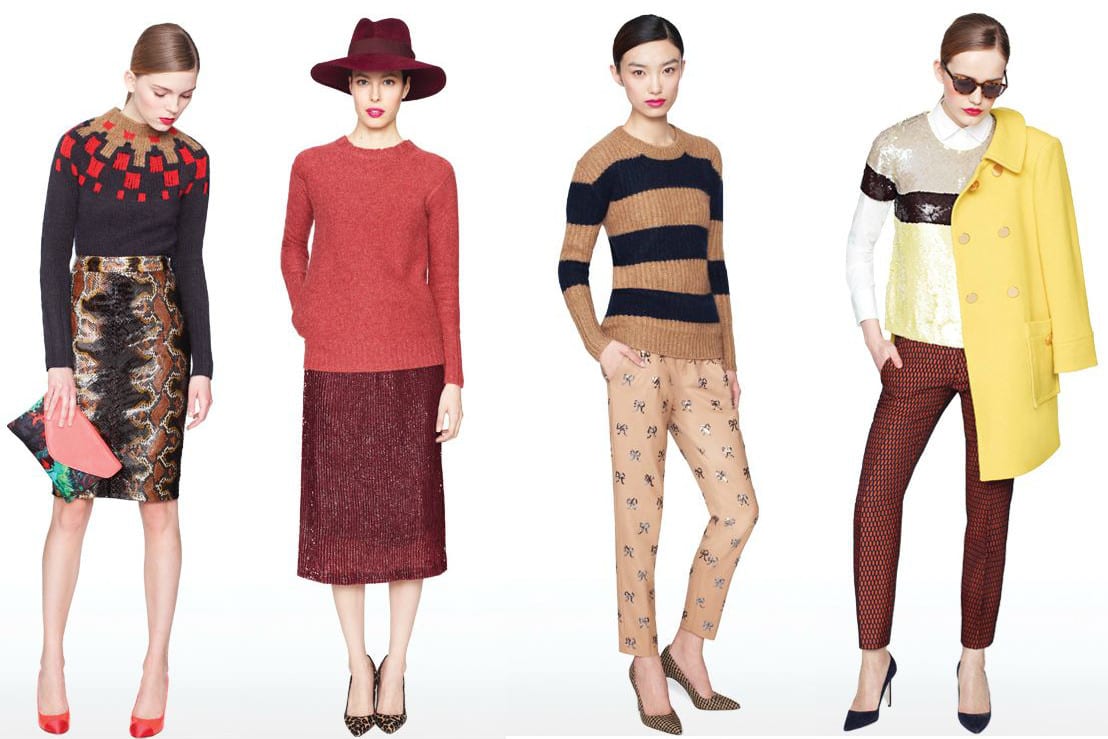
    In closing what can only be described as a torrid year for the company, J Crew has posted a weak, but improved, set of fourth quarter figures.

    Total sales rose by 1 per cent, boosted by strong sales gains of 26 per cent at Madewell. While this compares favorably to the 5.5 per cent decline of last quarter, this is but a small bright spot surrounded by a sea of relatively gloomy numbers.

    Total comparable sales fell by 4 per cent off the back of a 3 per cent decline in the prior year. Here the gains made at Madewell were more than wiped out by the continued decline of the core J Crew brand where comparable sales fell by 5 per cent and total sales by 3 per cent.

    The company remains firmly in the red with a US$7.03 million loss recorded during the quarter – although, to be fair, this is a marked improvement on the $30.6 million loss recorded last year. Notably, however, losses for the full fiscal year now stand at a staggering $1.2 billion – something that leaves the company, and its balance sheet, in a very weak position.

    While there are many reasons to be negative, the results at least bring some respite in as much as they suggest that J Crew is at last starting to stem the tide of decline – especially so given that the shallower falls occurred during a quarter when overall demand was notably weak. Even so, the group still faces a herculean task in turning around its fortunes.

    Thanks to changes made by management across the year, many of J Crew’s full line stores are now looking much more disciplined in terms of merchandising and display. However, products are still priced above what many consumers are willing to pay – especially for relatively simple garments that have nice detailing but little else in terms of fashion credentials.

    The issue of price is underlined by the fact that while J Crew’s mainstream stores suffer, J Crew Factory stores are fairly popular with more shoppers willing to buy its products at a reduced price. This isn’t the position that the company would like to be in, but it is one that reflects the fact that there is much more work to do in terms of refining the brand image and the product offer so that it can attract the premium J Crew wants to charge.

    That people are unwilling to pay full price means that discounting at mainstream stores and via the mainstream website is also frequent. While this is a necessary evil to clear down inventory, J Crew is building a reputation as a retailer from which customers should never buy at full price – something that is hampering its ability to rebuild its brand and price integrity.

    In our view, what J Crew needs is a fresh take – and this is something it is hoping will be delivered by the spring collection, the first designed by its creative director Somsack Sikhmounmuong. Even if this is a hit it will be just the first of many steps that J Crew needs to take to rebuild itself into a successful lifestyle brand.

    The market is more competitive and crowded than ever and J Crew needs to do much more to stand out.

  • Speculation builds of Burberry takeover

    Speculation builds of Burberry takeover

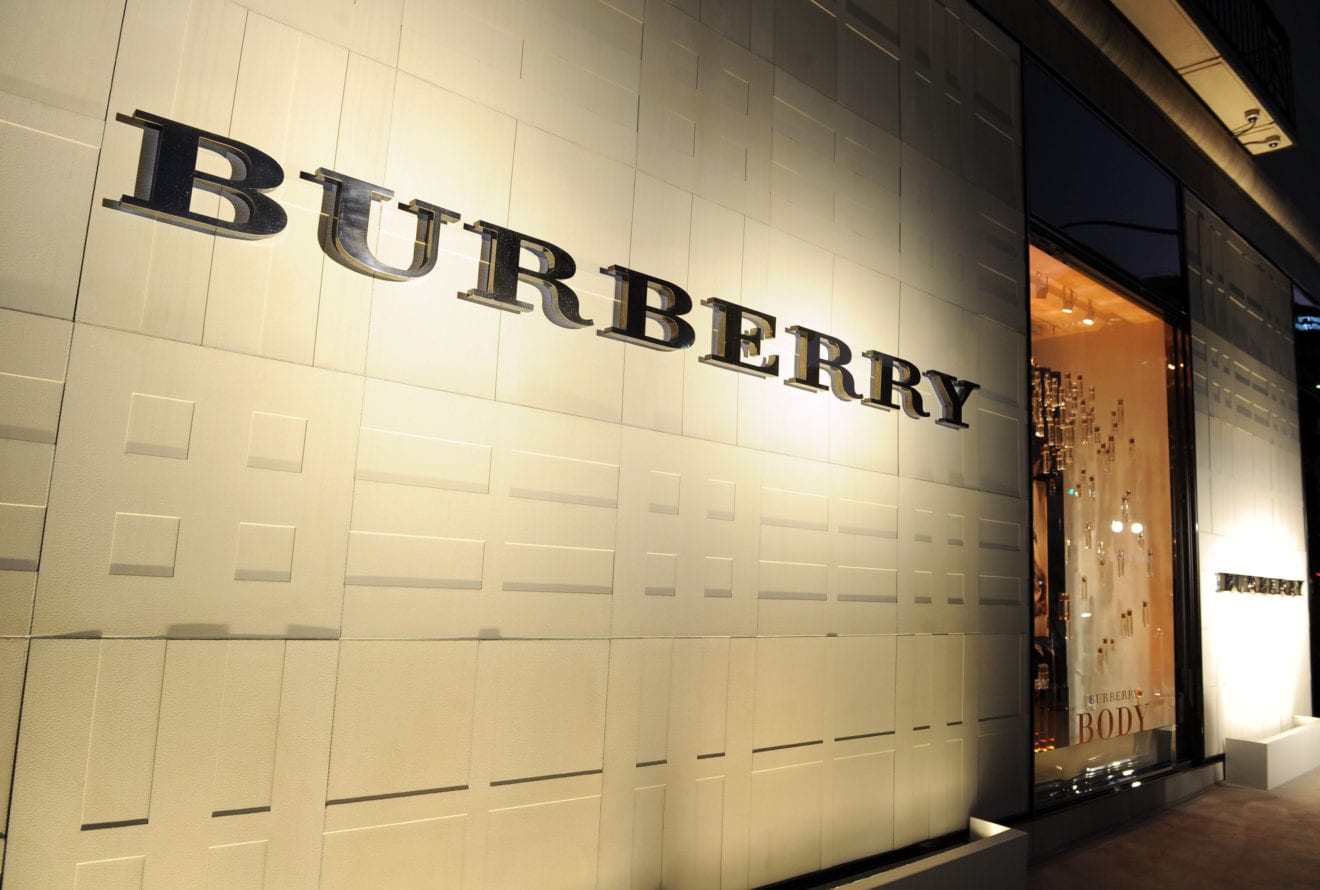
    Speculation of a Burberry takeover bid have seen the London-headquartered luxury fashion company’s share price rise 6 per cent in recent days.

    An unidentified party has built a 5 per cent stake in the business. Under London Stock Exchange rules any shareholder holding more than 3 per cent equity must disclose their identity, but an exemption allows investment managers to represent a client with up to 5 per cent. When that threshold was breached briefly in February by HSBC, acting on behalf of the mystery Burberry bidder, the excess was quickly resold.

    UK media is reporting that Burberry is “keeping a close watch on the stake”, but has yet to receive any takeover approach.

    According to a report in The Financial Times, Burberry has asked HSBC to reveal its client’s identity.

    While Burberry maintains strong brand strength, it has suffered from a decline in sales in China and Hong Kong, its key markets, due to the Chinese government’s clampdown on gift-giving and graft, and changing travel patterns of wealthy Mainland Chinese.  As a result, its market capitalisation has slipped to about £6 billion.

    The Financial Times nominated LVMH Group and private equity investors as possible buyers of the 5 per cent cornerstone stake.

  • Swiss luxury retailer Kirchhofer for sale

    Swiss luxury retailer Kirchhofer for sale

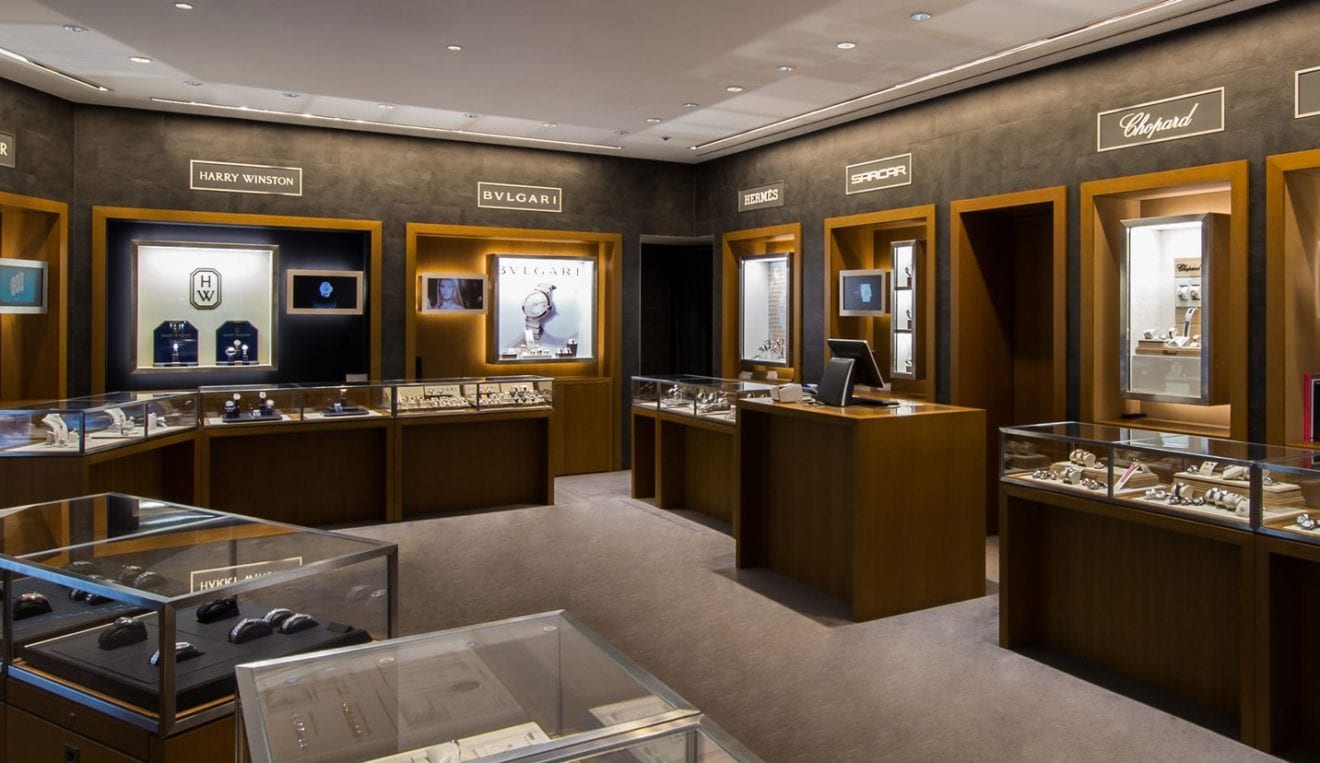
    Swiss luxury watch and jewellery retailer Kirchhofer is up for sale, Reuters reports.

    The family owned company, with annual sales of about US$302 million, is thought to produce a net profit of around $60 million annually.

    Reuters reported that three independent sources confirmed Credit Suisse has been engaged to sell the business.

    Kirchhofer sells most famous Swiss watch brands along with jewellery, cosmetics and leather goods. These days it focuses especially on Asian customers.

    Estimate of the value of the company range between five and 10 times the net profit, which calculates at between $300 million to $600 million.

    Likely suitors would include luxury retail giants Kering, LVMH and Richemont, along with private equity investment companies interested in expanding the brand internationally.

    The business is currently owned by Juerg Kirchhofer, the son of founder Fritz Kirchhofer who started the retailer in 1944. It has 10 stores, mostly in tourist cities in Switzerland.

    In a statement to Reuters, Kirchhofer’s finance head, Hans Wolf said no decision had been made to sell the company as yet.

    “Mr Kirchhofer has reached retirement age, which does not necessarily mean he wants to retire soon. Different options are being reviewed and analysed at the moment for the future of the company,” he said.

  • Samsonite to pay US$1.8 bn for Tumi

    Samsonite to pay US$1.8 bn for Tumi

    Luggage giant Samsonite is to pay US$1.8 billion for US-based Tumi, the luggage and travel accessories brand.

    In a joint statement, the two companies said they have entered into a definitive agreement whereby Samsonite will acquire Tumi for US$26.75 per share in an all cash transaction.

    “This is a transformational acquisition for Samsonite. It will meaningfully expand our presence in the highly attractive premium segment of the global business bags, travel luggage and accessories market,” said Ramesh Tainwala, Samsonite CEO.

    “Tumi is a perfect strategic fit for our business. The brand is beloved by millions of loyal customers for its high quality and durable premium business and luggage products. We are excited about the tremendous opportunities this combination provides us to further diversify our product and customer portfolios.

    “In particular, we will expand Tumi’s presence in Asia and Europe, while strengthening its business in North America, by leveraging our expertise in global distribution, sourcing, product design and technical innovation, especially in the area of lightweight hardside luggage.”

    Tumi CEO Jerome Griffith described the announcement as “an exciting day for Tumi and all the travellers around the world who count on us”.

    “The team at Samsonite has a long and successful track record when it comes to acquisitions and we know they will be excellent stewards of the Tumi brand. Samsonite will bring Tumi to new and growing markets, while still maintaining the high quality Tumi is known for.

    “This is a compelling transaction that delivers substantial and immediate cash value to our shareholders. Further, we are excited for our employees to benefit from opportunities presented by being part of a larger and more diversified global company. Samsonite has successfully grown many unique brands and we look forward to the next chapter in Tumi’s great history as part of the Samsonite family.”

    The two companies believe Tumi is an “ideal and complementary fit” with Samsonite.

    “With approximately 2000 points of distribution across 75 countries, Tumi’s leading market position in the premium business and luggage segment is a perfect complement to Samsonite’s strong and diverse portfolio of brands and products, with limited overlap in market positioning, price point and distribution. The addition of Tumi builds on Samsonite’s proven track record of successful acquisitions across multiple product categories and price points to broaden its portfolio,” the companies’ statement said.

    “It enables Samsonite to strategically expand into the highly attractive premium segment of the global business bags, travel luggage and accessories market with a business and travel brand that is recognised worldwide as being “best-in-class” in the premium segment.”

    Tumi was founded in 1975. Its products range from iconic ‘black ballistic business cases’ and travel luggage targeting business travellers, to  travel accessories, women’s bags and outdoor apparel.

    In the year to December 31, Tumi’s net sales were US$548 million, representing a year on year increase of 4 per cent.

    Post takeover, Samsonite will continue to be listed on the Hong Kong Stock Exchange.