Retail News CRM

Tag: Japan

  • Lotte Group Founder Loses Japan CEO Title Amid Succession Battle

    Lotte Group Founder Loses Japan CEO Title Amid Succession Battle

    Turmoil has erupted atop South Korea’s largest retail giant Lotte Group, shining a spotlight on one of the biggest family feuds the country has seen.

    The week began with 92-year-old Lotte founder Shin Kyuk Ho and his eldest son flying to Japan to fire a group of senior managers at a key unit, a maneuver that backfired and left the patriarch sidelined the next day. By Wednesday, Shin Dong Bin had successfully fended off his elder brother’s attempt to derail him from taking over control of the group.

    At stake is leadership over a conglomerate with 80 units across Korea, operating everything from department stores, amusements parks to hotels with 112 trillion won ($97 billion) of assets. Though the country saw sibling rivalries tear up Hyundai Group more than a decade ago, power struggles at businesses of Lotte’s size are rarely displayed in public in a corporate landscape dominated by family-run businesses, known locally as the chaebol.

    “It was an unexpected move as everyone had assumed that the founder had already selected Shin Dong Bin as his heir,” said Chae Yi Bai, an analyst at corporate watchdog Center for Good Corporate Governance. “This puts Lotte’s succession plans back in debate.”

    The drama at Lotte Group comes at a time when concerns over dynastic succession is fresh in people’s memories. Less than two weeks ago, Samsung Group narrowly defeated billionaire activist investor Paul Elliott Singer in a hotly-contested proxy fight, paving the way for the founding Lee family to tighten its grip over the nation’s largest conglomerate.

    Back at Lotte, co-chairman Shin Dong Bin apologized to employees on Wednesday for the turmoil brought by the dispute and urged them to put faith in him.

    “I am very sorry for causing uncertainties and turmoil to you all — the corporate value that Lotte has held up for a long time should not be rattled simply by an individual’s family issues,” 60-year-old Shin said in a note to employees, a copy of which was distributed to the media.

    The founder’s act to support elder son Shin Dong Joo, 61, had been unexpected as the younger Shin had been heir-apparent after executive titles including the vice chairman role at the parent group were stripped from Dong Joo in January.

    Lotte declined to make Shin Kyuk Ho or Shin Dong Joo available for comment.

    Shares Spike

    Shares of Lotte’s listed South Korea affiliates spiked on speculation the contesting Shin brothers would snap up the shares to solidify their control, Kim Tae Hong, an analyst at Yuanta Securities Korea Co. said by phone.

    Lotte Shopping Co. rose for a second straight session to end 6.6 percent higher by the close of trading in Seoul, the largest gain since 2010. Lotte Confectionery Co. closed up 4.7 percent, after jumping as much as 16 percent. The benchmark Kospi index ended little changed.

    In an earlier statement sent to media Wednesday, Lotte Group said the older son and his father’s July 27 act to fire executives at the closely held Japan unit Lotte Holdings Co. didn’t follow legal procedures.

    Tokyo-based Lotte Holdings’ board of directors held a meeting a day after to nullify the dismissals, and decided to move the founder into an honorary chairman role, according to the statement. Such a role typically carries no specific duties or voting rights.

    The older Shin brother’s attempt to gain influence over the Japan unit is aimed ultimately at capturing control over the entire group, due to the conglomerate’s shareholding structure, according to Chae.

    Attack Blocked

    “Whoever holds Lotte’s holding companies in Japan pretty much holds the entire group because of how the group’s corporate governance structure is designed,” Chae said. “It’s too early to say who won the crown, but Shin Dong Bin seems to have successfully blocked the attack this time around.”

    The founder holds a 28 percent stake in Lotte Holdings Co., Dong Joo holds 20 percent and Dong Bin has 19.1 percent, while a company called Kwang Yoon Sa holds 27.65 percent, according to data compiled by Bloomberg. Kwang Yoon Sa, a packaging company also based in Tokyo, is said to be owned by the founder, according to the Korea Economic Daily.

    Lotte Holdings spokeswoman Ruka Mizuno declined to comment on the governance structure of Lotte Holdings and Kwang Yoon Sa. when reached by phone, saying the companies aren’t listed.

    Shin Kyuk Ho, born in Ulsan, South Korea in 1922, started Lotte in Japan in 1948 after completing his university studies there. The company started off selling chewing gum in postwar Japan and quickly grew into a major confectionery company.

    When diplomatic relations normalized between Korea and Japan in 1965, Shin began investing in his home country and established Lotte Confectionery Co. in 1967, according to the Seoul-based Center for Good Corporate Governance.
  • Lawson to open 450 stores in Japan this year

    Lawson to open 450 stores in Japan this year

    Even though Japan’s convenience store sector faces numerous challenges, the country’s second-largest operator, Lawson, plans to open another 450 stores this year, the company’s CEO has revealed.

    Genichi Tamatsuka said there are 55,000 convenience stores in Japan but the market has not yet reached saturation point.

    He sees massive potential for growth because of demographic and other social changes that are altering consumers’ buying behaviour.

    “Whereas people used to go to a big supermarket and prepare meals for a family of four or five, now they’re busier, they’re older, and they prefer to buy in a small neighbourhood store,” he explained.

    Lawson currently runs a network of 12,000 stores – soon to be expanded – and, combined with its logistical muscle, Tamatsuka expressed confidence that it would be able to meet the needs of these “combini” neighbourhood stores.

    “With our scale of 12,000 stores, our supply chain and platform, we can supply food and necessities to these neighbourhoods,” he said.

    Expansion overseas is another source of potential growth, he indicated, considering the value placed on the high level of customer service provided by Japanese retailers.

    Lawson has 500 stores in China and has also started up operations in Thailand, Indonesia and the Philippines.

    Despite Tamatsuka’s confidence, research group Euromonitor earlier this year published a more downbeat assessment of Japan’s retail landscape.

    “Japanese grocery retailers are expected to face numerous challenges imposed by such factors as changing demographics and operational difficulties,” it warned.

    However, in what could be seen as endorsement of Tamatsuka’s expansion strategy, the report went on to say, “in order to fight against such negative circumstances, grocery retailers may attempt to expand in size and diversify business portfolios”.

  • Fast Retailing, Seven & I mull partnership

    Fast Retailing, Seven & I mull partnership

    Two of Japan’s largest retail businesses are eyeing a “comprehensive business alliance” according to Japanese news reports.

    A strategic relationship currently under discussion could see a range of mutually beneficial co-operations spanning physical stores and eCommerce.

    Details are still sketchy, but according to news reports, Fast Retailing, the parent of Uniqlo, could work with Seven & I, parent of 7-Eleven convenience stores and the Ito-Yokado supermarket chain, on areas including product design, house brands, marketing and distribution.

    Uniqlo may use 7-Eleven stores as collection points for online purchases.

    The two companies may also launch a joint venture clothing brand outside the Uniqlo network.

    To date, that’s as much information as has leaked out.

  • 7-Eleven Vietnam plans 1000 stores

    7-Eleven Vietnam plans 1000 stores

    The world’s largest convenience store operator has confirmed the signing of a master franchisee in Vietnam and now plans 1000 stores over the next decade.

    7-Eleven Vietnam will be a partnership between the Japanese-headquartered US subsidiary and a new venture called Seven System Vietnam Co. While the US announcement did not identify the parties behind Seven System, Japan’s Nikkei news agency identified the partner as IFB Vietnam, which owns the Pizza Hut franchise in Vietnam.

    Nikkei says the first store will open in the nation’s commercial hub, Ho Chi Minh City, with a target of 100 stores within the first three years and 1000 within 10.

    7-Eleven has 56,400 stores globally and Vietnam will mark its 18th international market.

    Japan’s Seven & I Holdings has openly been assessing a Vietnam entry for some years. The convenience store sector is still at an early development stage with Circle K and FamilyMart the early entrants and Thailand’s B-smart, part of the Berlei Jucker Group, playing a cameo role.

    Given the booming convenience store market in other Southeast Asian countries, especially Thailand, the Philippines, Indonesia and Malaysia, 7-Eleven’s superior logistics, product mix, marketing and location selection should see it assume market leadership there well within the first 10 year window.

    7-Eleven’s US statement says, somewhat enigmatically, the new Vietnam business will “construct 7-Eleven stores [and] convert existing locations to the 7-Eleven brand” without disclosing which brand is to be swallowed up.

    While the initial stores will be company-owned, the company says it will eventually franchise stores to local entrepreneurs.

    “7-Eleven’s entry into the country aims to enhance the convenience-shopping experience for Vietnamese customers and contribute to modernizing small retailers in the world’s 13th most populous country.”

    7-Eleven US and its parent company, Seven-Eleven Japan, will provide start-up support for its newest master franchisee by assisting Seven System Vietnam in implementing 7-Eleven’s strategies of market concentration, team merchandising and item by item management. Vietnam marks 7-Eleven’s first new market in the Pacific Rim since it entered Indonesia in 2009.

    It already operates in the US, Canada, Mexico, Japan, Thailand, South Korea, Taiwan, China, The Philippines, Australia, Singapore, Malaysia, Indonesia, Norway, Sweden, Denmark and the UAE, where the first 7-Eleven store will open in the third quarter of this year.

  • Japan retail sales growth slows

    Japan retail sales growth slows

    Japan retail sales grew 0.9 per cent in June – ahead of expectations but much slower than May’s three per cent.

    Analysts had been tipping a rise of just 0.5 per cent after the relatively strong May growth.

    Government data showed rising fuel prices could have unduly affected the figures in the first half of the year – fuel accounts for about eight per cent of total retail sales, and fuel prices have risen by about six per cent since January.

    Capital Economics, in a research note, warned not to pay too much attention to retail sales data as a measure of consumer sentiment.

    “We would instead pay more attention to core household spending, due on Friday. This measure of consumer expenditure has done a good job lately in explaining moves in the Cabinet Office’s synthetic consumption expenditure, the monthly equivalent of private consumption as measured in the national accounts.”

    A Reuters survey of economists projects a 1.7 per cent growth in household spending year on year in June – far lower than the 4.8 per cent of May.

    Nevertheless, May’s retail spending increase marks the third month in a row of growth after mixed results for a year.

    In March, retail sales fell nine per cent, although that was largely due to an irregular March 2014 when consumers brought forward spending prior to a sales tax increase on April 1.

  • Big differences in Asian travel spending

    Big differences in Asian travel spending

    Koreans travel abroad most frequently, Chinese spent the most money and Japanese visit the most faraway places most often.

    Those are findings from a study by Visa card, 2015 Survey on Travel Plans, in which 13,603 people from 25 different countries shared information about their travels.

    According to the results, Koreans traveled an average of five times during the past two years, ranking the highest in travel frequency – well above the global average of three times.

    Around 90 percent of the Korean respondents answered they had travelled abroad within the past two years. But as travellers, Koreans seem to be of frugal mind when it comes to expenses. They spent an average of $1808, which was way below the global average ($2281). They also have a tendency to set a budget and stick to it. Korean travelers paid 46 per cent of their expenses before departure, and 75 per cent of the payments were made by credit card.

    On the other hand, the average travel expense for Chinese travelers was $4780 – more than double the global average. Unlike Koreans, Chinese people had a tendency to decide what they wanted to do on the trip first and then calculate the expenses.

    While 36 per cent of Korean travelers and 34 per cent of Chinese travellers visited Japan, 36 per cent of Japanese travellers visited the US, showing their preference for long distance travel. The average time taken to get to the destination was longer for Japanese travelers (nine hours), compared to eight hours for Chinese travellers and six hours for Korean travellers.

    The average travelling expense for Japanese was $3165, which was less than the average of Chinese.

    In terms of accommodation, 41 per cent of Korean travellers and 62 per cent of Chinese preferred hotels with more than four stars, while 49 per cent of Japanese preferred one to three star hotels.

    The portion of Koreans who preferred package tours (47 per cent) was similar to the portion of those who liked to travel freely (52 per cent). However, more than half of the Chinese (65 per cent) and Japanese (77 per cent) preferred tour packages.

    Ian Jamieson, head of Visa Korea, said it was impressive that Korean travellers prepare well and frequently go on trips and the purchasing power of Chinese travellers was also interesting.

  • Asics restructures global operations

    Asics restructures global operations

    Japanese sports brand Asics has announced an organisational restructure and the appointment of experienced international executives to accelerate business growth.

    Under what it calls ‘The Center of Excellence Initiative’ Asics is strengthening its global business, which includes the Onitsuka Tiger brand and retail network, through the appointment of “top talent to lead and manage its global categories from the most influential regional markets by category”.

    From September 16, a new Global Lifestyle Division will be established to lead global marketing for Lifestyle brands such as Onitsuka Tiger and Asics Tiger. Europe will be designated as the Center of Excellence for this category with the offices based in Amsterdam. This division will be headed by the newly appointed senior GM, Torsten Widarzik, who moves from his current position as CEO of German fashion label Campus. Widarzik was previously Levis Strauss Germany/Switzerland GM and business and brand director with Nike Sportswear at Nike CEMEA, where he built the sportswear business across Central and Eastern Europe.

    Asics says strengthening its footwear and apparel business is also a key part of the business growth strategy following the appointment of Asics as Gold Partner in Japan for Tokyo 2020 Olympic and Paralympic Games.

    “To further accelerate growth, the design functions will be added to the Global Footwear Product Marketing Division.

    “The seamless integration of the product design, development and manufacturing functions will boost the development of competitive products.The reformed Global Footwear Product Marketing Division will continue to be led by Gerard Klein, senior GM, who returned to Asics in August 2014 after seven years at Converse where he was in charge of the go-to-market strategy and merchandising in the EMEA market.”

    Earlier this year, Asics also strengthened its Global Brand Marketing Division by appointing a new leader, Paul Miles, senior GM, who joined Asics in May 2015 from Nissan Motor, where he was VP of marketing and communications. Miles previously worked for Fast Retailing in France and Japan, where he was responsible for the market launch and expansion of the Uniqlo brand.

    “The restructuring of our global operations and the appointment of top talent as our new leaders shows our commitment to accelerate growth as a global sporting goods company,” said Motoi Oyama, CEO of Asics Corporation.

    “I am confident that the Center of Excellence initiative will enhance organisation’s capacity and effectiveness, and lead us into the next stage of growth.”

  • Uniqlo eyes Philippines as garments production site

    Uniqlo eyes Philippines as garments production site

    GLOBAL clothing retailer Uniqlo is planning to tap Philippine garments manufacturers as it considers making the country one of its production sites that will cater to its global retail network.

    In a briefing on Thursday, Katsumi Kubota, chief operating officer of Fast Retailing Philippines Inc., said he had started studying a list of 40 local garments factories that was given to them by the Philippine government during President Aquino’s state visit to Japan recently.

    Kubota said this was also one of the topics discussed by the Uniqlo head and President Aquino when they met in Tokyo.

    “I think we have to study it carefully…We do not own any of our factories so what I’m checking now is, first of all, the quality (of the products produced by these factories). We cannot sacrifice quality. We’re also looking at their (capacities) because most the time, one factory produces one item for Uniqlo branches all over the world, so we have to work with large factories. These factories must also be operated by good owners,” Kubota said.

    Kubota, however, did not provide any timeline as to when the study on the prospective factories would be completed. If the company decides to pursue this plan, the local garments factories that will be selected will have to supply to all Uniqlo stores globally.

    For now, Kubota said Uniqlo was focusing on expanding its retail network aggressively over the next five years and in beefing up the local market’s awareness of the Uniqlo brand.

    He said Uniqlo would be opening two branches in Cebu by the fourth quarter of this year, marking the company’s first foray outside Luzon. Plans to put up stores in key areas in Mindanao such as Davao, Cagayan de Oro and GenSan are being studied.

    “Opening our stores in Cebu, after our third year in the Philippines, is another important phase of our business in the country. We have opened 23 stores in Metro Manila and Luzon, and entering the Visayas market is a milestone in our growth strategy,” he added.

    The two Uniqlo stores in Cebu will cover at least 1,000 square meters each and create 200 jobs per branch. Kubota did not say the amount the company was investing in these stores but said it was compliant with Philippine laws that required foreign retailers to invest a minimum of $800,000 a store.

    He said Uniqlo was targeting to have 29 stores in the country by the end of the year and 200 by 2020.

  • After Toshiba scandal, foreign investors want tougher Japan governance steps

    After Toshiba scandal, foreign investors want tougher Japan governance steps

    Japan needs bolder measures such as harsher criminal sanctions for fraud and whistleblower protections to improve corporate transparency and prevent a repeat of the accounting scandal seen at Toshiba Corp, foreign investors and governance experts said.

    Toshiba’s chief executive Hisao Tanaka and a string of other senior officials resigned on Tuesday after an independent inquiry found he had been aware the company had inflated its profits by $1.2 billion over several years.

    The scandal is a major setback for the government of Prime Minister Shinzo Abe, who has made improving corporate governance a central theme in his bid to reinvigorate Japan’s economy and entice more foreign capital.

    “This is a negative headline in what’s been 18 months of positive momentum in Japan,” said Singapore-based David Smith, head of corporate governance at Aberdeen Asset Management, which owns Japan stocks. An Aberdeen affiliate had a very small equity holding in Toshiba as of end-May, Reuters data shows.

    “This is a black mark for corporate Japan in the face of positive news and strong markets. The government may want to act tough,” said Smith, who helps manage about $115 billion in Asia.

    Japan’s listed companies have long-had tense relations with their foreign shareholders, who have frequently blamed long-term insiders’ dominance of corporate boards for low returns and weak oversight.

    In response to this criticism, the Abe government last month introduced new rules requiring listed company boards to appoint at least two outside independent directors, but investors said this did not go far enough – Toshiba already had four independent directors as part of its 16-person board.

    “The Toshiba scandal further underlines the need for board training as well as a robust whistleblower protection system,” said Seth Fischer, chief investment officer at Hong Kong-based hedge fund Oasis Management and a corporate governance activist who successfully pushed for reforms at Nintendo Co Ltd.

    “Whistleblowers are ultimately performing a service to the company, its executives and the company’s overall mission – which is integrity of financial statements. They need to be rewarded as such,” he said.

    This week’s revelations come four years after a similar scandal in which camera-maker Olympus Corp concealed nearly $1.7 billion in losses from shareholders.

    Both scandals also raise questions about the quality of Japan company audits, which rate poorly compared with developed market peers, according to data compiled by Hong Kong-based GMT Research.

    “One of the problems is that audit fees are very low in Japan. It’s nonsense that auditors, on these fees, are doing any proper work,” said Robert Medd, a partner at GMT.

  • Shin calls for fresh goals for entire Lotte group

    Shin calls for fresh goals for entire Lotte group

    The 60-year-old chairman on Thursday became chairman of Lotte Holdings, the holding company of the Lotte Group in Japan, which was previously held by his brother Shin Dong-joo. This sealed his control of Lotte operations in both Korea and Japan. It is believed to be the first step in uniting the businesses in both countries.

    According to industry sources, Hwang Gak-kyu, president of policy coordination at Lotte Group, is already making adjustments to the chairman’s Vision 2018.

    In 2009, Shin teamed up with the Boston Consulting Group to devise long-term goals for the Korean retail giant to expand into a conglomerate that would be 10th-largest in Asia with annual revenues of 200 trillion won ($173 billion).

    “It seems that Chairman Shin has come to the conclusion that the vision needs to be readjusted, as the leadership has changed and the retail industry is also changing rapidly,” said a high ranking official at Lotte.

    Lotte Japan has far smaller revenues than Lotte Korea. In 2013, Lotte Korea generated 83 trillion won in revenue from 74 affiliates. On the contrary, the Japanese businesses only generated 5.7 trillion won in revenue from 37 affiliates.

    The biggest change in the vision is said to be “select and focus” and “synergy management.”

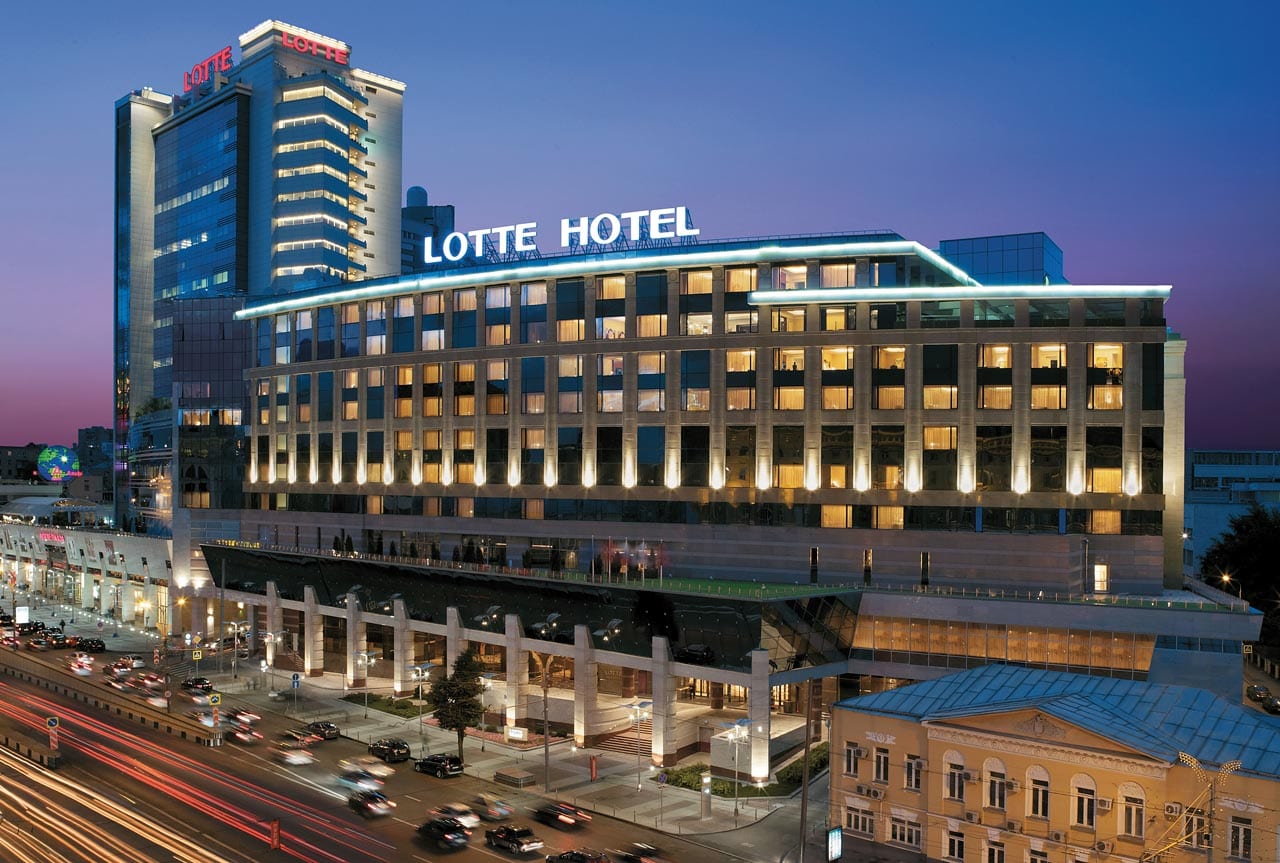
    Lotte said it is looking into the idea of choosing duty free shopping, hotels, chemicals and finance as core businesses and focus its resources on enhancing those businesses. Additionally, since food and beverages are key businesses in Lotte Japan, it plans to generate synergy with Lotte Shopping and Lotte Confectionery.

    For new growth engines, the retail conglomerate is likely to inject large amounts of investment, but the affiliates that are not picked will likely undergo heavy restructuring, and some will probably shut down.

    One of the key areas for Lotte is chemicals.

    On Friday, the day after Shin was officially made the head of Lotte Japan, he visited Lotte Chemical’s headquarters in Sindaebang-dong, southwestern Seoul, where he was briefed on business.

    On the contrary, investments in department stores and supermarkets is expected to decline. Lotte Group is expected to pursue merger and acquisitions in channels that combine offline and online shopping in order to raise synergy with existing branches and businesses.

    “Considering the size of changes that Lotte will undergo, we can’t say the funding we have is sufficient,” a Lotte official said. “Our investments will likely focus on quality more than on quantity.”

  • Hermes weathers storm

    Hermes weathers storm

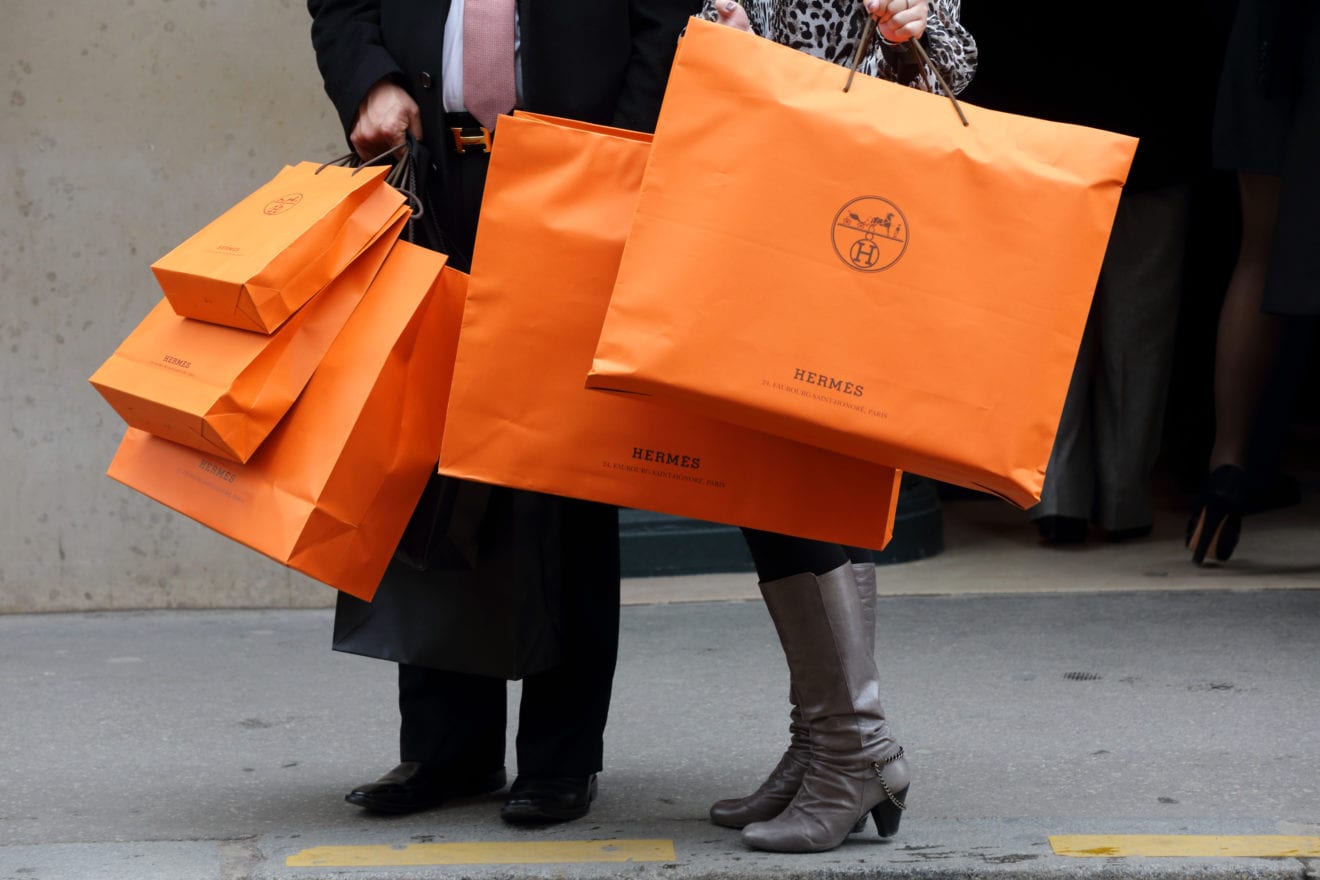
    Luxury goods retailer Hermes says a slowdown in sales in Hong Kong has been more than offset by solid Japanese trade.

    Hermes International has reported a 22 per cent increase in second-quarter sales as growth in Japan took off, consumers finally opening their wallets on luxury goods after a long season of economic malaise.

    The Parisian company said sales rose to 1.17 billion euros (US$1.27 billion). When currency exchange effects are removed from the result, sales climbed 10 per cent, two percentage points faster than in the preceding first quarter.

    The company says wealthy Chinese are preferring to shop in Japan or Europe, rather than in Hong Kong as goods there are perceived to be cheaper, largely due to favourable currency exchange rates.

    Hermes has seven stores in Hong Kong.

  • Uniqlo closes JD.com store citing China online strategy mismatch

    Uniqlo closes JD.com store citing China online strategy mismatch

    Fast Retailing Co Ltd said on Monday it has closed the online Uniqlo store that it opened in April on China’s popular JD.com Inc shopping site, saying it did fit into its China e-commerce strategy.

    After a three-month trial run, “Uniqlo determined that a presence on JD.com was not in line with the company’s China e-commerce strategy”, said a spokeswoman for Fast Retailing, which owns the casual-clothing brand.

    “During the trial run, we realized that it is best for us to take a step back,” she told Reuters.

    She declined to disclose details about the performance of the online site or specify the firm’s e-commerce strategy, but said Uniqlo was committed to the China market, both online and offline.

    JD.com and larger rival Alibaba Group Holding Ltd have been vying to attract big, international brands onto their platforms. Bagging such names can be a huge credibility boost and a sign of implicit trust in China, a market notorious for the proliferation of fake and knock-off products.

    Uniqlo’s speedy retreat from JD.com stands in contrast to its robust presence since 2009 on Alibaba’s Amazon.com-like Tmall platform. During Alibaba’s annual Singles Day sales event last November, Uniqlo was fifth in overall sales and the top apparel brand, the spokeswoman said.

    JD.com spokesman Josh Gartner said sales on Uniqlo’s JD.com store had exceeded aggressive sales targets in the first month of operation.

    “Uniqlo is stopping operation of its flagship store due to an e-commerce strategic restructuring in China, not based on the performance of the store,” he said.

    The Japanese company is expanding rapidly in China as it aims to become the world’s biggest apparel retailer ahead of Zara-owner Inditex SA, Hennes & Mauritz AB (H&M)

    and Gap Inc by 2020.

    Fast Retailing Chief Executive Tadashi Yanai has said Uniqlo aimed to have 1,000 stores in Greater China in about five years, more than its Japan total – and eventually as many as 3,000. It had 442 in China, Hong Kong and Taiwan as of end-May.

    Japan’s stock market was closed on Monday for a public holiday. On Friday, Fast Retailing’s shares gained 1.1 per cent to close at 57,220 yen ($460.41).

  • NTT Communications to Launch Prepaid SIM Vending Machines for Tourists and Business

    NTT Communications to Launch Prepaid SIM Vending Machines for Tourists and Business

    NTT Communications Corporation (NTT Com), the ICT solutions and international communications business within the NTT Group, announced today that it will begin operating prepaid SIM card vending machines for foreign visitors to Japan at Narita International Airport from July 24.

    The prepaid SIM vending machines, the first to be installed at Narita International Airport, will give foreign tourists and business travelers access to low-cost mobile data communications while in Japan.

    One machine each will be installed in the international arrival lobbies of Terminal 1 and Terminal 2. In addition to NTT Com’s Prepaid SIM for JAPAN for short-term use, the machines will offer smartphones, mobile routers, accessories and more.

    Touch panel screens in English or Chinese guide the user through the purchase procedure. Payment is via credit card, so there is no need to prepare Japanese yen cash. After making their purchase, the user can register their name, birthday, etc. via either the machine’s touch panel or passport scanner to begin accessing the Internet immediately.

    NTT Com already operates SIM card vending machines at the AQUA CITY ODAIBA mall in Tokyo and Kansai International Airport near Osaka. NTT Com’s Prepaid SIM cards are also sold at airports, electronics stores and travel agencies.

    Given that a record 13 million tourists visited Japan in 2014 and more are expected this year, NTT Com expects to continue adding retail outlets for its Prepaid SIM, mainly at airports, electronics retail stores and travel agents. NTT Com also will gradually expand its range of optional services to support mobile communication experiences for foreign visitors.

    Products & Costs           Prepaid SIM for JAPAN (7-day plan)
    Prepaid SIM for JAPAN (14-day plan)
    Accepted Credit Cards     VISA, MasterCard, JCB, American Express and Diners Club
    (Payment is available via credit card only.)
    Operating Time           24 hours every day

    Note: Information as of July 17, 2015. Products and prices are subject to change without notice.
    Prepaid SIM for JAPAN prices may vary by retail location.

    Prepaid SIM for JAPAN
    Package                            Prepaid SIM for JAPAN          Prepaid SIM for JAPAN
    7 days                                   14 days

    Plan                                                     7-day plan                         14-day plan
    Max. data                                         100 Mb/day                   100 Mb/day
    Charges                           JPY 3,450 (excluding tax)            JPY 4,950 (excluding tax)

    Max. speed                                Download:150 Mbps; Upload 50Mbps

    Max. speed after
    100 Mb/day                                                       200 Kbps (until midnight of that day)
    Service extension                                        Neither plan can be extended
    SIM card sizes                                            Regular, Micro and Nano
    Service area                                                   Japan (nationwide)

    During the purchase procedures, instructions are provided on how users many apply for the no-charge Japan Connected-free Wi-Fi service provided by NTT Broadband Platform Inc. at some 130,000 locations, including airports, train stations, commercial facilities, convenience stores and more. (www.ntt-bp.net/jcfw/en.html).

  • UNIQLO’s ‘look good, do good’ campaign takes off

    UNIQLO’s ‘look good, do good’ campaign takes off

    Whether you want to admit it or not, bumping into someone wearing the same outfit you’re wearing can be awkward. (We may laugh it off, but deep down inside, we are wishing it doesn’t happen again.)

    Thankfully, as part of the Uniqlo Street Tales initiative, the popular casual fashion brand has come up with a unique way of ensuring it doesn’t. All you need to do is download the free UTme! application (it is a new custom T-shirt service) and design your own tee. Then, head down to Uniqlo Bugis+, print out your design and voila! You get to showcase your one-of-a-kind art piece wherever you go.

    This is one of several initiatives by the brand to give back to local communities. So far in Singapore, Uniqlo has gotten more than 50 artistes (such as Rebecca Lim, Desmond Tan), businesses (Tiger Balm, BreadTalk) and personalities (chef Willin Low, fashion icon Daniel Boey) under the Uniqlo Street Tales umbrella to create UTme! T-shirts, retailing at Uniqlo Bugis+ for S$29.90 (RM83.21) for adults and S$24.90 for children’s tees, with all net proceeds from the sale of these tees from now until Aug 10 donated to the Community Chest.

    “I feel great about it. I’ve always known that Uniqlo is very big on CSR (corporate social responsibility) projects but to be able to participate with Uniqlo and at the same time try my hand at designing something, the whole experience just makes it a lot more meaningful,” said actress Lim. “(We are) contributing to something that is close to our hearts, it’s a charity organisation in Singapore so it’s great (to) see Singaporeans buying and supporting the brand and at the same time, supporting this organisation.”

    Cheok Weiling, PR manager of Uniqlo Singapore, said that the brand has seen “encouraging response from customers who are eager to personalise their T-shirts”. But more than that, Heng Li Lang, director of relations & engagement at Community Chest, said that the net proceeds from the sale of these T-shirts would also be matched dollar for dollar by the government under the Care & Share Movement “to build the capability and capacity of the social service sector”. “Through these efforts, Uniqlo has exemplified the spirit of the movement in giving time, talent and treasures towards helping the less fortunate. We are very thankful to Uniqlo for this innovative partnership and look forward to many more years of close collaboration ahead,” Heng said.

    Also doing its part is Swedish fashion giant H&M, which launched Unicoin, “the first currency dedicated to good”. In support of UNICEF, the H&M Conscious Foundation’s Unicoin initiative enables children to help less privileged children gain access to learning opportunities.

    With help from their parents, children would upload a drawing that depicts what they dream of becoming when they grow up to the Unicoin website (https://unicoins.org) in exchange for a Unicoin. The H&M Conscious Foundation then matches each Unicoin with one notebook and pencil, which UNICEF then distributes to children around the world.

    Abby Wee, PR manager of H&M Singapore and Malaysia, said she was encouraged by the “very positive and overwhelming” response so far. “Twenty thousand notebooks and pencils have been sent to children worldwide, thanks to the help from everyone who has supported this initiative. Even though the period to exchange your drawing for a Unicoin has ended, we hope that more people will spread the word in support of every child’s right to early development and education.”

    That is not all. Homegrown brand TANGS said their Shop For Good initiative will return in the last quarter of the year. Launched last October, the initiative saw the company partnering with retailers to raise funds for charities. TANGS donated S$0.50 to the Community Chest with every receipt generated during the period. “As one of the pioneers in the Singapore retail scene, we hope to use our influence to drive lasting social awareness by inspiring and building a strong community of purpose-driven consumers and retail partners,” said Foo Tiang Sooi, chief executive officer of C.K. Tang Limited, adding that the company hoped that this would “empower a new generation of savvy, ethical consumer”.

    Even beauty brands have gotten in on the act. Globally, Clarins has constructed a facility to generate clean drinking water in Madagascar, with the funds for the project coming from the sale of the Katafray bark extract, an ingredient that can be found in Clarins’ HydraQuench range. The French brand has also built schools in Vietnam, thanks to the harvesting of the Vu Sua fruit used in its bust care range. In Singapore, Clarins has been participating in the Singapore Garden Festival since 2006 to raise awareness for sustainable development. (In honour of its contribution, the Singapore Botanic Gardens presented Christian Courtin-Clarins, the chairman of the Clarins Group, with the first Clarins Orchid, the Renanthera Clarins Christian & Olivier, in 2010.)

    “It is our great pride and deep honour to be gifted with an orchid that was specially created for us,” Courtin-Clarins said. “It is not simply a flower, but a validation of the efforts that Clarins has dedicated to sustainable development all these years.”For Estee Lauder Companies, which has brands such as Estee Lauder, Clinique, La Mer, Origins and Bobbi Brown under its wing, championing awareness and support for breast cancer has been one of its aims since the 1990s. The Breast Cancer Awareness (BCA) Campaign, for example, started in 1992 with the creation of the Pink Ribbon, which has been regarded as the universal symbol for breast health. The BCA Campaign has raised more than US$58 million to support global research, education and medical services over the past 21 years.

    “In Singapore, breast cancer is the most common cancer among women. Our colleagues are very committed to building breast cancer awareness among women of all ages and different ethnicities through the BCA Campaign that we run in October every year,” said Lisa Chow, managing director, Estee Lauder Cosmetics. “We have a very dedicated committee formed by our employees who organise fund-raising activities and education programmes in order to reach thousands of women, not only to enforce better knowledge that early detection saves lives but also raise funds to support local research projects or education programmes …”

    While the various brands under Estee Lauder Companies have been crafting what they termed “Pink Ribbon Products”, with a percentage of the profits from the sale of these items going towards the Breast Cancer Awareness Fund, here in Singapore, the Estee Lauder Companies will take going pink to a whole new level this year, by lighting up an iconic building in pink later this year, although the brand has yet to reveal which one.

    Nevertheless, it is nice to know that, in an era when people are taking pains to look good, they can now do good at the same time. ― TODAY

  • Migros to sell private label in Japan

    Migros to sell private label in Japan

    Swiss retailer Migros is to sell private label products into two Japanese retail chains.

    Switzerland’s largest grocer, and one of the world’s 40 largest supermarket chains, is to sell lines to Lawson’s Seijo Ishii stores and Seiyu, which is Walmart’s Japan business.

    According to the Nikkei Asian Review, Migros will start with 16 premium products including Swiss Delice biscuits and iced tea, which will go on sale in 400 supermarkets trading under the Seiyu and Seijo Ishii banners.

    By 2020, Migros hopes to expand the range to 300 items, including desserts, snacks, cosmetics and skincare products, projecting sales of US$16 million annually.

    Retail research house IGD describes the move as “particularly surprising” for Seiyu, whose range already includes private label lines from Walmart’s own network, including Asda’s Extra Special wines.

    IGD describes Japan as “the most sophisticated private label market in Asia,” with strong players including Seven & I, Aeon, FamilyMart and Lawson.

    “These retailers are exploring the higher margin opportunities that premium private label ranges offer, focusing development around high quality, special ingredients and unique products.”

    Those ranges include Seven Gold and FamilyMart’s Platinum Line.

    But IGD says European influenced products are likely to appeal to shoppers’ increasingly cosmopolitan tastes, and the early line-up includes items which are mutually popular in the Swiss and Japanese markets: ice cream and iced tea.

    “Migros follows in the footsteps of European retailers Waitrose and Carrefour, whose private label products are already available in Japan through partnerships with Aeon.”