Tag: links

  • Jack Link’s Acquires Kooee! Snack Foods In Strategic Expansion Into Anz Meat Market

    Jack Link’s Acquires Kooee! Snack Foods In Strategic Expansion Into Anz Meat Market

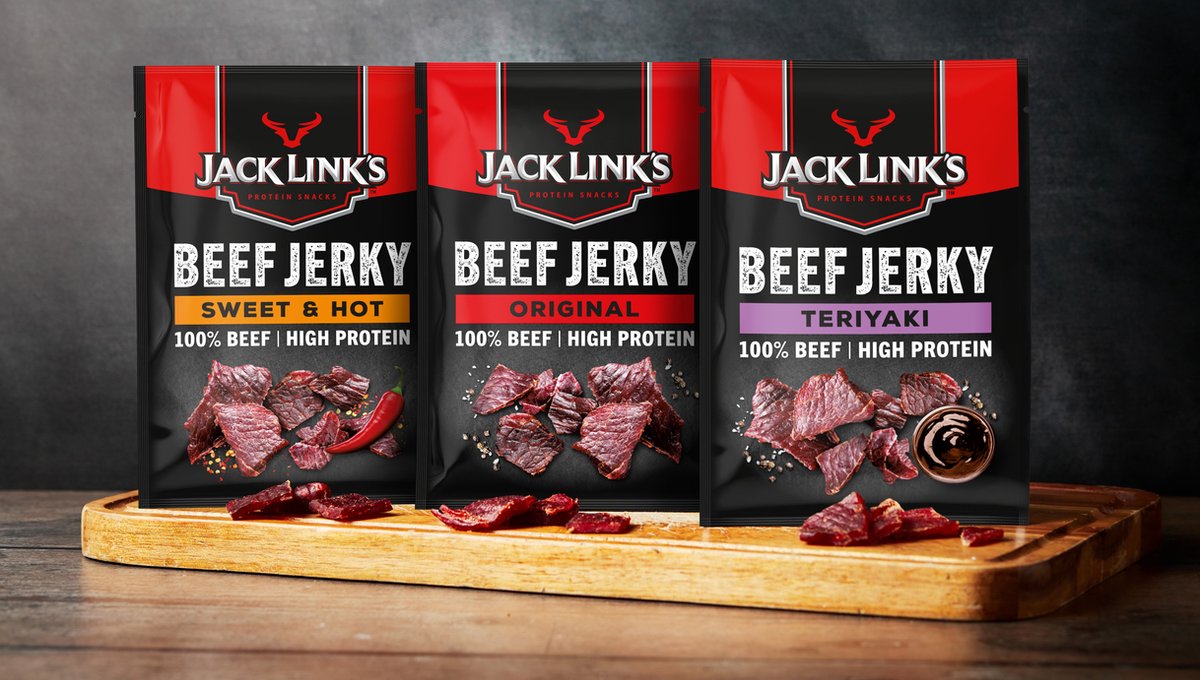
    Jack Link’s, the renowned meat snack company, has recently expanded its reach in the Australia and New Zealand (ANZ) region by acquiring Kooee! Snack Foods, a popular meat snack brand based in Tasmania. Effective immediately, the deal incorporates Kooee!, celebrated for its clean-label, grass-fed beef sticks, into the Link Foods Apac collection, which is Jack Link’s regional division headquartered in Australia.

    Integration and Expansion

    As a result of the acquisition, Kooee! will be integrated into Link Foods’ operations, thereby benefiting from increased production capabilities, wider distribution, and enhanced research and development opportunities. However, the brand will retain its unique identity and the integrity of its products.

    Shannon O’Connell, Managing Director of Link Foods Apac, lauded Kooee!’s brand attributes. He stated, “Kooee! possesses a brand personality that excellently mirrors the present-day snacking preferences of consumers – natural, rich in protein, and created with integrity. Its dedication to quality and clean ingredients is unparalleled and we consider this a significant addition to our expanding portfolio in Apac.”

    Strategic Acquisition

    This acquisition is a strategic move by Jack Link’s to invest in high-growth, health-conscious brands within the $15 billion global meat snacks market. It signifies the company’s commitment to providing healthier snacking alternatives to consumers.

    Kooee!, established by former consultants Shaun Malligan and Andy Fist in 2015, offers its products in Woolworths, Coles, and major health retailers across the country. The brand’s reputation for clean, high-quality ingredients aligns perfectly with Jack Link’s commitment to delivering wholesome, satisfying snacks.

    Questions & Answers

    What is the significance of Jack Link’s acquiring Kooee! Snack Foods?
    The acquisition signifies Jack Link’s strategic move to invest in high-growth, health-conscious brands to expand its portfolio in the global meat snacks market.

    What changes should Kooee! expect following the acquisition?
    Kooee! will be integrated into Link Foods’ operations, gaining increased production capabilities, wider distribution, and enhanced research and development opportunities.

    Will Kooee! maintain its brand identity after the acquisition?
    Yes, despite the acquisition, Kooee! will retain its distinct brand identity and the integrity of its products.


  • WhatsApp private group links visible in Google search results

    WhatsApp private group links visible in Google search results

    Journalist Jordan Wildon stated on Twitter that WhatsApp groups may not be as secure as people thought they were and shared a screenshot, showing some links to groups appearing in Google search results. Apparently, when users create a link to send to someone to join their group, it gets indexed by Google and is accessible.

    A WhatsApp’s spokesperson reminded people that links that should be private shouldn’t be disclosed on publicly accessible websites, apparently explaining that the issue was due to unreasonable public posting of some links. When a link for a private group is posted on publicly available websites, it can be used by anyone to join the group and in consequence, see all the messages in it.

    However, reverse engineer Jane Manchun Wong’s post on Twitter regarding the situation brings another perspective on it – she is stating this situation was a result of a misconfiguration which allowed around 470,000 Group Invite links to be indexed, and not because someone has not been careful enough when sharing private links. According to her, WhatsApp could change certain configurations in order to exclude the invite pages from appearing in search engines.

    Nevertheless, for the time being, WhatsApp maintains the position that this is intended behavior, not a bug.

  • How to open links in external browser with Facebook Messenger

    How to open links in external browser with Facebook Messenger

    For a while now, both the Facebook and Messenger app have been opening links in their own, internal browser — a simple webview window, which doesn’t support multiple tabs and is there to allow you to quickly interact with something on the web, and even allow said item to communicate back to your Facebook app instantly.

    That said, a lot of people find the internal browser annoying. Why? Well, sometimes you just tap on a YouTube video only to be greeted by a webview window, which opens a desktop version of the YouTube site that you are not even logged into. Lame. Sometimes, you want to open a web page in your Chrome or Safari browser so that it can stay there as an open tab. Other times, you get so into the information you are reading about that you want to quickly open a few more tabs on it and do a deeper research… oops, you can’t — you are not in your browser of choice, you are in Facebook’s webview.

    Needless to say, many users out there would prefer it if their links simply open in a default app of choice — if it’s a YouTube link, just have it open the video in the YouTube app; if it’s a web link, just launch it in Chrome or Safari.

    Well, there’s a solution for that problem… if you are on Android. That’s right, for some odd reason, Facebook does not allow iPhone users to opt out of using its internal browser. If you are on iOS, you are forced to manually swap apps, though it’s not as slow or painful as it may sound.

  • Singapore explores more air links to India

    Singapore explores more air links to India

    Singapore is exploring more airline services to India whichis expected to overtake China and Indonesia to become the fastest-growing air-traffic generating market for Changi Airport here, according to a media report.

    New services to Pune, Madurai, Bhubaneswar and Guwahati are being explored, to add to the 15 cities in India that airlines already operate to from Singapore, said Changi Airport Group’s managing director for air hub development Lim Ching Kiat.

    More than 1.7 million passengers travelled between Singapore and India between January-May this year, a 15 per cent jump over the same period of last year, Lim was quoted as saying by the Straits Times.

    Comparatively, two-day traffic between Singapore and China, as well as Indonesia, grew by 12 per cent and 9 per cent, respectively.

    Changi Airport handled 5 million passengers in May, a 4.6 per cent increase from the same month a year ago.

    Nine airlines, including Singapore Airlines, Scoot, Tigerair, Air India and Jet Airways, fly between Singapore and India.

    Among the Indian cities, top-performing routes include Mumbai, Chennai and Bangalore. The traffic increase has come on the back of additional capacity provided by airlines with more flights and flying bigger aircraft.

    This led to a 21 per cent increase in the number of seats on the Singapore-India sector in the first five months of this year, compared with the same period last year.

    Just last week, India’s largest domestic carrier, IndiGo, launched a new daily non-stop service between Singapore and Bangalore.

    A growing Indian expatriate population here and strong Singapore-India trade links are fuelling demand for travel between the two countries, with competition among carriers bringing fares down for travellers, the Singapore daily had experts as saying.

    According to the High Commission of India in Singapore, the city state is among India’s largest trade and investment partners, accounting for more than 22 per cent of India’s overall trade with ASEAN countries from 2014 to 2015.

    Indian travellers also featured significantly among transfer and fly-cruise passengers, Lim said.

    India is currently the third largest contributor of Changi Airport’s transfer traffic, after Australia and Indonesia.

    Last year, about 100,000 cruise passengers from India, the highest for any country, were registered by the Singapore Tourism Board.

  • Telstra debuts assured availability on two APAC links

    Telstra debuts assured availability on two APAC links

    Australia’s Telstra will introduce assured availability on two of Asia-Pacific’s busiest subsea cable routes,  Hong Kong to Singapore and Japan to Hong Kong.

    The company announced its new Always On service guarantee at the Pacific Telecommunications Council (PTC) conference in Hawaii on Monday.

    Telstra will use its significant APAC cable network to guarantee connectivity in the event of a cable cut or damage due to natural disasters. Telstra’s subsea cable network accounts for up to 30% of active intra-regional capacity in Asia-Pacific.

    Customers will be guaranteed connectivity for their subscribed bandwidth over one primary path and two protection paths through different cable systems along the same routes.

    Telstra’s executive director of global sales Ellie Sweeney said subsea cable damage can take weeks – or in extreme cases months – to fix.

    “With Telstra’s Always On service guarantee, customers will be rerouted to a protection path within a matter of hours initially and with automation we expect to bring this down to a few minutes in the future,” she said.

    “Connectivity is vital to the modern economy, with many consumers and businesses now relying on being able to connect anywhere at any time. Meeting customers’ expectations can be difficult when it comes to international connectivity, with cables at risk of service disruptions due to cable cuts caused by boats, earthquakes and typhoons.”

  • New MoU Promotes Hong Kong-India Business Links

    New MoU Promotes Hong Kong-India Business Links

    The Hong Kong Trade Development Council (HKTDC) today signed a Memorandum of Understanding (MoU) with its counterpart in India, the India Trade Promotion Organisation (ITPO) to strengthen economic partnership between Hong Kong and India and increase bilateral commercial activity, especially for small and medium-sized enterprises from both places.

    Win-win for Hong Kong and India

    “This MoU reflects the growing desire for deeper business links between India and Hong Kong, with our city serving as the gateway to the Chinese mainland and Asia for Indian companies. At the same time, Hong Kong enterprises see huge opportunities in India,” said Margaret Fong, Executive Director, HKTDC. “Closer cooperation between the HKTDC and ITPO will produce a win-win result for our business communities.”

    Ms Fong and LC Goyal, Chairman and Managing Director, ITPO, signed the MoU in Hong Kong. The agreement fosters cooperation in areas of mutual interest, including providing each other with information related to trade promotion activities, encouraging businesses to join events organised by the HKTDC and ITPO and identifying potential products and markets.

    “Both organisations reaffirmed their resolve to identify and promote key sectors under the ambitious ‘Make In India’ flagship initiative of the Government of India,” said Mr Goyal. “The partnership will also open new areas of growth for trade with ASEAN countries.”

    Long and strong business links

    Hong Kong and India enjoy close and strong bilateral ties formed over more than 150 years of business and cultural links. In 2015, India was Hong Kong’s fourth-largest export market with total exports to India expanding 8.1 per cent year-on-year to US$13.1 billion. On the other hand, India was Hong Kong’s ninth-largest source of imports in 2015, amounting to US$10.6 billion. India is Hong Kong’s seventh-largest trading partner globally with bilateral trade of US$23.7 billion last year.

    HKTDC & ITPO: a mutual mission to promote trade

    Established in 1966, the HKTDC is a statutory body in Hong Kong dedicated to promoting Hong Kong’s trade in goods and services. The HKTDC organises more than 30 major international trade fairs in Hong Kong each year. ITPO is the trade promotion agency of the Ministry of Commerce and Industry of India. ITPO provides a wide spectrum of services to trade and industry and acts as a catalyst for growth of India’s trade.