Tag: milestone

  • DBS, Singapores Largest Lender, Hits Record Market Value of $155B – A Milestone for Citys Stock Market

    DBS, Singapores Largest Lender, Hits Record Market Value of $155B – A Milestone for Citys Stock Market

    DBS Group, Singapore’s dominant bank, has reached a new milestone with its market value surpassing SGD200 billion (US$154.8 billion) as of Monday. This achievement marks a key moment for DBS, known for being the largest bank in Singapore in terms of asset size, and underscores the strength of the city-state’s stock market. The bank’s shares climbed almost 0.5%, closing at SGD70.79, following their peak at SGD70.80 in the session. To date, the bank’s gains this year total approximately 26%.

    Anticipation of Q2 Results Fuels Rally

    DBS’ increase in market valuation comes ahead of its second-quarter results announcement, scheduled for August 6th. The bank’s net profit for the first quarter had seen a 1% increase to reach SGD2.93 billion, largely driven by record income and robust wealth management fees. Experts believe that the share price surge is likely due to the improving clarity of earnings and a more favorable interest rate outlook. Future growth is anticipated if the banks present an optimistic outlook during their results release.

    Analyst Jayden Vantarakis, the head of Asean equity research at Macquarie Capital, stated, “We are entering an environment where we believe Singdollar rates will be supportive of improving net interest income alongside continued strength in non-interest income.”

    Singapore Banks Propel Straits Times Index

    The collective rally of DBS, OCBC, and UOB, the top three Singapore banks by market value, has boosted the Straits Times Index to all-time highs. Together, these banks make up over half of the index’s total weight.

    According to Vantarakis, the strengthening of the U.S. dollar, due to high U.S. interest rates, will have a positive influence on Singapore dollar rates. Moderate rate increases, he suggests, will encourage wealth inflows and improved asset quality.

    Vantarakis also anticipates a possible further re-rating of the sector, supported by growth in both net interest and non-interest income. He maintains that the Singapore dollar will remain a preferred currency due to the broad strength of the U.S. dollar.

    Lastly, Thilan Wickramasinghe, head of Singapore research and regional head of financials at Maybank Securities, added that the banks are well-positioned to gain from robust credit growth and wealth management fees. He also indicated that ongoing uncertainty in certain regional markets and conflicts in the Middle East, have likely directed safe-haven liquidity towards Singapore banks over the past week.

    Questions & Answers

    What factors have contributed to DBS’ market value surge?
    The bank’s rising market value has been attributed to a combination of an upcoming second-quarter results announcement, improving clarity of earnings, and a more favorable interest rate outlook.

    How have the top three Singapore banks impacted the Straits Times Index?
    The collective rally of DBS, OCBC, and UOB, which constitute over half of the Straits Times Index’s total weight, has propelled the index to all-time highs.

    What is the potential future outlook for the sector?
    There is a potential for further re-rating of the sector supported by growth in both net interest income and non-interest income. Moreover, the Singapore dollar is expected to remain a preferred currency due to the broad strength of the U.S. dollar.
  • Surging Ahead: Luckin Coffee Topples 35,000-Store Milestone with Rapid Global Expansion

    Surging Ahead: Luckin Coffee Topples 35,000-Store Milestone with Rapid Global Expansion

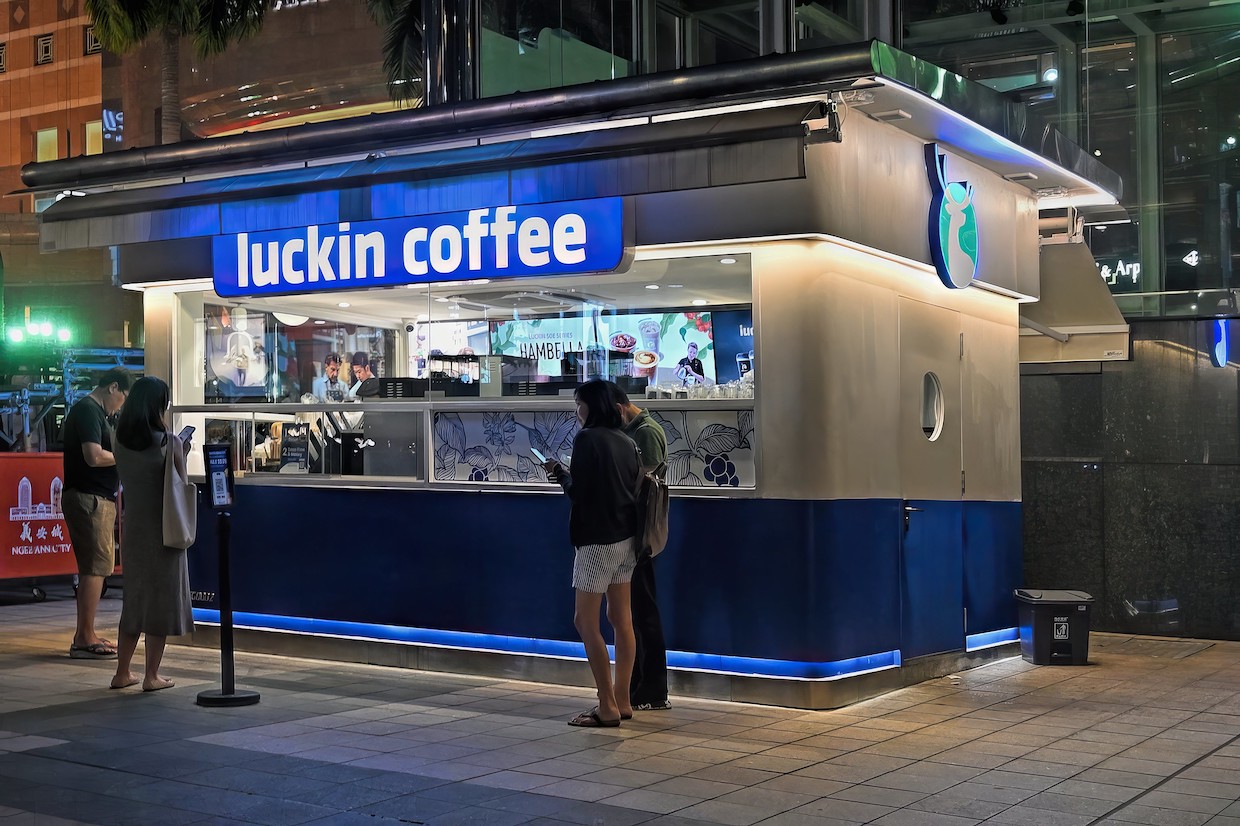
    Luckin Coffee, a leading coffee chain in China, recently celebrated a significant expansion mark. The brand’s international presence now spans over 35,000 locations across the globe. This development underscores Luckin’s rapid growth both in its home country and abroad, further solidifying its reputation as one of the most extensive coffee and beverage retail chains in terms of store count.

    Impressive Expansion Strategy

    Luckin’s monumental growth is primarily attributed to its aggressive expansion strategy. This strategy is rooted in establishing a dense urban presence, standardizing store layouts, and leveraging technology to facilitate rapid deployment and high-volume service.

    The chain’s growth trajectory has been consistent, with the opening of its 30,000th store earlier this year. This milestone was marked by the debut of a new ‘Origin Flagship’ store in Shenzhen, a significant departure from the brand’s usual small-scale, pickup-focused outlets. The two-story establishment covers an area of approximately 420 square meters.

    Sustained Revenue Growth and Product Demand

    Luckin Coffee has also enjoyed consistent double-digit revenue growth as the brand continues to expand its footprints. As of May 31, the company reported that its non-coffee beverages’ cumulative sales had exceeded RMB 20 billion (equivalent to US$ 2.9 million). The sales report also noted that 22 of its products had sold over 100 million cups each. This shows the strong consumer demand for its extensive beverage offerings beyond coffee.

    Over the years, the company has constructed an integrated supply chain and operational infrastructure designed for large-scale operations. This includes expanded global sourcing from key regions such as Brazil, Ethiopia, and Indonesia, and domestic agricultural areas like Yunnan and Guangxi.

    Questions & Answers

    How many locations does Luckin Coffee have worldwide?
    Luckin Coffee’s global presence now spans over 35,000 locations worldwide.

    What is the foundation of Luckin Coffee’s expansion strategy?
    Luckin Coffee’s expansion strategy is rooted in establishing a dense urban presence, standardizing store layouts, and leveraging technology to facilitate rapid deployment and high-volume service.

    How has Luckin Coffee’s non-coffee beverages performed in terms of sales?
    As of May 31, Luckin Coffee reported its non-coffee beverages’ cumulative sales had surpassed RMB 20 billion (equivalent to US$ 2.9 million). Furthermore, 22 of its products had each sold over 100 million cups.

  • Cathay Pacific Makes Historic Move with HKD Fixed-Rate Notes Release: A Milestone in Hong Kong’s Airline Sector

    Cathay Pacific Makes Historic Move with HKD Fixed-Rate Notes Release: A Milestone in Hong Kong’s Airline Sector

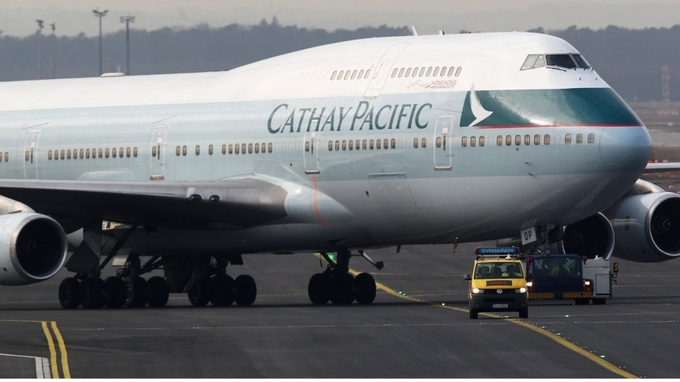
    Cathay Pacific, headquartered in Hong Kong, has unveiled its intention to release three-year benchmark-sized Hong Kong dollar senior unsecured fixed-rate notes. The airline has set the initial price guidance in the area of 4.1%.

    Details of the Bond Issuance

    The bonds are expected to come to maturity on April 29, 2029, with interest payments to be made on a semi-annual basis. The settlement of the bonds is anticipated to occur on April 29, 2026. The proceeds from the bond issuance will be lent to the airline and its subsidiary companies to be used as working capital and for other general corporate purposes.

    HSBC has played an instrumental role as Joint Bookrunner and Joint Lead Manager in Cathay’s public bond issuance of HKD2,080 million. The bond issuance also coincides with Cathay’s celebration of its 80th anniversary in Hong Kong.

    Significance of the Bond Issuance

    This represents Cathay’s inaugural HKD public bond issuance, marking its first re-entry into the public bond market since 2021. Eugene Ng, HSBC Head of Debt Capital Markets, Greater China, emphasised the importance of the bond issuance, calling it a testament to the strength of the HKD bond market as a reliable source of local-currency funding for top-tier Hong Kong corporations.

    Ng further highlighted that this is the largest HKD public bond issuance by a Hong Kong non-public sector corporate and the first from the airline sector, thereby indicating an expansion in the local issuer base. He expressed HSBC’s commitment to continue to leverage its local-currency expertise and capabilities to assist issuers in gaining access to the HKD market as part of their solid funding strategies. This move supports Hong Kong’s Fixed Income and Currency Roadmap to deepen liquidity and broaden participation.

    Bank of China (Hong Kong), BNP Paribas, and DBS are the other joint bookrunners and joint lead managers for this bond issuance.

    Questions & Answers

    When are the bonds expected to mature?
    The bonds are set to mature on April 29, 2029.

    What will the proceeds from the bond issuance be used for?
    The proceeds will be directed towards the airline and its subsidiaries for purposes such as working capital and other general corporate needs.

    Who are the joint bookrunners and joint lead managers for this bond issuance?
    HSBC, Bank of China (Hong Kong), BNP Paribas, and DBS are the joint bookrunners and joint lead managers for this bond issuance.

  • KK Super Mart Eyes $750M IPO Boost: A New Milestone in Malaysia’s Thriving Equity Markets

    KK Super Mart Eyes $750M IPO Boost: A New Milestone in Malaysia’s Thriving Equity Markets

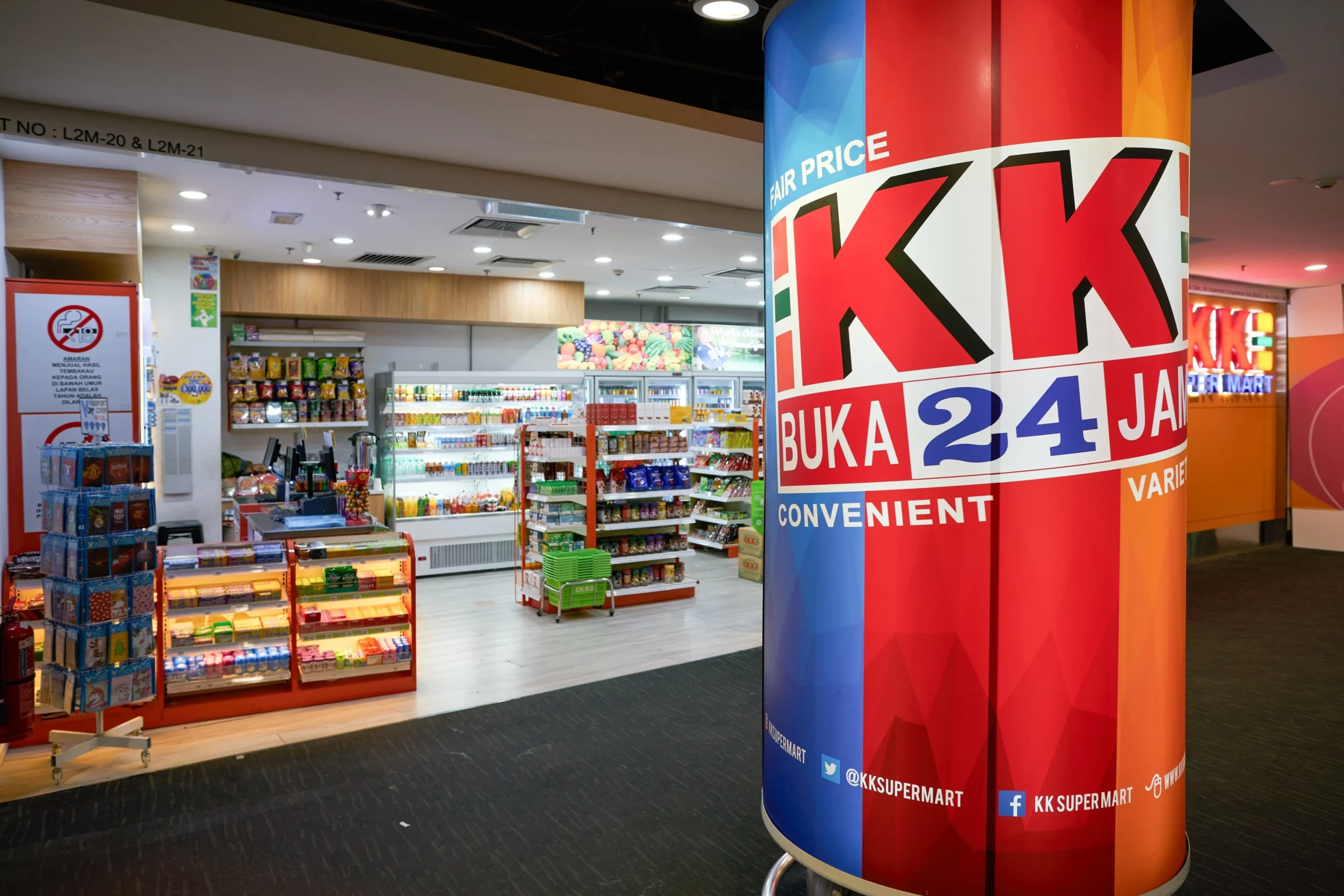
    KK Super Mart, a prominent convenience-store chain in Malaysia, is purportedly preparing for an initial public offering (IPO) that could potentially reach a staggering US$750 million in the latter half of this year.

    Company Ownership and Valuation

    The anticipated IPO is estimated to encompass over 25 percent of the company’s total valuation. A significant 95 percent stake in the business is held by the Chairman, KK Chai. The remaining 5 percent is owned by his spouse and fellow director, Loh Siew Mui. This proposed IPO is predicted to play a significant role in shaping the company’s financial future and market standing.

    KK Super Mart’s Presence and Operations

    Known to many as KK Mart, the company operates an impressive network of more than 900 stores across Malaysia, India, and Nepal. Their broad geographical presence has established them as a significant player in the retail sector in these regions.

    Malaysia’s Equity Market Resurgence

    This revelation emerges amidst a resurgence in Malaysia’s equity markets. The Kuala Lumpur Composite Index has reached its highest trading levels since 2018. Moreover, the country listed a record 60 companies in the previous year, marking the highest number in over two decades.

    Market Position and Competition

    As Malaysia’s second-largest minimarket chain, KK Super Mart holds a substantial presence in the retail industry. A successful listing could place it in direct competition with other publicly traded counterparts like 99 Speedmart, boasting over 3000 stores, and Eco-Shop Marketing with upwards of 400 outlets.

    Questions & Answers

    What is the projected value of KK Super Mart’s IPO?
    The company’s IPO is rumored to be worth up to US$750 million.

    Who holds the majority stake in KK Super Mart?
    KK Chai, the Chairman of the company, holds a commanding 95 percent stake.

    Where does KK Super Mart operate?
    KK Super Mart has a network of over 900 stores spread across Malaysia, India, and Nepal.

  • Domino’s Pizza China Celebrates Expansion Success with 1400th Store Milestone

    Domino’s Pizza China Celebrates Expansion Success with 1400th Store Milestone

    Domino’s Pizza China (DPC Dash) has successfully surpassed its 1400th store landmark as it steadily propels the progression of its network.

    DPC Dash is identified as the sole master franchisee for Domino’s Pizza in Mainland China, Hong Kong, and Macau. The company recently inaugurated its 1405th store in Sanya, located in the Hainan Province. This establishment not only denotes its entrance into the 72nd city within the Chinese Mainland but also aligns with its marker on the Hong Kong Stock Exchange (1405.HK).

    According to DPC Dash, this milestone symbolizes the triumph of its ‘go broader, go deeper’ expansion strategy for its store network and the robust customer demand for the pizza brand. This accomplishment comes after the company’s impressive performance the previous year, during which it added 307 new stores net and broadened its reach into 21 new cities.

    The company has stated that it will persist with further developing its 4D strategy, which includes ‘Development, Delicious Pizza at Value, Delivery, and Digital’. This approach aims to tap into China’s market consumption potential while ensuring continuous innovation and sustainable operations.

    Questions & Answers

    What is Domino’s Pizza China’s (DPC Dash) expansion strategy?
    – Domino’s Pizza China or DPC Dash follows a ‘go broader, go deeper’ expansion strategy. This method focuses on increasing the number of stores and expanding into new cities.

    What is the 4D strategy that Domino’s Pizza China (DPC Dash) is focusing on?
    – The company’s 4D strategy consists of ‘Development, Delicious Pizza at Value, Delivery, and Digital’. This approach aims to capitalize on the potential of China’s market consumption while maintaining continuous innovation and sustainable operations.

    What recent milestone has Domino’s Pizza China (DPC Dash) achieved?
    – The company recently surpassed its 1400-store milestone, with the opening of its 1405th store in Sanya, located in the Hainan Province. This accomplishment also marked its entrance into the 72nd city in the Chinese Mainland.

  • Domino’s Pizza China Hits Milestone with Over 1300 Stores, Continues Aggressive Expansion Strategy

    Domino’s Pizza China Hits Milestone with Over 1300 Stores, Continues Aggressive Expansion Strategy

    In 2025, Domino’s Pizza China, also known as DPC Dash, boosted its expansion efforts by opening hundreds of new stores, increasing its presence throughout Mainland China. DPC Dash holds the exclusive master franchise rights for Domino’s Pizza in mainland China, Hong Kong, and Macau.

    By the end of 2020, DPC Dash had a total of 1,315 stores, owing to the successful launch of 307 new locations. The company also ventured into 21 new cities, expanding its reach to 60 cities nationwide.

    This upward trend continues into the new year, with the company inaugurating 62 additional stores in 46 cities in just the first month.

    The impressive results achieved by DPC Dash are a testament to its strategic approach, labeled “go broader, go deeper.” This strategy merges geographic growth with initiatives aimed at enhancing customer loyalty. These initiatives include increasing store density, introducing new products, and improving operational procedures.

    Looking forward, DPC Dash plans to further delve into the local market to analyze consumption potential and enhance operational efficiency.

    Questions & Answers

    What is DPC Dash’s strategy for expansion in China?

    DPC Dash uses a “go broader, go deeper” strategy which emphasises both geographical expansion and building customer loyalty.

    How many new stores did DPC Dash open in 2020?

    DPC Dash opened 307 new stores in 2025.

    How many cities does DPC Dash currently have a presence in?

    As of the beginning of the new year, DPC Dash has expanded to a total of 60 cities across China.

  • True Corporation Sets Telecom Milestone as Thailand’s First with Dual Autonomous Network Certifications

    True Corporation Sets Telecom Milestone as Thailand’s First with Dual Autonomous Network Certifications

    True Corporation, a leading telecom provider in Thailand, has elevated the standards of the nation’s telecommunications sector by securing two globally recognized certifications from TM Forum, an international consortium of technology and telecom firms. True Corporation has received Level 4.0 Autonomous Network (AN) validation for “Service Assurance for Individual Services” and “RAN Energy Efficiency Optimization.”

    Setting New Standards in Telecommunication

    This achievement of Level 4.0, the highest level accomplished by operators across the globe so far, makes True Corporation the sole operator in Thailand to make considerable strides in these two significant areas. This accomplishment highlights True Corporation’s commitment to designing an intelligent network that not only boosts customer experiences but also advocates for environmental sustainability.

    Khurrum Ashfaque, the Chief Network Officer of True Corporation, stated that achieving both Autonomous Network Level 4.0 certifications from TM Forum marked a substantial milestone for the company. It reflected their dedication to upgrading their network services to international standards while managing energy sustainably. He emphasized their focus on becoming a global-class intelligent network service provider and evolving towards an autonomous network capable of managing itself with supreme efficiency. This will be achieved by harnessing advanced artificial intelligence (AI) to deliver high-quality services to clients and continually support the growth of Thailand’s digital infrastructure.

    Validation of True Corporation’s Innovations

    TM Forum evaluated both of True Corporation’s projects and deemed them as comprehensive case studies with operator-grade capabilities. This confirmed that these projects, designed with a focus on service quality and customer experience, could be implemented by other service providers as well.

    AN Levels, as defined by TM Forum, are global standards used to gauge the automation capabilities of telecom networks. They cover diverse use cases, including radio access network (RAN) issue management and signal quality enhancement. The system is divided into five levels, going from Level 1 that requires manual human control, to Level 5, which represents a fully autonomous network operating independently of human intervention. To reach Level 4.0 requires the use of advanced AI for management and is a strategic target for leading telecom service providers worldwide.

    Two Significant Achievements

    True Corporation achieved AN Level 4.0 certification in the “Service Assurance for Individual Services” category, which recognized it as a highly autonomous network. This system was developed in collaboration with Ericsson and leverages AI to manage the network autonomously and efficiently under current conditions.

    Additionally, in the category of “RAN Energy Efficiency Optimization,” True Corporation has obtained AN Level 4.0 certification for a project that emphasizes comprehensive base-station energy management.

    Driving Towards a Sustainable Future

    These global achievements underscore True Corporation’s transformation into a leading telecom-tech company in Thailand with a focus on creating a green network. The company aims to reduce its greenhouse gas emissions by 42% by 2030 compared to 2020 levels and attain net-zero emissions by 2050, in line with SBTi standards.

    Questions & Answers

    What is the Autonomous Network Level 4.0 certification?
    The Autonomous Network Level 4.0 certification is a globally recognized validation by the TM Forum. It recognizes telecom networks that use advanced artificial intelligence for management, enhancing service quality and customer experience.

    What does achieving this certification mean for True Corporation?
    Attaining the Autonomous Network Level 4.0 certification highlights True Corporation’s dedication to upgrading network services to international standards and managing energy sustainably. It propels them closer to becoming a global-class intelligent network service provider.

    How is True Corporation contributing to environmental sustainability?
    True Corporation is focused on creating a green network. They aim to reduce their greenhouse gas emissions by 42% by 2030 compared to 2020 levels and strive to achieve net-zero emissions by 2050, in line with SBTi standards.

  • Philippine Sensation Mary Grace Cafe Set to Debut in Singapore: A Milestone in Global Expansion

    Philippine Sensation Mary Grace Cafe Set to Debut in Singapore: A Milestone in Global Expansion

    The popular food and beverage chain from the Philippines, Mary Grace Cafe, is set to establish its inaugural full-service cafe in Singapore in the coming year. This expansion represents the brand’s initial venture into international markets.

    Mary Grace Cafe was established in 2006 and has since flourished, boasting over 140 cafes and kiosks scattered throughout the Philippines. The brand is renowned for its inviting and cozy store design, reminiscent of a homely atmosphere.

    The Singapore branch’s menu will showcase the brand’s beloved culinary offerings. Customers can expect to enjoy hot chocolate, ensaymadas, cheese rolls, and a variety of traditional Filipino dishes like tapsilog and Vigan longganisa sandwiches.

    For Mary Grace Dimacali, the founder, president, and CEO of the brand, the expansion signifies not just a business milestone but also a personal achievement. She reflected on her humble beginnings when she first started baking in her home kitchen, admitting that she never anticipated the brand would extend its reach beyond the Philippines.

    Questions & Answers

    What is Mary Grace Cafe?
    Mary Grace Cafe is a well-known food and beverage chain from the Philippines, noted for its warm, home-style store design.

    What new venture is Mary Grace Cafe embarking on?
    Mary Grace Cafe is preparing to launch its first full-service cafe in Singapore next year, marking its debut in overseas markets.

    What are some signature items on the Mary Grace Cafe menu?
    The menu of Mary Grace Cafe features items such as hot chocolate, ensaymadas, cheese rolls, and traditional Filipino dishes like tapsilog and Vigan longganisa sandwiches.

  • Private Banks Surge as Client Assets Shatter Milestone Barrier

    Private Banks Surge as Client Assets Shatter Milestone Barrier

    Last year proved to be a remarkable period for Swiss private banks, as they reveled in impressive results bolstered by favorable financial markets and substantial net new money inflows. This surge in assets under management (AuM) occurred amid a backdrop of shrinking institutions.

    Double-Digit Gains Across the Board

    A recent study by consultancy PwC reveals that in 2024, all segments of Swiss and Liechtenstein private banks enjoyed double-digit growth in their assets under management. PwC’s analysis covered 74 banks, categorizing them into small (AuM 50 billion francs).

    Market Optimism Fuels Growth

    So what fueled this growth? It was a combination of robust markets and an uptick in investor confidence, particularly in the United States. All banks reaped the benefits of favorable market shifts, with several even hitting record highs in client assets. This wave of market confidence also spurred strong net new money inflows.

    Large Private Banks Struggle to Keep Up

    In a notable twist, while large private banks collectively surpassed the 3 trillion francs mark with a total of 3,025 billion francs, their contribution to overall net new money growth was relatively tepid at just 2.2 percent. In contrast, their smaller and mid-sized counterparts showcased impressive inflow rates of 4.5 percent and 4.9 percent, respectively.

    PwC attributes the standout performance of specific banks to their consistent strategic execution, successful client transitions from major competitors, sharp business positioning, and targeted geographical strategies. However, PwC cautions that early market turbulence in 2025 may cloud these promising figures.

    Net New Money Inflows Projected to Slow

    Looking ahead, while private banks are likely to continue attracting net new money, PwC anticipates a moderation in inflow rates due to intensifying competition. 2024 marked a pivotal moment as interest income, which surged in 2023 due to rising interest rates, began to decline by March 2024, putting pressure on margins.

    The traditionally strong revenue driver for private banks—fee- and commission-based income (Net Fee and Commission Income, NFCI)—has returned to the forefront. NFCI margins on assets held steady, and overall NFCI saw an increase of 7-9 percent across all peer groups, helping to compensate for lower interest income.

    Small Banks Feel Interest Rate Pinch

    An average look over three years reveals that client deposits constituted about 16 percent of AuM at small banks, 11 percent at mid-sized banks, and 10 percent at large ones. This dependency on interest income is underscored by loan exposure, with loans typically representing 8 percent of volumes at small and mid-sized banks and 5 percent at large institutions.

    Facing Margin Pressures

    Since 2022, NFCI margins have flattened, reflecting heightened price sensitivity among clients and fierce competition. The industry also faces structural challenges: increased IT expenditures, shifting client expectations, ongoing digitalization, and new regulatory demands are putting traditional business models to the test and driving up operational costs.

    Embracing Consolidation

    The landscape of wealth management banks has shrunk dramatically, dropping from over 150 to fewer than 90 in recent years, with expectations that it may soon dip below 60. Yet, this consolidation isn’t all doom and gloom. PwC suggests that “fewer but stronger banks will shape the market,” as those that remain are proving their adaptability in this ever-evolving environment.

    Questions & Answers

    Which sectors of Swiss private banks saw the most growth in assets last year? All customer segments, including small, mid-sized, and large banks, recorded double-digit growth in assets under management.

    What was a key factor driving net new money inflows in 2024? Investor optimism, particularly in the U.S., alongside positive market developments, greatly contributed to net new money inflows.

    What challenges do private banks face heading into 2025? Intensifying competition and declining interest margins pose significant challenges, with higher operational costs further complicating traditional business models.

  • New Milestone for Hong Kong as a Financial Center

    New Milestone for Hong Kong as a Financial Center

    The Hong Kong Monetary Authority has granted the first virtual banking licenses to three institutions. According to their business plans, these banks will launch their services within six to nine months.

    The three banks that received a license are Livi VB, SC Digital Solutions and ZhongAn Virtual Finance to operate in the form of a virtual bank. The granting of these banking licenses takes effect today, according to a media release on Wednesday.

    According to their business plans, these three newly licensed virtual banks intend to launch their services within 6 to 9 months. After the granting of the above banking licenses, the number of licensed banks in Hong Kong will be increased to 155.

    Reinforcing Hong Kong’s Position

    The Hong Kong Monetary Authority (HKMA) is making good progress in the processing of the remaining 5 virtual bank applications, according to further information.

    «It is a major milestone in reinforcing Hong Kong’s position as a premier international financial center. I believe that virtual banks will not only help drive fintech and innovation but also bring about brand new customer experiences and further promote financial inclusion in Hong Kong», Norman T.L. Chan, CEO of the HKMA, said.

    Targeting the Retail Public and SMEs

    I believe that virtual banks will have to offer innovative and customer-centric services in order to attract customers. Moreover, in targeting the retail public and SMEs as their main client base, virtual banks should help promote financial inclusion in Hong Kong, he added.

    The U.K. market, where neobanks and digital-only challengers have been around for a while, shows there’s a big chance new players will grab a significant chunk of new financial services revenue in the near future in Hong Kong, but that doesn’t mean all is lost for traditional banks here, Fergus Gordon, a managing director at Accenture who leads its Banking practice in Asia Pacific and Africa, said.

    Some Consolidation Expected

    Virtual banks will need some years to establish themselves, then there will likely be some consolidation among some of the players, and in the meantime, traditional players should continue to rapidly reconfigure their branch networks to become more focused on experiences and use technology to make the transition from digital to physical and back much more seamless, he added.