Retail News CRM

Tag: milk

  • Dairy Farm announced difficult third quarter

    Dairy Farm announced difficult third quarter

    Dairy Farm International Holdings Limited today issues its Interim Management Statement for the third quarter of 2020. The Group’s overall performance in the third quarter improved relative to the first half.  While the Group’s results continued to be affected by the COVID-19 pandemic, the impact was partially offset by the receipt of government support.  Grocery Retail performance continued to be supported by operational improvements as part of the Group’s multi-year transformation program, as well as changing customer behaviors as a result of the pandemic. Reduced sales and profit in Health and Beauty and Maxim’s, however, continued to impact the Group’s overall performance.

    The Group’s Grocery Retail businesses reported strong like-for-like sales growth, which led to strong profit growth.  In Southeast Asia, changing customer behaviors, as well as the ongoing execution of the Group’s multi-year transformation plan, supported strong profit growth in Singapore and Malaysia.  Performance in Indonesia, however, was impacted in the period by government restrictions on movement and significantly reduced traffic into hypermarkets and malls.

    The Group’s Convenience businesses reported improved like-for-like sales performance compared to the first half of the year.  However, 7-Eleven Singapore continued to be impacted by reduced footfall.  Better sales performance drove higher profitability compared to the first half.

    The performance of the Group’s Health and Beauty businesses were significantly impacted by the effects of the measures taken by governments to counter the pandemic, as well as the continuing lack of custom from overseas tourists in Hong Kong.  In North Asia, whilst like-for-like sales performance improved compared to the first half, the profitability of Mannings continued to be materially impacted by the lack of tourists.  In Southeast Asia, like-for-like sales were affected by reduced footfall in malls which, in turn, impacted profitability.

    Sales in the Home Furnishings business were higher than the equivalent period last year and like-for-like sales improved compared to the first half.  Strong e-commerce growth and the annualization impact of new stores opened in the prior year more than compensated for the impact of pandemic-related measures on customer visits.  Profitability also improved compared to the equivalent period last year, as a result of lower pre-opening expenses and improved gross margins resulting from the lower cost of goods sold.

    The Group’s 50%-owned associate, Maxim’s, continued to be impacted by government restrictions on movement, as well as a reduction in the number of restaurant customers.  However, mooncake sales performance during the Mid-Autumn Festival was encouraging.  Yonghui’s underlying performance in the third quarter was impacted by reduced sales, while Robinsons Retail’s underlying performance was affected by government lockdown restrictions on its discretionary retail formats.

    The launch of Yuu Rewards, Hong Kong’s largest loyalty program, at the end of July was a significant milestone in driving the Group’s digital transformation.  The popularity of the program has exceeded the Group’s own expectations, with two million members joining in the first month.  High membership engagement has supported the performance of the program sponsors.

    On 16th October 2020, the Group announced it had signed an agreement to deepen its partnership with Philippines-listed multi-format retail group Robinsons Retail Holdings Inc. (‘RRHI’) and to build a leading pharmacy business in the Philippines by combining the Group’s interest in wholly-owned Rose Pharmacy Inc. with RRHI subsidiary South Star Drug Inc.  This transaction, which included the sale of Dairy Farm’s direct interest in Rose Pharmacy Inc, completed on 30th October 2020.

    The well-being of our employees and customers remains a top priority, and the Group continues to take a number of measures to mitigate the impact of the pandemic, including the adoption of a range of health and safety measures.  Given the extraordinary circumstances, we would like to express our deep gratitude for the continuing dedication and resolve of team members in putting customers first during these difficult times. 

    Dairy Farm remains committed to its multi-year transformation which is delivering sustainable improvements to the business over time and continues to pursue the strategic initiatives which will drive medium- to long-term growth.

    Dairy Farm is a leading pan-Asian retailer.  The Group, together with its associates and joint ventures, operates over 10,000 outlets – including grocery retail, convenience stores, health and beauty stores, home furnishings stores, and restaurants – employing some 240,000 people, and had total sales in 2019 exceeding US$27 billion.  Dairy Farm International Holdings Limited is incorporated in Bermuda and has a standard listing on the London Stock Exchange, with secondary listings in Bermuda and Singapore.  It is a member of the Jardine Matheson Group.

  • Investors fail in plans to increase Vinamilk stake

    Investors fail in plans to increase Vinamilk stake

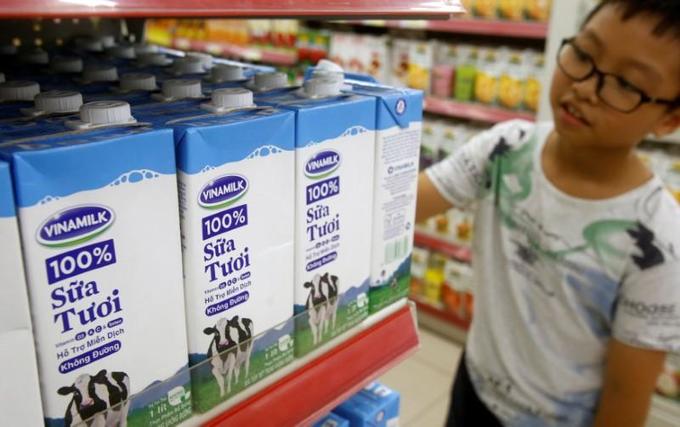
    Vietnam’s sovereign fund and two Singaporean investors failed to acquire stakes in dairy giant Vinamilk this month as they had planned. A subsidiary of the State Capital Investment Corporation (SCIC) was unable to buy 225,000 VNM shares, or a 0.01 percent stake, due to “market volatility”, according to a Vinamilk statement on Friday.

    SCIC is the largest shareholder in Vinamilk with a 36 percent stake. F&N Dairy Investments Pte Ltd failed to buy 17.41 million shares, or nearly 1 percent, between July 17 and August 14. It already owns 17.69 percent.

    Another company, Platinum Victory Pte Ltd, too failed to buy a nearly 1 percent stake and its ownership stays at 10.62 percent. Both Singaporean companies have registered again to buy in September. They have been seeking to increase their stakes in Vinamilk repeatedly since early 2018 but in vain.

    Vinamilk saw first-half pre-tax profit rise by 3 percent year-on-year to over VND7 trillion ($302 million). CEO Mai Kieu Lien said earlier the company had stocked ingredients so that it could have an advantage when the trade is disrupted by travel bans. The company, which holds half the Vietnamese dairy market, last year acquired a majority stake in a competitor, Moc Chau Milk, and has recently announced plans to set up a cafe chain in Vietnam and increase its investment in a Laotian subsidiary.

  • Moc Chau Milk wants to allow 100 percent foreign ownership

    Moc Chau Milk wants to allow 100 percent foreign ownership

    Moc Chau Milk, a subsidiary of Vietnam’s biggest dairy company Vinamilk, wants to increase its foreign ownership cap to 100 percent in order to raise funds.

    It seeks to do this by removing some business registries in which the government restricts 100 percent foreign ownership, such as wholesale trade of fertilizer and pesticides.

    A company statement said it is seeking shareholders’ approval for plans to raise funds for expansion. It plans to issue more shares to existing shareholders this year to raise 1.2 trillion ($52 million), which will be used to invest in a farm with a capacity of 4,000 cows, upgrade the existing farm and build a new factory.

    It is also eying a listing on Vietnam’s main bourse, the Ho Chi Minh City Stock Exchange, within nine months after it receives shareholders’ approval.

    Moc Chau Milk became a subsidiary of dairy giant Vinamilk in December last year. At that time, Vinamilk had more than half the nation’s dairy market share, and Moc Chau Milk had 9 percent.

    Mai Kieu Lieu, CEO of Vinamilk and chairwoman of Moc Chau Milk, had said earlier that Vinamilk has a strong distribution network in the south that will help Moc Chau Milk, which is based in the northern province of Son La, to expand nationwide.

    Vietnam’s dairy market value rose 8.9 percent to VND121 trillion ($5.2 billion) last year, according to market research firm Euromonitor.

  • Vinamilk signs $20 mln Dubai export contract

    Vinamilk signs $20 mln Dubai export contract

    Vinamilk has signed a $20 million deal with a distributor in Dubai to supply dairy products from the second quarter of 2020.

    Vietnam’s biggest dairy company said in a statement that the deal with the distributor, whom it did not identify, was signed at the Gulfood Dubai 2020 trade exhibition this week.

    The Middle East currently accounts for 75 percent of Vinamilk’s exports. Its other major foreign markets are Japan, South Korea, Singapore, and China.

    Vinamilk, one of the world’s 50 largest dairy producer, saw its export revenues rise 14.8 percent last year to VND5.17 trillion ($223 million).

  • Vinamilk acquires majority stake in competitor

    Vinamilk acquires majority stake in competitor

    Vietnam’s biggest dairy company Vinamilk has acquired a majority stake in Moc Chau Milk, entrenching its market dominance.

    Vinamilk, formally Vietnam Dairy Products Jsc, has increased its ownership in GTNfoods from 43.17 percent to 75 percent, the dairy giant said in a recent statement. GTNfoods own a 51 percent stake in Moc Chau Milk, the biggest dairy producer in the north.

    The majority of shares were bought on December 18, when the Ho Chi Minh Stock Exchange recorded almost VND1.8 trillion ($77.54 million) worth of GTN shares being acquired at the price of VND22,800 (98 cents) per share, 5.5 percent higher than market value.

    Vinamilk made the acquisition two days after shareholders of GTNfoods approved the sale. In March, the board of GTNfoods rejected Vinamilk’s proposal to increase ownership.

    Analysts say that the deal will expand the ecosystem of Vinamilk amidst slower growth. Moc Chau Milk accounts for 9 percent of the market, which would take Vinamilk nine years to gain at its current expansion rate, according to stock brokerage Saigon Securities Inc (SSI).

    Vinamilk accounts for over half of the dairy market. In the third quarter, it posted revenues of VND14.29 trillion ($615.58 million), up 4 percent year-on-year, against a target of 7 percent.

    Vietnam’s dairy output rose 6.9 percent to 936,000 tons last year, and is set to rise to one million tons next year and two million tons by 2030, according to the Ministry of Agriculture and Rural Development.

    The firm exports dairy products to 46 markets with 70 percent going to the Middle East.

  • One percent Vinamilk stake out of reach for Singaporean investors

    One percent Vinamilk stake out of reach for Singaporean investors

    Two Singaporean investors in Vinamilk have failed repeatedly to increase their stake in the dairy giant by one percent.

    In the latest instance, investment firm Platinum Victory has once again failed to increase its stake, Vinamilk said Monday.

    The Singapore-based company has been unable to increase its stake from 10.62 percent to 11.62 percent as of November 15 “due to unfavorable market conditions,” the Vinamilk statement said.

    Platinum Victory, a unit of Singapore’s leading diversified conglomerate Jardine Cycle & Carriage, has immediately registered again to buy the 1 percent stake between November 21 and December 20, Vinamilk added.

    Since early last year, another Singapore-based company, F&N Dairy Investments, which is the largest foreign investor in Vinamilk at 17.31 percent, has also been unsuccessful in repeated attempts to raise its stake by one percent.

    Vinamilk is among the largest listed companies in the country with a market cap of VND208.96 trillion ($9 billion). From January to September, the company’s after-tax profit rose 5.8 percent year-on-year to VND7.92 trillion ($341.5 million). The state is its largest stakeholder at 36 percent.

    Platinum Victory had last month proposed to spend $60 million on increasing its stake in Vietnam’s industrial appliance maker REE from 24.9 percent to 35.01 percent.

  • Vietnam to begin export of milk to China

    Vietnam to begin export of milk to China

    Vietnam will export milk for the first time to China in October to make up a shortfall there. China has given export permits to five Vietnamese companies — Vinamilk, TH True Milk, Moc Chau Milk, NutiFood, and Hanoimilk — Tong Xuan Chinh, deputy head of the Ministry of Agriculture and Rural Development’s department of livestock production, said.

    Vietnam’s dairy exports are set to rise from $120 million last year to $300 million next year with the addition of this new market, he added.

    A spokesperson for Vinamilk, the country’s largest dairy company, said it would first export yoghurt to China.

    Milk production in China, the world’s second largest dairy market behind the U.S., only meets around 75 percent of demand, according to its Ministry of Agriculture and Rural Affairs.

    China is set to import 39.43 million tons of milk and other dairy products this year, including 750,000 tons of fresh milk and 650,000 tonnes of milk powder, it said.

    Vietnam’s dairy output rose 6.9 percent to 936,000 tons last year, and is set to rise to one million tons next year and two million tons by 2030, according to the country’s agriculture ministry.

    It exports dairy products to 46 markets with 70 percent going to the Middle East, it added.

  • Travellers Can Now Order Boba Milk Tea On AirAsia Flights

    Travellers Can Now Order Boba Milk Tea On AirAsia Flights

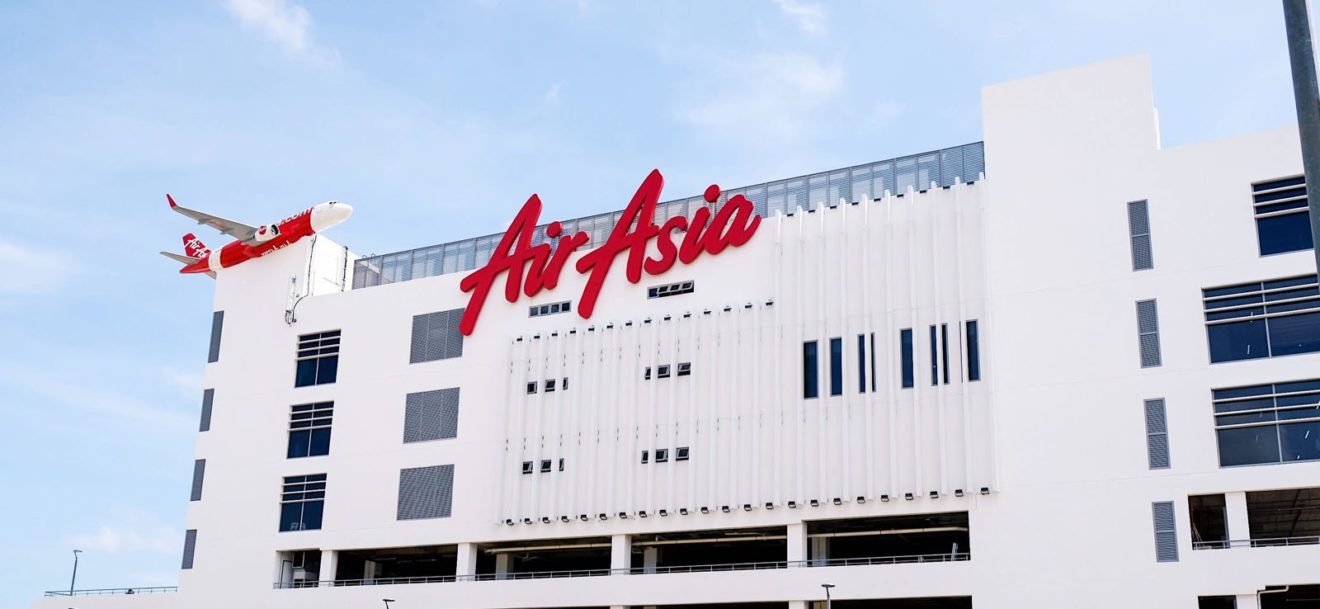
    AirAsia Thailand recently introduced bubble milk tea in their in-flight menu – much to the delight of customers. There’s even a poster that says that passengers can now enjoy Boba milk tea 35,000 feet in the air.

    You’ve probably come across articles on how unhealthy bubble tea drinks can be, due to its sugar intake, sweeteners and artificial flavourings. To combat that, AirAsia Thailand has come up with a healthier option flyers.

    Enter AirAsia’s milk tea with konjac bubbles. According to Google, konjac (also known as konnyaku and devil’s tongue) “is high in fiber and has almost no calories”. Made from the root of a plant, some of its alleged health benefits include helping people to lose weight.

    Its boba also come in diamond shapes. There is only 1 flavoured bubble tea on the menu for the time being though.

    Priced at ฿75 (RM10), it is available on AirAsia Thailand and AirAsiaX Thailand flights.

  • GTN Foods rejects Vinamilk acquisition bid

    GTN Foods rejects Vinamilk acquisition bid

    Vinamilk’s bid to acquire a 49 percent stake in GTN Foods, which owns 51 percent of Moc Chau Milk, has been rejected. The board of GTN Foods passed a resolution turning down the public offer made by Vinamilk, Vietnam’s largest dairy company. It would have increased Vinamilk’s stake in GTNFoods from 2.32 percent to 49 percent.

    The offer was for 116.7 million shares at VND13,000 (56 cents) per share for a total value of VND1.5 trillion ($64.5 million).

    At the meeting March 23, the board was evenly split with three directors each supporting and opposing the Vinamilk bid. But the chairman Ta Van Quyen had the casting vote and he voted against the offer.

    In a report filed to the State Securities Commission, the company explained that Vinamilk is a direct competitor of Moc Chau Milk, one of its main subsidiaries.

    The acquisition and resulting 49 percent stake would have made Vinamilk a principal shareholder. GTN indirectly owns 51 percent of Moc Chau Milk through its subsidiary the Vietnam Livestock Corporation (Vilico).

    Besides, Vinamilk had only registered its public offer but had not written to GTNFoods about the plan, direction or strategy to contribute to the development of the company, it said. “They have not given us sufficient grounds to agree to the public offer.”

    Moc Chau has the biggest dairy farm in the north, and in recent years has been a major revenue earner for GTN.

    Vinamilk has a 58 percent share of the dairy market and Moc Chau, around 2.7 percent, according to international consumer statistics firm Kantar Worldpanel.

    Vietnam’s dairy industry reported revenues of more than VND100 trillion ($4.4 billion) in 2017, with Vinamilk commanding more than a 50 percent market share.

    According to a report by the EU-Vietnam Business Network, the market is expected to double in size by 2020 as the country’s population, personal incomes and dairy consumption increase.

  • Dairy Farm Group CEO says restructure will take some years

    Dairy Farm Group CEO says restructure will take some years

    Dairy Farm Group has warned shareholders that its restructure will take five years to complete.

    “There are few ‘quick fixes’ and no ‘silver bullets’,” CEO Ian McLeod told shareholders in the company’s results filing last week. “Continuous improvement against a deliverable, long-term strategic and operational plan is needed.”

    McLeod says the Strategic Review launched soon after his arrival has created a three-step process to restore strong profitability to the Hong Kong-listed, multinational retail business: Building a Solid Foundation, Delivering Consistently Well, and Driving the Dairy Farm Difference.

    “We began the urgent work required to assess and address the significant issues faced by the group, especially those within our food business, to support the changing demands of the customers. While the Strategic Review also highlighted opportunities to improve performance in other parts of the group, the food business is clearly the one requiring the greatest level of focus and short-term action,” he said.

    “It is very clear that the level of change necessary to deliver the required improvements will take at least five years to deliver in a sustainable way.”

    Phase one is now underway with the first step to bring in the right leadership talent with the capability and determination to deliver significant and meaningful transformational change. Seven of the 10-strong leadership team are new to the business, and two have revised responsibilities.

    McLeod said they have already begun to instil the right functional discipline, efficiency and business capabilities to deliver on the turnaround plan.

    A key finding from the Strategic Review was that the company was organised and deployed as multiple business units by banner, country or format – or all of those.

    “While allowing for locally based decision-making, our way of working was to act as a series of small businesses, without shared learning, quality functional specialism, or the consistency of scale and expertise one might expect from one of Asia’s largest retailers. Our businesses have now been centralised into two core trading divisions, covering North Asia and Southeast Asia,” said McLeod.

    No more hypermarkets

    “As new leaders have joined, we have begun to address key areas where we have fallen behind, most notably in store format development and digital expansion. As an example, having used stronger consumer insights and intelligence to analyse our customer offering and product selection, we have decided no longer to build hypermarkets. While some of these stores remain successful and continue to show growth, it is clear that this format has struggled to deliver effective returns across the food retail industry in Southeast Asia and needs to be reshaped.

    “We are now introducing pilot stores, redefining space allocation and trialling new innovations in our formats, to place greater emphasis on fresh food, demographic range optimisation and, where relevant, even repurposing the space altogether.”

    One of the group’s hypermarkets in Indonesia is being repurposed as an Ikea this year, with the prospect of this conversion offering an opportunity to accelerate the expansion of Ikea in that market, while also addressing an underperforming food store.

    “While we have strengthened our digital capability to better respond to expanding opportunities in e-commerce, we are starting from a very low base and are playing catch up,” said McLeod.

    Last financial year, Dairy Farm Group took a US$453 million hit from writedowns relating to restructuring costs, but McLeod says this was the down side of an essential shift towards delivering quality service, value and trust to the company’s customers.

    Five priorities

    The company has set five strategic priorities it says will enable it to grow moving forward:

    • Grow in China.
    • Maintain strength in Hong Kong.
    • Revitalise Southeast Asia.
    • Build capability.
    • Drive digital innovation.

    Grow in China: “China is one of the largest and fastest growing consumer markets in the world, and one where convenience, health and brand trust represent encouraging market potential for our businesses there. While we have been represented in China for more than 25 years with 7-Eleven and 14 years with Mannings, our scale of growth has not fulfilled its potential. With both businesses centred in Guangdong province, which is home to 100 million people, we should be able to pool resources and grow these businesses more successfully.

    “By more effective definition of range, space, store size and location, we believe there are opportunities for both businesses to achieve stronger growth in scale in the coming years. We have developed a strong and growing relationship with Yonghui, which continues to impress, and we anticipate further shared learning and idea generation between the two businesses going forward. We also continue to develop relationships with China’s technology companies, with a series of trials taking place to better understand the changes in customer expectations as regards the use of technology in this market and beyond.”

    Maintain strength in Hong Kong: “We are in the fortunate position that, within our home market of Hong Kong, we have a series of very strong brands with a track record of effective performance. Each of Wellcome, Mannings, 7-Eleven and Ikea have high brand presence, strong brand awareness with consumers and importantly, high degrees of brand trust.

    “We have the further benefit of our long-standing relationship with Maxim’s, which continues to be a thriving business with effective presence in each area of the market and a growing portfolio of renowned international brands such as Starbucks, Genki Sushi, The Cheesecake Factory and the recently added Shake Shack, which has exceeded all performance expectations.

    “Mannings had an exceptional year in 2018, but Wellcome’s performance disappointed. While the underlying business remains strong, substantial cost rises, particularly on rents, have had a material effect on year-on-year profitability. As a result of the Strategic Review, we will reconsider our approach to opening new space, where we open it, and seek to deliver greater range clarity by demographic across the Wellcome portfolio of retail brands.

    “Ikea benefitted from a full year of operation by a fourth store opened in the last quarter of 2017, which cemented our leading position within the home furnishings market in Hong Kong. While we have faced some cost offsets with currency fluctuations on cost of goods and new startup costs, we are very confident about our underlying position for Ikea and its growth potential not only in Hong Kong but also in the other markets where we operate the franchise.

    “We will also drive further innovation with a planned relaunch of e-commerce and building on the recent experience of a pop-up Christmas store in Hong Kong.

    Revitalise Southeast Asia: “We have some serious problems in our food business that require radical solutions and actions. This will necessitate a fundamental re-engineering of our food offer and our customer proposition plus significant rationalisation of space and of our general merchandise offer, converting hypermarkets to large food format stores over time.

    “In Southeast Asia our core issue rests within our Giant brand and particularly hypermarkets in Malaysia, Indonesia and Singapore. We have significantly underinvested in these hypermarkets in the past and they now need a course correction to reshape and resize our offering, to ensure it is fit for purpose to meet the demands of modern-day consumers and keep pace with the rising middle class.

    “We have already begun the process of redesigning our proposition in fresh and grocery and we have pilot propositions already on the ground. Our Malaysian pilot is a redefined hypermarket where we have halved the general merchandise range size and achieved double-digit sales growth. We are also putting more emphasis on fresh food, investing in value on grocery and streamlining general merchandise and apparel to optimise our range and space by category. In another pilot conversion, general merchandise has been reduced by a third while fresh space has been increased by more than 70 per cent.

    “While it remains very early days for the pilots being developed in each key market of Indonesia, Malaysia and Singapore, we have been encouraged by their early performance. The predominant challenges rest within mass-market hypermarkets and supermarkets where locations have been lacking in investment for years, or were simply built in the wrong place, or the competitive landscape has changed. These fundamental retail errors are now being addressed head on.

    “Encouragingly, our upscale stores within these markets are showing signs of recovery as we raise operating standards of quality, freshness, availability and even hygiene. That said, the challenge that we face in right-sizing our food business in Southeast Asia is substantial and will take considerable time to achieve.

    “Our Guardian Health and Beauty business remains a significant opportunity for us in Southeast Asia. Countries which were demonstrating trading difficulties a couple of years ago are beginning to grow, if not thrive, under new leadership and we will more aggressively invest in the expansion and format development of our health and beauty business in the region.”

    Build capability: McLeod says the new management team has brought increased experience and capability “absolutely key” to the success of the work ahead.

    “Embedding their knowledge and expertise right across the group is now the priority. With around 200 years of retail and consumer experience collectively across the leadership team we now have the ability to drive the considerable changes necessary to not only improve Dairy Farm’s performance, but to transform the business to a modern-day retailer focused on delivering what customers want, where and how they want it.”

    The new team is supported by more than 30 new senior management appointments across the group, “adding further experience and energy to the transformation effort”.

    Drive digital innovation: “Retail is seeing rapid change and Dairy Farm has been slow in responding to the pace of digital change. We have significantly underinvested in digital (people and technology) and as a result are behind the curve. Last year, we began to change this.”

    Two new roles have been created: chief digital officer and chief technology officer, both people taking up their appointments in the last quarter of last year.

    “They have already begun to review all our current ad-hoc programmes and initiatives, to reset and reshape our group approach to a badly needed IT infrastructure upgrade and accelerate our core SAP system rollout, as well as carrying out a review of our digital priorities within each business and region. We have made some improvements in developing our digital offer, with numerous initiatives and pilot schemes now in place, as well as developing partnerships with key Chinese technology companies. The reality, though, is that our digital capability is in its infancy; something we believe is vital that we change.”

    Writedowns

    Dairy Farm Group’s $453 million hit in last year’s results comprise a write down for goodwill associated with the Giant business across the region, along with impairing underperforming assets, booking onerous lease provisions relating to underperforming stores, writing off poor-quality stock, and incurring various business correction costs. McLeod said this allows the company to build for the future and draw a line under the weakness of the past.

    Most of the $453 million comprised non-cash items, with the net cash impact estimated at less than $50 million.

    However, this amount was partially offset by a gain from the exchange of Dairy Farm Group’s food business in the Philippines for a share in Robinsons Retail and the exit of its Giant hypermarket in Vietnam which was taken over by Auchan. An an impairment of goodwill was realised relating to Rose Pharmacy in the Philippines while taking full ownership of this business.

    Elsewhere, there were gains on the sale of several food properties which the company did not consider strategic assets to own moving forward.

    These positive factors reduced the overall impact of non-trading items to $332 million for the year.
  • Nestle India plans up to 3-dozen product launches in 2019, eyes higher exports

    Nestle India plans up to 3-dozen product launches in 2019, eyes higher exports

    FMCG major Nestle India has lined up nearly two-three dozen products that it plans to launch in calender year 2019 across categories in the country to drive its aggressive growth plans, Chairman and Managing Director Suresh Narayanan said.

    According to a report, the company, whose 6 percent revenues come from exports, is now looking to tap more overseas markets by targeting countries with higher Indian diaspora such as SAARC and South East Asia.

    “In 2018, our core brands have performed well…We look forward for greater acceleration as we go forward….We have two-three dozen projects (products) in pipeline for launch in 2019. These products are across categories,” Narayanan said.

    Reiterating the company’s focus on the Indian market, he said, “As an organisation the one clarion call that we are working to is that we are in the business of growth to thrive and not to survive…It is not a survival mode that we look at the opportunity in India or the opportunity for growth..but a thriving mode.”

    While the domestic market has been driving its growth, Narayanan said Nestle India would now look at expanding its export basket.

    The company is looking at tapping overseas market with higher Indian diaspora such as SAARC and South East Asia to expand its exports, he added.

    Commenting on fake news on nutrition, Narayanan said it was affecting choices and lives of people.

    Therefore, Nestle India in partnership with Google, using a chatbot mechanism, will launch a personalised information dissemination website called ‘Ask Nestle’, he added.

    “Ask Nestle seeks to be a reliable and anchor platform for nutrition and lifestyle information for customers. India is the only market where this website is being launched,” he was further said.

    When asked if the company will in future also link Ask Nestle with its own e-commerce website for selling its products, he said it is a possibility.

    “…Going forward it could morph into something bigger in terms of linking up with our own e-commerce intentions, if at all it happens. But today it is only for information sharing, dissemination and helping,” he said.

    When asked if there has been any impact on sales of Maggi noodles after Supreme Court revived government’s case in the National Consumer Disputes Redressal Commission (NCDRC) against Nestle India seeking damages of Rs 640 crore for alleged unfair trade practices, false labelling and misleading advertisements, Narayanan said “No”.

    When asked if the company is looking for manufacturing capacity expansion, he said: “…This is a question that is coming up with active consultation. That exercise is on but I can not share more at this stage”.

    Typically, our approach is to augment (capacity) at our existing factories, but it does not rule out a new manufacturing facility, Narayanan said.

    Nestle India, at present, has eight factories across the country.

    The company also did not rule out evaluating inorganic growth in the country and said it may consider it if any opportunity arises.

  • Vinamilk to open plant in Myanmar, its 2nd in Southeast Asia

    Vinamilk to open plant in Myanmar, its 2nd in Southeast Asia

    Vietnam’s biggest dairy company plans to open a plant in Myanmar this year and is preparing to enter Indonesia and China. The Myanmar factory will be Vinamilk’s second in Southeast Asia after acquiring its first in Cambodia. It is in discussion for one joint venture in Indonesia. Myanmar is one of Vinamilk’s strategic markets to offset declining revenues in the Iraqi market, which once accounted for 60 percent of its exports. In 2017, Vinamilk reported falling exports for the first time in 20 years due to political tensions in the Middle East.

    In the latest year for which export figures are available, 2017, it shipped products worth VND7.4 trillion ($312 million), a 4.2 percent decline from the previous year.

    The company is also preparing to enter the Chinese market later this year. Chinese authorities are expected to sign a draft protocol in April this year allowing Vietnamese dairy products to be exported.

    Vinamilk is planning a change in export strategy.

    “The company will move from traditional exports to intensive cooperation with distribution partners in new key markets, and gradually build production facilities in potential markets such as Myanmar,” Vinamilk chief executive Mai Kieu Lien told shareholders in 2018.

    She added that the company has set aside $750 million for acquisitions, building new facilities and setting up cattle farms between 2017 and 2021.

    It now has 13 plants and 10 dairy farms in Vietnam, a plant each in the U.S., New Zealand and Cambodia and a subsidiary in Poland.

    In all, it has three wholly-owned foreign subsidiaries: Driftwood Dairy Holding Corporation in the U.S, Angkor Dairy Products Co., Ltd, in Cambodia, and Vinamilk Europe Spo’stkaz Ograniczona Odpowiedzialnoscia in Poland.

    It holds a 22.81 percent stake in a joint venture with Miraka Dairy in New Zealand and has a Thailand-based trading office.

    Last year the company paid $19.74 million to buy a 51 percent stake in Laotian company Lao–Jagro Development Xiengkhouang Co., Ltd, to set up a series of hi-tech beef and dairy farms based on Japanese technology.

    Vinamilk’s products are available in 46 countries and territories, including some demanding markets such as Japan, the U.S., Australia, New Zealand, and Canada.

    Last year the company reported profits before tax of VND11.52 trillion ($499.26 million), up 12.05 percent from the previous year, on revenues of VND52.63 trillion ($2.28 billion), down 2.93 percent.

  • Milkbasket India launches operations in Bengaluru

    Milkbasket India launches operations in Bengaluru

    Milk delivery startup Milkbasket Wednesday said it plans to hire 2,500 people over the next two years and announced the launch of its services in Bengaluru. According to a report, the company said it will hire people to support the operations and growth in Bengaluru. “Within next two years, we hope to have the largest operations in Bengaluru and will be creating employment for over 2,500 people in the process,” Anant Goel, Co-founder and CEO, Milkbasket was quoted by PTI as saying.

    Hiring will be made for ground operations as well as the corporate office, the company said. The startup has 1,500 employees in Delhi-NCR and Bengaluru.

    It has raised close to US$ 16 million from Mayfield Advisors, Beenext, Kalaari Capital, Unilever Ventures, Lenovo and Blume Ventures.

  • Fonterra India appoints Ishmeet Singh CEO

    Fonterra India appoints Ishmeet Singh CEO

    Fonterra Future Dairy Pvt Ltd, a new joint venture between global dairy nutrition company Fonterra Co-operative Group and new age FMCG company Future Consumer Limited, announced the appointment of Ishmeet Singh as its CEO, effective from January 7, 2019.

    Singh, a seasoned leader with a proven track record of profitable growth and business expansion, joins the business to deliver its ambition to bring high value and innovative dairy products to Indian consumers.

    Singh was a member, Western Region Committee (WRC) of the American Chamber of Commerce. He is a physics graduate, and has a Master’s in Management Studies from Mumbai’s Sydenham Institute.

    Singh says, “Over the next seven years dairy consumption is set to increase by 82 billion litres – seven times the forecasted growth for China. I feel extremely privileged to be able to lead this new opportunity as we look to bring an enhanced dairy experience to Indian consumers. I firmly believe through Fonterra Future Dairy we have a huge opportunity to challenge and change the market, combining Fonterra’s global dairy innovation, manufacturing and nutrition expertise with Future Group’s leadership in retail and distribution expertise and infrastructure.”

    Leading the growth and expansion of some of the world’s largest, trusted flagship brands in the Indian market, is familiar territory to Singh, having worked over the last 25 years at top multinational and FMCG companies such as Mattel, Vodafone, Hindustan Unilever, and Coca-Cola.

    Most recently, he led the business at Mattel, largest toy manufacturer in the world, as its Country Manager for India and the SAARC region. Previously, he held the role of Business Head at Vodafone India for over 5 years, leading remarkable revenue growth and retail expansion in many circles including Mumbai and Maharashtra.

    Managing Director Future Consumer Limited and Board Member of Fonterra Future Dairy, Ashni Biyani says, “We’re delighted to have someone of Ishmeet’s calibre to lead the business. As a sales and marketing professional at heart, we see him being instrumental in helping us build a brand that Indians love.”

    Fonterra’s Managing Director of Sri Lanka and the Indian Subcontinent, Chairman of Fonterra Future Dairy, Sunil Sethi said, “As our exciting growth phase picks up steam, it is critical that people with the right experience, values and drive are in place to steer the business forward. We are in the process of putting together a first-class team to build a fantastic legacy for the business. Through the ambition we have set, we believe the learning experience and possibilities here at Fonterra Future Dairy are limitless. Ishmeet is a proven and highly accomplished professional with a passion for leading teams to transformative success and growth. With his vision and deep personal commitment to society, we are confident that he will bring immense value in delivering on our ambition.”

  • Singapore company seeks to increase stake in Vietnam’s largest dairy firm

    Singapore company seeks to increase stake in Vietnam’s largest dairy firm

    A Singaporean shareholder in Vinamilk is seeking to increase its stake in Vietnam’s largest dairy firm. Jardine Cycle & Carriage Ltd has registered to buy 17.41 million shares between January 9 and February 7 through its wholly-owned local subsidiary, Platinum Victory, which will enable it to increase its ownership in Vinamilk from over 10 percent to 11.62 percent.

    At a proposed price of VND125,000 ($5.38) per share, the transaction will be worth VND2.17 trillion ($94.42 million).

    Last year Jardine, Vinamilk’s third largest shareholder, had registered on six different occasions to buy 14-17 million shares to increase its stake to above 11 percent, but was unsuccessful due to unfavorable market conditions.

    It first bought a 3.3 percent stake in Vinamilk in November 2017. Within a month it raised its ownership to over 10 percent.

    In April last year a representative of Jardine’s parent company, Jardine Matheson, became a Vinamilk board member.

    Hong Kong-based Jardine Matheson is one of Asia’s biggest conglomerates with interests in luxury hotels, motor vehicles, property, food retail, transport financial services, and agribusiness and revenues of almost $16 billion in 2017.

    F&N Dairy Investments, a subsidiary of Singapore-based Fraser & Neave Ltd, which is backed by Thai tycoon Charoen Sirivadhanabhakdi, owns a 17.31 percent stake in Vinamilk.

    Vietnam’s dairy industry reported revenues of more than VND100 trillion ($4.4 billion) in 2017, with Vinamilk commanding more than a 50 percent market share.

    According to a report by the EU-Vietnam Business Network, the market is expected to double in size by 2020 as the country’s population, personal incomes and dairy consumption increase.