Tag: road

  • Diptyque Unveils Flagship Store on Hong Kongs Hollywood Road, Blending Parisian Chic with Local Culture

    Diptyque Unveils Flagship Store on Hong Kongs Hollywood Road, Blending Parisian Chic with Local Culture

    Diptyque, the prominent fragrance brand, has extended its presence in Hong Kong with the inauguration of a flagship store on Hollywood Road. This move comes as an expansion of its initial street-level concept store, which was launched in the same location a year prior.

    Positioned in the Central district, the 100 square meter, two-story boutique embodies a Parisian-inspired interior design aesthetic. The store’s aesthetics pay homage to the architectural and cultural heritage of Hong Kong. An eye-catching feature is the green, double-story facade, with a neon installation embedded in the upper-floor window. This vibrant piece is the brainchild of renowned Hong Kong artist Jive Lau.

    On stepping inside, one can observe an intricate blend of traditional Parisian apartment elements, fused with mosaic details inspired by the old-style storefronts and antique shops in Hong Kong. The ground floor gives prominence to an expansive wooden island display, exhibiting a range of products and gift items. Fragrance and home collections are also showcased within wall niches peppered around the area.

    The first floor plays host to a number of collections, inclusive of the Les Mondes de Diptyque and Les Essences de Diptyque ranges. Also featured on this level is an Art of Body Care section, boasting a fresco by the Redfield and Dattner design studio.

    According to Diptyque, the primary aim behind this flagship store was to curate an immersive retail experience. This concept revolves around the themes of fragrance, home decor, and body care rituals. Established in Paris in 1961, Diptyque is a specialist in fragrances, scented candles, and decorative objects. It currently runs multiple outlets and counters throughout Hong Kong, including locations at IFC Mall, Harbour City, and K11 Musea.

    Questions & Answers

    What inspired the interior design of the new Diptyque flagship store?
    The interior design draws inspiration from traditional Parisian apartments and Hong Kong’s cultural and architectural heritage, evident in the mosaic detailing echoing older shopfronts and antique stores.

    What kind of collections does the Diptyque store house?
    The store houses various collections including Les Mondes de Diptyque and Les Essences de Diptyque, as well as an Art of Body Care section.

    What is the concept behind Diptyque’s Hong Kong flagship store?
    The concept of the store is to provide an immersive retail experience centered around fragrance, home decor, and body care rituals.

  • Kering’s Revenue on the Upswing: Luxury Brand’s Road to Recovery Gains Momentum

    Kering’s Revenue on the Upswing: Luxury Brand’s Road to Recovery Gains Momentum

    Kering, the luxury conglomerate that owns brands such as Gucci and Balenciaga, has noted a sequential improvement in its revenue for the first quarter, indicating that the company’s recovery is gaining momentum.

    Quarterly Revenue Trends

    The company reported a revenue of €3.568 billion (US$4.2 billion) for the quarter that concluded on March 31. This figure represents a 6% decline year-on-year on a reported basis, but remained steady on a comparable basis.

    The fashion and leather goods segment, however, witnessed a 9% reduction in sales as per reports, and a 3% drop on a comparable basis. Brands like Saint Laurent, Bottega Veneta, Balenciaga, and Brioni showcased year-on-year growth during the quarter, with North America emerging as a significant influencer of this positive trend.

    Brand Performance

    Gucci, one of Kering’s prime assets, saw a 14% dip in revenue on a reported basis, and an 8% decrease on a comparable basis. Despite a promising 8% increase in North America, declining trends in Asia-Pacific (Apac) and Western Europe overshadowed its performance.

    On the other hand, Kering’s jewelry section reported a 14% increase in sales on a reported basis and a 22% surge on a comparable basis. This rise was attributed to strong performance across key regions, with Japan and Apac leading the demand.

    Kering Eyewear also experienced growth, with a 3% increase in sales on a reported basis and a 7% increase on a comparable basis.

    CEO’s Statement

    Kering’s CEO, Luca de Meo, highlighted that the stabilizing revenue signals an essential first step towards the group’s recovery. He further added, “Nearly all our Houses delivered growth during the quarter, with a particularly strong contribution from jewelry. Gucci remains our top priority. A comprehensive turnaround is underway, with decisive actions across client, distribution, and, above all, the offer.”

    Attention to Conflict Zones

    The luxury group acknowledged the ongoing conflict in the Middle East as an area of ‘heightened attention.’ The region, with around 1100 employees and 79 stores, accounts for approximately 5% of total retail revenue. The first quarter saw an 11% decline in retail revenue in the region, following growth in the initial two months. Despite temporary disruptions in some areas, the entire retail network is currently operational, as per the company’s statement.

    Questions & Answers

    What was the overall revenue of Kering for the first quarter?
    The overall revenue for the first quarter was €3.568 billion (US$4.2 billion).

    Which brand under Kering saw significant growth in this quarter?
    The brands Saint Laurent, Bottega Veneta, Balenciaga, and Brioni reported year-on-year growth in the quarter.

    How has the conflict in the Middle East affected Kering’s retail revenue in the region?
    There was an 11% decline in retail revenue in the Middle East in the first quarter.

  • Revolutionizing Road Safety: Jio and NHAI Unveil Real-Time Mobile Alerts on Indian Highways

    Revolutionizing Road Safety: Jio and NHAI Unveil Real-Time Mobile Alerts on Indian Highways

    In a collaborative effort to enhance safety and enrich the travel experience along National Highways, the National Highways Authority of India (NHAI) has partnered with Reliance Jio to launch a telecom-based alert system. This system will provide motorists with real-time alerts as they approach high-risk zones such as accident-prone areas, sectors with stray animals, fog-affected strips, or regions with temporary traffic alterations.

    How the Safety Alert System Works

    The alert system will tap into Jio’s comprehensive 4G and 5G coverage, delivering notifications through various channels such as SMS, WhatsApp, and high-priority automated calls. The system will automatically cater to all Jio users traveling on or near the National Highways without any need for extra equipment.

    Future plans involve integrating this system with NHAI’s digital services like the ‘Rajmargyatra’ app and the 1033 emergency helpline, creating a unified digital safety network. Given Jio’s vast user base of over 500 million, the telecom giant’s far-reaching network will be instrumental in extending this initiative nationwide.

    Official Statements

    The Chairman of NHAI, Shri Santosh Kumar Yadav, highlighted the significance of this initiative, stating it as a significant advancement in offering timely and trustworthy information to commuters. He believes that this will allow motorists to make informed decisions and adopt safer driving habits well ahead of time, setting a new standard in tech-enabled road safety management on National Highways.

    Jio’s President, Mr. Jyotindra Thacker, further stressed the abilities of telecom networks in efficiently disseminating alerts, which can significantly contribute to reducing the number of road accidents. The initial phase of the project will concentrate on identifying high-risk areas and setting up real-time alert systems in selected NHAI regional centers, all while complying with regulatory and data protection requirements.

    Future Prospects

    In addition to the partnership with Jio, NHAI also envisions collaborating with other telecom operators to expand the alert system’s reach across the nation. This initiative exemplifies NHAI’s commitment to embracing advanced, scalable solutions aimed at improving safety, intelligence, and efficiency on India’s highways.

    Questions & Answers

    What is the purpose of the telecom-based alert system introduced by NHAI and Jio?
    The system aims to enhance safety and enrich the travel experience on National Highways by providing real-time alerts to motorists as they approach high-risk areas.

    How will the alerts be delivered to the users?
    The alerts will be disseminated through various channels such as SMS, WhatsApp, and high-priority automated calls using Jio’s comprehensive 4G and 5G coverage.

    What is the future plan for this safety alert system?
    The plan involves integrating this system with NHAI’s existing digital services and collaborating with other telecom operators to expand the system’s reach nationwide.

  • Tiffany & Co. Opens Luxurious New Store In Hong Kong, Merging Vintage Design With Contemporary Craftsmanship

    Tiffany & Co. Opens Luxurious New Store In Hong Kong, Merging Vintage Design With Contemporary Craftsmanship

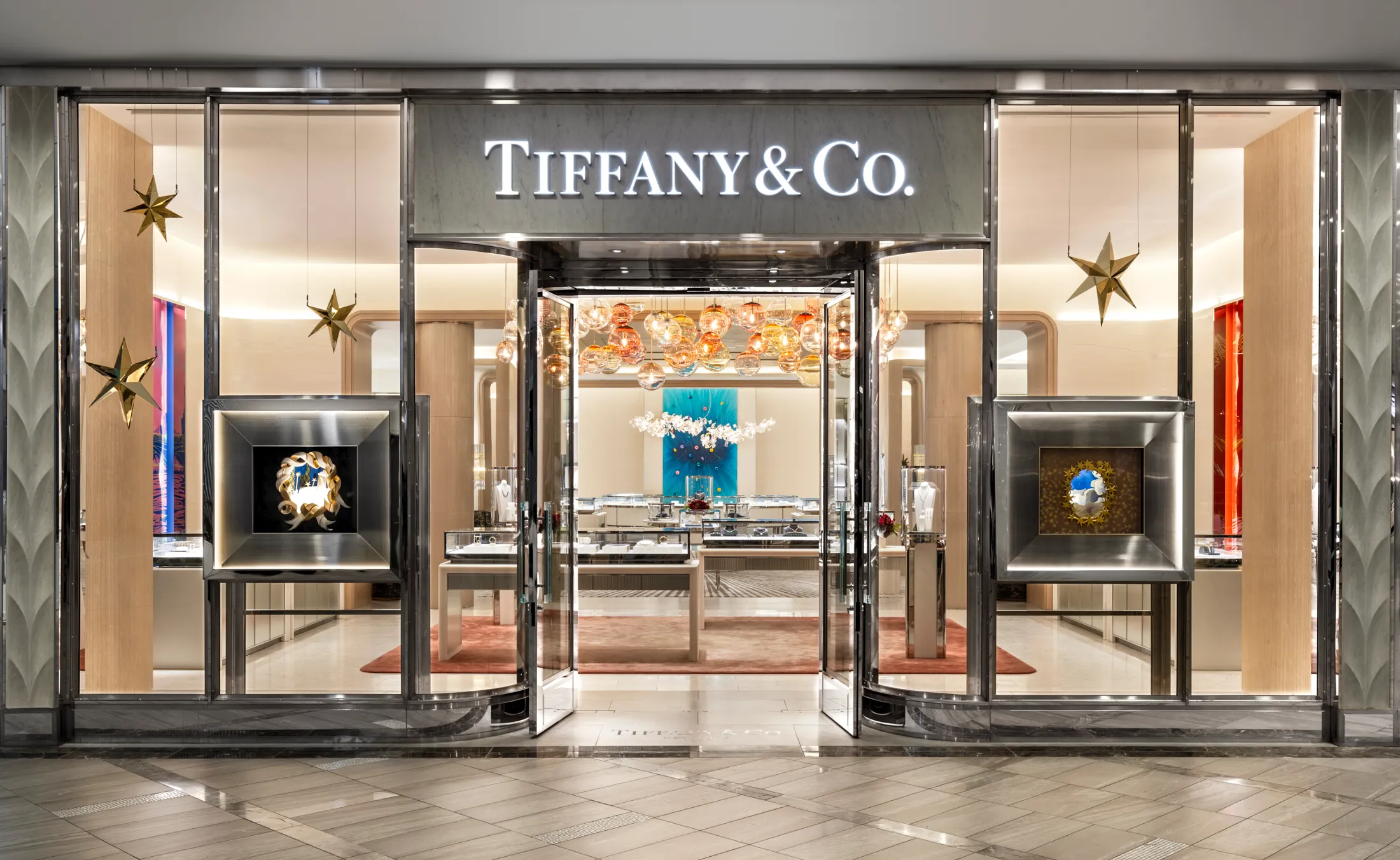
    Tiffany & Co., the renowned luxury jewelry retailer, has unveiled its latest retail space on Canton Road, Hong Kong. The store design harmoniously fuses vintage design elements with contemporary craftsmanship, as a tribute to the brand’s illustrious history.

    Store Design and Features

    Covering 2325 square feet, this new retail outlet presents a unique facade. It is embellished with a mosaic of azure tiles that take inspiration from the mosaic artistry of Louis Comfort Tiffany from the early 20th century.

    The store’s interior greets visitors with a centrepiece installation, the “Bird on a Rock”. This iconic piece, introduced by Jean Schlumberger in 1965, remains a potent symbol of the Tiffany brand after nearly six decades.

    The interior design of the store seamlessly marries opulence with heritage. This is evident in the custom wall coverings, enriched with textured and gilded metal leaf finishes. Furthermore, the store is adorned with champagne gold leaf accents throughout, adding to its exclusive ambiance.

    Customer Experience

    The store also houses a private salon, aimed at providing an intimate experience for its valued customers. The salon features a wallpaper with a soft pink orchid motif, providing a soothing, elegant atmosphere. The room is lit by handmade plaster lamps and furnished with a cream quartzite-inset coffee table. Also, handwoven fabric upholstery enhances the aesthetics of the salon, providing an inviting and comfortable environment for customers.

    Questions & Answers

    Where is Tiffany & Co.’s newest store located?
    The latest Tiffany & Co. store has been opened on Canton Road in Hong Kong.

    What is the design inspiration for the new store?
    The store’s design takes inspiration from the early 20th-century mosaic work of Louis Comfort Tiffany, seamlessly blending heritage design elements with modern craftsmanship.

    What unique features does the store offer to customers?
    The store offers a unique customer experience with a private salon that features a soft pink orchid motif in its wallpaper, handmade plaster lamps, a cream quartzite-inset coffee table, and handwoven fabric upholstery.

  • Vacheron Constantin re-opens Ion Orchard boutique

    Vacheron Constantin re-opens Ion Orchard boutique

    Timepiece brand Vacheron Constantin is reopening its Singapore boutique at Ion Orchard, debuting its new retail concept.

    The boutique’s revamped interior is designed to convey modern elegance and a refined aesthetic, featuring new design codes accented by contemporary Asian elements. It contains lounge areas and an in-house watchmaker to enable interaction with customers. The storehouses the brand’s complete collection in addition to exclusive boutique limited editions.

    “This new boutique experience exemplifies the maison’s constant search for excellence and aesthetic perfection, embodying the ‘One Of Not Many’ spirit,” said Vacheron Constantin Southeast Asia and Australia MD Yassin Tag. “It will not only be a gathering place for customers, enthusiasts and the public, but to also discover the heritage and transmission of know-how that defines Vacheron Constantin.”

    An exhibition titled “Nicknames” is being held to mark the boutique’s opening, featuring a curation of vintage timepieces with unusual designs and evocative nicknames.

  • Autotalks trials C-V2X on Chinese road

    Autotalks trials C-V2X on Chinese road

    Israeli vehicle-to-everything (V2X) communications solutions provider Autotalks has announced the successful completion of cellular V2X field trials in China.

    The trials on a public road, conducted in collaboration with an unnamed large Chinese technology company, validated Autotalks’ C-V2X capabilities, including a communication range of over 2km with a nominal range of around 1.5km.

    The successful field test involved the use of hardware compliant with standards body 3GPP’s Release 15 for V2C communications improvements.

    Autotalks has been building momentum in China in a bid to target the large local market, growing its partner ecosystem and increasing staff.

    The company is a member of the government’s IMT-2020 (5G) Promotion Group, as well as the China Industry Innovation Alliance for the Intelligent and Connected Vehicles (CAICV) and China ITS (intelligent transport systems) Industry Alliance.

    In November, Autotalks recruited former Ceragon Networks country manager Yang Xiaobing to lead up its Chinese business development efforts out of its branch in Beijing.

    In February, Autotalks partnered with Taiwanese fabless semiconductor company MediaTek for a project focused on cooperating on integrating V2X and telematics technologies.

    Autotalks also recently launched the first global V2X solution supporting both C-V2X and dedicated short range communications (DSRC) technologies, the two main connected vehicle standards being adopted by car manufacturers.

  • SUVs, Crossovers dominate high-end segment in Vietnam

    SUVs, Crossovers dominate high-end segment in Vietnam

    Among consumers willing to spend at least VND1 billion ($43,135), the preference is for SUVs and Crossovers over sedans. In recent years, high ground clearance vehicles have gradually become the number one choice for the majority of Vietnamese consumers, having grown steadily in number sales and variety over the years. In contrast, the D-class sedan segment has seen low demand and limited variety.

    Sales of SUV and Crossovers (CUV) vehicles around the price of VND1 billion ($43,135) have risen steadily over the years. While 2014 saw only around 13,000 units sold, sales had more than doubled by 2018 at 24,264 units. 2018 only saw a slight increase over 2017, but this was because a decree on import conditions prevented many firms from importing these vehicles for most of the year.

    According to the Vietnam Automobile Manufacturers’ Association (VAMA), consumers have a choice of 10 SUV/CUVs in the VND1 billion price range. Car dealers have noted that almost all brands in Vietnam have at least one product in the SUV/CUV segment.

    Average sales per model was around 3,100 vehicles a year.

    Th SUV/CUV segment is predicted to boom in 2019, as firms get used to the new regulation and find stability in importing new vehicles.

    Meanwhile, from 2014 up to now, the D-size sedan segment has featured the same models, namely, Toyota Camry, Mazda6, Honda Accord, Nissan Teana and the Kia Optima, which was introduced last year.

    In the last 5 years, sales of D-size sedans reached a peak in 2016 at 8,148 units. The introduction of the Kia Optima in 2018 raised the number of models in the segment to 6, but annual sales fell to only 7,612 units.

    In 2018, Toyota Camry dominated the D-segment at over half of the 4,503 units sold, while the remaining models saw little growth. Total sales have nevertheless been fairly stable, hovering around 6,000 or 7,000 over the years.

    Vietnam’s total car sales increased 5.8 percent to 288,683 units in 2018 from a year ago, according to the Vietnam Automobile Manufacturers’ Association (VAMA).

  • Vietnam’s four major transport projects on track for completion next year

    Vietnam’s four major transport projects on track for completion next year

    Vietnam is set to complete four infrastructure projects next year, some of them after long delays lasting several years.

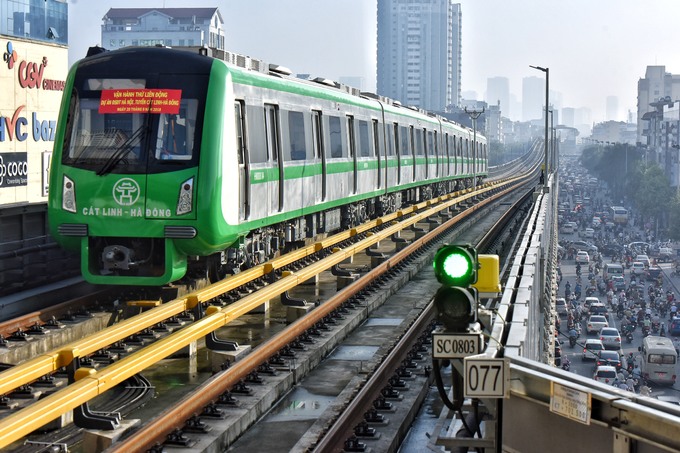
    Hanoi’s first metro line 

    The 13-kilometer Cat Linh – Ha Dong metro line is expected to open commercial operations before the Tet Lunar New Year holiday starting February 2, 2019.

    All 13 trains on the route are being trial run every day now, running from Cat Linh Station in downtown Dong Da District to the Yen Nghia Station in the south-west Ha Dong District.The 13-kilometer Cat Linh – Ha Dong metro line is expected to open commercial operations before the Tet Lunar New Year holiday starting February 2, 2019.

    Each train has four coaches, with a total capacity of 1,000 passengers. The stainless steel coaches are approximately 19 meters long. The trains now run at 30-35 kilometers an hour, even though they are designed to reach speeds of 65 kilometers an hour. A complete trip takes about 30 minutes.

    Work on the project is 96 percent complete, officials say, adding that the terminals and depots are “83 percent equipped.”

    Construction of the Cat Linh-Ha Dong elevated railway started in October 2011 and was originally scheduled for completion in 2013. But several hurdles, including loan disbursement issues with China that were only resolved last December, have been stalling the project for years.

    The original cost estimate of $552.86 million has also ballooned to more than $868 million, including $670 million in loans from China.

    Bac Giang – Lang Son expressway

    The expressway connecting Bac Giang Province north-east of Hanoi to the northern Lang Son Province bordering China is expected to be completed next December.

    The four-lane expressway runs 64 kilometers. A 110-kilometer stretch of the existing National Route 1A connecting the two provinces will also be upgraded to be part of the expressway.

    The total project cost has been estimated at VND12.19 trillion ($523.67 million).

    Most of the expressway has been completed. Next year, operators will finish laying asphalt and installing road signs and lights.

    Work on the expressway started in October 2015 and was scheduled for completion last year. However, the  Ministry of Transport had to select a new investor for the project after the original one was found wanting.

    The Bac Giang – Lang Son expressway is part of the Hanoi – Lang Son expressway, connecting the capital with the Huu Nghi International Border Gate in Lang Son Province.

    Cu Mong Tunnels 

    The Cu Mong Pass, lies mostly in Binh Dinh and partly in Phu Yen, is one of the most dangerous passes in Vietnam. The new tunnels are expected to reduce the number of dangerous traffic accidents that the pass has become infamous for. They would also reduce travel time between the two provinces.The Cu Mong tunnels, connecting the southern provinces of Binh Dinh and Phu Yen, are expected to open on January 21, allowing all vehicles to go through free of charge during the February 2-10 Tet holiday.

    The two tunnels are 2.6 kilometers long and 30 meters apart and have a 4-kilometer lead-in road. The tunnels allow a maximum speed of 80 kilometers an hour. For an unspecified first period, only one tunnel will be operated. For now, the second one will be reserved for use in emergencies.

    The tunnels have a total capital of almost VND4 trillion ($171.82 million). Construction started in September 2015.

    Vam Cong Bridge in the Mekong Delta Region

    This is the second bridge over the Hau River after the Can Tho Bridge, which is 48 kilometers away. It is part of the route connecting Can Tho with An Giang Province, built to boost the socio-economic development of the Mekong Delta region.The bridge, which connects the southern province of Dong Thap with Can Tho City, is expected to be operational by next July.

    The bridge was supposed to be completed by November 2017, but authorities found out that a horizonal beam had a crack four centimeters wide and two meters long.

    The Ministry of Transport ordered repairs, and so far 26 out of 38 steps for this process has been completed.

    The bridge’s budget of $270 million was sourced through official development assistance from South Korea and Vietnam’s counterpart funds.

  • Indonesia to operate Becakayu Toll Road by 2017

    Indonesia to operate Becakayu Toll Road by 2017

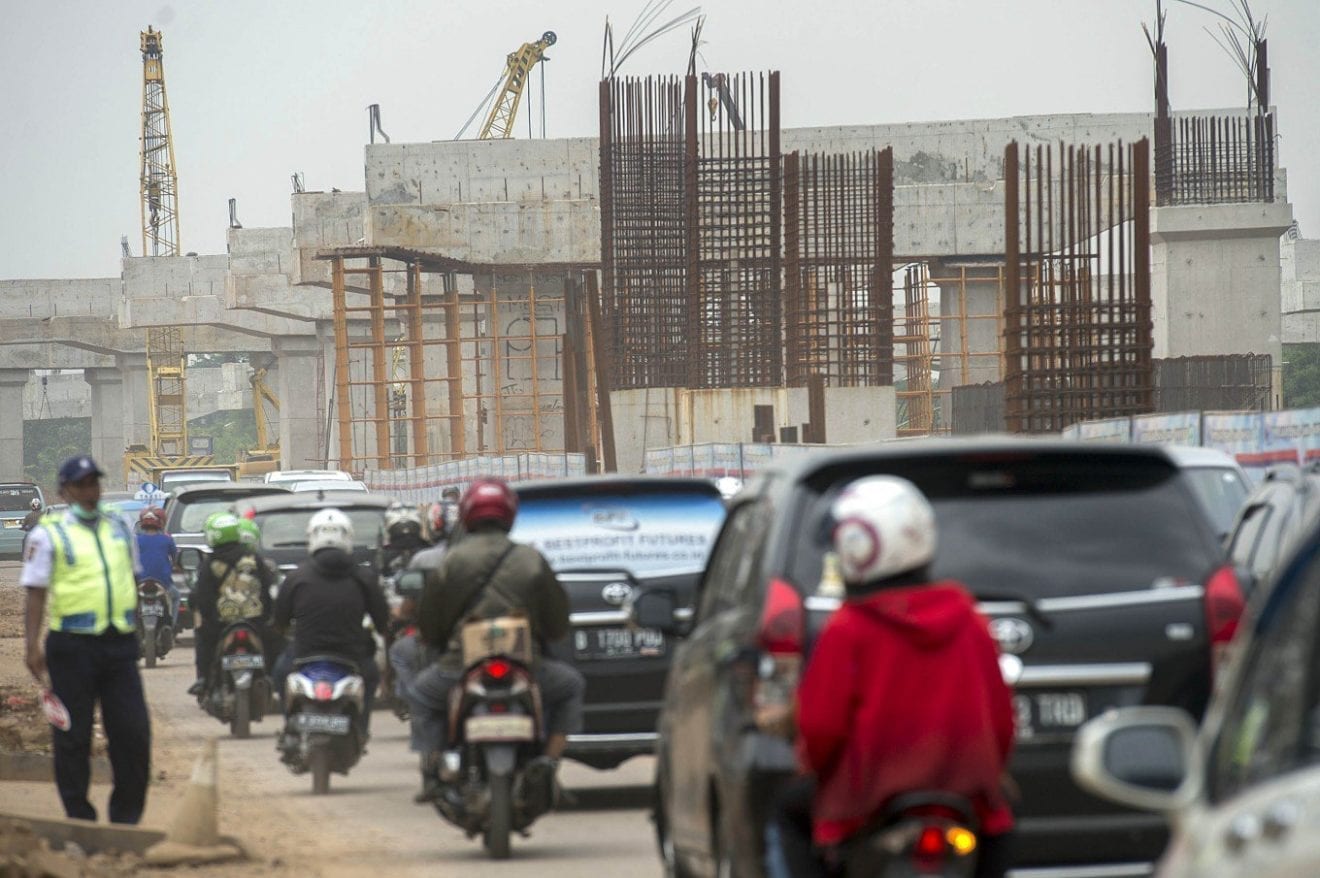
    Indonesia will start to operate 8 kilometers of the 11-kilometers section of the new Bekasi-Cawang-Kampung Melayu (Becakayu) toll road connecting Bekasi City and Jakarta by March 2017.

    “I believe by March, the 8 kilometers toll road can start operations. I hope we can operate both lanes, so there will be 16 kilometers of the new toll road,” Indonesian President Joko Widodo (Jokowi) said here on Monday.

    Jokowi conducted a visit to Becakayu toll road construction to observe the progress.

    According to Jokowi, the toll project had been stopped for 22 years since 1997. The government restarted the project in 2015.

    Indonesia plans to start operations of the 11 kilometers of the toll project by 2017.

    The toll road will hopefully decrease traffic density between Bekasi and Jakarta.

    The Becakayu Toll Road will also connect with the Jakarta Outer Ring Road (JORR) lane that integrates with outer Jakarta areas.

    Jokowi said there were no obstructions from land acquisition of Becakayu Toll Road.

    “We have no problems as we have bailout investment. The assistance could accelerate the construction,” he said.

    Indonesia is boosting its infrastructure sectors such as airports, ports, roads and highways, and railways to develop the economy.

    The president also asked ministers to help attract and support private investments in the infrastructure sectors.

    According to the president, there were several areas in which such investments can support the development of infrastructure. Such an investment can be made by private sector players, state enterprises or via Public-Private Partnership (PPP) route.

    “Infrastructure development shouldnt depend only on the State Budget or Regional Budget. We should open such opportunities for the private sector and for non-government investments,” the president said here on Wednesday.

  • KDDI, Toyota develop app to reduce road accidents

    KDDI, Toyota develop app to reduce road accidents

    Toyota Motor, Komeda and KDDI in September have jointly developed a smartphone application called Driving Barista, aimed at reducing the number of traffic accidents in Aichi Prefecture caused by drivers using their smartphones while driving.

    This is the first traffic safety initiative in Japan involving a smartphone application, which is to be carried out and jointly promoted by an automobile company, a communication company, and a food and beverage company.

    For thirteen consecutive years, Aichi Prefecture has had the highest rate of traffic fatalities in Japan. Furthermore, there were also 50,101 arrests involving the use of smartphones while driving, and the increase in violations of this nature has also intensified the problem.

    Toyota, Komeda, and KDDI will promote traffic safety in Aichi Prefecture through an educational initiative where participation is accessible for all, and can lead to a reduction in traffic accidents.

    The Driving Barista application can only be used within Aichi Prefecture. By using the gyro sensor to sense the tilt of the smartphone body, and the GPS to determine the distance driven, this application measures the distance the driver has driven while leaving the smartphone face down. When the cumulative distance reaches 100 km, the driver can receive a coupon for a cup of blended or iced coffee at a Komeda Coffee Shop.

    According to one survey, approximately 60% of respondents said they use their smartphones while driving, with approximately half of these respondents keeping only one hand on the steering wheel. Therefore, the companies hope that the new application will raise drivers’ awareness about not using smartphones while driving.

    “We have already been carrying out educational activities to prevent the use of smartphones while driving, and we hope that this initiative between the three companies will help solve the problem facing Aichi prefecture,” said Akira Dobashi, director in charge of CSR and environment at KDDI.

    “We developed the Driving Barista smartphone application as a fun way to help prevent traffic accidents,” said Dobashi. “We hope to contribute to accident prevention by providing a new experience for drivers.”

  • DHL leverages on China’s Belt and Road

    DHL leverages on China’s Belt and Road

    DHL Global Forwarding continues to enhance its services which leverage infrastructure developed as part of “Belt and Road”, the Chinese trade initiative that could influence up to half of all global trade once completed.

    “Trade is the enabler for greater prosperity and a sustainable future. We believe logistics is the backbone of global trade, and nowhere more than in Asia have we seen the tremendous transformation of the economies as rising standards of living and a growing middle class has fuelled increased consumption and trade,’ said Frank Appel, CEO, Deutsche Post DHL Group.

    Frank Appel was speaking in conjunction with DHL’s Delphi Dialog forum on the implications of “Belt and Road” for international trade. The forum, with renowned experts from the government, business and academia, is the latest in a series which examines trends and developments that shape our world and the logistics industry.

    Making ‘Belt and Road’ accessible for business

    China’s investment in Belt and Road infrastructure – more than US$75bn (Euro 67.5bn) in the 18 months to June 2016 – bolsters regional cooperation and promotes trade. Since 2010 and in line with the vision for “Belt and Road”, DHL has been developing scheduled connections offering rail services across multiple cities in China, and linking it to road solutions throughout South East Asia and ferry services from North Asian cities in Japan and Taiwan.

    From South East Asia and other parts of North Asia, the road and ferry connections feed into China’s rail system which connects into Europe, with final distribution by road across the continent. This intricate connection of rail, road and sea services offers customers an additional logistics route, fostering trade between economic powerhouses of Europe and Asia.

    “We have been focused on building connectivity between China and regional countries, and connections into Europe via all combinations of road, rail and sea services,” said Steve Huang, CEO, DHL Global Forwarding China. “A multimodal solution – combining all modes of transport – enables customers to better manage their supply chains – offering flexibility, cost savings and potentially a reduced carbon footprint.”

    “The new service provides greater flexibility and speed for Japan’s exporters, including sectors like automotive and electronics production which already enjoy market dominance in Europe,” said Mark Slade, President and Representative Director, DHL Global Forwarding Japan.

    “With Less-than-Container Load services to Europe, Japanese businesses can improve the efficiency of fulfillment and inventory management at cost-effective rates, helping them maintain their competitive edge as world-class manufacturers.”

    Broadly, combinations of multimodal services can reduce transport costs by up to six times and up to 90% reduction in carbon footprint as compared with air freight, making it an increasingly attractive option for SME and MNC customers alike.

    DHL launched a further three new multimodal services:

    • Sea & Rail service: A Less-than-Container Load (LCL) service between Japan and Germany which allows businesses to export low-volume shipments for as little as half the cost of standard air freight. With a transit time of about 22 days, shipments are moved from Kobe to Taicang via sea, and by rail to Hamburg through hubs like Duisburg, Lodz, Malaszewicze and Warsaw.
    • Road & Rail service: The Vietnam-Europe service takes Full Container Load (FCL) cargo from Hanoi to Chengdu via road, followed by rail to hubs like Lodz, Duisburg and Hamburg in Europe, arriving in 21 days. An LCL option for the Vietnam-Europe service will commence in Q4 2016.
    • Rail, Road & Sea: Further boosting our Southern rail corridor offering announced last year, the new Chengdu-Istanbul service traverses three Central Asian countries – Kazakhstan, Azerbaijan, and Georgia – as well as two sea transit segments before arriving at Istanbul in 14 days.

    The three new services build on a series of major DHL investments in the last 12 months, including a multimodal service between Japan and Warsaw via Suzhou announced in November 2015; and an MOU signed in May 2016 with Chengdu’s Gateway Logistics Office to upgrade infrastructure and customs processes. DHL has been developing multimodal services along the Belt and Road since 2010, when it launched a suite of five services – International Rail, Rail-Air; Sea/River-Rail; Sea-Air and Cross-Border Road Freight.