
Tag: rumors

  • Google Debunks Viral Rumors: Gemini AI Not Trained on Gmail Data

    Google Debunks Viral Rumors: Gemini AI Not Trained on Gmail Data

    Clarifying the Misunderstanding

    Recently, there has been a significant amount of attention given to rumors suggesting that Google has been utilizing personal emails to develop its Gemini AI. These rumors have been dismissed by the company itself via social media, assuring users that their personal emails are not being used for training the artificial intelligence (AI) system. The rumors seemingly originated from misconceptions about long-standing settings, rather than a covertly introduced policy change.

    If one has been active on social media platforms recently, they may have come across posts suggesting that Google is clandestinely using Gmail data to train its artificial intelligence models. Often, these posts refer to a setting in Gmail titled “Smart features and personalization,” urging users to disable it promptly. As a result, even some tech security platforms initially reported the story before later issuing corrections.

    To dispel any concerns, Google has issued a clarification, asserting that Gemini is not trained using Gmail content. They further explained that the “Smart features” setting, which powers functions such as tab sorting and Smart Compose, has been in existence for an extended period and is not a new tool intended to extract user data. The flurry of concern appears to be a typical example of internet misinformation becoming distorted and exaggerated.

    Addressing Privacy Concerns

    This incident underscores the current heightened sensitivity regarding AI and data privacy. Given the continuous scrutiny faced by companies such as OpenAI over web scraping and data usage, it is understandable why users are exceedingly vigilant. The competitive nature of the landscape further compounds this issue. For instance, Apple is marketing its forthcoming “Apple Intelligence” as a privacy-centric alternative that primarily processes data on-device to avoid the sort of fears associated with the potential misuse of cloud-stored data.

    For Google, navigating this space is a balancing act. While the company is deeply involved in AI and requires vast amounts of data to compete effectively, losing the trust of its billions of Workspace users is a risk it cannot afford to take. If users start to believe that their private communications are being used to train AI chatbots, they may begin to explore other options. This incident serves as a reminder to tech giants that they need to explicitly communicate the functions of their “smart” settings, or the internet will fill in the gaps with worst-case scenario assumptions.

    Restoring Confidence

    Google’s prompt reaction to clarify the situation was important. Understandably, many users were alarmed, considering that tech companies have not exactly established a trustworthy reputation in recent years. Speaking from a personal perspective, I depend on Gmail’s smart features frequently, with the priority inbox being a particularly valuable tool. The confirmation that these features do not supply my emails to Gemini for processing is reassuring.

    However, this serves as a wake-up call for Google’s UI team. If an existing setting is ambiguous enough to be misconstrued as a “spyware toggle” in a viral social media post, it might be time to reconsider the description provided.

    Questions & Answers

    Is Google using personal emails to train its Gemini AI?
    No, Google has explicitly stated that it does not use personal emails to train its Gemini AI.

    What caused the misconception about Google using personal emails for AI training?
    The misconception appears to stem from misunderstanding about the “Smart features and personalization” setting in Gmail, which has been around for a long period and is not a new tool designed to extract user data.

    What do Gmail’s smart features do?
    The smart features in Gmail power functions like tab sorting and Smart Compose. They do not feed user emails into any AI system for training or development purposes.

  • Apple Vision Pro 2: Familiar Design, Powerful Chip, But Reduced Features – Analysts Predict Market Challenges

    Apple Vision Pro 2: Familiar Design, Powerful Chip, But Reduced Features – Analysts Predict Market Challenges

    The much-awaited Apple Vision Pro 2 has recently made an appearance through FCC filings, potentially dampening the enthusiasm of many Apple enthusiasts. The disclosure confirms Apple’s plans for a second iteration of their mixed-reality headset but also hints that the device might bear a striking resemblance to its earlier version.

    Conservative Alterations, Recognizable Aesthetics

    The FCC documents reveal that Apple has kept the design of the Vision Pro 2 largely in line with the original model. Initial reports suggest that the company may even maintain the substantial $3,499 price point, a price that previously set the first Vision Pro significantly above most of its rivals.

    Under-the-Hood Enhancements

    The most significant development appears to be in the internal workings of the device: the Vision Pro 2 is anticipated to house Apple’s M4 chip, constructed on a 2-nanometer process. This advancement should result in swifter functionality and improved efficiency, but these enhancements might not be sufficient to compensate for the absence of other novel features.

    Potential Reductions in Features

    In a surprising turn of events, Apple might decide to scale back on certain components, including the EyeSight display – the external screen that digitally displays the user’s eyes to onlookers. While removing such features could reduce costs, it also risks making the already high-priced device less attractive.

    Upcoming Market Hurdles

    Given the limited availability of mixed-reality content and the competitively priced Meta Quest 3 offering a much more affordable entry point, Apple’s latest headset could face considerable challenges. Analysts believe the Vision Pro 2 might serve more as an interim product, allowing Apple to maintain its presence in the XR space until it is prepared to launch genuine AR smart glasses targeted at the mainstream market.

    Questions & Answers

    What changes can be expected in Apple’s Vision Pro 2?
    The Vision Pro 2 is expected to feature Apple’s M4 chip promising faster performance and better efficiency. However, the device might maintain a design and price tag similar to its predecessor.

    What features might Apple reduce in the Vision Pro 2?
    Apple might decide to scale back on certain elements, like the EyeSight display, which digitally projects the wearer’s eyes for bystanders, as a cost-saving measure.

    What are the market challenges for the Vision Pro 2?
    The limited availability of mixed-reality content and the competitively priced rivals like Meta Quest 3 could pose considerable challenges for Apple’s latest headset.

  • Starbucks Refutes Rumors of a Complete Sale of Its China Operations

    Starbucks Refutes Rumors of a Complete Sale of Its China Operations

    Starbucks has ignited speculation by initiating discussions with over a dozen potential buyers for its China operations, as reported by Caixin. However, amidst this buzz, the company has clarified that a complete sale is not on the table.

    Not Selling the Farm — Yet

    “I can confirm Starbucks is not currently considering a full sale of its China operations,” a company spokesperson stated. This directive comes in the wake of a formal sale process that Starbucks commenced in May 2023, inviting interested parties to submit their proposals by last week.

    What’s Brewing Behind the Scenes

    Under the guidance of Goldman Sachs, Starbucks is on a quest to learn more about the corporate cultures and management styles of potential buyers, while also assessing their sustainability practices, employee treatment, and overall business strategies for Starbucks China. Insiders familiar with the matter, who spoke on condition of anonymity, suggested the retail giant has yet to determine whether it will sell a controlling or minority stake in its operations.

    Evaluating the Landscape

    Despite the uncertainty, Starbucks has received interest from more than 20 institutional investors, including private equity firms eager to carve out a piece of the Starbucks pie. The potential move comes after a notable dip in market share for the brand, which fell from 34% in 2019 to a mere 14% by 2024, according to Euromonitor International. With lower-priced competitors like Luckin and Cotti aggressively challenging Starbucks’ pricing strategy, the American coffee titan faces increasing pressure to adapt.

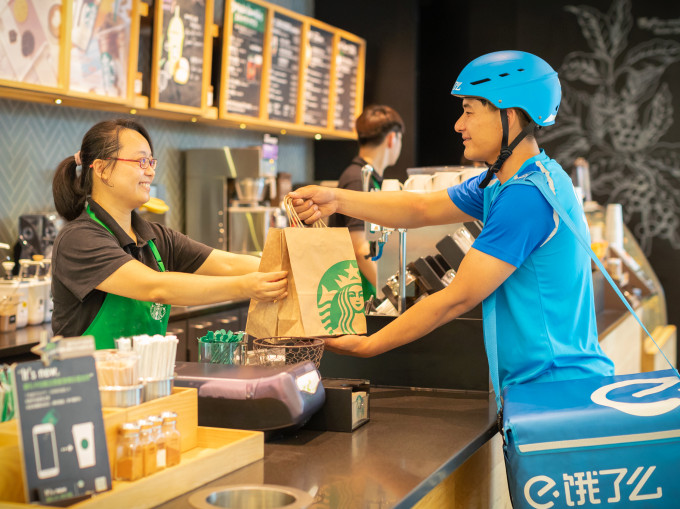
    This transition is not just numbers on a spreadsheet; it’s reflective of changing consumer preferences in a market increasingly defined by affordability and accessibility. In a twist of irony, while Starbucks is pulling back on prices—marking its first-ever price drop in China for non-coffee iced drinks earlier this month—challenges abound as e-commerce giants in China further erode market pricing by offering consumers subsidies on food delivery, allowing coffee enthusiasts to pay as little as 5 yuan for their caffeine fix delivered to their door.

    Charting a Path Forward

    Starbucks has poured substantial investment into its China operations, exemplified by the launch of its 1.5 billion yuan ($209 million) Coffee Innovation Park in Kunshan in 2023, aimed at supplying its expansive store network. As the company continues its dialogues with potential investors, it is expected that a shortlist of buyers will soon be formed. “The purpose was to let everyone tell their story freely and choose whatever the best prospect is and proceed,” one insider noted.

    Questions & Answers

    What prompted Starbucks to consider selling part of its China operations?
    Starbucks is navigating a rapidly evolving market in China, having lost significant market share to lower-priced competitors, which has raised questions about its pricing strategy and long-term prospects.

    How has the competition impacted Starbucks in China?
    Starbucks has seen its market share plunge from 34% in 2019 to 14% in 2024, thanks to fierce competition from fast-growing rivals offering cheaper options.

    What recent steps has Starbucks taken in response to pricing pressures?
    Earlier this month, Starbucks implemented its first-ever price drop in China, lowering the cost of some non-coffee iced drinks by an average of 5 yuan to stay competitive.

  • H&M Founding Persson Family Increases Stake, Sparking Privatization Rumors

    H&M Founding Persson Family Increases Stake, Sparking Privatization Rumors

    The Persson family, one of Sweden’s wealthiest clans, has made quite the splash in the fashion world. Since 2016, they’ve poured over US$6.6 billion into H&M, claiming nearly two-thirds ownership of the brand. This move has sparked lively speculation about a possible return to private ownership, even though the family asserts otherwise, as reported by Bloomberg.

    Increasing their stake through Ramsbury Invest, the Perssons have offered minimal insight into their intentions, merely stating their unwavering belief in H&M.

    Despite their denials about taking H&M private, their steady accumulation of shares is raising eyebrows among minority shareholders. “This is something we’ve been discussing for years, and few would doubt that this is the direction things are headed,” remarked Sverre Linton, chief legal officer and spokesperson for the Swedish Shareholders’ Association.

    Linton urged the family to clarify their intentions and consider halting their share acquisitions if they truly aren’t planning a switch to private ownership.

    Thanks to reinvested dividends, the Perssons have inflated their H&M stake from 35.5% to nearly 64% over the past nine years. When considering extended family holdings, the Perssons command about 70% of the capital and roughly 85% of the voting rights, according to H&M’s own website.

    In an interview with Bloomberg last year, H&M Chairman Karl-Johan Persson, the founder’s grandson, brushed aside rumors of privatization, asserting, “There are no plans. We just buy because we believe in the company.”

    However, competition is heating up, with H&M wrestling against heavyweights like Zara and the rapid-fire fashion disruptor Shein. Last year, this iconic Swedish brand, nearly 80 years in the making, dropped its margin targets for 2024 as higher discounting, increased costs, and stiff competition eroded their operating profits, as Reuters reported.

    Analysts, such as Niklas Ekman at DNB Carnegie, speculate that the family’s ongoing share purchases might signify intentions that extend beyond mere confidence. In a recent note to clients, he indicated a buyout could materialize within two years if the family’s current pace continues, with the potential for a delisting after reaching 90% ownership.

    Ekman mused that a transition to private ownership would likely stem from “emotional rather than financial motives,” given the family’s existing dominance and historical penchant for prioritizing their vision over that of minority shareholders.

    At the heart of this drive is Stefan Persson, 77, who transformed H&M into a global fast-fashion behemoth during his 16-year CEO stint and subsequent two decades as chairman. He remains heavily engaged in the brand’s future. With a fortune of $18.6 billion, largely in H&M stock, he stands as Sweden’s wealthiest individual, according to the Bloomberg Billionaires Index.

    As H&M’s shares have plummeted by about 60% since peaking a decade ago, the company now holds a valuation of around US$23 billion, a stark contrast to its former glory.

    Questions & Answers

    What is the Persson family’s current stake in H&M?
    The Persson family’s stake has risen from 35.5% to almost 64% over the past nine years, giving them control of around 70% of the capital.

    Why are minority shareholders concerned?
    Their concerns stem from the family’s ongoing share purchases, which some believe could indicate intentions to take H&M private, despite family denials.

    How has H&M been performing recently?
    H&M has struggled against fierce competition and has dropped its margin targets for 2024 due to increased costs, higher discounting, and declining operating profits.