Retail News CRM

Tag: south korea

  • Estee Lauder wants more South Korean web sales

    Estee Lauder wants more South Korean web sales

    Estee Lauder has acquired a stake in Korean skincare products maker Have & Be Co. to grow in South Korea’s nearly $600 million online beauty products market. Skincare and fragrance maker Estee Lauder Cos. is making a concerted move to acquire market share in South Korea’s beauty products e-commerce market.

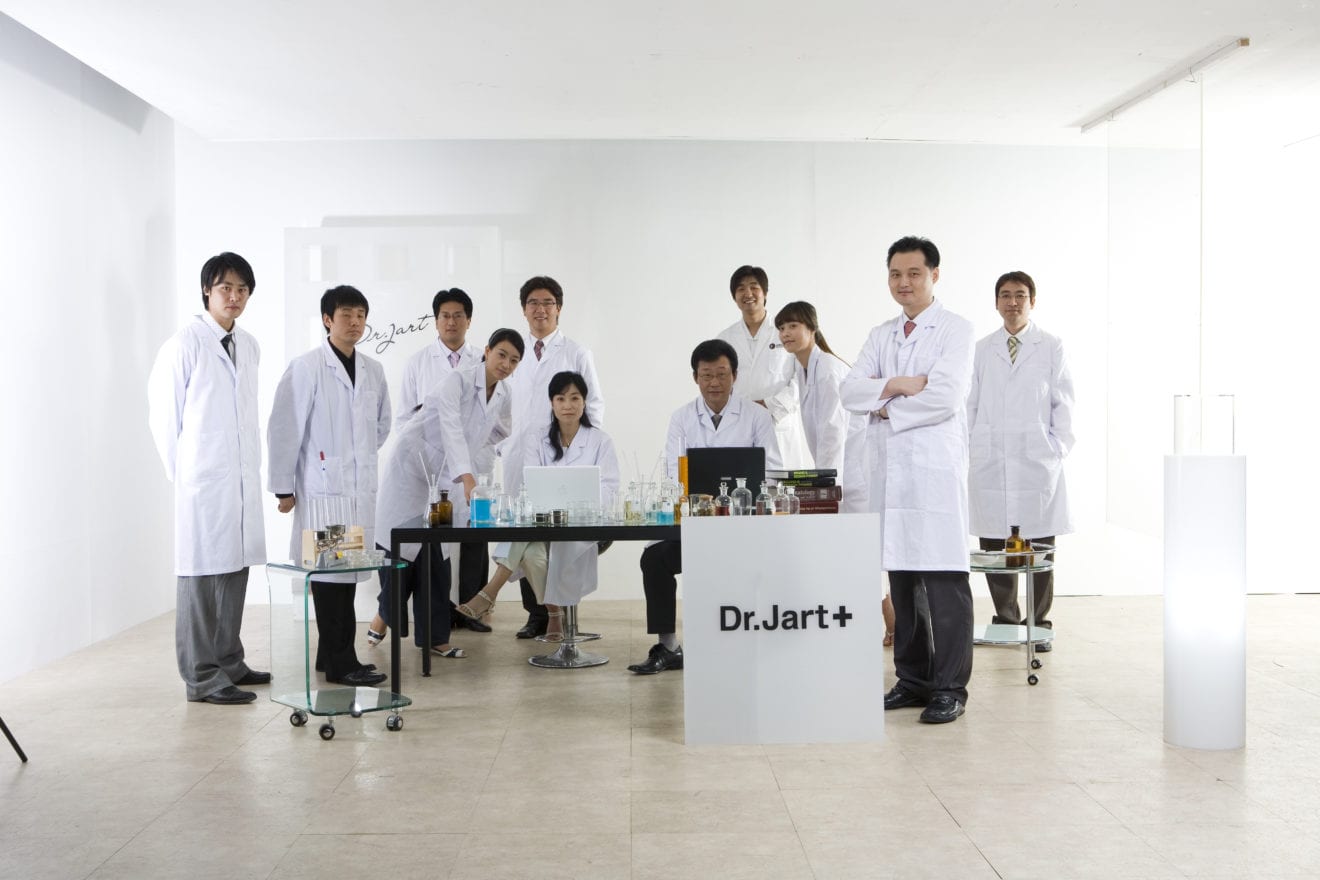
    Estee Lauder, No. 73 in the Internet Retailer 2015 Top 500 Guide, purchased an undisclosed stake in Have & Be Co., a Seoul-based cosmetics and beauty products maker that develops the Dr. Jart+ and Do the Right Thing brands of moisturizers and skin renewal products.

    Have & Be was started online in 2005 by Chinwook Lee, a South Korean dermatologist. Today the company sells online and in stores in 15 countries, including the U.S. In its core market of South Korea, Have & Be has  e-commerce sites for Dr. Jart+ and Do the Right Thing. In the U.S. Have & Be sells through other retail e-commerce sites including Sephora.com.

    Estee Lauder isn’t saying much about how it intends to grow Have & Be Co and Dr. Jart+ online, but Dr. Jart+ will remain a stand-alone e-commerce site. “Dr. Jart+ will remain an independent company and it will not be integrated into any ELC operations, including e-commerce,” says an Estee spokeswoman.

    But growing online in general and in Asia e-commerce markets such as China and South Korea specifically is a top priority for Estee Lauder. For the 2015 fiscal year ended June 30, Estee Lauder disclosed that e-commerce accounted for 8% of all sales of about $10.78 billion and that e-commerce sales increased year over year by 28%. Based on those metrics, Internet Retailer estimates  web sales for Estee Lauder totaled $862.4 million compared with $673.8 million in fiscal 2014.

    In China the overall e-commerce market for skincare product sales is projected to grow 41.7% to an $8.36 billion in 2015 from $5.90 billion in 2014, according to research firm Frost and Sullivan. In comparison, in the more mature and concentrated South Korea e-commerce market, web sales for skin care products will grow more slowly, according to research firm Euromonitor International. This year e-commerce sales for skincare and related products in South Korea will reach $594.8 million, up 8% from $550.0 million in 2014, says Euromonitor.

    In China in fiscal 2015, web sales for Estee Lauder doubled, the company reports. In South Korea Estee Lauder will use its investment in Have & Be to build market share with an established brand, CEO Fabrizio Freda says. “This investment gives our company a strategic opportunity to develop a partnership with one of Korea’s most promising high-growth skin care brands,” he says.

  • iPhone 6s hits store shelves in South Korea

    iPhone 6s hits store shelves in South Korea

    By Kim Seung-yeon

    SEOUL, Oct. 23 (Yonhap) — Apple Inc.’s two latest smartphones went on sale in South Korea on Friday, with the industry poised to keep close tabs on the market for possible overheating on the retail front.

    The country’s three major mobile carriers — SK Telecom Co., KT Corp. and LG Uplus Inc. — released the iPhone 6s and iPhone 6s Plus for sale via their respective retail stores nationwide.

    The iPhone 6s is available for 720,000 won (US$635) for the 16GB model and 1.14 million won for the 128GB, given the subsidy of about 130,000 won, according to the telecom companies.

    The price of the iPhone 6s Plus starts from 999,000 won and runs to 1.26 million won depending on the phone’s storage capacity.

    The mobile carriers each held a launching event for the new iPhone series earlier in the day, offering various promotions and free gifts to woo consumers.

    The release of a new iPhone series usually draws heated interest here among consumers, including Apple loyalists, and the entire industry.

    Huge demand for the new iPhones has been a trigger for the mobile carriers to risk giving large sums of rebates that passed the legal limit in order to steal customers away from rivals.

    In October last year, the government came up with a new handset subsidy law to curb the excessive paybacks. Yet it proved to be less than effective when the iPhone 6 series went on sales later in that month and retail vendors began to splurge subsidies.

    Industry watchers are paying close attention again this time as to how the market will response to the two upgraded iPhones, although many bet that there won’t be as much of a fuss as the previous releases due to tougher market conditions.

    The online presales of the iPhone 6s series, which ran through this week, ended in early closures as they sold out in the first few minutes of the start.

    Of the early purchases, 30.4 percent booked the new rose gold model, while preorders for the silver iPhone 6s Plus came in at mere 0.1 percent, according to one of the mobile carriers.

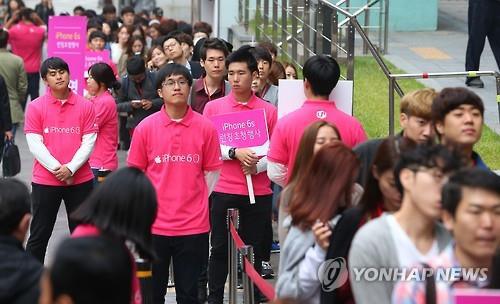
    Customers form a long queue to buy the new iPhone S6 series on the first day of its release in front of a direct retail store run by South Korean mobile carrier LG Uplus Inc. in Seoul, on Oct. 23, 2015. (Yonhap)

    Customers form a long queue to buy the new iPhone S6 series on the first day of its release in front of a direct retail store run by South Korean mobile carrier LG Uplus Inc. in Seoul, on Oct. 23, 2015.

  • Lauder starts its own Korean Wave with Dr. Jart+

    Lauder starts its own Korean Wave with Dr. Jart+

    Estée Lauder Companies has tied up a deal to buy an interest in Have & Be Co, the South Korean company behind skincare brands Dr. Jart+ and men’s-focused Do The Right Thing for an undisclosed amount. The deal is expected to close in December.

    Dr. Jart+ is a Seoul-based, skincare brand first launched online by ChinWook Lee in 2005 which has a particular appeal for millennials, a target for ELC. It has pioneered the proliferation of BB creams across the globe and, today, its BB line is a consumer favourite.

    The brand claims to fuse dermatological science and art – hence its name which is derived from ‘Doctor Joins Art’. It is sold in many countries, but primarily in Asia and the US via department stores, speciality stores as well as e-commerce channels including LVMH’s Sephora.

    Korean beauty brands have been performing extremely well in the domestic and duty free and travel retail channels in the country for a number of years – in many cases much better than products from international houses. Just recently Chanel pulled out of the DF&TR market at Incheon Airport, signalling a likely market shift.

    STRATEGIC PARTNERSHIP

    Fabrizio Freda, President and CEO of ELC says: “This investment gives our company a strategic opportunity to develop a partnership with one of Korea’s most promising high-growth skincare brands.

    “ChinWook Lee and his team have built a successful and exciting brand that is at the forefront of the rapidly-expanding Korean beauty wave. We are pleased to partner with Mr Lee and we look forward to building long-term, strategic relationship with the entire Dr. Jart+ team.”

    ChinWook Lee, Founder and CEO of Have & Be Co, adds: “As the Korean beauty wave continues to flourish globally, we are excited about the additional opportunities, support and guidance that The Estée Lauder Companies will bring to our brands. This is a tremendous moment for the Dr. Jart+ team and for the continued growth of Korean beauty.”

    ELC’s investment also includes an interest in Do The Right Thing (DTRT), a men’s-focused brand fusing Korean cosmetics with a New York style. Founded in 2012, DTRT’s line of cleansers, lotions, moisturisers and serums are sold in Korea through various channels and in the US through Sephora and BirchboxMan.

    “Global consumers look to Korea as a trendsetting market in beauty, and the Dr. Jart+ brand is part of the reason why,” says William P. Lauder, ELC’s Executive Chairman.

  • Doosan, Shinsegae lock horns over urban duty-free license

    Doosan, Shinsegae lock horns over urban duty-free license

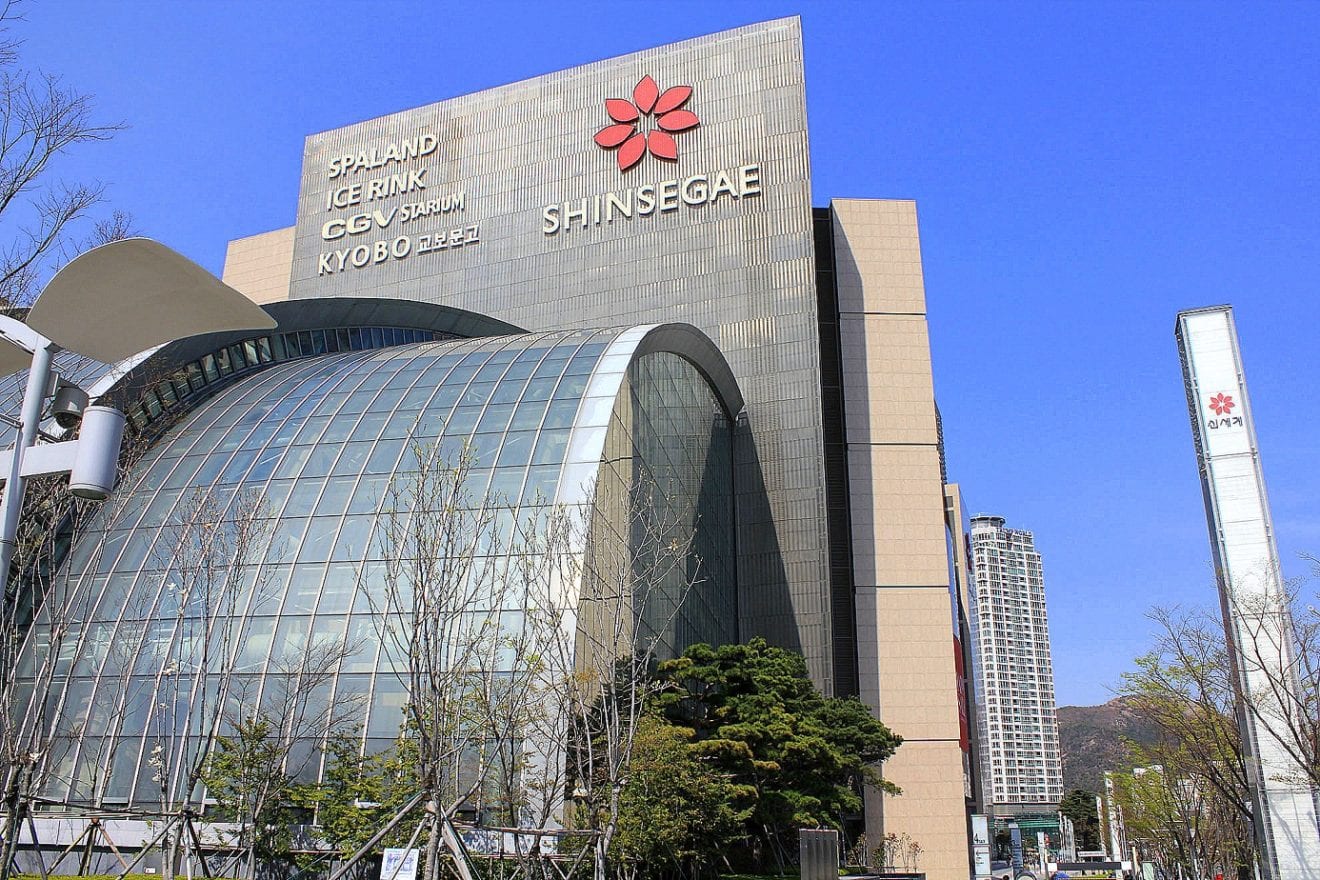
    Retail giant Shinsegae and industrial behemoth Doosan Group on Monday locked horns over the special license to run three urban duty-free stores in Seoul.

    With the urban duty-free stores regarded as a lucrative business for the sluggish retail industry, the chiefs of both companies vowed to win the license that could guarantee trillions of won in revenue over the next 10 years.

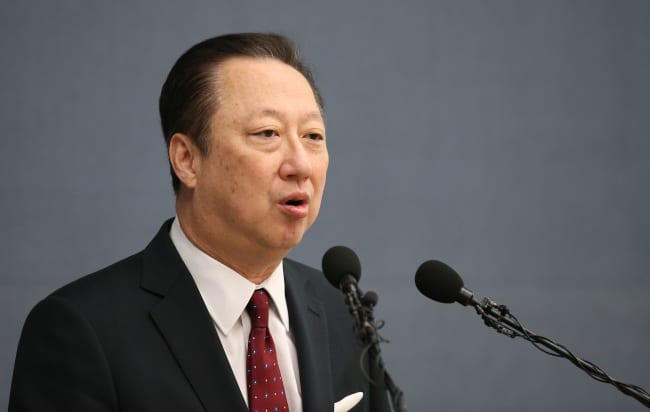
    Doosan Group chairman Park Yong-maan (Yonhap)

    Doonsan Group chairman Park Yong-maan said he would fully leverage his 20-year experience in publishing high-end fashion magazines. “From 1995, I have been deeply engaged in the publication of the Vogue magazine, with my name on the masthead every month,” Park told reporters on Monday.

    “The luxury goods makers know that Doosan has all its takes to create luxury contents, and trust us,” he said, referring to the endorsement of about 400 luxury goods makers — including Louis Vuitton and Ferragamo — for Doosan’s duty-free shop, which was clearly influenced by the Vogue-connection

    Park on Monday also declared the establishment of the Dongdaemun Future Foundation with investment of 10 billion won ($8.8 million) from Doosan Group and an equal amount from his own pocket. He explained that the duty-free store would revitalize the Dongdaemun fashion district with 13 large malls.

    “About 30 percent of the stores are currently empty. But if we get the license to operate a duty-free store we will be able to fill them up, create jobs and attract more foreigners to shop in Seoul’s oldest commercial district,” said Park, who also chairs the Korea Chamber of Commerce and Industry.

    Doosan joined the bidding war in September, citing its 16 years of experience in running Doota shopping mall in central Seoul.

    Its bid comes at a time when the company has been struggling in other businesses — in the first six months, Doosan Corp. marked a loss of 66.9 billion won, while Doosan Heavy Industries, Doosan Infracore and Doosan E&C saw 114 billion won, 34.4 billion won and 86.5 billion won losses, respectively. The retail industry with abundant cash flow is expected to ease the strain, business insiders said.

    Shinsegae, which joined the duty-free industry in 2012 by acquiring Paradise Group based in Busan, also started gearing up for a duty-free store in Seoul.

    Shinsegae DF — which currently operates stores inside Incheon International Airport and Paradise Hotel Busan, and will soon run another on Hainan Island in China — said it will nurture Korean products. The company is planning to create 14-story duty-free store in Mesa shopping mall and Shinsegae Department Store in Myeong-dong, Seoul. The country’s second-largest retailer led by group vice chairman Chung Yong-jin hopes the duty-free store will generate 10 trillion won in sales between 2015 and 2020.

    “With our ample know-how in the high-end retail business we will nurture Korean products as global luxury goods, just as AmorePacific’s Sulwhasoo and fashion accessory maker MCM did,” said Shinsegae DF CEO Sung Young-mok at a press conference which coincided with Doosan’s media briefing.

    Sung also pledged to attract 17 million foreign tourists to downtown Seoul by 2020, up from 9.27 million in 2014. It also vowed to invest 270 billion won into boosting the local economy.

    “We will provide more opportunity to the local producers,” Sung said.

    The customs authorities are expected to begin their field examination around next week, and the announcement of the license winners  is expected around early November.

  • Lotte chief unseated from group’s virtual holding firm

    Lotte chief unseated from group’s virtual holding firm

    In a hastily arranged shareholder meeting in Japan, Lotte Group Chairman Shin Dong-bin lost his seat on the board of Kojunsha, which is at the apex of the group’s entire governance structure, with a 28 percent stake in Lotte Holdings, the group’s holding firm, according to his elder brother Shin Dong-joo, who owns a 50 percent stake in the Japanese package manufacturing firm.

    The group’s business spans from luxury hotels to amusement parks, mostly located in South Korea and Japan.

    Dong-bin has a 38.8 percent stake in Kojunsha, and their father and group founder Shin Kyuck-ho owns 0.8 percent.

    But Lotte Group said earlier even if its chairman were to be removed from Kojunsha’s board, it would have little impact on the group management.

    Lotte Holdings is 28 percent owned by employees, 20 percent by affiliates and 11 percent by special investment vehicles.

    Lotte, a retail giant, has been mired in the family squabble involving the founder and his two sons, who are sparring to bolster their grip on the group.

    In August, Dong-bin bagged a landslide win at a shareholders meeting for Lotte Holdings, in what was thought to be the end of the family squabble.

    Last week, Dong-joo said he will lodge suits against his younger brother to regain the helm of the group.


  • Retailers offer bigger deals for Korean Black Friday

    Retailers offer bigger deals for Korean Black Friday

    Retailers have marked down prices further for a government-led nationwide sales event dubbed Korean Black Friday after it faced ridicule for the lack of preparation.

    On Tuesday, the sixth day since the grand sale event launched, major department store chains said they will offer additional bargain deals on the trot only a day after the government said it would put spurs to the grand sale.

    The event aimed at fueling domestic consumption will run through Oct. 14 with some 70 businesses and 33,000 stores taking part.

    Lotte Department Store said that 40 more brands will participate and some 70 stores will increase their discount rates by 10 to 20 percentage points.

    “To live up to customers’ expectations and help revitalization of the domestic market, we beefed up various additional events with partners,” said Lee Wan-shin, marketing director of Lotte Department Store.

    Other retail giants including Shinsegae and Hyundai Department stores also offered up to 10-20 percent additional discounts on certain brands.

    On Monday, the government announced that it will encouraging more firms to take part and review to hold the event annually in a more organized system.

    “There has been criticism that the sales fell short of expectation because it was arranged in relative haste,” said Hwang Kyu-yearn, deputy minister for industrial creativity and innovation at the Industry Ministry.

    “Through discussions with companies participating in the event, we plan to expand the number of items and discount rates. And they are expected to respond positively (to the government’s call) as sales of most major outlets have grown over the past few days,” he said.

    Over the past five days since the event was launched, sales at major department store chains jumped 10.9 percent and major discount outlet chains surged 13.8 percent from the same period last year.

    Some market insiders, however, note that many loopholes still need to be filled to regularize the shopping promotion campaign such as schedules, promotion method and participants.

    They said such a nationwide bargain event needs to be held during the end of the year season when companies are more keen to clear up inventories.

    Unlike this year’s event that only retailers take part in, the active involvement of manufacturers is needed as some suppliers took the burden of slashing prices, they said.

  • Shinsegae joins race for duty-free shop in Seoul

    Shinsegae joins race for duty-free shop in Seoul

    Shinsegae said it will apply for the highly competitive bid as three duty-free operating licenses are set to expire within the year. The deadline is set for Friday and the Korea Customs Service will announce the result in November.

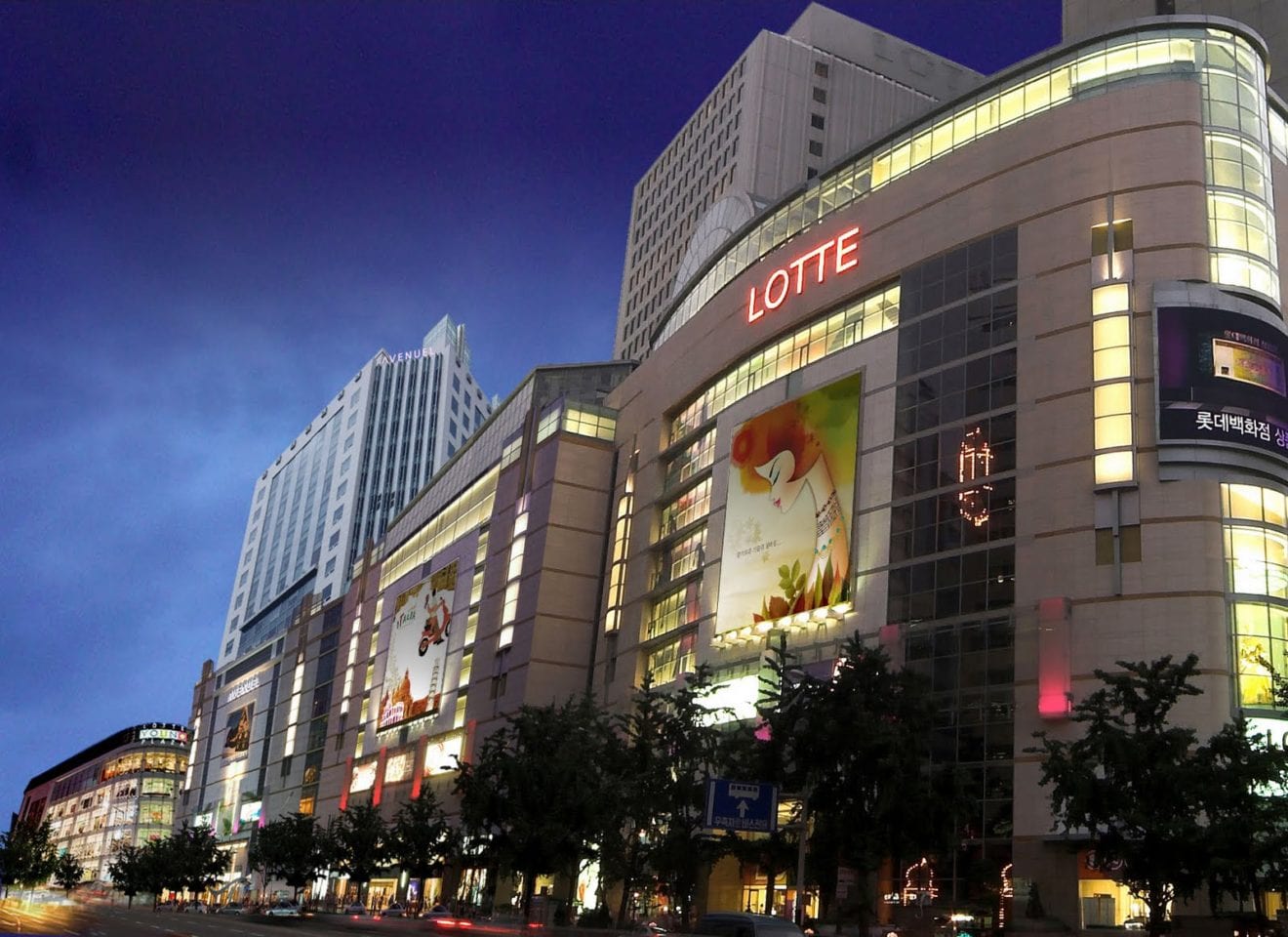
    Currently, Lotte Duty Free, the nation’s No. 1 operator, has two stores in Myeongdong, a major shopping district, and the affluent Gangnam region, and SK Networks Co., a trading and hotel unit under SK Group, has a store in the Sheraton Grand Walkerhill Hotel in the southeastern part of the capital.

    Separately, Shinsegae will renew its operating license for Paradise Duty Free in the southern port city of Busan as its current license also expires in December.

    “We will propose a multi-complex shopping mall in Myeongdong, the nation’s No. 1 tourist attraction,” said Sung Young-mok, who is in charge of Shinsegae’s duty free business. “For Busan, we will relocate the duty-free shop to Shinsegae Centum City to recreate it as Busan’s tourism icon.”

    It is the second bid this year after Shinsegae applied for a new license in May, proposing to renovate its landmark outlet in Myeongdong. The building, established in 1930, was home to the country’s first department store.

    If it wins the bid, the retail giant will be opening its first duty-free store in downtown Seoul.

    The bid is seen as a major opportunity for local retailers who are in search of new cash cows amid lackluster domestic demand. Duty-free stores have emerged as one of the most lucrative retail channels in tandem with a sharp influx of deep-pocketed shoppers from China.

    Last year, the six duty-free stores across the capital, mostly dominated by Lotte, posted combined sales of 4.4 trillion won (US$4 billion). Sales by a Lotte Duty Free branch in the Myeongdong area accounted for a whopping 45 percent of the total.


  • Spyder launches in Korea

    Spyder launches in Korea

    Ski and sportswear brand Spyder has launched in South Korea with an all-new product line available in freestanding stores and shop-in-shops.

    An accelerated retail rollout is planned with 25 stores opening across the country by the end of 2015.

    “We are excited to be working with Global Brands to bring Spyder to South Korea, one of the world’s most fashion-forward and trendsetting markets,” said Jamie Salter, chairman and CEO of Authentic Brands Group and owner of the brand.

    “Spyder is highly regarded and we are confident that the brand will flourish in the country.”

    Designed for the ‘style-seeking South Korean consumer’, both the men’s and women’s collections draw from the core DNA of the brand, fusing elements of performance and fashion.

    “We see tremendous equity in the Spyder brand and its ability to translate across key markets in Asia,” said Bruce Rockowitz, CEO and vice chairman, Global Brands Group.

    “We look forward to replicating the success we have achieved in other markets to South Korea, through the roll out of a number of exciting brand and category extensions.”

    Spyder is featured in shop-in-shops at fashion hot spots including Galleria Department Store, Hyundai Department Store, Lotte Department Store and AK Department Store. The brand also launches with freestanding stores in Seoul, Daegu, Gumi, Incheon and Sokcho. Spyder will be promoted in a 360 degree campaign that includes national Print, Out of Home, Digital, Social, and TV promotion beginning this month.

    Spyder is described as one of the world’s most recognisable and credible outdoor sportswear brands, focused on enhancing the ski experience both on and off the mountain. Originally founded by David Jacobs, coach of the Canadian Ski Team and Bob Beattie, coach of the United States Ski team, Spyder’s roots run deep in the ski community. The brand has been the official sponsor of the US Ski team since 1989. Spyder offers technical ski, fitness, and lifestyle apparel and accessories for men, women, and children. The highly sought after brand is available in department stores, sporting goods stores, and specialty retailers throughout North America, Europe, the Middle East and now South Korea.

  • ShopClues partners with South Korea to help merchants sell products in India

    ShopClues partners with South Korea to help merchants sell products in India

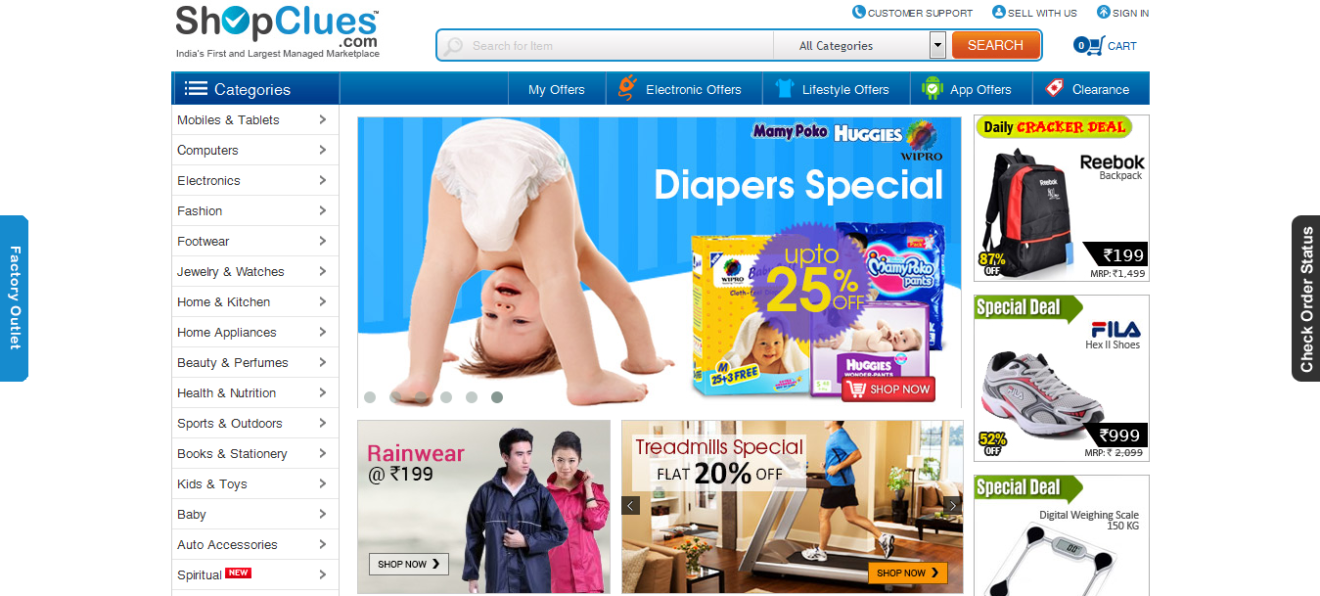
    ShopClues has partnered with a South Korean trade body to enroll 30,000 wholesale merchants, allowing them to sell directly to Indian businesses and consumers through its online marketplace.

    ShopClues will provide cataloguing, delivery payment and customer support to members of the Korean International Trade Association (KITA), similar to the terms of a partnership it stitched with Chinese online B2B platform DHgate in May, opening up the Indian market to wholesalers from southeast Asian countries.

    Indian merchants do not have many options to buy goods directly from overseas ecommerce platforms. Chinese ecommerce giant Alibaba Group has 4.46 million Indian buyers and sellers registered with Alibaba Wholesale.

    But Amazon India’s Global Selling Programme launched in June and eBay’s Powership programme allow only exports by Indian merchants. ShopClues is also in talks with wholesale platforms in Thailand, Malaysia and Indonesia. These alliances are essential for the company to be able to meet its 2015-16 target of $1.5 billion (Rs 10,000 crore) in gross merchandise value, or the total retail price of all the goods sold on its platform.

    In financial year 2015, ShopClues achieved GMV of Rs 2,500 crore. “The merchants on-boarded from DHgate as well as KITA are an overlap between our wholesale marketplace for consumers and small businesses as well as private marketplace for B2B sourcing for the 1.25 lakh merchants registered on Shop Clues,” said Sanjay Sethi, cofounder and CEO of the Tiger Global-backed company.

    “More importantly, it helps smaller merchants and those in Tier 2 and 3 cities who want to stock up certain goods for their physical retail outlets.”

    The Korean merchants will sell products including cosmetics, home and kitchen appliances, electronic goods and car accessories on ShopClues. They will be charged a fee for services provided by ShopClues.

    “We do the payment processing, including exchange services, and charge the merchant for it. Apart from this, the fulfilment services are also charged.Access to the ShopClues platform is free,” said Sethi. The turnaround time will be 14-45 days, depending on the volume of an order and whether the products have to be custommade, Sethi said.

    On plans for enrolling merchants in Thailand, Malaysia and Indonesia, Sethi said, “Currently, we have not built the entire ecosystem for the SE Asian markets to buy or source from Indian merchants, though we will look at exports going ahead.”

  • JD.com partners with Korean shopping site Lotte.com

    JD.com partners with Korean shopping site Lotte.com

    China’s online direct sales company JD.com has partnered with South Korea’s online shopping site Lotte.com.

    Under the deal, JD.com customers will be able to purchase products from Lotte through JD Worldwide, the company’s cross-border platform.

    Products will cover categories including baby and maternity, cosmetics, fashion, everyday household products, home appliances, food and Lotte-branded products.

    “The demand for products through Korean Mall has been strong and partnering with Lotte will help us meet the growing needs of our users,” said JD Mall CEO Haoyu Shen.

    The announcement follows the successful launch in late March of Korean Mall, which sells authentic imported Korean products on JD Worldwide. Since its launch, dozens of Korean brands started to sell their products to Chinese consumers through Korean Mall. The best-selling product categories include personal care products and cosmetics.

    Lotte.com CEO Hyeong Jun Kim said JD.com’s users are the ideal audience for the company as they look to develop their business in China.

  • Chinese couples spend big in Korea

    Chinese couples spend big in Korea

    Korea is becoming a major destination for young Chinese couples looking to splurge on expensive items for their upcoming marriages.

    Chen Yi, 34, and Chai Xuefang, 30, who recently visited Seoul from Shandong province, China, are typical of the growing number of couples who are sparing no expense to make their big day special.

    The two bought two Vacheron Constantin wristwatches worth 100 million won ($84,350) each at the Hyundai Department Store in Apgujeong, southern Seoul. They also bought a two-carat diamond ring for 60 million won.

    “A lots of Koreans are preparing for their weddings at Cheongdam-dong [near Apgujeong in the posh Gangnam District],” said soon-to-be-wed Chai. “We plan to get wedding consulting [here in Seoul] exclusively for Chinese people.”

    Another Chinese couple, Yang Xiaoliang, 30, and his fiance Xu Jingjing, 27, last month bought a 10 million won Thom Browne suit for men and two Rolex wristwatches for the couple worth 150 million won each at the same Hyundai Department Store in Apgujeong. They purchased the items ahead of a wedding photo shoot at a studio in Cheongdam-dong.

    The Korean retail and hotel industry is taking notice of the growing number of Chinese couples who are spending big in Seoul to prepare for their weddings.

    They have become major customers who are spending large on high-end wedding gifts, including jewelry, wristwatches and designer suits and dresses. Majors stores are already catering to the growing demand.

    Hyundai Department Store’s Apgujeong branch plans to provide a wedding consulting program exclusively for Chinese couples, and have already enhanced other services for young Chinese customers. Since last month, they have provided a free delivery service where electronic appliances and furniture purchased by Chinese couples can be dropped off at their front door in China. The service has a limit of 30 kilograms (66 pounds) per person.

    Lotte Duty Free recently started a service where items purchased at its shops can be delivered from the Chinese airport to their homes.

    “We get a lot of inquires from Chinese tourists who come to Gangnam [District] to get wedding consulting,” said Lee Hyun-sook, a foreigner-exclusive concierge at Hyundai Department Store. “They shop after asking every detail, such as which brand Koreans most prefer for their own wedding gifts.”

    China Union Pay credit card purchases made by Chinese on imported brands such as Tiffany’s and Cartier soared 91.3 percent in the first eight months of this year compared to the same period last year at Hyundai Department Store. Purchases on furniture, electronic appliances and household goods saw a huge growth of 134.1
    percent.

    Shinsegae Group is widening its marketing strategy to attract soon-to-wed Chinese couples in its department stores and other major affiliates, including its discount store E-Mart and its hotel business Westin Chosun.

    Shinsegae Group invited two couples from Shenyang and Tianjin to Seoul, where they will get a wedding photo taken at the Cheongnam-dong studio that took wedding pictures for famous Korean actresses Jun Ji-hyun. They will also get the chance to experience a traditional Korean wedding ceremony at the Westin Chosun Hotel and shopping at E-Mart and the retail group’s other outlets. The cost is 15 million won per person.

    “We plan to secure the lead in grabbing Chinese couples visiting Korea to get wedding services during the most popular wedding seasons for the Chinese, which starts this month and leads up to the end of the year,” said Shinsegae CEO Jang Jae-young.

    Wedding gifts, including high-end wristwatches, jewelry and designer bags, accounted for 60 percent of all sales made by Chinese tourists at Shinsegae Department Store during China’s May Day, from April 25 to May 3.

    Hotels are also recognizing the growing trend.

    Plaza Hotel last month introduced a wedding package where a hopeful groom can make a proposal at the hotel’s restaurant.

    The package includes a studio wedding photo shoot that comes with makeup from a company that many Korean female celebrities like Han Ye-seul and Han Hyo-joo frequently use. The price tag on the three-day package is 7 million won including flight tickets.

    Lotte Hotel is offering a package targeted at Chinese customers that includes not only the wedding photo and makeup but also a proposal ceremony and spa. The cost for the three-day program is 11.8 million won.


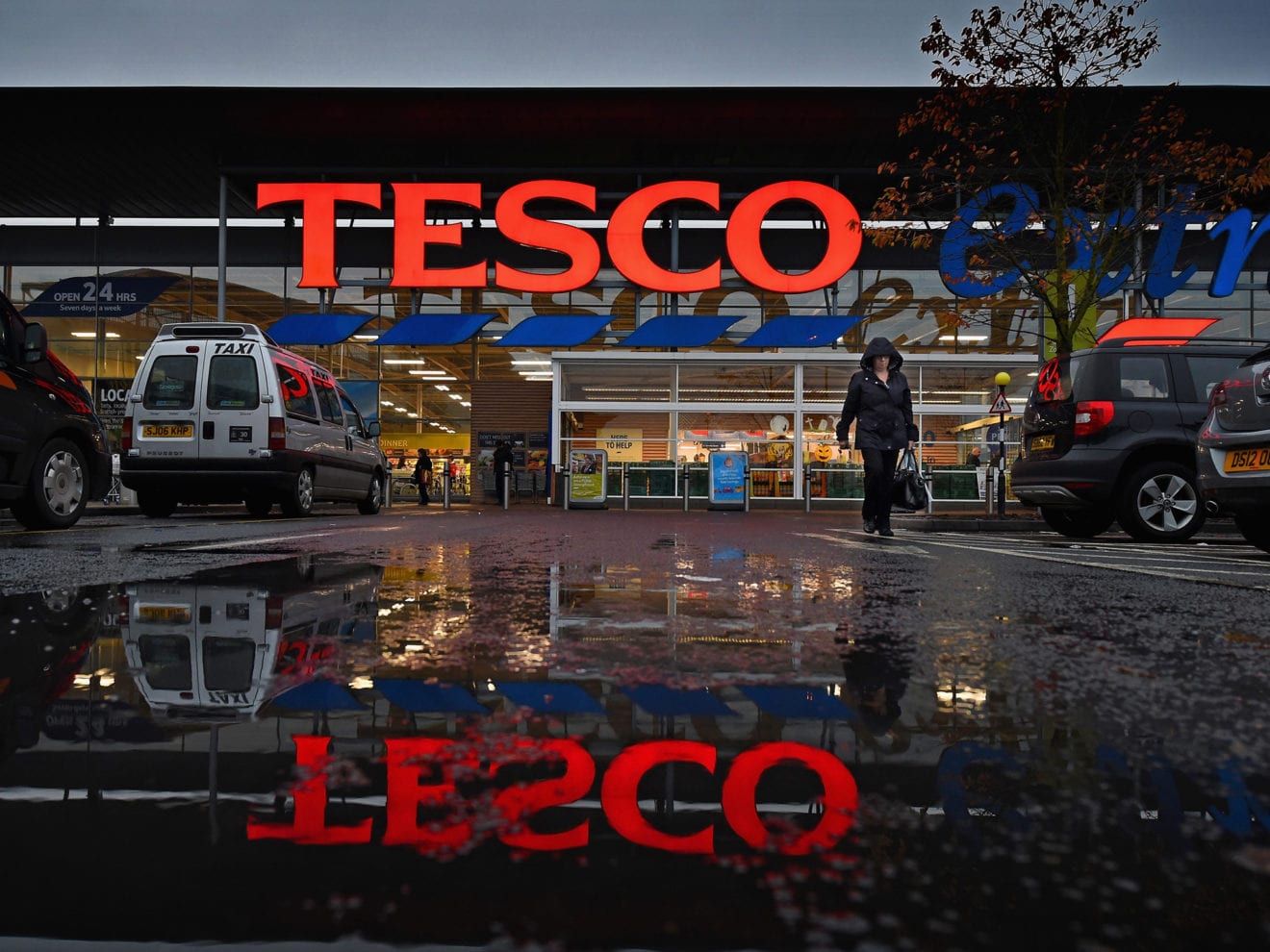
  • Tesco Nears $6B Deal To Sell South Korea Unit

    Tesco Nears $6B Deal To Sell South Korea Unit

    A group led by MBK Partners Ltd., North Asia’s biggest independent buyout firm, is trying to close a deal to buy Tesco Plc’s business in South Korea for about $6 billion, including debt. The acquisition, if completed, would be the country’s biggest private equity deal, Bloomberg reported, citing people familiar with the matter.

    The group, which includes South Korea’s National Pension Service, got exclusive negotiating rights Wednesday to take over Tesco’s Homeplus business. If the deal goes through, it would give the MBK-led group a retail chain that stands second only to market leader E-Mart of the family-run Shinsegae Group Co., through more than 900 stores and over $7 billion in annual revenue.

    The deal would also allow U.K.’s Tesco to pay off its massive debt of 21.7 billion pounds ($33.2 billion). The Bloomberg report added that Tesco is also looking at options to sell its analytics business, Dunnhumby.

    MBK’s consortium reportedly beat a rival consortium led by New York private equity firm KKR & Co. The South Korean business is considered Tesco’s “crown jewel” in Asia, Bloomberg reported, citing estimates from Credit Suisse (SIX:) Group AG.

    The business has a valuation of 4 billion pounds, more than the 1.6 billion-pound valuation of Dunnhumby, a U.K customer science company owned by Tesco. However, Homeplus posted a net loss of 300.1 billion won ($255 million) for the year ending February 28, down from last year’s profits of 463 billion won. Revenues for the company also reportedly shrank to 8.6 trillion won, down 4 percent, due to weak household spending. Homeplus reportedly had a market share of 25 percent, behind E-Mart’s 29 percent.

    Tesco posted a loss of 6.4 billion pounds ($9.56 billion) in April, the biggest-ever in its 96-year history. The Bloomberg report added that the company’s chief executive Dave Lewis is trying to revive sales for the company’s market-leading grocery business, which is facing a severe price war due to the expansion of German discount retailers Aldi and Lidl.

    The retailer entered South Korea in 1999 through a joint venture with Samsung (KS:) Group in which Tesco held an 81 percent stake initially, Bloomberg reported. It came in with an investment of 130 million pounds and slowly bought out Samsung’s stake.

    Tesco’s shares have fallen close to 20 percent in the past one year while London’s benchmark has seen a decline of nearly 11 percent in the same period. On Wednesday, the stock was up 0.11 percent in mid-morning trade.

  • South Korea retail sales easing upwards

    South Korea retail sales easing upwards

    South Korean retailers are breathing a sigh of relief as consumers return to stores in the wake of the MERS scare receding.

    South Korea retail sales rose 0.5 per cent in July to 30.14 trillion won (US$25.6 billion) after receding 0.6 per cent in June.

    Statistics Korea said sales rose month on month as well as year on year.

    “The fallout of the MERS outbreak that caused demand to slump seems to have receded in July, leading to a slight rise in consumer spending,” a spokesman for Statistics Korea said.

    “While things have not returned to normal, sales are rising in areas that were most affected by the outbreak.”

    The MERS outbreak hit in late May. Thirty-six people subsequently died and a further 186 were infected before the outbreak was brought under control and confirmed over by health officials in July.

    The value of online transactions rose by 21.2 per cent, driven by sales of food and cosmetics as cautious shoppers opted to have products delivered rather than visit stores and risk exposure.

    Online shopping accounted for 15.8 per cent total retail sales in July.

    In stores, food and beverage sales rose 3.8 per cent year on year in July and electronics sales by 3.2 per cent. Department store sales rose 0.4 per cent, having fallen 12 per cent in June.

    Sales at convenience stores rose 33.6 per cent and at supermarkets by three per cent.

  • Estee Lauder travel-retail revenue falls

    Estee Lauder travel-retail revenue falls

    Cosmetics-giant Estée Lauder Companies reported a decline in travel-retail sales in fiscal year 2015 (ended June 30, 2015), despite an increase in global airline traffic and expanded distribution in the channel.

    The company said that a stronger dollar and the outbreak of Middle East Respiratory Syndrome (MERS), which killed nearly 40 people in South Korea this year, contributed to decline, with travel-retail sales falling by 4% in the last quarter of fiscal year 2015.

    Over 55,000 tourists had cancelled trips to South Korea by the mid-June, according to the World Economic Forum.

    Slower retail growth in Hong Kong and China, as well as a decline in spending by Russian and Brazilian travellers are also expected to impact sales revenue into the 2016 fiscal year.

    The news came as the company also forecasted below-estimated earnings across the whole business for the coming fiscal year, and announced that net sales in the fiscal year ending in June went down to $10.78bn, a 1.7% decrease from $10.97bn the previous year. The company said it missed its 7% growth target because of accelerated sales orders in Latin America and the use of constant currencies to calculate international profits.

    For the three months ended June 30, 2015, the company reported net sales of $2.52bn, compared with $2.73bn the previous year. Skincare products were chiefly affected, with overall sales falling by 16% in Q4.

    However, expanded distribution, including in travel-retail, also helped lift some labels’ revenues. While sales for heritage-brands Estée Lauder and Clinique slumped, the conglomerate’s current global-marketing focus has been on growth for youthful or luxury brands like Smashbox and Tom Ford. Along with Aveda hair-care product, these brands’ expanding travel-retail channels were reported by Estée Lauder Co. to have resulted in year-on-year revenue growth that has helped offset some of this year’s losses.

    The company has said that by adjusting to factors like constant currencies and accelerated orders in the fiscal year 2014, strong underlying growth in the company becomes apparent.

    President and CEO Fabrizio Freda said in the company’s report for the fiscal year 2015 (Q4 and full year): “Together with our powerful brand portfolio and financial discipline we finished our fiscal year with a strong Q4, generating 7% constant currency sales growth, after adjusting for the accelerated sales orders we reported in fiscal 2014.

    He added “For the full year, our adjusted 6% local currency sales growth met our expectations, and we exceeded our earnings per share forecast …Our sales grew at a faster rate than global prestige beauty, due to the success of our multiple engines of growth. Standout performances generated double-digit sales gains in most of our makeup and luxury brands and the online, specialty-multi and freestanding store channels.

    “In fiscal 2016, we expect constant currency net sales growth of 6% to 8% and double-digit earnings per share growth, after adjusting for the accelerated sales orders.”

    Reuters reported on Monday that Estée Lauder Cos Inc shares fell by up to 5.3% to $82.8 per share yesterday, but the value rose to $84.48 today (still down from $90 reported at the beginning of this month). Estée Lauder is currently expanding its travel-retail offering, focusing on colourful, clean brands like Mac and Smashbox, as well as its successful London brand Jo Malone.

  • M&G makes first retail acquisition in South Korea

    M&G makes first retail acquisition in South Korea

    M&G Real Estate has acquired three retail assets in South Korea at a combined value of US$230 million, representing an average yield of 6.5%. The acquisition was made on behalf of its core Asia real estate strategy, managed by Singapore-based Erle Spratt.

    Under the terms of the deal, M&G Real Estate has acquired two hypermarkets: the first in Daejeon, South Korea’s fifth largest city; the second in Jeju, the capital of the Jeju Province and the nation’s premier tourist destination. The third asset is an outlet mall in Incheon City, the country’s third largest city after Seoul and Busan. All three assets are highly sought after retail outlets in prime locations and are leased to South Korea’s largest retailer, Lotte Shopping.

    Hyesik Ryu, Managing Director, M&G Real Estate Korea, comments: “We were one of the first non-domestic institutional investors to invest in South Korea when we bought into the country’s commercial office sector in 2004. M&G Real Estate has developed a deep understanding of the market, enabling us to make this latest investment in the retail sector, which will strengthen the strategy’s long term income stream.”

    Erle Spratt adds: “We’re seeing strong capital flows, particularly from global pension funds and insurance companies in the UK and Europe. With responsibility for more than US$2 billion in assets, we are well positioned to pursue property investments across the region to further improve our risk adjusted returns and sustain the outperformance of our portfolio.”

    Stefan Cornelissen, M&G’s head of institutional business, Benelux, Nordics and Switzerland, says: “The Asia Pacific real estate market is now the second largest in the world and rivals the US and Europe in terms of its maturity, transparency and liquidity. European investors in search of diversification can now benefit from Asia’s strong economic growth and attractive long term returns without going higher up the risk curve.

    “We have recently had a significant commitment from Dutch investor, Blue Sky Group, which has invested on behalf of its recently launched Core Asia Pacific Fund. We expect further capital to follow from other UK and European investors. Asian real estate has come of age and is earning itself a strategic place in a diversified core real estate portfolio.”