Tag: Sparks

  • Inferno Engulfs Coupang Warehouse: 52-hour Blaze Sparks Major Evacuation in Seoul

    Inferno Engulfs Coupang Warehouse: 52-hour Blaze Sparks Major Evacuation in Seoul

    A significant fire broke out at Coupang’s No. 32 logistics center located in Incheon, west of Seoul, prompting an evacuation of surrounding businesses and factories due to structural collapse concerns. The fire, which originated on the building’s sixth floor and spread to the seventh, burned for over 52 hours.

    The Incident at Coupang’s Fulfillment Center

    The blaze commenced at approximately 6:54 am local time on Saturday. The fulfillment center, which serves the Seoul metropolitan area, primarily stores goods purchased directly by Coupang for their fast-delivery service. Spanning eight floors and covering an area of around 299,000 square meters, the centre’s vast size is equivalent to about 42 football fields. The fire’s cause remains unclear, however, the building contains numerous flammable items such as household goods, paper boxes, and vinyl packaging. An investigation will commence as soon as the fire is entirely extinguished.

    Despite the adverse conditions, all workers present in the building at the time of the fire were safely evacuated, according to the company. Surveillance footage taken on Monday morning showed an ongoing situation, with dozens of fire trucks still present and smoke continuing to pour out of the building, even amid rainfall.

    Late on Sunday, the authorities ordered an evacuation for businesses and factories within 116 meters (around 127 yards) of the warehouse’s ramp area due to fears of a partial building collapse. Coupang Corp, a subsidiary of the U.S.-based Coupang Inc, and South Korea’s most extensive e-commerce firm, has yet to publicly quantify the expected operational disruption or financial damage.

    In a recent fact sheet, Coupang revealed that it operates over 100 logistics centers across more than 30 regions in South Korea.

    A Message from Coupang’s Leadership

    The head of Coupang Fulfilment Services, Jeong Jong-cheol, issued a public apology on Saturday. He affirmed the company’s commitment to cooperating with authorities, supporting firefighting efforts, and assisting nearby residents affected by the incident. The company has declined further comment at this time.

    Questions & Answers

    What is the current status of the fire at Coupang’s logistics center?
    The fire burned for over 52 hours and has led to the evacuation of the center and surrounding businesses and factories.

    What caused the fire at the Coupang fulfillment center?
    The cause of the fire remains unknown, with an investigation pending once the blaze is fully extinguished.

    What has been the response from Coupang’s leadership?
    The head of Coupang Fulfilment Services, Jeong Jong-cheol, has issued a public apology and affirmed the company’s commitment to cooperating with authorities, supporting firefighting efforts, and assisting local residents affected by the incident.

  • Mysterious $1B Investment in True Telecom Sparks Investigation by Thailands Market Regulator

    Mysterious $1B Investment in True Telecom Sparks Investigation by Thailands Market Regulator

    The Thai market regulator has initiated an investigation after an individual surfaced with an estimated one billion US dollars in shareholdings in telecom titan True Corporation, thereby becoming one of its largest shareholders. The regulatory body intends to gather further details and seek explanations from relevant entities in compliance with the standard procedures, as per a recent announcement.

    Stake Increase and Company Backing

    The individual, identified as Supaporn, disclosed in a regulatory filing last week that she had amplified her stake in True, which is based in Bangkok, from 3.9% by purchasing shares through an international broker. Her investment equates to roughly 32 billion baht ($960 million), calculated based on True’s closing price on Monday.

    True Corporation enjoys the backing of Charoen Pokphand Group (CP Group), one of the largest conglomerates in Thailand, and holds the position of the country’s second-largest mobile phone service provider. Earlier this year, Arise Digital Technology, under the control of True’s chairman Suphachai Chearavanont, bought approximately a 25% stake in True from Norway’s Telenor for 39 billion kroner (US$3.9 billion). Both CP Group and Telenor had studied the possibility of merging their telecom units in 2021.

    This deal also included an opportunity to buy an extra 5.4% stake within a two-year timeframe.

    Discrepancies and Legal Implications

    However, there seem to be some inconsistencies in the details provided by Supaporn in her regulatory filing, according to a statement issued by True. The firm stated that it has never offered preference shares to the public and currently does not have any outstanding preference shares. The company has reportedly informed the SEC about the inconsistency.

    The Thai regulator has issued a warning that stern legal measures would be enforced if the ongoing probe uncovers any breaches of the prevailing regulations.

    True also mentioned that the disclosure made by Supaporn about her augmented stake was labeled as preliminary, indicating that the details are incomplete and remain under scrutiny.

    On a different note, this Monday marked the completion of the sale of a 10% stake in True by the CP Group, achieved via a series of transactions as per an official statement.

    Questions & Answers

    What initiated the review by the Thai market regulator?
    The review was initiated after an individual emerged owning nearly one billion US dollars in shareholdings in True Corporation, making her one of its largest shareholders.

    Who is backing True Corporation?
    True Corporation is backed by Charoen Pokphand Group, one of Thailand’s largest conglomerates.

    How did True Corporation react to Supaporn’s regulatory filing?
    True Corporation pointed out some inconsistencies in Supaporn’s filing, stating that the company has never offered preference shares to the public and currently does not have any outstanding preference shares. The firm has notified the SEC about the discrepancy.

  • Apple’s Leap of Faith: Intel Chip Deal Sparks Debate on Future of U.S. Chipmaking Industry

    Apple’s Leap of Faith: Intel Chip Deal Sparks Debate on Future of U.S. Chipmaking Industry

    Apple’s transition to Intel chips, as reported last week, displays a strategic move driven by necessity and ambition. However, industry experts suggest this is not a straightforward transition, as advanced Intel chips typically require two to three years to manufacture. Moreover, the translation of this shift into tangible benefits may take even longer due to the extensive and meticulous production process.

    This potential deal, which has not yet been officially confirmed by either party, could present a mutually beneficial opportunity. Intel has been striving to reestablish its reputation as a credible contract chipmaker, while Apple seeks additional manufacturing capacity. This comes in light of Apple’s current supplier, TSMC, grappling with increased Artificial Intelligence (AI) chip demand led by companies such as Nvidia.

    Supply issues have impacted iPhone sales, as Apple CEO Tim Cook noted in April. The prospective agreement with Intel aligns with the U.S strategy to bolster domestic chip manufacturing, using tariffs and incentives. Intel, holding a 10% stake in the company and having received a $5 billion investment from Nvidia on the request of President Donald Trump, is considered a critical player in this initiative.

    However, Malcolm Penn, CEO of chip research firm Future Horizons, offers a cautious perspective. “The very best-case scenario would see the first chips produced within two to three years. Designing an SoC (system on chip) of this complexity takes two years, with an additional four months needed for production cycle time to ramp up,” he explained. Penn underscores that this estimation is contingent on Intel’s technology being fully developed and its design tools sufficiently reliable for Apple to rely on. He termed the deal as “a shotgun wedding,” due to the high degree of faith and commercial risk involved.

    Intel’s Prospects with Apple

    Despite being late to the AI boom, Intel has made tentative strides, securing Tesla as a customer in April and potentially entering a significant partnership with Apple. Experts are split over which Intel manufacturing process Apple will select.

    While some predict Apple will follow Tesla onto Intel’s forthcoming 14A process, others foresee Apple prioritizing reliability over cutting-edge gains, potentially favoring 18A-P, a refined version of Intel’s most advanced process, or a reliable, older node such as Intel 3.

    Bob O’Donnell, an analyst at TECHnalysis Research, believes Apple might opt for Intel’s 14A process technology, expected to be available by 2028 or 2029. He notes that if this comes to fruition, it would mark a pivotal development for Intel’s foundry business and U.S-based semiconductor manufacturing more broadly.

    Turning Apple’s Vision into Reality

    Daniel Newman, CEO of tech research firm Futurum Group, suggests that the mass production of Apple-designed chips may not commence until late 2027 or early 2028. It is anticipated that initial efforts will concentrate on less critical components used in MacBook Air or certain iPad Pro models.

    Apple might adopt a cautious approach, initially testing Intel with lower-end products before entrusting them with their most essential chips, as per analysts. Intel, which has faced challenges with the timeline and quality of its chips, will need to meet Apple’s high yield expectations—a standard that TSMC has accustomed Apple to.

    Paul Meeks, head of tech research at Freedom Capital Markets, voices skepticism. “Investors are betting on flawless execution by Intel, a company that hasn’t delivered for about 20 years. While Intel seems to have made progress with its latest manufacturing process, we should all at least modestly discount a perfect outcome,” he warned.

    Questions & Answers

    What is the predicted timeline for the production of Intel chips for Apple?
    The best-case scenario predicts that the first chips could be produced within two to three years. However, the mass production of Apple-designed chips may not start until late 2027 or early 2028.

    What factors could impact this timeline?
    The timeline depends largely on whether Intel’s technology is fully developed and its design tools reliable enough for Apple to depend on. It is also contingent on Intel meeting Apple’s high yield expectations.

    What could be the implications of this shift for Apple and for U.S. semiconductor manufacturing?
    The shift could potentially provide Apple with the additional manufacturing capacity it seeks and help Intel rebuild its credibility as a contract chipmaker. If successful, it could also mark a significant development for U.S-based semiconductor manufacturing.

  • Yakult Singapore Swaps Unpopular Orange Flavor for Peach, Sparks Consumer Debate

    Yakult Singapore Swaps Unpopular Orange Flavor for Peach, Sparks Consumer Debate

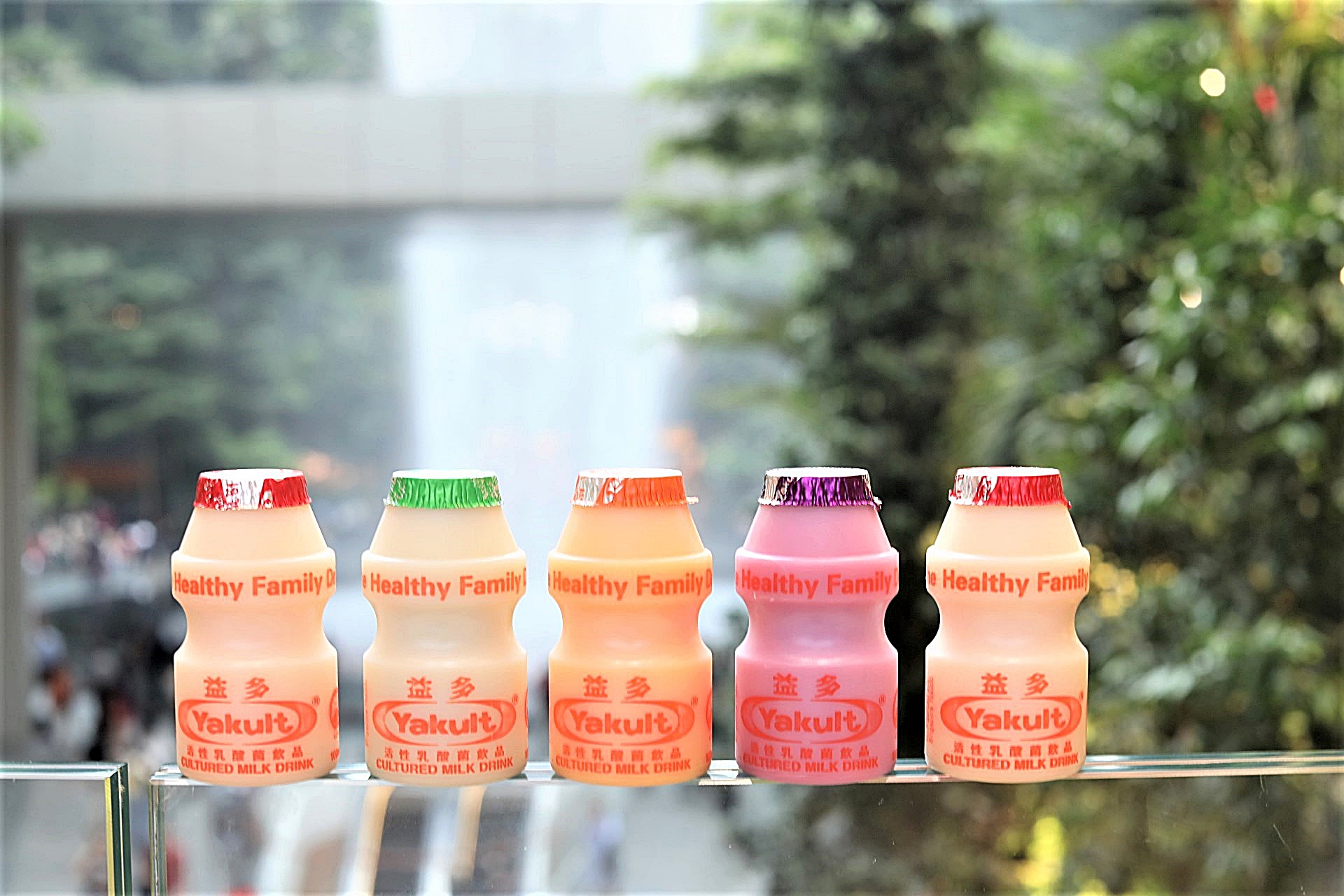
    The recent announcement regarding the discontinuation of Yakult Orange, a popular probiotic drink flavor, has elicited mixed reactions from consumers. For some, it comes as a surprise that this flavor was not as beloved as they had previously believed.

    Reactions to the Discontinuation

    Christine Heng, a 43-year-old music teacher, shared that she had always considered orange to be the preferred flavor until she discovered it was actually grape. She confessed that her regular monthly purchases of Yakult Orange for her family would drastically reduce due to the unavailability of her favorite variant.

    However, not everyone is mourning the loss of the orange flavor. A considerable number of comments were in favor of the change, with some people voicing their disapproval of the synthetic taste of the orange flavor. Comments such as, “I didn’t like how artificial the orange flavor was. I’m glad they replaced it,” and “Can replace any flavors, just don’t touch Apple and Grape,” reflect the varied consumer opinions on the matter.

    Farewell to Yakult Orange

    Despite the discontinuation, fans of Yakult Orange still have the opportunity to stock up on their favorite flavor until production officially comes to a halt at the end of this month. The drink will remain available as long as supplies last.

    Yakult, the probiotic cultured milk drink, was founded in Japan in 1935. It contains a strain of beneficial bacteria known as Lacticaseibacillus paracasei Shirota, discovered by its founder Minoru Shirota. Today, Yakult drinks are marketed worldwide, including regions such as Europe, Brazil, and Vietnam. In addition to the standard Yakult drink, there are other product ranges, like Yakult Plus. Furthermore, Yakult Peach was introduced in China in 2024.

    Questions & Answers

    What is the reaction of consumers to the discontinuation of Yakult Orange?
    Reactions are mixed: some consumers are disappointed, while others are glad about the change, criticizing the artificial taste of the orange flavor.

    Until when can consumers purchase Yakult Orange?
    Consumers can purchase Yakult Orange until the end of the month when production ends, or until supplies last.

    Where else are Yakult drinks available?
    Yakult drinks are available in several international markets, including Europe, Brazil, and Vietnam. They offer the standard Yakult drink and other product ranges like Yakult Plus.

  • Matthieu Blazys Fresh Spin Sparks Chanels Comeback in Luxury Market

    Matthieu Blazys Fresh Spin Sparks Chanels Comeback in Luxury Market

    The Paris-based luxury fashion brand Chanel has experienced a significant surge in demand, piquing the interest of first-time buyers. This increase has been attributed to the reimagined versions of classic items such as bags, shoes, and jackets by the brand’s creative director, Matthieu Blazy. As a result, Chanel’s demand has exceeded supply, signaling a rebound in growth.

    Revamping Classics Fuels Growth

    Chanel recently reported a 2% increase in currency-adjusted revenues for 2025, amounting to US$19.3 billion. The brand experienced a 4.3% reduction in revenue the previous year, a period when high-end fashion labels struggled with demand following significant price increases in the wake of a post-pandemic luxury boom.

    Last year, Matthieu Blazy assumed the role of creative director, succeeding Virginie Viard. His maiden collection, launched in October, infused fresh life into the brand with innovative designs. Notable among these are the slouchy leather maxi flap bag retailing for $8,500, and brightly colored, frayed interpretations of the traditional Chanel tweed jacket.

    Chanel’s CEO, Leena Nair, attributes the brand’s recent success to “a creative momentum across all our business activities,” further noting that investments made in the previous year laid the groundwork for this sales rebound. The brand’s operating profit also experienced growth, recording a 5% increase to hit $4.7 billion.

    New Trends Attracting New Customers

    The brand’s revamped collection has been well-received by consumers, resulting in a substantial increase in new clientele for Chanel. High-demand pieces such as new handbags, mint green and black two-tone pumps (priced at $1,450), and multicolored tweed jackets are flying off the shelves.

    As for the brand’s performance relative to its competitors, Chanel’s growth rate fell short of Hermès at 9.8%, but outperformed LVMH’s fashion and leather goods division, which recorded a 5% decline.

    America, despite enduring tariffs, contributed the most to Chanel’s growth, with a sales increase of 7.2% in currency-adjusted terms in the Americas region. Meanwhile, sales in the Asia-Pacific region — Chanel’s largest market — fell by 0.8%, and Europe recorded a growth of 2.5%.

    Chanel has plans to increase prices by 3% overall and 2% for fashion products this year, according to CFO Philippe Blondiaux. He also noted the Middle East’s market resilience, which accounts for approximately 4% of the brand’s revenue, despite the ongoing conflict in Iran.

    The company plans to continue expanding its retail presence, intending to launch 30 new stores this year, including nine fashion boutiques in locations such as Boca Raton, Florida, and Palo Alto and San Diego in California.

    Questions & Answers

    What has been the impact of Matthieu Blazy’s designs on Chanel’s performance?

    Blazy’s redesigns of classic Chanel pieces have resulted in increased demand, attracting many first-time buyers and contributing to significant growth for the brand.

    How does Chanel’s recent growth compare with that of other luxury fashion brands?

    Chanel’s growth rate in 2025 was slower than that of Hermès but exceeded the growth rate of LVMH’s fashion and leather goods division.

    What are Chanel’s future plans for expansion?

    Chanel plans to open thirty new stores this year, including nine fashion boutiques in locations such as Boca Raton, Florida, and Palo Alto and San Diego in California.

  • Chinese New Year Sparks Stellar 11.2% Surge in Singapore’s Retail Sales

    Chinese New Year Sparks Stellar 11.2% Surge in Singapore’s Retail Sales

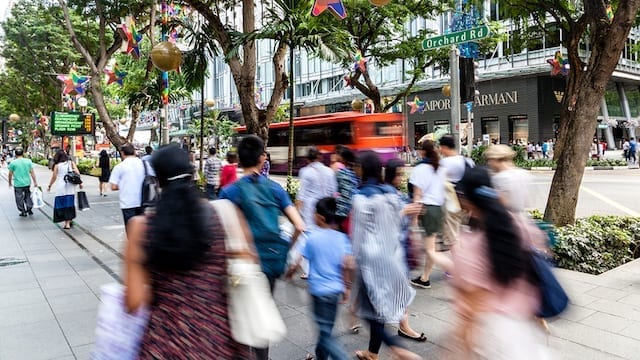
    In February, retail sales in Singapore experienced a significant surge, partially attributed to the shifting timing of the Chinese New Year. According to data released by Singapore’s Department of Statistics, retail sales, excluding automobiles and related parts and accessories, skyrocketed by 11.2% in February. This marked a turnaround from a decrease of 2.9% in January.

    Details of Retail Growth

    The estimated total retail sales for February amounted to SG$3.6 billion (US$2.8 billion), with online sales accounting for 16.2% of the total. The significant growth seen in February was partially due to the Chinese New Year falling in February this year, compared to January the previous year.

    For the combined period of January and February, retail sales increased by 3.5% year-on-year.

    Sectoral Growth Patterns

    Most sectors reported year-on-year growth in February’s sales. Supermarkets and hypermarkets led the surge with a growth of 29.3%, followed by recreational goods which saw an increase of 26%. Department stores reported a rise of 16.8% in sales, while the food and alcohol, cosmetics, and watches and jewelry sectors each saw an approximate increase of 13%.

    However, not all sectors experienced growth. The petrol service stations and mini-marts and convenience stores sectors faced declines of 9.8% and 6.1% respectively.

    The food and beverage services sector saw a rise in sales of 5.5% in February, marking a recovery from the 3.2% decline recorded in January.

    Questions & Answers

    What were the estimated total retail sales for Singapore in February?
    The estimated total retail sales for Singapore in February were SG$3.6 billion (US$2.8 billion).

    What percentage of February’s retail sales were from online?
    Online sales made up 16.2% of the total retail sales in February.

    Which sectors saw the most significant growth in February?
    Supermarkets and hypermarkets experienced the most significant growth with a rise of 29.3%, closely followed by recreational goods with a 26% increase.

  • Swiss Financial Giant UBS Sparks Investment Insight at 14th ASEAN Summit in Singapore

    Swiss Financial Giant UBS Sparks Investment Insight at 14th ASEAN Summit in Singapore

    The global financial powerhouse UBS recently launched the 14th iteration of its Southeast Asia summit. The objective of the summit is to foster an exchange of insights and investment ideas for the upcoming year.

    The newly inaugurated UBS OneASEAN Summit has assembled in Singapore. The event has drawn an impressive crowd of over 850 individuals comprising institutional investors, influential policy makers, and industry leaders, the company revealed in a statement.

    The conference, spread over two days, is packed with panel discussions centered around various themes. These include global trade imbalances, investment prospects in China, Japan, and Europe, the future of gold and other precious metals, the rise of digital assets and artificial intelligence in the Association of Southeast Asian Nations (ASEAN), and the creation of new energy systems for the AI-driven economy.

    The distinguished panel of speakers at the summit includes Suahasil Nazara, Deputy Minister of Finance for Indonesia, Brad Setser from the Council on Foreign Relations, Alfred Schipke from the Lee Kuan Yew School of Public Policy, Ken Jimbo from the International House of Japan, Peter Conti-Brown from The Wharton School, University of Pennsylvania, and William Dalrymple, the acclaimed author.

    Robust Economic Growth

    As per Grace Lim, the Senior ASEAN and Asia Economist at UBS Investment Bank Global Research, the Gross Domestic Product (GDP) of the ASEAN-6 countries – Indonesia, Malaysia, Philippines, Singapore, Thailand, and Vietnam – is forecasted to grow by 4.9 percent in 2026.

    Lim explained that the region continues to benefit from strong integration into global manufacturing value chains, bolstered by a substantial domestic market. She stated, “The conditions for growth are still in place, with household consumption fueling momentum in Indonesia, a rise in private investment underway in Thailand and the Philippines, and a resilient tech-related export strength in Singapore and Malaysia.”

    Nicolo Magni, Head of UBS Global Banking South-East Asia & South Asia, added to this sentiment, saying, “Southeast Asia continues to be a strategic alternative for investors. We anticipate strong deal-making momentum to persist throughout 2026 and the capital markets will likely be more active in the healthcare, real estate, and consumer sectors.”

    Questions & Answers

    What is the objective of the UBS OneASEAN Summit?
    The objective of the summit is to foster an exchange of insights and investment ideas for the upcoming year.

    Who are the attendees of the UBS OneASEAN Summit?
    The event has drawn an impressive crowd of over 850 individuals comprising institutional investors, influential policy makers, and industry leaders.

    What is the predicted GDP growth for the ASEAN-6 countries in 2026?
    The Gross Domestic Product (GDP) of the ASEAN-6 countries – Indonesia, Malaysia, Philippines, Singapore, Thailand, and Vietnam – is forecasted to grow by 4.9 percent in 2026.

  • Cathy Sparks Ascends to Nike’s VP and GM Role in Greater China: A New Era of Athletic Partnerships

    Cathy Sparks Ascends to Nike’s VP and GM Role in Greater China: A New Era of Athletic Partnerships

    Nike has recently made several key changes to its top-tier executives across various geographical territories. Cathy Spark has been promoted to the position of Vice President (VP) and General Manager (GM) of Greater China.

    Replacing Angela Dong, a seasoned Nike executive since 2005 who served in a variety of senior-level positions throughout the region, Spark plans to solidify collaborations and reaffirm Nike’s long-standing dominance in the Chinese market.

    Spark’s journey with Nike spans a quarter-century, initially starting as a store athlete at Niketown in Portland. Over the years, she assumed leadership roles across all geographical areas. Prior to her current position, she served as VP and GM of APLA, where she spearheaded the company’s strategy for marketplace transformation and consumer growth.

    Elliot Hill, Nike’s President and CEO, praised Spark for her ability to connect athletics, consumers, and Nike’s role at the crossroads between sports and culture. He highlighted her ability to build high-performing teams, act decisively, and effectively harness the unique appeal of the Nike brand.

    Cristin “Crissy” Campbell, a Nike employee with 15 years of experience, is slated to fill Spark’s former position as VP and GM of APLA.

    In the EMEA region, Carl Grebert will relinquish his duties as VP and GM. César Garcia will take over the role, with his tenure starting on February 2nd.

    Questions & Answers

    Who is the new VP and GM of Greater China for Nike?
    Cathy Spark has been appointed as the new Vice President and General Manager of Greater China for Nike.

    What role did Cathy Spark previously hold at Nike?
    Before her promotion, Cathy Spark was the Vice President and General Manager of APLA, leading the company’s strategy in marketplace transformation and consumer growth.

    Who will succeed Cathy Spark as VP and GM of APLA?
    Cristin “Crissy” Campbell, a 15-year veteran at Nike, will take over as the Vice President and General Manager of APLA.

  • KFC’s Zinger Banh Mi Sparks Debate: Innovative Fusion or Vietnamese Cuisine Faux Pas?

    KFC’s Zinger Banh Mi Sparks Debate: Innovative Fusion or Vietnamese Cuisine Faux Pas?

    KFC Australia has stirred up a buzz in the culinary world with its unique food fusion, the Zinger Banh Mi. This novel dish marries KFC’s crispy chicken fillet with a classic Vietnamese sandwich, introducing a fresh and somewhat unconventional dining experience.

    A Taste of Innovation

    On November 4, KFC Australia rolled out the Zinger Banh Mi across the country, following a successful trial run in Newcastle. This limited-edition dish comprises coleslaw, chili, coriander, mayonnaise, KFC Supercharger sauce, and a Zinger chicken fillet, all nestled within a traditional Banh Mi roll.

    Sally Spriggs, KFC’s group marketing director, expressed her excitement about the new offering. She said, “At KFC, we love putting our own spin on modern foods, and the Zinger Banh Mi is our take on a dearly-loved classic. It’s an exquisite blend of spice, freshness, and texture, a truly tantalising combination that heralds flavor innovation while offering our fans a fresh way to savour our renowned Zinger.”

    Melding Flavours and Cultures

    Food enthusiasts have shown considerable interest in this unique concoction. Georgia Mahood hailed it as the “ultimate flavor fusion”, characterising it as a marriage of KFC’s signature spice with the light and refreshing flavours typical of a Banh Mi. The traditional Vietnamese sandwich usually comprises a crusty baguette filled with ingredients like pate, grilled chicken, beef, pickles, and herbs.

    However, not all reactions to the Zinger Banh Mi have been entirely positive. Some critics, particularly those familiar with traditional Banh Mi, have expressed scepticism. One reviewer noted, “The banh mi from KFC was tasty, but it didn’t really taste like a banh mi. It’s missing the absolutely vital ingredients that define a banh mi!”

    The Zinger Banh Mi is available at select KFC restaurants, priced from AUD9.95 (US$6.50). However, this offering is only available until December 1.

    A Global Taste Journey

    The Zinger Banh Mi is part of KFC’s strategy to expand its menu with international-inspired offerings. This initiative features a series of limited-edition releases that tap into global food trends. Other offerings include the Sweet Tokyo Feast, which boasts crispy fried chicken coated in a sweet teriyaki-style glaze and sprinkled with sesame seeds. Earlier, the fast-food chain launched a kebab range that combined its iconic Original Recipe and Zinger chicken with flavourful salads and sauces.

    Questions & Answers

    What is the Zinger Banh Mi?
    The Zinger Banh Mi is a fusion of KFC’s crispy chicken fillet and a traditional Vietnamese sandwich. It features coleslaw, chili, coriander, mayonnaise, KFC Supercharger sauce, and a Zinger chicken fillet, served on a Banh Mi roll.

    Where can the Zinger Banh Mi be purchased, and for how long?
    The Zinger Banh Mi is available at selected KFC restaurants until December 1. The price starts at AUD9.95 (US$6.50).

    What other international-inspired offerings has KFC introduced?
    KFC has launched a series of limited-edition menu items inspired by international cuisine. These include the Sweet Tokyo Feast, featuring teriyaki-style glazed chicken, and a range of kebabs combining its Original Recipe and Zinger chicken with salads and sauces.