Retail News CRM

Tag: Taiwan

  • Paris designs for Starbucks Taiwan

    Paris designs for Starbucks Taiwan

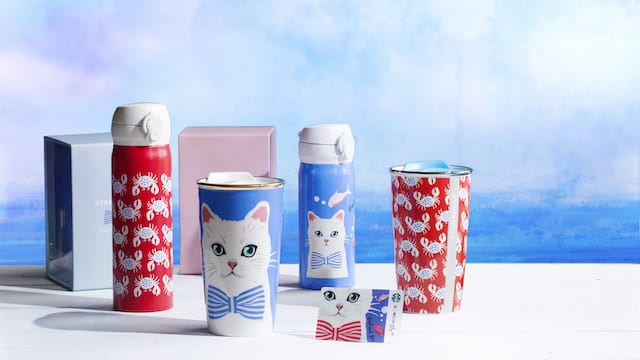
    Starbucks Taiwan is to feature merchandise co-created with Paris fashion designer Sophie Mechaly, the founder of the international brand Paul & Joe.

    “We wanted to give our coffee-related merchandise a unique style and attitude for summer,” says Starbucks Taiwan president John Hsu.

    Starbuck - Paul & joe 4


    Starbuck - Paul & joe 3

    Mechaly founded Paul & Joe in 1995, and the label now has several dozen boutiques and hundreds of retail stores around the world. Méchaly designs clothing, shoes and accessories for both men and women.

    Starbuck - Paul & Joe

    Starbuck - Paul & joeSeveral of the Starbucks merchandise designs feature a Chinchilla Persian cat owned by Mechaly. Crabs and fish also feature in the artwork to represent the beaches in the Mediterranean, near her childhood home.

  • Go karts part of mix at new Taroko Park mall

    Go karts part of mix at new Taroko Park mall

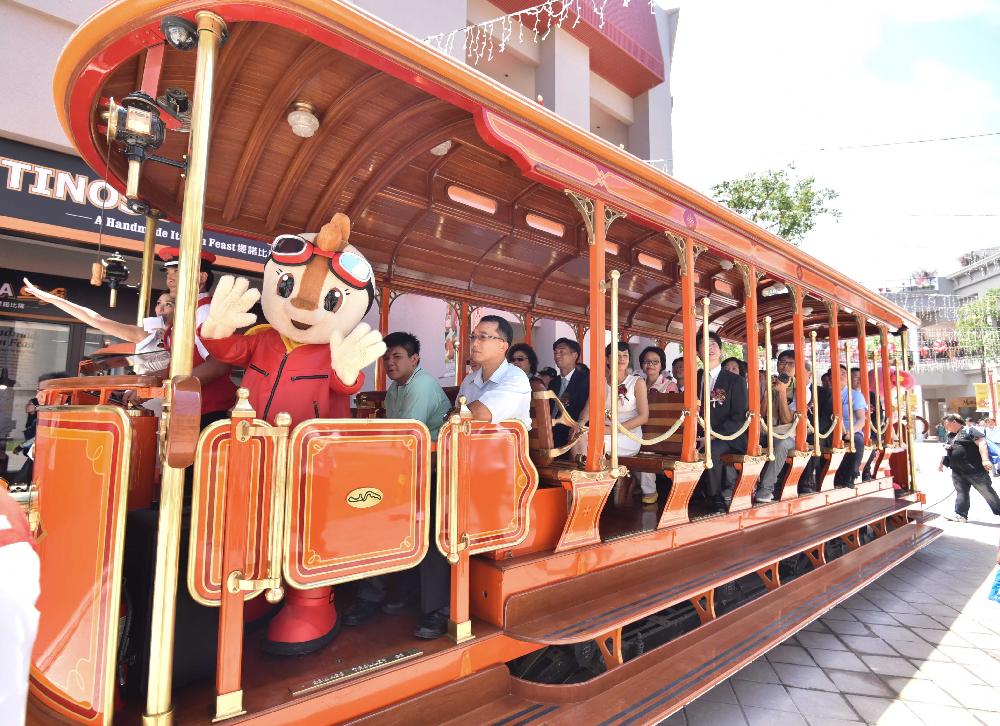
    A carousel and a go-kart racing track are attractions at the new Taroko Park shopping centre in Kaohsiung, in the south of Taiwan.

    It is owned by Taipei-based developer Taroko Development, which aims to generate NT$5 billion (US$154.24 million) in sales in the first year.

    o_1airo3a6n1vmhrcc1eh0tj1tkmv

    Unlike its peers, the company says Taroko Park will gain 61 per cent of its revenue from recreation and dining attractions, with department store sales making up the rest. It aims to provide a fun-filled shopping experience with several sports and entertainment attractions, such as the carousel in the front plaza, and the go-kart track which is a miniature of Japan’s Suzuka circuit. The company believes it sets a precedent for Asia.

    Taroko Development spent about NT$5.3 billion on the mall, which has attracted 220 international fashion and sportswear brands. There is also a shop selling official merchandise of the Lamigo Monkeys professional baseball team.

    o_1airo315g12dfotq1ceusn18dpo

    Developed as a joint build-operate-transfer project for Kaohsiung Rapid Transit and the Kaohsiung City Government, the shopping centre is near the Caoya Station, south of the city’s airport. Taroko Development’s lease with KRTC is 25 years, and is to be extended for another 10 years with the original landowner, the city government, with a guarantee of priority right of renewal for two more 10-year contracts, the company says.

    An aim of the mall is to create job opportunities and attract tourists.

    “Taroko Park’s entertainment and shopping offerings are expected to attract 12 million visitors annually,” says Taroko Development chairman Jeff Tsai. He says the mall is also expected to generate about 5000 jobs as well as boost metro system users by 6 million.

    Kaohsiung mayor Chen Chu made her way to the opening ceremony for the mall via the metro.
    A subsidiary of Taroko Textile, Taroko Development has been determined to enter the shopping-centre industry since its establishment in 2011. It moved into retail last year when it took over the Mode Mall in Taichung from Fubon Life Insurance.

    Taroko has also announced tentative plans to launch a shopping mall in Hsinchu county by the third quarter of next year.

  • Starbucks stores in Taiwan and Hong Kong use a mix of historic and new design elements to …

    Starbucks stores in Taiwan and Hong Kong use a mix of historic and new design elements to …

  • China blamed for Apple sales slump

    China blamed for Apple sales slump

    Apple sales slumped 26 per cent in Greater China in the latest quarter, driving the tech giant to its worst result in 13 years.

    CEO Tim Cook said the Hong Kong market was largely to blame, due to its currency value being pegged to the US dollar. Sales in the mainland fell by a more modest (but still alarming) 11 per cent. Greater China sales totalled US$12.49 billion, equivalent to about 24.5 per cent of its global revenues.

    Cook added that a year ago Apple sales in China soared a remarkable 81 per cent year-on-year, suggesting that made for a tough benchmark for this quarter’s results.

    But Apple cannot blame all the company’s current woes on China: sales in its US home market fell 10 per cent as well.

    Globally, Apple sales totalled US$50.6 billion, down from the $58 billion of the previous corresponding period. Its quarterly net income fell from $13.6 billion to $10.5 billion and gross margin fell from 40.8 per cent to 39.4 per cent. International sales accounted for 67 per cent of the quarterly revenue.

    Despite the sales decline, Apple is showing no sign of slowing its aggressive expansion program in Greater China which it predicts will soon become its largest single market, overtaking the US.

    During the quarter the company opened seven more stores, with five more planned in the current quarter, taking the network of large format stores to about 40.

    The company will also take a hit from the Chinese Government’s decision last week to ban Apple’s iTunes music store and its Apple Bookstore – both selling digital content to Chinese customers who have invested in iPhones, iPads or Apple computers.

    The biggest drain on sales is the iPhone, which is now struggling to keep pace with a myriad of less expensive models offering similar technology at often vastly lesser prices. Apple sold more than 51.2 million iPhones in the first three months of 2016 – nearly 10 million fewer than during the same quarter of 2015.

  • Taiwan domestic supermarket sales up almost 10 percent in March

    Taiwan domestic supermarket sales up almost 10 percent in March

    Sales posted by supermarkets in Taiwan rose almost 10 percent year-on-year in March, outperforming the retail sector as a whole, because of the expansion of their retail networks, according to the Ministry of Economic Affairs (MOEA).

    Efforts to promote fresh food in their stores also boosted supermarket sales compared with the same month a year earlier, the MOEA said.

    In a monthly report on the sales of the wholesale, retail and dining sectors in Taiwan, the MOEA said supermarkets saw sales of NT$14.8 billion (US$458 million) in March, up 9.2 percent from a year earlier, while the overall retail sector’s revenue rose only 1.1 percent year-on-year to NT$319.6 billion .

    The MOEA said that with PXMart, one of Taiwan’s leading supermarket chains, planning to add stores this year and next year, the supermarket segment could continue to see sales grow in the near future.

    PXMart has announced it will expand its network to 900 outlets in 2016 and 1,000 in 2017 from 794 at the end of 2015.

    Also in the retail sector, sales posted by department stores rose 3.6 percent in March from a year earlier to NT$21.9 billion as they introduced new products to consumers and added stores, the report said.

    Sales at hypermarts and convenience stores rose 4.4 percent and 1.4 percent in March from a year ago, respectively, to NT$13.8 billion and NT$24.5 billion, according to the report.

    The domestic retail sector also benefited from a 10.7 percent rise in online retail sales in March from a year earlier to NT$19.7 billion and aggressive promotional campaigns in the automotive industry that pushed the sector’s sales 5.3 percent higher to NT$52.8 billion.

    As for the wholesale sector, the MOEA said, revenue fell 5.3 percent from a year earlier to NT$785.7 billion during the month as notebook computer and LCD TV buyers from Japan continued to cut back their orders.

    Falling prices for flat panels and dynamic random access memory chips also affected wholesale sales in the month, the ministry said.

    Wholesale trade in beauty and health products bucked the downturn, however, posting a 4.7 percent year-on-year increase in revenue to NT$36.4 billion due to a flu outbreak and promotional activities ahead of Mother’s Day, the MOEA said.

    Meanwhile, revenue posted by the dining sector fell 1.8 percent in March from a year earlier to NT$33.6 billion, ending a 13-month streak of year-on-year gains. The MOEA said the decline was due to the high number of rainy days during the month, which kept families indoors.

    Within the dining category, restaurants saw their sales fall 1.7 percent in March from a year earlier to NT$28.5 billion, and beverage vendors saw revenues dip 3.6 percent year-on-year to NT$3.7 billion, the MOEA said.

  • Golden Pin Design Award Releases Stunning 2016 Call For Entries

    Golden Pin Design Award Releases Stunning 2016 Call For Entries

    As the call for entries deadline for Taiwan’s premier international design competition, the Golden Pin Design Award, draws close, organizers have teamed up with innovative local motion graphics studio, Bito, to create an insightful call for entries promotion video.

    The stunning production provides local and international entrants with invaluable insight into the concept of huaren design, or design created for and within Chinese-speaking communities, as they prepare to submit their design works by June 30, 2016.

    The video, dubbed “Earth.Heaven” by Bito, explores the Golden Pin Design Award’s 2016 theme of “Heaven and Earth” (天地 or Tian Di in Chinese), which is derived from the Chinese cosmological framework of the three universal elements of Heaven, Earth, and Humanity as highlighted in the ancient Chinese divination text, I Ching (also known as the Book of Changes in English). The dot (.) in the studio’s highly abstract creation represents the huaren designer flowing between the realms of Heaven and Earth on a constant search for inspiration.

    “Design exists in our everyday life, and so in turn, design exists inside these ancient concepts of Heaven and Earth,” says Keng Liu, Founder of Bito. “In Chinese culture, we emphasize that Heaven, Earth, and Humanity must coexist in harmony. We wanted to make a video that was very fluid in its motion, and this relates to the way in which deeper aspects of huaren culture are expressed in everyday life. We didn’t want to create a realistic vision of Heaven and Earth; instead, we wanted to create something very abstract that would explain this complex idea of ‘Heaven.Earth’ in a simple way.”

    Bito is intimately connected to the Golden Pin Design Award. In 2015, the undeniably successful studio took home five coveted Golden Pin Design Award Design Marks for their work for Acer, TedxTaipei, TedxTianhe, Planet Gift International, and their own animated company Chinese New Year message. Despite also being honored by numerous leading international award organizations, receiving recognition from the huaren community was particularly inspirational. “The criteria for the Golden Pin Design Award is born from the huaren perspective, which makes this award very special and very different to other design awards,” says Liu.

  • Acer brings first PC phone to Philippines

    Acer brings first PC phone to Philippines

    Taiwan-based technology giant Acer has brought its latest flagship product, the world’s first personal computer phone, to the Philippines aimed at providing a new kind of platform and improved productivity for local consumers.

    The Liquid Jade Primo, the first PC phone, has a Windows 10 operating system and brings productivity to the next level with a Continuum compatible smartphone that doubles as a PC.

    In an earlier interview, Acer chief executive officer Jason Chen said he is confident the first PC phone would be warmly received in the Philippine market as the company continues to bank  on user excitement and innovation.

    “Excitement will become either hype then disappear or it becomes useful, create an ecosystem and then become a true business or industry segment,” he said.

    Acer targets commercial users, business travelers and millennials who want the convenience of carrying a single device but with the components of the normal computer set-up.

    “This 2016, we are centered on innovation and optimal and real end-goal solution. We want to come up with something that people will feel great but the most important thing is we want to enhance everything so consumers will enjoy the content,” Chen said.

    The Liquid Jade Primo, which would retail at P28,990, has an AMOLED 5.5-inch full high-definition display, 21-megapixel main and eight-megapixel front cameras, and zero air gap technology for better visual experience.

    It has an ultra-tough gorilla glass that strengthens the phone’s structure and protects displays and a storage memory of 32 gigabytes, expandable up to 128 gigabytes.

    Acer also boasts of its advanced cooling system consisting of metal piping that dissipates heat more effectively and BitLocker technology that allows for full encryption of all user data stored internally, protecting the device from offline hardware-level attacks.

    It also comes with a suite of accessories comprised of a dock, keyboard and wireless mouse, and can be connected to any screen and charge high definition multimedia interface (HDMI) output.

    In the local market, Acer has maintained its No. 1 position in the notebook computer category for 10 consecutive years.  It accounts for a 30 percent share of the Philippine computer industry.

    Acer entered the Philippine market in 2003.

  • iPhone SE hits stores in Taiwan, received mixed reaction

    iPhone SE hits stores in Taiwan, received mixed reaction

    Sales of Apple Inc.’s latest smartphone offering, the iPhone SE, began in Taiwan Thursday, last April 7, with retailers and telecom companies reporting mixed consumer reactions.

    Data Express, a chain selling Apple products and accessories, said all iPhone SE devices available across its 51 outlets were sold out on the first day, and the 64G model was the best seller.

    The 64G model, priced at NT$19,500 (US$601.32), was also the most popular at electronics chain Tsann Kuen, since the model had sold out at all 300 stores during the first hour after sales began.

    Tsann Kuen also pointed out that over 80 percent of iPhone SE smartphones sold by the chain were either the gold or rose gold versions.

    Neither chain gave their exact sales figures.

    Telecom companies, which began accepting pre-orders March 29, did not see the same enthusiastic consumer response as the retail chains.

    Taiwan Mobile Co. said initial sales of the iPhone SE were weaker than the iPhone 6S that hit the Taiwanese market last October.

    Taiwan Star Telecom Corp., a smaller player in the mobile service market, also saw weaker sales of the iPhone SE than the iPhone 6S, citing local consumers’ preference for phones with a larger screen.

    The iPhone SE features a 4-inch screen, while the iPhone 6S comes in two sizes — the standard model with a 4.7-inch screen and the Plus model with a 5.5-inch screen.

    Taiwan Star said over half of the pre-orders for the iPhone SE it received were made by people aged between 25 and 34, and this showed the new phone’s lower pricing appealed to younger consumers.

    Far Eastone Telecommunications Co. said there were consumers asking about the iPhone SE at its outlets, but buying momentum is not expected to pick up until people learn more about the new model through word of mouth.

  • eCommerce won’t dent Asian retail real estate demand

    eCommerce won’t dent Asian retail real estate demand

    Growing online sales will not undermine demand for Asian retail real estate, according to the last CBRE study of major international brands.

    For the seventh edition of How Active Are Retailers Globally?, the real-estate company looked at more than 150 major international brands based in Americas, Asia Pacific and EMEA (Europe, the Middle East and Africa) countries.

    China is the top target market in the Asia Pacific (APAC) and fourth-ranked globally, with 27 per cent of retailers looking to expand there. Hong Kong follows in sixth position (24 per cent), Japan in seventh (22 per cent) and Singapore in ninth (21 per cent). The top three globally were Germany (35 per cent), France (33 per cent) and the UK (29 per cent).

    China and Hong Kong maintained their placings, while Japan, Singapore and Australia (11th) all rose higher in the ranking, up from 13th, 18th and 15th positions respectively.

    “Hong Kong will remain a desirable market for retailers, particularly as it continues to serve as a popular shopping destination for mainland Chinese tourists,” says CBRE Hong Kong executive director for retail services Joe Lin.

    “The main difference is a shift from luxury to mid-range brands. This is forcing luxury retailers to consolidate their footprint, leading to a drop in rental cost in prime locations and therefore opportunities for non-luxury retail brands.”

    Most APAC markets saw increased interest for this year, with the exception of China and South Korea. Malaysia (10 per cent), Indonesia (9 per cent), Thailand, Vietnam and The Philippines (all 8 per cent) received more than double the interest they saw last year, when all markets secured between 1 and 3 per cent.

    Asked about the risk factors for the coming year, brands indicated that real-estate cost escalation (56 per cent) and unclear economic prospects (42 per cent) continue to be at the forefront of their minds.

    “We’re seeing more of a challenging economic environment, and concerns such as high operating costs and a lack of quality space means retailers are somewhat more wary this year,” says CBRE head of Asia Pacific research Dr Henry Chin. “However, even as markets such as China and Hong Kong are experiencing a slowdown, we see increasing numbers of opportunistic retailers looking to enter markets like Hong Kong, supported by strong underlying consumer demand.

    “Japan and Australia remain attractive, while Southeast Asia showed strong growth because of opportunities for retailers around an expanding middle class and stronger economic growth.” CBRE senior director and head of retailer representation for Asia Joel Stephen says there are still opportunities for retailers to grow their business in Asia, underscored by the region having four of the 10 most popular destinations. “The goal now for all brick-and-mortar retailers is to build an engaging offer that encourages people to stay longer and spend more.”

    The survey shows that 83 per cent of brands suggest their physical store expansion plans for this year will not be affected by the growth of eCommerce. From a retailer perspective, only 22 per cent of the brands see stiff competition from online retailing as a threat to their business.

    At the same time, retailers are cautiously optimistic on physical expansion. Of those canvassed, 17 per cent have large-scale ambitions, many of them looking to open more than 40 stores this year (up from 9 per cent last year), while 67 per cent plan to open up to 20 stores.

    “A physical store presence in key locations is still critical to the strength of a brand’s image,” says Stephen. “Customers still feel a need to go into stores, to physically touch a product and enjoy the feel-good factor associated with a particular brand experience. The store is integral to the shopping journey and can be used in different ways, such as to click and collect, research of the product or brand, or to test the product. It isn’t solely about the transactional side.”

    A new trend is brands looking to expand into travel hubs, such as airports and train stations, giving them access to high footfall in busy locations. But for APAC retailers, shopping malls are still the preferred destination by far, at close to 90 per cent.

    While globally the key concern for brands in negotiations for premises is lease length, APAC retailers are most concerned with turnover rent clauses (GP). They are also particularly concerned about changing consumer behaviour (40 per cent), which is higher than the global average (31 per cent).
  • Clarks retailer S Culture ends year in the red

    Clarks retailer S Culture ends year in the red

    Clarks shoe brand retailer, S Culture has announced a loss for the year and will not pay a dividend.

    Chairman Chong Hot Hoi described 2015 as the worst year for Hong Kong retail sales since  2002, driven by the fall in big spending tourists from the mainland and weak domestic consumer spending.

    S Culture recorded a same-stores sales decline of 6.6 per cent and a net loss of HK$16.4 million for the year. Chong said the opening of new retail outlets during 2014 and early 2015 contributed to the loss, as they were yet to break even under the unfavourable atmosphere of the retail market during the year.

    S Culture sells shoes under the Clarks, Josef Seibel, Petite Jolie and The Flexx retail brands in Hong Kong, Mainland China and Taiwan. It flagged a looming loss in a profit warning issued in early July.

    But despite 2015 being a year to forget, the company is optimistic about 2016.

    “Hong Kong is bracing for greater economic challenges as the prospective interest rate increase shall induce capital outflows that could pressure Hong Kong as the Asian financial hub at a time when China’s economy is growing at its slowest pace in the past 25 years,” said Chong in the company’s trading announcement.

    “Looking ahead, the near-term outlook for retail sales will still be constrained by the weak performance of inbound tourism as cited by the government. We would also watch closely the impact from dimmer global economic prospects amid US interest rate normalisation. To this end, we had been imposing measures and applying more flexible operating tactics in order to minimise such effects to our operations as a whole. In the meantime, while there had been signs

    that the general operating costs, such as market rental level, were declining, we were still cautious about the other operating costs such as staffing and utilities as their nature was downward sticky,” he said.

    “Despite the above, we still remain positive and maintain our belief in our business. While we are still experiencing unfavorable market drivers in the local retail market, we are still confident that the group would be poised to be highly attentive to the changes in the retail market and apply the appropriate strategies to tackle the existing challenges and keep our pace for steady development, especially in the mainland. We still hold the same view about mainland consumer market and continue with our strategy to increase our presence in the mainland.”

    S Culture has now expanded into the cities of Shanghai, Qinhuangdao, Haikou, Qingdao, Songyuan, Zhengzhou, Harbin, Luoyang, Dandong and Beijing through collaborating with the local retailers and operates four company-owned stores with its brands well-received in the mainland, Josef Seibel and The Flexx.

    “We expect to increase our market share in the Mainland by utilising both on- and off-line channels whichever is more effective in the case.”

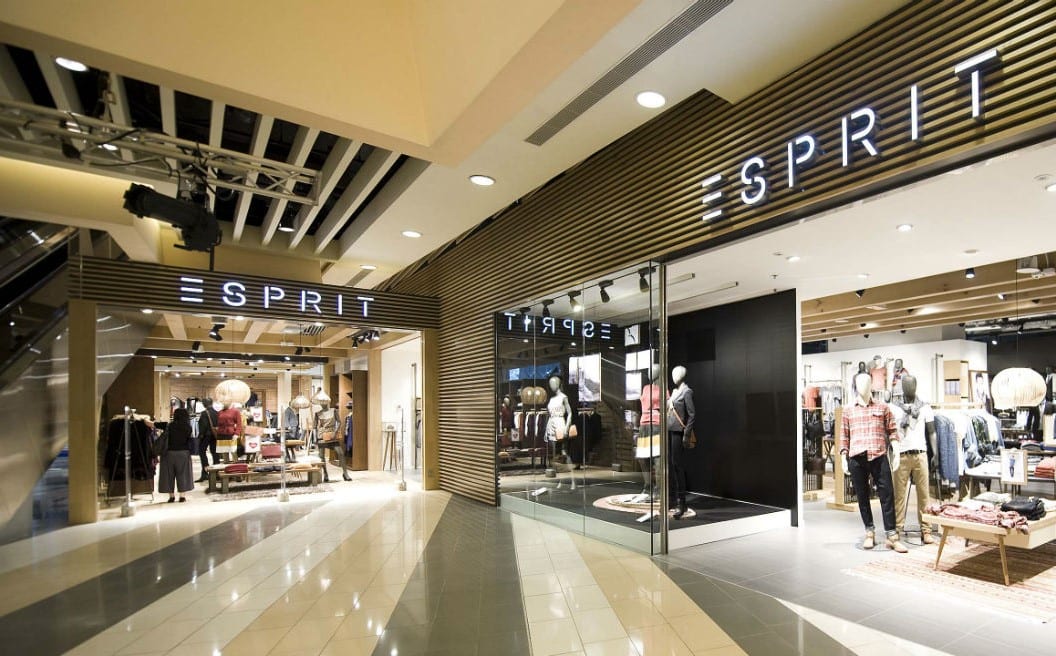
  • Esprit sales flat, as expected

    Esprit sales flat, as expected

    Largely in line with expectations, Esprit sales were flat, the fashion brand says in its interim report for the six months to December 31.

    While its overall turnover was down 0.4 per cent overall, retail turnover grew 6 per cent while wholesale turnover fell 11.4 per cent.

    The gross profit margin for Esprit Holdings was stable at 50.5 per cent, while the net loss of HK$238 million was in line with expectations. The group had a healthy net cash position of HK$4.2 billion with zero debt.

    Unfortunately, positive retail sales growth in Europe was offset by continued weakness in the wholesale channel, and negative development in the Asia Pacific region. Asia Pacific turnover declined 6 per cent year-on-year, mainly dragged down by China with its 11.6 per cent drop. China represents 46 per cent of the region’s turnover.

    In its breakdown of turnover in Asia Pacific, China led with HK$655 million, 7 per cent of group turnover. Then came Hong Kong (HK$185 million, 2 per cent, down 0.4 per cent), Australia and New Zealand (HK$162 million, 1.7 per cent, up 0.3 per cent), Singapore (HK$129 million, 1.4 per cent, down 4.7 per cent), Taiwan (HK$98 million, 1.1 per cent, up 6.5 per cent), Malaysia (HK$97 million, 1 per cent, down 2.7 per cent), Macau (HK$56 million, 0.6 per cent, down 12.7 per cent) and others (HK$43 million, 0.5 per cent, up 6.2 per cent).

    In the previous financial year, the group moved towards vertical integration which resulted in more cost-efficient product development and supply chain processes, allowing product improvements in terms of design, quality and value-for-money.

    To maximise the selling potential of its improved products, this past year the group started pursuing an Omnichannel business model. In its early stages, this has led to improvements in growing its loyal customer base “Esprit Friends” and fully integrating the commercial activities of all sales channels.

    In September, the group launched an intensive brand-marketing campaign to strengthen and rejuvenate its image.

    Performance during the first six months of this financial year (between July and December) indicated that the vertical and omnichannel model was an effective basis to turn around its business, the company said.

    In its report, the company paid tribute to its co-founder, Doug Tompkins, who died in December, describing him as a “conservationist, outdoorsman, philanthropist, agriculturist and businessman”. He and his then wife, Susie Buell, formed the company in 1968. Esprit’s collections are available in 40 countries, in about 870 directly managed retail stores and through more than 7500 wholesale sales points including franchise stores and department-store outlets. The Group markets its products under two brands, Esprit and EDC.

    Listed on the Hong Kong Stock Exchange since 1993, Esprit has headquarters in Germany and Hong Kong.

  • Rakuten launches mobile e-commerce app in Taiwan

    Rakuten launches mobile e-commerce app in Taiwan

    Japanese e-commerce giant Rakuten has launched  consumer-to-consumer mobile e-commerce app Rakuma in Taiwan.

    The app, first launched in late 2014 in Japan, enables the sale of goods between individual consumers via smart devices. It allows quick product listing and direct communication among users.

    Rakuten said the app will target Taiwanese consumers interested in easy mobile access to e-commerce and is available for free download on Google Play and the iTunes Store.

    “We are excited about Rakuma making the leap from Japan to Taiwan with this popular mobile app and providing Taiwanese users with the opportunity to ‘sell and buy’ their personal, home and fashion goods seamlessly on their smart devices,” said Rakuma Business Manager, Takafumi Inoue.

    Taiwan is a priority market for Rakuten’s global growth strategy as Taiwan Rakuten Ichiba is already a leading e-commerce company in Taiwan and other newer Rakuten services, such as the Rakuten Card credit card and Rakuten Travel, continue to experience rapid growth.

    Rakuten is building its ecosystem of services that offers Taiwan users valuable membership benefits.

  • Financial firms in Taiwan, Indonesia urged to open outlets after MOU

    Financial firms in Taiwan, Indonesia urged to open outlets after MOU

    Taipei, March 12 (CNA) Taiwan’s top financial supervisor, the Financial Supervisory Commission (FSC), has urged financial institutions in Taiwan and Indonesia to open outlets in each other’s country after they signed an memorandum of understanding (MOU) to speed up cooperation in supervising financial businesses.

    The FSC inked the cooperation MOU Friday with its Indonesian counterpart the Financial Services Authority of Indonesia or Otoritas Jasa Keuangan (OJK). The MOU focuses on supervision cooperation in banking, securities and insurance businesses between the two countries.

    FSC Chairperson Wang Li-ling (王儷玲) told the CNA that the cooperation MOU will no doubt facilitate financial development between the two countries.

    Wang, who signed the agreement on the behalf of the FSC in Jakarta, added that she believed Taiwan’s financial sector will benefit from the great growth potential in Indonesia, while the Southeast Asian country has expressed interest in Taiwan’s financial market openness.

    Wang said financial institutions in Taiwan and Indonesia should take advantage of the MOU to explore the financial market in each other’s country.

    She said that is especially true as many Indonesian workers are working in Taiwan and there is strong fund demand from ethnic Chinese investors in Indonesia, leading Indonesian banks to want to set up footholds in Taiwan.

    As for the large number of Indonesian workers in Taiwan, the supervisory mechanism under the newly signed MOU is expected to help them in a wide range of financial services in Taiwan, such as money remittances, deposits and insurance.

    The Taiwanese official said that a populous Indonesia needs a diversity of financial products and Taiwanese financial institutions should go there to provide good products.

    According to the FSC, the local banking sector has set up one subsidiary and two representative offices in Indonesia, and the local securities sector has opened a subsidiary there. The local insurance business sector meanwhile has taken a stake in an Indonesian bank, the TWSE said.

    Market analysts said that the newly-signed MOU is expected to help Taiwan-based Cathay Life Financial Co. (國壽) push for a deal to acquire a 40 percent stake in PT Bank Mayapada Internasional of Indonesia. Cathay Life signed an agreement with Bank Mayapada for the acquisition deal in January 2015. Since the law in Indonesia bars foreign entities from taking a stake of more than 25 percent of any bank there and the deal has been stalled. Analysts said that the MOU could remove the legal obstacles for Cathay Life.

  • Ever Rich sales resilient despite China slowdown

    Ever Rich sales resilient despite China slowdown

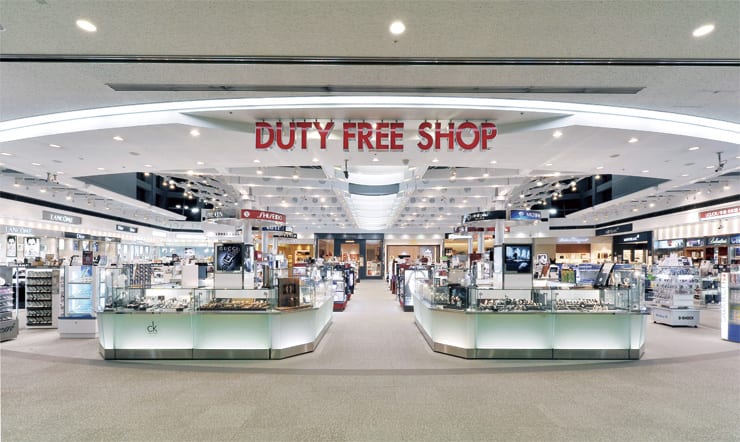
    Ever Rich D.F.S. Corporation tells David Hayes that the company achieved single digit revenue growth in 2015 at its major downtown and airport duty free locations with the rise in sales reflecting a similar increase in international passenger traffic through the republic’s main airports, during the past 12 months.

    Ever Rich says that the company’s overall rise in duty free sales is less than previously expected and is due a slowdown in per capita spending by mainland Chinese visitors, who still make up the majority of sales at many of Ever Rich’s duty free outlets.

    “We have seen growth in 2015, but not as large as in 2014. Mainland tourist numbers are still growing gradually but the duty free sales growth is slowing,” commented an Ever Rich source.

    “China’s economy is still quite strong, but their currency is weaker; China’s economy is not growing as fast as before.”

    Ever-Rich-Taoyuan-Airport-T1-departure-shop

    Ever Rich P&C at Taoyuan Airport T1 Departures.

    While duty free sales are rising as more mainland tourists visit Taiwan, Ever Rich – Taiwan’s leading duty free operator – had been looking for overall double-digit sales growth last year after opening its new Kinmen Islands’ hotel and downtown duty free shopping complex in 2014.

    Kinmen Ever Rich Golden Lake Plaza duty free shopping mall and hotel complex is located in Kinhu town on Big Kinmen. In addition to duty free shopping and other retail facilities, the Ever Rich hotel shopping and entertainment resort is planned to include a multiplex cinema and has space for a casino in future, though no casino licenses for Kinmen have been approved so far.

    Ever-Rich's-Taoyuan-Airport-T1-arrival-shop

    Ever Rich’s Taoyuan Airport T1 arrival shop.

    Duty free shopping facilities occupy about 27,000sq m of retail space over five floors, divided into separate areas serving visitors departing overseas to China and elsewhere from Kinmen. It also includes a domestic duty free allowance area for Taiwanese and other travellers returning to mainland Taiwan.

    “Our sales are still growing, but it’s slow growth,” says the source. “After the effort we put into our shops we expected to grow more. Although mainland tourist numbers are growing it’s not as much as many people here expected – all department stores in Taiwan are feeling that mainland customers’ purchasing growth is slowing down.

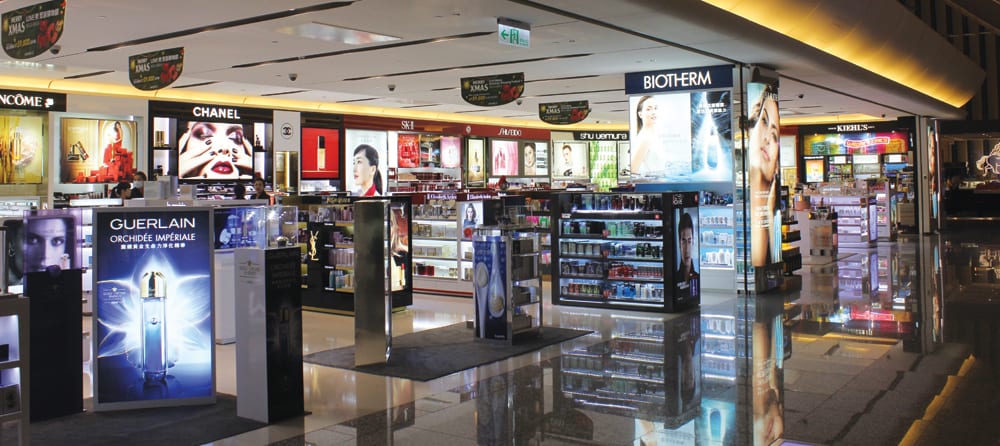
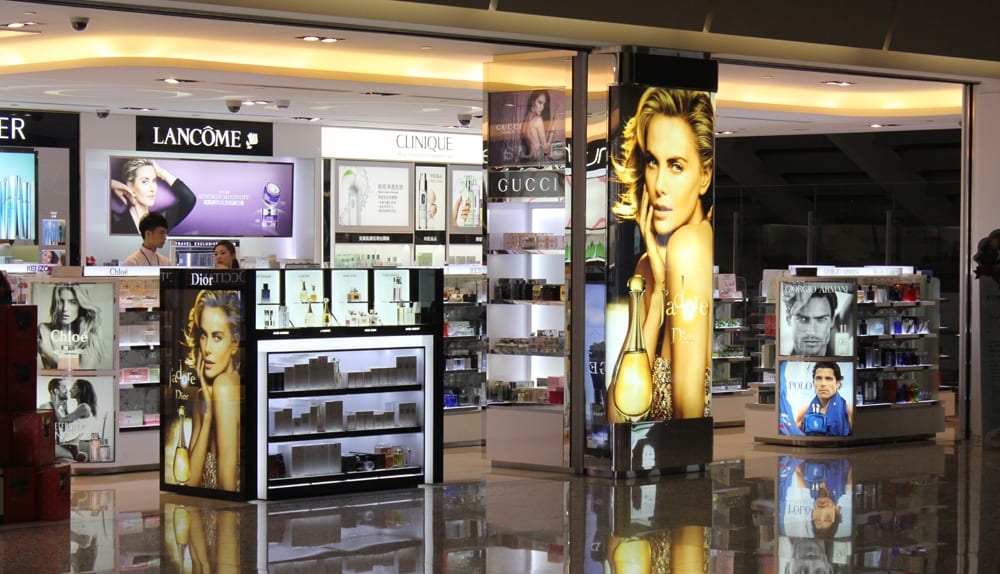
    Ever-Ric-Cosmetics,-handbags,-liquor-and-tobacco

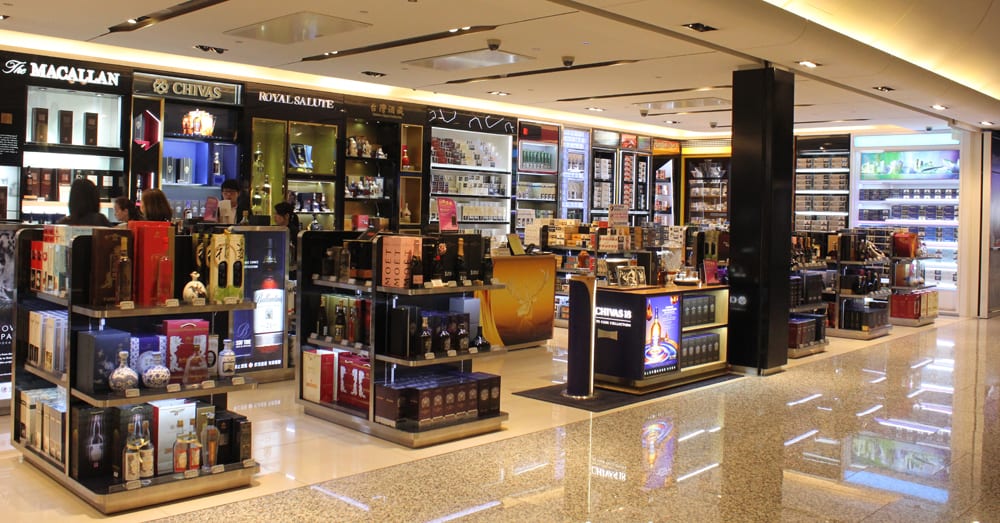
    Cosmetics, handbags, liquor and tobacco are the best-selling items in Ever Rich’s duty free outlets at present.

    “In Kinmen our international duty free sales are better than domestic duty free. Our main target is Chinese visitors, they buy cosmetics and fashion.”

    In addition to its Kinmen Islands’ shops, Ever Rich operates departure and arrival duty free shops in Taiwan’s main airports – Taoyuan International Airport, Taipei Songshan International Airport, Kaohsiung International Airport and Taichung International Airport – plus two downtown pre-order duty free shops in Taipei.


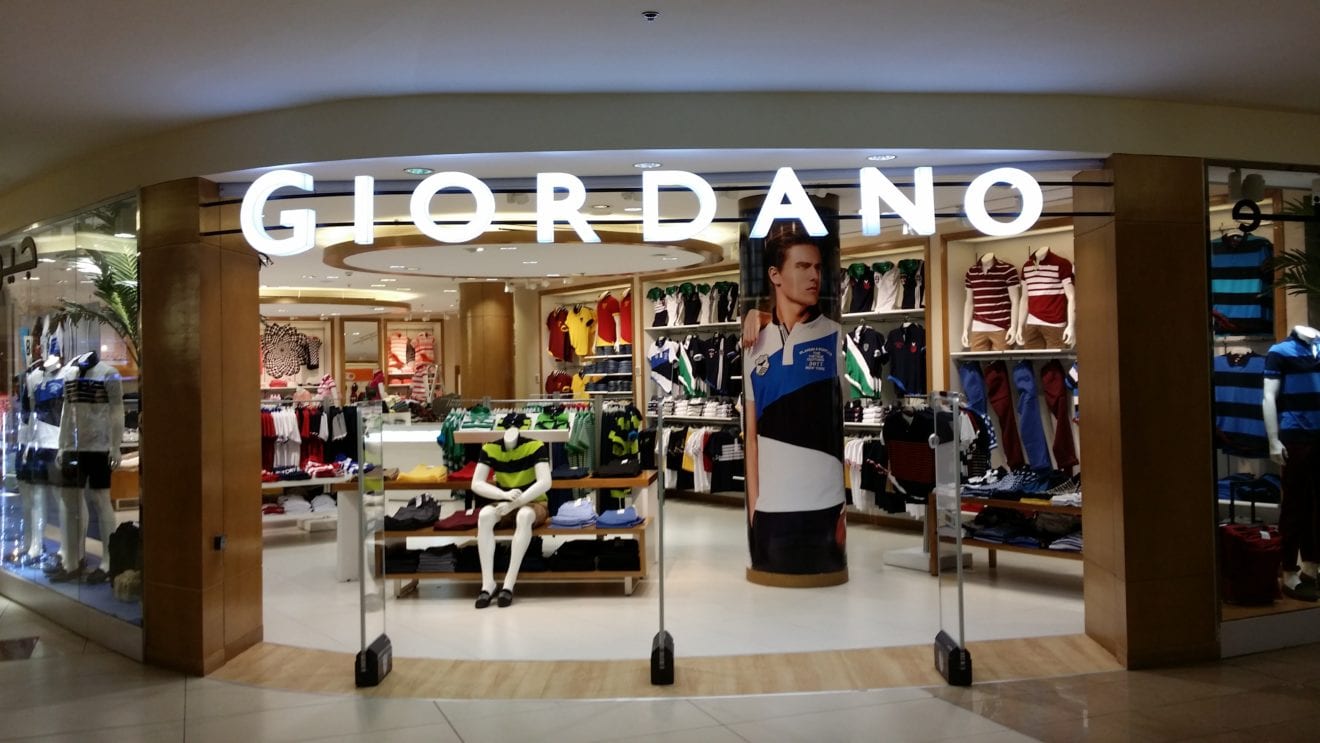
  • Two-pronged approach for Giordano Vietnam

    Two-pronged approach for Giordano Vietnam

    Vietnam is on the radar for Hong Kong clothing retailer Giordano International, both as a market and supplier.

    With its steady growth in the emerging market, the company is planning to establish a legal entity Giordano Vietnam.

    It is also eyeing the country as a source market for product, while it continues to develop sourcing opportunities in Bangladesh.

    While Giordano still sees opportunities for growth in developing markets such as Indonesia, Malaysia and Thailand, the company says in its annual review that those opportunities are fading.

    Meanwhile, the group has plans to launch digital sales channels outside mainland China this year, initially through the development of its own eShops.

    “Market conditions in Southeast Asia have been challenging in the past two years,” says the group, which improved its merchandising, and therefore profitability, in Singapore last year – “but this will be a tough market going forward”.

    In the 2015 financial year, consolidated sales eased by 3 per cent – but increased by 1 per cent on a constant currency basis. Global brand sales were down 1 per cent for the year, but comparable same-store sales grew by 3 per cent.

    As a strong Chinese New Year offset the impact of 81 store closures, brand sales in the first half of the year grew by 1 per cent. But in the second there was a 3 per cent drop because of unseasonably warm weather in Greater China.
    Gross profit margin declined by 0.4 percentage points to 57.6 per cent, with higher purchasing costs caused by a strong US dollar eroding margins in Southeast Asia and Taiwan.
    “Weak consumer demand in many markets has led to fierce competitive pressure on selling
    prices,” says the group.

    Nevertheless, in the second half of the year, improved purchasing and merchandising resulted in gross margin improving from 57.4 to 57.9 per cent.