Retail News CRM

Tag: Technology

  • Tencent finished Q3 with strong result despite regulation

    Tencent finished Q3 with strong result despite regulation

    Gaming and chat specialist Tencent has reported a strong third-quarter profit despite ongoing issues with Mainland China regulatory authorities over its gaming software. Tencent’s share price has fallen by about one third this year, shedding US$165 billion off its value, although last year its share price doubled. In September the company announced a restructuring program aimed at lessening its reliance on games and expanding its interests into areas such as cloud and industrial services in the transport, fintech and healthcare sectors.

    Tencent profit in the September quarter rose 30 per cent to RMB23.3 billion (US$3.36 billion) which exceeded analysts’ forecasts. This was partly due to fair-value gains from the IPO of food delivery service Meituan Dianping.

    Growth in its gaming division was ahead of expectation, but the company was unable to update shareholders on the status of its negotiations with mainland government officials over a regulatory block which has frozen new game approvals. The government has yet to decide on whether or not to allow Tencent to begin charging for features of its popular PUBG Mobile game. Chinese authorities are concerned that many Chinese are becoming addicted to mobile games.

    Those roadblocks were cited as the reason Tencent’s growth rate – a respectable 24 per cent, nonetheless, to US$11.6 billion – was its slowest quarter in more than three years.

    Sales of smartphone games grew 7 per cent year on year and 11 per cent quarter on quarter, while advertising sales, the company’s single largest revenue source, rose 47 per cent

    Revenue from cloud and payment services (WeChat Pay) helped fuel a 69 per cent increase in Tencent’s “other” revenue category.

  • Naver says its Green Dot is the future of searching

    Naver says its Green Dot is the future of searching

    Naver’s iconic green search bar may one day be a thing of the past – at least in the mobile app.

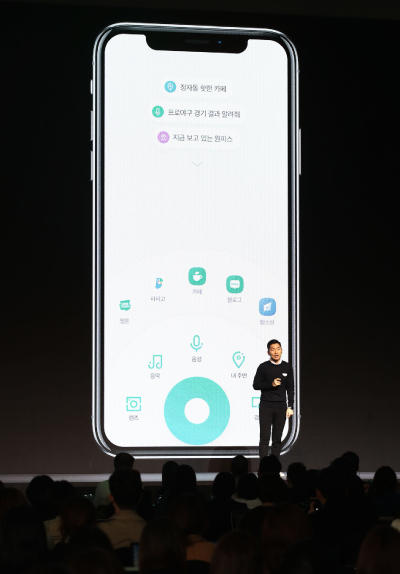
    Korea’s most popular portal site is experimenting with a new tool called the Green Dot that allows users to search for information not only by text, but also by voice, location and photos.

    The Green Dot was first unveiled last month. It is what the company calls an “interactive search” button located at the bottom of Naver’s app.

    When touched, the button opens a small window that offers various search functions like voice recognition, music recognition and recommendation on trending restaurants and bars nearby. The user can also add short-cuts to frequently used Naver services, from blogs to shopping.

    “Naver’s green search bar was developed at a time when searching online through PCs was about keywords and being linked to [web pages with] text information,” said Kim Seung-eon, the portal giant’s design head, at the Naver Design Colloquium held Friday in Dongdaemun, central Seoul. The annual event invites Naver designers to share their strategies and design insight.

    “But now with mobile, [portals] aren’t just about new information; we listen to music, reserve restaurants and use services that are closely linked to our daily lives. There are so many usages now and ways to input information. The Green Dot integrates all these; it’s the start of a new way to search and connect.”

    Kim added that the Green Dot will be the new design identity of Naver and a core function related to services coming in the future.

    The portal giant also shared the results of its first page overhaul on its mobile app.

    Last month, Naver introduced a new first page of its mobile app that left out news and trending keywords, leaving nothing but the search bar, weather information and the Green Dot.

    Its explanation was that the change was purposed to put a larger emphasis on searching, which accounts for 60 percent of why users turn on the Naver app. The change was available as a beta service.

    According to Naver, some users felt that the blank space was awkward, but the beta service had also showed meaningful results: the amount of time users spent on the app increased 15 percent and the number of searches rose 20 percent.

  • E-commerce to contribute 11 pc of FMCG sales by 2030: Nielsen

    E-commerce to contribute 11 pc of FMCG sales by 2030: Nielsen

    E-commerce’s contribution to the total FMCG sales is expected to be 11 percent by 2030, according to market research firm Nielsen. E-commerce contributed 0.4 percent to FMCG sales in 2016 and in 2018 it is expected to be around 1.3 percent of the branded packaged FMCG sales.

    “Over the next 12 years, we expect e-commerce itself to be 11 percent of FMCG sales, an 8X growth from its current size, Sameer Shukla, Executive Director – Retail Measurement Services, South Asia, Nielsen (India) said.

    E-commerce is around 10 percent of modern trade, while modern trade at present is 10 percent of FMCG sales.

    “E-commerce channel contribution to India FMCG sales now stands at over 1 percent and has grown at over 101 percent since last year. In specific product categories and markets the contribution is already touching double digits of total category value sales,” he said.

    He added that in categories like diaper there has been an upsurge in e-commerce from 4 percent to 9 percent since July 2016 to September 2018.

    Modern trade itself has seen a growth over the last few years from growing at one-third of traditional trade in 2015 to 2X at present.

    From the third quarter in 2016 to third quarter of 2018, traditional trade grew at 2 percent while modern trade at 23 per cent.

    The growth in modern trade has been classified as 18 percent from metros, 32 to percent from 5-10 lakh towns, 33 per cent from 1-5 lakh towns and 58 percent from less than 1 lakh towns.

    Nielsen also noted that salary weeks witness 15-20 percent higher sales compared to regular weeks in a given month and the tactical play adopted by modern trade retailers around big days or weeks (Republic Day, Independence Day, Diwali etc) is an essential ingredient for success in the fast growing modern trade channel.

    In the third quarter of calendar year 2018, FMCG had a growth of 16 percent largely led by volumes, with 81 per cent share or 13 percentage points and the remaining 3 percentage points from price changes.

    It also noted that north and east have contributed to the 16 percent growth in the third quarter. Rural consumption is growing at a faster pace than urban with an index of 1.4X.

    The market research firm also noted that the FMCG companies in the top 50 contributed 60 percent in value terms, however the smaller manufacturers are driving the growth.

    It noted that companies in the bracket of top 101 to 300 contributed 11 percent in terms of value however their growth was 12.8 percent and in terms of the tail-end companies beyond the top 300, the contribution was 21 percent while the growth was 18.5 percent.

    Regional players are growing at a faster clip at 27.7 percent compared to national players at 11.7 percent.

    The presence of regional players is predominantly in packaged food categories where they clocked 31 percent growth in September 2018 on year. This was nearly 3X times growth witnessed among national players.

    However for the last quarter of 2018, it expects the growth in FMCG to come down to 12-13 percent.

  • What is the hot new “Boundaryless Retail” trend?

    What is the hot new “Boundaryless Retail” trend?

    Chinese consumers are quickly adapting to buying groceries online for immediate delivery from local offline stores, according to a new joint study conducted by JD, Walmart, Tencent and JD Daojia. In China, where over 15% of consumption takes place online, compared to just 9% in the US, consumers have been faster to embrace online grocery shopping.

    Over 67% of Chinese consumers actively use services like JD Daojia, which can deliver goods from local offline shops, including Walmart, to customers in under an hour.

    An increasing number of online shoppers in China view a guarantee of product authenticity as the most important factor when buying goods, with price often viewed as secondary in importance to considerations like product variety, speed of delivery and after-sales service.

    Consumers carefully consider purchases that can improve their lifestyle, reflect their individuality and be delivered in a convenient way that fits in with their busy modern lives.

    Omnichannel integration in the Chinese supermarket industry is expected to be a major trend going forward, as online and offline players in the industry are increasingly combining resources to meet the diverse needs of modern-day shoppers: bringing together the convenience and diversity of online shopping with offline retail’s immediacy of service and superior user experience.

    Boundaryless Retail is a reality gaining in popularity as “The increasingly diverse needs of consumers require a correspondingly dynamic approach” said Kenny Li, VP of JD.com.

  • Swiggy to engage 2,000 women for food delivery

    Leading food ordering and delivery start-up Swiggy on Tuesday said it would engage about 2,000 women as delivery personnel by March 2019. “About 2,000 women will join our delivery team by March next year. Over the last few months, we have been working on training women for opportunities in this growing food delivery sector,” the city-based online food delivery platform said in a statement here.

    By deploying more women as delivery personnel across the country, the company said it aimed to create an inclusive workforce.

    The company engages around a lakh personnel daily to deliver food across 45 Indian cities it operates in.

    Currently, about 60 women are tied up with Swiggy across 10 cities, including Ahmedabad, Kochi, Kolkata, Mumbai, Nagpur and Pune, to deliver food.

    World over, the employment of women as delivery personnel has been meagre.

    “We are creating a women-friendly work environment with a dedicated helpline for any concern, as well as appointing more women in managerial roles,” the company said.

    Swiggy is identifying ‘safe zones’ for women delivery personnel to operate in and will allow them to complete their deliveries by 6 p.m., it added.

    “Since inception, we have seen the potential in investing in logistical prowess, which has helped us in having end-to-end control over the food delivery experience,” Sachin Kotangale, Vice President (Operations), Swiggy said in the statement.

    Set up in 2014, the food delivery platform claims to receive about 20 million orders a month across 45,000 restaurants in 45 cities, including New Delhi, Hyderabad, Mumbai, Bengaluru, Chennai, Kolkata, Gurugram and Pune.

    It raised US$ 210 million (around Rs 1,500 crore) from multiple investment firms, and has so far raised over US$ 460 million (around Rs 3,350 crore).

    The company, which has over 4,000 employees, reported an operating revenue of Rs 442-crore for the fiscal 2017-18.

  • Hyundai investing in U.S. drone company

    Hyundai investing in U.S. drone company

    Hyundai Motor, Korea’s largest carmaker by sales, said Thursday it has invested in a U.S. unmanned aerial vehicle (UAV) company to jointly develop new products. In the investment, Hyundai Motor and Top Flight Technologies will jointly seek business opportunities in the global high-end aerial drone market, the company said in a statement.

    “In addition to solving the challenges of longer-duration flight for quadcopters, Top Flight is developing the technologies needed to enable new solutions in aerial logistics and mapping which could be useful in Hyundai’s future business,” John Suh, vice president of Hyundai CRADLE in Silicon Valley, said in the statement.

    Hyundai CRADLE is Hyundai Motor’s corporate venture and open innovation business in the United States.

    “Hyundai’s investment in Top Flight confirms its commitment to autonomous vehicles and mobility solutions, whether on the road or in the air. We fully believe that Hyundai’s world-class assembly and automation capabilities will help spur the production and deployment of aerospace-grade UAVs, more efficiently than ever,” Top Flight Chief Executive Long Phan said in the statement.

    The U.S. start-up is unrivaled in the fields of cutting-edge unmanned aerial vehicles equipped with small-sized gasoline engines that can extend flight range by charging a battery, it said. Hyundai didn’t provide how much it has invested in the U.S. start-up.

    The global UAV market is expected to grow from $5.6 billion in 2016 to $12.2 billion in 2019 and to $22.1 billion in 2026, the statement said. As UAVs are mainly used for military purposes, there is big growth potential for the commercial drone market. At present, the drone delivery services market is in the early stages of development. The concept of drone delivery services began with Amazon in December 2013. The U.S. retailer said its drone service is designed to deliver packages to customers as quickly as possible using UAVs.

  • GU to Open Next-Generation Store “GU STYLE STUDIO”

    GU to Open Next-Generation Store “GU STYLE STUDIO”

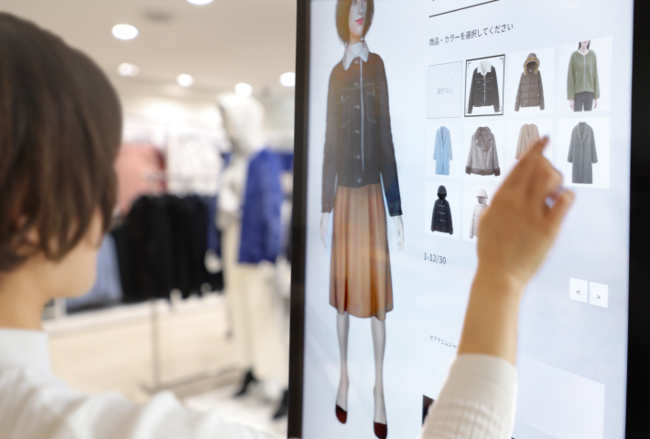
    Japanese casualwear retailer GU will open a “next-generation” Style Studio in Harajuku this month, merging physical retail and advanced technologies. The studio will feature digital signage and a style creator app in the high-end retail district of Tokyo for the Fast Retailing-owned fashion brand.

    A spokesperson for the brand indicated the store will bridge online and in-store shopping and “will offer a new type of personalised fashion experience, enabling customers to discover outfits that perfectly match their individual style, using the innovative technology of the GU Style Creator Stand” and the accompanying app.

    Customers can check out the suitability of garments by having them digitally fitted on a personalised avatar of themselves based on a photo taken in the store. The avatar can be used as a basis to try and develop new styles.

    The store will open on November 30.

  • LG seeks AI, robotics, big data talent in Silicon Valley

    LG seeks AI, robotics, big data talent in Silicon Valley

    LG Electronics Vice Chairman Jo Seong-jin will be in Silicon Valley on Nov. 14 scouting employees with expertise in future technologies such as artificial intelligence, robotics, big data and the cloud. He will meet with job candidates – mostly those with doctoral degrees in the areas of interest – and introduce LG’s vision for growth and plans to staff up in research and development. He will then meet with academics focused on artificial intelligence, including professors at Stanford University, to discuss technological trends and future prospects in the field, according to LG.

    Jo will also visit San Diego, San Jose and Seattle to meet with corporate leaders in IT, finance and consumer goods to discuss the company’s blueprint for the future.

    “LG must hire global talent to become a leader in future businesses based on artificial intelligence, big data and the cloud,” Jo was quoted as saying by LG in a release.

    LG will continue investing in leading companies and cooperating with other businesses in related fields, he added.

    Inaugurated as chief executive of LG Electronics in 2016, Jo has been outspoken about the company’s future in artificial intelligence.

    Delivering a keynote speech at the opening of the IFA tech fair in Berlin in August, he said LG will be “pouring the company’s resources into artificial intelligence,” given that the technology will determine LG’s future.

    LG launched an artificial intelligence research center in June. It is led by the company’s chief technology officer and devoted to voice, video and bio recognition as well as deep-learning algorithms.

    Earlier this year, the country’s second-largest electronics appliance producer established another center connected to LG’s Silicon Valley lab. It is focused on deep learning and automobile technologies.

  • JD.com’s First Robot Restaurant Now Open in Tianjin

    JD.com’s First Robot Restaurant Now Open in Tianjin

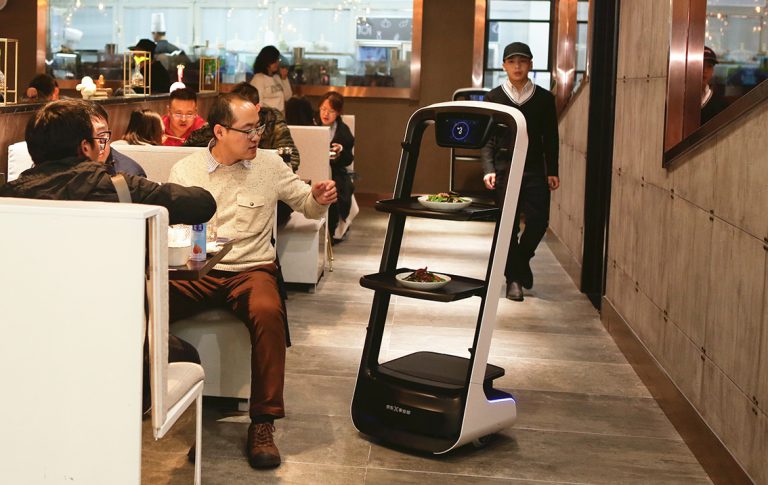
    Chinese online retailer JD has opened its first fully automated robot restaurant in Tianjin. The 400sqm venue has opened as “XCafe” at the Sino-Singapore Tianjin Eco-city, an area of Tianjin dedicated to environmental sustainability. XCafe is the first fully-automated restaurant in China, with all aspects of ordering, preparing, cooking, plating and serving performed by robots, which can work a full day on a single charge. Five or six human staff are still required to refill and position ingredients for the robot chefs.

    XCafe’s manager Tang Siyu said the restaurant can seat about 300 guests for dinner, with a table turnover rate of three turns per table during the lunch or dinner hour. It currently serves around 40 predominantly stir-fry dishes, with a potential full menu of more than 200 offerings.

    The restaurant also features VR interactive games and immersive dining experience areas.

    JD plans to open 1000 robot restaurants by 2020 and is seeking to promote the technology to other catering firms.

  • Foldable phone coming early 2019

    Foldable phone coming early 2019

    Samsung Electronics will make its foldable smartphone available by the first half of 2019, with initial shipments estimated at least at 1 million units, according to Koh Dong-jin, president of the IT and Mobile Communications division at the company.

    The comments were made Thursday in San Francisco on the day two of the Samsung Developer Conference, where he discussed the rollout of the new flagship phone with considerable confidence.

    “We will definitely introduce the phone before the end of the first quarter next year, although I cannot pin down the date at this moment,” he said. “And we will maintain the line each year.”

    His comments indicate that Samsung will be adding foldables to its existing two flagship lines, the Galaxy S – released most recently in February – and the Galaxy Note – released in the fall. But the foldables will be released in a limited number of countries, including Korea and the United States. Koh added that Samsung has yet to confirm the name of the lineup.

    Given Samsung’s status as the No.1 smartphone vendor in the world and the fact that its flagship models sell at least 1 million units, Samsung is gearing up to churn out over 1 million foldables from the outset “if the market reaction is positive,” he added.

    Koh’s meeting came a day after Samsung introduced the foldable phone. The company demonstrated what it calls the “Infinity Flex Display,” which measures 7.3 inches diagonally when the phone is open like a book. The screen is slightly larger than the largest smartphone screen and slightly smaller than those of a conventional tablet PCs.

    The company has so far declined to provide additional specifications, including thickness, weight and the battery power.

    “We showcased the display to show off Samsung having reached the stage of commercializing the device,” he said. “We have overcome several barriers, such as making the central hinge through the screen invisible. What remains to be done is working on the user interface to make it more concrete.”

    He went on to say that Samsung distributed the foldable device to developers before the event so that they could help in designing the best-possible user experience.

    Two months earlier, he met with Google CEO Sundai Pichai to launch a task force for foldable user experience.

    Beginning with foldables, Samsung is getting ready to revolutionize smartphone display form factors – to rollables as well as stretchables.

    “As much as foldables will have a huge technological impact, so will rollables and stretchables. That’s why we are studying them,” he said. “But the entire workforce is devoted to foldables at present.”

    Samsung has been grappling with declining sales and revenue from smartphone business. Operating profit for the division during the third quarter fell 29.8 percent year on year to 2.22 trillion won ($1.96 billion), while revenue slid 10 percent to 24.91 trillion won over the same period.

    Chinese rookie Huawei is rapidly catching up.

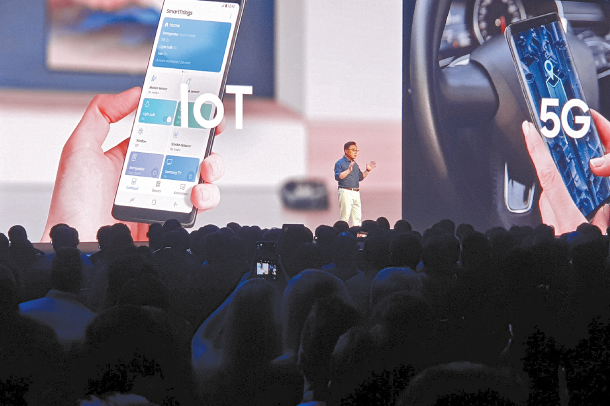
    Koh mentioned 5G connectivity, artificial intelligence and the Internet of Things as breakthrough technologies that will help Samsung compete.

    “While we have been maintaining leadership with 4G over the past decade, 5G, AI, IoT and augmented reality will offer a new opportunity in 2019.”

    He added that foldables will achieve another leap when such technologies become reality and are combined with the device.

    “Next year will be the 10th anniversary of Galaxy smartphones, and it’s very meaningful to me,” he said. “We will be coming up with an impressive Galaxy S10 as well.”
  • CapitaLand launches new retail concept store at Plaza Singapura

    CapitaLand launches new retail concept store at Plaza Singapura

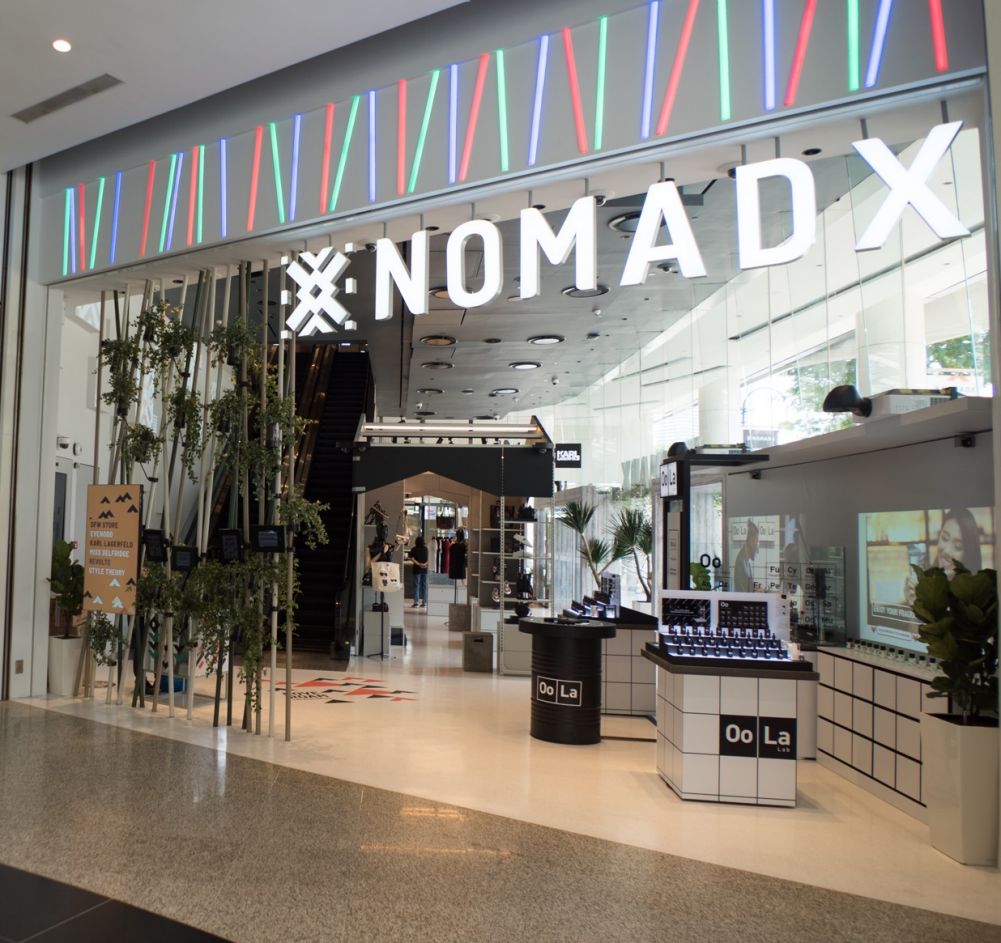
    CapitaLand has unveiled Singapore’s first “phygital” multi-label concept store NomadX at Plaza Singapura. NomadX (pronounced as “Nomads”) is styling itself as a “phygital” store for offering a new blend of physical and digital experiences, including a gamified onboarding process, automated store assistance such as smart mirrors, interactive product walls and a cashless payment experience.

    The 11,000sqft space is spread across two floors in Plaza Singapura, with frontage facing Orchard Road. The multi-label retail destination marked its official opening with a curated selection of 18 tenants offering a wide range of fashion, beauty, consumer electronics, gadgets and food and beverage offerings.

    President (Asia & retail) of CapitaLand Group Jason Leow said NomadX represents CapitaLand’s commitment to embrace omnichannel retailing. “It allows us to implement and redefine our ideas for a new generation of retail offerings. As a flexible space incorporating tech-enabled retail infrastructure, NomadX will make it easier and more cost efficient for our retailers to explore and nurture new innovative concepts before wider roll-out at CapitaLand’s shopping malls.

    “NomadX not only augments CapitaLand’s suite of services to meet the demands of retailers at various stages of their digitalisation journey, it will help to enhance the tenant mix at our malls over the longer term. With NomadX, CapitaLand is looking forward to working with a stellar line-up of partnerships to create new expressions of phygital retail experiences at our malls.”

    To ensure maximum flexibility for tenants to push the boundaries, NomadX incorporates short-term leases and “plug & play” retail units that are integrated with smart retail infrastructure. Tenants set up temporary homes like nomads – thus the inspiration for the store’s name – that are demarcated by modular panels and equipped with interactive technologies to encourage product discovery and play.

    The store’s fluid layout and data analytics capabilities make NomadX a suitable testbed for retailers to trial new concepts and products and respond swiftly to consumer reception and feedback.

    CapitaLand Retail CEO Wilson Tan said the company is curating a new shopping experience at NomadX, one which goes beyond the act of simply buying.

    “NomadX promises to be a personalised social space of sensation and discovery. By combining the technology of ecommerce, mobile shopping applications as well as location data analytics, we are able to work with our retailers to customise entirely unique physical shopping experiences that are based on our shoppers’ preferences.”

  • Incheon Airport tests an unmanned shuttle service

    Incheon Airport tests an unmanned shuttle service

    Incheon International Airport said Sunday that it has successfully tested a self-driving shuttle bus becoming the first Korean airport to do so. The test took place inside its long-term parking lot on Friday, where a driverless bus ran 2.2 kilometers at a speed of 30 kph.

    “The test route has lots of curved lanes and is frequently interrupted by other cars … We have seen that autonomous driving is possible,” the airport said.

    The shuttle bus used in the test has been developed by Korean companies, including KT and Unmanned Solution. It is the country’s first driverless vehicle to obtain a temporary driving license. Last month, the airport signed a memorandum of understanding with KT to cooperate in autonomous driving. It plans to introduce a detailed plan for various self-driving car services.

  • Hyundai, Kia invest big in Grab

    Hyundai, Kia invest big in Grab

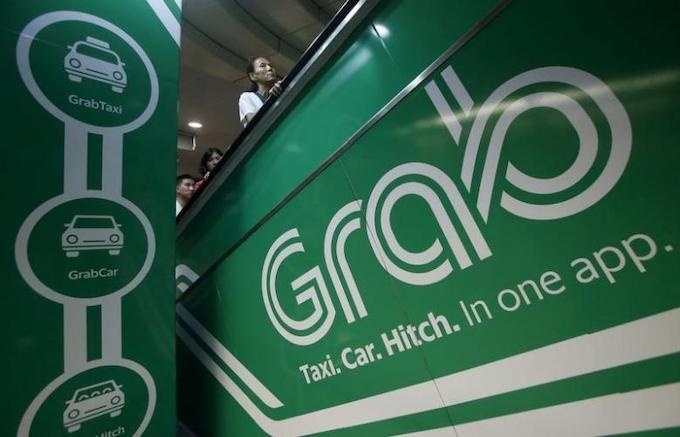
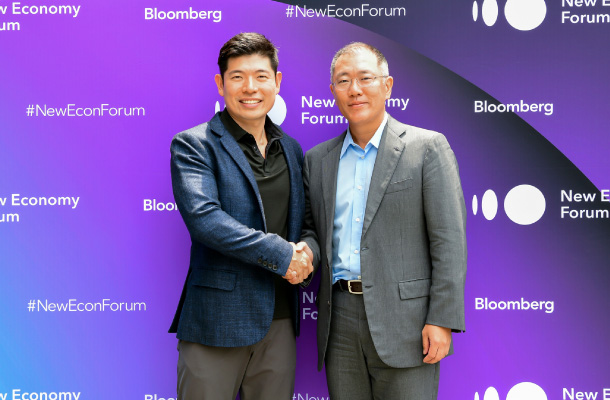
    Hyundai Motor and Kia Motors will jointly invest $250 million into the world’s third-largest ride-hailing operator Grab, eyeing shared mobility services as a way to overcome faltering car sales, the companies said Wednesday.  Hyundai has already injected $25 million into Grab in January, so total investment on the Singapore-based company adds up to $275 million. This is the largest investment made in a single company by the two sister automakers under Hyundai Motor Group, the group said.

    Grab, which has operations in 235 cities in eight countries in Southeast Asia, is the largest ride-hailing service provider in the region, though it is smaller than China’s Didi Chuxing and U.S. company Uber, which have larger operations elsewhere.

    The big bet in Grab comes as the largest auto group in Korea seeks fresh business models for growth. The group said it will make the two carmakers core players in an era where shared mobility is becoming ever more important.

    The three companies will start their collaboration by deploying Hyundai and Kia-made electric cars in Grab’s Singapore business. Hyundai will first supply 200 electric vehicles to the ride-hailing company by early next year. Kia is mulling whether to follow suit soon after.

    The vehicles will be rented out to Grab drivers. This way, Hyundai can introduce its electric cars to Singapore and other Southeast Asian markets once the pilot test in Singapore proves successful.

    “Targeting emerging markets based on strong partnerships with local companies like Grab could be a sustainable way of making profits,” Hyundai said in statement.

    If more people use ride-sharing services and other apps rather than driving their own cars, these large mobility service companies could become the major customers for carmakers in the future, and automakers are already aware of this.

    The three companies will also work on developing car maintenance and repair services as well as car financing services specialized for Grab drivers using the electric cars.

    Going further, they plan to launch electric car models customized for ride-hailing services.

    “Grab is the best partner there is to expand [our] electric car supplies in the Southeast Asian market,” said Chi Young-cho, chief innovation officer at Hyundai Motor Group.

    The latest investment is in line with Hyundai’s aggressive preparation to enter the shared mobility business. It is a relatively late mover into the future mobility business compared to competitors like Germany’s Daimler, which launched its own car-sharing brand Car2Go in 2008.

    The automaker landed a partnership with Sydney-based car sharing start-up Car Next Door with the aim of launching a new app-based mobility service in Australia by 2020. It also holds partnerships with India-based car-sharing company Revv, U.S. mobility service company Migo as well as local last-mile delivery service provider Mesh Korea. In Netherlands, it started its own car-sharing business with 100 Ioniq EVs last month.

  • Self-driving car tested out in Korea

    Self-driving car tested out in Korea

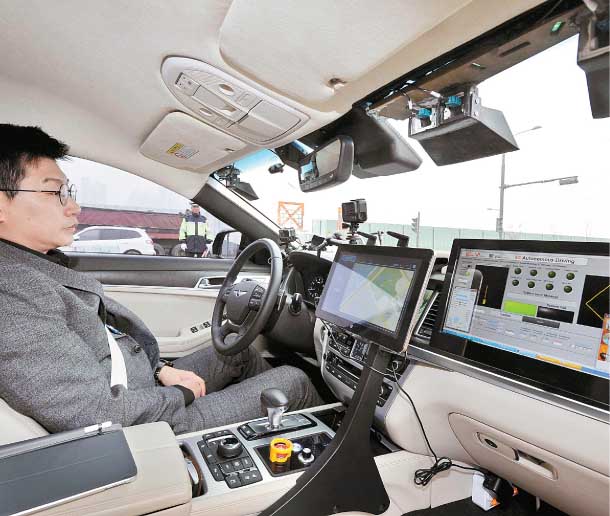
    A user tries out self-driving technology from local car-sharing app Socar in Siheung, Gyeonggi on Wednesday. The technology enables users to hail self-driving cars, and is currently being tested, according to Socar. The technology was jointly developed by Seoul National University, Yonsei University, SK Telecom and autonomous car technology developer SWM.AI.

  • Kakao profit falls in Q3 as investment costs rise

    Kakao profit falls in Q3 as investment costs rise

    Kakao, the operator of Korea’s top mobile messenger, KakaoTalk, said Thursday its third-quarter operating profit fell 35 percent from last year due to increased costs from new businesses. Operating income reached 30.7 billion won ($27.3 million) in the July-September period from 47.4 billion won a year ago, the company said in a regulatory filing.

    Sales rose 16 percent on-year to a quarterly record high of 599.3 billion won, the company said.

    Kakao said its operating income plunged due to increased investments in new businesses, such as Kakao Mobility, that the company recently launched in an effort to secure new growth engines.

    Kakao said the revenue from its content platform remained steady at 306.7 billion won, with the figure representing a 17 percent year-on-year increase.

    Advertising sales grew 10 percent year on year to 167.1 billion won over the cited period on the back of mobile advertising revenue growth.

    Music content sales increased by 11 percent year on year to 136 billion won in the third quarter due to steady revenues from the Melon streaming service.

    Kakao said it will keep up efforts until the end of this year in order to expand its foothold by wrapping up a merger with its entertainment affiliate, Kakao M. The tieup will allow the company to move forward on various business collaborations.

    Kakao said the decision is aimed at bolstering its entertainment content based on the users of Melon, which is currently operated by Kakao M.