Retail News CRM

Tag: Technology

  • Unmanned medical clinic opened in China

    Unmanned medical clinic opened in China

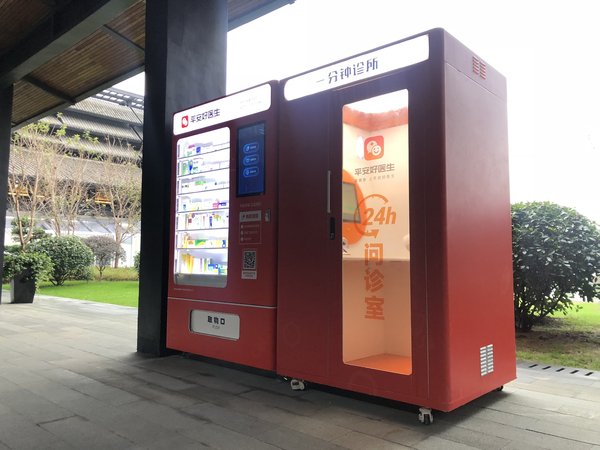
    Chinese one-stop healthcare platform Ping An Good Doctor has announced the world’s first commercially operational unmanned medical clinic. The firm’s “One-minute Clinic” has been formally unveiled in a scenic area in Wuzhen. It will provide a high-speed, convenient, one-stop-shop for medical and healthcare services for nearby residents, visitors to the scenic area and guests of the 2018 World Internet Conference.

    The clinic includes two major functional modules, an “Independent Advisory Room” and a “Smart Medicine Cabinet.” Patients consult with a cloud computing doctor in the advisory room to receive a preliminary diagnostic suggestion, and may purchase prescribed medicine from the medicine cabinet afterwards. The clinic stocks more than 100 common drugs. Unavailable medicines may be purchased online using the Ping An Good Doctor smartphone application, receiving the drug from nearby pharmacies with a one hour delivery service.

    During a one week trial, the daily average advisory volume approached 100 visitors.

    The firm plans to popularise the clinics in public areas such as pharmacies, communities, enterprises, schools, scenic areas, markets, highway service stations, and so on. Combined with Ping An Good Doctor’s offline network of 3100 new hospitals and more than 60,000 neighbourhood clinics, the clinic is expected to quickly meet real-time medical and healthcare needs of city residents.

    Ping An plans to expand to 1000 units across China by the end of the year.

    A spokesperson for Ping An Good Doctor revealed that the clinic’s AI doctor was researched and developed by a team formed from over 200 world-class artificial intelligence experts, trained using data from over 300 million visits and consultations. More than 2000 common diseases are covered by the AI’s data set.

    A back office staffed by expert physicians are engaged to verify the diagnosis and advice of the AI doctor.

    Overcrowded hospitals are part of the cause behind the present difficulty in obtaining quality healthcare in China.

    Information from a third-party research institute shows that, in 2016, including transport and waiting-in-line times, Chinese patients consume an average of three hours per medical visit, although the actual time for diagnoses averages only eight minutes per visit.

  • When robot take over Hotel management

    When robot take over Hotel management

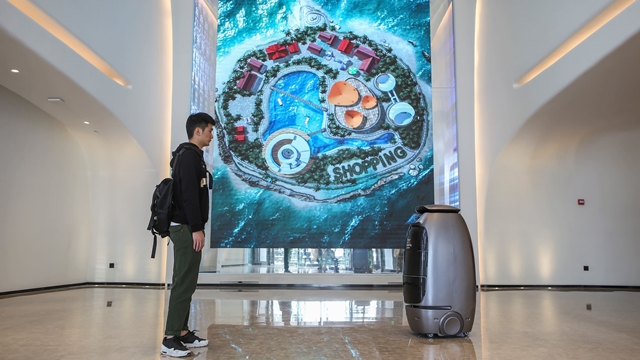
    An automated Alibaba hotel is set to open in Hangzhou. The move showcases the e-commerce giant’s technological capacity and serves to diversify its scope of business – with a view to demonstrating and selling its data-driven innovations. The company has claimed the hotel will be more efficient than manned properties within a comparable price range.

    The Alibaba hotel, which has already accepted bookings, features robotics, facial recognition, smart speakers, voice-activated lighting and room service, and automated alerts for cleaning. Hotel guests will be able to purchase any item featured in the rooms on Alibaba’s website.

    The hotel’s features are well in advance of similar voice-command technologies recently offered to the hospitality industry by Chinese search engine Baidu, although a similar hotel was launched by Shenzhen firm Smart LYZ in Chengdu earlier this year.

    A statement from the company read: “The solutions deployed at Alibaba’s Future Hotel can be used to streamline the operation of [China’s] hospitality sector while improving the experience of guests.”

  • Retailers Transforming Distribution, Expanding Online and Turning to the Cloud as They Revolutionize Customer Experience

    Retailers Transforming Distribution, Expanding Online and Turning to the Cloud as They Revolutionize Customer Experience

    As retailers race to deliver more unique and personalized customer experiences, the use of Cloud, IoT and Big Data will accelerate in stores, online channels and distribution centers. However, one quarter of retailers still lag in the process of adopting new technologies and integrating them across operations to present a more integrated customer experience, according to a new report from Vertiv.

    For the report, participants included executives from 50 of the world’s largest retailers, with a combined annual revenue of $953 billion USD in 2017. The study, “Into Uncharted Territory: Retail Transformation and its Impact on Digital Infrastructure”, co-sponsored by Vertiv and DatacenterDynamics, revealed a heightened focus on online retail, as businesses transform their digital resources and capabilities to address changes in customer behavior. Over the next two years, the amount of data center space dedicated to online retail – both on-premise and colocation – is expected to increase by 20 percent, while cloud hosting would increase by 33 percent to support store applications.

    An important part of the retail digital evolution includes a massive transformation of distribution centers. The research suggests the number of distribution centers and warehouses will increase by about 26 percent over the next two years as retail companies increasingly realign operations to meet consumer demand for online purchasing. The amount of data center space dedicated to distribution/logistics is expected to increase by 10 percent and the use of cloud hosting to support distribution will increase by 87 percent.

    “It’s no secret that online retail is driving significant IT investment for retailers. However, as this study makes clear, digital transformation in the retail space is about more than e-commerce,” said Lucas Beran, analyst, data center infrastructure at IHS Markit. “Today’s retailers are striving to improve the IT systems in their stores and distribution centers as they pursue impactful customer experiences across all interactions with their brand. More business-critical online, distribution and in-store environments require new approaches to physical infrastructure to increase IT reliability, speed time to market, hold down costs and reduce management complexity,” Beran added.

    The survey confirms that more computing power is being moved into stores to support edge computing types of applications providing greater customer immediacy and influencing them at the point of use.

    “Retailers are going to move more IT footprint into the stores, to communicate with customers and to influence them closer to the point of decision,” said Martin Olsen, vice president, global edge and integrated solutions at Vertiv. “Our forecast for the next couple of years shows about two dollars going into stores and distribution for every dollar spent in the core data center. And much of that data center investment is being made to support online and stores.”

    To support their transformation, retailers are adopting new physical infrastructure options that provide higher reliability and are easy and fast to deploy. These technologies are based on standardized, modular designs that are scalable with capacity demand and future-proofed for next-generation technological advances.


  • Samsung steps up Microsoft cooperation

    Samsung steps up Microsoft cooperation

    Samsung Electronics Vice Chairman Lee Jae-yong met with Microsoft CEO Satya Nadella in Seoul Wednesday and vowed to increase cooperation with the U.S. company in artificial intelligence and cloud computing. Nadella is visiting Seoul this week for the first time in four years and delivered a keynote speech at Microsoft Korea’s “Future Now” artificial intelligence (AI) conference Wednesday.

    The two met in the morning before the conference and agreed to step up partnership in artificial intelligence, cloud computing and big data, said a Samsung spokesman.

    Microsoft currently uses Samsung’s semiconductors for cloud servers, and Samsung could sell more of its chips to the American partner in the near future.

    Media reports in Seoul say, as a result of the meeting, some Samsung devices, including smartphones, will be embedded with Microsoft cloud services in the future. Samsung already uses Azure, a Microsoft cloud computing platform, for its system air conditioners to collect data on the surrounding environment, including temperature and humidity, so the machines run more efficiently.

    The two executives might meet on a regular basis and exchange ideas on tech development, according to reports. The two leaders met in Seoul four years earlier.

    During his keynote speech at the conference at a hotel in western Seoul, Nadella mentioned Samsung as one of several Korean companies that had developed offerings based on Microsoft’s Azure platform.

    “Take the example of Samsung Electronics’ IoT [Internet of Things]-based air conditioner that runs on Azure. By taking into account environmental factors, like the number of people, the smart air conditioner can save up to 25 percent in energy and 30 percent in costs,” he said.

    Other sections of the Microsoft CEO’s speech were centered around the need to use artificial intelligence responsibly.

    “We need to ask ourselves not only what computers can do, but what computers should do,” he said, addressing an audience of over 1,500 programmers and businesspeople.

    He also spoke of the necessity to find ways to develop AI for “people who don’t have the ability to participate” in the digital economy.

    As an example, Nadella shared the case of Korea University Prof. Lee Seong-whan using Microsoft’s deep learning Cognitive Toolkit. Lee, who heads the brain and cognitive engineering department, analyzes brain signals in the development of computer systems that amputees can use to move prosthetic arms or robotic arms.

    Earlier on Tuesday, Samsung hosted “Tech Forum 2018,” an event for developers in Silicon Valley. Around 150 developers and designers were invited to the Samsung Research America center there.

    Kim Hyun-suk, president and CEO of Samsung’s consumer electronics division, said in opening remarks that the company was developing many “unfamiliar acquaintances,” which he believes will shape Samsung’s future innovation.

    “Samsung encounters a vast number of customers, rapidly changing technologies and new staff from various backgrounds,” he said. “Our strength is in selling more than 500 million consumer devices a year. We will expand contact points with our customers to reach into the smallest corners of their living spaces and bring innovation to their lifestyles in general.”

    Kim added that in terms of working with various employees, the company will continue to develop a corporate culture where global staff can cooperate and freely suggest ideas. Samsung also introduced the company’s developments in future technologies and held open discussions.

  • Lenovo opened an unmanned store in Beijing

    Lenovo opened an unmanned store in Beijing

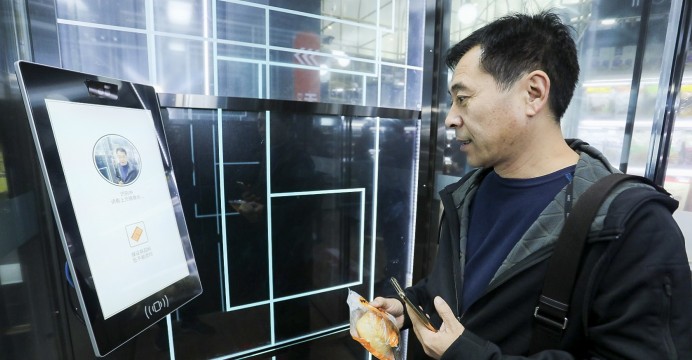
    Lenovo China has launched an automated store in Beijing based on facial recognition technology. The Lenovo Go store also features a mobile payment system. A blog post put out by the Taiwanese tech giant reads: “Shopping at the store is quite simple. You walk up to the door, cameras recognise your face, you browse the aisles, pick out what you want as usual, then – and here’s the magic – you just walk out, and your account is automatically settled via your mobile payment.”

    Lenovo’s head of research and technology Daryl Cromer said: “We can now understand some of the technologies and challenges our customers face, allowing us to make better devices and tailored solutions.

    The store becomes a powerful pilot program for technologies that move beyond the Lenovo campus.”

    Lenovo plans to use data gathered at the store to power future technologies, such as an espresso machine that can brew coffee to individual preferences based on facial recognition.

  • FedEx QR Pay targets SMEs in five major Asian markets

    FedEx QR Pay targets SMEs in five major Asian markets

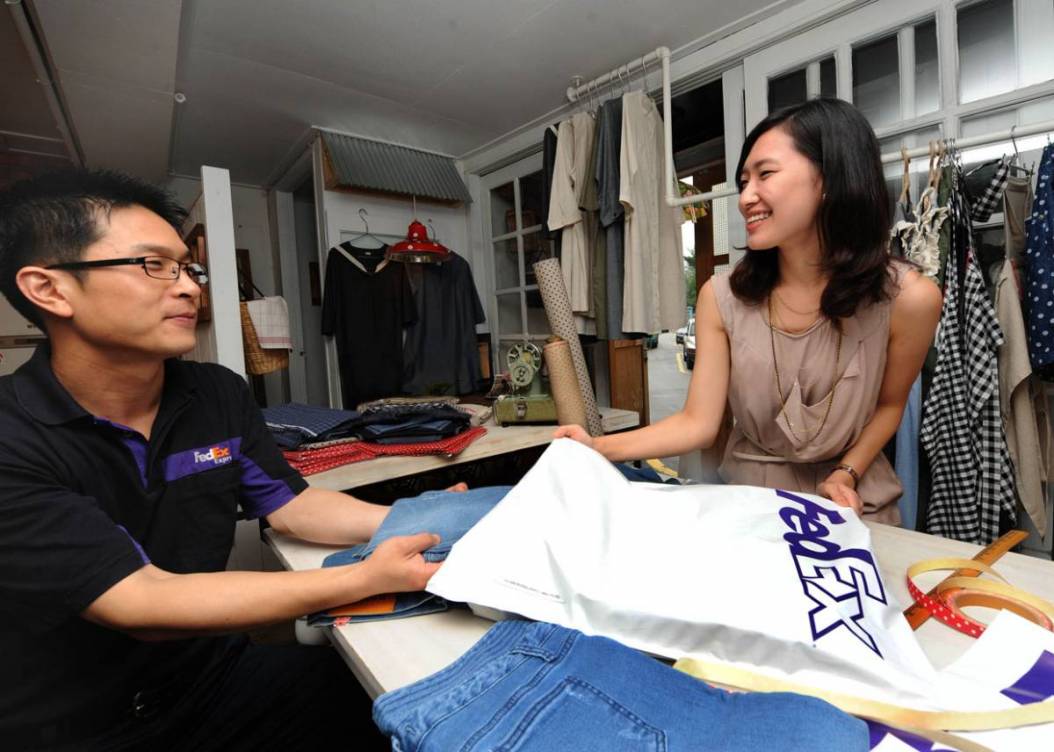
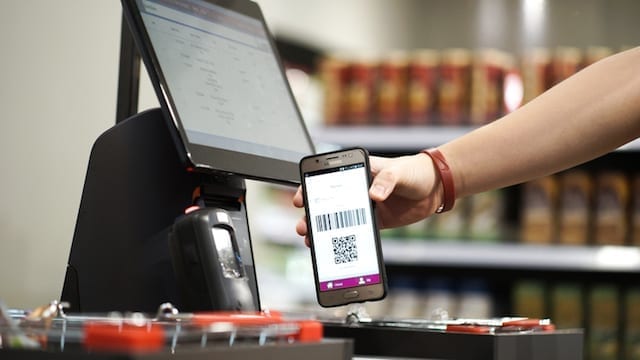
    Transport company FedEx has launched a QR-code based mobile payment system in Hong Kong, Malaysia, Philippines, Singapore, Thailand and Australia. The system, FedEx QR Pay (the QR stands for quick response), is targeted specifically at SMEs.

    Supplementing the firm’s existing online payment methods, FedEx QR Pay is a secure mobile payment option activated by QR codes embedded with unique payment links. QR Pay eliminates the need to have shopping carts, booking engines or checkouts, allowing customers to make payments with credit cards and e-wallet services.

    FedEx’s president for Asia Pacific Karen Reddington said: “FedEx is constantly looking for ways to innovate, pioneer new solutions and offerings to address customers’ evolving needs in the region … QR Pay provides greater flexibility and convenience for our customers, and ultimately a better experience when it comes to managing their logistics needs.”

    Asia Pacific leads the world in mobile payment with 53 per cent of connected consumers using their mobile devices to pay for goods or services at point of sale. Rising mobile penetration is a key driver, with the number of smartphone users across region now over a billion. Seeing the clear trend towards mobile payment adoption, SMEs are also harnessing new technologies to expand their business.

    According to a recent research commissioned by FedEx, 73 per cent of SMEs are already current users of mobile payments, with 69 per cent of these businesses likely to increase usage in the next 12 months. Thirty per cent of current non-users are likely to begin using mobile payments as well.

    FedEx QR Pay will soon be expanded to other markets in Asia Pacific.

  • LG, E-mart develops smart-cart robot

    LG, E-mart develops smart-cart robot

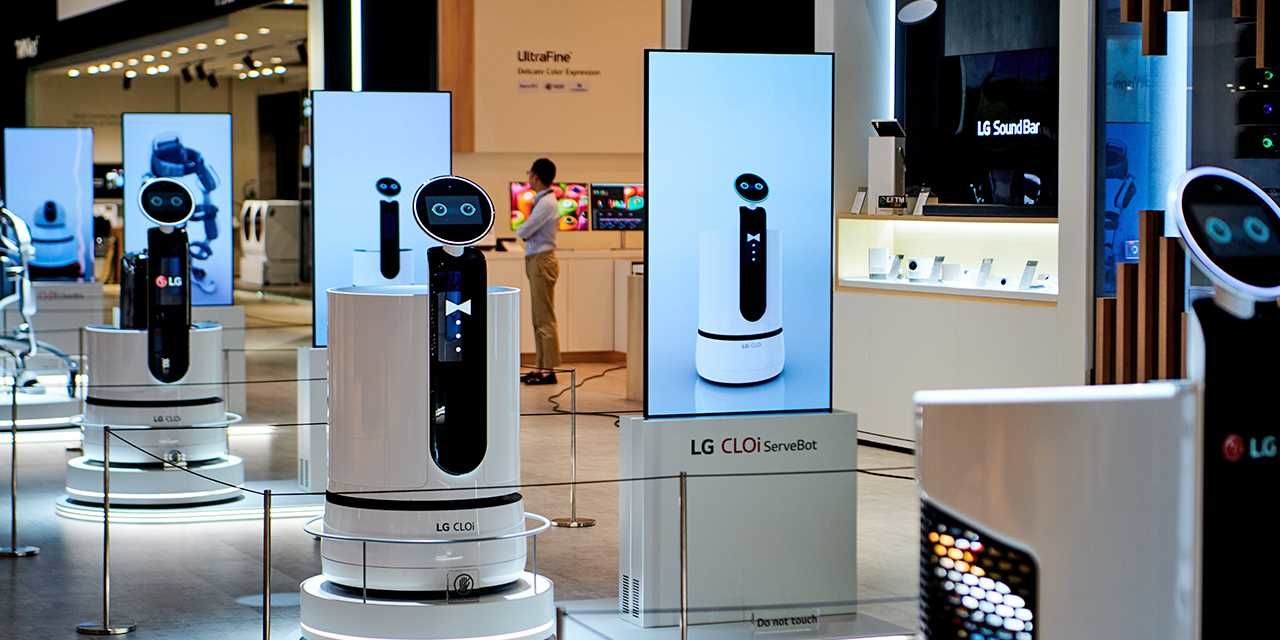
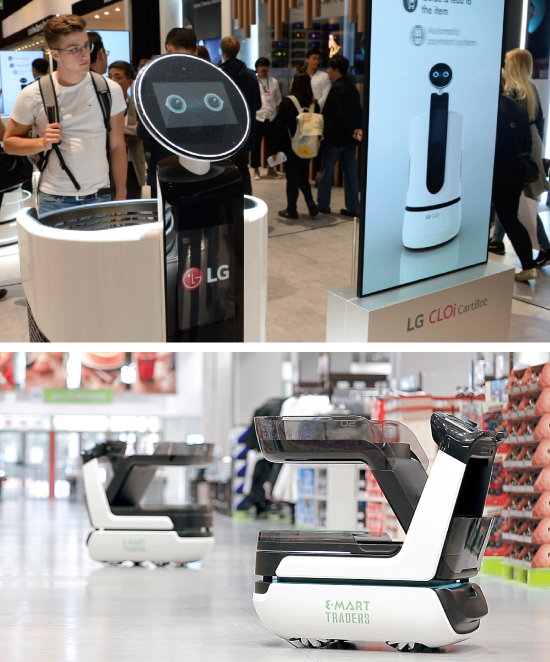
    LG Electronics has signed an agreement with E-mart to develop a new type of service robot that can assist shoppers at its South Korean supermarkets. Under the agreement, the two companies will develop what they call a smart-cart robot that can automatically identify obstacles and follow shoppers as they walk through aisles. LG said the new robot will free visitors from the hassle of pushing heavy carts by themselves.

    The South Korean tech giant said the robot will be developed by its research lab, which has been releasing various robots under the CLOi brand.

    So far, LG has released eight different products under the brand, which are suited for different tasks, including guiding, cleaning and even mowing lawns. The company unveiled the CLOi SuitBot, which can help workers lift and move heavy objects easier as well.

    LG said it has been making efforts to bolster its robot business by joining forces with different clients, including airports, bakeries and retail shops.

    CLOi stands for clever, clear, close operating intelligence, LG said.

    The company has been making investments in robotic firms, including Robotis, AI startup Acryl and US-based robot maker Bossa Nova Robotics.

  • Swiggy India expands services in 16 new cities

    Swiggy India expands services in 16 new cities

    Food ordering and delivery platform Swiggy Thursday said it has expanded its presence in the country by launching services in sixteen new cities across India. The new cities include Thrissur, Tirupur, Warangal, Aurangabad, Agra, Mangalore, Manipal, Jalandhar, Trichy, Udaipur, Amritsar, Varanasi, Bhubaneshwar, Vellore, Thiruvananthapuram and Kota, Swiggy said in a statement.

    These cities join the 28 cities across India where Swiggy already has presence, it added.

    Commenting on the development, Vivek Sunder, COO, Swiggy said, “One of the reasons for the expansion across the country is because of the strong consumer demand that we have witnessed through thousands of Swiggy app downloads in cities where we were not even present.”

    In just four years, Swiggy has become a household name among Indian consumers by providing them the best food delivery experience in the country, he added. The growing consumer demand in tier 2 and tier 3 cities for quality food, convenience, and easy accessibility are one of the key reasons for the company to enter newer cities. Swiggy said.

    Founded in 2014, Swiggy currently has over 40,000 restaurant partners spread across 44 cities in the country.

  • Korea’s Yuhan licenses lung cancer drug

    Korea’s Yuhan licenses lung cancer drug

    Yuhan Corporation announced on Monday that it has entered into a licensing agreement with Janssen Biotech, a subsidiary of Johnson & Johnson, to develop Lazertinib, a treatment for non-small cell lung cancer (Nsclc) that is undergoing clinical trials in Korea.

    Under the agreement, Yuhan will receive an upfront payment of $50 million and is eligible for double-digit royalties on future sales.

    It is also eligible for up to $1.255 billion in payments according to development phases.

    Going forward, Janssen will be responsible for developing the drug, manufacturing and commercialization with exclusive worldwide rights to Lazertinib excluding Korea, where the rights belong to Yuhan.

    The companies will work together on global clinical trials evaluating Lazertinib.

    Trials are expected to begin in 2019.

    “We are excited to start this collaboration and dive into advancing this treatment regimen with a focus on improving the lives of people who suffer from lung cancer,” said Lee Jung-hee, president and CEO of Yuhan, in a statement.

    The combined $1.255 billion Yuhan is set to receive from Janssen is the second-largest export contract for a single pharmaceutical product from Korea, according to people in the industry.

    Lazertinib is a potent, mutant-selective, irreversible, brain-penetrant and orally-active third-generation inhibitor for Nsclc, with the potential to be a first-line therapy.

    The compound is in a Phase 1/2 clinical trial in Korea. Interim results showed that Lazertinib inhibited robust disease activity in patients with Nsclc.

    Established in 1926, Yuhan is one of the top pharmaceutical companies in Korea in terms of market capitalization and revenue.

    Its core business consists of primary and specialty care, dietary supplements, household and animal care, and contract manufacturing of active pharmaceutical ingredients.

    On the news of the agreement with Janssen Biotech, shares of Yuhan spiked 29.78 percent to close at 231,000 won ($205) Monday.

  • Twenty4 opens cash-free retailer in Ipoh Malaysia

    Twenty4 opens cash-free retailer in Ipoh Malaysia

    Malaysian convenience store Twenty4 has opened in Ipoh as the region’s first cash-free retailer of its kind. The “smart” convenience store accepts only cashless transactions, earning it a spot in the Malaysia Book of Records. The brand’s CEO Kenny Ng said: “The shop is open round-the-clock and customers can purchase a variety of items, including food and personal care items, through cashless transactions.

    Customers can buy products at the store using debit cards, credit cards, Paywaves, Samsung Pay, Apple Pay or use other E-Wallet payments. We hope the concept will set the pace … be a pioneer in Malaysia, where people buy items without using cash.”

    Twenty4 sells various local and international products via self-service machines.

  • OVO lead in Cashless Payment Race in Indonesia

    OVO lead in Cashless Payment Race in Indonesia

    Lippo-backed cashless payment service OVO has announced a partnership with Tokopedia, Indonesia’s largest e-commerce platform. OVO said in a statement on Wednesday that the deal would help it cement its position as the country’s largest mobile payment platform in terms of transaction volume and reach.

    “The partnership will add Tokopedia’s close to 80 million active monthly users to OVO’s existing userbase of 60 million. It will also add more than 4 million Tokopedia merchants to what is already a market-leading merchant network, covering malls, smaller retailer, as well as GrabFood partners and Kudo agents,” the company said in the statement.

    OVO has been partnering with online-based ride-hailing service Grab since December last year, while also targeting brick-and-mortar shops and restaurants across Indonesia.

    “We see this landmark partnership as a validation of our strategy to enable payments for all Indonesian companies, both online and offline. Cash is a very difficult habit to break and consumers will only switch to cashless if it’s easier and safer than cash,” said Harianto Gunawan, director of enterprise payments at OVO.

    OVO chief executive Jason Thompson said the company expects a surge in new users and additional transactions from the e-commerce platform.

    “We have a very bullish outlook as we close out 2018. Having established ourselves as the No. 1 mobile payment platform by transaction volume, this partnership with Tokopedia and our push into e-commerce will further accelerate our growth,” Thompson said.

    The company said OVO is now available in 90 percent of shopping malls across the country, offering cashless payment options to customers at hypermarkets, department stores, coffee shops, cinemas, parking operators, hospital chains and food and beverage outlets.

    It has also set a target to expand QR-code payments to 100,000 small and medium enterprises by the end of this year.

    OVO’s online-to-offline business comprises its partnerships with Grab and Kudo, a service that allows individual agents to sell digital products, such as phone credit, tickets or insurance, to customers. Kudo currently has about 1.7 million agents in its network.

    OVO said its latest deal with Tokopedia would allow it to reach 93 percent of districts in Indonesia currently served by the e-commerce platform. It also plans to secure more deals with other e-commerce platforms.

  • DBS makes foray into chat commerce with “Foodster”

    DBS makes foray into chat commerce with “Foodster”

    DBS Bank has launched Southeast Asia’s first bank-led retail chatbot, Foodster.

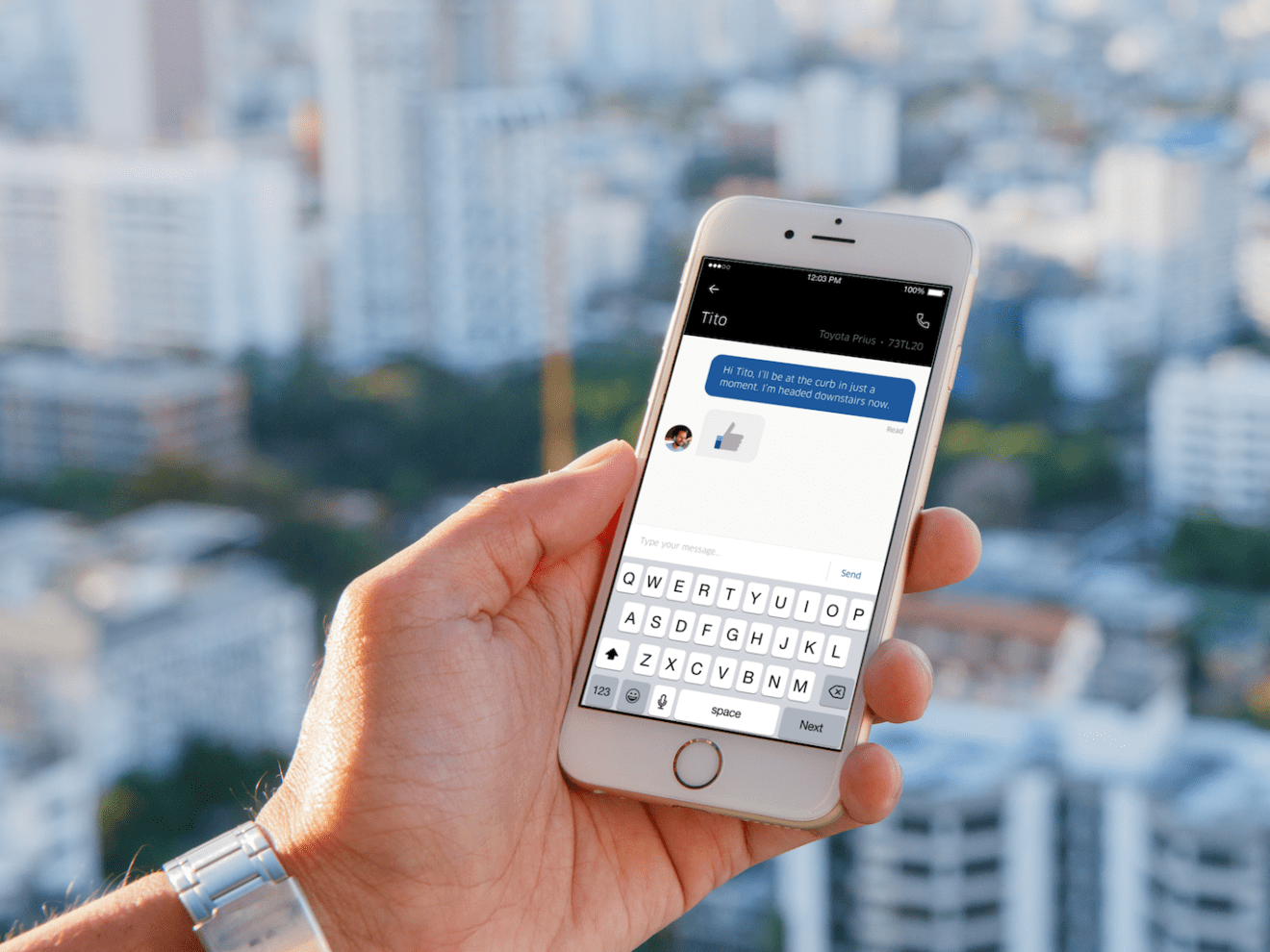
    The chat-commerce service allows customers to order and pay for their meals via Facebook Messenger and DBS payment channels, including DBS PayLah! and DBS/POSB cards. It has been test-bedded with seven food and beverage merchants around DBS’ Marina Bay headquarters with positive results.

    Kopi Ong, which sells quick-serve beverages, was the first merchant to test the Foodster solution. Since then, the business has seen daily sales grow by 20 per cent without additional manpower or space required.

    Chat commerce – e-commerce using chat or messaging platforms – allows businesses to transact within platforms that already have a large pool of captive users. With 77 per cent of Singapore’s population on mobile messaging platforms, chat commerce solutions such as Foodster allow businesses to literally become a part of the conversation by embedding DBS’ payments capabilities within chat platforms.

    The Foodster solution was developed with Artificial Intelligence/Machine Learning algorithms which allow it to become ‘smarter’ with every transaction. In addition, it allows merchants to implement targeted and personalised customer loyalty programmes on the platform with its rich data tools and analytics.


    DBS head of consumer banking group Jeremy Soo said: “If instant messaging is the way forward for people to communicate, then we need to help businesses find a way to engage their customers on such platforms simply, seamlessly and invisibly. We are aware that consumers today are more likely to have ‘app fatigue’ and have become resistant to downloading new mobile apps. And so as Singapore’s leader in payments with more than 4 million cards in circulation and the nation’s most popular mobile wallet – DBS PayLah! with more than 1 million users – we saw an opportunity to combine our strengths with Singapore’s most widely used social media platform.”

    In Asia Pacific, the chatbot market is forecast to generate revenues of around US$350 million by 2024, more than eight times last year’s figures.

  • Stocking up on Digitalization to Increase Share-of-Basket

    Stocking up on Digitalization to Increase Share-of-Basket

    With the rise of e-Commerce, Asian retailers are under tremendous pressure to continuously push traditional boundaries and embark on digital transformation to engage consumers. Keeping up with the latest trends in providing the best consumer experience have retailers looking to tech innovations, particularly digital technologies, to play a key role in capturing and keeping customers’ attention and loyalty.

    Technologies such as the cloud, Internet of Things (IoT), mobility solutions, and augmented reality (AR) are driving customer-facing innovations such as digital marketing, smart shopping carts, couponing, and mobile apps – that bring people into the store and keep them coming back. Cloud applications also make it easier for store associates and corporate staffers alike to collaborate and take care of back-office needs.

    The reality is that retailers need to embrace digital transformation and use technology in innovative ways to enhance the customer experience if they want to remain competitive.

    Technology Challenges

    However, rapid adoption of digital in retail not only improves outcomes but ignites new challenges for IT administrators in retail organizations. Among the challenges are how to:

    • Support increased customer engagement with in-store technologies that have high-bandwidth demands
    • Support increasing use of applications in the cloud with a resilient and secure network
    • Ensure connectivity and provide secure access for point-of-sale (POS) applications and electronic payment transactions
    • Ensure performance for real-time applications such as voice, video, and unified communications

    Taking on one of these efforts in the past may have required every resource, but now all of these must be accomplished by the same IT staff.  Also, these changes must be deployed across hundreds and even thousands of store locations spanning vast geographical regions.

    Yet the connective element that brings everything together for retailers –  existing networks are now too complex, too expensive, and frankly, too outdated to support the challenges and opportunities that come from digital transformation. A new approach to the retail network is required.

    With a Virtual Cloud Network, retailers can create an end-to-end software-based network architecture that delivers services to applications and data wherever they are located at global scale from edge to edge, with consistent, pervasive connectivity, and security.

    Faster service delivery on the cloud

    Alfamart in Indonesia is an example of a retailer that embarked on digital transformation by adopting cloud and mobility solutions, and reaped the benefits of a modernized, connected business network.

    Faced with a vast network of over 10,300 minimarts spread across the Indonesian archipelago and basic internet infrastructure in many far-flung areas, it was difficult for Alfamart to convey information in a timely manner across its network.

    The slow flow of information impeded the business’ ability to make critical decisions in a timely manner,  resulting in them not being able to react quickly enough to customer feedback or market trends, and affected overall competitiveness.

    Alfamart decided to connect all of its store employees and partners with a bring your own device (BYOD) strategy and an enterprise mobility management platform over the cloud.

    All store employees are now equipped with the most up-to-date product information, prices and stock level at their fingertips, enabling them to act quickly to meet market trends, and manage peaks in demand for the fast-moving perishable goods they provide.

    This has improved their speed-to-market, reduced training costs by 20 per cent, enhanced mobility across device and platforms, and improved internal communications between management and employees. Customer satisfaction levels have also gone up.

    Keeping systems up and goods in stock at all times

    City Mart in Myanmar is another retailer which benefited from modernizing its legacy IT infrastructure by adopting virtualization. Lengthy downtimes were a common occurrence under their old IT system, which affected their supply chain and resulted in unfulfilled customer orders, negatively impacting revenues.

    The supermarket network implemented a software-defined IT infrastructure and automated certain IT processes, which not only eliminated server downtime but also cut operational expenses by half. Predictive analytics and smart alerts also helped improve the system performance.

    With a new inventory management system, City Mart is now able to gain visibility of their stock across their entire network of 180 stores, whether on storeshelves or in the warehouse. This enabled them to better understand changing consumer demand patterns across different stores, ensure that goods are in stock at all times, and build stronger relations with suppliers.

    Ultimately, the virtualized IT infrastructure supports City Mart’s expanding business, enabling the retailer to meet the needs of Myanmar’s growing consumer class.

    Networking for Retail 2020

    The future of networking is software, and the network of the future is the Virtual Cloud Network. Virtual Cloud Networks allow retailers to create a digital business fabric for connecting and securing applications, data, and users across the entire network in a hyper-distributed world. In this way, retailers can simplify networking and wide area network management, optimize cloud access from all locations, assure high performance for even the most demanding applications, and enforce security and compliance across the network in every store location.


    – Sanjay K. Deshmukh, Vice President and Managing Director, South East Asia and Korea, VMware
  • Vietnam’s VinFast in deal with PV Oil for electric car charging stations

    Vietnam’s VinFast in deal with PV Oil for electric car charging stations

    VinFast on Thursday signed a memorandum of understanding with PetroVietnam Oil Corp. to build charging stations for its electric cars and scooters.

    The company, a unit of Vietnam’s largest conglomerate Vingroup JSC, is building a $3.5-billion scooter and automobile complex in northern Vietnam, with its first production electric scooters slated to hit the streets late this year.

    Thursday’s agreement will pave the way for VinFast to deploy charging stations at 20,000 of PV Oil’s existing service stations in Vietnam by 2020, VinGroup said in a statement.

    This is part of VinFast’s plan to launch between 30,000 and 50,000 charging stations nationwide by 2020, it said.

    VinFast customers will be able to charge their vehicles or change their batteries at these stations, it added.

    VinFast Chief Executive Officer Jim Deluca said in an interview earlier this month that the firm would produce 250,000 electric scooters a year alongside 250,000 cars, in an ambitious production target that is set to eventually increase to 1 million units each a year.

    The company has started on the development of a battery electric vehicle with Germany’s EDAG Engineering.

    Vingroup, which has a market value of about $13.2 billion, also has businesses in property, hospitality, entertainment, retail, healthcare, education, agriculture and smart phone production.

  • Shell Malaysia Launches 24-Hour Unmanned Petrol Mart

    Shell Malaysia Launches 24-Hour Unmanned Petrol Mart

    Shell Malaysia has opened its first unmanned Select convenience store. Located at Shell Tezz Enterprise on Jalan Tun Razak, the store trades 24-seven and is powered by technology from BingoBox. Customers can select goods from the shelves and place them on the store counter which automatically calculates the price. Payments can be made by debit or credit cards, or by BingoBox’s mobile app.

    BingoBox is based in China and has launched in Malaysia through a joint venture with local company Scientific Retail.

    “Using BingoBox Retail Technology, we can provide customers with a seamless shopping experience when they are at Shell at any time of the day,” said CEO of Scientific Retail, Ng Seong Ping.

    Shell Malaysia MD Shairan Huzani Husain said the technology will improve customer service.

    “Our Shell site employees now have more time to attend to customers’ needs, thus ensuring they are able to leave our station a little happier,” he said.