Retail News CRM

Tag: Thailand

  • Thai durian dominates Chinese market

    Thai durian dominates Chinese market

    Thailand is consolidating its position as the leading supplier of durians to China, reported the South China Morning Post.

    Shipments of fresh durians from Thailand to China – the world’s top consumer of the pungent fruits – rebounded in the second quarter after a drop earlier this year. It is attributed to a seasonal harvest spike and a lasting reputation for quality.

    Data from China Customs showed that durian imports from Thailand reached nearly $2.67 billion, accounting for 75% of total fruit imports. This figure is a significant improvement compared to the 42.5% recorded in the first quarter of this year. In addition, Thailand accounted for 68% of China’s durian import market share in 2023.

    Thailand’s main competitor, Vietnam, supplied almost all of the remaining shipments in the second quarter. Vietnamese durians are more competitive in terms of price than their Thai peers in China due to lower transport costs thanks to the use of land border.

    According to Liang Yan, an economist at Willamette University in the U.S. state of Oregon, Thailand has long had a “first mover advantage” among Chinese consumers.

    The second quarter of each year marks the major harvest season for Thai durians, observers said, while consistency of flavour and brand recognition grant additional appeal.

    Thailand’s increased share in the second quarter can be mainly attributed to the seasonal peak of Thai durian production, their strong and established trade networks, and consumer preference for Thai durians during this time, said Lim Chin Khee, an adviser with the Durian Academy, an institution that trains Malaysian growers.

    China, the world’s biggest buyer of durians, imported 1.4 million tonnes in 2023. Dubbed “king of fruits” by many consumers, it is treated as a delicacy and has even been given as a gift to celebrate special occasions such as weddings.

    Thai durians remain popular in China largely because the flavour seldom wavers, though the fruits lack the variety of taste, said Song Seng Wun, an economic adviser at the Singapore-based financial services firm CGS.
  • Grab no longer buying Trans-cab, Singapore watchdog says

    Grab no longer buying Trans-cab, Singapore watchdog says

    Grab, Southeast Asia’s biggest ride-hailing and food delivery firm, has called off its proposed acquisition of Singapore’s third-largest taxi operator, Trans-cab, according to a statement from Singapore’s competition watchdog.

    The Competition and Consumer Commission of Singapore (CCCS) said in the statement on Thursday evening that both Grab and Trans-cab had notified it on July 22 that they would no longer be proceeding with the proposed acquisition.

    “With the termination of the proposed acquisition, the parties have withdrawn their application to CCCS for a decision, and CCCS has accordingly ended its assessment of the proposed acquisition,” CCCS said in the statement.

    Trans-cab did not immediately respond to a request for comment after working hours.

    “(The) ruling does not change our determination to do everything that we can to offer affordable, reliable transport options to passengers in Singapore,” Yee Wee Tang, managing director at Grab Singapore.

    The commission added that it encourages businesses with acquisition plans to engage CCCS at an early stage if they think there are likely to be competition concerns.

    The commission first raised concerns about the taxi deal in October 2023 before asking Grab and Trans-cab for solutions to address competition concerns earlier this month.

    Grab is one of the city-state’s top ride-hailing companies, with the deal for Trans-cab reported to be worth around S$100 million ($74.55 million).

  • Durian exports rise by 45% in first half

    Durian exports rise by 45% in first half

    Vietnam exported US$1.32 billion worth of durian in the first six months of 2024, up 45% year-on-year, according to customs data.

    It accounted for 65% of all fruit exports during the period and is growing increasingly popular in many key markets.

    China was the largest importer, accounting for over 92% of Vietnam’s durian exports.

    Its imports increased by 46% from the same period last year.

    Thailand was the second largest market for Vietnamese durian, with shipments increasing by 90.5% to $47 million.

    Exports to Japan doubled from a year ago to $2.6 million. Cambodia bought $1.6 million worth of the fruit from Vietnam, a 23-fold increase.

    Currently the monthong variety is the most favored for its taste, aroma, small seeds, firm texture, and longer shelf life.

    Dang Phuc Nguyen, general secretary of the Vietnam Fruit and Vegetable Association, expected durian exports to skyrocket in the second half, fueled by the harvest of the fruit in the Central Highlands from July to October.

    Furthermore, Vietnam and China have wrapped up negotiations and will soon sign a protocol for the export of frozen durian.

    With all this in the works, Nguyen expected exports for the year to hit $3 billion.

    But there are challenges, he said, with some shipments to China recently being flagged for containing banned substances.

    Vietnamese authorities have been discussing the issue with their Chinese counterparts and investigating the cause.

    Inspections have indicated that the contamination did not occur at orchards, and so traders, packaging facilities and exporters have been urged to strictly comply with quality control regulations.

  • Rice export prices surge in H1

    Rice export prices surge in H1

    According to data from the General Department of Customs, the average rice export price increased by over 18% over the same period last year.

    The grain was sold at US$959 per ton in Brunei, $868 in the US, $857 in the Netherlands, $847 in Ukraine, $836 in Iraq, and $831 in Turkey.

    The Vietnam Trade Office in the EU said Vietnam’s specialty fragrant rice varieties such as ST25, ST24, Nang Hoa, and OM are favored in the market thanks to their standout quality, leading to their high prices there.

    In the first half, Vietnam’s rice exports reached 4.7 million tons, a rise of 10.4% year-over-year, and its export turnover reached nearly $3 billion, up 32%.

  • Durian prices jump 32% as Thai supply dries up

    Durian prices jump 32% as Thai supply dries up

    Monthong durian prices have risen by 32% in southern Vietnam in the last two months to VND103,000 (US$4.05) per kilogram amid growing demand from China and other foreign markets.

    Traders are competing to buy from provinces such as Dak Lak, Binh Phuoc and Tien Giang.

    Hoa An, a trader, said demand in mainland China has been rising and therefore traders are willing to pay high prices to meet its needs.

    Other markets such as Japan, Hong Kong, Taiwan and Australia are also buying more Vietnamese durian, he added.

    Another trader, Manh Khuong, said Thailand has run out of supply for now and therefore Chinese buyers are sourcing more from Vietnam.

    But the Thai durian crop is set to ripen in another two weeks, and Vietnamese prices are likely to drop then, he added.

    Dang Phuc Nguyen, general secretary of the Vietnam Fruits & Vegetables Association, said since May China has doubled its monthly purchases of Vietnamese durian.

    Vietnam’s exports were worth nearly $500 million in May and are estimated to reach $600 million in June, he said.

    This means the country exported around $1.5 billion worth of the fruit in the first half of the year, he said.

    “More stringent quality control is needed to ensure the country meets its full-year export target of $3.5 billion.”

    Vegetable and fruit exports overall are expected to rise by 15-20% this year to around $7 billion.

  • Durian exports soar by 74%

    Durian exports soar by 74%

    According to customs data, Vietnam exported US$919 million worth of durian in the first five months, up 74% year-on-year.

    This made durian its top fruit export at 3.5 times that of dragon fruit in second place.

    Exports of the odoriferous fruit were worth $450 million in May alone, more than double the previous month’s value and an 34% higher than a year ago, the General Department of Customs reported.

    They were estimated at $600 million in June, according to Dang Phuc Nguyen, general secretary of the Vietnam Fruit and Vegetable Association (Vinafruit).

    China has been Vietnam’s largest durian importer this year, he said.

    Vietnam harvests the fruit all year long, helping it avoid direct competition with durian from Thailand as the latter’s harvest is seasonal, he said.

    Being closer to China it also has lower transportation costs and faster shipping times.

    But some of its shipments have recently been flagged in China for containing banned substances, damaging the reputation of Vietnamese durian, Nguyen said.

    He underlined the need to strengthen quality control at both orchards and packaging facilities to ensure no contaminated fruit is shipped.

    In the first five months of 2024 Vietnam exported over $2.65 billion worth of fruits and vegetables, up 30.9% from the same period last year.

  • VinFast ranks second in EV sales in Southeast Asia

    VinFast ranks second in EV sales in Southeast Asia

    According to the research firm Counterpoint Research, EV sales in the region more than doubled in the January to March quarter from a year before. Sales of ICE cars,meanwhile, slid by 7%.

    “Vietnam saw an even more impressive growth, with BEV (battery electric vehicle) sales increasing by more than 400%, contributing to nearly 17% of regional sales,” the firm said.

    “As Japanese and Korean automakers, who dominate conventional vehicle sales, lag in EV adoption, Chinese OEMs (original equipment manufacturers) are stepping in to fill the gap,” said Counterpoint analyst Abhik Mukherjee.

    “Over 70% of EV sales in the region are from Chinese brands, led by BYD,” he said. In the first quarter of last year, 75% of all EVs sold in Southeast Asia were made by Chinese car makers.

    Thailand, Southeast Asia’s second-largest economy, where Chinese car makers have committed more than US$1.44 billion to set up new EV production facilities, is leading the charge.

    The regional auto manufacturing hub where Japan’s Toyota Motor and Honda Motor have a major presence accounted for 55% of all Southeast Asia’s EV sales in the first quarter, with the segment growing 44% compared to last year.

    U.S. electric carmaker Tesla saw its market share in the region drop two percentage points to 4% in the first quarter, in spite of its sales growing 37% in the same period.

    A number of Southeast Asian countries, including Thailand and Indonesia, have rolled out incentives to stimulate EV demand and attract new investments – a call answered by Chinese car makers locked in a bruising price competition at home.

    “Southeast Asia is becoming a major expansion region for Chinese OEMs,” Mukherjee said.

  • Thai Airways returns to Brussels Airport in December 2024

    Thai Airways returns to Brussels Airport in December 2024

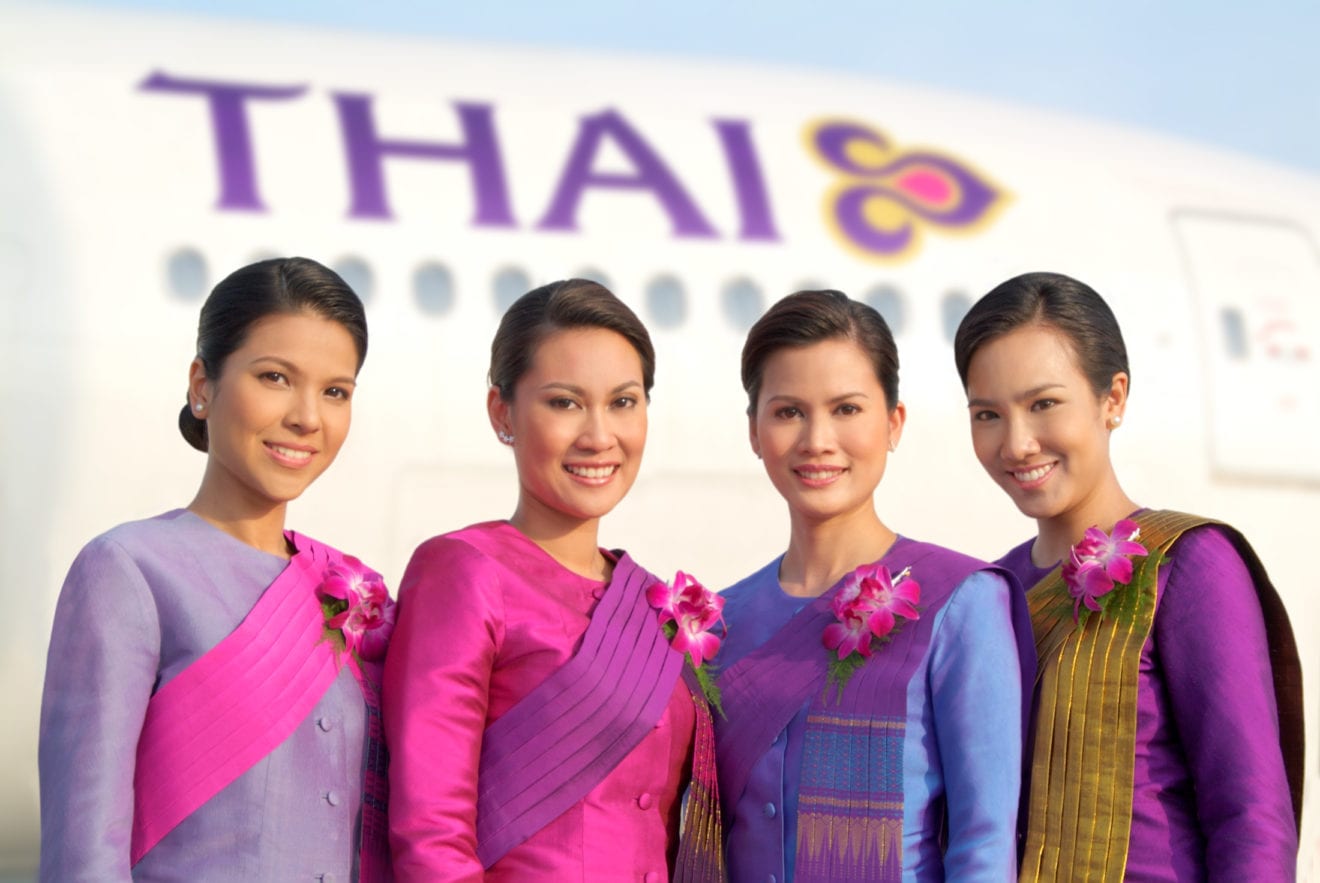
    As of December 1st, Thai Airways will again offer daily direct passenger flights between Brussels Airport and Bangkok, the capital of Thailand. This important destination, offered before the covid pandemic, is an important addition to Brussels Airport’s intercontinental network. As a Star Alliance airline, Thai Airways strengthens Brussels Airport’s role as a European hub. Thailand remains an important tourist destination that is now once again directly accessible to Belgian passengers.

    After a four-year hiatus in the wake of the covid pandemic, Brussels Airport may once again welcome Thai Airways. This Star Alliance airline was already operating at Brussels Airport until before the covid pandemic and now chooses Brussels Airport again as their hub within the Benelux.

    “It is great news to welcome Thai Airways back to Brussels Airport. This daily direct connection to Bangkok strengthens our position as a European hub and offers our passengers even more travel options to Asia. For Thai passengers too, our airport offers an ideal gateway to the rest of Europe. We look forward to a great collaboration,” says Arnaud Feist, CEO of Brussels Airport.

    As from 1 December 2024, Thai Airways will immediately start with a daily flight to Bangkok. The route will be flown with a Boeing 787-8, one of the most efficient aircraft on the market both in terms of emissions and noise.

    For Brussels Airport, this offers an important addition to its intercontinental network as a major destination, both for tourism as for business travel. As a Star Alliance airline, Thai Airways is also strengthening its Star Alliance hub at Brussels Airport with home carrier Brussels Airlines. This will reconnect Thai Airways directly to the heart of Europe, with all its European and international institutions and the network offered by their Star Alliance partners at Brussels Airport to the rest of Europe and beyond.

  • Auto distributor Tasco to begin assembling

    Auto distributor Tasco to begin assembling

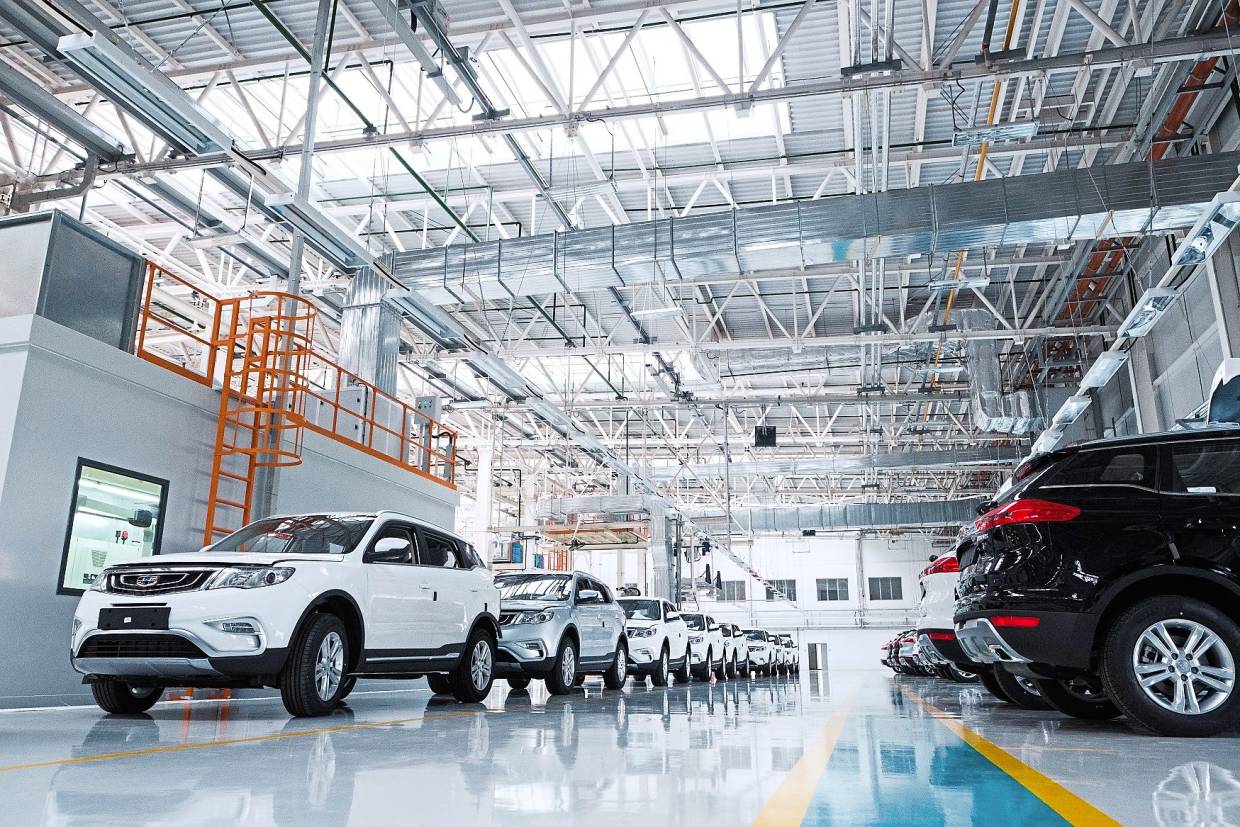
    Tasco, a distributor for 14 auto brands, plans to branch into car assembling, and will launch its first products next year.

    At the annual general meeting last week, its management told shareholders about the plan without disclosing what brand or brands it plans to assemble.

    A person familiar with the matter told VnExpress that Tasco’s plan “might not necessarily be to assemble passenger cars.”

    Pham Van Dung, chairman of subsidiary Tasco Auto, said the company wants to work with a global top 10 auto producer.

    The partner is already selling “successfully” in Vietnam, he said.

    The products would be sold not only in Vietnam but also in markets with which it has free trade agreements, he said.

    Tasco Auto used to be Savico Holdings until its acquisition by Tasco in 2022.

    It has 84 dealerships nationwide that distribute Toyota, Ford, Honda, Mitsubishi, Volvo and other vehicles.

  • Imported Thai fruit prices plummet on rising supply

    Imported Thai fruit prices plummet on rising supply

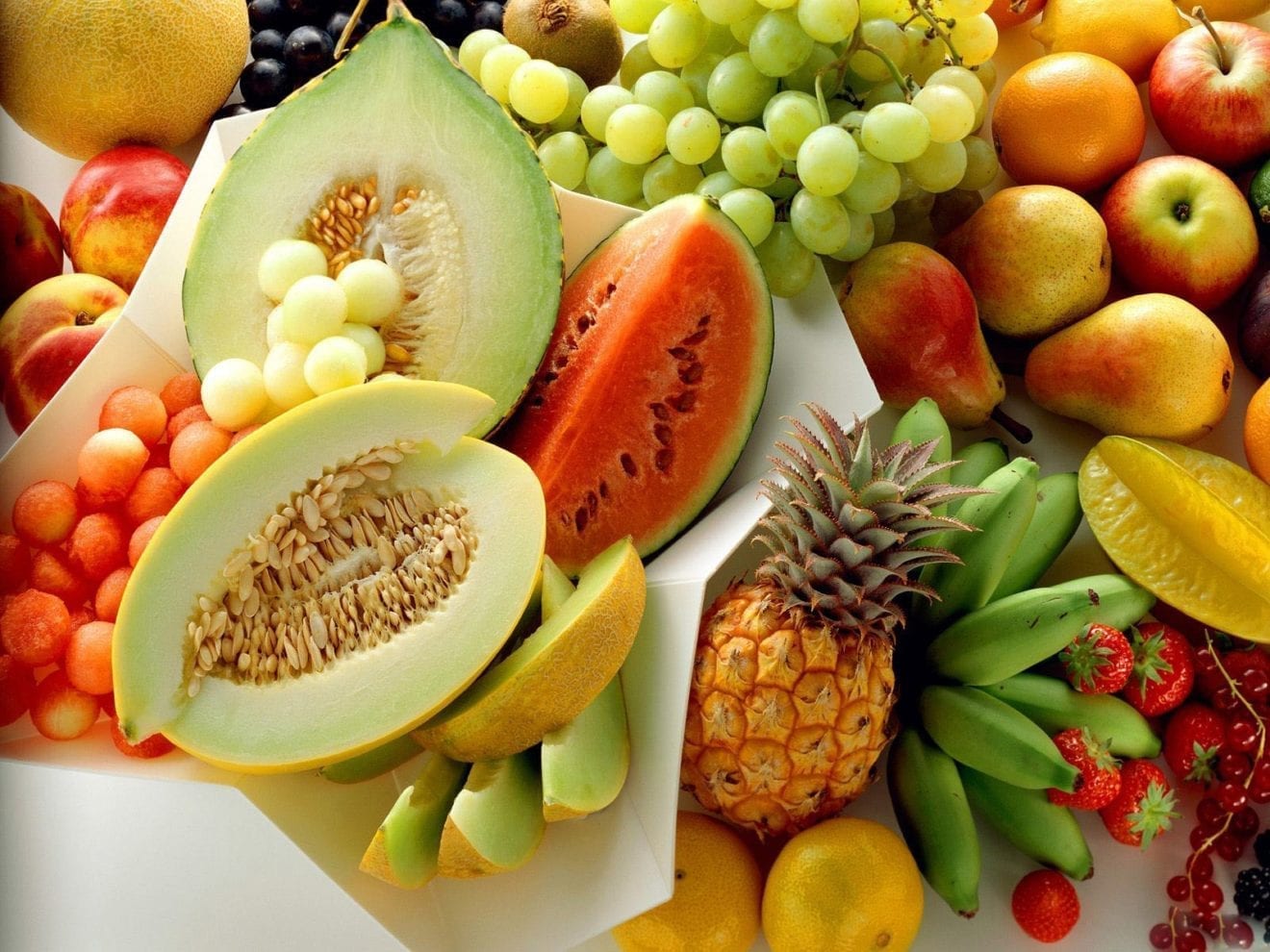
    Mangosteen, mini durian, snake fruit, and rambutan imported from Thailand are 30-40% cheaper than a year ago since supply is high.

    Loan, who runs a shop that sells imported fruits in HCMC, said Thai fruits have never been as cheap as they are this year.

    Mangosteen and langsat are sold at VND55,000-60,000 (US$2.16-2.36) per kilogram, and rambutan at VND45,000-60,000, all 30-40% less than a year ago, she said.

    Lan, a fruit merchant at the city’s Ba Chieu Market, said the prices of premium products such as Thai snake fruit and mini durian are also down 40%.

    Snake fruit sells for VND60,000-70,000 and mini durian for VND60,000-130,000, she said.

    “This year Thai fruits outcompete Vietnamese ones in both quality and price.”

    Many kinds of Thai fruits are being sold in large quantities at wholesale markets in HCMC’s Thu Duc City and Hoc Mon District.

    Thanh, an importer in An Giang Province, said the supply of Thai fruits has doubled from last year due to bountiful harvests, causing their prices to fall sharply.

    The mangosteen, langsat and rambutan from that country are of higher quality this year, while Vietnamese crops have suffered from a poor harvest, he said.

    This year, mangosteen production in Binh Duong Province, one of the main growers, is estimated to have halved from a year ago, according to local farmers.
    Durian production in the Mekong Delta has declined by 20-40% due to prolonged dry weather and scorching temperatures.

    Farmers have also been shifting away from rambutan in recent years due to its low profitability.

    This year, shipping costs have decreased by 20-30% from last year, Thanh said. Many importers have begun to transport fruits from Thailand by road through Cambodia to lower costs, he added.

    In the first four months of 2024, Vietnam imported $643 million worth of fruits and vegetables, which was up 15% year-on-year.

    Thailand accounted for $13.3 million, marking a 5% increase from last year’s period.

  • Thailand heatwave gives Vietnam edge in durian exports to China

    Thailand heatwave gives Vietnam edge in durian exports to China

    Thai industry insiders say the ongoing heatwave in Thailand might reduce durian production, allowing Vietnam to increase its supply to China.

    A heatwave in April and May reduced Thailand’s harvest, which normally commands higher prices than its Vietnamese peers.

    In April the country recorded a temperature of 44.2 degrees Celsius, compared to the all-time record of 44.6 degrees last year. So far this year Thailand has recorded 61 people dying over heatstroke, higher than the total number in 2023.

    High heat causes the skin to crack or the fibers to dry out in some durians, Sam Sin, development director at S&F Produce Group, a Thai firm that exports durian to China said.

    In China’s Zhejiang province, fruit importer Huang Dapeng mentioned in a WeChat forum that some durians were becoming “overheated,” leading to their sale at prices below the market rate.

    Farmers reported that the heat is causing durians to ripen more quickly, preventing them from reaching their full size and reducing their market value.

    According to China’s General Administration of Customs, in April, China’s import price for Thai durians was US$5.80 per kilogram, marginally higher than the overall average of US$5.38 per kilogram. In contrast, Vietnamese durians were priced at US$4.22 per kilogram.

    Thai durians exported to China in the first four months of 2024 had lost 49% of their value over the same period last year.

    Another concern for Thai durian growers is drought, which could reduce the yields.

    The serve weather condition may reduce Thailand’s durian production this year by 42%, or around 540,000 tons, the Nation quoted Aat Pisanwanich, an expert on international economics and adviser to Intelligent Research Consultancy as saying.

    Vietnam gains on Thailand

    Drought and heatwaves increase durian production costs in Thailand, as farmers face additional expenses to transport water to their farms to sustain their durian trees.

    Conversely, Vietnamese exporters, who gained permission to sell fresh durians in China about three years ago, benefit from cost savings by shipping the fruit across a single land border.

    This logistical advantage results in lower prices for Vietnamese durians. In April, China’s import price for Vietnamese durians was 27% lower than that of Thai durians, at $4.22 per kilogram, according to data from China’s General Administration of Custom

    In the first quarter of this year, Vietnam exported 36,800 tonnes of durian to China, compared to just 17,900 tonnes from Thailand, official data show.

    Thailand maintained a 66% market share in China during the first four months of this year. However, according to Chinese customs data, Vietnam’s share by value rose by 82% in the period.

    Dang Phuc Nguyen, general secretary of Vietnam Fruits & Vegetables Association, said that farmers in the southern region have successfully applied new techniques in growing durian.

    “Durian is a strong advantage for Vietnam in competing for the China market. There are times when Vietnamese sellers are the only ones with supply”, he said.

    Last year China bought $2.1 billion worth of durian from Vietnam, but the figure can reach as high as $3 billion this year, he added.

  • Rubber export value rises 14%

    Rubber export value rises 14%

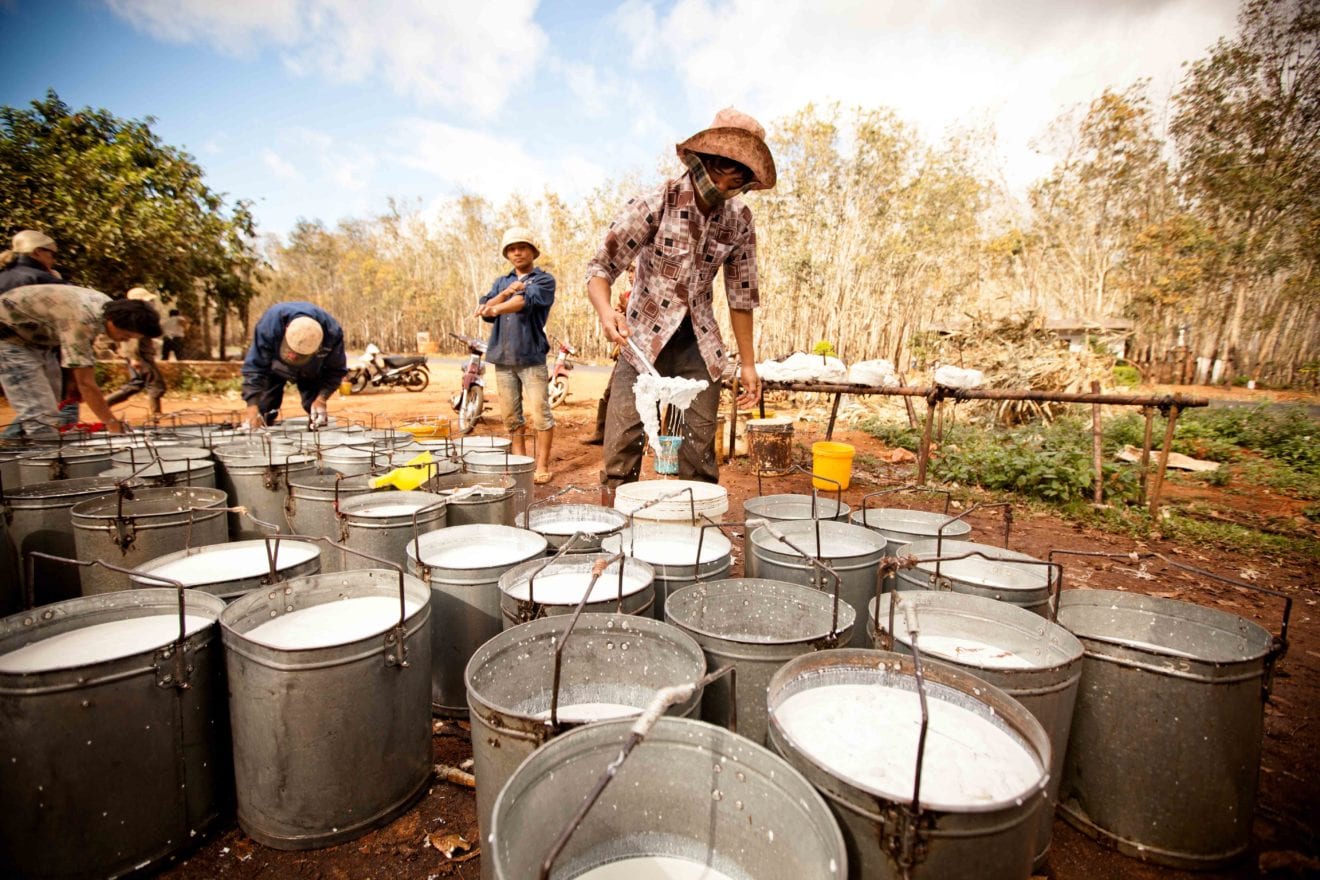
    Vietnam exported 499,000 tons of rubber for $743 million in the first 4 months of this year, up 6.4% in volume and 14% in value.

    China remained the largest consumer of Vietnamese rubber, accounting for 80% of the country’s total export volume, followed by India.

    The association said that with the recovery of the global automobile and tyre industries, especially in China, Vietnam’s rubber exports will likely enjoy favorable conditions and are expected to surge in the second quarter.

    The association’s general secretary Vo Hoang An said there remained room for Vietnam to increase its exports of rubber materials, as the country can produce 1.3 million tons of rubber latex annually but the local rubber processing sector only needs over 300,000 tons.

    Under a strategy to develop plant cultivation through 2030, rubber yield will be raised to 1.8-2 tons per hectare.

    According to figures from the General Department of Customs, Vietnam exported 2.14 million tons of rubber last year, earning $2.89 billion. The figures represented a year-on-year increase of 0.04% in volume but a decline of 12.7% in value.

    Rubber exports are forecast to reach US$3.3-3.5 billion this year, said the Vietnam Rubber Association.

  • Thailand targets $3.5B durian exports in 2024

    Thailand targets $3.5B durian exports in 2024

    Thailand is poised to export approximately one million tonnes of durian, valued at an estimated 130 billion baht ($3.5 billion) this year, according to Thai PBS World.<

    In line with Thai Prime Minister Srettha Thavisin’s directives, the Ministry of Agriculture and Cooperatives is tasked with drafting regulations to prevent the sale of unripe or inferior durians.

    This includes setting dry weight standards for various durian varieties: 32% for Monthong, 30% for Chanee, and 28% for Kra Dum, as detailed by Chai Wacharonke, a spokesperson for Srettha.

    The initiative aims to discourage the premature harvesting and selling of durians, thereby improving the fruit’s quality and export competitiveness, said Chai.

    Furthering its commitment to quality and market stability, Thailand recently signed a memorandum of understanding with China to promote and secure stable prices for tropical fruit exports from Thailand to China, the English platform of the Chinese state news agency China News Service, reports.

    This agreement facilitates the importation of approximately 20,000 tons of durians and mangosteens, worth over 3 billion baht ($82.44 million), by China from Thailand from April to June this year.

    Durian export, generating 120 billion baht in revenue last year, plays an increasingly crucial role in Thailand’s economy.

    Thailand, producing 900,000 tons of durian annually, exports nearly two-thirds of this output primarily to China.

  • Levi’s opens its largest store in Bangkok

    Levi’s opens its largest store in Bangkok

    Levi Strauss & Co has reopened its 364 sqm store at CentralWorld in Bangkok, marking the brand’s largest location in Thailand.

    Located on the second floor of Bangkok’s mall district Chidlom, the store is home to the country’s second Levi’s Tailor Shop, an alteration, restoration and customisation station helmed by skilled tailoring professionals.

    “Thailand is an important strategic market for Levi Strauss & Co within Southeast Asia, and Bangkok is one of the world’s most popular destinations for international tourists,” said Sameer Koul, general manager for Southeast Asia and country manager for Levi Strauss & Co in Thailand.

    “Levi’s CentralWorld store opens as our largest store in Southeast Asia to date, and represents our commitment to this dynamic market as we continue to build deeper direct connections with both local and international shoppers in Thailand,” he added.

    The expanded store also houses collections that collaborated with key cultural figures from Thai artists, even seasonal exclusives, displayed on the opening day in the Beacon Zone.

    Levi Strauss & Co reopened its Levi’s store in Japan’s Kyoto last month, which features the brand’s NextGen format designed to elevate the shopping experience.

  • Vietnam beats Thailand at durian exports to China

    Vietnam beats Thailand at durian exports to China

    Vietnam has surpassed Thailand as the top durian exporter to China, shipping 32,750 tons in the first two months of 2024.

    This accounted for 57% of China’s imports, up from 32% last year, according to Vietnam Customs.

    Vietnam’s export of the fruit to China rose by 2.4 times year-on-year.

    Thailand saw its exports plunge by half to 19,000 tons.

    At US$4,916 per container, Vietnam’s export price was almost 20% lower than Thailand’s.

    Dang Phuc Nguyen, general secretary of the Vietnam Fruits & Vegetables Association, said Vietnam’s weather allows durian to be grown all year round.

    It shares a border with China, which offers it an advantage in transportation.

    Farmers have been hiking durian prices in recent months thanks to high demand from China.

    In March the prices of the highest quality Monthong variety in the Mekong Delta were up 15% from a year earlier to VND218,000-230,000 ($8.7-9.2) per kilogram.

    Vietnam’s durian exports are expected to top $3.5 billion this year, up 66% from last year.