Retail News CRM

Tag: uber

  • Uber Eats leaving Hong Kong at the end of 2021

    Uber Eats leaving Hong Kong at the end of 2021

    Food delivery giant Uber Eats revealed on Tuesday it would wind down its Hong Kong operations by year’s end after seeing slower-than-expected growth.

    “Uber Eats has unfortunately not grown as expected in Hong Kong,” the company said in response to a Post inquiry. “This decision has been made independent of the global pandemic, and is in line with our broader strategy on Uber Eats.”

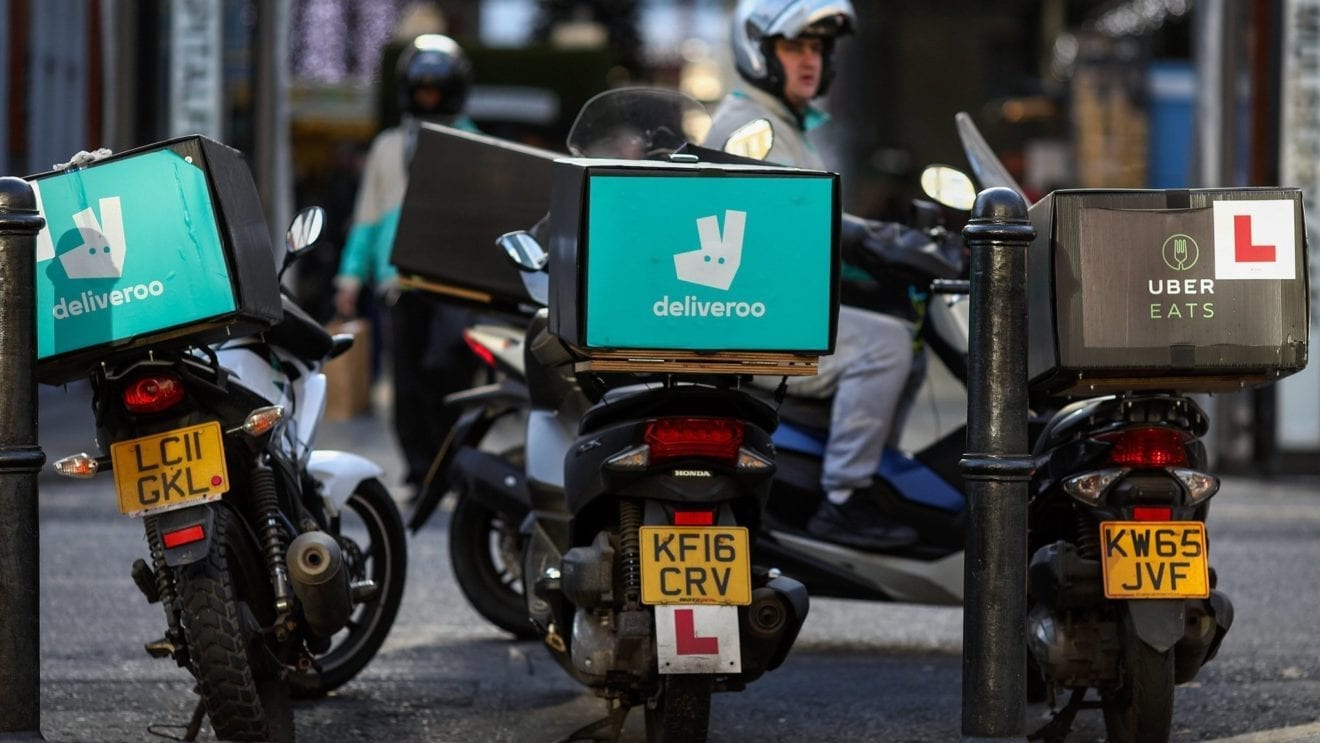
    One of the city’s three main food delivery platforms – along with Deliveroo and Foodpanda – Uber Eats launched in Hong Kong in October 2016 and has seen a sharp rise in orders throughout the coronavirus pandemic over the past two years.

    “After five years of partnering with restaurants and delivery people in Hong Kong, we have made the difficult decision to discontinue Uber Eats in Hong Kong on December 31, 2021,” the company said earlier in the day.

    Uber Eats said its priority was now to support its employees, restaurant partners, delivery people, and customers as it moved towards shutting down, but added it was “more committed than ever” to growing its ride-hailing services in the city.

    “We will keep investing and serve more riders and drivers in coming years by bringing the very best technology to Hong Kong,” the company, which operates in a legal grey area in the city, said.

    The spokesman said the company would continue providing support to customers and partners until the end of January.

    Uber Eats employs 5,000 delivery workers, some of whom signed up after losing their jobs amid the pandemic, and its service covers 16 of the city’s 18 districts.

    In July, Uber Eats launched a campaign in support of the small and medium-sized restaurants that use its platform, snagging celebrity endorsements from singers Alfred Hui and Joyce Cheng.

    In recent months, with almost no local transmission of the coronavirus, Hong Kong’s restaurant industry, along with other businesses such as hotels, have seen signs of recovery, and bookings are healthy for the year-end holiday season.

    Although social-distancing restrictions limiting the number of people permitted at venues such as bars and restaurants remain in place, about a third of the city’s 16,000 restaurants can now seat up to six per table, as long as diners have received at least one dose of a vaccine and use the government’s “Leave Home Safe” risk-exposure app.

    The latest data from SevenRooms, a booking platform used at more than 350 of Hong Kong’s high-end restaurants, showed people were dining out and spending more this year when compared with two years ago, before the pandemic hit.

    Earlier this month, Foodpanda couriers, upset with a cut to their delivery fees and other issues, went on strike for two days.

    The strike ended after the company agreed to make changes to its mobile app and fee calculation system as well as look into other demands

  • Uber To Halt App In Brussels, Belgium From Friday After Court Ruling

    Uber To Halt App In Brussels, Belgium From Friday After Court Ruling

    Uber Technologies Inc. said it would halt operations in Brussels from Nov. 26 after a court ruled that a 2015 ban on private individuals offering taxi services also applies to professional drivers.

    Uber said the decision by the Brussels Appeals Court on Wednesday will affect around 2,000 drivers, and it urged the Belgian government to quickly change taxi service laws.

  • Crypto Platform Zipmex Announces Senior Hires

    Crypto Platform Zipmex Announces Senior Hires

    The Singapore-headquartered exchange will begin scaling up operations with the appointment of a new COO and CFO.

    Zipmex has appointed Uber’s former APAC head of central operations, Scot Cheung, as chief operating officer (COO) and venture capitalist and finance veteran Nicolas Keravec as chief financial officer (CFO), the digital assets exchange announced in a statement on Thursday.

    Cheung brings more than 12 years of experience in helping companies scale and expand worldwide, having worked in Hong Kong, Shanghai, Seoul, Singapore, and London, including over 7 years at Uber.

    Kerevac has over 15 years of cross border experience in driving technology-focused and scalable business models and was most recently managing director and group CFO at Rocket Internet (Asia).The appointments will allow Zipmex to strengthen its presence in Singapore, Australia, Thailand and Indonesia through strategic partnerships, develop its suite of digital assets-related products and offerings, and build its technology infrastructure, the announcement said.

    Cheung will focus on growing the platform in Australia, Zipmex’s newest market, while Kerevac will focus on capital deployment and expansion plans in the platform’s markets.

    Launched in 2019, Zipmex has over $1 billion in transaction volume on its platform. Earlier this year, the company announced that it raised $41 million in a Series B funding round with co-investors such as Krungsri Finnovate, Plan B Media and MACO Thailand.

  • Uber, Carrefour Expand Partnership To Speed Up Deliveries In Paris

    Uber, Carrefour Expand Partnership To Speed Up Deliveries In Paris

    U.S.-based ride-hailing app owner Uber Technologies and Europe’s largest retailer Carrefour are to launch a new rapid grocery delivery service in Paris, extending their 18-month partnership, the two companies said on Tuesday.

    Carrefour Sprint will offer a 15-minute grocery delivery service to Parisians exclusively via the Uber Eats mobile app from nine “dark stores” – shops closed to customers where workers prepare orders for delivery – operated by Carrefour’s partner Cajoo.

    Earlier this year, the French retailer agreed to take a minority stake in the newly founded start-up Cajoo, which operates “dark stores” across the country.

    Established retailers and food deliverers face intense competition from a crop of newer, well-funded start-ups running networks of “dark stores” that can dispatch groceries ordered on a smartphone app to the doorstep within minutes.

    “Over the past 18 months people have increasingly come to expect quick and reliable delivery … in Europe alone we’ve seen a triple-digit increase in demand for grocery delivery,” Eve Henrikson, Regional General Manager, Uber Delivery EMEA, said in a statement.

    Uber and Carrefour are already offering 30-minute deliveries in France from Carrefour’s almost 2,000 shops available on Uber’s app under a deal agreed last year.

    Both companies have also separately struck deals to speed up delivery with other market players like Britain’s Deliveroo and France’s supermarket chain Casino.

    Uber and Carrefour plan to expand the 15-minute service to other major French cities such as Lyon, Bordeaux, Toulouse, Lille and Montpellier in coming weeks, they said.

  • Uber CEO Makes Deliveries For Uber Eats In San Francisco

    Uber CEO Makes Deliveries For Uber Eats In San Francisco

    Uber CEO, Dara Khosrowshahi, delivered food to people’s doorstep in San Francisco for those ordering from Uber Eats. He completed 10 trips and managed to rake in $98.91. He tweeted about this from his personal handle saying “Spent a few hours delivering for @UberEats. 1. SF is an absolutely beautiful town. 2. Restaurant workers were incredibly nice, every time. 3. It was busy!! – 3:24 delivering out of 3:30 online. 4. I’m hungry – time to order some”

    While it was great to see the CEO of the company getting into the groove and making deliveries, Twitter absolutely erupted calling this a ‘PR stunt’

    User Dan Skelley who has been the most vociferous of the lot in calling it a PR stunt questioned the stats presented. He said “Let’s discuss ur BOGUS stat page. U did 10 orders ON A BIKE in 3 hrs 24 min. First, U can’t get 45pts for 10 trips. Max is 30. U imply 1ride/18 min incl travel time to the pickup with no waiting. Short travel time EVERY time to perfect dropoff EVERY time + only 6 min of downtime”$

    Twitterati Brice Sopher too spoke out about the experience saying “Wow what a surprising conclusion that you, the ceo of Uber, had a great experience working this job. Now try doing it as your only source of income.

    There were many such replies questioning this exercise by the Uber CEO, suffice to say, that though it was all well-intentioned, there’s no wondering how social media will react to it.

  • Uber App In U.S. To Enable Users To Book COVID-19 Vaccines And Rental cars

    Uber App In U.S. To Enable Users To Book COVID-19 Vaccines And Rental cars

    Uber Technologies Inc said on Wednesday it was launching new features in its app to allow U.S. customers to book COVID-19 vaccine appointments and reserve rental cars. Customers would be able book an appointment at a Walgreens pharmacy to receive a vaccine and an Uber ride to travel there, the company said in a product presentation.

    The feature, which expands an Uber and Walgreens partnership announced in February, reflects the wider availability of COVID-19 vaccines in the United States, where every state has opened up vaccinations to all adults.

    For Uber, more vaccinations mean a quicker return to pre-pandemic travel and higher revenue, which has tumbled during the health crisis. Business has already begun to improve with March the best month since the pandemic’s full force was felt.

    Sundeep Jain, Uber’s chief product officer, said the company was “evaluating opportunities” to expand the vaccine program to other countries.

    The company also announced partnerships with Avis Budget Group Inc, Hertz and other vehicle rental agencies.

    From Wednesday, U.S. customers can book rental cars through the Uber app, with Uber offering up to 10% of the rental cost as a credit to the user to spend on other Uber services.

    In May, users in Washington D.C. can have their rental car delivered to and collected from their home, after paying a fee to Uber, which will rollout the service nationwide this year.

    Jain said users will be able to handle most rental car paperwork digitally, but declined to comment on the financial details of the partnerships.

    Uber’s smaller rival Lyft Inc already offers car rentals in partnership with Sixt SE.

    Uber also said it would expand an option to reserve rides in advance to more U.S. and European cities and allow customers to book and collect food delivery orders during a ride-hail trip.

  • Uber Reduces Losses On Food Delivery Expansion, Modest Uptick In Ride Bookings

    Uber Reduces Losses On Food Delivery Expansion, Modest Uptick In Ride Bookings

    Uber Technologies Inc on Wednesday posted a narrower loss as its ride-hail and delivery businesses rebounded slightly from pandemic lows, and the company said it was well on track to reach its goal of achieving an adjusted profit by year-end.

    Uber said customers in cities’ outer boroughs and suburbs had returned to its rides platform during the quarter.

    Nearly complete recoveries in markets including Brazil and Australia point to leisure travel to restaurants and cultural events bouncing back quickly once the pandemic ends, with business travel returning more slowly, as many employees continue to work from home.

    Shares fell 3% in after-hours trading after gaining around 6% during the day. Shares had risen after smaller ride-hail rival Lyft Inc said on Tuesday it might become profitable during the third quarter, three months ahead of a previous goal, thanks to a rebound and cost cuts.

    Uber reported a loss on an adjusted basis before interest, taxes, depreciation and amortization of $454 million, significantly less than analysts’ average expectations for a $514 million loss, according to Refinitiv data.

    Uber cut costs throughout 2020, including reducing staff by nearly 30% from the beginning of the year. A focus on its core rides and food delivery business and divestments of ancillary units will allow Uber to emerge from the pandemic a slimmer company.

    Adjusted EBITDA, which excludes the cost of the company’s extensive stock-based compensation and other potentially significant items, is the profitability metric Uber uses.

    Uber reported $3.17 billion in total revenue in the months from October through December.

    Fourth-quarter mobility revenue, largely comprised of rides, declined by 52% from last year, but at $1.47 billion was up 8% on a quarterly basis despite new lockdown measures in the United States, Europe and the Middle East.

    The company said it could not predict the quarter in which ride-hail volumes might return to pre-pandemic levels. Airport travel, which made up 15% of gross bookings before the pandemic, will take longer to return than leisure and business trips, Uber said.

    It expected first-quarter adjusted EBITDA to be flat or down compared with the fourth quarter.

    Orders at Uber’s food delivery platform, Uber Eats, further grew during the fourth quarter, as many countries and U.S. states issued new lockdown orders, closing restaurants and prompting many people to order in.

    Delivery revenue more than tripled from last year and at around $1.36 billion, grew 19% compared with the third quarter.

    Uber has expanded its footprint in the competitive space and acquired smaller food-delivery rival Postmates for $2.65 billion and alcoholic beverage delivery service Drizly for $1.1 billion.

    Both deals were largely stock-based, with the Drizly deal expected to close later this year.

    Uber also said it had further lowered costs in the fourth quarter, with total costs and expenses dropping 14% in that period.

    Following a directive by Chief Executive Dara Khosrowshahi to focus on the company’s core businesses, Uber has sold two cash-burning units.

    The company in December sold its self-driving Advanced Technologies Group (ATG) in a $4 billion equity deal at a steep drop in valuation. Khosrowshahi at the time said the deal would accelerate Uber’s profitability goal.

    The same month, Uber also handed over the keys to its air taxi business Elevate, without disclosing the terms of the deal.

  • Uber Sells Its Controversial Self Driving Unit To Aurora For $4 Billion

    Uber Sells Its Controversial Self Driving Unit To Aurora For $4 Billion

    Uber’s self-driving car unit which incorporated Otto, the self-driving trucking start-up founded by Waymo’s co-founder Anthony Levandowski was at the heart of its feud with Alphabet. It was also a long term project for Uber founder Travis Kalanick. Uber now, has sold its Advanced Technology Group to self-driving start-up Aurora for $4 billion.

    Uber’s deal with Aurora values the start-up at $10 billion but it also comes with a few riders. Uber makes an investment of $400 million into the start-up, it gets a 26 percent stake in the company and its CEO Dara Khosrowshahi gets a seat on its board. This deal entails Aurora taking over Uber’s self-driving project in its entirety and continuing that work, presumably with Uber being one of the prime customers for the technology.

    This is neat inflation of the valuation of Aurora which was previously valued at $7.25 billion over 20 months ago with counting the likes of SoftBank, Denso and Toyota as its investors. It is also backed by Amazon, Hyundai and venture capital biggies like Sequoia and Greylock. Suffice to say, it has a hefty tailwind behind it.

    Aurora notably is also a self-driving start-up which was founded by Chris Urmson who was also the leader of Google’s self-driving car project which turned into Waymo. He was, ironically, Levandowski’s boss. He exited Google in an amicable way, unlike Levandowski who left disgruntled as Urmson was made the head of the project.

    Aurora was founded in 2017 after he left Google along with Sterling Anderson, the former director of Tesla’s Autopilot technology and Drew Bagnell who led Uber’s autonomy and perception tech before the arrival of Levandowski.

    “With the addition of ATG, Aurora will have an incredibly strong team and technology, a clear path to several markets, and the resources to deliver,” Chris Urmson, co-founder and CEO of Aurora, said in a statement. “Simply put, Aurora will be the company best positioned to deliver the self-driving products necessary to make transportation and logistics safer, more accessible, and less expensive.

    “Few technologies hold as much promise to improve people’s lives with safe, accessible, and environmentally friendly transportation as self-driving vehicles,” said Khosrowshahi in a statement. “For the last five years, our phenomenal team at ATG has been at the forefront of this effort-and in joining forces with Aurora, they are now in pole position to deliver on that promise even faster.”

    This marks an end to the contentious and safety riddled self-driving project that Uber pursued since 2015. Levandowski and the Otto acquisition trigged arbitration requests from Google for Levandowski and Lior Ron which were denied. By 2017, Waymo had filed a case against Uber for trade secret theft and patent infringement, but this case was settled by 2018 when Khosrowshahi was in-charge.

    Despite the lawsuit, Uber pursued the technology. It even wanted to pursue it after the settlement but when one of its test cars with a driver behind it struck and killed a pedestrian, it caused Uber to stop all testing. By 2019, the unit was spun off after getting $1 billion in funding from Toyota, Denso and the Vision Fund by SoftBank.

    Despite this, the Uber ATG group was losing money. In November, the ATG group and other technologies unit which includes Uber Elevate lost $303 million in nine months with the quarter ending September 30, 2020. In its S1 document, it further revealed that $457 million of R&D expense was incurred by the ATG and other technologies group. This was happening at a time where Uber’s core ride-hailing business was ravaged by the pandemic.

    While all this has happened, Anthony Levandowski, whose start-up was a strategic acquisition for Uber’s self-driving overtures for Uber founder and former CEO Travis Kalanick finds himself in jail for 18 months after pleading guilty for theft of trade secrets. In a way, the saga comes a full circle.

  • Uber Seeking Options Including Partial Sale For Uber Elevate

    Uber Seeking Options Including Partial Sale For Uber Elevate

    Uber Technologies Inc is seeking options for its Uber Elevate business, including strategic partnerships or a partial sale, Axios reported on Friday, citing multiple sources.

    The move reflects Chief Executive Officer Dara Khosrowshahi’s obsession with achieving profitability, the report added. Uber declined to comment on the report.

  • Toyota Holds $293 Million Stake In Uber

    Toyota Holds $293 Million Stake In Uber

    Toyota Motor holds a $293 million stake in Uber Technologies, as it partners with the ride-hailing company to further expand into new mobility services, Toyota’s latest corporate governance report released on Wednesday showed.

    The Japanese automaker has also unloaded shares in some of its suppliers, adjusting its portfolio to reflect partnerships with rival automakers and technology firms as it transforms into a mobility services company, the report showed.

    Reporting the total size of its stake in Uber, which became a listed company last year, Toyota said it held 10.25 million shares valued at 31.15 billion yen ($292.46 million) as of March 30. That is around 0.6% of Uber’s outstanding shares, according to a Reuters calculation.

    Toyota, one of the world’s biggest automakers, said it had reduced its shareholdings in 24 companies and increased them in 10, including two listed companies. Lufthansa shares down as investor battles bailout

    Lufthansa shares slumped Monday morning after CEO Carsten Spohr said the company would seek to avoid a grounding and insolvency in a battle with the airline’s biggest shareholder over the terms of a 9-billion-euro bailout. Ciara Lee reports

    In the past year, it took a stake in rival Suzuki Motor Corp as the pair deepen cooperation around the development of lower-emission vehicles.

    Toyota sold its stakes in cutting tool manufacturer OSG Corporation, Nippon Steel Corporation, automotive lights and interior mirrors maker Ichikoh Industries, and transmission belt maker Mitsuboshi Belting.

    “If Toyota determines a shareholding is no longer meaningful or the meaning of a shareholding has been diluted due to changes in a business environment or other reasons, (it) will proceed with the sale of such shares,” the automaker said in the report.

    Toyota currently has an interest in 174 firms, including 65 listed companies, compared with 200 firms in 2015, of which 80 were listed companies.

    Toyota’s biggest shareholders remained the same, although investors including Nippon Life Insurance Co, JPMorgan Chase Bank N.A. and State Street Bank and Trust Company slightly increased their stakes, the latter two through proxy Mizuho Bank.

  • Uber Launches Hourly Ride Booking Option In Some U.S. Cities

    Uber Launches Hourly Ride Booking Option In Some U.S. Cities

    Uber Technologies Inc on Friday said it would offer rides by the hour in some U.S. cities, a feature aimed at helping Americans with essential trips during the coronavirus pandemic.

    The option, which is already available in a handful of cities in Australia, Africa, Europe and the Middle East, will cost $50 per hour. Fares for regular Uber rides are generally based on the level of demand and the trip distance.

    Uber said it decided to expand the hourly feature to the U.S. after riders requested an option for extended trips during the pandemic to avoid exposure to different drivers and vehicles when taking multiple trips in a confined time period.

    The company said it expected the option to be used for trips to grocery stores, pharmacies and doctors’ appointments, but would monitor use going forward.

    A couple of globetrotters are stopped in their tracks by coronavirus after seeing 50 countries on five continents. The two have been stuck in their car on a Florida shopping center parking lot for two weeks.

    Hourly bookings will be available in Atlanta, Chicago, Washington, Dallas, Houston, Miami, Orlando, Tampa Bay, Philadelphia, Phoenix, Tacoma and Seattle beginning June 2, with expansions planned in the following weeks.

    Since May 18, Uber requires riders and drivers around the world to wear face coverings or masks and allows both parties to cancel trips and report users who do not comply with the measure. Repeated failure to comply can lead to account deactivation for both riders and drivers.

  • Uber Resumes Operations In Green And Orange Zones

    Uber Resumes Operations In Green And Orange Zones

    The Union Home Ministry has announced a considerable number of relaxations starting today in the movement of citizens across the country. These relaxations are valid across all 3 zones – Green, Orange and Red from 7pm to 7am. However, the Government has clarified that Cab services are allowed only in Green and Orange zones and in compliance with this Cab aggregator, Uber, has said that it is resuming services in 27 towns and cities panning across these 2 zones. This includes 6 cities in the Green zones and 21 Orange zone cities.

    To maintain social distancing, it has been recommend not more than two riders should travel at a time, besides the driver and no one should be seated right next to the driver. Green zone cities where services have been resumed include Cuttack, Jamshedpur, Daman, Silvassa, Guwahati and Kochi. 21 Orange zone cities where you can now hail an Uber cab include Amritsar, Asansol, Dehradun, Durgapur, Ghaziabad, Gurgaon, Hubli, Kozhikode, Mangalore, Mehsana, Mohali, Nadiad, Panchkula, Prayagraj, Rakjot, Rohtak, Thiruvananthaouram, Thrissur, Udaipur, Vapi and Vishakhapatnam. Services remain suspended in all cities which fall under the Red zones, however, Uber Essential and UberMedic services will continue to be available for emergency hospital trips.

    Apart from seating, the company has also issued additional instructions to be followed during rides. It is mandatory to wear a face mask and if you need to sneeze or cough, you have to do so into your elbow or a tissue. The rider can either open the windows for ventilation or ask the driver to switch on the A/C in the fresh air mode only. The company has requested the passengers to use digital payments whenever possible and handle their personal luggage and belongings themselves. Importantly it has also added that drivers and riders can cancel trips if they don’t feel comfortable due to safety reasons. In such cases, a full refund of cancellation charges will be provided, if the rider submits a cancellation request through the app.

  • Uber is concentrating on food-delivery, nudges its drivers to do the same

    Uber is concentrating on food-delivery, nudges its drivers to do the same

    Recently, ride-hailing drivers have been losing income as more people stay at home and less people travel due to the public health crisis. Uber has recently started concentrating more of its services on food delivery as demand for this is growing.

    Drivers in the US are encouraged to take on food delivery, even if they hadn’t participated in Uber Eats before. Last week, drivers were sent notifications with instructions on how to access the Delivery view on the app because of an increased demand for food-delivery services.

    In particular, Uber is witnessing a growing number of requests for food delivery in Seattle and San Francisco. According to Uber Eats’ vice president, Pierre-Dimitri, the coronavirus outbreak is starting to affect routines and the changes benefit the food delivery business, so drivers are encouraged to focus on it.

    In addition to that, Uber has been trying to mitigate the effect of the coronavirus on drivers and recently, Uber’s CEO, Dara Khosrowshahi, asked Uber’s drivers and delivery workers to be included in the coronavirus stimulus package, that would make people eligible to receive insurance and up to $1,200 direct deposit from the US government.

  • Minor International’s food division turns a corner while hotels deliver huge profit boost

    Minor International’s food division turns a corner while hotels deliver huge profit boost

    Minor International has boosted its full-year profit by 137 percent, largely due to the consolidation of its recent acquisition, the NH Hotel Group.

    Fourth-quarter profit of US$119.3 million, represented a 569-per-cent increase year on year, but this included a gain on sale of three hotels in the Maldives. Excluding non-recurring items, profit grew 23 percent for the full year and 53 percent for the fourth quarter.

    Minor’s food division, which operates more than 2300 outlets in 26 countries trading under banners including The Pizza Company, The Coffee Club, Thai Express, Bonchon, Swensen’s, Sizzler, Dairy Queen and Burger King, recorded a mild reduction in profit for the quarter, from $8.6 million to $8.2 million.

    “Minor Food continued to invest in its digital capabilities to increase competitiveness and to address the soft market going forward,” the company said in a results release. “Thailand hub’s increased engagement with third-party aggregators (as a complement to its own delivery platform), coupled with continuous new product launches, resulted in much improved same-store-sales.”

    In Australia, new product launches, a digital loyalty program and a partnership with Uber Eats saw same-store sales turn into positive growth.

    “Improving operations during the quarter, together with the consolidation of Bonchon since mid-November, helped offset softer performance in other parts of the operations. As a result, Minor Food’s performance is showing signs of recovery with a lower decline in its net profit in the fourth quarter compared to other quarters in the year,” the company said.

    After the close of the quarter, Minor International announced a plan to privatize.

    Singapore-based BreadTalk Group, which would see it take a 25.1 percent stake in partnership with founder George Quek and his associates.

  • Uber Stops Upfront Ride Pricing In Response To California Worker Law

    Uber Stops Upfront Ride Pricing In Response To California Worker Law

    Uber Technologies Inc on Wednesday informed its California customers that it would switch to providing estimates as opposed to fixed prices for its rides in response to a new law that makes it harder to qualify its drivers as contractors. In an email sent out to riders and seen by Reuters the company said the final price would now be calculated at the end of a trip, “based on the actual time and distance traveled.”

    “Due to a new state law, we are making some changes to help ensure that Uber remains a dependable source of flexible work for California drivers,” the company said in the email.

    The change applies to all private rides, while upfront prices will continue to be provided for shared, or pooled rides.

    The email included a picture displaying an example of a ride request on the Uber app. It showed a $27 to $36 range for an UberX ride, the company’s most popular private ride option.

    Uber in a blog post on Wednesday said the step was the result of changes to its fare structure, with drivers still getting paid per mile and minute, but the company now taking a fixed 25% cut from drivers. That service fee previously fluctuated. Uber on Wednesday also told customers it discontinued some of its reward benefits for frequent riders. The company hopes the changes will bolster its argument that Uber is merely a technology platform connecting riders with drivers, not a transportation company.

    The California law strikes at the heart of the “gig economy” business model by making it harder for companies to qualify their workers as contractors rather than employees. The measure went into effect on Jan 1. By classifying contractors as employees, technology companies like Uber, Lyft Inc, DoorDash and Postmates Inc would be subject to labor laws that require higher pay and other benefits, such as medical insurance.

    Uber and Postmates, a courier services provider, in a lawsuit in late December asked a U.S. court to block the law. Uber has repeatedly said that its drivers are properly classified as contractors. Nevertheless, the company has made changes to its driver app in recent weeks, with California drivers now being able to see more information ahead of accepting a trip, including the ride’s likely fare, length and destination.