Retail News CRM

Tag: uber

  • Uber Submits Appeal To Regain London Taxi License

    Uber Submits Appeal To Regain London Taxi License

    Uber submitted an appeal on Friday against a decision by London’s transport regulator to strip the taxi app of its right to operate in one its most important markets, setting up a potentially lengthy legal process during which it can continue to take rides. Last month, Transport for London (TfL) refused to grant the Silicon Valley-based company a new license due to what it called a “pattern of failures” on safety and security, the latest stage of a long-running battle with the authorities.

    Uber, which was also denied a license by TfL in 2017 before a judge restored it on a probationary basis, said it had changed its business model over the last two years and would go further, as it lodged its appeal at Westminster Magistrates’ Court.

    “We are committed to Londoners and are working closely with TfL to address their concerns and requests, as we have since 2017,” said the firm’s Northern and Eastern Europe boss Jamie Heywood. TfL director Helen Chapman said it would now be for a magistrate to decide.

    “We found Uber not fit and proper to hold a new private hire operator’s license on 25 November,” she said in a statement. “We note that Uber has submitted an appeal and it will now be for a magistrate to determine if they are fit and proper.”

    The firm’s roughly 45,000 drivers in London will still be able to take rides until the appeals process is exhausted, which could take months or even years.

    The regulator said in November that unauthorized drivers were able to upload their photos to other Uber accounts so that on at least 14,000 trips a driver other than the advertised one picked up passengers.The Silicon Valley company has run into regulatory barriers and a backlash in several markets, forcing it to withdraw completely from places such as Copenhagen and Hungary.

    In London, black cab drivers who see Uber as a threat to their livelihoods have blocked streets in protest, arguing that they are being unfairly undercut by an inferior service.
  • Uber Stripped Of London Operating Licence

    Uber Stripped Of London Operating Licence

    Uber was stripped of its London operating license on Monday for the second time in just over two years as the city’s regulator said the taxi app was not “fit and proper”, having put passenger safety at risk.

    A change to Uber’s systems allowed unauthorized drivers to upload their photos to other drivers’ accounts, meaning they could pick up passengers as if they were the booked driver, which happened in at least 14,000 trips, Transport for London (TfL) said.

    “It is unacceptable that Uber has allowed passengers to get into minicabs with drivers who are potentially unlicensed and uninsured,” Director of Licensing, Regulation and Charging at TfL, Helen Chapman said on Monday, the day the firm’s license expires.

    The Silicon Valley-based company has 21 days to appeal the decision and can continue to operate throughout the process, which is likely to include court action.

  • Uber Awaits Renewal Decision On Vital London License

    Uber Awaits Renewal Decision On Vital London License

    Uber is still waiting to see whether its license in London, which expires on Wednesday, will be renewed as the regulator, which previously stripped the taxi app of its right to operate in the city, remains tight-lipped about the decision. Transport for London rejected the Silicon Valley company’s license renewal request in 2017 due to failings it said it found in its approach to reporting serious criminal offenses and driver background checks, prompting legal action.

    A judge in 2018 then granted Uber a probationary 15-month license, which expires on Sept. 25, after the company had made several changes to its business model in London, the firm’s most important European market.

    A question put to London Mayor Sadiq Khan from a member of the city’s assembly about the license renewal is still awaiting a reply according to an entry on the London Authority’s website from earlier this week.

    TfL said it does not comment on individual license applications. Uber declined to comment on Friday. Among its options are giving Uber a maximum five-year license, a shorter one, or stripping the firm of its ability to operate, almost certainly prompting an appeals process during which the app would still be able to take rides, as in 2017.

    Benjamin Black, Co-Head of Internet Equity Research at analysts Evercore ISI, told Reuters he thought the firm would retain its ability to operate in London, one of its top five global markets.

    “If they lost the London license, that would be a major blow… but we just don’t see it happening,” he said.

    “Is there going to be another 15-18 month renewal or is it going to be five years? Judging by (ride-sharing firm) Ola coming in and getting a 15-month license, I think they’re going to be on the shorter cycles.”

    The 2017 license loss came just weeks after Chief Executive Dara Khosrowshahi took over and became a test of his ability to assuage regulator concerns as the app faced disputes with taxi firms and the authorities in different markets.Mayor Khan was critical of Uber just weeks ago and said companies must play by the rules.

    “You will know my track record which is standing up to the big boys, and they are boys, and make sure everyone plays by the rules,” he told listeners to a phone-in on LBC radio. “I don’t care how many lawyers you employ or how big your PR budget.”

  • Uber now uses smartphones to detect possible car crashes in the US

    Uber now uses smartphones to detect possible car crashes in the US

    Uber started testing an interesting safety feature last year that would allow its team to detect unexpected long stops or possible crashes using a smartphone’s GPS and other sensors like gyroscope and accelerometer.

    One year after it debuted the beta test, Uber announced RideCheck is now live in the United States. The new feature is available for all Uber riders and drivers in the US, but the company has plans to expand it to more countries in the future.

    Since every trip is on the map, Uber knows where and when you’re riding and who’s driving you to your destination. Using this particular data and other sensors in drivers’ smartphones, Uber’s technology can detect possible crashes or if a trip goes unusually off course.

    Also, when a RideCheck is initiated, both a rider and driver will receive a notification asking if everything is alright. Through the app, either of the two can inform Uber that all is well, or take other actions like using the emergency button or reporting the issue to the Safety Line.

    Uber says that in the event of a crash, it can also help expedite the insurance claims process. Also, the company promises improvements to the current technology through additional scenarios to RideCheck.

  • Uber Freight Launches In Germany

    Uber Freight Launches In Germany

    U.S. ride-hailing company Uber is launching a freight platform in Germany, taking on local technology startups in a race to grab a share of Europe’s $500 billion trucking market.

    Germany will be Uber Freight’s second European market to go live after the Netherlands, an executive told Reuters, adding that the firm would consider expanding elsewhere in Europe once the new German operations were running smoothly.

    In the United States, Uber Freight connects 48 states and generates more than $125 million in quarterly revenues.

    Uber’s bid, under its founder Travis Kalanick, to establish its ride-hailing services in Germany met intractable opposition from taxi companies, politicians and the courts.

    Under Kalanick’s successor, Dara Khosrowshawi, Uber has consulted German officials and industry to win support for its freight business, said Daniel Buczkowski, Uber Freight’s head of European expansion.

    “After the change in leadership, we really engaged in doing the right thing,” Buczkowski, who is German, told Reuters.

    Uber will compete with local players, including Berlin-based startup sennder, which has raised $70 million from private equity house Lakestar and other investors, and which already has a wider presence in Europe.

    Uber and sennder aim to digitalize an industry dominated by firms running 10 or fewer trucks and to improve efficiency – trucks are empty for 21% of the distance they travel. Real-time tracking of consignments and payment automation will make life easier for shippers and hauliers, tech platforms say.

    “The key to getting a lot of value out of this industry is understanding how to use those empty kilometers,” said Nicolaus Schefenacker, a co-founder of sennder, which was set up in 2016.

    He told Reuters that, as its network expanded, it was easier to model and forecast traffic flows to ensure consignments found the right truck at the right price.

    Unlike Uber’s ride-hailing app or its food-delivery service, Uber Freight will operate as a middle-man in a market with an established pricing structure.

    It will make money from the margin between the price paid by the shipper and the amount it pays on to the trucker, insulating it from the type of complaints made by many ride-hailing drivers who say they struggle to earn a decent income.

    Given the fragmented nature of the freight forwarding market, a single player was unlikely to dominate but regional players might emerge, said one investor who backed sennder.

    Uber, with a stock market capitalization of $74 billion, aims to adapt its model used in the United States, where many truck drivers are sole operators, to Europe, where small, family-run firms dominate.

    The apps still face challenges, ranging from environmental issues confronting an industry that runs on diesel to ensuring drivers are not overworked with long hours on the road.

    The industry also needs new recruits, with the World Bank estimating two-thirds of German drivers will retire over the next decade, threatening a shortage in capacity for an industry that handles more than 70% of freight.

    “The problem that we see today is that we are not using the assets that we have efficiently,” Buczkowski said, adding this was what apps like Uber Freight would seek to address in Germany, and in other European nations in future.

  • Uber Unveils Next-Generation Volvo Self-Driving Car

    Uber Unveils Next-Generation Volvo Self-Driving Car

    Uber Technologies Inc unveiled its newest Volvo self-driving car in Washington on Wednesday as it works to eventually deploy vehicles without drivers under some limited conditions. Uber said the new production XC90 will be assembled by Volvo Cars in Sweden and have human controls like steering wheels and brake pedals, but also with factory-installed steering and braking systems designed for computer rather than human control.

    Uber Advanced Technologies Group chief scientist Raquel Urtasun showed off the company’s artificial intelligence technology that allows it to drive autonomously for long distances on highways without maps and “on the fly” to plot its course and navigate construction zones.”Our goal is get each one of you to where you want to go much better, much safer, cheaper,” Urtasun said.As the race to push out autonomous cars across the globe heats up, other companies are also working to deploy self-driving vehicles in limited areas.

    Ford Motor Co’s majority-owned autonomous vehicle unit, Argo AI, launched its new fleet of self-driving test vehicles – Ford Fusion Hybrid – in Detroit on Wednesday, expanding to five U.S cities.The No 2 U.S automaker also opened a research centre in Tel Aviv, joining a growing number of major automakers and suppliers setting up shop in Israel’s tech hub.General Motors Co in January 2018 sought permission from U.S regulators to deploy a ride-sharing fleet of driverless cars without steering wheels or other human controls before the end of 2019, but is still struggling to win regulatory approval

    Alphabet Inc’s Waymo unit is operating a robotaxi service in Arizona and said last month it is partnering with Lyft Inc to serve more riders.South Korea’s Hyundai Motor Co and Kia Motors Corp both said they would invest in the self-driving car software startup Aurora and speed up development of their respective autonomous vehicle technologies.Carmakers have struggled to maintain profit margins faced with the rising costs of making electric, connected and autonomous cars.

    As a result, they are setting up alliances and lining up outside investors to combat spiralling development costs.Previously, Uber had purchased about 250 Volvo XC90 SUVs and retrofitted them for self-driving use.The new vehicles – known by the internal code number 519G and under development for several years – are safer, more reliable and will replace the older vehicles in Uber’s fleet “soon,” according to Eric Meyhofer, the head of Uber’s Advanced Technologies Group.”This is about going to production,” Meyhofer said in an interview at an Uber conference in Washington on Tuesday.The new vehicle also has several backup systems for both steering and braking functions as well as backup battery power and new cybersecurity systems.

    Uber is not ready to deploy vehicles without human controls, Meyhofer said.”We’re still in a real hybrid state,” he said “We have to get there and we’re not going to get to thousands of cars in a city overnight. It’s going to be a slower introduction.”The new XC90 vehicles have an interior fish-eye camera to scan for lost items, Uber said.

    They also do not have sunroofs since the self-driving vehicles have large sensors on the roof and are equipped with auto-close doors to prevent an unsafe departure.Uber, which has taken delivery of about a dozen prototypes of the new vehicle, but has not yet deployed them on public roads, said the car’s “self-driving system will one day allow for safe, reliable autonomous ridesharing without the need” for a safety driver.Asked if Uber will deploy self-driving cars without safety drivers in limited areas in the next few years, Meyhofer said: “Yes – way before that.” But he added that Uber wants to be in “the good graces of public trust and regulatory trust” before making the business decision to deploy.In December, Uber resumed limited self-driving car testing on public roads in Pittsburgh, nine months after it suspended the program following a deadly accident in Arizona.In March 2018, authorities in Arizona suspended Uber’s ability to test its self-driving cars after one of its XC90 cars hit and killed a woman crossing the street at night in the Phoenix suburb of Tempe, then Uber’s largest testing hub.

    The crash was the first death attributed to a self-driving vehicle.In March 2019, prosecutors in Arizona said the company was not criminally liable in the crash and would not pursue charges.

    Uber has since ended testing in Arizona, but plans to eventually resume testing in Toronto and San Francisco, Meyhofer said.The death prompted significant safety concerns about the nascent self-driving car industry, which is racing to get vehicles into commercial use.Volvo Cars Chief Executive Hakan Samuelsson said in a statement that “by the middle of the next decade, we expect one-third of all cars we sell to be fully autonomous.”Volvo Cars, which is owned by China’s Geely Automobile Holdings Ltd, will use a similar autonomous base vehicle concept for the introduction of its first commercially available autonomous drive technology in the early 2020s.Volvo and Uber said in 2017 that the rideshare company planned to buy up to 24,000 self-driving cars from Volvo from 2019 to 2021 using the self-driving system developed by Uber’s Advanced Technologies Group.

    An Uber spokeswoman said Tuesday that the company plans “to work with Volvo on tens of thousands of vehicles in the future.”

  • India To Order Taxi Aggregators Like Uber, Ola To Go Electric By 2026

    India To Order Taxi Aggregators Like Uber, Ola To Go Electric By 2026

    India plans to order taxi aggregators like Uber and Ola to convert 40% of their fleet of cars to electric by April 2026, according to a source and records of government meetings to discuss new rules for clean mobility. Uber and Ola, both backed by Softbank Group, would need to start converting their fleet as early as next year to achieve 2.5% electrification by 2021, 5% by 2022, 10% by 2023 before hiking it to 40%, according to the person and the records that have been reviewed by Reuters.

    Some taxi players, like Ola, have previously tried to operate electric cars in the country, but with little success given inadequate infrastructure and high costs.

    New Delhi, however, is looking to push the new policy to boost the adoption of electric vehicles (EVs) as it tries to bring down its oil imports and curb pollution so it can meet its commitment as part of the 2015 Paris climate change treaty.

    Indian think-tank Niti Aayog, chaired by Prime Minister Narendra Modi and which plays a crucial role in policymaking, is working with several ministries on the new policy.

    Neighbouring China, home to the world’s top auto market, is already leading the world in electrification by setting tough EV sales targets for car makers and offering incentives to taxi operators to increase their fleet of clean-fuel cars.

    EV sales in India grew three-fold to 3,600 in the year ended March but still account for about 0.1% of the 3.3 million diesel and gasoline cars sold in the country over the period, industry data showed. China’s electric car sales, meanwhile, rose 62% in 2018 to 1.3 million vehicles.

    In a meeting in New Delhi on May 28, Niti Aayog officials and the ministries of road transport, power, renewable energy and steel, as well as the departments of heavy industries and trade, were among those recommending taxi operators in India gradually convert to electric.

    Motorcycles and scooters sold for commercial purposes, like food delivery or for use by e-commerce companies, will also need to be electric from April 2023, the person added.

    India has seen a boom in food delivery apps like Zomato and Swiggy, which counts Naspers and Tencent as investors. Sales by e-commerce firms like Amazon.com and Walmart-owned Flipkart are also rising.

    The EV proposal comes weeks after the inter-ministerial committee recommended electrifying most motorbikes and scooters for private use and all three-wheeled autorickshaws within the next six to eight years.

    While there are several electric scooter manufacturers in the country including Ather Energy, Hero Electric and Okinawa, there are only two car makers that build and sell electric cars – Mahindra & Mahindra and Tata Motors.

    Some taxi operators have so far had little success operating electric cars in India. Ola launched a pilot project in the central Indian city of Nagpur in 2017 but a year later drivers, unhappy with long wait times at charging stations and high operating expenses, wanted to return to gasoline cars.

    Ola, however, is not giving up yet.

    Its Ola Electric Mobility unit in March raised 4 billion rupees ($58 million) from investors including venture capital fund Tiger Global and Matrix Partners.

    It also raised $300 million from Hyundai Motor and Kia Motors and formed a strategic partnership with the South Korean duo to help build India-specific EVs.

    Modi’s government in 2017 had set an ambitious target to electrify new cars and utility vehicles by 2030 but resistance from the industry forced it to scale back the plan.

  • Uber, Indian Oil To Offer Fuel Discounts To Drivers

    Uber, Indian Oil To Offer Fuel Discounts To Drivers

    Ride-hailing giant Uber on Thursday announced it is partnering with state-run Indian Oil Corp Ltd (IOCL) to offer discounts to drivers on petrol, diesel and CNG at IOCL petrol pumps across India. Over 12,000 Uber driver partners have already registered for this programme.

    “This partnership is targeted at easing the cost of fuel and giving back to driver partners who use the Uber App to earn a livelihood,” Prabhjeet Singh, Head of Cities, Uber India and South Asia, said in a statement.

    Uber launched its services in India in 2013 with its UberBLACK service and launched its premium UberX service in 2014. Uber currently operates in 31 cities in the country and aims to take its services to other, wider parts of the country.

  • Uber announces major Black and Black SUV enhancements

    Uber announces major Black and Black SUV enhancements

    Uber Black and Uber Black SUV, the original luxury experiences, are getting consistent improvements in the United States this week. Apparently, many customers have requested top-notch service and premium comfort when using these experiences, and Uber has decided to finally deliver.

    When you request an Uber Black or Black SUV, you will now be able to access premium phone support with live agents in case you need something else. Also, these luxury services will now offer a little bit more extra time to get to the car when unexpected delays emerge.

    A brand new Quiet Mode is now available as well, which means that if you need to respond to emails or want to simply take a nap (?!), you can select that from within the Uber app and the driver won’t bother you. However, if you’re in the mood to chat, you can select that option too.

    Furthermore, a new Temperature Control feature will communicate your optimal temperature to the driver before you enter the vehicle. Also, if you need help with your luggage, you can let your driver know via the Uber app.

    According to the ride-sharing company, all the premium features including Quiet Mode, help with luggage, temperature control, extended pickup periods and premium support will be available to 100% of US Uber Black and Uber Black SUV riders on May 15.

  • Coles reshaping 200 stores around convenience

    Coles reshaping 200 stores around convenience

    Coles is ramping up its convenience strategy, with a plan to grow sales on the back of “food-for-now” and “food-for-later” products. As part of this strategy, the brand will convert around 200 Coles supermarkets to a more premium, convenience-focused format, as shift 200 lower-volume stores to a more value-centric format, while adding around 75 new product lines to its existing range for ready-to-eat meals – such as breakfast foods, curries, soups, roast vegetables and stir-fry kits.

    According to the report, Coles chief executive Stephen Cain sees an opportunity through this strategy to grow another billion dollars in sales over the next five years.

    “It’s high growth and it mainly happens outside supermarkets at the moment,” Cain told.

    “Some of it will come from other players in the convenience market, but because it’s value-added it’s also growing the market as well.”

    Cain previously told analysts that the brand was changing rapidly in the space, but was still lagging behind the competition.

    “We are growing our baskets, and we are growing our transactions. We believe that we can do a better job with the convenience customers, and we’re setting up the business to do that going forward,” Cain said.

    Coles’ focus on convenience is not surprising, given the number of partnerships it has forged with third parties, since splitting from former-parent company Wesfarmers in late 2018, to ensure customers can get its products how they want when they want.

    Deals with online marketplace eBay and meal-delivery service Uber Eats are other incentives for Coles to improve its food-for-now and food-for-later offerings by allowing several pillars of the business to utilize the expanded range.

    “Making life easier for our customers means enabling our customers to fulfill their shopping needs ‘anytime, anywhere’,” a Coles spokesperson said.

    “We know our customers’ needs are changing rapidly and we are evolving our offer accordingly.”

    The convenience market is growing rapidly in Asia Pacific, with the region having been named the “largest and fastest-growing” convenience market in the world in a report by GlobalData.

    According to GlobalData retail analyst Honor Strachen, the changes being seen in the region’s convenience offers, such as those outlined by Coles, have been improving store sales and profitability at a time that retail space is becoming more expensive, and margins are increasingly under pressure from inflation and discounting.

  • Indian Drivers Face The Heat As Uber Plans IPO

    Indian Drivers Face The Heat As Uber Plans IPO

    As Uber drivers planned a global strike on Wednesday ahead of the ride-hailing giant’s massive initial public offering (IPO), Uber drivers in India said they are facing the heat as cash incentives have considerably gone down while work hours have gone up. Drivers in cities like Los Angeles, New York City, London and Tokyo were to join the strike and log off from the apps on Wednesday.

    According to Santosh, an Uber driver in Delhi-NCR, the initial adrenaline rush is over and it has been difficult to run the family as income is low, incentives are down and stress levels are high owing to the pressure to pay monthly EMIs towards car and home loans.

    “When I joined Uber, things were just going fine. Now, with low cash incentives, I have to drive for long hours to make the ends meet,” Santosh told IANS.

    Dharam and Shamu, both Uber drivers, also echoed Santosh’s view.

    An email sent to Uber India for comment went unanswered.

    Uber launched its services in India in 2013 with its UberBLACK service and launched its premium UberX service in 2014.

    Uber currently operates in 31 cities in the country and aims to take its services to other, deeper parts of the country.

    The global ride-hailing platform in January announced the appointment of Indian Institute of Technology (IIT)-Kharagpur alumnus Pavan Vaish as the new Head of Central Operations.

    Uber filed its IPO process last month. It would be listed on the New York Stock Exchange (NYSE) under the symbol “UBER”.

    The company is seeking a market value just above $90 billion in its IPO, according to documents filed with regulators. The ride-hailing company has also announced a one-off bonus for drivers as it prepared to go public.

    As of December 31, 2018, it had 91 million, or 9.1 crores, monthly active platform users. There were 3.9 million, or 39 lakh, drivers on the platform by the end of 2018.

    Uber and Lyft drivers in cities, including Los Angeles, New York City, and London, were set to join the strike and log off from the apps (from 7 am to 9 am ET) on Wednesday.

    “Wall Street investors are telling Uber and Lyft to cut down on driver income, stop incentives and go faster to Driverless Cars,” Bhairavi Desai, Executive Director of the New York Taxi Workers Alliance, was quoted as saying by the CNET.

    “With the IPO, Uber’s corporate owners are set to make billions, all while drivers are left in poverty and go bankrupt,” she added.

    In a statement to CNET, an Uber representative said: “Drivers are at the heart of our service — we can’t succeed without them — and thousands of people come into work at Uber every day focused on how to make their experience better, on and off the road”.

  • Will last night’s GPS date-based rollover ?

    Will last night’s GPS date-based rollover ?

    Most likely you won’t be affected, but due to the strange way that Global Positioning Systems (GPS) measure time, some devices were at risk of being reset yesterday at 7:59 pm EDT. GPS systems affected could be reset back to January 6th, 1980. This is a risk because devices using GPS measure time by counting weeks, but they only have enough storage to count 1,024 weeks (nearly 20 years).

    The last time GPS systems were in this position was back in August 1999. Most of the public had never even heard of GPS back then, and it wasn’t until apps like Google Maps brought GPS into consumers’ hands that the public became aware of it.

    We wouldn’t be too consumed with angst. The Department of Homeland Security’s Cyber and Infrastructure division says that as long as your device is less than ten years old, or if you have updated this device over the years, your GPS driven app should be safe to use. In other words, if you are using a 2008 T-Mobile G1 as your daily driver for some reason, and never installed any Google Maps updates, the app might not be of much help today. Mapping and navigation firm TomTom said on its website that those who frequently update their devices have nothing to worry about, but others could find it impossible to navigate using GPS.

    The DHS’ Cyber and Infrastructure unit notes that “A nanosecond error in GPS Time can equate to one foot of position (ranging) error.” In other words, if you are counting on a GPS driven device or app to get you from point “A” to point “B,” blindly following the directions on an affected device could land you at point “C.”

    Many industries depend on GPS these days, including some that weren’t around ten years ago like ride sharing (Uber, Lyft). Considering how much more important GPS is to the global economy these days, newer devices have been updated and can now count weeks using 13 bits of data instead of 10. This means that you shouldn’t have to worry about the GPS on your mobile device resetting until 2176.

  • Subway strikes delivery deal with Uber Eats In New Zealand

    Subway strikes delivery deal with Uber Eats In New Zealand

    Subway has struck a deal with Uber Eats to offer delivery from more than 100 restaurants in select New Zealand cities. Chris Churchmichael, country director for Subway New Zealand, said the agreement would allow Subway restaurants to tap into the rapidly growing delivery market in New Zealand, at breakfast, lunch, dinner and anytime in between.

    “We know Kiwis want freshly-made and nutritious delivery choices, however, having their favorite Subway foot long meal delivered hasn’t been an option until now,” Churchmichael said.

    Church Michael said all the Subway favorites like meatball and pork riblet will be available for delivery along with fresh new choices like spicy buffalo chicken with blue cheese dressing and smashed falafel with tsatziki.

    “Searches for ‘nutritious’ options in the app are increasing and Subway is the perfect partner to help us respond to this demand and provide a greater selection of delicious meals to eaters whether they are at work, home or even the park,” said Andy Bowie, Uber Eats country manager for New Zealand.

    Subway recently unveiled a brand refresh to modernize its offerings and a new website that highlights key supplier stories and educates customers about the chain’s fresh ingredients.

    According to Subway, its new “Real Fresh” website aims to give guests a look behind the scenes at some local growers and suppliers who support the business from all over New Zealand.

    Ben Miles, senior manager for brand marketing at Subway, said the sandwich chain is a strong supporter of Kiwi produce. Some of their supply partners include local business Yarrows, which has supplied Subway New Zealand with their dough for more than 20 years and NZ brand Tegel, which has partnered with Subway since the brand opened its first restaurant in the country in 1995 and now supplies restaurants with a range of chicken and turkey products.

    “We estimate we’re one of the largest national purchasers of fresh produce in New Zealand and we’re committed to supporting farmers, growers and producers around the nation,” Miles said.

    “We wanted to shine a light on the incredible work they do, bringing the fresh factor to our restaurants multiple times a week.”

    Miles said many of the company’s customers are unaware that their fresh vegetables are sliced and prepared in-restaurant before serving, so this information is also shared on the site.

    “We also know it’s important to our guests that each ingredient in their sub is of the highest quality – for both freshness and taste,” he said. “We’ve been making considerable changes to our menu and we’re committed to ensuring as many of our ingredients as possible are locally sourced.”

    The Real Fresh website was recently awarded a Gold Ava Digital Award, an international competition reorganizing excellence in website design and creative.

  • Singaporean firm’s taxi joint venture in Vietnam suffers losses

    Singaporean firm’s taxi joint venture in Vietnam suffers losses

    ComfortDelgro Savico Taxi, a joint venture between a Singaporean transport corporation and Vietnamese motor vehicle dealer, lost $103,000 last year. This figure is mentioned in the latest financial statement published this month by local retail, motor vehicle and parts dealer Savico, the Vietnamese joint venture partner. ComfortDelgro Savico Taxi has been in constant trouble in the last few years. After nearly ten years of operation, the joint venture had to restructure and upgrade its fleet to maintain an exploitation rate of 90 percent, which meant heavy investments.

    However, just when it was becoming profitable enough to offset cumulative losses of the previous years, the joint venture met fierce competition from ride-hailing start-ups Grab and Uber.

    Savico decided to close the taxi firm’s operations last March to preserve its capital. At closure time it had 352 cars but only 140 drivers.

    Following the joint venture’s closure, ComfortDelGro’s revenue in Vietnam fell to $3.3 million in 2018 compared to $6.8 million the previous year, down by more than half.

    ComfortDelGro’s Vietnam earnings now account for less than 1 percent of its total revenue. The firm also has business in Singapore, the U.K., Australia, China and Malaysia.

    According to financial statements, ComforDelGro’s non-current asset value in Vietnam has also fallen from $12.8 million in January 2017 to only $4.8 million in 2018.

    Although the Singaporean transport firm’s management did not give a reason for the fall, experts have not ruled out the possibility that it has already liquidated all its long-term assets in the joint venture and is waiting to complete dissolution procedures.

    ComfortDelgro Savico Taxi, formerly known as Tourism Taxi Savico Enterprise, was established in March 2005 as a joint venture between Savico (40 percent) and ComfortDelGro (60 percent) – a leading public passenger transport operator in Singapore.

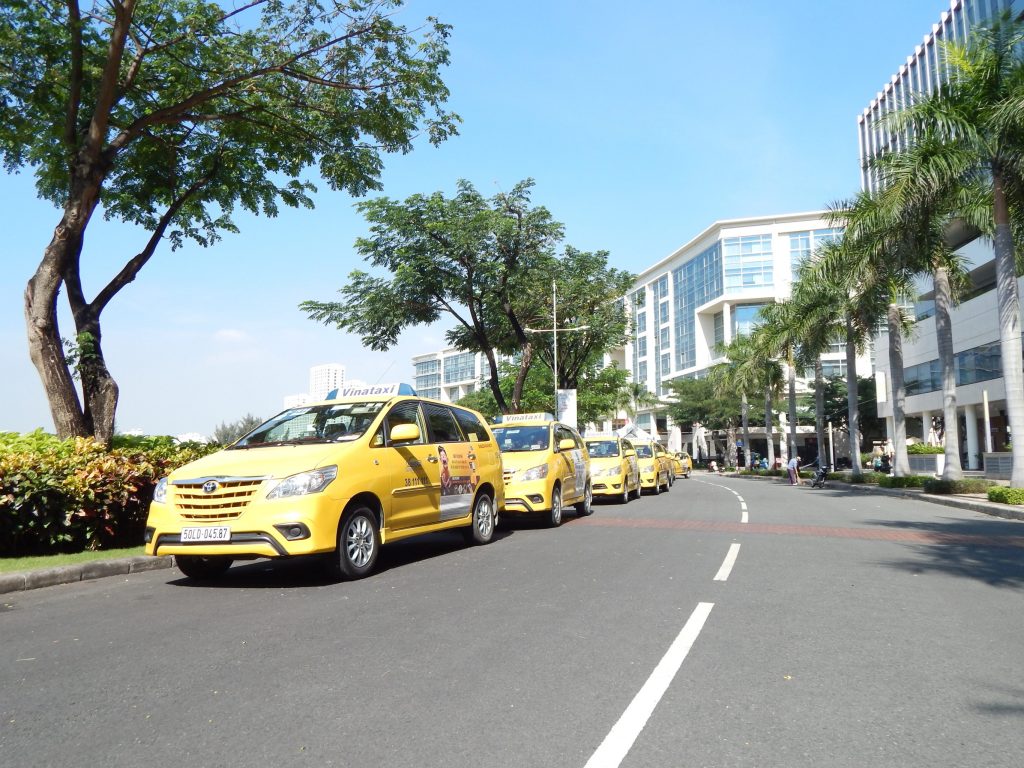
    ComfortDelGro still owns a 70 percent stake in another local taxi firm called VinaTaxi, which takes up the third largest market share in the HCMC taxi market.

    However, last November, its Vietnamese partner, the Transport and Industry Development Investment Corporation (Tracodi), withdrew its 30 percent stake from the joint venture, citing poor business performance.

  • Grab-Uber deal comes under fresh antitrust scrutiny in Vietnam

    Grab-Uber deal comes under fresh antitrust scrutiny in Vietnam

    Vietnamese authorities are set to further investigate the merger between Grab and Uber last year for possible violation of antitrust regulations. The Competition Council said after a thorough examination of documents and arguments furnished by both parties it has discovered a number of new details related to possible violation of competition laws by ride-hailing platform Grab’s acquisition of Uber’s business operations last March.

    It has returned the case dossiers to the Ministry of Industry and Trade’s competition and consumer protection department for further investigation. The investigation is expected to go on until April this year.

    Last year Singapore-based Grab acquired Uber in Southeast Asia in return for a 27.5 percent stake.

    Vietnam’s Competition Law requires any merger or acquisition that results in a company gaining a 30 percent market share to be reported to competition authorities.

    If a company gains a 50 percent market share from the deal, it can only be carried out with express permission from the authorities.

    The department’s preliminary investigation found Grab’s market share had exceeded 50 percent since the acquisition.

    But Grab insists it had acted legally and that the competition authorities have misinterpreted the scope of relevant markets when calculating the market share.

    Last October the Philippines’s competition watchdog fined the two companies a cumulative 16 million pesos ($296,873) saying they had completed the deal too soon and that the quality of service had dipped.

    Singapore’s competition authority fined them a total of S$13 million ($9.5 million) and announced other measures to address competition concerns arising from the merger.