Retail News CRM

Tag: usa

  • Malaysia unfazed by US import tariffs on steel, aluminium

    Malaysia unfazed by US import tariffs on steel, aluminium

    While Malaysia may not see much of an impact from the United States’ move to go ahead with steel and aluminium import tariffs, the move is likely to trigger a surge in steel prices.

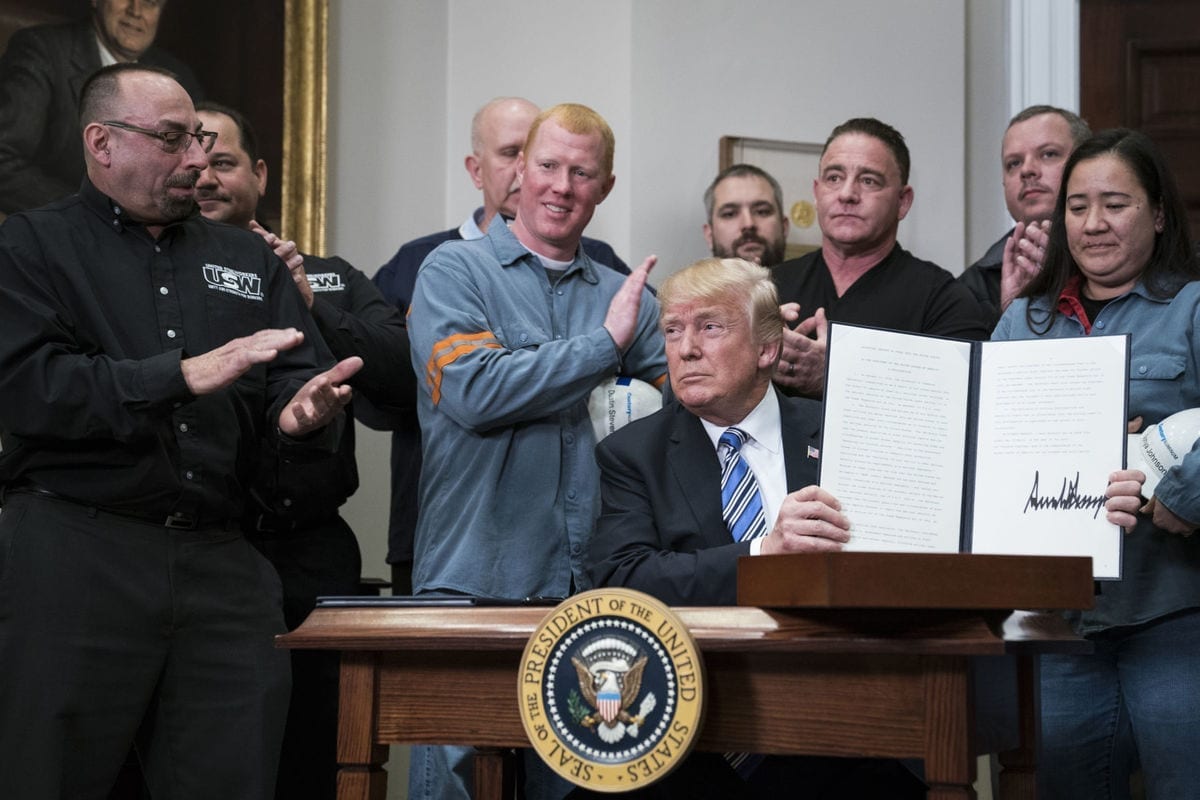
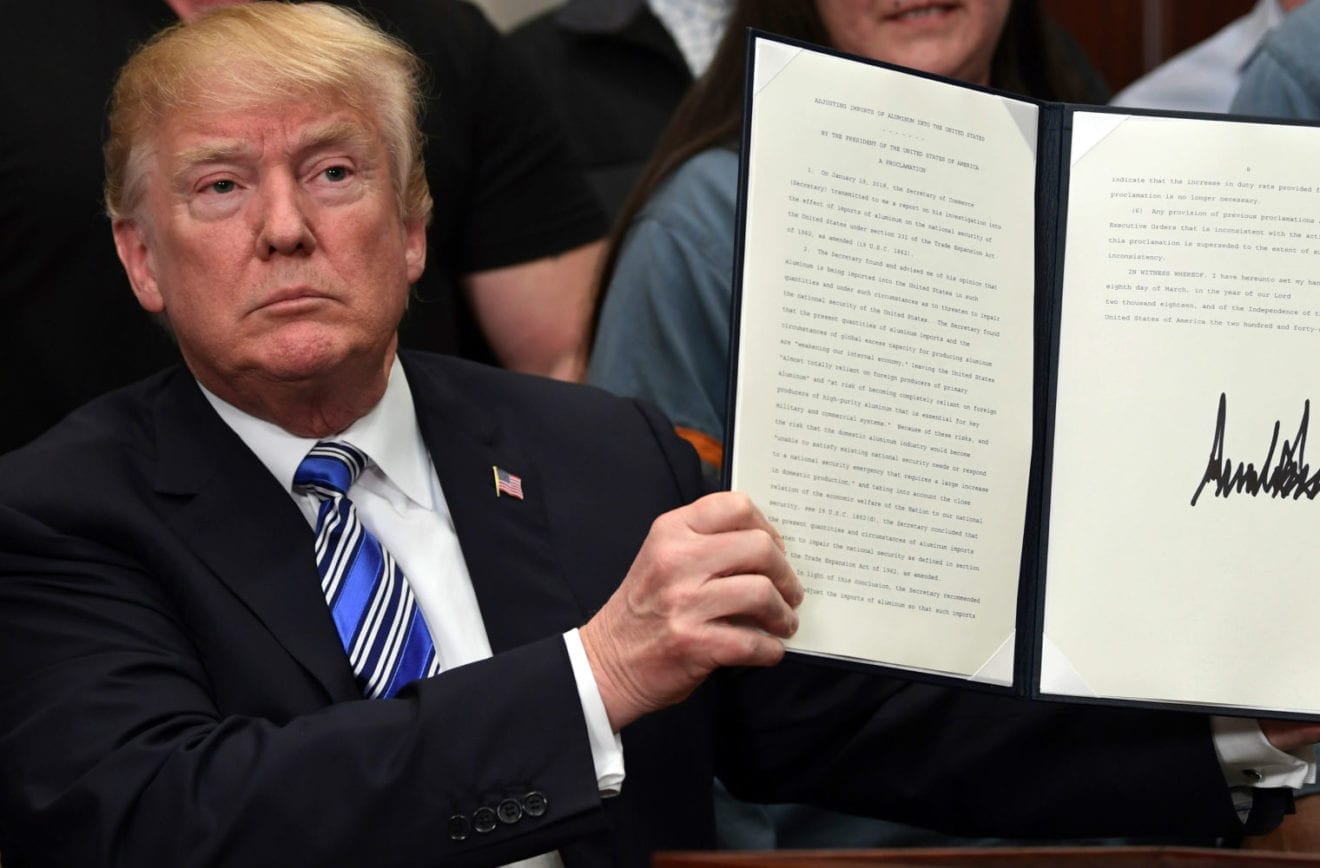
    US President Donald Trump signed off on the implementation of 25% tariff on steel imports and 10% for aluminium last week, fanning an outburst from industry players and critics from across the world and within the US alike.

    Maintaining his earlier stance, Malaysian Iron and Steel Industry Federation (Misif) president Datuk Soh Thian Lai said that the impact on Malaysia will be minimal given the relatively small volume of steel exports.

    Malaysian steel exports, which stood at about 96,000 tonnes, accounted for only 0.2-0.3% of the total US steel imports for 2017 of between 34 million and 37 million tonnes.

    Soh said Malaysia will still be able to find an alternate market to the US to export this 96,000 tonnes.

    “Most probably steel prices in US will increase fast enough in the near term and importers will still be able to import even with the 25% duty,” he added.

    In line with that, scrap prices are likely to see a rise, given that consumption of the material will become more domestic centric, hence limiting exports.

    “Scrap prices will increase because now the US could use more scrap internally instead of exporting. The US in actual fact is a net exporter of scrap, and with this trade act imposed, this could raise steel prices not only in the US but also countries importing scrap from them especially Malaysia and Asean countries,” he explained.

    Majority of Malaysia’s scrap, which could not be quantified, he said, is imported, with the US being one of the major importers.

    On the next course of action, Soh said Misif has written of its grouses to the US embassy and the Ministry of International Trade and Industry (Miti).

    “We will follow up with US Embassy and Miti on this. Since the US has allowed an exemption on Canada and Mexico. We will ask the government to bring this up to the US, for Malaysia to be exempted,” he added.

    Echoing Soh’s sentiment on surging steel prices, Barnabas Gan, economist at OCBC Bank, said while trade barriers will spike steel and aluminium prices, it could also result in job casualties for the steel and aluminium-consuming industries of the US.

    “Eventually, we note that the trade tariffs without exemptions will likely do more harm than good, both to the US economy as well as impeding global growth and trade activities. Even in the absence of trade retaliation, the tariffs would threaten many jobs in the US pertaining to aerospace, automobile, manufacturing and construction industries, while benefiting steel and aluminum makers,” he noted.

    Consumers would then face higher inflationary pressures, and thus adversely affect consumer spending and overall disposable income levels. Moreover, the bleaker outlook for the said industries could worsen investor confidence, and thus dissuade investment spending into the US,” he added.

    Meanwhile, Ambank Research said that the move could potentially reduce US steel imports by 13.3 million tonnes and Malaysia on its end could see a reduction of between 48,000 and 49,000 tonnes. Similar to Gan, the research house said the tariffs could have a knock-on effect on steel-consuming industries.

    In line with this development, AmBank noted that the US dollar is expected to weaken, working to strengthen the ringgit and heighten fears of possible trade war.

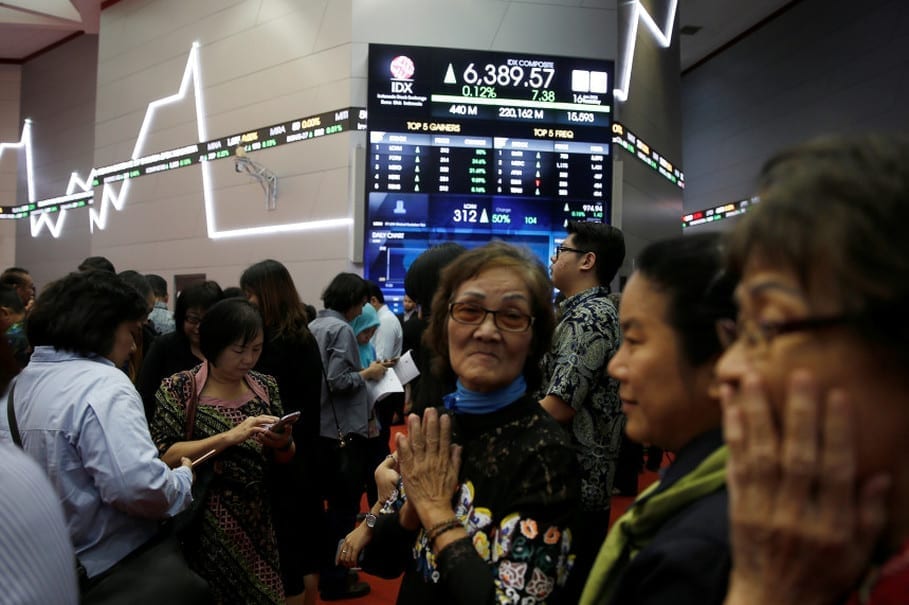
    The share price of Tatt Giap Group Bhd which exports steel products to the US, fell 3.33% to close at 14.5 sen on Friday, along with Mycron Steel Bhd, which fell 1.15% to 43 sen.

    Steel counters which saw gains at market close on Friday were Ann Joo Resources Bhd Resources, up 0.29% to RM3.47; Malaysia Steel Works (KL) Bhd, 1.05% to 96.5 sen; CSC Steel Holdings Bhd, 2.88% to RM1.43; and Atta Global Group Bhd, 0.55% to 92 sen.

    Leon Fuat Bhd was unchanged at 79.5 sen.
  • China says trade war with US will bring disaster to global economy

    China says trade war with US will bring disaster to global economy

    Any trade war with the United States will only bring disaster to the world economy, Chinese Commerce Minister Zhong Shan said today, as Beijing stepped up its criticism on proposed metals tariffs by Washington amid fears it could shatter global growth.

    After pressure from allies, the US has opened the way for more exemptions from tariffs of 25% on steel imports and 10% on aluminium that US President Donald Trump set last week.

    On Saturday, the European Union and Japan urged the US to grant them exemptions from metal import tariffs, with Tokyo calling for “calm-headed behaviour”.

    But the target of Trump’s ire is China, whose capacity expansions have helped add to global surpluses of steel. China has repeatedly vowed to defend its “legitimate rights and interests” if targeted by US trade actions.

    Zhong, speaking on the sidelines of China’s annual session of parliament, said China does not want a trade war and will not initiate one.

    “There are no winners in a trade war,” Zhong said. “It will only bring disaster to China and the United States and the world.”

    China can handle any challenges and will resolutely protect its interests, but the two countries will continue to talk, he said.

    “Nobody wants to fight a trade war, and everyone knows fighting one harms others and does not benefit oneself.”

    Trump’s announcement on tariffs underlined concerns about rising US protectionism, which has sparked bouts of turmoil in global financial markets over the past year as investors feared
    a damaging trade spat will shatter a synchronised uptick in world growth.

    China’s metals industry issued the country’s most explicit threat yet in the row, urging on Friday for the government to retaliate by targeting US coal – a sector that is central to Trump’s political base and his election pledge to restore American industries and blue-collar jobs.

    The US is the world’s biggest importer of steel, purchasing 35 million tonnes of raw material in 2017. Of those imports, South Korea, Japan, China and India accounted for 6.6 million tonnes.

    Trade tensions between China and US have risen since Trump took office. China accounts for only a small fraction of US steel imports, but its massive industrial expansion has helped create a global glut of steel that has driven down prices.

    The dispute has fuelled concerns that soybeans, the US’ most valuable export to the world’s second largest economy, might be caught up in the trade actions after Beijing launched a probe into imports of US sorghum, a grain used in animal feed and liquor.

    Zhong said US official trade deficit figures had been overestimated by about 20%, and in any case would be a lot lower if the US relaxed export restrictions on some high-tech goods.

    He also reiterated a previous pledge that China would lower import tariffs on consumer goods including automobiles, as part of an effort to boost domestic consumption.

    Trump believes the tariffs will safeguard American jobs, though many economists say the impact of price increases for users of steel and aluminium, such as the auto and oil industries, will destroy more jobs than curbs on imports create.

    Nonetheless, there is growing bipartisan consensus in Washington, and support within some segments of the US business community, for the US government to counter what are
    seen as Beijing’s predatory industrial policies and market restrictions on foreign firms.

    Trump’s administration has said the United States mistakenly supported China’s membership in the World Trade Organisation in 2001 on terms that have failed to force Beijing to open its economy.

    Diplomatic and US business sources say the US has frozen a formal mechanism for talks on commercial disputes with China because it is not satisfied Beijing has met its promises to ease market restrictions.

  • Brazil feels pain of US steel tariffs

    Brazil feels pain of US steel tariffs

    Brazilian iron and steel shares took a hit Friday, as markets weighed a potential trade war in response to Washington’s decision to impose hefty tariffs on foreign steel and aluminum.

    Brazil is the second biggest steel exporter to the United States after Canada — and the government is deeply worried about US President Donald Trump’s imposition of 25% tariffs on steel and 10% on aluminum.

    Foreign minister Aloysio Nunes and foreign trade minister Marcos Jorge shot back with a statement Thursday warning that Brazil “will resort to all necessary steps … to protect its rights and interests.”

    Nunes said Brazil was “greatly concerned” by the measure which would “bring severe damage to Brazilian exports and have a negative impact on the flow of bilateral trade.”

    On the Sao Paulo stock exchange Friday, Vale was down 1.33% in late-morning trading, Gerdau was down 1.72% and Usiminas 1.8%. Shares had already taken hefty hits the previous day after Trump’s announcement.

    US NAFTA partners Canada and Mexico are being exempted from Trump’s tariffs, but Brazil will be left wide open to the measures. Brazilian steel accounts for nearly 14% of US steel imports by volume, the US commerce department says.

    The US market accounted for 32.9% of all Brazil’s steel exports last year, the Brazilian government says.

    Blowback

    Brazil’s National Confederation of Industry (CNI) has gone further, blasting Washington’s “unjust, illegal” move which it says will cost Brazil some US$3 billion a year in lost steel exports and US$144 million in aluminum trade losses.

    Diego Bonomo from the CNI says the United States will get blowback because Brazil is the main importer of US carbon steel. Also, 80% of Brazilian steel exports to the United States are semi-finished products used by US industry, then sold on.

    Trump’s tariffs, due to take effect in 15 days, “will have two negative effects: first on exports of Brazilian steel to the North American market and secondly on US exports to Brazil,” Bonomo said.

    The fact that Brazil’s exporter rivals Canada and Mexico will not be under the same tariffs will further hurt Brazilian competitiveness, said Jose Augusto Coelho Fernandes, policy director at the CNI.

    “Brazilian industry regards this measure of President Trump with great worry. Firstly, since he excluded the NAFTA countries from the initial impact, it leaves Brazil as the most-affected country,” he said.

    “If Brazil doesn’t manage to get an exemption it will certainly file a formal complaint at the WTO along with the European Union and China,” Risk Brief consultancy said in a note to clients.

  • US stocks rally after strong jobs report; Nasdaq ends at record

    US stocks rally after strong jobs report; Nasdaq ends at record

    Wall Street stocks surged Friday, with the Nasdaq ending at a record following a strong US jobs report and the announcement of a summit between the US and North Korea.

    However, uncertainty surrounding US President Trump’s tariffs plans and fears of a trade war kept a lid on gains in other markets, dealers said.

    The agreement by Trump and North Korean leader Kim to hold talks “boosted risk sentiment … encouraging investors to buy into riskier assets such as shares”, noted Fiona Cincotta, senior market analyst at traders City Index.

    The tech-rich Nasdaq Composite Index jumped 1.8% to 7,560.81, besting the prior record in late January by 55 points.

    The gains were similar for both the Dow and S&P 500, with analysts pointing to Labor Department data that showed employers added 313,000 jobs in February, far above analyst expectations.

    The closely-watched monthly US payrolls report also revealed moderating wage growth compared with the January report, mitigating concerns the Federal Reserve will speed its pace of interest rate hikes.

    The report was “a perfect combination for Wall Street,” said Jack Ablin, chief investment officer of Cresset Wealth Advisors.

    “It gives the Fed some room to not have to be too aggressive,” Ablin said. “That’s good for risk takers. Money will stay cheap.”

    Meanwhile, US officials vowed there would be no let-up on pressure on North Korea ahead of the summit on the nuclear program.

    South Korea, where the main stocks index closed up 1.1% Friday, said the two leaders would hold an unprecedented summit by the end of May, raising hopes they can broker an agreement on Pyongyang’s nuclear program that has fueled tensions on the peninsula.

    Hopes that the two could reach some sort of agreement also led to a plunge in the yen, which is considered a go-to safe currency in times of volatility and uncertainty. The dollar jumped to its highest level in a week against the Japanese unit.

    Lingering trade worries

    Analysts said investors were somewhat placated by Trump’s modified approach to tariffs, which exempted Mexico and Canada making them less severe than initially feared.

    However, some observers warned the issue could still blow up down the road and dealers remain on edge on concerns over a possible trade war, which sparked a global sell-off last week.

    The tariffs decision, coupled with the departure of market-friendly White House aide Gary Cohn, raises worries “that the nationalist and protectionist views within the White House will have a stronger influence on policy going forward,” said Oxford Economics in a note.

    “The steel and aluminium tariffs are symptomatic of this underlying drift. Further, the risks of increased trade tensions with major partners like the European Union, China, Canada and Mexico is real.”

    European bourses were mixed, with London rising 0.3% and Paris winning 0.4% and Frankfurt dipping 0.1%.

  • Kobe Steel, Toyota hit with U.S. lawsuit over vehicle metal quality

    Kobe Steel, Toyota hit with U.S. lawsuit over vehicle metal quality

    U.S. consumers have filed a lawsuit against Kobe Steel Ltd (5406.T) and Toyota Motor Corp (7203.T) accusing the companies of violating consumer protection laws and engaging in fraud by concealing the use of substandard metal components in vehicles.

    The proposed class-action lawsuit represents the first U.S. consumer complaint filed against Kobe Steel over data fraud, and highlights the legal risks the company faces even after Chief Executive Officer Hiroya Kawasaki announced on Tuesday he would quit to draw a line under the scandal.

    The 112-year-old company, which supplies steel and aluminum parts to manufacturers of cars, planes and trains around the world, admitted last year to supplying products with falsified specifications to around 500 customers, throwing global supply chains into turmoil.

    Kobe, Japan’s third-largest steelmaker, said on Tuesday that the data fraud had gone on for nearly five decades, and that it found new cases of impropriety, widening the number of affected clients to 605, including 222 overseas. The company said Kawasaki would quit on April 1.

    The U.S. lawsuit, filed on Monday in federal court in San Francisco, was brought by two California residents who seek to represent a nationwide class of consumers who bought allegedly defective Toyota vehicles.

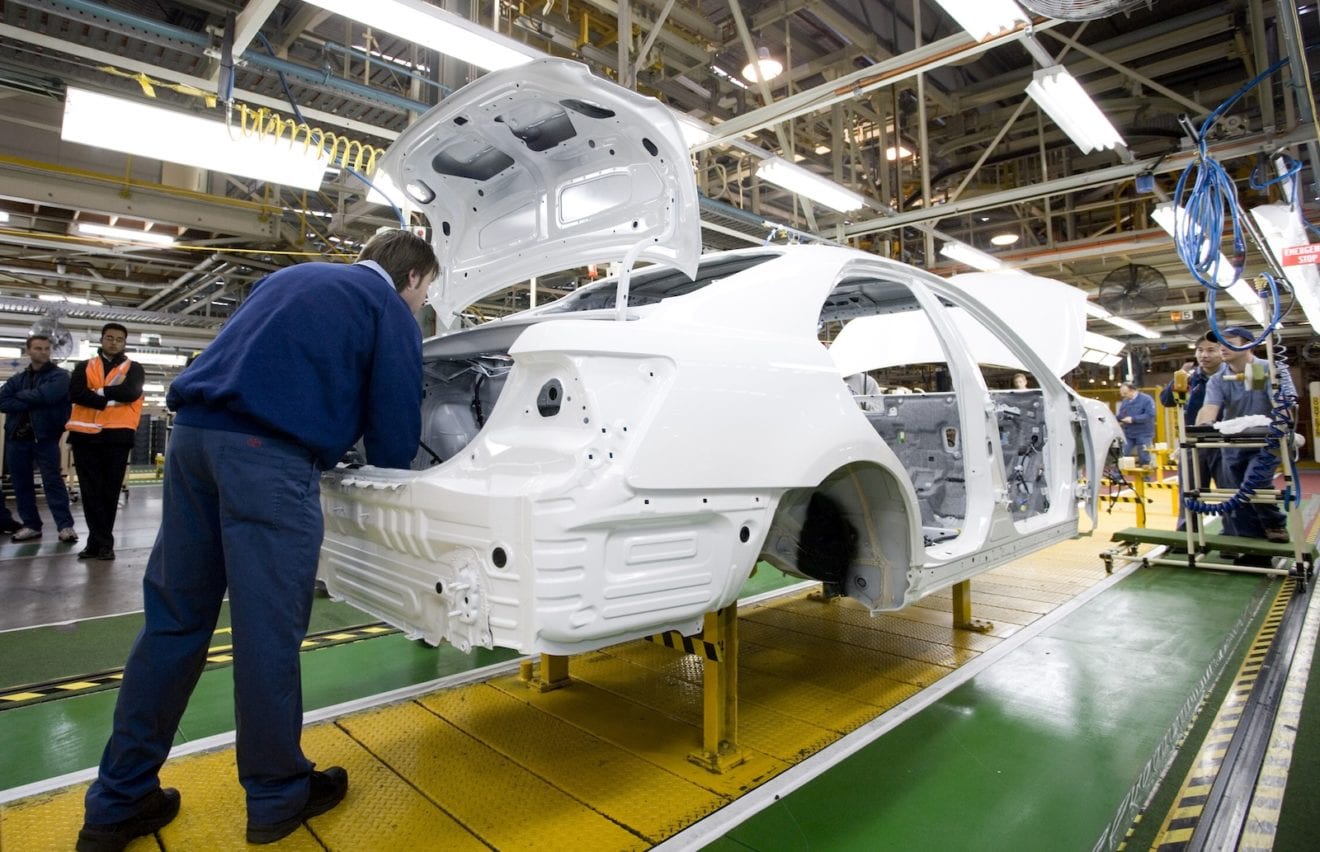
    According to the complaint, Toyota’s Prius, Camry, Land Cruiser and Lexus vehicles have all been manufactured with “sub-standard” steel, aluminum and copper.

    The plaintiffs allege that Toyota and Kobe Steel both violated federal and state consumer protection laws by claiming that the vehicles complied with U.S. quality standards.

    “We have not grasped the whole content of the case and we are now looking into the matter,” a Kobe Steel spokesman said on Wednesday.

    Toyota declined to comment on the lawsuit.

    In a special order in November, the U.S. National Highway Traffic Safety Administration asked 29 automakers, including Toyota, to disclose any safety issues for any of their vehicles or engines containing products supplied by Kobe Steel.

    The regulator did not immediately respond to a request for comment on what data it had received in response and whether there was any evidence of faulty materials in Toyota cars.

    Monday’s 40-page lawsuit outlines the ways in which the companies allegedly concealed poor metal quality. It demands compensatory and punitive damages of an unspecified amount.

    According to the complaint, at least six Toyota car models sold or leased to U.S. consumers were manufactured with substandard metal from Kobe Steel. Plaintiffs said the metal could impact vehicle safety and performance.

    Toyota had the duty to disclose any defective vehicle components because it has consistently marketed its automobiles as safe, functional and reliable, the lawsuit says.

    Kobe and Toyota had superior knowledge and access to the facts, the lawsuit alleged, giving rise to fraud by concealment claims.

    Four individuals in Canada who bought cars that use Kobe’s products have already brought class-action lawsuits seeking unspecified damages against Kobe and it subsidiaries.

    Kobe is also undergoing a separate U.S. Justice Department probe.

    A company executive said on Tuesday that it is fully cooperating with the U.S. probe, but it was hard to predict how it would develop.

  • Denso to invest $190 million in Tennessee plant, creating 320 jobs

    Denso to invest $190 million in Tennessee plant, creating 320 jobs

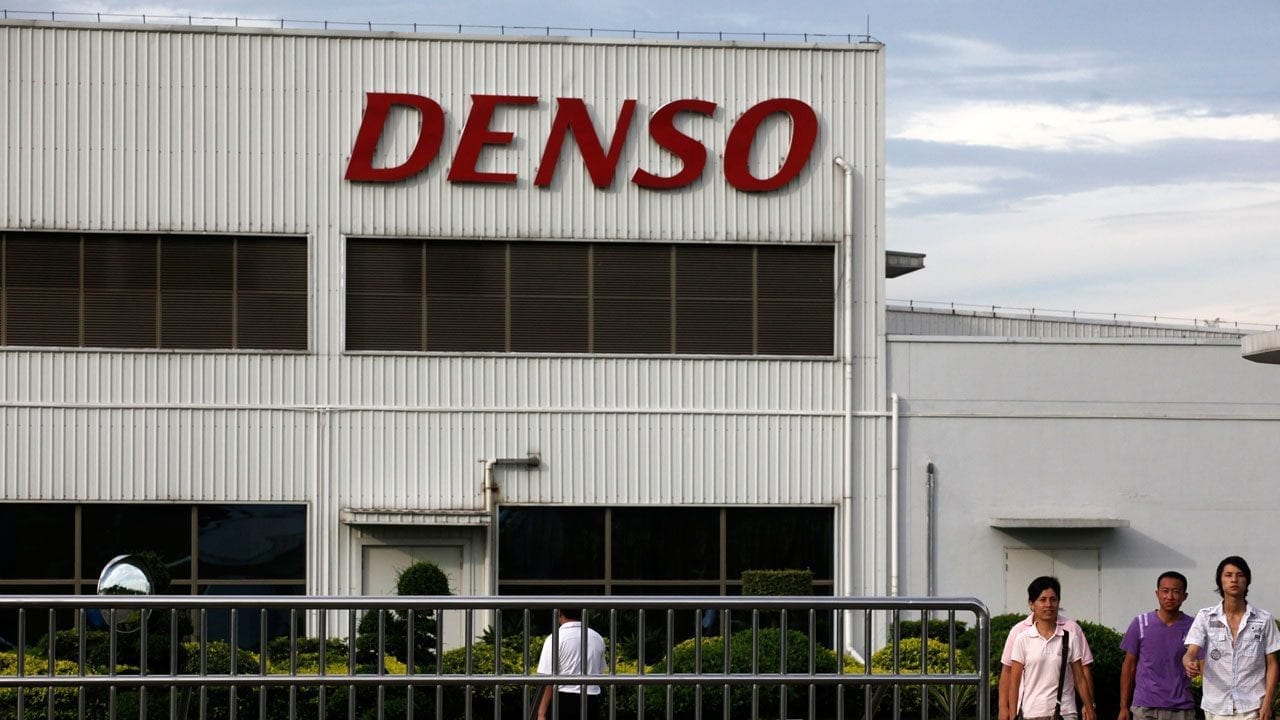
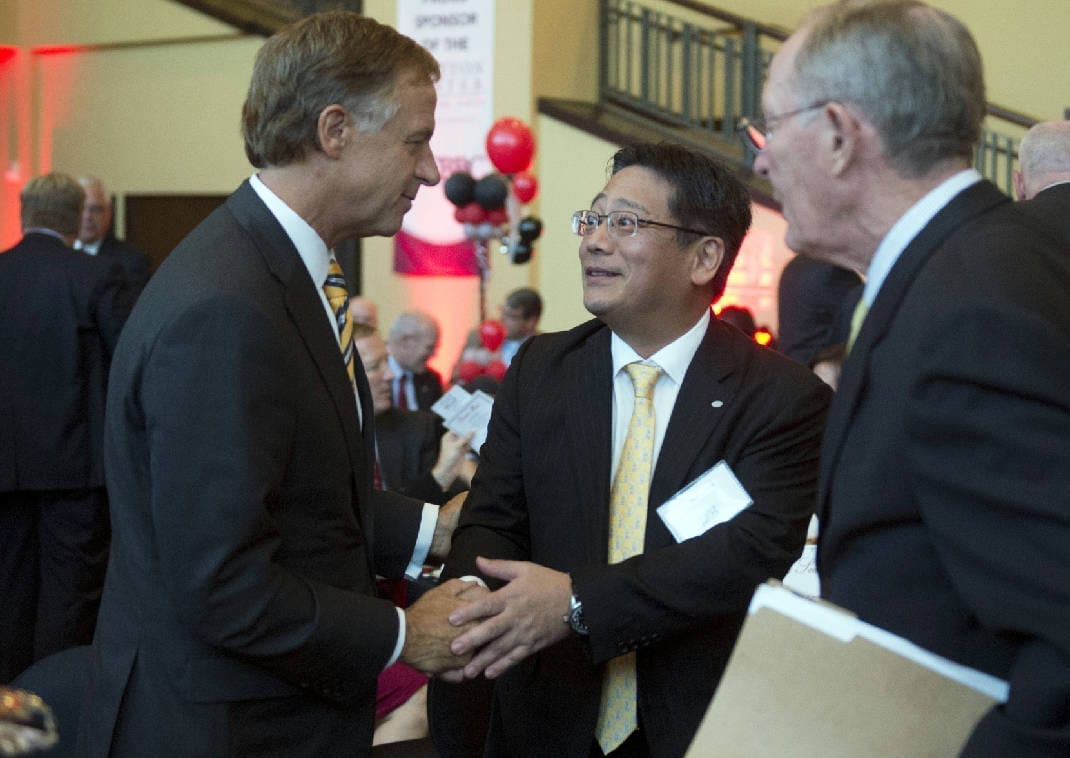
    Japanese auto parts supplier Denso Corp (6902.T) said on Wednesday it will invest $190 million in an existing Athens, Tennessee, plant to produce components for fuel delivery, ignition and exhaust gas systems for automakers in North America.

    The investment will add four production lines and create 320 jobs, the company said in a statement.

    Denso said the plant will have one new production line devoted to gasoline direct injectors and the other three for fuel pumps.

    In October Denso, Toyota Motor Corp’s (7203.T) largest supplier, said it would invest $1 billion in its Maryville, Tennessee, plant to develop vehicle electrification and safety systems, creating around 1,000 jobs.

    Last month, Toyota and Mazda Motor Corp (7261.T) announced a $1.6 billion joint venture assembly plant in Alabama that will employ up to 4,000 workers and produce 300,000 vehicles a year.

  • Tops hopes bankruptcy filing will help it compete

    Tops hopes bankruptcy filing will help it compete

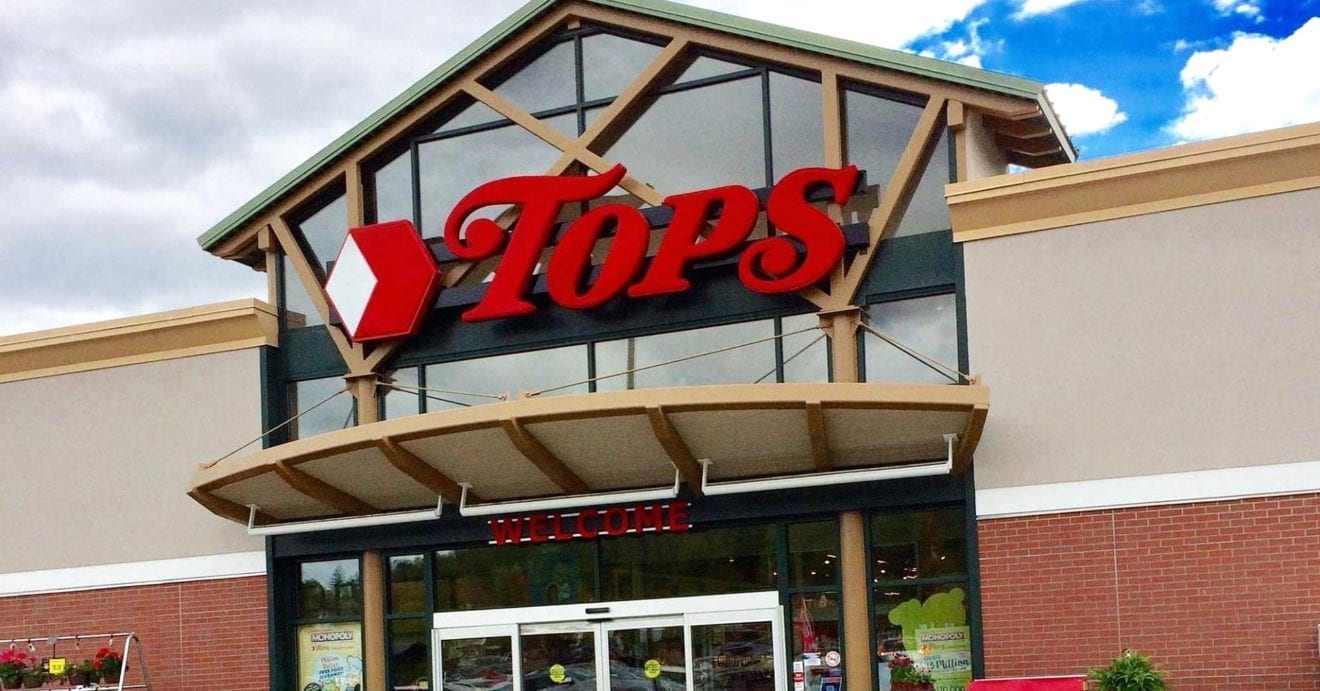
    US grocery chain Tops Markets has filed for Chapter 11 bankruptcy.

    The company says the process will not affect store operations but will enable it to pursue a financial restructure to eliminate “a substantial portion of debt” from its balance sheet and ensure its long-term survival.

    “Tops has built strong market share and our stores continue to distinguish themselves by offering quality products at affordable prices with superior customer service,” said CEO Frank Curci in a statement.

    “We believe the financing that we received from our noteholders is a vote of confidence in our business.

    Our operations are strong and we have an outstanding network of stores and a talented team to support them. We are now undertaking a financial restructuring, through which we expect to substantially reduce our debt and achieve long-term financial flexibility. This will enable us to invest further in our stores, create an even more exceptional shopping experience for our customers and compete more effectively in today’s highly competitive and evolving market.”

    Tops Markets, based in Williamsville, New York, operates 178 stores in its home state, Pennsylvania and Vermont, and employs 15,000 people. The company recently received a $140 million loan from the Bank of America and a commitment for a further US$125 million to cover debtor financing.

  • Hyundai hopes bigger, revamped Santa Fe SUV will reverse U.S. sales slump

    Hyundai hopes bigger, revamped Santa Fe SUV will reverse U.S. sales slump

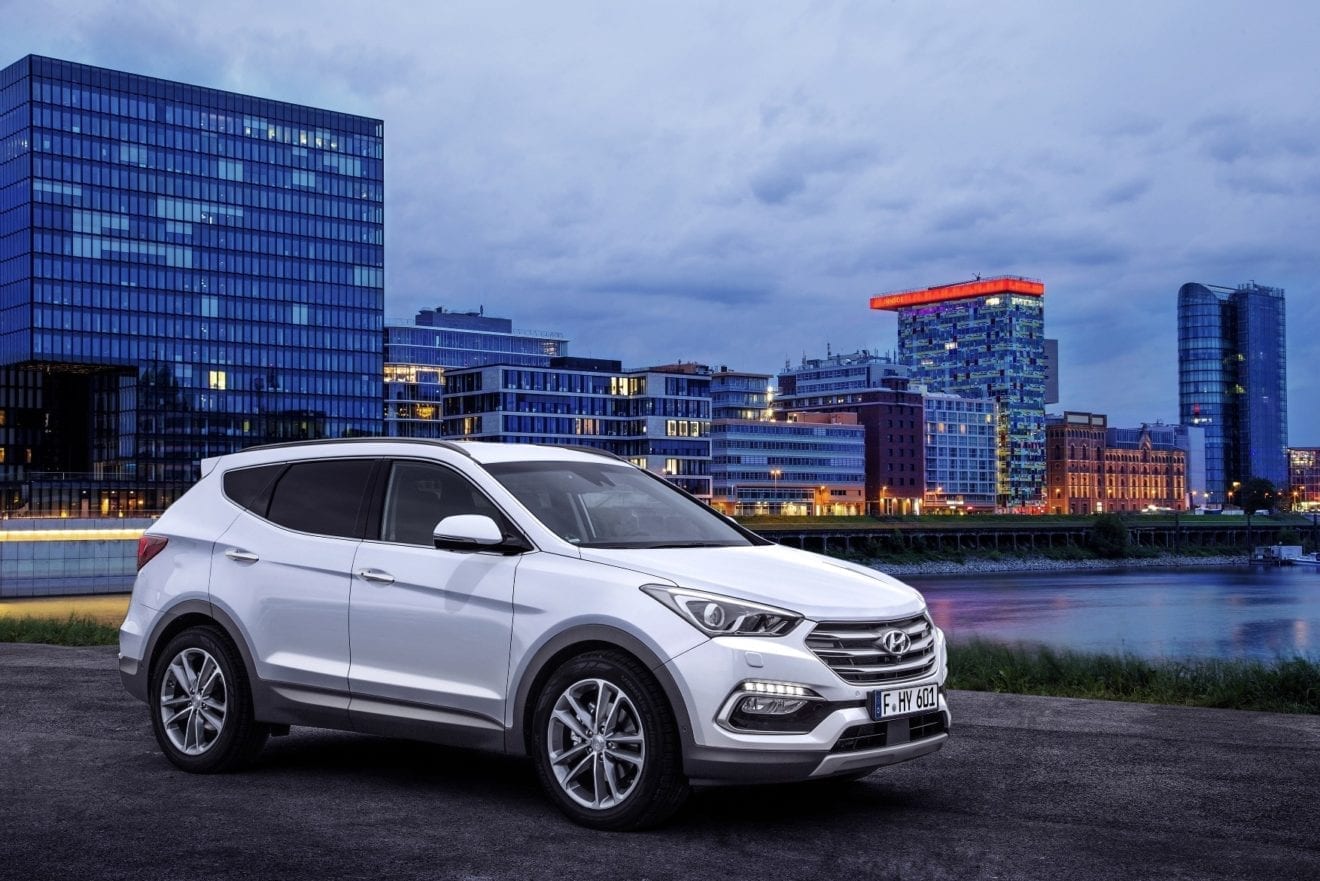
    Hyundai Motor unveiled on Tuesday a re-designed Santa Fe, hoping the first makeover of the sport utility vehicle (SUV) in six years will help rectify a sales slowdown at the South Korean automaker, especially in the key U.S. market.

    The revamped version of its top-selling SUV in the United States and South Korea features a longer, more voluminous body than its predecessor while boasting advanced safety features such as warnings on approaching objects from the rear when a car stops.

    The two-row, five-seater SUV was unveiled to South Korean media at a “preview” event, before its official launch in February in the home market.

    While Hyundai did not disclose other details, a source said the model comes with a 2.0-liter and a 2.2-liter diesel engine, a more fuel-efficient eight-speed transmission and semi-autonomous driving features used in its Genesis premium sedans.

    “The new Santa Fe will be a bread and butter model for us this year,” the Hyundai insider said on condition of anonymity since he is not authorized to speak to the media.

    “We have high hopes for the model,” he said. Hyundai Motor declined to comment.

    Hyundai Motor reported last week its worst annual earnings in seven years, battered by its delayed response to the burgeoning SUV market and a diplomatic row with China.

    A firmer local currency also adds to the woes of the automaker, as it is eating into its profits repatriated from overseas and hurts the price competitiveness of its exports in the United States and other markets.

    “The mission of the Santa Fe is to recover Hyundai’s U.S. market share. It carries a big burden on its shoulder,” said Ko Tae-bong, a senior auto analyst at Hi Investment & Securities. The U.S. sales of the aging Santa Fe slumped 25 percent last year even as U.S. industry SUV and truck sales rose 4 percent.

    The model, expected in the U.S. market in the third quarter of this year, will be also “key to recovering the utilization rate of Hyundai’s factory in Alabama”, Ko said.

    Hyundai’s U.S. sales fell 12 percent last year, making it the worst performer among automakers in that market, hit by the conservative design of the Sonata and the Elantra sedans and an absence of a broadbased SUV line-up.

    Hyundai, which has three SUV models – Kona, Tucson and Santa Fe – has said it would diversify its SUV line-up by launching a mini-SUV and a large SUV.

  • Wow! Amazon opens rainforest office space ‘Spheres’ in Seattle

    Wow! Amazon opens rainforest office space ‘Spheres’ in Seattle

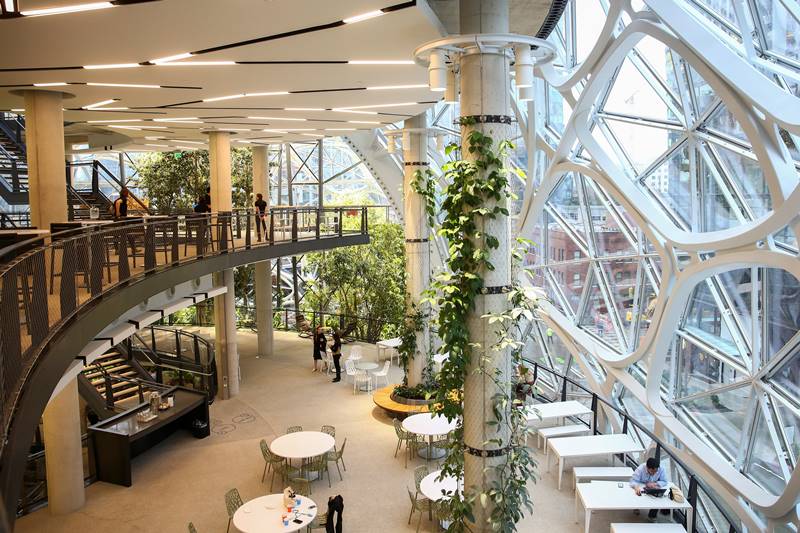
    E-commerce giant Amazon has opened a rainforest-like office space in Seattle that it hopes will spark new ideas for employees.

    While cities across North America are seeking to host Seattle-based Amazon’s second headquarters, the world’s largest online retailer is still expanding its main campus.

    Company office towers and high-end eateries have taken the place of warehouses and parking lots in Seattle’s South Lake Union district.

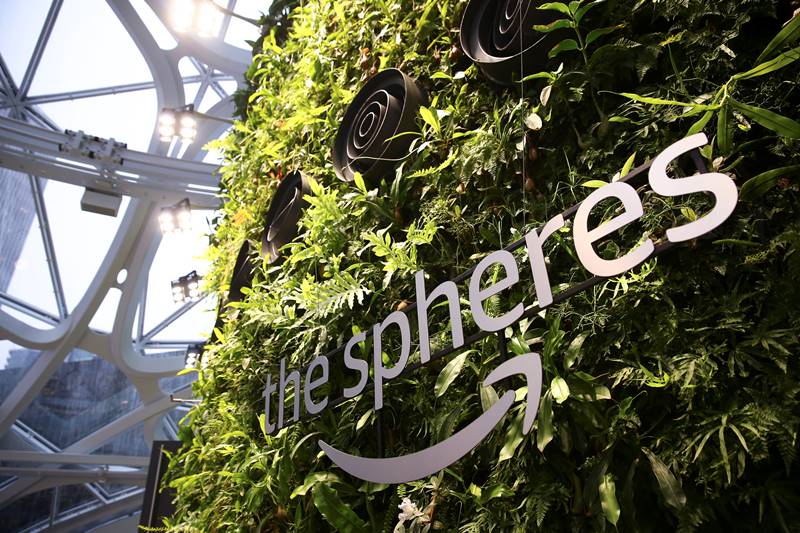
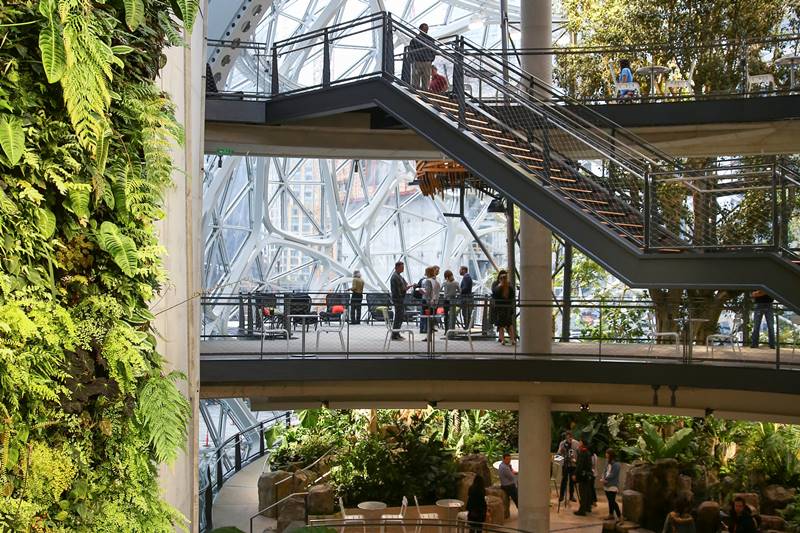
    The Spheres’ three glass domes house about 40,000 plants of 400 species. Amazon, famous for its demanding work culture, hopes the Spheres’ lush environs will let employees reflect and have chance encounters, spawning new products or plans.

    The building’s facade contains 2,643 panes of glass that are energy-efficient, with a film interlayer to keep out infrared wavelengths that produce unwanted heat. The space is more like a greenhouse than a typical office. Instead of enclosed conference rooms or desks, there are walkways and unconventional meeting spaces with chairs.

    There are no enclosed offices, conference spaces or desks in the building and employees can meet in treehouses suspended under 40+ foot trees or in sitting areas and walking paths alongside cascading waterfalls

    Plants, trees, sunlight, soil, and water take center stage – the sound of running water and the scent of flowering plants create an instant botanical immersion that takes visitors far away from the urban landscape

    The project created more than 600 full-time jobs, and is part of Amazon’s more than $4 billion investment in the design, development, and construction of its Seattle headquarters.

    Jeff Bezos, Amazon’s billionaire founder, officially opened the project in a ceremony with Amazon executives, elected officials and members of the media – by voice command.

    “Alexa, open the Spheres,” Bezos said, as a circle in the Spheres’ ceiling turned blue just like Amazon’s speech-controlled devices, whose voice assistant is named Alexa.

    Amazon has invested $US3.7 billion on buildings and infrastructure in Seattle from 2010 to (northern) summer 2017, a figure that has public officials competing for its “HQ2″ salivating.

    Amazon has said it expects to invest more than $US5 billion in construction of HQ2 and to create as many as 50,000 jobs.

    “We wanted to create something really special, something iconic for our campus and for the city of Seattle,” said John Schoettler, Amazon’s vice president of global real estate and facilities.

    Earlier this month, the online retailer narrowed 238 applications for its second headquarters to 20. The finalists, from Boston and New York to Austin, Texas, largely fit the bill of being big metropolises that can attract highly educated tech talent.

    The Spheres will be open to provide educational opportunities to the Seattle community through tours, field trips and partnerships with local schools and universities.

    The Spheres also include a visitor center – called The Understory – that is open to the public year round. The Understory provides a fully immersive, 360-degree experience where visitors can get up close and personal with the science, engineering, and plants behind The Spheres.

    “The Spheres are sure to become an iconic part of downtown Seattle, and I applaud Amazon for its latest innovation,” Gov. Jay Inslee said. “These unique buildings are so much more than a beautiful creative space for Amazon employees. They will help conserve a number of rare plant species from around the world and provide countless educational opportunities for local students – and that’s something Washington can take pride in.”

  • 2nd STREET USA to Launch Its First US Store

    2nd STREET USA to Launch Its First US Store

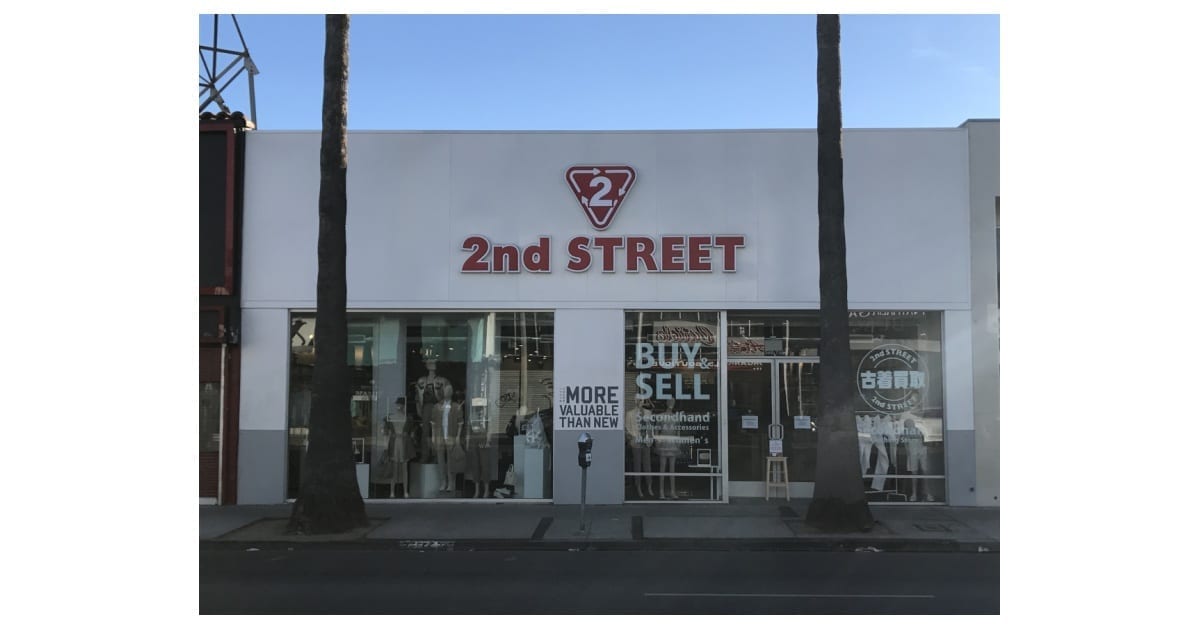
    Japanese used-clothing market 2nd Street USA has set up shop in the US.

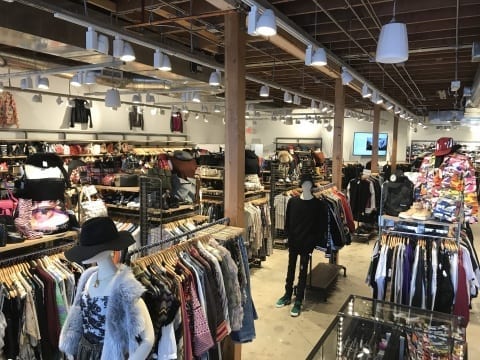
    A subsidiary of Tokyo-based GEO Holdings, 2nd Street USA has opened on Melrose Avenue in Los Angeles. Selling and buying goods, it offers men’s and women’s clothing as well as accessories.

    Among the assortment are designer labels like Burberry, MCM and Supreme, along with “big-in-Japan” brands A Bathing Ape, Comme des Garçons and Porter. There is also Kurofine, a clothing line produced by Kyoto Montsuki which recycles used clothing items with a special dyeing process.

    It is 2nd Street’s first venture outside of Japan, where it has 578 stores. The company plans two more stores for California by March next year, and aims to expand to 10 stores in the US by 2020.

    CEO Masahiro Kikuchi says all goods are carefully chosen for quality, and the store offers attentive service.

  • Toyota, Mazda to build $1.6 billion plant in Alabama

    Toyota, Mazda to build $1.6 billion plant in Alabama

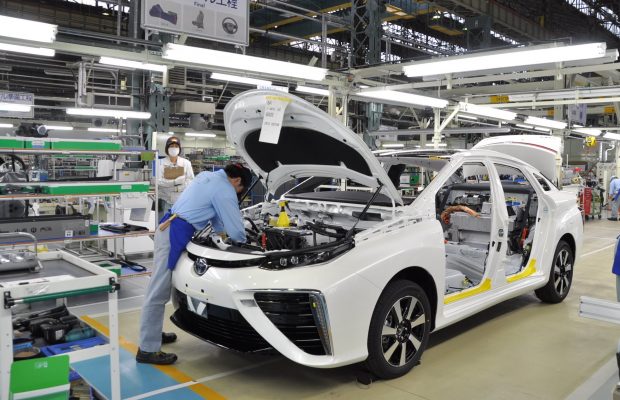
    Alabama will be the site of a new $1.6 billion Toyota Motor Corp and Mazda Motor Corp auto plant, a victory for President Donald Trump who had prodded manufacturers to build new U.S. facilities and threatened tariffs on foreign production, sources said on Tuesday.

    The plant, which will employ up to 4,000 people and produce about 300,000 vehicles a year, will be located in Huntsville, Alabama, and is a boon for the state, where Toyota has a large engine plant and an existing network of automotive suppliers.

    A formal announcement by company and state officials is expected on Wednesday in Montgomery, sources briefed on the matter said.

    The new plant –in a state Trump won by 28 points in 2016 — could be a political boost to the Republican president, who has urged automakers to build plants in the United States and add jobs. The companies said they expect the plant to open in 2021.

    Trump tweeted in March he wanted “new plants to be built here for cars sold here.” The White House did not immediately comment on Tuesday.

    The announcement also comes at a time of declining U.S. auto industry sales, so it could exacerbate overcapacity and add pressure to cut prices. U.S. new vehicle sales fell 2 percent in 2017, after hitting an all-time record high in 2016, and are expected to fall further in 2018.

    Details of an anticipated tax and incentive package for the investment were not yet known. It has been reported the companies sought at least $1 billion in incentives.

    A Toyota spokesman declined to comment, except to say an announcement was expected soon. A Mazda spokeswoman also declined to comment.

    In recent months, the companies had narrowed their choices down to sites in Alabama and North Carolina.

    Local media last month said the leading site under consideration was in northern Alabama’s Limestone County, near Toyota’s large engine plant in Huntsville. In September Toyota announced a $106 million technology upgrade for the Huntsville plant.

    A Chamber of Commerce of Huntsville website for the “Huntsville Mega Site” touts the fact it has been “certified as development-ready.” The commerce chamber, local and state officials declined to comment on Tuesday on plans for the plant.

    A year ago, President-elect Trump criticized Toyota and threatened hefty tariffs against the Japanese automaker if it built its Corolla sedan for the U.S. market in Mexico.

    “Toyota Motor said will build a new plant in Baja, Mexico, to build Corolla cars for U.S. NO WAY! Build plant in U.S. or pay big border tax,” Trump posted on Twitter in early 2017.

    Toyota and Mazda announced plans for a new plant in August. Toyota said it would shift production of Corollas from Canada to the new venture rather than in Guanajuato, and would build Tacoma pickups in Mexico instead. Mazda plans to build new crossover SUVs at the plant.

    Trump praised the joint venture announcement, saying in August on Twitter: “Toyota & Mazda to build a new $1.6B plant here in the U.S.A. and create 4K new American jobs. A great investment in American manufacturing!”

    In October, Toyota said it would scale back investment in a planned plant in Mexico by 30 percent to $700 million and cut planned annual capacity in half to 100,000 vehicles as it shuffles its production plans to meet market demands.

    Toyota has 10 U.S. plants in eight states in an arc running from West Virginia through Kentucky, Indiana, Alabama, Mississippi and Texas.Toyota and Mazda announced a capital alliance in August and are exploring joint development of technologies for the basic structure of competitive electric vehicles.

    Over the last 30 years Toyota, along with German and Asian automakers, has built a second auto industry in the United States, rivaling the operations of the Detroit Three automakers in size and employment, but with newer, and fewer unionized, plants.

    States covet auto assembly plants because they typically pay above-average wages and spin off jobs at suppliers and service companies. Southern U.S. states have the advantage of good transportation infrastructure, business-friendly regulators and generally anti-union politicians.

    The Alabama Department of Commerce shows 150 of the large automotive suppliers operate in the state, providing the logistical strength that Kristin Dziczek, a researcher at the Center for Automotive Research in Michigan, said helped land the plant.

    Dziczek said that Alabama in 2017 was tied for fifth among U.S. states in auto production, at 9 percent with Tennessee. It was behind Michigan at 19 percent; Indiana at 12 percent, Kentucky at 11 percent; and Ohio at 10 percent.

    “The impact of an auto assembly plant extends beyond its immediate economic impact, and that’s why states offer robust incentives,” said Dennis Cuneo, a site-selection consultant and former Toyota executive. “It creates a halo effect that in turn helps attract other projects.”

    Alabama spent an estimated $250 million to woo Daimler AG’s Mercedes-Benz to put an auto plant in Tuscaloosa two decades ago.

  • Suning Unmanned ‘Biu’ Store goes International

    Suning Unmanned ‘Biu’ Store goes International

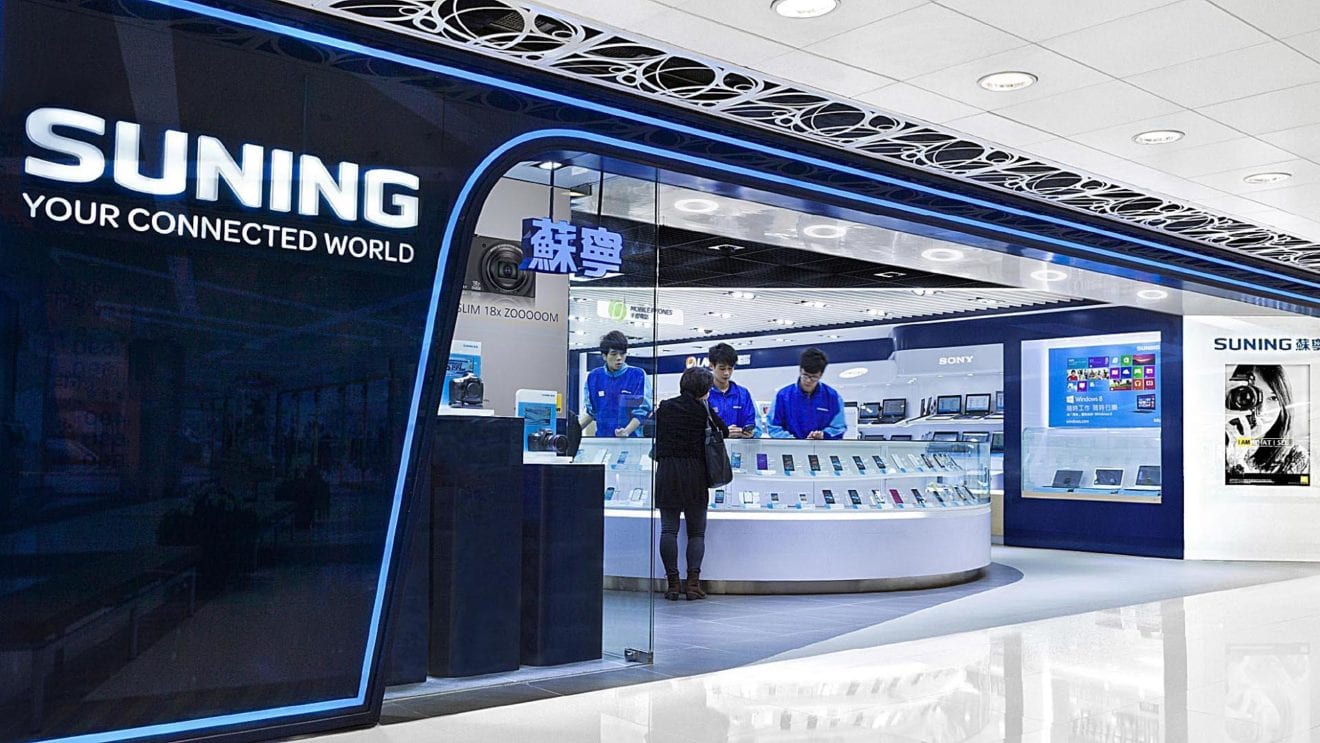
    Suning Commerce Group, one of China’s largest non-government retailers, is showcasing its unmanned, automated Biu store at CES 2018 in Las Vegas this week.

    Running until Friday, CES is the global stage for new innovative consumer electronics. Suning’s promotion of its Smart Retail program comes as the company prepares to launch its developments internationally,

    “Suning’s Biu store concept showcases the latest in our online-to-offline retail strategy, designed to offer consumers a one-stop seamless shopping experience,” says the group’s R&D executive VP Joshua Xiang, who is also GM of Suning Global Research.

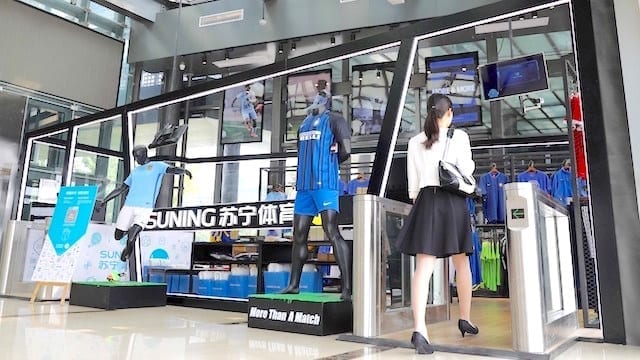
    Suning’s Biu store concept is big-data driven and powered by facial recognition and radio frequency identification (RFID) technology. Since launching its first self-service store in Nanjing in August, Suning has opened a further four cashierless stores in China, in Shanghai, Beijing, Chongqing and Xuzhou.

    It says shoppers have been flocking to the stores to buy gadgets, personal electronics, FMCG and sports accessories. They can also find branded football merchandise, including Italian team Internazionale Milano, which is owned by Suning.

    Immediate identification

    Bui shoppers who link their bank card to the Suning Finance app are immediately identified by camera at the store’s entrance and granted access. Inside, they can be helped with their purchase decisions by Suning Smart Recommendation, a shopping guide system based on big-data analysis. RFID technology along the payment pathway ensures an effortless check-out experience taking no longer than 15 seconds.

    At CES, Suning is also showcasing its e-commerce services and tech products that focus on enhancing the consumer experience. These include the Smart Sue shopping assistant, with voice and text interaction system; the Anywhere AR shopping experience, allowing shoppers to place virtual products into a real scene; Suning Smart Home, incorporating advanced Internet of Things automation systems to control electronic home appliances and built-in technology; smart retail chain software; and logistics and shopping financial services.

    A Created in China forum at CES tomorrow, hosted by Suning and the China Household Electric Appliance Research Institute, will explore electronics industry trends in China and also demonstrate Suning’s Smart Retail concept.

  • BT connects world’s five top forex markets

    BT connects world’s five top forex markets

    BT is linking up the world’s five main foreign exchange locations to help boost the competitiveness of its global financial industry customers.

    The company is now offering BT Radianz FX express, which provides dedicated high-speed links between financial hubs in Singapore, Japan, Hong Kong, the UK and the US. The five hubs are involved in almost 77% of the world’s forex trading, according to the 2016 BIS Triennial Central Bank Survey.

    The new Radianz FX express service claims to offer low-latency and cost-effective, fully managed connectivity that will give traders faster access to market data across the five locations, while making it easier for them to execute trades.

    Radianz FX express links directly into the five key third-party global data centers in the forex trading world. These data centers were selected because each of the locations hosts the IT infrastructure of significant clusters of the forex trading community.

    “Foreign exchange is the largest asset class by value traded globally.  An average of US $5.1 trillion is traded on FX markets every day,” BT VP of global industry practices Hubertus von Roenne said.

    “We’ve created managed BT Radianz FX express routes to boost the competitiveness of our financial services customers. With dedicated links within and between the world’s five biggest FX trading locations, BT can help FX firms lower costs while creating opportunities for international growth.”

  • AirAsia X gets license to fly to US

    AirAsia X gets license to fly to US

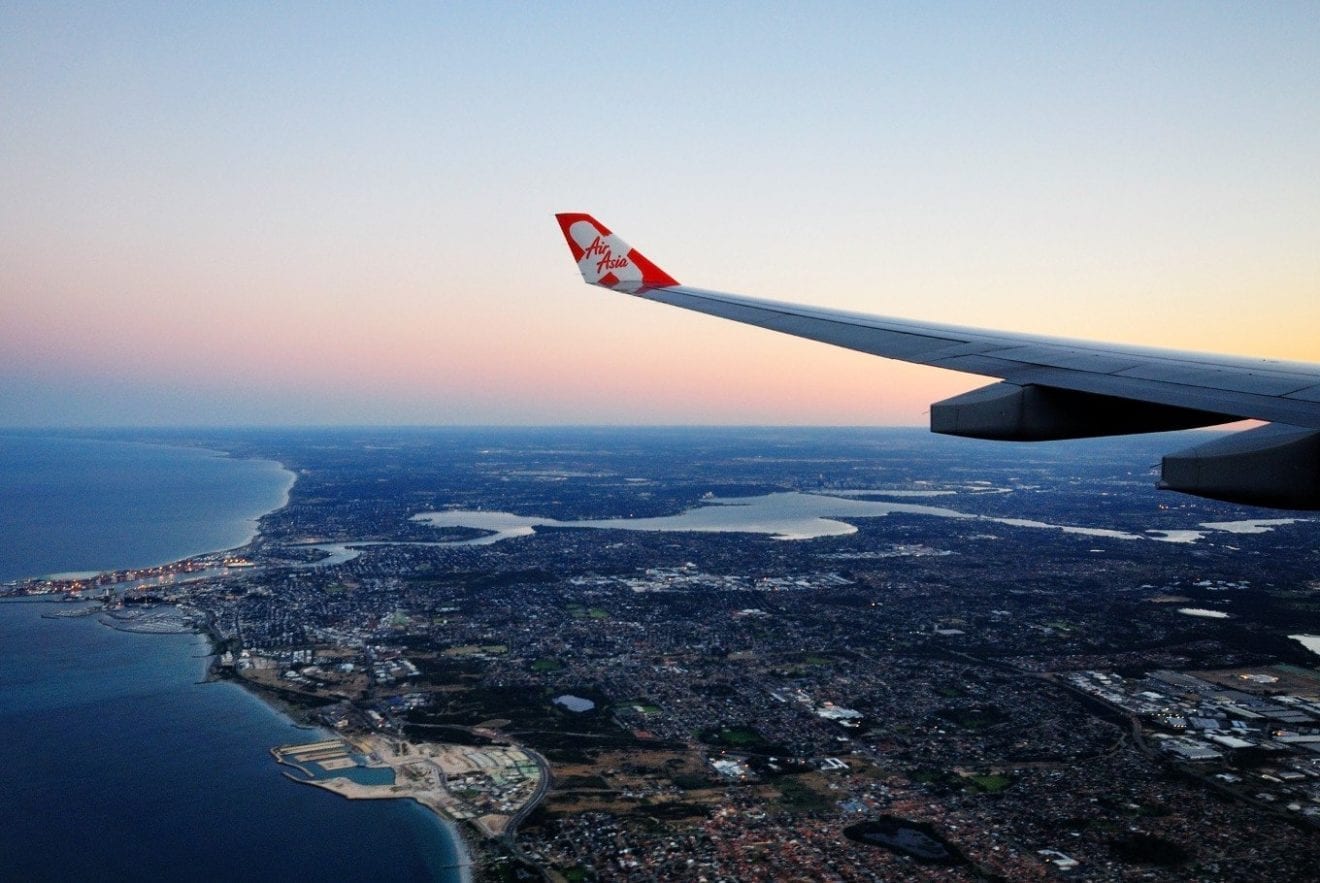
    AirAsia X has obtained a license from the Federal Aviation Administration (FAA) to fly to the United States, AirAsia X CEO Datuk Kamarudin Meranun has said.

    With this achievement, AirAsia X becomes the first Asian budget airline to hold a license to fly to the US, said Kamarudin.

    “It is an extraordinary achievement. Our expansion so far only focused on Asia, Australia and the Middle East. We are in high spirits to expand farther than just the Asia-Pacific,” he said on Monday.

    With such a license, AirAsia X planes would be able to fly to any place in the country, said Kamarudin, adding that his company also planned to restart its flights to London and the relevant licenses were being arranged.

    The AirAsia Group has 120 flight destinations in the Asia-Pacific, including 60 routes within ASEAN countries.

  • American Airlines Cargo transports priceless art to Hong Kong

    American Airlines Cargo transports priceless art to Hong Kong

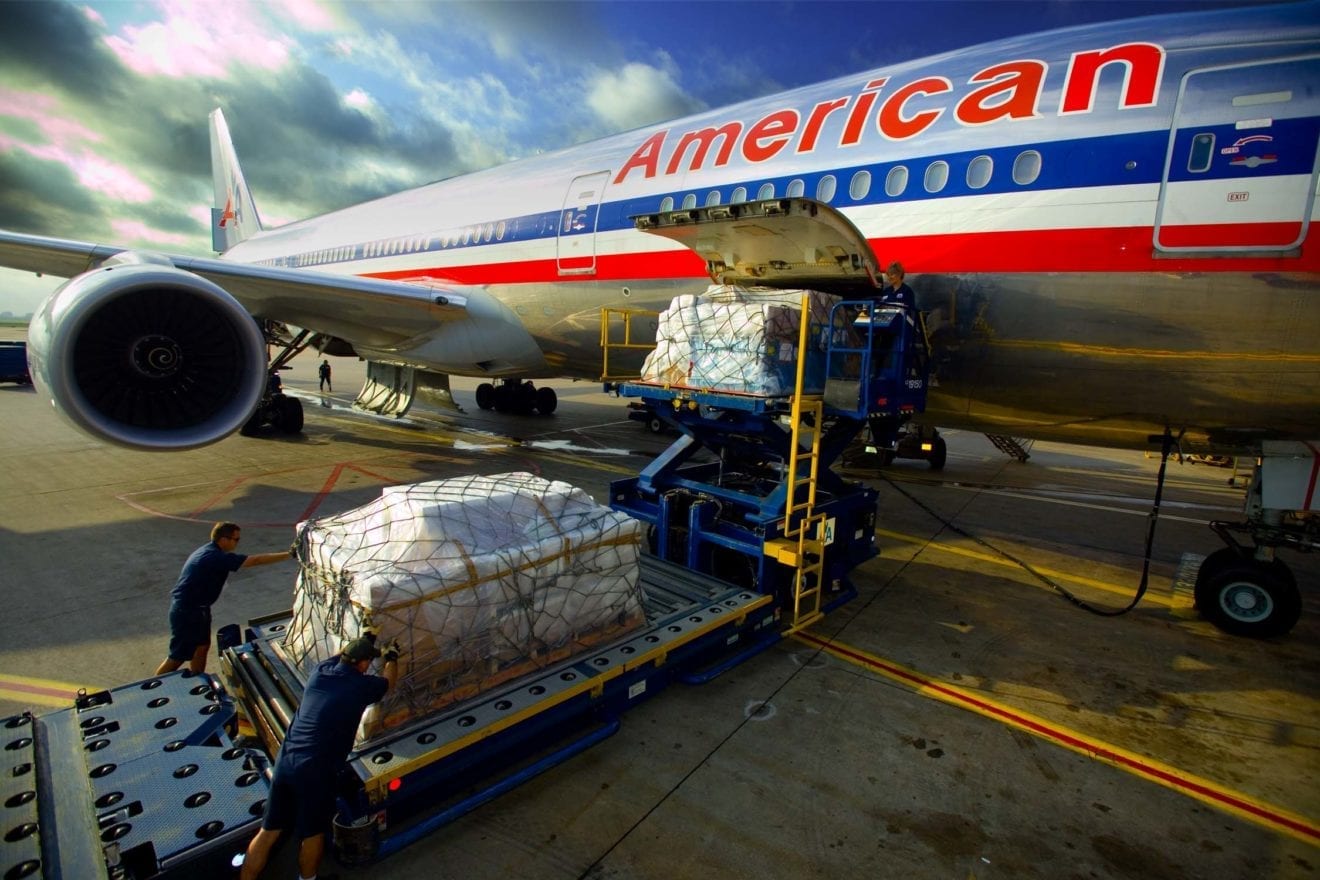
    American Airlines Cargo safely delivered more than 3,000 pounds (1,500 kilograms) of priceless artifacts belonging to the Kinsey African American Art and History Collection from Los Angeles (LAX) to Hong Kong (HKG).

    Working with Cookes Crating, one of America’s oldest and most respected fine art shippers, over 100 artifacts, including paintings, sculptures, rare first editions, manuscripts and official records, were transported to The University of Hong Kong Museum and Art Gallery. The three month long exhibition tells the story of African American achievement and contribution.

    “With priceless artifacts like those in this collection, we offer customers peace of mind with our High Value service, which includes enhanced safety and security measures, such as special handling and surveillance at every touch point,” said Joe Goode, American Airlines Cargo’s managing director, Cargo Sales – Western Division. “Plus, with our direct flight from LAX to HKG, we were able to quickly and successfully deliver the shipment in prime condition before the exhibition’s debut in Hong Kong.”

    The Kinsey family’s long-standing relationship with American was just recently extended to the Cargo division for the shipment of their invaluable collection because of the carrier’s experience in handling high-value shipments.

    “My family and I have been loyal customers of American Airlines for nearly 40 years, beginning with my parents who have visited 100 countries and flown millions of miles,” said Khalil Kinsey, general manager and chief curator – The Kinsey Collection. “American has played an integral role in our business from a travel perspective, and we are excited to expand our relationship to the cargo and logistics aspect. The Cargo division provided a smooth and efficient experience that gave us great comfort and confidence that our crates full of priceless contents would be handled with the utmost care, as well as arrives safely and on time.”