Retail News CRM

Tag: usa

  • Once again, ZTE is in trouble with the U.S.

    Once again, ZTE is in trouble with the U.S.

    Before Huawei was banned from its U.S. supply chain last May, fellow Chinese manufacturer ZTE was blocked from its state-side supply chain in 2018. While Huawei was able to thrive despite its placement on the U.S. Commerce Department’s entity list, ZTE almost went out of business. Surprisingly, a tweet from President Donald Trump set the wheels in motion for a settlement that ultimately saved the company.
    But ZTE is once again in the Trump administration’s crosshairs. The smartphone and networking equipment manufacturer is being investigated for allegedly bribing foreign officials to help its global operations. The Justice Department has not revealed any information about the investigation. In 2016, the Commerce Department fined ZTE $1.19 billion for selling goods and services to Iran and North Korea despite U.S. trade sanctions against both countries.
    As part of the punishment, ZTE was banned from its U.S. supply chain for seven years; the Commerce Department suspended the ban as long as the manufacturer was following all of the penalties placed on it by the U.S. government. But once the Trump administration realized that ZTE was paying bonuses to some employees in violation of that agreement, the supply chain ban was initiated in April 2018 running through March 2025.
    Unlike Huawei, which rode a wave of Chinese patriotism and still managed to deliver approximately 240 million handsets last year (second behind Samsung and ahead of Apple), ZTE does not design its own chips and did not prepare for a ban as Huawei had done by stockpiling chips. ZTE, which was the fourth-largest smartphone manufacturer in the U.S. prior to the 2018 ban, was running into trouble. But out of nowhere, President Trump disseminated a tweet expressing concern for the jobs being lost in China because of the supply chain ban. Trump wrote that he had instructed the Commerce Department to reach a deal with ZTE. Weeks later, a deal was made. ZTE paid the U.S. $1 billion and put $400 million into an escrow account in case it committed any illegal acts in the future (like the new charges). The Chinese manufacturer also agreed to overhaul its Board of Directors and replace its executive team. A compliance team from the U.S. was placed inside the company.
    ZTE was never able to regain its position as a top smartphone vendor in the states. Motorola took over its spot as the fourth most popular brand in the U.S. and that continues. The U.S. still considers ZTE to be a national security threat. Back in November, the FCC voted to block the Universal Service Fund (USF) from purchasing networking equipment from ZTE and Huawei. The $8.5 billion fund is managed by the regulatory agency and is funded through a fee tacked on to consumers’ wireless bills. The USF is charged with helping rural carriers provide internet service to rural Americans. Many of these operators used Huawei and ZTE gear for their 3G and 4G networks.
    The FCC and the U.S. government want these rural operators to remove any Huawei and ZTE equipment that is embedded in their networks. The FCC has already estimated that this will cost nearly $2 billion to accomplish over a two-year period. Congress has approved a resolution offering rural carriers $1 billion to remove this gear from their networks. Both Huawei and ZTE are considered national security threats because of their ties to the communist Chinese government. U.S. lawmakers are concerned that the two companies place backdoors in their equipment that gather intelligence and send it to Beijing. ZTE and Huawei have repeatedly denied these allegations.

  • Apple launches redesigned Maps app for users in the US

    Apple launches redesigned Maps app for users in the US

    Apple has just announced that Maps users in the United States now have access to a redesigned app that integrates a lot of social elements, but also important under-the-hood improvements. Apple’s new Maps app is faster and more accurate thanks to the many new features introduced by iOS 13 not long ago.

    In an attempt to compete with Google Maps, Apple’s own navigation app promises to offer extensive views of roads, buildings, parks, airports, and malls. Also, Maps now includes support for popular apps like Photos, Messages, Calendar, Weather and more.

    An important addition to the app is the new interactive street-level imagery with high-res, 3D photography that you can see above. This feature lets people from anywhere in the world virtually visit many US cities, including New York City, San Francisco, Los Angeles, Las Vegas, and Houston.

    As far as the social aspect goes, Maps now includes a new feature called Collections where users can share lists of their favorite restaurants, as well as places and locations they wish to visit. Furthermore, Maps lets commuters or users who frequently visit a certain location to add it to Favorites so that they bring it up on the screen with just one tap.

    It’s also worth noting that the app now includes indoor maps for airports and malls, along with an option to send an ETA to family or friends. More importantly, Apple Maps offers real-time information about transit schedules, live departure times, arrival times and so on. For the time being, real-time transit is not available in all US cities, but it’s up and running in San Franciso Bay Area, Washington D.C., New York, Los Angeles, and Miami.

    Apple says it will continue to improve Maps and that the newly redesigned app will be rolled out to customers in Europe in the coming months, so expect more news about it very soon.

  • Tea chain Nayuki expanding to USA and Japan

    Tea chain Nayuki expanding to USA and Japan

    Chinese tea chain Nayuki will launch its first stores in Japan and the US this year.

    The firm, which operates nearly 400 stores in China and three in Singapore, serves tea blended with fruit, cream cheese and toppings.

    “With our commitment to becoming an innovator and purveyor of Chinese tea culture, we hope to deliver our unique and exceptional tea experience to the world,” said Nayuki founder Peng Xin. “To achieve this goal, we have established tea fields where tea is cultivated under strict conditions from cultivation to processing.”

    In recent years, China’s traditional tea culture has been revamped by new-style tea franchises backed by large investments. The tea chain Nayuki, valued at RMB6 billion (US$865 million), received a multi-hundred-million RMB injection in Series A plus funding from TianTu Capital in 2018.

    In November last year, the company opened its largest shop – Nayuki’s Dream Factory – in Shenzhen, an 11,000sqft retail space offering an immersive in-store experience. Visitors are invited to see, hear and learn about the innovations of Nayuki’s teas while enjoying a menu of handcrafted teas, coffees, cocktails, baked goods, desserts and more exclusive to the store.

  • Coca-Cola North America pilots subscription service to test new products

    Coca-Cola North America pilots subscription service to test new products

    Soft drinks giant Coca-Cola has launched a new subscription service in North America to test out over 20 new drinks.

    The Coca-Cola Insiders Club invites subscribers to sign up for a monthly shipment of three category-spanning beverages to be released in early 2020. A thousand memberships sold out in three hours following the announcement.

    “We’re absolutely thrilled to see how quickly the spots went, which shows just how passionate consumers are about our brands and innovations. It proves there is an opportunity to scale the concept and allow more people to participate,” said Alex Powell, a digital experiences manager, Coca-Cola North America.

    The soft drinks giant said the move was prompted by the phenomenal growth in the e-commerce subscription market which has doubled annually over the last five years.

    Subscribers can choose from two payment options for the six-month membership, US$10 per month or US$50 prepaid (one month free).

    “As a total beverage company, we’re constantly looking for ways to innovate not only in our products – but also in the consumer-centric experiences we offer,” said McCrea O’Haire, digital experiences manager, Coca-Cola North America.

    “People want choice, convenience and customization. The Insiders Club will allow us to showcase the diversity of the drinks we offer and get some of our newest innovations into the hands of fans who want to be among the first to enjoy them.”

    The launch of the limited-edition Coke Cinnamon in the region prompted a big response from consumers and provided valuable insights to the beverage giant.

    Coca-Cola North America said it will monitor sales, feedback and social media buzz and may consider expanding beyond the six-month trial period.

  • Over 100 million Americans had their personal data exposed

    Over 100 million Americans had their personal data exposed

    What we are going to tell you is something that is bound to get your mind thinking back about any embarrassing texts you might have written. Or whether you might have sent some personal information via text like your social security or credit card numbers, passwords or even PINs.

    The database belongs to an American outfit named TrueDialog. The latter provides “Enterprise-Grade SMS Texting Solutions.” The information available from the breached database not only includes tens of millions of texts from hundreds of millions of American users, but it also contained millions of usernames, passwords (some in cleartext, others encoded but easy to decrypt) and more. The report puts the blame for the data breach directly on TrueDialog for failing to protect the database. It also notes that discovering the identity of the database owner was not difficult. Over 100 million American citizens could be impacted by this data breach.

    The number of people affected by the breach is huge and the possibility that these texts could be read by bad actors is a very major deal; that puts companies like TrueDialog on the defensive. As vpnMentor notes, “Some affected parties deny the facts, disregarding our research or playing down its impact. So, we need to be thorough and make sure everything we find is correct and true. In this case, it was quite easy to identify TrueDialog as the database owner. Their host ID “api.truedialog.com” was found throughout. However, it was also clear that this was a huge data breach, compromising the privacy and security of over 100 million U.S. citizens across the country.”

    The database is hosted by Microsoft Azure and runs in the U.S. on the Oracle Marketing Cloud. It contains 1 billion entries adding up to 604GB of data. This data includes information about TrueDialog’s business, its business clients and the latter’s customers. All of this information could have been used by bad actors to steal identities and money from those with information exposed in the breach. Additionally, all of this data could have been sold to marketers and scammers. Knowing all of this information would make it easier for bad actors to engage in phishing schemes.

    Perhaps you have yet to understand the seriousness of this. Tens of millions of SMS messages that were sent via TrueDialog were leaked revealing the full names of message recipients, account holders and users of TrueDialog’s services. But even worse, the content of messages, email addresses, and recipients’ phone numbers were viewable along with the date and time that these messages were sent.

    TrueDialog itself could face a negative backlash because of this leak. The company’s reputation will take a hit and companies that pay it for providing leads will stop doing business with it if they fear that those leads will get leaked for free. And the amazing thing is that vpnMentor was able to discover the breach because the database was not only unsecured, it also was unencrypted. TrueDialog has been in business for ten years, says vpnMentor, works with more than 990 cellphone operators and reaches 5 billion subscribers globally.

    The date that vpnMentor discovered that the database was leaked was on November 26th. Two days later, it spoke with TrueDialog to report its findings while also offering to help it in the aftermath of the discovery. On November 29th, TrueDialog closed the database but never did get in touch with vpnMentor. While the database is now closed, it isn’t known whether any information that was exposed was stolen by a scammer, spammer, bad actor, or hacker.

  • California coffee roaster Blue Bottle to launch in Hong Kong’s Central

    California coffee roaster Blue Bottle to launch in Hong Kong’s Central

    Artisanal coffee roaster and retailer Blue Bottle has been rumored to be expanding into Hong Kong since netizens discovered job postings for a brand experience manager and operations director back in August.

    Now, not only is the company seeking a logistics specialist on the ground, but details of a lease deal for a two-story 3000sqft space in Central have emerged.

    Blue Bottle has signed up for the space on Lyndhurst Terrace for six years.

    However, there is still no confirmation of a launch date as yet.

    Blue Bottle Coffee currently has more than 50 cafes in the US, and recently debuted in Japan and South Korea.

    The brand is renowned for its single-origin beans and its cold-brew coffee which prompted consumer-goods giant Nestle to acquire a 68-per-cent stake for US$425 million back in 2017.

  • Marie France Van Damme opens stores in Miami

    Marie France Van Damme opens stores in Miami

    Hong Kong-based designer Marie France Van Damme has entered into a long-term lease agreement with Bal Harbour Shops in Florida.

    The luxury resort wear designer initially opened her first Florida store at Bal Harbour Shops in January last year as a temporary pop-up shop, which operated through to last July. The updated boutique will reopen in its new unit in January.

    The new 800sqft store will continue to offer Marie France Van Damme’s exclusive collections of “Dolce Vita” essentials, including day dresses and evening wear, resort wear, bathing suits, and caftans.

    The boutique will feature teak wood, bronze panels, and embossed crocodile leathers with textiles and finishes reflective of the designer’s flagships in London and Hong Kong.

    “Miami is a vibrant fashion capital,” said Van Damme. “Like me, our customer travels around the world, and she needs to find things that will look beautiful during the day as well as at night; from the beach to a cocktail or dinner in the evening. It has always been a dream of mine to open a store at Bal Harbour Shops, and after extending our pop-up shop there as a result of a successful year, we are honored to create a more permanent home for our clients in one of the world’s most exclusive luxury shopping destinations.”

    Marie France Van Damme plans to continue to open new stores across the globe, focusing on cities that both inspire the designer and appeal to her “sophisticated, jet-set clientele”.

  • Jollibee Expedites North American expansion

    Jollibee Expedites North American expansion

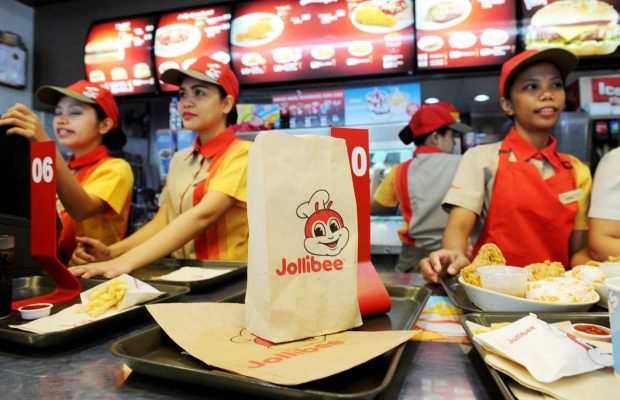
    Filipino fast-food chain Jollibee plans to expand its store network in North America to 250 by 2023.

    Its parent company Jollibee Foods Corporation (JFC) said it is committing to further expand the brand in North America, having identified the region as a key growth market.

    There are currently 46 Jollibee outlets in North America, with the first store opened in 1998 in California.

    The expansion plan was announced at the inauguration of its new North American headquarters in West Covina, California on Friday. It says the new 28,000sqft headquarters will serve as a center of operations for Jollibee and its sister brands Chowking and Red Ribbon.

    “The new Jollibee headquarters will ably support operations around North America in its quest to become a major fast-food player in the region,” says the company.

    Jollibee has a restaurant network of more than 1400 at home and more than 230 elsewhere abroad.

    Parent company JFC has more than 5800 restaurants in 35 countries globally, with recent investments including a joint venture to open Tim Wan Ho restaurants in China.

  • City Chic broadens US reach with e-commerce acquisition

    City Chic broadens US reach with e-commerce acquisition

    Over a year after divesting the Millers, Crossroads, Katies, Autograph and Rivers businesses to Noni B, and putting more focus on its flagship plus-size brand, City Chic Collective has announced it will acquire US specialty retailer Avenue’s e-commerce assets.

    The US Bankruptcy Court approved the brand’s proposed US$16.5 million acquisition of Avenue’s assets after the brand entered chapter 11 bankruptcy in August.

    According to City Chic, the acquisition will provide the business with a broader reach within the US plus-size market, and expects it will deliver accretive growth for the business’ international operations.

    “Avenue’s e-commerce assets represent a unique opportunity to accelerate our US customer growth and expand across plus size segments,” City Chic chief executive Phil Ryan said.

    “This acquisition delivers on our vision of ‘leading a world of curves’. It means that City Chic now has a portfolio, or a collective, of online business that we can leverage to further build our Northern Hemisphere presence.

    “Our City Chic, Avenue and Hips & Curves brands will allow us to speak to more plus size women and deliver on-trend, well-fitting garments across multiple price points.”

    Online sales across Australia and the US made up 44 percent of total sales for City Chic in FY19.

    In April, City Chic also acquired US online plus-size intimates brand Hips & Curves for US$2 million.

    The shift away from multi-brand retailing toward a more focused approach has made a significant impact on City Chic’s performance – with stock price rising from approximately 80 cents in June of 2018, when the Specialty Fashion divestments were made, to $2.80 per share last week.

    The retailer posted strong sales over its first year as a standalone business, with revenue improving 12.6 percent to $148.4 million, while comparable sales grew 12.2 percent.

  • AirAsia X Eyes Flights To California

    AirAsia X Eyes Flights To California

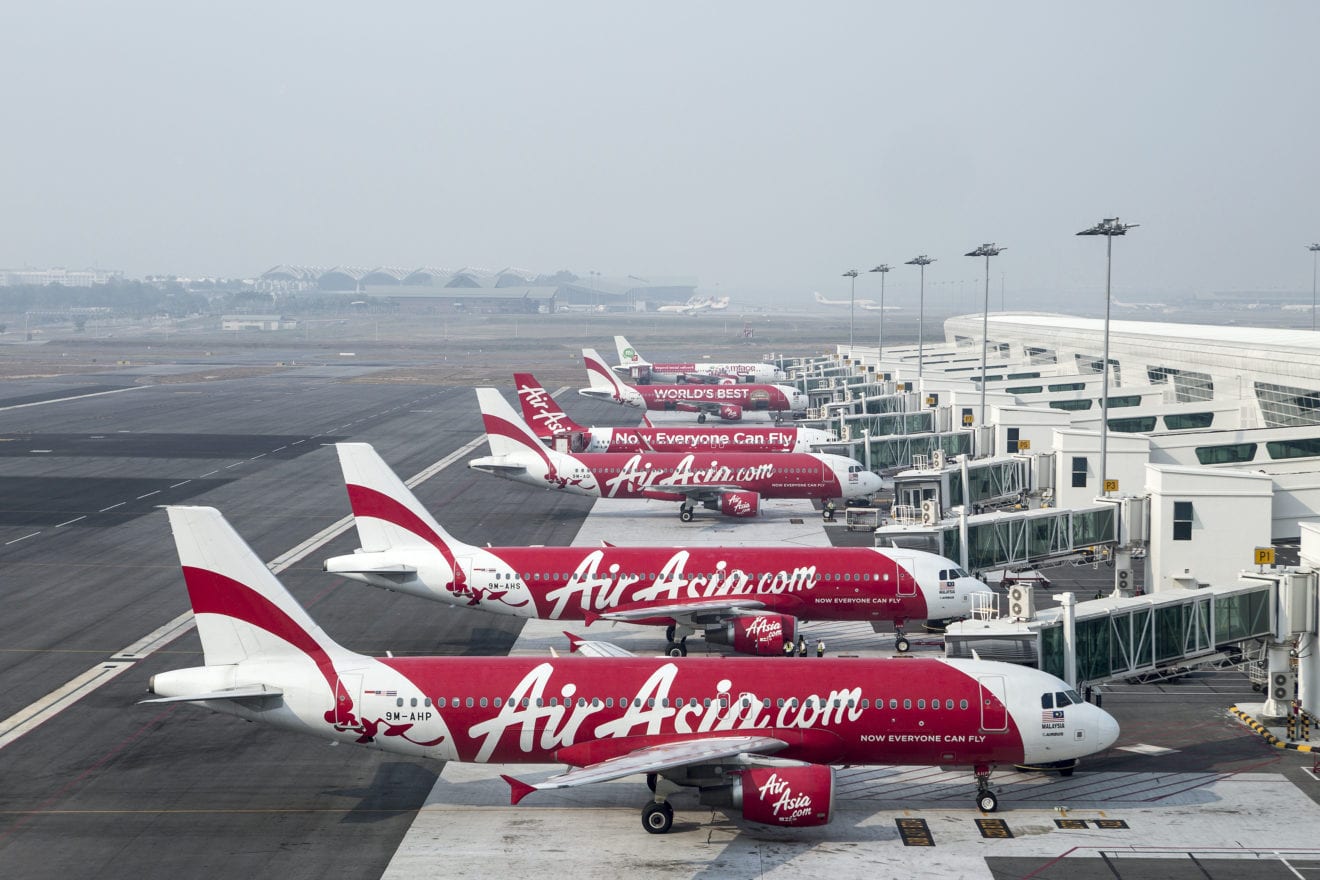
    AirAsia X’s ambitions to fly to mainland North America aren’t new. AirAsiaX has long talked about using their A330neos and Tokyo’s Narita airport as a starting point for flights to California. With the first of the aircraft now being delivered, the low-cost carrier breathed new life into the story at an aviation conference yesterday, Monday, September 23, 2019.

    AirAsiaX’s Muhammad Sharir was discussing the route at the Routes Online annual conference in Adelaide, Australia. Mr Sharir says the flights to the US mainland could start as soon as 2021, but was coy about where the flights would originate from or where they would fly to. Quite possibly because they haven’t sorted that out yet.

    Not yet a truly long haul carrier

    AirAsiaX has some form as a long haul low-cost carrier. It started flights to both London and Paris around ten years ago. But the economic downturn doomed the flights and within a few years, the flights were canceled.

    From their Kuala Lumpur hub, AirAsiaX now gets as far afield as Australia, Japan, China, South Korea and Hawaii. Strictly speaking, medium-haul rather than long haul but AirAsiaX wants to get back into the long haul business.

    2021 is the proposed starting date for California flights, because Mr. Sharir said that’s when the A330neos they need to operate the route would be delivered and ready to fly. AirAsia X has confirmed orders for 78 A330neos.

    Oakland out of favour

    Oakland, California, has long been on AirAsiaX’s horizon. As Edward Russell notes, AirAsia X held a media event at the airport back in 2012 and wheeled out a plane painted in a local sports team’s colors. All very nice, but AirAsia X flights never appeared on the arrivals board at Oakland.

    It seems Oakland has lost some of its allure for AirAsiaX, their preference swinging towards Los Angeles. But The Points Guy story thinks San Francisco is the most preferred option for the first AirAsia X North American flights.

    North America via Honolulu?

    It also offers the rather delicious option of pinging out of Honolulu on the back of existing Osaka-Honolulu AirAsia X flights.

    Whilst not a nonstop transpacific flight, it would make AirAsiaX the first low-cost carrier to offer a transpacific service. At this time, low-cost carriers coming from both east and west directions all terminate and coalesce at Honolulu. You could, technically, do the crossing on say, Southwest to Honolulu and then AirAsiaX on the last leg – which sounds like a lot of fun.

    California flights via Honolulu are an interesting scenario for AirAsia X. Photo: AirAsia.
     

    It would also see an Asian based low-cost carrier give the US low-cost incumbents a run for their money on the Hawaii-US mainland routes. The reaction at Southwest’s Dallas HQ would be priceless to see.

    While this is an interesting scenario, nonstop flights out of Japan remain a live option. AirAsia X currently flies from Kuala Lumpur to Narita. Those flights could continue onto the US mainland. It is also worth noting that AirAsia X has a history of announcing flights to North America that don’t eventuate. Whilst they do have the aircraft being delivered capable of making the flights, the 2021 starting date is still a while off and no routes have been announced

    It will be a case of wait and see.

  • US Fines Hyundai $47 Million Over Dirty Diesel Engines

    US Fines Hyundai $47 Million Over Dirty Diesel Engines

    South Korean automaker Hyundai will pay a $47 million fine for illegally importing and selling dirty diesel engines in violation of American environmental rules, US authorities announced Thursday.

    Between 2012 and 2015, the company imported nearly 2,300 diesel-powered heavy construction vehicles with engines that did not meet US emissions standards, the US Justice Department said in a statement.

    “Hyundai put profits above the public’s health and the requirements of the law,” Jeffrey Bossert Clark, head of the department’s environment and natural resources division, said in a statement.

    “We will not tolerate such schemes that skirt the Clean Air Act, designed by Congress to improve air quality.”

    The case began with a whistleblower tip submitted in 2015 to the US Environmental Protection Agency, which launched criminal and civil proceedings.

    A US court earlier imposed a $2 million fine on the company for the clean air violations.

    US officials say the Hyundai diesel engines were not certified to meet emissions standards for particulate matter and nitrogen oxide, both of which contribute to disease and premature death.

  • Zimmermann opens another US store

    Zimmermann opens another US store

    Australian designer brand Zimmermann has opened its 12th store in the US and its third in New York City with the launch of a new boutique on the Madison Avenue.

    The prestigious shopping street is home to the likes of Carolina Herrera, Christian Louboutin, Ralph Lauren, Valentino and other designer brands.

    The 160sqm store, which opened last week, was designed by Australian designer and architect Don McQualter of Studio McQualter to create the feeling of a local apartment, with each room in the heritage-listed 1940s building styled to frame the collection.

    The store includes a mix of vintage pieces, such as a 1960s Murano glass Italian chandelier and 1930s De Coene desk, with handmade floor and wall tiles and custom metalwork, light fixtures, display tables, millwork and virtual merchandising fixtures designed by Studio McQualter.

    The store is meant to be a physical embodiment of the Zimmermann brand, conveying a relaxed femininity, air of freshness and light and unyielding optimism.

    Co-founders Nicky and Simone Zimmermann celebrated the new Madison Avenue store and upcoming Spring 2020 collection by co-hosting an in-store cocktail event followed by an intimate dinner nearby at Flora Bar at the Met Breuer with VIPs and close friends of the brand.

    “New York is like a second home for us. I have spent a lot of time in the city over the years and we’ve always loved the energy Madison Avenue brings. We are excited to now be a part of the Uptown community,” Nicky Zimmermann, creative director and co-founder, said.

    The brand plans to open a second boutique in Florida in Palm Beach in November 2019.

  • Trump Prods General Motors Over Its Auto Plants In China

    Trump Prods General Motors Over Its Auto Plants In China

    U.S. President Donald Trump, who is engaged in a trade war with Beijing, said on Friday that the largest U.S. automaker, General Motors Co, should begin moving its operations back to the United States.

    “General Motors, which was once the Giant of Detroit, is now one of the smallest auto manufacturers there. They moved major plants to China, BEFORE I CAME INTO OFFICE. This was done despite the saving help given them by the USA. Now they should start moving back to America again?” Trump said in a post on Twitter.

    Trump appeared to be referring to a Bloomberg News story that reported GM’s hourly workforce of 46,000 U.S. workers has fallen behind that of Fiat Chrysler as the smallest of the Detroit Three automakers. Over the past four decades, GM has dramatically cut the size of its overall U.S. workforce, which numbered nearly 620,000 in 1979.

    GM did not directly comment on Trump’s tweet.

    “GM’s China operations are not a threat to U.S. jobs,” the company said in a fact sheet, noting that its joint ventures have sent $16 billion in equity income to GM since 2010 and that it has invested $23 billion in U.S. operations since 2009.

    GM’s U.S. hourly workforce has fallen by about 4,000 jobs since the end of 2018 to about where it was a decade ago.

    Trump’s ire with GM comes as contract talks with the United Auto Workers union with the Detroit Three automakers intensify ahead of a Sept. 14 deadline. Trump has previously attacked GM for building vehicles in Mexico and for ending production at plants in Michigan, Ohio and Maryland and threatened to cut GM subsidies in retaliation.

    GM’s decision to close four plants in the United States is a central issue in the contract talks.

    Trump has made boosting auto jobs a key priority and has often attacked automakers on Twitter for not doing enough to boost U.S. employment. His 2020 re-election bid will hinge on holding key industrial battleground states like Wisconsin, Pennsylvania and Michigan that narrowly voted for him in 2016.

    China is the world’s largest auto market, and government policy favors automakers assembling vehicles there, and not importing them from overseas.

    In response to Trump’s latest tariffs, China said last week it will reinstitute 25% tariffs on U.S.-made vehicles. The U.S. is imposing 15% tariffs on more than $125 billion in Chinese goods starting Sunday.

    GM sold 3.6 million vehicles in China last year accounting for 43% of its worldwide sales. GM booked $2 billion in equity income from its China operations last year.

    GM imports a small number of vehicles from China. In June, the Trump administration rejected a request from GM to exempt its Chinese-made Buick Envision from a 25% U.S. tariff on sport utility vehicle models.

    The midsize SUV has become a target for U.S. critics of Chinese-made goods, including leaders of the UAW members in key political swing states such as Michigan and Ohio.

  • Don Quijote eyes massive US rollout

    Don Quijote eyes massive US rollout

    Hard on the heels of a successful expansion in Singapore and launching in Hong Kong and Thailand, Japanese variety retailer Don Quijote is now eyeing continental USA.

    Pan Pacific International Holdings, the company’s parent, already has Marukai supermarkets trading in the US and three Don Quijote stores in Hawaii.

    But rather than replicate its Asian concept, Pan Pacific will create a new format tailored to the US but with “Don Quijote-ism at the core,” CEO Koji Ohara told the publication.

    The expansion will be led by Ohara who will resign from his current role and relocate to the US to build the business there, with a target of expanding its network from 38 currently to 100.

    Sean Butler, MD at supply-chain consulting firm LIDD, told Grocery Dive that he expects Don Quijote will stick to its three pillars – convenience, discount, and amusement – when it launches in the US.

    In the US, Don Quijote has an opportunity to reach an audience hungry for low-price groceries and consumer goods, he said.

    “The company is betting that it can execute experiential retail better than the status quo – and pick up a nice chunk of the world’s largest consumer economy in the process.”

  • The success of the iPhone keeps Apple from moving production out of China

    The success of the iPhone keeps Apple from moving production out of China

    With U.S. President Donald Trump willing to tax U.S. companies and consumers into a recession, Google apparently is ready to move the production of its Pixel handsets and smart speakers out of China and into Vietnam and Thailand respectively. Apple has yet to announce a move away from China although reports earlier this year indicated that it was looking to shift 30% of its manufacturing out of the country. And yes, Vietnam is one of the regions that many believe will end up home to some of Apple’s manufacturing facilities-eventually. But this won’t happen overnight; finding a trusted supply chain and trained workers take time.

    Apple does have an incentive to move its production out of China; starting on December 15th, the iPhone will be included in a group of products from China that will be taxed at 15% when imported into the states. Originally, the tariff was supposed to start on September 1st, but President Trump didn’t want the Christmas holiday season marred by slower growth due to the tariffs. However, the Apple Watch and the AirPods face a 15% tax starting on September 1st.

    Apple could decide to eat all or some of the tax or pass all or some of it on to consumers in the form of higher prices. Considering that 13.8% fewer iPhones were sold to consumers globally during the second quarter (year-over-year), Apple might decide to absorb the additional costs for now.

    While Apple does produce a small number of iPhones in India, this was originally done to escape an Indian import tax that might have made it hard for consumers in the country to buy an iPhone; while it is the second-largest smartphone market in the world, India is a developing country after all. But what is frightening to consumers worried about higher iPhone prices is that the tech giant is becoming more reliant on its manufacturing facilities in China. According to Reuters, Apple has added far more factories inside the country than out of it. It’s main contract manufacturer Foxconn has expanded from 19 Chinese factories in 2015 to 29 this year. And Pegatron, another company paid by Apple to assemble its products, has gone from 8 plants in the country to 12 over the same time period.

    And supply chain data calculated by Reuters shows that Apple is pretty much still committed to China. 44.9% of Apple’s suppliers were in China back in 2015, a figure that has actually risen to 47.6% this year.

    “The vast majority of our products are kind of made everywhere. There is a significant level of content in the United States, and a lot from Japan to Korea to China and the European Union also contributes a fair amount. … I think that will carry the day in the future as well.”-Tim Cook, CEO, Apple

    If you’re wondering why Google can easily shift Pixel production from China to Vietnam and Apple can’t, it is a matter of scale. Even after doubling the number of Pixel handsets to be assembled this year, Google is building only 8 to 10 million phones in 2019 which is a drop in the bucket compared to the number of iPhones that Apple churns out in the course of a year. So Apple needs a larger supply chain with companies that it can trust to deliver in the quantity and quality it needs for the iPhone. But the company might have no choice but to keep iPhone production in China. According to Dave Evans, CEO of San Francisco supply chain firm Fictiv, there are only a few places outside of China that can produce 600,000 phones a day. In other words, the success of the iPhone is what is keeping Apple in China despite the tariffs.