Retail News CRM

Tag: usa

  • Did Siri affected Biden or Trump with some votes?

    Did Siri affected Biden or Trump with some votes?

    Over the years we have knocked Apple for its failure to make Siri as good and accurate a digital helper as Google Assistant is. Siri has been known to make the occasional blunder. For example, let’s say that last weekend you had forgotten when Election Day was. So you turned to  Siri. iPhone users were told by their virtual assistant that Election Day was scheduled for November 8th. The problem with that answer is that it is wrong. Very wrong. Election Day was November 3rd  so if you were relying on Siri’s response to remind you when to visit your polling place, you would have arrived five days too late missing your opportunity to vote for president.

    This is not the first time that the iPhone told users the wrong information about time and date. For years, the idea of Daylight Saving Time continued to elude the grasp of iOS. One year, instead of moving iPhone clocks ahead an hour, it moved the clocks back an hour instead which really helped iPhone users get their day off to a very poor start.

    The interesting part of Siri’s most recent screw up is that November 8th was the date of the last U.S. presidential election back in 2016. On the other hand, November 8th 2022 will be when the U.S. holds its next major election, the mid-terms. Either way, Siri’s response was wrong and we wouldn’t vote for either one.

    While only the most clueless would have ended up missing election day because of Siri’s response, well, such clueless people do exist. Luckily, the number of those who listened to Siri was probably not large enough for its faux pas to impact the election results.

    So here’s a word to the wise. If you ask Siri for the date of an upcoming event that you must attend, it might behoove you to confirm the answer with another source even if that goes against the reason for Siri’s existence in the first place. Like any digital assistant, Siri is only as good as the data bank it gets its information from.

  • Huawei’s breakthrough Petal Search app helps users install content banned by the U.S.

    Huawei’s breakthrough Petal Search app helps users install content banned by the U.S.

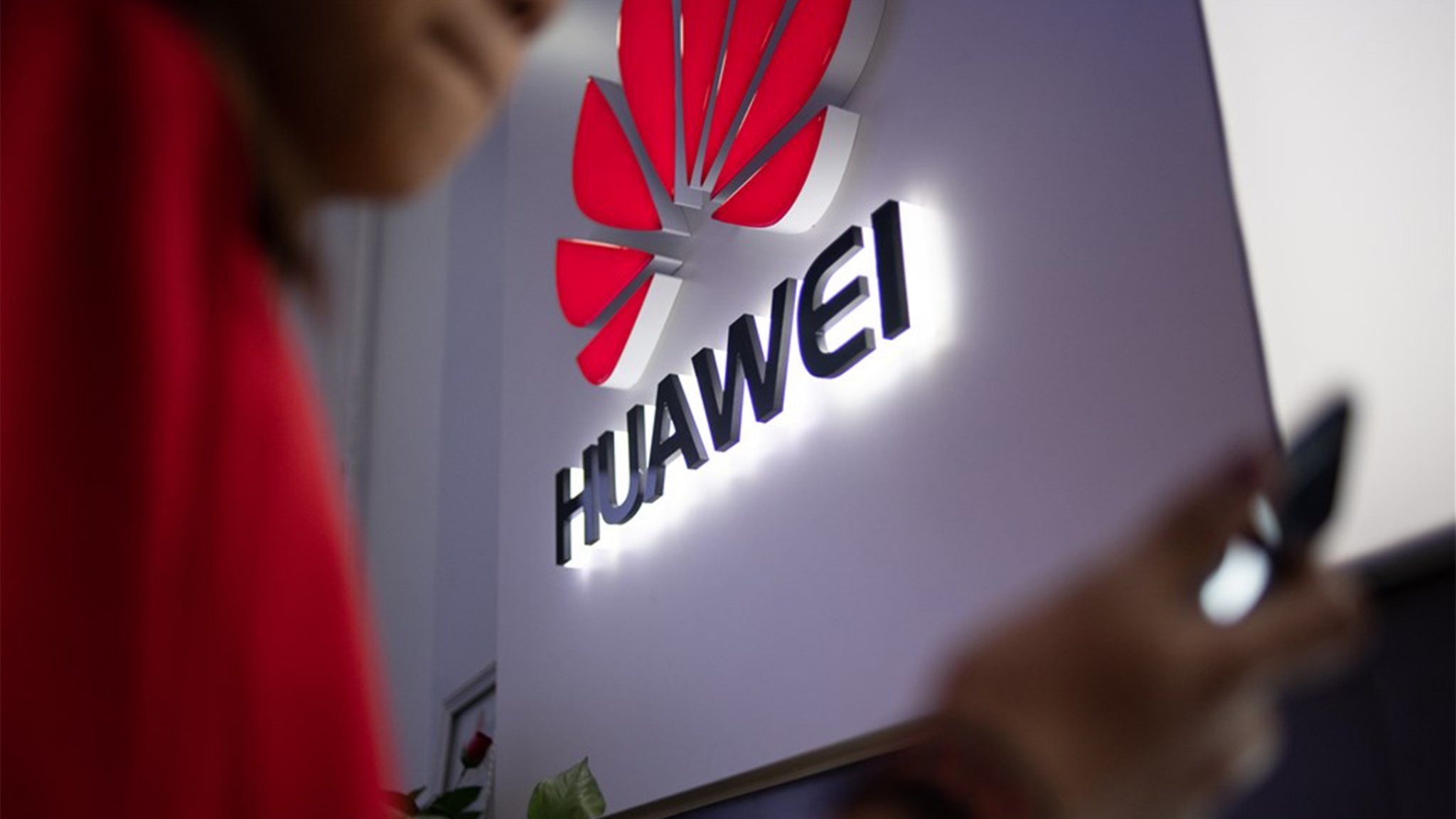
    You might remember that back in May, we told you about Huawei’s plan to work around the manufacturer’s inclusion on the U.S. Commerce Department’s Entity List. The U.S. put the company on this list because it considers the firm to be a national security threat. Placed on the Entity List, Huawei is not allowed to access its U.S. supply chain which means that it cannot license the Google Mobile Services version of Android. It also means that Google’s Android apps like Search, Maps, YouTube, the Play Store, Drive, and Gmail can not be installed on a Huawei phone. Most of Google’s apps are banned in China anyway, so only the international variant of the company’s phones are impacted.

    The Entity List placement also means that Huawei cannot work with U.S. firms including app developers. So Huawei’s phones, both inside and outside China, do not give users a selection of popular U.S. based apps to use. For example, in Huawei’s own AppGallery Android app distribution platform, you won’t find apps like Amazon, Snapchat, Speedtest.net, and AccuWeather. But as we pointed out in May, Huawei developed a new search engine called Petal Search. Petal Search will not only list “daily weather forecasts and top news; live sports scores and schedules; video, image, and music searches; and financial news and stock market updates.” When it comes to travel, it will “search millions of hotels worldwide and book rooms; and check flights and travel info for top global destinations.” Petal Search will also “look up local services and businesses with comprehensive directories.” But that isn’t the exciting cool feature.

    When you open up Petal Search and tap in the name of an app, the search engine looks for the one that you have in mind. If it finds the title in the AppGallery, it will be installed on your Huawei handset. If Petal Search can’t find a listing, it will search for it on third-party app stores. If it finds the app, a simple tap of the Install button will handle the task of downloading it on your phone.

    When we first heard about Petal Search, we told you that the idea behind it was to help Huawei customers find and install apps that are blocked due to the U.S. ban. These include Google’s own Android apps and U.S. developed social media and entertainment apps. And now, according to Forbes, Petal Search has become a full-service search engine as well. Petal even got some promotion during last week’s unveiling of the new flagship Mate 40 series.

    With the U.S. continuing to be offended by Huawei’s will to survive, the company could end up having to leave the smartphone industry and concentrate on providing an ecosystem to other phone manufacturers. Huawei created its own Mobile Services ecosystem that has over 700 million users, a 32% annual gain from last year. More importantly, the number of app developers registered by Huawei has risen 76% year-over-year to 1.6 million. This is of major importance because the larger the number of developers working on content for HMS, the more of a challenge Huawei becomes to other phone manufacturers.

    The main challenge that Huawei has at the current time is finding a foundry that can produce cutting-edge chips without using American-made technology. Back in May, the U.S. Commerce Department changed its export rules preventing foundries like TSMC from shipping chips to Huawei without a special license issued by the U.S. Recently it was discovered that the Chinese manufacturer ordered 15 million units of its 5nm Kirin 9000 chipset but received only 8.8 million of them. The new export rule started to take effect on September 15th.

  • TikTok could be forced to stop operating in the U.S. following a hearing scheduled for next month

    TikTok could be forced to stop operating in the U.S. following a hearing scheduled for next month

    a U.S. judge said today that he will hold a hearing on November 4th-the day after election day-to decide whether the U.S. government can ban transactions with TikTok. The popular short-form video app is owned by ByteDance, a Chinese manufacturer that the Trump administration fears is passing on personal and corporate data to Beijing. An executive order signed by the president in August ordered ByteDance to divest itself of TikTok’s U.S. operations or have it removed from app stores in the states.

    At first, the president gave a thumbs up to a deal that would create a new company called TikTok Global that would be 80% owned by ByteDance and 20% owned by U.S. firms Oracle and Walmart. The plan was for TikTok Global to go public via an IPO. Since the president had earlier mused about the U.S. Treasury getting paid for the country’s participation in a TikTok deal, we wonder how the distribution of the shares would be handled with millions of dollars of possible profits at stake. Talks between all of the parties involved continuing.

    Meanwhile, a preliminary injunction issued by U.S. District Judge Carl Nichols on September 27th prevented the U.S. government from forcing the Apple App Store and Google Play Store from removing their listings for TikTok. The latter is not even close to being out of the woods in the states. First of all, the current injunction is temporary and another Trump-signed executive order against TikTok and ByteDance takes effect on November 12th. This order will shut down TikTok in the U.S. if there is no deal to divest the popular app by then. According to a schedule released by the court, no ruling on any legal matter before the court in relation to TikTok will be issued until late next month at the earliest.

    What’s holding up the deal are questions about majority ownership of the new company; additionally, China needs to approve the transaction and the country now bans the export of Chinese-made algorithms to other countries. TikTok uses such an algorithm to determine what video subscribers can see. This technology reportedly would not be included in any deal between ByteDance, Oracle, and Walmart.

    TikTok is beloved by many teens who use the app to create 15-second and 60-second videos of lip-synchs, dances, pranks, and more. During the pandemic, teens stuck inside their homes turned to the app to give them something to do. In the states, TikTok has 50 million active daily users and 100 million active monthly users; the latest data from app analytical firm Sensor Tower reveals that TikTok was the top-grossing app worldwide during the third quarter. It also was the most downloaded app on iOS and Android during the three months that ended in September. Consumer spending on the app rose 800% on an annual basis from July through September.

    As with most Chinese tech firms that operate some sort of business in the states, the U.S. government considers TikTok and it’s parent company to be national security threats because of their perceived close ties with the Communist Chinese government. There never has been any proof that these firms (such as Huawei and ZTE) have backdoors built into their products in order to obtain personal data. In the case of TikTok specifically, the fear is that 100 million Americans could be at risk of having this information sent to a server owned by the Communist Chinese government.

  • Coronavirus made currencies go wild  – are you insured against sharp movements?

    Coronavirus made currencies go wild  – are you insured against sharp movements?

    COVID-19 has been the single biggest cause for the turbulency we have been witnessing in the markets over the past 7 months. We’ve had a catastrophic few days in March with several record-breaking day point drops, and since, we’re left with an uncertain future and difficult risk management. 

    The biggest issue is that we haven’t encountered social distancing and lockdowns in several generations, and some countries haven’t ever. Whilst most societies are finally getting to grips with controlling COVID-19, the business grants are running dry and we’re beginning to see a rise in unemployment.

    The US is a good example of the economic damage caused by COVID-19. In June, there were many reports suggesting unemployment is rising. These come at the same time that the $600 weekly supplement for jobless benefits came to an end. There were various signals pointing towards an imminent recession. Of course, it already had. In June, the US officially entered recession. 

    Whilst this was stipulated by experts to not be a normal downturn, and was a temporary issue regarding lockdown, it certainly didn’t help the US Dollar. The USD has been devaluing since May, in which it saw an accelerated drop mid-June against the Euro.

    Even in Asian countries where coronavirus has been much better contained, there are economic ramifications from social distancing. In the scenario of there being no direct recession, there’s still the matter of currency, which affects every country, and particularly the international businesses within it. This article will explore the dangers that Coronavirus is having on currency, and why it’s more than just devaluing that’s to worry about.

    Spike in retail investors causing havoc

    COVID-19 has brought on many unexpected economic implications, but one not many saw coming was the rising of retail investors. Research conducted by Paderborn University in Germany found that retail investors increased their activity by 13.9% for every doubling of active Coronavirus cases over a time period of several months – an odd correlation.

    Investors were found to be likely engaged in short selling, suggesting that the economic turbulence itself is what’s attractive to retail investors as they try to capitalise on large swings in prices. 

    Behavioural finance expert Dan Egan claims that there’s a rise in “entertainment investing”. Egan also claims that a lot of this money is what’s been saved from a reduction in spending over summer, with many stores and entertainment services closed or heavily restricted. In fact, the huge influx of retail investors in the Malaysian stock market actually helped recoup almost all of its 2020 losses. This is almost unheard of in a market that’s mostly dominated by investment banks and trading algorithms.

    This is also supplemented with easily accessible investing apps, which make Forex as simple as sports betting. In fact, without sports matches being played, this could be another factor in its popularity. Many Forex companies are offering sign up bonuses, referral schemes and social investing (automated copycat trading, like with eToro). This, whilst it’s a positive development, may cause more unpredictable behaviour in markets such as currency.

    We’ve even seen some of the biggest and most successful quantitative hedge funds struggle with the influx of retail investors. It’s possible that all of the new money and uneducated gambling has glitched the algorithms into making poor judgements. For example, Two Sigma, DE Shaw and RenTech, all of which are consistently successful, all saw losses during Easter on some of their funds.

    The Dollar and CNY Slides

    The short term gains that the US saw briefly in Easter were emotional, short-term dives into a safe haven currency. As time goes by and the long-term economic outlook begins to become more clear, which is one of political instability, vast government spending and rising unemployment, we quickly begin to see the USD slide. Whilst it continues to do so, the most noteworthy observation is its high volatility, along with other currencies. 

    Recently, the selldown has slowed somewhat due to lackluster Chinese economic data, meaning that some have switched back to buying US bonds. The Chinese Yuan is another currency that has been seeing a drop in price since May against the Euro.

    How this affects small businesses

    First and foremost, volatility in currencies affects international small businesses a great deal because of the lack of certainty. We can see the rise in companies dealing with international money transfers as good evidence for these unnerving currency developments, as small companies turn to hedging and cheaper rates offered by fintech alternatives. 

    Dealing in multiple currencies and having international suppliers means that the business is having to buy or convert currency regularly. If you only have a tight gross profit margin, this is being completely eaten into with currency swings. 

    For example, €10,000 worth of European headphones for your American business would have cost $10,752 in May. Today, it costs $11,850. This is over $1,000 more on one order within the space of a few months, and can seriously damage profit margins. After all, this is now 10% more expensive, which could be half of a 20% profit margin. 

    The second way it affects businesses is that if they mainly deal in the USD, they’re being hurt by the declining dollar. For international businesses outside of America, demand from Americans may be hurt as your different-currency services. For example a Spanish SaaS company is now relatively more expensive for USD clients. If goods or services for non-Americans are sold in USD, then the exchange back to base currency is going to be pricey.

    How hedging is saving many businesses

    COVID-19 may have already shook up the markets, but it’s far from the end of it. We’re in the dark regarding the extent of the upcoming volatility, which makes risk management as difficult as it can be.

    The best way to mitigate risk, is to insure against it. Hedging products allow for this in a variety of forms, and is likely why they’re becoming democratised into easily accessible platforms now (i.e. Money Transfer Companies, as mentioned earlier) – the demand is certainly there.

    For example, businesses operating in the USA that deal in EUR would have benefited greatly if they hedged the Euro back in May. Purchasing a forward contract would have meant they receive May’s price (a pre-agreed price based on today’s price) for the Euro for a specific date in the future. For that contract, they will have paid a fee far smaller than the eventual loss that’s been realised. 

    For businesses who aren’t sure which way the currency may swing and feel a Forward contract is, in that instance, merely another gamble, then Option contacts are a perfect replacement. With options, companies have the option of whether or not they want to execute the future transaction at the pre-agreed price, unlike Forward hedging which is a locked-in commitment. This caters to a highly volatile market which isn’t confidentially forecasted, as it’s there if you need it.

    Banks fail at meeting hedging demand

    Most highstreet banks fail to transparently offer hedging products to small business account holders. Many do not offer them at all, whilst others have been in trouble in recent years for mis-selling products. There are exceptions of course, and many banks will hedge for large corporations, but it’s not currently on their radar when it comes to meeting smaller contracts. 

    Even challenger banks, such as Starling, who are marketed as the fintech alternative to the outdated bank, still fail to offer hedging products. This is another reason behind the rise of  Money transfer companies, which have relished in meeting this demand with offering accessible FX services.

    The FX market for a long time catered only to large corporations. There were high minimum transfers, phone calls with brokers and long waiting times. Today, there’s an app – and that’s it. Whilst there’s many to choose from, Money Transfer apps are exceedingly easy to use and are partly responsible for this rise in retail investing. 

    Most have access to the interbanking rate, meaning that currency is offered at ultra competitive rates. This is enough, in this market, to attract users given the devaluing of many currencies. Within this umbrella term, there are specialists that offer hedging products, yet they keep the accessible, user friendly approach. Thus, it’s never been easier to hedge and protect against currency swings. 

    This is a surprise to many who rely on high street banks for all of their financial products: a mortgage, savings account, current account, business account, car loan and so on. There are benefits to using a centralised entity, but when they fail to offer even the most basic FX services, it’s only a matter of time that they’re entirely left behind for fintech alternatives.
     

  • Japan’s Nanamica landing in New York City for US debut

    Japan’s Nanamica landing in New York City for US debut

    Japanese clothing label Nanamica is to open its first international store in New York City.

    Located on Worcester St in the Soho arena, the Nanamica New York store occupies 1200sqft, offering a selection of designer Akumate Nanamica’s lines together with a limited collection from other brands, including a collaboration with The North Face, Purple Label.

    Designed by Taichi Kuma, the store design features a “house of the sea” theme, illustrating the open and relaxing ambiance of the sea, according to the company.

    “With the message of One Ocean, All Lands (the sea is one and the world is connected), we will send it from New York to the world so that the style proposed by Nanamica, a high-dimensional mix of fashion and function, will become a standard for various countries,” the company said in a statement translated from Japanese.

  • Leaked White House document shows how U.S. plans to hurt TikTok financially

    Leaked White House document shows how U.S. plans to hurt TikTok financially

    With short-form video app TikTok about to be banned in the U.S. starting in the middle of next month, a Harris Poll that was shared with USA Today found that 64% of adult Americans are against the presidential executive order that will end the app’s presence in the states. The order was signed by U.S. President Donald Trump because the app’s parent company, ByteDance, is a Chinese company. Many U.S. lawmakers and members of the Trump administration believe that Chinese manufacturers use backdoors embedded in their products to capture data from consumers and companies and send it to the Communist Chinese government.

    While a majority of those adults polled are against Trump’s executive order, 57% of tall Americans agreed with the move by the president to kick TikTok out of the states. However, those answering the poll were 18 years of age or older while most TikTok users are younger. The app has been installed two billion times from the App Store and the Google Play Store. Content includes lip-syncing, dancing, pranks, protests, singing, and more. During the pandemic, TikTok picked up interest from those who were stuck at home.

    Microsoft has reportedly been looking at buying the North America, Australia, and New Zealand operations of TikTok although company founder Bill Gates has stated his reservations. Twitter has supposedly has had preliminary meetings with TikTok to form some sort of combination. However, this would be quite a longshot considering that the estimated valuation of TikTok is well above the $30 billion that Twitter is worth. But even if a deal with a U.S. firm is completed, the Harris Poll found that 62% of Americans would continue to believe that the app would pose a national security threat because of its ties to China. The rest of the poll saw 67% of Americans worried that the Chinese are using personal data collected by TikTok, a sentiment agreed to by 59% of TikTok users.

    A document from the White House indicates how the U.S. plans to impact TikTok’s operations in the country. One way that this could happen is by disrupting the app’s operations and sources of funding. A source inside the White House verified the authenticity of the document which said, “Prohibited transactions may include, for example, agreements to make the TikTok app available on app stores … purchasing advertising on TikTok, and accepting terms of service to download the TikTok app onto a user device.” Industry analysts say that if the ban prevents TikTok from appearing in the App Store and the Google Play Store, the result would sharply damper the growth of the app.

    Also facing a ban in the U.S. is messaging, social media, and mobile payment app WeChat. The latter, launched by Tencent in 2011, has over one billion users and many Chinese consumers rely on the app every single day. Trump also signed an executive order that will ban U.S. firms from doing business with WeChat. The White House document seen by Reuters is not clear on whether WeChat will indeed be banned in the states.

    The U.S. ban on TikTok would take effect starting on September 16th, the same date that any WeChat ban would also begin. James Lewis, a cybersecurity expert with the Washington-based Center for Strategic and International Studies, said, “That kills TikTok in the U.S. If they want to grow, these rules are a huge obstacle.” Lewis did note that the U.S. government might not be able to prevent American TikTok fans from downloading the app from a foreign website. TikTok has 100 million users in the U.S. and has stated that data from its U.S. subscribers is stored on servers in the U.S. and Singapore and that such information would not be given to the Chinese government.

    TikTok says that it plans to continue honoring ad campaigns although some corporations say that they have made plans to advertise on other apps if TikTok is shut down in America.

  • T-Mobile isn’t the only U.S. carrier with a nationwide 5G network

    T-Mobile isn’t the only U.S. carrier with a nationwide 5G network

    Move over T-Mobile, you’re no longer the only nationwide 5G network in town. AT&T announced Thursday that it has added 5G in 40 more markets; as a result, the country’s second-largest wireless provider now covers 205 million Americans with its 5G signal. Helping AT&T speed up the process so quickly was the launch last month of dynamic spectrum sharing (DSS) in parts of Florida and Texas. DSS responds in real-time to demand on AT&T’s network for either 4G LTE or 5G spectrum. Thus the use of the word “Dynamic” in DSS.

    With DSS, the same channel can be employed for 4G and 5G users at the same time. The technology is “traffic-aware” so 4G LTE and 5G resources are allocated based on the makeup of the traffic. Using its 850MHz low-band spectrum, AT&T’s coast-to-coast 5G can be found in 395 markets. T-Mobile’s nationwide 5G uses the carrier’s 600MHz low-band spectrum and can be accessed by 225 million people, 20 million more than AT&T. Besides offering 5G over its low-band spectrum, in limited parts of 35 markets, AT&T’s 5G+ service employs its faster mmWave spectrum.

    On August 7th, AT&T will offer its 5G service to customers of its least expensive unlimited plan at no additional cost. The Unlimited Starter postpaid plan costs $140 for 4 lines ($35 per line/per month). Customers on more expensive unlimited plans already had 5G service. The wireless provider’s prepaid customers will also have access to 5G via the Unlimited Plus plan, which costs $75 per month or $50 with autopay. That service also begins on August 7th.

    Chris Sambar, Executive Vice President of Technology Operations said, “Our strategy of deploying 5G in both sub-6 (5G) and mmWave (5G+) spectrum bands will provide the best mix of speeds, latency and coverage that are needed to enable revolutionary new capabilities to fuel 5G experiences for consumers and businesses. Our competitors are still working to provide that same mix, which for them could take months or even years. What we offer is available to consumers and businesses today, and we’re not slowing down.”

    5G phones that AT&T sells include the Samsung Galaxy Note10+ 5G, the Galaxy S20 series, the Galaxy A71 5G, and the LG V60 ThinQ 5G. The LG Velvet 5G is now available and orders for the Galaxy Z Flip 5G will start shipping on August 7. Customers of AT&T’s Cricket Wireless prepaid brand will be able to activate 5G service on a Samsung Galaxy S20+ 5G starting on August 21st.

    While all three major carriers plan on using low-band, mid-band, and high-band spectrum to build-out their 5G networks, right now T-Mobile is the only one using mid-band airwaves for 5G thanks to the 2.5GHz spectrum it took control of after closing on the Sprint merger. Keep in mind that the merger was always about obtaining those assets from Sprint. Verizon is focusing on its mmWave spectrum which is why it is taking so long for it to complete. You see, the 600MHz and 850MHz airwaves used by T-Mobile and AT&T respectively, travel farther and penetrate structures better than mmWave spectrum. The latter, though, delivers faster data speeds and can handle larger amounts of traffic than low-band spectrum.

    While mid-band spectrum is rare in the states, all three carriers will take part in an auction of Priority Access Licenses (PALs) for 3.5GHz spectrum that is shared with the Navy in the Citizens Broadband Radio Service (CBRS). However, purchasing a PAL will allow a carrier to have first crack at using the spectrum.

    AT&T also announced today that it spent $1 billion to buy new spectrum that will be used for its 5G network. At the same time, the company said that it lost 151,000 postpaid subscribers during the second quarter. But that figure includes 338,000 subscribers that AT&T counts as a lost subscriber because they didn’t pay their bills. But AT&T continued to deliver service to these accounts during the quarter because of the Keep America Connected Pledge that the wireless firms agreed to in March. Under the pledge, customers who could not pay their bill were not given the boot, late charges were waived, and non-customers had access to a carrier’s mobile hotspot. The Keep America Connected Pledge expired on June 30th, the last day of the third quarter.

  • Muji enters Chapter 11 owing US$65 million in USA

    Muji enters Chapter 11 owing US$65 million in USA

    Japanese homewares and lifestyle retailer Muji has placed its US business in Chapter 11 bankruptcy protection with debts of US$64 million.

    The company said the measure was the result of having to continue to pay rent in high-profile locations while stores were shuttered due to the Covid-19 pandemic. Landlords had shown little flexibility despite stores not being able to trade.

    Under bankruptcy protection, the company’s parent, Ryohin Keikaku, has six months to submit a restructuring plan.

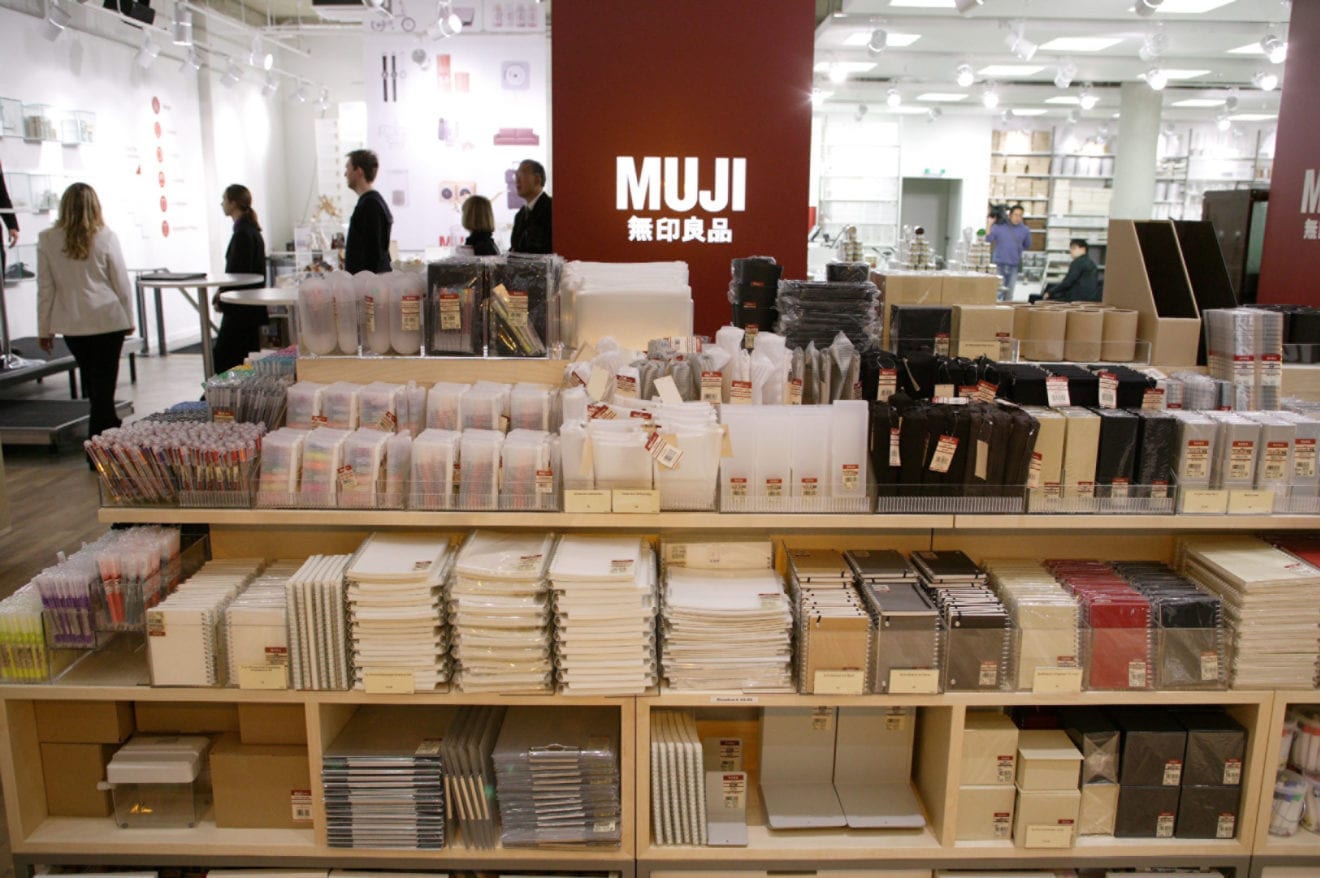
    After launching in 2006, Muji US has opened just 19 stores there. But it chose high-profile locations like 5th Avenue and Times Square to establish brand exposure.

    In the year to February, the company achieved sales of $102.5 million but reported a loss of $16.8 million.

    Muji has no intention of closing or exiting the US. Ryohin Keikaku, president Satoru Matsuzaki, said he would personally oversee the restructuring of the US business.

    “The US is the cornerstone in building name recognition,” Matsuzaki was quoted in the Nikkei.

    Muji US has reopened 10 stores, but total sales are running at just 20 percent of the level of pre-Covid-19.

  • Harley-Davidson To Cut 140 Jobs In The US

    Harley-Davidson To Cut 140 Jobs In The US

    Harley-Davidson has decided to cut as many as 140 jobs in the US as a result of reduced production volume after assembly plants and dealerships were shut in the face of the Covid-19 pandemic. The layoffs are expected across two Harley-Davidson facilities and will affect 90 production workers at Harley’s York facility in Pennsylvania and 50 other workers at its Tomahawk facility in Wisconsin. The decision comes after Harley-Davidson was forced to shut down its factories in March as part of the efforts to stop the spread of the coronavirus pandemic kept non-essential workers at home.

    In April 2020, Harley-Davidson announced that the company had temporarily laid off most of its global production employees and implemented salary cuts to lower costs, as the coronavirus pandemic hurt the iconic American motorcycle brand’s business. In April, the company announced that the CEO and Board of Directors will forego their salaries, without specifying for how long. Salaries of executive leadership were cut by 30 percent, while most other employees’ salaries were cut by 10-20 percent. Hiring has been frozen and the company also announced that salary reductions will be reassessed at the end of the second quarter.

    While Harley-Davidson re-opened its factories in May 2020 at lower production rates, the company also said that fewer models will be shipped in 2020 to dealers in the US. Production will be limited this year to bestselling models and palette of colors, and without customizable features for the rest of the year. Harley also announced that any additional new motorcycles will not be shipped to about 70 percent of its 698 dealers across the US.

    Harley-Davidson has been struggling with slow sales for several years now, particularly in the brand’s home market of the United States

    Harley-Davidson has been battling slowing sales for several years, particularly in its top market of the United States, which accounts for more than half of the brand’s motorcycle sales. To make matters worse, the coronavirus pandemic has further dented demand for motorcycles as more Americans continue to stay at home. In May 2020, Harley-Davidson also replaced former CEO Matt Levatich with Jochen Zeitz, who is also the chairman of the Harley-Davidson board and former CEO of sporting goods manufacturer Puma. Jochen and his team have been working on a new five-year strategic plan to revive sales, which Harley-Davidson plans to reveal in the second-quarter earnings update.

  • Harley-Davidson Sacks Dealer In USA Over Black Lives Matter Post

    Harley-Davidson Sacks Dealer In USA Over Black Lives Matter Post

    Harley-Davidson has announced that it will cut ties with a Tennessee motorcycle and ATV dealership after a racist post was made on the owner’s Facebook page. The post was apparently made on the Facebook page of Russel Abernathy, the owner of Abernathy’s Cycle of Union City Tennessee. Abernathy also owns a Polaris dealership, and a week ago, Polaris, which also owns the Indian Motorcycle brand, has also asked him to step down. The posts were on the Facebook page of Abernathy, owner of Polaris, Harley-Davidson and Honda Powersports stores in Union City.

    In a statement, Harley-Davidson said: “Racism, hate or intolerance have no place in our world including within the Harley-Davidson community, employees, dealers or riders. We recently became aware of racist comments posted on one of our dealer owner’s Facebook page and immediately started a review process. We will not tolerate this type of behavior in our network, and today we are announcing that the dealer owner in question will no longer be part of our dealer network. Harley-Davidson is committed to diversity and inclusion. We strive to create a welcoming environment for everyone.”

    The post on Russel Abernathy’s Facebook page has since been deleted and stated that he “was sick of this black lives matter,” before calling for black people to go “back to Africa and stay.” On his part, Abernathy is claiming that his social media account was hacked. Screenshots of the now-deleted post were shared by angry observers and local commentators.

    Abernathy also owns a Honda Powersports store in Union City. Honda has released a statement saying that the brand “unequivocally condemns racist statements and actions of every kind” and has launched its own investigation into the matter, and will take “swift and aggressive action” if warranted by the investigation.

    The stand by both Harley-Davidson and Polaris are the latest indication that corporate America is taking a harder line against racism in the business world. Polaris has its headquarters in a suburb of Minneapolis near where George Floyd, an unarmed black man, died last month after a city police officer knelt on his neck for almost nine minutes.

  • AT&T starts rolling out a potentially game-changing 5G technology

    AT&T starts rolling out a potentially game-changing 5G technology

    There’s been a lot of talk over the last few months about T-Mobile’s great progress in terms of 5G coverage and speeds, as well as Verizon’s early (and impressive) lead in the latter department. Meanwhile, Sprint’s own early 5G rollout efforts and development resources are now in Magenta’s hands, positioning “New T-Mobile” as an industry trendsetter and possible market leader in the not-so-distant future.

    But where does that leave AT&T in the grand scheme of the nation’s 5G deployment equation? The short answer is… in a pretty awkward place. We’re talking about a carrier that technically offers three different flavors of commercial 5G services, nonetheless ranking behind Verizon and Sprint in average download speeds and behind T-Mobile and Sprint in 5G availability in the latest in-depth Opensignal report.

    That’s because Ma Bell’s 5G Evolution technology is little more than a publicity stunt (and a misleading one at that), the “standard” 5G signal is based on low-band spectrum and therefore not very fast, while the 5G+ network suffers from the same coverage limitations and problems as Verizon’s 5G “Ultra-Wideband” service. On top of everything, AT&T also doesn’t own as much dedicated 5G low-band spectrum as T-Mobile, making it impossible for America’s second-largest carrier for the time being to challenge Magenta’s 5G availability numbers.

    Fortunately, that’s where a groundbreaking technology dubbed Dynamic Spectrum Sharing (DSS) comes in. Unfortunately, this is not ready for nationwide primetime just yet either. The way DSS works is essentially by allowing mobile network operators to, well, dynamically share spectrum. In other words, AT&T can now use the same “channel” for both 4G and 5G users “dynamically”, aka simultaneously.

    Even simpler put, the carrier doesn’t need to permanently switch off its 4G LTE signal and repurpose said spectrum to exclusively serve 5G-enabled smartphones. Instead, DSS is what AT&T calls a “traffic-aware” technology, instantly responding to changes on its network to allocate and split 4G and 5G resources depending on demand.

    In theory, that sounds like an absolute game-changer with the potential to significantly shorten AT&T’s path to nationwide 5G, but in reality, there are still a number of kinks to iron out, as well as many important unanswered questions.

    Although both Verizon and T-Mobile plan to embrace Dynamic Spectrum Sharing… eventually to help with their own 5G support expansion efforts, the “Un-carrier” has been very vocal about its skepticism regarding the technology’s wide-scale implementation in the short run.

    T-Mobile President of Technology Neville Ray anticipated “a tough year on DSS” back in February, further highlighting that the potential industry game-changer was “still bumpy” just last month due to a previously unforeseen delay in the rollout schedule of one unnamed major network equipment vendor.

    While AT&T didn’t care to elaborate what equipment vendors made its recent DSS launch possible, it’s definitely worth pointing out that the software-based technology is currently only live in “parts” of Ma Bell’s network in North Texas.

    Obviously, the carrier hopes to “continue expanding” its 5G coverage “throughout the year, bringing the power of 5G to more customers from coast to coast”, but at least for the time being, there are no other details to share on actual dates or places.

    The list of “5G devices already upgraded in the field” to support Dynamic Spectrum Sharing is also disappointingly short, merely including Samsung’s Galaxy S20, S20+, S20 Ultra, and Galaxy Note 10+ 5G, as well as LG’s V60 ThinQ.

    Last but certainly not least, there’s the question of the actual user benefits DSS is expected to facilitate. The answer is unlikely to make AT&T customers very happy, as the mobile network operator anticipates significant improvements in speed… further down the line. Until the technology is refined, upgraded, and deployed on a larger scale, you’ll have to settle for pretty much the same download numbers you usually get on LTE.

  • JK Tyre Announces Entry Into The US Market

    JK Tyre Announces Entry Into The US Market

    JK Tyre & Industries Ltd. today announced the commencement of operations in the United States. JK Tyre has set up a new entity – Western Tires INC – based at Houston, Texas, thereby, embarking upon an aggressive plan to take the Global business to the next level. The company, headquartered in India, has been exporting to the United States for over two decades through a network of local partners and with the acquisition of JK Tornel and enhancement of capacity at JK Tyre India, there has been a steady growth in the global markets including the US. With the formation of the Western Tires INC, the company now has its own marketing arm for the United States that will focus on sales, service and network expansion. To ensure an efficient delivery model, the after-sales service will be backed by a team of technical experts from India and Mexico.

    Dr. Raghupati Singhania, Chairman & Managing Director, JK Tyre & Industries Ltd. said, “The United States has been an important export market for us. The fact that we are now setting-up our operations here goes to show the significance of this country in our larger global expansion plans.”

    JK Tyre’s product performance has helped the company gain acceptance in the US market across multiple segments, such as Truck and Bus Radial tires, passenger car tires and light truck tires. The company is focused on further driving sales in these segments through the introduction of new products and enhancement of sales channels.

  • DHL adds American flights due to COVID-19

    DHL adds American flights due to COVID-19

    DHL Express has seen imports from Asia to the Americas increase substantially as it helps battle COVID-19. Asian imports, coming primarily from China, are up 70% year-on-year, with DHL Express moving more than 168,000 shipments of masks, gloves, respirators, and disinfectant products into the Americas in just one week.

    Air capacity has been reduced with airlines canceling flights, so DHL has increased its services, with additional flights and charters meeting the demand for PPE shipments.

    The America’s hub at Cincinnati/Northern Kentucky International Airport welcomed an extra flight to Canada to transport 45,000 shipments of masks and other items in April. Another flight from London was added and a Cincinnati-Los Angeles-Sydney-Singapore route was added using a Boeing 777 Freighter, bringing the total to seven flights a week.

    DHL Express sent 10,000 shipments to the Americas via Miami, Florida, with 180,000 test kits going to Central America in March.

    Miami has also benefitted from connections to Brussels, Belgium, offering 225 tons of capacity per week.

    DHL Express is working with governments in Central America to transport equipment including 60 valves for digital respirators in Guatemala and test kits in Honduras.

    In South America, the first 5,000 test kits arrived in Quito, Ecuador, two weeks ago followed by another 50,000 last week.

    DHL Express donated 10,000 N95 protective masks to the Northwell Health network of hospitals and healthcare facilities across New York state.

    The masks had been flown in from abroad via the DHL Express Gateway facility at New York’s John F Kennedy airport.

    Mike Parra, CEO of DHL Express Americas, said, “We’re open for business and our operations are being mobilized around the world to deal with this global crisis. We have been largely focused on bringing the much-needed supplies to protect and support frontline employees from all industries, particularly the medical professionals and first responders who continue fighting to keep us safe and essential businesses running.”

  • General Motors Begins Production Of Ventilators For U.S. Government

    General Motors Begins Production Of Ventilators For U.S. Government

    General Motors said on Tuesday it had started producing ventilators in the volume needed to treat severely ill coronavirus patients and would deliver the first batch of the medical equipment to the U.S. government this month.

    The U.S. Department of Health and Human Services (HHS) has awarded nine contracts totaling nearly $2.6 billion to produce 137,000 ventilators by the end of 2020 for the U.S. Strategic National Stockpile, including a contract to GM worth $489.4 million for 30,000 ventilators by the end of August after President Donald Trump invoked the Defense Production Act.

    Other contracts announced by HHS in recent days include a $646.7 million contract to Dutch health technology company Philips and others to General Electric Co, Hill-Rom Holdings Inc, Medtronic Plc , ResMed Inc, Vyaire Medical Inc, Hamilton Medical AG and Zoll Medical Corp.

    The United States awarded General Motors a $489 million contract Wednesday to produce ventilators to treat severely sick coronavirus patients.

    Hamilton is receiving a $552 million contract for 14,115 ventilators, while Vyaire is receiving a $407.9 million contract for 22,000 ventilators produced by June 29 and Zoll is receiving a $350.1 million contract for 18,900 ventilators, HHS said on Monday.

    HHS Secretary Alex Azar said in a statement the contracts “will mean we have more capacity to respond to the pandemic as it evolves.”

    GM, which is working with ventilator firm Ventec Life Systems to produce the medical equipment, said it would ship more than 600 ventilators in April.

    It added that it expected to fill nearly half the order by the end of June and the full order by the end of August. The ventilators will be produced at a plant in Kokomo, Indiana.

    White House adviser Peter Navarro said that “as these lifesaving ventilators roll off GM’s assembly line as fast as tanks once did in an earlier World War, they will be rapidly deployed.”

    GM’s shares closed flat. The stock has fallen more than 37% this year, as coronavirus-related lockdowns weigh on automobile sales.

  • Tesla To Supply FDA-Approved Ventilators Free Of Cost In U.S.

    Tesla To Supply FDA-Approved Ventilators Free Of Cost In U.S.

    American electric carmaker Tesla’s CEO Elon Musk has said that the company has extra FDA-approved ventilators that can be shipped free of cost to hospitals within the company’s delivery region. Announcing the news on his social media handle, Musk confirmed that the device and shipping cost will be free, but his only requirement is that the ventilators should be immediately used for patients who need it, not stored in a warehouse. Those who need it can contact Musk of Tesla on their respective Twitter pages or other official channels.

    Tesla did not immediately respond to a request for comment on how many ventilators it has to offer, or how the company will prioritize requests. However, while answering a Twitter user’s question regarding where did the company get the ventilators from, Musk confirmed that Tesla bought 1255 FDA-approved ResMed, Philips & Medtronic ventilators from China, and got it shipped to Los Angeles.

    Yup, China had an oversupply, so we bought 1255 FDA-approved ResMed, Philips & Medtronic ventilators on Friday night & air-shipped them to LA. If you want a free ventilator installed, please let us know!

    Governments across the globe have appealed to automakers and aerospace companies to help procure or make ventilators and other medical equipment amid a fast-spreading coronavirus outbreak, which has infected more than 777,000 people globally and killed over 37,500. In the United States, states hard hit by the pandemic have pleaded with the Trump administration and manufacturers to speed up the production of ventilators to cope with a surge in patients.

    Earlier this week, Ford Motor Co said it will produce 50,000 ventilators over the next 100 days at a plant in Michigan in cooperation with General Electric’s healthcare unit, and can then build 30,000 per month as needed to treat patients afflicted with the coronavirus.