Retail News CRM

Tag: usa

  • Jaguar And Audi Are Having A Really Hard Time Beating Tesla In The US

    Jaguar And Audi Are Having A Really Hard Time Beating Tesla In The US

    It’s a trope that’s been around roughly as long as Elon Musk has been in the car business: When a new electric vehicle is unveiled, it’s dubbed a potential “Tesla killer.”

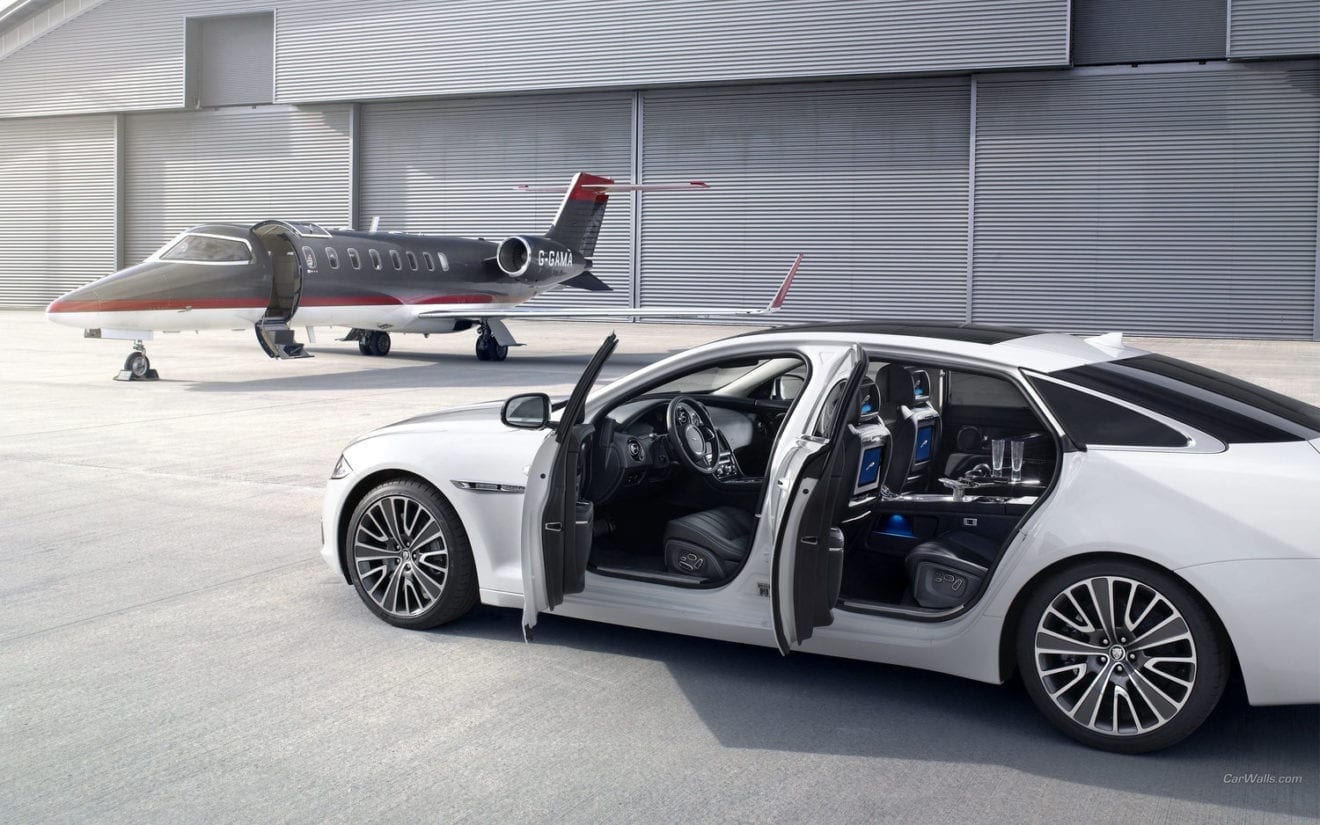
    But from the flaming-out of Fisker to present day, Tesla has largely dominated the American electric-vehicle market. Musk has even managed to expand the company’s preeminence over the still small segment despite two new battery-powered luxury SUVs arriving in U.S. showrooms the last 10 months: Jaguar’s I-Pace and Audi’s e-tron.

    Their starts are the latest indications that legacy automakers aren’t assured instant success when they roll out new plug-in models. Tesla’s Model S and X have largely held its own against the two crossovers that offer a shorter range and less plentiful public charging infrastructure. Jaguar and Audi also lack the cool factor Musk has cultivated for the Tesla brand by taking an aggressive approach to autonomy and using over-the-air software updates to add games and entertainment features.

    “If a customer is choosing the I-Pace over the comparable Tesla, they are making the conscious decision: I don’t want the Tesla,” said Ed Kim, an analyst at the car-market research and consulting firm AutoPacific. “You really have to be someone who doesn’t like Tesla, who doesn’t want the Tesla product, in order to go for this.”

    Tesla’s Model X and Model S each boast more than 300 miles of range, and the cheaper Model 3 travels 240 miles between charges. Jaguar’s $69,500 I-Pace is rated at 234 miles, and Audi’s $74,800 e-tron registers 204 miles.

    Jaguar’s marketing team spent years laying the groundwork to introduce the I-Pace. In 2016, the brand joined Formula E, an open-wheeled, electric-powered race circuit similar to Formula One.

    “We had an electric car in our development plan – the I-Pace – at the time,” said James Barclay, Jaguar’s racing director. “We had to create awareness about the fact that we had an electric car coming to market, firstly, and to showcase why you’d buy a Jaguar electric vehicle over something else.”

    Porsche and Mercedes-Benz are also joining Formula E for the 2019-2020 season to help generate buzz for the new all-electric models they have coming out. The circuit makes stops in cities including New York, Hong Kong and London, which the brands are banking on as major markets for plug-in cars.

    “City centers are where there’s going to be a really good application for electric vehicles,” said Kim McCullough, Jaguar Land Rover’s vice president of marketing for North America. “So having them be able to see something firsthand – it starts the education process.”

    But while Formula E is drawing crowds of urban dwellers and a substantial audience on social media, all that buzz may not necessarily translate into showroom traffic.

    “Auto racing really comes as one of the last influencers, in terms of influencing people to buy whatever car they’re looking at,” according to AutoPacific’s Kim. If Jaguar is doing well in Formula E, it couldn’t hurt the I-Pace, he said. “But I don’t think it would have a huge positive impact on awareness of the vehicle.”

    Jaguar has sold an average of about 190 I-Pace crossovers a month since U.S. sales began. Tesla, by comparison, was delivering Model Xs at a clip of about 550 a month in its first year on the market, beginning in 2015, according to InsideEVs.com estimates.

    The Audi e-tron has been on the market in the U.S. for only four months, but during that time, it has averaged sales of about 745 units, InsideEVs estimates. In July, 3.5% of Audi’s U.S. sales were all-electric, and the company expects that number to climb to 30% by 2025.

    “We are confident that we are and will continue to deliver an offering that customers will want to be part of,” Cian O’Brien, the interim president, and chief operating officer of Audi of America, said in an email.

    After initial efforts to nab electric-car buyers proved challenging, Jaguar has decided to attack Tesla head-on.

    The brand is offering Tesla owners a $3,000 discount on the I-Pace for the next month and a half. “This is all about capturing a share of voice,” Stuart Schorr, a Jaguar Land Rover spokesman, said in an email. “The EV market is just at its infancy.”

    “Consumers, as a result of seeing our race program, do consider us to be a car brand they would consider for their electric car purchase,” said Barclay, the racing director. “Rome wasn’t built in a day, and for a premium automotive manufacturer with their first electric vehicle, it takes time in the market.”
  • Trump says Apple will soon announce plans to build a new apple factory in Texas

    Trump says Apple will soon announce plans to build a new apple factory in Texas

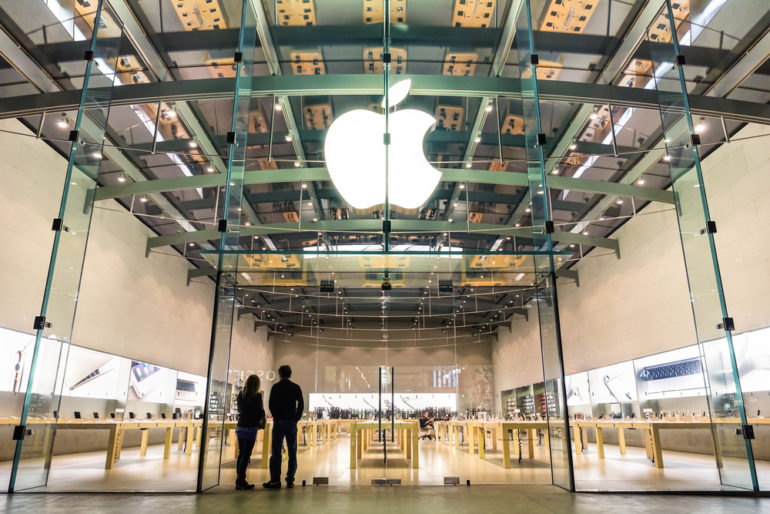
    Stop us if you’ve heard this before. President Donald Trump said that Apple will follow his wishes by opening a U.S. factory in Texas. The president’s comments were made the same day that he disseminated a tweet saying that he would not grant the tech giant a waiver that would prevent it from having to pay import taxes on parts for the Mac Pro imported from China. Trump also pointed out that if Apple made the parts in the states, it wouldn’t face tariffs on them. While Apple designs its products in the U.S., many of them are actually manufactured in China. Even though there is a “truce” in the trade war between the U.S. and China, the already announced tariffs remain in place.

    You might remember that in July 2017, Trump said that he was told by Apple CEO Tim Cook that the company was building “three big plants, beautiful plants.” The only problem with that comment was that it was not true. Apple later denied that any such conversation took place and said that it certainly did not have plans to build any factories in the U.S.

    Trump has had a love-hate relationship with Apple, calling for a boycott of the company back in February 2016. Apple had refused a court order to unlock the iPhone 5c that belonged to San Bernardino shooter Syed Farook. Apple refused to do so because it would have required that the company develop a special operating system for the government; Apple was afraid that the software could get into the wrong hands making all iPhones vulnerable to getting hacked. Trump threatened to stop using his iPhone and said that he would use a Samsung handset until Apple gave the FBI what it wanted. An unnamed Apple executive responded by saying, “Trump’s call for (an) Apple boycott puts the company in standing with other good people he has criticized.”

    In June of 2018, The New York Times reported that Trump had promised Cook that the iPhone would not be subject to any tariffs. Economist and Trump advisor Peter Navarro denied that this promise was made. And while Apple’s most important product has not yet been hit with tariffs, if the current truce doesn’t hold up, the next tier of products from China to receive an import tax is said to include smartphones like the iPhone. According to Morgan Stanley analyst Katy Huberty, tariffs could add $160 to the price of the iPhone XR. That would raise the retail price of the 64GB model from $749 to $909. Last month, Apple tried to warn the president that tariffs on the iPhone could damage the U.S. economy.

    Some of you might be surprised to learn that the tariffs are actually an import tax paid by consumers. In May, President Trump incorrectly tweeted that “tariffs are NOW being paid to the United States by China of 25% on Billions of Dollars worth of goods and services. These massive payments go directly to the Treasury of the U.S.” Either Trump doesn’t know how tariffs work, or the president purposely tried to mislead the country. China does not pay one cent of the tariffs. They are taxes paid by U.S. corporations that can eat them, or pass them along to U.S. consumers by raising prices. Apple, to its credit, has eaten the tariffs imposed on certain iPhone and iPad cases in order to keep the cost to consumers the same. This lowers Apple’s profit margin on those products. So if a tariff is imposed on the iPhone, either Apple will be negatively impacted, or U.S. consumers will be in the form of higher prices for the device.

    Meanwhile, we wouldn’t be holding our breath waiting for Apple to announce a new plant in Texas. It is likely to be found next to the three non-existent factories that Trump said Apple was going to build two years ago.

  • Japanese retailer Daiso Launching in New Jersey

    Japanese retailer Daiso Launching in New Jersey

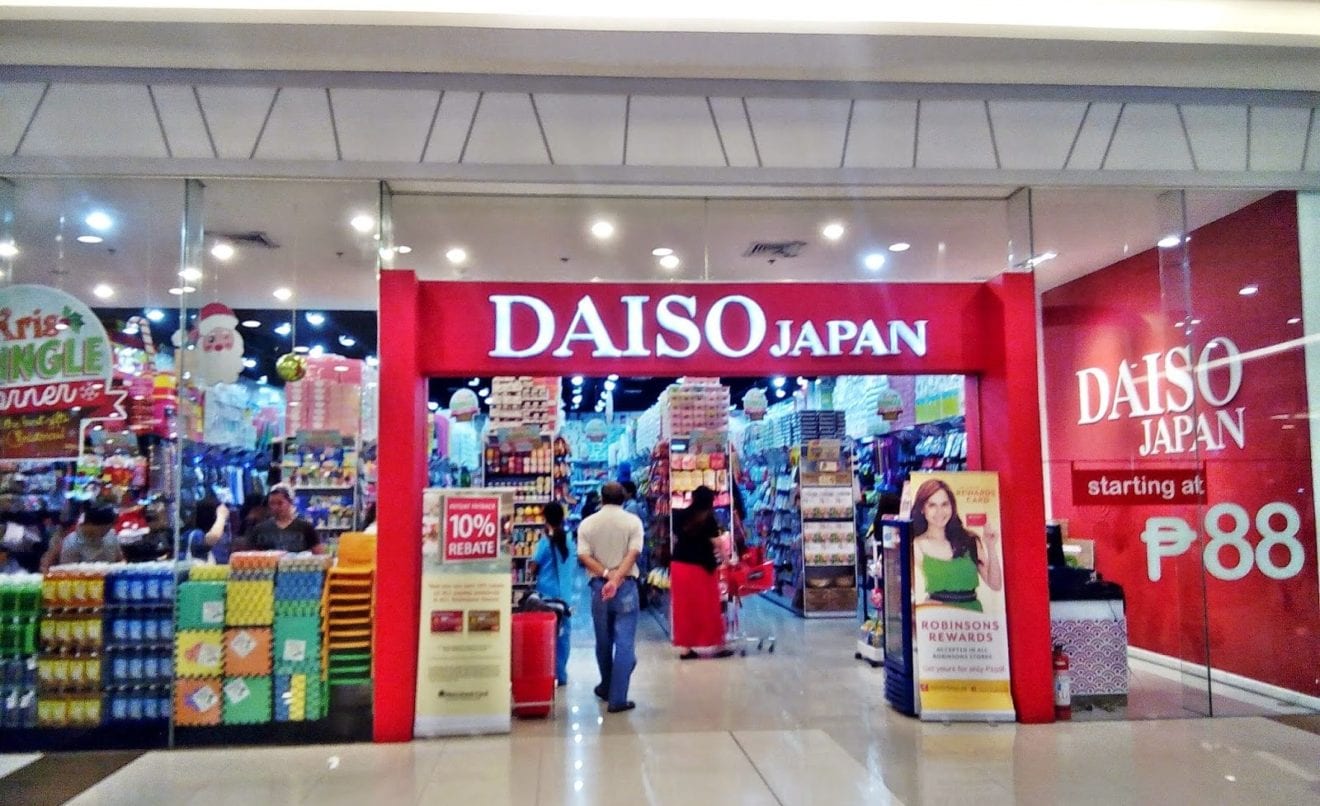
    Budget Japanese retailer Daiso will launch its first New Jersey store in Edgewater.

    The store will open on August 3 as the second Daiso store in the Tri-State area. Daiso is quickly expanding its presence on the East Coast, with this location opening within just five months of the very first store in Flushing, New York last March. Three more Daiso stores are scheduled to open in the area this year.

    The 7000sqft Daiso New Jersey store will feature products and styles including back-to-school, entertaining and organising supplies, and thousands of products including kitchenware, beauty supplies, stationery, gift wrap, greeting cards, electronics accessories, unique gift items, snacks, and party goods.

    Daiso Japan averages 10 to 20 new store openings globally every month.

  • India’s Myntra Starts Selling on Walmart USA

    India’s Myntra Starts Selling on Walmart USA

    India’s Myntra is expected to begin selling its brands’ products to the US via Walmart.

    The online fashion retailer was acquired by Walmart 10 months ago, since which time Myntra’s brands have been available through Walmart Canada.

    “We enabled Myntra to be online in Canada and we are also anticipating launching Myntra brands in our stores in Canada in Q3,” said Walmart International executive VP and chief administrative officer JP Suarez, “a nice compliment for an omnichannel experience for our customers. We are exploring with US for any Myntra product to be available on the US online marketplace.”

    Walmart is also expected to conduct a study of Myntra’s operations to assess what strategies may be applicable to other markets. The firm holds a major market share in India along with Jabong and Flipkart Fashion.

  • Arm cuts ties with Huawei

    Arm cuts ties with Huawei

    In the latest development in the ever-churning Huawei news cycle, chipmaker Arm is suspending business with the Chinese vendor to comply with the US restrictions.

    The BBC reported Wednesday that Arm sent out a company memo that said its employees must discontinue “all active contracts, and any pending engagements” with Huawei and its subsidiaries. The memo also said that Arm’s designs contained “U.S. origin technology,” which it believes is affected by the Trump administration’s ban.

    Losing Arm’s technology would be a big blow to Huawei in the smartphone sector. Huawei, currently the second-largest smartphone vendor behind Samsung, uses Arm’s mobile device processors as the key element of its smartphones.

    “Arm is complying with the latest restrictions set forth by the US government and is having ongoing conversations with the appropriate US government agencies to ensure we remain compliant,” according to Arm’s statement.

    “Arm values its relationship with our longtime partner HiSilicon (Huawei’s chip arm), and we are hopeful for a swift resolution on this matter.”

    Last week, the Trump administration blocked Huawei from buying goods made from 25% or more of U.S.-originated technologies or materials, and previously accused the world’s largest telecommunications vendor of being a spy for the Chinese government via backdoors in its telecom gear.

    On Tuesday, the US Department of Commerce’s Bureau of Industry and Security (BIS) announced it would allow some companies to continue to do business with Huawei under specific conditions. The BIS said it would issue a temporary general license (TGL) to Huawei and its 68 affiliates to authorize some U.S. telecom companies to continue to engage in export transactions with Huawei for the next 90 days, which took some of the immediate heat off of Huawei.

    Google had announced that it would no longer allow access to software updates for its Android operating system and apps that are used in Huawei’s smartphones and tablets, but reversed course after the BIS decision was announced.

    In other Huawei news, Panasonic said on Wednesday that it would stop shipments to Huawei of some of its components, but that won’t have as big an impact as losing Arm.

    Huawei said its own operating system for smartphones and tablets would be operational this fall, but would only use it if the company no longer has access to Google’s Android and Microsoft Windows’ operating systems.

  • Trump signs order paving way for Huawei ban

    Trump signs order paving way for Huawei ban

    US president Donald Trump has signed an executive order paving the way for banning Chinese vendors including Huawei from supplying equipment for US telecommunications networks.

    The executive order declares a national emergency to give Trump the authority to regulate commerce and directs the Commerce Department to draw up an enforcement plan within 150 days.

    It has been designed to protect US telecommunications supply chain from foreign adversaries. While the order does not specifically name any countries or companies, it has been specifically promoted by members of Congress as being aimed at companies including Huawei, which has been labeled a security threat by US officials.

    The US government has been pressuring allies to prohibit Chinese vendors from supplying equipment for 5G rollouts, citing concerns that their equipment could be used by the Chinese government to spy on the communications of foreign nations. Countries including Australia have already yielded to this pressure.

    Meanwhile, Huawei, which has repeatedly denied any allegations that its equipment could be used this way, has separately revealed it is willing to sign no-spying pacts with governments to alleviate these concerns.

    The agreements, which could be negotiated with nation states including the UK, would involve the company committing to meet no-spy, no-backdoors standards.

    But Reuters cited comments from the German government pointing out that there is no indication that the Chinese government itself is offering such an agreement.

  • Alibaba not affected by the Trade War

    Alibaba not affected by the Trade War

    Alibaba executive chairman Joe Tsai told analysts the company’s position as “China’s number-one platform for overseas brands” puts it on the right side of the trade war between the US and China.

    While discussing the group’s recent full-year results, which saw Alibaba grow revenue 51 per cent during the year to March 31, 2019, to US$56.2 billion (RMB376.8 billion) and net income 31 per cent to $13.1 billion (RMB80.2 billion), Tsai said he wanted to address the “elephant in the room”.

    “First, the reduction of the US trade deficit. China’s commitment to purchase more American products means China will over the next several years become a net importing country,” Tsai said.

    “We are the platform of choice for global producers of products and brands selling into China because we have the reach and deep insights on over 650 million active Chinese consumers on our platform. The scale and effectiveness of our access to Chinese consumers is simply unrivaled.”

    Alibaba’s active customers grew to 654 million over the year to March 31- an increase of 104 million year on year.

    Tsai said the ongoing trade negotiations also create an opportunity for other markets to do more foreign business within China, satisfying growing demand from the Chinese public as the country’s economy shifts from an “export economy to a domestic consumption economy”.

    “As we look at the evolution of the Chinese economy, Alibaba is on the right side of all of the issues,” Tsai said.

    Alibaba was recently ranked as the world’s most valuable retail brand outside of the US by research firm Kantar earlier this week, which valued the brand at US$131.2 billion, up 48 per cent on last year.

    Partly, this was due to the group’s New Retail strategy, which this year saw Alibaba partner with Starbucks to enable on-demand coffee delivery across 35 cities throughout China.

    “If you want to see the future of retail, look to China,” the report said.

    “In many ways, it is leading the world… Chinese consumers are using mobile in every aspect of their lives.”

  • China Mobile USA’s license application denied

    China Mobile USA’s license application denied

    As expected, the US Federal Communications Commission today voted to deny China Mobile’s application to provide telecom services between the US and foreign destinations. The vote was unanimous.

    China Mobile USA filed an application back in 2011 requesting authority to provide international facilities-based and resale services in the US, but it wasn’t until last year that the government made a recommendation on behalf of the executive branch to deny the application due to national security and law enforcement concerns.

    In the order adopted today, the FCC said it found that China Mobile USA did not demonstrate that its application was in the public interest. In fact, the FCC found that due to several factors related to China Mobile USA’s ownership and control by the Chinese government, granting such an application would raise substantial and serious national security risks.

    Several commissioners also called on the agency to do more in terms of protecting the nation’s telecom security, especially in light of 5G coming down the pike.

    Commissioner Brendan Carr said the Chinese government owns a number of other carriers that already are operating in the US, including China Unicom and China Telecom, and those companies hold the same Section 214 authorization that China Mobile sought. “Our national security agencies should examine whether the FCC should revoke those existing Section 214 authorizations, and the FCC should open a proceeding on those matters,” he said.

    Commissioner Geoffrey Starks said the need for strong FCC action to address security vulnerabilities has never been greater. “As we move into a world of 5G and the Internet of Things, and our network grows larger and more interconnected than ever, real risks and the potential harm of telecom network vulnerabilities will grow exponentially,” he said, before raising a number of questions he said need to be answered, including how to address the continued operation of 2G and 3G networks with known cybersecurity flaws.

    Commissioner Jessica Rosenworcel also made a call to action. “We are at an inflection point as the world races to deploy next-generation wireless networks,” she said. “With 5G service, we will have wireless capability built into the world around us. This will provide a whole new range of opportunities for civic and commercial life. But as they multiply, this will vastly expand our surface exposure to attack.”

    Chairman Ajit Pai was part of a US delegation that last week attended an international conference on 5G network security hosted by the Czech Republic. There was a broad consensus at that meeting that network security is not only a priority but a necessity, he said. The conference produced a set of 5G security principles that reflect a common understanding of the importance of security in 5G.

    Pai also joined several other Administration officials yesterday in a detailed briefing of members of the Senate Select Committee on Intelligence, and while he said he can’t discuss what transpired in the meeting, “I can say that at the intersection of national security and communications lies a strong bipartisan consensus in favor of proactive measure to protect our networks at the front end, not as an afterthought,” he said.

    Separately, the commission adopted a Notice of Proposed Rulemaking (NPRM) that proposes to reallocate the 1675-1680 MHz band for terrestrial fixed and mobile (except aeronautical mobile) use on a shared basis with existing federal users. The NPRM also seeks comment on appropriate service and technical rules for the band.

  • Daimler Will Pull Smart Mini-Cars Out Of United States, Canada

    Daimler Will Pull Smart Mini-Cars Out Of United States, Canada

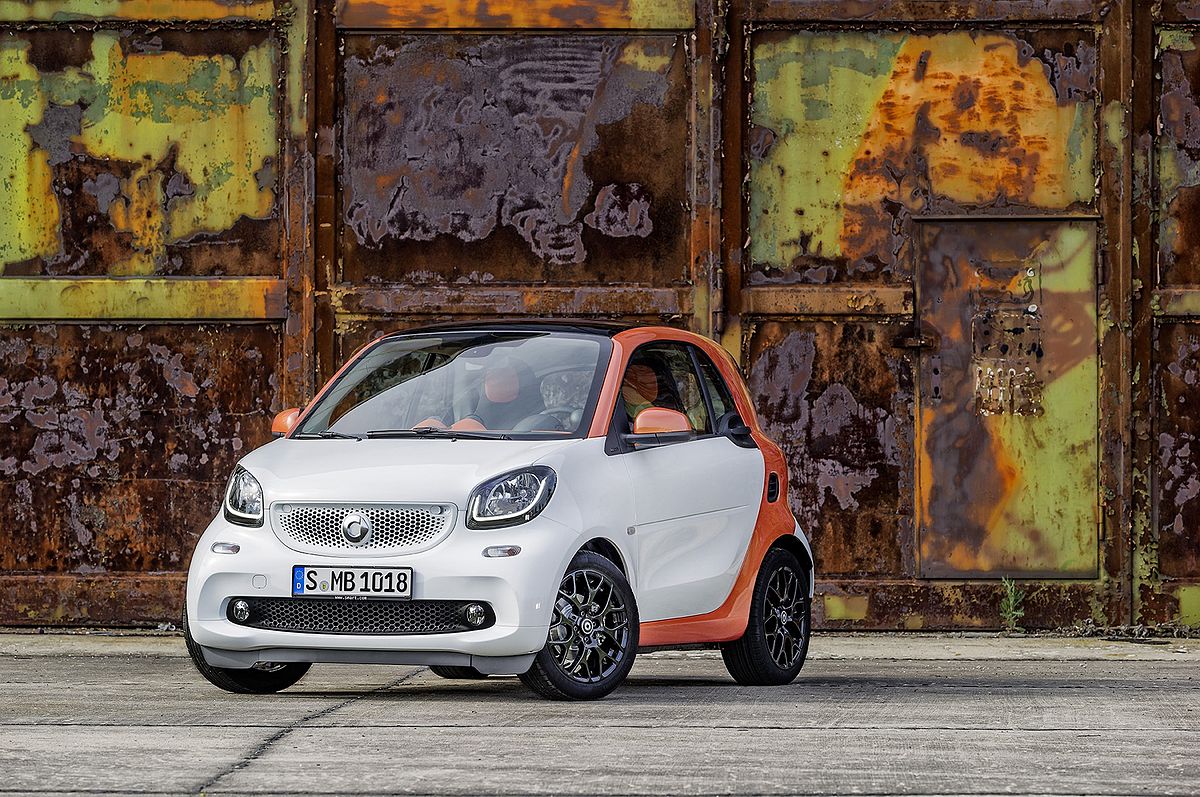
    The tiny, two-person Smart cars once pitched as the next big thing in urban mobility will be discontinued in the United States and Canada at the end of the current model year, German automaker Daimler AG said on Monday. Smart cars, with their unique styling and ability to fit in half a parking space, found an audience in densely populated U.S. and Canadian cities. But that audience was small and rapidly declining. Smart reported just 90 cars sold in the United States during March, down 18 percent from the year before.

    U.S. sales of a wide range of small cars have collapsed over the past several years as relatively cheap gasoline and a strong economy have encouraged consumers to buy larger trucks and sport utility vehicles.

    The Smart brand’s electric cars offered just 58 miles (93 km) of driving range. Competing models such as the “mid-range” Tesla Model 3, with an estimated range of 264 miles, offered more range and more room for passengers and cargo. The range figures are from the U.S. Environmental Protection Agency.

    Daimler’s Mercedes-Benz brand, in a statement, cited “a number of factors” for the decision to end Smart’s run in the United States and Canada, “including a declining micro-car market in the U.S. and Canada, combined with high homologation costs for a low volume model.” Homologation refers to the changes required to bring the European-designed Smart in line with U.S. regulations. Daimler ended sales of gasoline-fueled Smart cars in 2017.

    Mercedes plans to bring new, larger electric vehicles to the United States, starting with the launch of the EQC sport utility next year. Those vehicles will help Mercedes meet zero emission vehicle quotas in California and other states. Mercedes dealers will still offer parts and repairs for Smart cars, the company said.

  • Verizon to waive $10 5G fee for three months

    Verizon to waive $10 5G fee for three months

    Verizon will waive for three months the $10 fee it planned to charge subscribers for accessing its 5G network. After launching in Chicago and Minneapolis earlier this month, the carrier announced an additional 20 cities across the US where it will turn on 5G services this year.

    Verizon said it’ll waive the charge for subscribers in Chicago and Minneapolis. A few of the reviewers reported disappointing results using the network, and some recommended consumers don’t pay for the service until the network is expanded and the kinks are worked out.

    While most people who tested the network reported achieving speeds of 300-600 Mbps, there were plenty of problems with finding the 5G network signal, or keeping the Motorola Z3 phone connected to it.

    During Verizon’s quarterly earnings call April 23, Verizon CEO Hans Vestberg said the network in those initial two cities was “performing as expected on a brand new technology being deployed for the first time in the world.”

    “As more features within the network become available for deployment through ongoing software innovation, we will provide increased coverage, improved capacity and greater throughput,” Vestberg said, according to a transcript of the call provided by Motley Fool.

    Verizon’s deployments in Chicago and Minneapolis used the carrier’s millimeter wave (mmWave) spectrum technologies to deliver high speeds in dense urban areas. But as Wave7 Research’s Jeffrey Moore told FierceWireless this week, mmWave technologies tend to have weak signal propagation, pointing to concerns about the urban use case for the technology when there are large buildings and other obstacles that can block the signal.

    Vestberg seemed to concede that there are challenges with mmWave during the earnings call. “We all need to remind ourselves, this is not a coverage spectrum,” he said. It’s unclear if those considerations factored into Verizon’s decision to wave the $10 fee for its 5G network.

  • China’s Luckin Coffee Looking at The USA

    China’s Luckin Coffee Looking at The USA

    China’s Luckin Coffee has filed for a US IPO seeking to raise up to US$800 million.

    For the time being, the IPO is officially indicated by a $100 million placeholder figure, however knowledgeable sources have disclosed the actual amount sought may be more than $500 million and up to $800 million, with the company’s valuation estimated at $4–5 billion, far higher than has been reflected in previous statements.

    Within the last few weeks the company secured a further $150 million in equity funding, ahead of the IPO.

    If the public listing is successful, it will make the Beijing-based cafe chain the largest US IPO by a Chinese company so far this year.

    China’s Luckin Coffee has undergone “expansion on steroids” in an effort to displace Starbucks as the biggest operator in the nation. This year, the firm plans to more than double its current network of 2370 stores, despite still operating at a loss following the ambitious growth spurt.

    Luckin’s net loss to shareholders was $475.4 million last year against a total revenue of $125.27 million. However the firm insists the future is bright – a prospectus released by China’s Luckin Coffee suggests that coffee consumption in China will rise to 15.5 billion cups by 2023 compared with the 8.7 billion cups consumed last year.

    “The big question for the brand long term is if, when it rolls back discounts, enough customers stick around,” said Shanghai-based principal at China Market Research Group Ben Cavender. “But the company has completely rewritten the rules for the coffee business in China and has impacted Starbucks as well as a host of smaller players.”

  • FCC may ban China Mobile from US market

    FCC may ban China Mobile from US market

    The chairman of the US FCC has urged the agency to reject China Mobile’s applications to provide telecom services in the US market on national security grounds, in the latest salvo in the telecom trade war between China and the US.

    Federal Communications chairman Ajit Pai has released a statement urging his fellow FCC executives to vote for an order that would deny China Mobile’s application during the scheduled vote at its May Open Meeting.

    “Safeguarding our communications networks is critical to our national security. After reviewing the evidence in this proceeding, including the input provided by other federal agencies, it is clear that China Mobile’s application to provide telecommunications services in our country raises substantial and serious national security and law enforcement risks,” Pai’s statement reads.

    “Therefore, I do not believe that approving it would be in the public interest. I hope that my colleagues will join me in voting to reject China Mobile’s application. ”

    The draft order proposed by Pai would stipulate that China Mobile has not demonstrated that its application is in the public interest, but more importantly it would assert that “China Mobile is vulnerable to exploitation, influence, and control by the Chinese government.”

    China Mobile first applied back in September 2011 for a license to provide facilities based and resale telecommunications services between the US and overseas destinations.

    After a long review of the application, agencies within the US government’s Executive Branch recommended in July 2018 that China Mobile deny that application, citing “substantial national security and law enforcement risks that cannot be resolved through a voluntary mitigation agreement.”

    The proposed objection comes the month after Chinese vendor Huawei revealed it was taking the US government to court over an order banning federal agencies from buying its products due to national security fears.

  • Pokemon GO Fest coming to USA this June

    Pokemon GO Fest coming to USA this June

    The folks at Niantic have gone a long way since their first Pokemon Fest, which was a total fiasco. After a more than decent 2018, the company is back with another series of Pokemon GO events that have already started earlier this year in South America.

    Today, Niantic announced three new Pokemon GO events are coming to three cities around the world: Chicago, Dortmund, and another city in Asia that will be confirmed later on. If you plan to attend the Pokemon GO Fest in the United States, you’ll have to plan your visit to Chicago between June 13-16

    In the following weeks, Niantic will offer details on how to purchase tickets to this summer’s biggest Pokemon GO events, so stay tuned for more info on the matter. Also, the company revealed that a number of Safari Zone events will be coming in the second half of 2019.
    More importantly, Pokemon fans who can’t attend these events for obvious reasons will have other ways to participate in Pokemon Go Fest no matter where they are around the world, so don’t fret if you can’t make it in person.

    Finally, it appears that Niantic has important things to announce regarding the upcoming worldwide Community Day events, so mark your calendars for the following dates: May 19, June 8, July 21, and August 3.

  • Vinomofo partners with US wine Startup

    Vinomofo partners with US wine Startup

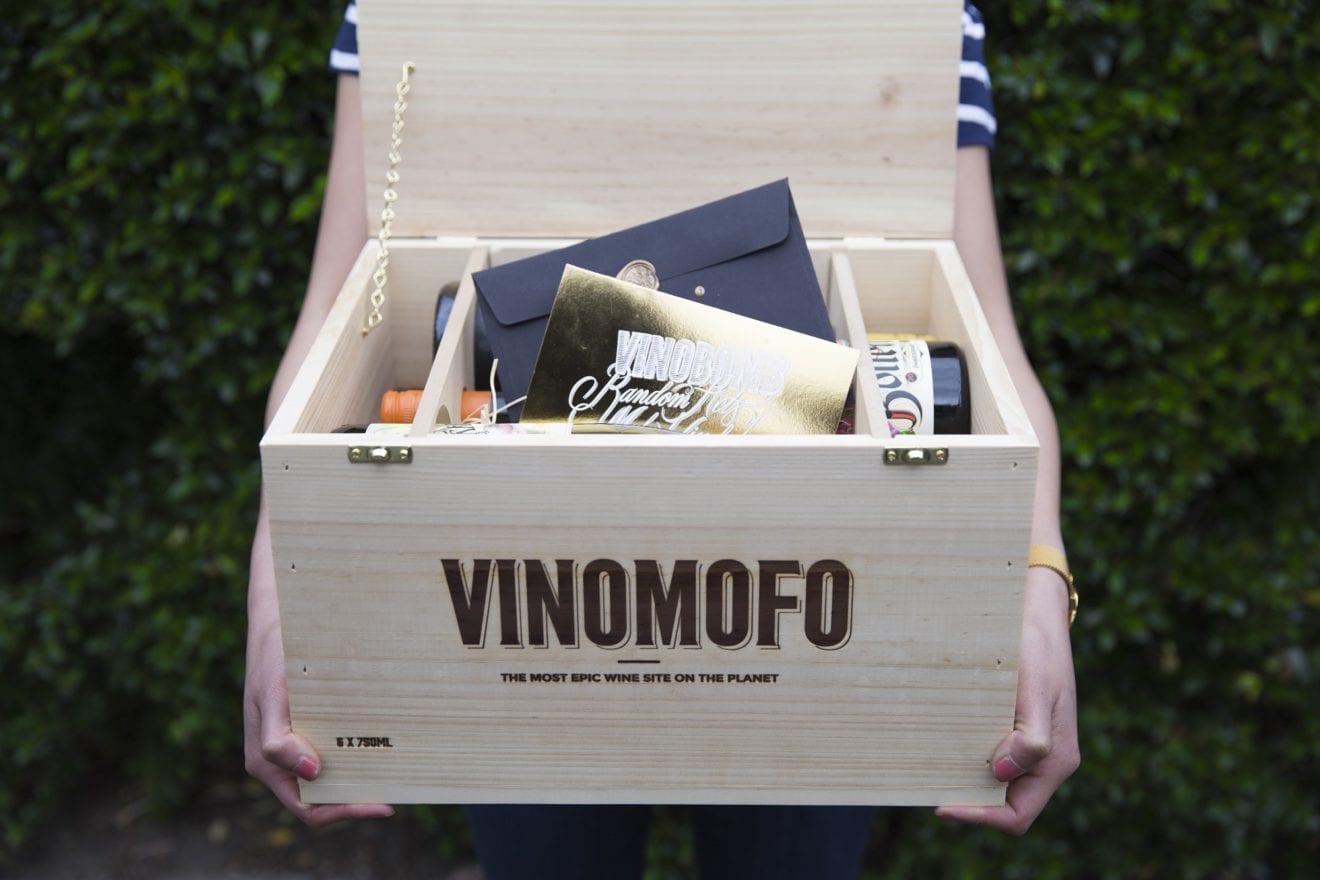
    Online wine retailer Vinomofo has partnered with US wine media mogul Gary Vaynerchuk to bring the inaugural wine from his label, Empathy Wines, to its customers in Australia, New Zealand and Singapore.

    The wine, which Vinomofo is launching this month, is available exclusively for pre-order from the online retailer.

    Vinomofo co-founder and CEO Justin Dry said the partnership was fitting, since Vaynerchuk’s approach to the industry aligns perfectly with Vinomofo’s mission to offer great wine at the right price.

    “The inclusion of Empathy Wines is an exciting one for us,” Dry said in a statement.

    “It strengthens our offering as well as supporting Californian winemakers who’ve been devastated by fires recently and cements our commitment to bringing really cool wines to our wine lovers.”

    This is just the first step in a bigger effort to introduce more wine from overseas to Vinomofo’s customers in Australia, New Zealand and Singapore, Dry told

    “We’re currently buying for our second container – after filling the first one with Gary Vee’s Empathy Wines Rosé – so look out for some super cool wines by iconic US winemakers like André Hueston Mack hitting our shores in 2019,” he said.Adtech Ad

    But there is still no word on when Vinomofo will officially launch in the US market, which it had previously planned to do in 2018.

    “We have some very exciting things happening in the background at Vinomofo. We will share these with you as soon as we can,” Dry said.

    “In the meantime, we are super excited to be forming this partnership and can’t wait for what’s ahead.”

    Gary Vaynerchuk, also known as Gary Vee, took his parents’ liquor business in the US, Shopper’s Discount Liquors, online in 2006, and started Wine Library TV, a daily webcast covering wine.

    He later started a digital ad agency, which provided social media and strategy services to several Fortune 500 companies, including Anheuser-Busch, Mondelez and PepsiCo.

  • Dunhill New York Finally opens Hudson Yards store

    Dunhill New York Finally opens Hudson Yards store

    Dunhill New York has opened a store in the city’s new Hudson Yards development.

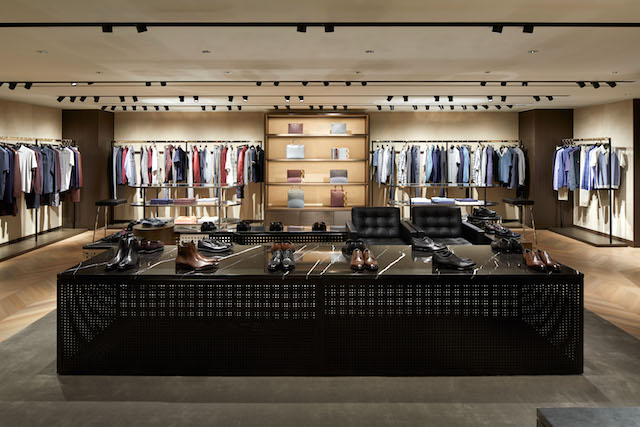
    The 2600sqft outlet showcases the brand’s British luxury menswear against a backdrop of modern retail design – a contemporary space combining bronzed brass and walnut, together with leather and metal details, all recognisable codes of the house.

    dunhill Hudson Yards 2

    dunhill Hudson Yards 3

    “Dunhill has traded in New York City for decades, from Rockefeller Centre to Madison Avenue,” said CEO Andrew Maag. “Hudson Yards is the next wave of retail and we are thrilled to be there from the start. We are part of the fabric of the city and we keep moving with it.”

    dunhill Hudson Yards 5

    The grey marble storefront takes inspiration from the facade of the brand’s 1950s South Rodeo Drive store. White wood panelling frames collections by creative director Mark Weston. Walnut burl cabinets, housing men’s accessories, are inspired by the original furniture from London’s Duke Street and Paris’ Rue de la Paix stores. Fluted metal details recall the textures and finishes of the Rollagas lighters.

    dunhill Hudson Yards 6

    The new Dunhill New York City store will retail a curated selection of luxury pieces, as well as ready-to-wear, leather goods and fine accessories.