Retail News CRM

Tag: usa

  • US retail sales expected to grow at slower rate in 2019

    US retail sales expected to grow at slower rate in 2019

    US retail sales are expected to climb between 3.8 per cent and 4.4 per cent to more than US$3.6 trillion ($4.97 trillion) in 2019, according to data from the National Retail Federation (NRF). The predicted rise in retail sales, which is excluding automobile dealers, gasoline stations and restaurants, however, would be less than the 4.6 per cent growth in 2018, citing threats from an ongoing trade war, the volatile stock market and the effects of the government shutdown.

    NRF said in August of last year it expected 2018 retail sales to be up at least 4.5 per cent.

    The retail industry group says the 2018 figure is its preliminary estimate for retail sales last year, pending the release of December data from the Commerce Department that was stalled from being announced during the government shutdown.

    Matthew Shay, NRF president and CEO, said the biggest priority is to ensure that the economy continues to grow and to avoid self-inflicted wounds.

    “It’s time for artificial problems like trade wars and shutdowns to end, and to focus on prosperity not politics,” Shay said.

    Shay said despite fears in the industry that a trade war in China or an economic slowdown might impact consumer spending, they believe the underlying state of the economy is sound.

    “More people are working, they’re making more money, their taxes are lower and their confidence remains high,” he said.

    Preliminary estimates, according to the NRF, show that retail sales during 2018 grew 4.6 per cent over 2017 to US$3.68 trillion ($5.08 trillion), exceeding NRF’s forecast of at least 4.5 per cent growth.

    The figures include online and other non-store sales, which were up 10.4 per cent to US$682.8 billion ($942.6 billion). That met NRF’s forecast of 10-12 per cent online growth, and online is expected to grow in the same 10-12 per cent range again this year. The numbers exclude automobile dealers, gasoline stations and restaurants.

    Growth of between 3.8 per cent and 4.4 percent would result in total 2019 retail sales of between US$3.82 trillion and $US3.84 trillion ($5.27 trillion to $5.3 trillion). Based on growth of 10-12 per cent, online sales would total between US$751.1 billion and US$764.8 billion ($1.03 trillion and $1.05 trillion), which are included in the total.

    The 2018 results are based on Commerce Department data up through November but include NRF estimates for December because the agency was closed during the recent government shutdown and has not yet released December figures.

    The NRF said the results are subject to revision once December numbers become available, and government numbers are revised again each spring regardless of the shutdown.

    “We are not seeing any deterioration in the financial health of the consumer,” said Jack Kleinhenz, NRF chief economist.

    “Consumers are in better shape than any time in the last few years,” Kleinhenz said. “Most important for the year ahead will be the ongoing strength in the job market, which will support the consumer income and spending that are both key drivers of the economy.”

    Kleinhenz said the bottom line is the economy is in a good place despite the ups and downs of the stock market and other uncertainties.

    “Growth remains solid,” he said.

    NRF said it expects the overall economy to gain an average of 170,000 jobs per month, down from 220,000 in 2018, and that unemployment – currently at 4 per cent – will drop to 3.5 per cent by the end of the year. Gross domestic product is likely to grow about 2.5 per cent over 2018.

    Kleinhenz said inflation and interest rates are expected to remain low this year and that retail sales have been helped by recent reductions in gasoline prices.
  • US set to green-light direct flights from Vietnam

    US set to green-light direct flights from Vietnam

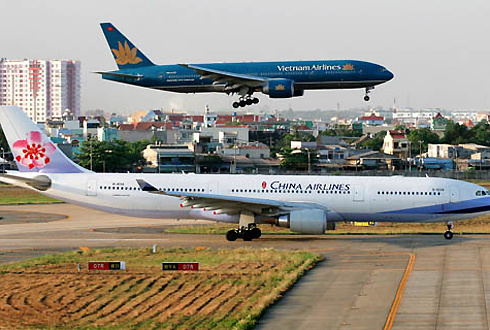
    U.S. aviation authorities are expected to grant a Category 1 rating to Vietnam soon, allowing direct flights between the two countries. Two U.S. officials who asked not be named said that the permission should be issued in the coming weeks. Dinh Viet Thang, head of the Civil Aviation Authority of Vietnam (CAAV), said that the U.S. Federal Aviation Administration (FAA) completed safety assessments in December and was supposed to provide the results this month.

    “But as the U.S. government was closed, we couldn’t receive the results. We expect to have it soon,” he said.

    Local airlines including state-owned Vietnam Airlines, budget airline Vietjet and new private airline Bamboo Airways have already expressed interest in opening direct flights between Vietnam and the U.S.

    The direct route is expected to cater to the large demand for travel between both countries.

    Passengers travelling between Vietnam and the U.S. now have to transit through different countries and territories like China, Hong Kong and Japan.

    Vietnam has never held an FAA rating, unlike Thailand, which once had a Category 1 rating and is seeking to regain it after a downgrade to Category 2. The FAA determines whether a country has a 1 or 2 rating depending on its safety assessment of the country’s airlines.

    The Vietnamese government had early last year approved plans to expand the network of national carriers to major markets including Australia, China, Europe and the U.S.

    Under plan, Vietnam Airlines will go through with its proposal to open non-stop services to the U.S., starting with direct flights to San Francisco or Los Angeles.

    Vietnam and the U.S. signed an air transport agreement in 2003 to allow airlines to operate direct flights between the two countries.

    In 2004, national flag carrier Vietnam Airlines sought permission from the U.S. to provide direct services. However, the request was denied because the CAAV did not meet safety supervision requirements set by the FAA.

    Vietnam’s aviation industry has seen increasing demand in recent years. The country welcomed 12.5 million air passengers last year, up 14.4 percent from 2017, according to the General Statistics Office.

    The country’s aviation traffic increased 16 percent on average each year from 2010 to 2017, data from its civil aviation regulator shows.

  • McDonald’s challenging US market mitigated by international sales

    McDonald’s challenging US market mitigated by international sales

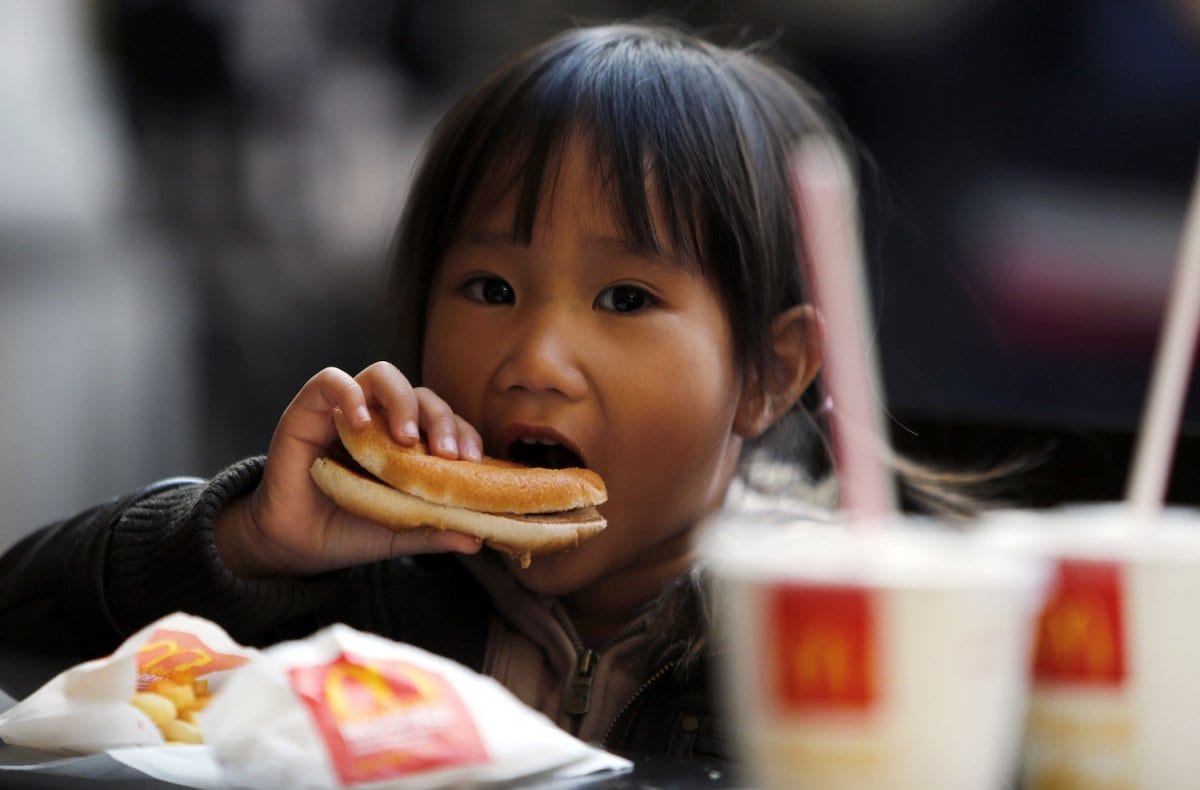
    Strong international sales ensured respectable McDonald’s results in the latest quarter as the fast-food giant encountered challenges in its core US market. Global sales slipped 3 per cent in the three months to December, to US$5.16 billion, although this was largely due to currency translations, without which sales would have been flat. While the company did not break out Asian performance, it said international same-store revenue rose 5.2 per cent.

    Same-store sales in the US rose 2.3 per cent, primarily due to increased prices, given foot traffic in stores fell by 2.2 per cent. Global visitor numbers crept up by a mere 0.2 per cent.

    Breakfast remains its most challenging category, with the chain struggling to attract diners in the mornings. While that mealtime accounts for about a quarter of its total sales, the breakfast market is experiencing fierce competition among rival chains.

    “We’re doing well with average check growth but we really want the customer to come back and more often,” CEO Steve Easterbrook said in an investor presentation about the McDonald’s results.

    He said McDonald’s is trying to recover breakfast customers by trialling different price promotions, launching localised advertising campaigns and improving the drive-through service.

    More stores, more kiosks

    Globally, McDonald’s plans to open a net 750 new stores this year. It will also speed up the rollout of its digital touchscreen ordering systems. Easterbrook says stores with self-ordering kiosks were achieving higher sales than those without.

    Commenting on the McDonald’s results, Neil Saunders, MD of GlobalData Retail, said the kiosks and order-by-app services need to be rolled out faster.

    “This isn’t just a case of installing and implementing the technology, it is about getting customers to actually use it. Consumers need to be given more incentives to use the new ways of ordering, especially mobile, as many still shun the technology,” said Saunders.

    “Longer term, more automation in the kitchen is also critical – something that will be particularly beneficial now McDonald’s menu options are more varied and complex.”

    Saunders described the latest McDonald’s results as “reasonable”. But he said a 6.7 per cent decline in operating income suggests that McDonald’s is having to work harder for much slimmer rewards.

    “In our view, this does not sit well with the increasing complexity and higher levels of capital expenditure the company is introducing into the business.”

    Saunders believes McDonald’s is on the right track. “However, this year will be a more challenging year than last and it will be a balancing act between keeping both customers and franchisees happy.”

  • The We Company Debuts Made by We

    The We Company Debuts Made by We

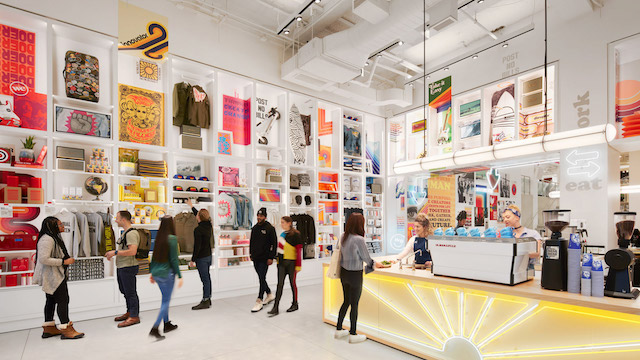
    Co-working firm The We Company (previously WeWork) has opened a retail venture and public workspace in New York. The Made by We retail space, cafe and workplace can be used by anyone without the need for a membership, with workstations and meeting rooms available for rent by the minute. The work space features products made by current WeWork member companies available for sale, from apparel to snacks to audiotech gear. It also houses a Bluestone Lane cafe.

    While headquartered in New York City, The We Company has WeWork shared office spaces in major cities across Mainland China, Japan and India, as well as in Ho Chi Minh City, Singapore, Jakarta, Kuala Lumpur, Manila, Busan, Seoul and Bangkok.

    “Made by We was launched with a vision to connect the We community with the rest of the world, and provide people with the best on-demand workspace, services and products, no membership required”, said company partner Julie Rice.

    “Everything we do at The We Company, from the spaces we curate to the service offerings we provide, is intended to create meaningful human connections.”

    View the gallery below for pictures (7 images) :


  • China will flood US with its product

    China will flood US with its product

    Turnover in the Chinese retail industry will eclipse that of the US later this year, according to analyses. “Nothing is going to stop them,” said one commentator as new data emerged showing a fast-narrowing gap between the two markets. The fact China would overtake the US was never in doubt – China’s population of 1.4 billion is vastly more than the US population of 325 million.

    According to data from eMarketer, total Chinese retail sales will grow 7.5 per cent this year to reach US$5.636 trillion. But growth in the US is likely to be significantly slower at just 3.3 per cent, reaching $5.529 trillion.

    Not even the slowdown in China’s economic growth is likely to affect the figures – a rebound may even hasten the milestone.

    GlobalData Retail MD Neil Saunders says a big factor in the speed of China’s retail growth is the way the industry has evolved. In the US, retailers were established well before the advent of the internet meaning adapting to the new online environment has meant managing their brick-and-mortar stores while pursuing growth online.

    But in the US, the market began to mature in an online world, and online spending there will account for more than 30 per cent of total retail sales this year. In the US, online is predicted to account for less than 11 per cent.

    “The US retail environment grew up in a very different era,” says Saunders. “It grew up before the internet. There is a historical difference and an evolutionary difference, which has created this very different backdrop to retail.”

    The rapid rise of the Chinese retail industry has been fuelled by rising incomes across the country, the urbanisation of the population and a burgeoning middle class.

  • Dollar eases as focus shifts to Fed meeting

    Dollar eases as focus shifts to Fed meeting

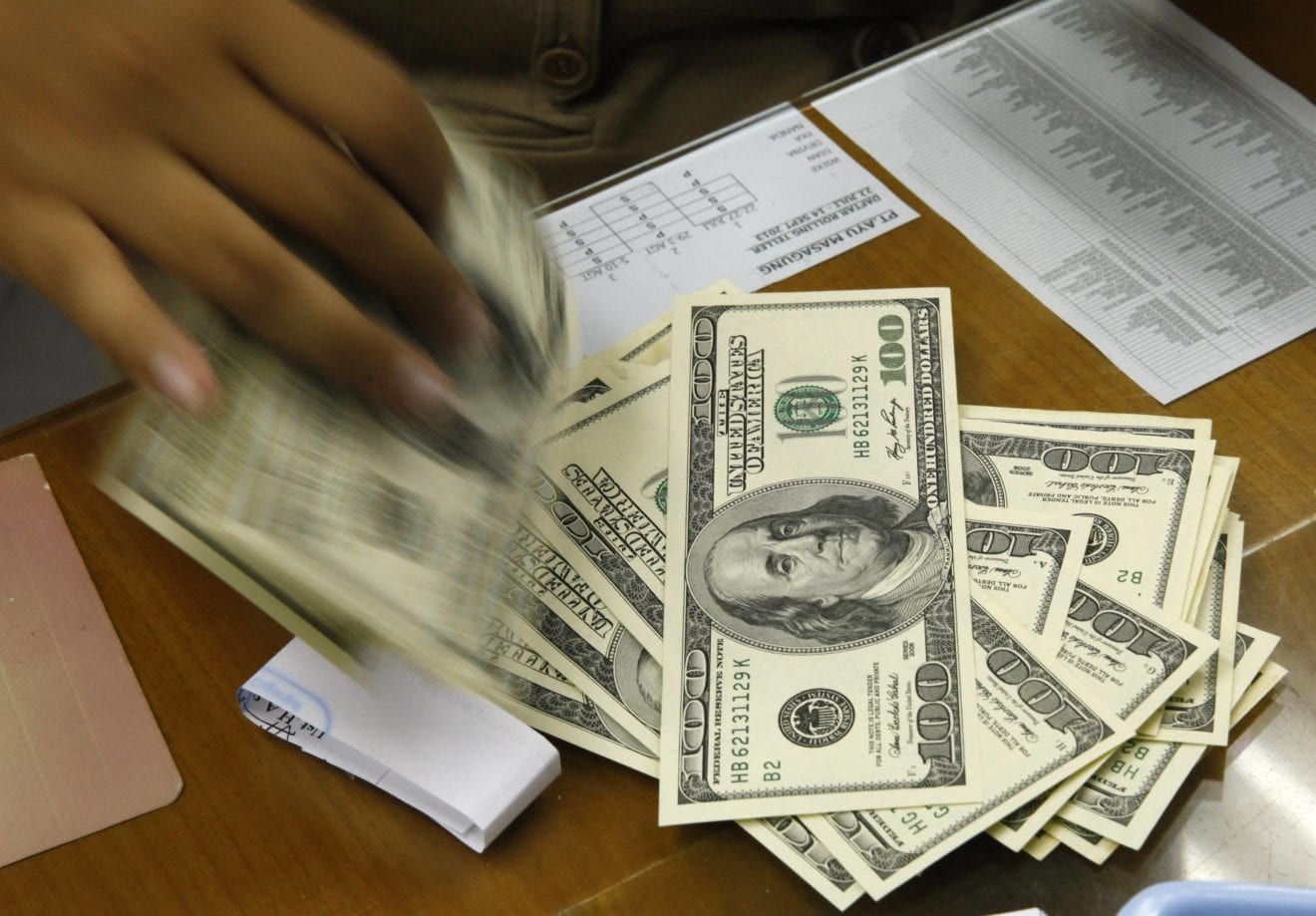
    The dollar eased versus most of its peers on Monday as investors turned their attention to this week’s Federal Reserve policy meeting, with traders wagering policymakers will signal a pause in their tightening cycle. The Federal Open Market Committee meets between Jan 29-30, and Chairman Jerome Powell is widely expected to acknowledge growing risks to the US economy as global momentum weakens.

    The dollar fell 0.2% versus the offshore yuan to 6.7406. The rally in the yuan also fuelled a bounce in the Australian dollar, which gained 0.18% versus the dollar to $0.7195. Kiwi dollar strengthened by 0.3% to $0.6859.

    “The general direction for the dollar is still down and markets will be taking cues from the FOMC this week,” said Sim Moh Siong, currency strategist at Bank of Singapore.

    “The Fed will most likely keep rates steady this year given the state of economic growth outside the US”

    The dollar index, a gauge of its value versus six major peers was marginally lower at 95.74, after falling 0.8% on Friday.

    A deal to reopen the US government for now after a prolonged shutdown also reduced investor demand for the safety of the greenback.

    ‘The re-opening of Federal government after one-month shutdown fuelled ‘risk on’ rally in the US equities and slashed demand for safe-haven currency like USD, leading to sharp decline of the dollar index last Friday,” said Margaret Yang, markets analyst at CMC Markets.

    Over the past two months or so, Powell and several other Fed policymakers have taken a more cautious approach on further monetary tightening, leaving the dollar underpowered after it enjoyed a boost from the Fed’s four rate increases last year.

    Traders are bearish on the dollar for 2019.

    Amid a weakening global economy and US-Sino trade tensions, the US central bank is widely expected to hold rates steady this year to avoid hurting growth at home. Interest rate futures markets are pricing in no rate hikes for 2019.

    Investors are also anxiously waiting news from high-level US-China trade talks on Tuesday and Wednesday to see if the world’s largest economies can reach a compromise that will end their trade war. President Donald Trump has threatened to hike tariffs on Chinese goods if there is no significant progress in the negotiations.

    The yen added 0.2% in early Asian trade at 109.34.

    The dollar has gained around 1.2% on the yen over the last two weeks. Not helping the yen was the Bank of Japan’s downgrade of its inflation forecasts last week when it also maintained its accommodative monetary policy, as widely expected.

    Moreover, Japanese investors have been net buyers of foreign bonds over the last few weeks, stoking demand for dollars. This likely explains why the safe-haven yen has not appreciated during this period even though risks of a global economic slowdown have rattled investor sentiment.

    The euro was marginally higher at $1.1411.

    The single currency managed to cling on to a 0.4 percent gain made last week despite the European Central Bank downgrading its growth forecasts for the near term.

    Growth data out of Europe’s economic powerhouses such as Germany and France has been weaker-than-expected and analysts expect the ECB to remain dovish for an extended period.

    Traders believe Europe’s slowdown and a dovish ECB are priced into the euro, which has traded in a $1.12-$1.16 range over the last three months.

    Sterling was marginally lower, fetching $1.3193.

    Cable gained 2.5% last week after a report in the Sun newspaper that Northern Ireland’s Democratic Unionist Party had privately decided to offer conditional backing for British Prime Minister Theresa May’s Brexit deal this week.

    However, Ireland’s Deputy Prime Minister Simon Coveney said on Sunday the backstop was already a compromise drawn up to meet May’s negotiating red lines, and the EU and Ireland were united in the view it “was not going to change”.

    Analyst expect sterling to remain volatile. Britain is set to leave the European Union on March 29, but the country’s members of parliament remain far from agreeing a divorce deal.

  • Oil prices fall on worries fuel demand to stall amid slowing global growth

    Oil prices fall on worries fuel demand to stall amid slowing global growth

    Oil prices declined on Thursday amid lingering concerns over slowing global economic growth that may limit fuel demand and after a surprise build in U.S. crude inventories. International Brent crude oil futures were at $60.89 a barrel at 0352 GMT, down 25 cents, or 0.4 percent, from their last settlement, having closed down 0.6 percent in the previous session.

    U.S. West Texas Intermediate (WTI) crude futures were at $52.40 per barrel, 22 cents lower from their last settlement.

    “Crude oil came under further pressure as concerns of faltering global growth remained at the forefront in investor’s minds,” ANZ Bank said.

    The prospects of future oil demand are getting clouded by the global growth worries, analysts said.

    “With the IMF downgrading 2019/20 and the continued rhetoric from Davos reiterating that they expect global growth to slow down over the next two years, is providing selling pressure in oil,” said Hue Frame, portfolio manager at Frame Funds in Sydney.

    Earlier this week, the International Monetary Fund (IMF) cut its world economic growth forecasts for 2019 and 2020, due to weakness in Europe and some emerging markets.

    Meanwhile, world leaders and top executives are meeting in Davos, Switzerland, this week to discuss how to steer policy amid worries of slowing economic growth, damaging trade wars and Brexit.

    Oil market sentiment was also weakened by an increase in U.S. crude inventories after refineries cut output, data from industry group the American Petroleum Institute showed on Wednesday.

    Crude inventories rose by 6.6 million barrels in the week ended Jan. 18 to 443.6 million, compared with analysts’ expectations for a decrease of 42,000 barrels, the API said. Refinery runs fell by 152,000 barrels per day.

    “Sharp production cuts by OPEC+ have kept crude oil futures supported however as market reports indicate for a marked output reduction in Dec 2018,” said Benjamin Lu, analyst at Phillip Futures.

    “Though oil prices have demonstrated for higher upside potential in the first quarter of 2019, mounting economic challenges will continue to impede exponential gains in the longer term,” Lu added.

  • Gold rises as growth concerns, US govt shutdown weigh on dollar

    Gold rises as growth concerns, US govt shutdown weigh on dollar

    Gold prices rose on Thursday as the dollar declined due to concerns the prolonged U.S. government shutdown will limit economic growth at the same global growth is slowing as well. Spot gold was up 0.1 percent at $1,283.31 per ounce, as of 0326 GMT, while U.S. gold futures were down 0.1 percent at $1,282.60 per ounce. “We are seeing a weaker U.S. dollar for the moment, which is in general supportive for gold,” Michael McCarthy, chief market strategist at CMC Markets said.

    However, McCarthy cautioned that bullion price gains are limited by slowing investor buying as indicated by price charts used by technical traders.

    “The issue for gold is there is a very heavy resistance seen around $1,290 and $1,310. A further weakening of the U.S. dollar could be supportive. But, we need something to really push gold through the resistance level,” he said.

    The U.S. dollar index, which measures the greenback against a basket of six major currencies, fell for third day, dropping 0.3 percent during that period. However, Asian shares rose on Thursday after Wall Street managed to end higher.

    On Wednesday, U.S. President Donald Trump said that the United States was doing well in trade talks with China, saying at a White House event that China “very much wants to make a deal.”

    However, a prolonged U.S. government shutdown reminded investors of risks to growth to the economy.

    White House economic adviser Kevin Hassett said in a CNN interview the U.S. economy could see zero growth in the first three months if the partial government shutdown lasts for the whole quarter.

    Meanwhile, investor focus turned to the European Central Bank (ECB), which is widely expected to keep its monetary policy unchanged at its first policy meeting of 2019 that ends later on Thursday.

    Market watchers also expect ECB to acknowledge growing threats to the euro zone economy.

    “The ongoing trade war, Brexit and slow global growth narrative are supportive for gold at present levels, as is Chinese seasonal demand,” MKS PAMP Group said in a research note.

    “That being said, Comex non-commercial and exchange-traded fund (ETF) holdings remain extended, so we expect a bit of tug of war in the short-term between $1,270-$1,300.”

    Holdings of SPDR Gold, the largest gold-based ETF, was at its highest since June 2018.

    Among other metals, palladium, which hit a record high of $1,434.50 an ounce last week on low inventories and rising demand, rose 0.1 percent to $1,348.50 an ounce.

    Silver was down 0.1 percent $15.35 an ounce, while platinum was steady at $795.

  • Samsung spent $3.12M lobbying in U.S. last year

    Samsung spent $3.12M lobbying in U.S. last year

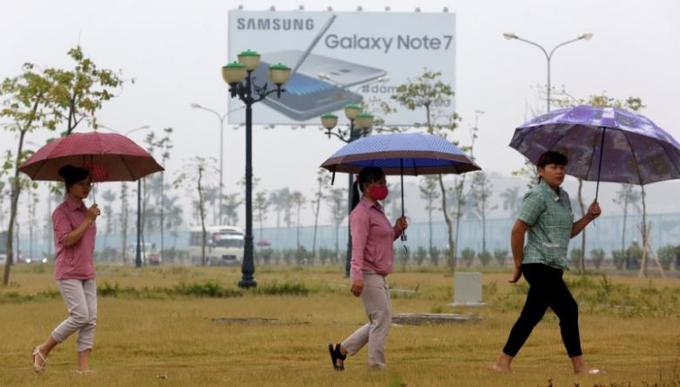
    The American subsidiary of Korean tech giant Samsung Electronics spent $3.12 million on lobbying U.S. politicians and officials last year, the second-largest amount following 2017, data from a Washington-based research group showed Monday. Samsung Electronics’ lobbying expense was the ninth largest among electronics companies operating in the United States, moving up two notches from a year earlier, according to the Center for Responsive Politics (CRP).

    Microsoft spent the most with $7.18 million, followed by Qualcomm with $6 million, Oracle with $5.47 million and Apple with $5.09 million, said the nonprofit research group, which tracks the effects of money and lobbying on elections and public policy.

    Among foreign companies, Samsung Electronics was the second-biggest lobbying spender after German engineering group Siemens.

    The Korean tech conglomerate has been intensifying its lobbying efforts in its key market since U.S. President Donald Trump took office in 2017 and advocated more protectionist trade policies.

    Samsung’s lobbying expenses over the past two years amounted to $6.62 million, far surpassing $6.04 million spent during former President Barack Obama’s second term from 2013-16, data showed.

    Trade-related issues were Samsung’s main lobbying target in the United States last year, with 13 cases out of 81 total in this area.

    The company also made extensive lobbying efforts for the telecommunication sector as it has been exploring ways to expand its foothold in the 5G network equipment market.

    Last month, Samsung and American telecommunication company Verizon announced their plan to launch 5G-compatible smartphones in the U.S. market in the first half of 2019.

  • Hyundai, Kia move ahead with recall in U.S.

    Hyundai, Kia move ahead with recall in U.S.

    Despite a government shutdown, Hyundai and Kia are moving ahead with a recall of about 168,000 vehicles to fix a fuel pipe problem that can cause engine fires. The problem stems from improper repairs during previous recalls for engine failures. The affiliated Korean automakers have been dogged by fire and engine failure complaints from across the nation. They’re both under investigation by the U.S. National Highway Traffic Safety Administration, which has been trying to figure out whether initial recalls covered enough vehicles. But the agency is mostly closed due to the shutdown.

    In addition to the recall, each automaker says it will do a “product improvement campaign” covering a total of 3.7 million vehicles to install software that will alert drivers of possible engine failures and send the cars into a reduced-speed “limp” mode if problems are detected.

    Nhtsa employees who do safety investigations and recall notifications are not at work. Under normal circumstances, the agency would review the recalls to make sure they are adequate and post details on the agency website. It would also monitor notices to customers, and ensure customers could check to see if their vehicles are included.

    Kia spokesman James Bell said the company is proceeding with the recall and campaign regardless of government delays.

    “Making our customers comfortable is vastly more important than making sure we’re following additional government processes right now,” he said. Kia sent letters to dealers around Jan. 10 notifying them of the recall, he said.

    But a U.S. auto safety advocate called the recalls inadequate and said the product improvement campaigns should instead be recalls that are overseen by Nhtsa.

    An Nhtsa spokeswoman said she could not comment due to the shutdown.

    Hyundai and Kia started recalling 1.7 million vehicles in 2015 – about 618,000 of which are Kias – because manufacturing debris can restrict oil flow to connecting rod bearings. That can cause bearings in 2-liter and 2.4-liter four-cylinder engines to wear and fail. The problem can also cause fires. The repair in many cases is an expensive engine block replacement.

    Now the companies are acknowledging that the engine replacements may not have been properly done in all cases by dealers. A Kia statement says the high-pressure fuel pipe may have been damaged, misaligned or improperly tightened while the engines were being replaced under recall. That can allow fuel to leak and hit hot engine parts, causing fires.

    Kia says it has six reports of fires among the vehicles being recalled for possible fuel leaks, while Hyundai says it has no fire reports. Neither company had any reports of injuries.

    The fuel injector pipe recall covers some 2011 through 2014 Kia Optima cars, 2012 through 2014 Sorento SUVs, and 2011 through 2013 Sportage SUVs, all with 2-liter and 2.4-liter four-cylinder engines. Also covered are many 2011 to 2014 Hyundai Sonata cars and 2013 and 2014 Santa Fe Sport SUVs.

    More than 2 million 2011 Sonatas from the 2011 through 2018 model years and Santa Fe Sports from 2013 through 2018 are covered by the software and engine-knock sensor updates. About 1.7 million Kias, including the 2011 through 2018 Optima, the 2012 through 2018 Sorento and 2011 through 18 Sportage, are covered.

    The companies say owners of the recalled vehicles will be notified by letter. Dealers will check the fuel pipe for leaks and replace the pipe if needed.

    Kia is only doing the fix on 68,000 of its 618,000 vehicles recalled for the engine problems, while Hyundai is recalling 100,000 of more than 1 million. Hyundai said only vehicles that had engines replaced in the previous recalls are covered by the new recall.

    He also raised concerns about the government shutdown’s impact on Nhtsa, which he said should be open to handle critical safety recalls.

  • World Bank sees slower global economic growth of 2.9% this year

    World Bank sees slower global economic growth of 2.9% this year

    The growth of the global economy is expected to slow to 2.9% in 2019 compared with 3% in 2018, the World Bank said on Tuesday, citing elevated trade tensions and international trade moderation. “At the beginning of 2018 the global economy was firing on all cylinders, but it lost speed during the year and the ride could get even bumpier in the year ahead,“ World Bank CEO Kristalina Georgieva said in the semi-annual Global Economic Prospects report.

    The World Bank outlook comes as the United States and China have been engaged in a bitter trade dispute, which has jolted financial markets across the world for months. The two economies have imposed tit-for-tat duties on each other’s goods, although there have been signs of progress.

    Growth in the US is likely to slow to 2.5% this year from 2.9% in 2018, while China is expected to grow at 6.2% in the year compared with 6.5% in 2018, according to the World Bank.

    Emerging market economies are expected to grow at 4.2% this year, with advanced economies expected to grow at 2%, the World Bank said.

  • Time is running out for Sears offer

    Time is running out for Sears offer

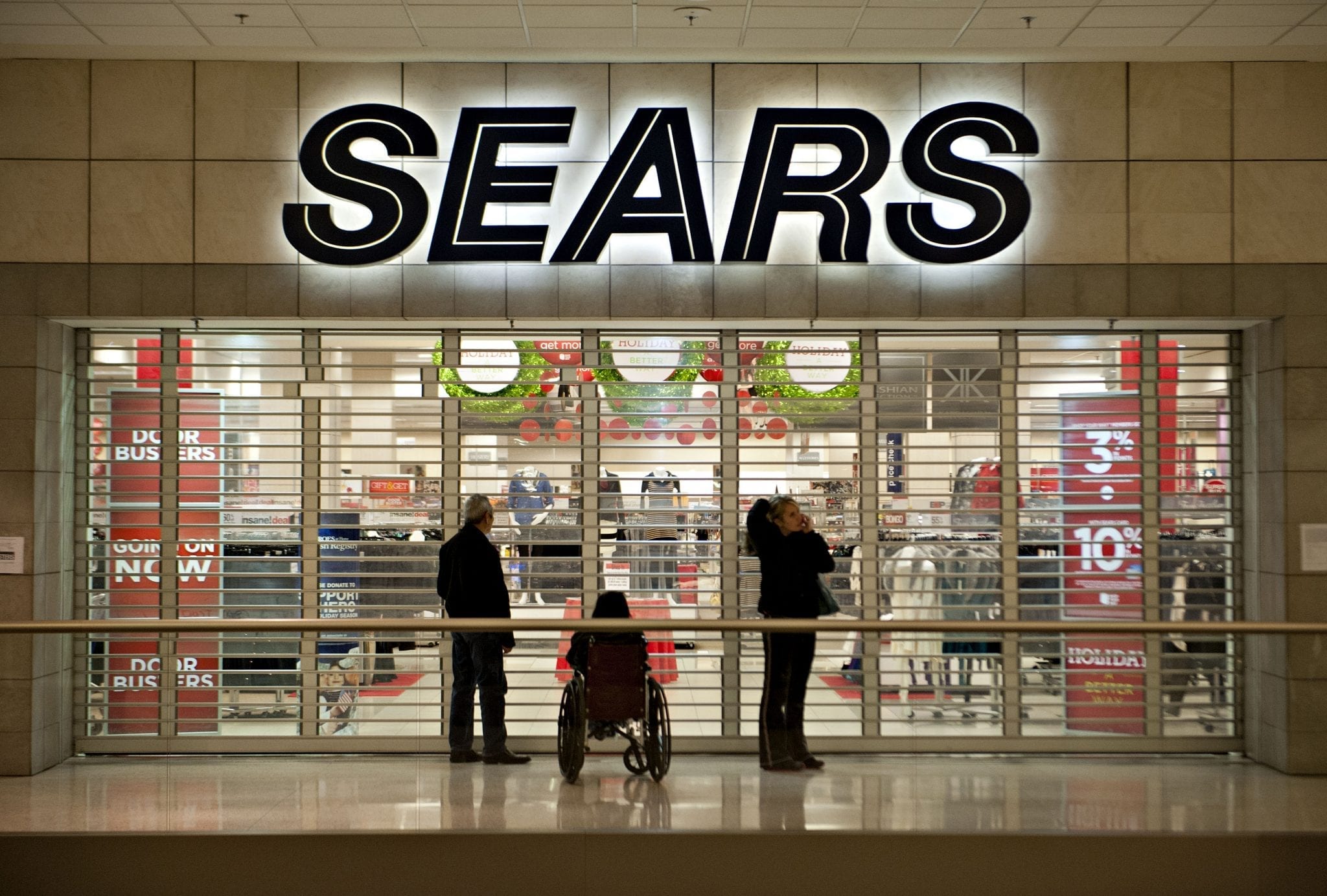
    Sears chairman Eddie Lampert’s last minute plans to save the bankrupt retail chain are set to be terminated on Friday afternoon, New York time, should they be determined to not be a “qualifying bid”. The first plan, a US$4.4 billion offer to purchase Sears, would provide ongoing positions for 50,000 employees and is the “best outcome for the debtors and their creditors and other stakeholders,” according to documents filed with the US Securities and Exchange Commission.

    The second plan, however, is an offer to acquire at least 250 stores as a going concern, as well as certain assets across the home services division and certain intellectual property.

    Earlier this week the business confirmed a further 80 stores would be closing by March, alongside the 40 already announced, with liquidation sales expected to begin in early January 2019.

    GlobalData Retail managing director Neil Saunders mused that the brand had hit rock bottom and was “essentially worthless” in its current state.

    “Ultimately, reinventing Sears now would be akin to raising the Titanic and making is seaworthy again: a thankless and rather pointless task,” Saunders said.

    Lampert stepped down as company chief executive when it filed for bankruptcy in October.

  • China Slowdown, Trade Disputes Weigh on Asia Factory Activity

    China Slowdown, Trade Disputes Weigh on Asia Factory Activity

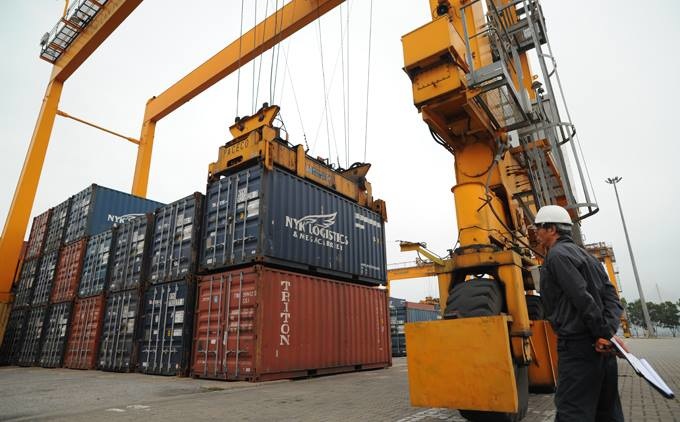
    Factory activity weakened across Asia in December as the Sino-US trade war and a slowdown in Chinese demand hit production in most economies, strengthening the case for a pause in interest rate hikes in the region in 2019. A series of purchasing managers’ indexes (PMI) for December released on Wednesday mostly showed declines or slowdowns in manufacturing factory activity across the region. In China, the Caixin/Markit PMI slipped into contraction territory for the first time in 19 months, broadly tracking an official survey released on Monday.

    China’s weakness spilled over to other Asian economies, with Malaysia’s manufacturing activity shrinking to its weakest pace of expansion since it launched the survey in 2012 and Taiwan contracting to its lowest since September 2015.

    Meanwhile, official economic data out of Singapore showed its gross domestic product grew more slowly than forecast in the fourth quarter as the city-state’s manufacturing sector contracted on a quarterly basis.

    In other regions, the eurozone was expected to post steady manufacturing activity growth, while US activity was seen a tad slower, but firmly in expansion territory, in a sign that so far China has suffered more bruises from its trade frictions than the United States.

    With growth slowing and inflation below or barely within the target in most countries, Asian central banks are unlikely to continue their tightening cycle this year, barring any shocks in currency markets.

    “We are really seeing a global slowdown into this year, and in Asia, particularly export-oriented countries are hurting,” said Irene Cheung, Asia strategist at ANZ.

    “Our expectation for central banks is that most of them won’t change policy in 2019 and these numbers coming out on the weak side won’t change that outlook.”

    The world’s two largest economies agreed at the start of December to a 90-day truce following tit-for-tat tariffs that have disrupted the flow of hundreds of billions of dollars of goods between the two countries.

    The two sides have pledged to hold frequent talks in the next two months, but uncertainty over whether they can bridge massive differences over commercial practices and intellectual property rights remains very high, despite US President Donald Trump noting “big progress” in a tweet.

    Tariffs are not the only drag on China’s economy. Beijing’s sustained drive to reduce debt risks in the economy has cooled the property market and curbed credit flows to the private sector. Meanwhile, the government’s intensified crackdown on pollution has dented industrial activity.

    In a key annual conference last month, China’s top leaders said they will boost support for the economy in 2019 by cutting taxes and keeping liquidity ample while promising to continue negotiations with Washington.

    “The People’s Bank of China may have to ease further to offset the impact of tariffs,” said Robert Michele, chief investment officer and head of fixed income, J.P. Morgan Asset Management.

    China’s economic growth slowed to 6.5 percent in the third quarter of last year, the weakest since the global financial crisis. As reported, government advisers had recommended a growth target of 6.0-6.5 percent for this year at the annual meeting, though the final figure won’t be made public until the annual parliament meeting in early March.

    Oil Drive

    A sharp drop in the crude price at the end of last year has helped sentiment in Asia’s oil-importing economies, where trade deficits are a key vulnerability.

    Indonesia’s PMI index, although still weak historically, rose to 51.2 from November’s 50.4, a four-month high. India’s declined to 53.2 from 54.0 but capped the strongest quarter for the country’s manufacturing sector since late 2012. Philippines PMI was also 53.2.

    But Malaysia, which relies heavily on oil revenues, saw its weakest reading ever at 46.8.

    Taiwan and South Korea, which are heavily focused on tech production, also saw their activity shrink. The US-China trade war affects chip orders and coincides with a slowdown in demand for smartphones globally.

    The contraction in South Korean manufacturing activity continued last month albeit at a slower pace, its PMI showed, with new export orders declining for a fifth consecutive month. Taiwan’s PMI, meanwhile, fell to its lowest since September 2015. Japan publishes PMIs on Jan. 4.

    Vietnam’s PMI fell to 53.8 from November’s 56.5, but the index’s 2018 average was the highest since the survey’s debut in 2011.

    The Southeast Asian economy is widely seen as benefiting from the US-China trade war as companies look to establish operations in the country to avoid the tariff crossfire.

  • From Cyber Monday to Cyber Week

    From Cyber Monday to Cyber Week

    Cyber Monday is expected to be the largest online shopping day in U.S. history, generating a whopping $7.8 billion in sales. That’s 17.6 percent higher than last year, according to the projection from Adobe Analytics. But the National Retail Federation projects that the number of shoppers taking advantage of online bargains on Cyber Monday – about 75 million – will be 3 million fewer than in 2017.

    Just as Black Friday has evolved into “Black November,” as retailers spread out their discounts, Cyber Monday has turned into “Cyber Week”, which is expected to alter some of its strength as a stand-alone day.

    It has been estimated that more than 164 million people planned to shop over the five-day Thanksgiving weekend. But experts said Black Friday remains the busiest shopping day, with NRF projecting 116 million would shop, both in-store and online, on that day alone.

    Based on Adobe Analytics data, a record $6.22 billion was spent online by the end of Black Friday, an increase of 23.6 percent over 2017’s $5.03 billion.

    Data suggests that consumers are getting more comfortable buying more and bigger ticket items online.

    The average order value of $146 set a new record for Black Friday, up 8.5 percent over last year.

    Many brick and mortar retailers are trying to capitalize on Cyber Monday by offering “buy online, pick-up in store” deals.

    A spokesperson from the NRF said that “Of those [shoppers] that choose to buy items online and pick them up at the store, nearly 70 percent will double their basket size by the time they walk out of the store. So, even on Cyber Monday, retailers will try to use this as an opportunity to bring consumers into their physical stores and cash in on impulse buys.”

  • Nutella Cafe Opens in Union Square, NY

    Nutella Cafe Opens in Union Square, NY

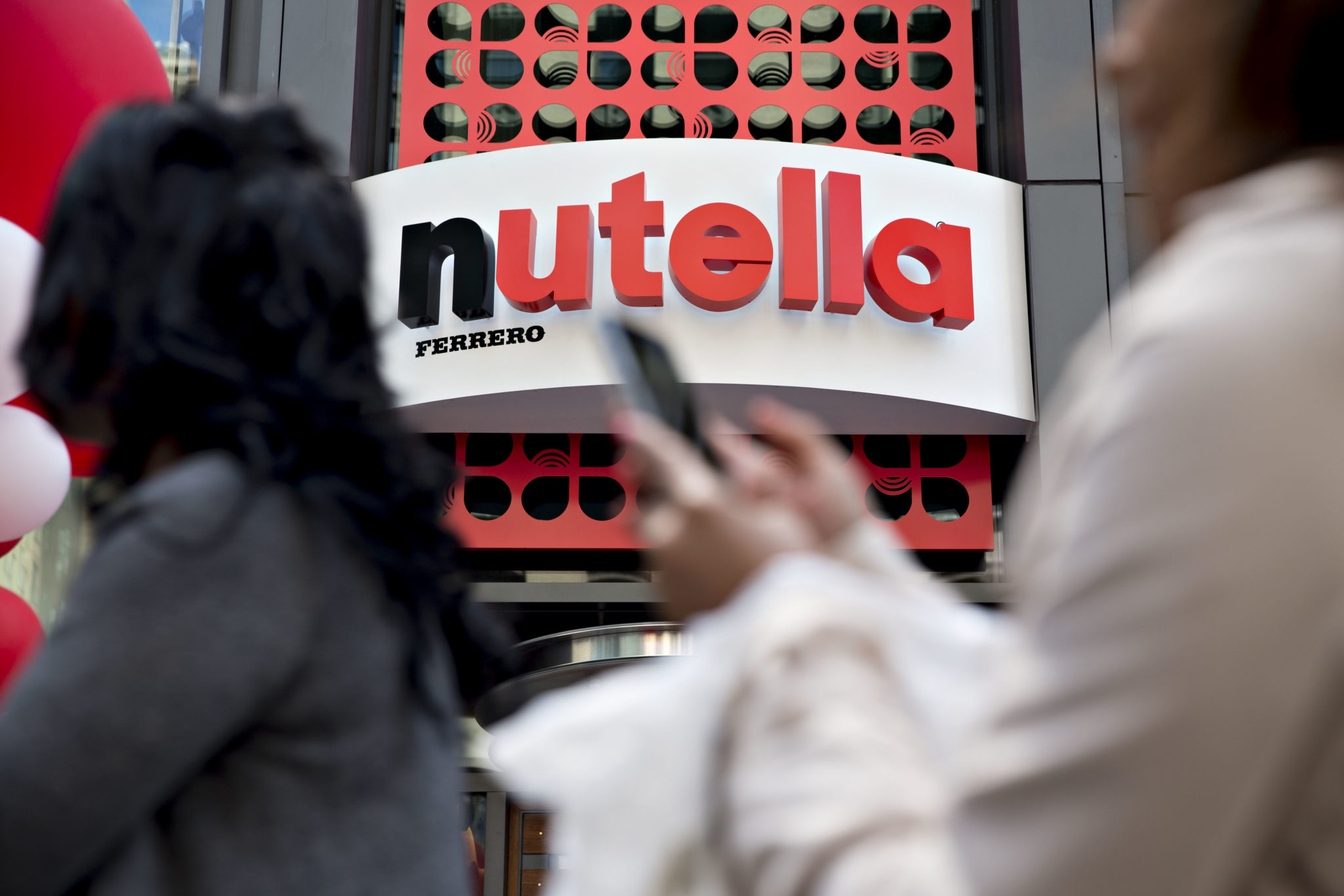
    Confectionery giant Ferrero opened a permanent Nutella Cafe in the heart of New York City this week. The cafe, the brand’s second in the US after its debut in Chicago last year, is designed to create “an authentic Nutella experience all year-round” with a menu of Nutella-centric foods and specialty espresso beverages.

    “We are thrilled to celebrate the grand opening of Nutella Cafe New York in one of the greatest culinary cities in the world,” said Rick Fossali, VP of operations at Nutella Cafe. “The response to our first Nutella Cafe in Chicago has been outstanding, and we cannot wait to treat New Yorkers and tourists alike to a wonderfully delicious Nutella experience showcasing the uniqueness and versatility of this beloved product.”

    The menu at the Nutella Cafe New York will include all-day dishes such as freshly baked breads, pastries, breakfast specials, desserts and gelato – all featuring Nutella hazelnut spread.

    Highlights include Chicago favourites like the Pound Cake Panzanella and Grilled Baguette, along with several items which are exclusive to the New York location: Hazelnut Blondies with Nutella hazelnut spread; multi-grain Piccolino (“little one” in Italian) freshly baked croissants; Grilled Banana Bread with Nutella, warmed and topped with fresh banana slices and toasted hazelnuts; Chia and Hemp seed pudding, topped with Nutella and fresh banana slices; Frozen Nutella Pops and a “Create Your Own” station that allows customers to pick their favourite base with Nutella and customise it with their own choice of fillings and toppings.

    Nutella Cafe New York is located at 116 University Place, a stone’s-throw from Union Square.

    Nutella was created in 1964 by Michele Ferrero, based on the recipe for Giandujot developed in 1946 by his father, Pietro Ferrero – a confectioner and the founder of Ferrero – in Italy’s Piedmont area. These days it is sold in more than 170 countries.